A small bedroom leaves little room for error. A hinged wardrobe door needs about 45 to 60 cm of clear floor in front of it, and in a tight room that swing space often eats into the walkway, the bed, or the spot where a chair should go. Sliding doors fix that problem, which is why they suit small bedroom wardrobe ideas so well. The doors glide along a track instead of swinging out, so you can place a bed, a nightstand, or a laundry basket up against the wardrobe and still open it fully.
The trade-off is worth knowing before you buy. You can only open one half of a sliding wardrobe at a time, and the track needs to stay clean or the doors start to stick. Layout, honest measurements, and the right interior fittings matter more than the door finish. The ideas below cover full-wall builds, alcove fits, mirror fronts, budget options, and layouts for rented rooms, with sizes and prices to check against your own wall. Measure twice, leave room for skirting boards and uneven floors, and pick a design you can live with daily.
1. Full-Wall Sliding Wardrobe, Floor to Ceiling
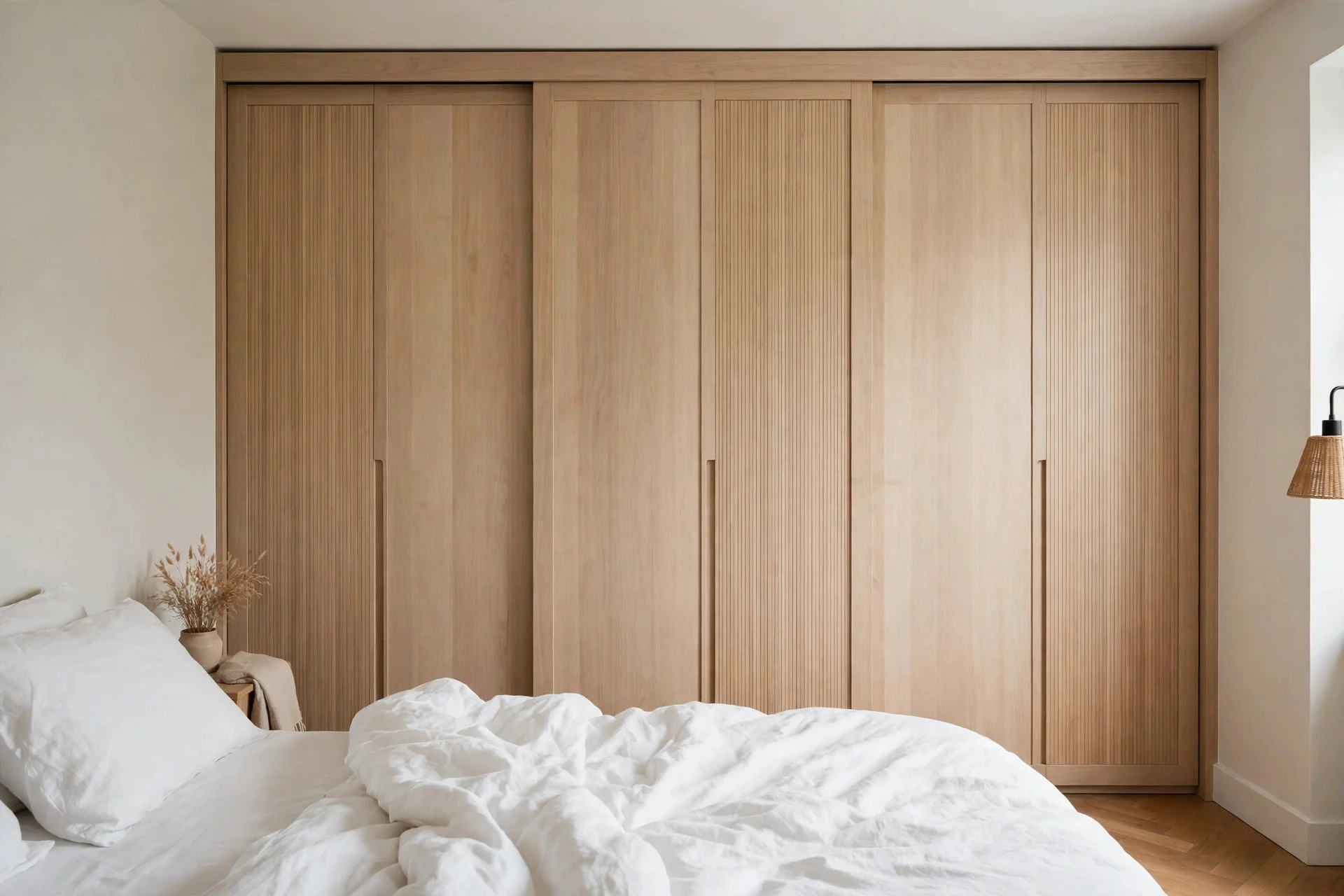
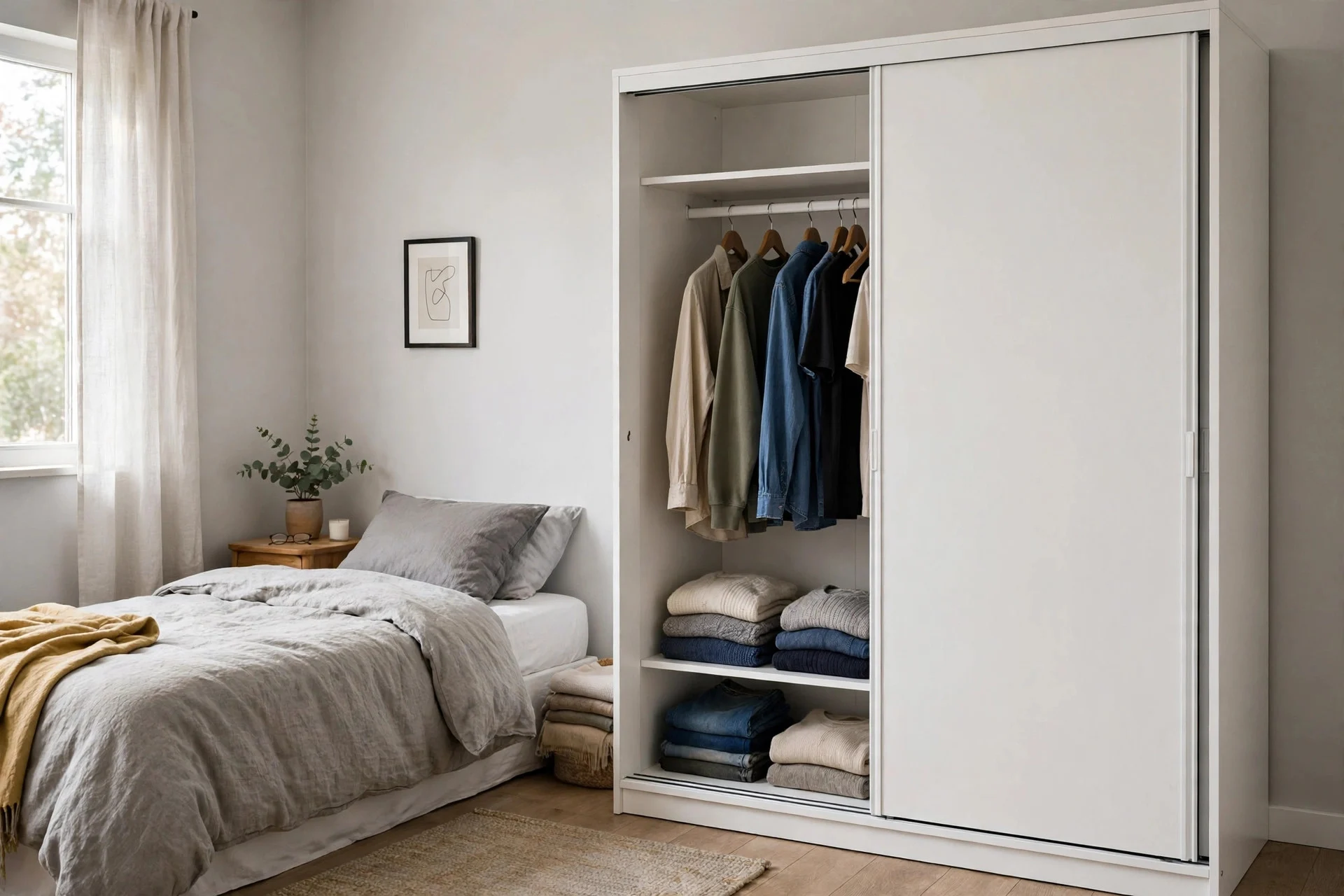
A full-wall wardrobe runs from one side of the wall to the other and from the floor to the ceiling, which removes the dusty gap on top and the dead space at the sides. In a small bedroom, this is often the best use of a single wall, because it turns the whole wall into storage instead of leaving awkward gaps that collect clutter. Aim for a depth of 55 to 60 cm so hangers sit straight and drawers close without catching clothes. A width of 180 to 240 cm suits most small bedrooms, with two or three sliding panels depending on the span. Expect to pay $800 to $2,500 for a made-to-measure version, or $400 to $900 for flat-pack units joined together. Avoid building right up to a ceiling that slopes or bows without a filler strip, since a rigid top rail will show every gap. Tip: use one tall panel as a full-length mirror to check outfits and make the room feel twice as deep.
2. Sliding Wardrobe in a Recessed Alcove
An alcove or a shallow recess beside a chimney breast or bathroom wall is a home for a sliding wardrobe, and it costs less than a freestanding unit because the side walls exist. You only need a top track, a bottom track, and the doors themselves, plus interior rails and shelves fitted inside the recess. Check the depth first: many alcoves are only 45 to 50 cm deep, which is tight for hangers but fine if you use slim hangers and turn coats sideways. If the recess is deeper than 65 cm, add a back panel or pull the hanging rail forward so clothes do not get lost at the back. An alcove kit runs $250 to $700, while a carpenter-built interior adds $400 to $1,000. Avoid assuming the alcove walls are straight, since older homes can be out by 2 to 3 cm. Tip: fit the track to the ceiling line, not the floor line, if the floor slopes, then hide the difference with a slim bottom trim.
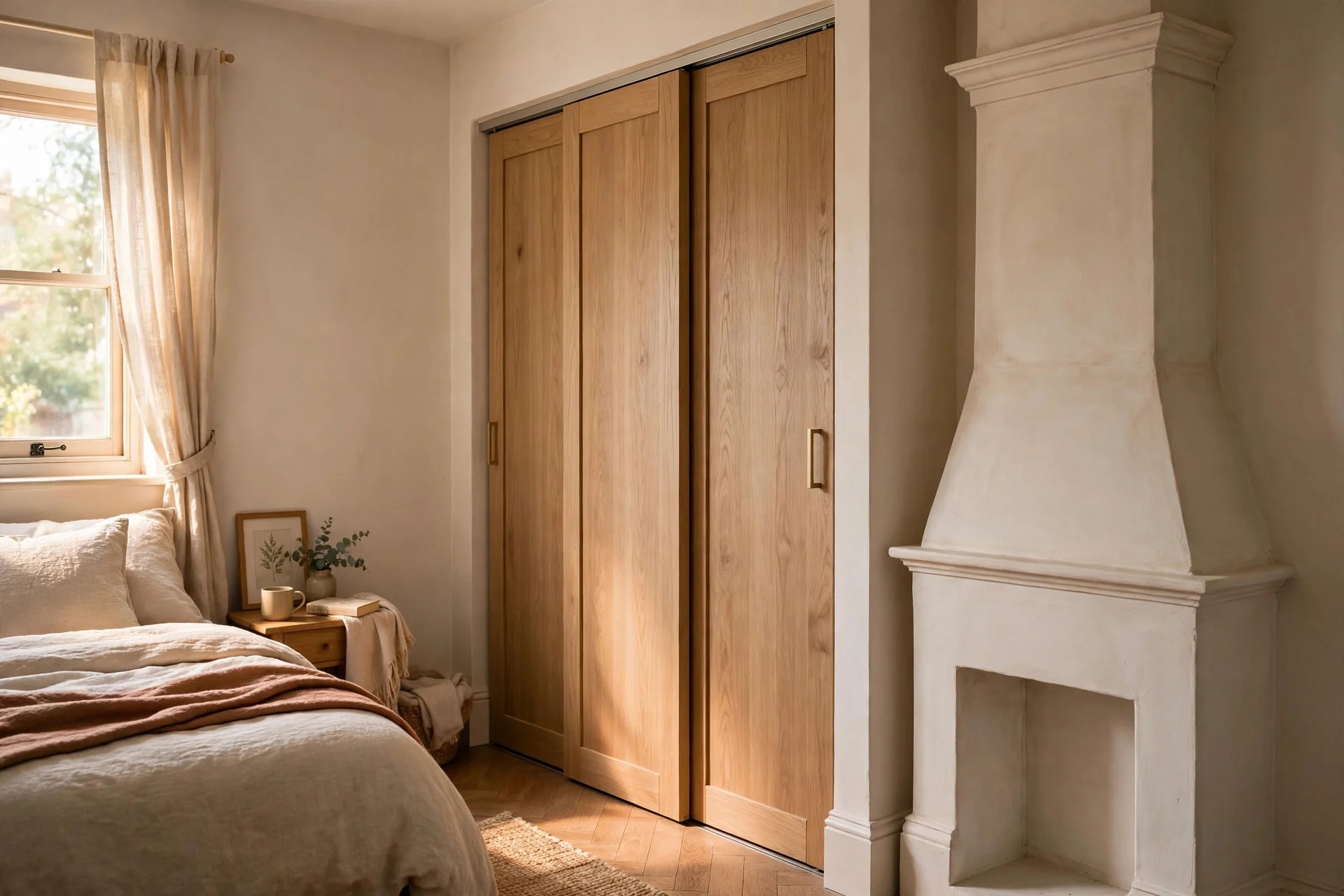
3. Mirror-Front Sliding Doors to Open Up the Room
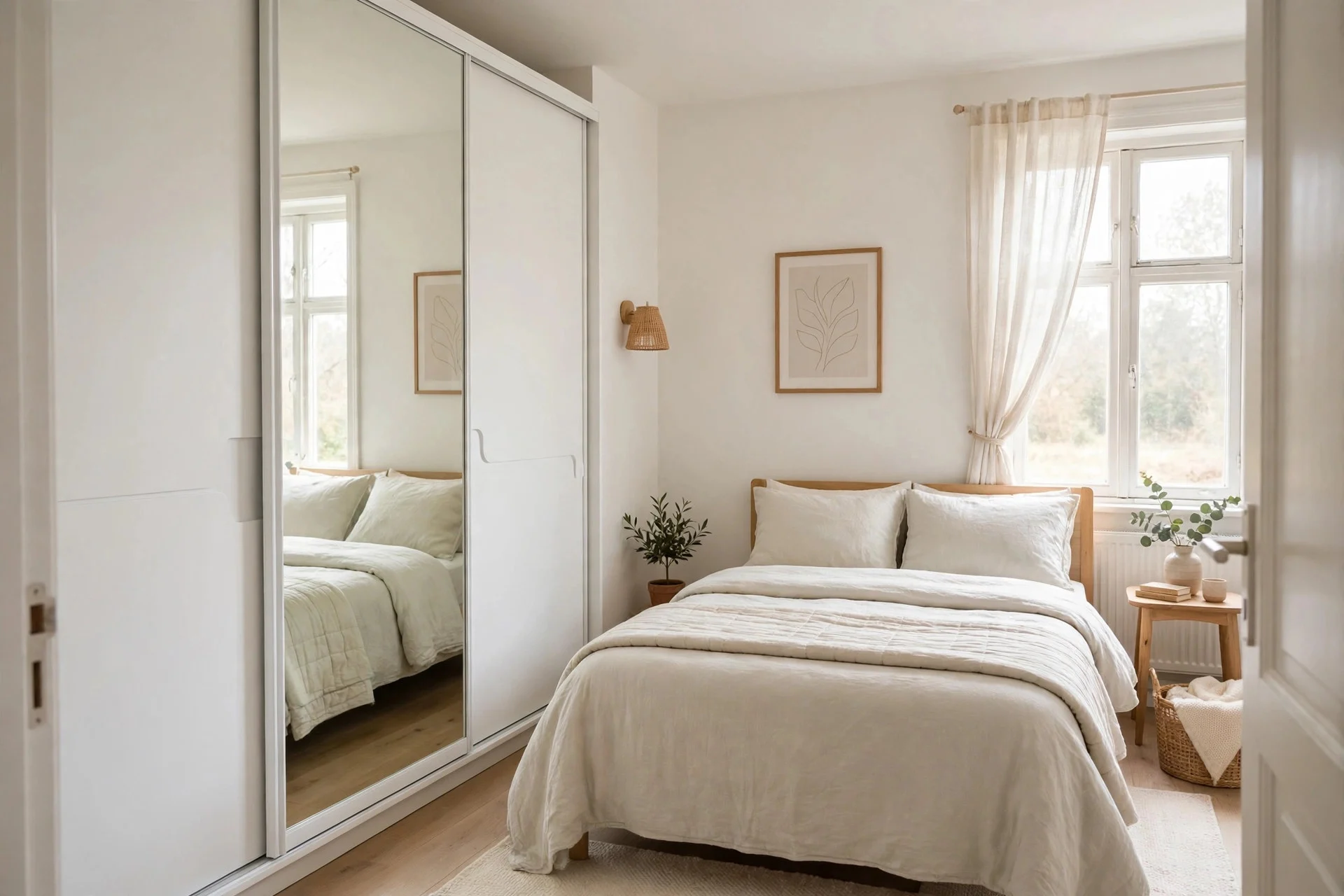
Mirror fronts do two jobs at once: they close the wardrobe and they bounce light around a small bedroom, which helps a dark corner feel less boxed in. A full mirror panel also removes the need for a separate standing mirror, freeing up floor space and one more thing to dust around. Choose safety-backed mirror glass, which holds together if it cracks, and check that the panels are at least 4 mm thick so they do not flex when you slide them. A two-door mirrored wardrobe in the 150 to 200 cm range costs $600 to $1,500, with custom sizes running higher. Avoid placing mirrors directly opposite a window if the glare hits the bed in the morning, and keep the track clean, since grit shows up fast on a mirrored surface. Tip: wipe mirrors with a dry microfibre cloth first to lift dust, then a damp cloth, so you do not smear dust across the glass.

4. Two-Tone Doors: Wood Look Below, Light Panels Above
A single flat colour can make a big wardrobe feel like a wall of boxes, especially in a small room. Splitting each door into two tones breaks up that block: a warm wood-look panel at the bottom grounds the unit, and a pale grey, cream, or soft white panel above keeps it light. This works well when the rest of the room already has wood furniture, because the wardrobe ties in without matching everything exactly. Keep the split line at the same height across all doors, usually around 90 to 110 cm from the floor, so the row reads as one design. Budget flat-pack doors in this style start around $350 for a 150 cm unit, while made-to-measure runs $900 to $2,000. Avoid pairing more than two finishes on one wardrobe, since a third colour often makes a small room look busy. Tip: take a drawer front or a bedside sample to the shop and compare it in daylight before you order.

5. Sliding Wardrobe With Open Shelving at One End
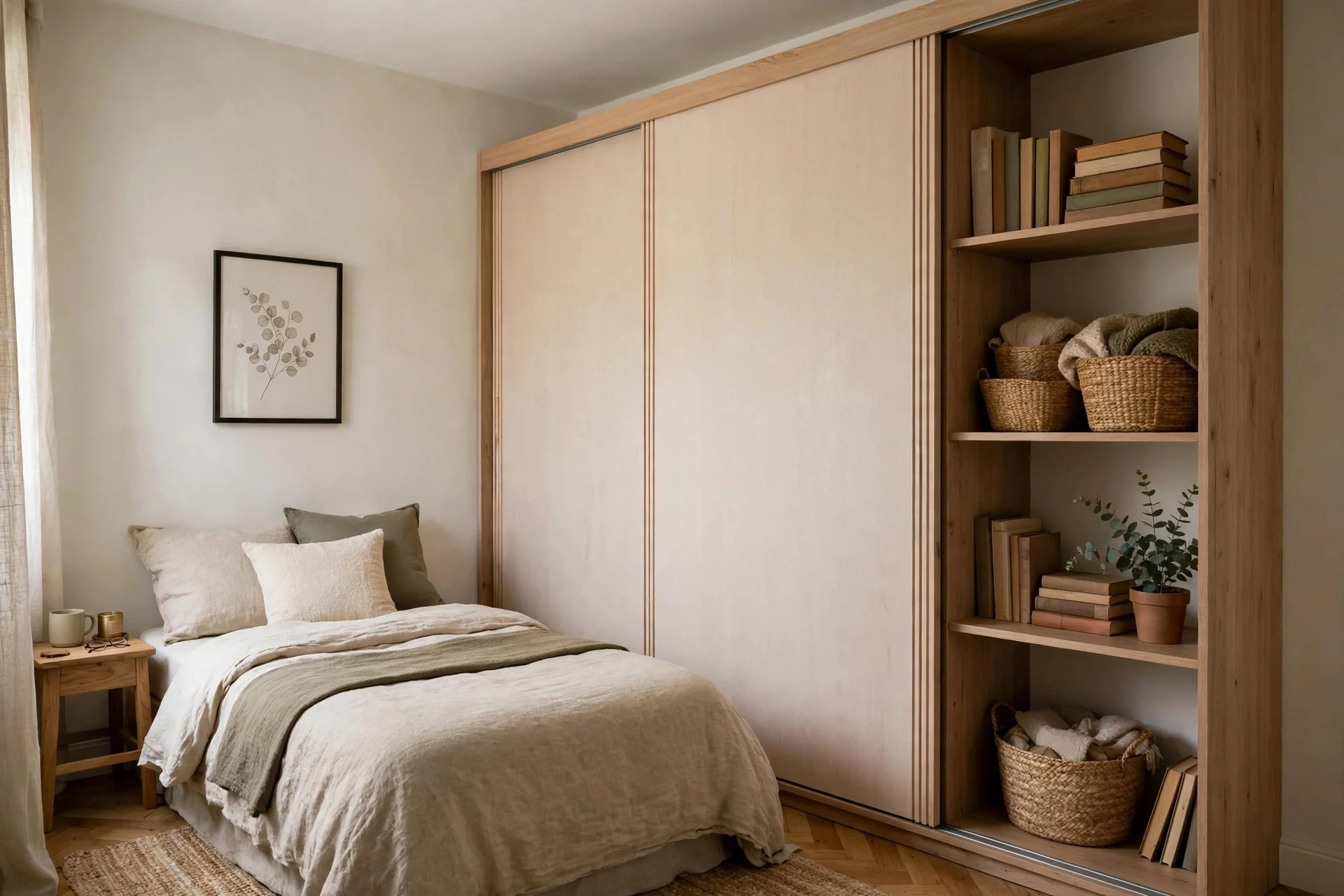
A wardrobe that runs the full wall can feel heavy, so leaving one end open changes the balance. A 30 to 45 cm wide open tower at the end holds books, a plant, folded throws, or the bag you grab each day, and it gives the eye a place to rest instead of another closed door. This also solves a practical problem: items you reach for daily do not need a door opened and closed each time. Build the open section to the same depth as the wardrobe, 55 to 60 cm, but keep its shelves shallow enough that nothing falls behind the sliding track. Add $150 to $400 to a standard wardrobe price for an open end unit, depending on the finish. Avoid loading open shelves with small loose items, since they read as clutter from the bed. Tip: use three matching baskets on the lower open shelves to hide chargers, socks, and other small bits.
6. Corner Sliding Wardrobe for an L-Shaped Room
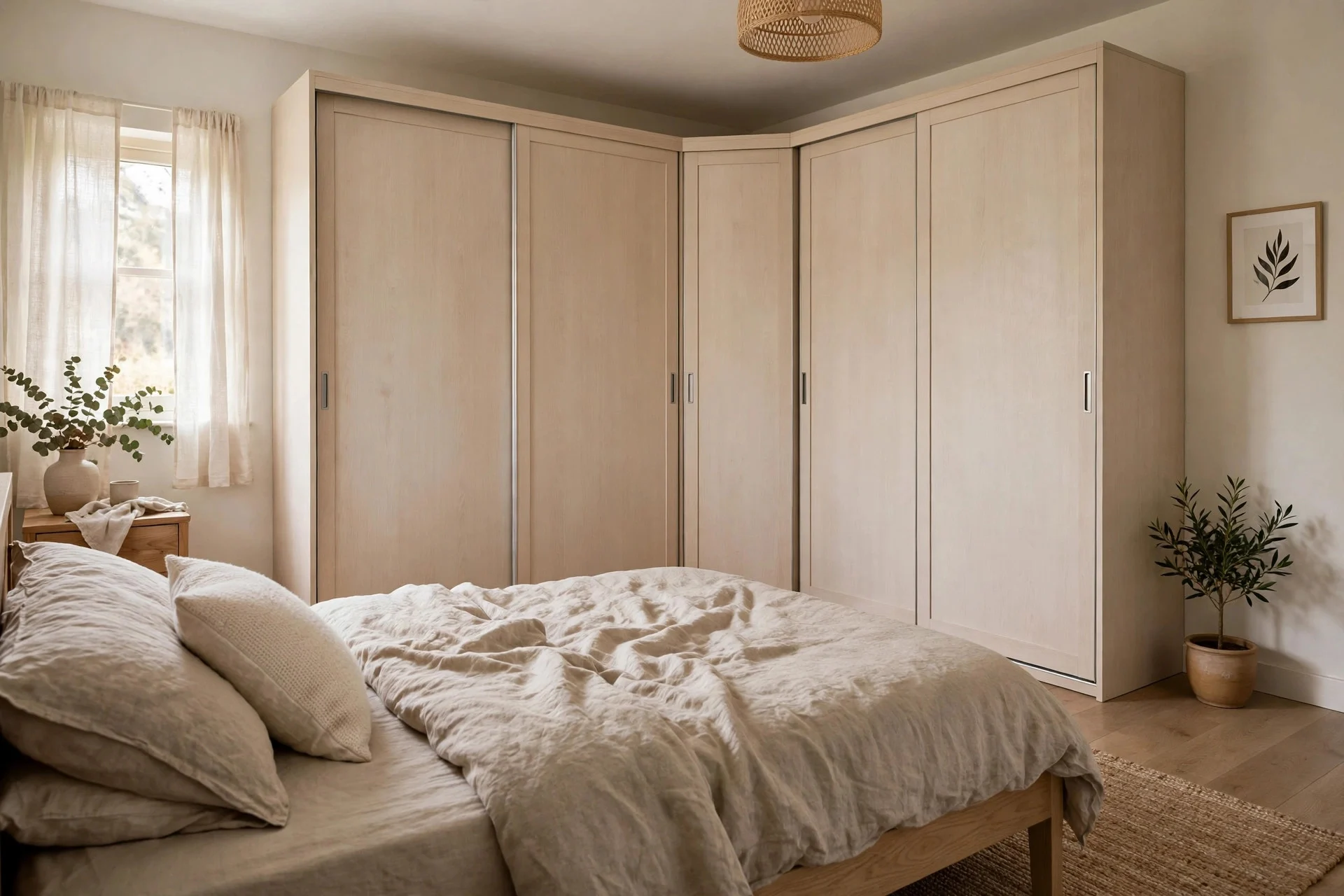
Corner space is wasted in a small bedroom, with one wall holding a short wardrobe and the corner itself left empty. An L-shaped sliding wardrobe uses both walls and turns that corner into usable hanging space, with a wider corner unit that holds long coats or dresses. Plan for at least 90 cm of clear run on each wall from the corner so the doors can slide without hitting the bed frame. The corner section needs a deeper carcass, often 80 to 90 cm, to make the diagonal opening work, and a fitter will add a curved or angled rail inside. Expect $1,200 to $3,000 for a made-to-measure corner build, since the corner hardware and panels add cost. Avoid cheap corner units with a fixed dead zone at the back, because that space becomes a graveyard for clothes you never see. Tip: hang rarely worn coats in the corner section and daily clothes on the straight runs, so you are not reaching past one set to find the other.
7. Sliding Doors With Frosted Glass Panels
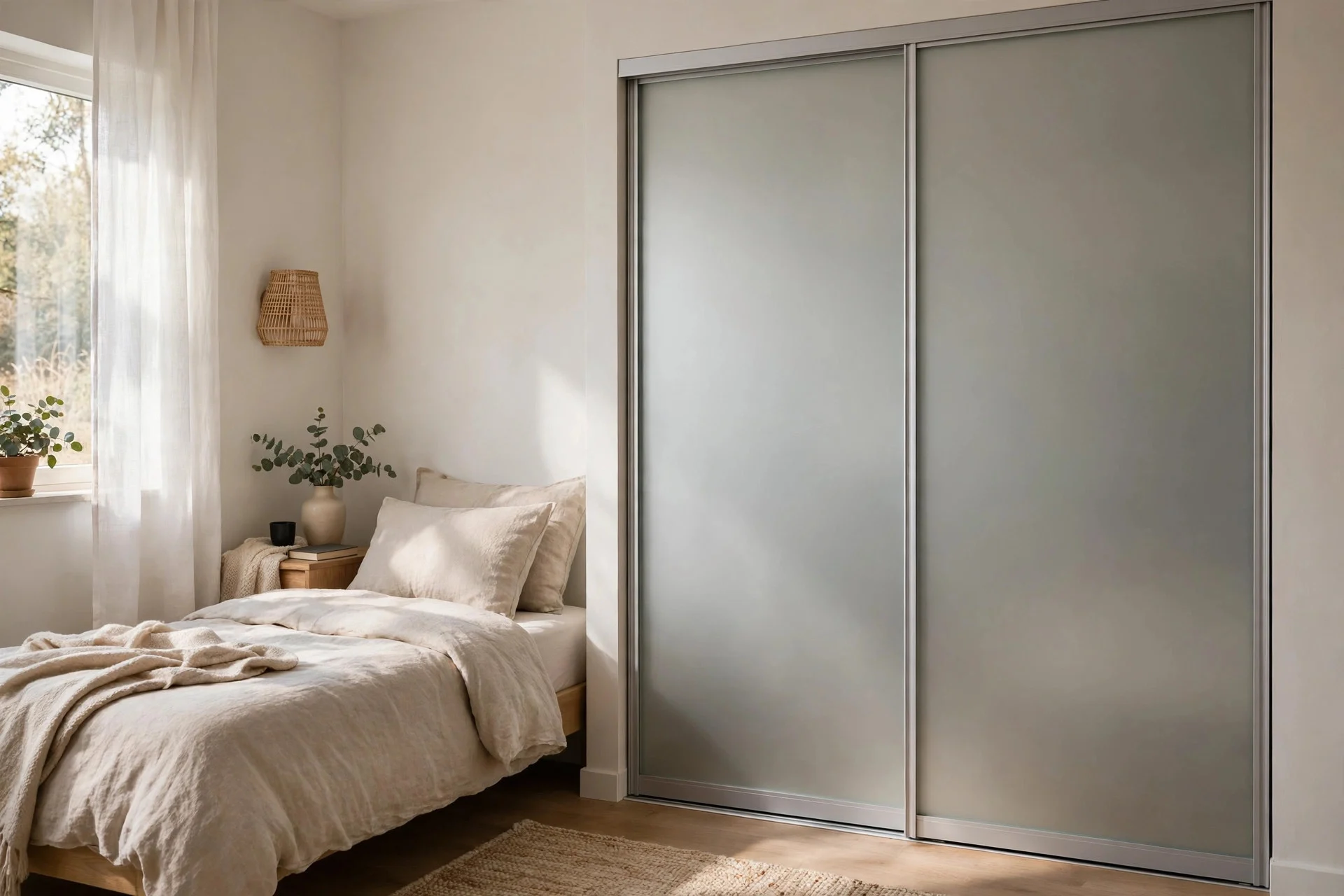
Frosted glass gives a lighter look than solid doors without showing every folded jumper and shoe box inside. It lets a little light through, which helps if the wardrobe sits on a dark wall, and it hides the mess that builds up behind closed doors in a busy week. Frosted panels work best on a frame with a slim aluminium edge, which keeps the glass rigid and stops the corners from chipping when doors bump. A two-door frosted set for a 180 cm opening costs $700 to $1,600, and the price rises if you choose low-iron glass for a clearer, less green tint. Avoid frosted glass in a room with small children who push doors hard, since glass panels need a firmer track and soft-close stops to stay safe. Tip: put the items you want to find fast, like work shirts, right behind the centre of each panel, where the frosted surface still gives a faint outline.
8. Budget Flat-Pack Sliding Wardrobe, Done Well
You do not need a custom build to get a sliding wardrobe that works. Flat-pack units in the 120 to 200 cm range cost $200 to $600, and two units side by side can fill a 240 cm wall for less than half the price of a fitted job. The trick is in the assembly: fix the units to the wall with proper plugs, level the top track with a spirit level before you hang the doors, and add a simple cornice strip along the top to hide the gap to the ceiling. Choose doors with metal rollers rather than plastic ones, since plastic wheels wear flat within a year on a wardrobe opened twice a day. Avoid placing a flat-pack wardrobe on thick carpet without a firm base board, because the track will flex and the doors will drift. Tip: add LED strip lights inside the top of each unit before you load it, since wiring is far easier when the shelves are still empty.
9. Sliding Wardrobe With Drawers and Shoe Racks Inside
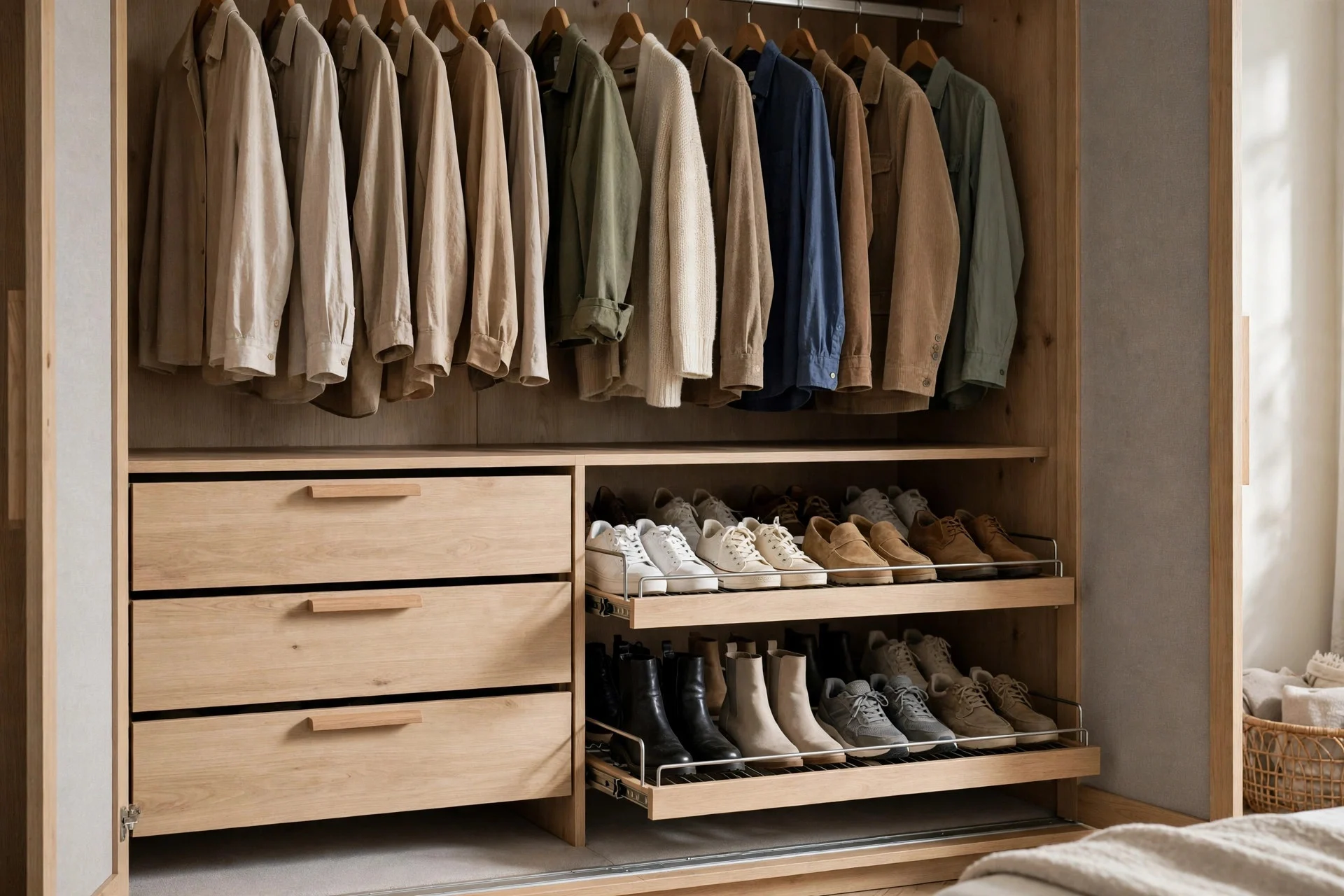
The doors get all the attention, but the inside decides whether a small bedroom wardrobe actually helps. A useful interior mixes one hanging rail for shirts and jackets, a double rail for shorter items, three or four drawers for underwear and T-shirts, and a shoe rack at the bottom. Allow 140 cm of hanging height for long coats, 100 cm for shirts, and drawers 35 to 45 cm wide so they do not jam when full. Shoe racks work best as pull-out wire trays or angled shelves, holding 6 to 10 pairs per 60 cm width depending on shoe size. A fitted interior adds $300 to $800 to the wardrobe cost, while add-on baskets and dividers run $50 to $200. Avoid filling every shelf to the top, since a wardrobe packed solid is harder to use than one with a little spare room. Tip: leave one empty shelf near eye level for the bag or outfit you plan to wear the next day.
10. Wardrobe Wall Behind the Bed Head
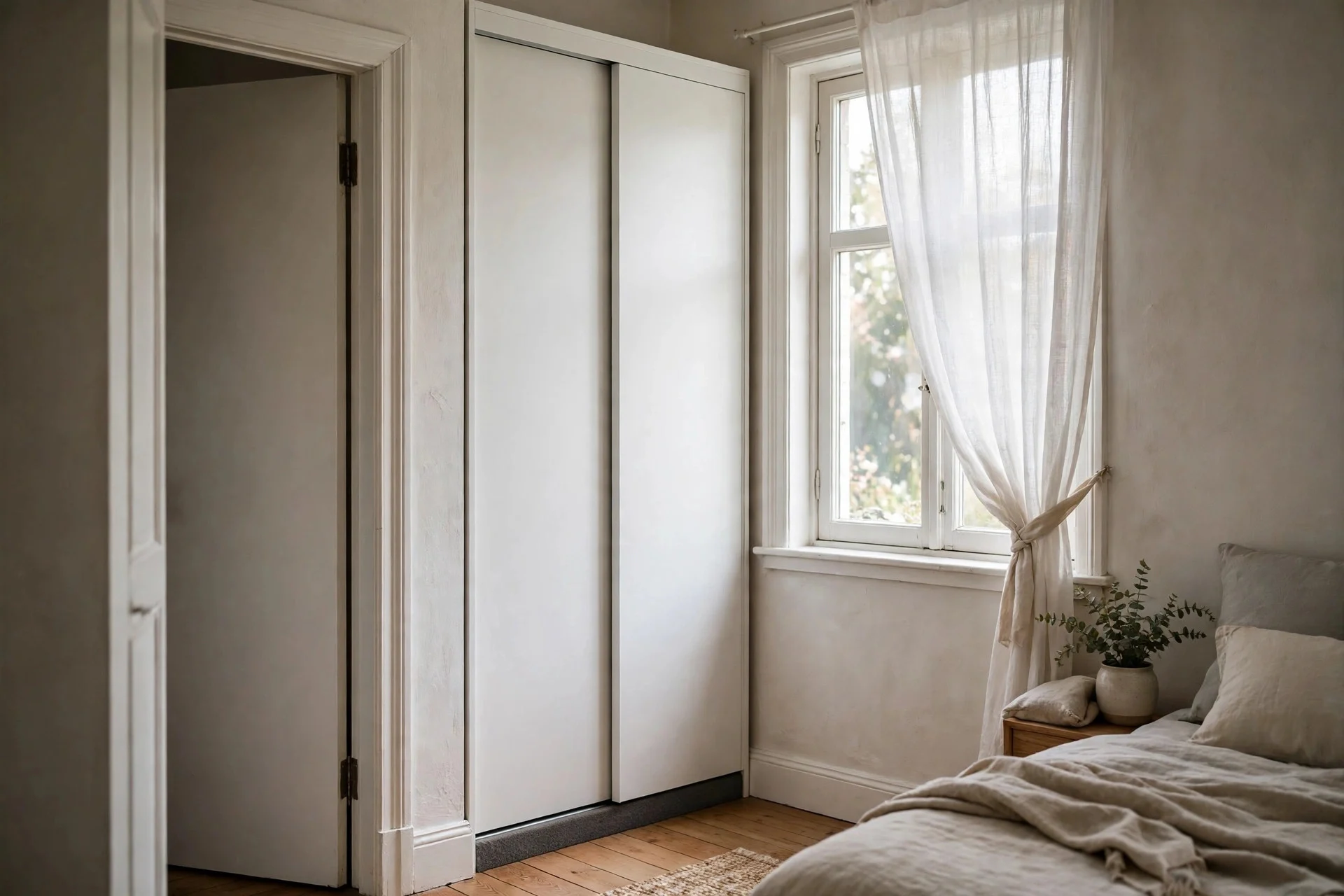
In a small bedroom, the wall behind the bed is sometimes the only wall long enough for a wardrobe. A sliding wardrobe behind the bed works if you build a headboard panel in front of it, leaving a 10 to 15 cm gap for the doors to slide and for bedding to tuck in. This layout suits rooms where the opposite wall holds the door or a window, and it keeps storage out of the walkway. The wardrobe depth stays at 55 to 60 cm, and the bed sits 10 to 15 cm proud of it, so allow for that loss in the room length. A headboard panel in matching board costs $100 to $300, plus the wardrobe itself. Avoid this layout if you need to reach the wardrobe while someone is in bed, since you will have to walk around the bed to open it. Tip: fit the headboard panel with a shelf on top for a phone, a book, and a glass of water, so you do not lose bedside storage.

11. Narrow Sliding Wardrobe for a Single Wall Gap
Not every small bedroom has a full wall to spare. A narrow wardrobe of 100 to 120 cm fits the gap between a door frame and a window, or the strip of wall beside a chimney breast, and sliding doors make that narrow fit usable because nothing swings into the gap. Inside, use a single hanging rail plus shelves above and below, rather than trying to fit double rails that crowd the space. A 100 cm wardrobe holds about 20 to 30 hanging items on one rail, plus folded clothes on three shelves, which suits one person or a guest room well. Prices run $250 to $800 for this size, with sliding kits for a single pair of doors at the lower end. Avoid over-deep units in a narrow gap, since a 65 cm deep wardrobe in a 250 cm wide room will pinch the walkway. Tip: measure the gap at the floor, the middle, and the top, and order to the smallest figure, then cover the rest with filler strips.
12. Sliding Wardrobe That Doubles as a Room Divider
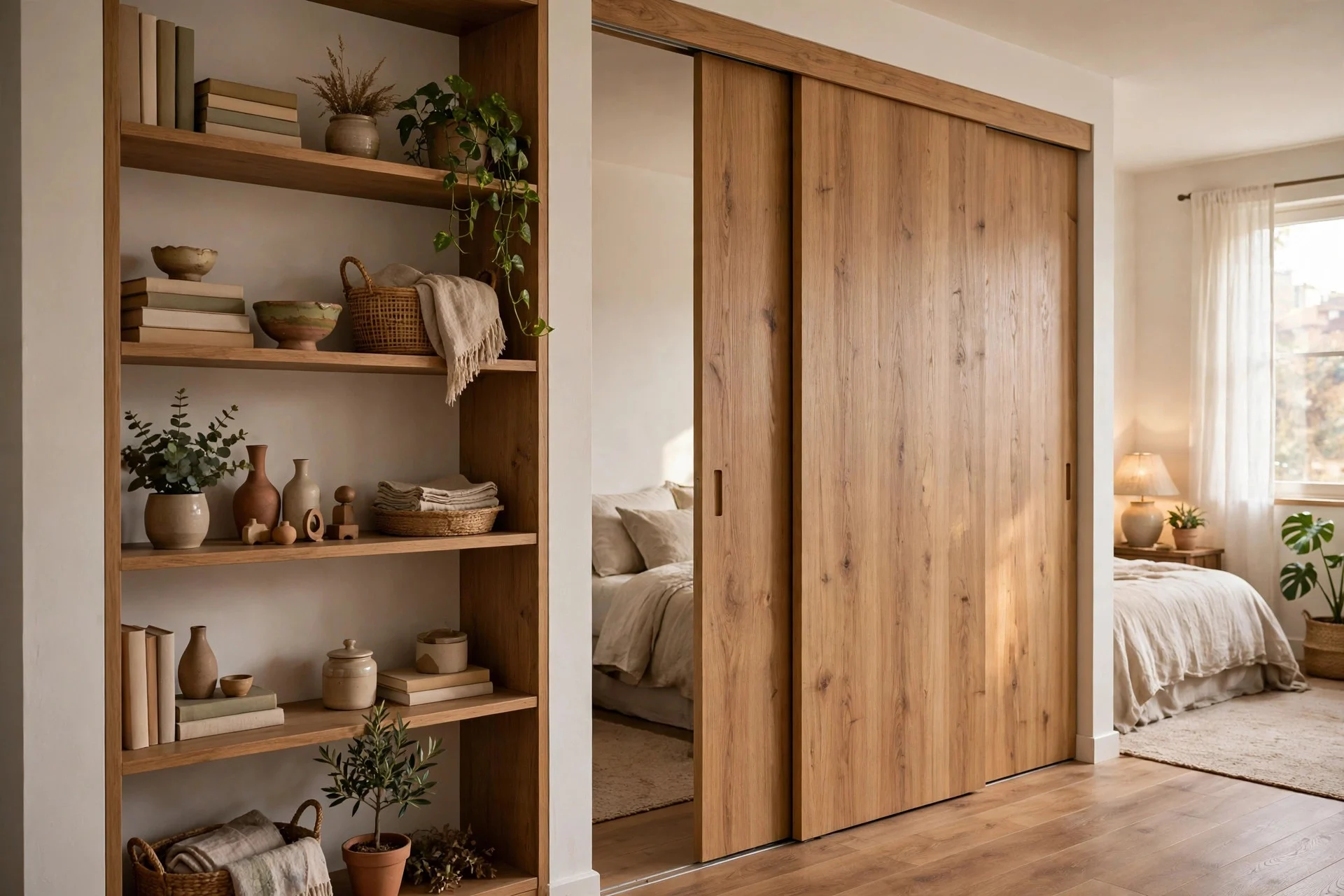
In a studio or a shared bedroom, a sliding wardrobe can divide sleeping space from a desk or dressing area without building a wall. A double-sided unit, 60 cm deep on each side or a single 60 cm unit with doors on one side and open shelves on the other, creates a clear boundary while adding storage. The unit needs to be fixed to the floor and ceiling for safety, since a freestanding divider can tip if a child climbs it or someone leans hard. Allow at least 90 cm of walkway on each side of the divider so neither zone feels cramped. A divider wardrobe costs $1,000 to $2,500 depending on length and finish, plus fitting. Avoid using a divider wardrobe as the only separation in a room that needs a door for privacy, since sound still travels around it. Tip: put the sliding doors on the bedroom side and open shelves on the work side, so books and desk items stay easy to reach.
13. Renter-Friendly Sliding Wardrobe: No Drilling Into Walls
Renters often cannot drill into walls or fit a permanent wardrobe, but a freestanding sliding wardrobe still gives the same floor-saving benefit. Look for units with a solid base plinth and an anti-tip strap that fixes to a picture rail or a heavy piece of furniture if wall plugs are not allowed. Freestanding sliding wardrobes in the 150 to 200 cm range cost $300 to $900 and can be taken apart and moved, which matters if the lease is short. Check the ceiling height before you buy, since many freestanding units are 210 to 220 cm tall and will not fit under low ceilings or beams. Avoid units that rely on the wall for stability with no other support, since a loaded wardrobe can lean forward when both doors are open. Tip: keep the heaviest items, like shoes and bags, on the bottom shelves to lower the centre of gravity and keep the unit steady.
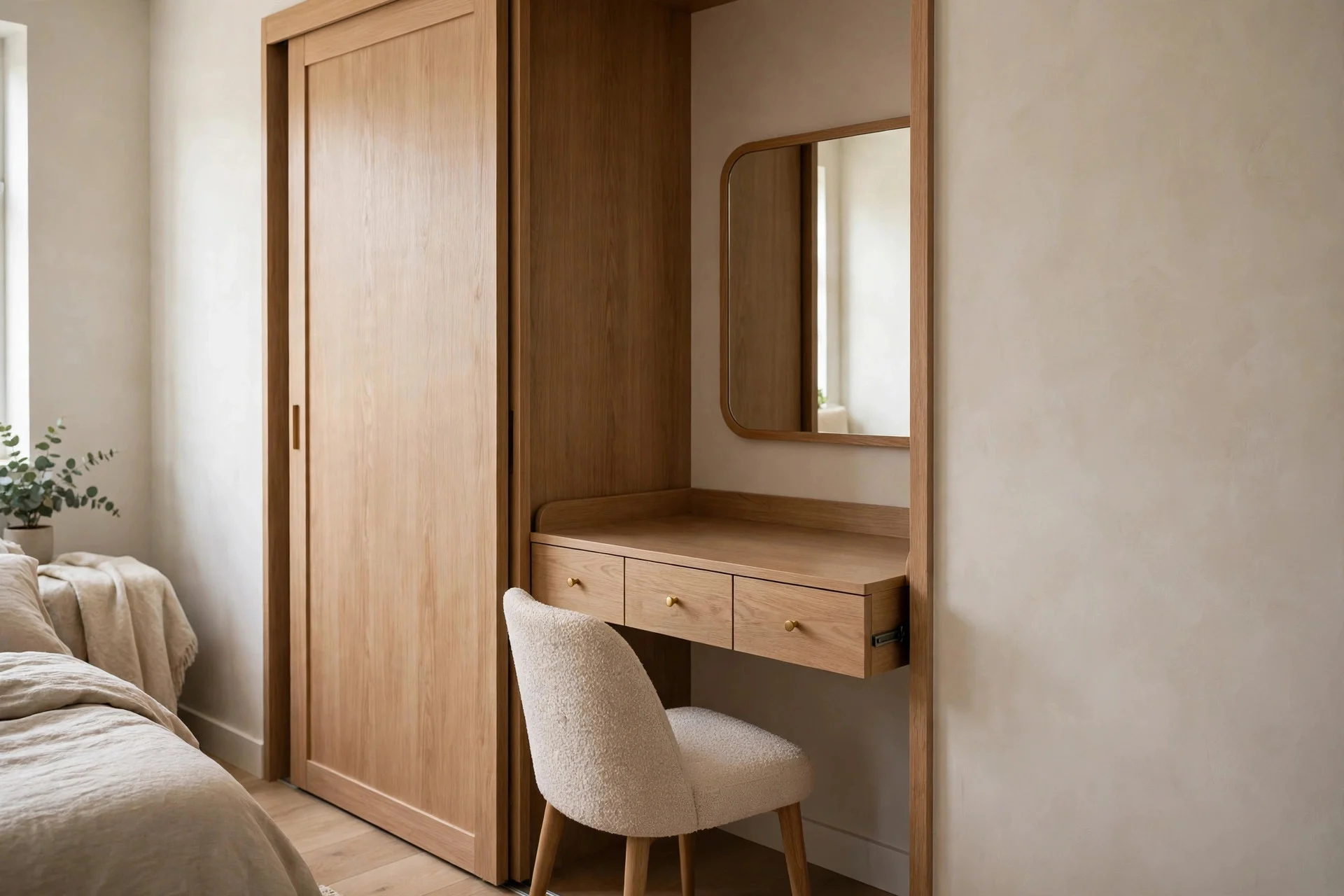
14. Sliding Wardrobe With a Built-In Dressing Table Section
If a small bedroom has no room for a separate dressing table, one section of the wardrobe can do that job. Replace one 60 cm wide bay of hanging space with a pull-out shelf at 75 cm height, a mirror on the inside of the sliding door, and two shallow drawers for makeup and jewellery. The pull-out shelf slides back when not in use, so the wardrobe doors still close flush. This works best in wardrobes 200 cm wide or more, where losing one bay still leaves enough hanging space. Add $200 to $500 for the pull-out shelf, mirror, and drawers, on top of the wardrobe price. Avoid placing the dressing section where the sliding door track crosses it, since a shelf that sticks out will block the door. Tip: fit a small LED light above the mirror inside the wardrobe, wired to a door sensor, so the light comes on only when that section is open.
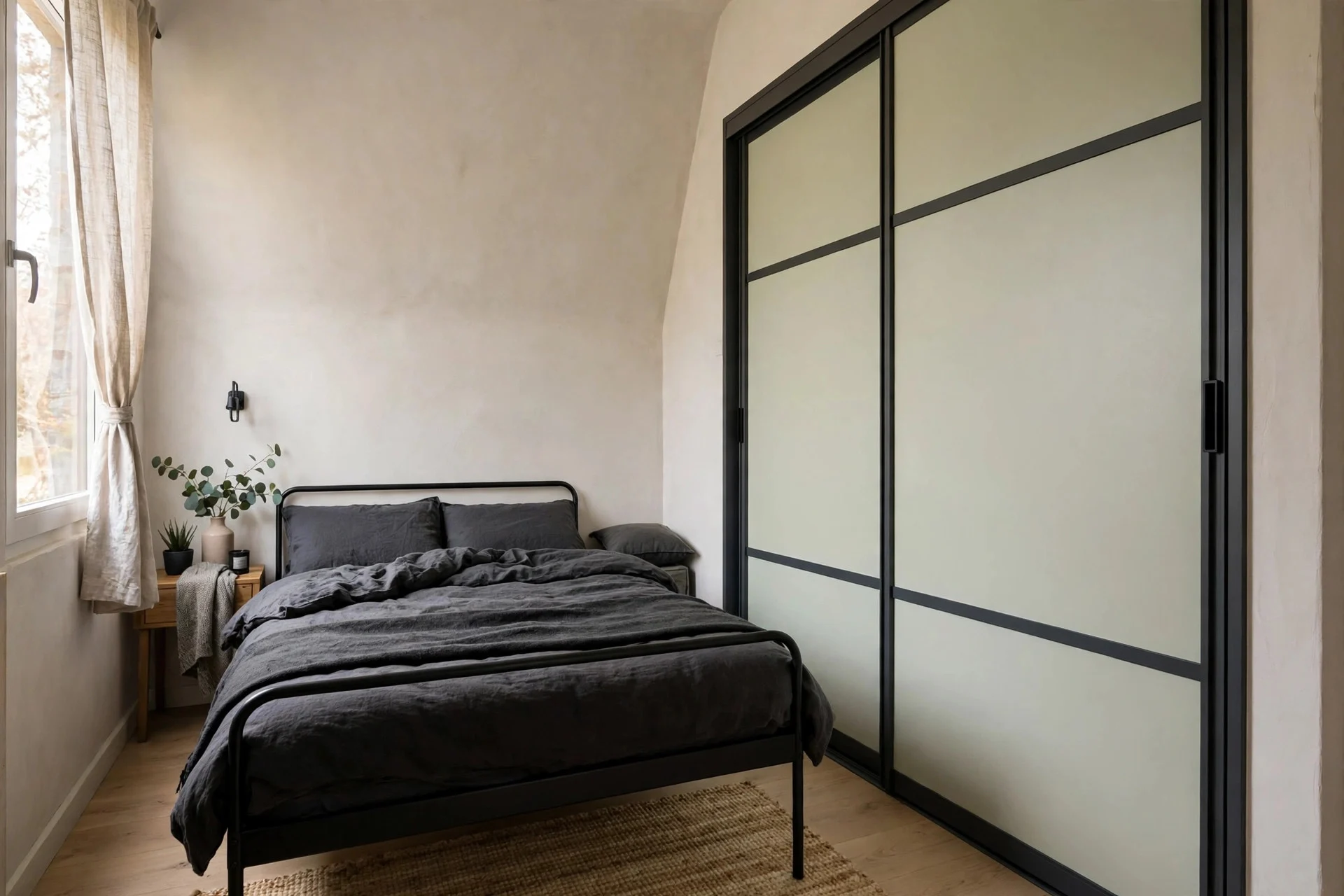
15. Dark-Framed Sliding Doors for a Calm, Grown-Up Look
Pale wardrobes can wash out in a room with white walls and pale floors, and a dark frame fixes that without darkening the whole room. Black, charcoal, or deep walnut aluminium frames around pale panels or mirrors give the wardrobe a clear edge and make it read as furniture rather than a blank wall. This suits bedrooms with dark bed frames, black picture frames, or wood floors, where the wardrobe frame picks up a colour already in the room. A dark-framed two-door set for a 180 cm opening costs $700 to $1,800, with the frame colour adding little to the base price. Avoid dark frames on all four sides of a very small, dark room with one small window, since the wardrobe can start to feel like a black block. Tip: repeat the dark frame colour once more in the room, on a bedside lamp or a picture frame, so the wardrobe looks planned rather than random.
FAQ
How deep should a small bedroom wardrobe with sliding doors be?
A depth of 55 to 60 cm works for most clothes on standard hangers. Shallower than 50 cm, and jackets crush against the doors; deeper than 65 cm, and clothes get lost at the back while the wardrobe eats floor space. Measure from the wall to the front of the track, not just the carcass, since the track adds 5 to 8 cm.
Are sliding wardrobes good for small bedroom wardrobe ideas on a budget?
Yes, if you pick the right size and build. Flat-pack sliding wardrobes from 120 to 200 cm wide cost $200 to $600 and save the floor space a hinged door would need. Spend the saving on metal rollers and a level track, since those two parts decide whether cheap doors still slide well after a year.
Can I fit a sliding wardrobe myself, or do I need a fitter?
A freestanding flat-pack unit is a fair DIY job for two people over a weekend, as long as the floor is level and the wall is straight. A fitted, floor-to-ceiling, or corner wardrobe is better left to a fitter, because out-of-square walls, sloping floors, and ceiling gaps need filler strips and track adjustments that are hard to fix after the doors are hung.
Conclusion
The best small bedroom wardrobe ideas with sliding doors all solve the same problem: they store a full wardrobe without asking the room to give up floor space for swinging doors. Start with honest measurements, pick a depth of 55 to 60 cm, and choose an interior that matches what you actually own, not what looks neat in a showroom. A full-wall build, a mirror front, or a simple flat-pack unit can all work, as long as the track is level, the rollers are metal, and the doors can slide without catching. Spend a little extra on the parts you touch every day, keep one shelf free, and clear the track once a month. Do that, and a small bedroom stops feeling like a storage problem and starts working like a room you can move around in.