Japandi brings together two styles that already agree. From Japan it takes low furniture, clean lines, and the habit of leaving space empty on purpose. From Scandinavia it takes pale wood, warm white walls, and soft textiles. Together, they make a bedroom that feels calm without feeling cold, and simple without feeling bare — and the same low furniture that makes a small Japandi bedroom feel bigger works just as well in a large one.
The style works because it is practical, not just pretty. A low bed is easier to make and harder to bump into at night. A short list of materials — wood, linen, cotton, paper, stone — means fewer decisions and fewer clashing colours. You do not need to buy a whole new bedroom to try it, and a Japandi bedroom on a budget is very doable: start with the bed and the light, then change one thing at a time: the bedding, the curtains, what sits on the nightstand. The ideas below give sizes, rough costs, and mistakes to skip, so you can build the look in a real bedroom.
1. Start With a Low Wooden Platform Bed
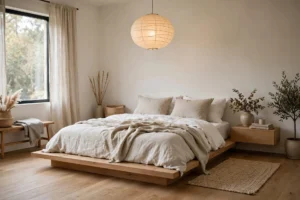
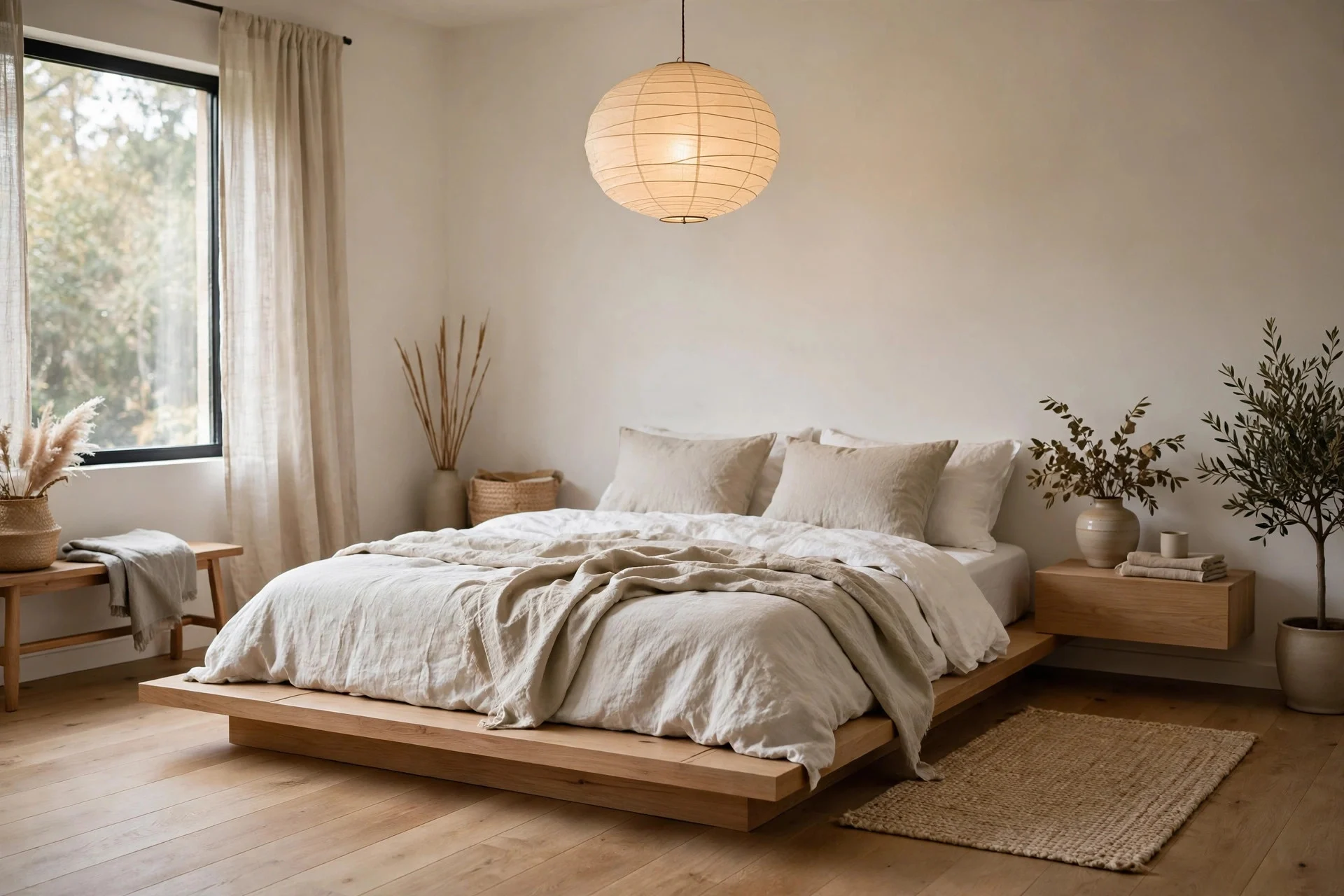
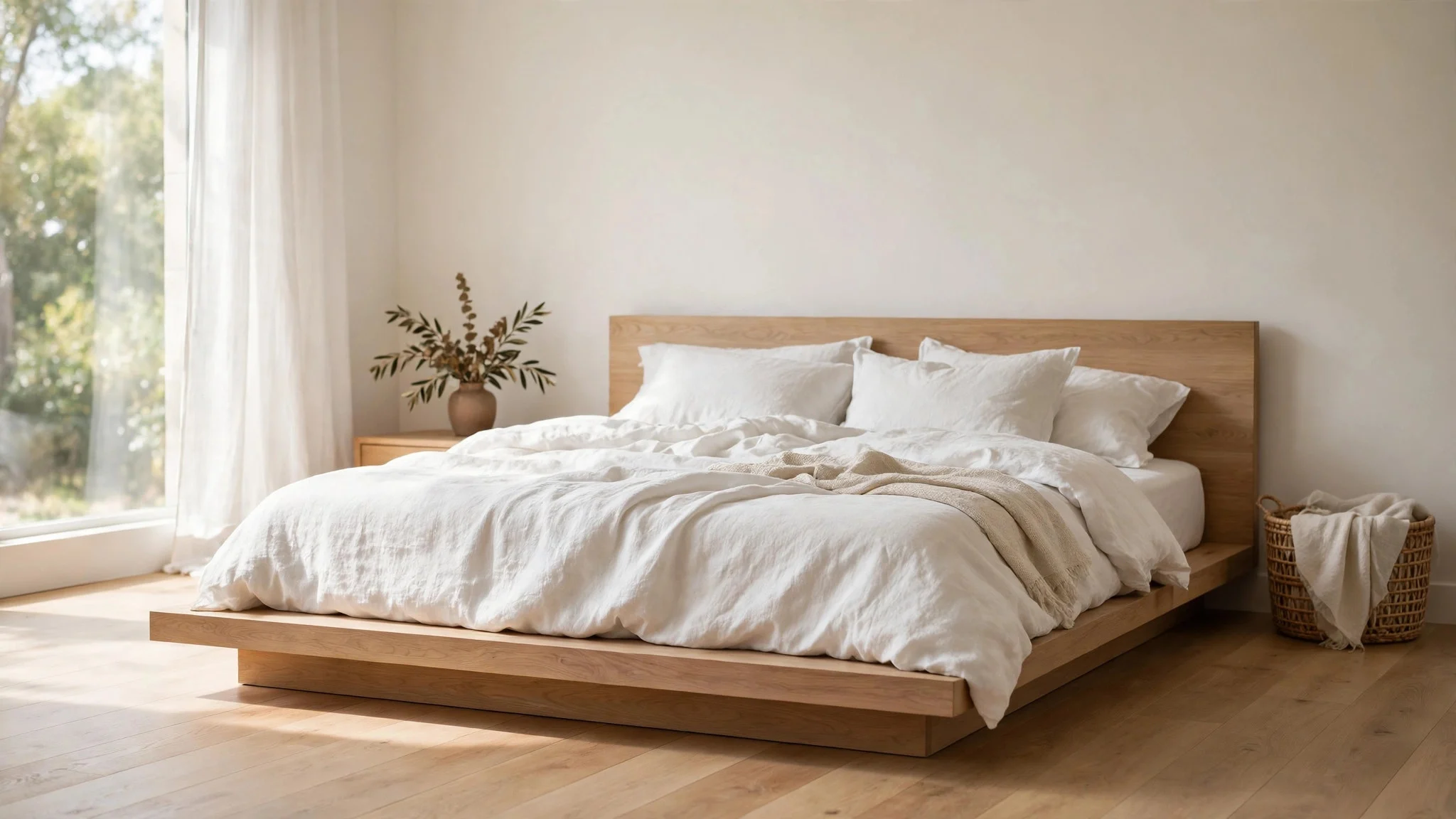
A low platform bed is the anchor of a Japandi bedroom, and it sets the height of everything else in the room. Look for a solid wood frame in oak, ash, or beech, with a headboard no higher than 60 to 80 cm and a mattress base sitting 20 to 30 cm off the floor. That low-profile line makes the ceiling feel higher and the room feel wider, which is useful in a small Japandi bedroom. A queen-size frame in solid oak costs around $400 to $1,200, while a pine or rubberwood version runs $200 to $500. Avoid tall, padded headboards and shiny metal frames, since both fight the quiet, natural look. Check that the slats are no more than 7 cm apart so a mattress does not sag between them. Tip: leave at least 60 cm of clear floor on each side of the bed so you can get in and out without shuffling sideways.
2. Keep the Palette Warm and Narrow
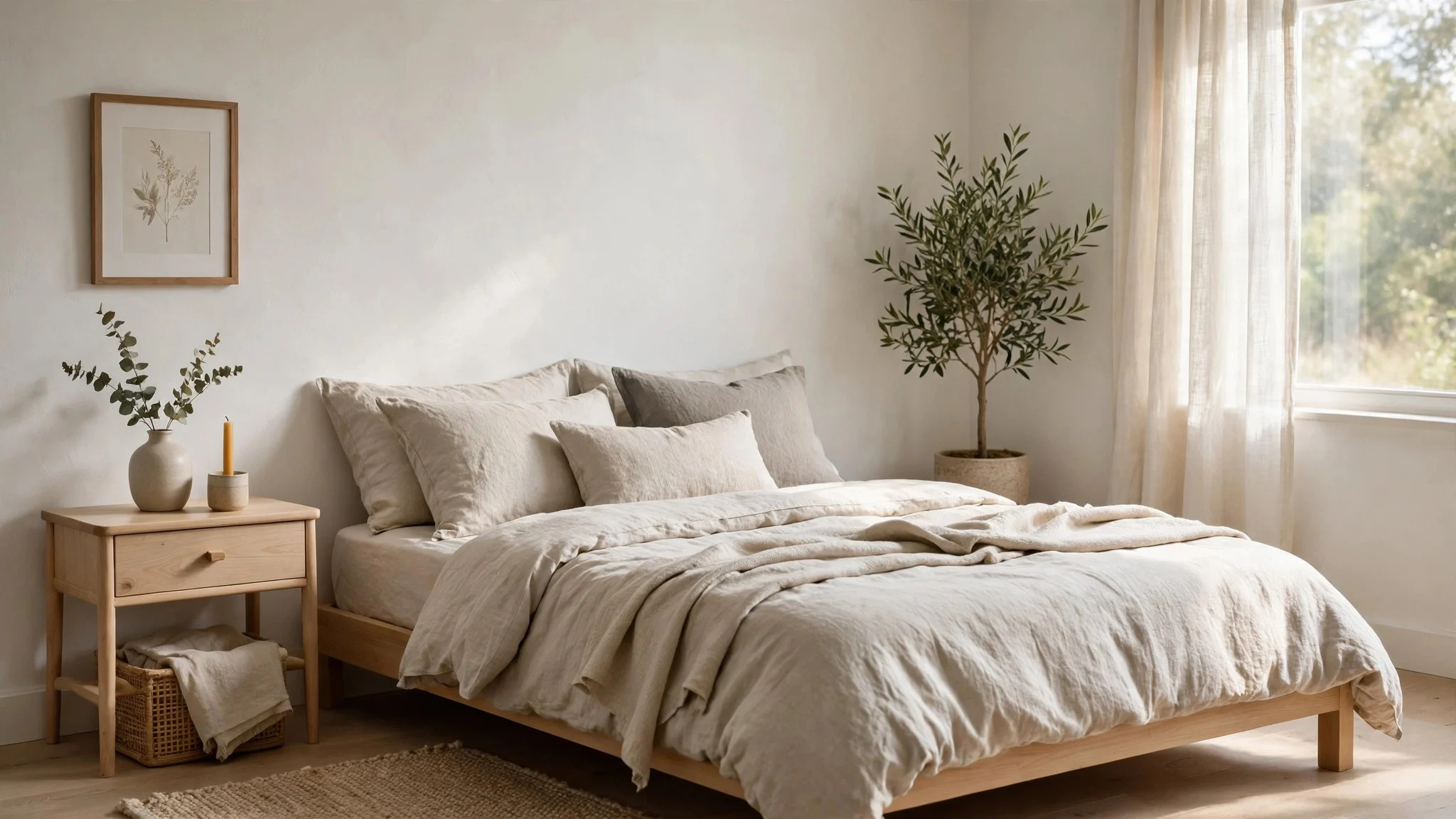
Japandi colour comes from a short list: warm white, soft beige, pale grey, light wood, and one or two darker notes such as charcoal or deep walnut. Paint the walls a warm white with a yellow or pink undertone rather than a cold blue-white. Bedding and curtains stay in the same family — oatmeal, stone, undyed linen. A single dark accent, like a black picture frame or a walnut bench, stops the room from washing out. A dark Japandi bedroom simply leans harder on the same trick: walnut and charcoal against warm white. If you rent, skip repainting and get the whole palette from bedding, curtains and a rug instead. Paint for one bedroom costs around $40 to $90, and a set of plain linen-look curtains runs $50 to $150. Avoid a bright accent wall or a patterned feature colour, since it breaks the calm. Tip: hold fabric and paint samples together in daylight before you buy, because warm whites can turn yellow under warm bulbs.
3. Use Paper Lanterns and Diffused Light
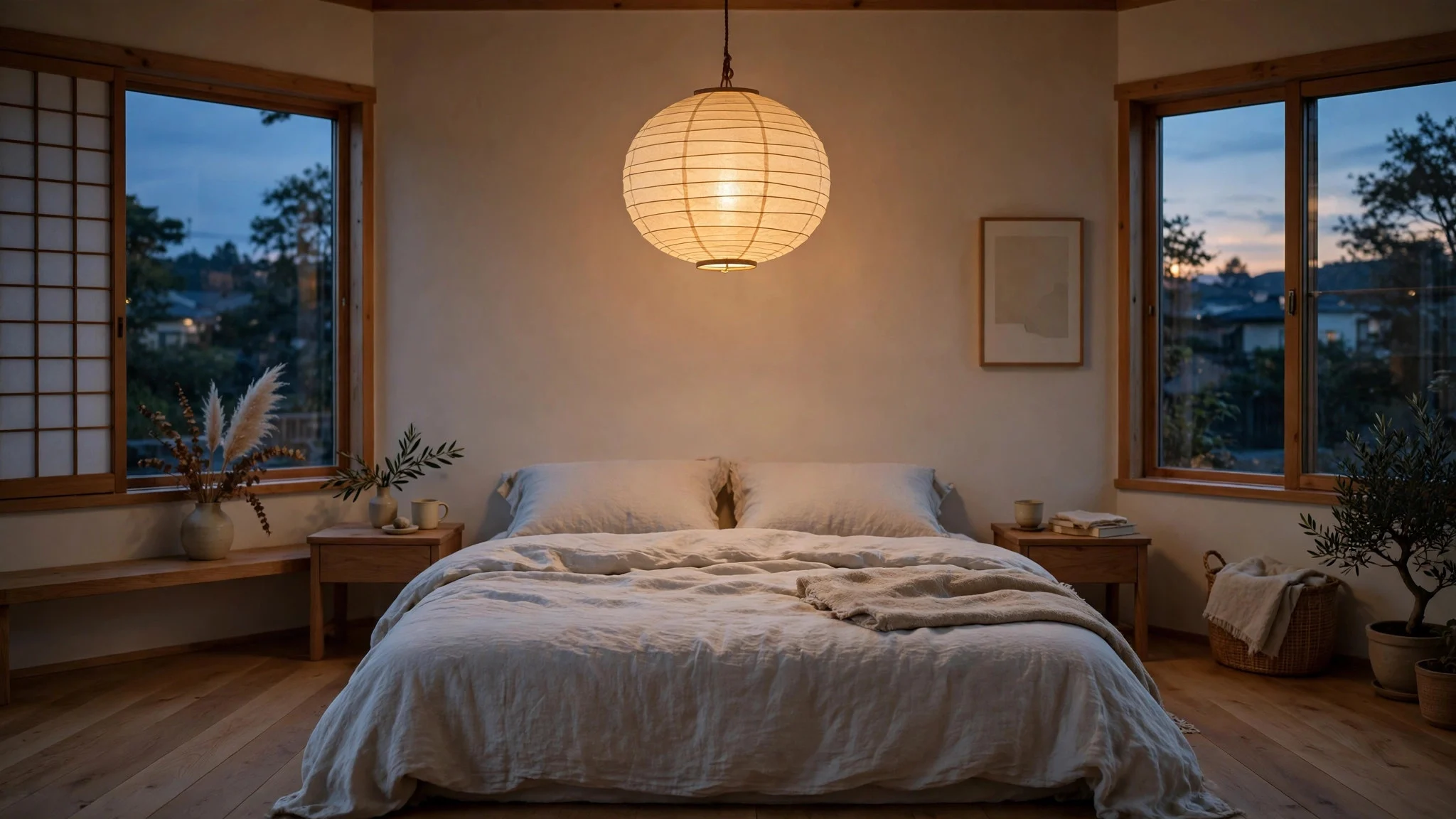
Harsh overhead light is the fastest way to ruin a calm bedroom, so Japandi rooms rely on soft, spread-out light instead. A paper lantern pendant, a rice-paper floor lamp, or a linen-shaded table lamp all scatter light rather than throwing a hard pool of it. Hang the pendant 180 to 200 cm above the floor so you can walk under it without ducking, and choose warm bulbs at 2700K for evenings. A good paper lantern costs $30 to $80, and a linen table lamp runs $40 to $120. Avoid bare bulbs and cool white LEDs above 4000K, which make wood look grey and skin look tired. Put the main light on a dimmer if you can, since a dimmer costs little and changes the room more than a new lamp. Tip: test the bulb at night before you commit, because a bulb that looks fine in the shop can feel cold at home.
4. Layer Linen and Cotton Bedding, Not Patterns
Bedding carries most of the texture in a cozy Japandi bedroom, so it should feel good to touch and look plain from the door. Start with washed linen or cotton sheets in white, oatmeal, or pale grey, then add a light duvet and a folded throw at the foot of the bed. Skip busy prints and shiny satin, which pull the eye away from the wood and the light. A linen duvet set for a queen bed costs around $120 to $300, with cotton percale sets at $60 to $150. Wash linen before the first use, since it softens a lot after one or two washes and shrinks slightly. Avoid piling on more than two pillows per side plus a sleeping pillow each, or the bed starts to look dressed for a photo rather than for sleep. Tip: choose a duvet one size larger than the bed so it drapes over the sides without pulling tight.

5. Clear the Surfaces and Give Everything a Home
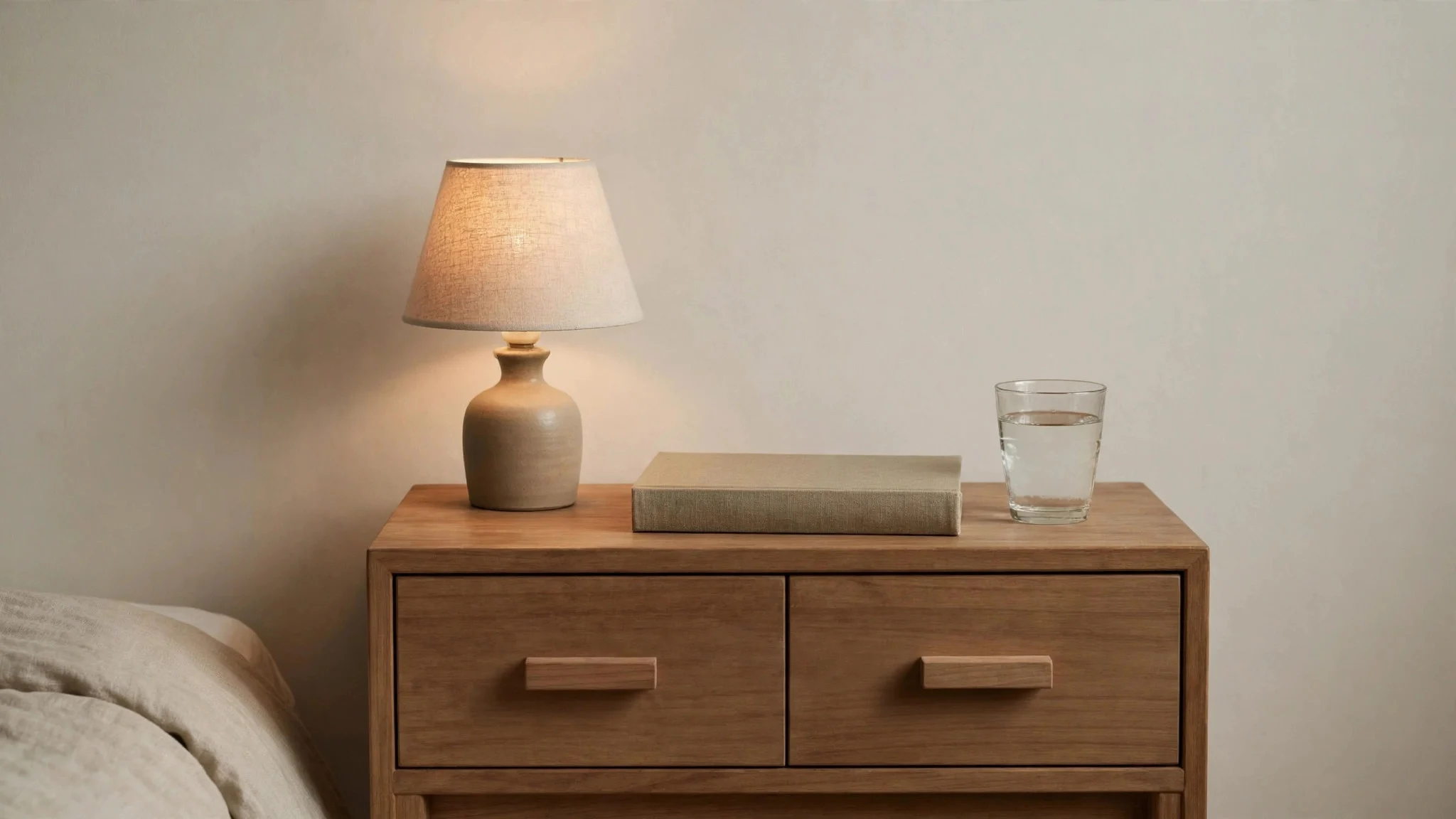
A Japandi bedroom looks uncluttered because most things live behind closed doors, not because the owner owns nothing. Give every item a fixed place: chargers in a nightstand drawer, books on one shelf, spare blankets in a lidded basket under the bed or in the wardrobe. Keep the nightstand top to three things — a lamp, a glass of water, and a book — and the dresser top to one or two objects. A plain lidded storage basket costs $25 to $60, and a simple wooden tray for small items runs $15 to $40. Avoid open baskets stuffed with odds and ends, since visible clutter defeats the point of hiding it. Do a ten-minute reset each evening: return stray clothes to a hook or the wardrobe, and clear the nightstand. Tip: if something has no home after a week, it probably does not belong in the bedroom at all.
6. Mix Two Woods, Not Five
Wood does the decorating in a Japandi room, but too many species in one room look like a furniture sale. Pick one main wood — pale oak or ash — for the bed, nightstands, and dresser, then add one darker wood, such as walnut, for a bench, a frame, or a tray. That pairing of pale oak and dark wood gives the room its Japanese side. Keep finishes matte or oiled rather than high gloss, so the grain stays visible. A matching pair of oak nightstands costs around $150 to $400, and a walnut bench runs $100 to $300. Avoid mixing orange-toned pine with grey-washed oak in the same sightline. If you already own mismatched wood furniture, a single dark wood tray or frame can tie two pieces together without replacing either. Tip: if you are building the look on a budget, sand and oil a secondhand wooden piece instead of painting it, since oil brings the grain back and suits the style better.

7. Put a Woven Rug Beside the Bed
Bare floors suit Japandi, but stepping onto cold wood first thing in the morning does not. A flat-weave wool, jute, or cotton rug beside the bed adds warmth underfoot and softens the sound of the room. Choose a rug 60 to 80 cm wide and 120 to 150 cm long for each side of a queen bed, or one large rug, 200 by 300 cm, that sits under the lower two-thirds of the bed and extends 60 cm past each side. A good wool flat-weave in that size costs around $150 to $400, while jute runs $80 to $250. Avoid thick shaggy rugs, which collect dust and fight the clean lines, and avoid rugs that stop short of the bedside, leaving a strip of bare floor where your feet land. Tip: add a thin non-slip pad underneath, since a rug that slides on wood is a trip risk at night.
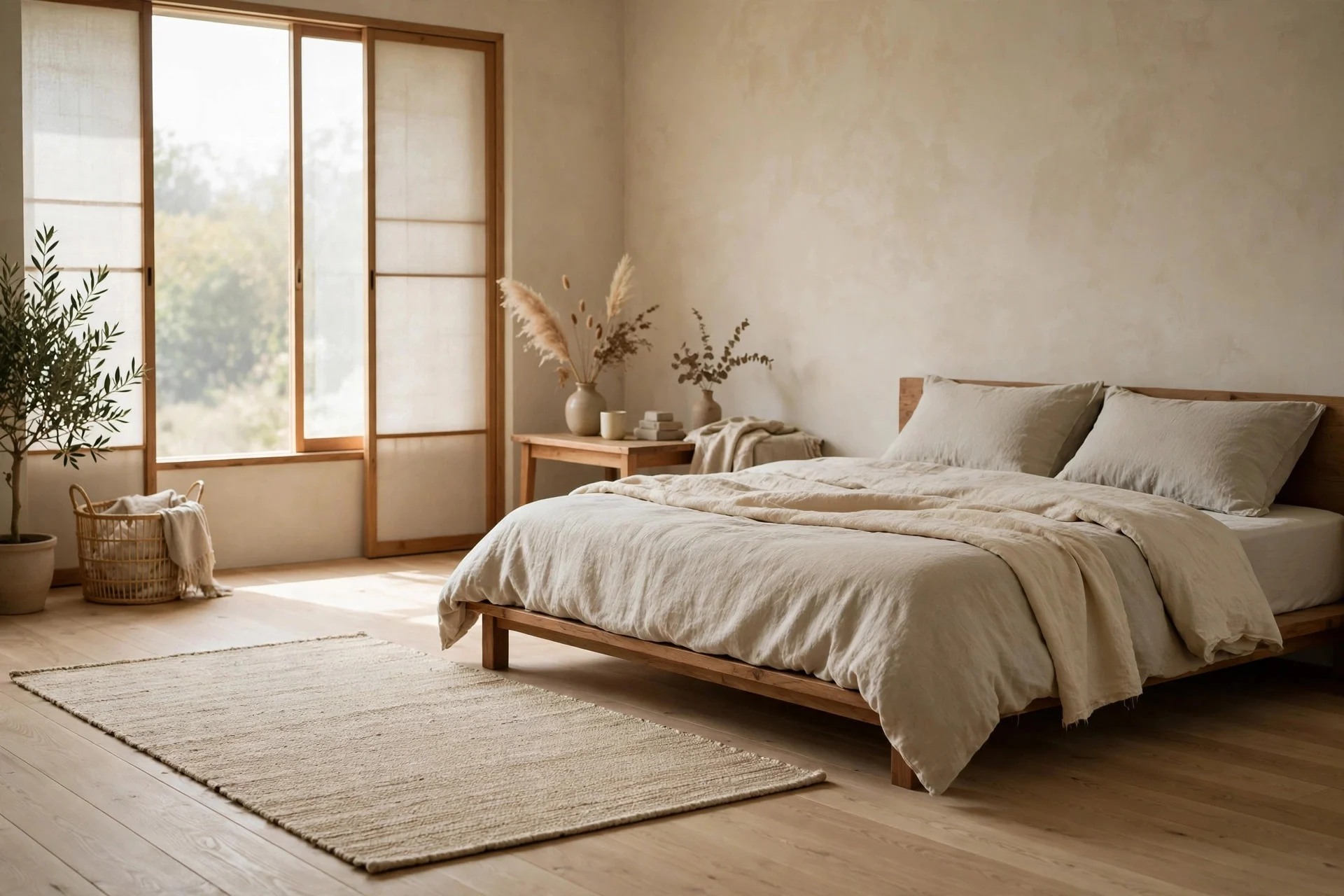
8. Try a Shoji-Style Screen or Sliding Panel
A shoji-style screen brings the Japanese half of Japandi into the room in one piece, and it is useful as well as decorative. Use a freestanding three-panel screen to hide a laundry basket, a desk corner, or a wardrobe that has no doors, or fit a sliding panel over a closet opening. Real shoji uses wood frames and translucent paper; modern versions use frosted acrylic or fabric, which last longer in a bedroom and wipe clean. A freestanding screen 180 cm tall costs around $100 to $300, and a sliding panel kit runs $150 to $400. Avoid placing a paper screen where it will get knocked daily, since torn paper is hard to patch neatly. Keep the frame colour close to your bed frame wood so the screen reads as part of the room. Tip: place the screen where it catches morning light, since the glow through the panel is the whole point.
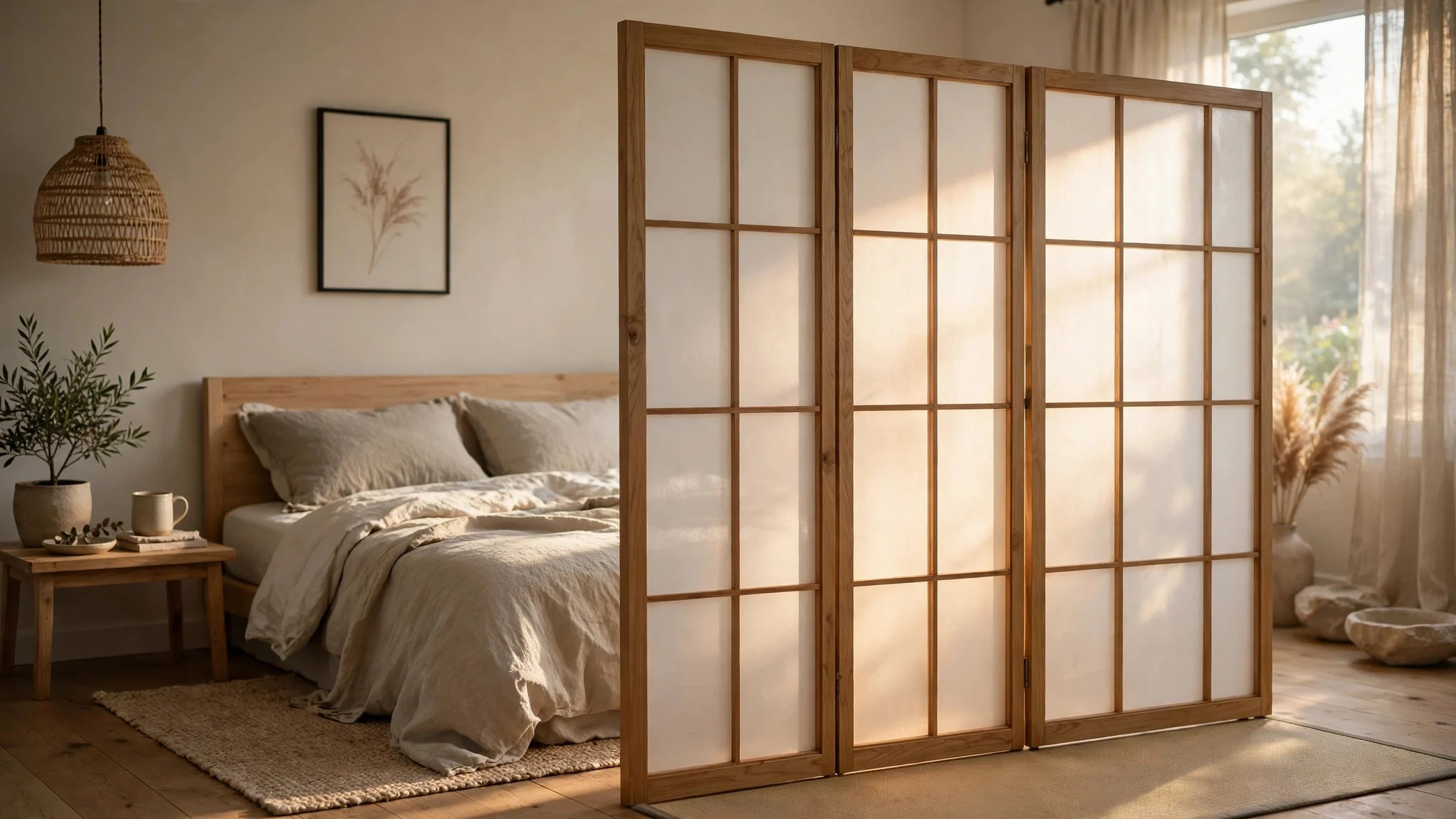
9. Choose One Low Bench at the Foot of the Bed
One low wooden bench at the foot of the bed does three jobs: a place to sit while putting on shoes, a spot for tomorrow’s clothes, and a visual full stop at the end of the bed. Pick a bench 100 to 130 cm long for a queen bed, 35 to 45 cm high, in the same wood as the bed frame or in your one darker wood. A plain oak bench costs around $100 to $300, and a simple upholstered version in natural linen runs $150 to $400. Avoid a bench with a high back or arms, which turns it into a chair and crowds the walkway, and do not pile clothes on it. Leave 60 to 70 cm between the bench and the wall or door so you can walk past it easily. Tip: fold one throw over the bench instead of draping clothes, so it always looks finished.

10. Display One Handmade Object, Not a Collection
Japandi rooms borrow the idea of wabi-sabi: beauty in a handmade, slightly uneven object, shown on its own. Pick one piece — a ceramic vase, a stone bowl, a handmade mug — and give it a clear spot on the dresser or nightstand, with nothing crowded next to it. A handmade ceramic vase costs around $25 to $80, and a small stone or wooden bowl runs $15 to $50. Avoid grouping five small ornaments together, since a cluster reads as clutter even when each piece is lovely. Choose objects with a matte finish and a natural colour, and skip anything glossy, gold, or brightly painted. If you love collecting, keep the rest in a cupboard and rotate one piece every few weeks, so the room changes without filling up. Tip: put a single stem of eucalyptus or a dried grass in the vase, since fresh flowers need changing and dried stems last for months.
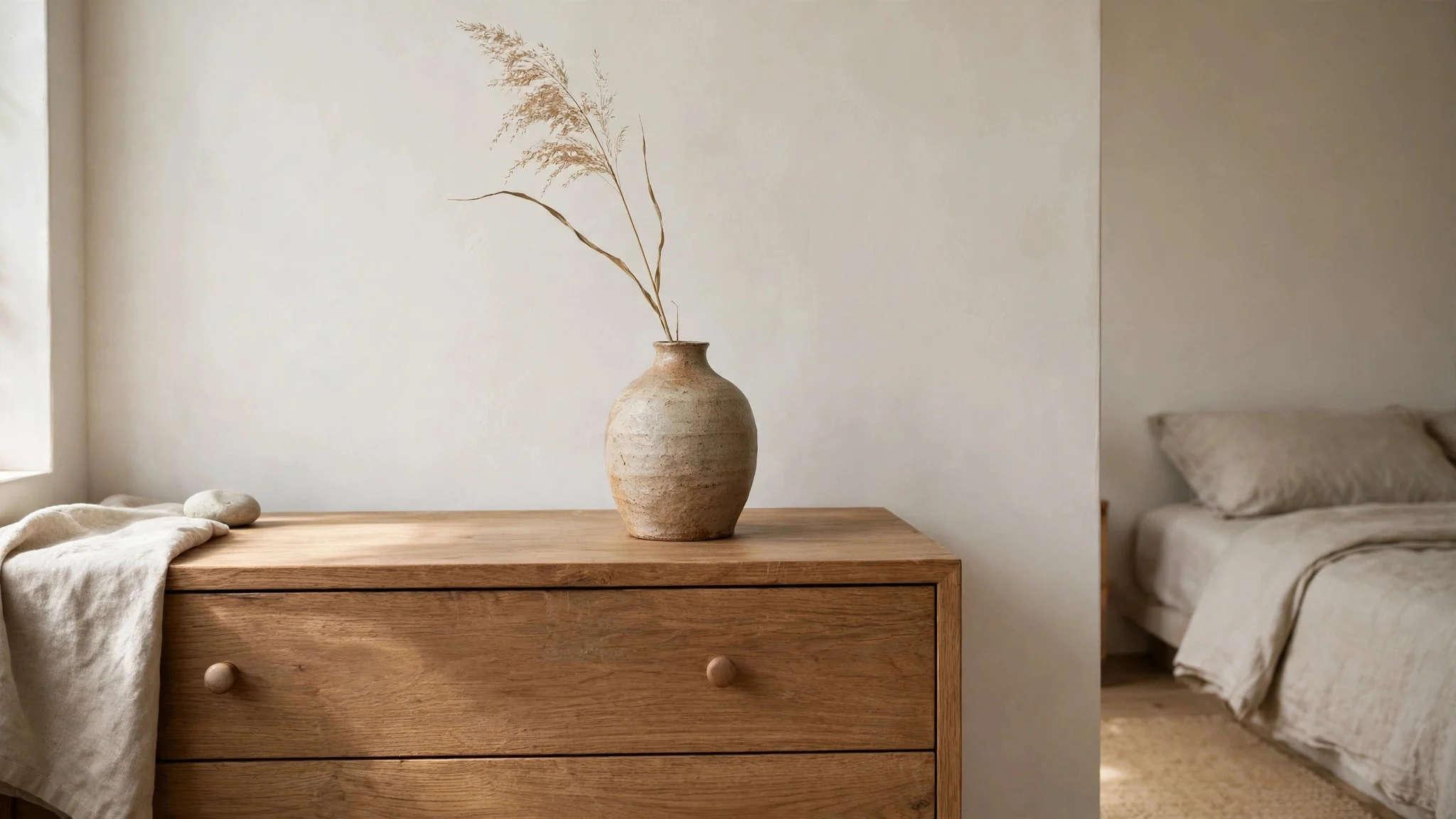
11. Add Thin Black Accents for Definition
Without a dark note, a pale wood and white room can blur into one soft wash. Thin black lines fix that: a slim black frame around a print, black metal lamp bases, dark drawer pulls, or a black cord on a pendant light. It is also the cheapest way to borrow a little of the dark Japandi mood without repainting anything. The key is thin and few — two or three black touches in the whole room, not black furniture. A set of slim black frames costs $20 to $60, and black drawer pulls run $3 to $8 each. Avoid a black bed frame, a black wardrobe, or a black rug, since a large black block pulls the room dark and heavy. Keep the black the same finish throughout, matte rather than gloss. Tip: if you are unsure, add one black frame first and live with it for a week.
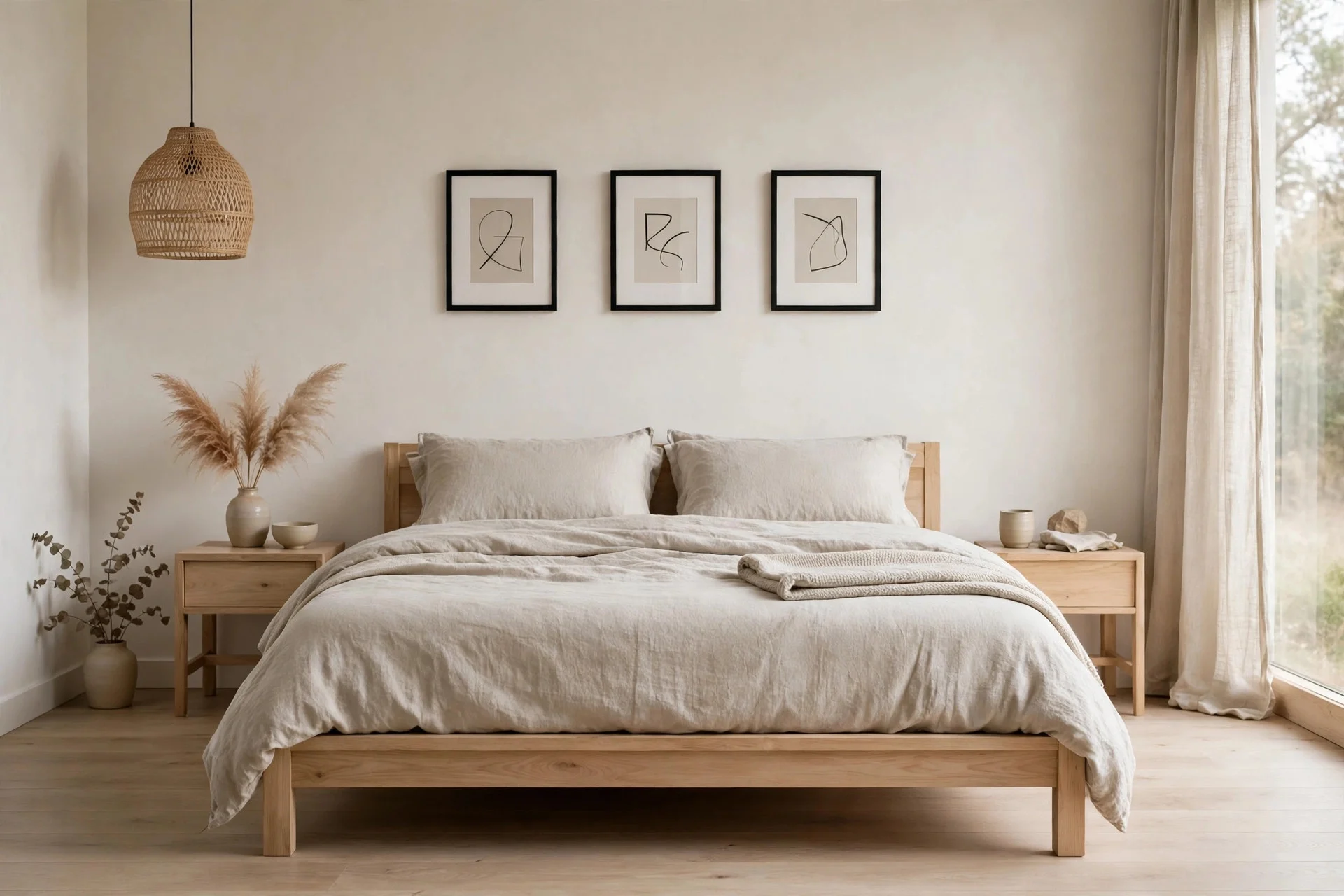
12. Keep One Plant, in a Plain Pot
One healthy plant adds life and a touch of green without turning the bedroom into a jungle. A single olive tree, a snake plant, or a fiddle-leaf fig in a plain ceramic, stone, or woven pot suits the style and needs little care. Place it in a corner with indirect light, at least 30 cm from the wall so air moves around it, and use a pot 25 to 35 cm wide so the plant stays in proportion to the room. A snake plant in a ceramic pot costs around $30 to $70, and a small olive tree runs $50 to $120. Avoid a cluster of small pots on every surface, since that adds visual noise and watering chores. Wipe the leaves once a month, since dust shows fast on broad leaves and dulls the green. Tip: pick a plant that tolerates low light if your window faces north, rather than fighting to keep a sun-lover alive.
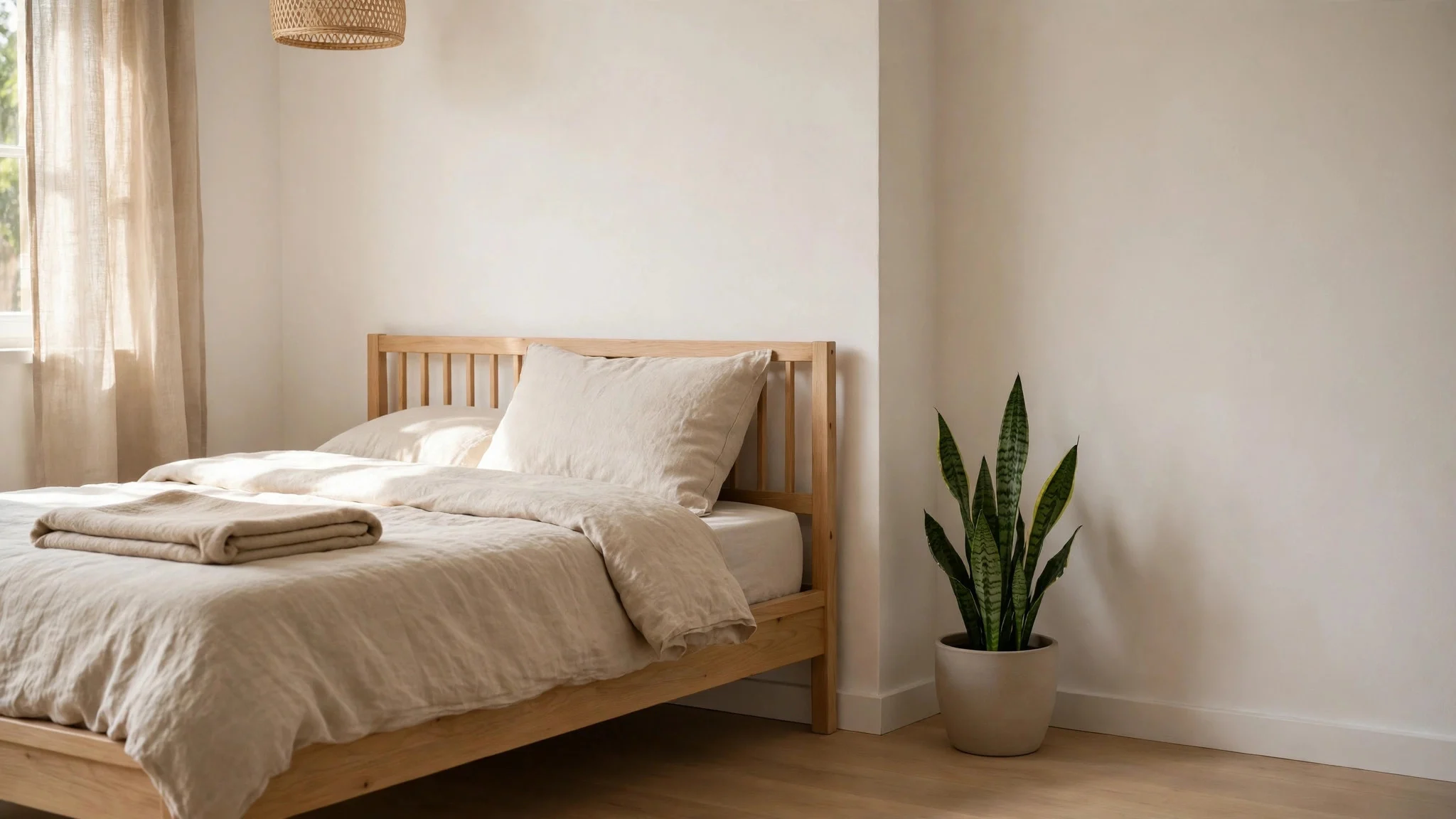
13. Soften the Window With Linen Curtains
Curtains in a Japandi bedroom should filter light, not block it. Choose unlined or lightly lined linen or cotton curtains in white, oatmeal, or pale grey, hung from a simple wooden or black rod. Hang the rod 10 to 15 cm above the window frame and 10 to 20 cm wider on each side, so the curtains stack off the glass and let in the full window of light. For a standard 150 cm wide window, a pair of linen curtains costs around $60 to $180. Avoid heavy blackout curtains with a shiny backing, and avoid short curtains that end at the sill, since both make the window look smaller. If you need darkness to sleep, fit a plain roller blind behind the linen curtains and keep the linen as the visible layer. Tip: let the curtains just brush the floor rather than pooling, since pooled fabric collects dust and looks untidy in a simple room.

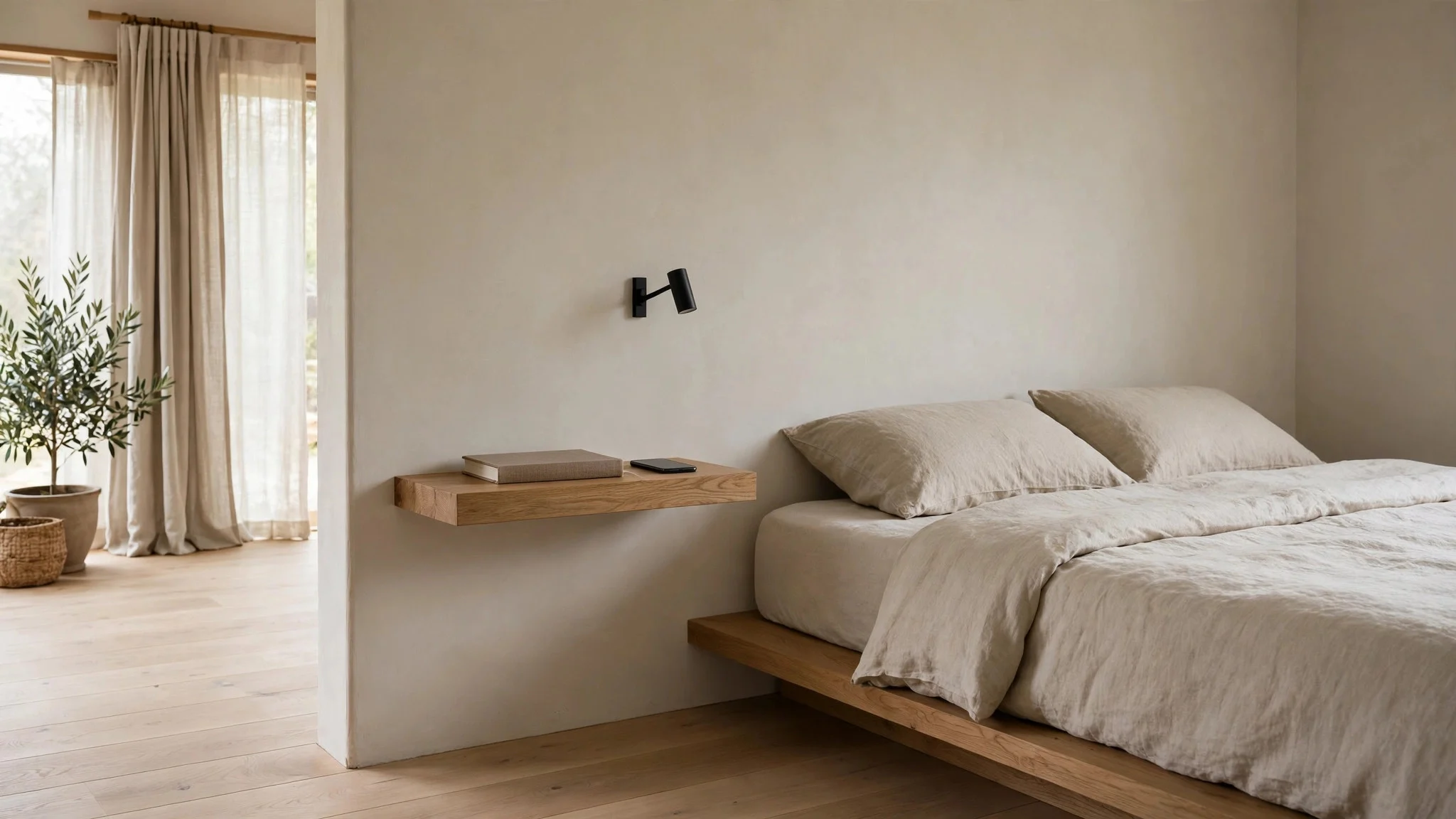
14. Swap Bedside Tables for Floating Shelves or Wall Lights
Nightstands with drawers are useful, but in a small Japandi bedroom they can make the bed wall feel crowded. A floating wooden shelf, 40 to 50 cm wide and 25 to 30 cm deep, holds a lamp, a book, and a phone, and leaves the floor clear underneath. Pair it with a wall-mounted reading light, so the lamp does not take up the whole shelf. A solid oak floating shelf costs around $30 to $80, and a simple wall reading light runs $40 to $100. Avoid shelves deeper than 30 cm, since they jut out and catch hips in the dark. Fix the shelf into wall studs or use proper plasterboard fixings rated for at least 10 kg, because a shelf that sags looks worse than a nightstand ever did. Tip: run the phone charger cable through a small clip under the shelf, so the cord does not hang down the wall.
15. Keep the Calm With a Weekly Reset
A Japandi bedroom stays calm because of a habit, not a shopping list. Once a week, spend fifteen minutes resetting the room: strip and remake the bed, dust the wood, fold the throw, clear the nightstand back to its three items, and return anything that wandered in from another room. Swap the throw and cushion cover with the seasons — wool in winter, cotton in summer — so the room feels fresh without new furniture. A spare throw costs $30 to $80, and a linen cushion cover runs $15 to $35. Avoid buying a new decorative object every time the room feels stale. If the room still feels busy after a reset, take one thing out rather than moving things around. Tip: do the reset on the same day each week, so it becomes routine instead of a chore you keep putting off.
FAQ
What is a Japandi bedroom?
A Japandi bedroom combines Japanese and Scandinavian design: low wooden furniture, warm neutral colours, natural materials such as linen, cotton, wood and stone, and soft, diffused light. Storage stays hidden, with only a few objects on show. The result feels calm and warm rather than bare or cold.
How much does it cost to decorate a Japandi bedroom?
A simple change, such as new linen bedding, paper lighting and linen curtains, costs around $250 to $600. A fuller change with a low wooden platform bed, matching nightstands and a rug runs around $800 to $2,000, depending on wood and textile quality. Start with the bed and the light, since those shape the room most.
Is Japandi suitable for a small bedroom?
Yes — a small Japandi bedroom is one of the best uses of the style, because low furniture makes the ceiling feel higher and a narrow colour palette makes the walls feel further apart. Keep the bed low, use floating shelves instead of bulky nightstands, and let one rug and one plant do the work. Avoid adding too many pieces, since a small room shows clutter faster.
Conclusion
A Japandi bedroom does not need a big budget or a full furniture swap. It needs a low wooden bed, a short list of warm colours, natural materials you can touch, and light that is soft rather than harsh. Clear the surfaces, give everything a home, and let one handmade object and one plant do the decorating. Buy the bed and the light first, then add the rest secondhand or one piece at a time. Change one thing at a time, live with it for a week, then decide what comes next. Done that way, the room stays calm because it fits how you sleep, dress, and unwind, not because it matches a photo.