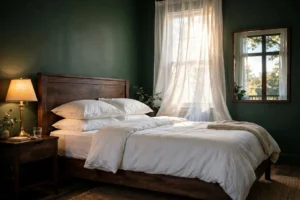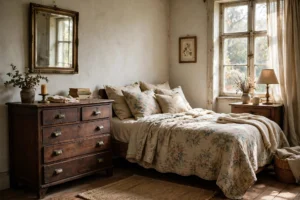
The wall above the bed is the first thing you see on entering a bedroom, yet the wall most people leave blank longest. A bare wall makes even a well-dressed bed look unfinished, while the wrong piece — too small, hung too high, or heavy enough to worry about at night — can make the whole room feel off. Good bedroom wall decor ideas above the bed follow one rule: the decor should relate to the bed below it. It should sit within the bed’s width, hang within easy reach, and stay firmly fixed, so you sleep under it without worry.
Size matters more than style here. A single small print over a king bed looks lost, and a huge frame over a single bed crowds the wall. The ideas below give widths, heights, and prices for art, shelves, mirrors, textiles, and headboards, plus what to avoid in each case. Pick one idea and do it well, rather than layering three half-finished ones. Measure the bed width first, mark the layout on the wall with painter’s tape, and step back to look before you drill a single hole.
1. One Large Framed Print, Sized to the Bed
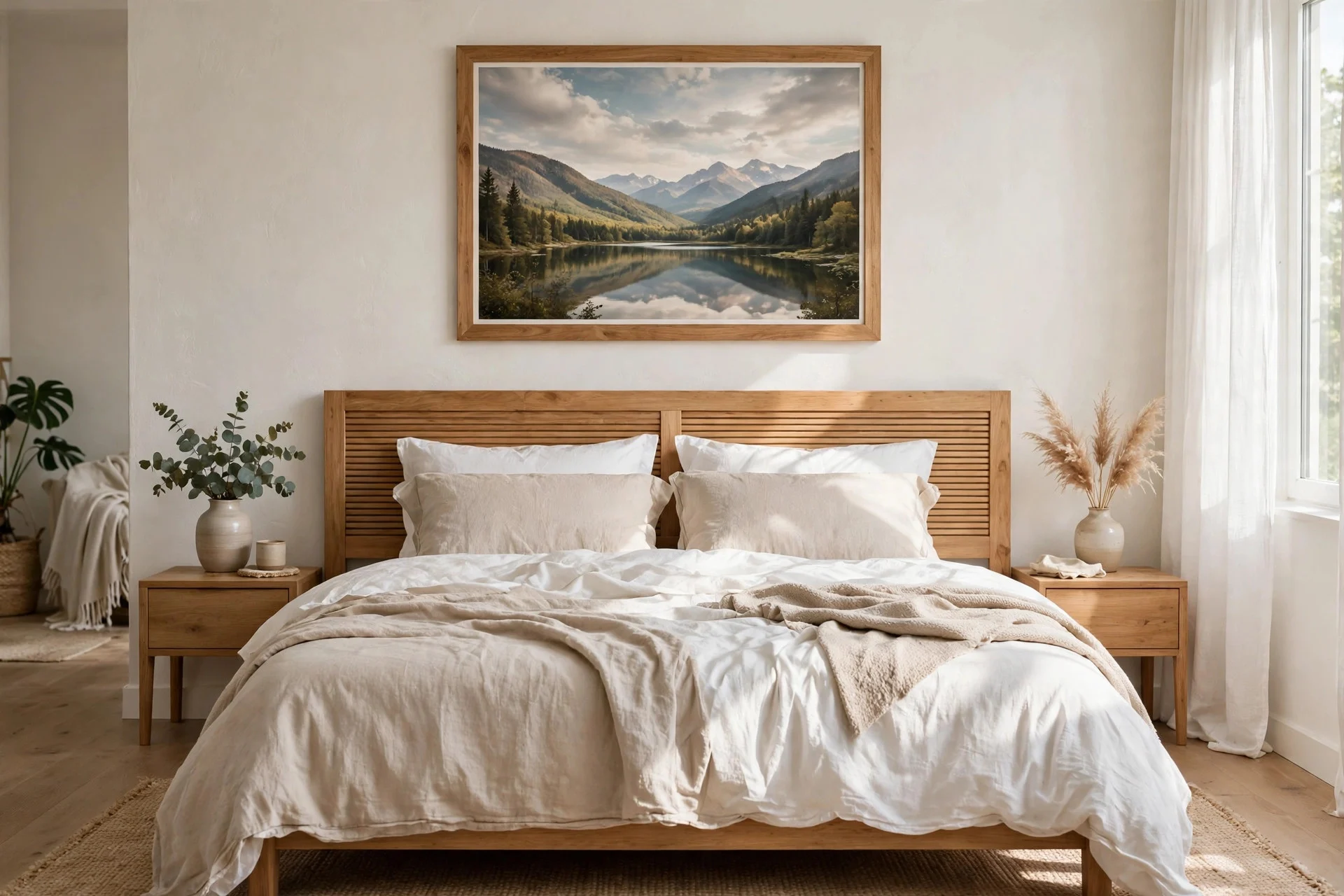
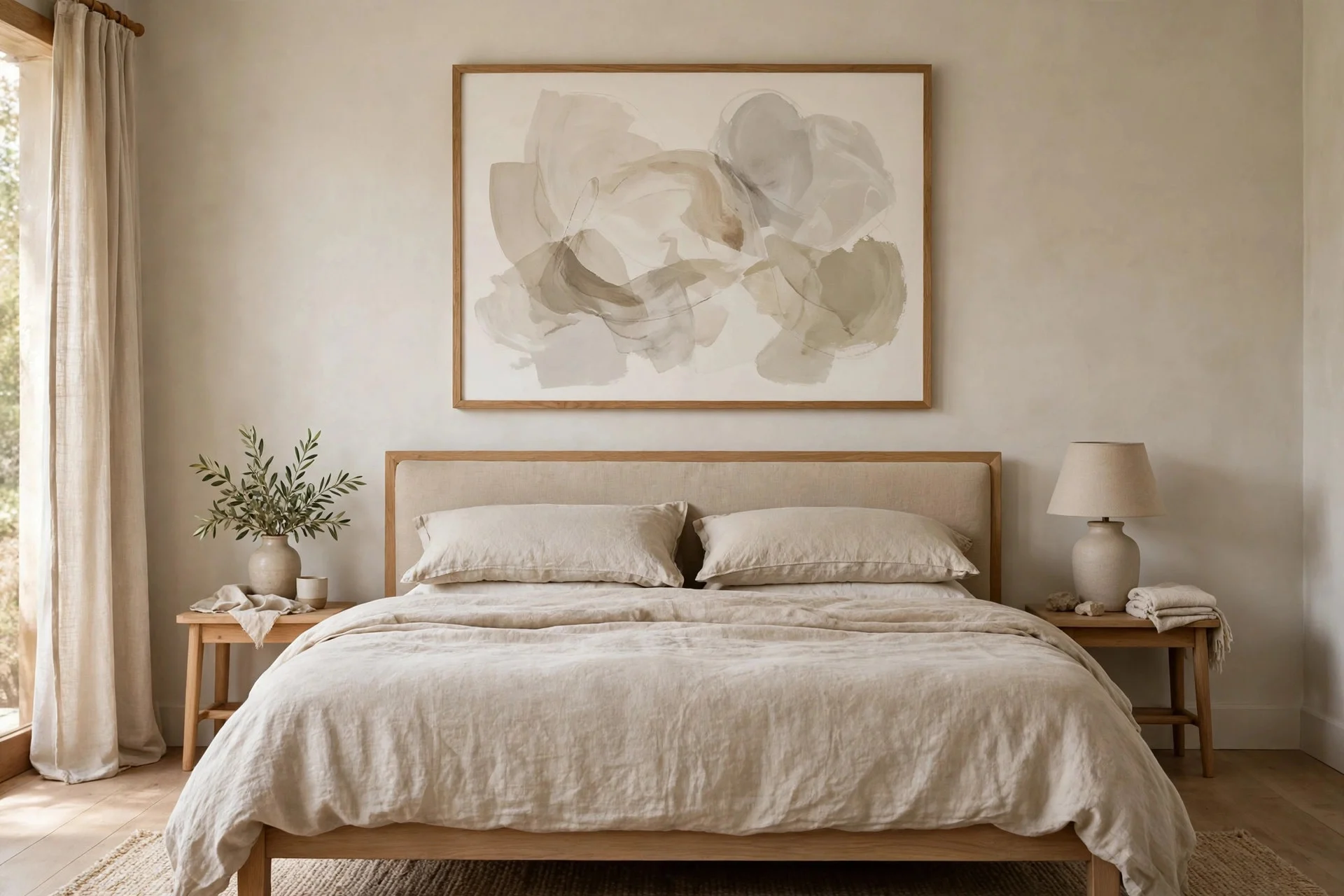
A single large print is the simplest way to finish the wall above the bed, and it works because one strong shape anchors the bed. For a double bed (135 to 150 cm wide), choose a frame 90 to 110 cm wide. For a king bed (180 cm wide), go 120 to 140 cm wide, which fills roughly two-thirds of the bed width without running past the edges. Hang the centre of the frame 140 to 155 cm from the floor, or 15 to 25 cm above the top of the headboard if you have one. A ready-made framed print costs $40 to $150, while a custom frame with a signed print runs $150 to $400. Avoid hanging a heavy glass frame with a single nail, since it can slip over time and drop onto the bed. Tip: use two picture hooks spaced 30 cm apart to share the weight and keep the frame level.
2. A Trio of Matching Prints in a Row
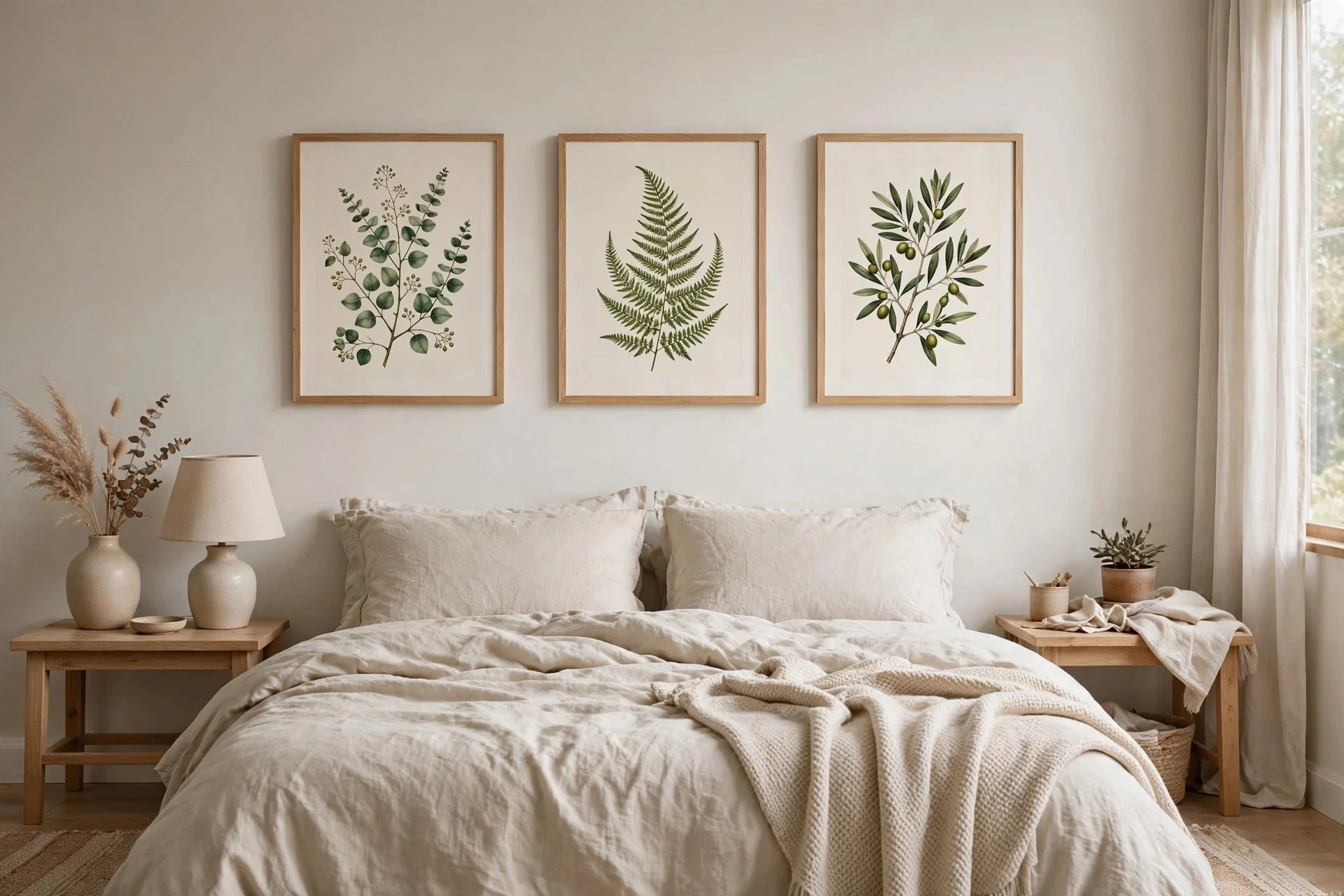
Three matching prints in a row give a calm, ordered look that suits bedrooms where one big image feels too bold. Use three frames of the same size, usually 30 by 40 cm or 40 by 50 cm each, with 8 to 12 cm gaps between them, so the full row spans 100 to 170 cm depending on the frame size. Keep the bottoms level, about 15 to 20 cm above the headboard, and use the same frame colour and mat width across all three so the row reads as one piece. A set of three ready-made prints with frames costs $60 to $180, and printing your own photos in matching frames runs $30 to $90. Avoid mixing frame styles, sizes, and colours in a trio, since the row then looks like leftovers rather than a set. Tip: lay the three frames on the bed first and check the spacing from the doorway before you mark the wall.
3. A Gallery Wall With a Clear Outer Edge
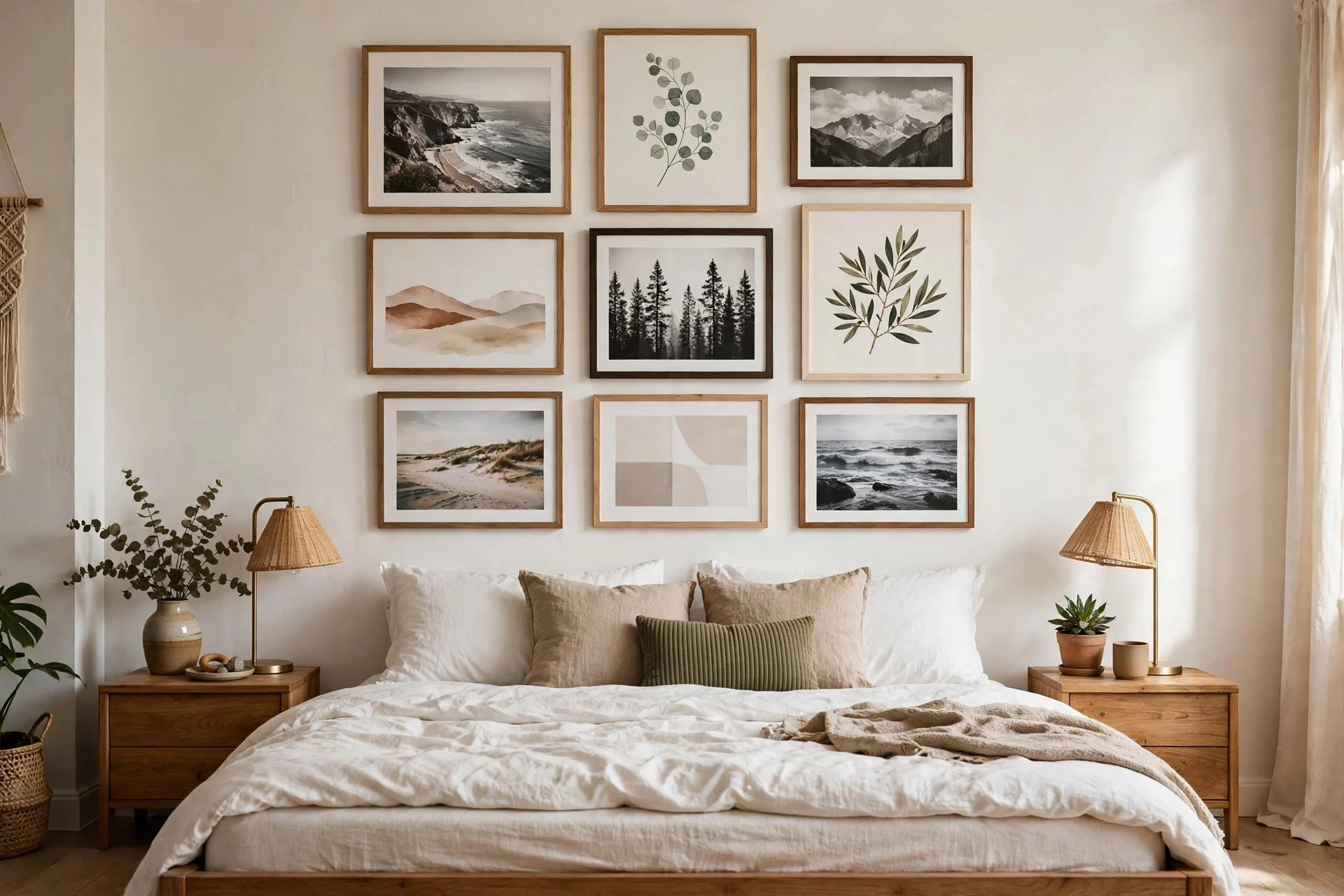
A gallery wall above the bed can hold family photos, travel prints, and small art, but it needs a clear boundary or it spreads across the whole wall and looks messy. Start by marking a rectangle on the wall with painter’s tape, no wider than the bed and about 90 to 120 cm tall, then arrange frames inside that box. Mix two or three frame sizes, keep gaps of 5 to 8 cm, and put the largest frame near the centre so the eye has a place to land. A gallery of 8 to 12 frames costs $80 to $250 if you buy frames in bulk, plus printing costs of $20 to $60. Avoid hanging frames right up to the ceiling or past the bed edges, since both mistakes make the wall feel crowded. Tip: cut paper templates the size of each frame, tape them to the wall, and live with the layout for a day before you drill.
4. A Floating Shelf With Art Leaned on It
A floating picture shelf, or picture ledge, lets you change the art above the bed without new holes each time. Fix one or two shelves, each 100 to 150 cm long and 10 to 15 cm deep, 20 to 30 cm above the headboard, and lean framed prints and small objects against the wall on top. The shelf lip, a raised edge of 3 to 5 cm, stops frames from sliding forward onto the bed. A single solid wood or MDF ledge costs $25 to $80, and a pair runs $50 to $140, plus wall fixings suited to your wall type. Avoid overloading a ledge with heavy books and large frames, since a shelf fixed only to plasterboard can pull away under weight. Tip: fix the shelf into studs or use proper plasterboard anchors rated for at least twice the weight you plan to put on it.

5. A Round Mirror Above the Bed
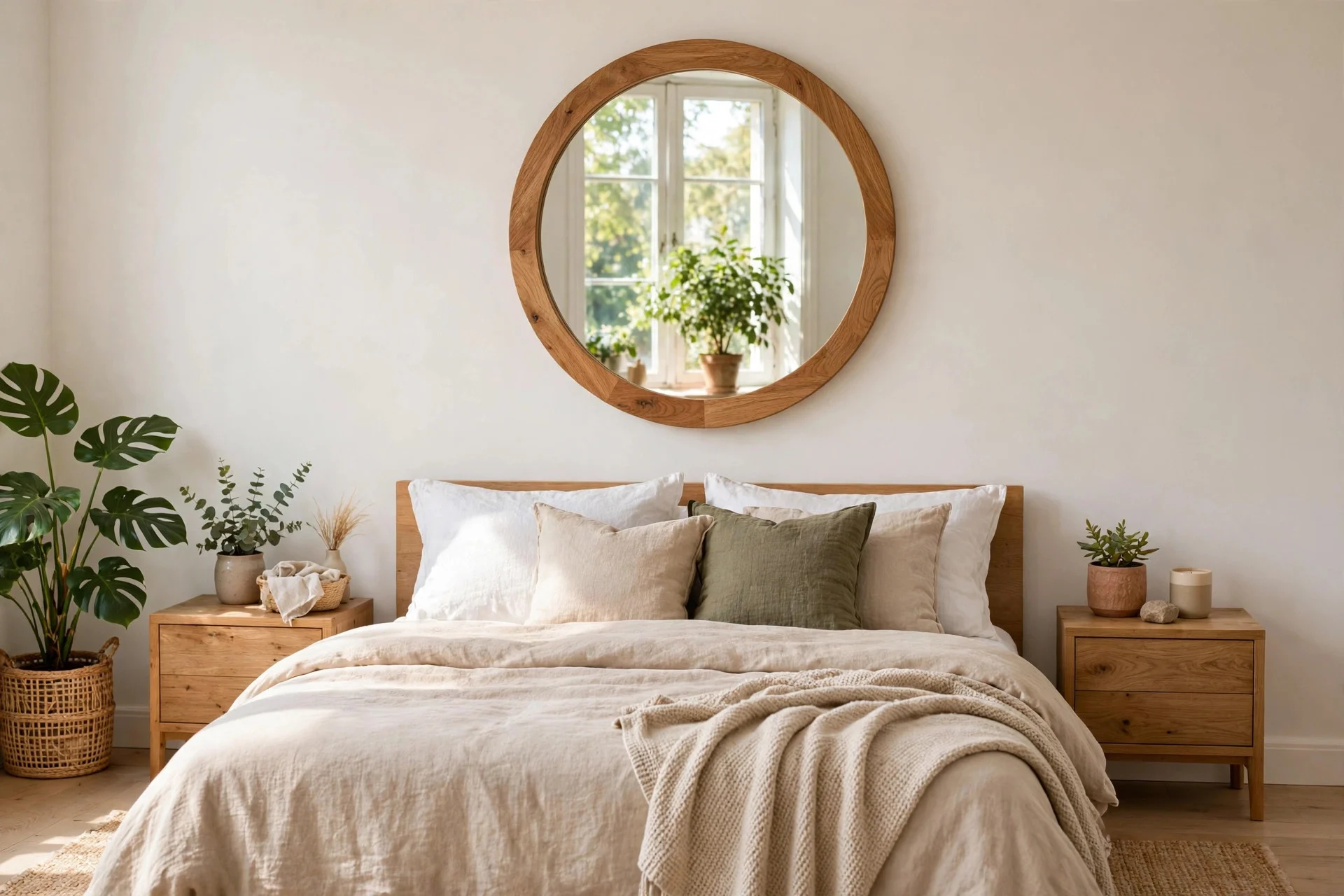
A round mirror above the bed softens a room full of straight lines and bounces light from the window across the wall. A diameter of 60 to 80 cm suits a double bed, while 80 to 100 cm works over a king, as long as the mirror stays inside the bed width. Hang it so the centre sits 150 to 165 cm from the floor, or 20 to 30 cm above the headboard, and check the reflection from the doorway: you want it to catch a window or a plant, not the inside of a wardrobe. A framed round mirror costs $50 to $200, with rattan or wood frames at the higher end. Avoid a very heavy mirror hung from a single hook, and avoid placing a mirror where morning sun reflects straight onto the pillow. Tip: hold the mirror up with help from another person and check the reflection before you mark the fixing point.
6. A Woven Wall Hanging for Soft Texture
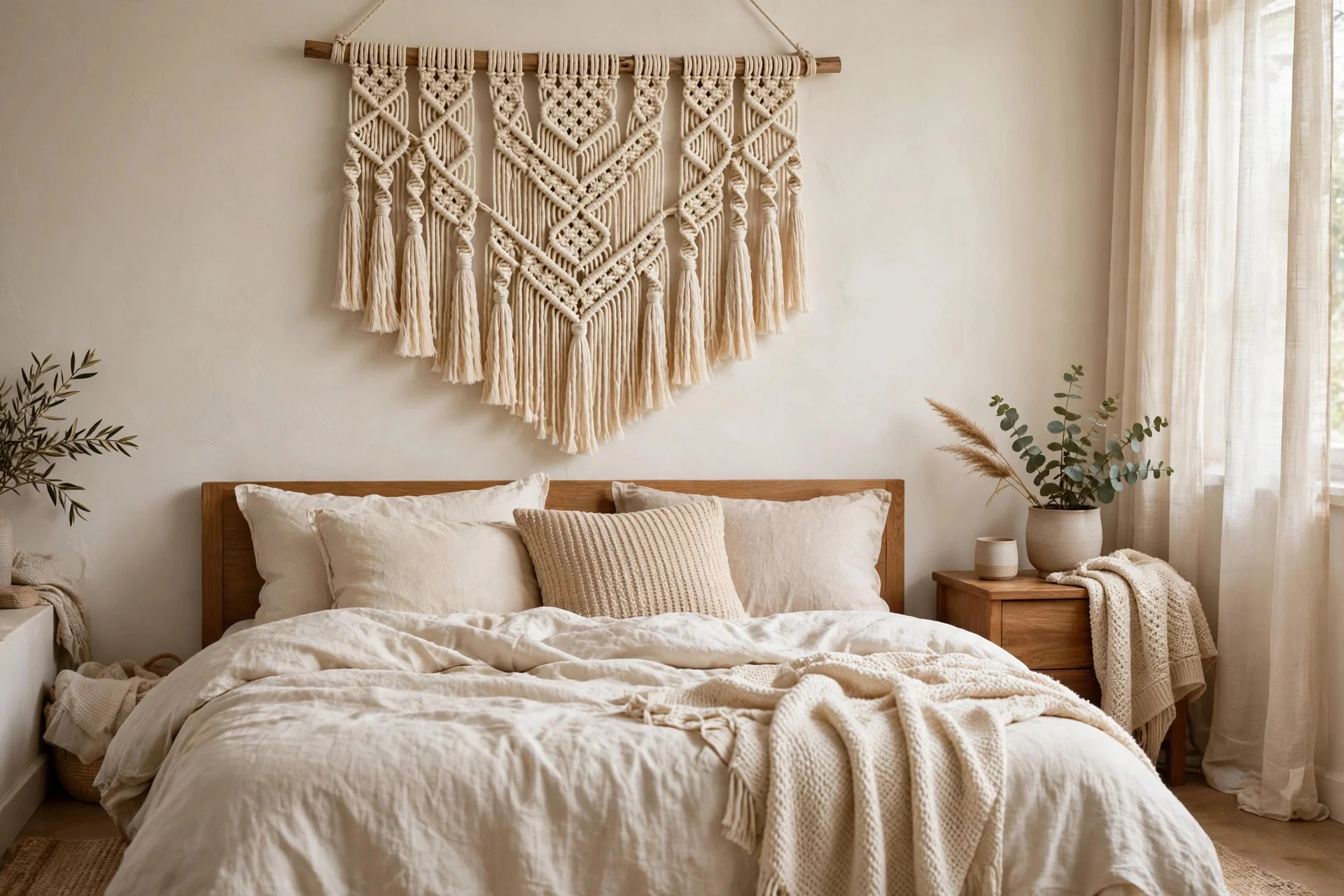
A woven wall hanging adds texture that flat prints cannot, and it suits bedrooms that feel hard or echoey. Choose a piece 80 to 120 cm wide for a double bed, hung from a wooden dowel or branch, with the bottom of the hanging falling 20 to 30 cm above the headboard so it does not brush pillows. Cotton and wool hangings cost $40 to $150 from craft sellers, while handmade macrame pieces run $80 to $300 depending on size and knot work. Avoid hanging a heavy textile from a single small nail in plaster, since the weight pulls down over time and the piece sags. Tip: steam or press the hanging flat before you hang it, and check it a week later, since woven fibres relax and may need a quick re-level.
7. Botanical Prints in Light Wood Frames
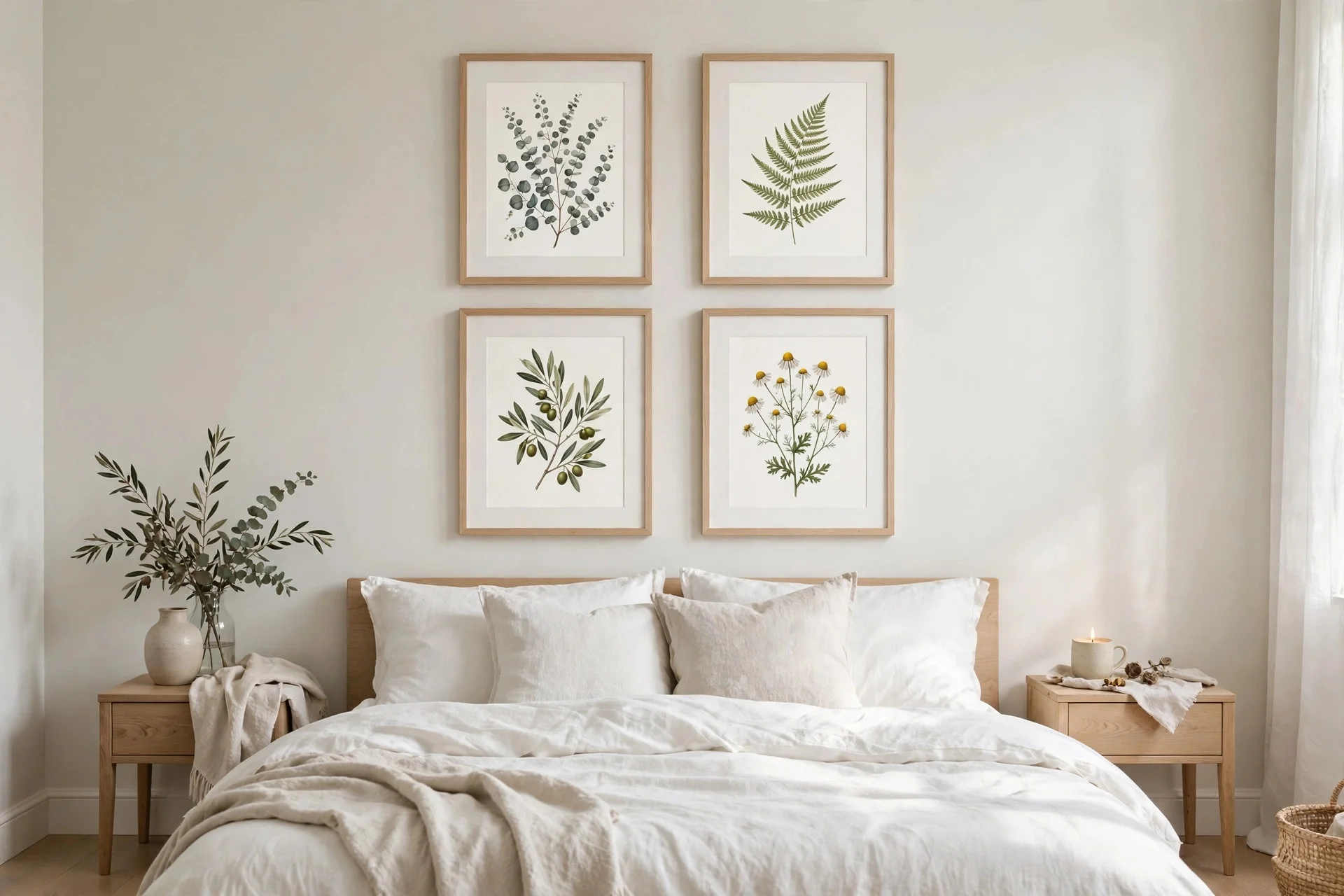
Botanical prints — leaves, ferns, and simple flower studies — bring a calm, natural feel to a bedroom without a strong colour that fights with bedding. A set of four prints, each 30 by 40 cm, arranged in a two-by-two grid above the bed, fills a space about 80 cm wide and 100 cm tall, which suits a double bed well. Keep the frames light wood or pale oak and the mats white, so the prints stay soft against a painted wall. A set of four ready-framed botanical prints costs $70 to $200, and printing your own pressed leaves or downloaded prints in matching frames costs $40 to $100. Avoid glossy glass that reflects the ceiling light as a bright stripe across the prints at night. Tip: use non-reflective or matte glass on frames above the bed, since you look at this wall in lamplight more than in daylight.
8. A Statement Headboard as the Wall Decor
Sometimes the best wall decor above the bed is not hung on the wall at all. A tall headboard, 110 to 140 cm high from the floor, in wood, rattan, or padded fabric, fills the wall and removes the need for art above it. A padded headboard also makes reading in bed far more comfortable than leaning on pillows against a hard wall. Wooden and rattan headboards cost $100 to $400, padded fabric versions run $150 to $500, and a full wall panel behind the bed costs $200 to $600. Avoid a headboard that is wider than the bed by more than 10 cm on each side, since it starts to look like a wall panel that missed its mark. Tip: if you already own a low headboard, add a row of large square cushions in front of it to raise the visual height without buying a new one.
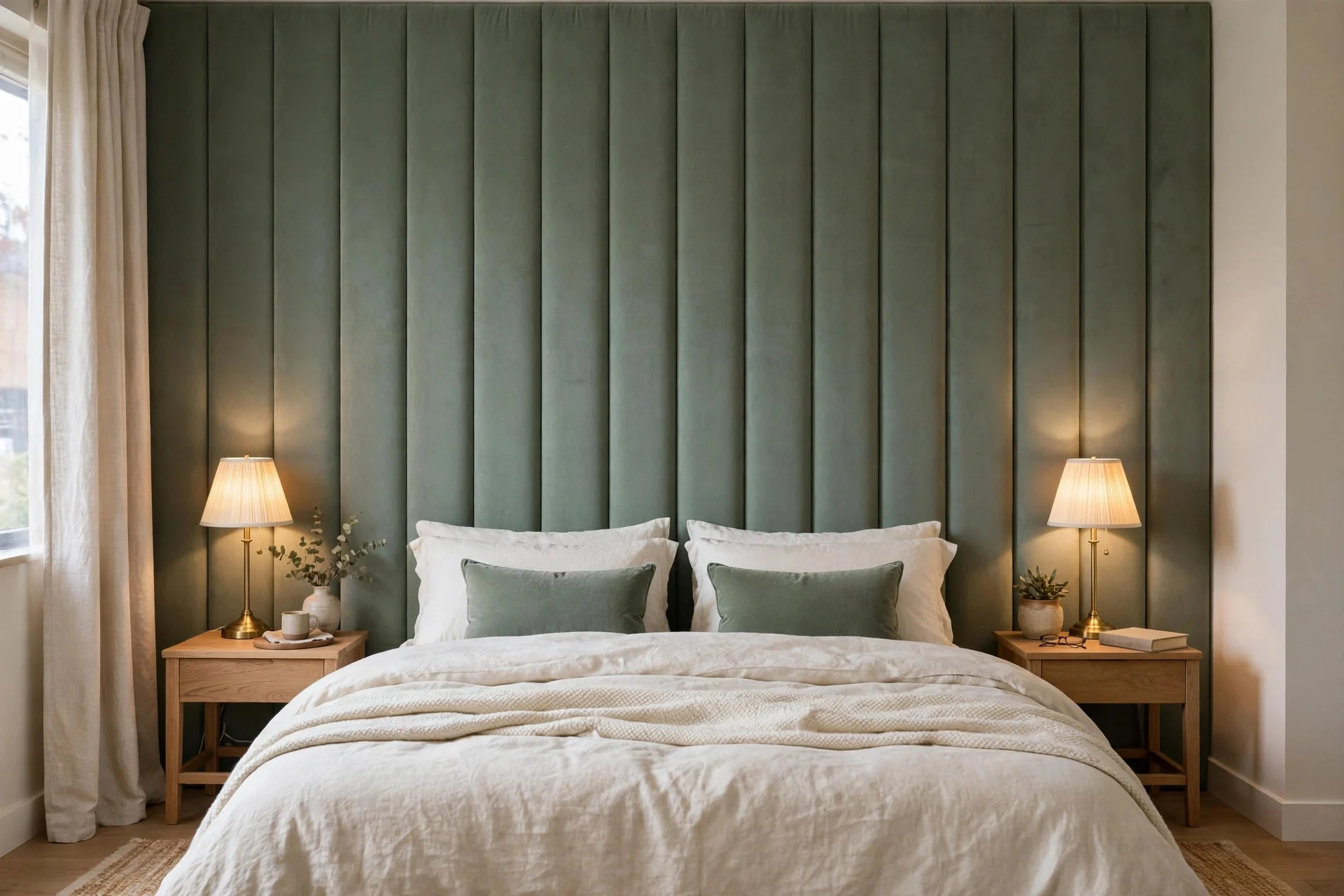
9. Wooden Slat Panels Behind the Bed
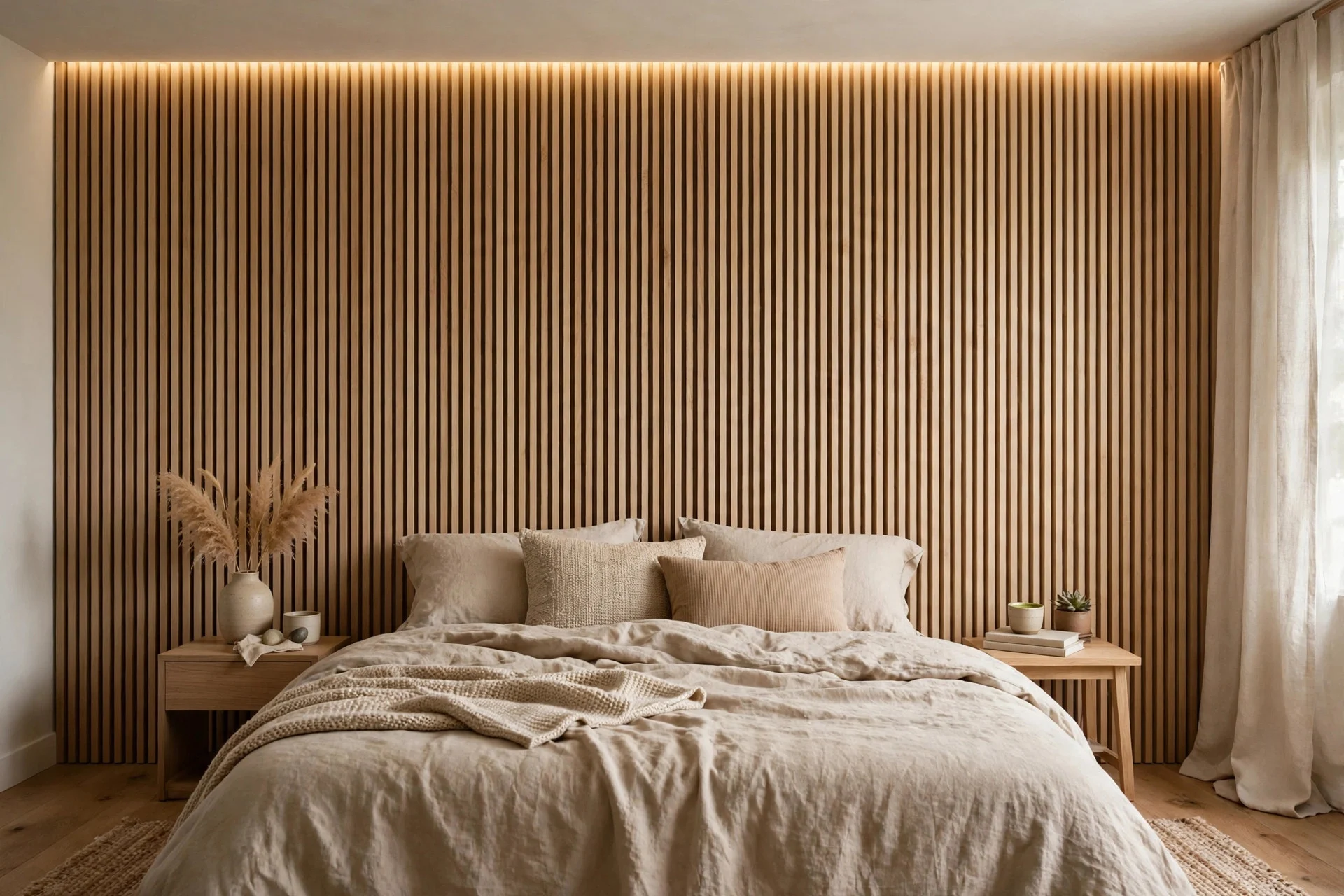
Vertical wooden slat panels give the wall above the bed depth and shadow, and they work in bedrooms where art feels too flat. Slats 3 to 6 cm wide, spaced 2 to 4 cm apart, fixed to a backing board or straight to the wall, cover a panel 150 to 200 cm wide and 120 to 180 cm tall above the bed. Light oak slats keep a small room bright, while walnut or dark-stained slats suit a larger room with pale bedding. A ready-made slat panel kit costs $150 to $400, and a carpenter-built version runs $300 to $800 depending on the wood. Avoid fixing slats to a damp wall, since wood moves with moisture and gaps open up as it dries. Tip: run a thin LED strip behind the top edge of the panel for a soft wash of light at night, hidden so you see the glow, not the strip.
10. A Shelf Row for Small Plants and Books
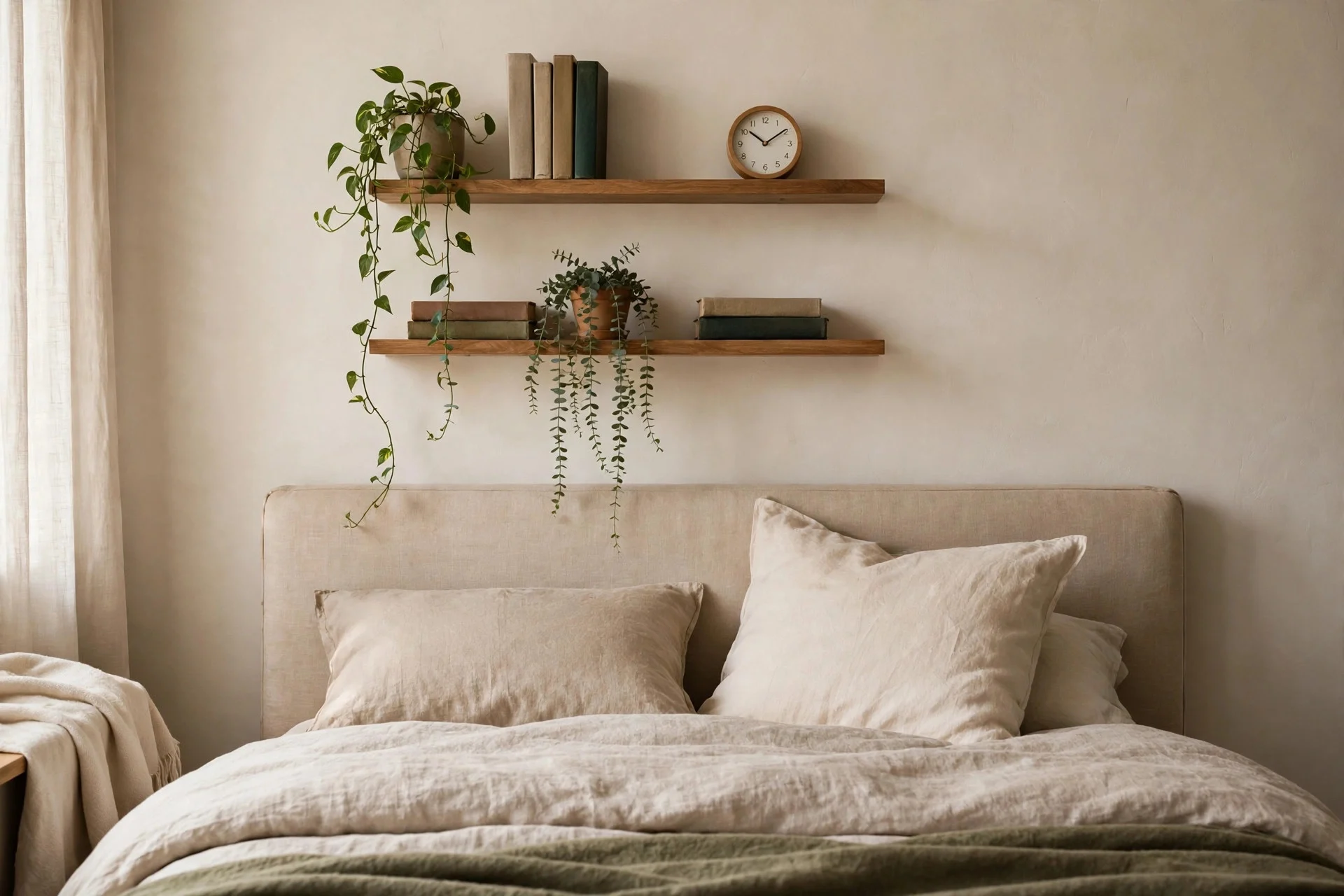
Two short shelves above the bed hold small plants, a clock, and a few books, and they give the wall a lived-in feel without a large frame. Fix shelves 60 to 90 cm long, 15 to 20 cm deep, one above the other with 35 to 45 cm between them, and keep them inside the bed width so nothing hangs over the edge. Use trailing plants in light pots, since heavy ceramic pots on a shelf above a bed are a risk if they fall. A pair of wooden shelves with brackets costs $40 to $120, plus $20 to $60 for small plants and pots. Avoid watering plants on a bed shelf with a full can, since spills land on pillows and bedding. Tip: use pots with no drainage holes on bed shelves, and water plants in the sink, letting them drain before you put them back.
11. Framed Black-and-White Photography
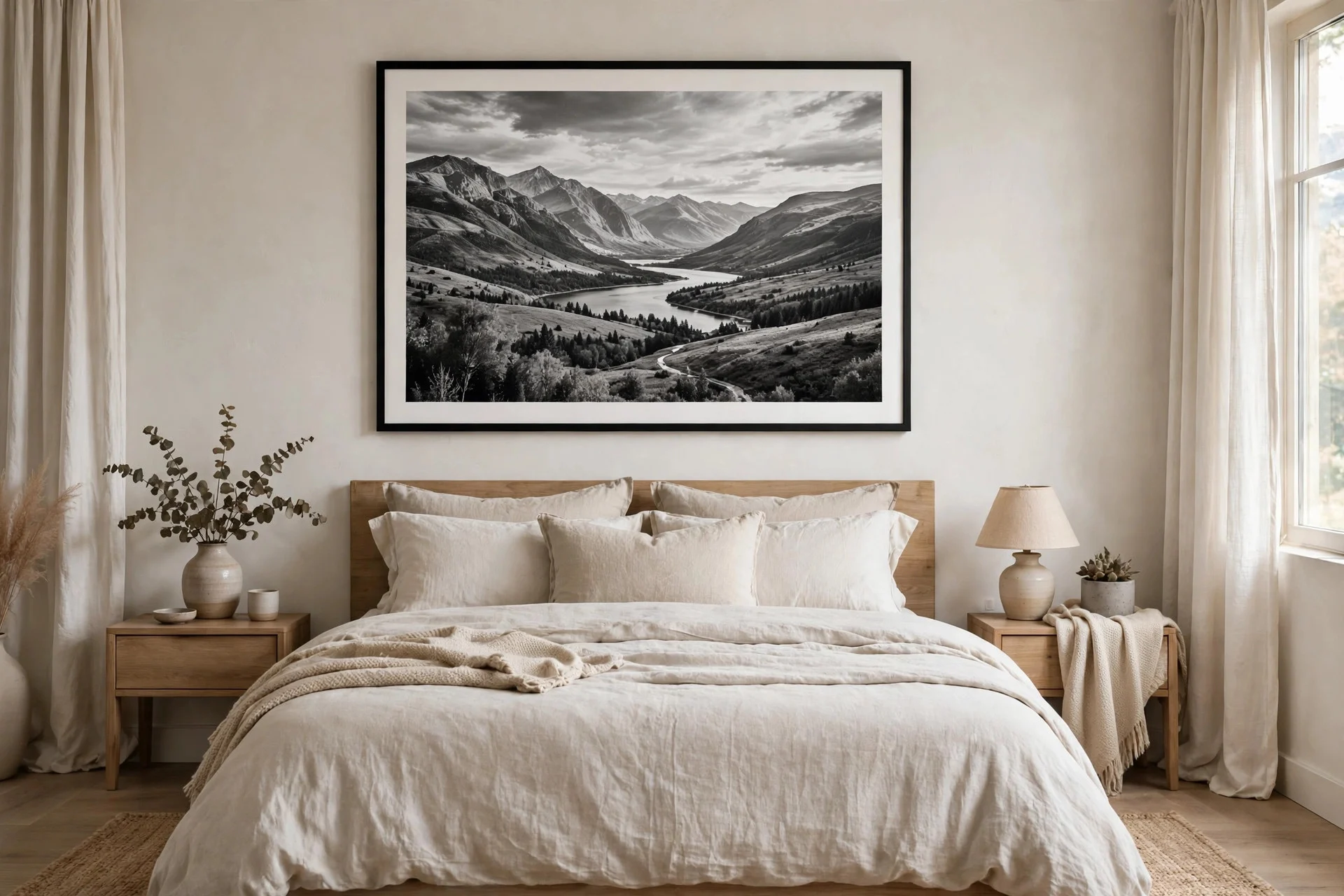
Black-and-white photography above the bed gives a grown-up, calm look that works with almost any bedding colour. Choose one large print, 100 to 130 cm wide, or a pair of 50 by 70 cm prints side by side, with thin black or white frames and a wide white mat that gives the image room to breathe. Landscapes, city streets, and simple portraits all work, as long as the subject is calm rather than busy, since this is the wall you see last at night. A large framed black-and-white print costs $80 to $300, and a pair runs $120 to $400. Avoid very dark, high-contrast images in a small bedroom with one window, since they can make the wall feel heavy. Tip: print your own travel photos in black and white for a personal piece that costs far less than a gallery print.
12. A Fabric Wall Hanging Hung From a Rod
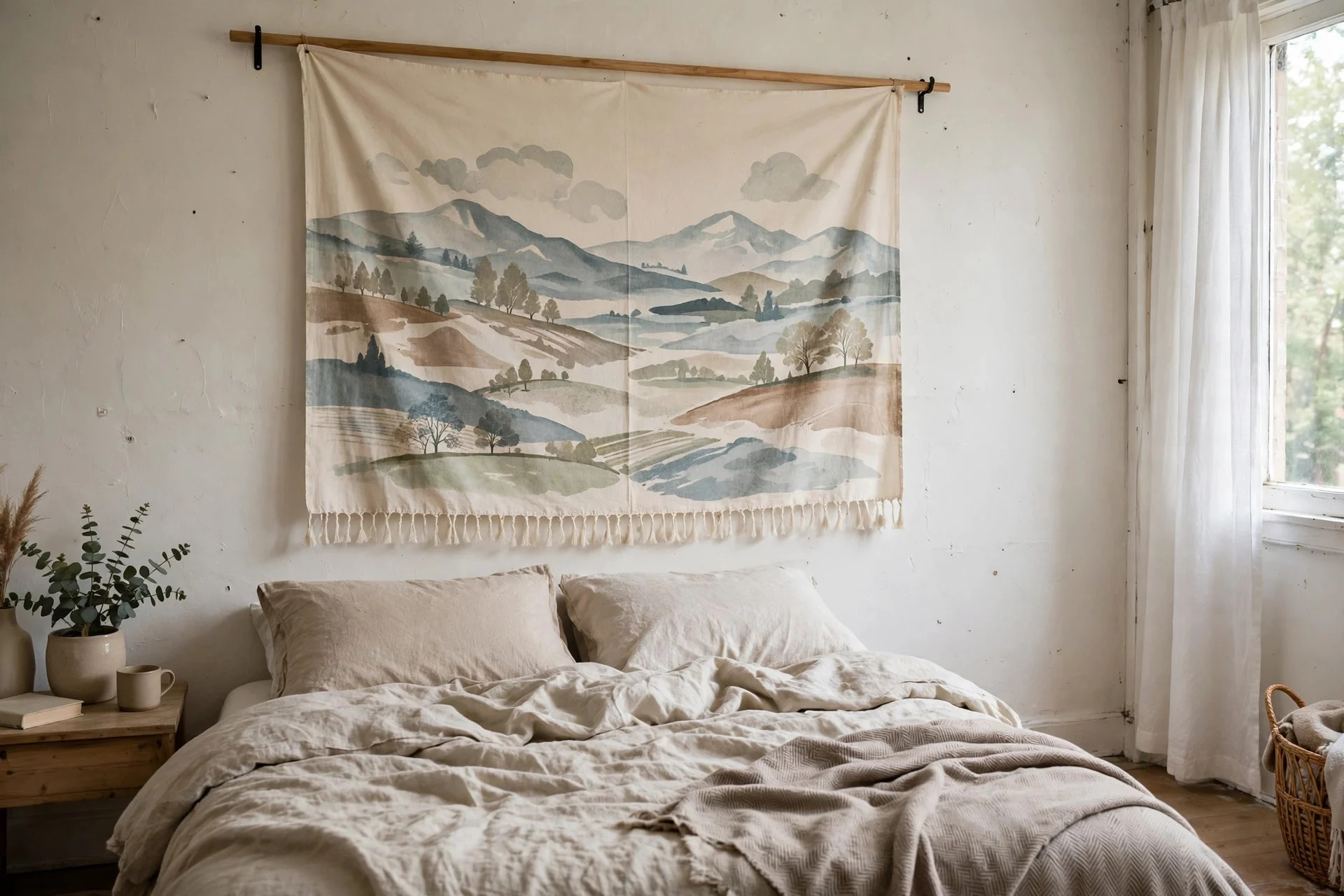
A fabric wall hanging covers a large wall fast and for little money, which helps in a rented bedroom where you cannot paint or drill much. Hang a fabric hanging 150 to 200 cm wide from a curtain rod or a wooden dowel fixed with two hooks, so the fabric hangs straight and can be taken down without damage. Cotton fabric hangings cost $25 to $80, and heavier woven versions run $80 to $200. Keep the bottom of the hanging 15 to 25 cm above the headboard so it does not catch on pillows or bunch up behind the bed. Avoid hanging a fabric piece with adhesive strips alone, since a large piece of fabric is heavier than it looks and strips fail in warm rooms. Tip: iron the fabric hanging on a low setting before hanging, and use a rod pocket or clips across the full width so the top edge does not sag in the middle.
13. Neon or Script Word Sign With a Dimmer
A word sign above the bed — a short phrase, a name, or a single word in script — adds a personal touch and a soft glow at night. LED neon-style signs, which run cool and use little power, cost $60 to $200 for a sign 60 to 90 cm wide, while real glass neon costs $200 to $500 and needs more care. Fix the sign 25 to 35 cm above the headboard, centred on the bed, and choose a dimmer or a remote so the light can drop low at bedtime. Avoid bright white or blue light in a bedroom, since it feels harsh at night and can disturb sleep. Tip: pick warm white or soft amber for a bedroom sign, and test the brightness at night before you fix the sign in place for good.

14. Painted Arch or Colour Block Behind the Bed
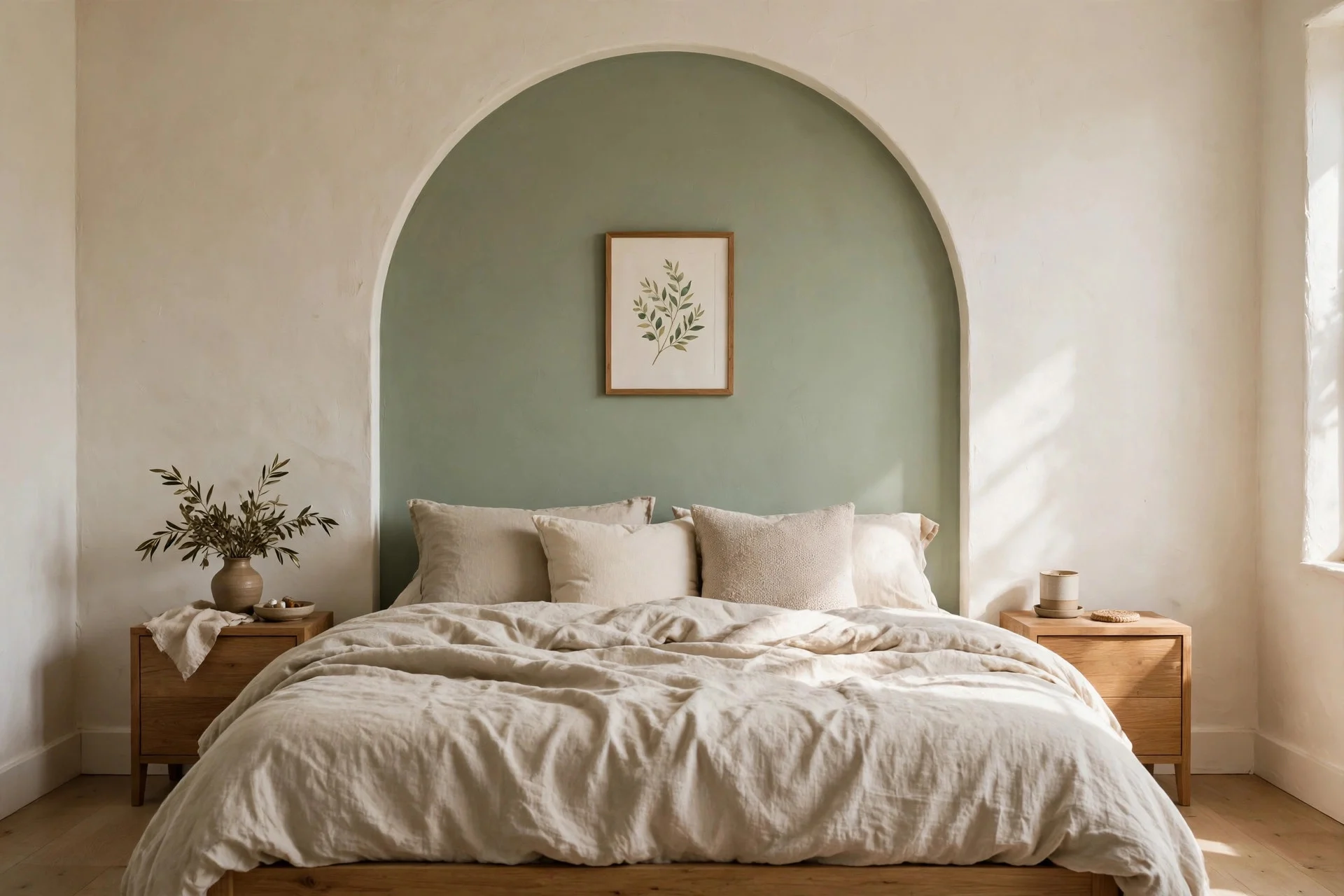
Paint is the cheapest way to change the wall above the bed, and a painted arch or colour block frames the bed without any frames at all. Paint an arch 150 to 200 cm wide and 180 to 220 cm tall from the floor, centred on the bed, in a colour one or two shades deeper than the wall. A tester pot and a small tin of paint cost $15 to $40, plus $10 to $20 for painter’s tape and a small roller. Mark the arch with tape and a pencil line first, and use a small brush for the curved edge so the line stays clean. Avoid painting an arch that runs past the bed width on both sides, since it stops framing the bed and starts looking like a random shape. Tip: paint the arch, then hang one small print or a single shelf inside it, so the painted shape and the decor work together.
15. Personal Photo Ledge With a Yearly Swap
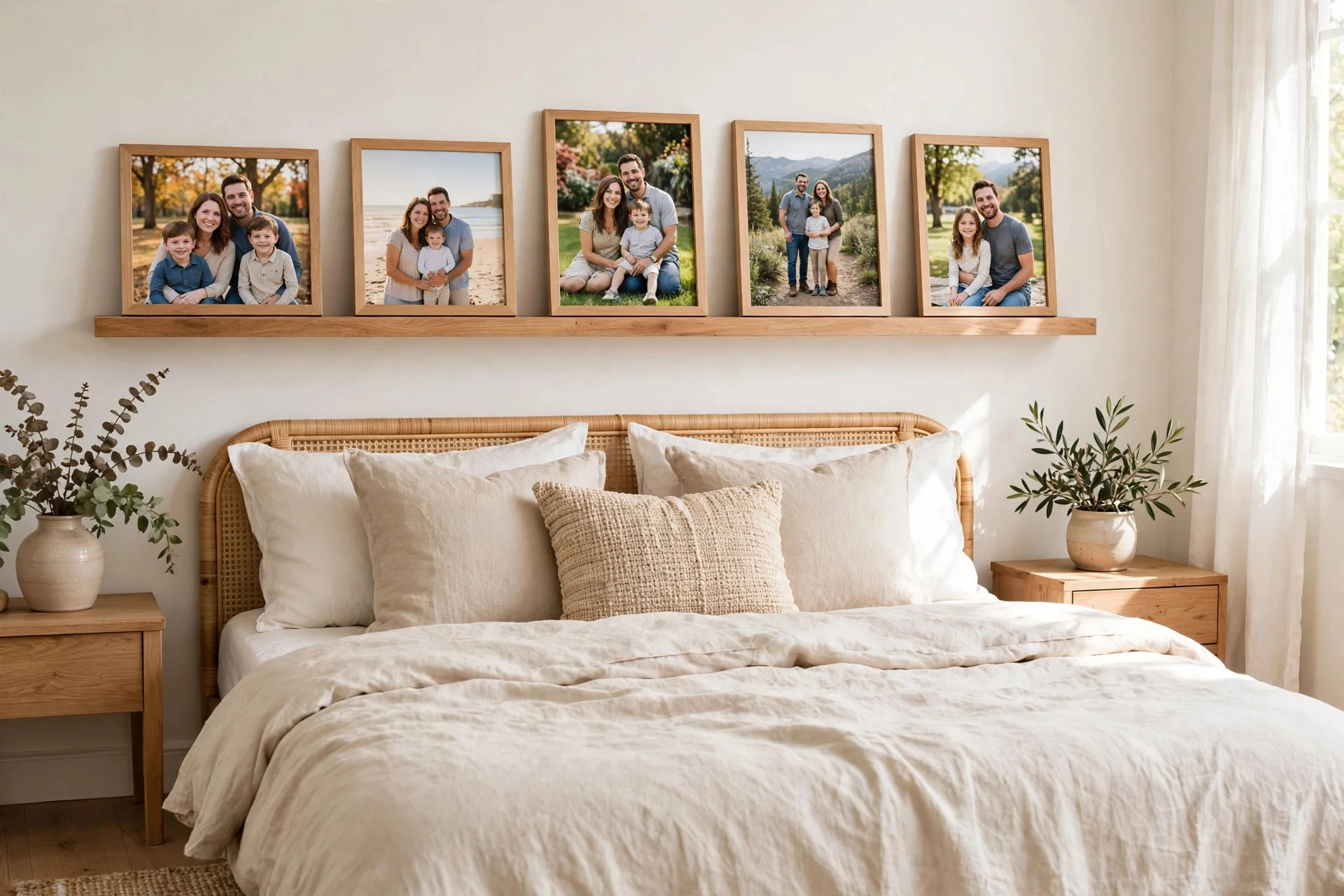
A photo ledge above the bed keeps the wall personal without turning it into a crowded gallery. Fix one ledge 120 to 150 cm long above the headboard, lean 4 to 6 framed photos on it, and swap one or two photos each year so the display stays current. Use frames in one or two colours and similar sizes, 13 by 18 cm or 20 by 25 cm, so the row looks planned even when the photos change. A ledge costs $25 to $80, and frames run $5 to $15 each, so the full display often costs under $120. Avoid leaning large, heavy frames on a bed ledge, since they can slide forward if the bed shakes. Tip: put a small strip of museum putty under each frame base to stop it creeping forward, and check the ledge fixings once a year when you swap photos.
FAQ
How high should bedroom wall decor ideas above the bed be hung?
Hang the centre of the piece 140 to 165 cm from the floor, or 15 to 30 cm above the top of the headboard. That range keeps the decor linked to the bed instead of floating near the ceiling, and it leaves enough clearance that pillows and bedding do not touch it. Always check the height from the doorway, since a piece that looks right up close can sit too high from across the room.
What size art works above a king bed?
For a king bed at 180 cm wide, aim for art 120 to 140 cm wide in total, which is about two-thirds of the bed width. One large frame, a pair of prints, or a row of three frames can all reach that width. Anything under 90 cm wide will look small over a king, while anything wider than the bed itself will crowd the wall.
Is it safe to hang heavy decor above the bed?
Yes, if the fixings match the wall and the weight. Use two fixings spaced apart, fix into studs or use wall anchors rated for at least twice the weight of the piece, and avoid heavy glass frames on a single nail. Check the fixings once a year, and keep very heavy items, like large mirrors or stone pieces, on a wall beside the bed instead of directly above it.
Conclusion
Good bedroom wall decor ideas above the bed come down to fit, not fashion. Match the width to the bed, hang the piece low enough to connect with the headboard, and fix it well enough that you never think about it at night. One large print, a row of three, a mirror, or a painted arch can all work, as long as the size is right and the style fits the rest of the room. Start with painter’s tape on the wall, check the layout from the doorway, and pick the one idea you will still like in a year. A wall that is finished, safe, and in proportion does more for a bedroom than a wall full of pieces that fight each other.
If the budget is tight, start with paint or a single large print, then add a shelf or a mirror later, since the wall above the bed works best when each piece earns its place. Check fixings after the first month, dust frames and shelves when you change bedding, and swap photos on the ledge once a year so the display stays fresh without a new round of holes.