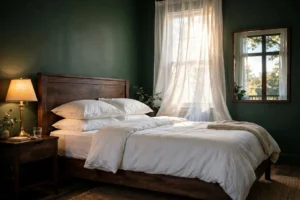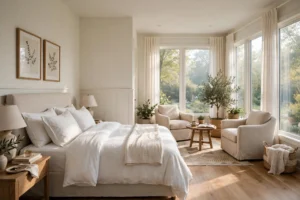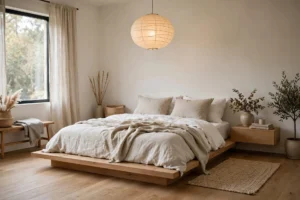
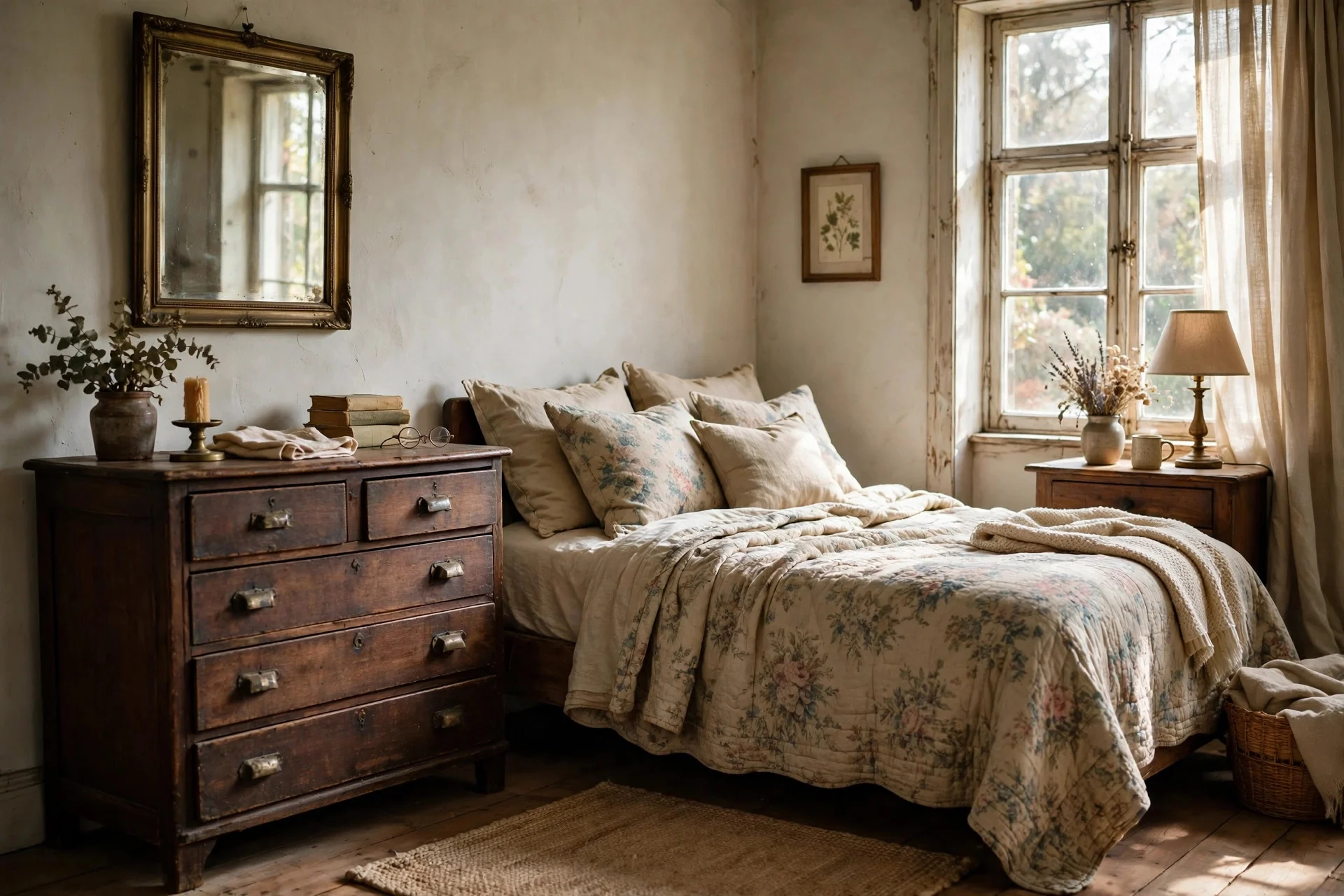
A bedroom full of thrifted pieces feels different from one bought in a single afternoon. The dresser might be forty years old, the mirror might have hung in someone else’s hallway, and the quilt on the bed might carry a pattern nobody makes anymore. That mix is what makes vintage bedroom decor ideas so appealing: the room looks collected over time instead of copied from a showroom, and usually costs far less than buying everything new.
Thrifting works best with a plan. Walk into a charity shop without one, and you come home with things that do not fit anywhere. Go in knowing what your room needs, how to tell solid wood from chipboard, and which pieces are worth cleaning up, and a thrift store bedroom makeover can build a vintage bedroom on a budget that feels warm and personal for a fraction of the retail price. The ideas below cover where to look, how to judge quality, how to clean and repair old pieces, and how to put them together so the room looks settled, not crowded.
1. Start With One Solid Wood Vintage Dresser
A good dresser anchors a vintage bedroom, so make it your first serious thrifted buy — and the first step in most thrifted bedroom ideas, since a vintage wooden dresser is usually the piece everything else is arranged around. Look for solid wood: check the back panel, the drawer sides, and the underside. Dovetail joints on the drawers, a heavy feel when you lift a corner, and wood grain that runs through the piece rather than a printed pattern are all signs of real timber. A typical secondhand dresser runs around $40–$120, compared with $300 or more new. Avoid dressers with drawers that stick, a wobbly frame, or a strong smell of damp, since those problems are hard to fix. Measure the wall and the doorways before you buy, and check the drawer depth is at least 35 cm so folded clothes actually fit. Tip: slide a drawer out and look underneath for a maker’s stamp, which often tells you its age and wood.

2. Hang a Thrifted Vintage Mirror Above the Dresser
A vintage mirror does two jobs at once: it gives you a place to check yourself in the morning, and it bounces light around the room. Brass-framed, gilt, and carved-wood mirrors show up in thrift shops all the time, often for $15–$50, and many are better made than the flat-pack mirrors sold today. An ornate gold mirror with a heavy frame is one of the best vintage mirrors to look for, since the frame alone can carry the whole wall. Check the glass for dark spots, known as desilvering, around the edges. A little wear at the corners is normal on an old mirror and adds character, but large black patches in the middle will always catch your eye. Avoid mirrors with loose glass that rattles in the frame. Tip: hang it with a proper picture hook rated for its weight, not a nail, since an old mirror with a thick frame can weigh 5 kg or more.

3. Pair Mismatched Vintage Table Lamps
Matching lamps are a showroom habit, and a vintage bedroom does not need them. Two different thrifted lamps, one on each bedside table, look collected rather than careless as long as they share something: a similar height, a similar metal, or matching shades. Look for ceramic, vintage brass, or wooden bases with some weight to them, and check that the base sits flat without rocking. Test the switch and the cord before you pay. Frayed cords, cracked plugs, or a socket that sparks are all reasons to walk away unless you know how to rewire, and even then, budget around $10–$20 for a new cord and socket. Avoid lamps with shades that are stained, torn, or smell of smoke, since shades are harder to clean than bases. Tip: put both lamps on the same warm-white bulbs so the light matches even when the lamps do not.
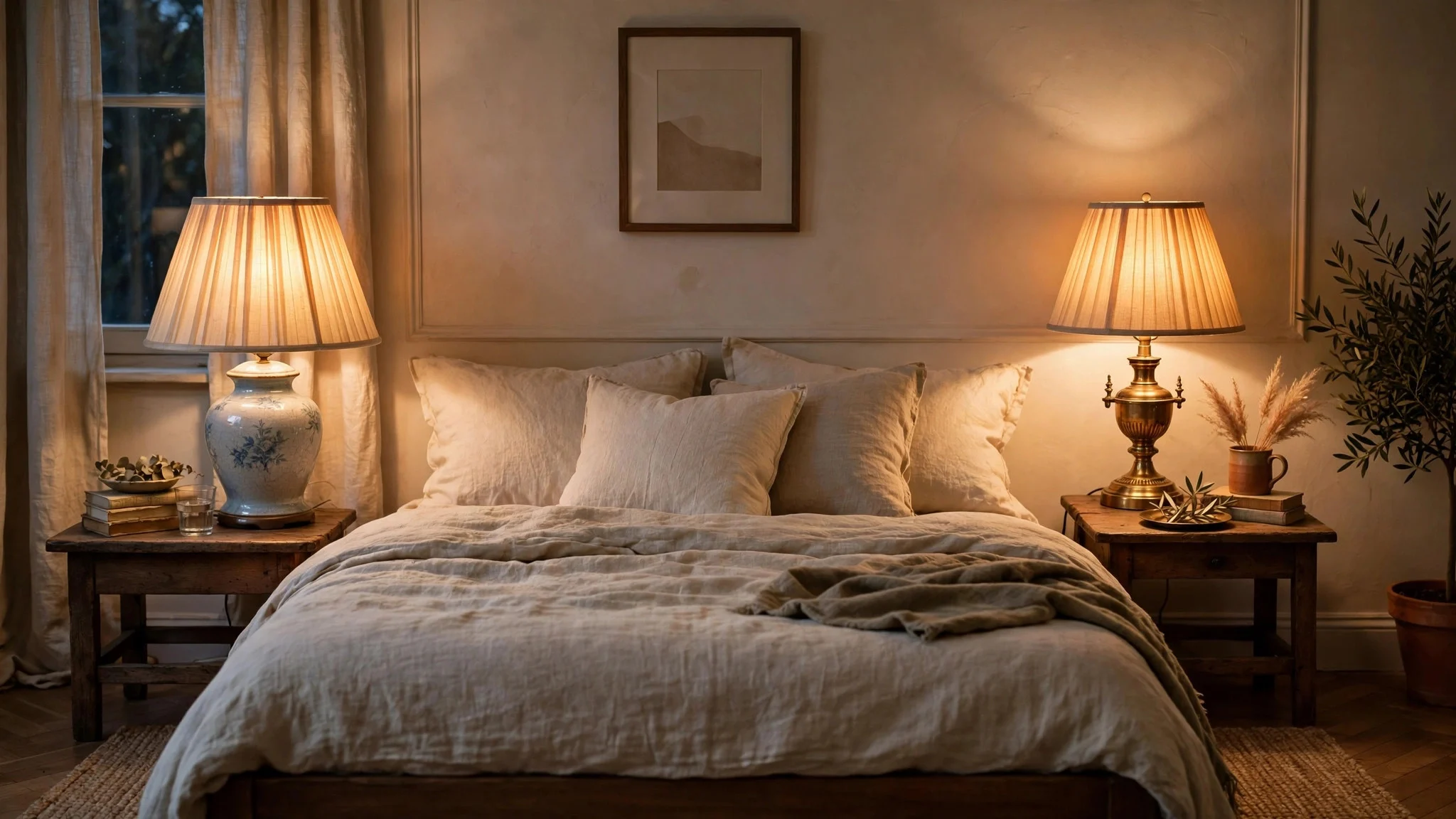
4. Build a Gallery Wall From Old Frames
Thrift shops are full of wooden picture frames, often selling for $1–$5 each, and a vintage gallery wall built from thrifted frames is one of the cheapest ways to give a bedroom personality. Mix sizes and finishes — dark wood, gilt, painted, plain — but keep the pictures inside consistent so the wall does not turn chaotic. Family photos, botanical prints, old postcards, and pages from damaged books all work well. Lay the frames out on the floor first and photograph the arrangement before you hang anything. Avoid frames with cracked glass, and check the backs: a frame with missing clips or a torn backing board will not hold its picture flat. Tip: buy frames with the glass still in them, since cutting new glass for a dozen frames costs more than the frames themselves.

5. Layer a Thrifted Quilt or Coverlet on the Bed
A vintage quilt, a floral bedspread, or a woven coverlet changes the look of a bed more than any other single item, and it is often the best bargain in the shop. Hand-stitched quilts, chenille bedspreads, and cotton coverlets in florals or stripes soften a plain duvet and add a layer you can fold back in summer — the soft, layered look of a cottagecore bedroom. Expect to pay around $15–$40 for a good one. Before you buy, hold it up to the light and check for thin spots, tears along the fold lines, and stains that will not wash out. Wash it on a gentle cycle with mild detergent and dry it flat or on a low heat, since a hot dryer can shrink old cotton. Avoid quilts with batting that has bunched into lumps, because that cannot be fixed at home. Tip: fold a quilt across the foot of the bed rather than covering the whole bed, so a worn centre or a faded patch stays out of sight.

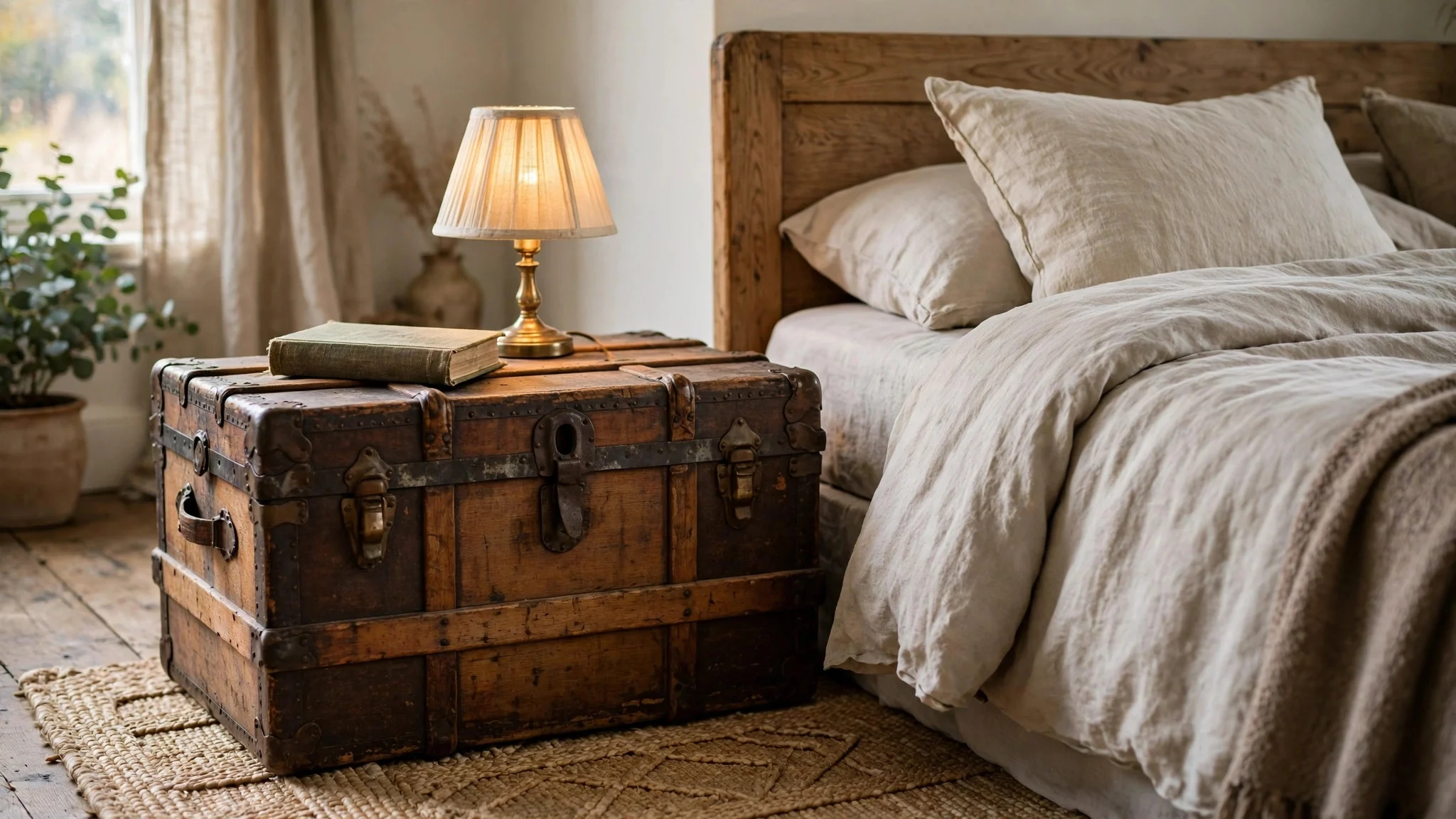
6. Use a Vintage Trunk for Storage and a Bedside Table
An old wooden or metal trunk works as a bedside table, a blanket box at the foot of the bed, or a place to hide out-of-season clothes, which is why vintage trunk storage shows up in so many thrifted bedroom ideas. Steamer trunks, wooden chests, and tin trunks all turn up secondhand for around $25–$80 depending on size and condition. Check the lid hinges and latches first: a lid that drops shut on its own is a hazard, and a trunk that will not stay open is no use. Look inside for a lining that is clean and dry, and sniff for damp, since a trunk that has sat in a garage can carry a smell that is hard to shift. Avoid trunks with a warped base that rocks on the floor. Tip: line the inside with cedar blocks or a washable cotton liner, which keeps stored blankets fresh and hides a stained interior.
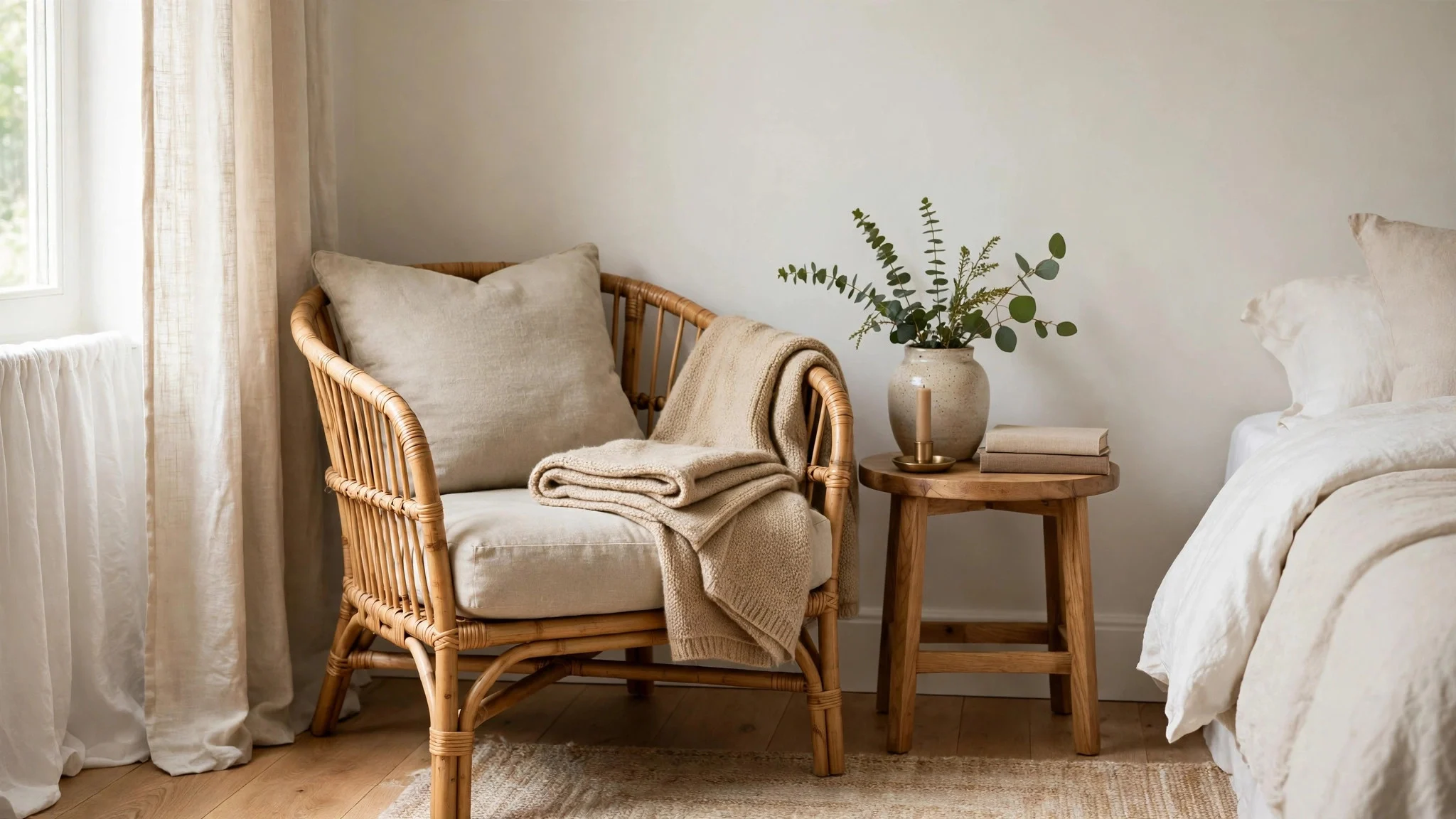
7. Add a Secondhand Rattan or Wicker Chair
A rattan chair, a wicker peacock chair, or a bentwood rocker gives a bedroom a place to sit that is not the bed, and these pieces are common secondhand finds. A rattan or wicker accent chair in decent shape costs around $20–$60 at a flea market or online marketplace, where the same chair new can cost three times that. Sit in it before you buy and shift your weight side to side: creaking is normal for old rattan, but a frame that flexes or a seat that sags badly means the weave is giving out. Check the underside for broken strands and for woodworm holes, which look like tiny pinpricks in clusters. Avoid chairs with a cracked frame at the joints, since rattan is difficult to repair once the frame splits. Tip: keep rattan out of direct sun and away from radiators, since dry heat makes the fibres brittle over time.
8. Style the Bedside Table With Old Books and Ceramics
A bedside table dressed with thrifted pieces looks like someone actually lives in the room. A short stack of old hardback books, a small ceramic vase, and a vintage alarm clock or a brass tray are enough; the point is a few things with age, not a crowded shelf. Hardbacks cost $1–$3 each at charity shops, and small vases and dishes often go for less. Check ceramics for chips around the rim and the base, and run a finger along the edge, since small chips are easy to miss by eye. Avoid stacking books higher than about 20 cm, or the pile becomes a hazard when you reach for a glass of water in the dark. Tip: keep one practical item on the table, like a small dish for a watch or earrings, so the styling earns its place instead of just looking pretty.

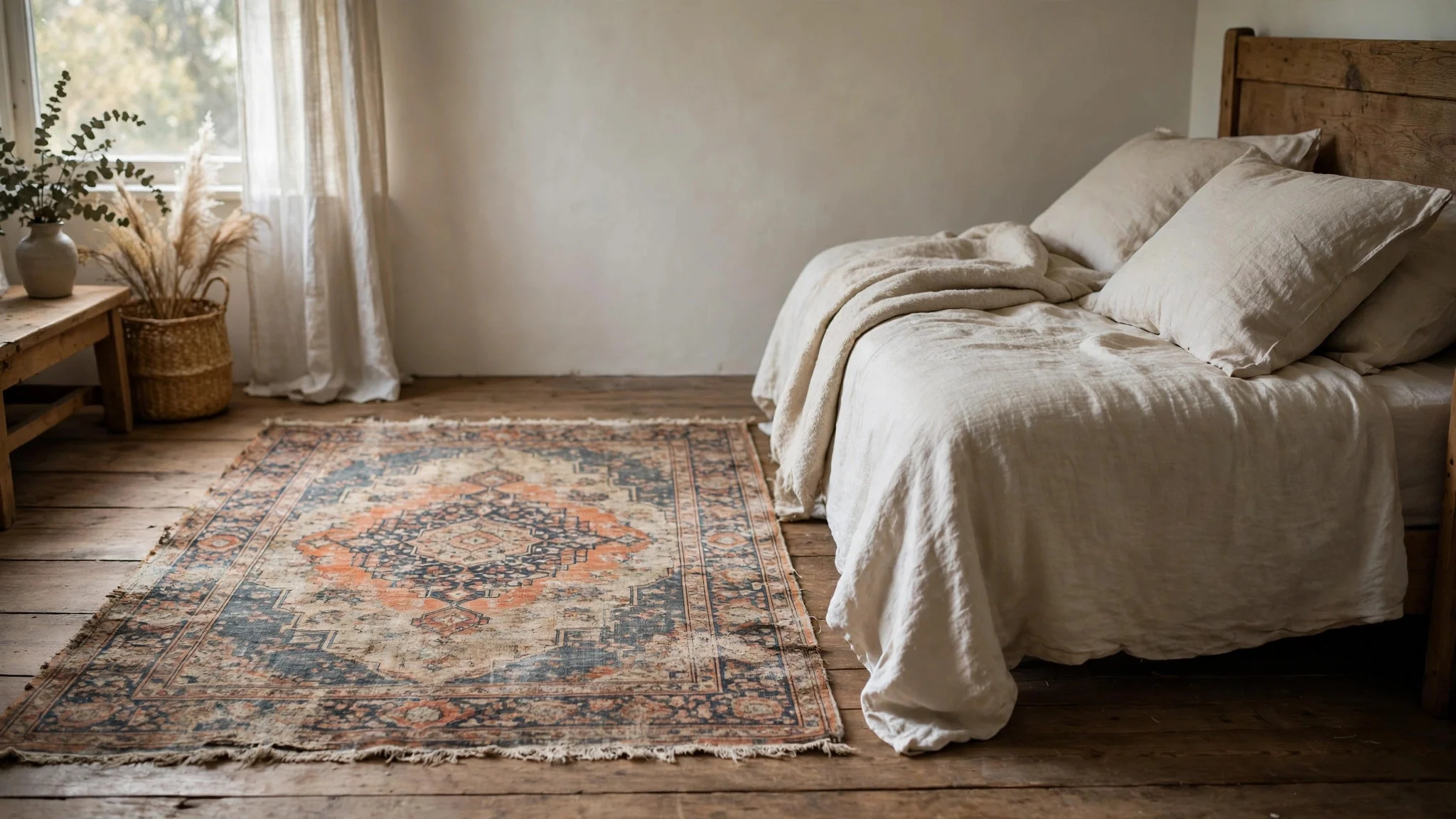
9. Lay Down a Vintage Rug, Bought With Care
A vintage rug — a worn Persian-style rug, a faded kilim, or an old wool rug — can warm up a bedroom floor, anchor the whole room, and tie the furniture together. Secondhand rugs in the 120 x 180 cm range often sell for $30–$100, which is a fraction of the new price for wool. Check the back as well as the front: the pattern should show on the back of a hand-knotted rug, and the fringe should be attached firmly, not hanging loose. Fold a corner and look at the base of the pile for moth damage, which shows as bare patches or fine webbing. Avoid rugs with a sticky or crumbling rubber backing, which is a sign of a cheap machine-made rug that is past its best. Tip: use a rug pad underneath, even a thin one, since it stops an old rug from slipping and adds years to its life.
10. Clean and Wax Old Wood Instead of Painting It
The fastest way to ruin a good piece of thrift store furniture is to paint over wood that only needed a clean. Start with a wipe-down using warm water and a small amount of mild soap, then dry the wood straight away so water does not sit in the grain. For grime that has built up over years, a mix of equal parts white vinegar and water on a soft cloth lifts most of it without stripping the finish. Once the wood is dry, rub in a beeswax polish or a plain furniture wax with a lint-free cloth, working with the grain. Avoid sanding a piece before you know what it is: sanding removes the original finish and the patina that makes old wood attractive, and it cannot be undone. Tip: test any cleaner on a hidden spot, like the inside of a leg, and wait a day before doing the whole piece.

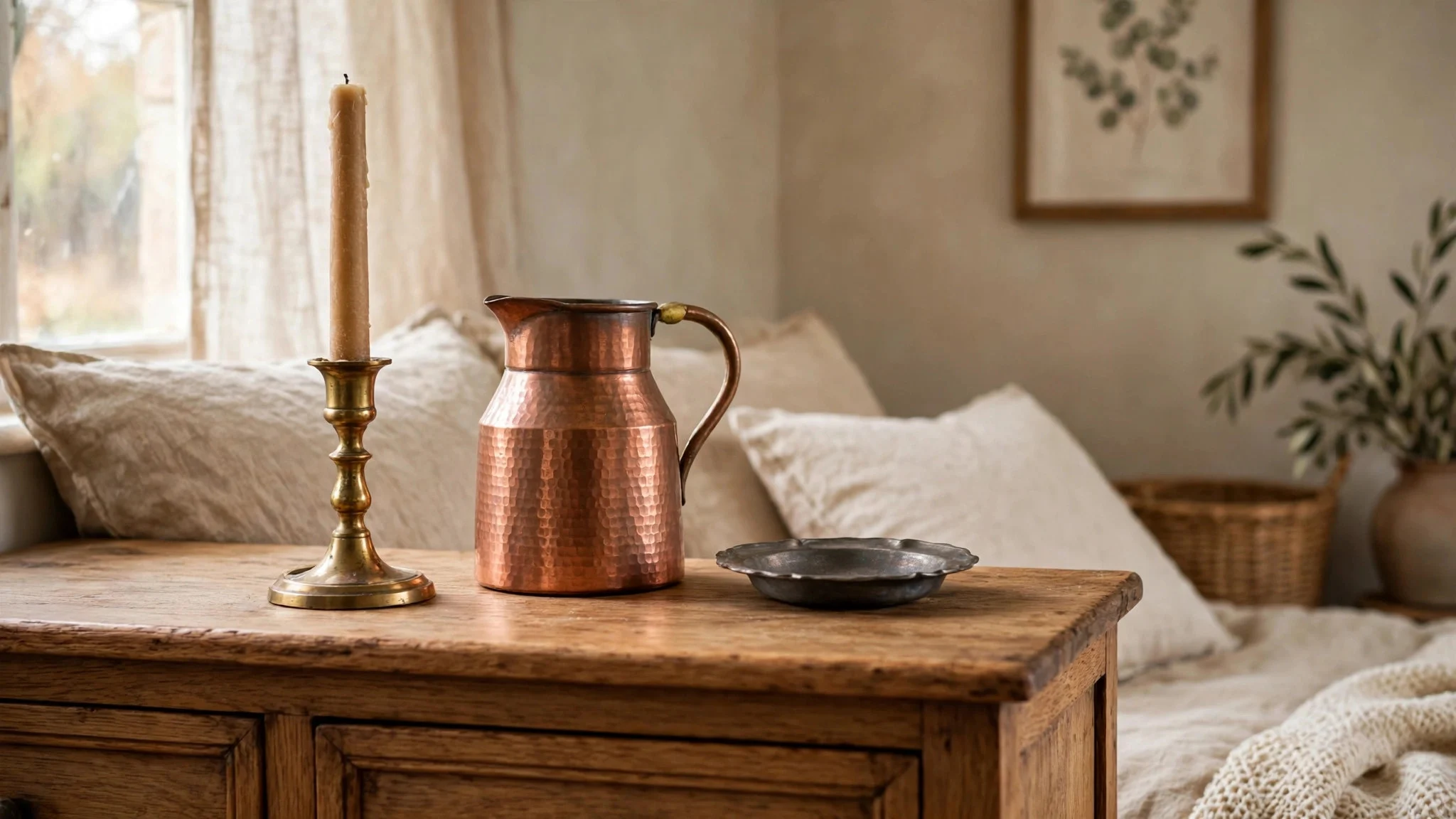
11. Mix Old Brass, Copper, and Pewter in Small Doses
Vintage bedrooms often have a mix of metals — a brass lamp, a copper tray, a pewter picture frame — and that mix works because no single piece dominates. The trick is to keep each metal to a few small items rather than a whole set. A vintage brass candlestick, a copper jug, and a pewter dish on a dresser give the eye three different finishes without clashing. Thrifted metalware usually costs $2–$10 per piece. Check for dents that will not polish out and for lacquer that has gone cloudy or patchy; cloudy lacquer can be removed with a gentle polish, but it takes time. Avoid buying metal pieces that feel very light for their size, since that often means thin plating over plastic. Tip: keep all the metals in the same warm or cool family, so brass and copper sit together easily while chrome and pewter belong in a cooler scheme.
12. Hang Vintage Art, Prints, and Needlework
Old oil paintings, framed botanical prints, embroidered samplers, and needlework pictures are some of the easiest thrifted finds to hang, and they cost very little. A framed landscape or floral print in a decent frame usually sells for $5–$25, and a small embroidered piece for even less. Look for honest signs of age — a slightly darkened varnish, a faded mount — rather than damage like water stains across the middle or a torn canvas. Hang art at eye level, with the centre of the piece about 145 to 150 cm from the floor, and keep it out of direct sunlight so the colours do not fade further. Avoid buying art just because it is old; a dull or badly damaged picture will not improve by hanging it in your bedroom. Tip: pair a larger piece above the bed with two smaller pieces on the next wall, so the room has one clear focal point.

13. Use Old Crates and Baskets for Everyday Storage
Wooden crates, wicker baskets, and seagrass boxes are the workhorses of a thrifted bedroom. They hold spare bedding, magazines, chargers, and the clutter that otherwise ends up on the floor. A solid wooden crate costs around $3–$10 secondhand, and a good wicker basket $5–$15. Check baskets for broken weave and for a smell of damp, and check crates for splinters and for nails sticking out at the corners. Stack two crates beside the bed as an open nightstand, or slide a low basket under the bed for shoes. Avoid baskets with a broken base, since they will not hold weight once loaded. Tip: line a basket with a cotton tea towel or a scrap of fabric so small items do not fall through the weave and the lining can be washed.
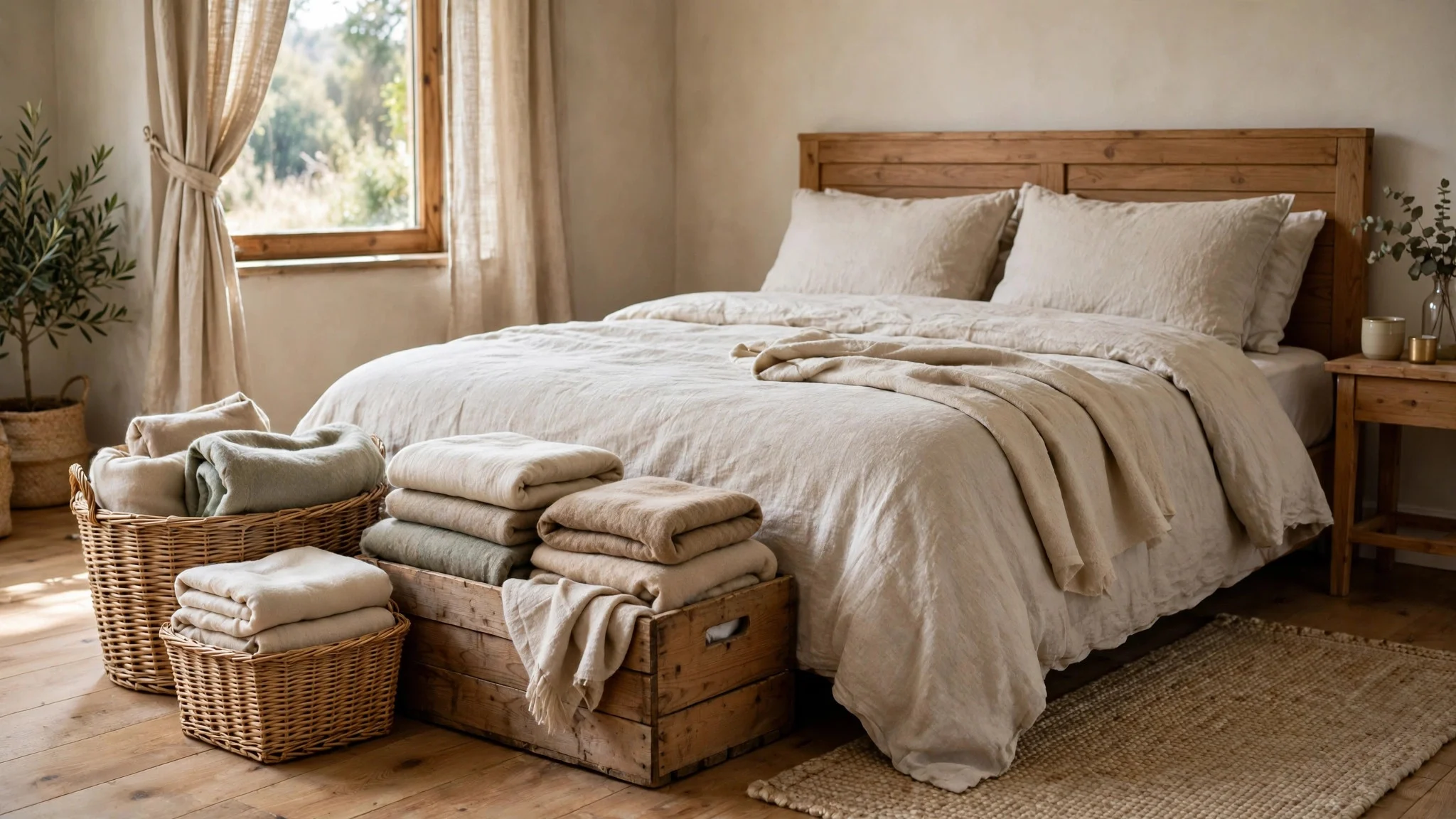
14. Mix Eras on Purpose, Not by Accident
A room full of pieces from one decade can look like a film set, while pieces from every decade can look like a jumble. The middle ground — the one that makes an eclectic vintage bedroom feel collected over time rather than cluttered — is to pick two or three eras and let them share the room. A 1950s dresser, a 1970s rattan chair, and a 1930s mirror can sit together happily if they share a wood tone or a colour. Keep the biggest pieces — the bed, the dresser, the wardrobe — in the same broad style family, and let the smaller items carry the variety. Avoid mixing too many bold patterns at once: one floral quilt, one striped cushion, and plain bedding is plenty. Tip: stand back and look at the room from the doorway after each new piece arrives; if one item shouts louder than the rest, move it to another wall or another room.
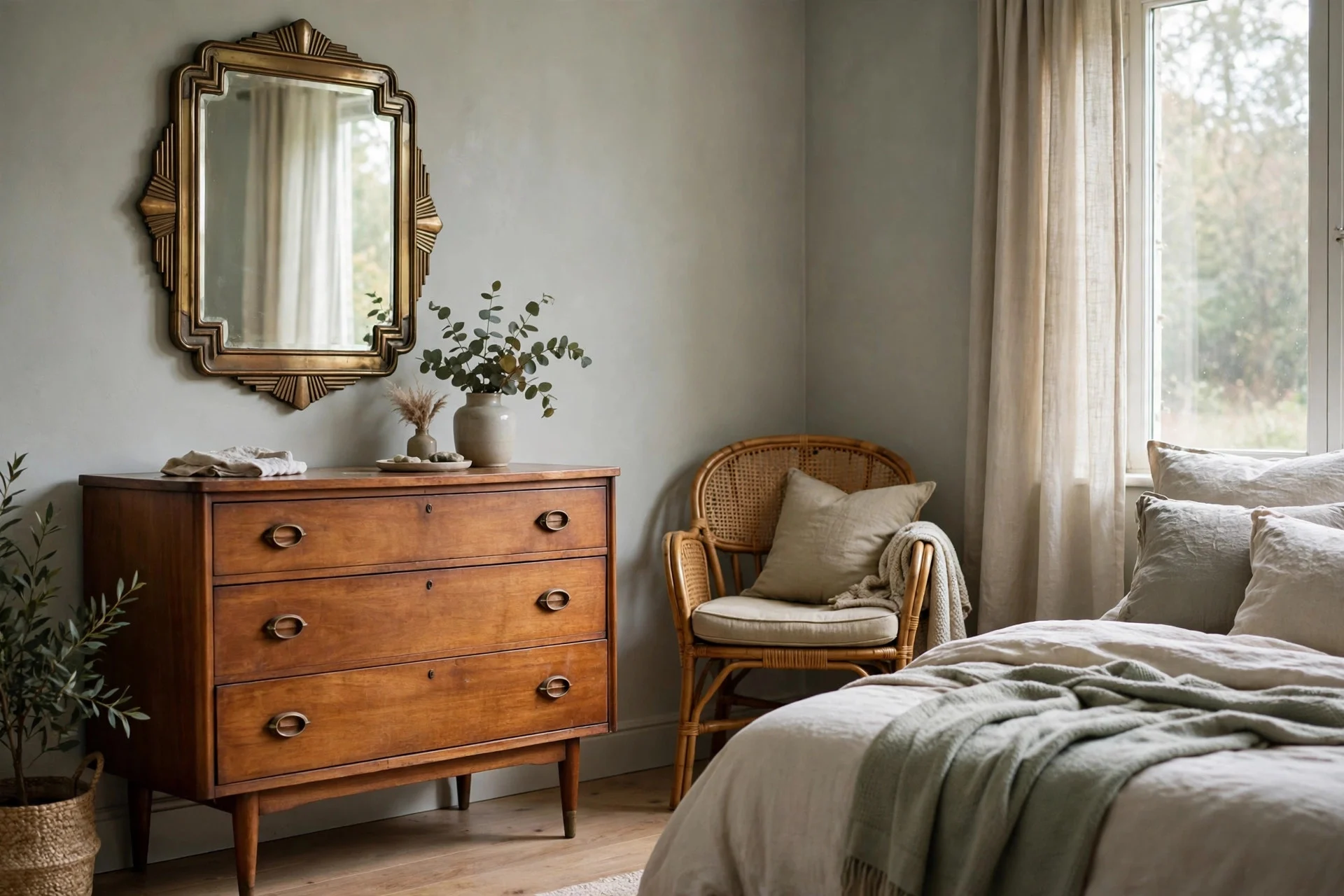
15. Know Where to Look and What to Skip
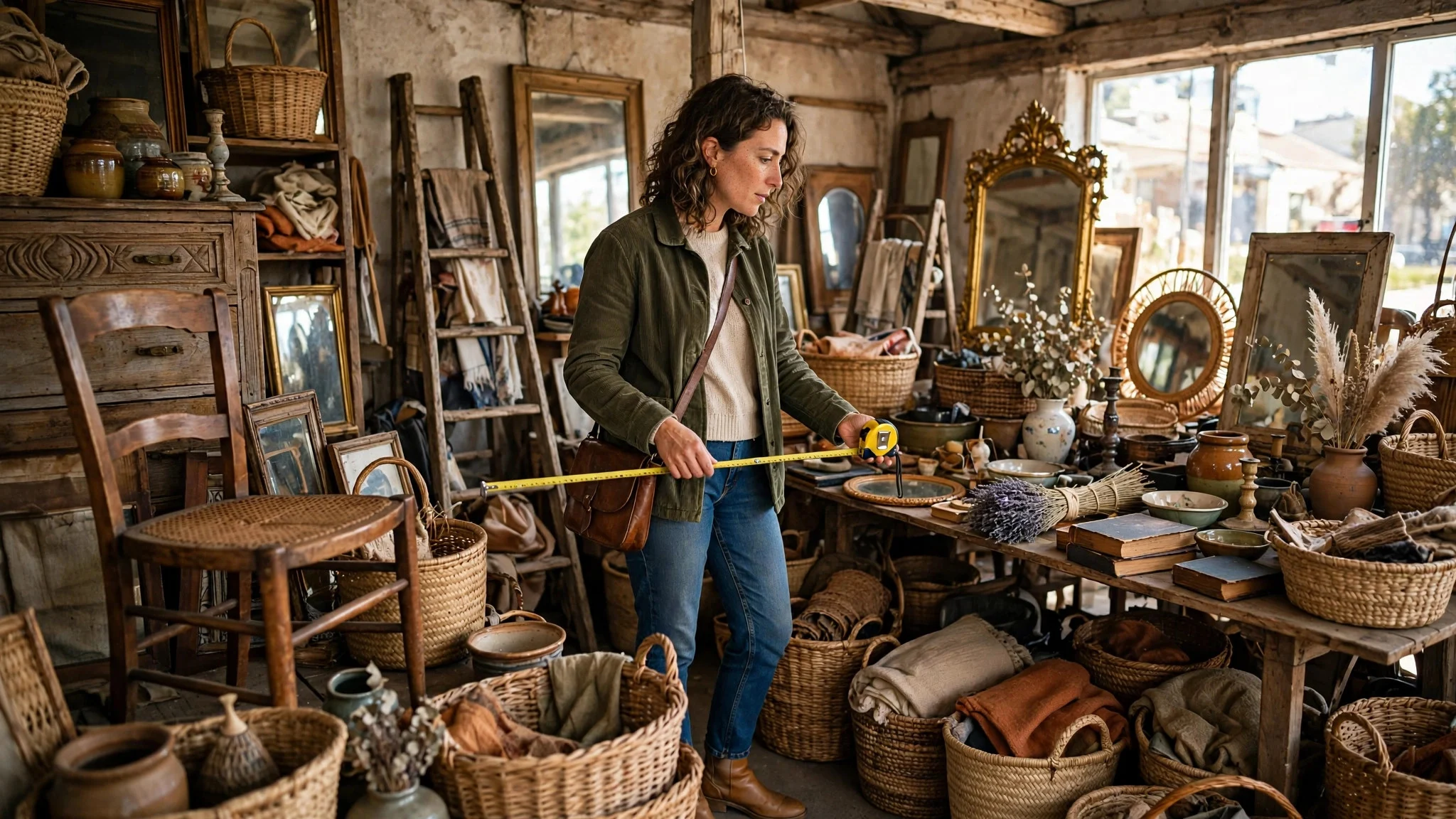
Good thrifting is mostly about where you look and how often. Charity shops near older neighbourhoods, estate sales, flea markets, and online marketplaces all turn up different stock, and the best pieces go quickly, so a short visit once a week beats one long trip a month. Set a budget before you go — around $100–$150 is enough to start a thrift store bedroom makeover — and carry a tape measure and a short list of what you need. Some things are never worth buying secondhand: mattresses, pillows, and anything upholstered that you cannot clean properly, since you cannot see what is inside. Skip anything with woodworm, a strong damp smell, or a repair that will cost more than the piece is worth. Tip: if you are unsure about a piece, walk away and come back the next day; if it is still there and you are still thinking about it, it is probably the right buy.
FAQ
How do I tell if a thrifted piece of furniture is good quality?
Lift one corner: solid wood feels heavy, while chipboard feels light and hollow. Open the drawers and look for dovetail joints, wood drawer sides, and a wooden back panel rather than thin cardboard. Check the frame is square and does not wobble, and look underneath for a maker’s stamp or label, which often tells you the age and timber.
How do I clean thrifted furniture and textiles before using them?
Wipe wood with warm water and a little mild soap, dry it straight away, then rub in a beeswax polish once it is fully dry. Wash quilts, coverlets, and cushion covers gently with mild detergent and dry them flat or on low heat. Leave rugs and upholstered pieces in fresh air for a day, then vacuum them well before bringing them in.
Is it safe to buy a secondhand mattress or pillows for the bedroom?
No, it is best not to. You cannot see inside a mattress or a pillow, so you cannot check for wear, stains, or pests, and cleaning them properly at home is difficult. Buy those items new, and spend your thrift budget on furniture, mirrors, lamps, frames, rugs, and textiles that you can inspect and wash.
Conclusion
A vintage bedroom built from thrifted finds is not about filling a room with old things. It is about choosing a few solid pieces, cleaning them up, and letting them sit together in a way that feels settled. Start with a good dresser, add a mirror and lamps you like, layer a quilt on the bed, and keep the smaller finds — frames, books, brass, baskets — to a few that earn their place. Learn to spot solid wood, check every piece before you pay, and walk away from anything with damp, woodworm, or a repair costing more than the item. Visit the shops often, carry a tape measure, and buy slowly. Done that way, a bedroom built with thrifted bedroom decor costs a fraction of a new one and ends up with far more character, because every piece was collected over time and has a story and a reason to be there.