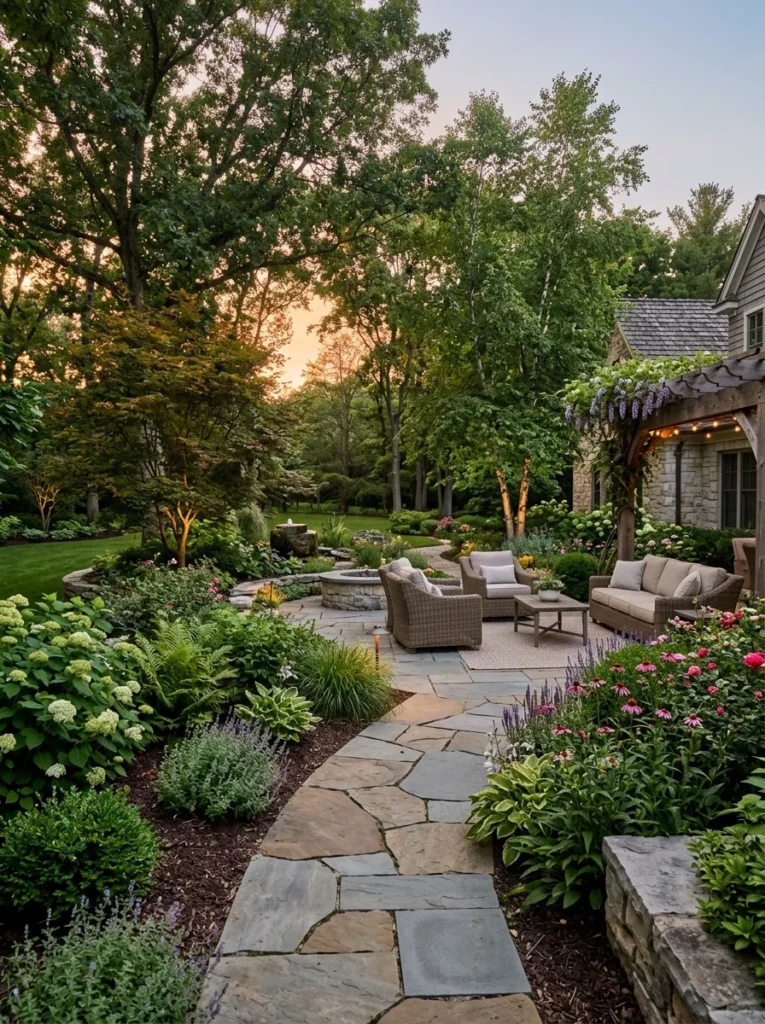
For the longest time, our landscaping consisted of whatever the builder had planted a decade earlier and whatever had managed to survive our neglect since, a strip of tired shrubs along the foundation and a lawn that took up most of the yard without actually being used for anything. It wasn’t until we started genuinely using our outdoor space more, adding seating, spending evenings outside, that the disconnect became obvious: the landscaping around us had nothing to do with how we actually lived in the yard. Reworking it with real intention, rather than just replacing dead shrubs with new ones, changed how the whole space felt to be in, not just how it looked from the street.
Good landscaping does more than improve curb appeal; it actively shapes how comfortable, private, and inviting your outdoor living space feels day to day. Below are the changes that made the real difference for us, organized from the structural decisions to the finishing touches.
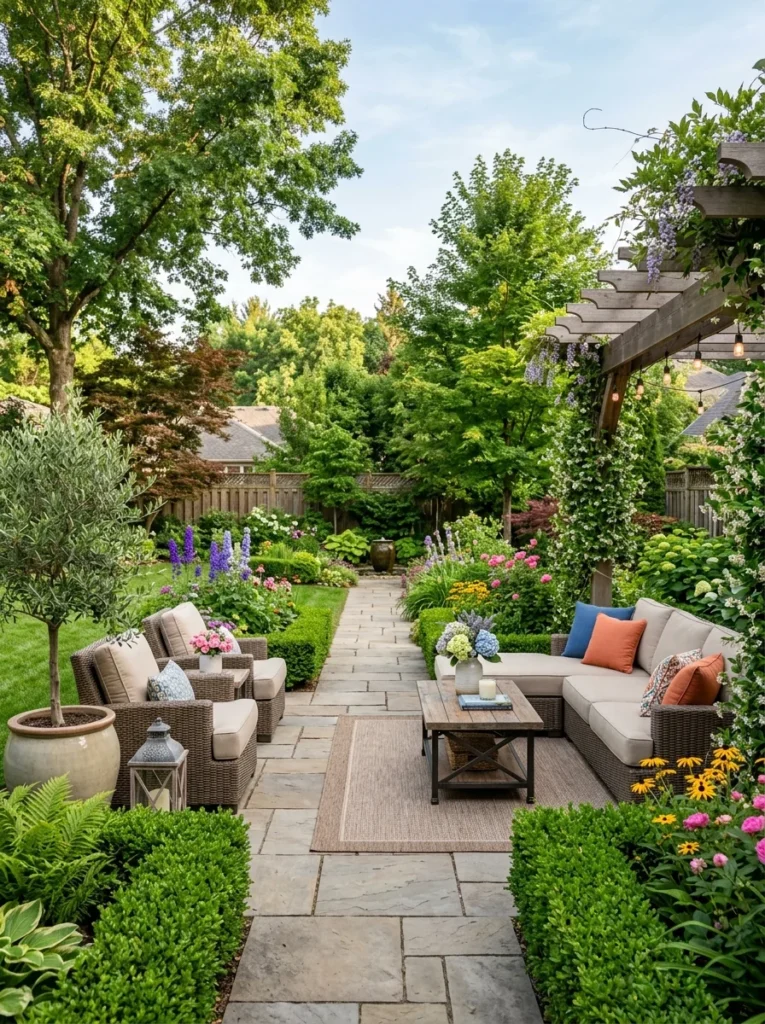
Start by defining functional zones with plantings
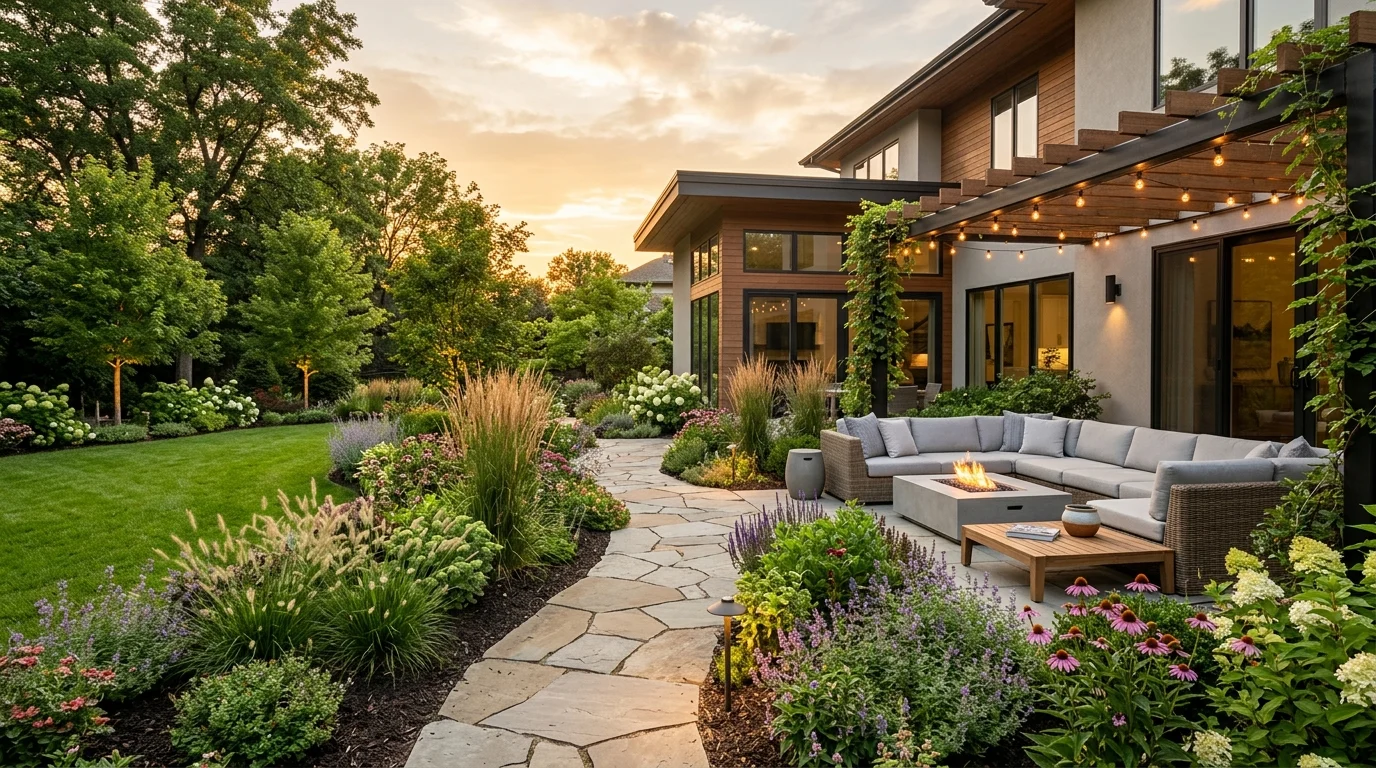
Landscaping can do a lot of the work that a fence or wall might otherwise handle, using plants to visually separate a dining area from a lounge area, or a play space from a quieter garden corner, without needing any hard construction. A low hedge, a row of ornamental grasses, or a simple garden bed can mark these transitions naturally, making a yard feel like several purposeful spaces rather than one undifferentiated stretch of grass and mulch.
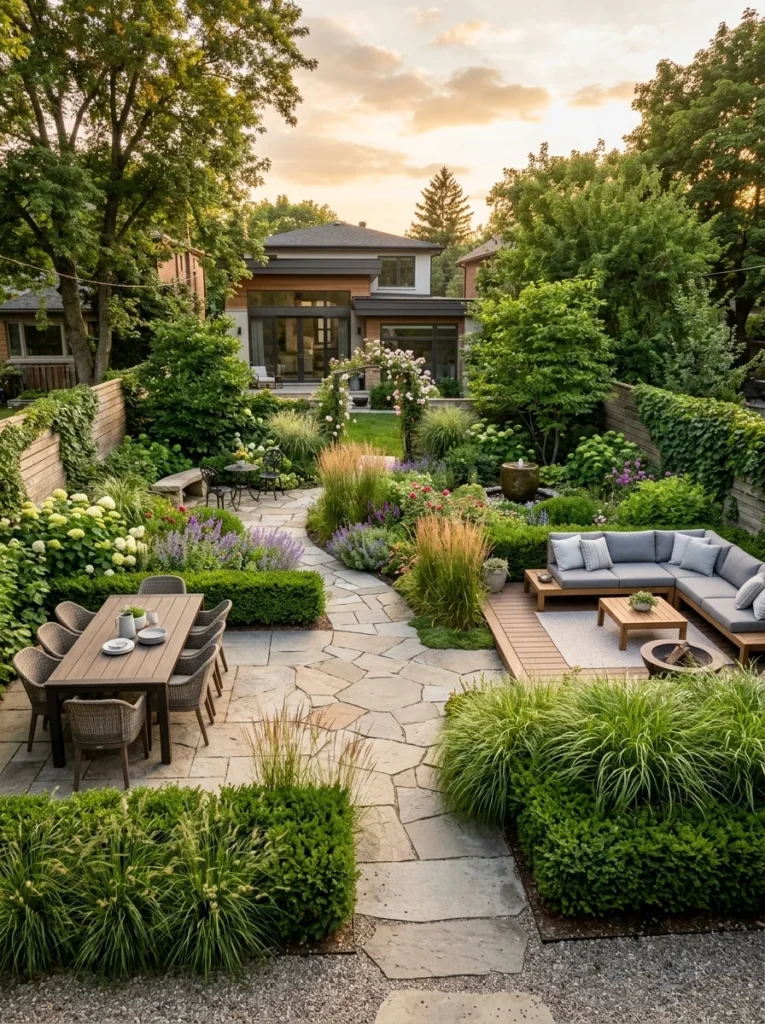
Use layered planting heights for depth and interest
A landscape design that relies entirely on one plant height, all low shrubs or all short flowers, tends to look flat regardless of how well-maintained it is. Layering taller plants or small trees toward the back of a bed, mid-height shrubs in the middle, and low groundcover or flowers in front creates visual depth and makes even a modestly sized garden bed feel fuller and more intentional. This layered approach also gives every plant enough sun exposure and room to be seen, rather than shorter plants getting hidden behind taller ones planted without any real plan.
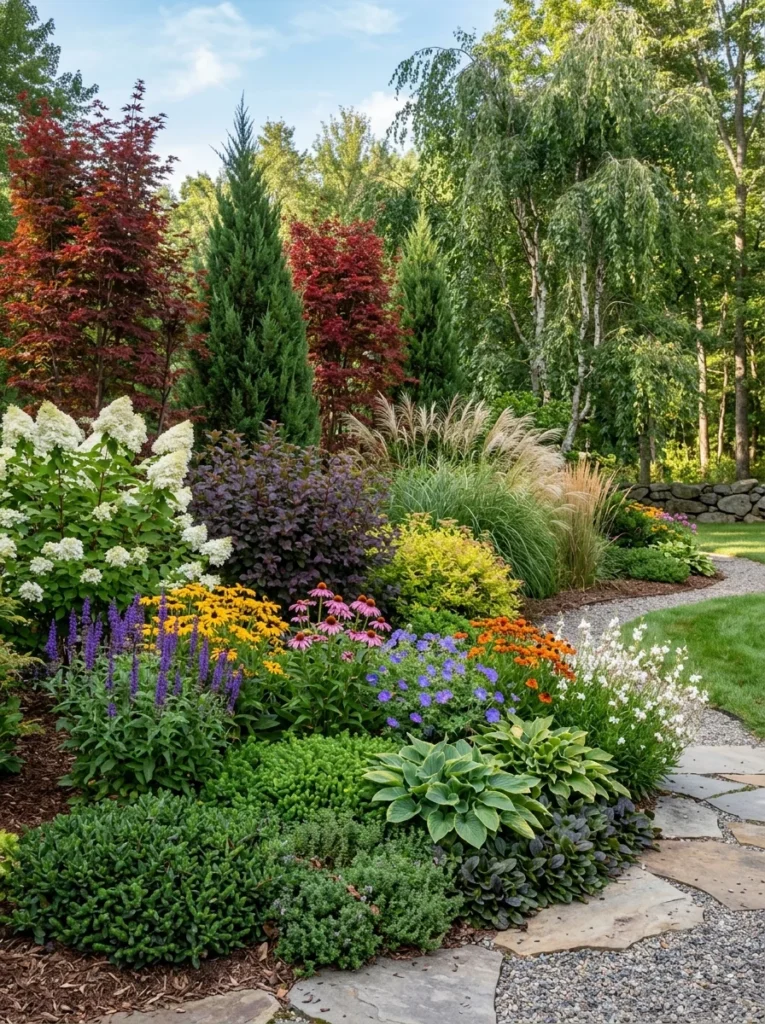
Choose plants suited to your specific climate and maintenance tolerance
One of the most common and costly landscaping mistakes is choosing plants based purely on how they look in a nursery display, without considering whether they’re genuinely suited to your climate’s rainfall, sun exposure, and temperature extremes. Native and climate-adapted plants generally require significantly less water, fertilizer, and pest management than plants pushed outside their ideal growing conditions, which means less ongoing maintenance and a landscape that thrives rather than constantly struggles. Being honest about how much time you’re realistically willing to spend on maintenance also matters; a garden full of high-maintenance plants will look worse over time than a simpler design of lower-maintenance plants that actually gets properly cared for.
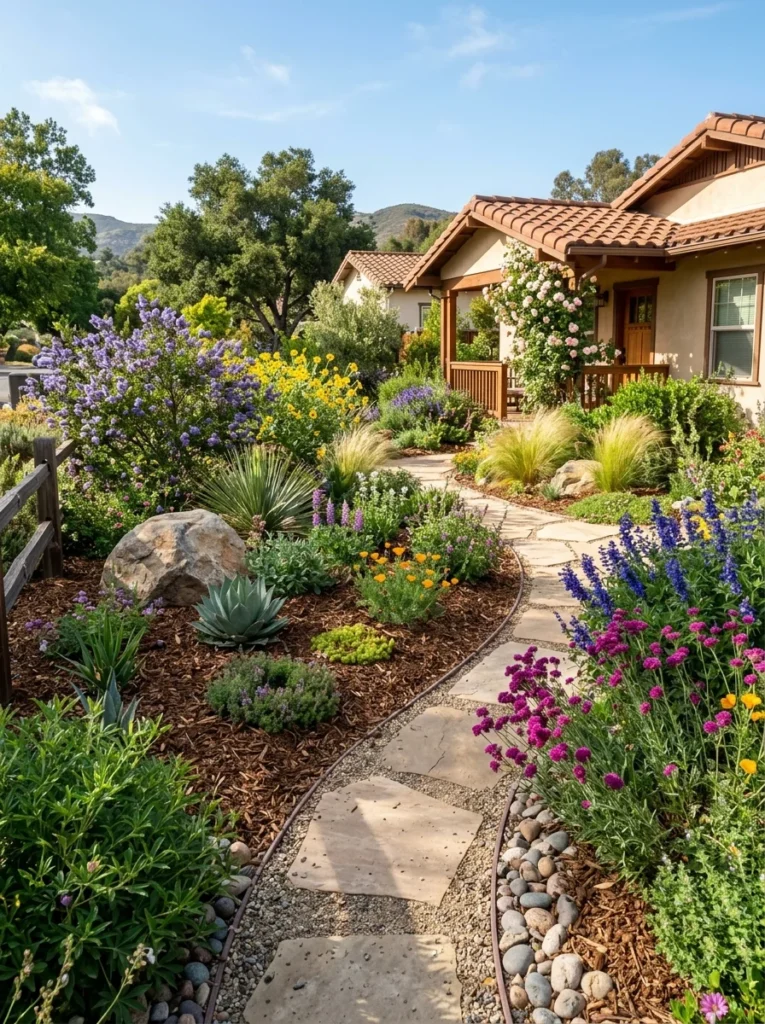
Add privacy strategically with trees and tall plantings
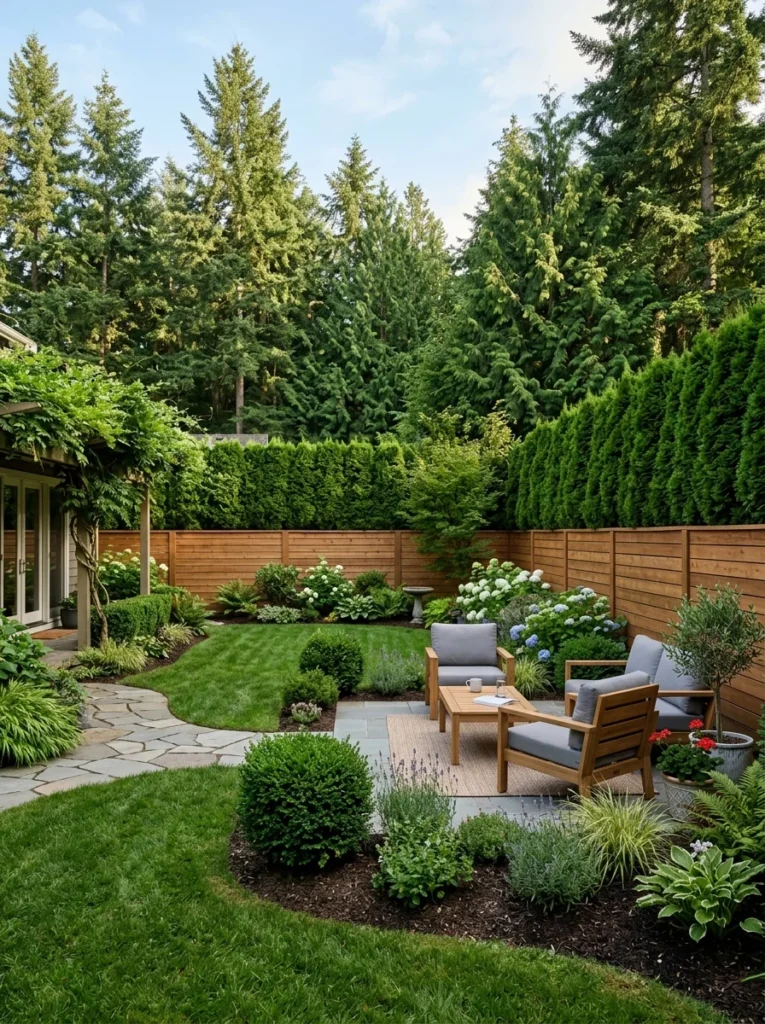
Privacy meaningfully changes how relaxed an outdoor space feels, and landscaping is often a more attractive, more gradually effective solution than a tall fence alone. Evergreen trees or tall shrubs planted along a property line block sightlines from neighboring homes while adding greenery and softening what might otherwise be a hard fence line. For faster results while trees mature, combining new plantings with a simpler existing fence or trellis structure provides privacy immediately while the greenery fills in and eventually becomes the primary visual and physical barrier.
Incorporate hardscaping to reduce ongoing maintenance
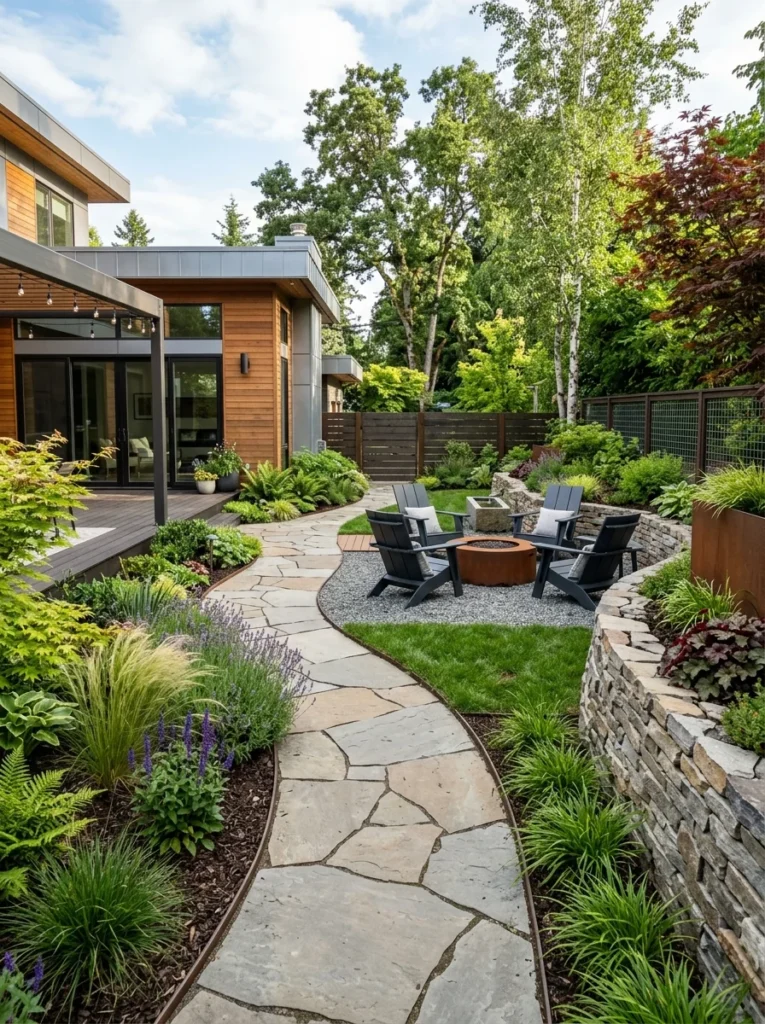
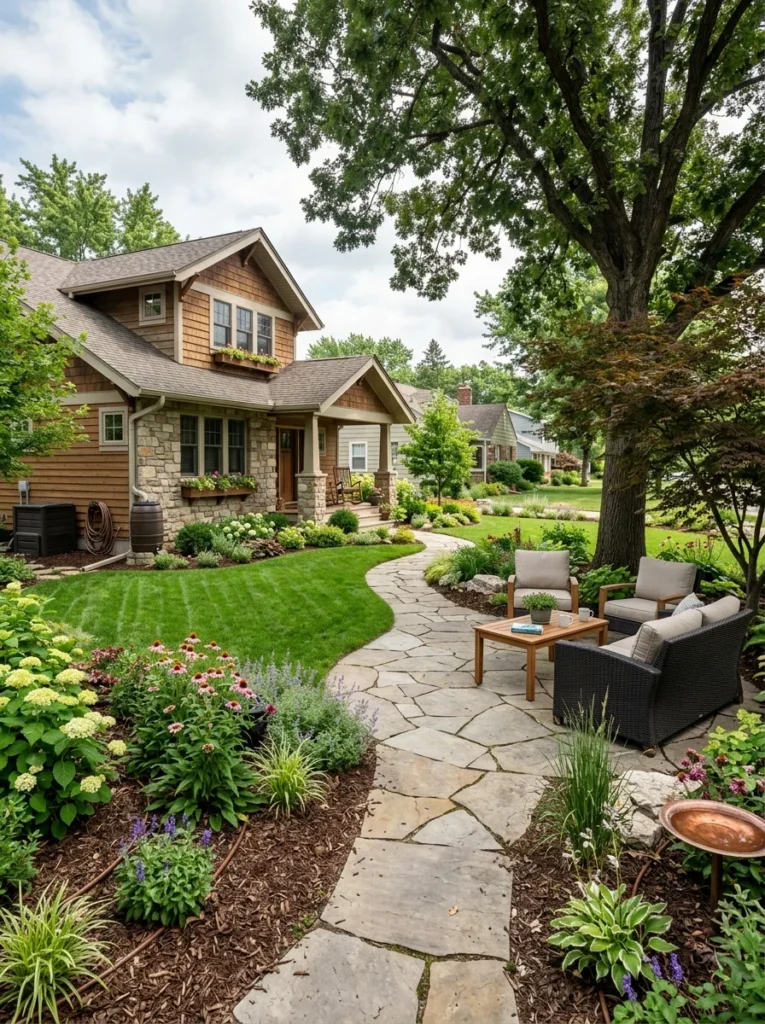
Not every square foot of a yard needs to be planted; incorporating pathways, a gravel seating area, or a stone border reduces the total area requiring regular mowing, weeding, or watering while still contributing to the overall design. A well-placed path connecting different zones of the yard also guides how people naturally move through the space, which subtly reinforces the functional zones established through planting choices.
Use lighting to extend the landscape’s impact into the evening
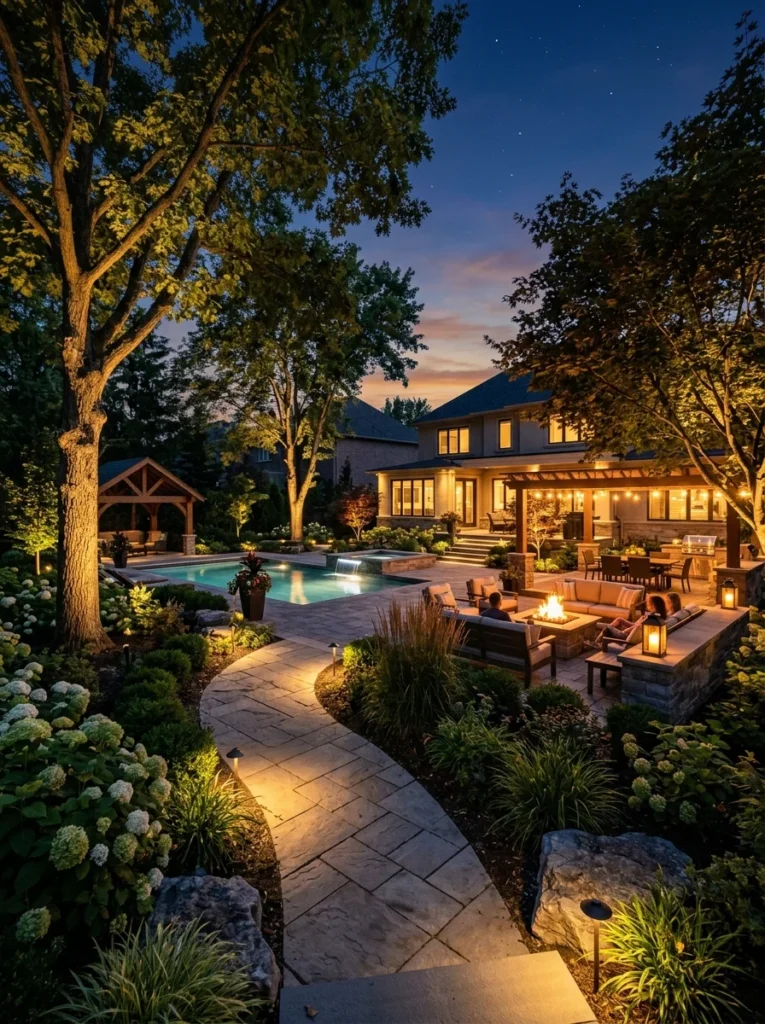
A beautifully landscaped yard that goes completely dark and invisible after sunset loses much of its impact for a significant portion of the day. Low-voltage path lighting along walkways, uplighting directed at a specimen tree or interesting architectural plant, and softer ambient lighting near seating areas all extend the visual impact of your landscaping well into the evening hours, when many households actually spend the most time outdoors.
Add a focal point that draws the eye through the space
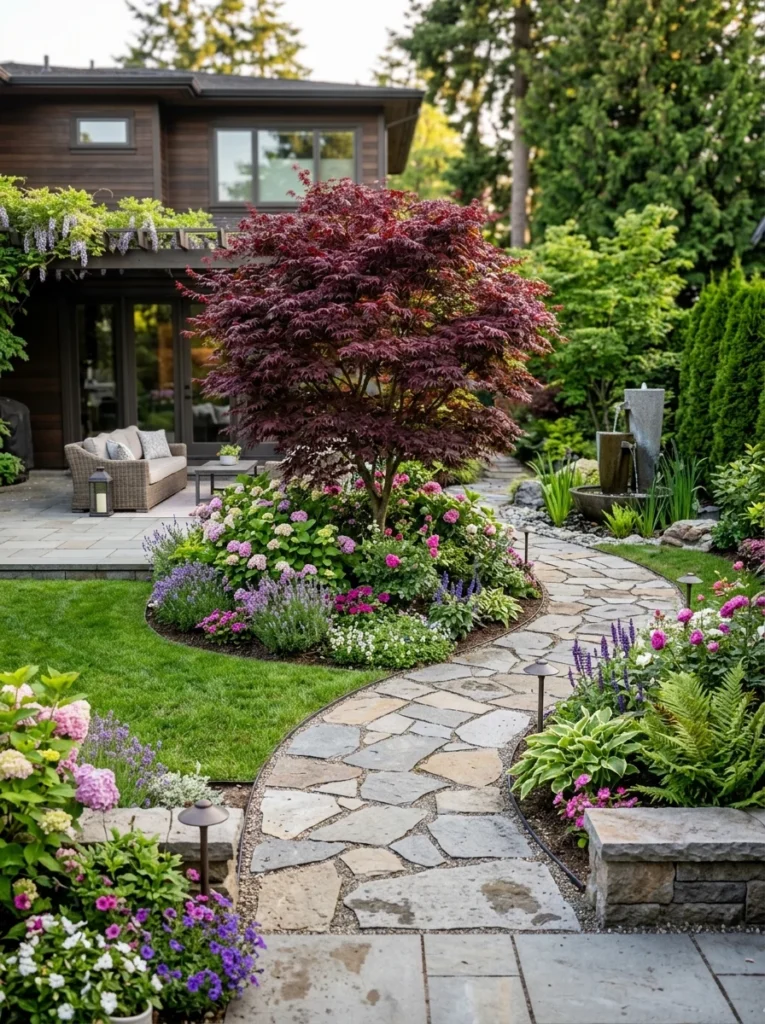
A specimen tree, an eye-catching planter, a small water feature, or an interesting piece of garden art gives the eye somewhere to land and creates a sense of destination within the yard, rather than the space reading as one undifferentiated area. Positioning this focal point so it’s visible from your main seating area, or from a key window inside the house, maximizes how often you actually get to enjoy it rather than tucking it into a corner that’s rarely seen.
Consider seasonal interest, not just peak summer bloom
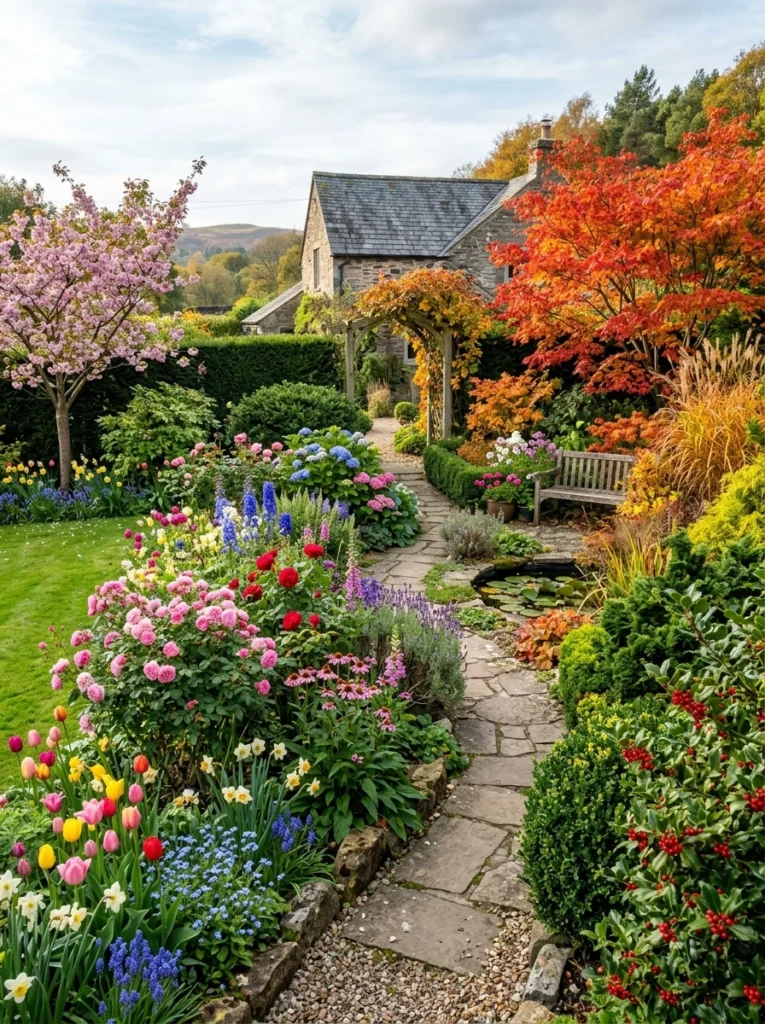
A landscape planned purely around summer flowering plants can look sparse and uninteresting for much of the rest of the year. Including plants with multi-season interest, spring bulbs, summer-blooming perennials, plants with colorful fall foliage, and evergreens or interesting winter bark or berries for the colder months, keeps the landscape visually engaging across all four seasons rather than peaking for a few weeks and then fading into the background for the rest of the year.
Improve soil and drainage before investing in plants
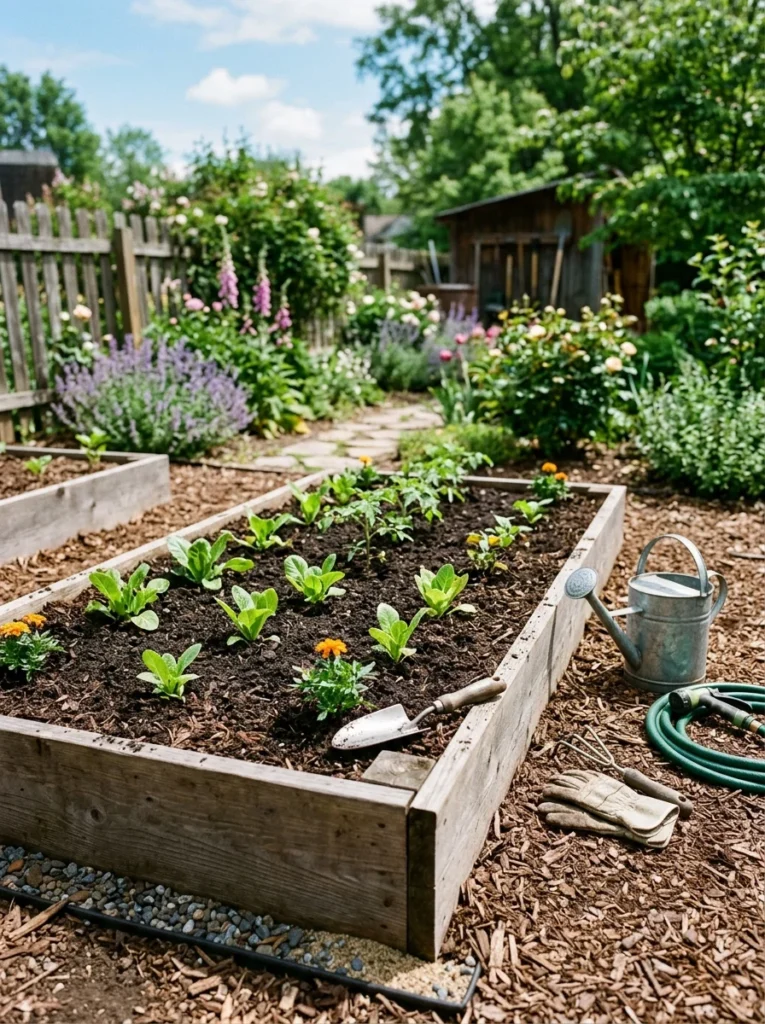
Poor soil quality or drainage issues will undermine even the most thoughtfully chosen plants, leading to stunted growth, root rot, or repeated plant losses that end up costing more over time than addressing the underlying issue upfront. Testing your soil’s composition and pH, amending it with compost or other appropriate materials, and addressing any standing water or drainage problems before planting sets a foundation that lets your subsequent plant choices actually thrive rather than struggle against conditions working against them from the start.
Phase larger landscaping projects to manage cost and effort
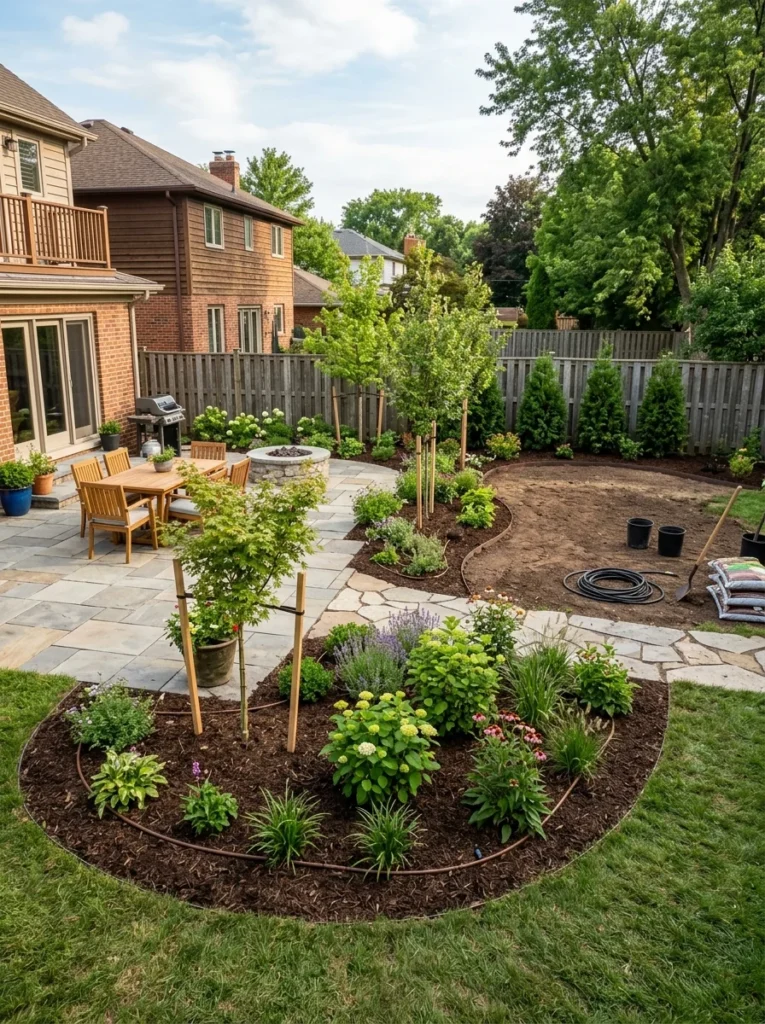
A full landscape overhaul doesn’t need to happen in a single season, and treating it as a multi-year project, starting with structural elements like trees, hardscaping, and privacy plantings, then adding in seasonal color and finishing details over subsequent years, spreads out both the cost and the physical effort involved. This phased approach also gives you time to observe how you actually use the space as it develops, potentially adjusting later phases based on what you learn from living with the earlier changes.
Use mulch and clean edging to tie everything together
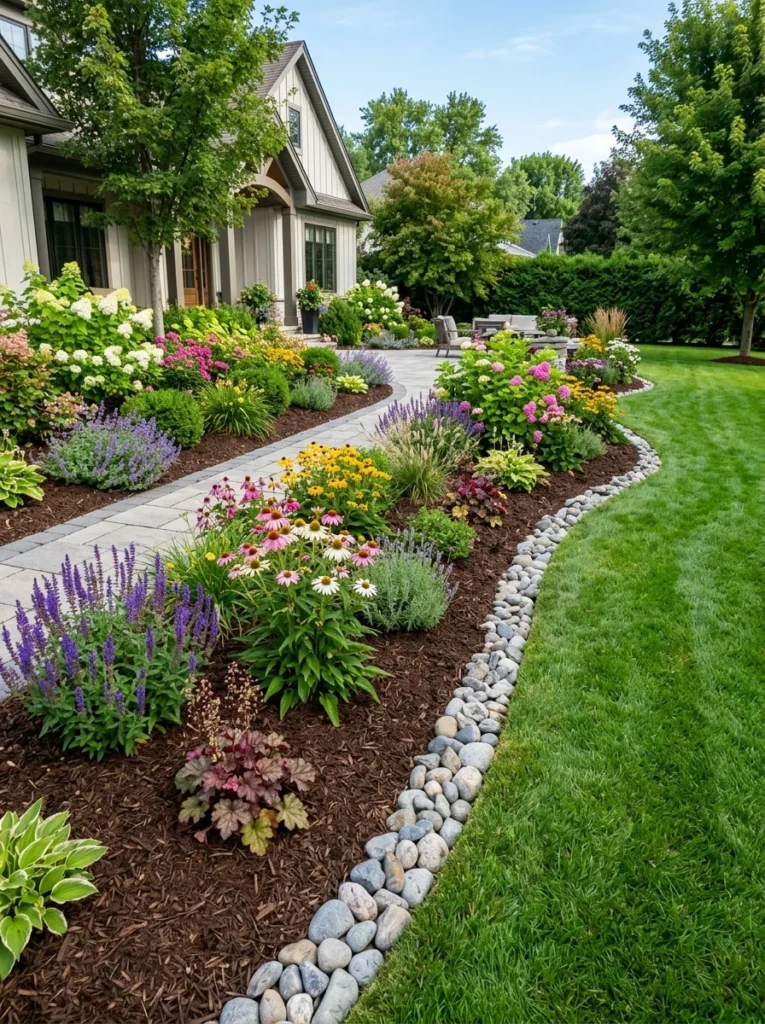
A consistent, well-maintained mulch layer across garden beds does more for a landscape’s polished appearance than people often expect, suppressing weeds, retaining soil moisture, and visually unifying beds that might otherwise contain a scattered mix of different plants and bare soil patches. Clean, defined edging between lawn and garden beds, whether a simple trenched edge, metal edging, or a low stone border, sharpens the transition between different areas of the yard and makes the whole landscape read as considerably more intentional and well cared for, even if the plants themselves are still relatively young and filling in.
Consider container gardening for flexibility or rented properties
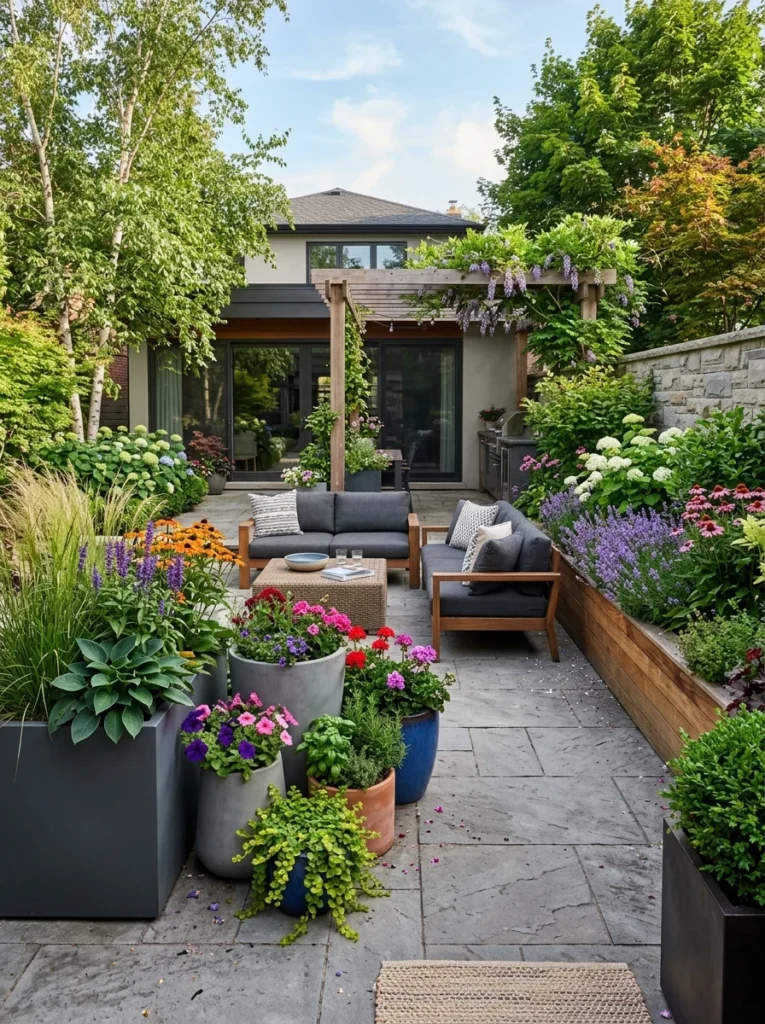
If you’re renting, or simply want more flexibility to change your landscaping without committing to permanent in-ground plantings, large containers and raised planters offer nearly the same design impact as in-ground beds while remaining fully movable. Grouping several containers of varying heights near a seating area can achieve much of the same layered, structured look as a traditional garden bed, and the plants can be swapped seasonally or relocated entirely if your needs change or if you eventually move to a new home. This approach also works well for supplementing an existing landscape, adding color or structure to a specific area without disturbing established in-ground plantings nearby.
Set up efficient irrigation to protect your investment
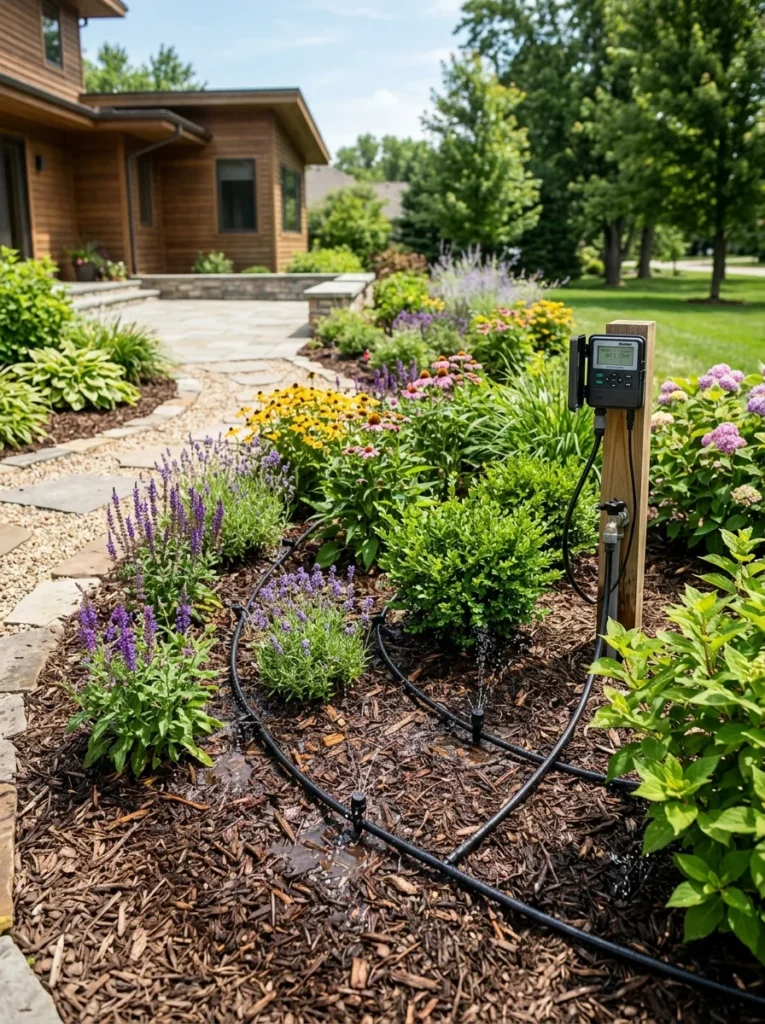
Even climate-appropriate plants generally need consistent watering while they establish their root systems in the first year or two, and an efficient irrigation approach protects that investment without wasting water unnecessarily. Drip irrigation, which delivers water directly to the root zone rather than spraying it broadly across leaves and surrounding soil, reduces water waste and helps prevent certain fungal issues that come from consistently wet foliage. A simple timer attached to either a drip system or standard sprinklers also helps maintain consistent watering during establishment without requiring you to remember daily watering by hand, which is often where new plantings fail simply from inconsistent care in their first critical months.
Common landscaping questions
What’s the biggest mistake people make with landscaping?
Choosing plants based purely on appearance without considering whether they’re suited to the local climate and how much maintenance the homeowner is realistically willing to provide is one of the most common and costly landscaping mistakes, often leading to struggling plants and repeated replacement costs.
How can landscaping improve privacy without a tall fence?
Evergreen trees and tall shrubs planted strategically along property lines block sightlines from neighbors while adding greenery, and combining new plantings with a simpler existing fence provides immediate privacy while the greenery matures into the primary barrier.
Should I landscape my whole yard at once or in phases?
Phasing a larger landscaping project across a few years, starting with structural elements like trees and hardscaping before adding seasonal color, is generally more manageable financially and gives you time to adjust the plan based on how the space actually develops and gets used.
How important is soil quality before choosing plants?
Very important. Poor soil or drainage issues can undermine even well-chosen, climate-appropriate plants, leading to stunted growth or repeated losses. Testing and amending soil before planting is a worthwhile step that protects the rest of your landscaping investment.
Is drip irrigation worth setting up for a home landscape?
Yes, particularly during a plant’s first year or two of establishment. Drip irrigation delivers water directly to the root zone, reducing waste and certain fungal issues compared to broad overhead spraying, and pairing it with a simple timer helps ensure consistent watering without relying on memory alone.
Thoughtful landscaping does more than boost curb appeal; it actively shapes how private, comfortable, and visually engaging your outdoor living space feels throughout the year. Defining zones with plantings, choosing climate-appropriate plants, layering heights for depth, and incorporating year-round interest all contribute to a yard that feels considered rather than incidental.
Our own yard’s tired foundation shrubs have been replaced with a layered mix of native plants, a young shade tree that’s slowly becoming our favorite focal point, and a simple gravel path connecting the seating area to a small side garden. None of it happened overnight, and some of it is still filling in, but the difference in how the space actually feels to spend time in has been dramatic. If you’re just starting your own landscaping rework, begin with the structural decisions, zones, privacy, and soil health, and let the seasonal color and finishing details follow once that foundation is solid.