Feng shui is a traditional Chinese system for arranging rooms so they feel balanced and easy to live in. In the bedroom, its advice centres on a few plain ideas: a bed you can see the door from, space to move on both sides, less clutter, softer light, and pairs of objects rather than single items scattered about. None of this is a promise of perfect sleep, and it does not replace medical advice if sleep problems persist. It is simply a set of design habits that many people find makes a room feel calmer at night. A feng shui bedroom layout works best when you start with the bed position, then work outward to storage, light, and colour. Small rooms can follow the same ideas as large rooms, with a few sensible swaps where space is tight. This guide covers fifteen practical ideas, with sizes, costs, and common mistakes, so you can try the parts that suit your room and leave the rest.
1. Place the Bed in the Command Position
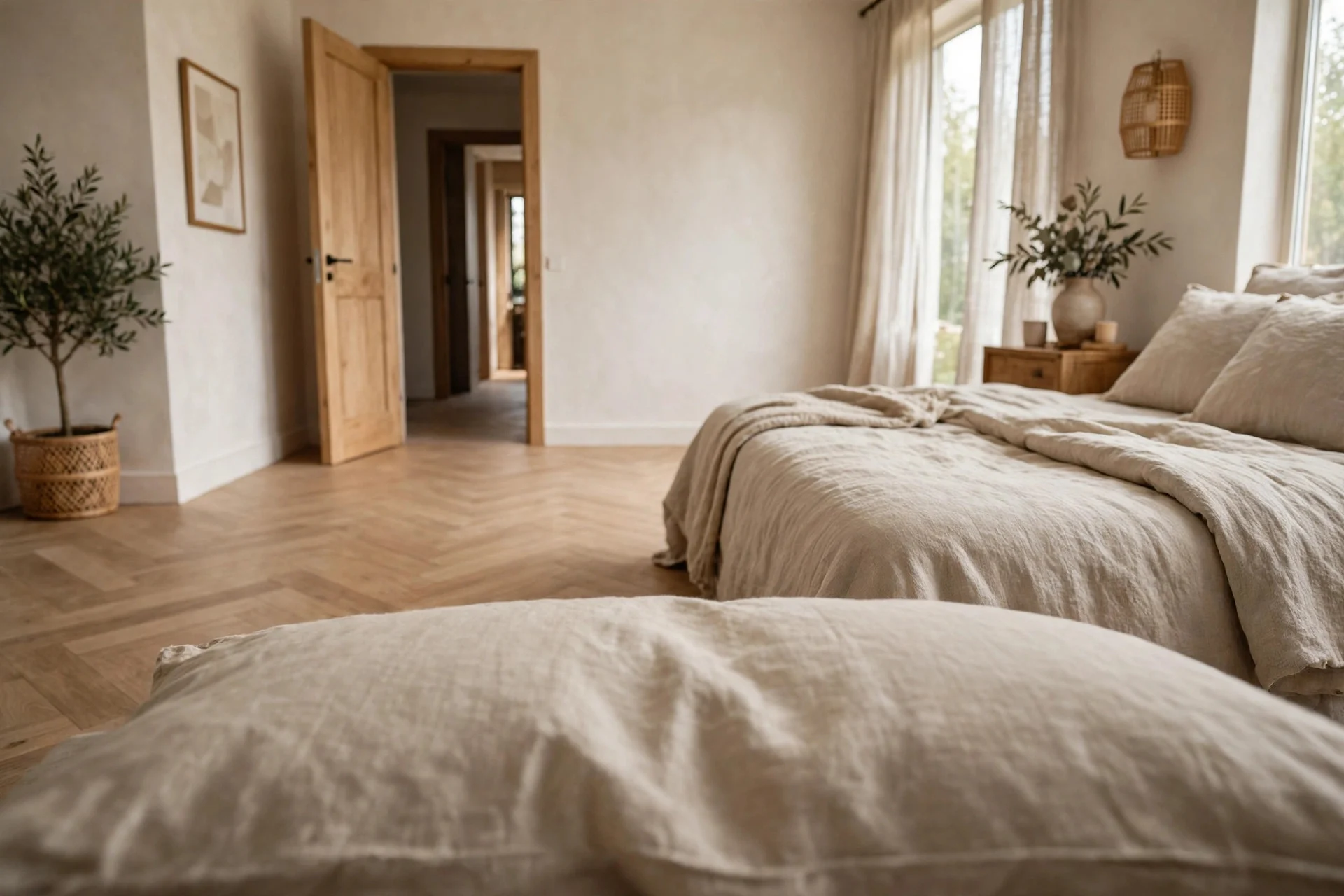
In traditional feng shui advice, the command position means you can see the bedroom door while lying in bed, without being directly in line with it. In practice, that usually means placing the headboard on a solid wall, with the bed angled so the door is in view but not straight ahead of your feet. This position helps many people feel less on edge at night, because they are not startled by someone entering. Aim for a clear view of the door from your pillow, and leave at least 24 inches of walking space on the side you use most. If your room layout makes this hard, a mirror placed so you can see the door’s reflection from bed is a common workaround in feng shui books. Avoid placing the bed with your feet pointing straight out of the door, a position often called the coffin position in traditional texts. Tip: Test the position for one night before moving heavy furniture twice. Lie down, check the door view, and check that you can get up without climbing over your partner.
2. Choose a Solid Headboard
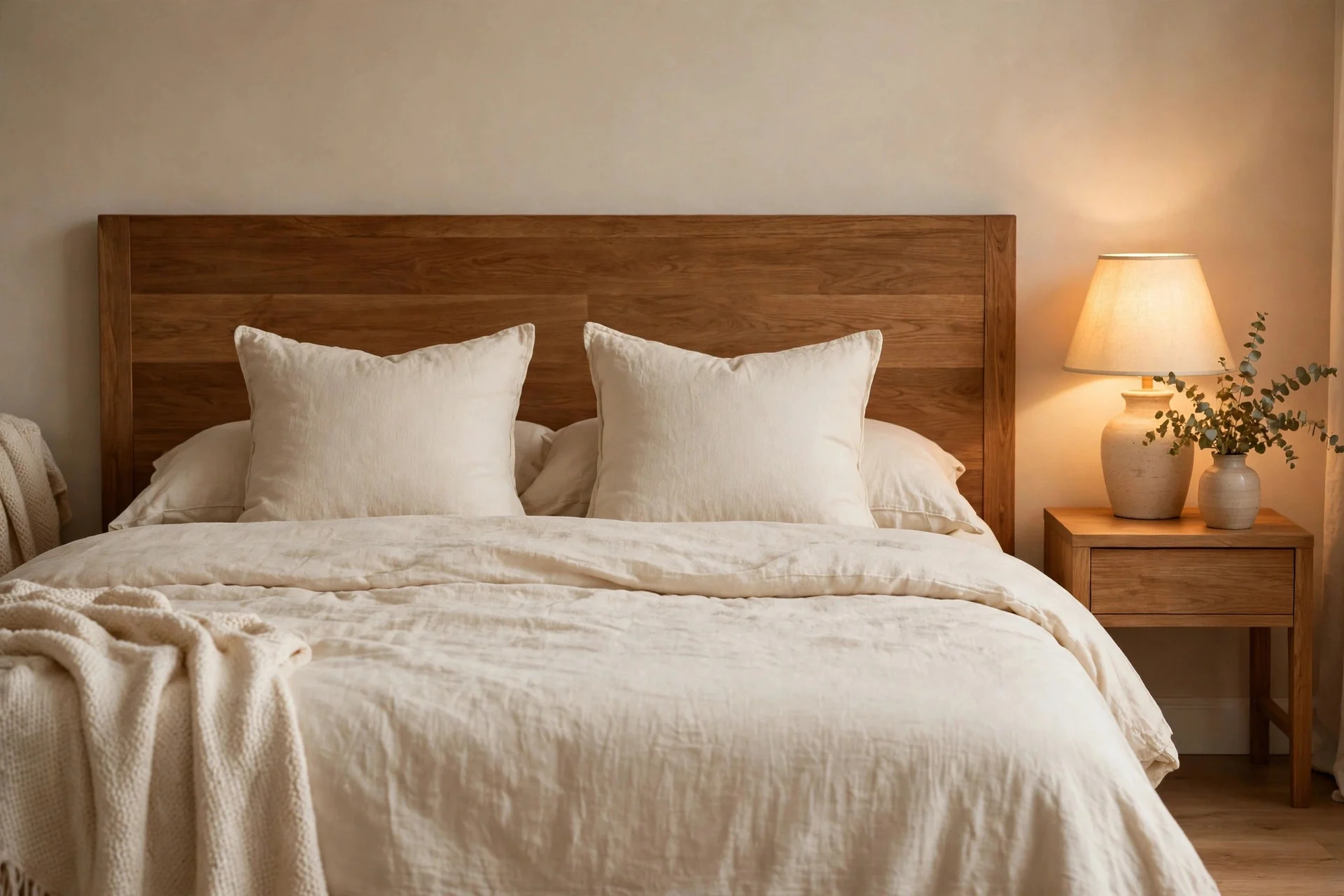
A solid headboard is a core piece of feng shui bedroom layout advice. It gives the bed a clear backing, so the bed feels grounded rather than floating in the middle of the room. Wood, upholstered fabric, and rattan panels all count as solid, as long as there are no large open gaps behind your head. The headboard should be about as wide as the bed, or a few inches wider, and tall enough to support you when you sit up, usually 24 to 36 inches above the mattress. Prices range from about $80 for a simple wooden panel to $300 or more for a tall upholstered version. Avoid metal headboards with wide bars and open spaces, because traditional advice treats them as less supportive, and they can also feel cold to lean against. Tip: If a new headboard is out of budget, mount a large wooden panel or a row of firm cushions fixed to the wall behind the bed. The backing effect matters more than the price tag.
3. Leave Space on Both Sides of the Bed
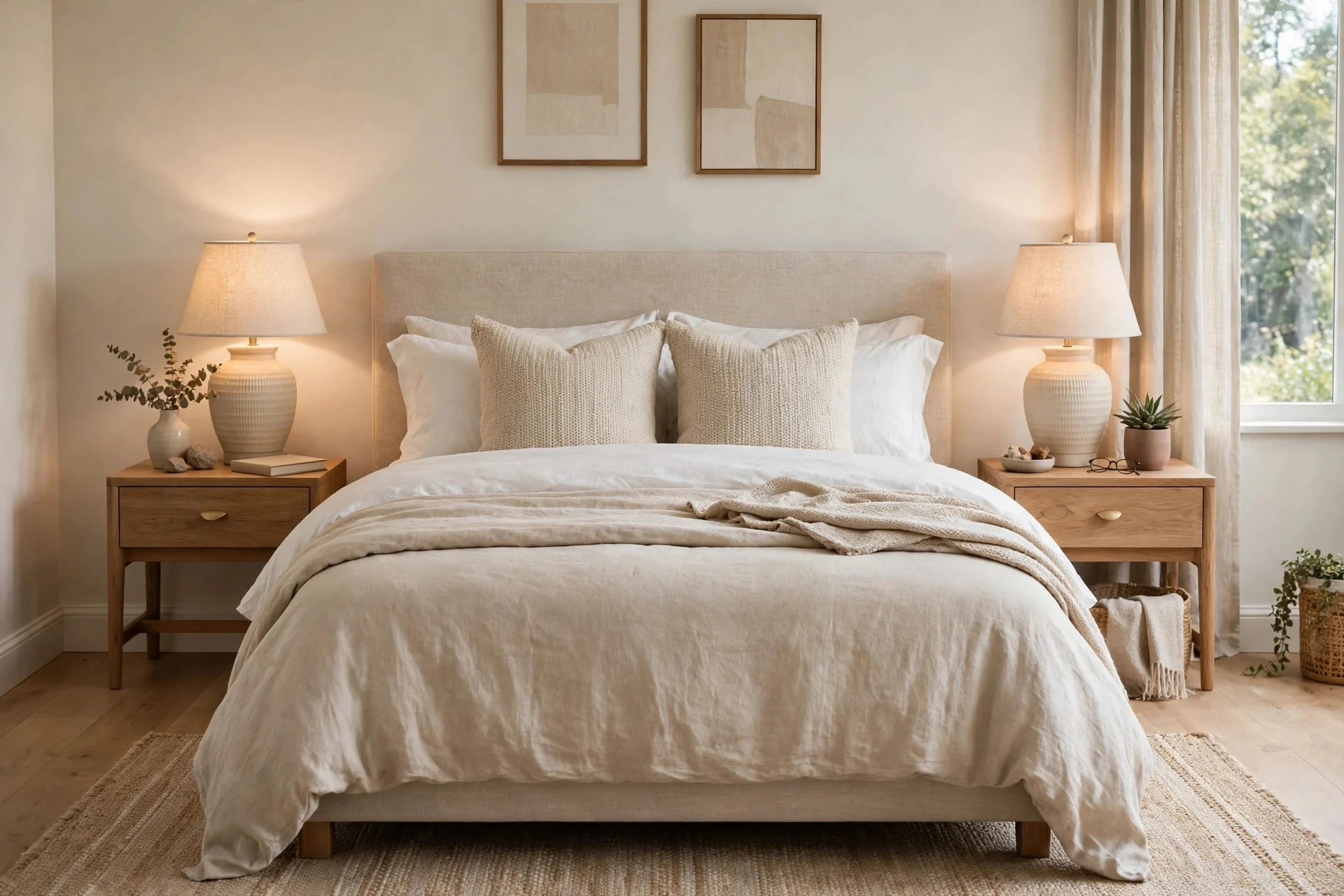
A balanced bedroom gives each sleeper their own side, with room to get in and out without disturbing the other person. Aim for at least 24 inches of clear floor on each side of the bed, and place a small bedside table on each side where space allows. Matching tables, even simple ones about 18 to 22 inches wide, help the room look even. If your room is narrow, use wall-mounted shelves or small floating nightstands about 12 inches deep instead of bulky tables. This keeps the sides usable without blocking the walkway. Avoid pushing one side of the bed hard against a wall in a shared bedroom, because one person ends up climbing over the other every night. Tip: Measure both sides with tape before you buy tables. A table that looks small in a shop can still block a doorway or wardrobe door in a tight room.
4. Keep the Space Under the Bed Clear
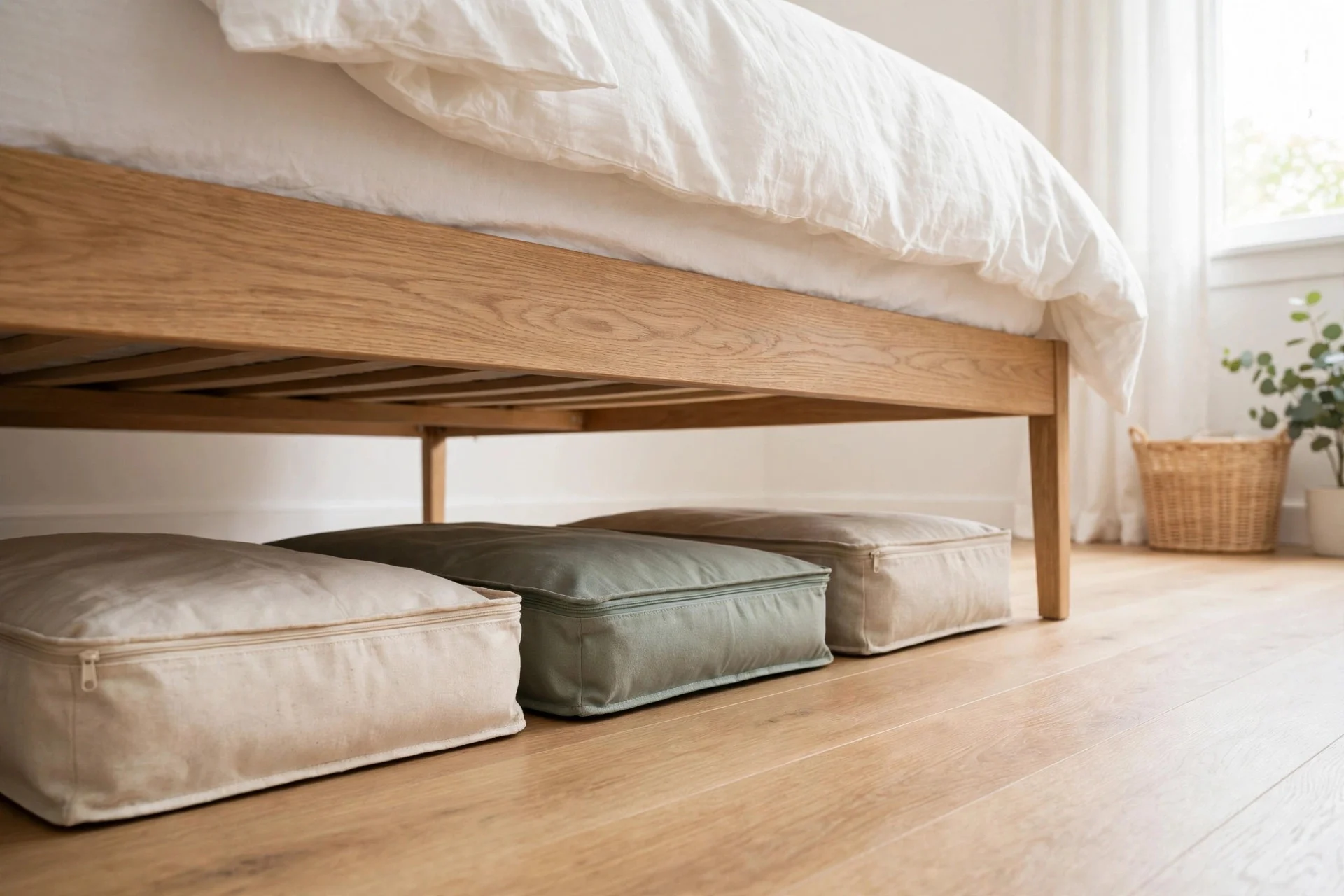
Traditional feng shui advice suggests keeping the area under the bed open, so air can move and the room feels less heavy. In practical terms, that means avoiding boxes of old clothes, papers, and spare parts stored under the mattress for years. If you must use under-bed storage, limit it to soft items you use often, such as spare bedding in flat fabric bags, and keep the rest of the space empty. Under-bed drawers built into a bed frame are a neat compromise, because they stay closed and tidy. Flat storage boxes cost roughly $15 to $40 each. Avoid storing sharp tools, broken electronics, or work files under the bed, because they add to the feeling that the bedroom is also a storeroom. Tip: Pull everything out once every three months, keep only what you have used in that time, and move the rest to a hall cupboard or garage shelf.
5. Use Pairs for Balance
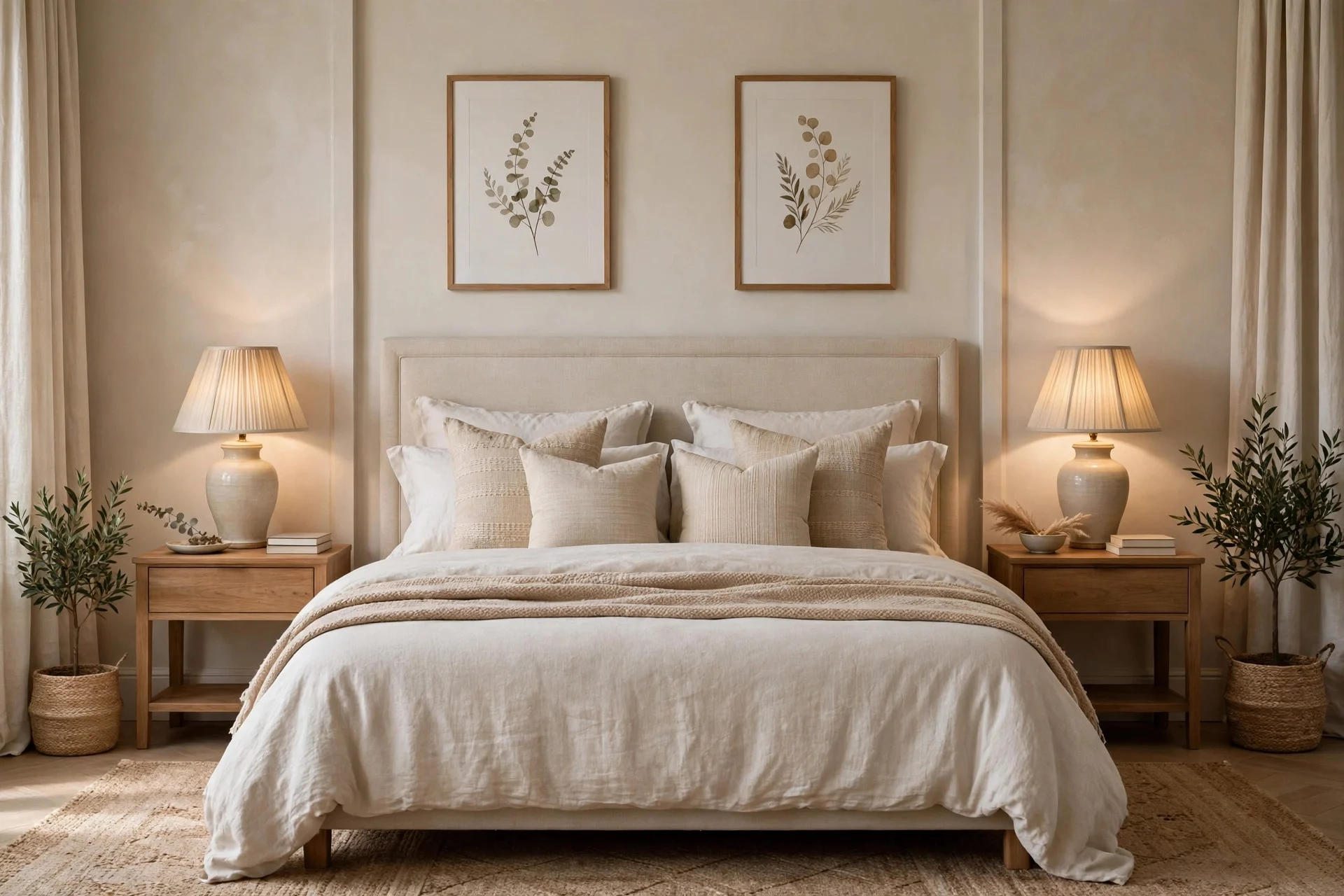
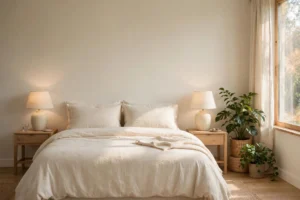
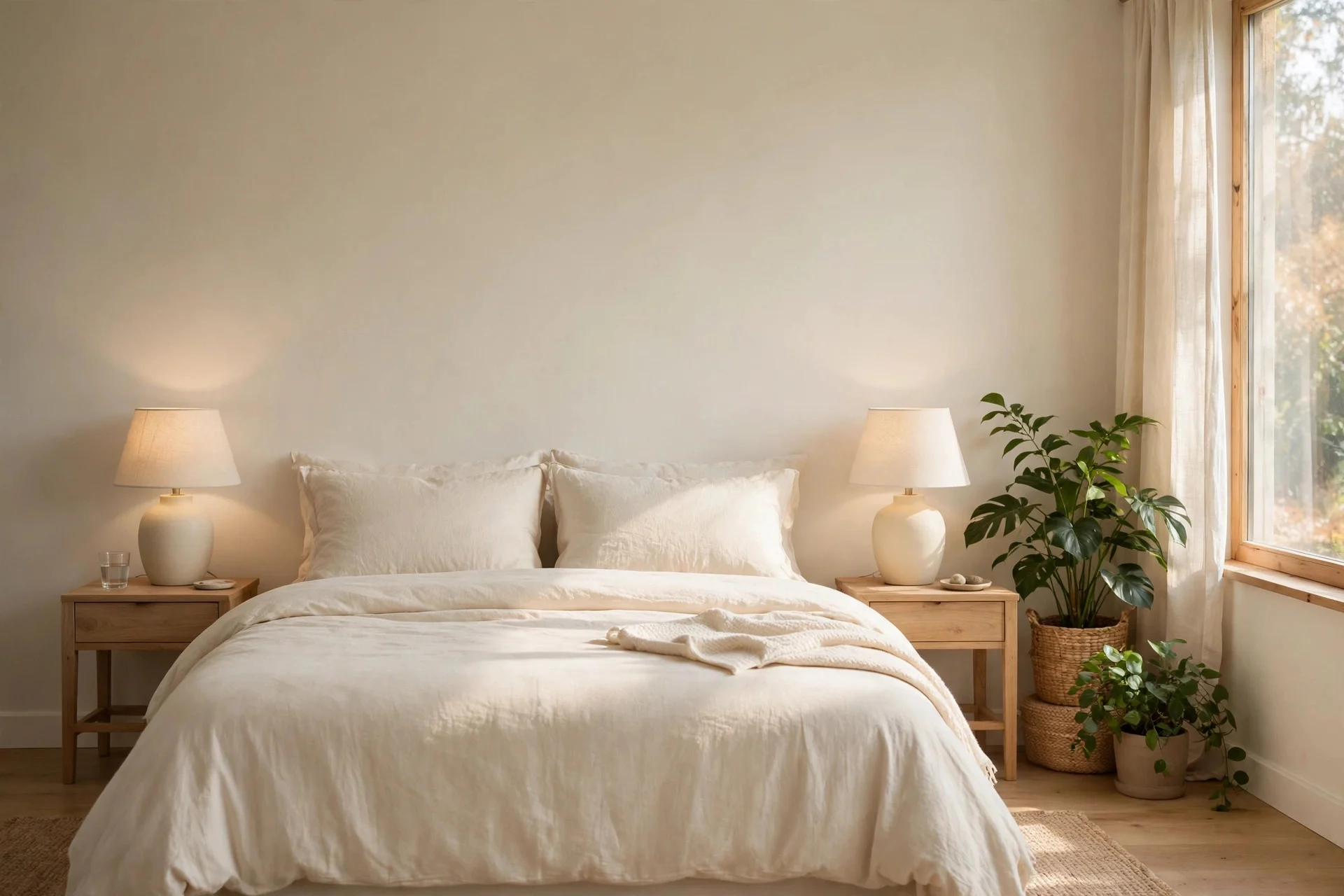
Pairs are a simple way to make a bedroom feel settled. Two bedside lamps, two cushions, two matching bedside tables, or two pieces of art on either side of the bed all create a sense of balance. The items do not need to be identical, but they should be close in size and weight so one side does not look heavier than the other. For example, two lamps about 16 to 20 inches tall work well on matching tables, while one tall lamp and one tiny candle do not. Pairs cost little if you already own similar items; a second matching lamp often costs $25 to $60. Avoid single items placed dead centre above the bed with nothing on either side, because the wall can look lopsided. Tip: Start with lamps, because they are the easiest pair to get right and they also fix uneven night-time light in one step.
6. Choose Calm, Soft Colours
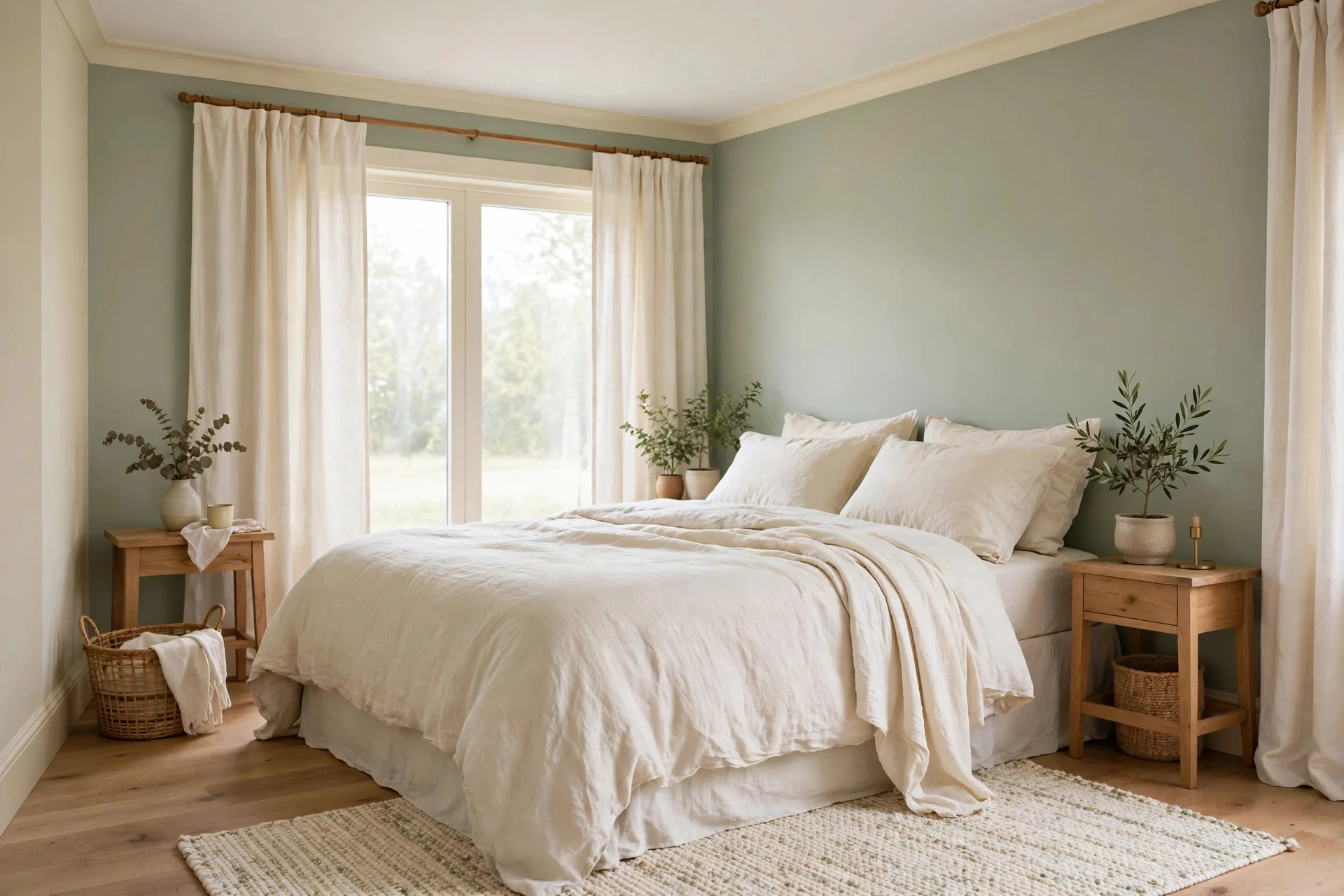
Colour sets the mood of a bedroom more than any single object. Traditional feng shui advice for bedrooms leans toward soft, muted tones: warm white, cream, light grey, pale sage, soft blue, and gentle peach. These shades suit walls, bedding, and curtains, and they make a small room feel larger. Paint a standard bedroom, about 12 by 14 feet, for roughly $150 to $400 in paint and supplies if you do the work yourself. If repainting feels like too much, change bedding and cushion covers first, because they cover a large area of the room. Avoid strong red walls, bright orange bedding, or high-contrast black and white patterns across the whole room, because they tend to feel busy at night. Tip: Test a paint shade on a large card and move it around the room in morning and evening light. A shade that looks calm at noon can look cold or grey by lamplight.
7. Layer Light Instead of One Harsh Ceiling Light
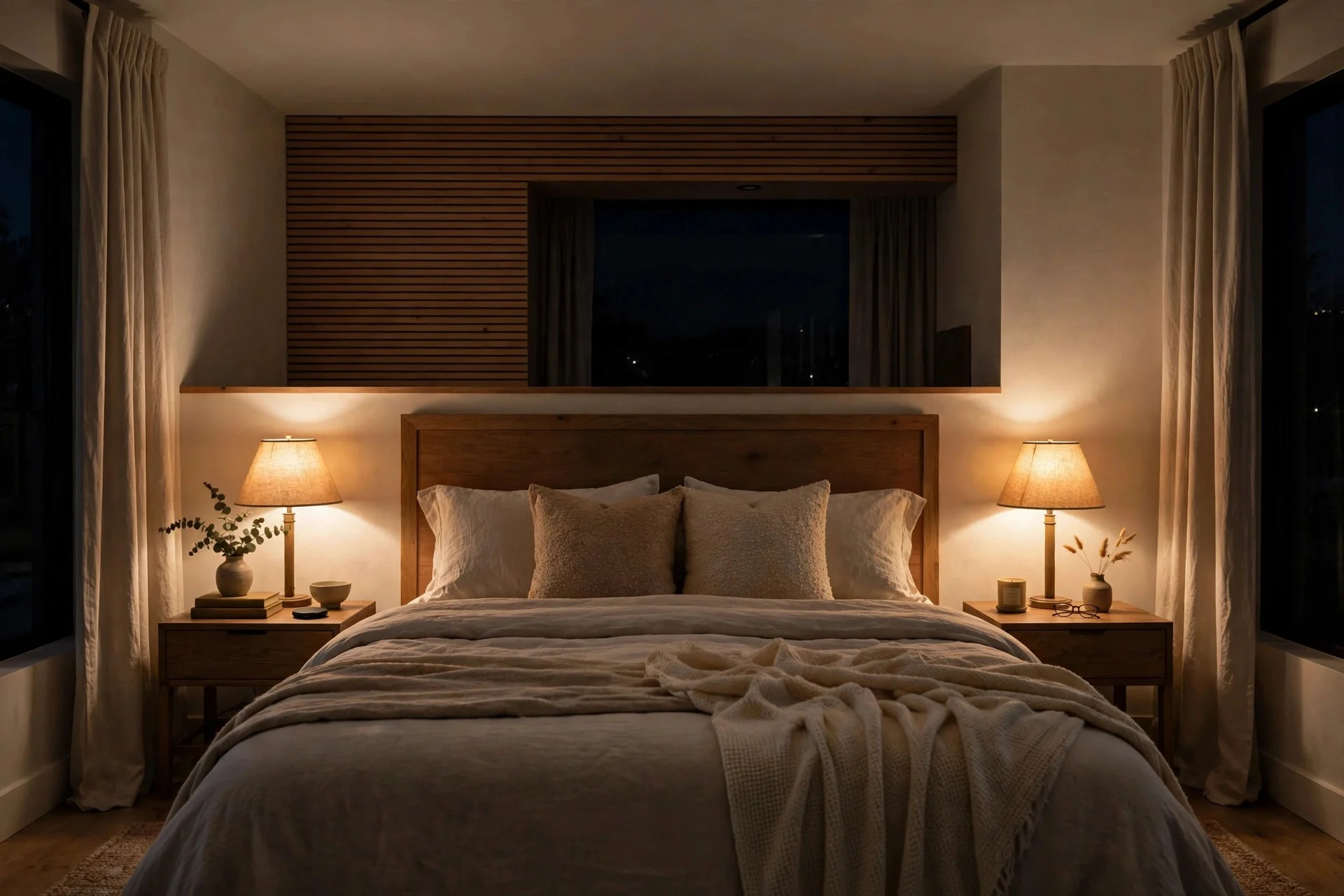
Good light in a feng shui bedroom layout means soft, adjustable light you can lower as bedtime nears. Use two bedside lamps with warm bulbs, about 2700K, plus a dim ceiling light or a floor lamp for general light. Dimmable bulbs cost roughly $8 to $15 each, and a simple dimmer switch costs about $20 to $50 fitted by an electrician where wiring allows. Keep overhead light off in the last hour before bed when you can, and rely on the lamps instead. This routine also helps your room feel distinct from a bright workspace. Avoid bare bulbs, cool white ceiling lights left on full power at night, and lamps with no shade that shine straight into your eyes. Tip: Put both bedside lamps on one small remote plug or a smart plug, so you can switch both off from bed without getting up and turning the bright ceiling light back on.
8. Be Careful With Mirrors Facing the Bed
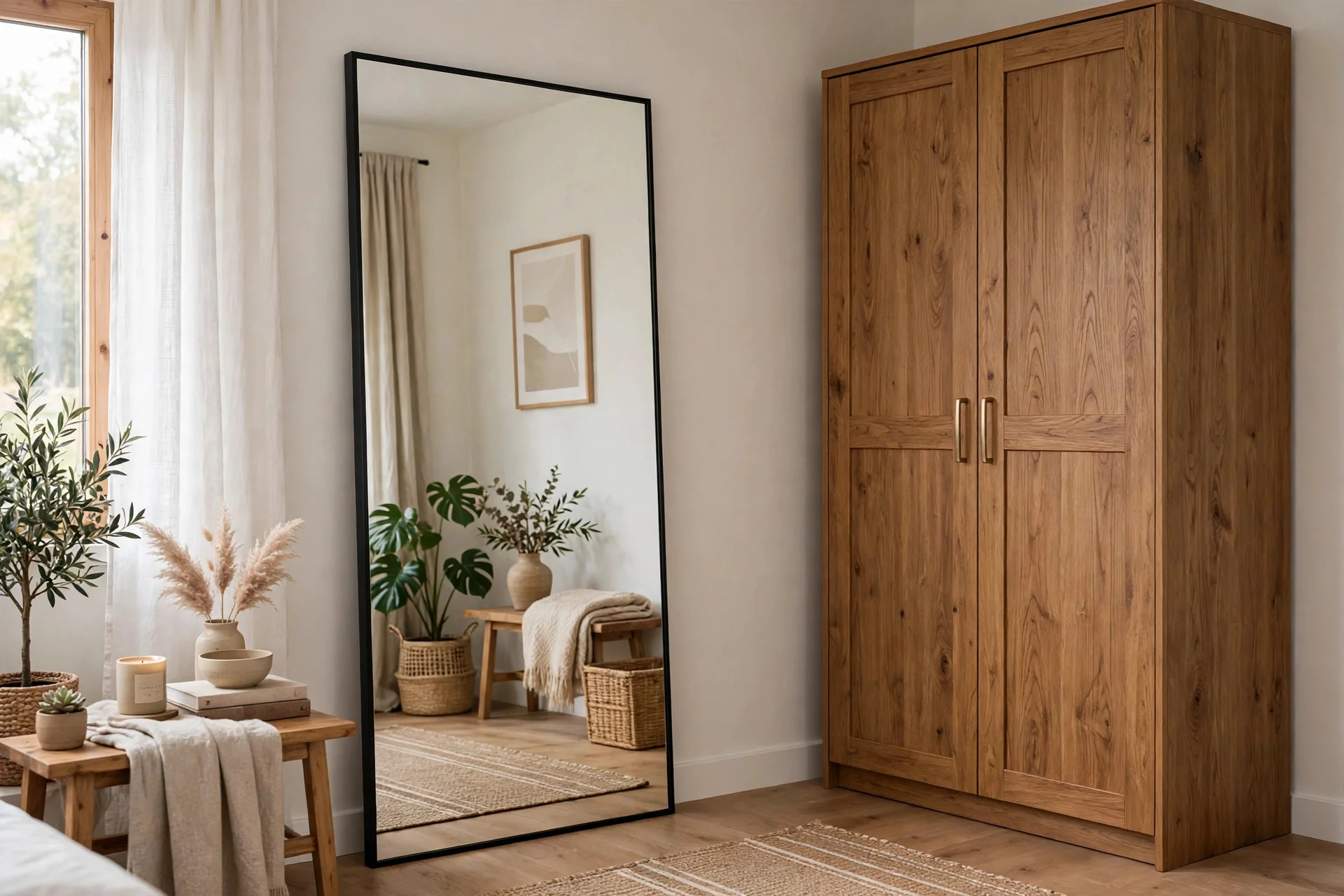
Mirrors are useful in a bedroom, but traditional feng shui advice warns against a mirror that directly faces the bed. The common concern is that a mirror reflecting the bed can feel restless at night, especially if it catches movement or light from a hallway. You do not need to remove every mirror. Place a full-length mirror on the inside of a wardrobe door, on a side wall, or in a dressing area where it does not reflect the bed. A mirror about 48 to 60 inches tall suits most dressing spots. If your only mirror faces the bed and you cannot move it, cover it with a curtain or a folding screen at night. Mirrored wardrobe doors cost more to replace, so a cover is often the practical fix. Avoid placing a mirror on the ceiling or directly opposite the bed head, where it reflects you as soon as you sit up. Tip: Sit on the bed and look around slowly. Any mirror you can see clearly from your pillow is one to move or cover.
9. Keep Work and Screens Out of the Bedroom
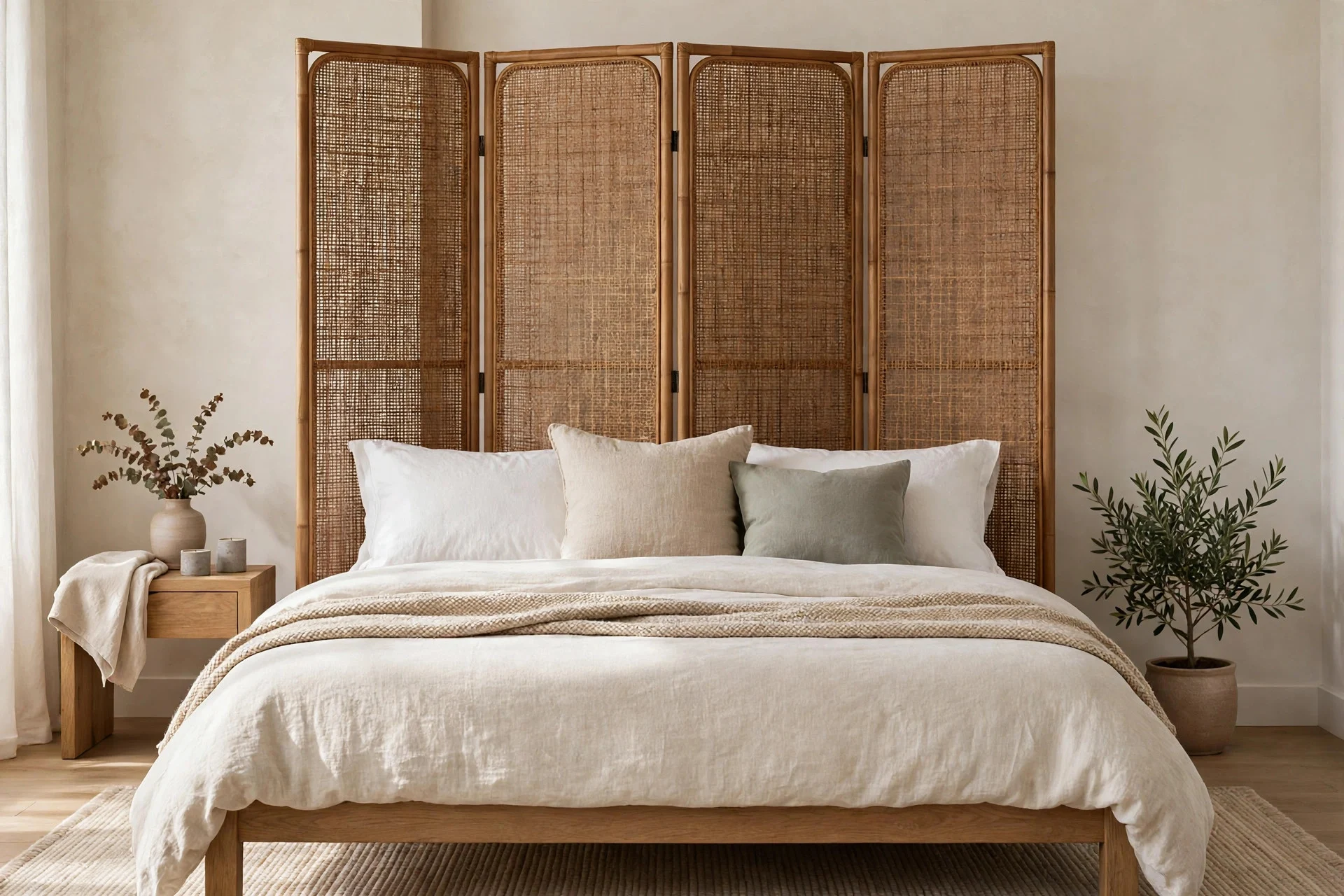
Bedrooms rest better when they are not also offices. Traditional feng shui advice treats desks, laptops, and work papers as active energy that makes it harder to wind down. If you can, move the desk to another room. If space forces a desk into the bedroom, hide it at night: close the laptop, fold papers into a drawer, and cover the desk with a cloth or close a cabinet door over it. A small folding screen, about 48 to 60 inches wide, costs roughly $60 to $150 and can shield a work corner. Keep the television out of the bedroom where possible, or at least switch it fully off rather than leaving it on standby with a glowing light. Avoid charging a laptop on the bedside table, because the cable, light, and notifications keep work within reach. Tip: Set a fixed time to close the desk, such as 9 pm, and keep a small basket for work items so the tidy-up takes under two minutes.
10. Use Natural Materials Where You Can
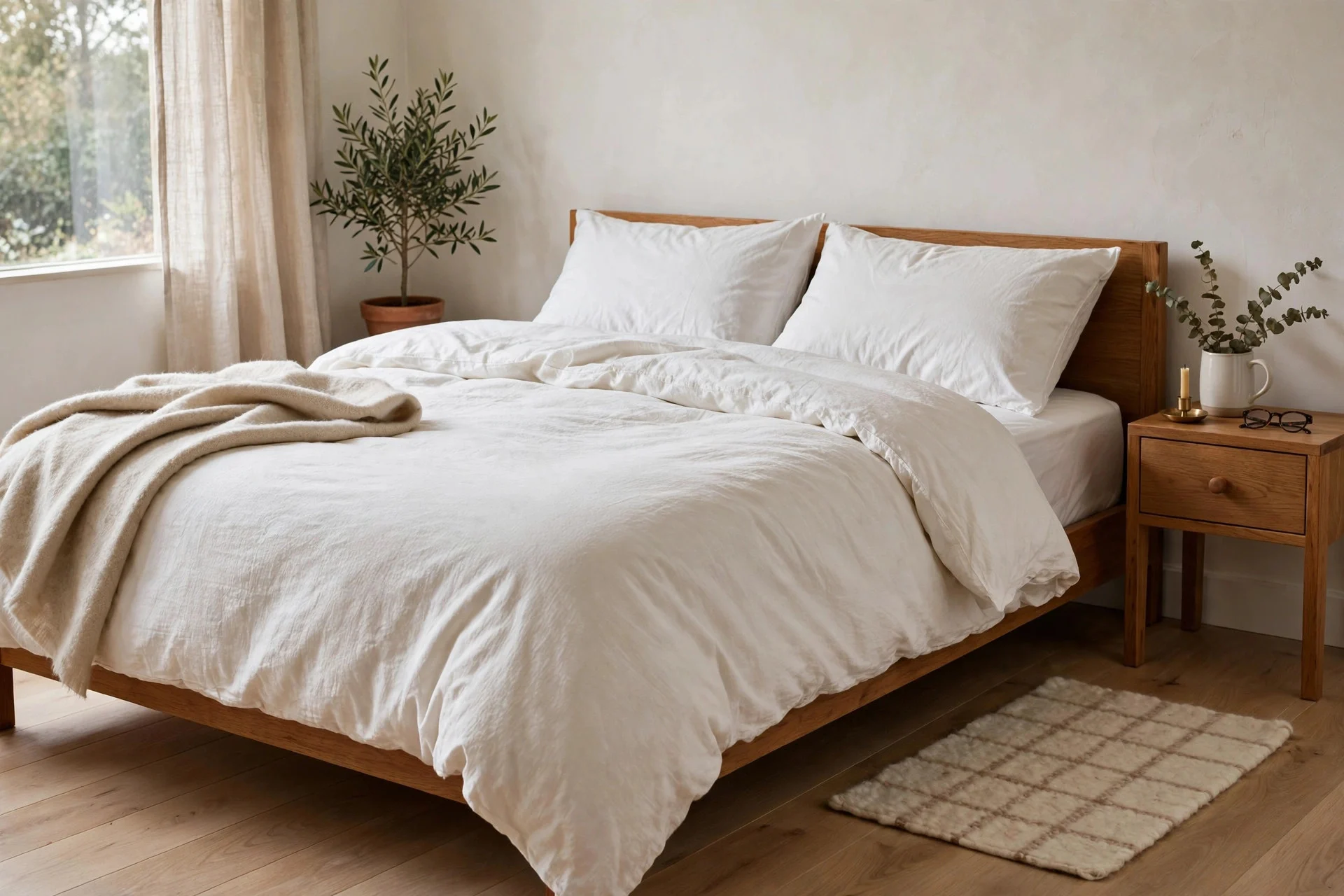
Wood, cotton, linen, wool, and rattan give a bedroom a warmer, quieter feel than large areas of plastic and shiny metal. You do not need to replace all your furniture. Start with what touches your skin most: cotton or linen bedding, a wooden bedside table, and a wool or cotton rug beside the bed. A cotton duvet set costs roughly $50 to $120, and a bedside rug about 2 by 3 feet costs $30 to $80. Natural fibres also tend to breathe better, which helps bedding feel less clammy overnight. Avoid covering every surface in the same heavy wood, because the room can start to feel dark and crowded. Mix one or two natural textures with plain painted walls to keep the balance. Tip: Wash new cotton bedding once before first use. It softens at once, and you will know at once if the fabric suits your skin.
11. Clear Surfaces Each Night
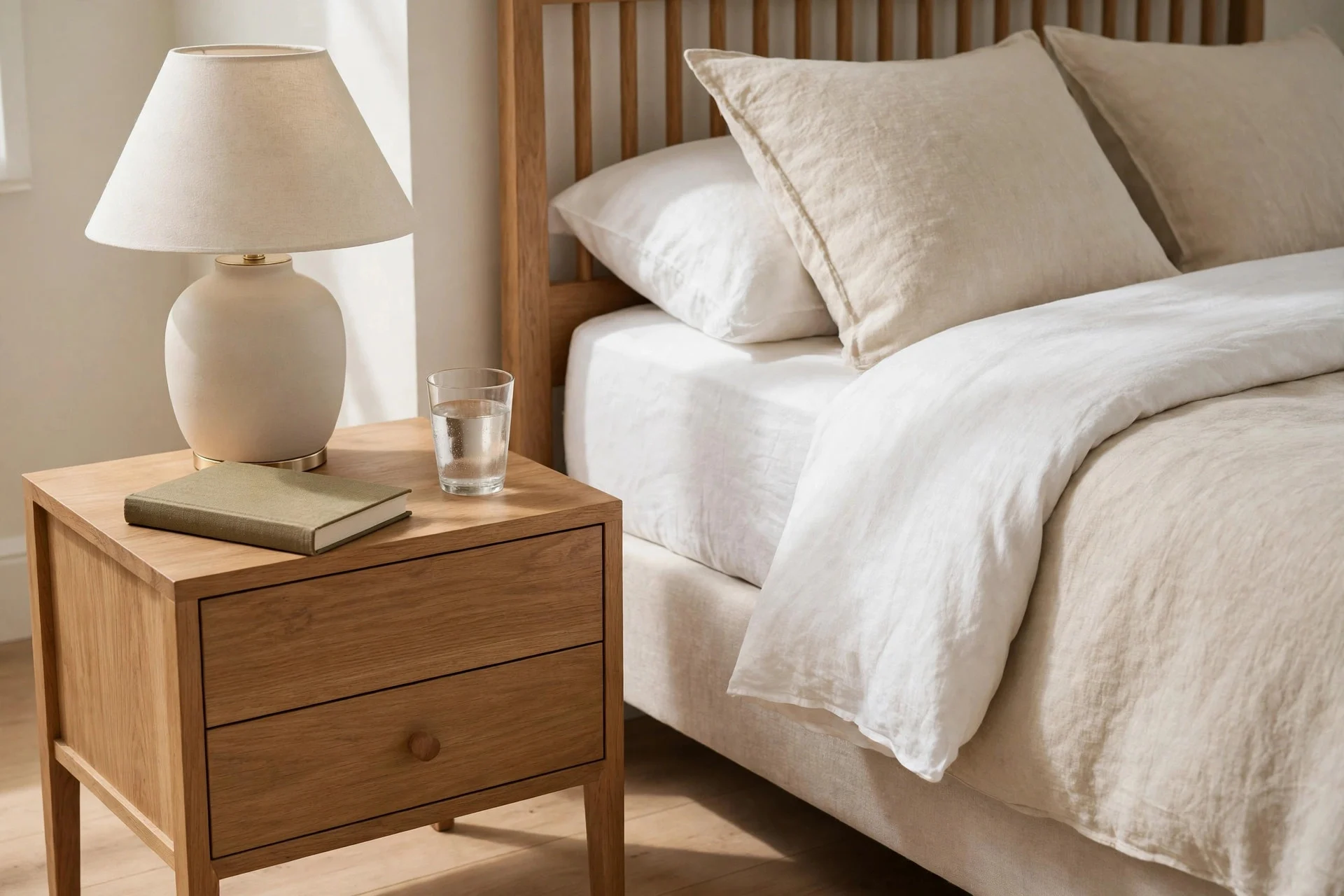
Clutter is one of the fastest ways to make a bedroom feel tense, in feng shui advice and in plain daily life. Set a short nightly reset: clear the bedside tables to lamp, book, and water glass only; put clothes in a hamper or on a chair, not on the bed; and return books, chargers, and cups to their places. A lidded hamper costs roughly $25 to $50, and a small tray for bedside items costs $10 to $25. This reset takes about five minutes and makes the morning feel calmer too. The aim is not a showroom bedroom, just clear surfaces and a clear floor path to the door and bathroom. Avoid open piles on top of wardrobes and dressers, because they gather dust and make the room look unfinished even when the bed is made. Tip: Keep one empty basket by the door for stray items. Toss things in during the day, then empty it once in the evening instead of tidying the whole room five times a day.
12. Avoid a Bed Between the Door and a Window
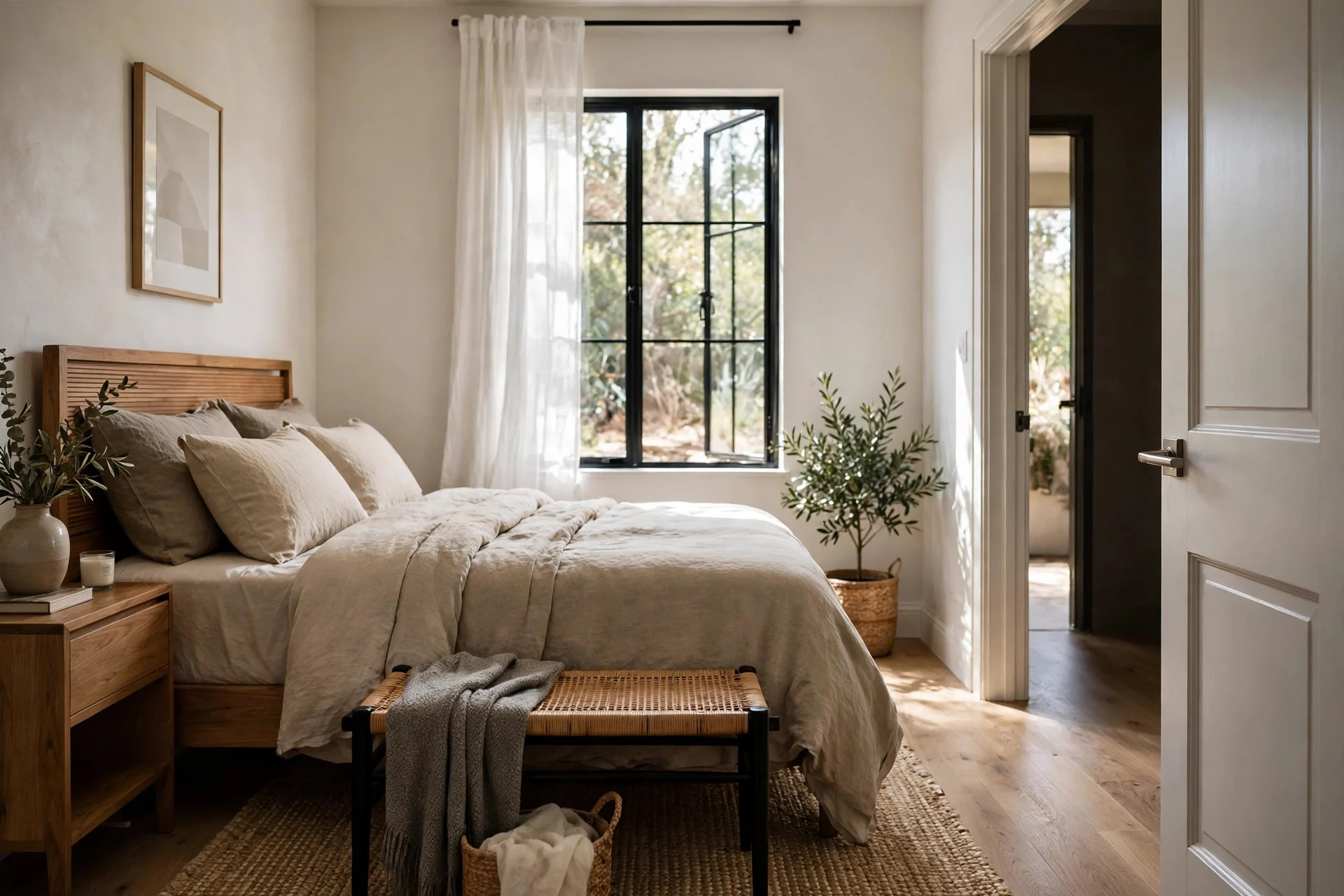
In traditional advice, a bed placed directly between a door and a window sits in a strong draft of moving air, which can feel restless. Check your room by standing at the door and looking toward the window. If your bed lies straight on that line, try shifting it to the side wall, even by a foot or two, so it is out of the direct path. Curtains for a standard window cost roughly $40 to $120 for a pair, plus a rod at $15 to $40. If the bed cannot move because of wardrobes or radiators, place a bench or a low chest at the foot of the bed to break the line. Avoid leaving the window wide open all night in cold weather just to keep the room airy, because a cold draft does more harm to comfort than stale air. Tip: On a windy night, close the window to a small gap and open the bedroom door slightly instead. Air still moves, but not straight across the bed.
13. Keep the Bedroom Door and Windows in Good Repair
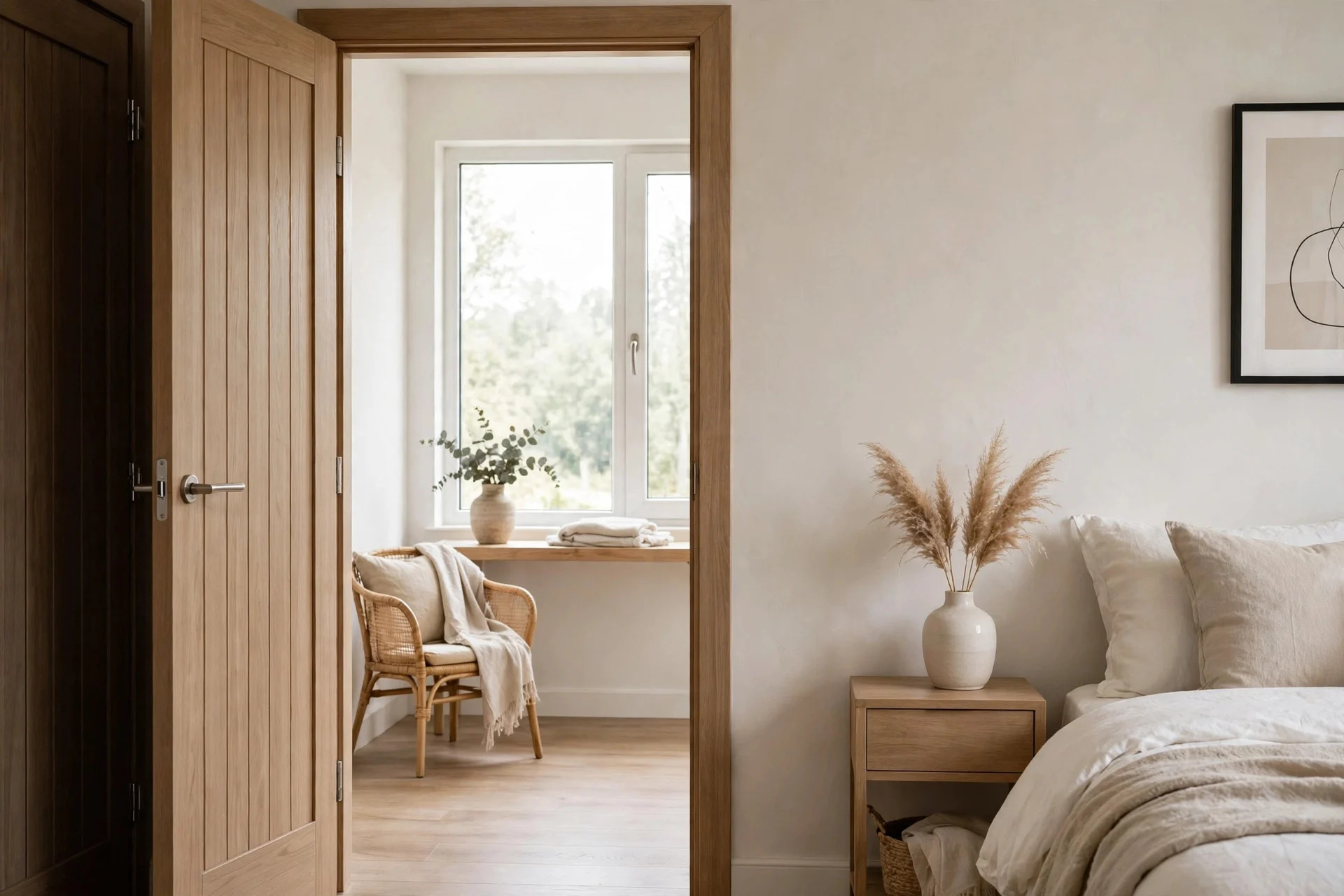
Doors and windows that stick, squeak, or refuse to close properly add small daily annoyances that build up. In feng shui advice, a bedroom door should open fully without hitting furniture, and windows should open and close smoothly for fresh air. Check hinges, handles, and locks once a season. A squeaky hinge often needs only a drop of oil, while a sticking door may need a hinge screw tightened or a small plane of the edge. Basic repair supplies cost under $20 in most cases. Clean window tracks twice a year so windows slide without effort. Avoid blocking the bedroom door with a laundry basket, shoe rack, or suitcase, because a blocked entrance makes the room harder to enter and leave, especially at night. Tip: Walk the night-time route in the dark once: bed to door, door to bathroom. Move anything you bump into, and add a low night light in the hall if the path is dark.
14. Add Plants With Care, Not in Bulk
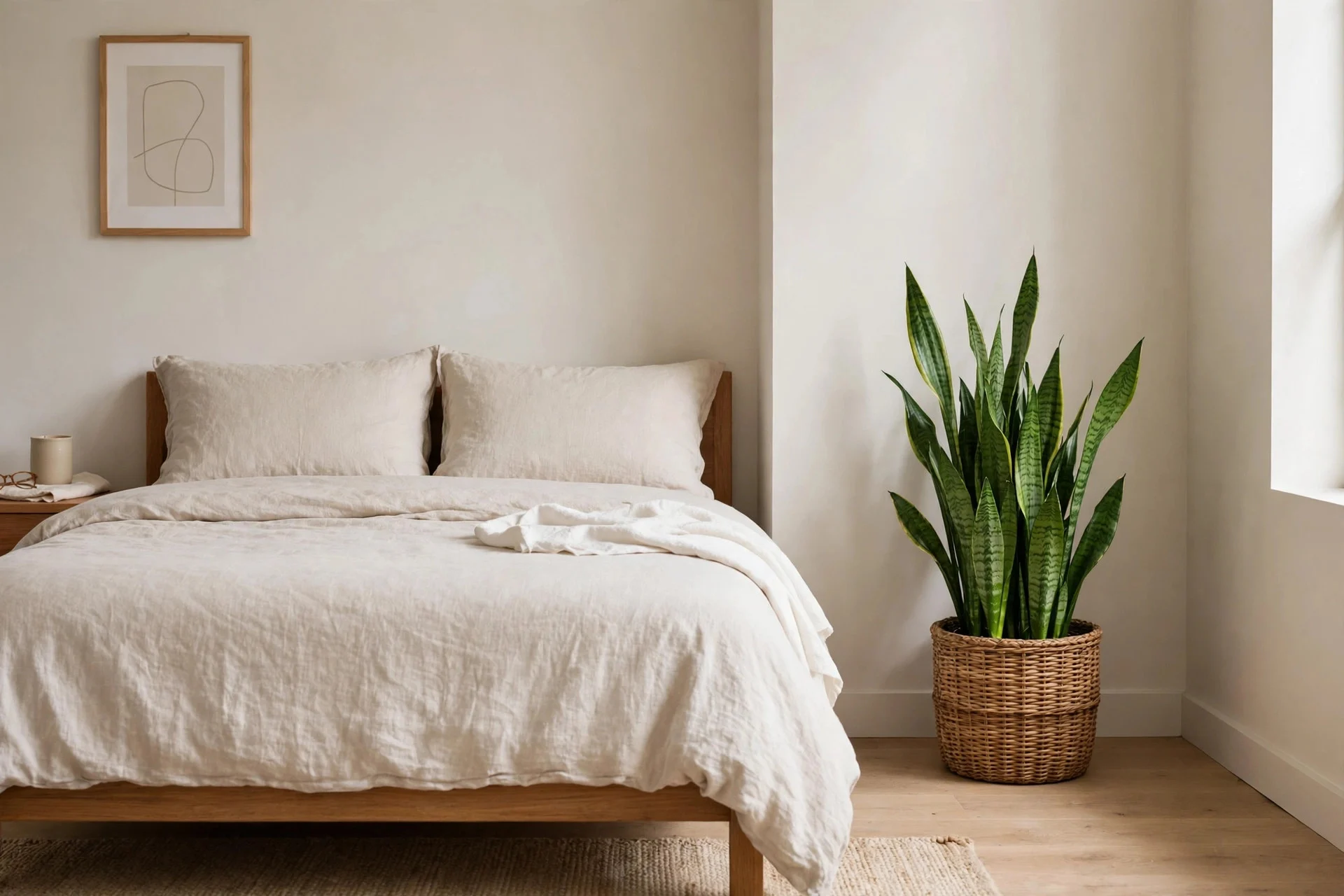
Plants can soften a bedroom, but traditional feng shui advice suggests keeping them limited and healthy. One or two easy plants, such as a snake plant or pothos in a pot about 8 to 10 inches across, suit most bedrooms. Place them on a dresser, a shelf, or in a floor pot in a corner, not crowded around the bed head where leaves drop onto pillows. Prices range from about $15 to $40 for a potted plant of that size. Water only when the top inch of soil feels dry, and remove yellow leaves promptly. A struggling plant does not calm a room; it adds one more task to worry about. Avoid filling a small bedroom with five or six large plants, because they take floor space, raise humidity, and make cleaning harder. Avoid plants with strong scent in the bedroom if scent bothers you at night. Tip: If you travel often or forget watering, choose one hardy plant and set a weekly phone reminder. One thriving plant beats three wilting ones.
15. Freshen Air and Bedding on a Routine
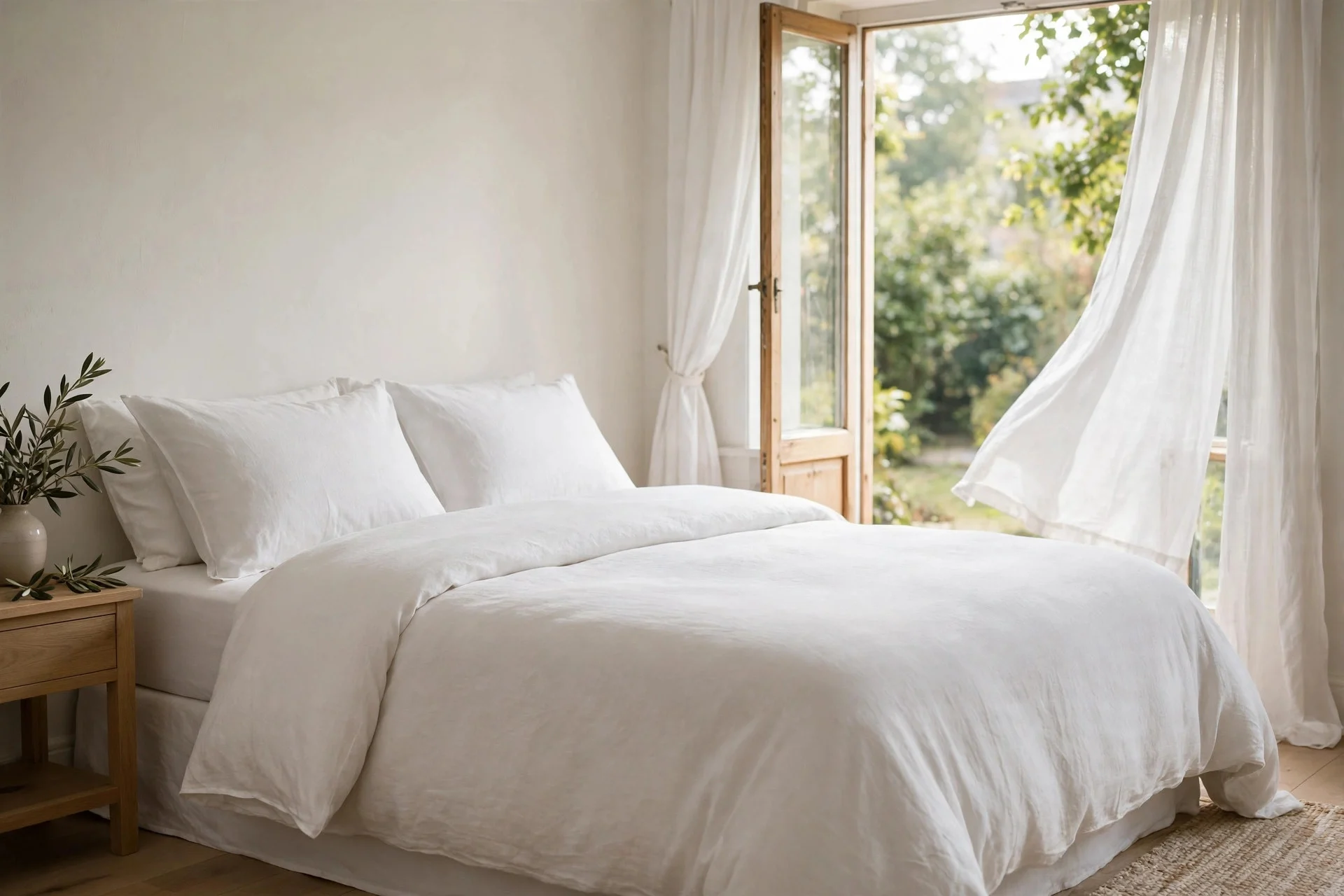
Fresh air and clean bedding make any bedroom layout feel better, whatever style you follow. Open windows for ten to fifteen minutes in the morning to change the air, then close them and make the bed. Wash sheets weekly, pillowcases twice a week if you can, and air the duvet outside or by an open window once a month. A washable mattress protector, about $30 to $60 for a queen or king, keeps the mattress cleaner between deep cleans. Vacuum under and around the bed weekly, including the headboard ledge where dust settles. This routine supports the calm feeling that feng shui bedroom layout advice aims for, without needing new furniture. Avoid heavy air fresheners or scented sprays as a substitute for fresh air, because strong scent can linger and irritate the nose at night. Tip: Tie bedding changes to a fixed day, such as Sunday morning. A fixed day turns a chore you postpone into a habit you finish without thinking.
Frequently Asked Questions
What is the best feng shui bedroom layout for a small room?
Use the same basics at a smaller scale: headboard on a solid wall, a view of the door from bed where possible, one bedside surface on each side or a wall shelf where floor space is tight, and clear surfaces. A feng shui bedroom layout in a small room works when clutter is low and the bed is not blocked in on one side.
Should the bed face the door in feng shui?
Traditional advice says you should be able to see the door from bed, but not lie directly in line with it. Place the bed on a side wall with the door in view, and leave clear space on both sides where you can. If the layout forces a direct line, shift the bed slightly or use a bench at the foot to break the path.
Does feng shui guarantee better sleep?
No. Feng shui offers traditional design principles that many people find calming, but it does not guarantee sleep results and it is not medical advice. If poor sleep lasts more than a few weeks, or you snore loudly, wake breathless, or feel very tired in the day, speak to a doctor rather than relying on room layout alone.
Conclusion
A feng shui bedroom layout does not require a full redesign or a room full of new objects. Begin with the bed: a solid wall behind it, a view of the door, and space on both sides. Then work through light, colour, and clutter in small steps, keeping pairs balanced and work out of sight at night. Each change on its own is modest, but together they make a room that feels easier to enter, easier to tidy, and easier to rest in. Try the ideas that fit your space and budget, skip the ones that do not, and give each change a few nights before you judge it. A calm bedroom is built by steady habits, not by one perfect arrangement, and the best layout is the one you can live with every day.