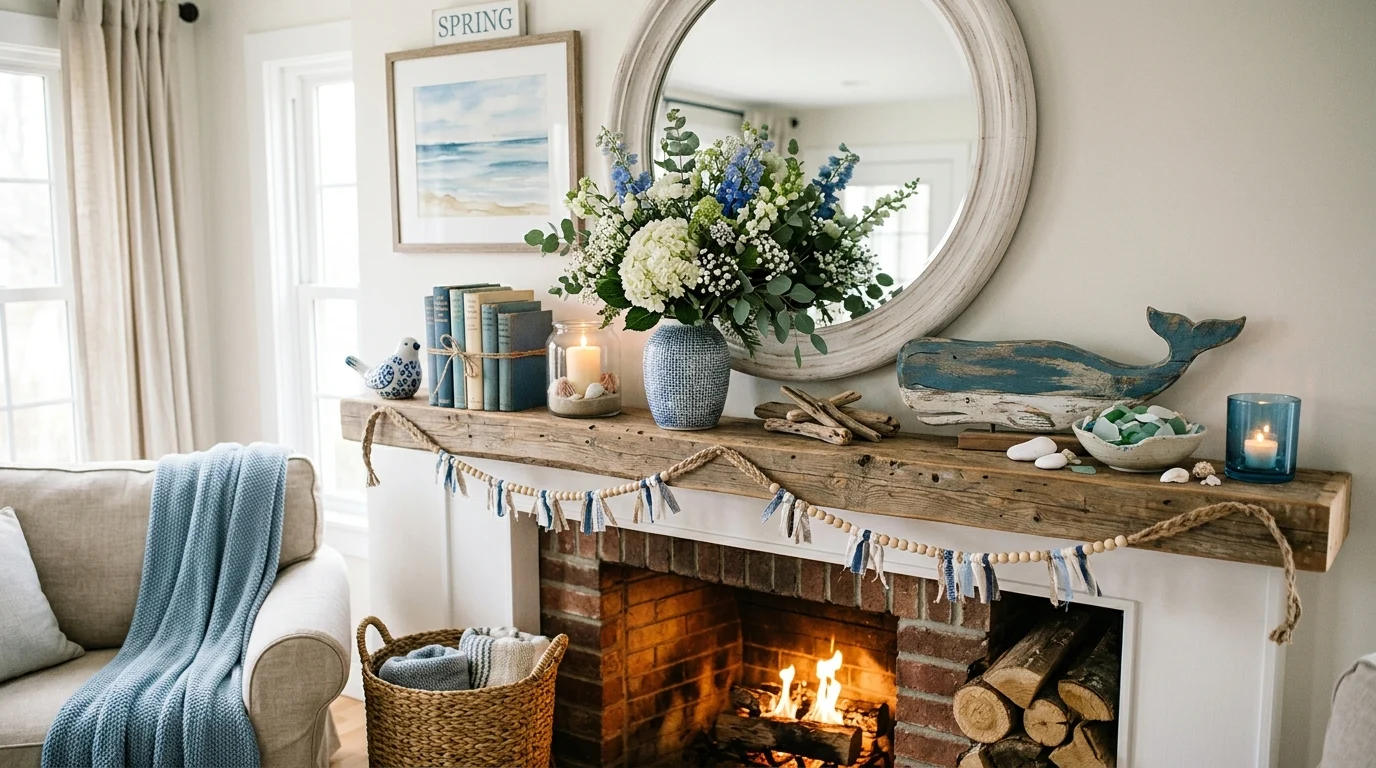
Coastal Living Room Ideas Without the Beach Clichés
Coastal style often goes wrong when a room tries too hard to look like a beach. Nets, anchors, and signs that spell out beach words can make a living room feel like a holiday rental rather than a home. The better coastal living room ideas take their cues from the coast itself: pale light, weathered wood, soft linen, and colours that feel washed by sun and salt, not painted on. This guide offers 15 ideas that keep that calm, airy feeling without the usual clichés. None of them need a full renovation. You can start with paint and textiles, then add wood, plants, and art slowly. Each idea includes sizes, costs, and what to skip, so you can build a room that feels coastal all year, not just in summer. The goal is a space that feels relaxed and collected, where guests notice the light and comfort first and the seaside influence second.
1. Build a Muted Palette From Sand and Sea Glass
Start with a muted palette drawn from sand, driftwood, and sea glass rather than bright blues and stark white. Paint walls in warm white or pale greige, then layer in sand beige, soft sage, and one deep sea blue or slate for depth. A gallon of good wall paint costs $45 to $70 and covers about 350 square feet, so most living rooms need two gallons for two coats. Keep the strongest colour to cushions, a throw, or one chair, and let the pale tones carry the room. Avoid painting every wall turquoise or pairing bright blue with pure white, since that high contrast reads as a theme park version of the coast. Repeat the sand tone in both the rug and a throw, and keep the deep blue to one chair cushion, so the palette feels layered rather than flat. Tip: test three paint swatches on the wall that gets afternoon light, and live with them for two days before you commit.
2. Use Natural Wood Instead of Whitewash Everywhere
Natural wood gives a coastal room warmth and age that all-white furniture cannot. Choose oak, ash, or reclaimed pine with a clear matte finish for a coffee table, side tables, or open shelves, and let the grain show. A solid oak coffee table 42 to 48 inches long costs $250 to $600, while smaller side tables run $80 to $200 each. Mix one or two wood tones at most, and balance them with linen and stone so the room does not feel heavy. Avoid whitewashing every surface, since too much distressed white flattens the room and hides the very texture that makes wood feel coastal. Oil a natural wood table once a year to keep the grain rich, and wipe up spills at once so marks do not set in a busy family room. Tip: if your floor is already pale wood, pick a slightly darker table so the pieces read as separate layers instead of blending into one flat plane.
3. Choose Linen Slipcovers for Relaxed Seating
Linen slipcovers are the easiest way to make a sofa feel coastal and lived-in. A washable linen slipcover for a three-seat sofa costs $200 to $500, depending on fabric weight and fit, and it softens sharp sofa lines at once. Look for a relaxed fit with a skirt that just brushes the floor, in warm white, oatmeal, or pale stone. Linen wrinkles a little, and that is part of the appeal, but a cotton-linen blend holds its shape better in a busy family room. Avoid stiff faux leather or shiny velvet if you want that easy coastal feel, since both fight the soft light and natural textures around them. Wash slipcovers on a cool cycle and refit them slightly damp, so they settle smooth and you skip ironing the large panels. Tip: buy a second slipcover in a slightly darker tone for winter, so you can wash one while the other is on the sofa.
4. Lay a Seagrass or Jute Rug With a Simple Border
A seagrass or jute rug grounds a coastal living room without shouting beach. For a standard sofa setup, choose an 8-by-10-foot rug so the front legs of the sofa and chairs sit on it, with 12 to 18 inches of floor showing around the edges. Seagrass rugs cost $150 to $400 at that size, while jute runs $120 to $350. Pick a flat weave with a plain cotton border in sand or charcoal, and skip shell shapes, rope fringes, or printed fish patterns. Natural fibre rugs shed a little at first and feel firm underfoot, so layer a small soft wool rug on top in a reading corner if you want extra comfort. Vacuum a natural fibre rug weekly with a suction-only head, since a beater bar can pull loose fibres and fray the weave. Tip: use a rug pad made for natural fibres to stop slipping and to protect the floor from the rough weave.
5. Hang One Large Coastal Abstract Instead of a Theme Wall
One large piece of coastal art has more impact than a wall of small beach prints. Look for an abstract seascape, a foggy shoreline photo, or a simple line drawing of dunes, sized about 36 by 48 inches above a sofa. Framed prints at that size cost $150 to $450, while an original work on canvas starts around $400. Hang the centre of the piece 57 to 60 inches from the floor, and leave plain wall around it so it can breathe. Avoid a gallery wall of anchors, starfish prints, and word art, since a set of clichés cancels out the calm you are trying to create. Keep the frame simple in oak or black, and hang the art where daylight hits it, so the muted colours shift gently through the day. Tip: pick art with the same muted tones as your rug and cushions, so the room feels planned even when the subject is abstract.
6. Add Olive Trees and Grasses, Not a Palm Forest
Plants bring a coastal room to life, but one or two well-chosen plants beat a forest of palms. A potted olive tree 4 to 5 feet tall costs $60 to $150 and suits a bright corner, while dried pampas stems or tall grasses in a stone vase cost $20 to $50 and need no watering. Olive leaves have a soft silver-green tone that fits a muted palette, and grasses add height without blocking light. Avoid plastic palms, fake monstera clusters, and any plant that needs direct sun if your room faces north. Water an olive tree only when the top 2 inches of soil feel dry, and rotate the pot monthly so growth stays even. Tip: place the tallest plant in the darkest corner of the room, since height and green draw the eye there and balance a bright window wall.
7. Try Limewash or Textured Plaster on One Wall
Limewash paint or thin textured plaster gives walls the soft, sun-worn surface that flat paint cannot match. A limewash kit for one feature wall costs $60 to $120, and the finish shows gentle movement as light shifts across it during the day. Apply it with a block brush in loose, crossing strokes over a primed wall, and let each coat dry fully before the next. This works best on a fireplace wall or the wall behind a sofa, where texture adds depth without fuss. Avoid heavy orange-peel texture or glitter finishes, which read as dated rather than coastal, and skip limewash in a damp room unless the product suits that use. Seal a limewash wall with a compatible topcoat in a hallway or kitchen edge, where hands and bags brush the surface daily. Tip: paint the other walls in a flat warm white from the same colour family, so the feature wall stands out without clashing.
8. Use Rattan and Cane in Small Doses
Rattan and cane add a light, hand-made feel, but they work best as accents rather than a full suite. A cane-front sideboard, a rattan pendant light, or two cane dining chairs can carry the whole coastal note in a room. A rattan pendant costs $80 to $250, and a cane armchair runs $200 to $450. Pair cane with wood, linen, and stone, and keep the rest of the furniture simple so the woven texture stays visible. Avoid filling the room with matching rattan sofas, chairs, tables, and baskets, since a matched set looks like a showroom rather than a collected home. Dust cane with a soft dry brush weekly, since grit in the weave dulls the finish and wears the strands over time. Tip: if you buy a cane piece second-hand, check the joints and the cane sheet for splits, and tighten loose screws before you bring it into the room.
9. Collect Pottery, Books, and Old Wood Pieces
A coastal living room feels real when it holds objects with a past, not just new beach decor. Gather handmade pottery in sand and stone tones, a stack of old books, a wooden bowl, or a driftwood-style sculpture made from reclaimed timber. Pottery pieces cost $25 to $80 each, and a good second-hand wooden bowl runs $20 to $50. Group items in odd numbers on a shelf or coffee table, vary their heights, and leave empty space between groups so each piece can be seen. Avoid souvenir shells in glass jars and mass-made lighthouse ornaments, which push the room back toward cliché. Leave one shelf partly empty in every display, so new finds have a place without crowding the pieces you already love. Tip: buy one piece at a time from a local maker or charity shop, and live with it for a week before you add the next, so the collection grows slowly.
10. Soften Light With Sheer Linen and Wooden Blinds
Light is the heart of coastal style, and window dressings should filter it, not block it. Sheer linen curtains in warm white cost $40 to $100 per panel, and they glow softly in daylight while keeping privacy during the day. Pair them with natural wooden blinds, $60 to $150 per window, for evenings when you need more cover. Hang the curtain rod 4 to 6 inches above the window frame and 6 to 10 inches wider on each side, so the window looks taller and the curtains stack clear of the glass. Avoid heavy blackout drapes in dark colours and shiny synthetic voiles, which kill the soft light that makes coastal rooms feel open. Clean sheer linen twice a year to keep it bright, since dust dulls the glow that makes the room feel open. Tip: wash sheer linen on a gentle cycle and hang it damp, so it dries smooth without ironing.
11. Pick a Deep, Low Sofa You Can Sink Into
A deep, low sofa sets the relaxed tone for coastal living room ideas better than a tall, formal one. Look for a seat depth of 24 to 26 inches, a back height of 28 to 32 inches, and arms low enough to lean on with a book. A good three-seat sofa in this shape costs $900 to $2,000 in linen or cotton blend, and it invites long sits rather than perched visits. Keep the frame simple, with turned wood feet or a low plinth, and avoid high backs, button tufting, and stiff upright cushions that feel formal. Rotate sofa cushions weekly in a busy home, so the seat keeps its shape and the linen wears evenly on both sides. Tip: test the sofa by sitting with your feet up and a cushion behind your back, since a coastal sofa should feel just as good for reading as it looks in photos.
12. Choose a Stone or Reclaimed Wood Coffee Table
A coffee table in travertine, limestone, or reclaimed wood anchors a coastal room with a natural, solid feel. A stone-top table 40 to 48 inches long costs $300 to $800, while a reclaimed wood table runs $250 to $600. Stone stays cool in summer and suits a room with lots of linen, while wood adds warmth if your floor is stone or tile. Keep the top mostly clear, with one book stack and one small bowl, so the material itself stays visible. Avoid glass tops with chrome legs and mirrored trays, which feel cold and modern in a way that fights the soft coastal palette. Lift stone tables rather than dragging them, since a heavy top can scratch wood floors and chip at the edge. Tip: seal stone tops once a year and use coasters for mugs, since unsealed stone marks easily and is hard to fix.
13. Warm the Room With Ceramic Lamps and Soft Bulbs
Lighting can make or break a coastal room after dark, so skip harsh ceiling lights in favour of warm, low sources. Ceramic table lamps in sand, cream, or soft blue cost $60 to $180 each, and they glow gently through a linen shade. Use warm white bulbs at 2700K, 60-watt equivalent, in lamps and wall lights, and put the main lamps on dimmers if you can. Place one lamp at each end of the sofa and one on a sideboard, so light pools in three places rather than blasting from above. Avoid cool daylight bulbs and bare Edison bulbs with no shade, which feel stark and throw hard shadows. Put lamps on a single dimmer circuit where possible, so one switch sets the whole evening mood in seconds. Tip: buy one spare bulb in the same colour temperature for each lamp, so a replacement never shifts the room toward blue or yellow.
14. Use Subtle Stripes, Not Nautical Flags
Stripes belong in a coastal room, but they should feel like old ticking fabric, not a signal flag. Choose a narrow ticking stripe in navy and white, or sand and cream, on two or three cushions, 18 to 20 inches square, costing $25 to $50 each. Mix those with plain linen cushions in the same tones, and keep the stripe to one pattern in the room. This gives a seaside nod without turning the sofa into a boat deck. Avoid wide red-and-navy stripes, rope trim on every cushion, and matching striped throws, curtains, and rugs all at once. Wash stripe cushions inside out on a cool cycle, so the narrow lines stay crisp and the fabric keeps its colour. Tip: if you already own a striped throw, use it folded on one chair arm only, and keep the sofa cushions plain so the stripe reads as an accent.
15. Style the Room for All Year, Not Just Summer
The best coastal living room ideas work in winter too, so plan layers you can swap rather than a summer-only set. Keep the pale walls, wood, and stone year-round, then change textiles with the season: light linen throws in summer, chunky wool throws in winter, both in the same sand and slate tones. A good wool throw costs $60 to $120 and lasts years if you store it clean and dry. Add candles in glass hurricanes for dark evenings, and swap a bright cushion for a deeper blue or moss green when days shorten. Avoid packing the coastal pieces away each autumn, since a room that only works for three months feels like a stage set. Store the summer throw in a breathable cotton bag, so it stays fresh and ready when warm days return. Tip: keep a lidded basket near the sofa for the off-season throw, so the swap takes five minutes and the room never looks cluttered.
Frequently Asked Questions
What colours work for coastal living room ideas without looking beach-themed?
Warm white, sand, driftwood grey, soft sage, and one deep sea blue or slate work best. Keep bright turquoise and coral to tiny accents or skip them entirely. When coastal living room ideas stay muted, the room feels calm and coastal rather than themed, and it pairs easily with wood, linen, and stone you already own. Test the palette in daylight before buying paint, since coastal tones shift a lot between morning and evening.
How do I make a coastal living room feel cosy in winter?
Add heavier textiles in the same palette, such as wool throws, thicker curtains over sheers, and a rug layered over a hard floor. Warm lamp light at 2700K helps too. Keep the coastal base of pale walls and natural wood, and let texture, not beach decor, carry the seasonal change. A thick rug underfoot and a lit candle on the table do more for winter warmth than any extra decor.
Can coastal style work in a small living room?
Yes, and it often suits small rooms well because pale colours and sheer curtains make a space feel larger. Use a low sofa, one large piece of art, and a rug that fits the seating area. Skip bulky rattan sets and keep surfaces clear, so the room feels open rather than crowded with coastal living room ideas. Measure the sofa and rug first, so pale colours open the room instead of leaving it feeling bare.
Conclusion
A coastal room without clichés is less about beach objects and more about light, texture, and restraint. Start with a muted palette, add natural wood and linen, and let one or two strong pieces, such as large art or a stone table, do the talking. These coastal living room ideas work because they borrow the feeling of the coast, pale light, worn surfaces, and room to breathe, without copying a postcard. You do not need to buy everything at once. Change the rug or the curtains first, add plants and pottery slowly, and check each new piece against a simple test: would it still look good in January? If the answer is yes, it belongs. The result is a living room that feels fresh in summer, cosy in winter, and like a real home all year round. Start with the room you use most, change one layer at a time, and judge each piece in daylight and lamplight before you keep it. A coastal room earns its calm from choices that last, not from a single shopping trip, so give the palette time to settle and let the wood, linen, and stone age together.