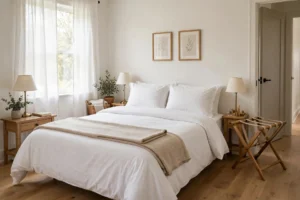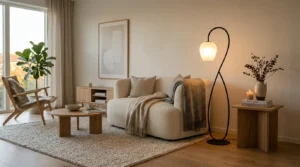
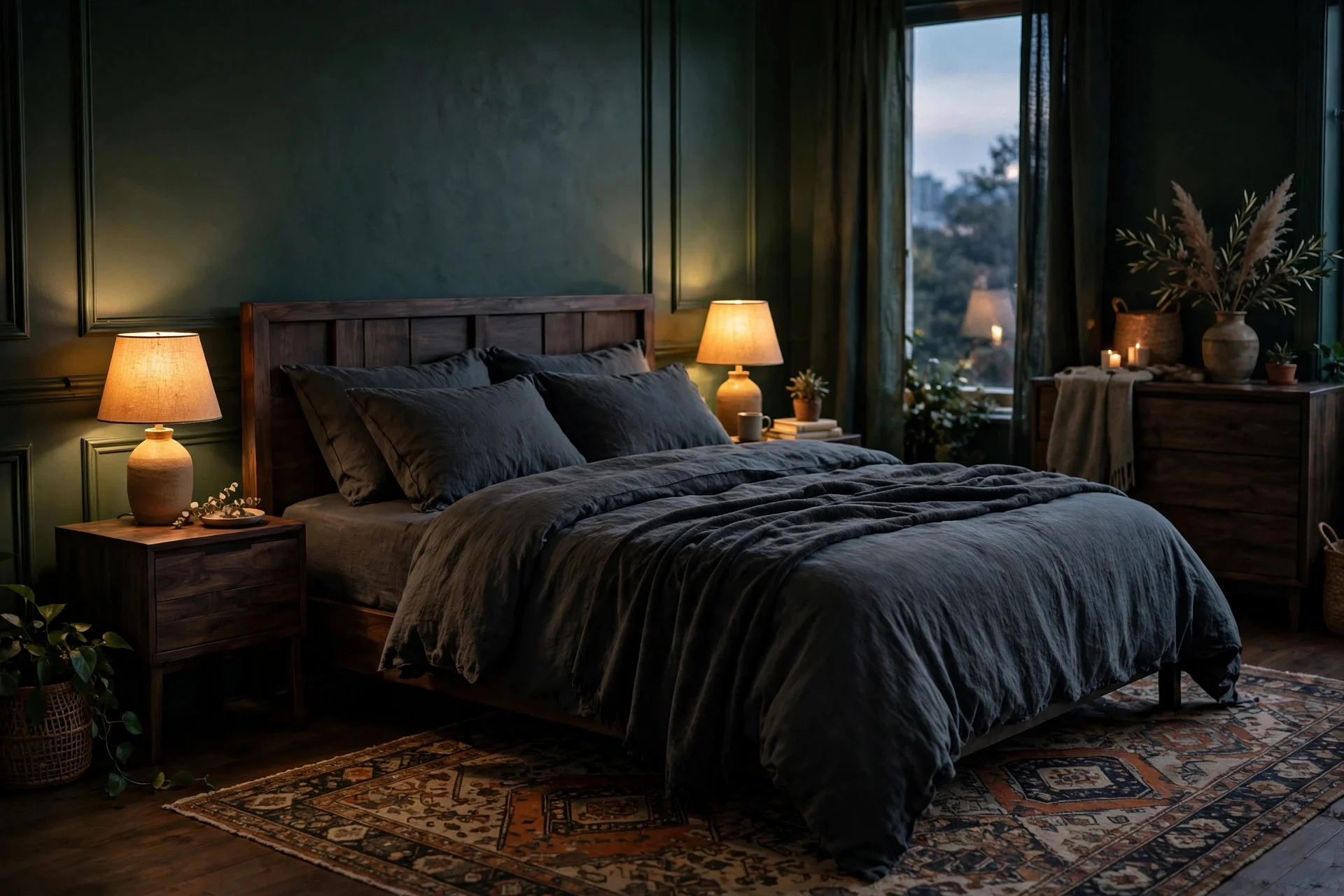
A moody bedroom is not a dark, gloomy box. Done well, it is a room that feels calm, enclosed, and easy to sleep in, with deep green and charcoal doing the heavy work and warm light keeping it from feeling cold. The trick is balance: dark walls need soft textures, warm bulbs, and a few lighter touches so the room still feels open enough to live in. Paint is the biggest lever, but bedding, wood, and lighting matter just as much.
These moody bedroom ideas work in small rooms as well as large ones, as long as you test colours first and keep clutter low. A single deep green wall can change a room, and a charcoal bedspread can anchor it without repainting anything. Work through the ideas in order, from walls and light down to bedding and small details, and stop when the room feels restful rather than heavy. The goal is a bedroom you want to wind down in, not one you have to escape from in the morning.
1. Paint One Wall Deep Green
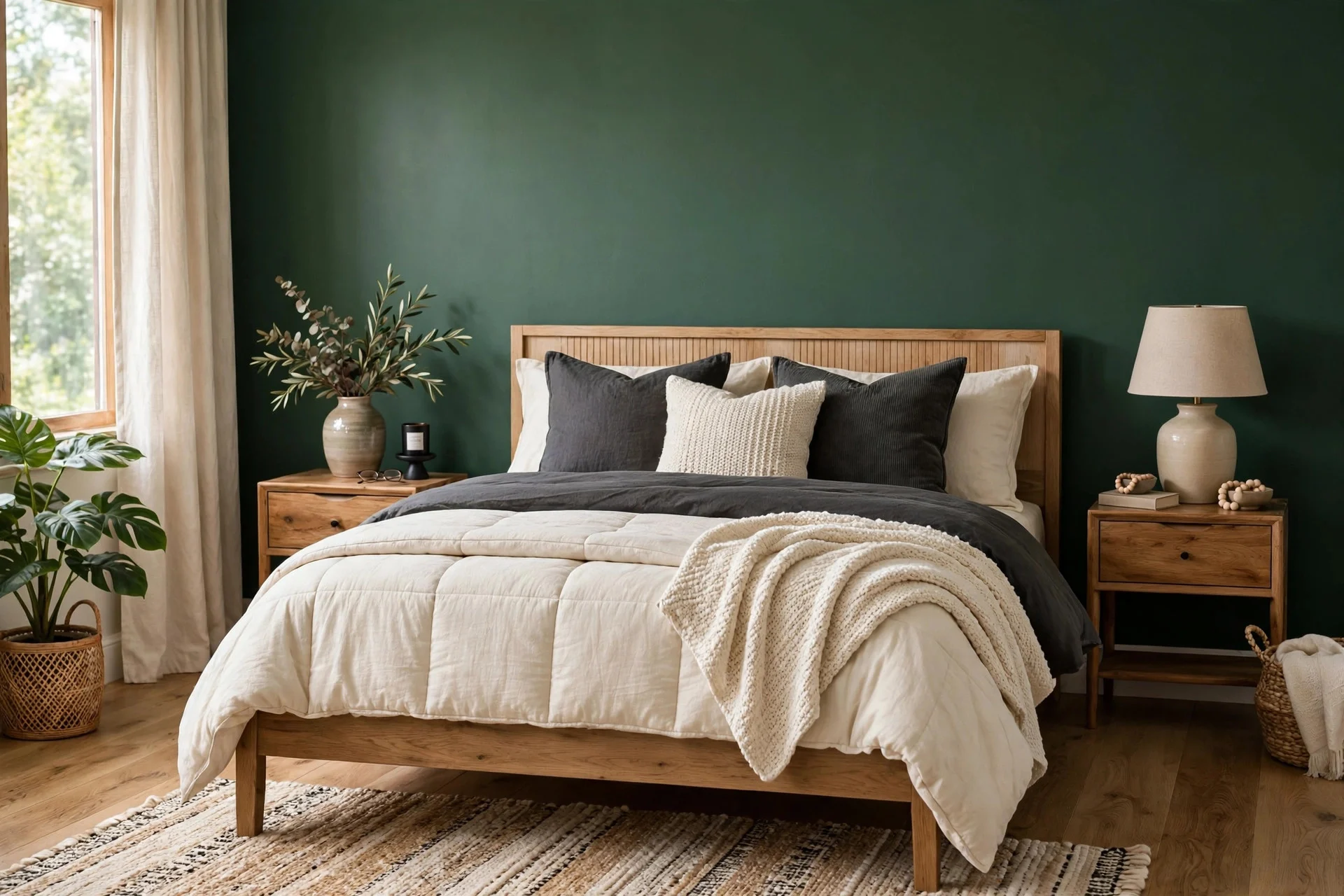
A deep green feature wall behind the bed gives instant depth without making the whole room feel closed in. Choose a green with warm, grey undertones rather than a bright or yellow green, and paint large swatches on the wall to check them in morning and evening light. Two coats over a good primer usually cover well, and a matte or eggshell finish hides small wall marks better than gloss.
Avoid painting all four walls dark in a small room with one small window, which can feel cramped fast. A litre of quality wall paint costs $25 to $45, and a feature wall in an average bedroom needs 2 to 3 litres. Keep the other walls pale warm white or soft grey to hold the contrast. Tip: paint the wall behind the bed first, live with it for a week, and only then decide whether to add more green.
2. Use Charcoal Bedding as a Low-Commitment Anchor
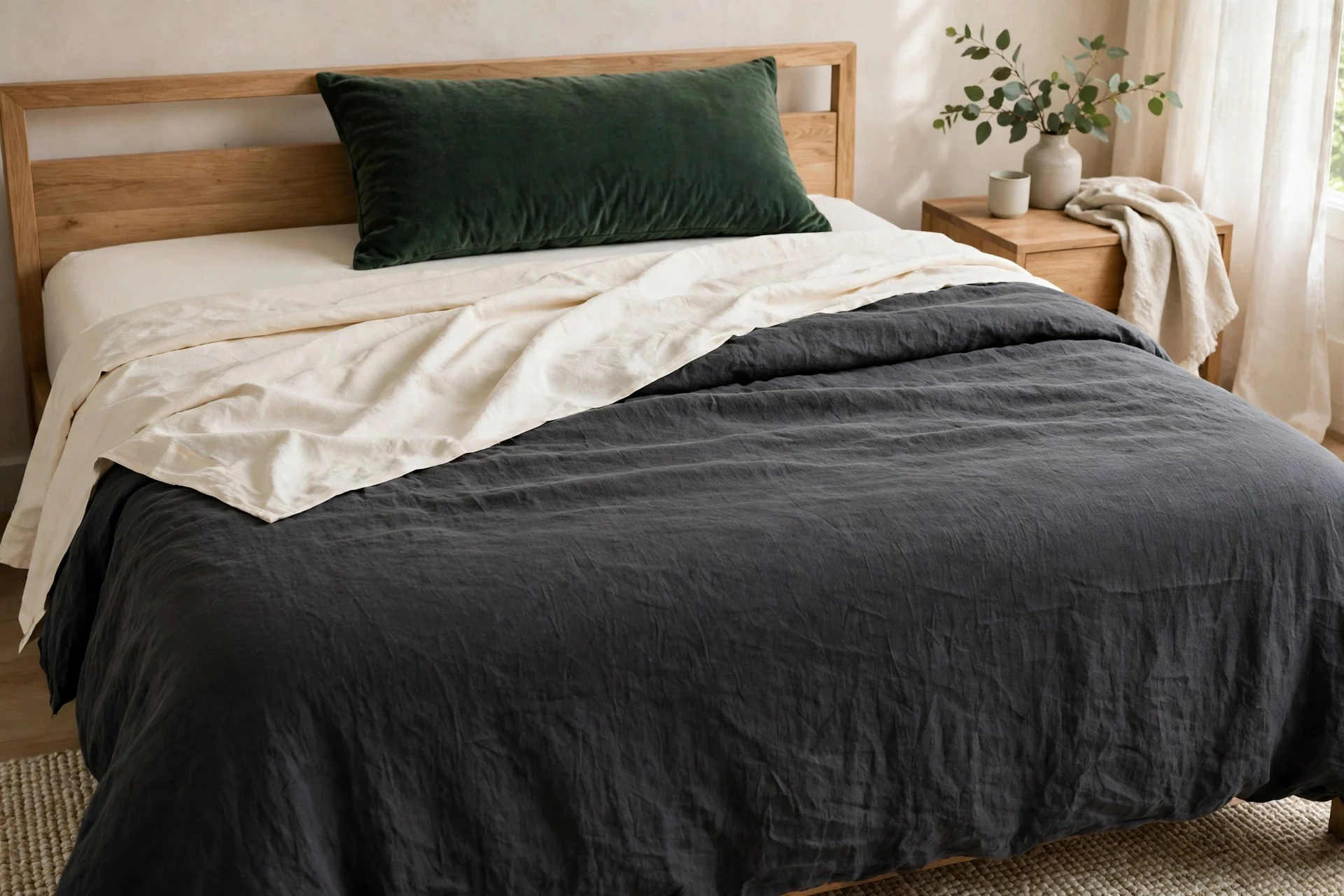
If you are not ready to paint, charcoal bedding gives you the moody look in one change. A charcoal duvet cover, paired with white or cream sheets, keeps the bed from looking like a black hole and makes the dark tone feel intentional. Add one or two cushions in deep green, rust, or mustard to link the bed to the rest of the room, and keep the top layer textured rather than flat and shiny.
Avoid a full charcoal set with charcoal sheets, charcoal pillows, and a charcoal throw, which can look flat and dull. A cotton charcoal duvet set costs $50 to $110, and linen-look covers run $80 to $150. Wash dark bedding separately the first few times to stop dye transfer. Tip: fold a cream throw across the foot of the bed to break the dark block and give guests or partners a lighter layer.
3. Layer Warm Light Instead of One Bright Ceiling Light
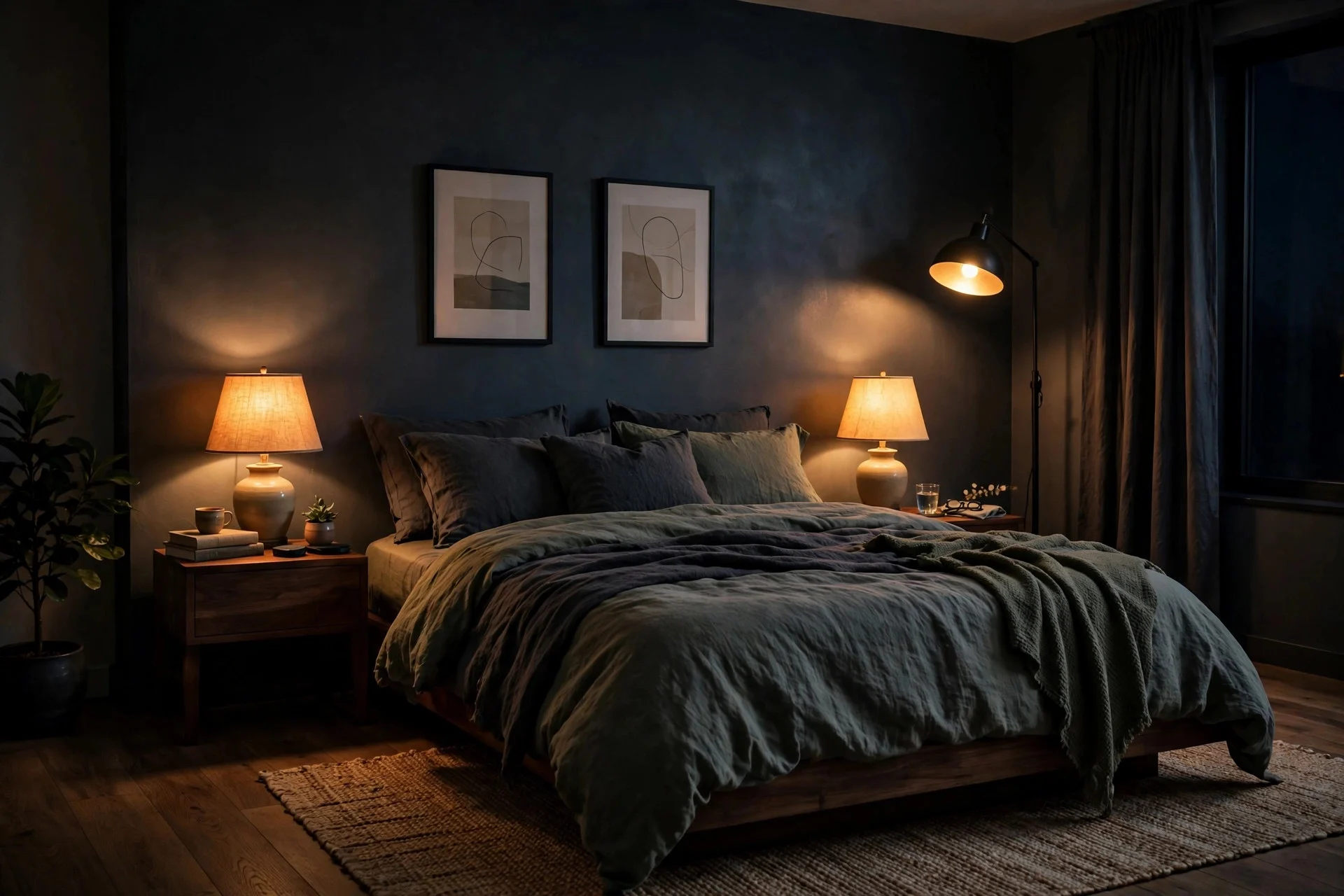
Moody rooms depend on warm, low light. Use three sources: a bedside lamp on each side, a floor lamp or wall light in a corner, and a dimmable ceiling light for getting dressed. Choose warm white bulbs around 2700K, and keep brightness low in the evening. Lampshades in linen or fabric soften the glow, while bare bulbs and cool white light will fight the dark walls.
Avoid a single overhead light as the only source, which makes dark walls look harsh and flat. A pair of bedside lamps costs $40 to $90, and a dimmer switch fitted by an electrician runs $60 to $120. Put lamps at bedside height, with the bulb around 24 inches above the mattress. Tip: use smart bulbs or a dimmer so you can drop the light in stages as bedtime nears.
4. Add a Velvet Headboard in Green or Charcoal
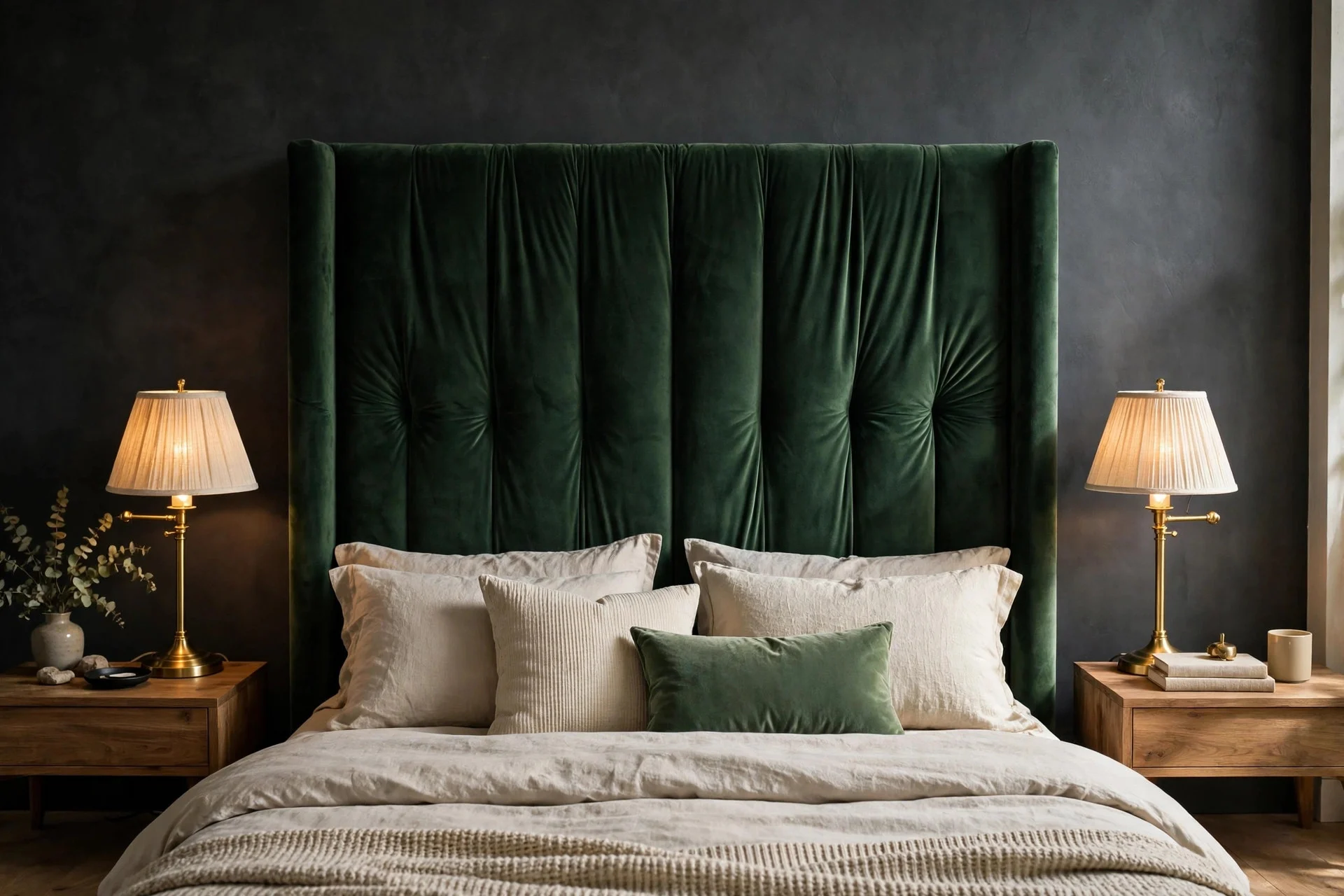
A tall, padded headboard in deep green or charcoal velvet becomes the focal point of a moody bedroom and adds softness against a painted wall. A headboard 24 to 30 inches above the mattress looks generous without overwhelming a standard ceiling. Velvet catches light in a way flat fabric does not, so the colour shifts gently through the day. Fix it firmly to the bed frame or wall so it does not wobble when you lean back.
Avoid a headboard that is wider than the bed by more than a few inches, which looks out of proportion. A velvet headboard costs $120 to $300 for a queen, and a simple upholstered panel version runs $80 to $160. Brush velvet lightly to remove dust, and keep it away from direct sun to slow fading. Tip: if velvet feels too much, choose a channel-tufted headboard in the same colour, which reads softer than a flat slab.
5. Bring in Dark Wood Furniture
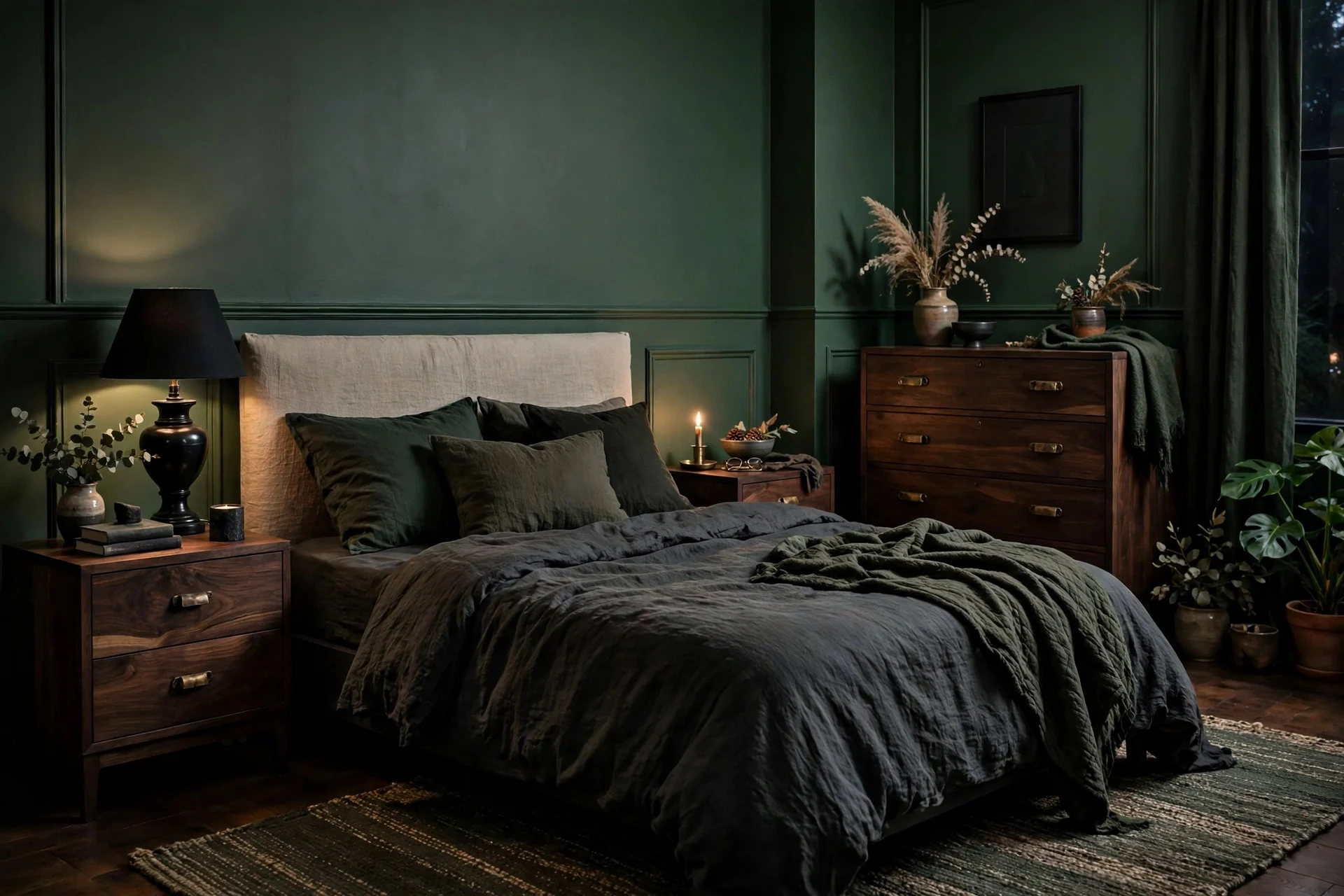
Dark walnut, stained oak, or blackened wood furniture grounds a green and charcoal room and stops it feeling like a paint sample. A wooden bed frame, a pair of bedside tables, and one dresser are enough; you do not need every piece to match. Mix the wood tones slightly, but keep them in the same dark family so the room reads as one scheme rather than a collection of leftovers.
Avoid shiny black lacquer on every piece, which can look hard next to soft bedding. A solid wood bedside table costs $80 to $200, and a dark wood dresser runs $250 to $600. Check drawer runners and joints before buying second-hand pieces. Tip: rub a little furniture oil into dry wood once a year to keep dark finishes from looking grey and tired.
6. Add Brass and Warm Metal Accents
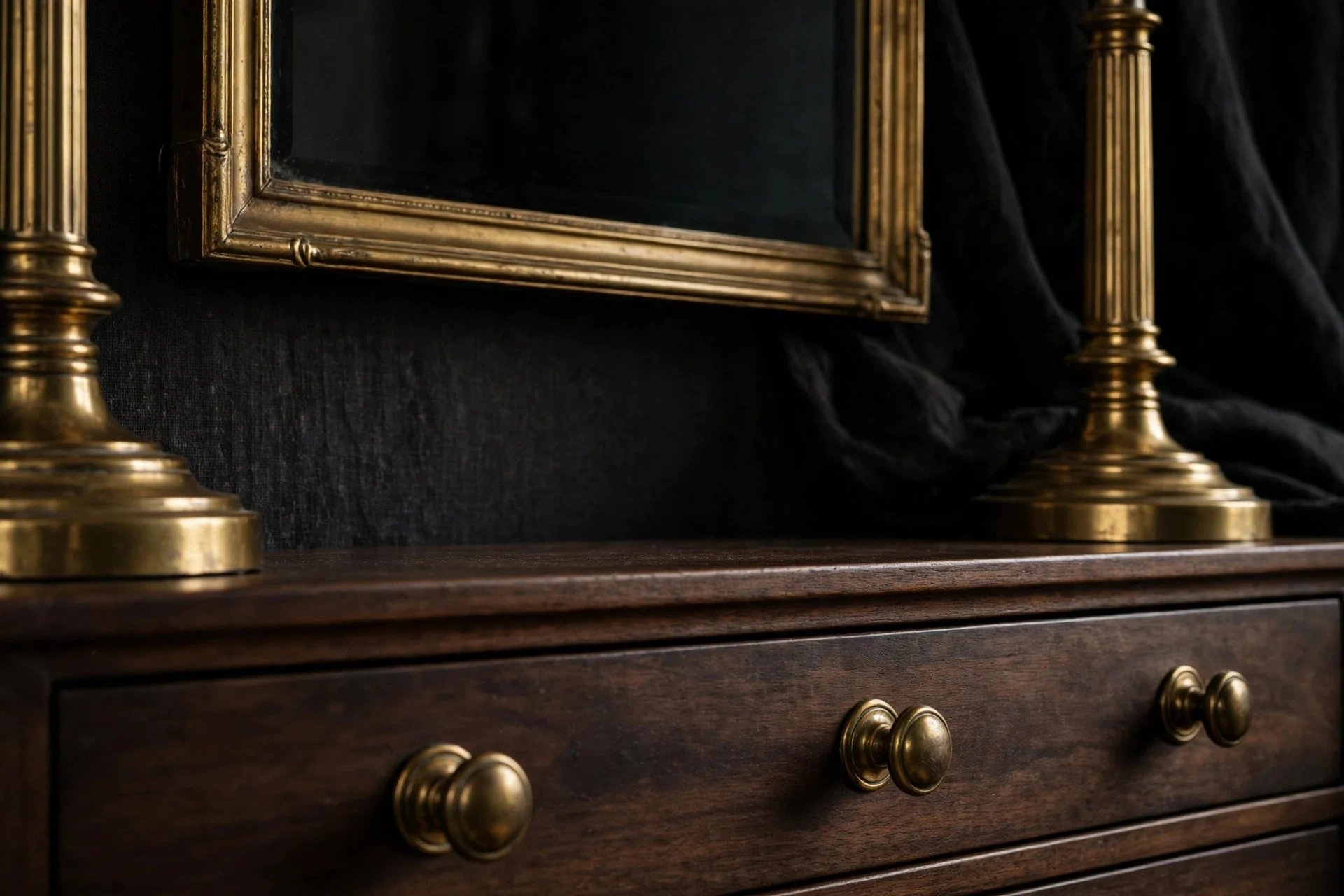
Brass, aged gold, and warm bronze lift dark green and charcoal without breaking the mood. Use them in small doses: lamp bases, drawer pulls, a mirror frame, a picture frame, or a tray. The warm metal catches lamplight and gives the eye a bright point in a dark room. Brushed or aged finishes suit a moody room better than bright, polished gold, which can look sharp against matte walls.
Avoid mixing brass, chrome, and black metal all at once, which makes the room feel unsettled. A pair of brass lamp bases costs $50 to $120, and a set of drawer pulls runs $20 to $40. Wipe brass with a dry cloth rather than harsh polish. Tip: repeat the same metal at least twice in the room, such as lamp base and mirror frame, so it looks planned.
7. Hang Large, Simple Art on Dark Walls
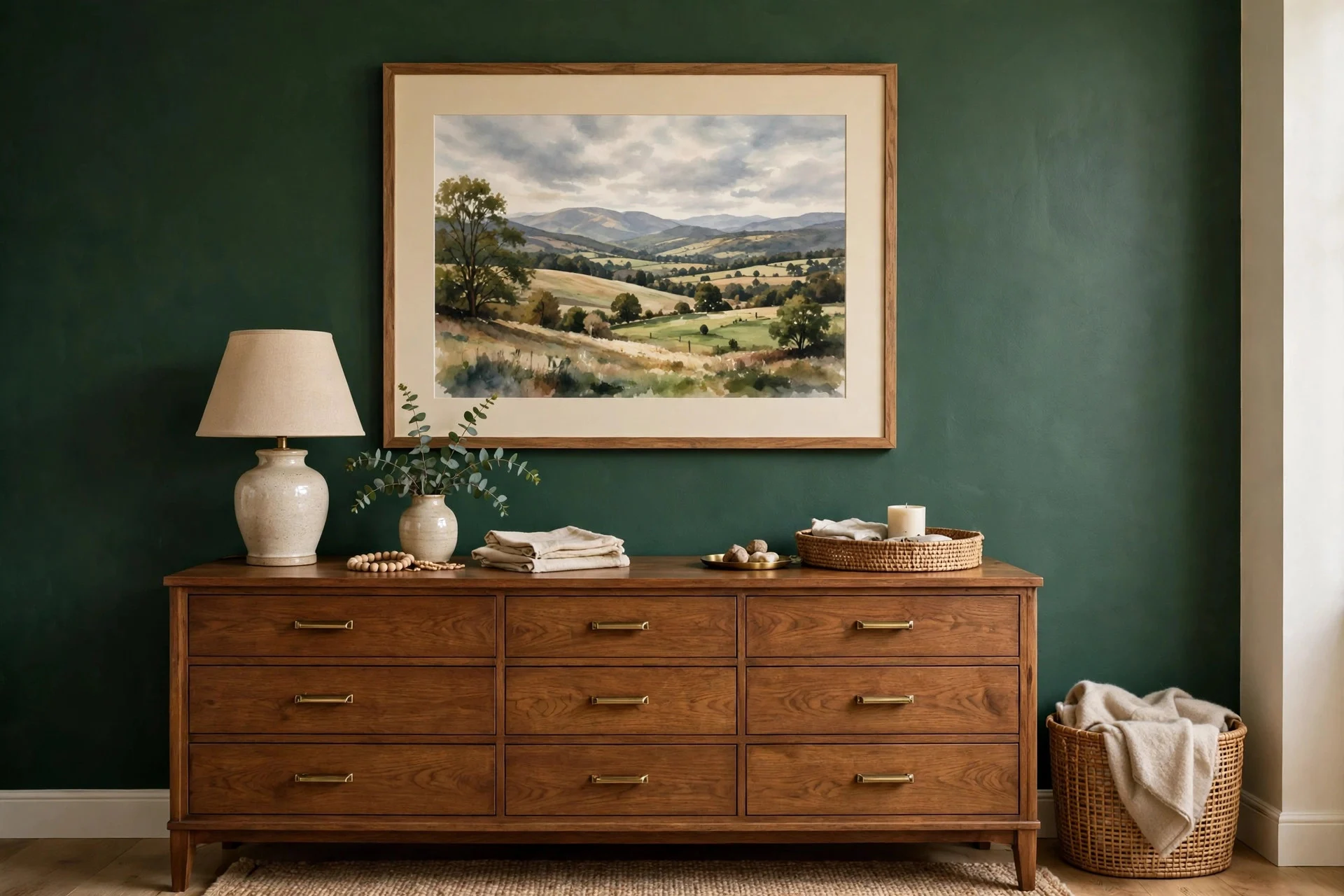
Art needs to hold its own on a dark wall, so go larger and simpler than you would on a white wall. A single framed print around 24 by 36 inches above a dresser, or a pair of 18 by 24 inch prints above the bed, works well. Choose landscapes, botanical prints, or abstract work with warm tones, cream, or muted gold in it, so the art does not sink into the wall colour.
Avoid a cluster of tiny frames that get lost on a dark background, and skip glass that throws glare from the lamp. A large framed print costs $40 to $120, and a pair of medium frames runs $50 to $100. Hang the centre of the art around 57 inches from the floor, or 6 to 8 inches above furniture. Tip: use a wide cream or natural wood mount inside the frame to give the image breathing room against the wall.
8. Fit Floor-Length Curtains in a Dark, Heavy Fabric
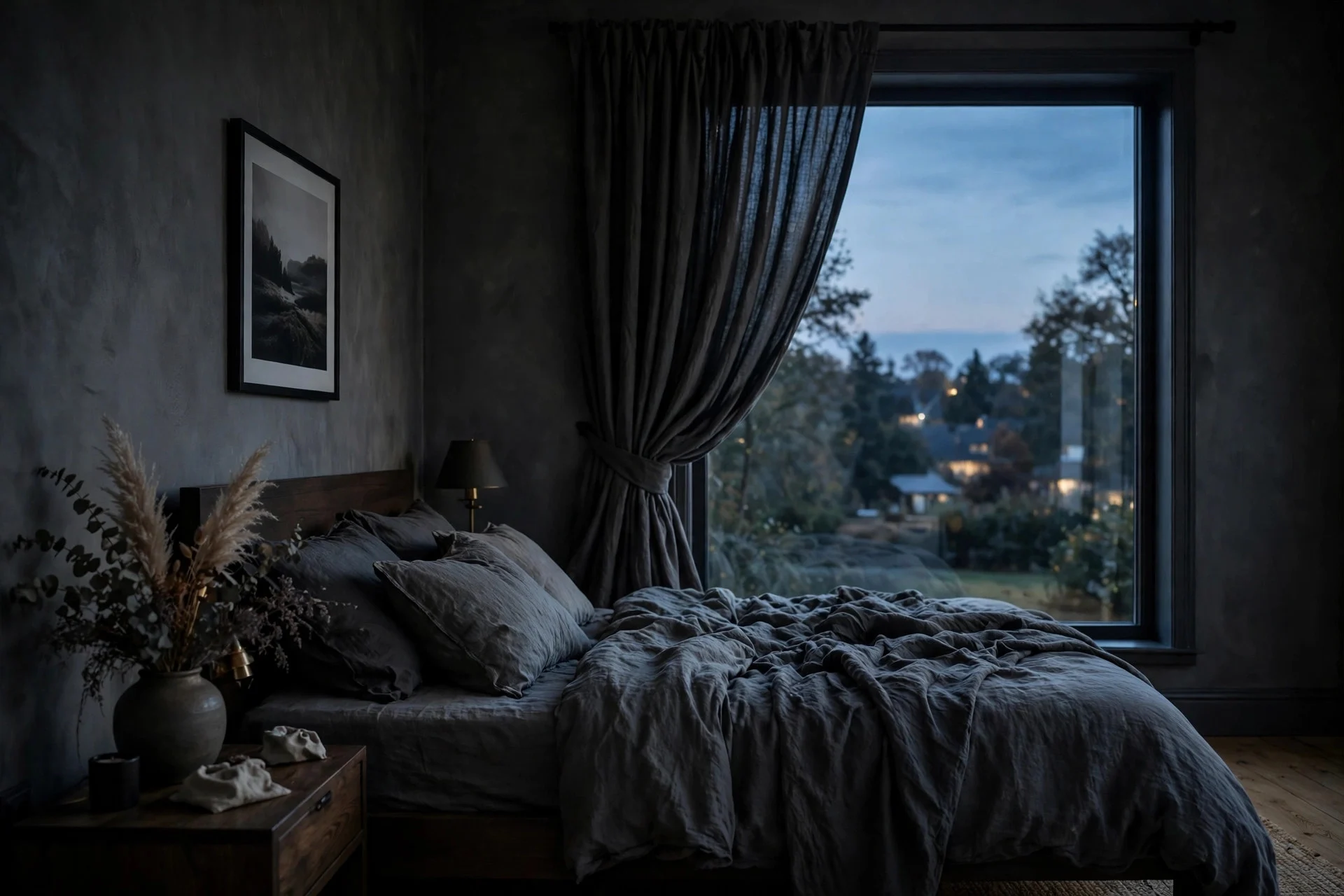
Curtains are a chance to add texture and close the room in softly at night. Choose floor-length curtains in charcoal, deep green, or a heavy linen-look fabric, hung on a rod 4 to 6 inches above the window frame and 6 to 8 inches wider on each side. The extra width lets the curtains stack beside the glass during the day instead of blocking light. A blackout lining helps sleep and adds weight to the drape.
Avoid short curtains that stop at the sill in a moody room, which break the tall, enclosed feel. Ready-made floor-length curtains cost $40 to $90 per panel, and lined versions run $70 to $130 per panel. Steam or iron them before hanging so creases do not spoil the fall. Tip: test the fabric in lamplight, not just daylight, since dark fabrics can read much darker at night.
9. Layer Textured Bedding: Linen, Wool, and Cotton
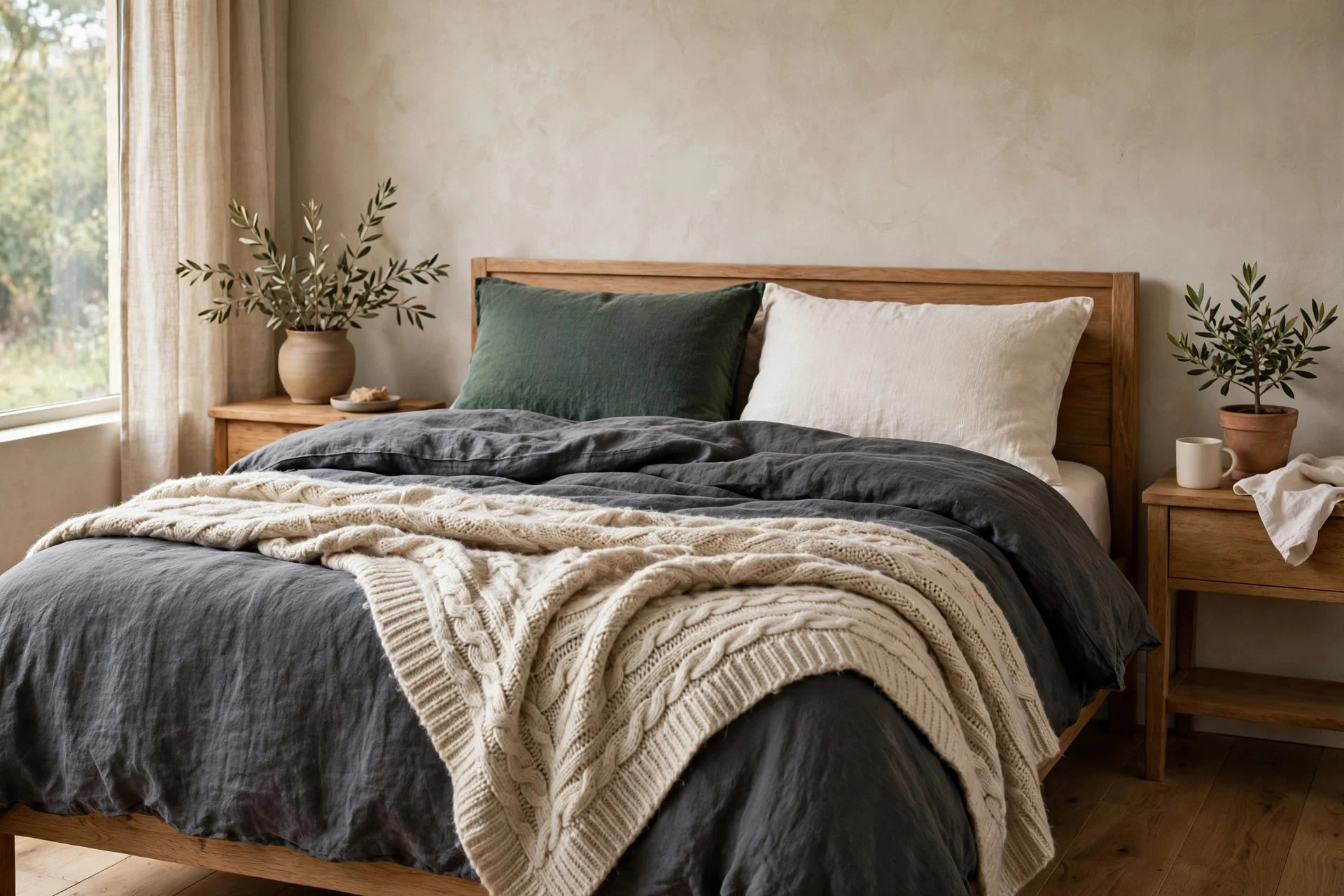
Texture is what keeps a dark bedroom from feeling flat. Layer a cotton fitted sheet, a linen or cotton duvet cover, a wool or chunky knit throw, and two or three cushions in different fabrics. The mix of smooth, rough, and soft surfaces catches light in different ways and makes the bed look inviting. Keep the palette tight: charcoal, deep green, cream, and one warm accent at most.
Avoid slippery satin or shiny polyester bedding, which looks cold against dark walls and slides off at night. A linen-look duvet set costs $80 to $150, and a wool throw runs $50 to $110. Wash linen on a gentle cycle and dry it flat or on a line where you can. Tip: turn the duvet cover back a few inches at the head of the bed to show a lighter sheet, which softens the dark block.
10. Make a Dark Reading Corner
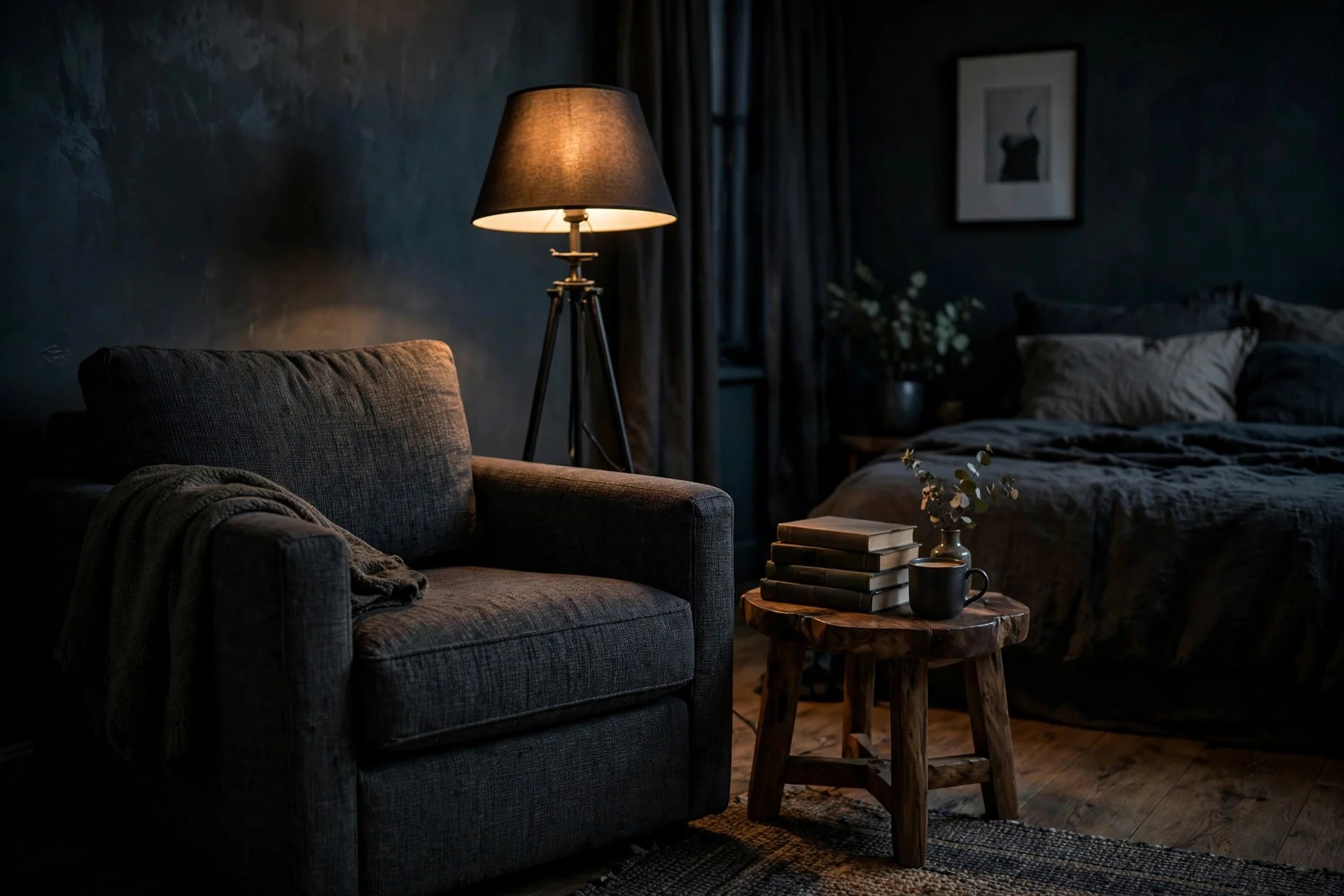
A moody bedroom suits a quiet corner for reading, with an armchair, a small side table, and a floor lamp. Choose a chair in charcoal fabric or deep green velvet, placed near a window or a corner where the lamp can pool light. Add a small bookshelf or a stack of books on the table, and a throw over the chair arm for cold evenings. The corner should feel separate from the bed, even if it is only a few feet away.
Avoid a chair that is too large for the corner, which blocks the path around the bed. A comfortable armchair costs $200 to $500, and a simple floor lamp runs $40 to $90. Leave at least 24 inches of walkway around the chair. Tip: angle the chair slightly toward the room rather than flat against the wall, so the corner looks lived in, not pushed aside.
11. Use Plants to Soften Dark Walls
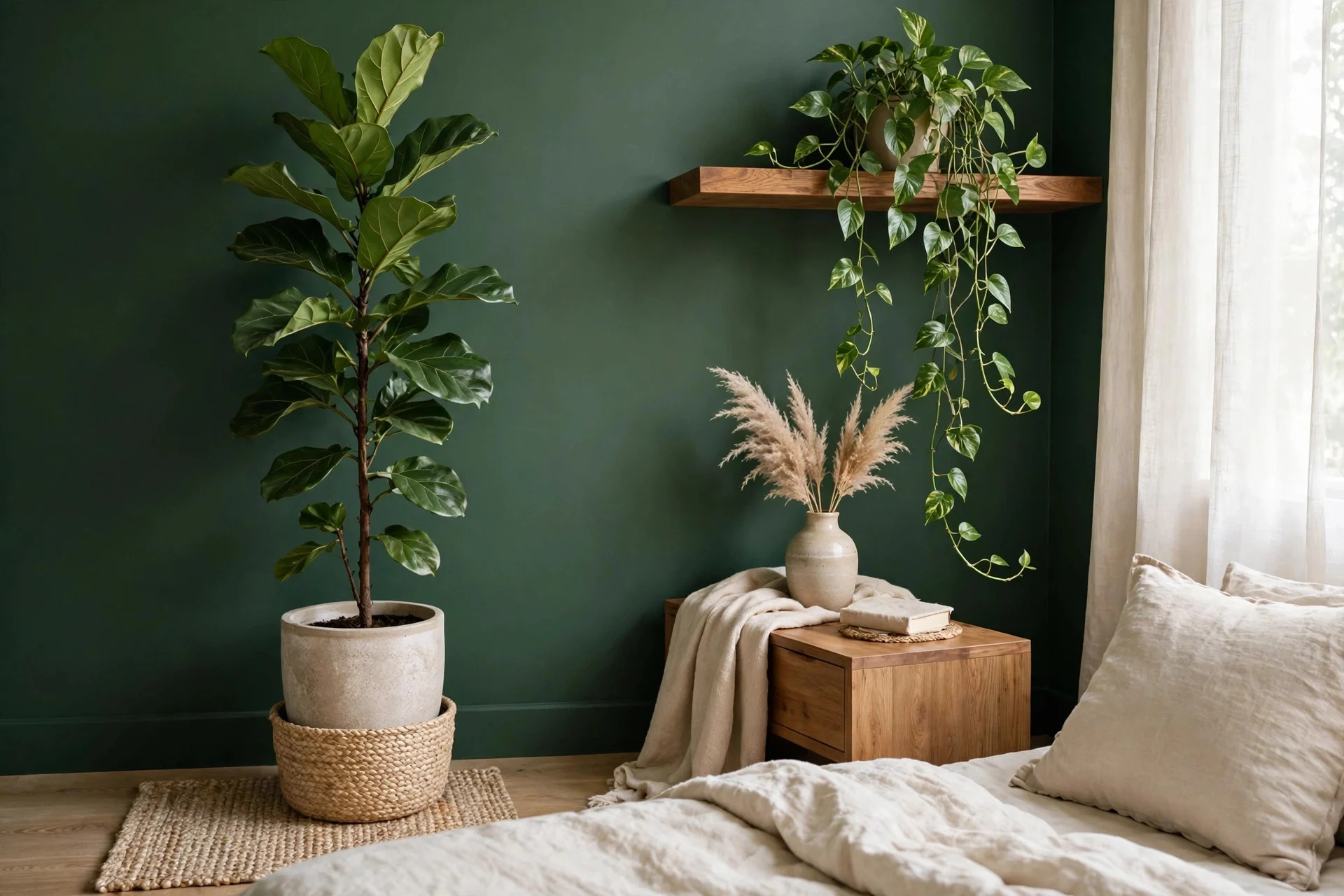
Green plants are a natural fit for a deep green room, and their shapes break up flat wall colour. Choose plants that cope with lower light, such as pothos, snake plants, ZZ plants, or ferns, and place one tall plant in a corner and one trailing plant on a shelf or dresser. Use plain pots in charcoal, terracotta, or cream so the plants, not the pots, draw the eye.
Avoid plants that need bright direct sun in a north-facing dark room, where they will fade and drop leaves. A large potted plant costs $30 to $60, and a trailing plant in a hanging pot runs $20 to $35. Water only when the top inch of soil is dry, and rotate pots monthly. Tip: wipe large leaves with a damp cloth every few weeks, since dust shows clearly on dark green foliage.
12. Ground the Room With a Patterned Rug
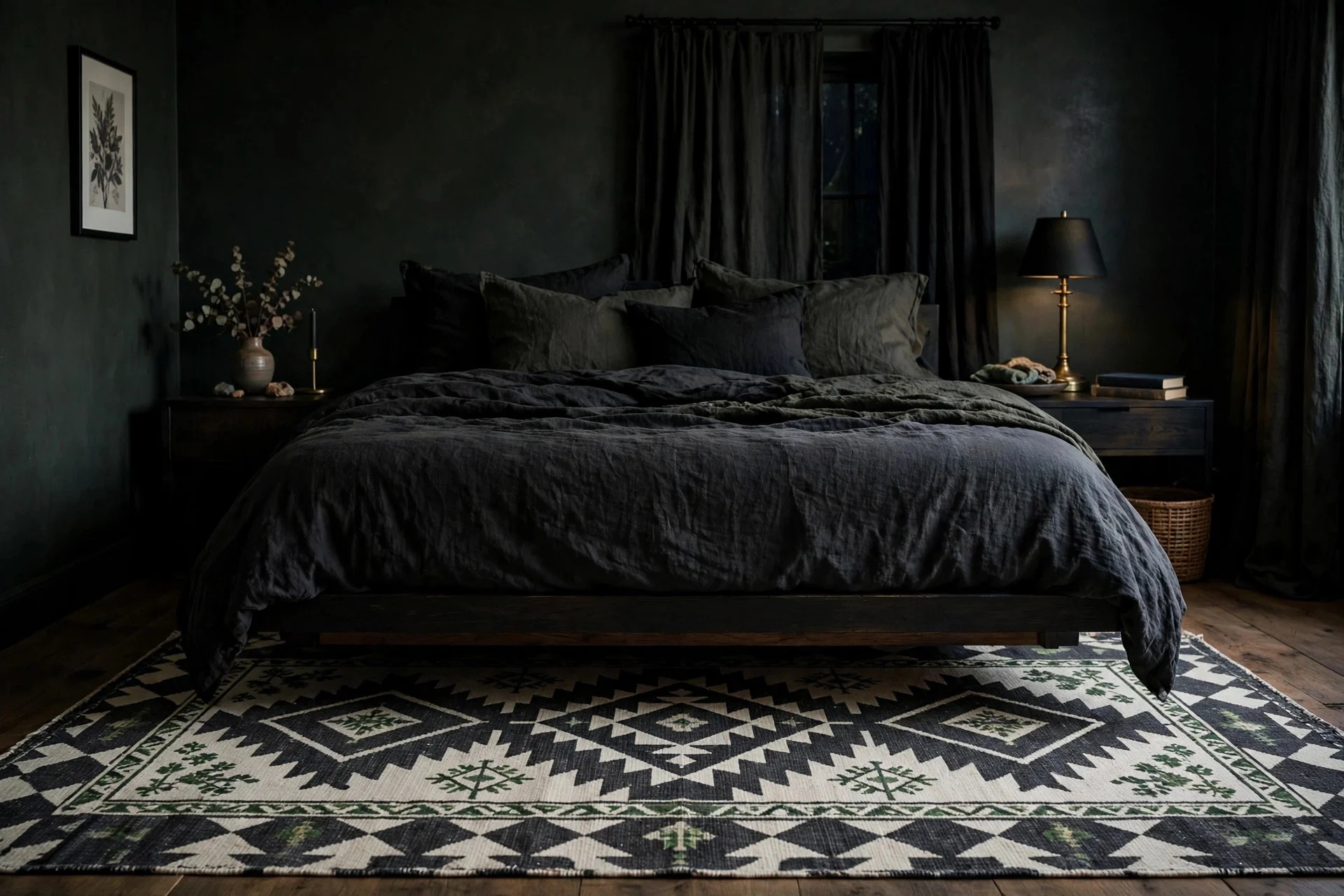
A rug in a muted pattern ties dark walls, wood, and bedding together and warms a cold floor. Choose a rug large enough to run under the front two-thirds of the bed, with at least 18 inches showing on each side. A 5 by 8 foot rug suits a queen bed in an average room, while an 8 by 10 foot rug suits a king or a larger room. Pick a pattern with charcoal, cream, and a touch of green or rust, in a low pile that is easy to vacuum.
Avoid a small rug that floats in the middle of the floor and makes the bed look disconnected. A 5 by 8 foot wool or wool-blend rug costs $150 to $350, and a cotton flatweave runs $80 to $180. Use a non-slip pad underneath to stop bunching. Tip: place the rug so your feet land on it when you get out of bed, which is where it matters most on cold mornings.
13. Paint or Stain Built-In Shelves Dark
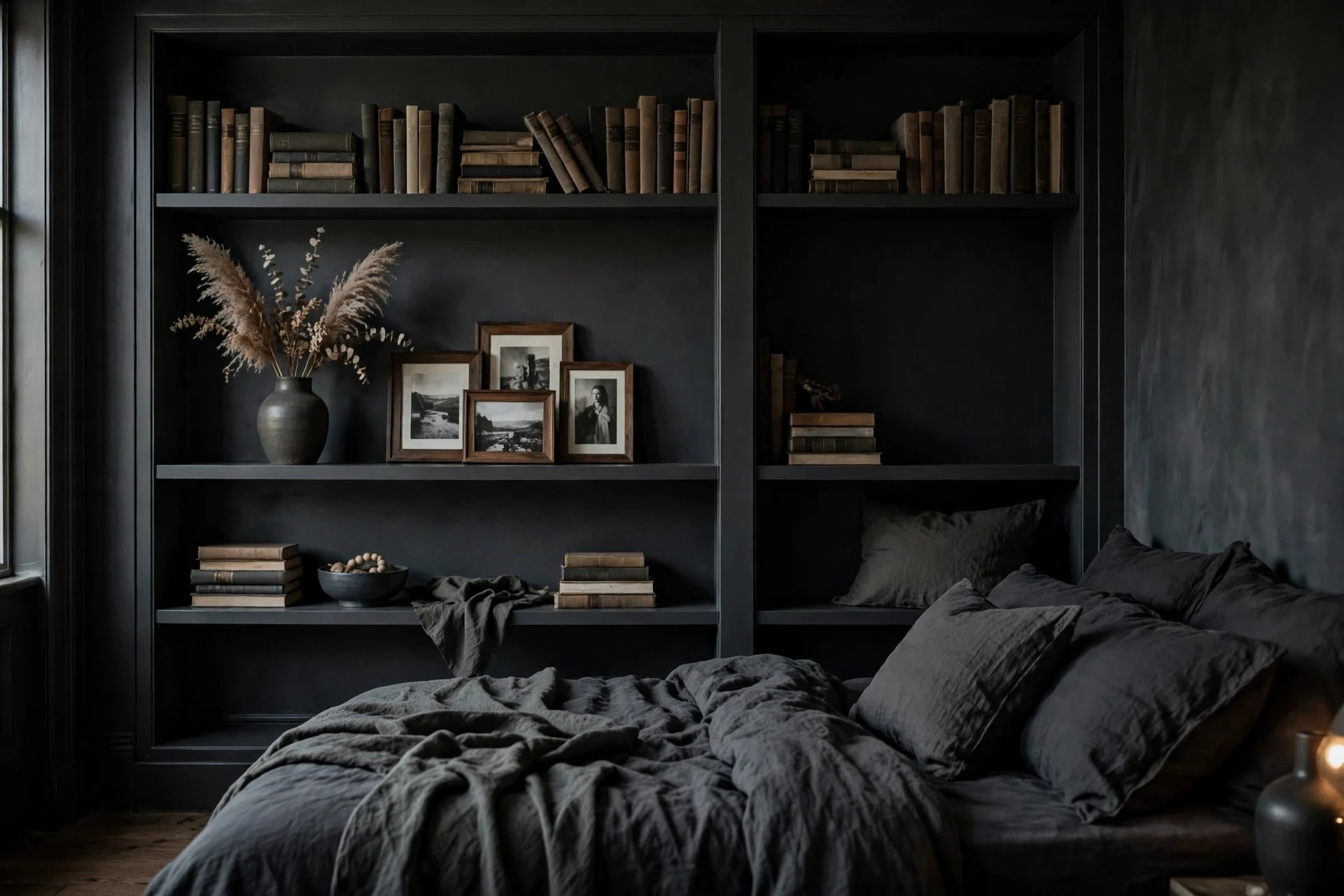
If you have built-in shelves, a wardrobe, or an alcove, painting them charcoal or deep green turns plain storage into a feature. The dark shelves make books, ceramics, and framed photos stand out, especially with a small lamp or a strip light on the top shelf. Keep the items on the shelves simple and spaced out, with a few empty gaps so the shelves do not look crammed.
Avoid filling dark shelves edge to edge with small clutter, which reads as mess against a dark background. A litre of furniture paint costs $25 to $40, and a small LED strip light runs $15 to $30. Sand and prime before painting, or the finish will peel. Tip: style shelves in odd groups of three, mixing a book stack, a vase, and a framed photo, for a calm, unforced look.
14. Try a Dark Ceiling or a Painted Wardrobe Door
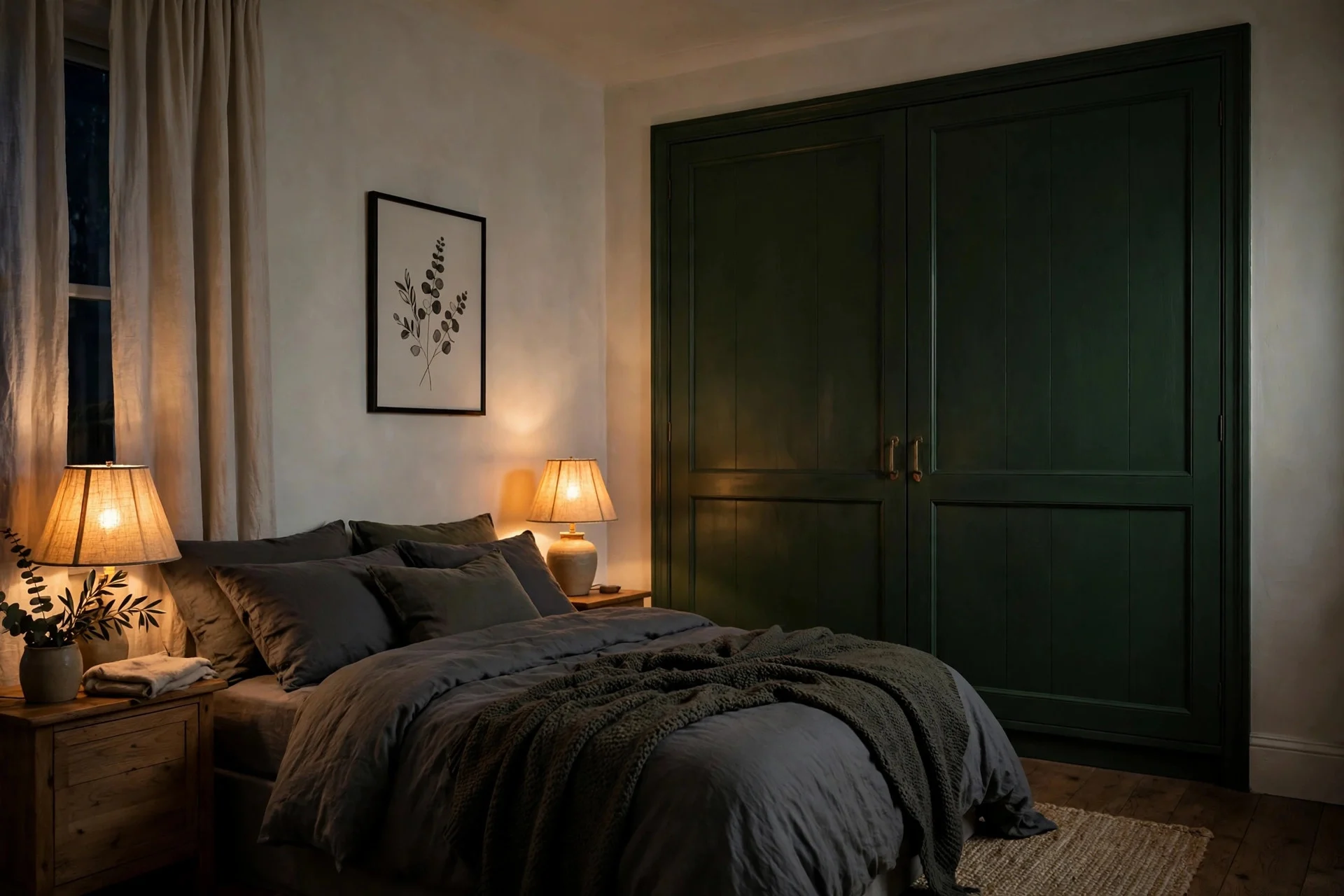
For a bolder step, paint the ceiling a soft charcoal or paint wardrobe doors deep green while leaving walls pale. A dark ceiling lowers the room visually and makes it feel cosy, which suits bedrooms with ceilings 9 feet or higher. Painted wardrobe doors give the moody effect without repainting walls, and they can be repainted later if you change your mind. Use the same finish as the walls for a smooth result.
Avoid a dark ceiling in a room under 8 feet high, which can feel pressing rather than cosy. A litre of ceiling paint costs $20 to $35, and painting wardrobe doors takes 1 to 2 litres depending on size. Mask edges carefully and use a small roller for a flat finish. Tip: keep the ceiling one shade lighter than the walls if you paint both, so the room still has a sense of height.
15. Finish With Scent, Candlelight, and Warm Textiles
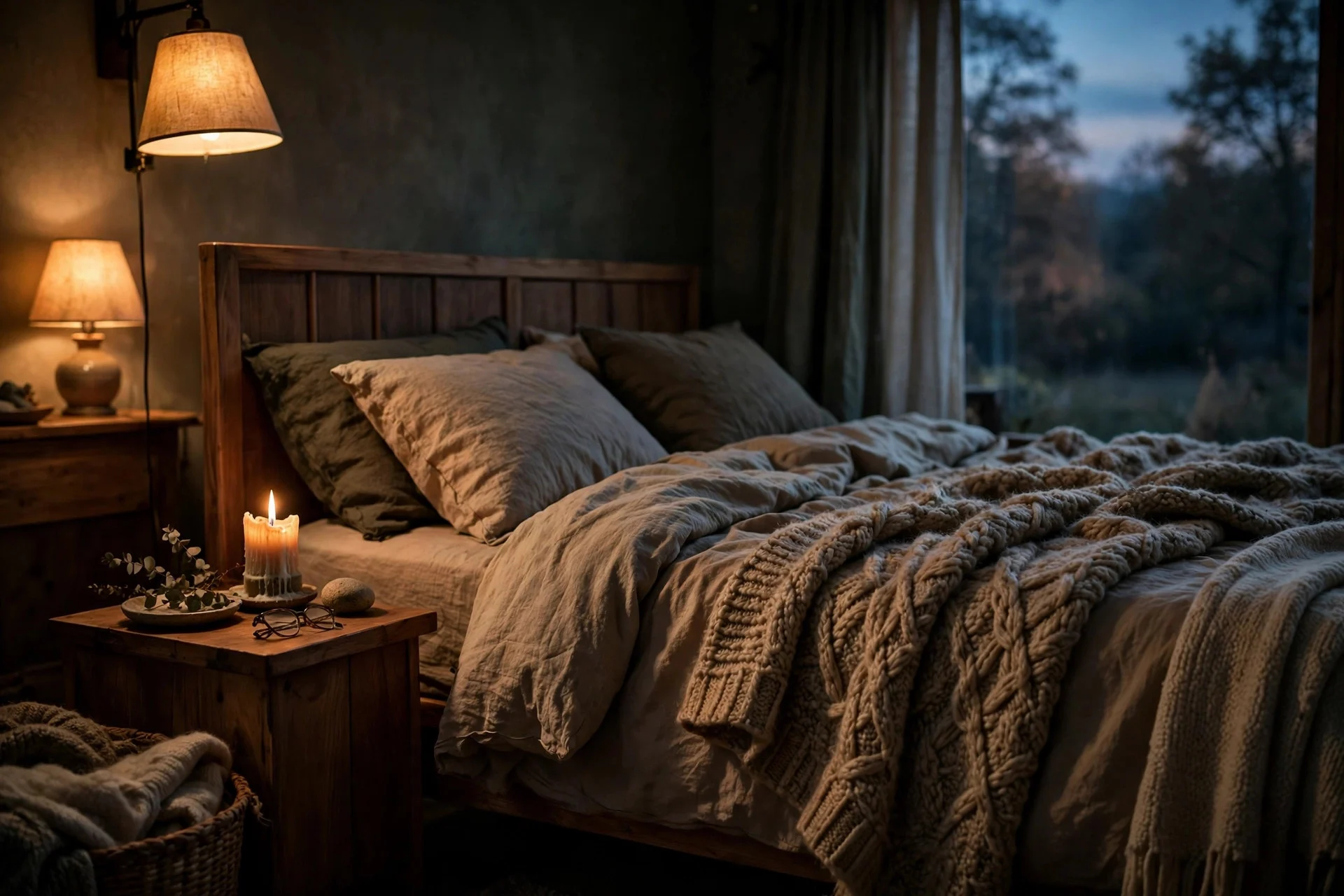
The last layer of a moody bedroom is sensory: a lit candle or two in safe holders, a wool throw on the bed, and a scent that suits the room, such as cedar, sandalwood, or pine. Use candles only when you are in the room and awake, placed on a stable, heat-proof surface away from curtains and bedding. A thick rug by the bed, a soft throw, and brushed cotton sheets complete the warm, enclosed feel that dark walls promise.
Avoid strong plug-in scents or a dozen candles at once, which can overwhelm a small dark room. A quality candle costs $15 to $30, and a wool throw runs $50 to $110. Trim wicks to a quarter inch before lighting for a cleaner burn. Tip: light the candles for half an hour before bed, then blow them out and let the lamp light take over for sleep.
Frequently Asked Questions
Do moody bedroom ideas work in a small bedroom?
Yes, if you keep one dark wall or dark bedding as the anchor and leave the rest pale. Use mirrors, warm lamps, and low clutter to keep the room from feeling closed in. A small moody bedroom often feels cosier than a small pale one, because the dark tones hide corners and soften the edges.
What colours go well with deep green and charcoal?
Cream, warm white, and natural wood soften both colours, while brass and muted gold add warmth. Rust, mustard, and dusty pink work as small accents in cushions or art. Keep accents to one or two colours at a time so the room stays calm instead of busy.
How do I stop a dark bedroom feeling too dark?
Layer warm light at three heights, add a mirror opposite a window or lamp, and use light bedding or a cream throw to break up dark blocks. Keep window treatments open during the day, and choose matte paint over flat black, which can swallow light. If the room still feels heavy, paint one wall back to a pale shade.
Conclusion
Deep green and charcoal make a bedroom feel calm and enclosed when they are paired with warm light, soft texture, and a little contrast. Start with one change, such as a painted wall or charcoal bedding, and add wood, brass, and layered light until the room feels restful rather than heavy. The best moody bedrooms are not the darkest ones; they are the ones where you can read, rest, and sleep easily, with every dark surface softened by something warm beside it. Test colours in your own light, keep clutter low, and let the room grow darker in stages.