

A hotel bed looks inviting because every pillow has a place. Nothing is piled at random, and nothing looks flat or forgotten at the back. The good news is that you can get the same neat, layered look at home without buying a dozen new cushions or spending twenty minutes on your bed each morning. A solid king bed pillow arrangement starts with the right sizes, a clear order from back to front, and a routine you can repeat in about two minutes. King beds are wide, about 76 inches across, so they need more width coverage than a queen bed. Two king pillows fill that width in one row, while standard pillows leave gaps at the sides. Once you know which pillows go where, the rest is simple: sleeping pillows at the back, larger decorative pillows in the middle, and one or two smaller cushions at the front. This guide walks through fifteen practical ideas, with sizes, costs, and common mistakes, so your bed looks styled but still feels comfortable to sleep in.
1. Start With the Right Pillow Count and Sizes
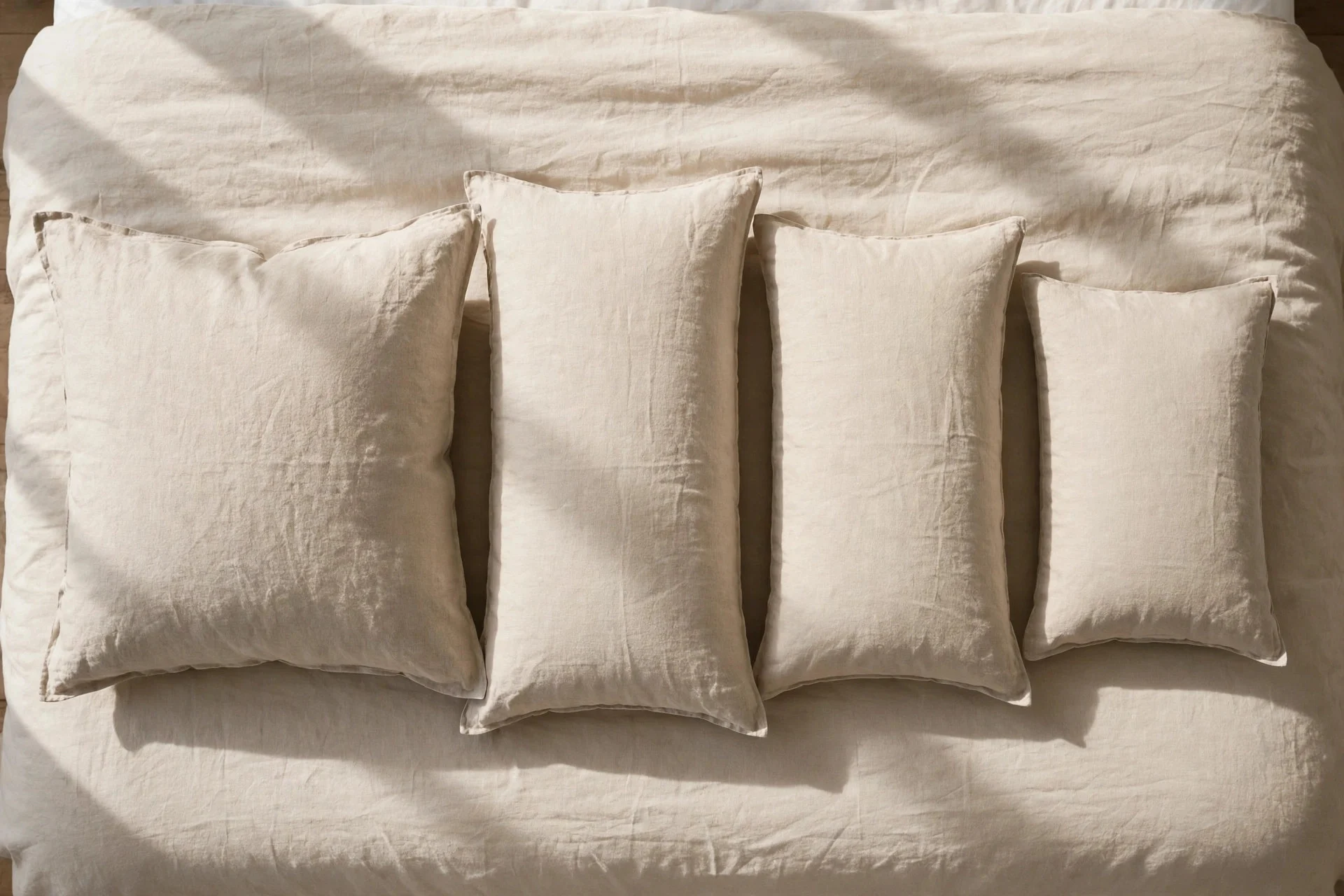
A king bed pillow arrangement works best when you know how many pillows you actually need. For sleeping, two king pillows, each about 20 by 36 inches, cover the full width of a king bed. For styling, most hotel looks add two to four extra pillows on top of those two. That means a finished bed usually holds four to six pillows in total, not ten or twelve. Count what you already own before you shop, and check the labels for size. A standard pillow is about 20 by 26 inches, a queen is about 20 by 30 inches, and a Euro square is about 26 by 26 inches. Mixing sizes on purpose creates height and depth, while mixing them by accident looks messy. Avoid buying a full new set just because a photo looked full; start with your sleeping pillows and add one layer at a time. Tip: Lay all your pillows on the bed, step back, and take a photo. You will spot gaps and crowding far faster in a photo than by standing next to the bed.
2. Use King Pillows Across the Back Row
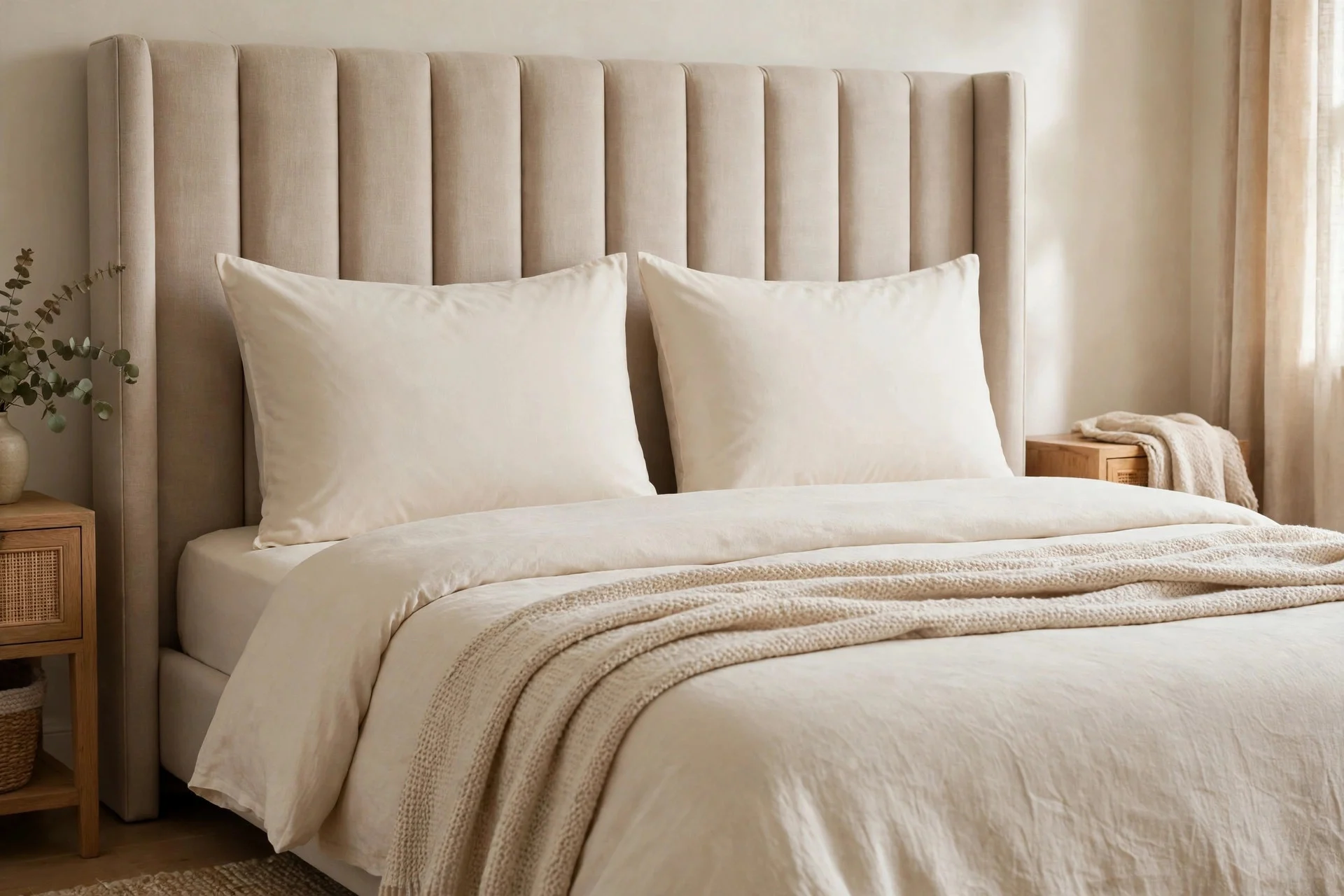
The back row sets the width for the whole bed, so start there. Stand two king pillows upright against the headboard, side by side, with their long sides running across the bed. They should meet in the middle with no large gap and no overlap bunching up at the sides. If your headboard is tall, this row can lean straight against it. If your headboard is low or you have no headboard, push the pillows against the wall and add a firm bolster behind them so they do not slide down overnight. King pillowcases cost roughly $15 to $40 for a pair, depending on fabric, and plain white or cream cases keep the look calm. Avoid using two standard pillows as the back row on a king bed, because the empty space at each side makes the bed look narrow and unfinished. Tip: Fluff each king pillow, then press the centre lightly to create a shallow dent. This helps the pillow hold its upright shape instead of slumping forward.
3. Add Standard Pillows in Front of the Kings
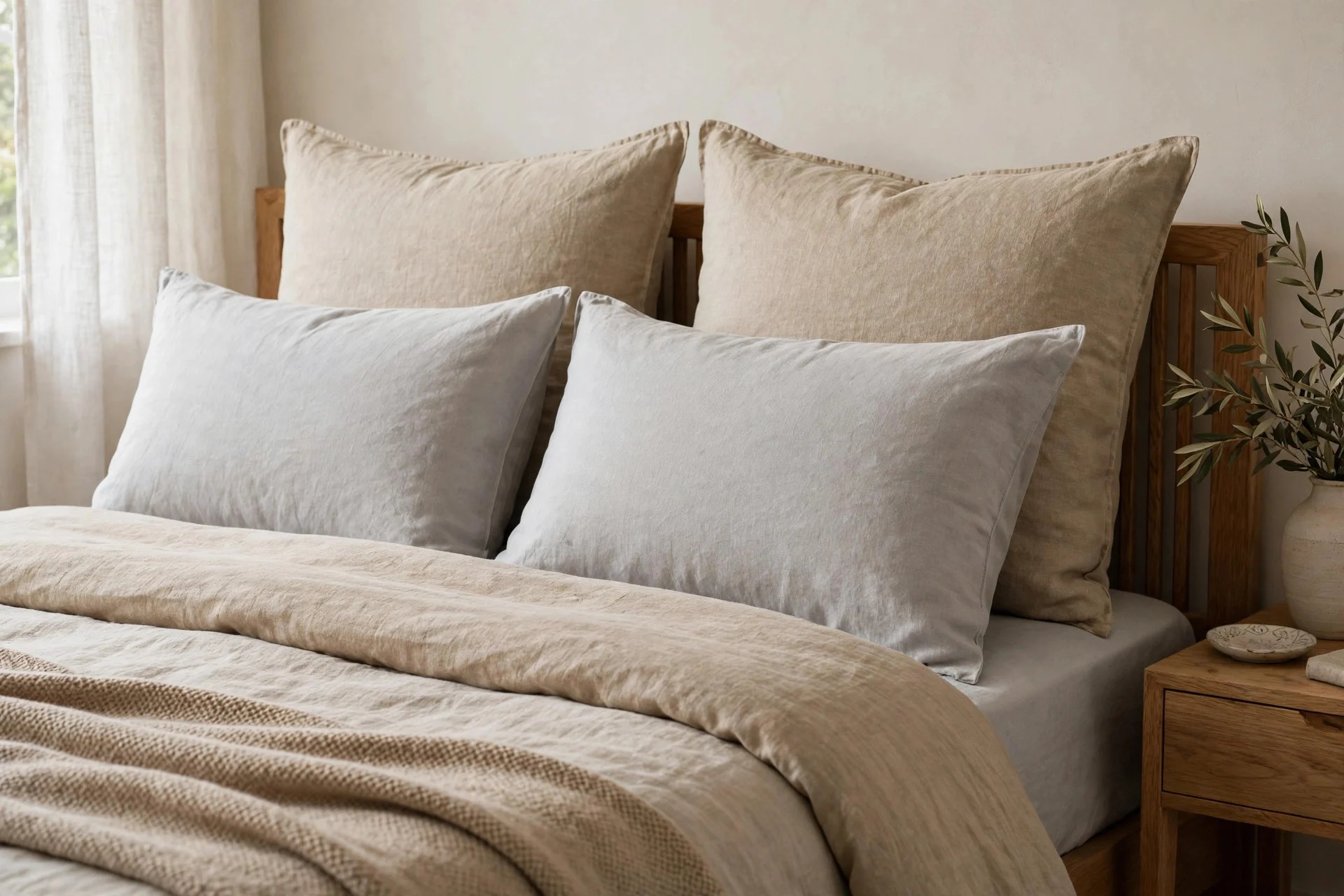
Once the king pillows are in place, add a second row of standard or queen pillows in front of them. Two standard pillows, each about 20 by 26 inches, sit well in this row and give the bed a stepped look. Dress them in shams that match or sit close to your duvet cover, so the middle layer reads as part of the bedding rather than a separate pile. This row is also useful for reading or watching television in bed, because the extra layer gives your back more support without pulling the sleeping pillows out of place. Shams cost roughly $20 to $50 for a pair. Avoid placing patterned shams here if your duvet is already busy, because two strong patterns side by side fight for attention. Tip: If you read in bed often, choose medium-firm fills for this row. Soft fills sink flat within minutes, while very firm fills feel stiff against your back.
4. Layer Euro Squares for Height
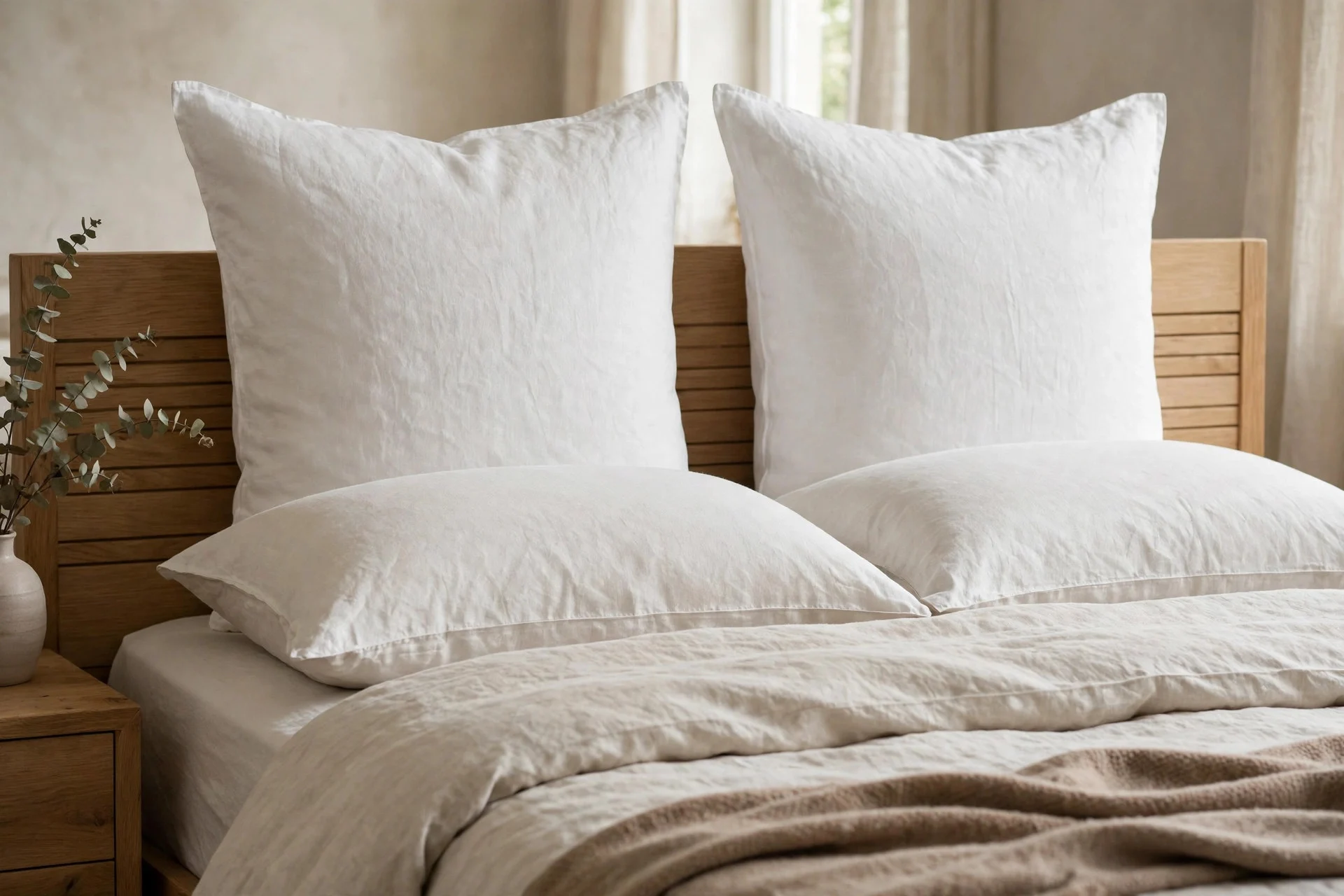
Euro squares are the secret behind the tall, plush look in hotel photos. At about 26 by 26 inches, they are larger than sleeping pillows and add clear height when placed in front of the back row. Use two Euro pillows for a king bed, standing upright and slightly angled toward the centre. They work best in plain linen or cotton shams, because their size already draws the eye. Euro inserts cost roughly $15 to $30 each, and covers cost about $20 to $45 each. You do not need Euro pillows every night for sleeping, so store them on a chair or in a basket at bedtime if they get in the way. Avoid stacking three Euro pillows across a king bed, because they crowd the width and leave no room for smaller front cushions. Tip: Buy inserts one size larger than the cover, for example a 28-inch insert in a 26-inch cover. The extra fill keeps the square full and stops the corners from looking empty.
5. Place Sleeping Pillows Flat First
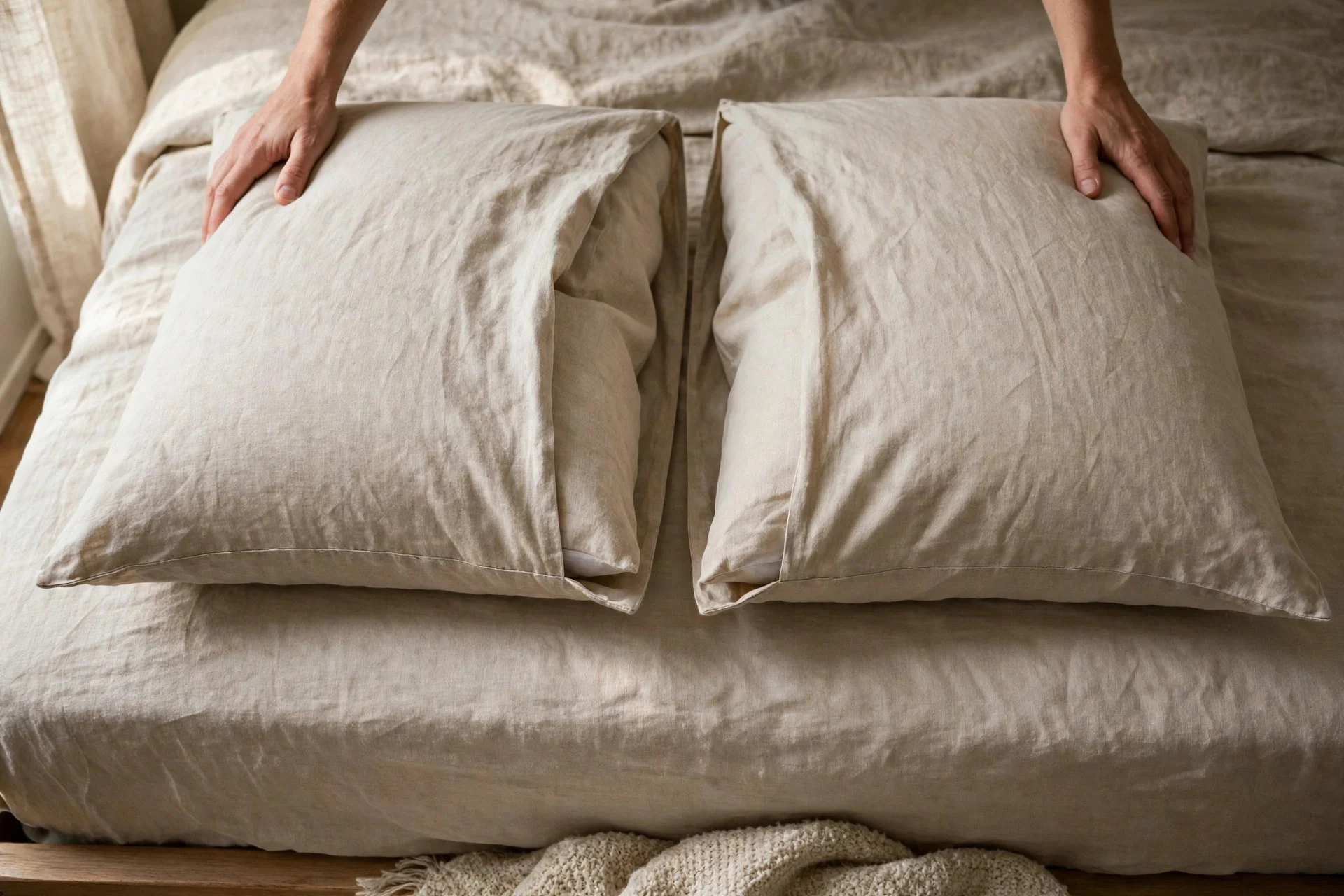
Hotels often hide sleeping pillows behind decorative layers during the day, but at home it helps to build from the sleeping pillows outward. Start by laying your two king sleeping pillows flat on the mattress, side by side, with the open ends of the cases facing inward toward the centre of the bed. This hides the openings and gives a tidy edge on both sides. Then build your upright layers in front of them. At night, you simply pull the front layers off and your sleeping pillows are already in place. This method also protects your sleeping pillows from dust and daylight, which can fade cases over time. Avoid stacking sleeping pillows upright all day if you use soft down fills, because they lose loft faster when held upright for hours. Tip: Change sleeping pillowcases twice a week if you use styling layers over them. Fresh cases make the whole bed feel cleaner, even when the outer layers stay the same.
6. Try the Classic Hotel Stack: Three Rows

The classic hotel stack uses three clear rows: sleeping pillows at the back, Euro or standard shams in the middle, and small cushions at the front. On a king bed, that often means two kings at the back, two Euros in the middle, and two smaller cushions or one lumbar pillow at the front. Each row should be a little shorter than the row behind it, so every layer stays visible. Stand each row upright, pull the front edge of each pillow forward by about two inches, and check from the foot of the bed that no row is fully hidden. This stack takes about two minutes once you know the order, and it suits plain bedding best. Avoid adding a fourth row unless your bed is very deep, because extra rows push pillows toward the middle of the mattress and leave less room to sit. Tip: Write the order on a small card inside your linen cupboard until it becomes habit. Back to front: kings, Euros, cushions.
7. Fold the Duvet for a Clean Base
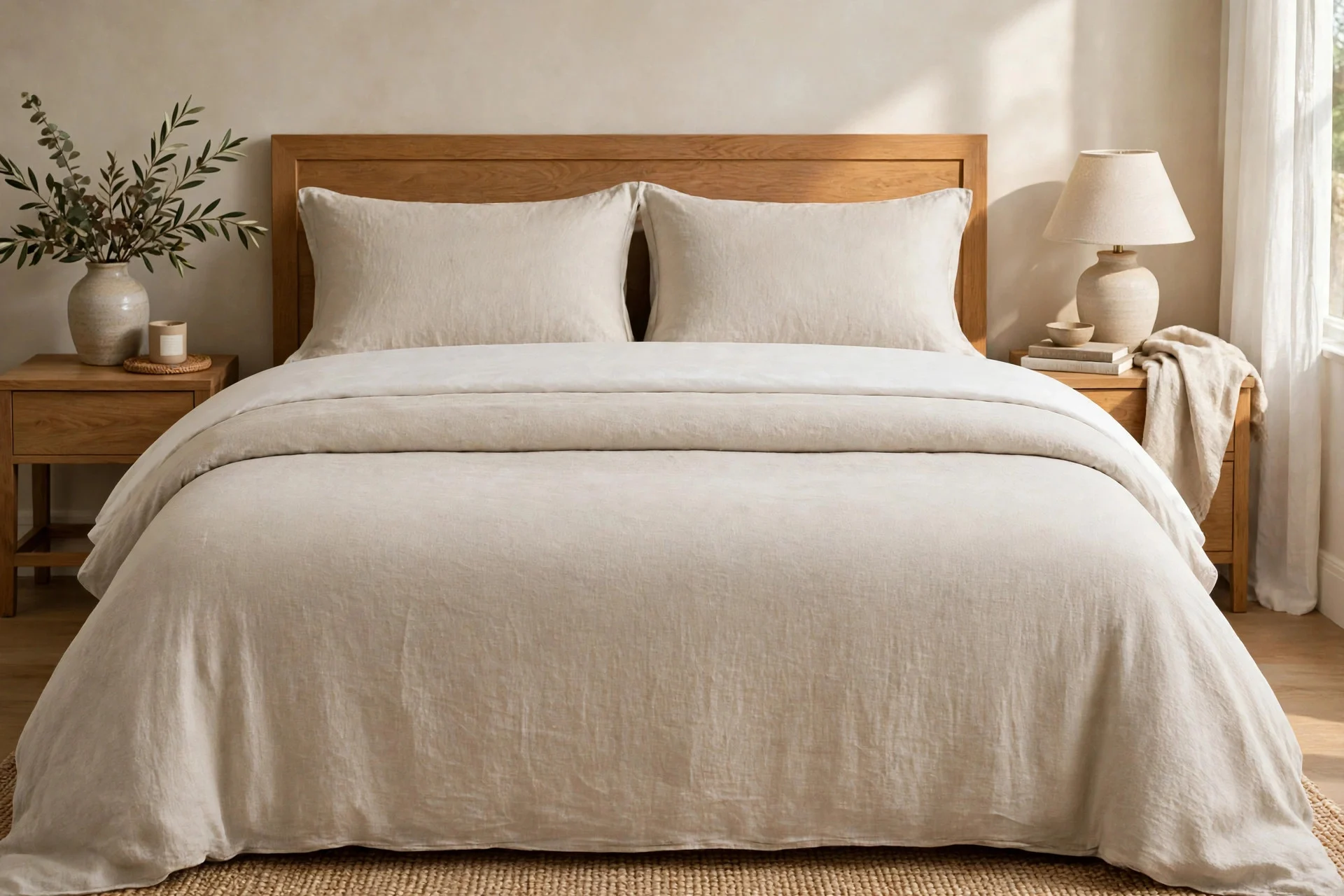
Pillow styling looks weak if the duvet underneath is rumpled. Before you place any pillows, pull the duvet up to the headboard, smooth it flat, and fold the top third back toward the foot of the bed. This fold creates a clean horizontal band that frames the pillows and shows off the sheet or a contrasting throw underneath. On a king bed, the fold should run straight across the full 76-inch width, with no dips in the middle. If your duvet is very thick, fold back a smaller section, about 12 inches, so the bed does not look bulky at the top. A folded duvet also gives you a place to rest a lumbar pillow without it sliding. Avoid tucking the duvet tightly under the mattress at the sides if you want a relaxed hotel look, because tight hospital corners make the bed look stiff. Tip: Shake the duvet out fully once a week, then remake the bed. Trapped air and even fill make the fold sit straighter all week.
8. Use Shams That Match Your Bedding
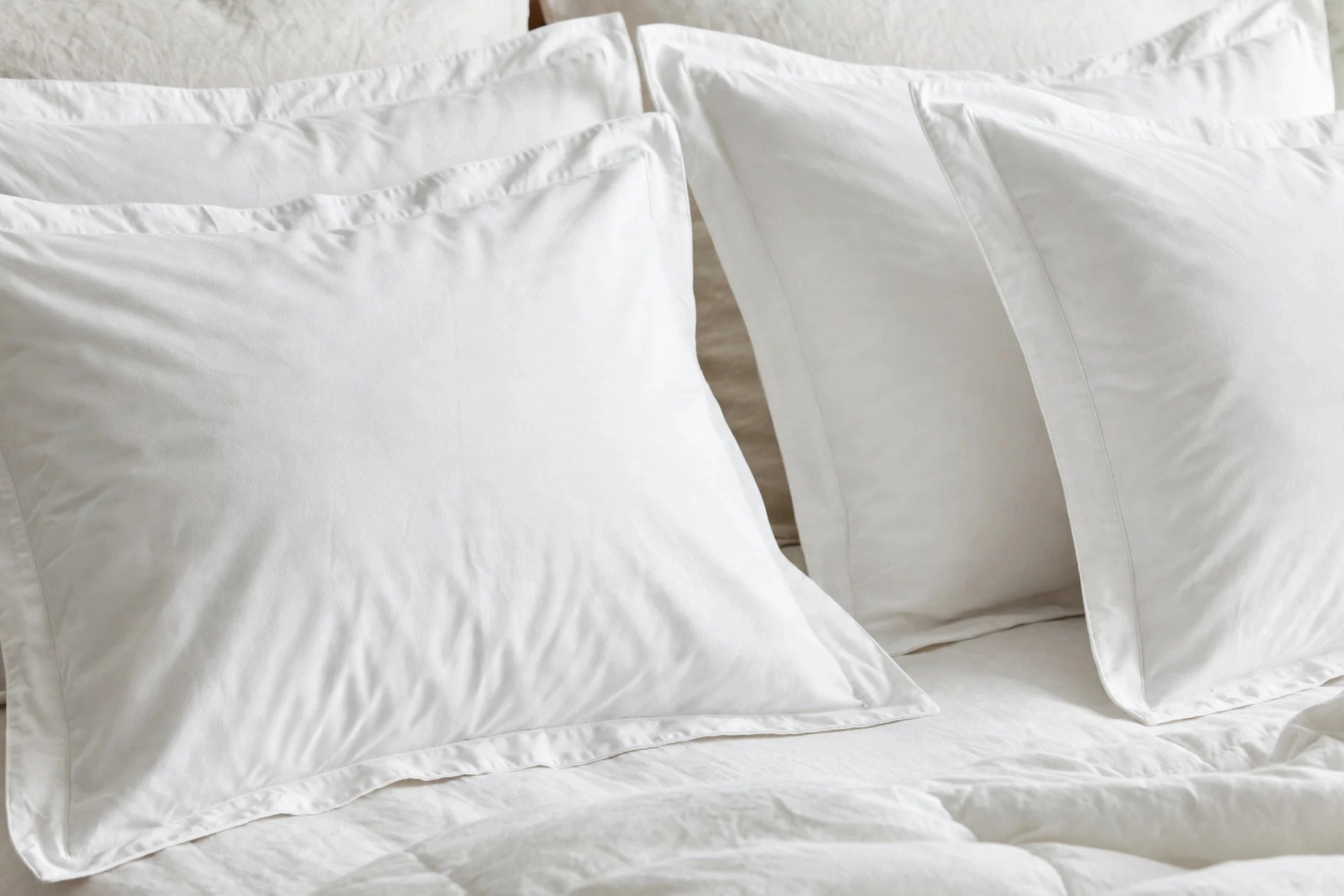
Shams are pillow covers with a flat border, and they do more work in a king bed pillow arrangement than plain pillowcases. The border, usually about two inches wide, adds structure and makes each pillow read as a deliberate design piece. Choose shams in the same fabric family as your duvet cover, such as cotton with cotton or linen with linen, so the textures sit well together. White, cream, light grey, and soft sage are safe choices that suit most bedrooms. A pair of king shams costs roughly $30 to $70. Avoid mixing shiny satin shams with rough linen bedding, because the contrast in texture can look accidental rather than planned. Tip: Iron or steam shams after washing, then store them flat. Crisp borders are what separate a styled bed from a bed that simply has extra pillows on it.
9. Add Two Decorative Cushions, Not Ten
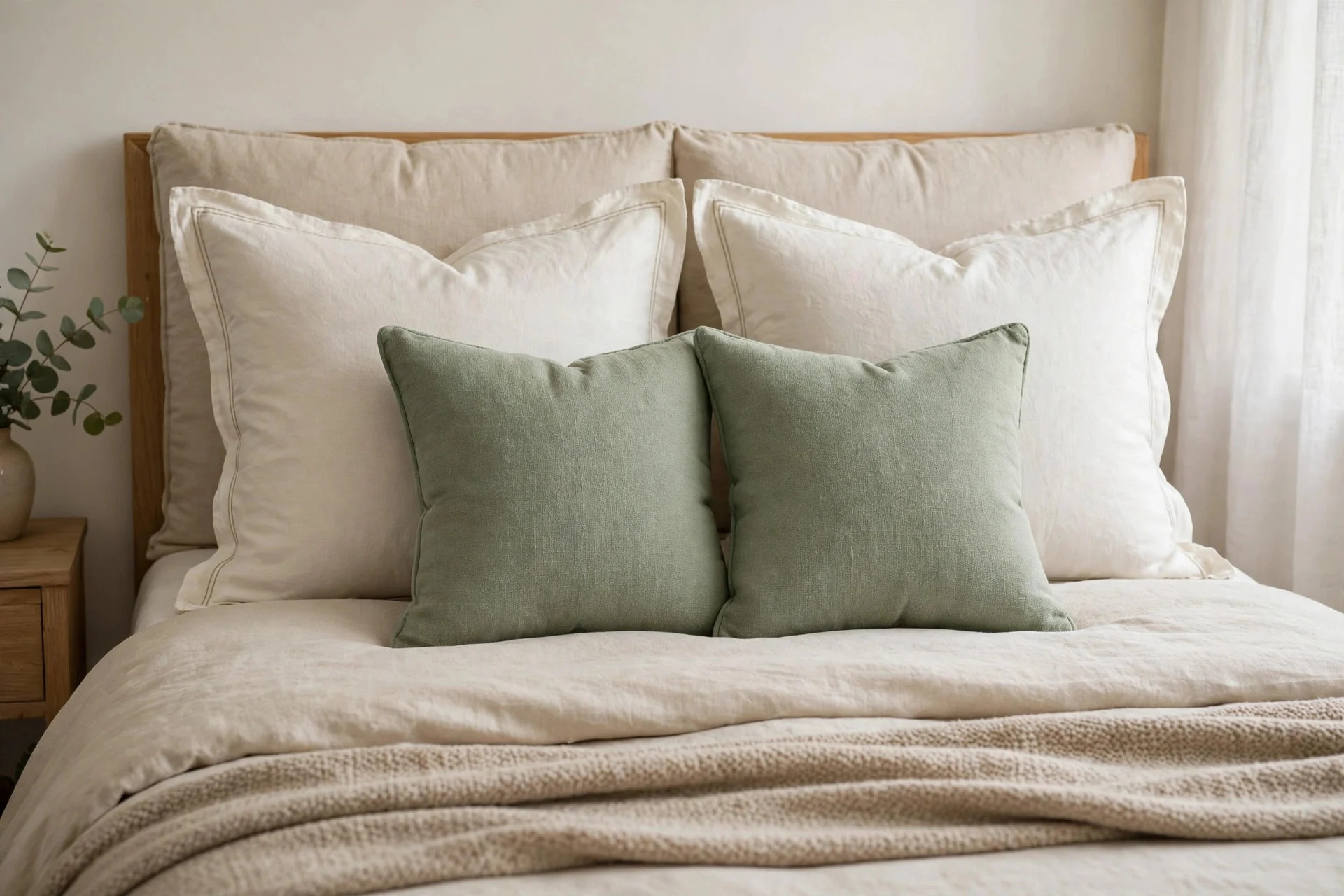
Small decorative cushions finish a bed, but too many turn it into a chore. For a king bed, two square cushions about 20 by 20 inches, or one square pair plus a lumbar pillow, is plenty. Place them centred in front of the Euro or sham row, leaning slightly forward so they do not fall back into the gap behind them. Choose covers you can remove and wash, because front cushions pick up dust, pet hair, and hand marks faster than pillows behind them. Decorative cushion covers cost roughly $10 to $35 each, and inserts cost about $8 to $20 each. Avoid cushions with beads, sequins, or rough trim if you lean against them while reading, because they scratch skin and snag bedding. Tip: Keep front cushions to one accent colour pulled from your room, such as a rug, curtain, or art print. One repeated colour looks planned, while five unrelated colours look like leftovers.
10. Keep One Lumbar Pillow as the Finish
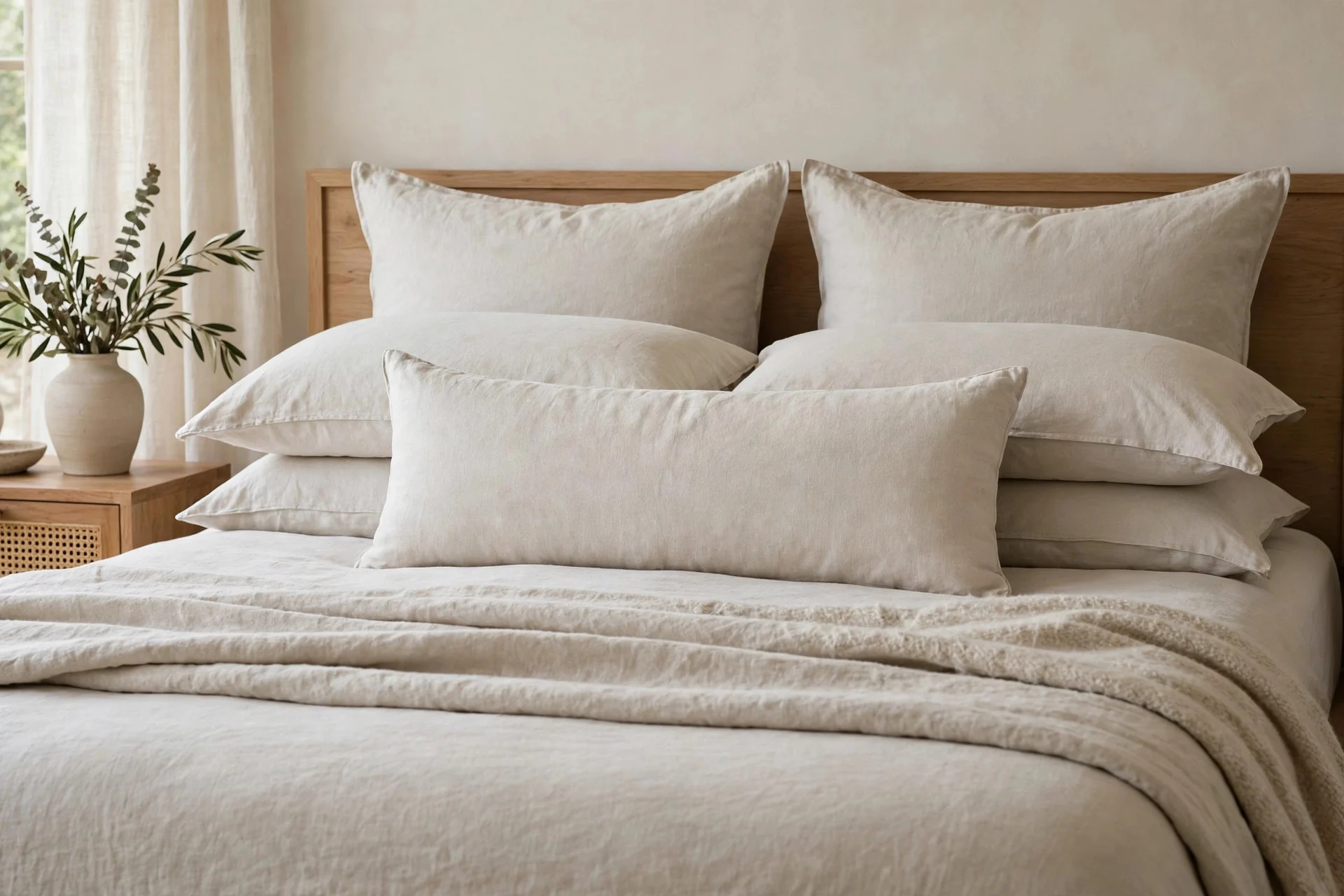
A lumbar pillow, usually about 14 by 36 inches or 12 by 24 inches, sits across the front of the bed and gives the whole arrangement a finished edge. It works well on a king bed because its long, low shape spans the centre without hiding the layers behind it. Place it centred, with equal space on each side, and let it rest against the row behind rather than balancing on its own. Lumbar pillows also double as lower-back support when you sit up to read. Prices range from about $25 to $60 with a cover included. Avoid a lumbar pillow that is wider than about 40 inches on a king bed, because it starts to look like a bolster and crowds the side cushions. Tip: Choose a lumbar cover with a zip you can open fully. Spot-cleaning a fixed cover is slow work, while a removable cover can go straight in the wash.
11. Chop and Fluff for Shape

The dent in the top centre of a cushion, often called a karate chop, is a hotel styling trick that works because it breaks the flat top edge and makes the pillow look soft. To do it, hold the cushion by its top corners, fluff it from the sides, then press the top centre down with the side of your hand. The two top corners should pop up like small ears. This trick suits square decorative cushions and Euro pillows best, and it looks best on plain or lightly textured fabrics. Do not chop sleeping pillows you plan to use that night, because the dent changes how your head sits and can feel lumpy. Avoid chopping very firm foam cushions, because they spring back at once and the dent will not hold. Tip: Fluff every pillow for ten seconds before placing it, pulling the corners out and shaking it once. Most flat-looking beds are not short of pillows; they are short of air inside the pillows.
12. Match Pillow Fill to Sleep Style
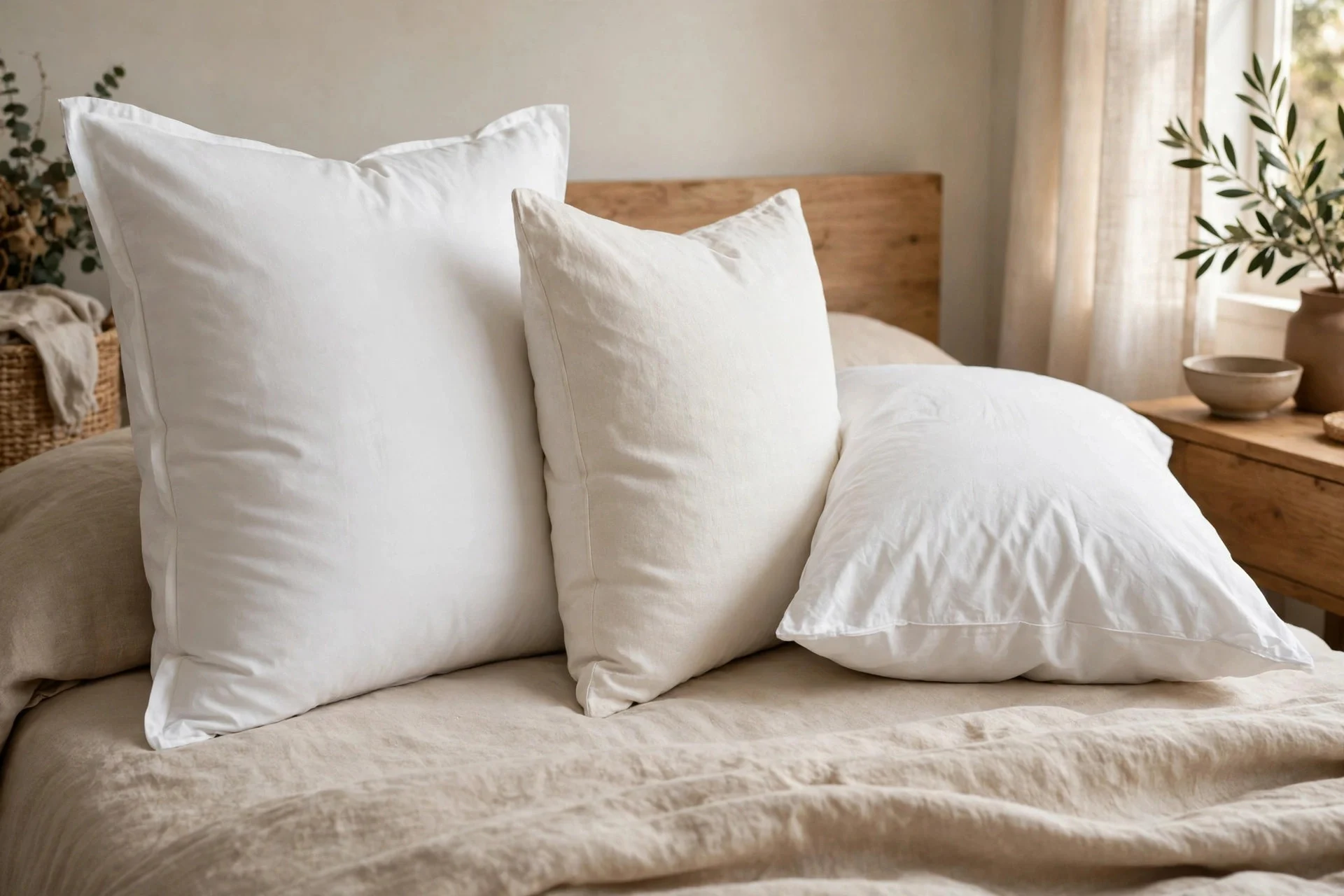
A good-looking bed still has to sleep well, so match fills to how you and your partner sleep. Side sleepers usually need a firmer, higher pillow, about 6 to 7 inches thick, to keep the neck level with the spine. Back sleepers do well with a medium pillow, about 5 inches thick, while stomach sleepers need a soft, low pillow, about 3 to 4 inches thick, or none at all. If two people share a king bed, they do not need matching fills, even if the cases match. Down and down-alternative fills feel soft and mould to the head, while memory foam holds shape longer but sleeps warmer. Pillow prices range from about $20 for basic fills to $80 or more for quality down. Avoid buying the firmest pillow in the shop just because it looks tall on display, because height on a shelf does not equal comfort overnight. Tip: Test a pillow for at least ten minutes lying down, not standing up in a shop. Your neck will tell you far more than a squeeze test.
13. Use a Colour Palette of Two or Three Shades
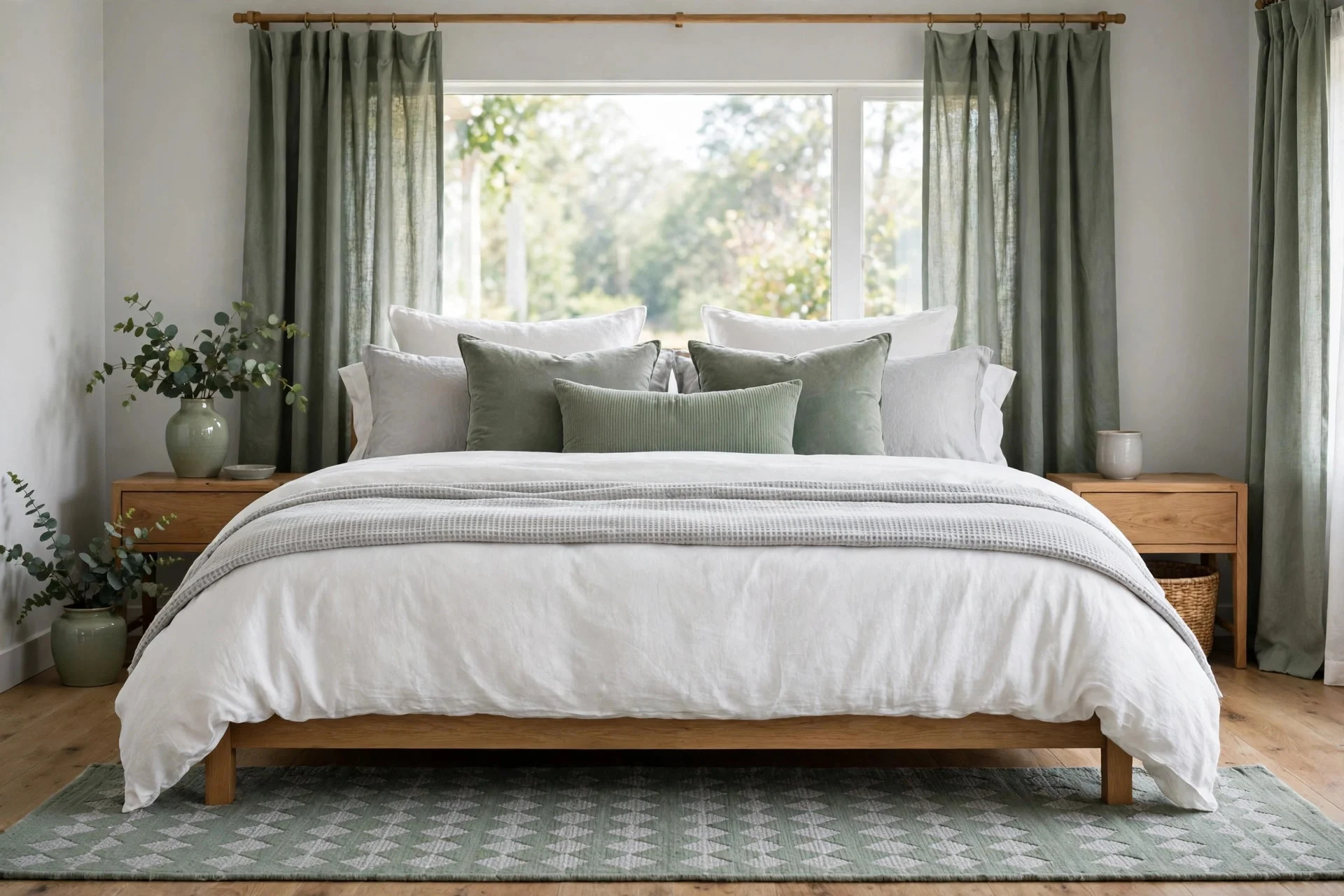
Colour is what makes a king bed pillow arrangement look calm instead of busy. Pick a base shade for most pillows, such as white or cream, then add one or two accent shades for the front cushions only. For example, white sleeping pillows, light grey shams, and two sage cushions at the front give a layered look without noise. Keep the accent shades close in tone rather than jumping from pale pink to dark navy to bright yellow in one bed. If your bedroom already has strong wall colour or patterned curtains, keep pillow colours quieter so the bed does not compete with the room. Avoid buying accent cushions in a colour you have nowhere else in the room, because a single bright cushion can look like a mistake. Tip: Photograph your room, then hold cushion covers against the photo on your phone screen. Colours that clash in a photo will clash in real life too.
14. Make the Bed in the Same Order Each Morning
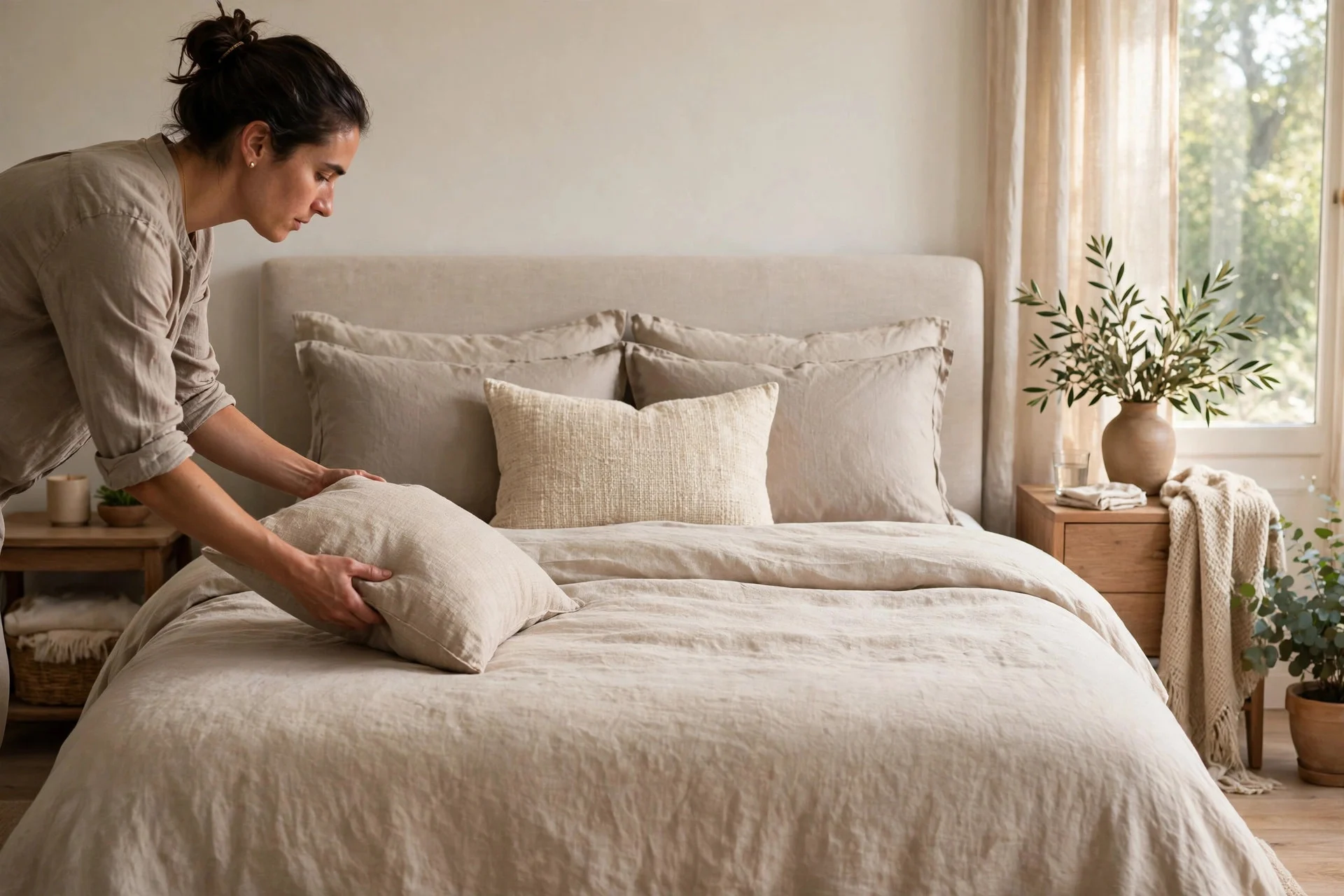
Speed matters, because a styling routine you skip is no routine at all. Set a fixed order and stick to it: pull the duvet up and fold it back, place king pillows upright, add the sham or Euro row, then set the front cushions and lumbar pillow. Done this way, a full king bed takes about two to three minutes. Keep front cushions in the same spot each night when you take them off, such as a bench at the foot of the bed or a basket beside it, so you are not hunting for them in the morning. If you share the bed, agree who handles which side to avoid one person redoing the other’s work. Avoid remaking the whole bed from scratch each day if you are short on time; on busy mornings, just smooth the duvet and set the front row, and leave the back rows as they are. Tip: Make the bed before you open curtains or check your phone. It is far easier to finish when it is the first task, not the tenth.
15. Store Extra Pillows Without Clutter
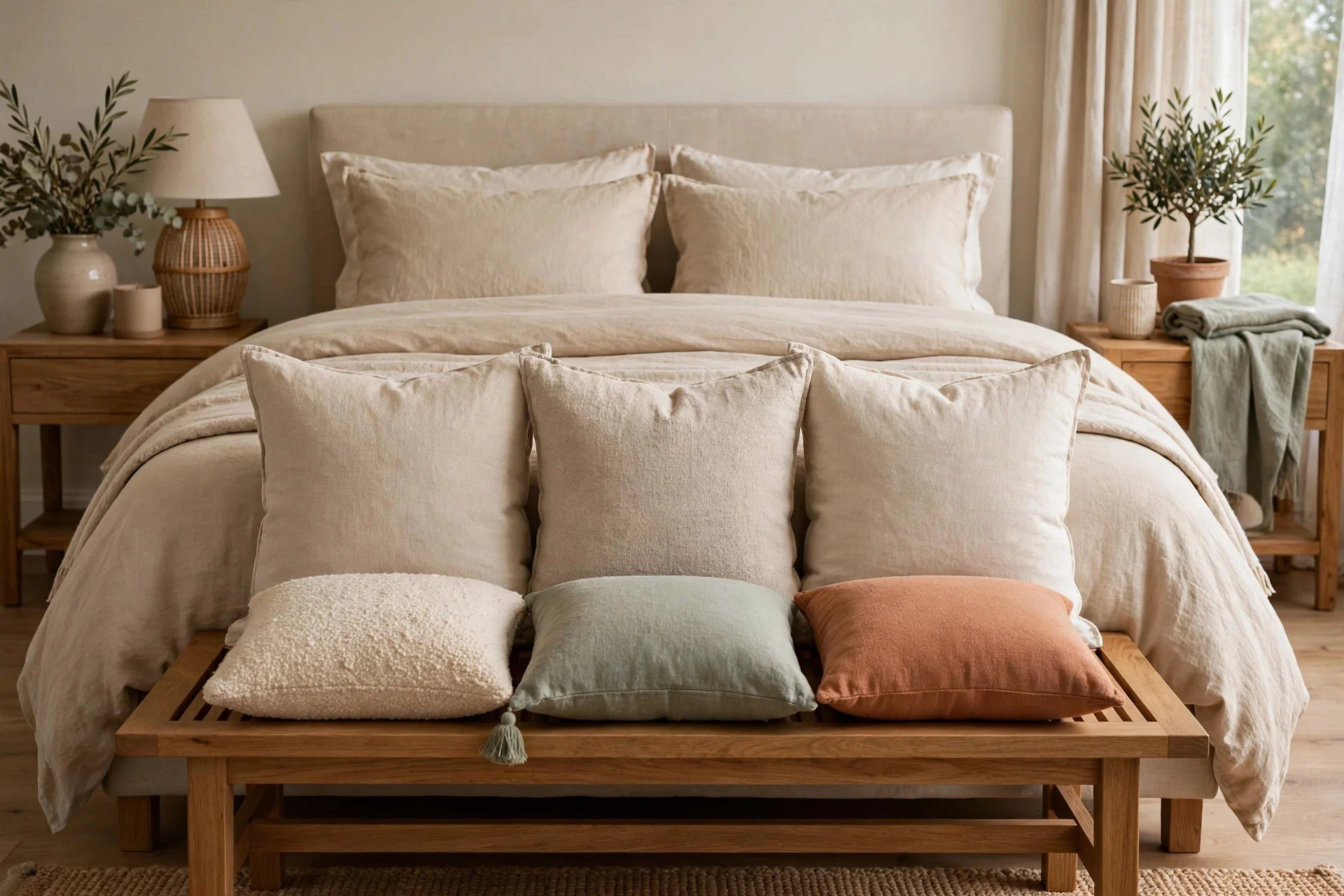
Every styled bed creates a nightly problem: where do the decorative pillows go? Solve it before it becomes a pile on the floor. A bench at the foot of a king bed, about 48 to 60 inches wide, holds two Euro pillows and two cushions neatly. A large basket, about 20 inches across, beside the bed works for smaller homes and costs roughly $25 to $60. A spare chair or a shelf in a nearby cupboard also works, as long as the spot is fixed and easy to reach. Keep sleeping pillows on the bed and move only the decorative layers off at night. Avoid stacking decorative pillows on the floor, even for one night, because they collect dust and pet hair and end up back on the bed unwashed. Tip: If floor space is tight, skip Euro pillows and use only shams and one lumbar cushion. A simpler bed you actually remake beats a grand bed that ends up in a heap.
Frequently Asked Questions
How many pillows should be on a king bed?
A king bed looks balanced with four to six pillows in total: two king sleeping pillows, plus two to four decorative pillows or shams. Fewer than four can leave gaps at the sides, while more than six usually means extra work each night with little visual gain.
What is the best king bed pillow arrangement for everyday use?
The easiest daily king bed pillow arrangement is two king pillows upright at the back, two shams or Euro pillows in front of them, and one lumbar pillow at the front. It takes about two minutes to remake, keeps sleeping pillows in place, and still looks styled.
Should decorative pillows match the duvet cover exactly?
No, they do not need to match exactly. Keep the back rows close to the duvet colour, then use front cushions for contrast. One or two accent shades that appear elsewhere in the room look more planned than an exact match across every pillow.
Conclusion
A hotel-style bed is less about buying more pillows and more about giving each pillow a clear job. Start with two king pillows across the back, build forward with shams or Euro squares, and finish with one or two cushions you actually like looking at. Keep colours to two or three shades, match fills to how you sleep, and set a morning order you can repeat in two minutes. That simple king bed pillow arrangement will hold up on busy weekdays as well as slow weekends, and it leaves your bed comfortable at night instead of buried under cushions you have to move. Try one layer at a time, check the bed from the foot end, and adjust only what looks off. Small, steady changes beat a full reset, and your bedroom will feel calmer for it.