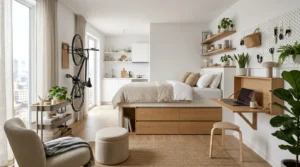
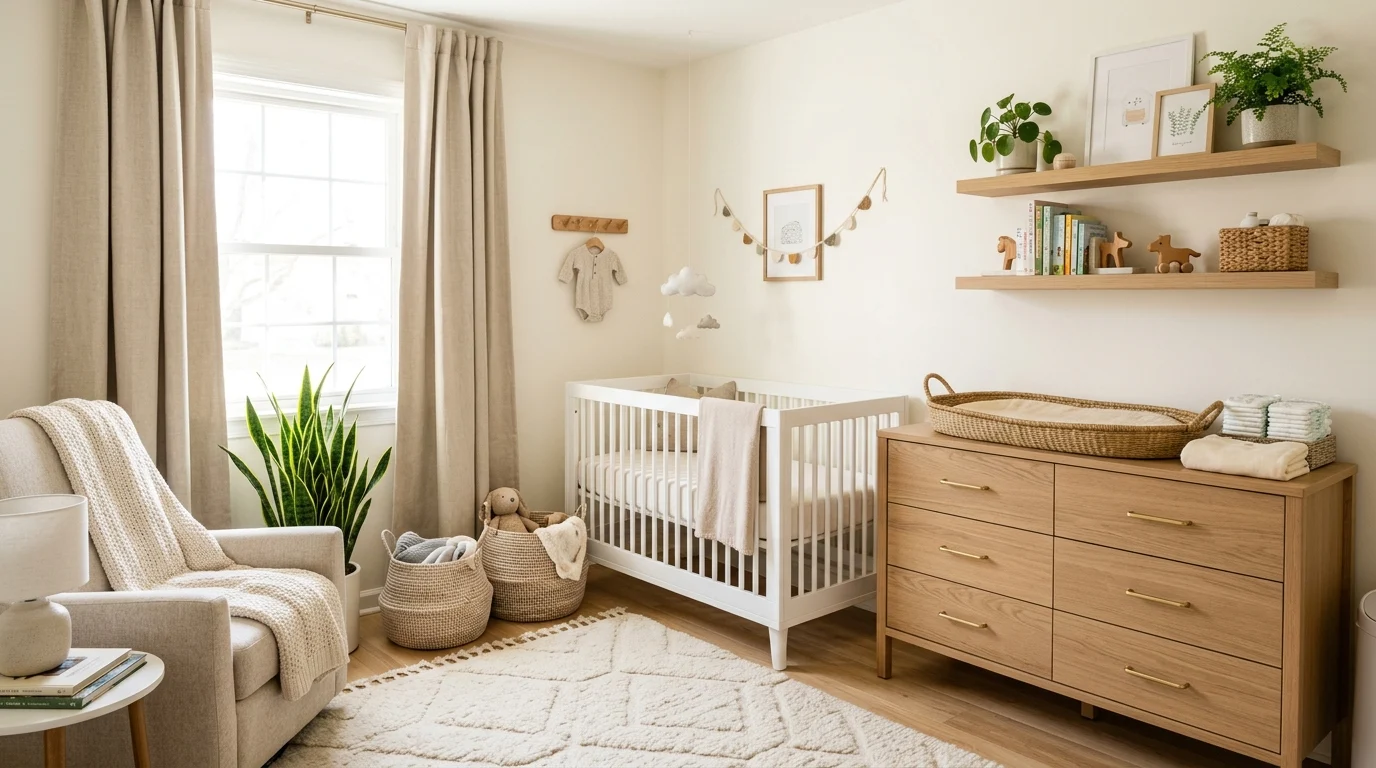
Our second bedroom, the one that became the nursery, is genuinely tiny, barely large enough for a crib and a narrow dresser once you account for the door swing and closet access. I spent weeks assuming we’d have to compromise significantly on function, skipping a proper changing area or a comfortable place to sit during nighttime feedings, simply because the room seemed too small to accommodate everything a nursery is supposed to have. It wasn’t until I stopped trying to fit a standard, full-sized nursery layout into the space and instead redesigned around the room’s actual, tight dimensions that everything we genuinely needed ended up fitting comfortably after all.
A small nursery can absolutely function beautifully, even a genuinely compact one, once you approach the space with the same intentionality you’d bring to any small room design. Here’s what actually made the difference in ours.
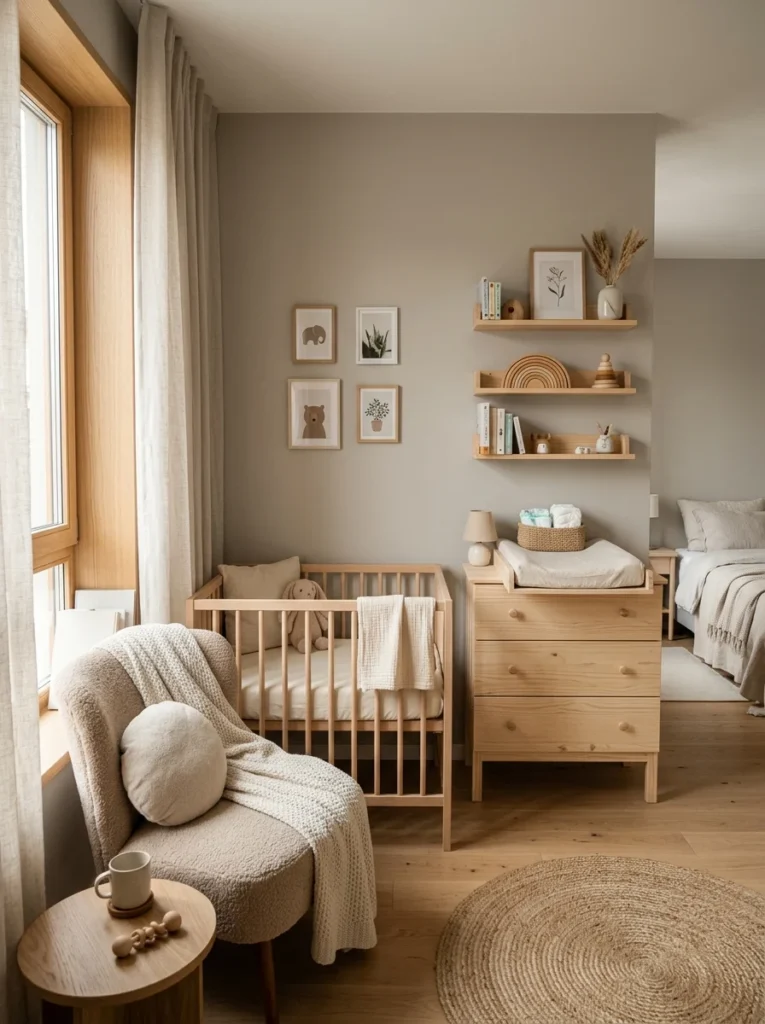
Choose a crib with a smaller footprint or a mini crib option
A mini crib, generally narrower and shorter than a standard full-sized crib, takes up meaningfully less floor space while still meeting current safety standards, making it a genuinely practical choice for a compact room where every square foot of floor space matters. Some mini cribs also convert to a toddler bed later, extending their useful life well beyond the newborn stage despite their smaller initial footprint.
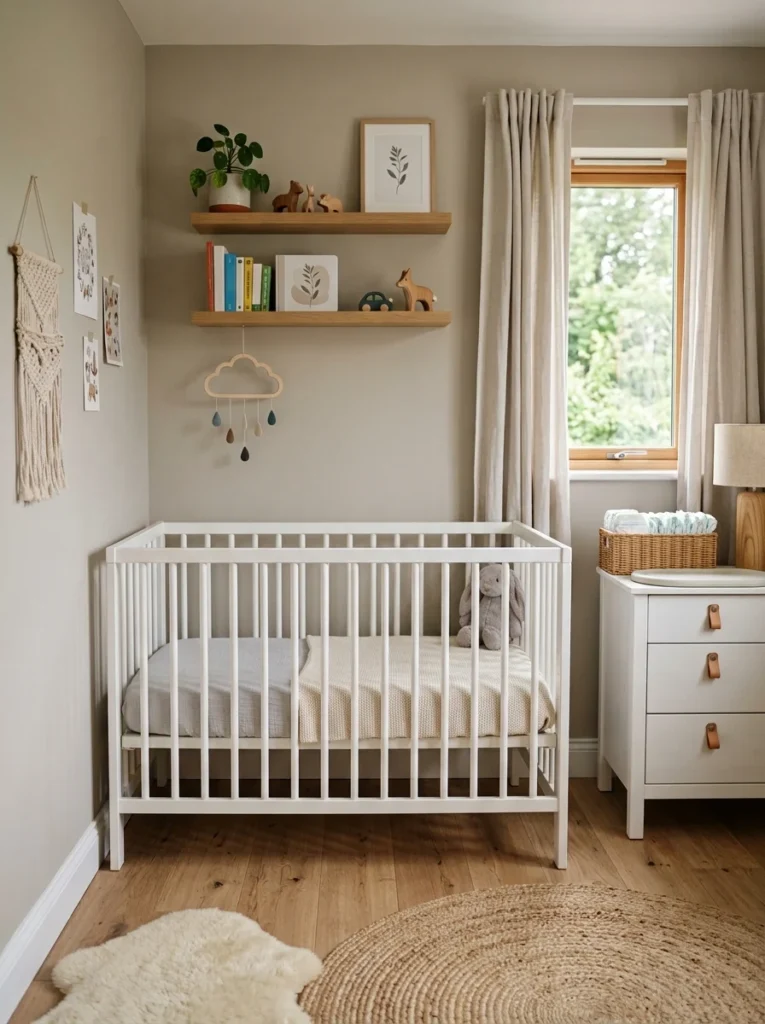
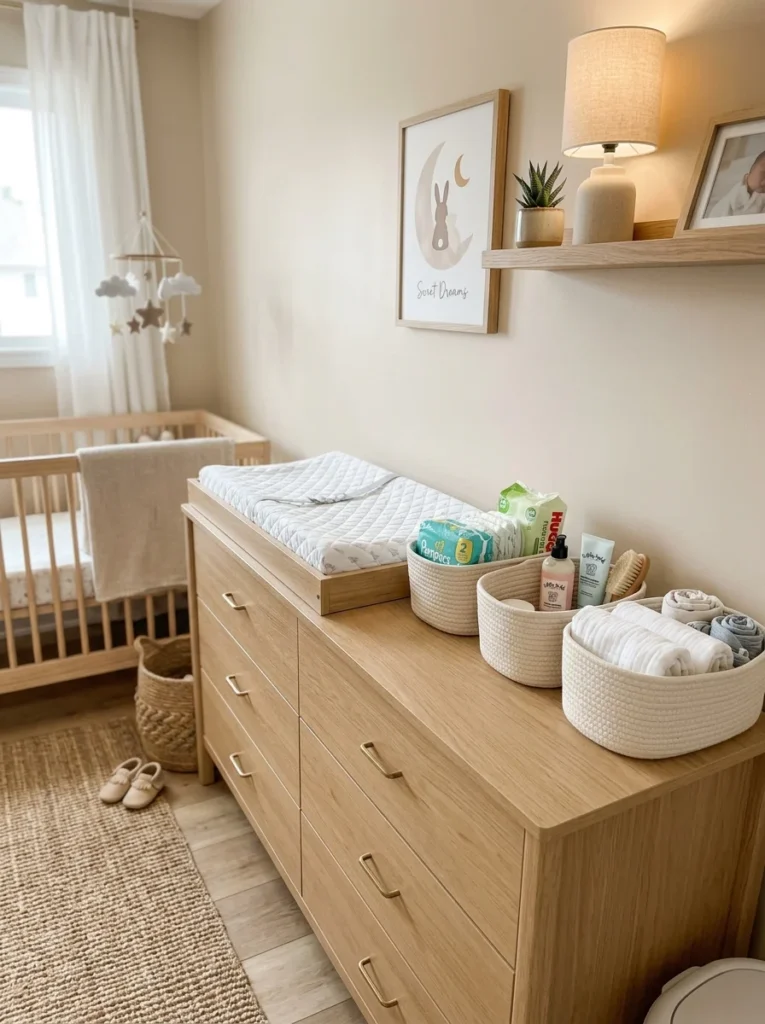
Combine the changing area with the dresser instead of using a separate table
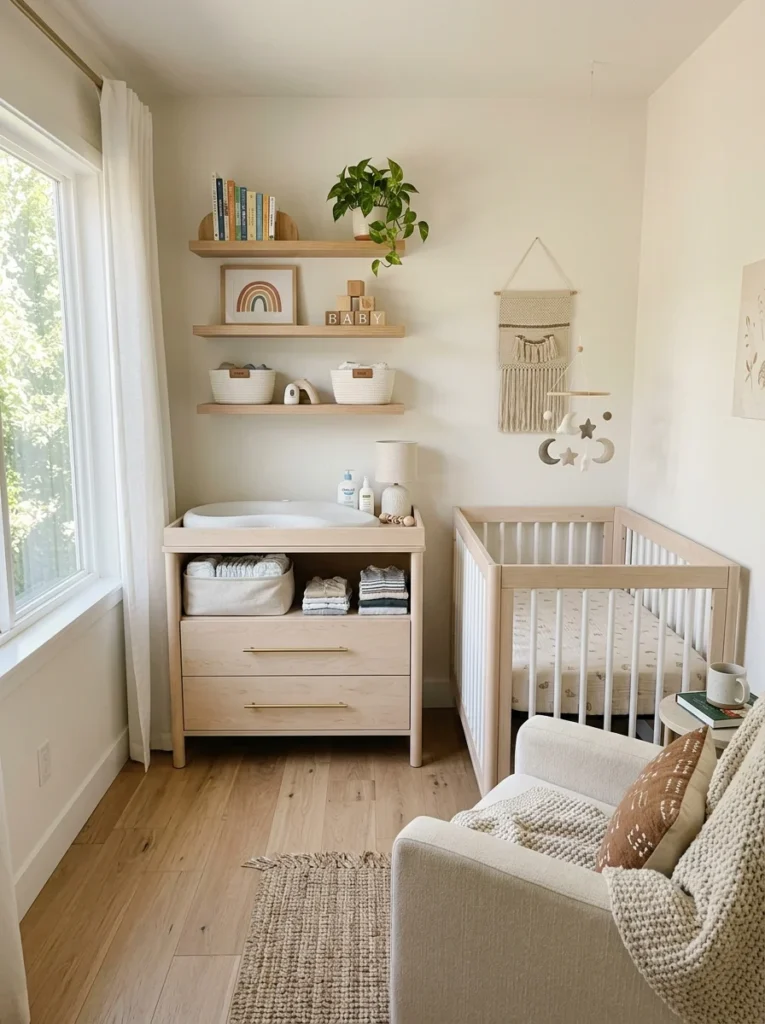
A dedicated changing table takes up floor space that a small nursery often can’t spare, while a changing pad placed securely on top of a dresser accomplishes the same function using furniture you likely need in the room anyway. This combination approach is one of the most space-efficient decisions available for a compact nursery, eliminating an entire separate piece of furniture without sacrificing the changing area’s actual function.
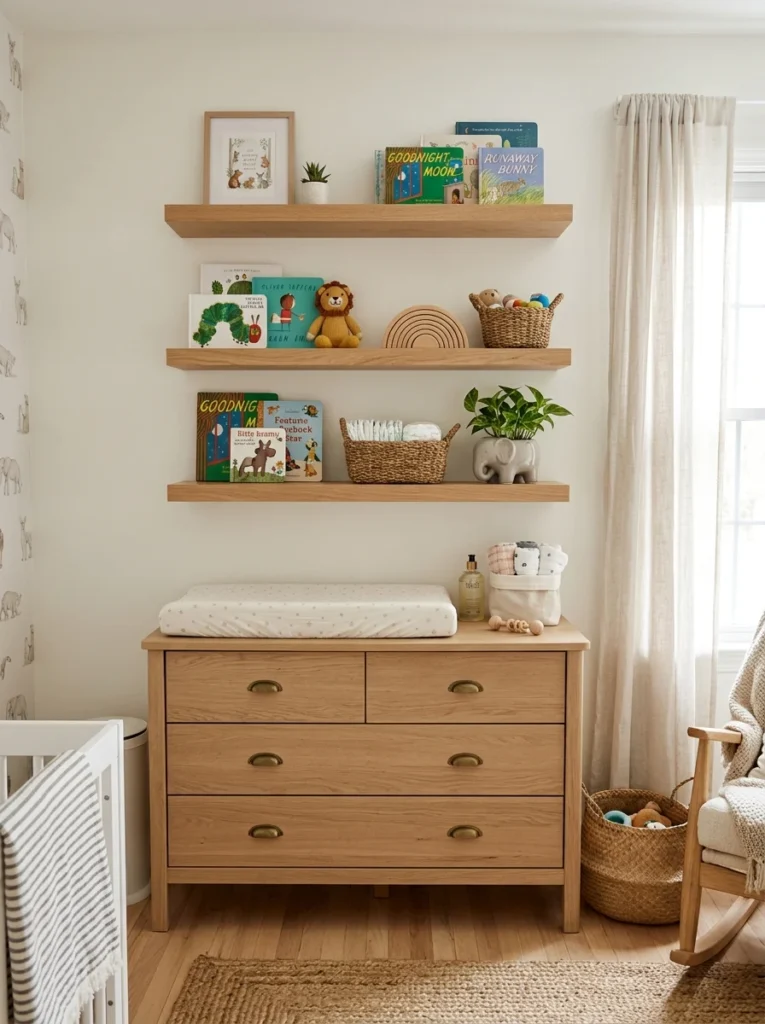
Use wall-mounted shelving instead of freestanding storage
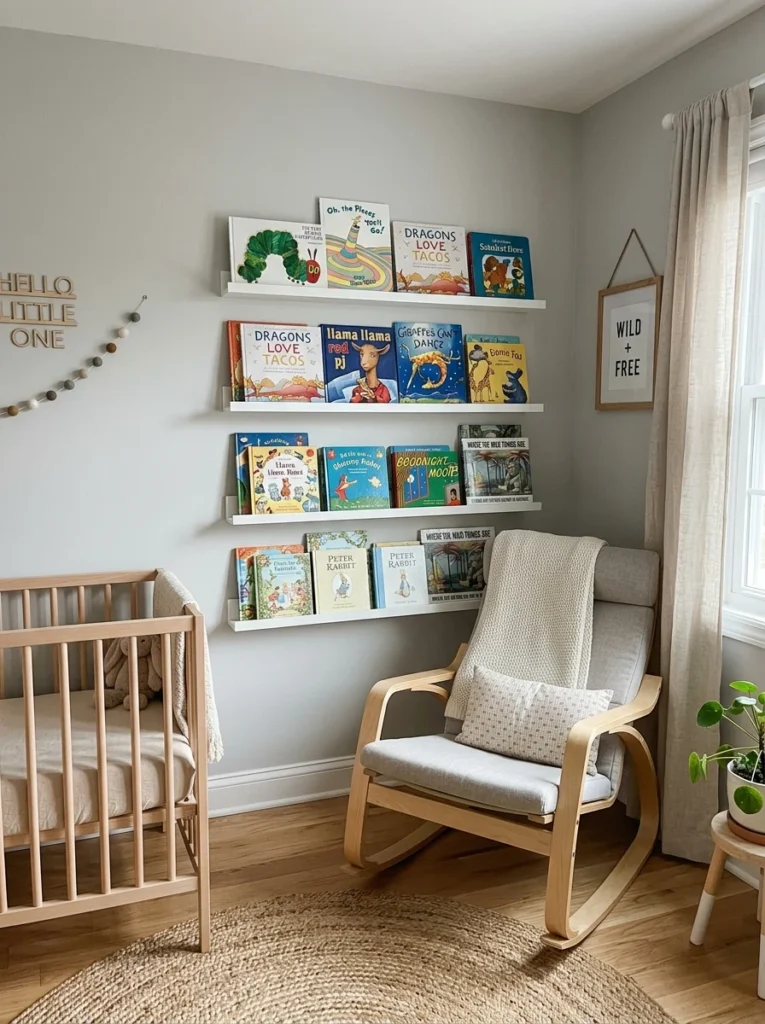
Floor space is the scarcest resource in a small nursery, so shifting storage to the walls, floating shelves for books and small items, wall-mounted hooks for burp cloths or small bags, frees up the floor for the furniture that genuinely needs to sit there, the crib, the dresser, without competing for space with additional standalone storage pieces.
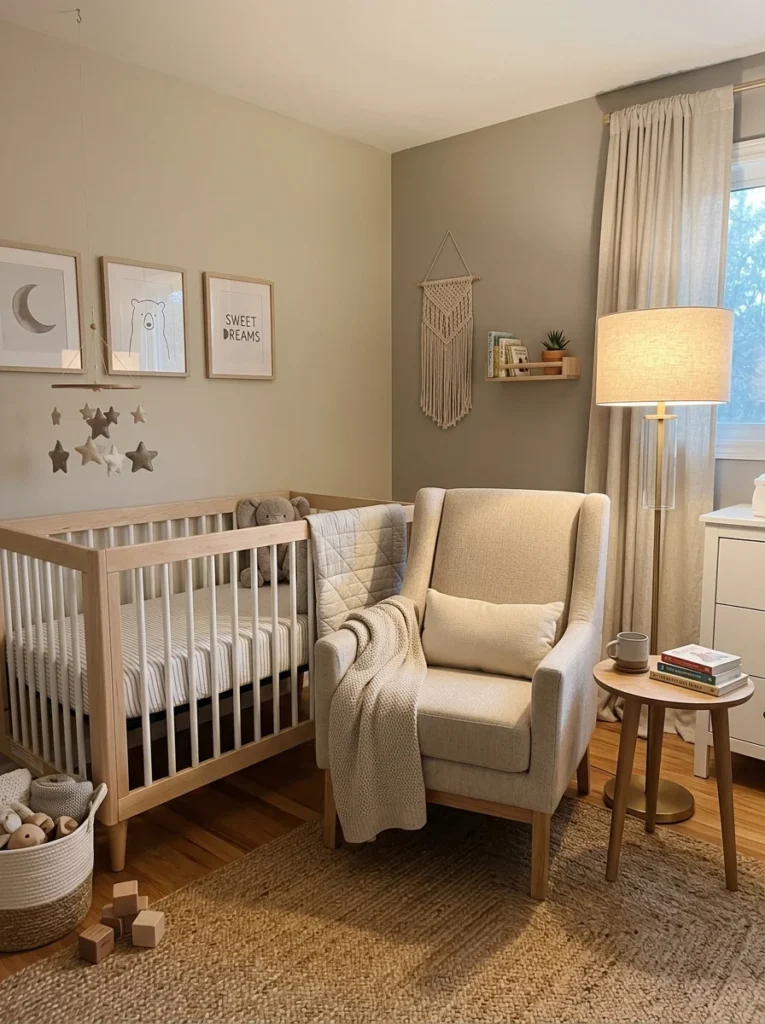
Choose a slim glider or skip the glider in favor of a smaller chair
A full-sized glider or rocking chair can be one of the bulkier pieces of furniture in a nursery, and in a genuinely tight room, a slimmer glider designed specifically for smaller spaces, or even a simple, comfortable armchair without the wider footprint many gliders have, frees up meaningful floor space while still providing a comfortable spot for nighttime feedings. If floor space is truly at a premium, some parents choose to do feedings in a nearby room and skip a dedicated chair in the nursery itself entirely, reserving the room purely for sleep and changing.
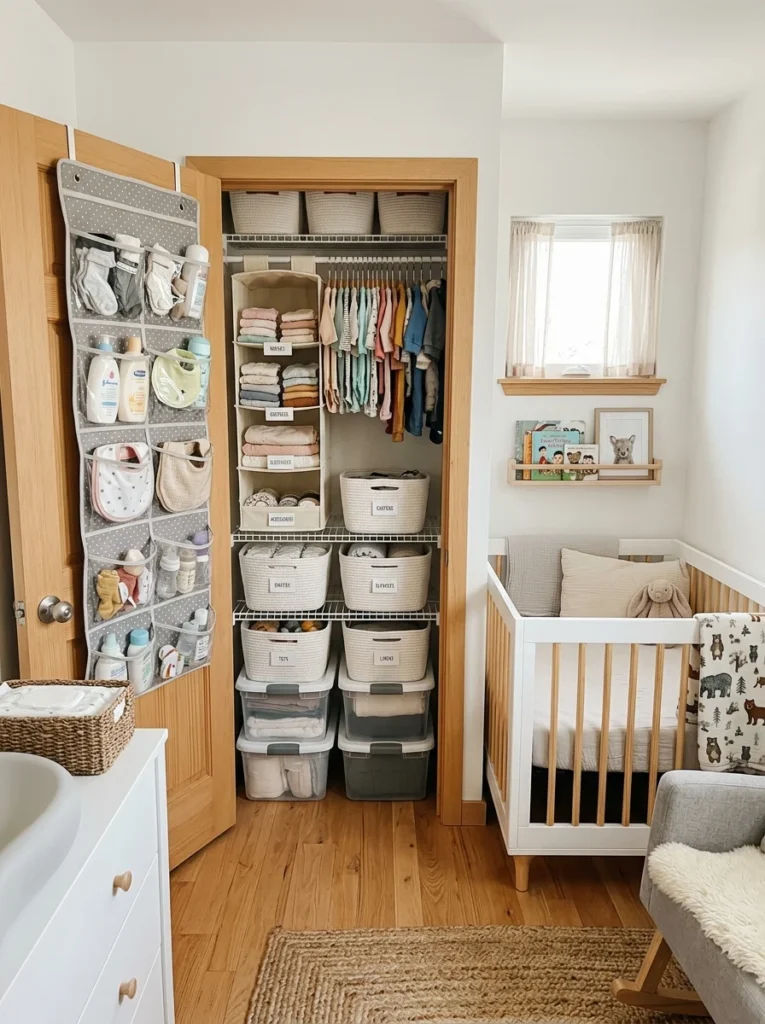
Use the back of the door and closet space efficiently
An over-the-door organizer adds storage for small items without consuming any floor space at all, while a closet, if the nursery has one, can be reorganized with closet rod extenders, hanging shelves, or stackable bins to hold considerably more than its default configuration typically allows. Maximizing this existing storage before assuming you need additional furniture is one of the most cost-effective and space-efficient steps available.
Choose light, reflective colors to make the room feel larger
Soft, light colors on the walls and in the room’s overall palette help a small nursery feel more open and airy than the same room in darker tones would, similar to the principle applied in any small room design. This doesn’t mean the room needs to be stark white, a soft neutral or a pale, muted color still achieves this effect while allowing for more personality than an entirely white room might offer.
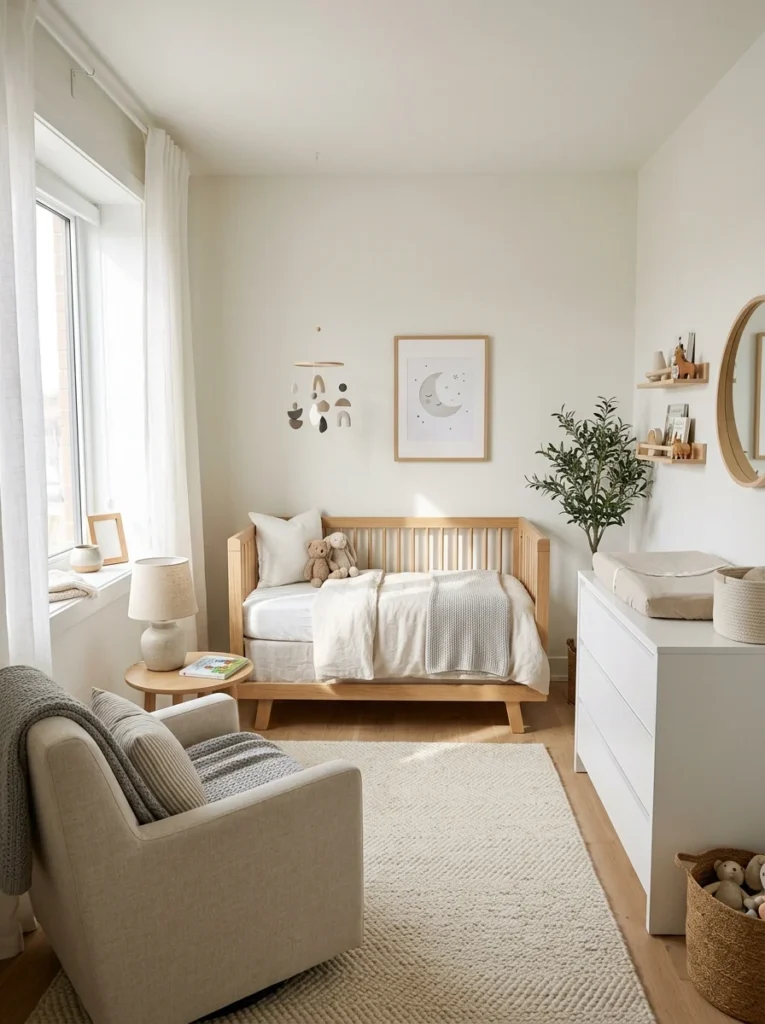
Use a mirror to add a sense of depth to the room
A simple, securely mounted mirror, positioned safely out of a mobile baby’s reach as they grow, adds visual depth and can help bounce natural light around a small room, contributing to the same sense of openness a lighter color palette provides. This is a low-cost addition that does meaningful visual work in a genuinely compact space.
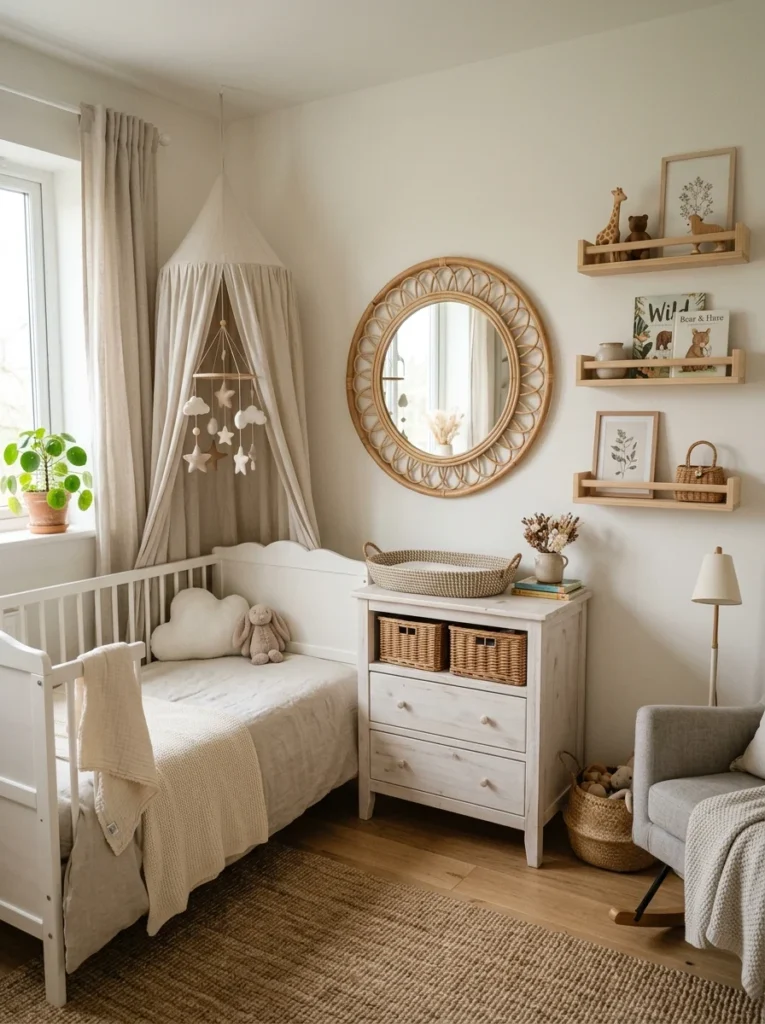
Consider a corner crib placement to free up wall space
Positioning the crib in a corner of the room, rather than centered along one full wall, often frees up more usable wall space elsewhere in a small nursery for a dresser, shelving, or a chair, since a corner placement uses two partial walls rather than commanding one entire wall for itself. This layout adjustment can make a meaningful difference in how much of the room’s limited wall space remains available for other essential furniture.
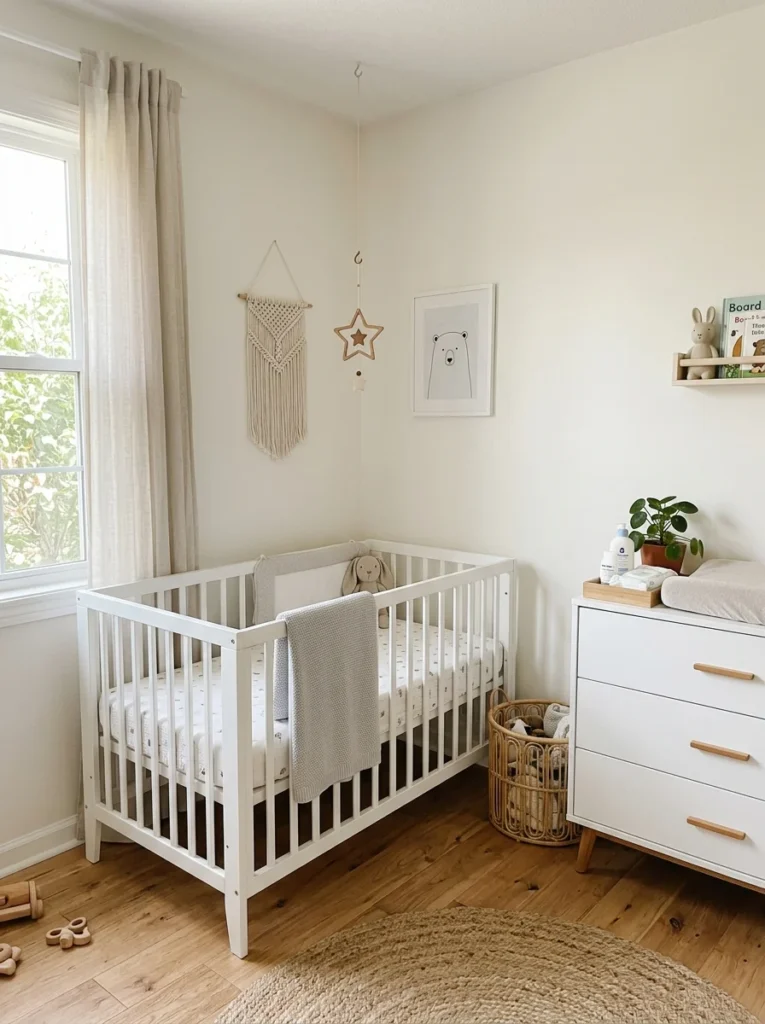
Skip a dedicated play area within the nursery itself
In a genuinely small nursery, reserving the room primarily for sleep, storage, and changing, rather than also trying to fit a play or tummy-time area within the same space, keeps the room from feeling overcrowded. A separate play area elsewhere in the home, even a small corner of a living room, can serve this function instead, freeing the nursery to do its core job well without being stretched to accommodate every possible activity.
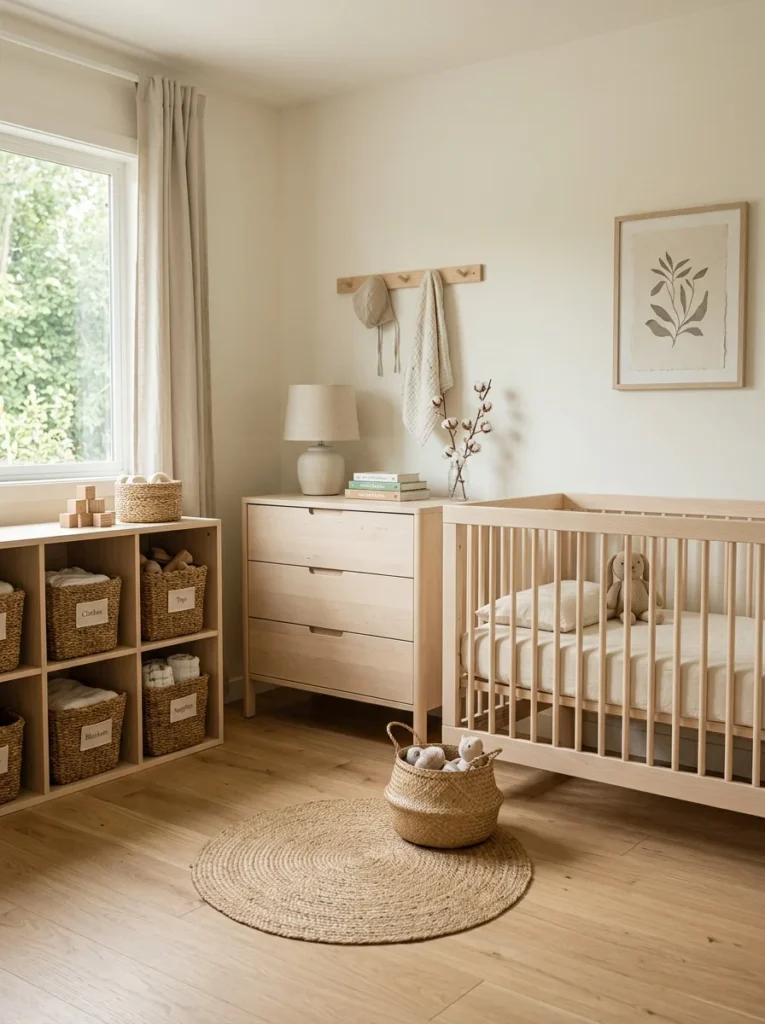
Use vertical space above the crib and dresser thoughtfully
Wall space above the crib and dresser, provided anything mounted there is securely installed, meets safety guidelines regarding placement well out of the crib itself, and follows all standard nursery safety recommendations, can hold simple, securely mounted shelving or wall art, adding storage or personality using space that would otherwise go completely unused in a room where every surface counts.
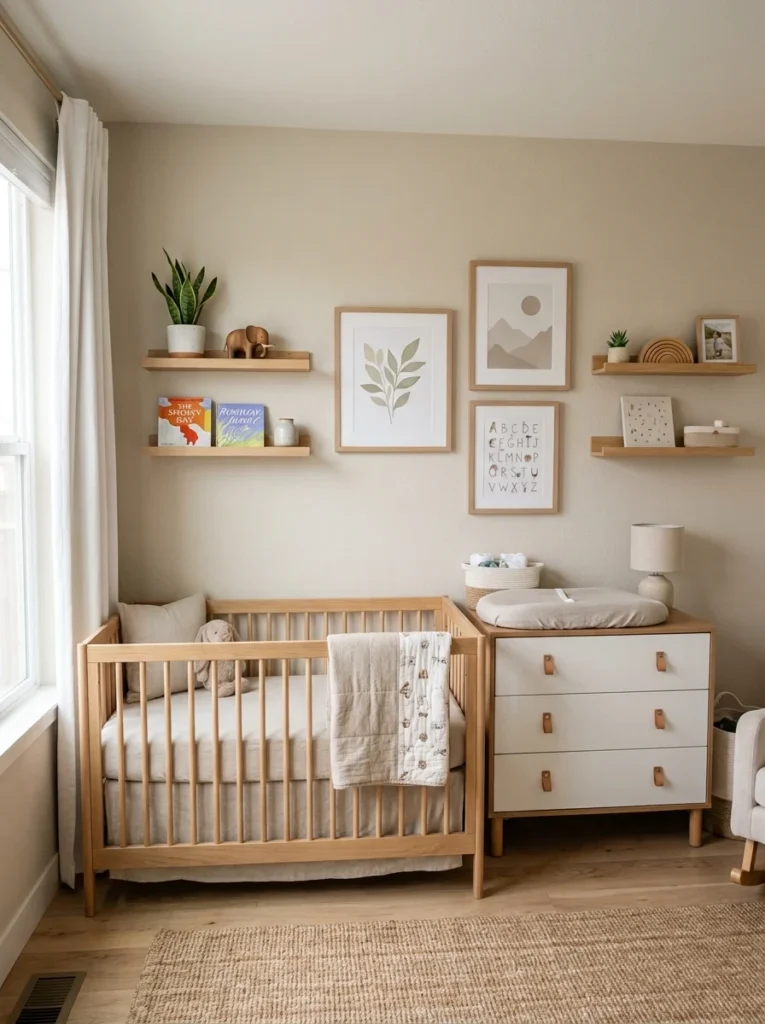
Choose multi-functional furniture wherever possible
A dresser that converts into a changing table with an included topper, storage ottomans that double as extra seating, or a crib that converts into a toddler bed all extend the functional life and value of furniture chosen specifically for its ability to serve more than one purpose, which matters more in a small nursery where there’s less room to accommodate single-purpose furniture pieces.
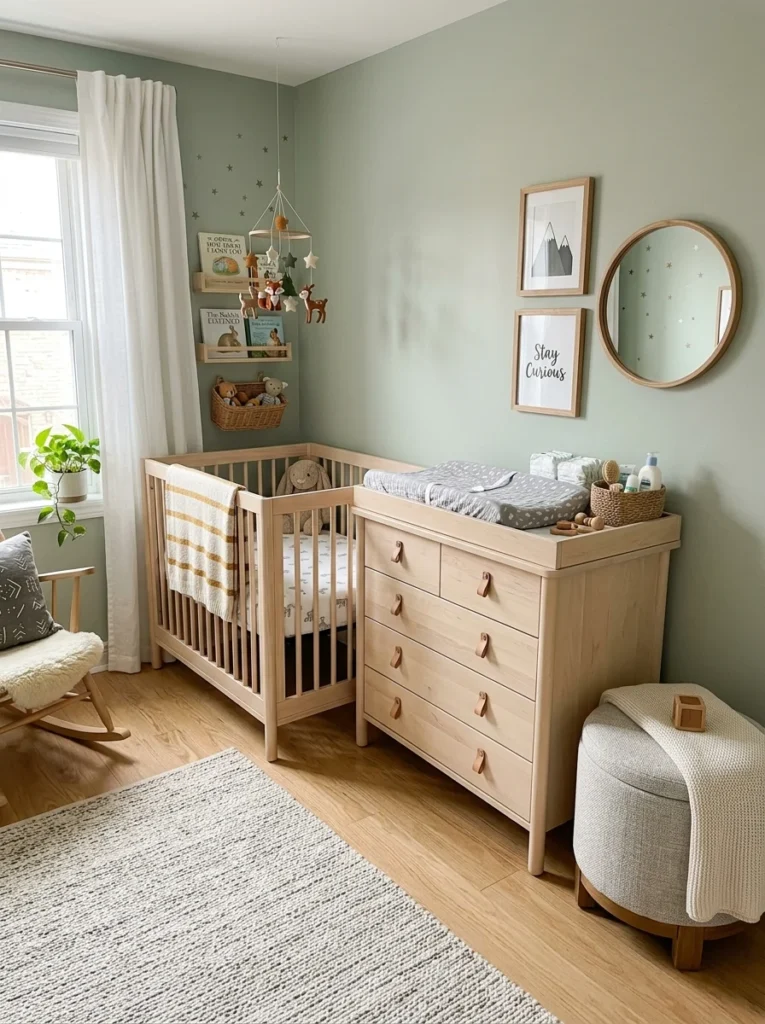
Use layered, adjustable lighting suited to a small room’s multiple functions
A small nursery still needs to support several different lighting needs, bright enough for daytime changing and play, dim and soft for nighttime feedings, and a small nightlight for overnight checks, all within a room that may not have space for multiple separate lamps. A dimmable overhead fixture or a single, well-chosen lamp with a dimmer switch can cover most of these needs in one compact solution, rather than requiring several separate lighting fixtures competing for the room’s limited surface space.
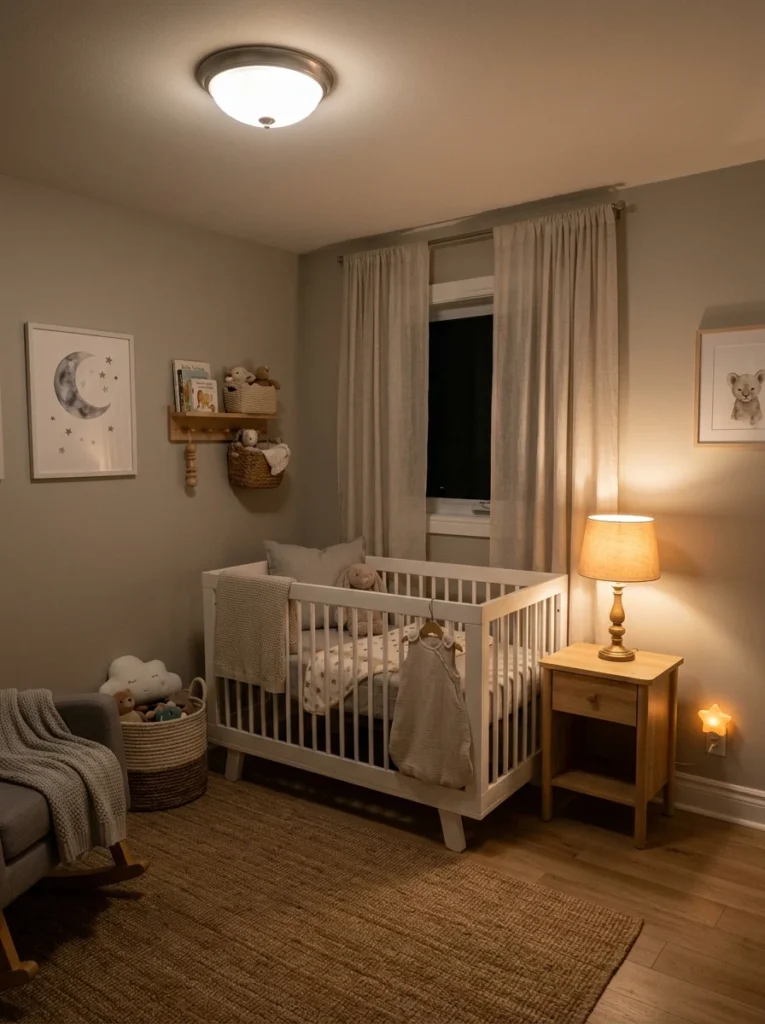
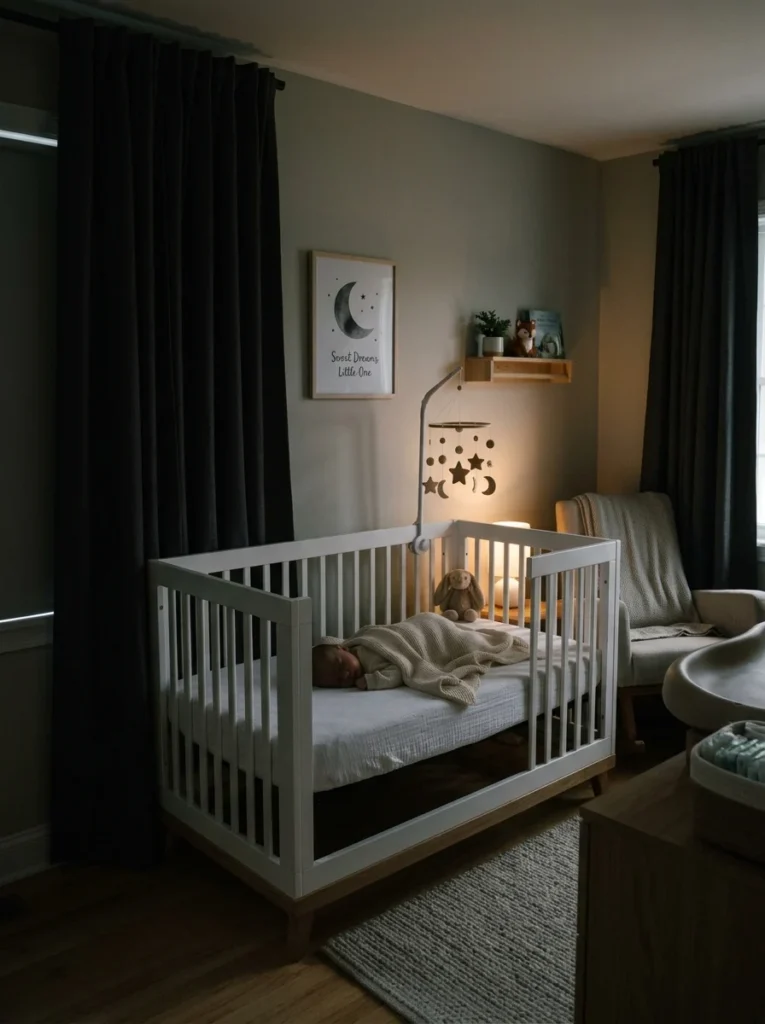
Install blackout curtains to support daytime naps in a bright room
A small nursery that also receives significant natural light can make daytime napping more difficult without adequate light control, and blackout curtains or blinds address this without requiring any additional floor space, since they mount directly to the existing window. This is a particularly valuable addition in a compact room where a baby’s crib may be positioned closer to the window than it would be in a larger room with more layout flexibility.
Consider a wall-mounted or slim bookshelf instead of a bulky one
If storing children’s books is a priority, a slim wall-mounted ledge shelf, displaying books face-out, takes up minimal depth compared to a traditional freestanding bookshelf while still providing meaningful storage and even adding a decorative element to the room. This approach works particularly well in a small nursery where a deep, bulky bookshelf would consume floor space better reserved for the crib and dresser.
Is a mini crib a good choice for a small nursery?
Yes, a mini crib takes up meaningfully less floor space than a standard full-sized crib while still meeting current safety standards, and some models convert to a toddler bed later, extending their usefulness beyond the compact footprint’s initial appeal.
Do I need a separate changing table in a small nursery?
No, a changing pad placed securely on top of a dresser accomplishes the same function without requiring a separate piece of furniture, making it one of the most space-efficient choices for a compact nursery.
Should I skip a glider if my nursery is very small?
This depends on your specific space and preferences. A slimmer glider or simple armchair can work well in a tight room, though some parents choose to do feedings elsewhere in the home and reserve a very small nursery purely for sleep and changing.
How can I add storage to a small nursery without using floor space?
Wall-mounted shelving, over-the-door organizers, and reorganized closet space using rod extenders or hanging shelves all add meaningful storage without consuming any floor space, which matters most in a genuinely compact room.
What lighting works best in a small nursery?
A dimmable overhead fixture or a single lamp with a dimmer switch can cover most of a nursery’s varied lighting needs, bright for daytime, soft for nighttime feedings, in one compact solution rather than requiring multiple separate fixtures in a room with limited surface space.
Are blackout curtains necessary in a small nursery?
They’re not strictly necessary, but they meaningfully support daytime napping in a bright room without requiring any additional floor space, since they mount directly to the existing window, making them a particularly efficient addition for a compact space.
A compact nursery can absolutely accommodate everything a family genuinely needs, a safe sleep space, a changing area, and adequate storage, once the layout is designed specifically around the room’s actual dimensions rather than a standard-sized nursery template. Choosing space-efficient furniture, maximizing vertical and wall storage, and being willing to skip non-essential elements like a dedicated play area all contribute to a small nursery that functions just as well as a larger one.
Our tiny second bedroom ended up holding a mini crib, a dresser doing double duty as a changing station, and a slim chair tucked into the corner, everything we actually needed, arranged specifically for the room’s real dimensions rather than forced to fit a bigger room’s typical layout. If your own nursery space feels too small to work, start by mapping the room’s actual measurements against only the essentials, and build up from there rather than trying to fit a standard-sized plan into a room that was never going to accommodate it in the first place.