
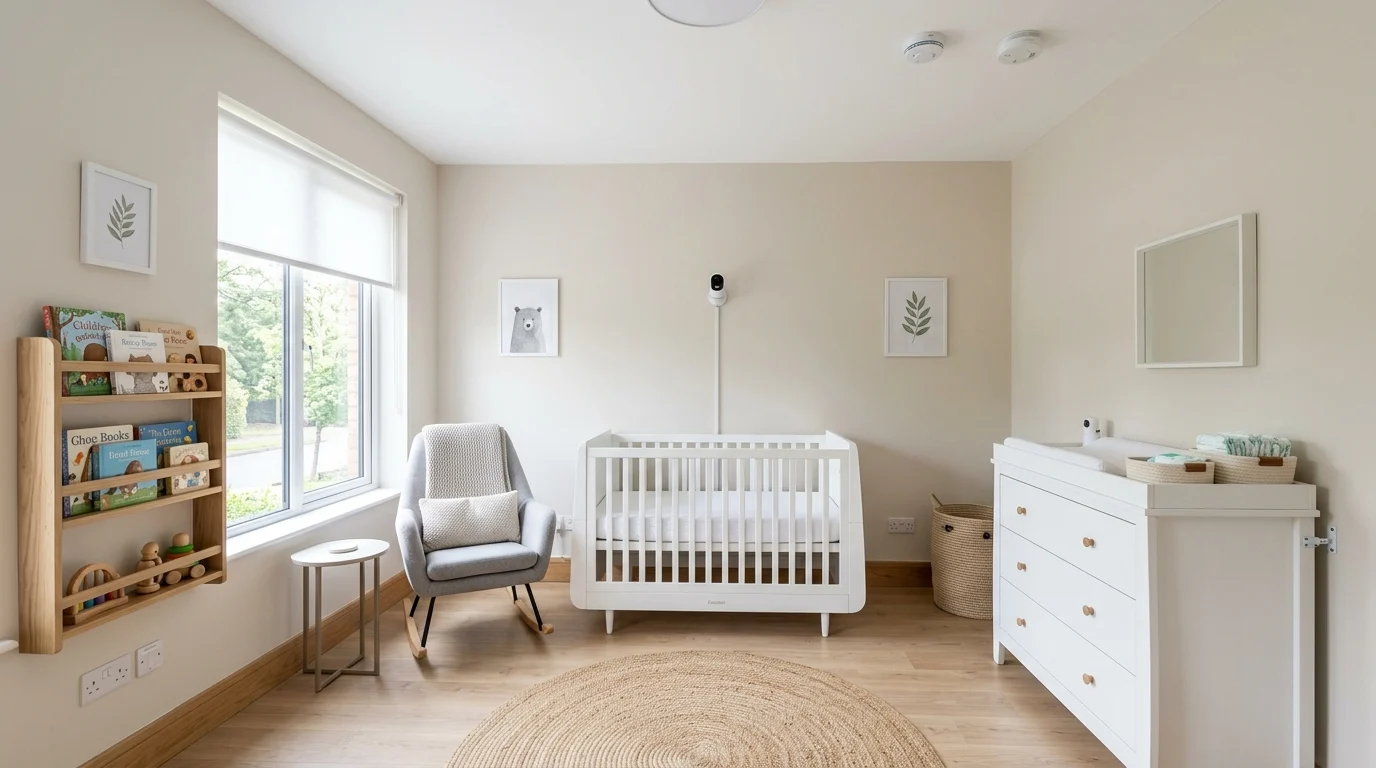
A close friend of mine, a few weeks into her first baby’s arrival, mentioned almost in passing that she’d just discovered the secondhand crib a relative had given her had been recalled years earlier for a slat-spacing issue that had never actually been fixed. She caught it purely by chance while browsing an unrelated article, not because anyone had flagged it for her, and it genuinely shook her how close her family had come to using something with a known, documented hazard without ever realizing it. That story is exactly why I now treat nursery safety as its own dedicated research project for any parent, rather than assuming a nursery is safe simply because it looks complete and put-together.
Nursery safety involves more moving pieces than most new parents initially expect, crib specifications, furniture stability, outlet coverage, cord management, and more, many of which aren’t obvious until you’ve specifically researched them. Here’s a genuine, thorough checklist covering the areas that matter most.
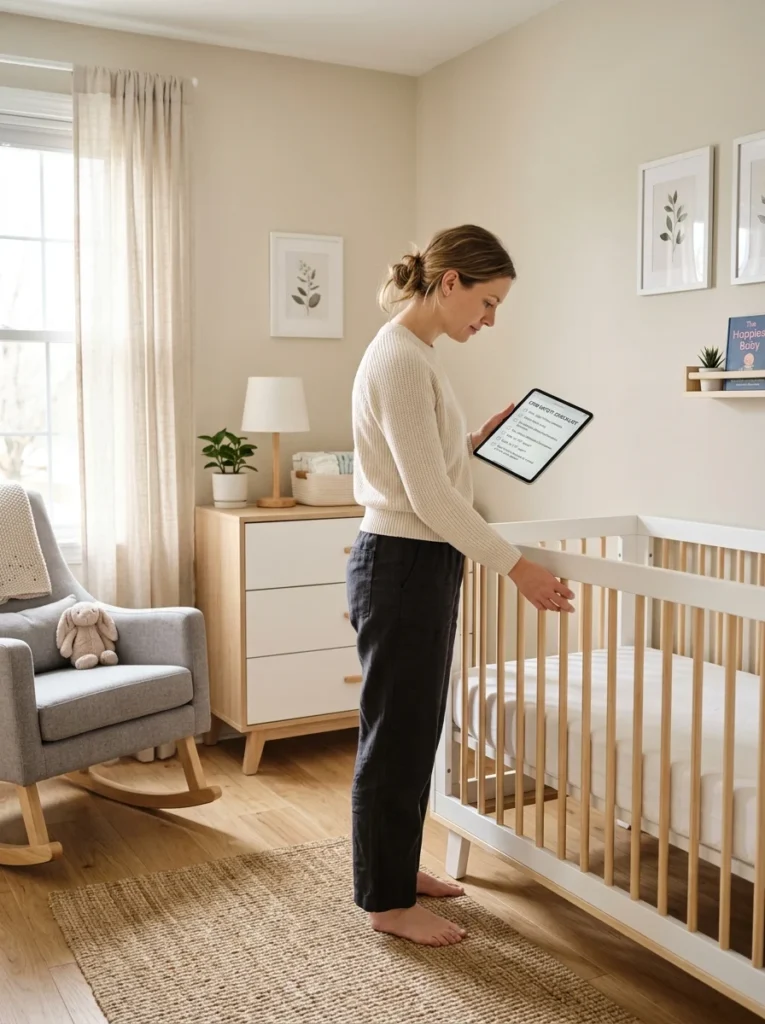
Verify your crib meets current safety standards
Whether new or secondhand, confirm your crib meets current safety standards, which generally include slats spaced no more than roughly two and three-eighths inches apart, no drop-side mechanism, given that this design has been linked to serious hazards and phased out of current standards, and a firm, snugly fitting mattress with no more than the width of two fingers of gap between the mattress and crib frame on any side. For any secondhand crib, checking the manufacturer and model against official recall databases before use is an essential step, exactly the step that almost got missed in my friend’s situation.
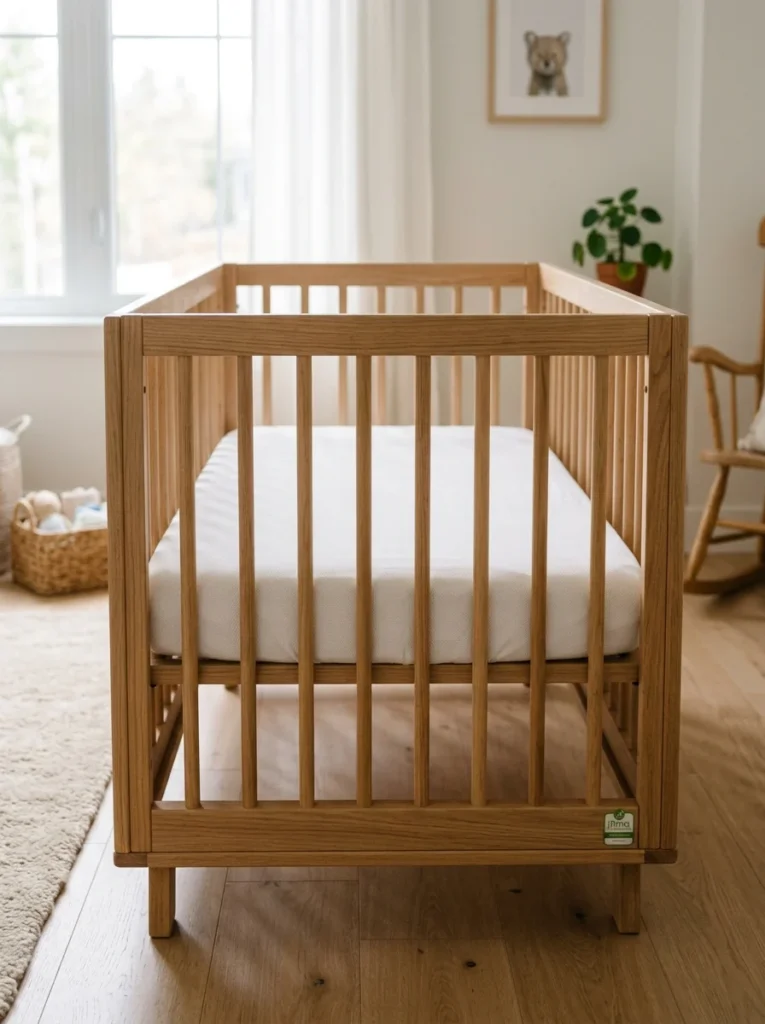
Keep the crib itself completely bare for sleep
Current safe sleep guidance recommends keeping the crib free of loose blankets, pillows, bumper pads, and stuffed animals during sleep, since these items have been associated with suffocation risk for infants. A fitted sheet on a firm mattress, with the baby dressed appropriately for the room’s temperature rather than relying on loose blankets, is the generally recommended approach for infant sleep safety.
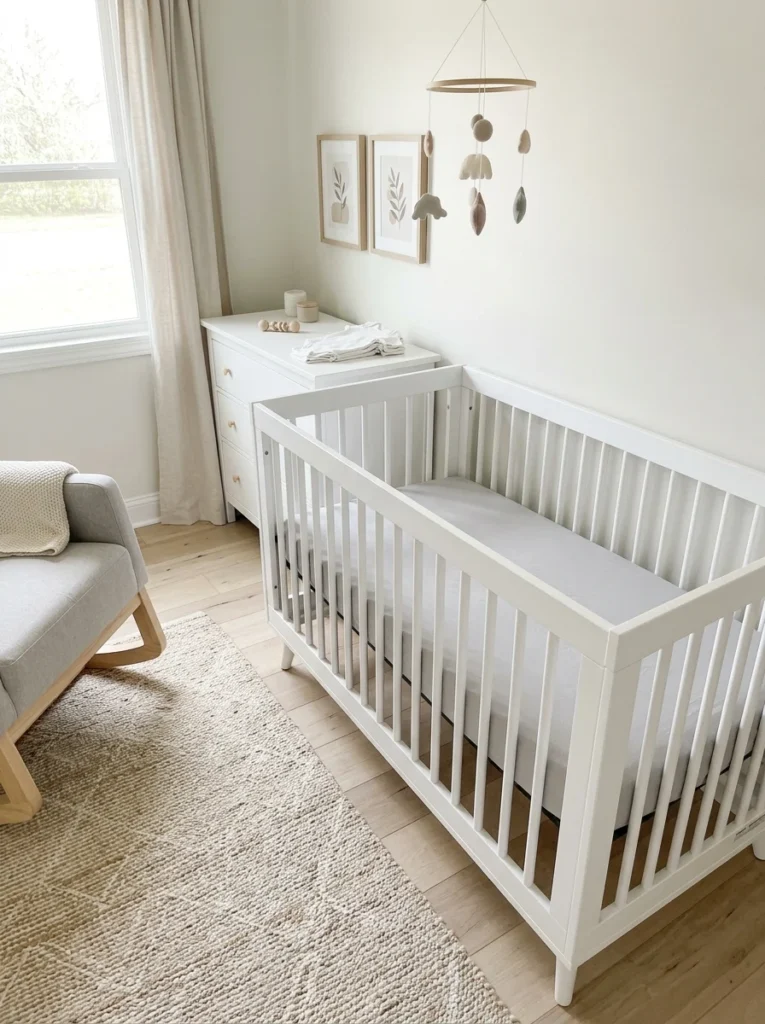
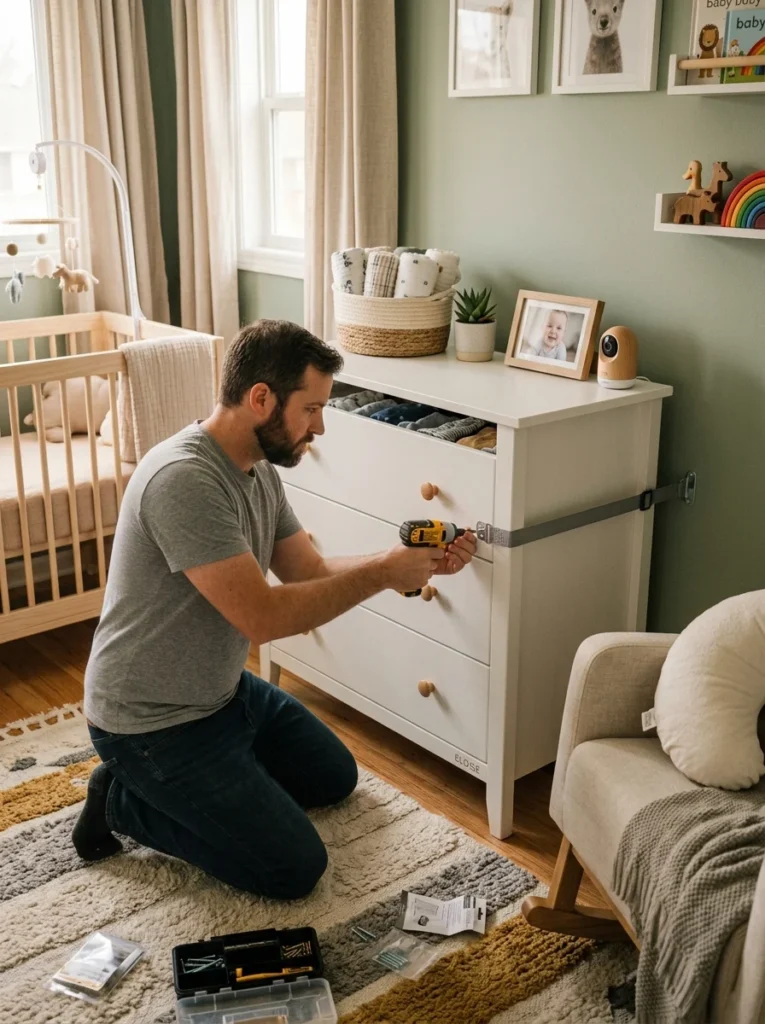
Secure all furniture to the wall to prevent tip-overs
Dressers, bookshelves, and any other freestanding furniture in the nursery should be anchored to the wall using furniture straps or brackets, since tip-over incidents involving unsecured furniture remain a genuine and documented hazard once a child becomes mobile enough to climb or pull themselves up using furniture as support. This is worth doing well before a baby reaches the crawling or standing stage, since furniture anchoring is easy to overlook until a child’s mobility makes the risk suddenly much more immediate.
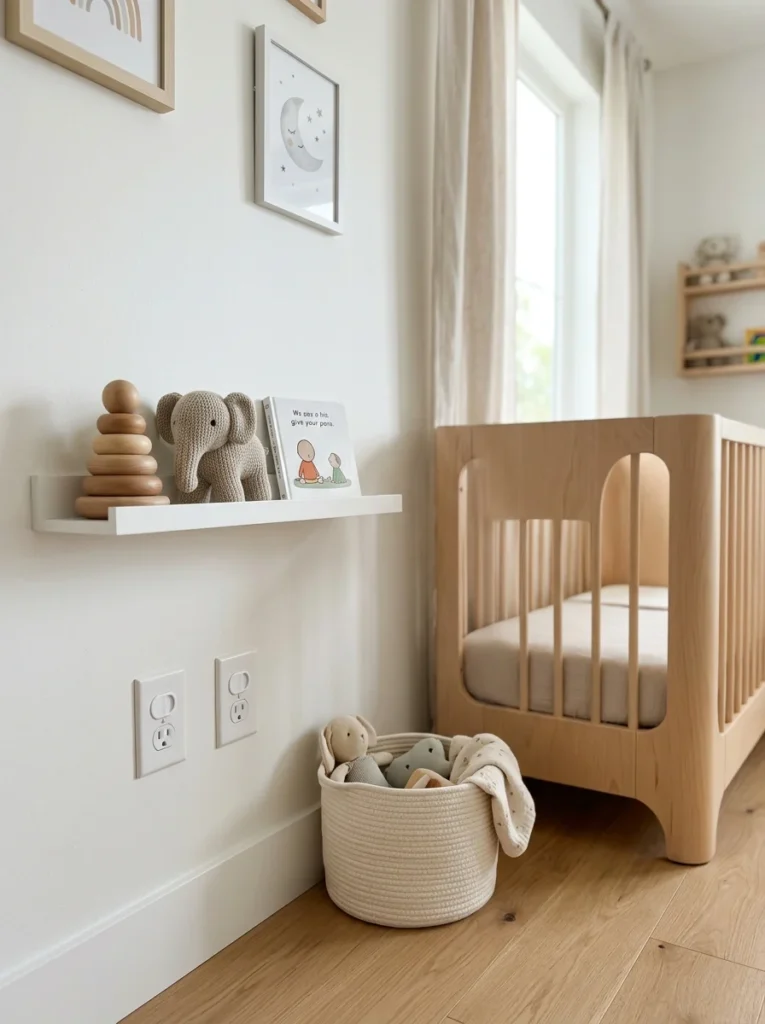
Cover all electrical outlets within reach
Outlet covers or safety plugs on every accessible electrical outlet in the nursery prevent a curious, mobile child from inserting fingers or small objects into an outlet, a risk that becomes relevant well before a baby is old enough to be reasoned with about the danger. This is a low-cost, straightforward safety measure worth implementing before it’s actually needed, rather than waiting until a child demonstrates the specific curiosity that makes it urgent.
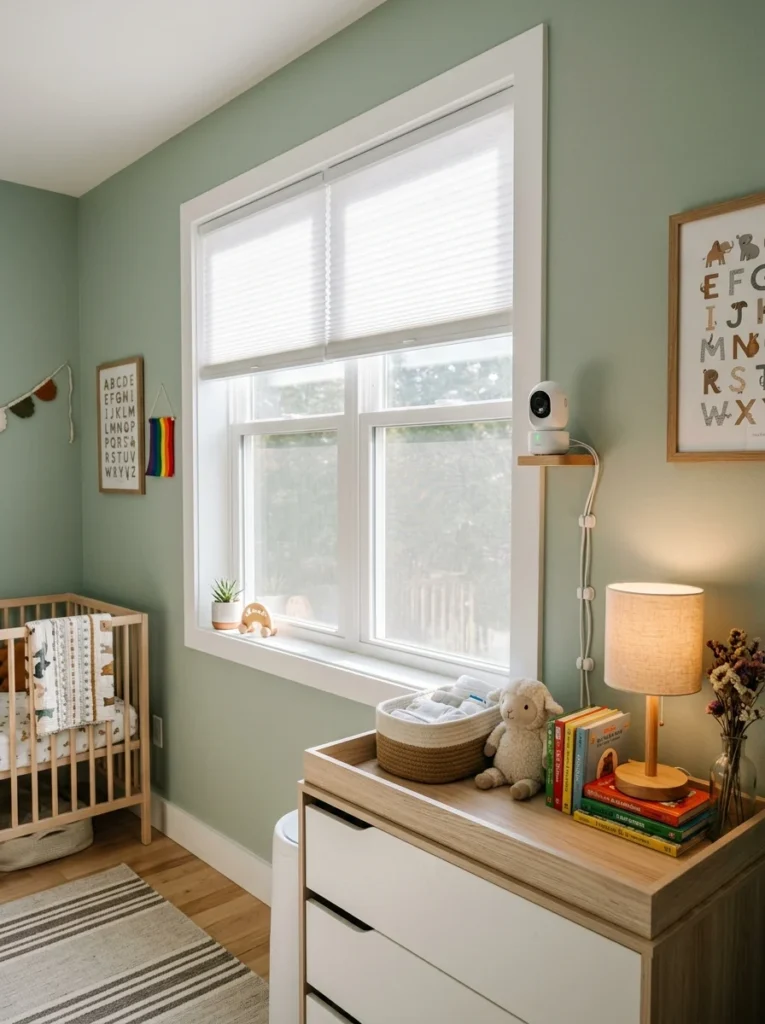
Manage cords from blinds, curtains, and electronics carefully
Window blind and curtain cords pose a strangulation risk and should be secured well out of reach, ideally using cordless window covering options specifically designed to eliminate this hazard entirely, or cord cleats and wind-up devices that keep any cords securely out of a child’s reach if cordless options aren’t feasible. Similarly, keep cords from lamps, monitors, and other electronics routed away from the crib and any area where a child might eventually reach or pull on them.
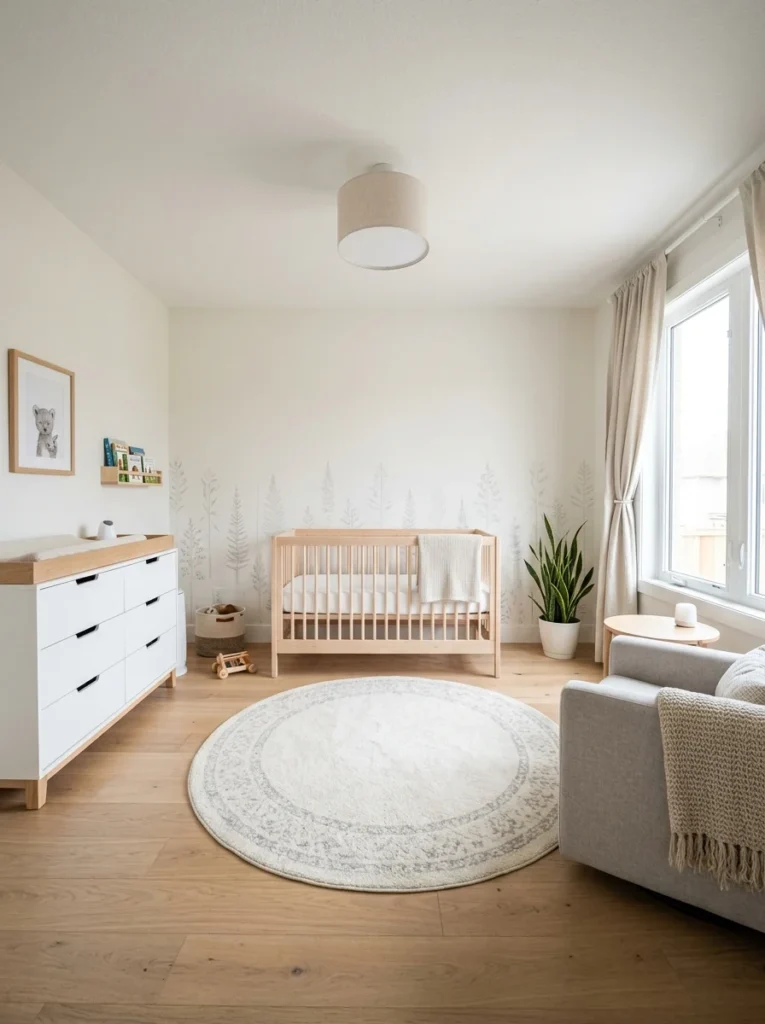
Position the crib away from windows, cords, and furniture
Keeping the crib itself positioned away from windows, blind cords, wall art, and other furniture reduces multiple risks at once, a child reaching a window covering cord, pulling on nearby art, or using nearby furniture to climb once they’re mobile enough to stand in the crib. This single placement decision addresses several distinct hazards simultaneously, making it one of the more efficient safety steps in the whole room.
Check that any nursery furniture meets current safety and stability standards
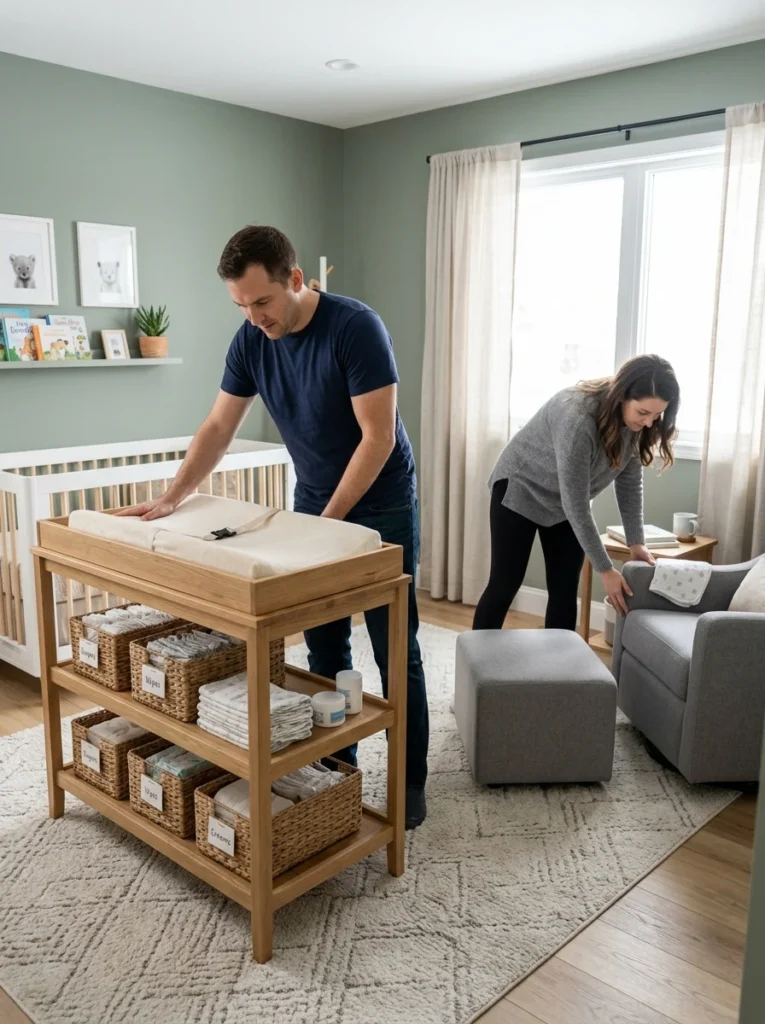
Beyond the crib itself, changing tables, gliders, and other nursery furniture should be checked for stability, no wobbling, secure attachment of any moving parts, and, for a changing table specifically, a safety strap and raised edges designed to reduce fall risk during diaper changes. Following the specific safety instructions and weight limits provided by each item’s manufacturer, rather than assuming general sturdiness is sufficient, ensures each piece is being used as intended.
Install and test smoke and carbon monoxide detectors near the nursery
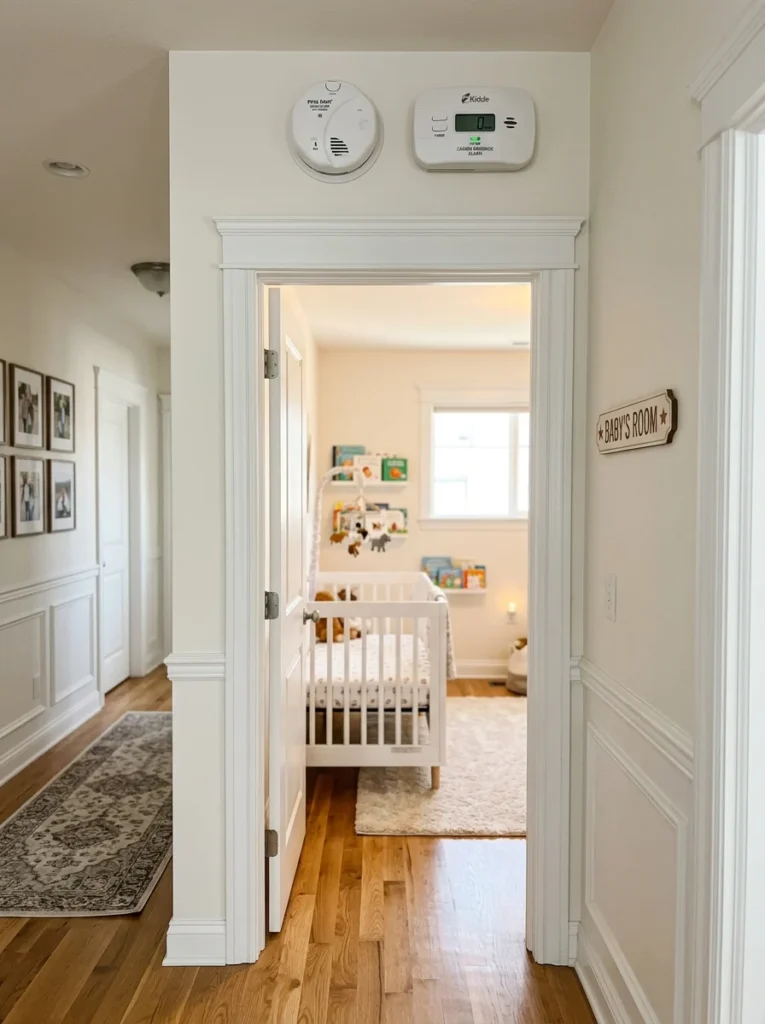
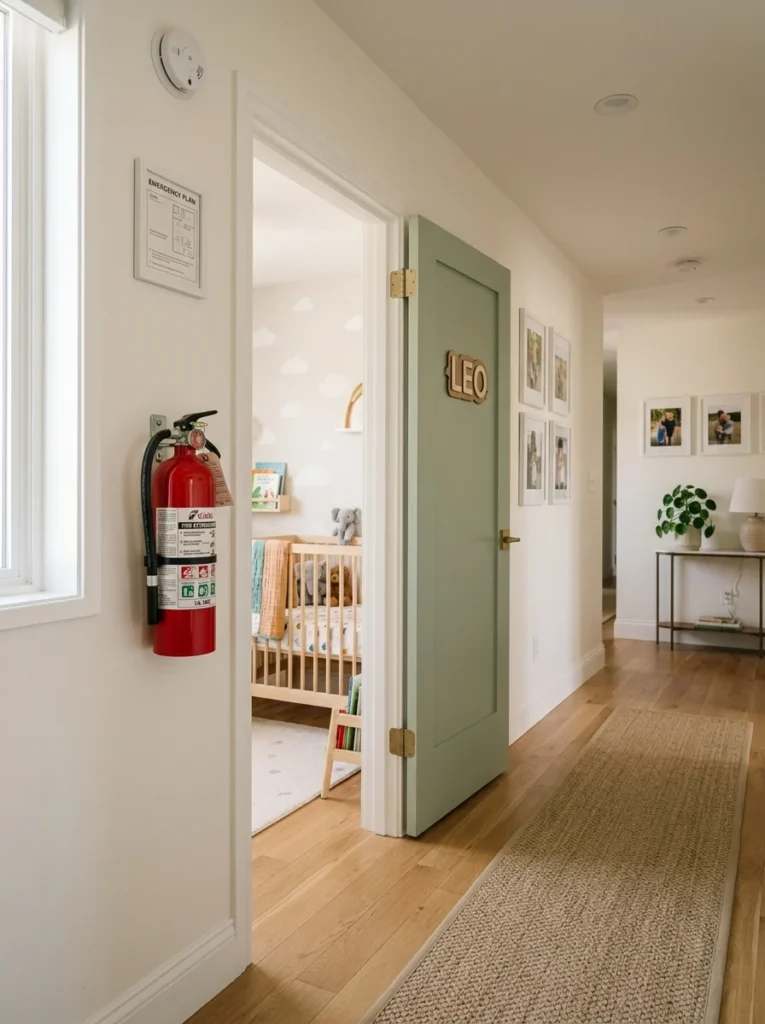
A working smoke detector, and a carbon monoxide detector if your home has any gas appliances or an attached garage, should be installed near the nursery, tested regularly, and have their batteries replaced on a consistent schedule. This general home safety measure matters in any room, but it’s particularly worth confirming in a nursery given how much time an infant spends sleeping there, often more than in any other single room of the house.
Check for choking hazards regularly as your child grows
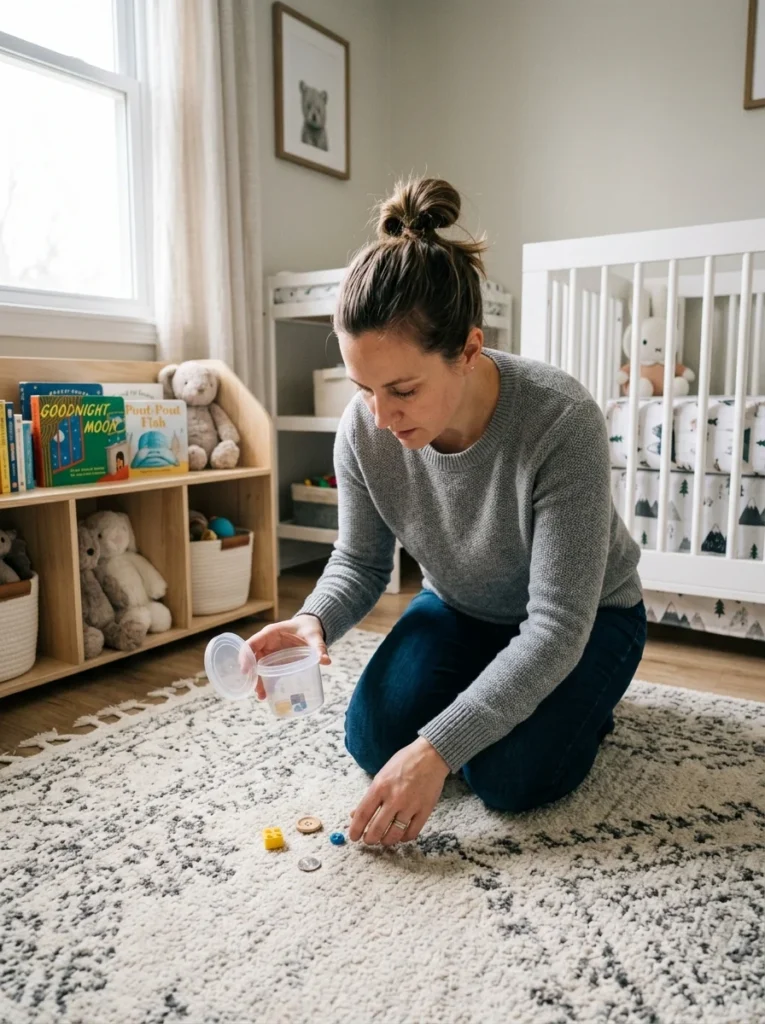
As a baby becomes more mobile and starts exploring the nursery more actively, regularly checking the room for small objects that could pose a choking hazard, a stray button, small toy pieces, coins, becomes an ongoing rather than one-time task. This is worth building into a regular routine, checking the floor and any low, reachable surfaces periodically, rather than assuming an initial safety sweep covers the room indefinitely as your child’s mobility and reach continue to change.
Verify humidifier and monitor placement and cord safety
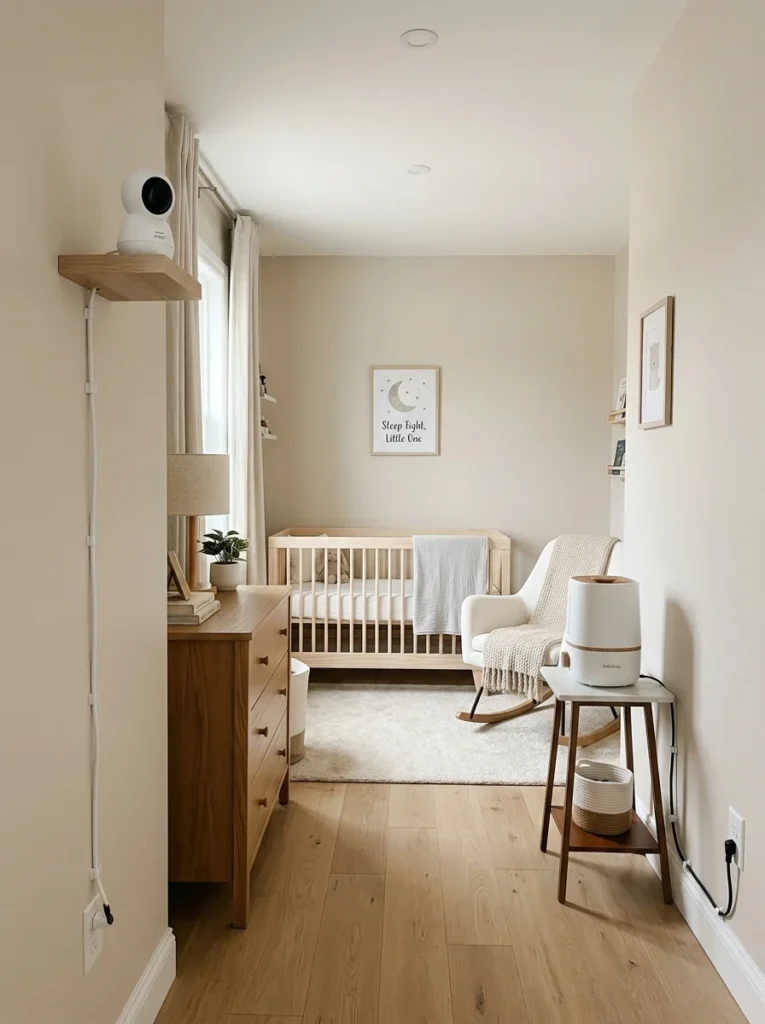
If using a humidifier or baby monitor, position both well out of the crib and away from where a child could reach or pull them, and ensure any cords are secured and routed away from the crib itself, since both devices, while helpful for many families, do introduce their own cord-related and object-related hazards if placed too close to where a baby sleeps.
Keep a working fire extinguisher accessible near the nursery
A small fire extinguisher kept somewhere accessible near the nursery, checked periodically to confirm it hasn’t expired or lost pressure, provides an added layer of preparedness in the unlikely event of a fire, particularly given how much time is spent in this specific room during the early months of a child’s life.
Install cabinet and drawer locks as your baby becomes mobile
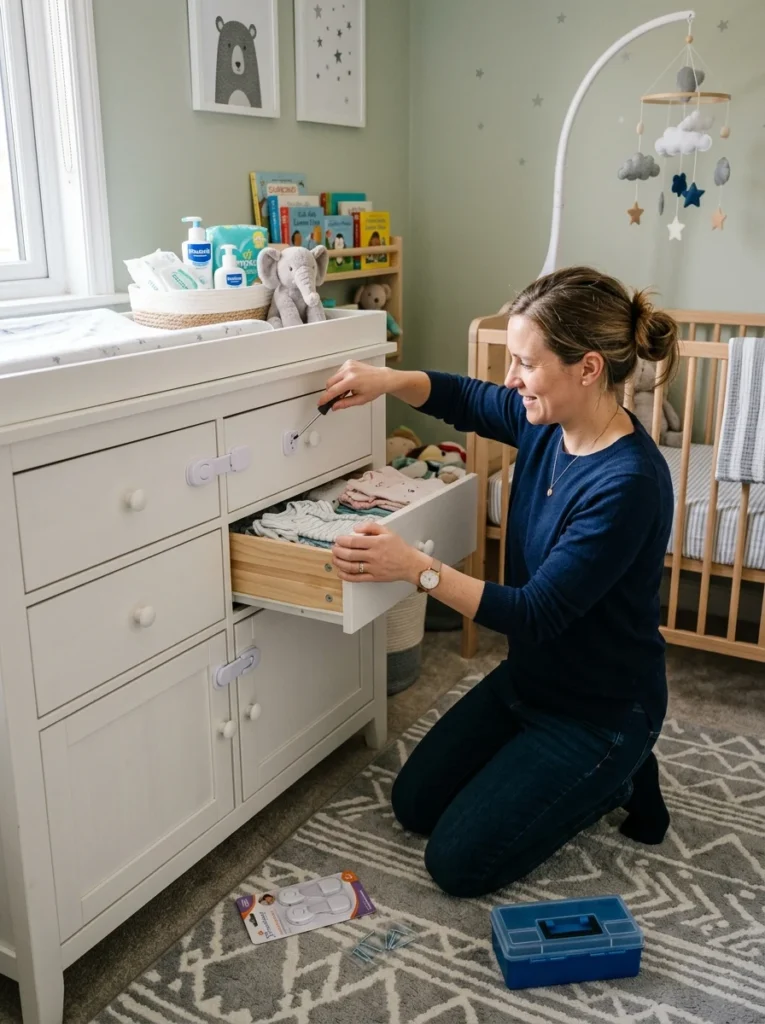
Once a baby begins crawling and exploring, cabinet and drawer locks on any nursery storage that contains anything unsafe, cleaning supplies occasionally stored nearby, small objects, or anything otherwise inappropriate for a curious child to access, prevent accidental exposure to hazards that weren’t a concern during the earlier, less mobile newborn stage. Installing these locks proactively, rather than reactively once a specific incident prompts the realization, keeps the room ahead of your child’s rapidly developing mobility and curiosity.
Monitor room temperature to support safer sleep
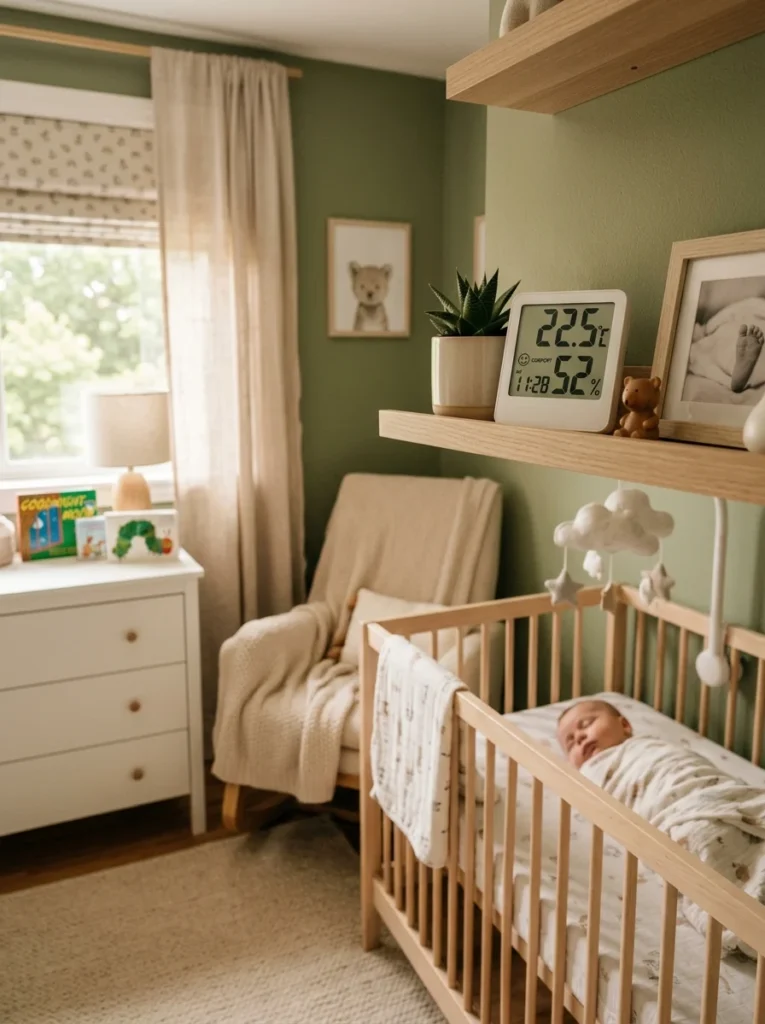
Keeping the nursery at a comfortable, moderate temperature, generally recommended to be similar to what feels comfortable for a lightly dressed adult, supports safer infant sleep, since overheating has been associated with increased risk in infant sleep safety research. A simple room thermometer helps confirm the space is staying within a reasonable range, and dressing a baby in appropriate sleepwear for the room’s actual temperature, rather than relying on additional blankets, supports both comfort and the broader safe sleep practices already covered.
Choose paint and finishes that meet current safety standards
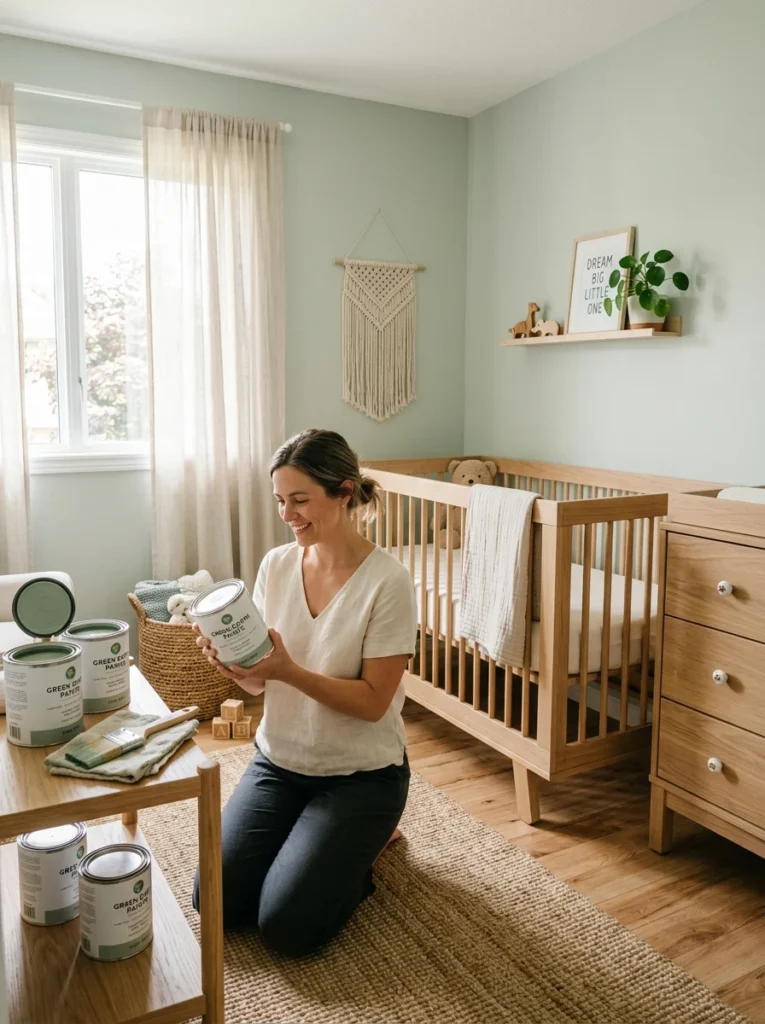
If painting or refinishing any nursery furniture or walls, confirm that paints and finishes are low-VOC or specifically formulated for use around children, and that any older furniture being reused doesn’t have older paint that could contain lead, a genuine concern with furniture manufactured before more recent safety regulations took effect. Testing older painted furniture for lead content before use, particularly anything secondhand or inherited from years past, is a worthwhile precaution given how straightforward and inexpensive testing kits have become.
How do I know if a secondhand crib is safe to use?
Check the crib’s manufacturer and model against official recall databases before use, and confirm it meets current safety standards, including proper slat spacing, no drop-side mechanism, and a snugly fitting mattress with minimal gap along every side.
Should I use blankets or bumper pads in the crib?
Current safe sleep guidance generally recommends keeping the crib free of loose blankets, pillows, bumper pads, and stuffed animals during sleep, since these items have been associated with suffocation risk for infants.
When should I secure furniture to the wall in a nursery?
It’s worth anchoring dressers, bookshelves, and other freestanding furniture well before a baby reaches the crawling or standing stage, since tip-over risk becomes relevant once a child is mobile enough to climb or pull up using furniture for support.
Are cordless window coverings necessary in a nursery?
Cordless options, or securely managed cords using cleats or wind-up devices, are strongly recommended, since window blind and curtain cords pose a documented strangulation risk if left within a child’s reach.
What temperature should a nursery be kept at for safer sleep?
A moderate, comfortable room temperature, generally similar to what feels comfortable for a lightly dressed adult, is recommended, since overheating has been associated with increased risk in infant sleep safety research. A room thermometer can help confirm the space stays within a reasonable range.
Should I test older nursery furniture for lead paint?
Yes, particularly for secondhand or inherited furniture manufactured before more recent safety regulations, since older paint may contain lead. Inexpensive testing kits make this a straightforward, worthwhile precaution before reusing older painted pieces in a nursery.
Nursery safety covers more ground than a single initial setup, the crib itself, furniture stability, cords and outlets, smoke and carbon monoxide detection, and ongoing checks for choking hazards as your child grows more mobile. Treating this as an evolving checklist, revisited as your baby’s abilities change, rather than a one-time task completed before the due date, keeps the room genuinely safe throughout the changing stages of early childhood.
My friend’s secondhand crib was replaced the same week she discovered the recall, and she’s since become the person in our friend group who reminds everyone else to actually check these details rather than assuming a nursery is safe simply because it looks finished. If you haven’t specifically checked your own crib against current recall databases and safety standards, that’s worth doing today, not as an eventual task, but as the very first item on this entire checklist.