When I started tracking my water bill a few years ago, I was surprised to learn just how much of it came from the bathroom, showers, the toilet, the faucet running while I brushed my teeth, all adding up in ways I’d never actually calculated. That realization sent me down a genuine rabbit hole of researching what actually makes a bathroom more sustainable, and I learned that most of the meaningful changes are far less dramatic, and far more affordable, than I expected. You don’t need a full green renovation to make a real difference; a handful of deliberate choices in fixtures, materials, and daily habits can meaningfully cut both water use and environmental impact.
Below is what I’ve actually implemented in my own bathroom, organized from the easiest, cheapest changes to the bigger investments worth considering if you’re planning a fuller renovation, along with the small daily habits that make every one of these upgrades work even harder over time.
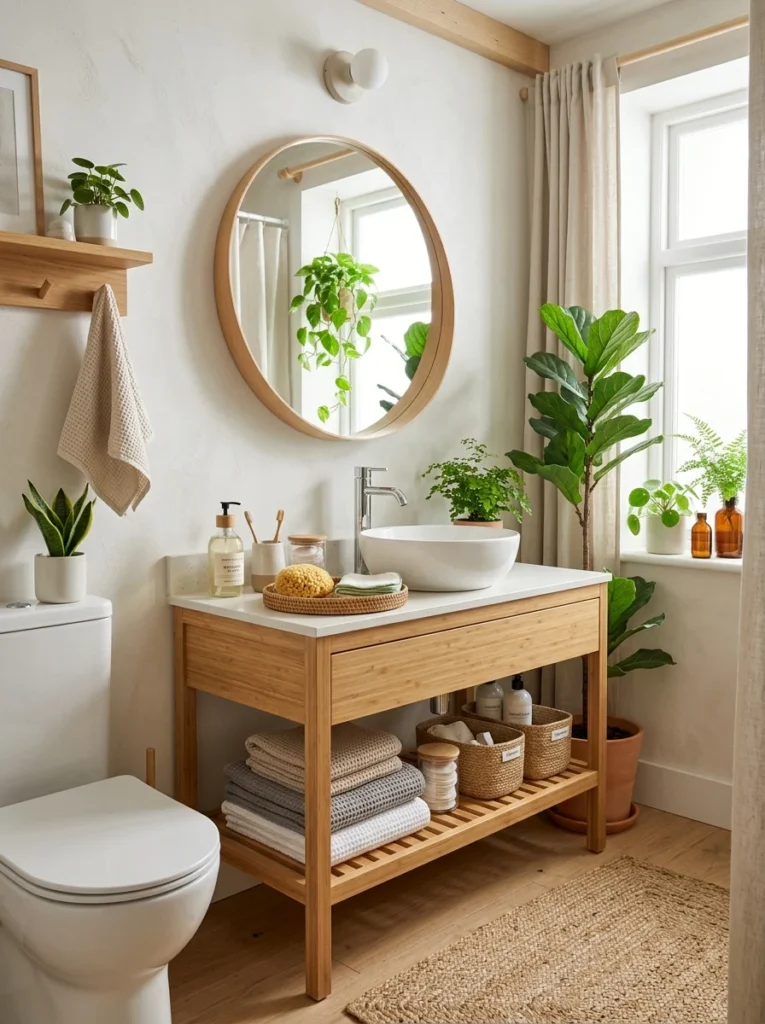
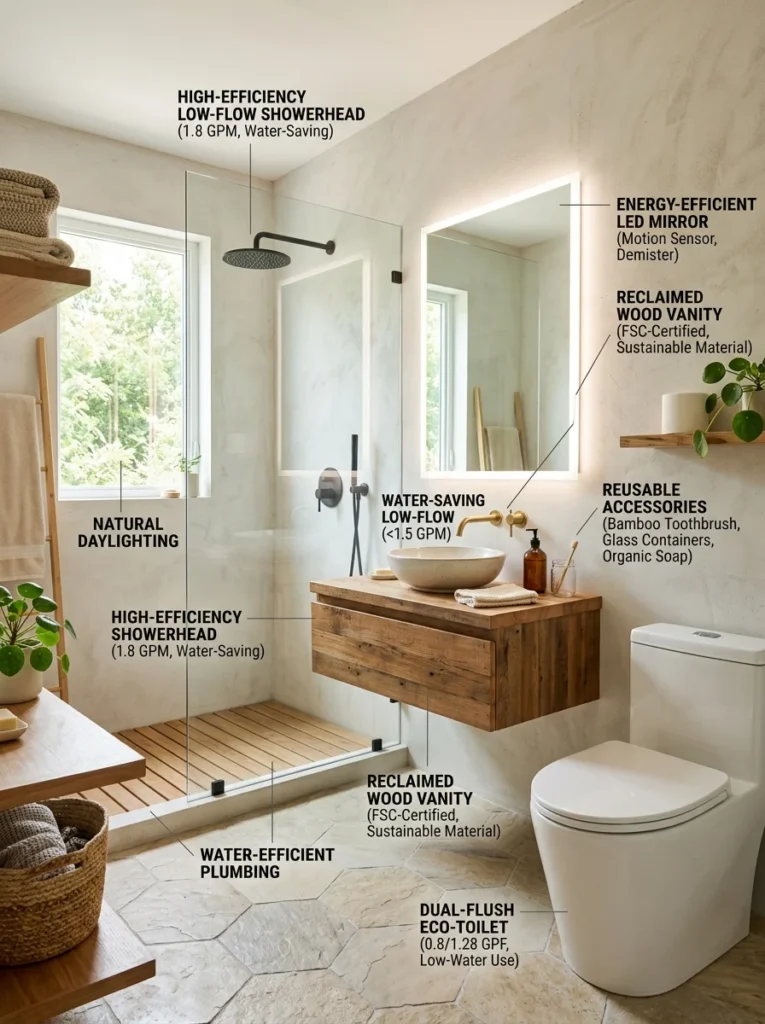
Install a low-flow showerhead
A standard older showerhead can use significantly more water per minute than a modern low-flow model, and the difference adds up fast across daily showers for an entire household. Modern low-flow showerheads use aerating or laminar-flow technology to maintain strong water pressure and a satisfying shower experience while using meaningfully less water than older fixtures, so switching doesn’t mean sacrificing comfort. This is one of the cheapest, fastest upgrades on this entire list, often completed in minutes with basic tools, and it pays for itself quickly through lower water and, if you have an electric or gas water heater, lower energy bills as well.
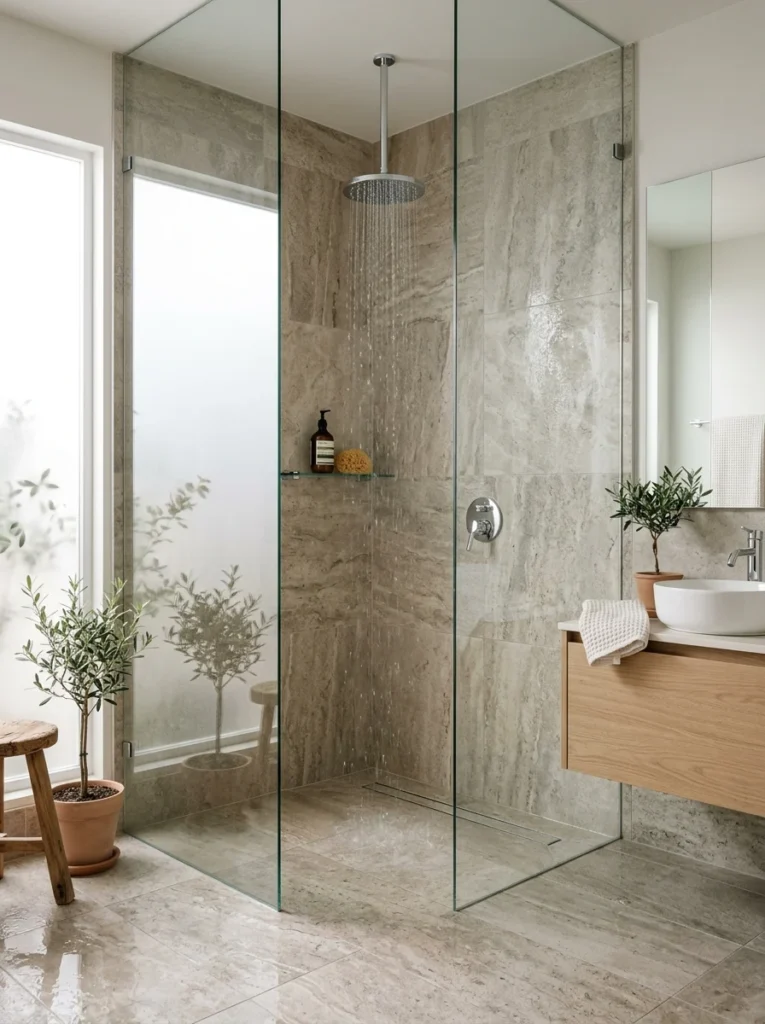
Switch to a dual-flush or low-flow toilet
Toilets are typically the single largest source of water use in a bathroom, and older models can use far more water per flush than a modern low-flow or dual-flush toilet, which offers a reduced flush option for liquid waste and a fuller flush for solid waste. Replacing an old toilet with a certified water-efficient model is one of the highest-impact upgrades available, and many regions offer rebates specifically for this kind of replacement, which can offset a meaningful portion of the cost. If a full replacement isn’t in the budget right now, a simple toilet tank fill cycle diverter or a displacement device can reduce water use per flush in an existing toilet at minimal cost.
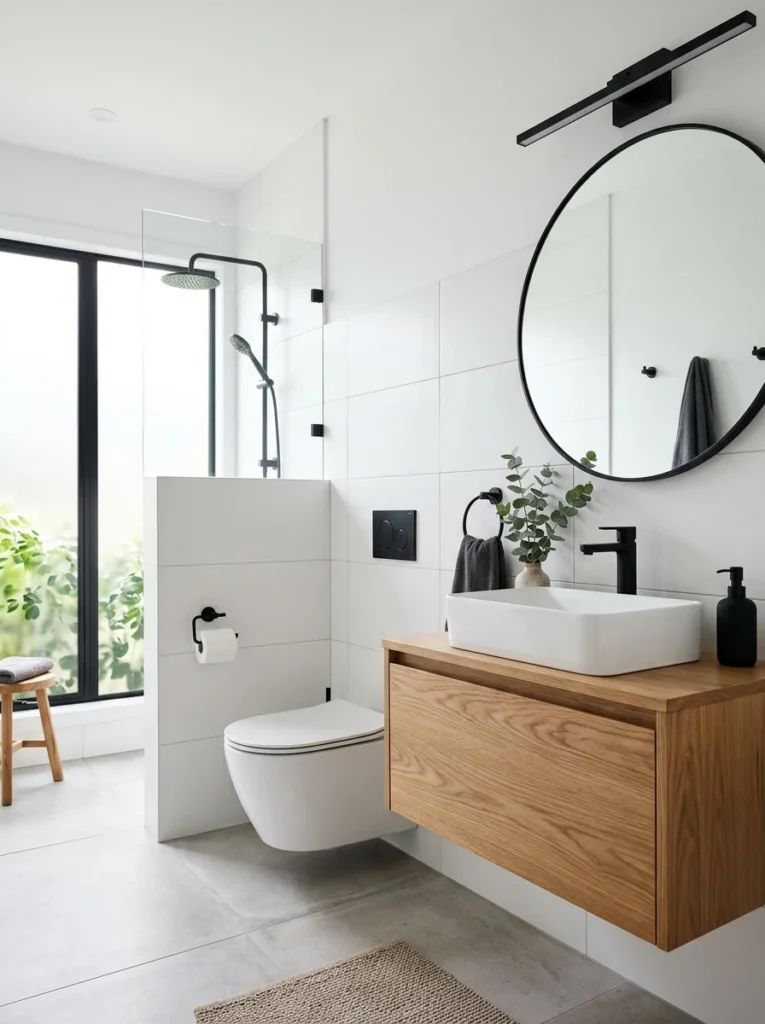
Choose a WaterSense-certified or equivalent faucet
Faucet aerators and WaterSense-certified faucets restrict flow without noticeably affecting water pressure for everyday tasks like washing hands or brushing teeth. This is a very inexpensive upgrade, often just a small attachment or a faucet swap, and it’s one of the easiest ways to reduce daily water use without changing any habits at all. Look specifically for a certification label when shopping, since it guarantees the fixture has been independently tested to meet water efficiency standards rather than relying on marketing claims alone.
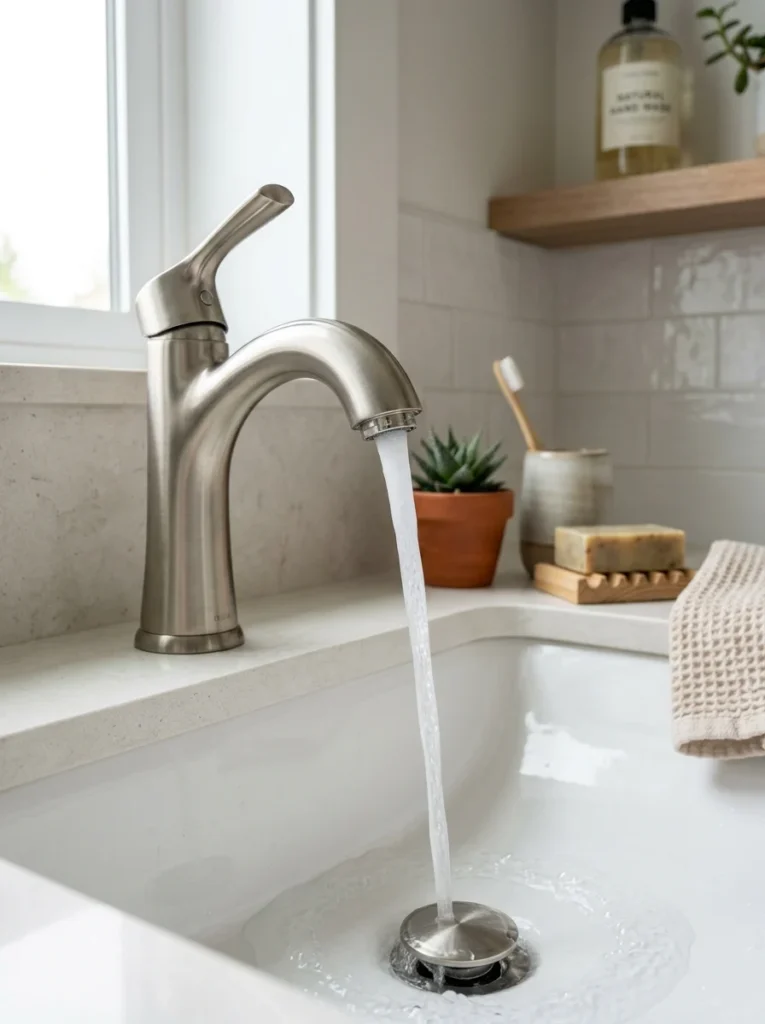
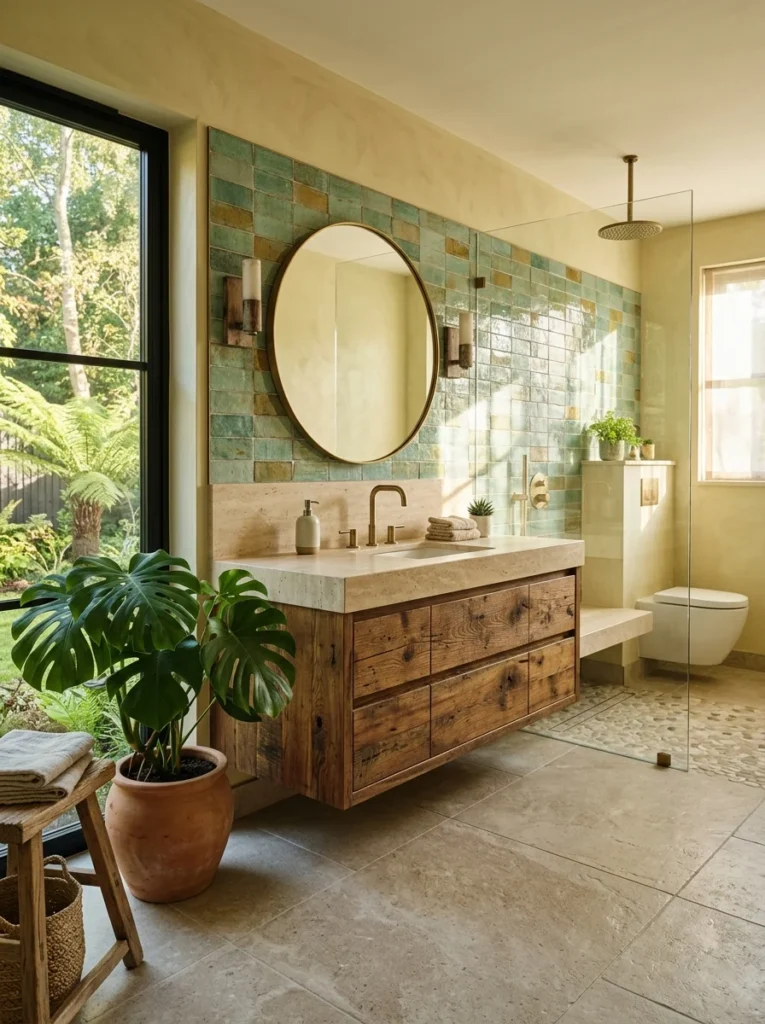
Choose sustainable, long-lasting materials
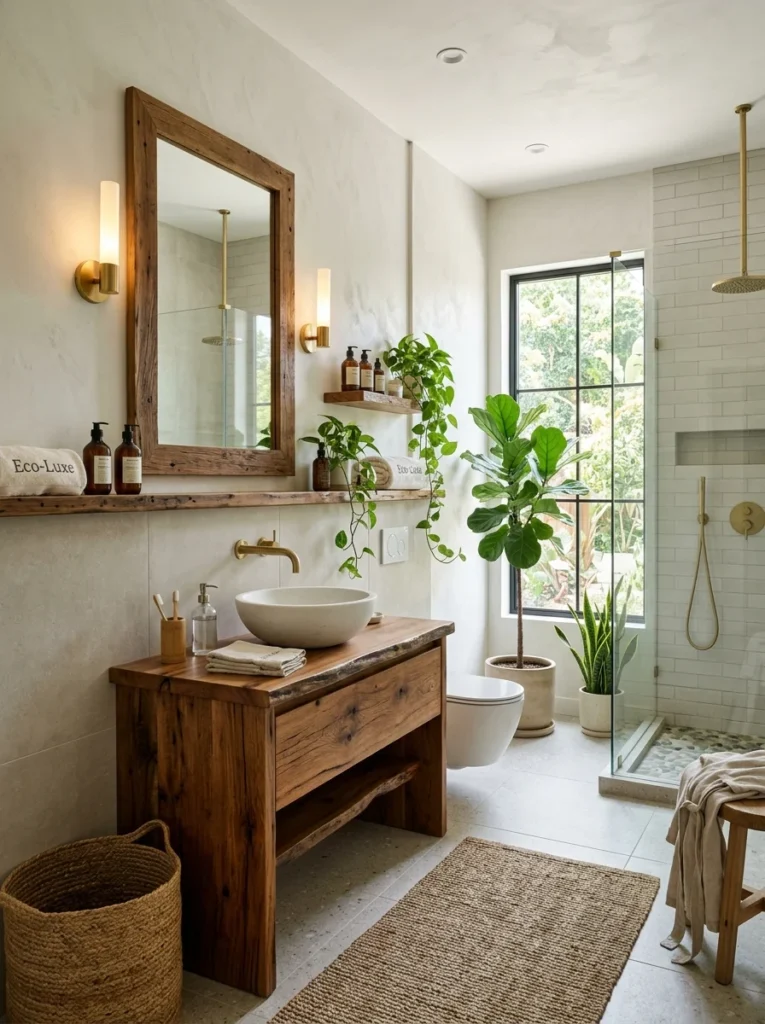
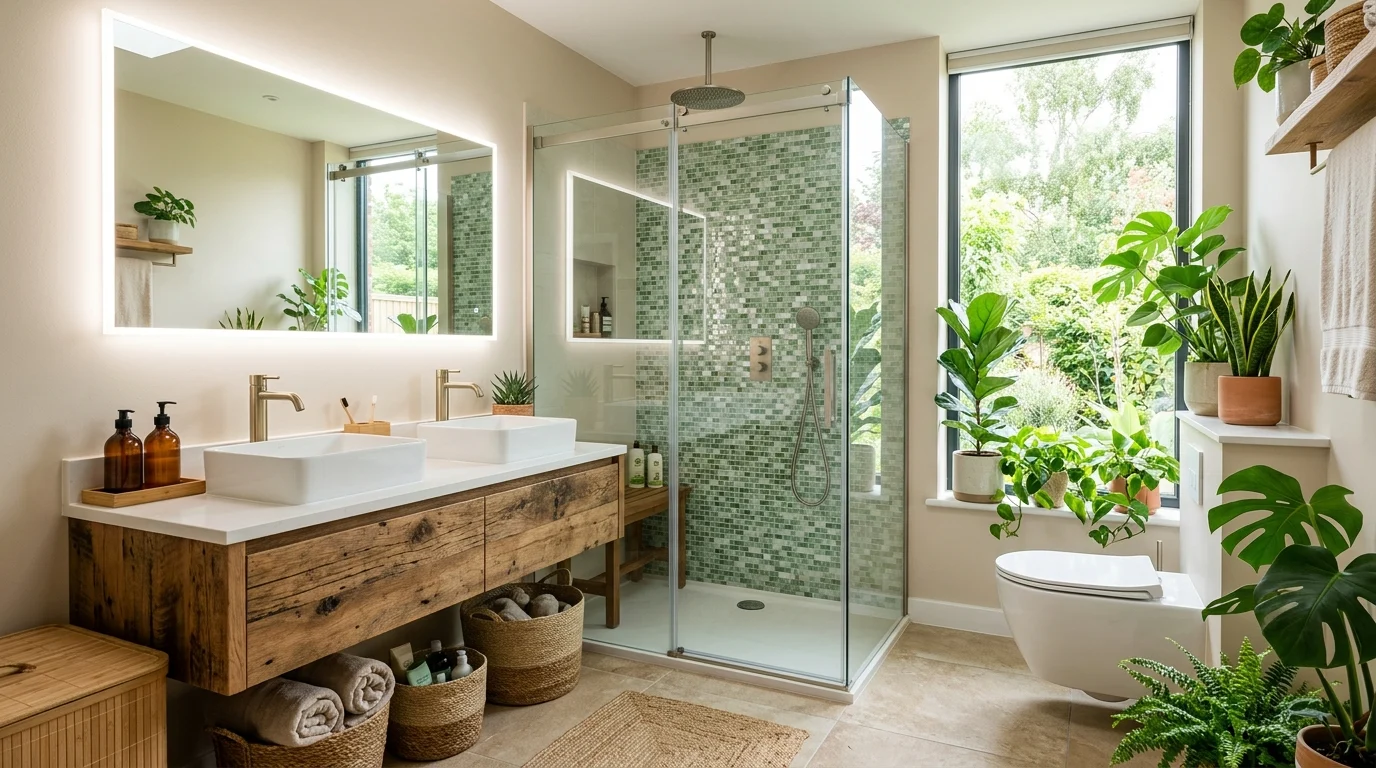
Sustainability in a bathroom isn’t only about water use; it’s also about choosing materials that last, since a renovation that needs to be redone every few years generates far more waste than one built to last decades. Porcelain tile, known for its durability and long lifespan, is a genuinely sustainable choice in this sense, since it resists wear and rarely needs replacement compared to lower-quality alternatives. Reclaimed wood for a vanity or shelving, recycled glass tile, and countertops made from recycled materials are all increasingly available and offer a lower environmental footprint than manufacturing entirely new raw materials.
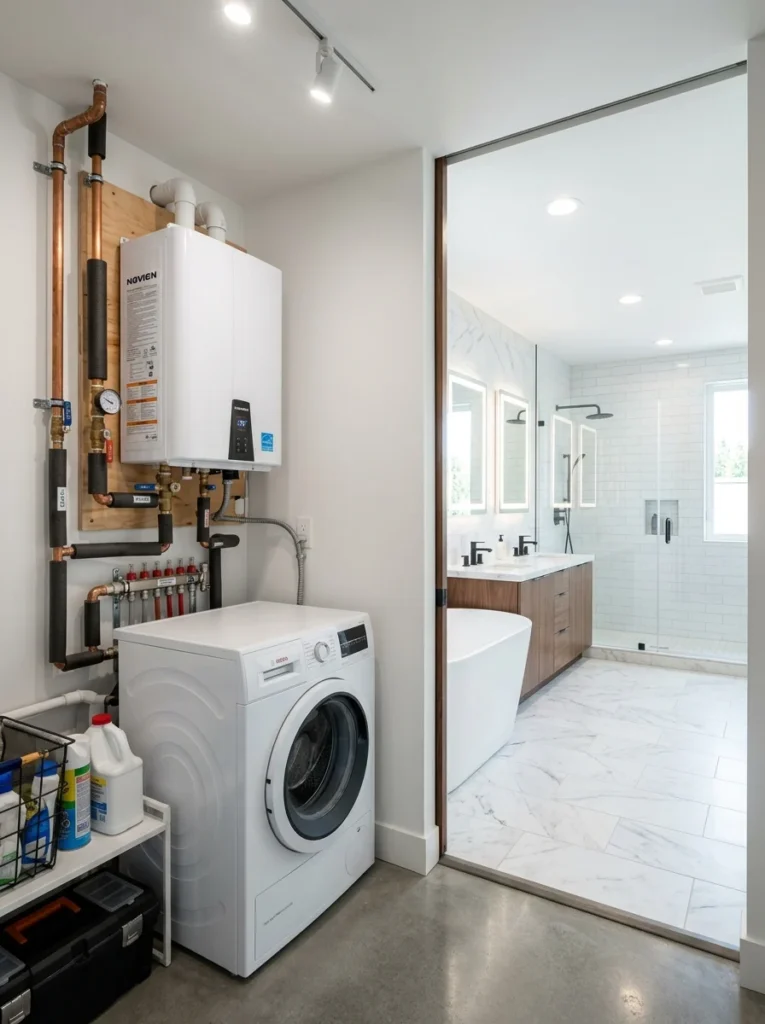
Consider a tankless or efficient water heater
A tankless water heater heats water on demand rather than continuously keeping a large tank of water hot, which reduces standby energy loss and can lower overall energy use for households with the right hot water demands. While the upfront cost is higher than a standard tank water heater, the ongoing energy savings and generally longer lifespan can make it a worthwhile investment during a larger renovation, particularly if your existing water heater is nearing the end of its life anyway.
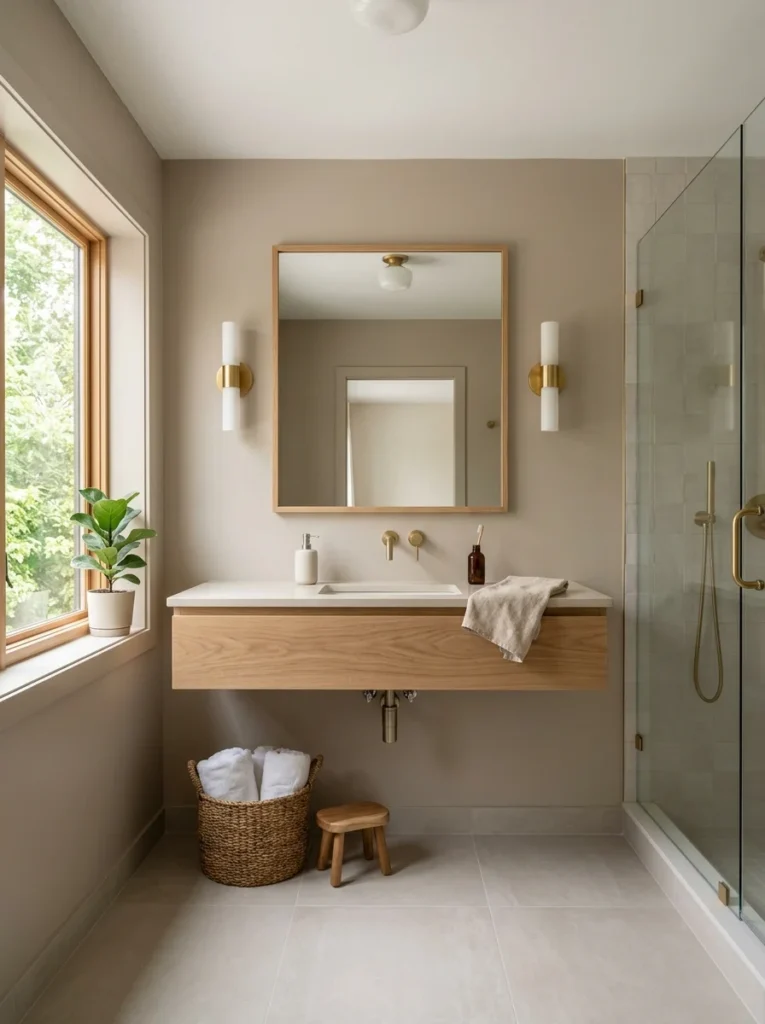
Choose low-VOC paint and finishes
Traditional paints and some finishes release volatile organic compounds into the air for a period after application, which affects both indoor air quality and the environment. Low-VOC or zero-VOC paint, now widely available in the same range of colors and finishes as traditional paint, reduces this impact without any real compromise in quality or appearance. The same consideration applies to sealants, adhesives, and grout, where low-VOC options exist and perform comparably to traditional formulations.
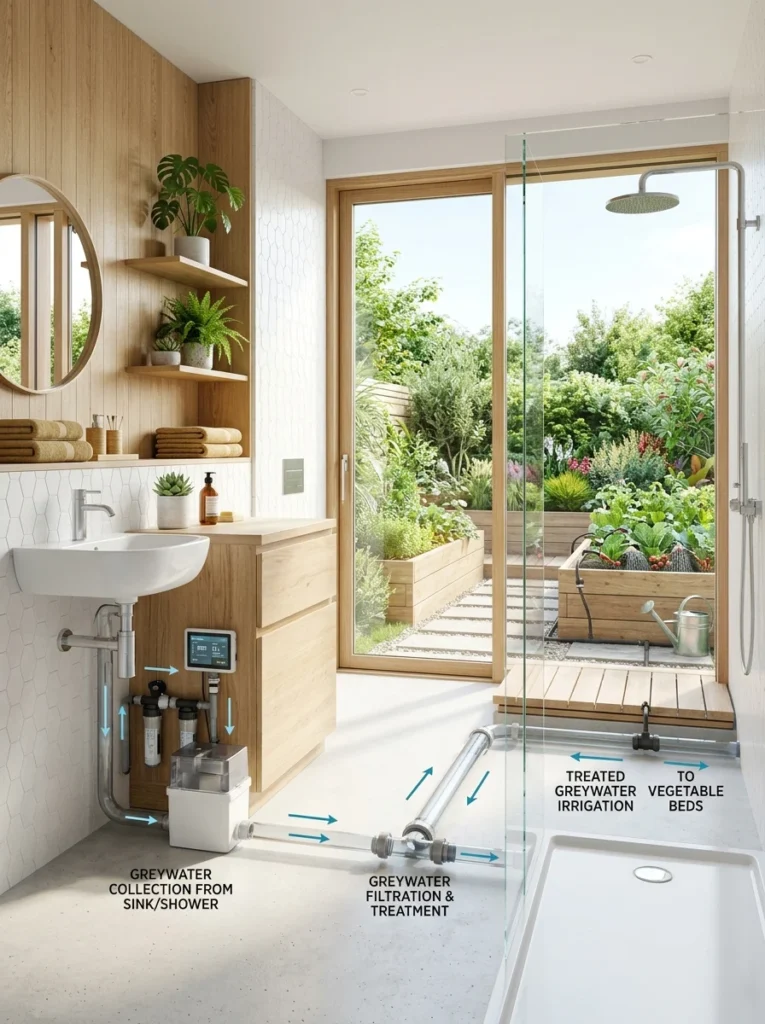
Add a greywater or rainwater system if you’re doing a bigger renovation
For homeowners planning a more extensive renovation, a greywater system that redirects water from the shower or sink toward irrigation, or a rainwater collection system for outdoor use, can meaningfully reduce a household’s overall water footprint. These systems require more planning, and local regulations vary significantly on what’s permitted, so this is worth researching early if it’s something you want to include, since retrofitting it later is far more disruptive than incorporating it during a full renovation.
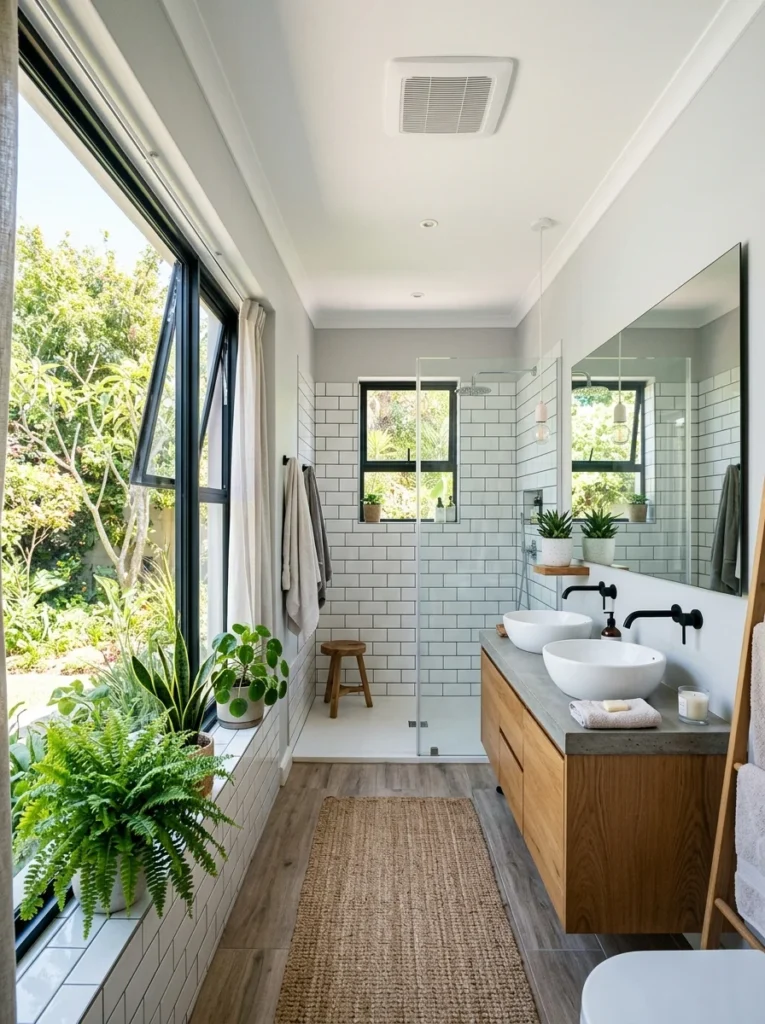
Use natural ventilation and efficient exhaust fans
A properly sized, energy-efficient exhaust fan reduces moisture buildup, which protects your materials and reduces the mold and mildew risk that can otherwise shorten the lifespan of paint, grout, and fixtures. Many modern exhaust fans use significantly less electricity than older models while moving air more effectively, and some include humidity sensors that only run the fan when needed rather than staying on a fixed timer, further reducing energy use over time.
Choose energy-efficient lighting
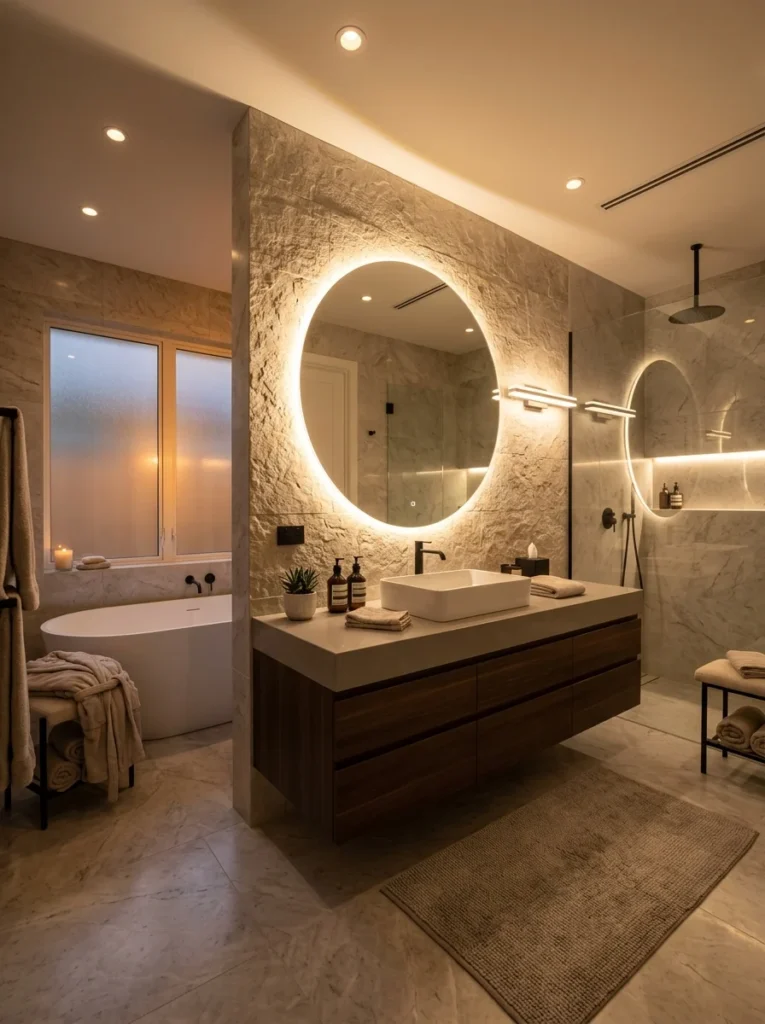
LED bulbs use significantly less electricity than incandescent or even older fluorescent bulbs, and they last considerably longer, which reduces both energy use and the frequency of bulb replacement and disposal. Pairing LED lighting with a dimmer switch also allows for lower energy use during moments when full brightness isn’t needed, such as a middle-of-the-night bathroom visit.
Build sustainable habits alongside sustainable fixtures
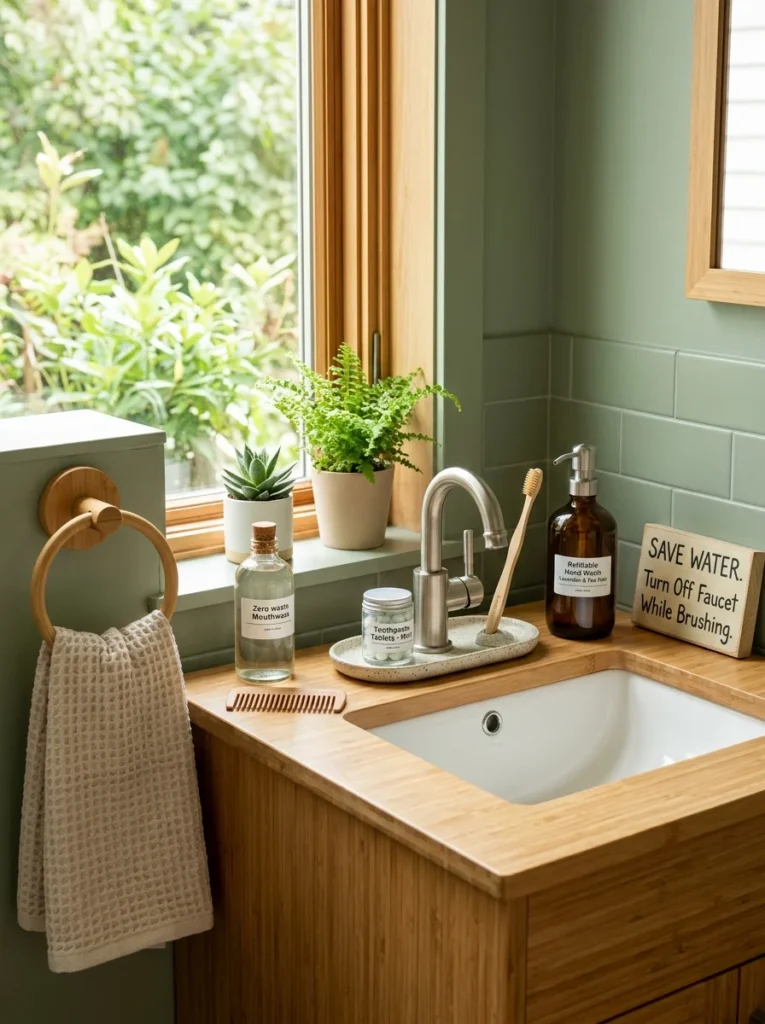
Even the most efficient fixtures only go so far without matching daily habits. Turning off the tap while brushing teeth, taking shorter showers, and running the exhaust fan only as long as actually needed all compound with efficient fixtures to meaningfully reduce a household’s water and energy use over time. Fixing leaks promptly matters more than people expect too, since even a small, steady drip from a faucet or a running toilet can waste a surprising amount of water over the course of a year if left unaddressed.
Choose reusable and low-waste bathroom accessories
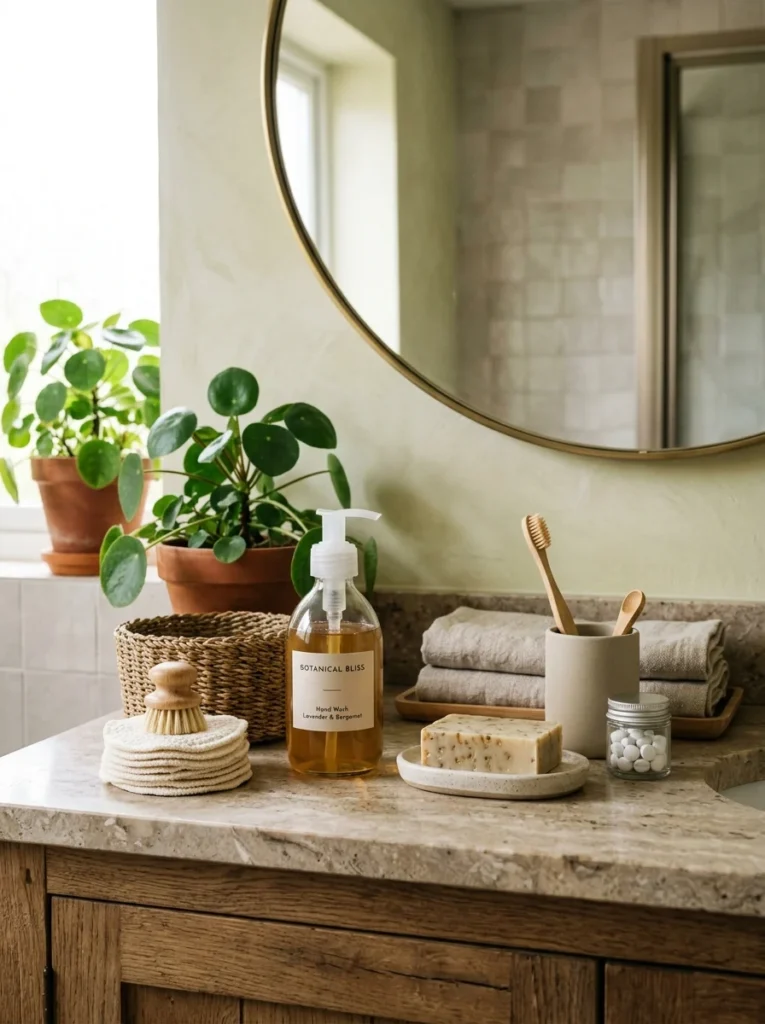
Swapping disposable cotton rounds for reusable, washable ones, choosing a bar soap or refillable dispenser over single-use plastic bottles, and using a reusable, washable bath mat instead of frequently replacing a cheaper one are all small changes that reduce daily waste without requiring any renovation at all. These changes cost little to nothing to implement and are some of the easiest starting points for anyone wanting to make their bathroom routine more sustainable without any construction involved.
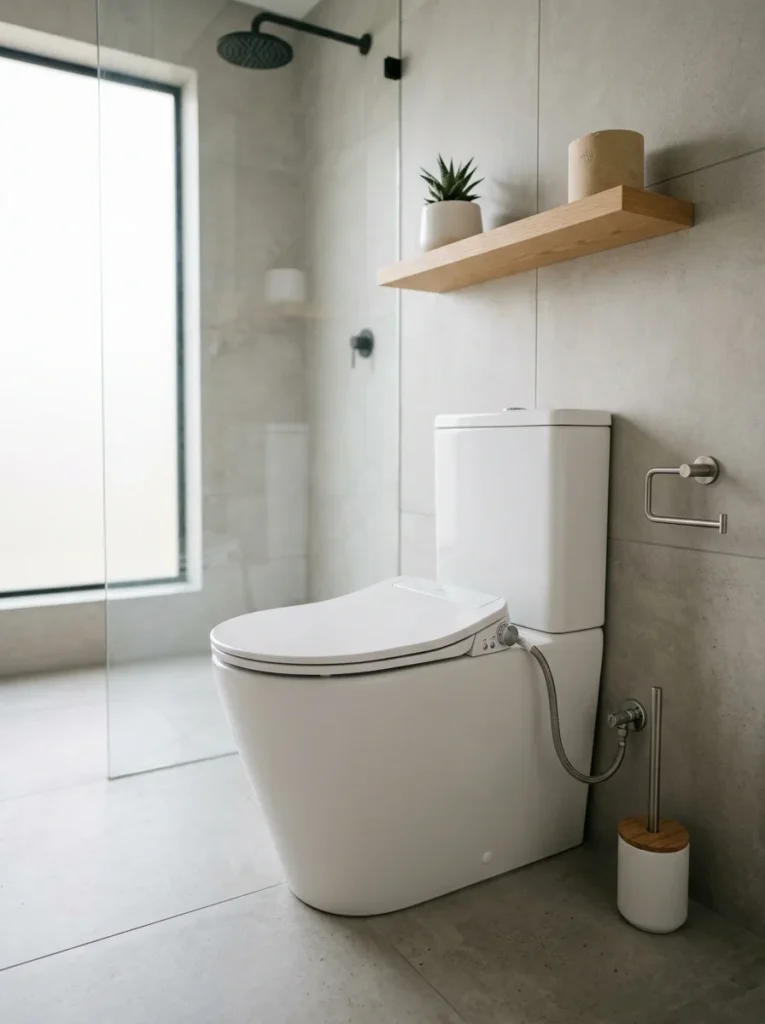
Consider installing a bidet attachment
A bidet attachment or bidet seat, which can often be added to an existing toilet without a full replacement, significantly reduces toilet paper use over time, which in turn reduces the water, energy, and trees consumed in paper production and transportation. Modern bidet attachments are relatively inexpensive and straightforward to install, connecting directly to the existing water supply line behind the toilet, and they’ve become a popular entry point for households wanting a meaningful sustainability upgrade without a major renovation.
Look for recognized sustainability certifications when shopping
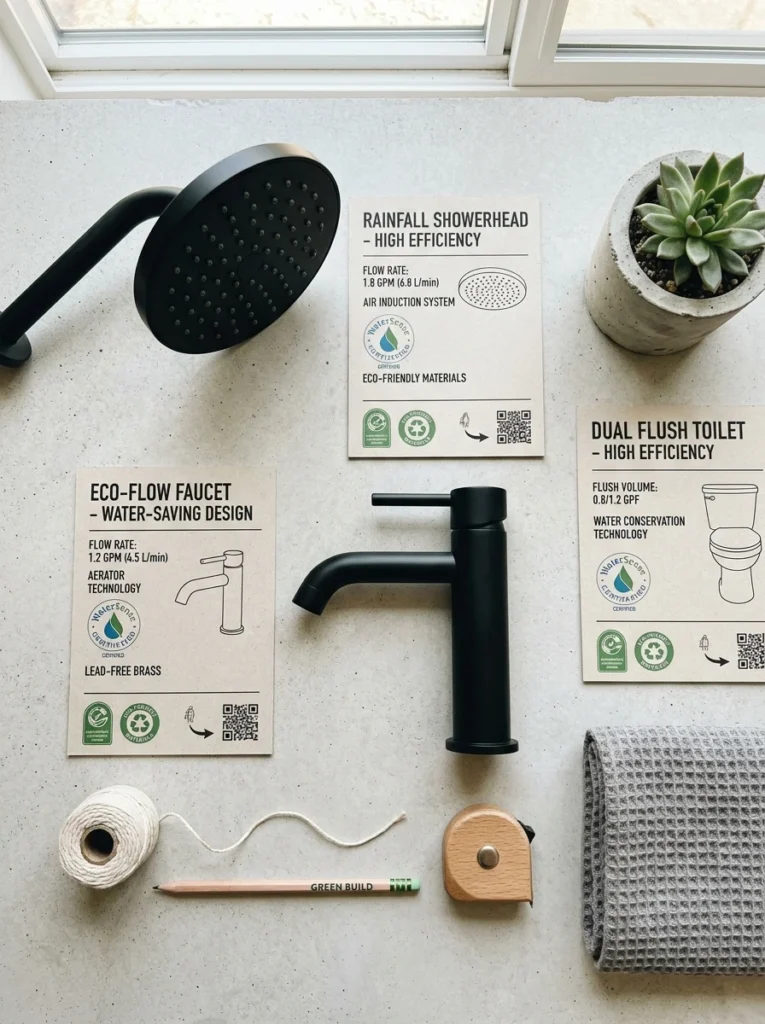
When choosing fixtures, look for recognized efficiency certifications rather than relying on general marketing language like “eco-friendly,” which isn’t independently verified. A water efficiency certification label on toilets, showerheads, and faucets confirms the fixture has been tested against a specific water-use standard, giving you a reliable way to compare options across different brands. Similarly, an established green building material certification on tile, countertops, or cabinetry indicates the product has met specific standards for sustainable sourcing or manufacturing, which is a more dependable signal than a vague claim printed on packaging. Taking the extra few minutes to check for these labels while shopping is a small effort that ensures the money you’re spending on sustainability actually delivers the impact you’re expecting.
Choose cabinetry and storage made to last
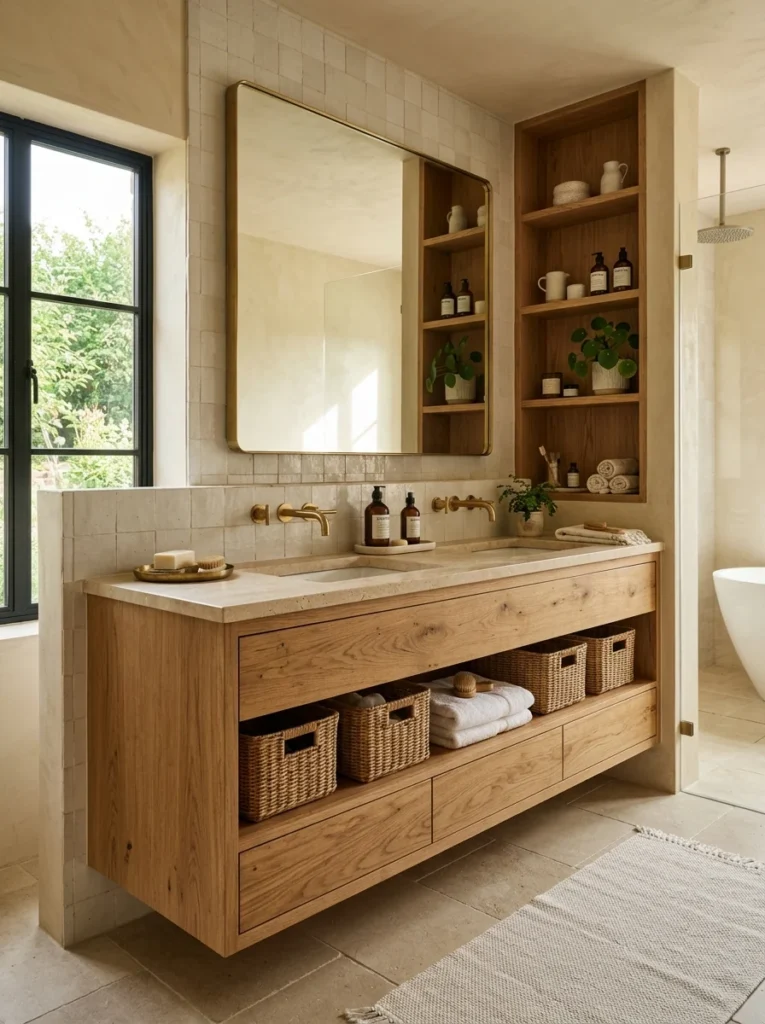
Cheap, particleboard cabinetry tends to swell and warp in a high-moisture bathroom environment far faster than solid wood or high-quality moisture-resistant materials, which means it often needs replacing years before it should, generating unnecessary waste in the process. Investing a bit more in genuinely moisture-resistant cabinetry, or choosing a design that keeps cabinetry away from direct water exposure, extends the life of the vanity significantly and reduces how often it ends up in a landfill. Where possible, repainting or refinishing existing cabinetry rather than replacing it entirely is also a lower-impact choice that keeps usable material out of the waste stream altogether.
Common eco-friendly bathroom questions
What’s the single most effective water-saving upgrade for a bathroom?
Replacing an older toilet with a certified low-flow or dual-flush model typically offers the biggest single reduction in water use, since toilets account for the largest share of bathroom water consumption in most households. A low-flow showerhead is a close second and is considerably cheaper and faster to install.
Are low-flow fixtures noticeably worse than standard ones?
Modern low-flow showerheads and faucets use aerating technology to maintain strong pressure and a comfortable experience, so most people don’t notice a meaningful difference in daily use compared to older, higher-flow fixtures.
Is a tankless water heater worth the higher upfront cost?
For households with consistent hot water demand and a water heater nearing the end of its life anyway, the ongoing energy savings and longer lifespan of a tankless model can make up for the higher initial cost over time. It’s a bigger investment best considered during a larger renovation rather than as a standalone swap.
Do sustainable bathroom materials cost significantly more?
Some sustainable materials, like reclaimed wood or recycled tile, can cost more upfront, but durable choices like quality porcelain tile often cost about the same as lower-quality alternatives while lasting considerably longer, which reduces the total cost and waste over the life of the bathroom.
Is a bidet attachment a good sustainability upgrade?
Yes, a bidet attachment reduces toilet paper consumption significantly over time, which lowers the water, energy, and raw materials involved in paper production. Most attachments connect to an existing toilet’s water supply line and don’t require a full toilet replacement, making it a relatively simple and affordable upgrade.
An eco-friendly bathroom doesn’t require a complete overhaul to make a genuine difference. Starting with the cheapest, fastest changes, a low-flow showerhead, a faucet aerator, LED bulbs, and better daily habits, builds a foundation that bigger investments, a new toilet, sustainable materials, or a tankless water heater, can build on whenever your budget and renovation timeline allow. The goal isn’t perfection in a single weekend; it’s steady, meaningful progress toward a bathroom that uses less and lasts longer.
Since making these changes in my own bathroom, my water bill has dropped noticeably, and the bathroom itself feels just as comfortable to use every day as it did before, just quieter on the utility bill and lighter on the resources behind it. If you’re not sure where to start, begin with the showerhead and faucet aerator; they’re the cheapest, fastest wins on this entire list, and they’ll show up on your very next bill.