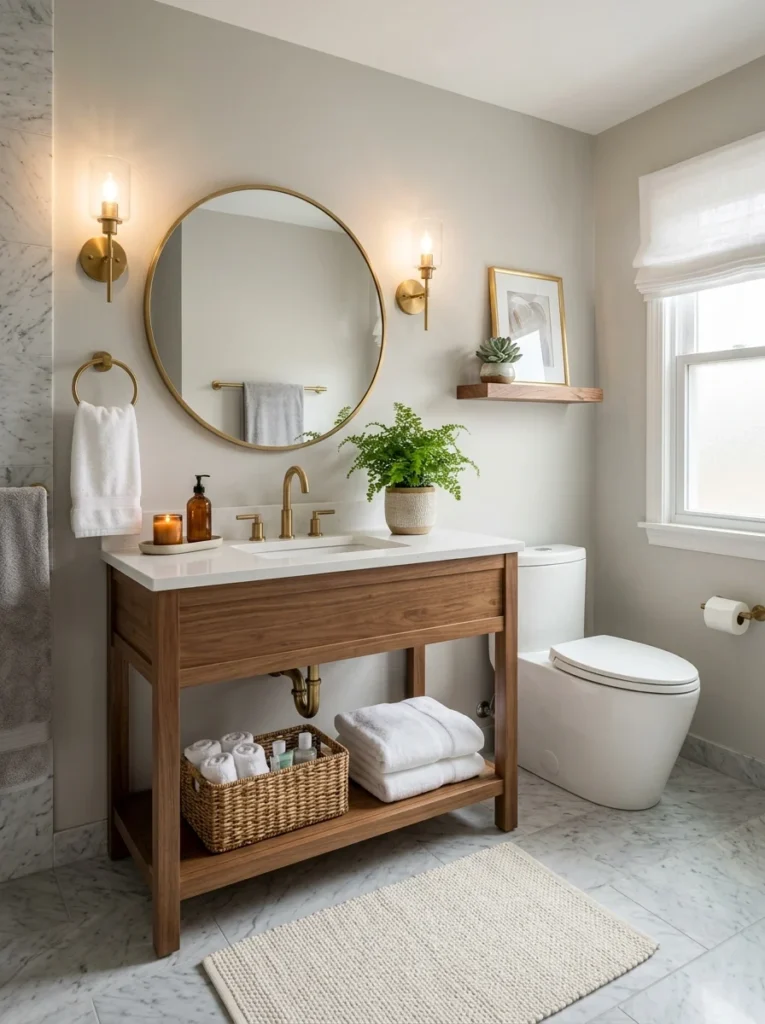
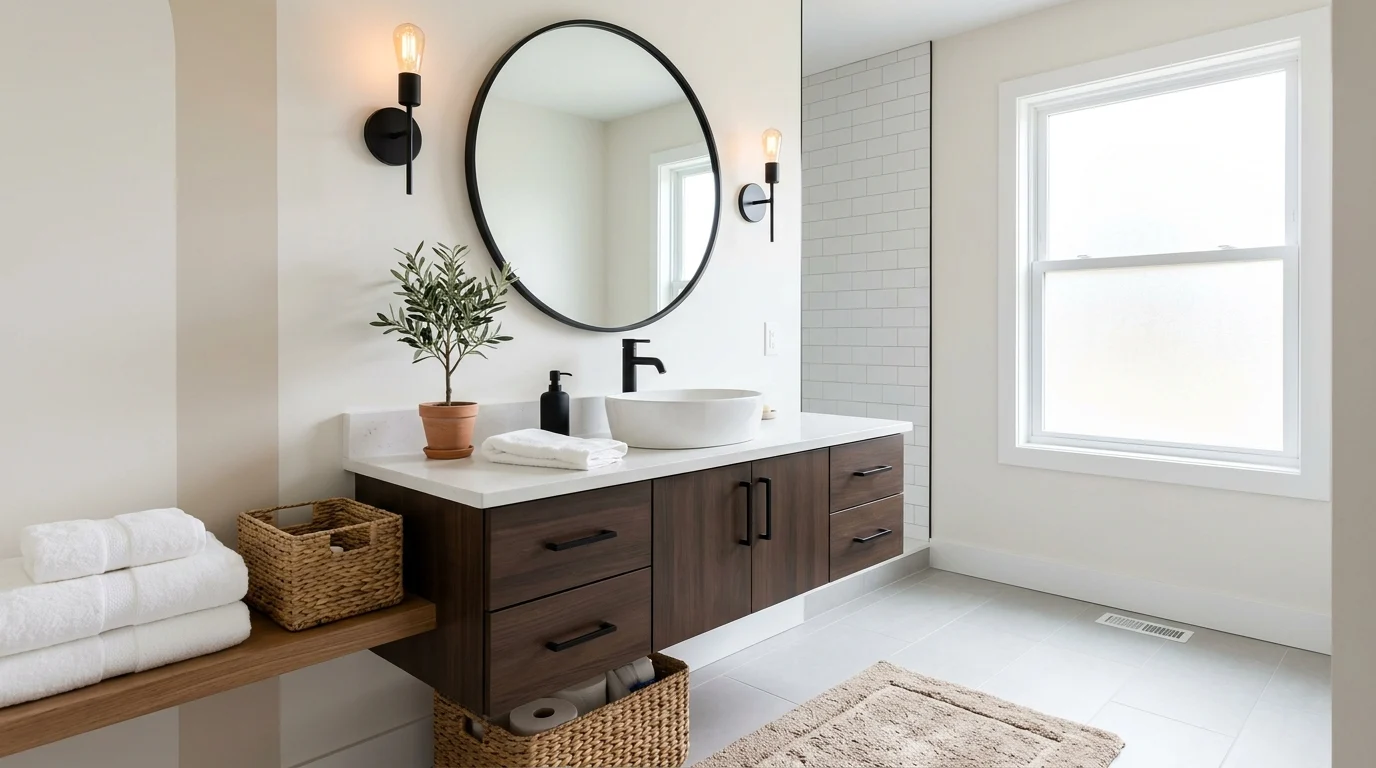
My guest bathroom sat untouched for almost five years after we moved in, mostly because I assumed updating it meant a full renovation I couldn’t justify for a room that got used maybe once a month when family visited. It wasn’t until a friend mentioned she’d redone her entire guest bathroom over a single weekend, without touching the tub or moving a single pipe, that I realized how much could actually change without demolition. I followed a similar approach, and the room went from a space I apologized for to one guests specifically compliment, all without a contractor ever setting foot in it.
A guest bathroom is one of the best rooms in the house to makeover on a budget, precisely because it usually doesn’t need structural changes, just better finishes, smarter styling, and a bit of intention. Below are the changes that make the biggest difference, roughly in the order I’d tackle them if you’re starting from scratch.
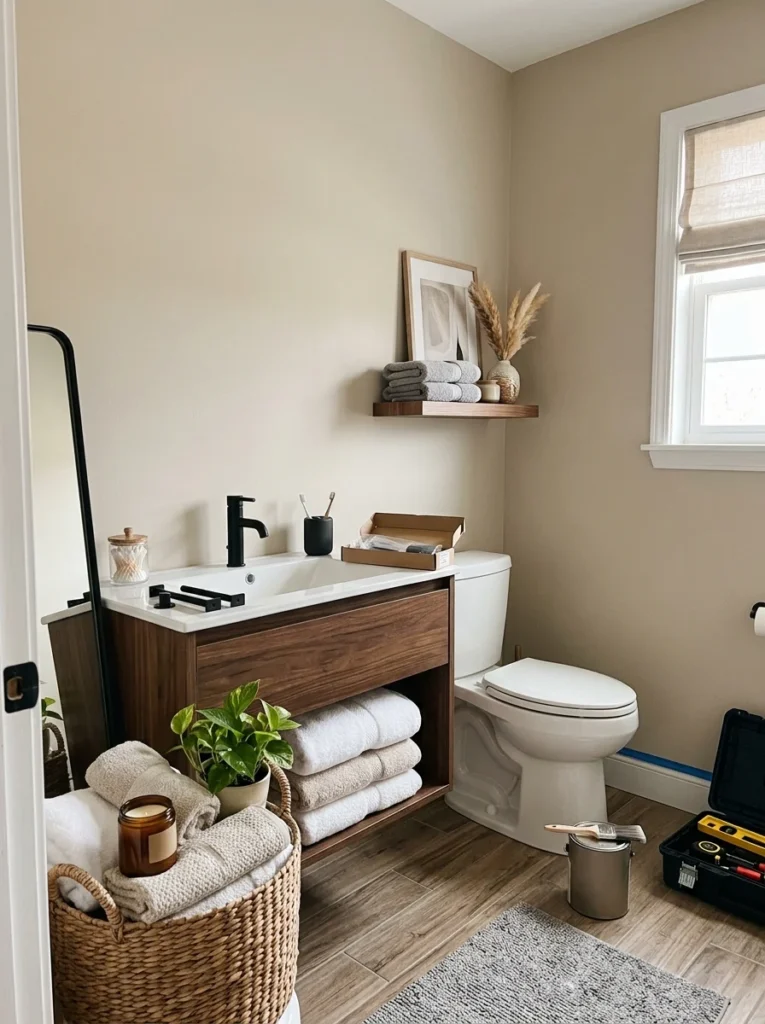
Start with paint, the highest-impact, lowest-cost change
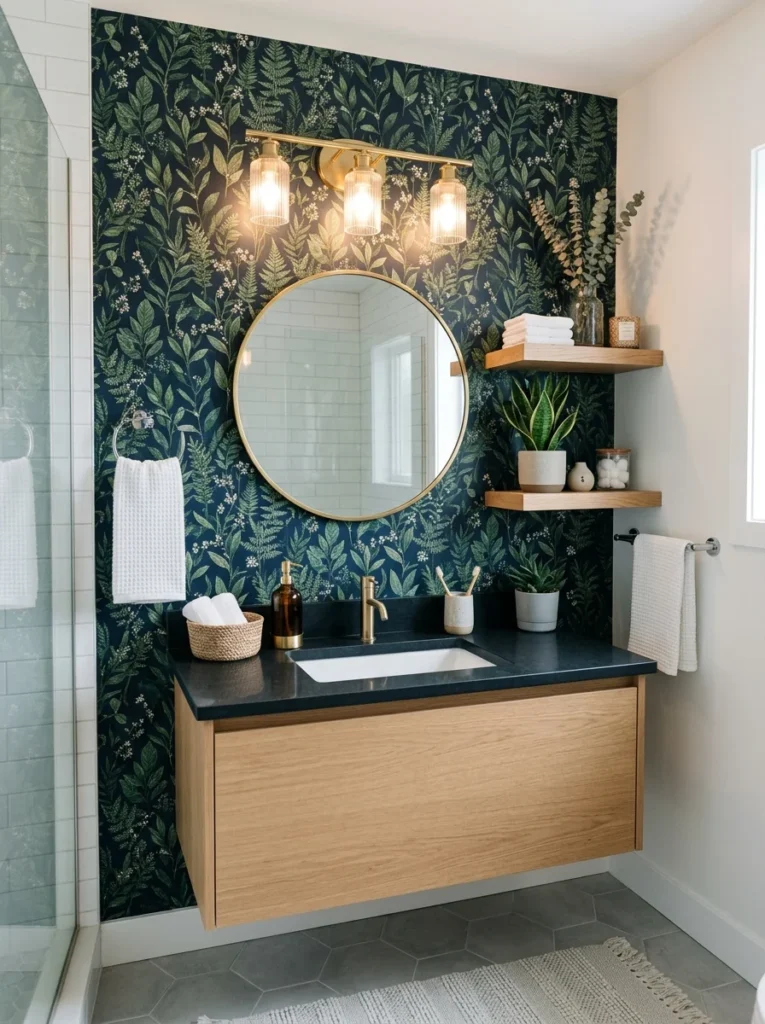
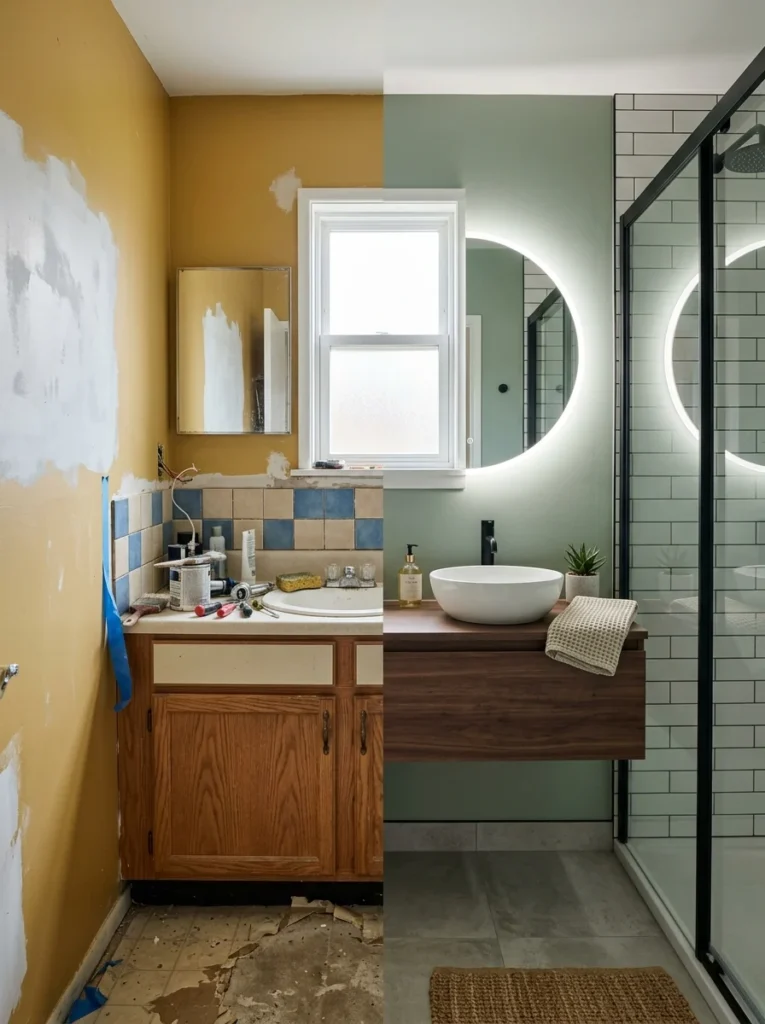
A fresh coat of paint, in a color rated for high-moisture rooms, remains the single most effective way to transform a guest bathroom without touching a single fixture. Since guest bathrooms are often smaller, they’re also one of the few rooms in the house where a bolder or deeper color works well, a room used briefly rather than lived in daily can handle a color choice you might hesitate on elsewhere. A deep green, a warm terracotta, or a moody navy can make a small guest bathroom feel intentional and design-forward rather than like an afterthought, especially paired with white trim and fixtures for contrast.
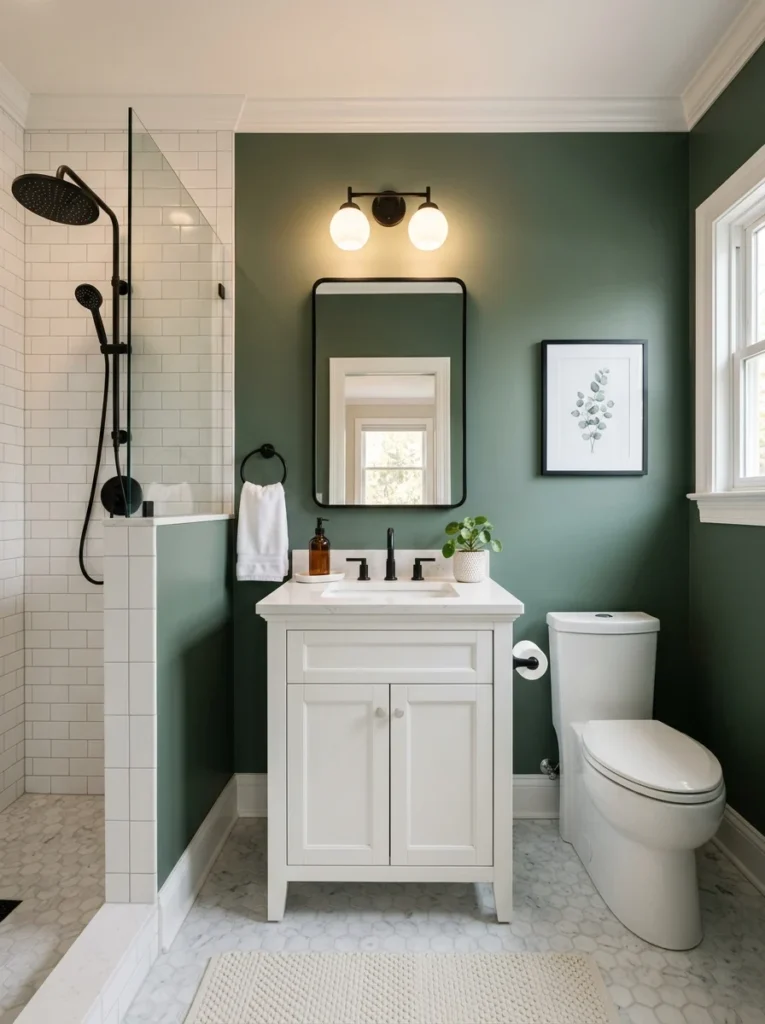
Swap hardware and fixtures for an instant upgrade
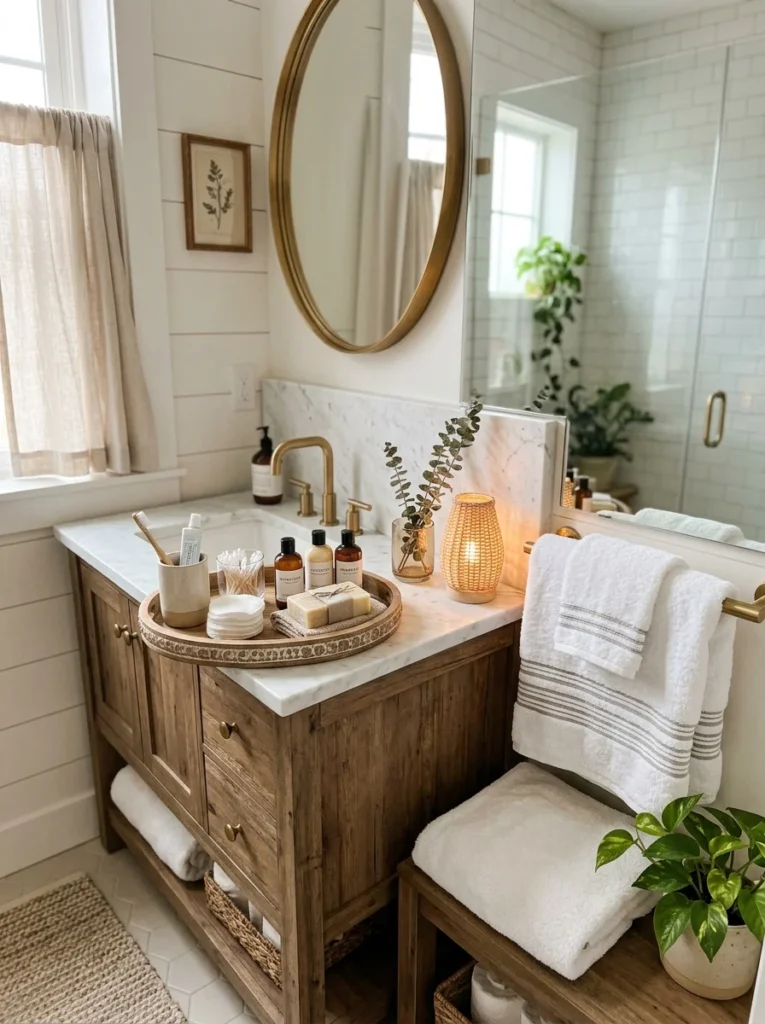
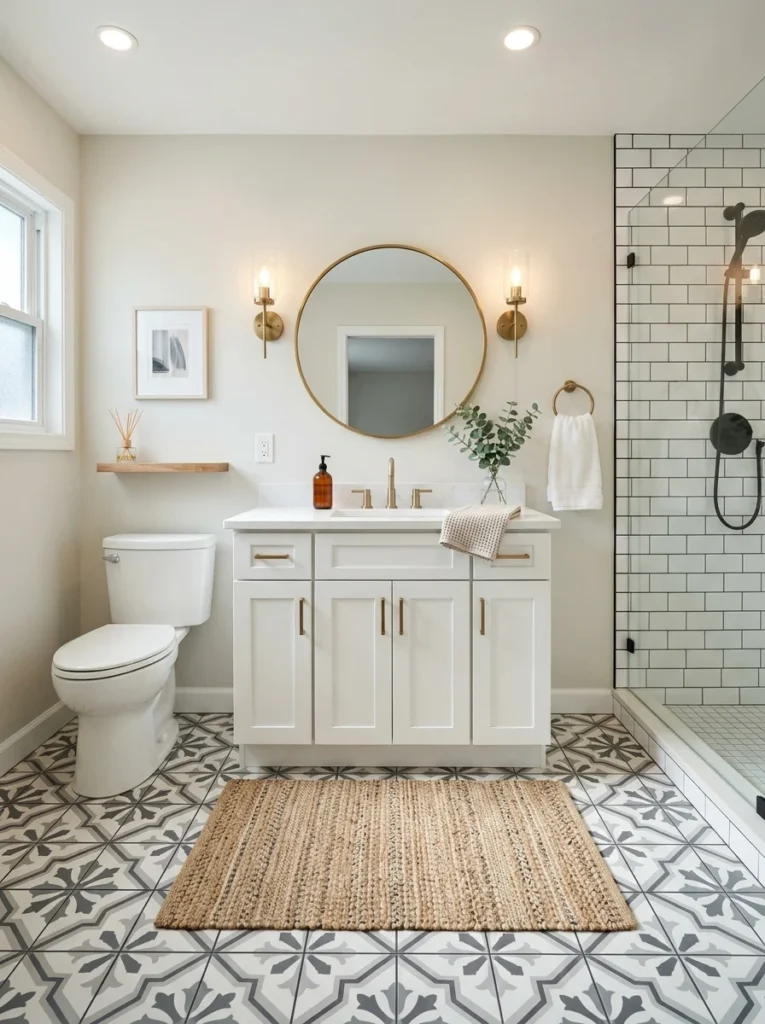
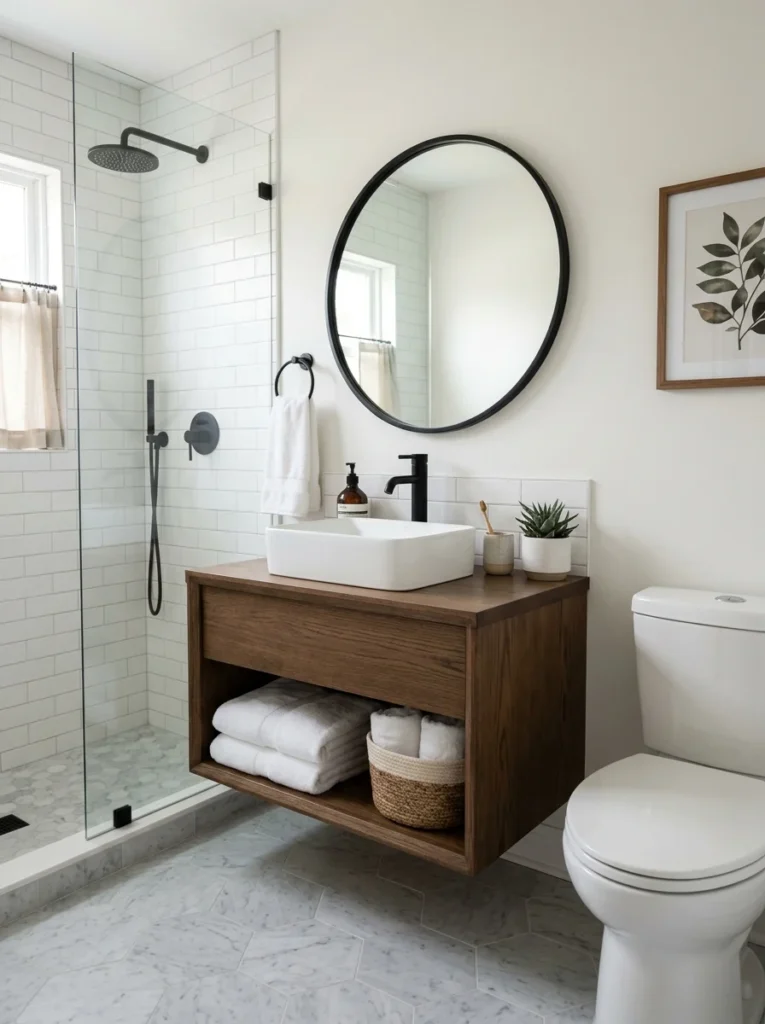
Replacing the faucet, cabinet pulls, towel bar, and light fixture is a weekend project that dramatically changes how updated a bathroom feels, since these are usually the most visibly dated elements in an older bathroom. Choosing one consistent finish, matte black, brushed nickel, or warm brass, across all of these pieces ties the whole room together and reads as a far more expensive, considered update than the actual cost of the parts involved. This is typically the second change I’d make after paint, since it has an outsized visual impact for a relatively small investment.
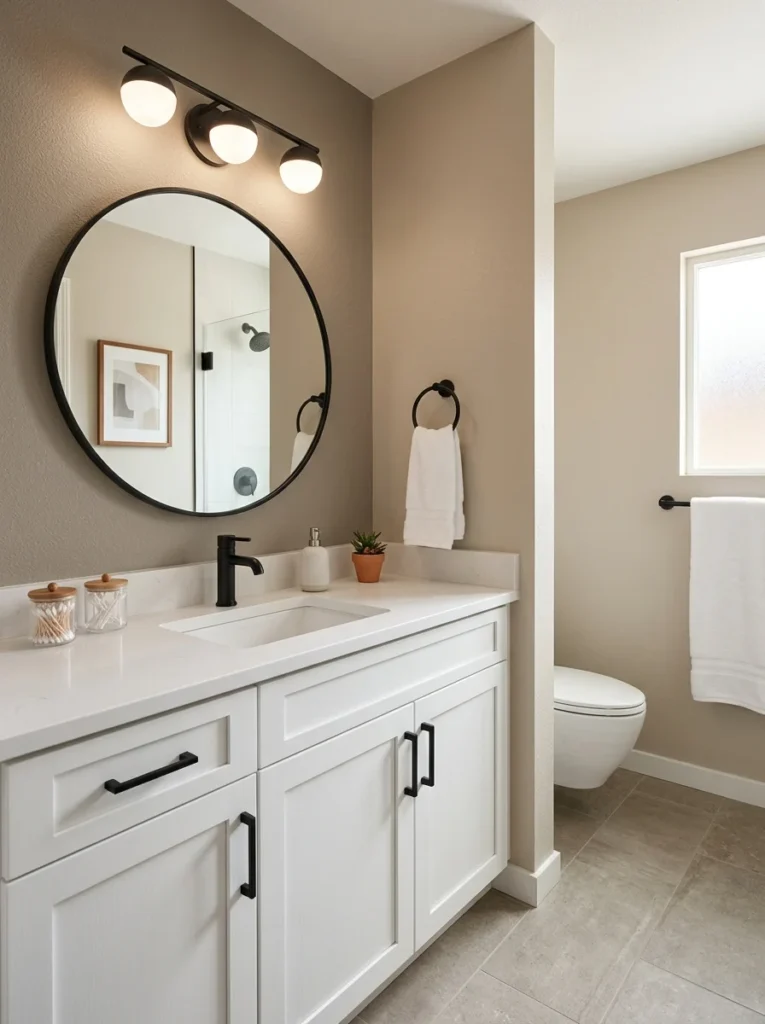
Replace the mirror with something more interesting
A plain, builder-grade rectangular mirror is one of the clearest signs of an untouched, dated bathroom. Swapping it for a mirror with a distinct shape, an arch, a circle, or a substantial frame in wood or metal, adds character to the room without requiring any plumbing or electrical work. In a guest bathroom specifically, this is a great place to take a slightly bolder design risk, since it’s a small, easily changed element rather than a major fixture.
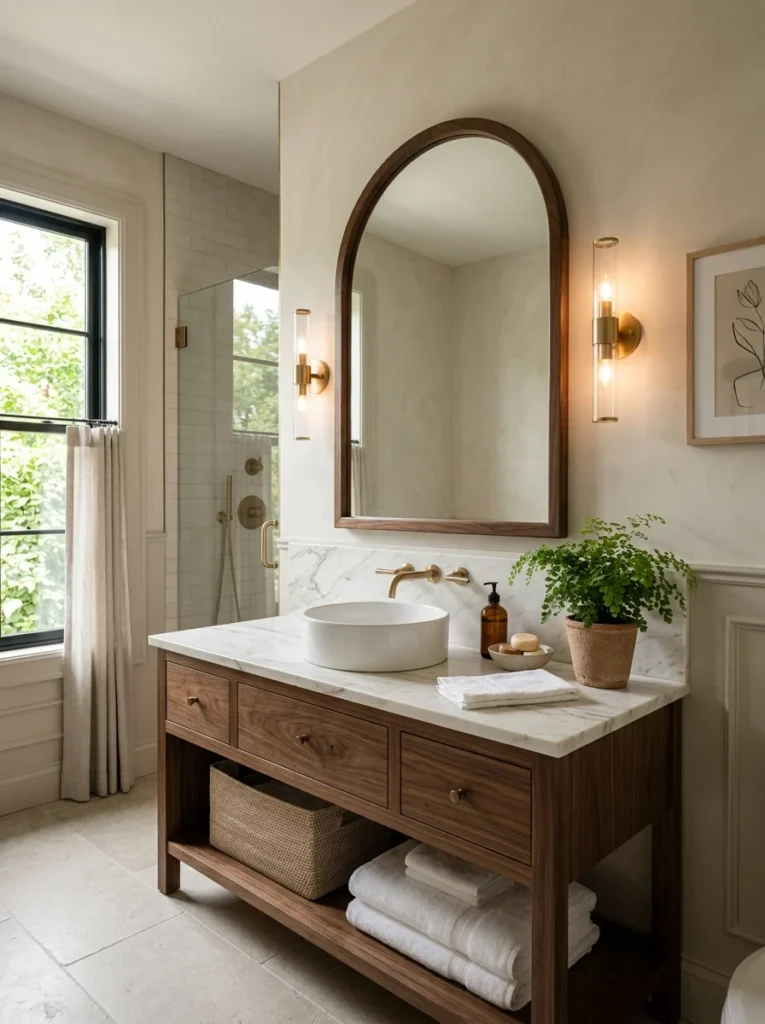
Update the vanity without replacing it
If the vanity’s cabinet box is structurally sound but the doors or finish look dated, repainting or restaining it is far cheaper than a full replacement and can completely change the character of the room. Swapping just the countertop, if it’s laminate or a dated stone pattern, for a simple quartz or solid-surface top is another mid-range upgrade that modernizes the whole vanity without a full replacement. If the vanity is genuinely falling apart or too small for the space, a compact, wall-hung, or simple freestanding vanity can still be installed without moving existing plumbing, provided the new one is a similar size and configuration to the old one.
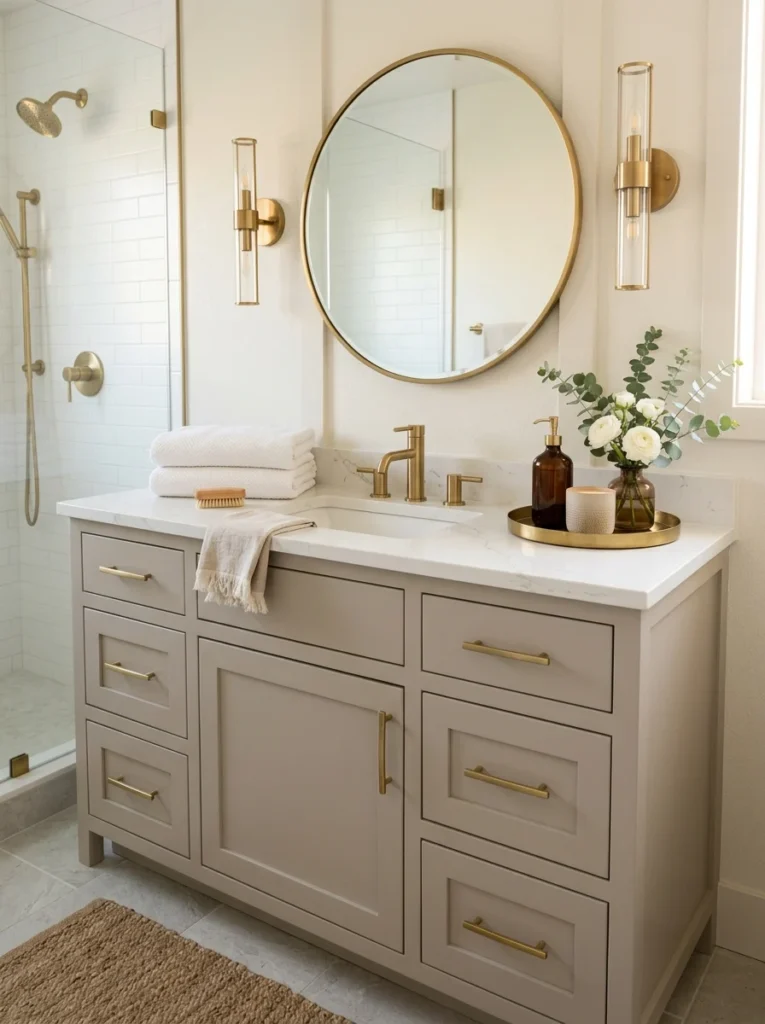
Add a statement wallpaper or wall treatment
A guest bathroom, precisely because it’s used briefly rather than daily, is one of the best rooms in the house to use a bold wallpaper or wall treatment that might feel like too much in a primary bathroom. Peel-and-stick wallpaper designed for high-moisture rooms makes this an approachable weekend project rather than a professional installation, and it can be removed relatively easily if you change your mind later. A single accent wall, often behind the vanity or toilet, applies the impact without requiring the whole room to be wallpapered, which also keeps material costs down.
Refresh or replace the shower curtain and hardware
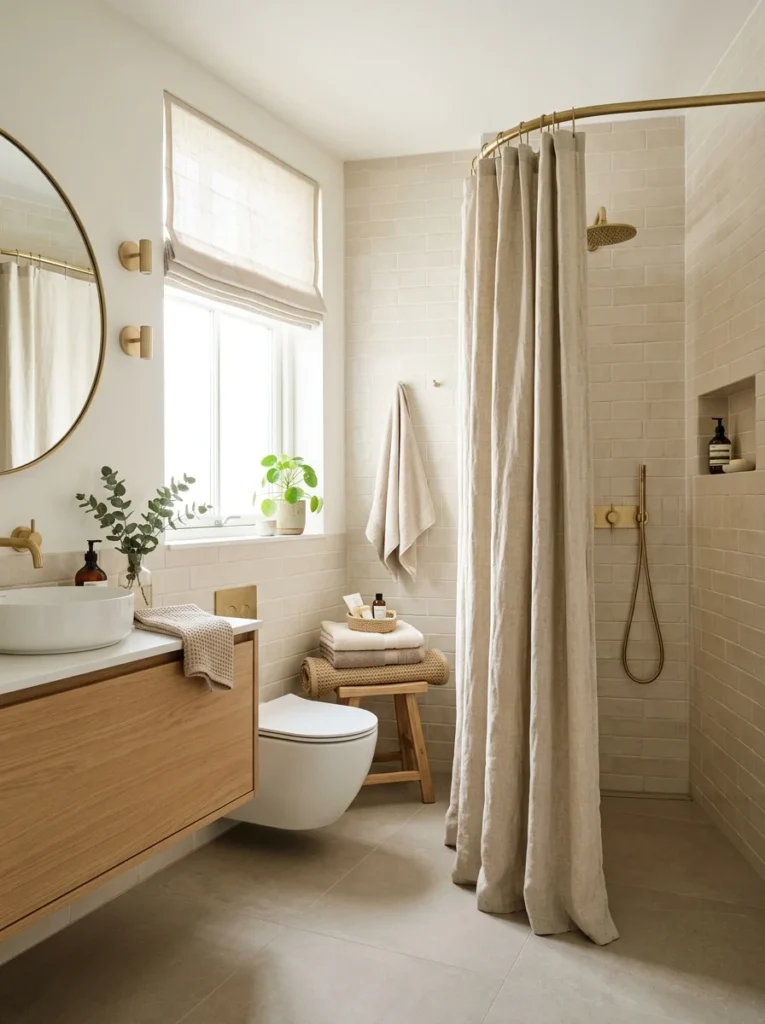
If your guest bathroom has a tub-shower combination, the shower curtain and rod are often overlooked but have a significant visual impact. A weighted, high-quality fabric curtain in a color or pattern that complements the new paint, paired with a sturdy curved shower rod instead of a straight one, both elevates the look and creates a bit more elbow room inside the shower itself. This is one of the cheapest updates on this entire list and one guests actually notice, since a flimsy plastic curtain reads as dated no matter what else in the room has been updated.
Improve the lighting
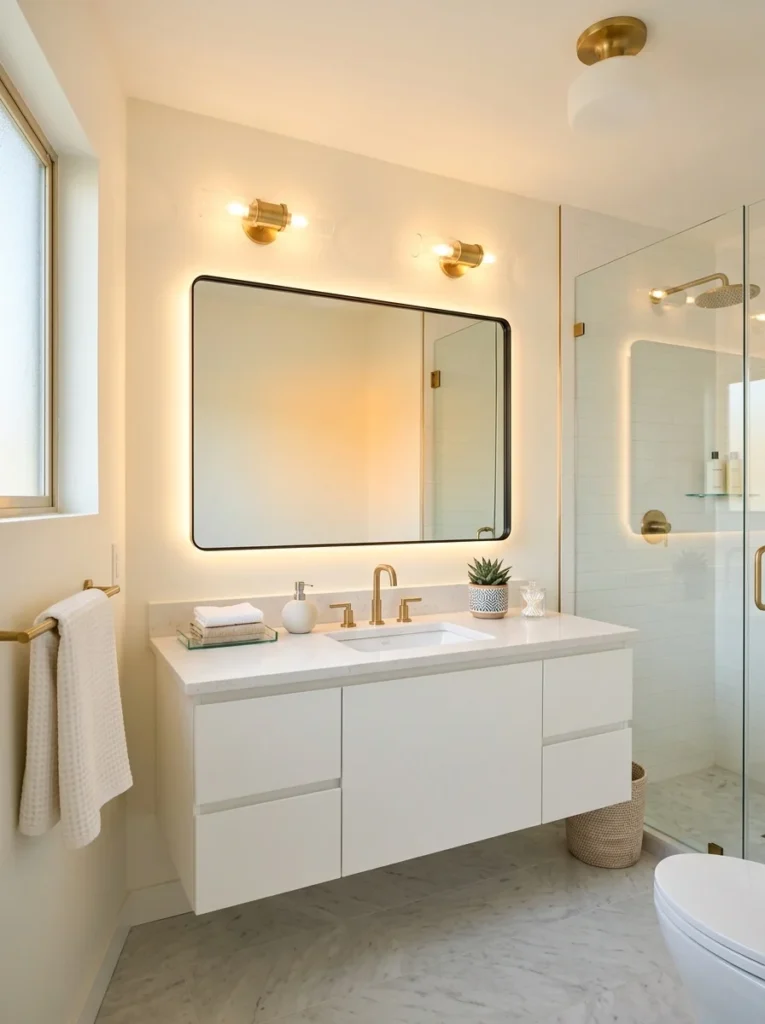
Many guest bathrooms rely on a single dim overhead fixture, which makes the whole room feel dingy regardless of how nice the finishes are. Adding a brighter, well-placed vanity light, ideally at face height on either side of the mirror rather than only above it, dramatically improves both the look and function of the room. If rewiring isn’t in the budget, even swapping the bulbs for a warmer, higher-lumen option in the existing fixture can noticeably brighten the space without any electrical work at all.
Style the space with layered textiles and accessories
New towels, a stylish bath mat, and a few well-chosen accessories, a soap dispenser, a small tray, a candle, do more to make a guest bathroom feel finished than people expect, and they’re inexpensive to change seasonally or whenever you want a refresh. Coordinating towel colors with the new paint or wallpaper ties the whole room together, and a fresh, plush set of towels specifically reserved for guests signals care in a way that a mismatched, worn set never will. A small plant, real or a realistic artificial one suited to lower light, adds warmth without any ongoing maintenance concerns for a room that isn’t used daily.
Add storage that also adds style
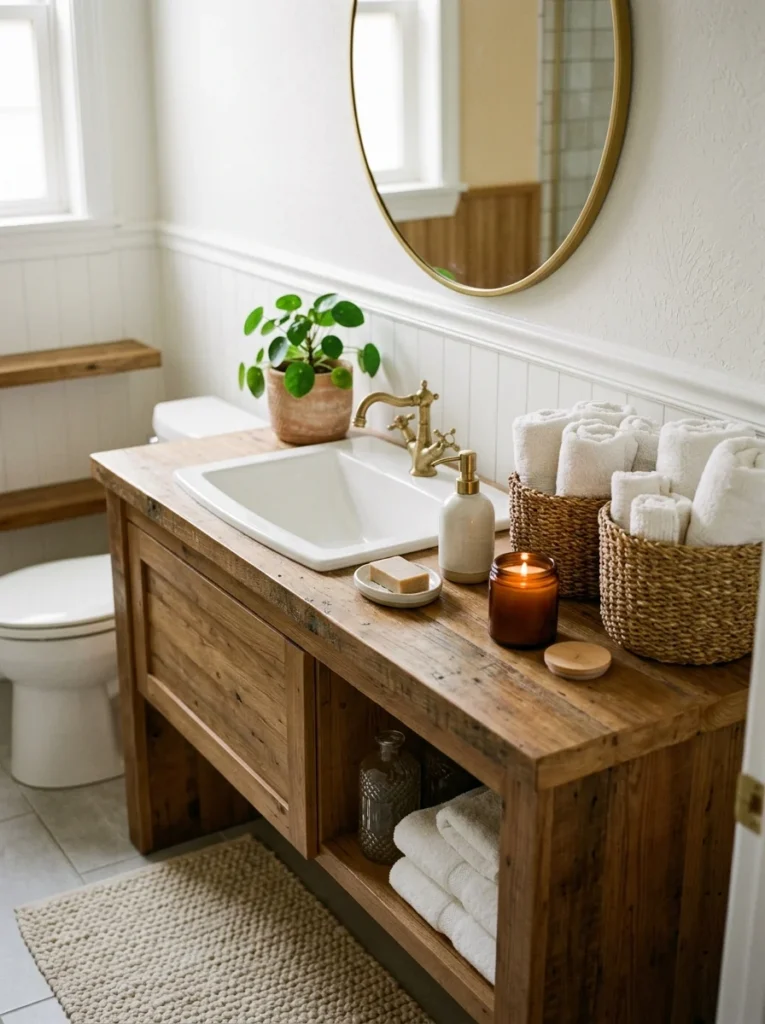
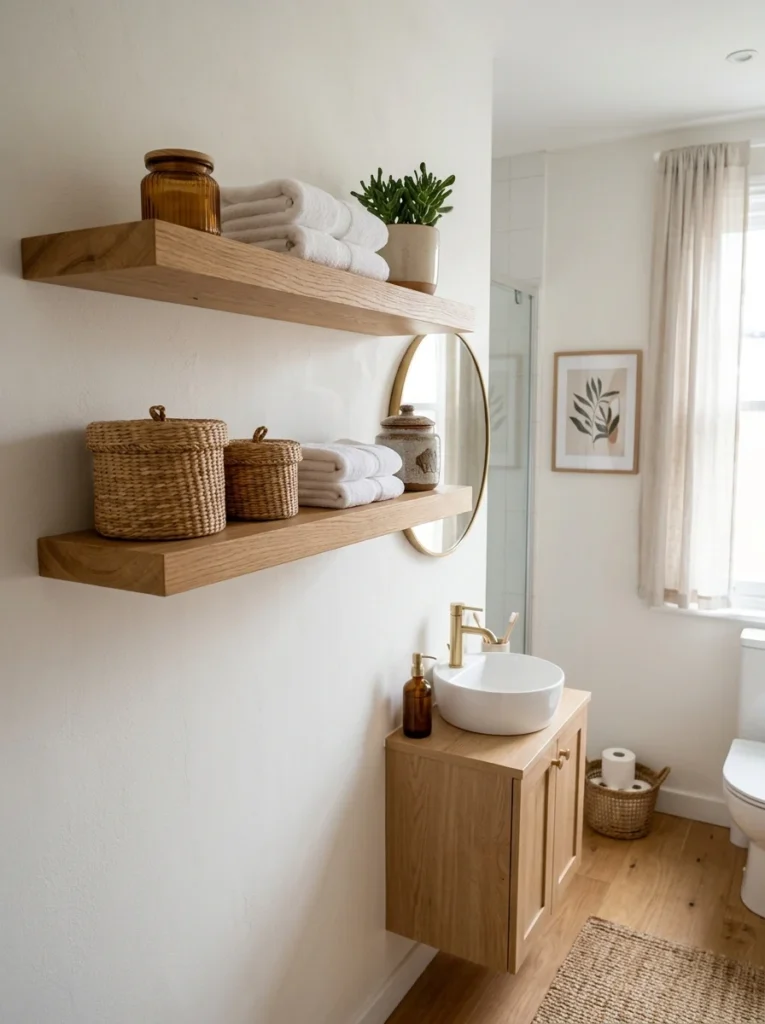
Guest bathrooms often lack storage, especially older or smaller ones, which is worth solving with an eye toward style rather than purely function. An open shelf or a small, decorative cabinet gives guests an obvious place to find fresh towels or toiletries without having to ask, which is a small but meaningful hospitality detail. A woven basket holding spare toilet paper and a few toiletries looks intentional rather than utilitarian, and it solves the common awkwardness of guests not knowing where to find supplies during their stay.
Consider the guest experience, not just the aesthetics
A guest bathroom makeover is also a chance to think through small hospitality details that a primary bathroom doesn’t need: a clearly visible spot for fresh towels, a small basket of toiletries in case someone forgot theirs, and a nightlight for anyone unfamiliar with navigating your home in the dark. These details cost very little but make a genuine difference in how comfortable guests feel using an unfamiliar bathroom, and they’re easy to overlook when focusing purely on how the room looks in photos.
Mistakes to avoid in a guest bathroom makeover
The most common mistake is trying to do everything at once and running out of budget partway through, leaving the room in a half-finished state that looks worse than before you started. Tackling changes in order of impact, paint and hardware first, then styling, then bigger items like a vanity or wallpaper, means the room looks progressively better at every stage rather than incomplete until the very end. Another common mistake is choosing trend-driven, ultra-specific decor, a single overly themed color scheme or a very niche pattern, that can feel dated within a year or two, especially since a guest bathroom makeover is meant to be a lower-cost, lower-effort refresh rather than a full renovation you’d want to redo again soon. Finally, don’t neglect ventilation while focusing purely on aesthetics; if the room doesn’t have a working exhaust fan, any fresh paint or new wallpaper will be at risk of moisture damage far sooner than it should be, undermining the whole makeover.
Consider a flooring refresh if the budget allows
If your budget stretches slightly beyond the cosmetic essentials, updating the floor can be one of the more impactful mid-range changes, especially if the existing flooring is visibly worn, cracked, or dated. Peel-and-stick vinyl tile designed for bathrooms has improved significantly in both look and durability, and it can be installed over existing flooring in many cases without removing the old surface, keeping both cost and mess to a minimum. If the floor is otherwise in good shape but just looks tired, a thorough deep clean and re-grouting existing tile can often achieve much of the same visual refresh at a fraction of the cost of full replacement.
Common guest bathroom makeover questions
How much does a guest bathroom makeover typically cost without a remodel?
A cosmetic makeover focused on paint, hardware, a new mirror, textiles, and accessories can often be completed for a fraction of a full remodel’s cost, since none of it involves moving plumbing or structural changes. Costs vary based on how many elements you update and the quality level you choose, but this approach is consistently one of the most affordable ways to meaningfully transform a bathroom.
Can I really update a guest bathroom in a weekend?
Yes, painting, swapping hardware and fixtures, changing the shower curtain, updating accessories, and adding a new mirror can typically all be completed within a weekend by most homeowners with basic tools. Larger changes like a new vanity or wallpaper may take a bit longer but still don’t require professional help for most installations.
Is it worth bothering with a room guests use so rarely?
Yes, precisely because it’s used infrequently, a guest bathroom is one of the lowest-cost, lowest-risk rooms to experiment with bolder colors or patterns you might hesitate to use in a primary bathroom. It’s also often the first impression visitors get of your home’s care and style, which makes the relatively small investment feel worthwhile.
What’s the single best upgrade for a guest bathroom on a tight budget?
Fresh paint paired with new hardware and fixtures consistently offers the best visual return for the lowest cost, since both changes require no structural work and can transform how updated the entire room feels within a single weekend.
Should I update the flooring in a guest bathroom makeover?
Flooring updates are optional in a cosmetic makeover, but worth considering if the existing floor is visibly worn or damaged. Peel-and-stick vinyl tile is a budget-friendly option that can often go over existing flooring, while a deep clean and re-grouting can refresh floors that are structurally fine but simply look dull.
A guest bathroom doesn’t need a full remodel to feel completely transformed. Paint, hardware, a better mirror, improved lighting, and a few thoughtful hospitality details can turn a neglected, dated space into one of the more complimented rooms in the house, all without moving a single pipe. Start with paint and hardware, since those changes offer the biggest visual impact for the smallest investment, and layer in the rest as time and budget allow.
My own guest bathroom, once a room I quietly apologized for whenever family stayed over, is now the room my sister specifically asks about every time she visits, not because anything structural changed, but because every surface in it finally got a bit of intention behind it. If you’ve been putting off your own guest bathroom for the same reason I did, assuming it meant a full renovation, start smaller than you think you need to and see how far it actually takes you.