Every time I sit down with a friend who’s about to start a bathroom renovation, the conversation eventually turns to the same question: what’s actually going to look dated in five years versus what’s worth the investment right now. It’s a fair question, since a primary bathroom renovation is one of the more expensive updates in a home, and nobody wants to spend that kind of money on a look that feels tired before the tile grout even has time to settle. Having watched design trends shift over the past several renovation cycles, a clear pattern has emerged for 2026: the biggest shift isn’t toward a single new look, but away from anything that reads as overly trend-chasing, toward choices that feel more considered, tactile, and built to last.
Below is an honest breakdown of what’s genuinely gaining traction in primary bathroom design this year, what’s fading, and, just as importantly, what’s holding steady regardless of the trend cycle, so you can separate the choices worth chasing from the ones worth ignoring entirely.
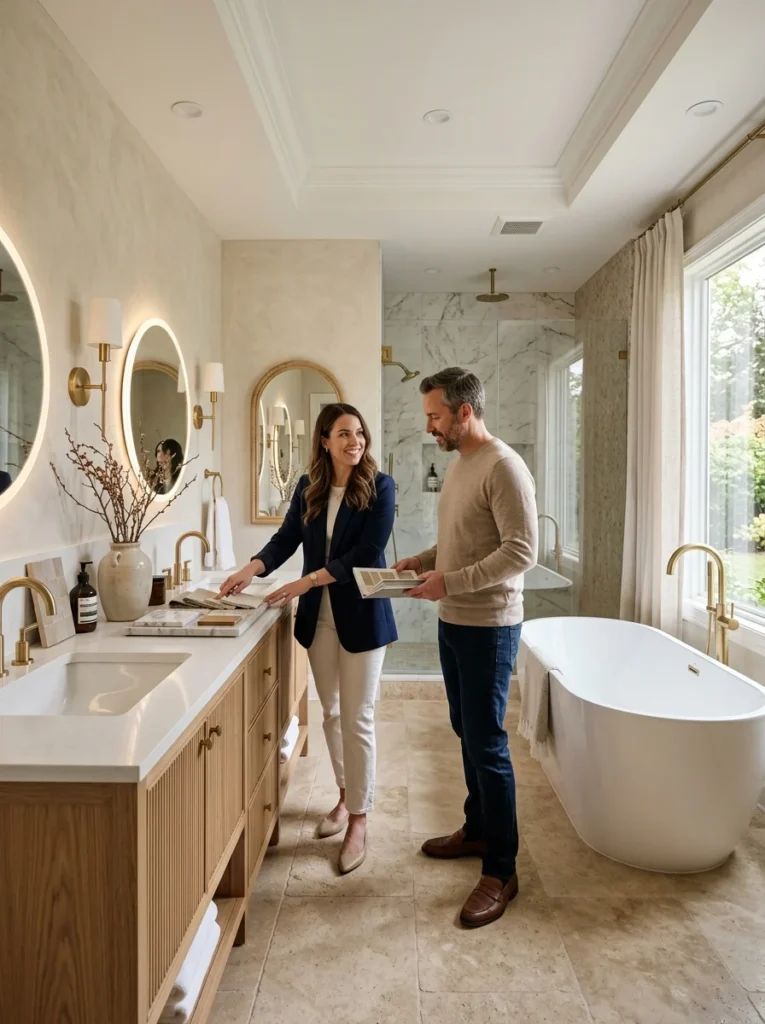
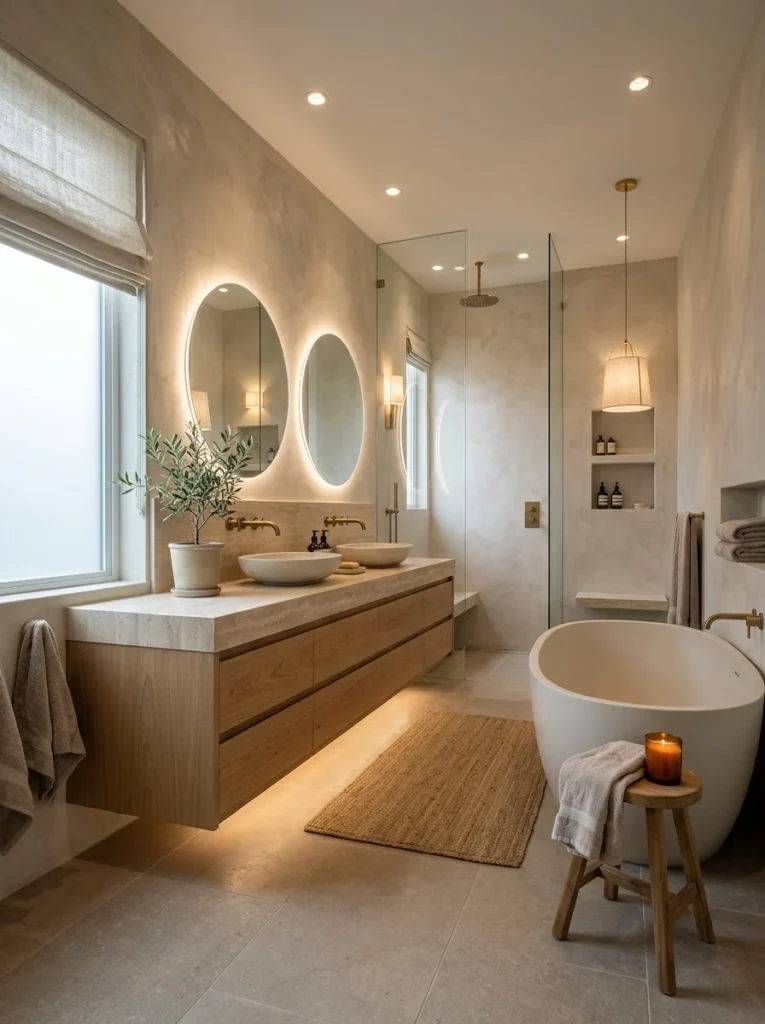
In: warm, textured neutrals over stark white and grey
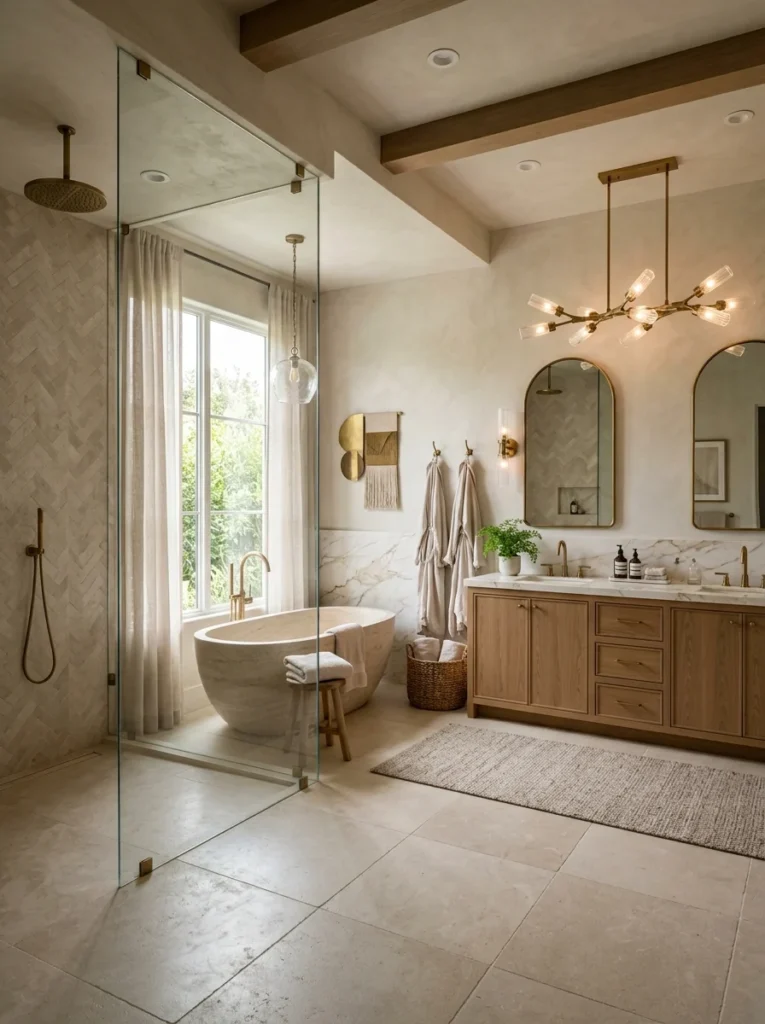
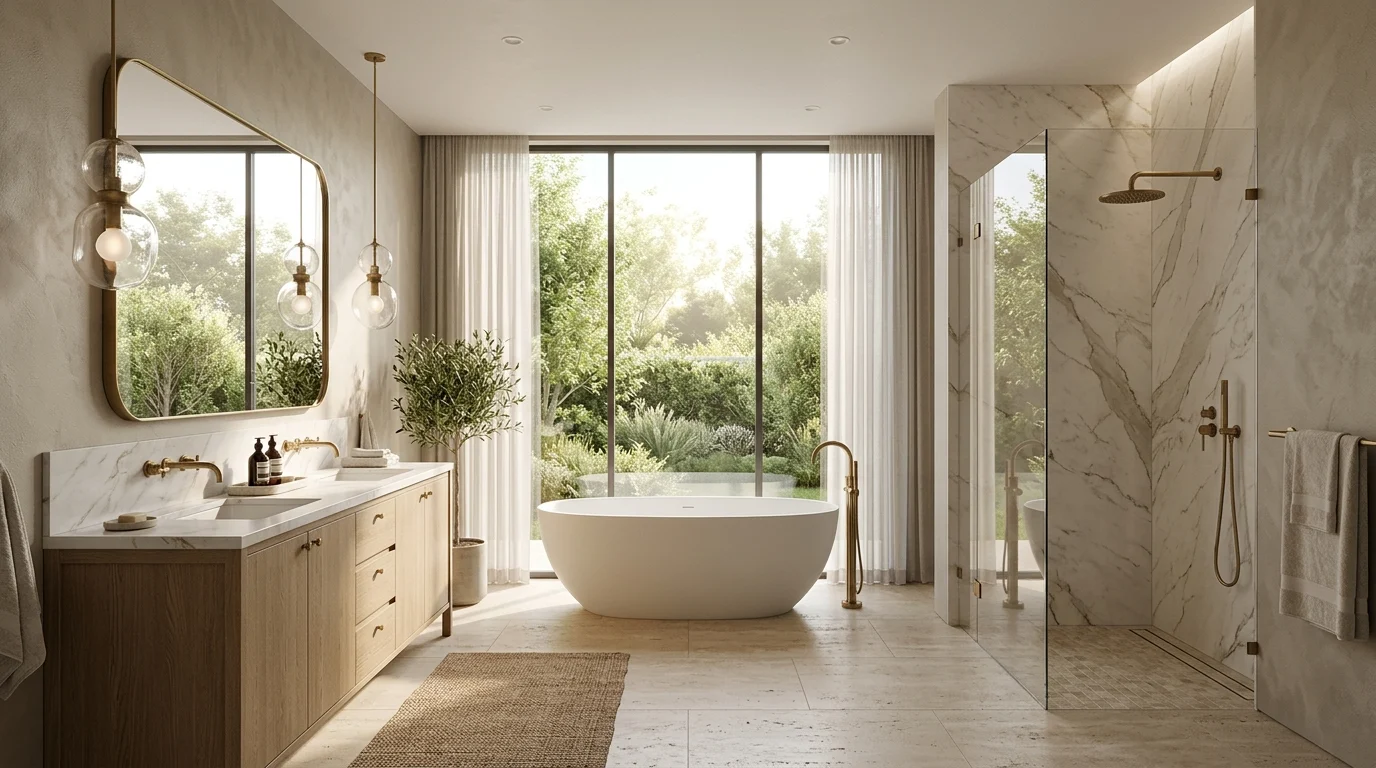
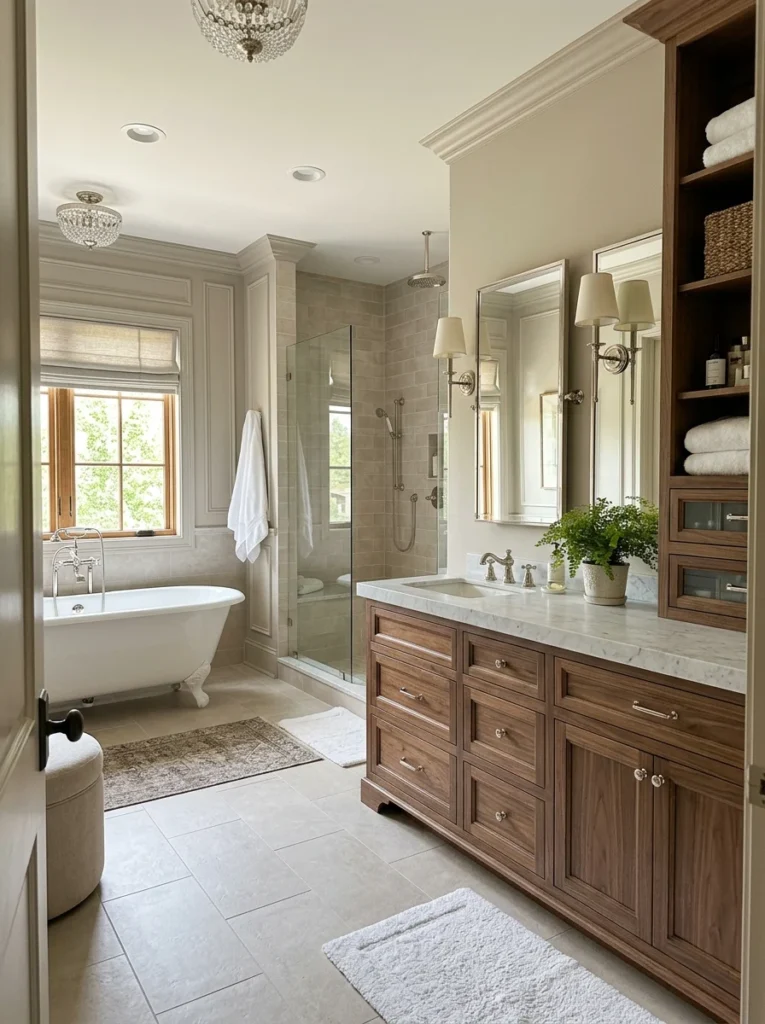
The cool, all-white and grey palette that dominated bathroom design for the better part of a decade is giving way to warmer neutrals, creams, warm greiges, soft taupes, that feel more inviting and less clinical. This isn’t a dramatic color shift so much as a warming of the same restrained palette, paired with more visible texture in materials like limewash walls, textured plaster, and honed rather than polished stone. The overall effect reads as calmer and more tactile than the flatter, cooler look that preceded it.
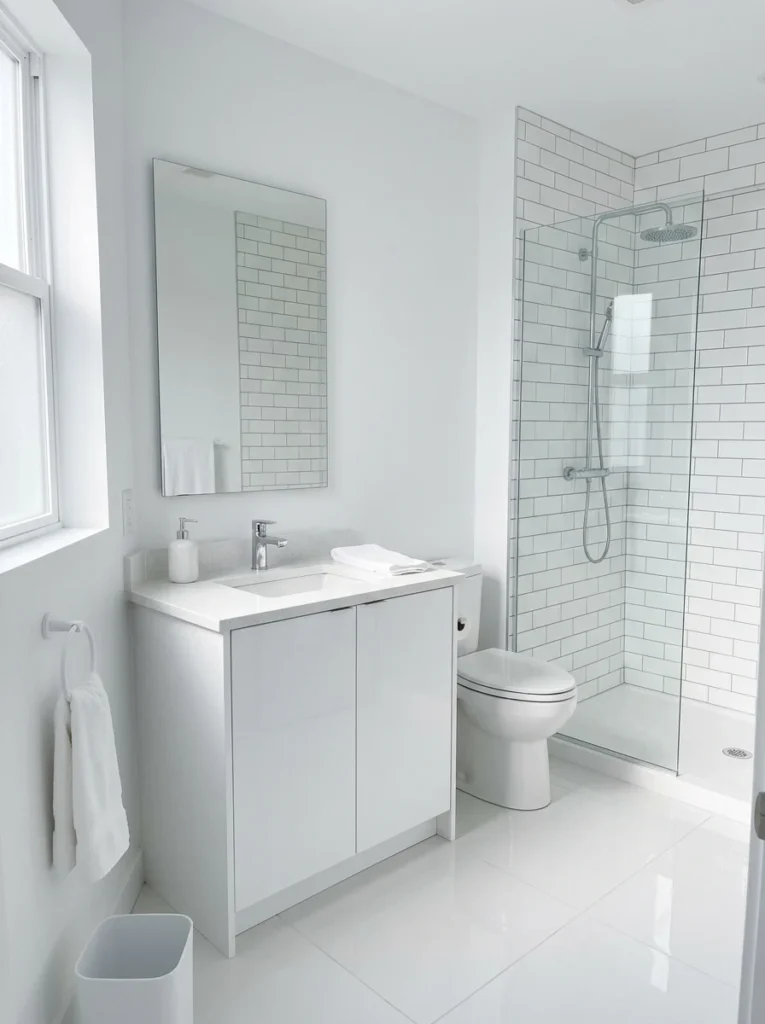
Out: an all-white, high-gloss, spa-clinical look
The extremely white, high-gloss bathroom, glossy white subway tile, bright white countertops, stark white walls, is increasingly read as sterile rather than luxurious. It’s not disappearing entirely, but it’s being replaced in higher-end design by softer, warmer finishes that feel more like a considered room and less like a clinical space. Homeowners renovating this year are leaning toward finishes with more depth and variation rather than a flat, uniform white.
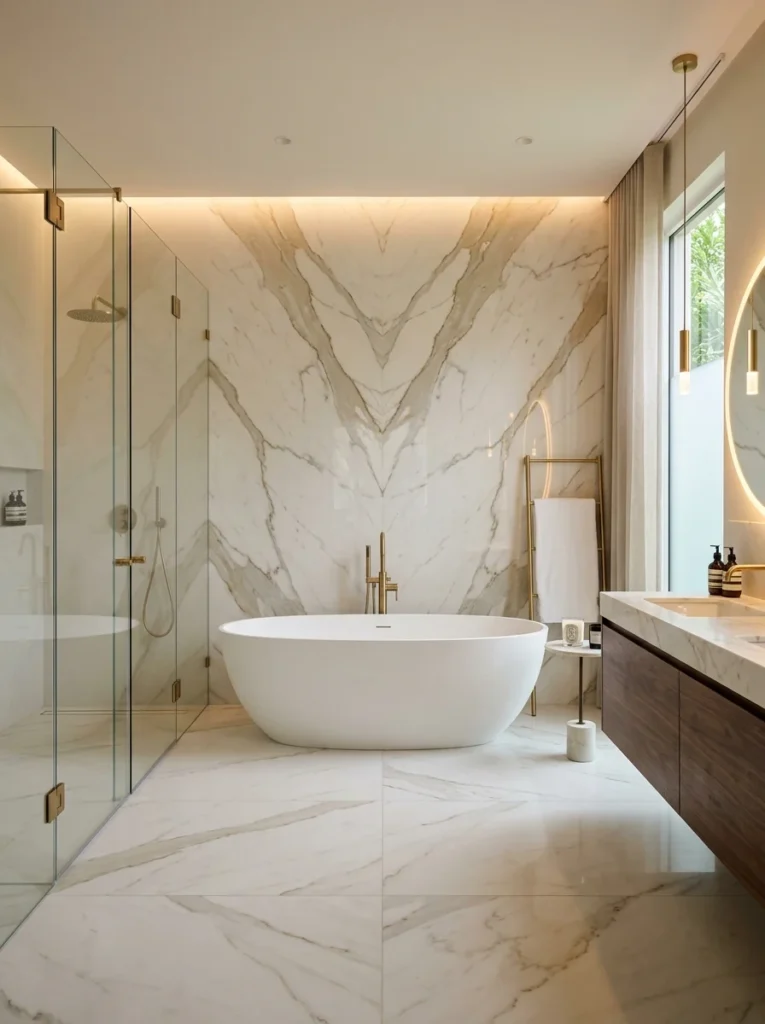
In: large-format, book-matched, and slab tile
Large-format tile continues to grow in popularity, and 2026 is seeing more use of book-matched tile, where two adjacent tile pieces are cut and installed to mirror each other’s veining, creating a striking, symmetrical pattern often used behind a tub or as a full shower wall. Full stone or porcelain slab walls, which minimize grout lines almost entirely, are also becoming more common in higher-budget primary bathrooms, prized for their clean, seamless appearance and lower long-term maintenance.
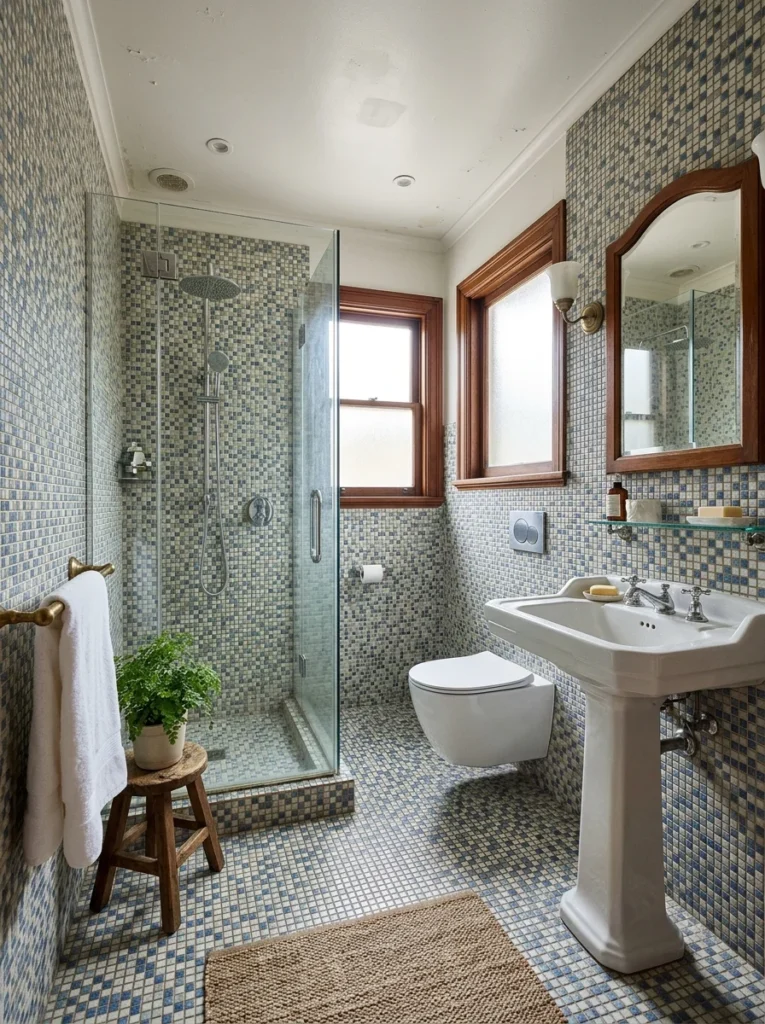
Out: small mosaic tile as a primary wall or floor material
While mosaic tile still has a place as an accent, particularly on a shower floor for slip resistance, using it as the dominant tile choice across large wall or floor areas is fading in favor of the larger, more seamless-looking tile described above. Small mosaic across an entire wall now reads as slightly dated compared to the cleaner lines of large-format and slab tile.
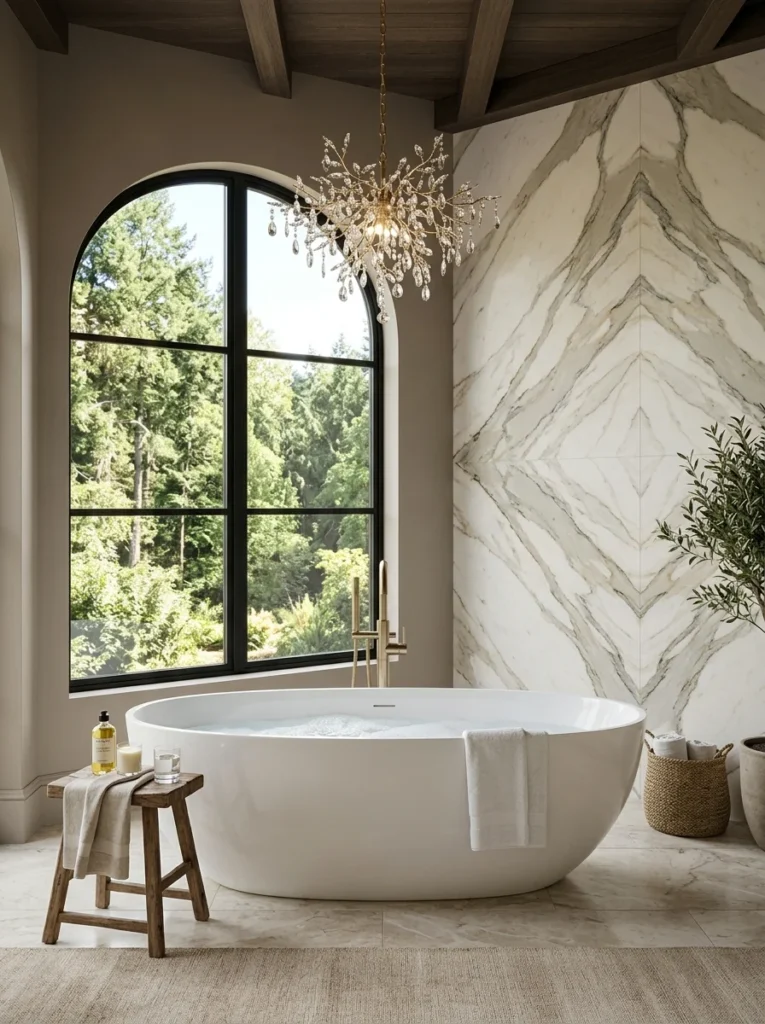
In: freestanding tubs as a genuine design centerpiece
Freestanding tubs continue to hold strong in primary bathroom design, but 2026 is seeing them positioned even more deliberately as an intentional focal point, often placed in front of a window, beneath a statement light fixture, or against a book-matched stone wall, rather than tucked into a corner. The shape is also shifting slightly toward softer, more organic silhouettes rather than the sharply rectangular forms that were popular a few years ago.
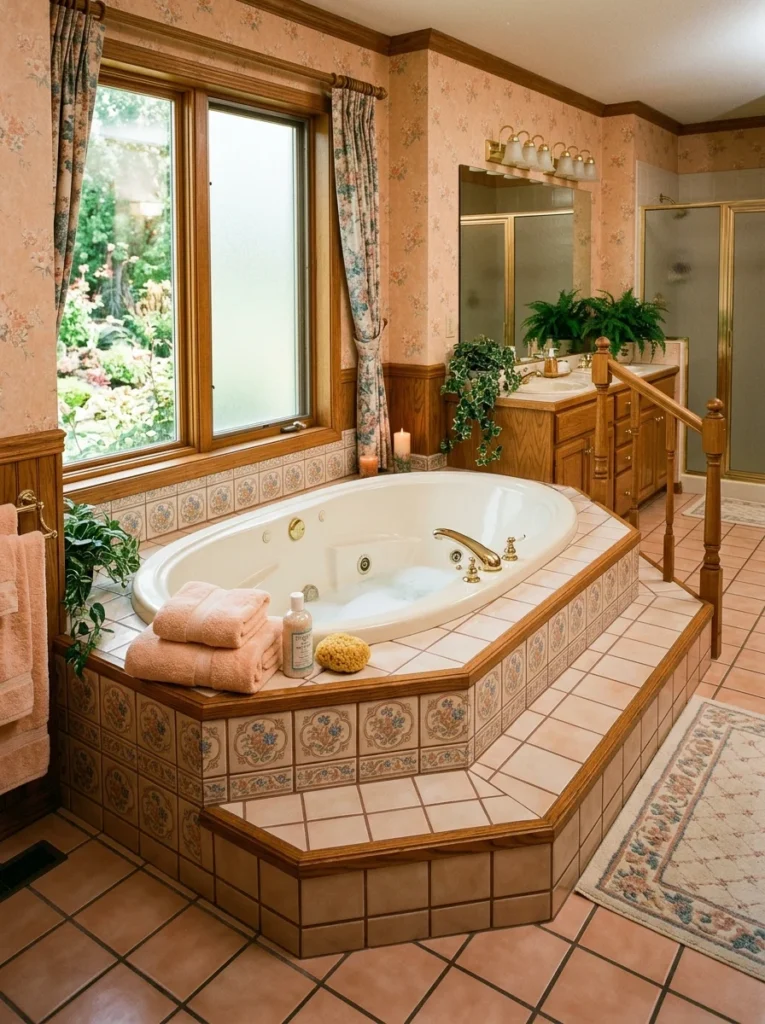
Out: garden tubs and overly ornate jetted tubs
The large, elevated garden tub with a surrounding tile deck, along with heavily jetted whirlpool tubs, are increasingly being removed during renovations in favor of either a simpler freestanding soaking tub or, in many cases, no tub at all in favor of a larger walk-in shower. These older tub styles are read as dated and are also difficult to clean and maintain compared to newer, simpler tub designs.
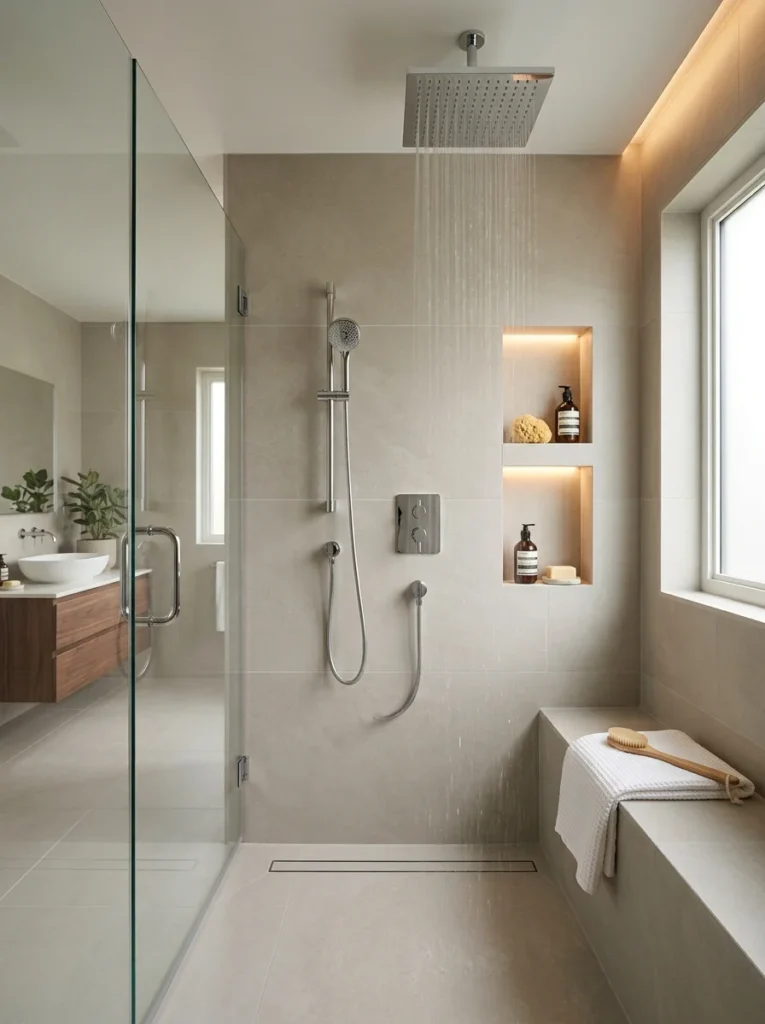
In: curbless, spa-style walk-in showers
Curbless showers, where the shower floor sits flush with the rest of the bathroom floor, continue to gain popularity in 2026, both for their clean, seamless look and their accessibility benefits. These showers are increasingly designed with multiple shower heads, a rain head plus a handheld option, and built-in niches or benches, creating a more spa-like daily experience rather than a purely functional one.
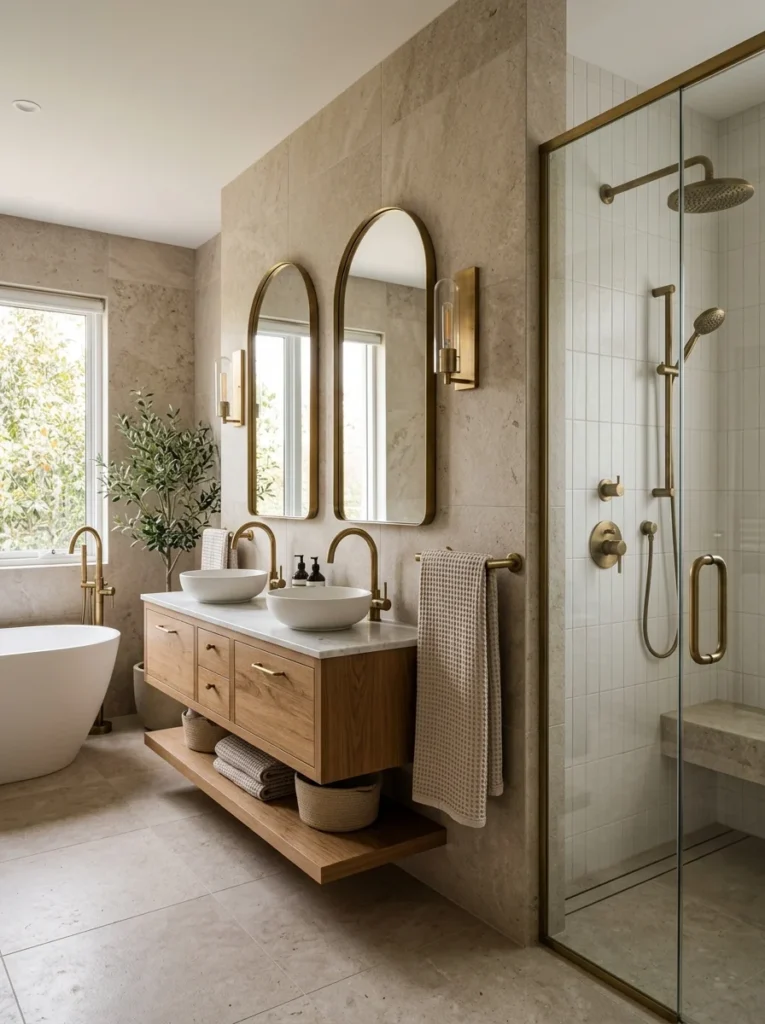
In: warm metal finishes, particularly aged and unlacquered brass
Matte black, which dominated hardware choices for several years, is being joined and in some higher-end designs replaced by warm, aged, or unlacquered brass finishes that develop a natural patina over time. This warmer metal trend pairs closely with the broader shift toward warmer neutrals and textured materials throughout the rest of the room.
Out: an overly matched, single-finish approach to every fixture
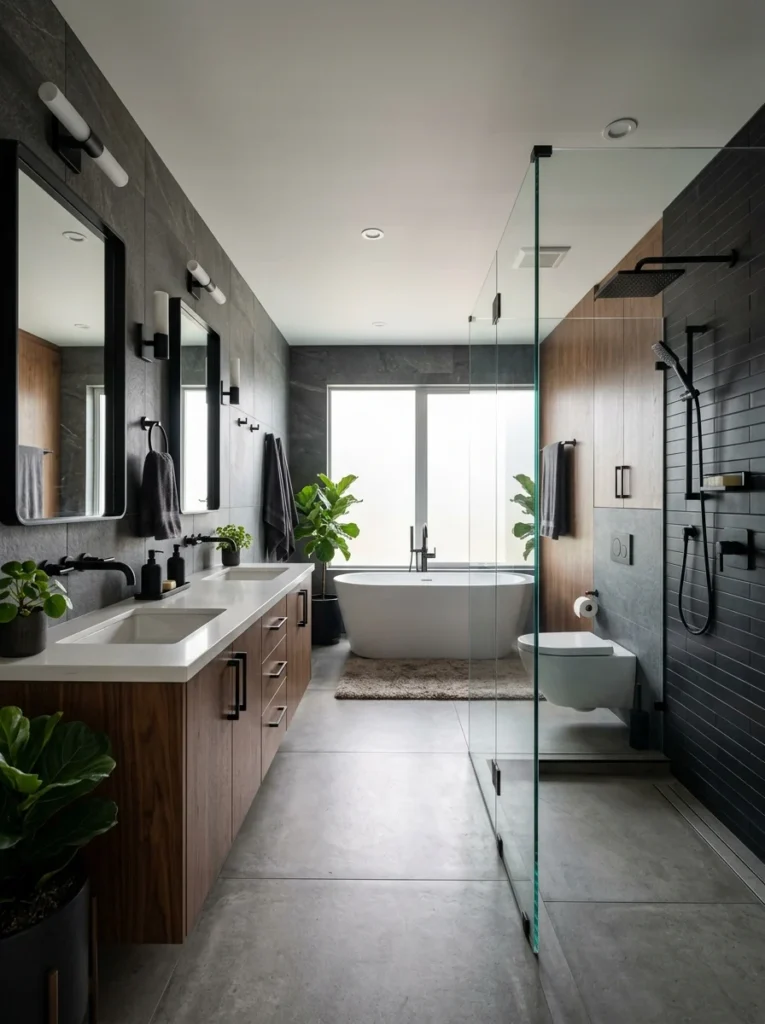
While consistency in metal finish is still generally recommended for a cohesive look, 2026 is seeing slightly more intentional mixing, a brass faucet paired with black light fixtures, for example, rather than every single metal element in the room matching exactly. This is a more advanced design move and one best approached carefully, since done poorly it can look mismatched rather than intentional, but it’s a clear shift away from the completely uniform hardware approach of recent years.
In: dedicated wellness features
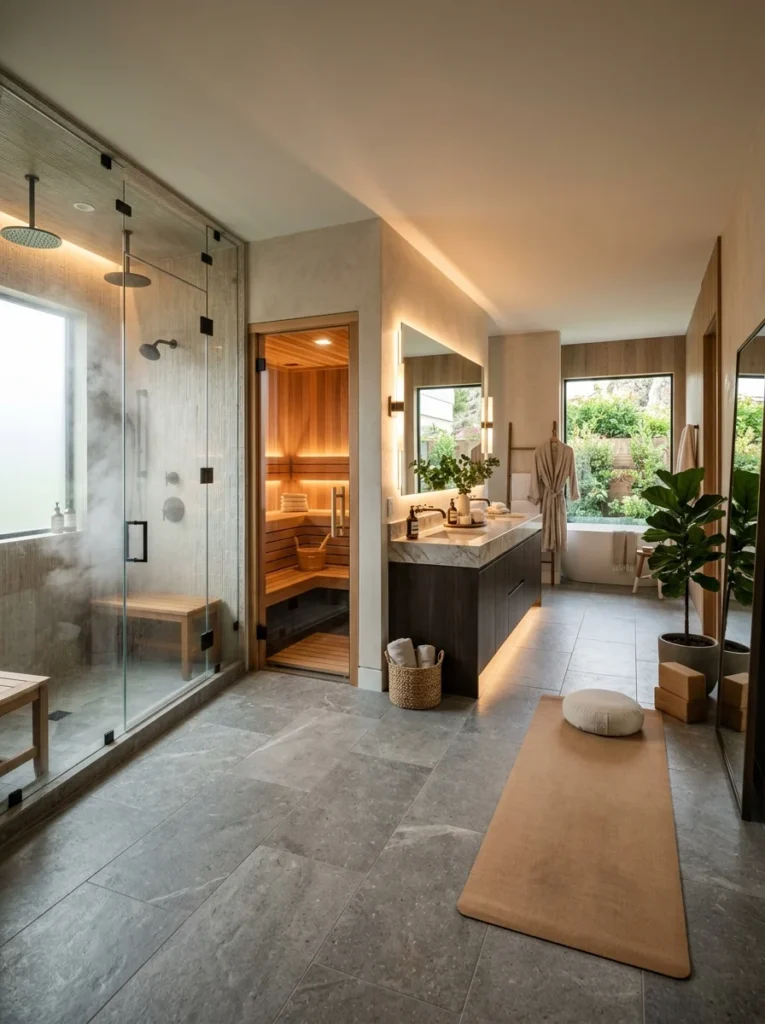
Primary bathrooms in 2026 increasingly include dedicated wellness elements: a compact sauna, a steam shower option, heated floors, or a designated space for stretching or skincare routines. This reflects a broader shift toward viewing the primary bathroom as a genuine wellness retreat within the home rather than a purely functional space, and it’s one of the more significant investments homeowners are choosing to make in larger renovations this year.
In: furniture-style vanities with more visual weight
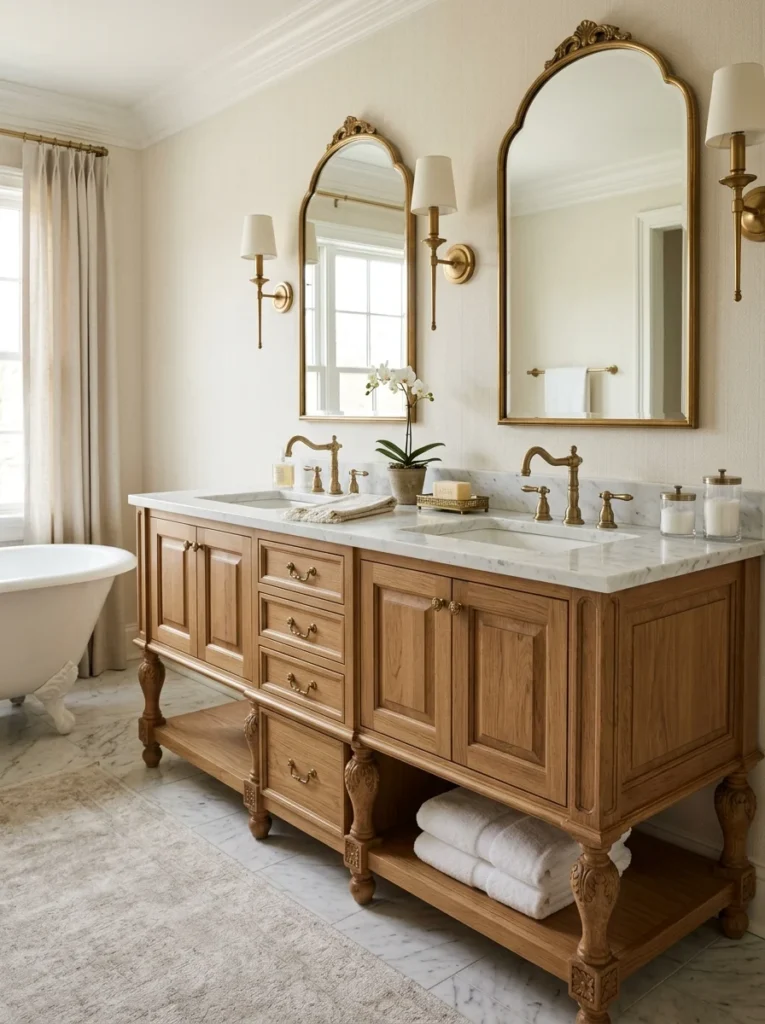
Vanities are trending toward a furniture-like appearance, with detailing, turned legs, or a stone waterfall edge, rather than a simple flat-panel cabinet box. Double vanities are increasingly designed with a furniture piece in the center, a small seated vanity table or open shelving, rather than one continuous countertop running the full width of the room.
Out: floating vanities as the automatic default choice
Floating vanities aren’t disappearing, but they’re no longer the automatic go-to they were in recent years. In primary bathrooms specifically, more substantial, furniture-style vanities with visible legs or a grounded base are being chosen over the minimalist floating look, particularly in larger bathrooms where a floating vanity can read as underscaled for the room.
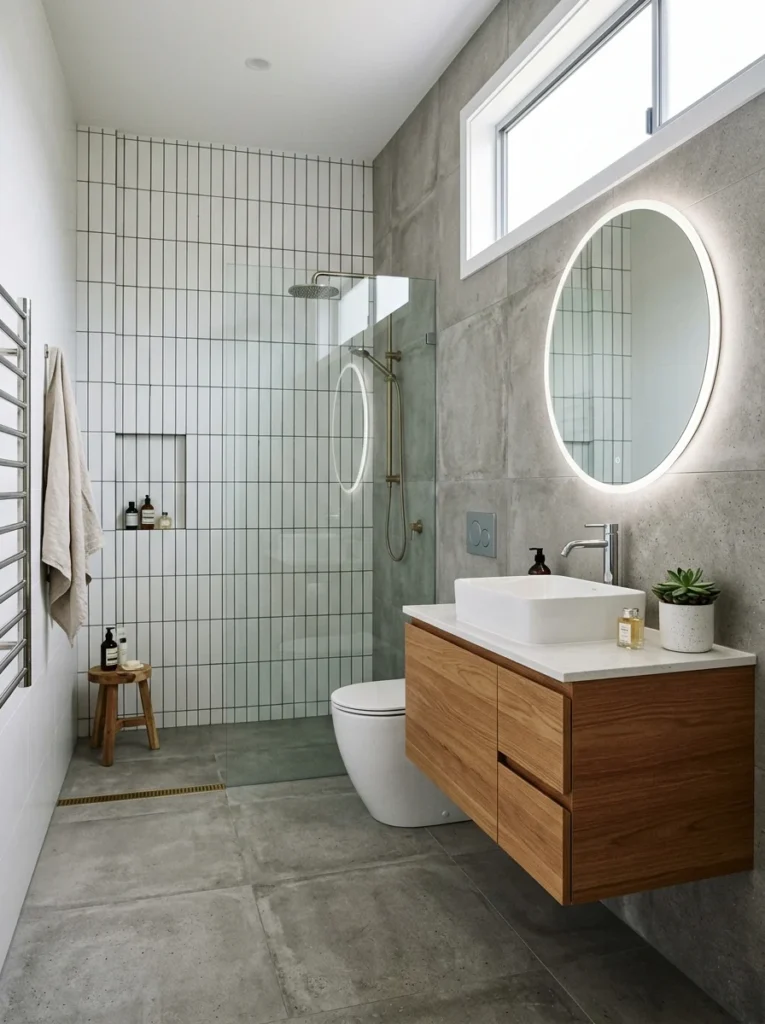
In: statement lighting as a design feature
Lighting in 2026 is increasingly treated as a design statement rather than a purely functional afterthought. Sculptural pendant lights, a small chandelier above a freestanding tub, and sconces with visible, interesting forms are being used to add personality to the room in the same way a piece of furniture would in a living space. This shift pairs naturally with the broader move toward treating the primary bathroom as a considered, lived-in room rather than a purely utilitarian one.
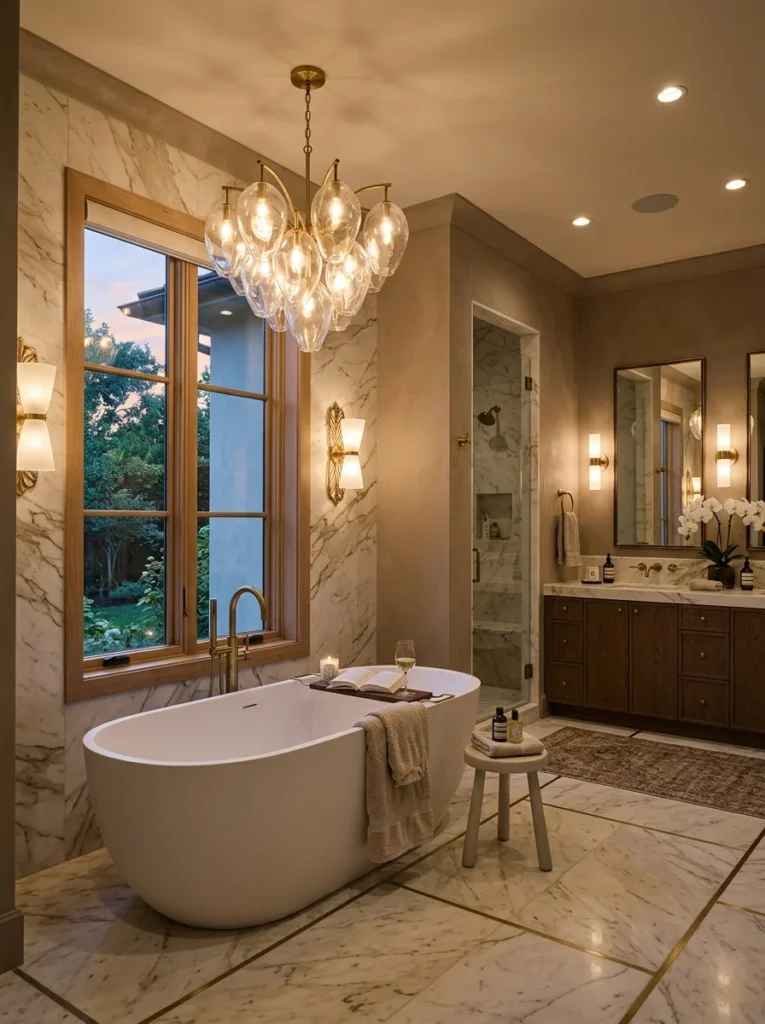
Out: relying solely on recessed can lighting
A ceiling dotted only with plain recessed can lights, once a default choice in many renovations, is increasingly viewed as a missed opportunity now that layered, more decorative lighting has become both accessible and popular. Recessed lighting still plays a role for overall ambient brightness, but 2026 renovations are pairing it with at least one more decorative fixture rather than relying on cans alone to light the entire room.
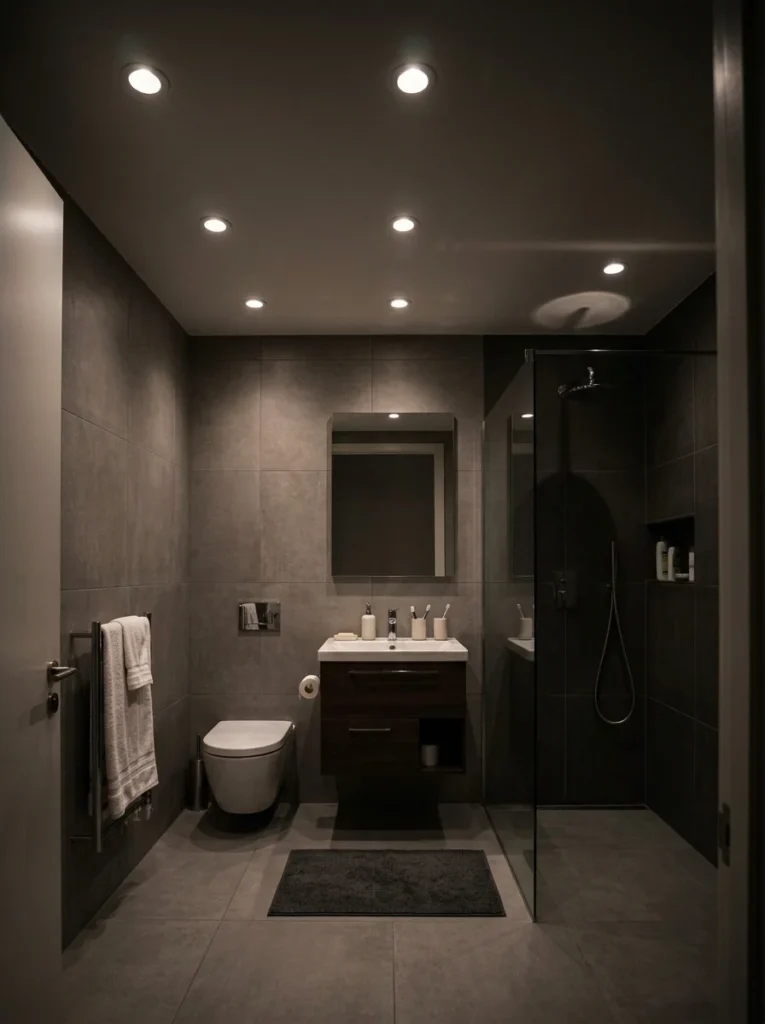
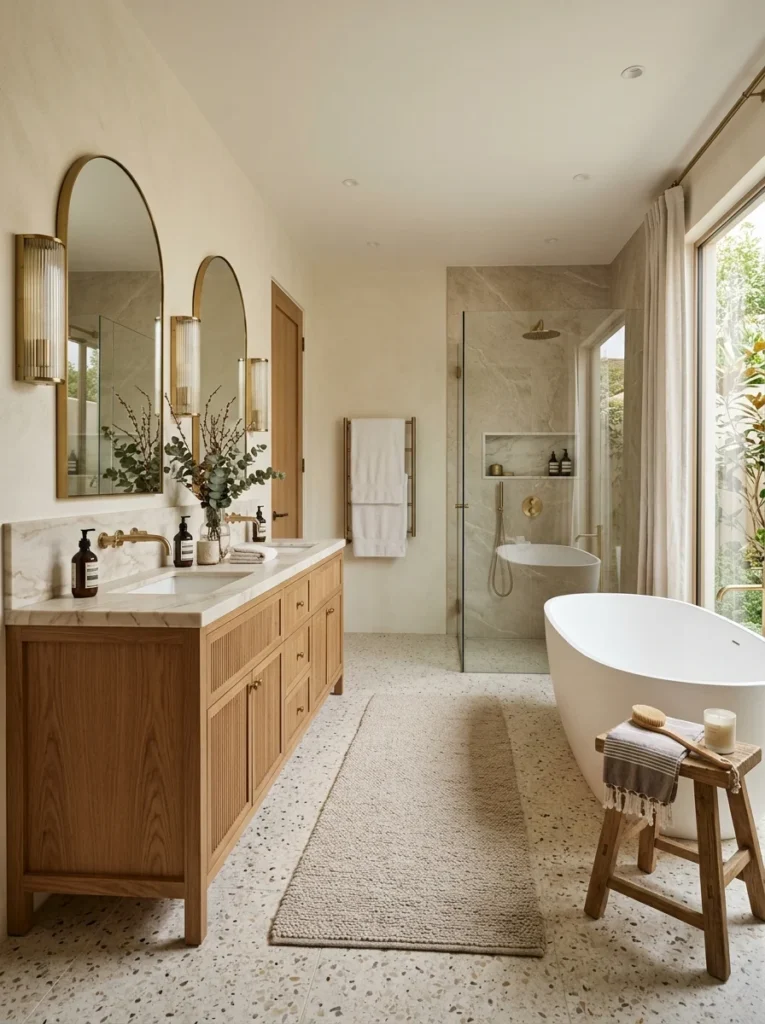
In: natural stone-look and terrazzo flooring
Flooring in 2026 is trending toward natural stone-look porcelain, honed marble, and a revived interest in terrazzo, valued for its texture and the sense of permanence it brings to a primary bathroom. These flooring choices pair well with the broader warm, textured palette driving other trends this year, and they tend to read as more substantial and considered than the simpler, flatter flooring options common in recent renovation cycles.
What’s holding steady regardless of the trend cycle
A few choices remain reliable investments no matter which way short-term trends shift. Quality porcelain tile in a neutral tone, proper waterproofing and ventilation, ample storage, and good lighting layered across the room all remain fundamentally sound choices that support whatever finish trends come and go on top of them. A well-planned layout, one that accounts for how the household actually uses the space, will always outlast any specific style trend, since the bones of a well-designed bathroom rarely need to be redone even when the finishes eventually get updated.
Common master bathroom design trend questions
Is an all-white bathroom completely out of style in 2026?
Not entirely, but the coldest, high-gloss version of an all-white bathroom is fading in favor of warmer, more textured neutrals. A white palette can still work well when paired with warmer tones, natural materials, and varied texture rather than a completely flat, uniform white.
Should I remove my bathtub to follow the shower-focused trend?
This depends on your household and resale considerations more than the trend itself. If your household rarely uses the tub and you don’t have young children, following the shift toward a larger walk-in shower makes sense. If a tub is genuinely used or important for resale in your market, it’s still a reasonable and far from outdated choice.
Are floating vanities becoming outdated?
Floating vanities aren’t outdated, but they’re no longer the default choice in every primary bathroom. More substantial, furniture-style vanities are gaining ground, particularly in larger bathrooms, though a floating vanity remains a practical and stylish option, especially in smaller spaces.
What’s the safest long-term investment in a bathroom renovation?
Quality, neutral-toned porcelain tile, proper waterproofing, sufficient storage, and layered lighting are the most reliable long-term investments, since they support whatever specific style trends come and go without needing to be redone themselves.
Is terrazzo or stone-look flooring worth the investment in 2026?
For a primary bathroom you plan to keep for many years, natural stone-look porcelain or terrazzo offers both a current, textured look and strong durability, making it a reasonable investment. If budget is tighter, a quality neutral-toned porcelain in a simpler finish still holds up well and remains a safe, long-lasting choice regardless of shorter-term flooring trends.
Trends offer a useful snapshot of where design is heading, warmer tones, larger tile, curbless showers, wellness features, but the renovations that hold up best over time are the ones grounded in how a household actually lives, not purely in what’s popular this year. Use these trends as inspiration and a general direction, but weigh each choice against your own daily habits, your budget, and how long you plan to stay in the home before committing.
The friends I mentioned at the start ended up choosing a warm, textured palette with a large curbless shower and a furniture-style vanity, elements that felt both current and, more importantly, like a genuine fit for how they actually use their bathroom every morning. That’s ultimately the better question to ask than simply what’s trending: not just what’s in for 2026, but what will still feel right for your own routine well beyond it, long after this particular trend cycle has quietly moved on to the next one.