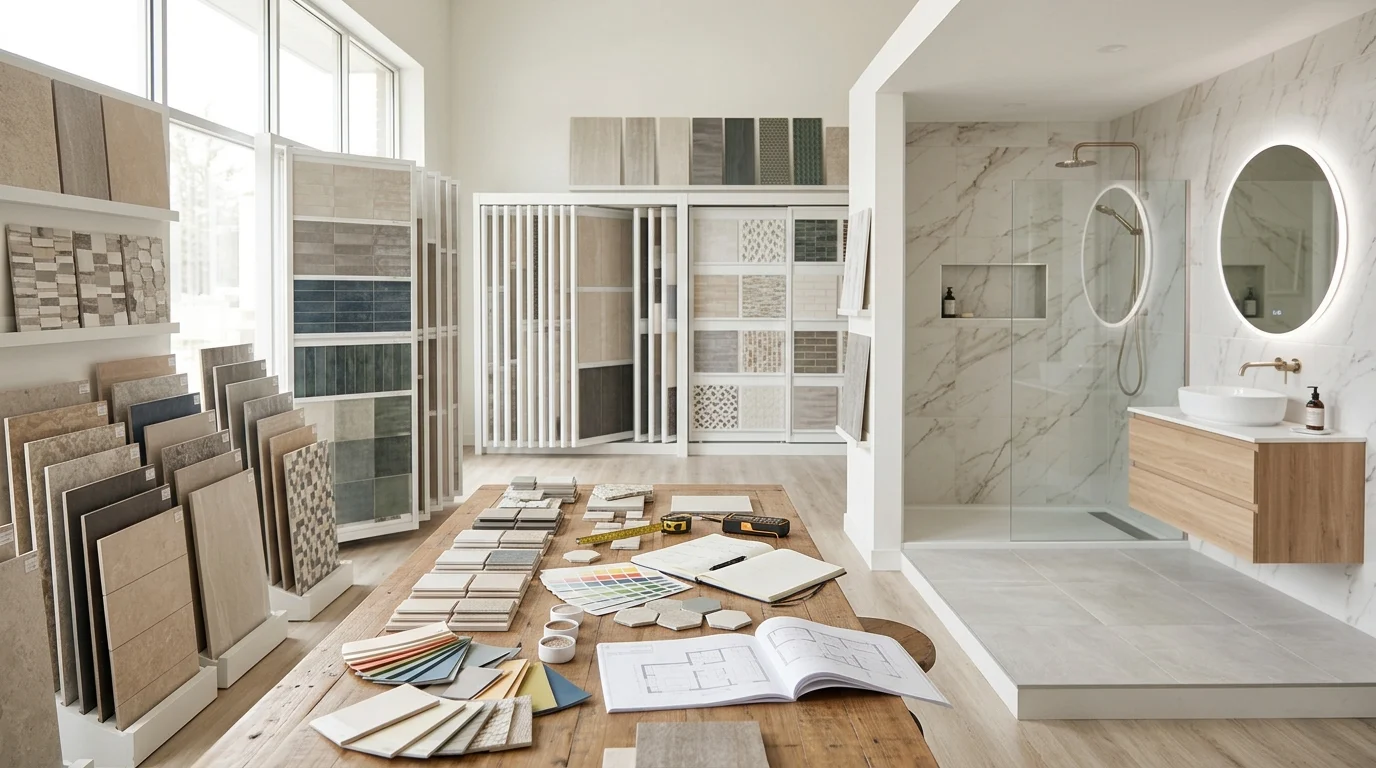
The first time I picked tile for a bathroom renovation, I walked into the showroom, saw a beautiful marble-look porcelain, and bought it on the spot without asking a single question about slip resistance, water absorption, or how it would actually perform on a shower floor. It looked stunning in the sample, and it looked stunning for about six months, until the grout started staining and I realized the floor got dangerously slippery the moment it was wet. I learned the hard way that choosing bathroom tile isn’t just a color and pattern decision, it’s a material decision first, and everything else second.
If you’re picking tile for the first time, this guide walks through the decisions in the order they actually matter: material first, since that determines durability and safety, then color and pattern, since that determines how the space feels day to day. By the end, you should be able to walk into a showroom and know exactly what to ask, rather than falling for the first tile that looks good under the store lighting.
Start with material, not color
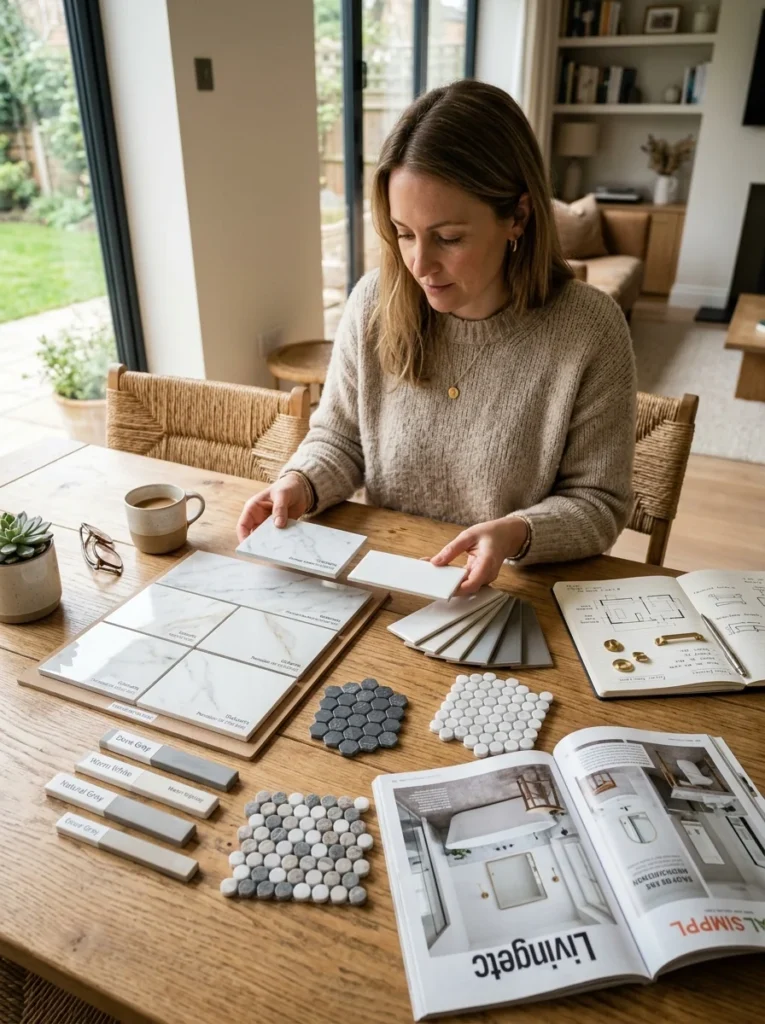
Every bathroom tile decision should begin with material, because material determines water resistance, durability, and safety, three things no amount of styling can fix after installation. Porcelain and ceramic are the two most common choices, and understanding the difference between them is the single most useful piece of knowledge for a beginner walking into this decision.
Porcelain tile: the more durable, water-resistant choice
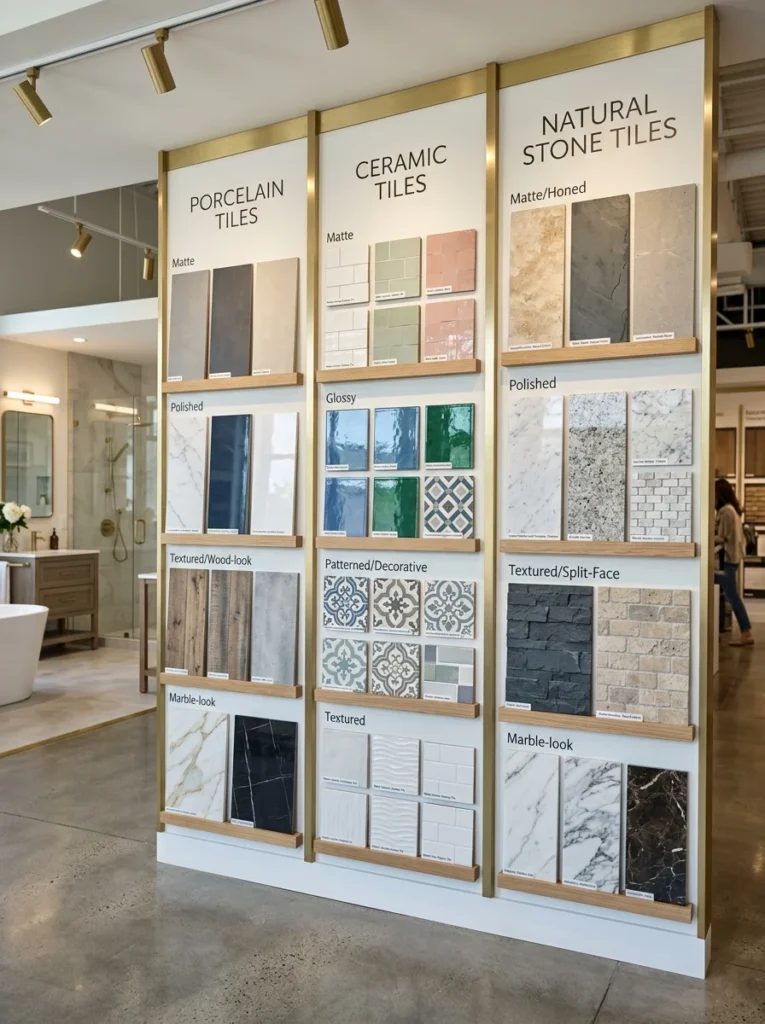
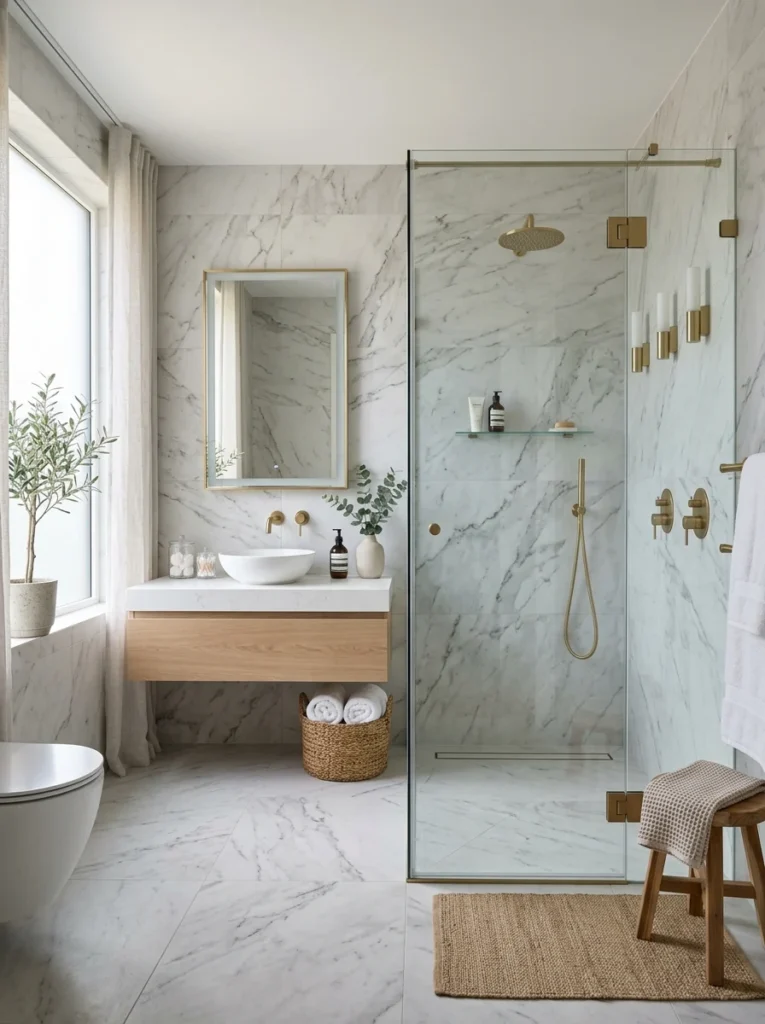
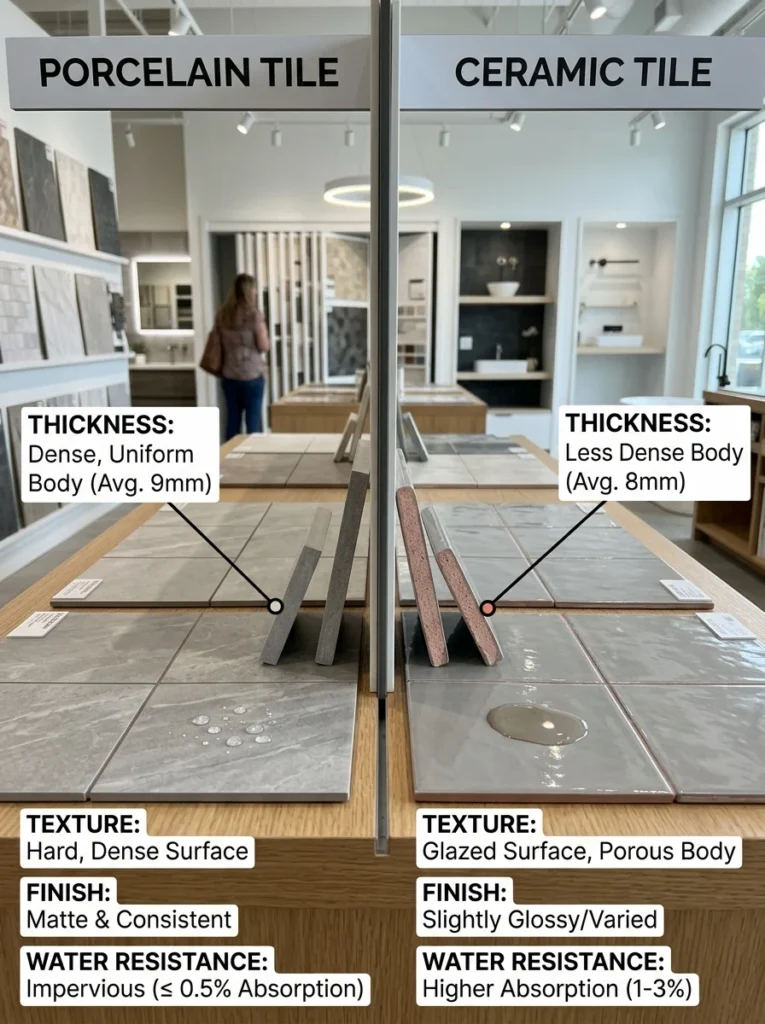
Porcelain is fired at a higher temperature than standard ceramic, which makes it denser, harder, and significantly less absorbent, an important quality in a room that deals with constant moisture. This lower absorption rate means porcelain resists staining and water damage better over time, and it holds up well on both floors and shower walls. Porcelain is also available in an enormous range of looks now, including convincing wood-look and marble-look finishes, which is why it’s become the default recommendation for most bathroom renovations, especially for shower floors and walls where water exposure is constant.
Ceramic tile: the budget-friendly, versatile choice
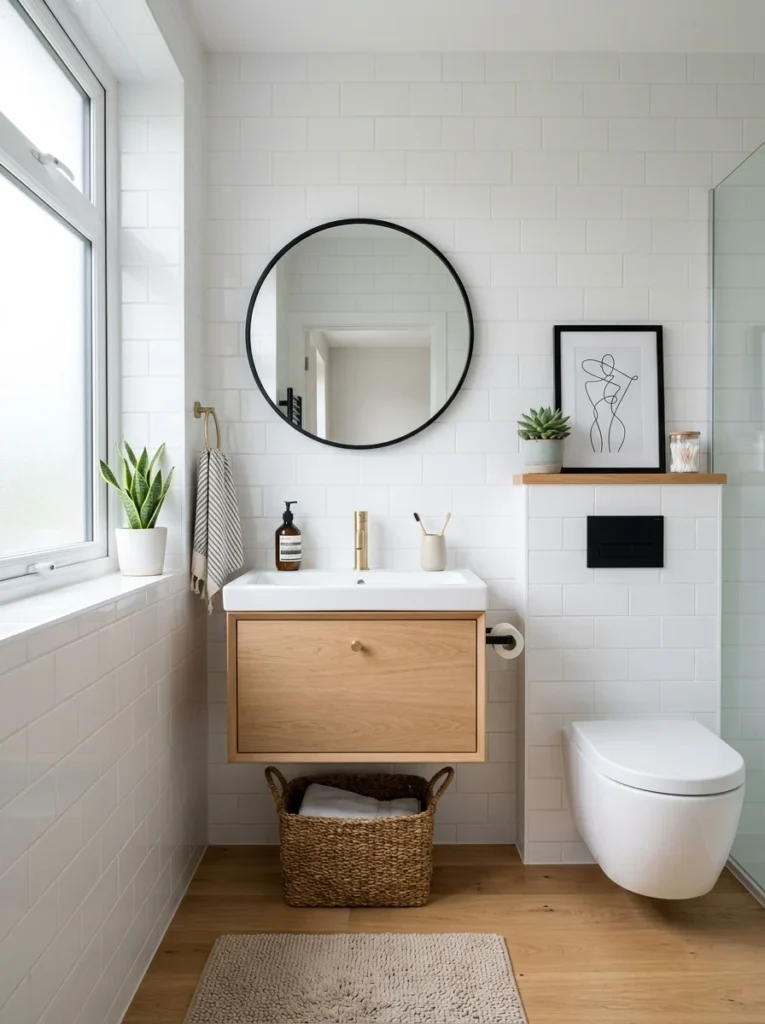
Ceramic tile is generally less expensive than porcelain and easier to cut, which can make it a practical choice for accent walls, backsplashes, or bathrooms with a tighter renovation budget. It’s slightly more porous than porcelain, so it’s usually better suited to walls and lower-moisture areas rather than shower floors, unless it’s specifically rated and properly sealed for wet-area use. For a guest bathroom or powder room with less daily water exposure, ceramic can be a perfectly practical and more affordable choice.
Natural stone tile: beautiful, but higher maintenance
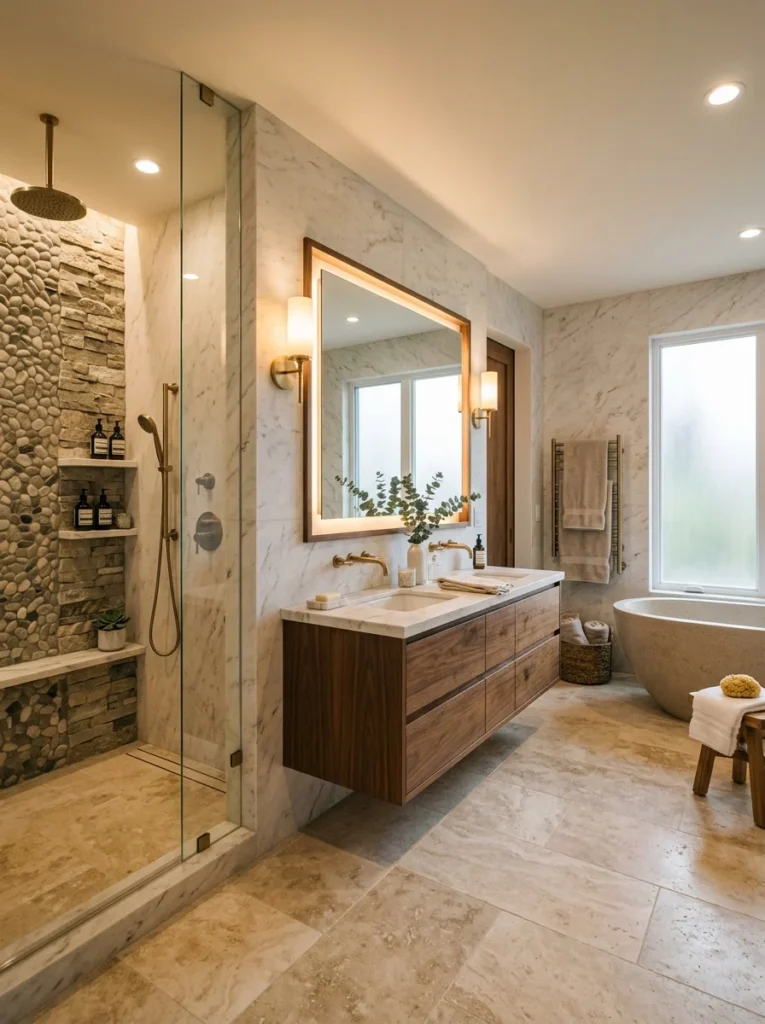
Marble, travertine, and slate offer a natural, high-end look that manufactured tile still struggles to fully replicate, but natural stone is porous and requires regular sealing to resist staining and water damage. It’s also generally more expensive and can be more slippery when wet unless honed or textured specifically for bathroom floors. Natural stone works best for homeowners willing to commit to the ongoing maintenance it requires, or for accent areas rather than the entire wet zone of a shower.
Check the slip resistance rating before choosing a floor tile
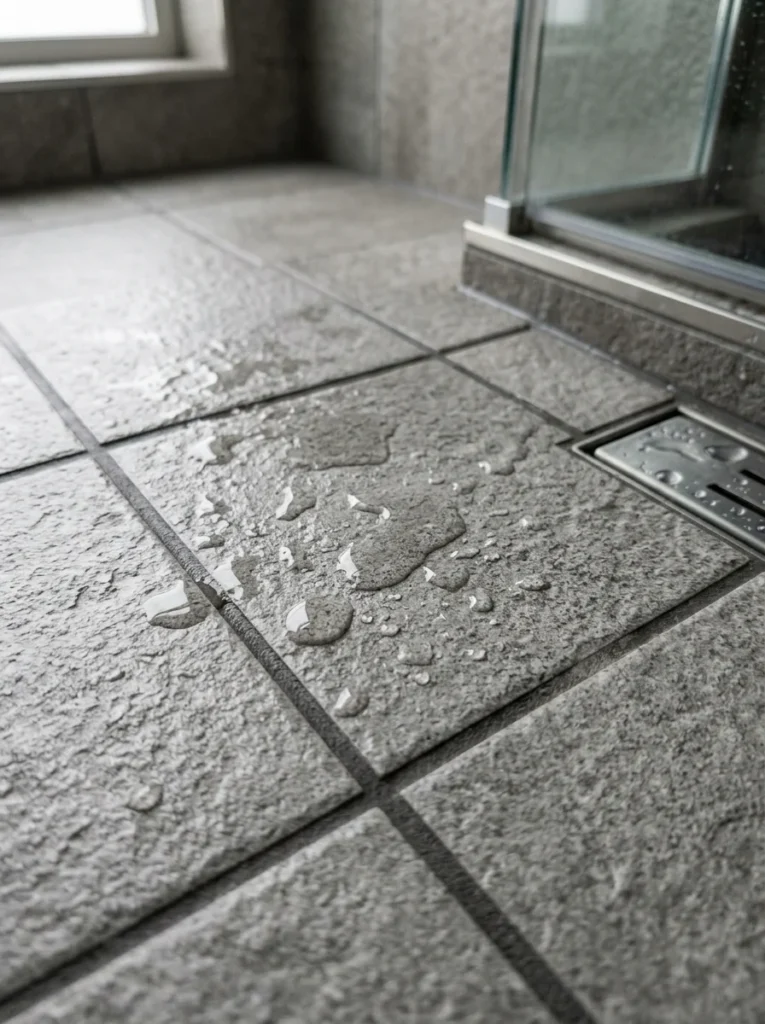
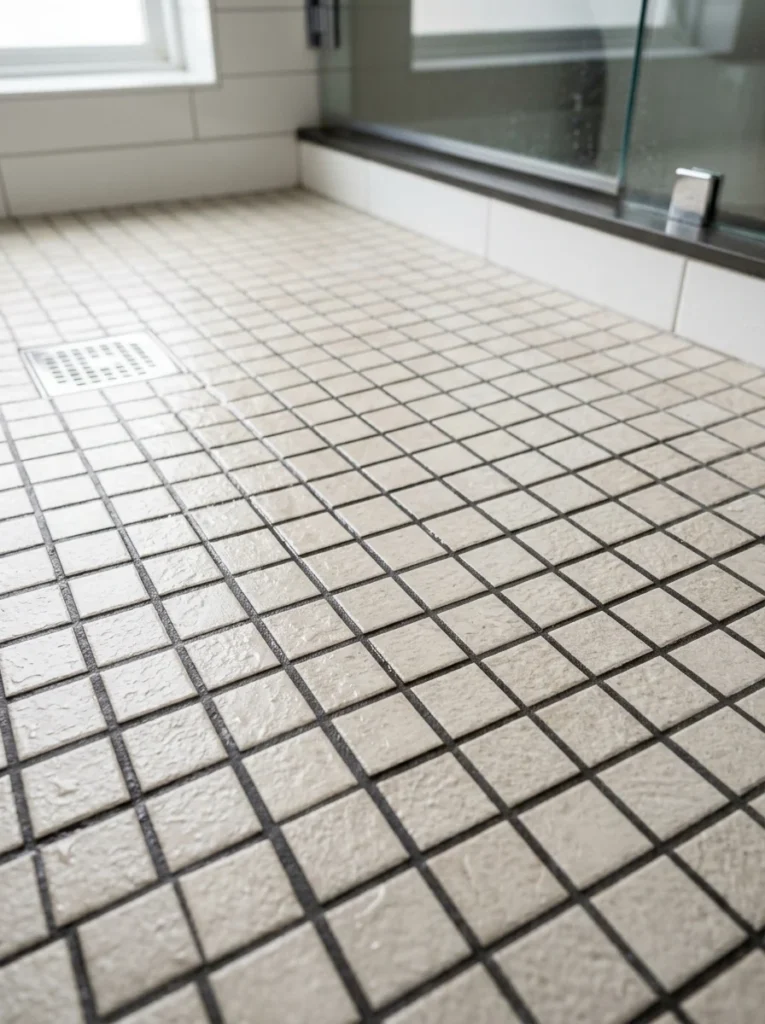
This is the step I skipped on my first renovation, and it’s the one that matters most for safety. Tile intended for floors, especially shower floors, should have a slip resistance rating suited to wet conditions, often indicated by a coefficient of friction rating or a specific wet-area certification depending on your region. As a general rule, matte or textured finishes perform far better underfoot when wet than glossy, polished finishes, which look beautiful but can become dangerously slick. Smaller tiles with more grout lines also tend to offer better traction on a shower floor than a single large-format tile, since the grout lines themselves add texture underfoot.
Choosing tile size: small vs. large format
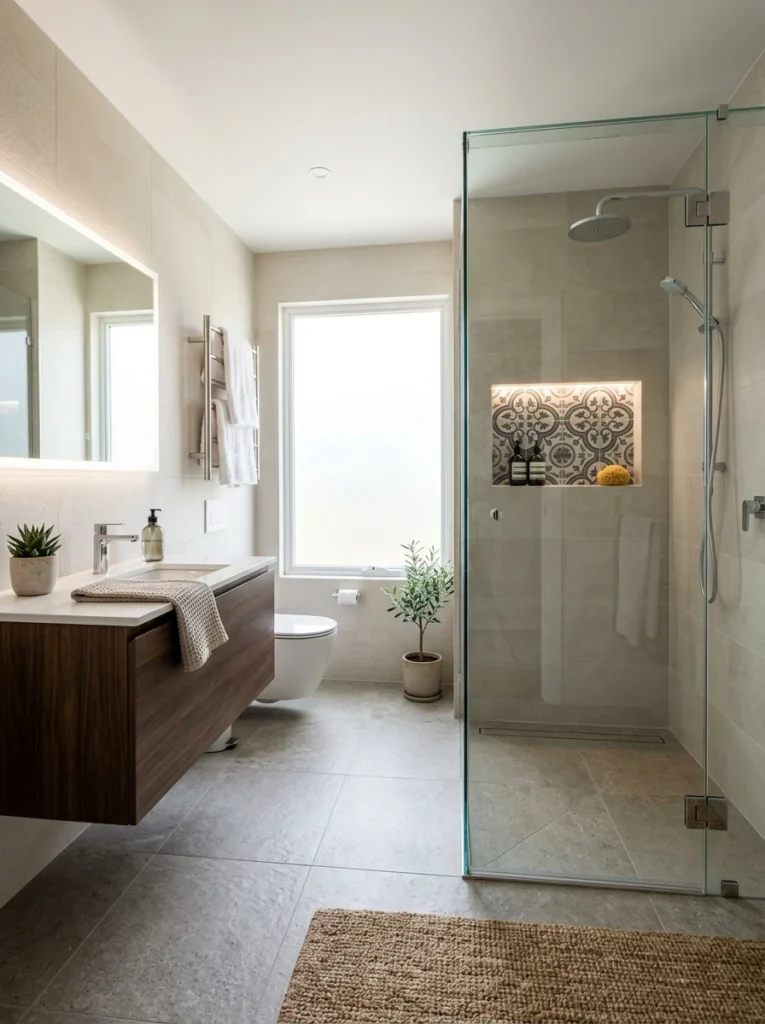
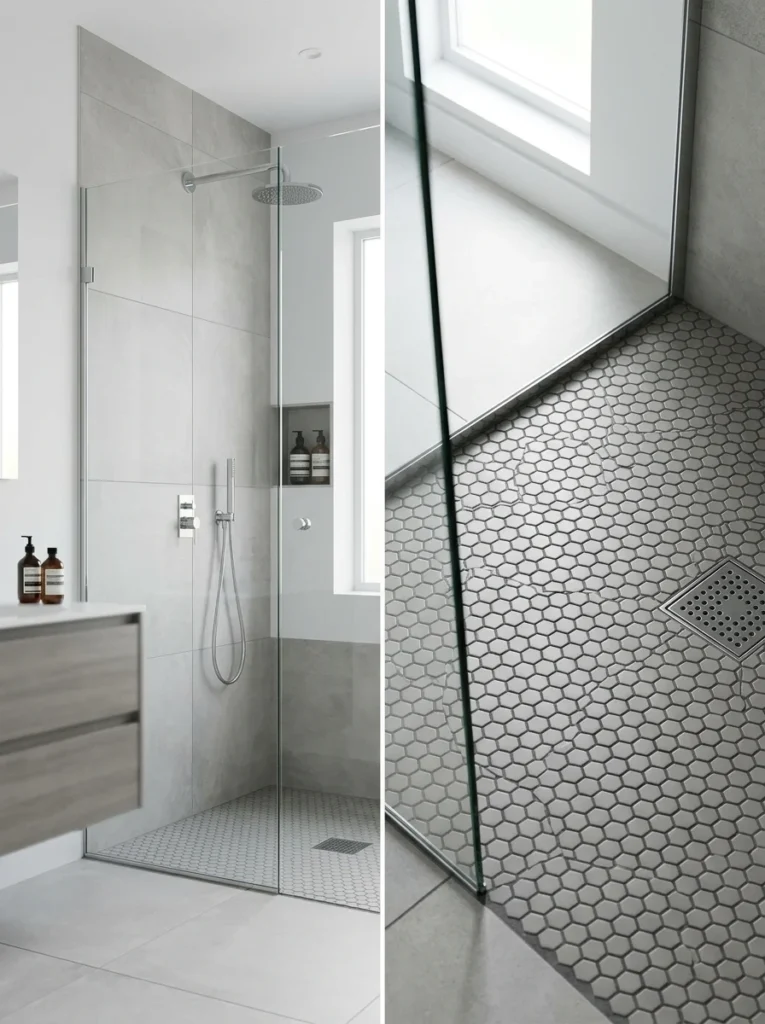
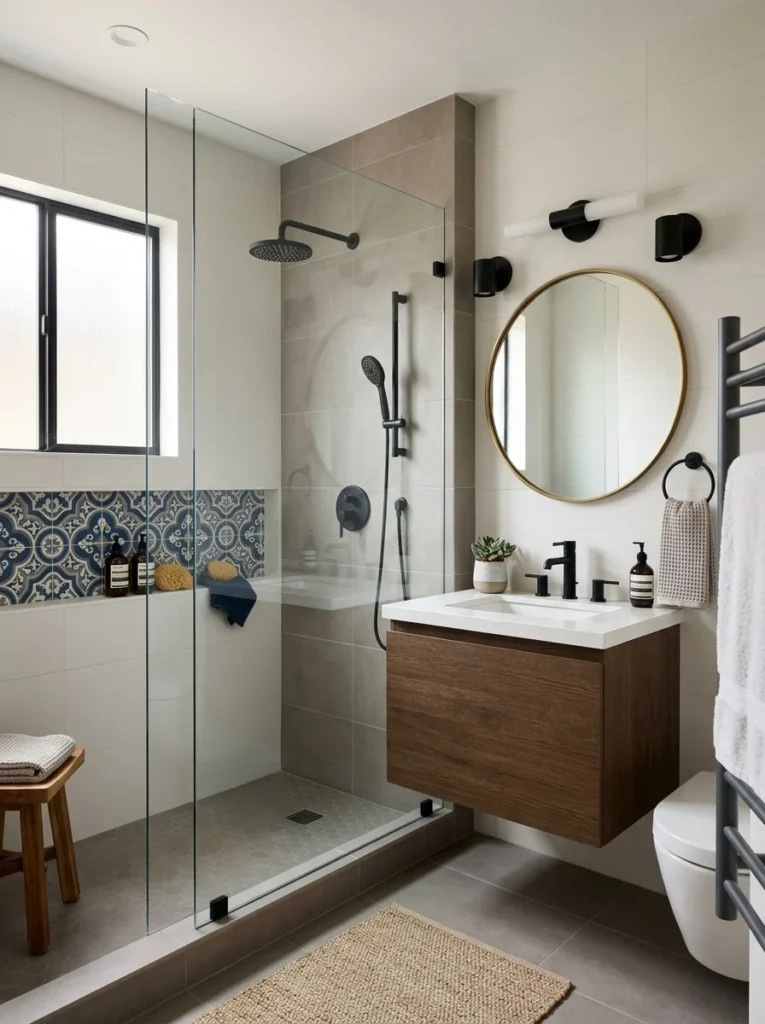
Large-format tile, generally anything above twelve by twenty-four inches, creates a clean, modern look with fewer grout lines to clean, and it can make a small bathroom feel more spacious since the eye isn’t interrupted by frequent seams. Smaller tile, including classic subway tile or mosaic, offers more texture and traditional charm, and it’s often the more practical choice for shower floors specifically, since more grout lines mean better slip resistance. A common and effective approach is using large-format tile on the main walls and floor for a clean look, while reserving smaller tile or mosaic for the shower floor where traction matters most.
Choosing a color palette that will last
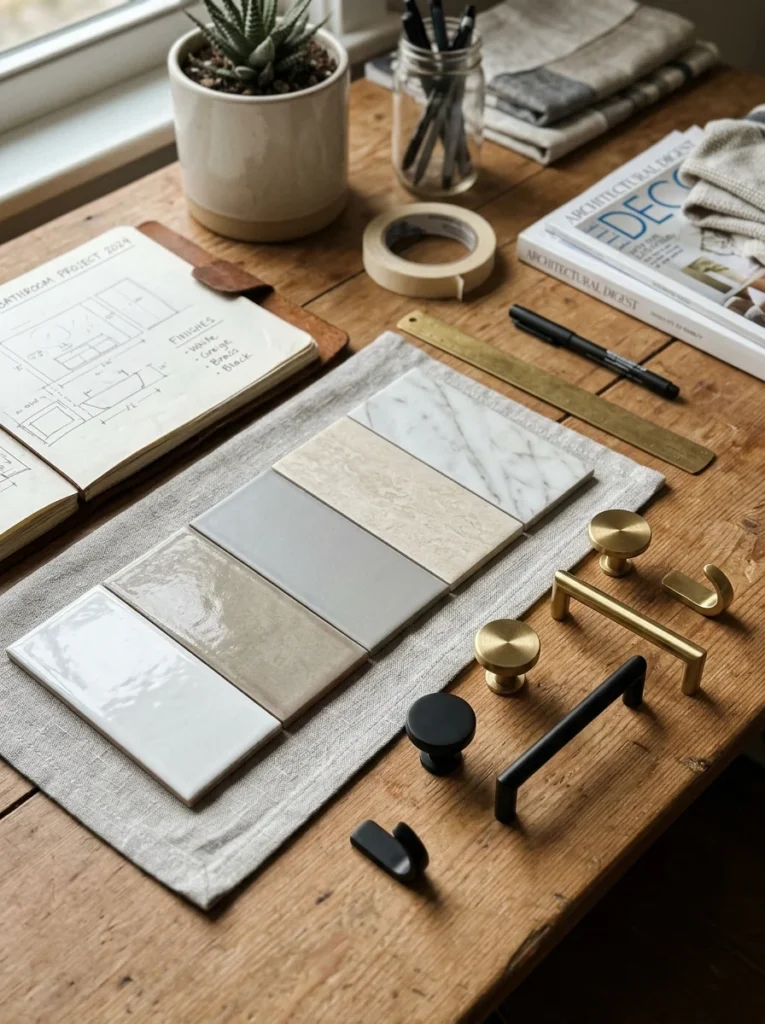
Bold, trend-driven tile colors can feel exciting in the showroom but tend to date a bathroom faster than neutral tones, since bathroom tile is expensive and disruptive to replace compared to paint or accessories. Whites, warm greiges, and soft greys remain the most versatile and longest-lasting choices for the main tile in a bathroom, since they pair easily with whatever cabinet color, hardware finish, or accessory style you choose later, even if your taste changes over the years. If you want to include a bolder color, it’s usually safer to introduce it in a smaller, easier-to-change area, an accent wall, a border strip, or the shower floor, rather than committing an entire bathroom to a trend-driven color.
Using pattern without overwhelming the space
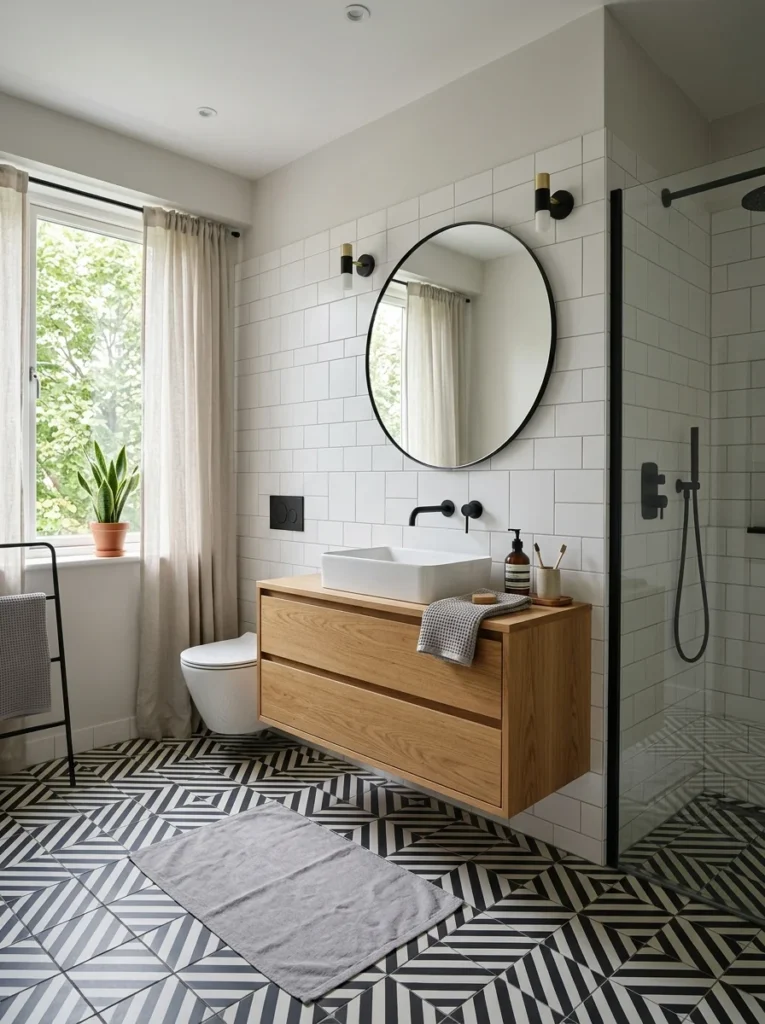
Patterned tile, whether a geometric design, a Moroccan-inspired print, or a herringbone layout, can add real character to a bathroom, but it works best when balanced against simpler finishes elsewhere in the room. A patterned floor paired with plain, solid-color wall tile keeps the room feeling intentional rather than busy, while patterned tile on every surface, floor, walls, and shower, tends to feel visually overwhelming in a small space. If you love a bold pattern, consider using it in one contained area, a shower niche, an accent wall, or a powder room floor, where its impact reads as a deliberate design choice rather than competing with itself across the whole room.
Choosing grout color and width thoughtfully
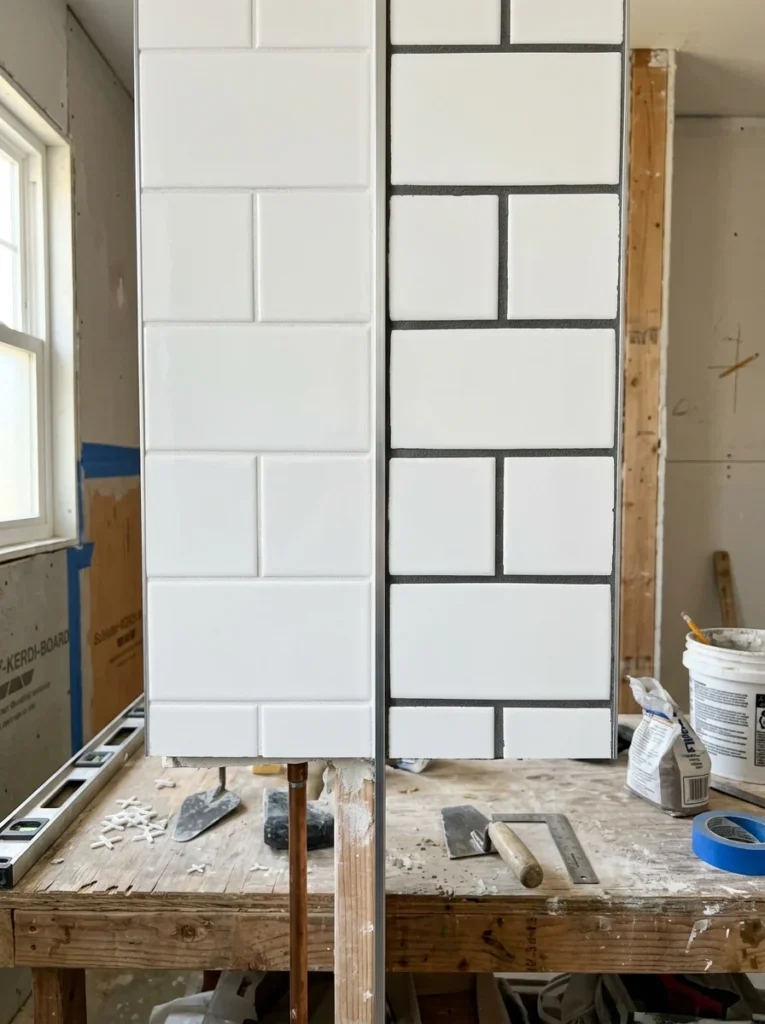
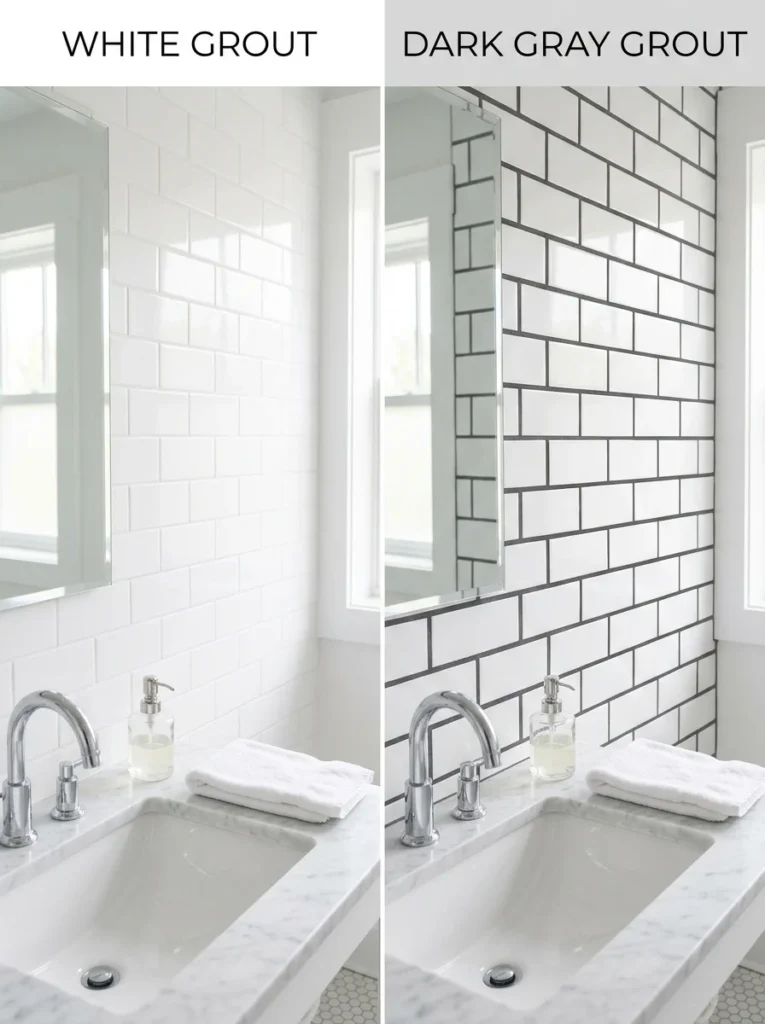
Grout color has a bigger visual impact than most first-time renovators expect. A grout color close to the tile itself creates a seamless, calm look that makes the room feel larger, while a contrasting grout color, dark grout with light tile, for example, emphasizes the tile’s shape and pattern, which can look striking with a simple subway layout but busier with an already patterned tile. Grout width also affects the final look: tighter grout lines read as more modern and seamless, while wider lines feel more traditional. Whatever you choose, opt for a grout with added stain resistance or a good sealer applied after installation, since grout is one of the first things to show wear in a heavily used bathroom.
Matching tile to the room’s actual use
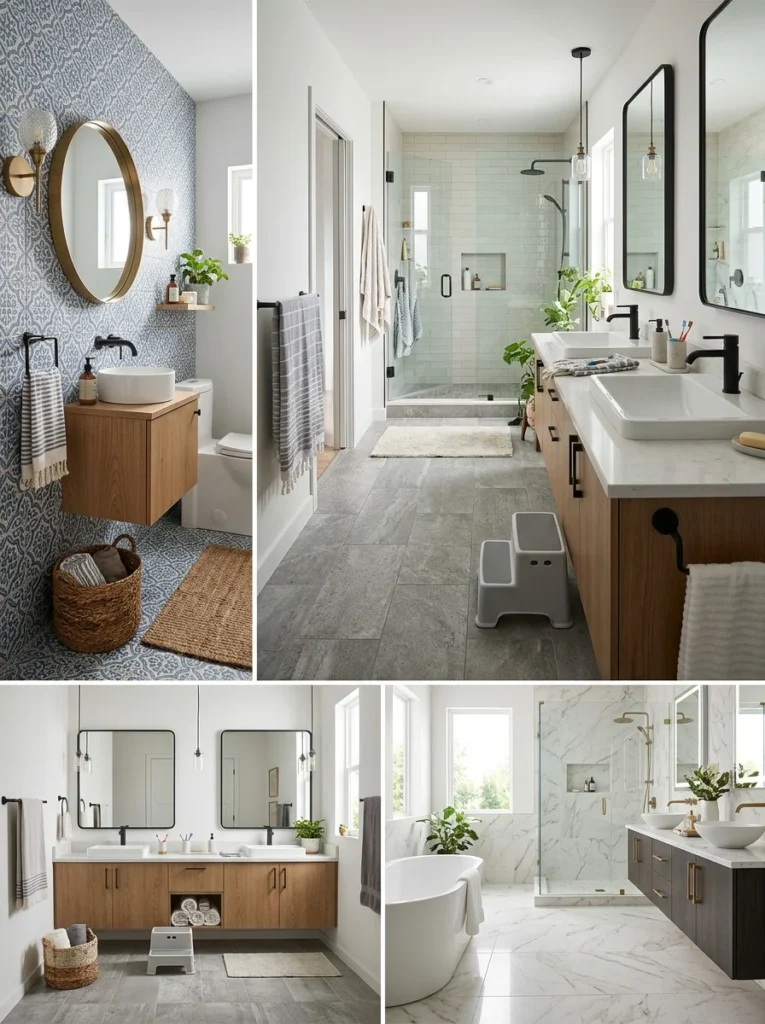
A powder room used mainly by guests can afford a bolder, more decorative tile choice, since it sees far less daily wear and water exposure than a primary shower. A family bathroom used by kids daily needs a more forgiving, slip-resistant, easy-to-clean tile, since it will face more frequent use and less careful treatment. A primary ensuite, often the highest-budget bathroom in a home, can support a more premium material choice, like natural stone or a large-format porcelain, since it typically sees more measured daily use by adults. Matching the tile choice to how the specific room actually gets used prevents both overspending on a low-traffic space and under-specifying a heavily used one.
Don’t forget what’s behind the tile
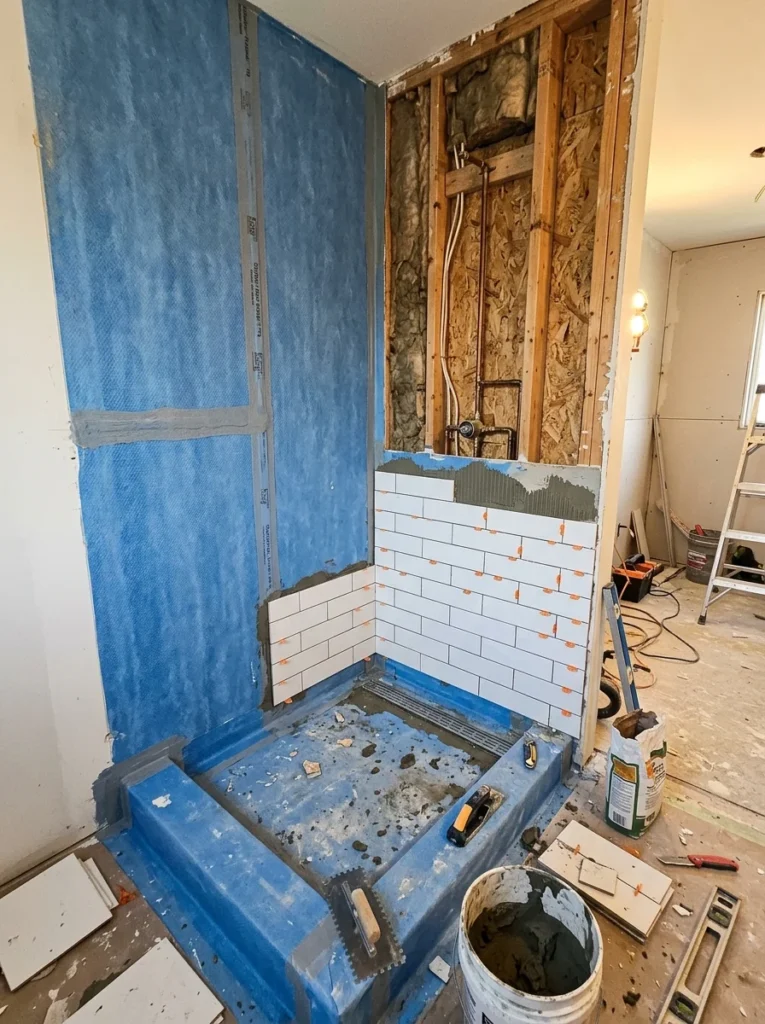
Even the best tile will fail early if the waterproofing behind it isn’t done correctly, especially in a shower. A proper waterproof membrane installed before tiling protects the wall structure from moisture damage, and skipping or cutting corners on this step is one of the most common and expensive mistakes in a bathroom renovation, since problems don’t show up until months or years later when damage has already spread behind the wall. If you’re hiring a professional, ask specifically about the waterproofing method they use before ever discussing tile selection, since this step matters more to the longevity of your bathroom than the tile itself.
Setting a realistic tile budget
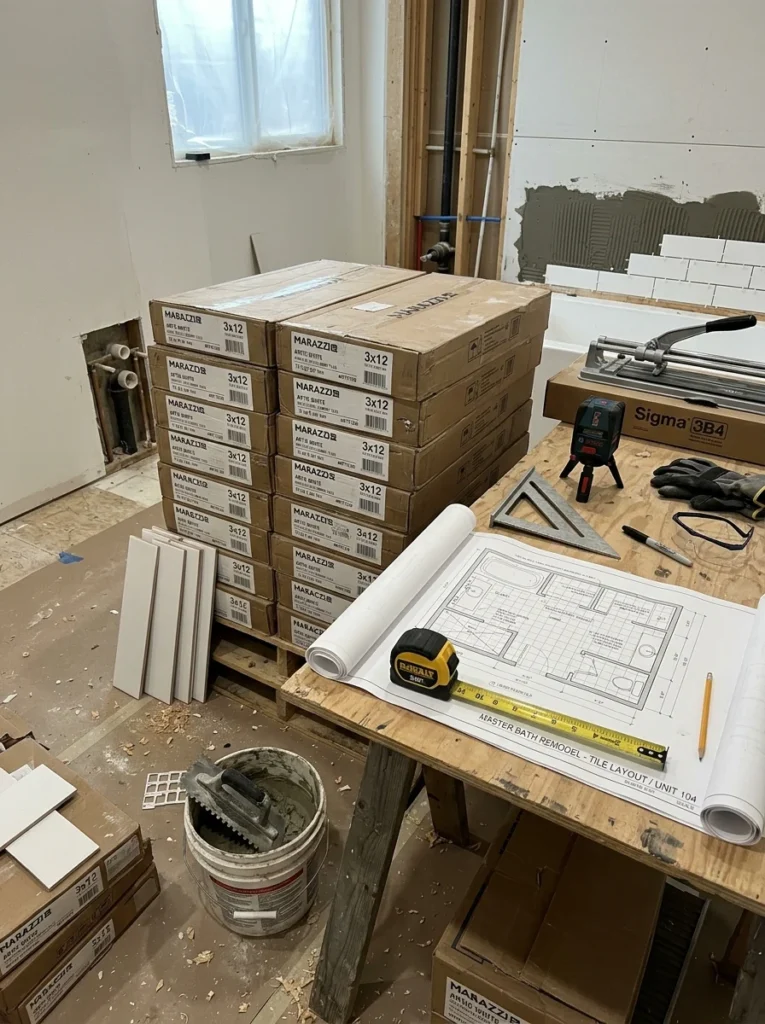
Tile costs vary enormously, from budget-friendly ceramic to premium natural stone, and it’s worth deciding your total tile budget before falling in love with a specific option in a showroom. A useful approach is spending more on the tile that covers the largest visible area, usually the floor and main shower walls, since that’s what defines the overall look of the room, while choosing a more budget-friendly option for a small accent area or a niche where less material is needed. Don’t forget to budget for slightly more tile than the exact square footage of the room, typically ten to fifteen percent extra, to account for cuts, waste, and the possibility of needing replacement pieces down the line if a tile is ever damaged.
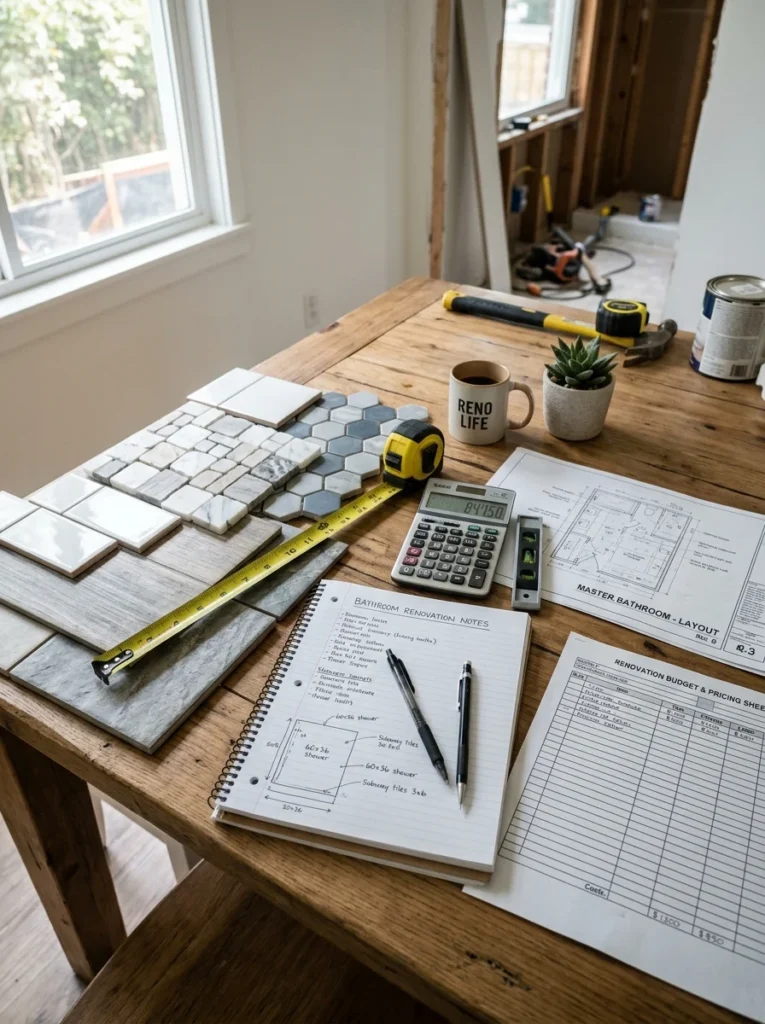
What’s the best tile for a shower floor?
A smaller-format porcelain tile with a matte or textured finish and a good slip resistance rating is generally the best choice for a shower floor, since the added grout lines from smaller tile improve traction and porcelain resists water damage well over time.
Is porcelain or ceramic better for a bathroom?
Porcelain is generally more durable and water-resistant, making it the better choice for shower floors and walls or any area with constant moisture exposure. Ceramic is more budget-friendly and works well for lower-moisture areas like accent walls or a powder room with less daily water exposure.
Does grout color really make a difference?
Yes, grout color significantly affects the finished look. Matching grout closely to the tile color creates a seamless, larger-feeling room, while a contrasting grout color emphasizes the tile’s shape and pattern, which works well with simple layouts like subway tile but can look busy with already patterned tile.
Should I choose a trendy tile color or a neutral one?
A neutral tile color for the main surfaces tends to last longer stylistically and is easier to work with over time, since tile is expensive and disruptive to replace. If you want a trendier color or pattern, it’s safer to use it in a smaller, easier-to-update area rather than committing the entire bathroom to it.
How much extra tile should I buy beyond the exact measurements?
A common rule of thumb is buying ten to fifteen percent more tile than your exact square footage to account for cuts, waste, and pattern matching, with a bit more added for intricate layouts like herringbone. It’s also worth keeping a small amount of leftover tile on hand after installation in case a piece is ever damaged and needs replacing, since tile lines are sometimes discontinued after a few years.
Material first, style second
Choosing bathroom tile becomes far less overwhelming once you approach it in the right order: material and slip resistance first, since those affect safety and durability, then size, color, and pattern second, since those shape how the room actually feels to live with. A neutral, durable, appropriately rated tile for the main surfaces, paired with a bolder pattern or color in one contained accent area, tends to age better and satisfy longer than an entire room built around a single trend.
My slippery marble-look floor eventually got redone with a textured porcelain in a similar look but with a proper slip rating, and it’s held up beautifully since. If you remember only one thing from this guide, let it be that: pick the material and safety rating first, and let the color and pattern decisions come after, not the other way around.