
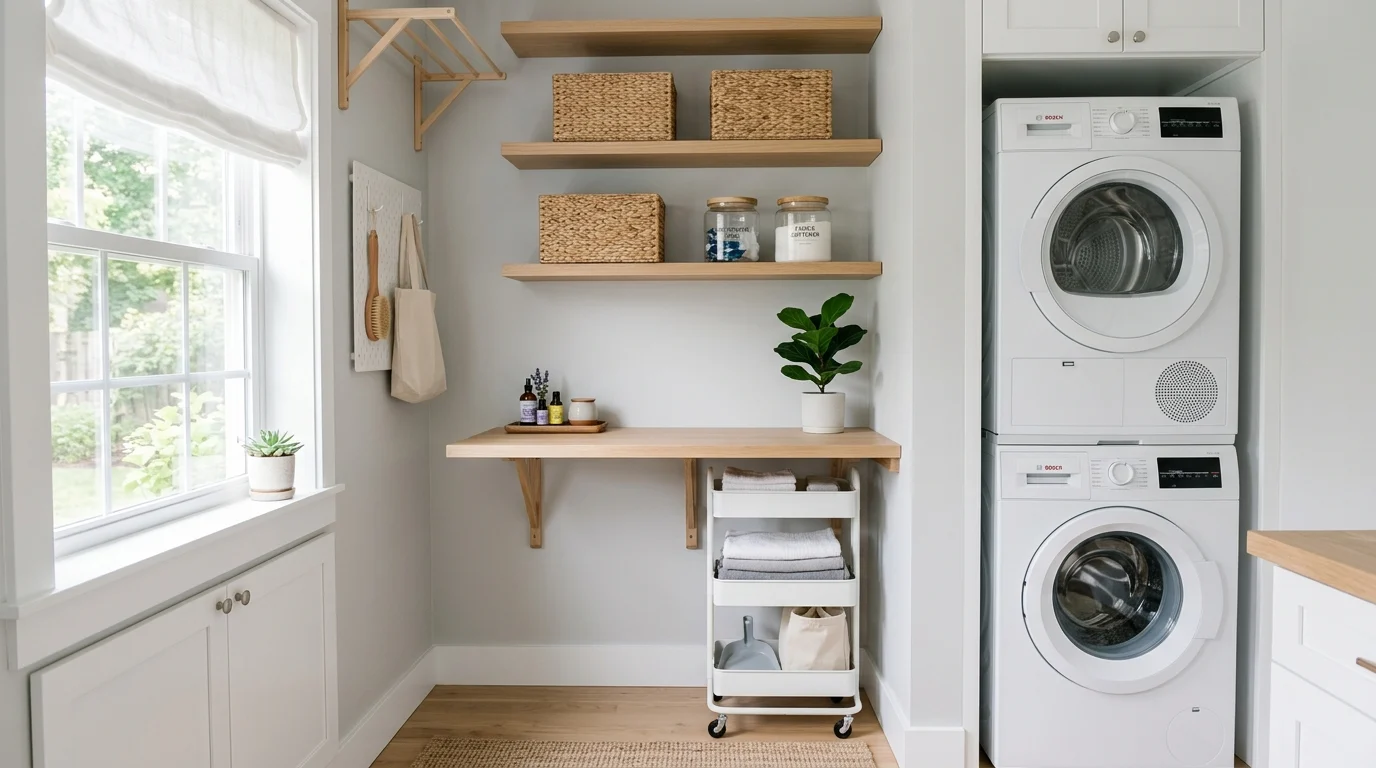
Our laundry closet measures barely more than the width of the washer and dryer themselves, with just enough room to stand between them and the door if you turn sideways. For a long time, I assumed a space that tight simply couldn’t hold much beyond the appliances themselves, and I lived with detergent bottles balanced precariously on top of the dryer because there was, as far as I could tell, nowhere else for them to go. It wasn’t until I actually measured the unused vertical space above the machines and behind the door that I realized the room had far more usable capacity than I’d given it credit for; I just hadn’t been looking in the right places.
A small laundry room can absolutely function well, even a genuinely tiny closet-style one, once you stop thinking about the space in terms of floor area alone and start considering every wall, corner, and vertical inch as potential storage or workspace. Here’s what actually made the difference in ours.
Go vertical before anything else
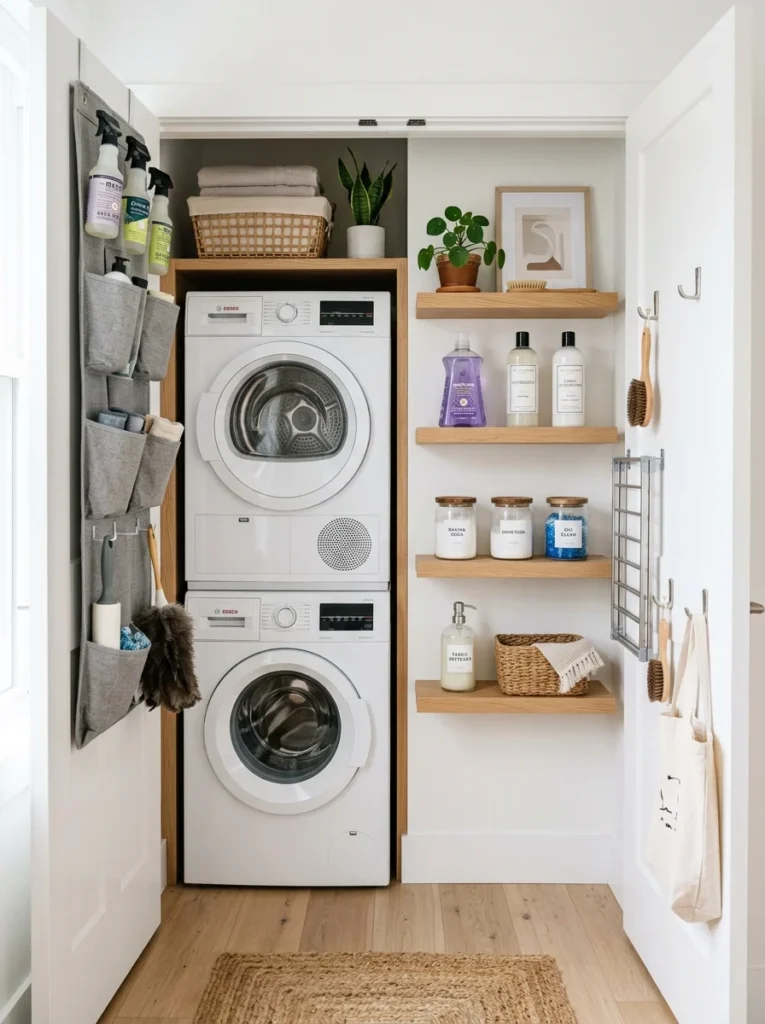
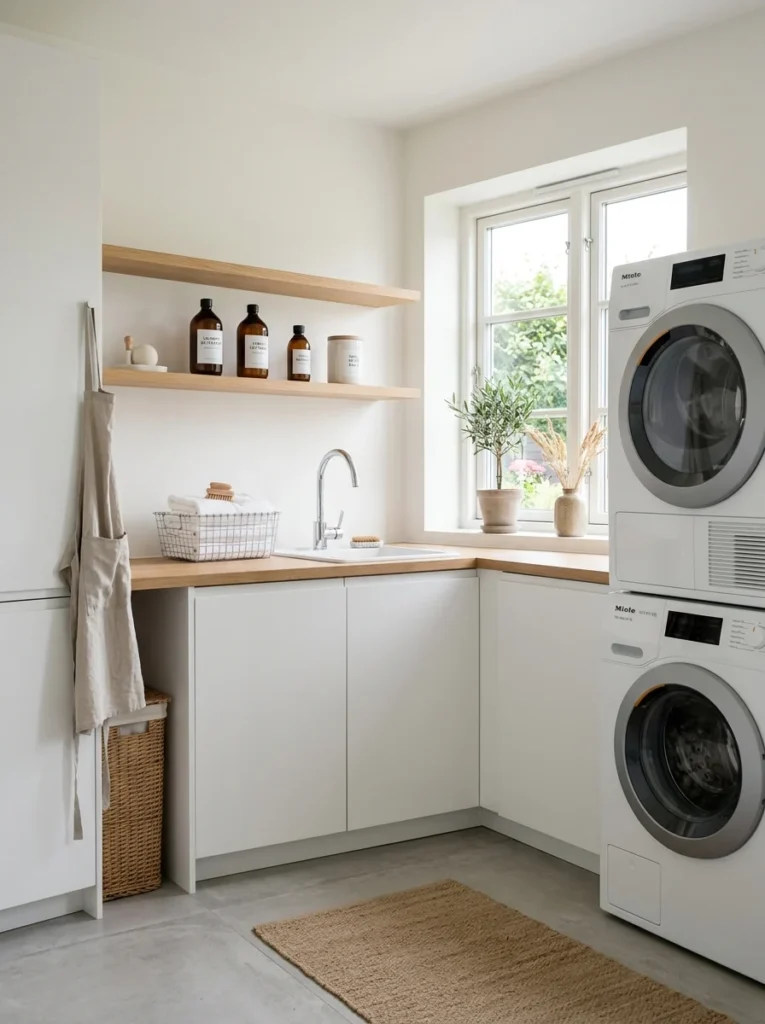
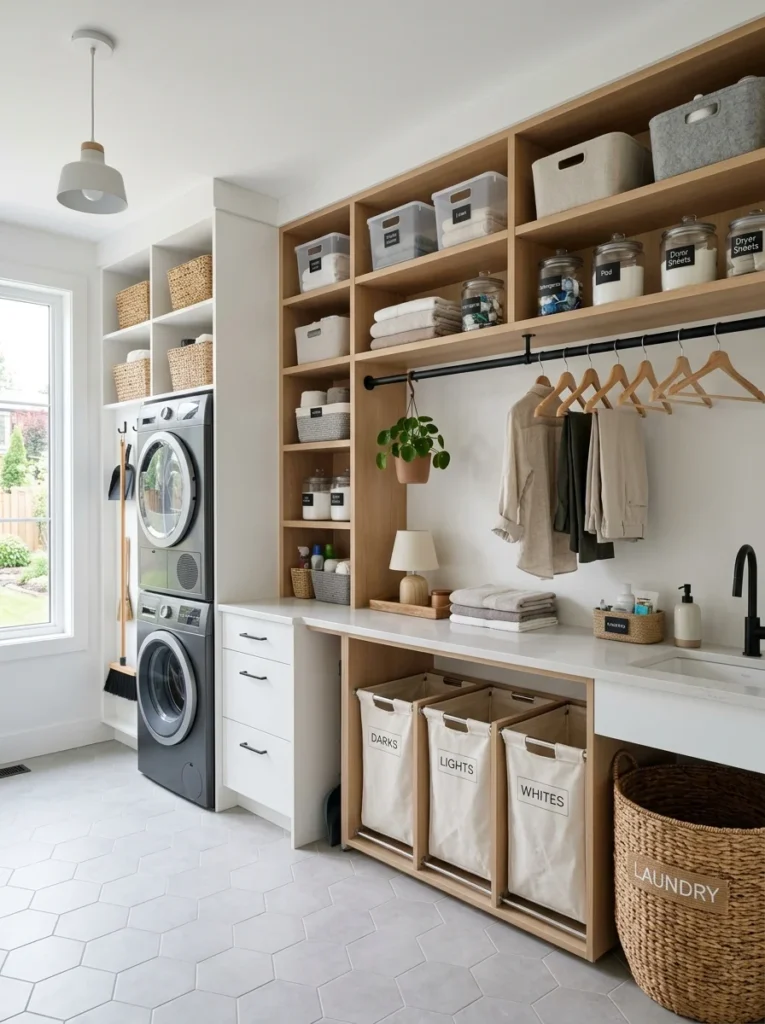
In a small laundry space, floor area is almost always the scarcest resource, while wall space above the appliances typically sits completely unused. Installing shelving that runs from just above the washer and dryer up toward the ceiling adds significant storage capacity without taking up any additional footprint at all. Even a single well-placed shelf directly above the machines can hold detergent, dryer sheets, and stain treatments that would otherwise clutter the top of the appliances themselves.
Use the back of the door for extra storage
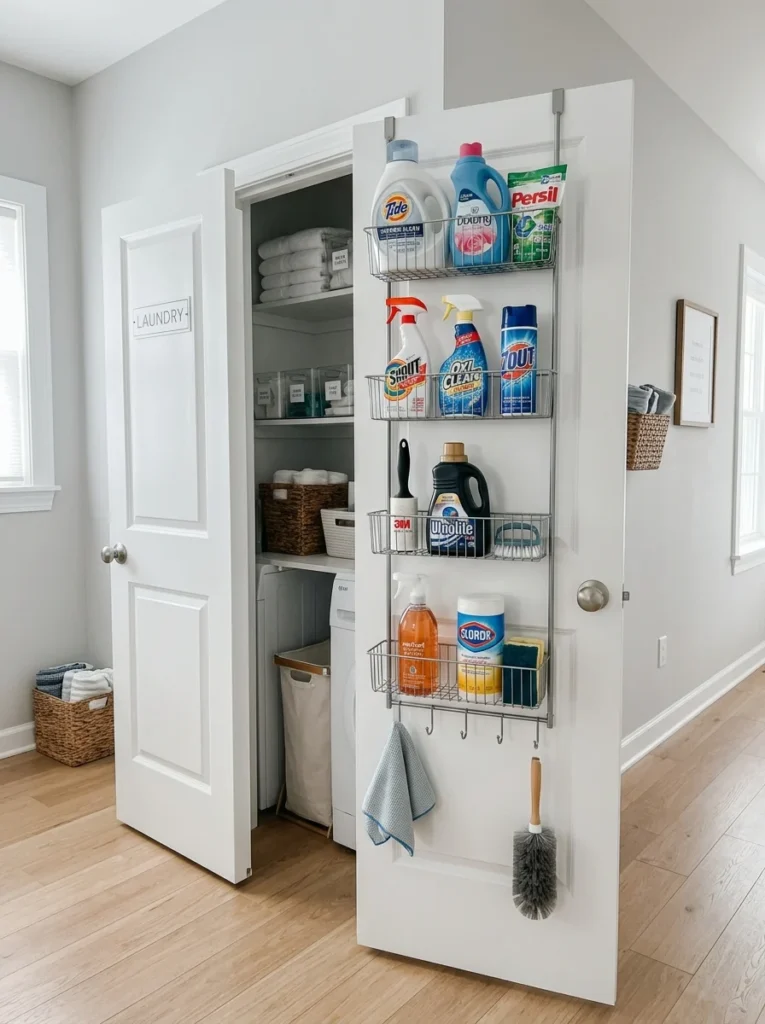
An over-the-door organizer, whether a simple fabric pocket organizer or a more rigid wire rack design, adds meaningful storage using a surface that’s almost always completely wasted in a small laundry space. This is one of the most space-efficient storage additions available, since it requires zero additional floor or wall footprint beyond the door that’s already there, and it works well for smaller items like stain removers, lint rollers, or a sewing kit that don’t need a full shelf to themselves.
Choose a stacked washer and dryer configuration if possible
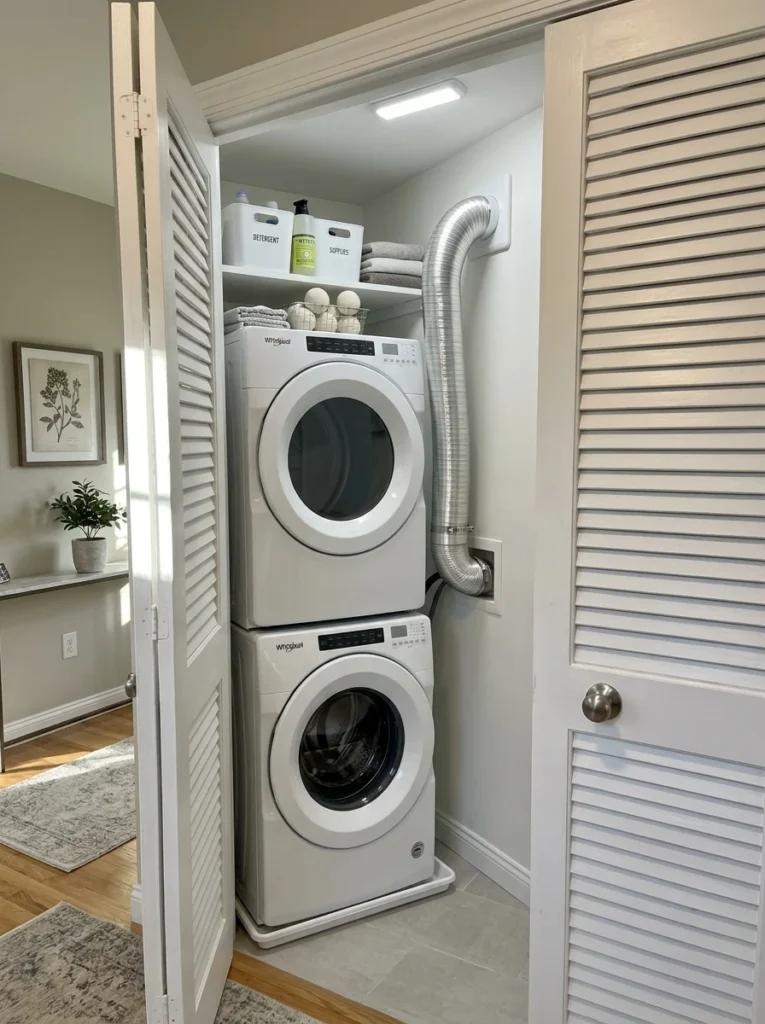
If your laundry space is narrow but has some ceiling height to work with, a stacked washer and dryer unit, either purpose-built or a standard front-loading pair with a stacking kit, uses considerably less floor footprint than a side-by-side configuration. This single change can free up enough floor space for a slim shelving unit or even a narrow rolling cart that simply wouldn’t fit alongside a traditional side-by-side setup.
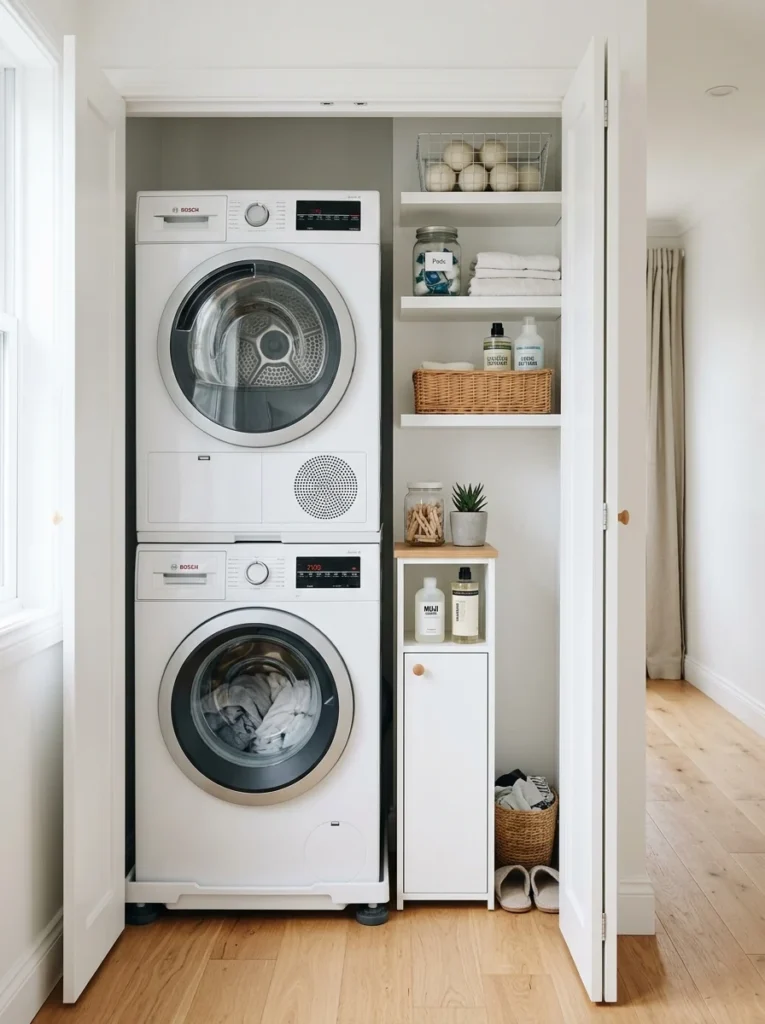
Add a fold-down or slide-out counter
A permanent counter often isn’t feasible in a genuinely tight laundry space, but a fold-down counter, hinged to the wall and foldable flat when not in use, or a slide-out surface built into a narrow cabinet, provides a folding and sorting surface exactly when needed without permanently occupying floor space the rest of the time. This kind of space-saving surface solves one of the most common frustrations in small laundry rooms, having nowhere flat to fold clothes, without requiring a larger footprint.
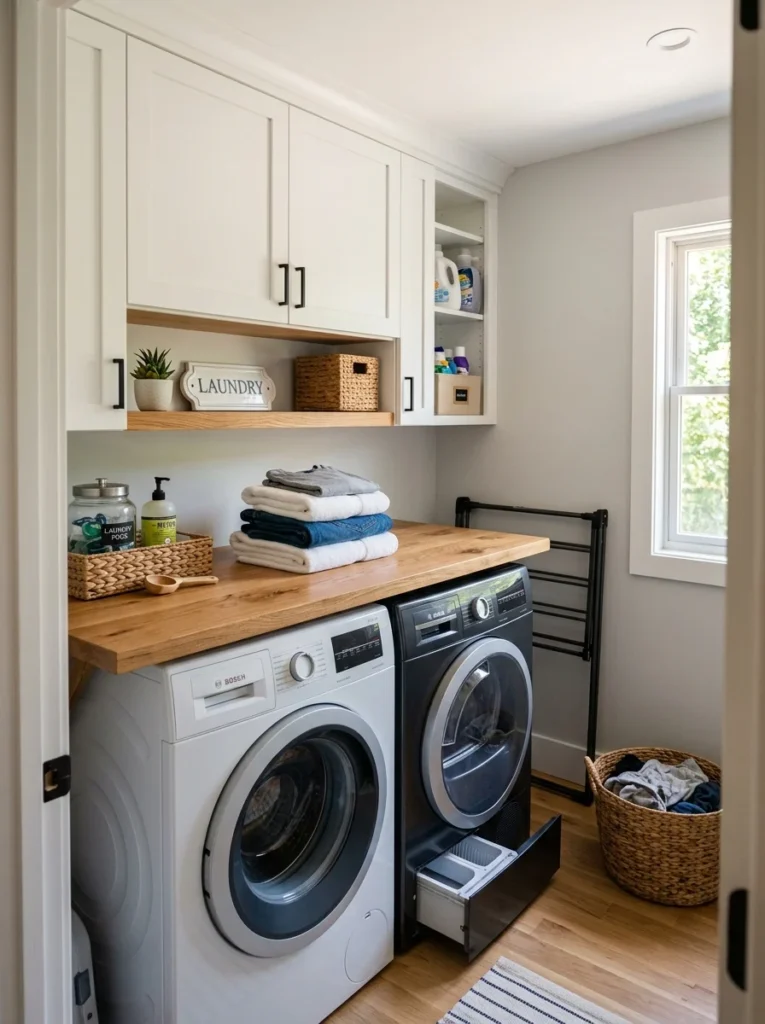
Use narrow, slim-profile storage carts
A slim rolling cart, sized to fit into the narrow gap often found between a washer and dryer or between an appliance and the wall, makes use of otherwise completely dead space. These carts typically hold laundry supplies and can be rolled out for access and tucked back into their gap afterward, adding functional storage in a spot most people don’t even consider usable.
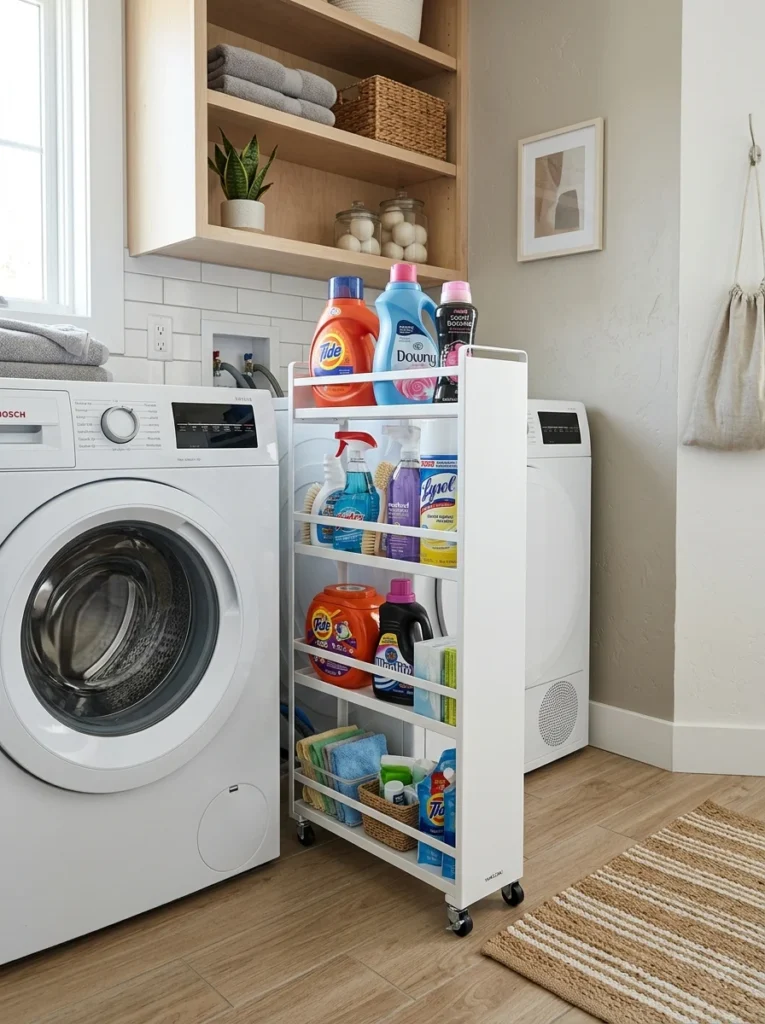
Install hooks and rods for hanging items
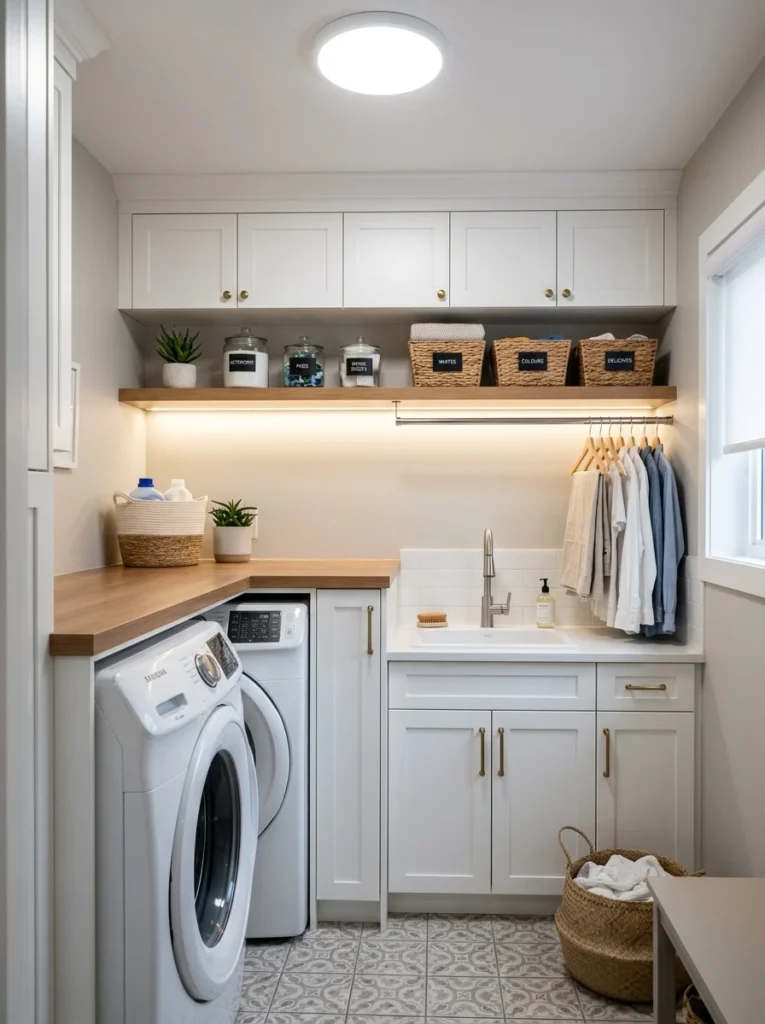
A simple hook mounted on the wall or the side of a cabinet holds an ironing board, a laundry bag, or a spray bottle without requiring any shelf or floor space at all. A tension rod installed across a narrow section of the room, even just a foot or two long in a very tight space, provides a place to hang delicate items or freshly dried clothes that need a moment before folding, using vertical air space that would otherwise go completely unused.
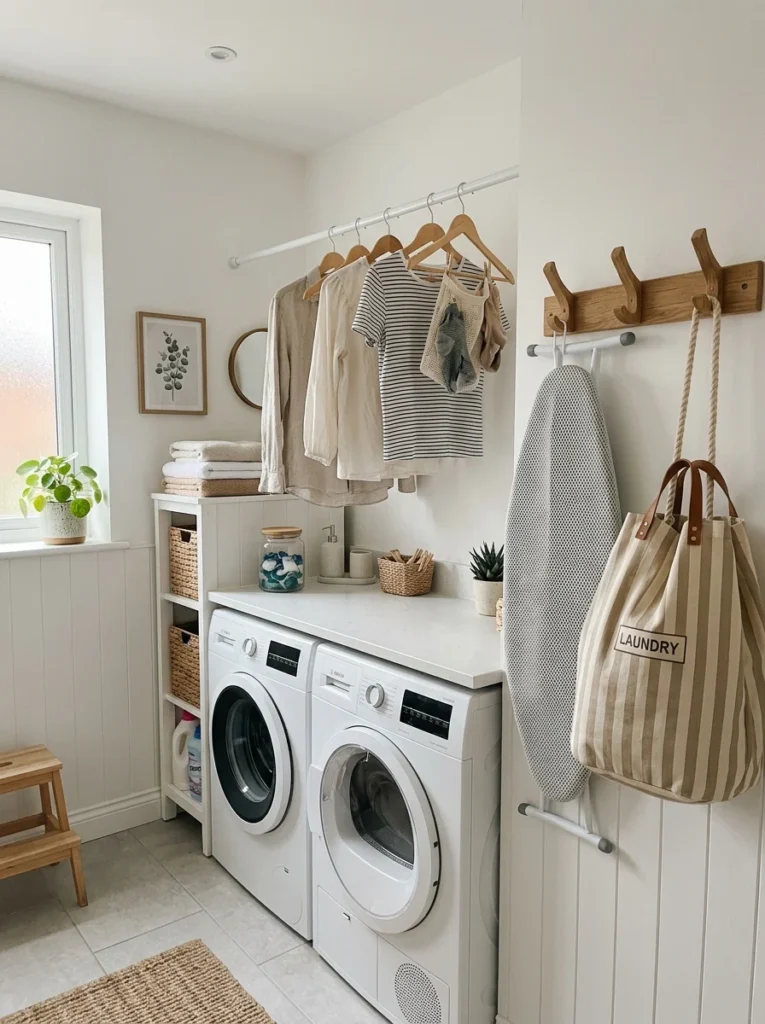
Choose a compact, wall-mounted ironing board if ironing is a regular task
A traditional freestanding ironing board takes up meaningful floor space both in use and in storage. A wall-mounted, fold-down ironing board tucks flat against the wall when not needed and folds down only when actually in use, freeing up that floor space for the rest of the time without sacrificing the functionality of having an ironing surface available.
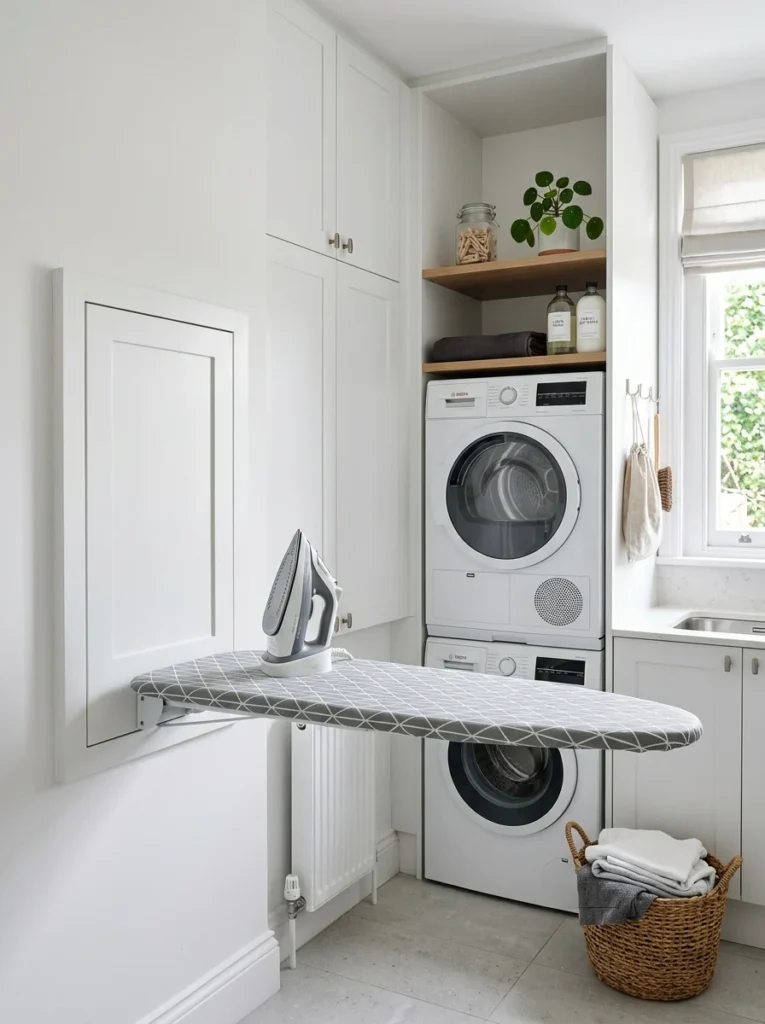
Use clear, stackable bins to maximize shelf efficiency
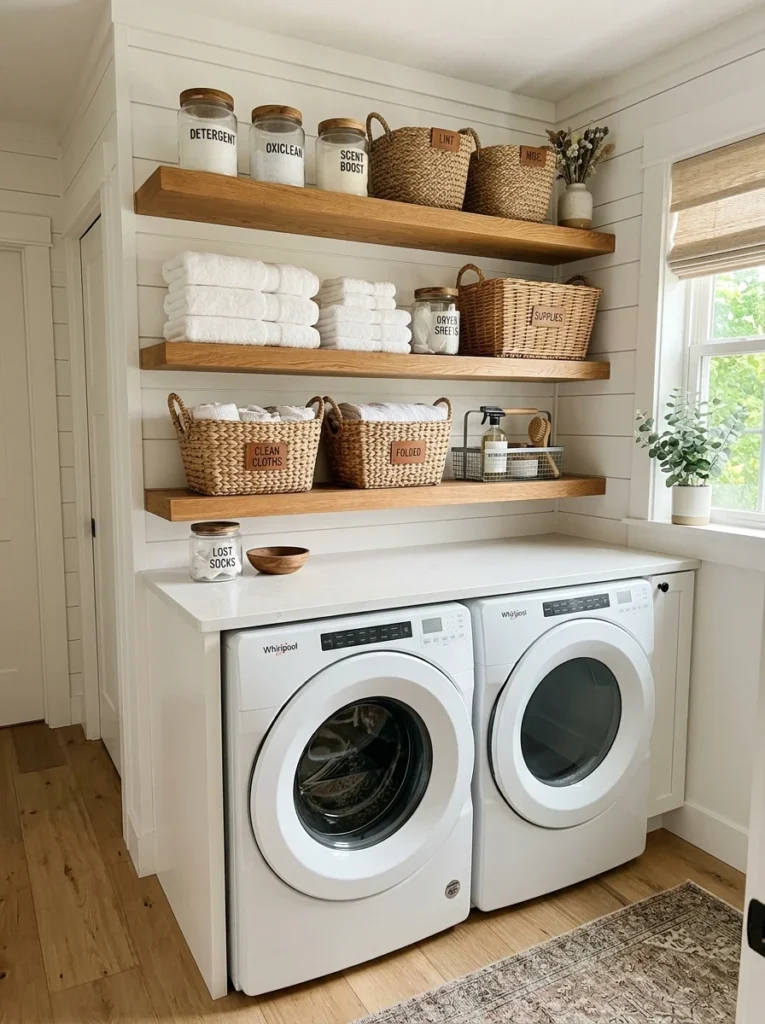
Clear, uniformly sized, stackable bins make far more efficient use of limited shelf space than a mismatched assortment of boxes and loose items, since they stack cleanly without wasted gaps and let you see contents at a glance without needing to pull each one down to check. Labeling each bin, even in a very small space, keeps the system functional over time rather than slowly reverting to a jumbled pile once the initial organizing effort fades.
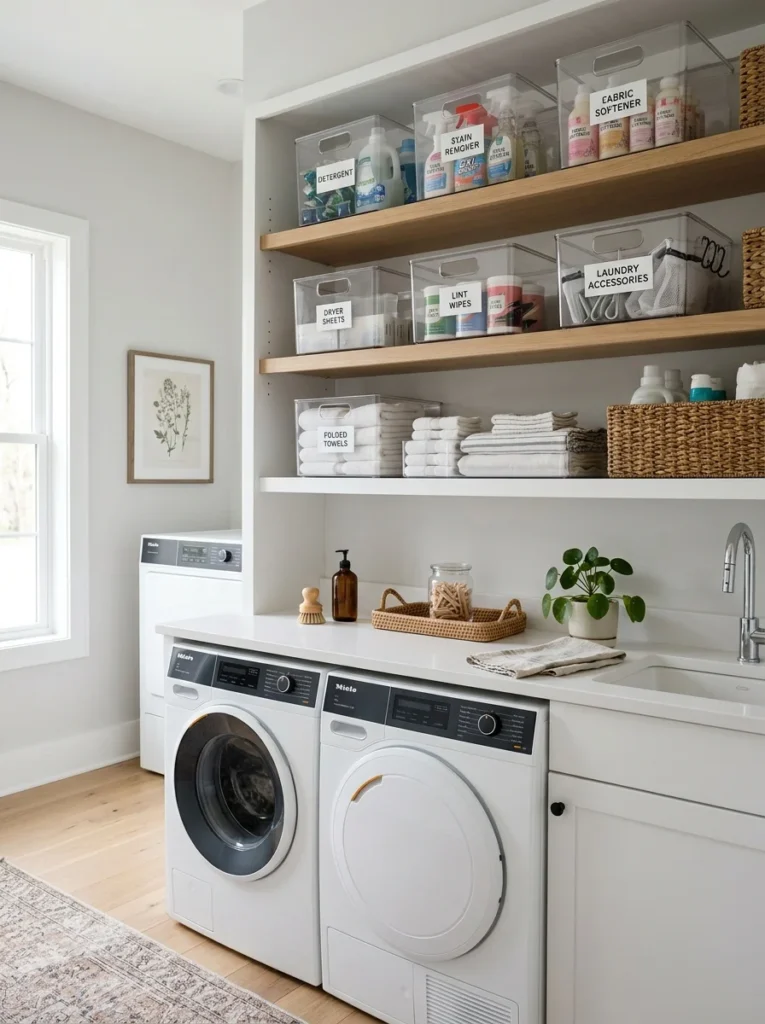
Mount a small mirror or use light colors to open up the space
Just as in a small bathroom, a small laundry room benefits from light, reflective colors on the walls and cabinetry, which help the space feel less cramped than the same room in a dark, heavy color scheme. A small mirror, if there’s a reasonable spot for one, adds a similar sense of visual depth to the room, bouncing light and creating the impression of more space than the room actually has.
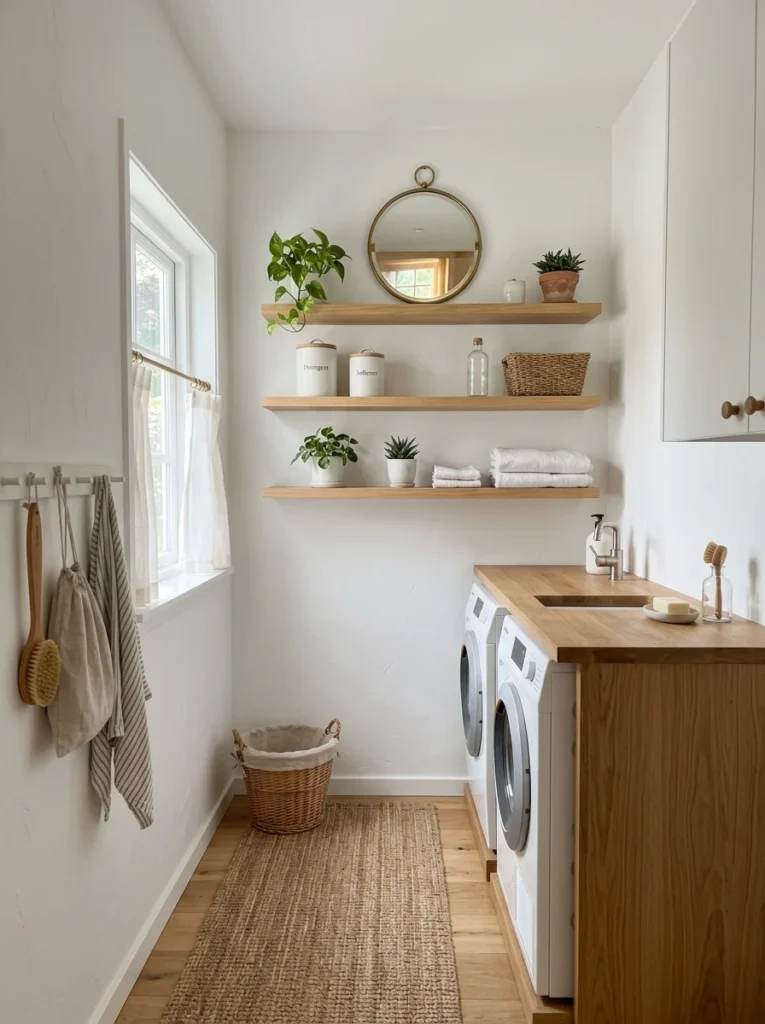
Repurpose a nearby closet or awkward nook if the current space is truly too small
If your laundry space genuinely can’t accommodate even minimal storage beyond the machines themselves, consider whether a nearby hallway closet, an awkward under-stair nook, or unused space in an adjacent room could house a slim shelving unit or supply cabinet dedicated to laundry, even if it’s not directly adjacent to the washer and dryer. This isn’t as convenient as having everything in one spot, but it’s often more practical than trying to force additional storage into a space that simply has no more capacity to give.
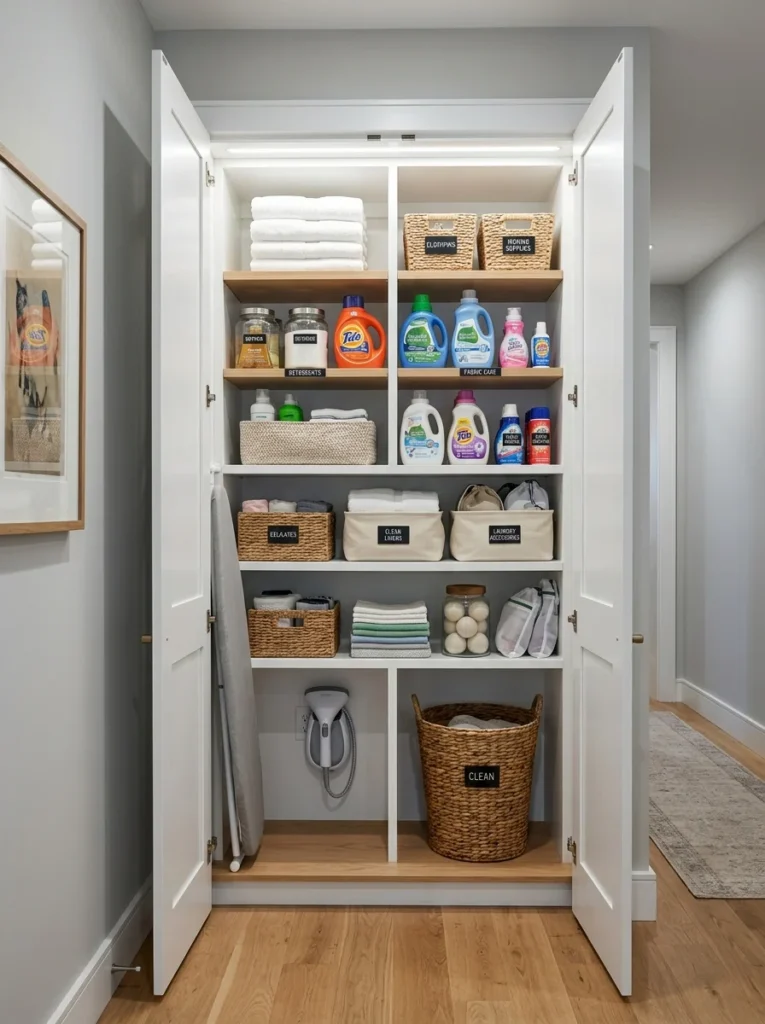
Keep only genuinely necessary items in the space
In a small laundry room, every item stored there needs to earn its spot, since there’s so little available space to begin with. Regularly reassessing what’s actually kept in the laundry area, and relocating anything that isn’t a core laundry supply or genuinely used there regularly, keeps the limited storage focused on what actually matters, rather than slowly filling up with items that have simply ended up there because it was the nearest available surface.
Don’t neglect ventilation in a very tight space
A small, enclosed laundry closet can accumulate heat and humidity quickly during a wash and dry cycle, which matters even more in a compact space with limited air circulation compared to a larger, more open laundry room. Ensuring the dryer vent is properly connected, unobstructed, and cleaned regularly is especially important in a small space, both for efficient drying and for reducing excess heat and lint buildup in an already confined area. If the closet has a door that closes fully, leaving it cracked open during active use, or installing a small vent or louvered door panel, helps manage this heat and humidity without requiring any additional floor space.
Improve lighting specifically for a small, enclosed space
A single dim bulb is a common feature of small laundry closets, and it makes an already tight space feel even more cramped and harder to actually use for sorting or stain-checking. Swapping in a brighter LED bulb is a nearly free upgrade that makes a noticeable difference, and if space allows for even a slim under-shelf light strip, that added illumination directly over the counter or folding surface makes fine tasks like matching socks or checking care labels considerably easier in a space that often doesn’t get much natural light to begin with.
Choose a space-saving hamper or basket solution
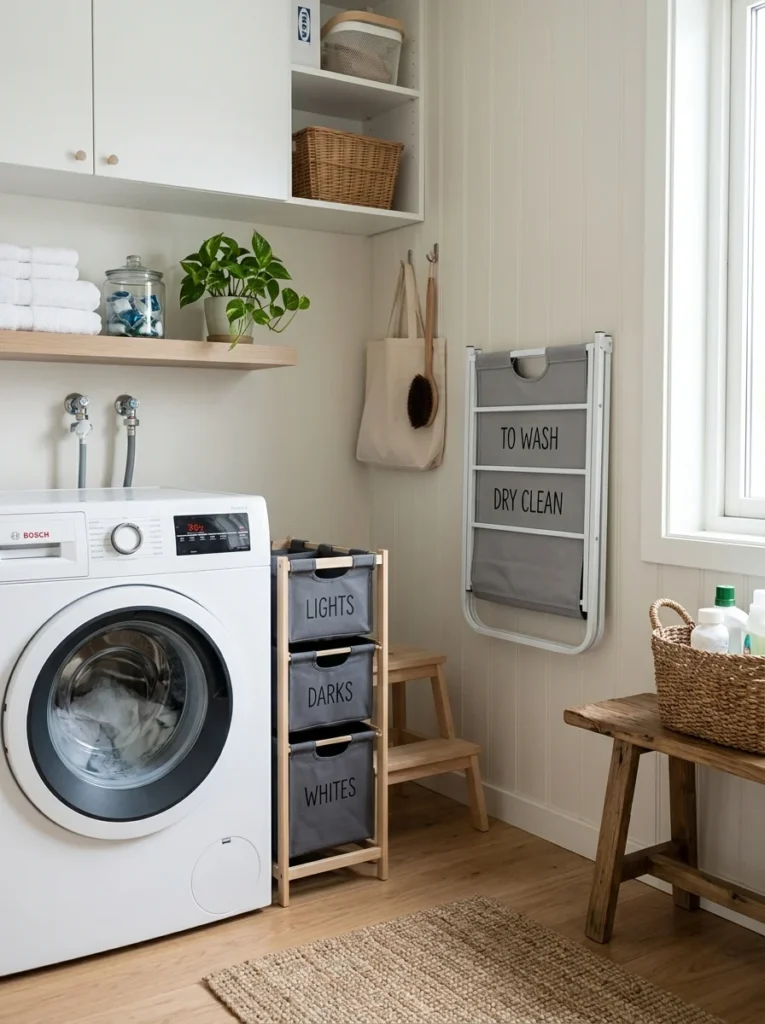
A bulky, freestanding hamper can take up a disproportionate amount of floor space in a genuinely small laundry room. A slim, stackable sorting hamper system, designed with a narrower footprint and often divided into multiple compartments for pre-sorting by color, fits into tighter spaces more efficiently than a single large basket while still serving the same sorting function. A wall-mounted, collapsible hamper that folds flat against the wall when empty is another option worth considering if floor space is at an absolute premium and even a slim stackable unit doesn’t comfortably fit.
Common small laundry room questions
What’s the best way to add storage to a laundry closet with no extra floor space?
Vertical shelving above the machines, an over-the-door organizer, and wall-mounted hooks or a tension rod all add meaningful storage without requiring any additional floor footprint, making them the best starting points for a genuinely tight laundry closet.
Should I stack my washer and dryer to save space?
If your laundry area is narrow but has adequate ceiling height, stacking a compatible washer and dryer, using either purpose-built stackable units or a standard pair with a stacking kit, frees up floor space that a side-by-side configuration would otherwise use.
How can I fold laundry in a space with no counter?
A fold-down counter hinged to the wall, or a slide-out surface built into a narrow cabinet, provides a folding surface exactly when needed without permanently taking up floor space the rest of the time, which works well in laundry spaces too tight for a fixed counter.
Is it worth using bins to organize a small laundry space?
Yes, clear, uniformly sized stackable bins make far more efficient use of limited shelf space than mismatched containers, since they stack without wasted gaps and let you see contents without pulling each one down, which matters even more in a space with very little storage to begin with.
What’s a good hamper solution for a very small laundry space?
A slim, stackable sorting hamper system with a narrower footprint, or a wall-mounted collapsible hamper that folds flat when empty, both take up considerably less floor space than a traditional bulky, freestanding hamper while still serving the same basic sorting function.
A genuinely small laundry room can still function well once every wall, corner, and vertical inch is treated as potential storage rather than just the floor area around the appliances. Going vertical, using the back of the door, choosing space-saving fixtures like a stacked washer and dryer or a fold-down counter, and keeping only truly necessary items in the space all add up to a laundry room that works considerably better than its square footage alone would suggest.
Our own tight laundry closet now has a slim shelf above the machines, a small over-the-door organizer, and a narrow cart tucked into the gap beside the dryer, none of which required any construction or significant expense. If your own laundry space still feels impossibly cramped, start by looking straight up and behind the door; the extra space you need is very likely already there, just not yet being used.