
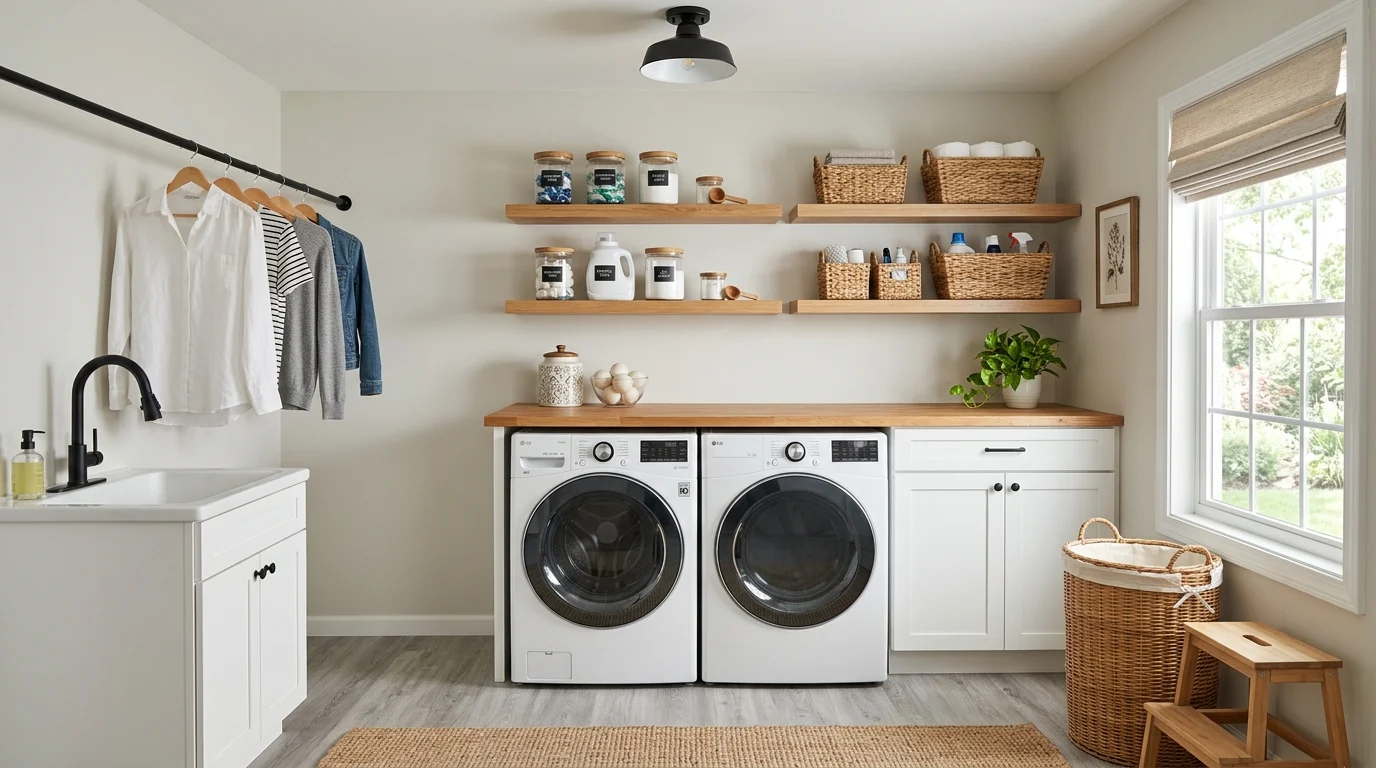
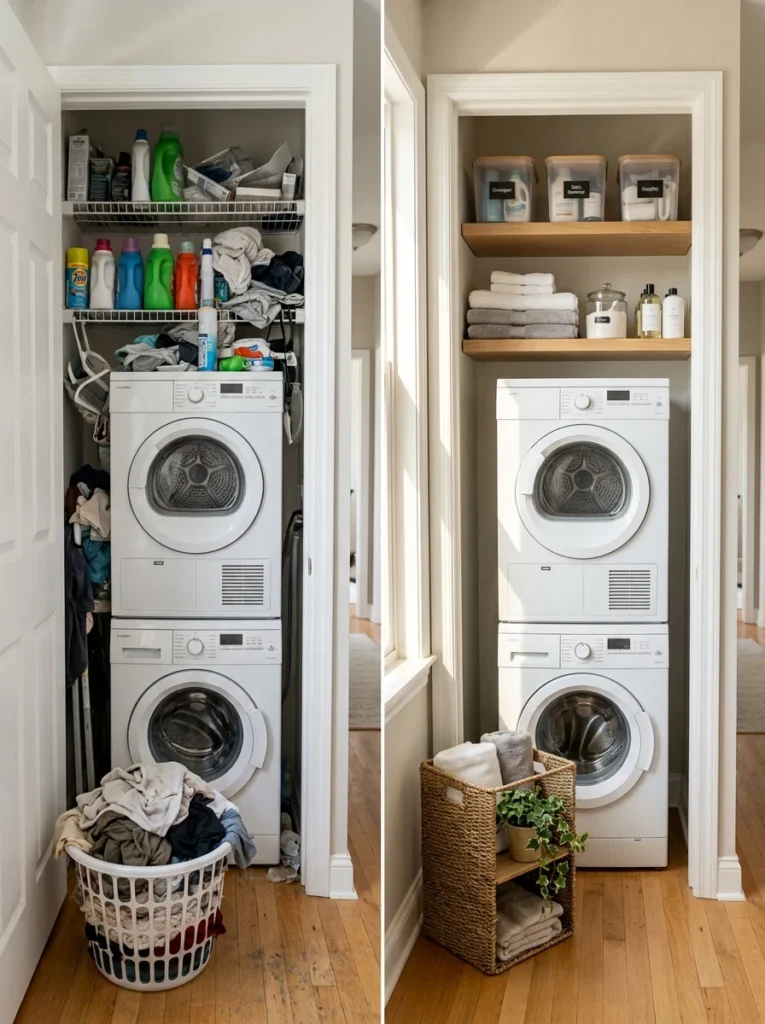
Our laundry room, for the first couple of years in this house, was genuinely just a washer and dryer crammed into a closet with a single wire shelf above them holding a half-empty bottle of detergent and whatever else had ended up there over time. I did laundry in it constantly, and it never once occurred to me that the room itself could be designed to make that constant task easier, until a friend’s small but genuinely well-organized laundry closet showed me what was possible in a similarly modest space. What changed wasn’t the size of the room; it was finally treating it as a space worth planning rather than an afterthought that just happened to house the appliances.
A functional laundry room doesn’t require a large footprint or an expensive renovation. It comes down to a handful of deliberate choices around storage, workflow, and a few materials that make daily use easier, all of which can be approached at nearly any budget level. Here’s how I’d tackle it, from the free changes to the bigger investments worth considering.
Start by mapping your actual laundry workflow
Before spending anything, walk through your laundry routine step by step: where dirty clothes get sorted, where detergent and supplies are grabbed from, where clean clothes get folded, and where they end up afterward. Most inefficient laundry rooms aren’t necessarily too small; they’re just arranged without any thought to this actual sequence, forcing unnecessary extra steps or awkward reaching every single time. Once you know your real workflow, every subsequent decision, storage placement, counter space, hamper location, can be made to support it directly rather than guessing at what might be useful.
Free and nearly free changes to start with
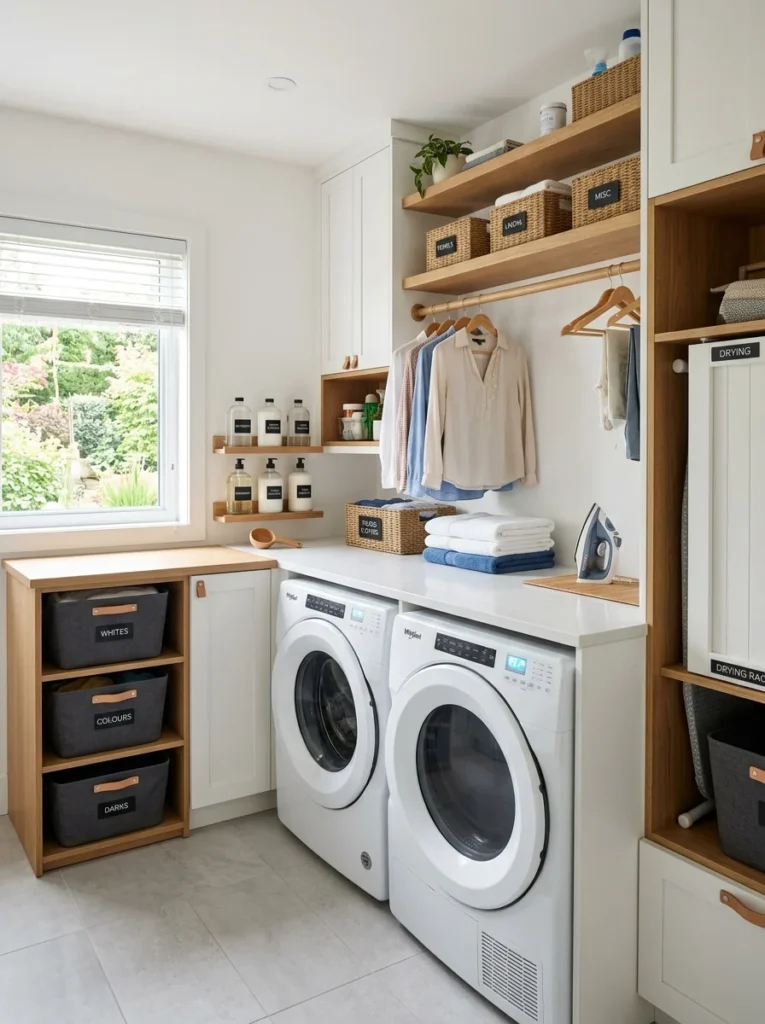
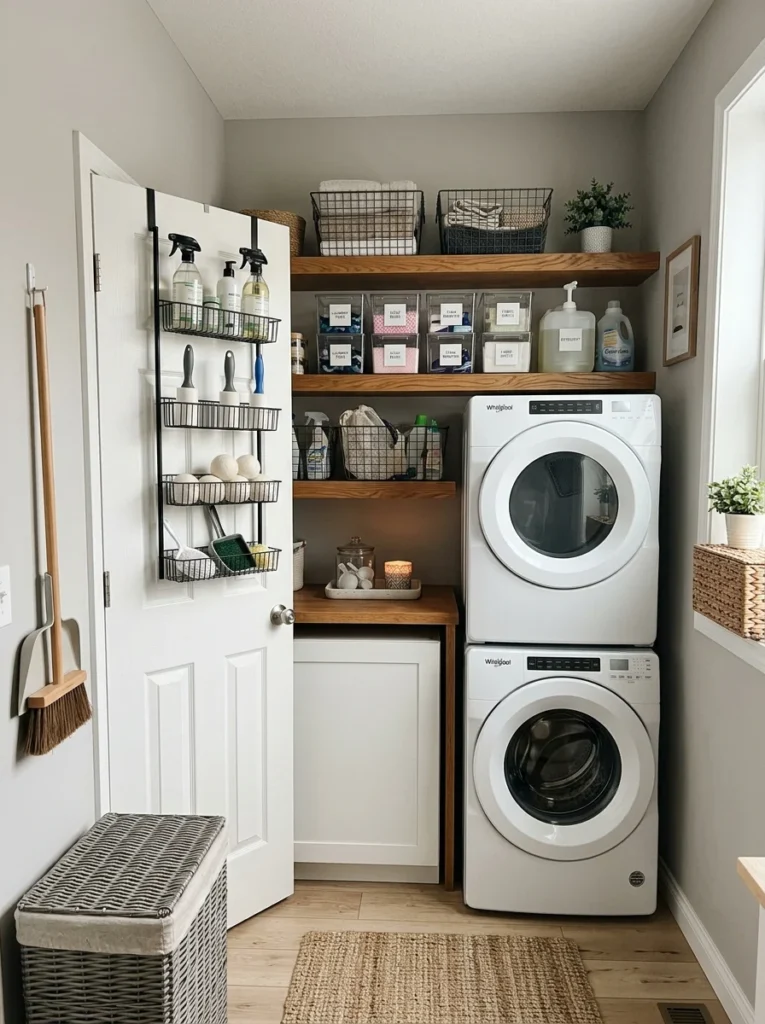
Decluttering is the highest-value, zero-cost change available in almost any laundry room. Removing stray items that have accumulated there simply because it’s a convenient dumping spot, and relocating anything that doesn’t actually belong in the laundry room, immediately makes the space feel more functional even before anything else changes. Rearranging existing shelving or storage to put frequently used items, detergent, stain remover, dryer sheets, at the most accessible height, while moving rarely used items higher or lower, costs nothing and meaningfully speeds up the daily routine.
Add low-cost storage before considering a full renovation
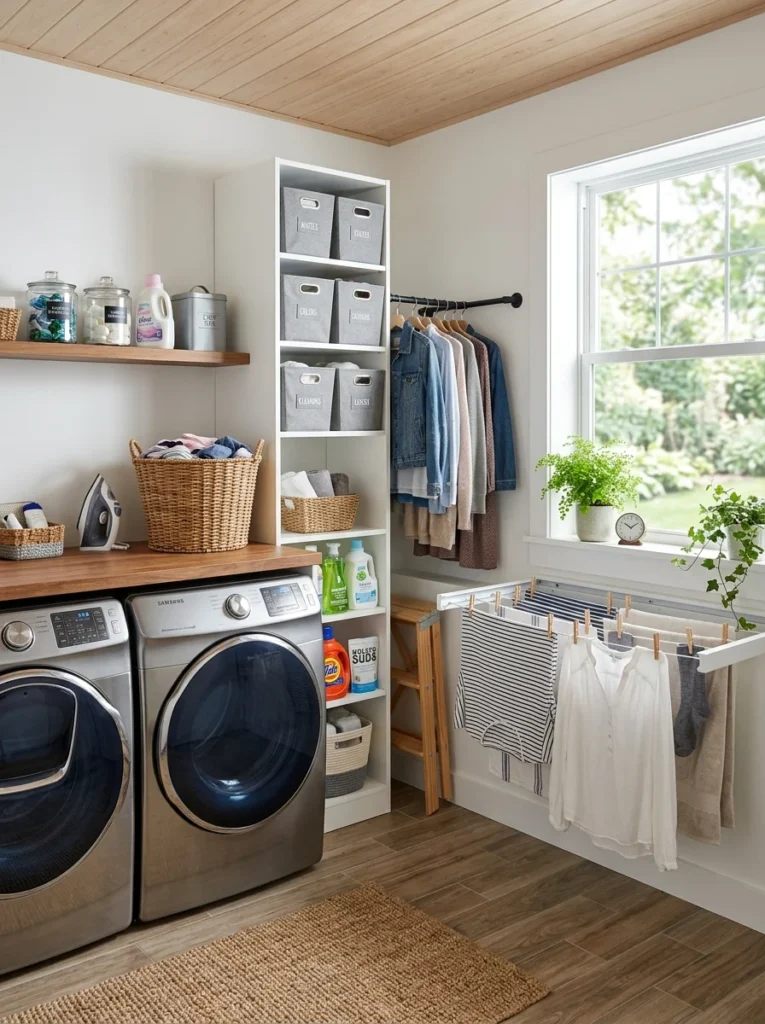
A few inexpensive wire or wood shelves, mounted above or beside the washer and dryer, dramatically increase usable storage in even a small closet-style laundry space. Over-the-door organizers, hung on the laundry room or closet door itself, add storage for smaller items like stain treatments or lint rollers without taking up any additional floor or shelf space at all. Clear, labeled bins for sorting laundry by color or type cost very little and make the sorting step of the process noticeably faster and less prone to mistakes than an unsorted pile.
Prioritize a folding surface, even a small or improvised one
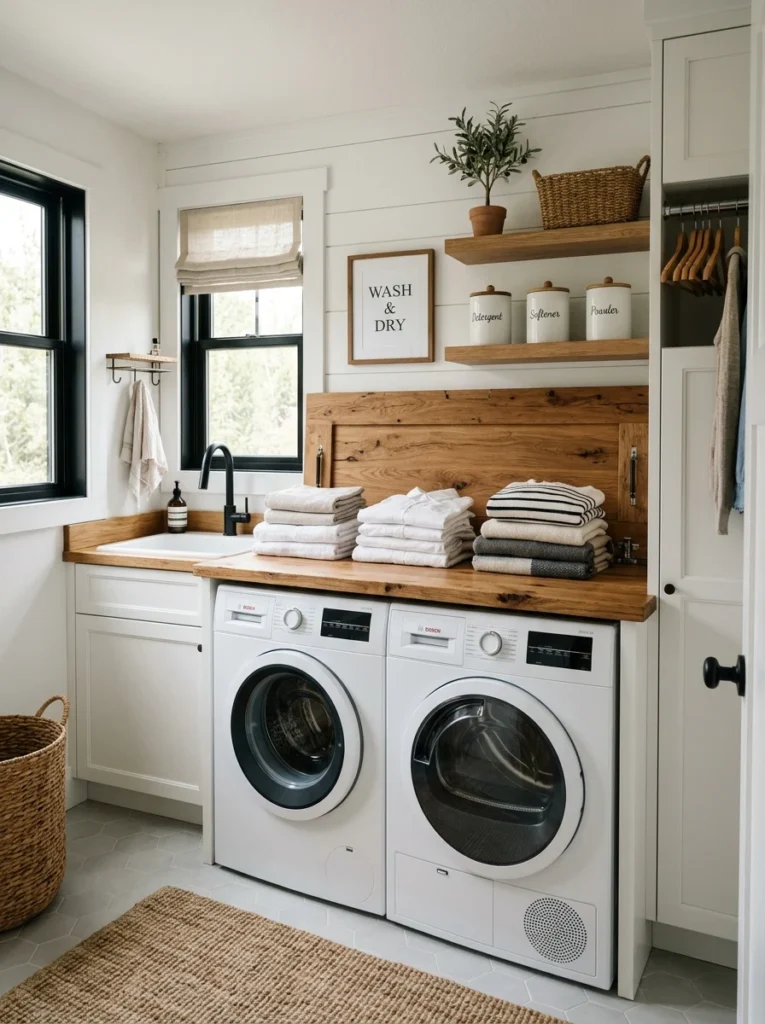
A dedicated flat surface for folding clothes fresh out of the dryer makes an enormous difference in how manageable the whole laundry process feels, yet it’s one of the most commonly missing elements in smaller laundry spaces. If a built-in counter isn’t in the budget, a sturdy folding table that can be tucked away when not in use, or even a wide, flat board that sits across the top of the washer and dryer temporarily, provides much of the same functional benefit at a fraction of the cost of a permanent counter installation.
Consider a mid-range investment: a proper counter and cabinet
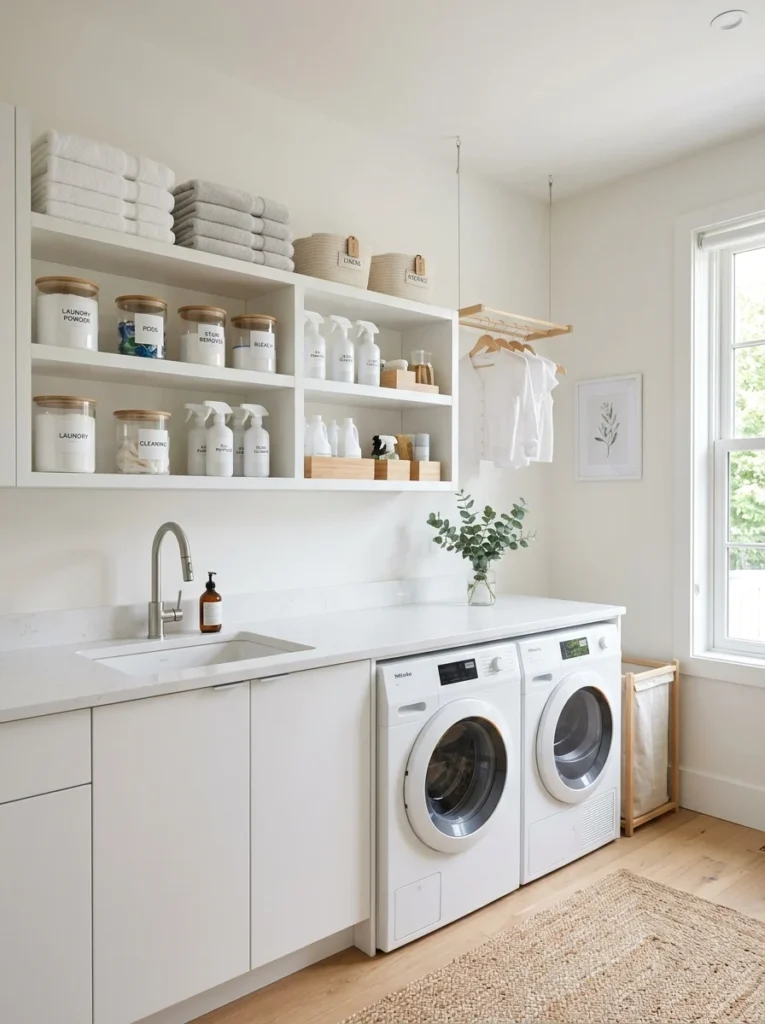
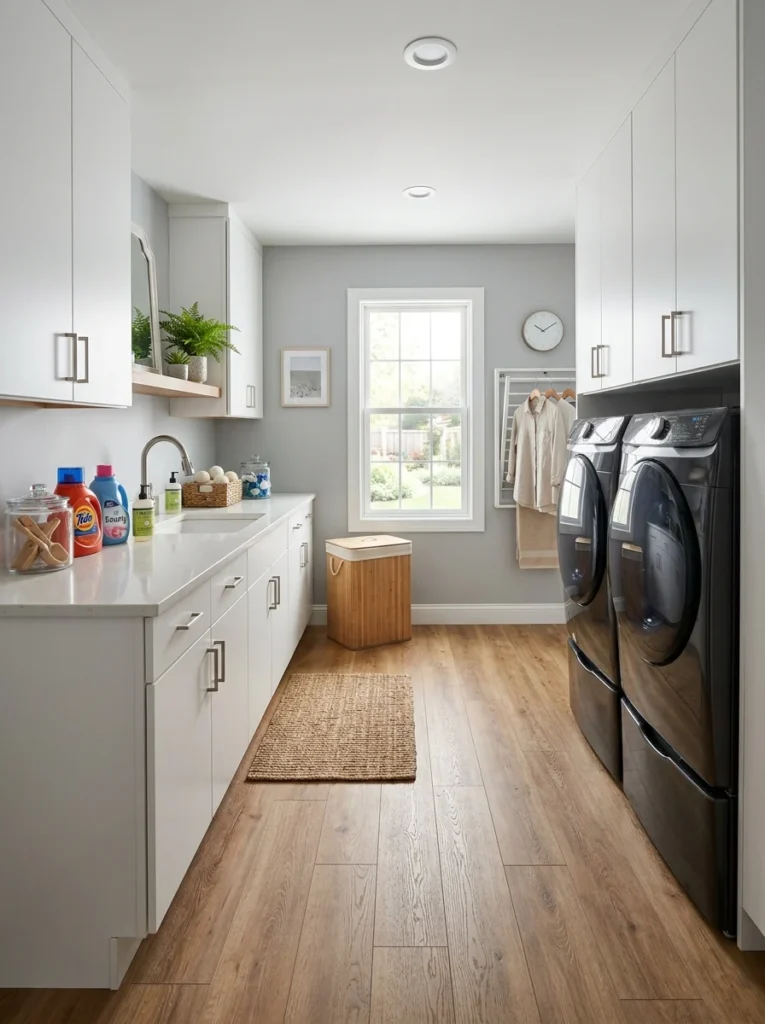
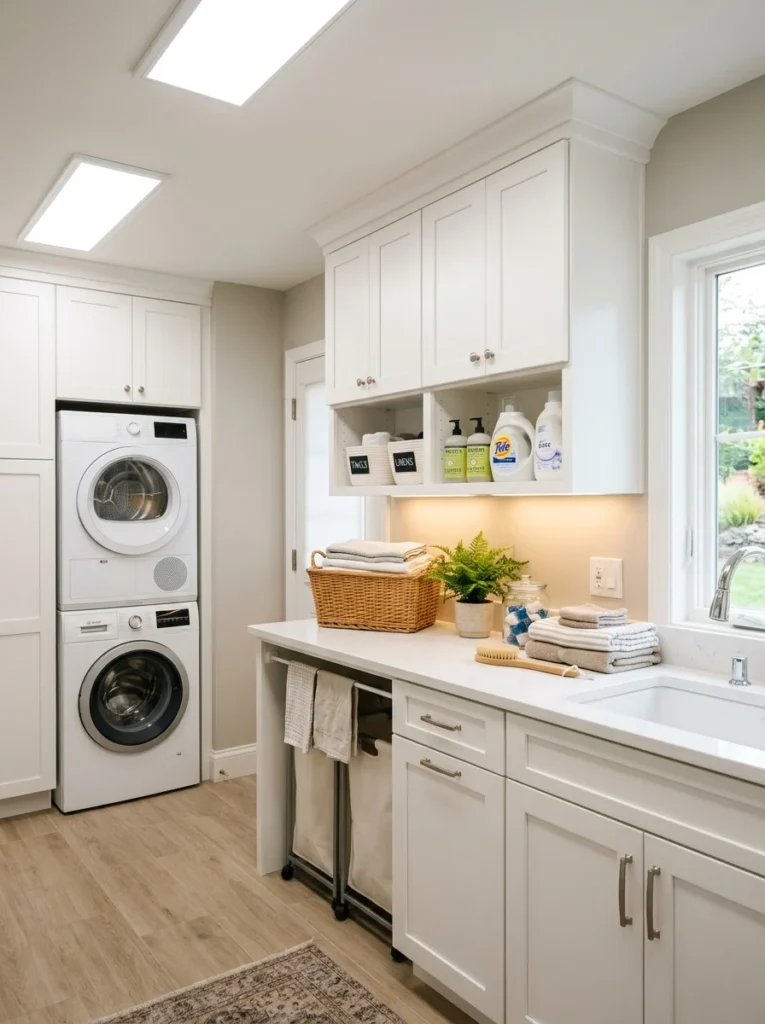
Once basic storage and workflow are addressed, a modest countertop installed over a front-loading washer and dryer, or along an open wall if space allows, creates a genuinely dedicated folding and sorting surface that a temporary board can’t fully replicate. Pairing this with a simple cabinet or shelving unit below or beside it adds enclosed storage for supplies you’d rather keep out of sight, detergent, dryer balls, extra hangers, while keeping the counter surface itself clear and ready for actual folding.
Add a utility sink if your plumbing allows and budget permits
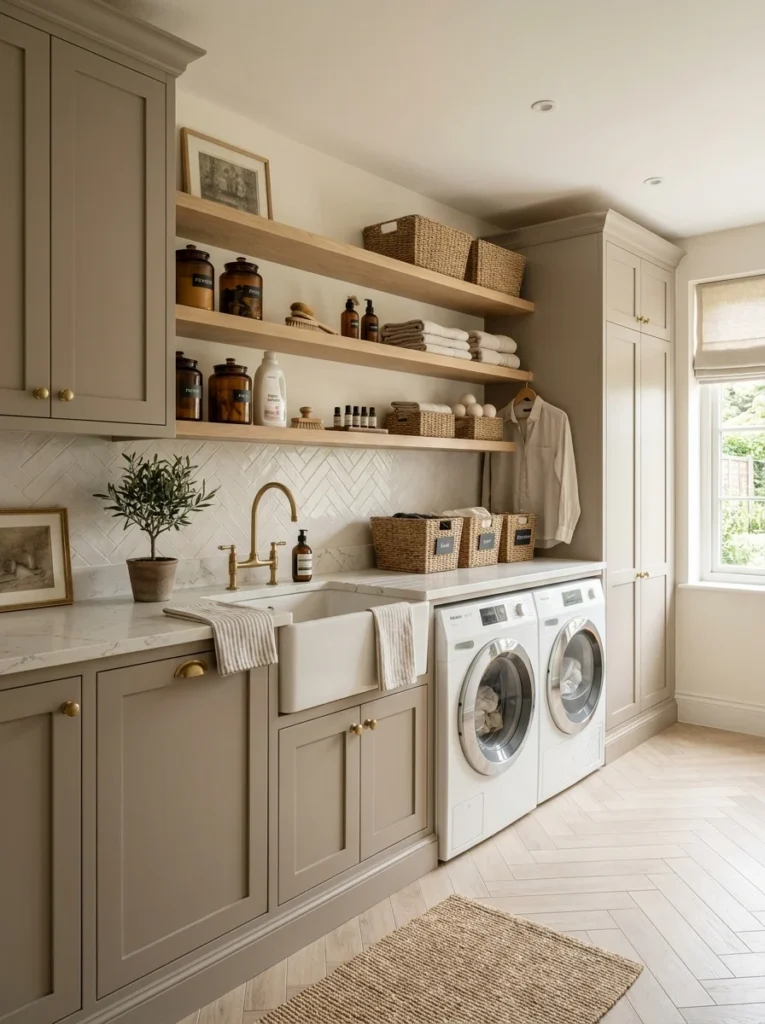
A utility sink is a bigger investment, generally requiring existing or nearby plumbing to make installation reasonably affordable, but it adds genuine functionality for pre-treating stains, hand-washing delicate items, or simply rinsing something out without needing to walk to a bathroom or kitchen sink. If your laundry room already has water lines running to it for the washer, extending them to a small utility sink is often more affordable than starting entirely new plumbing runs from scratch.
Choose durable, easy-to-clean flooring
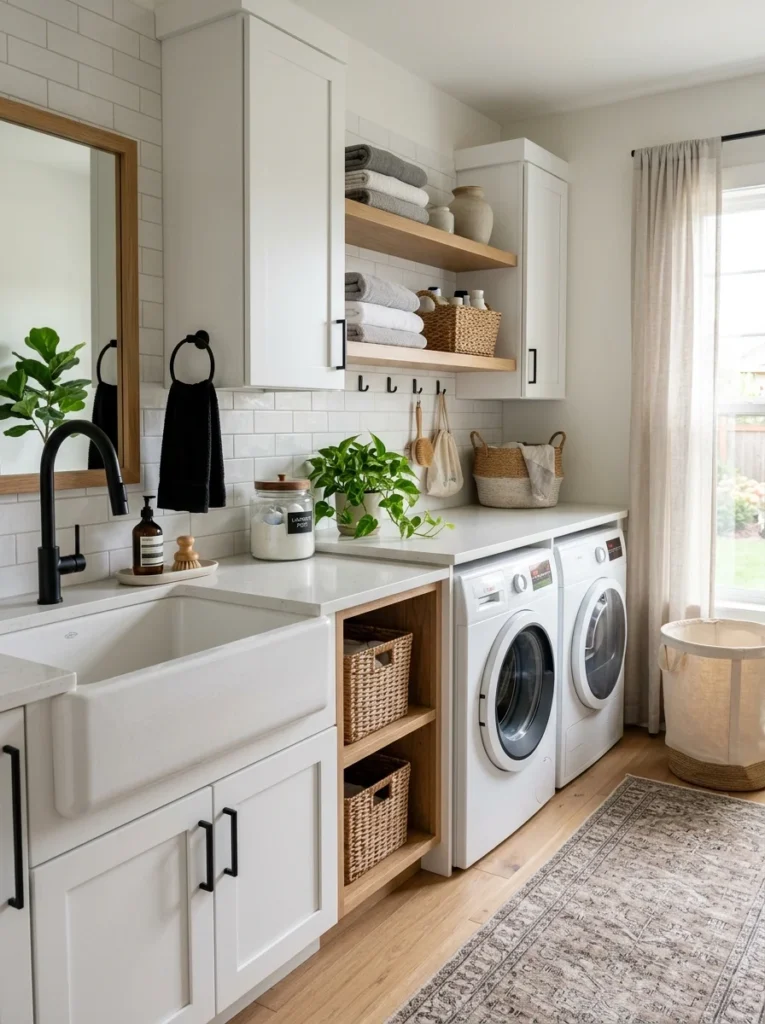
Laundry rooms deal with spilled detergent, occasional water leaks, and dropped items regularly, making flooring durability and water resistance genuinely practical considerations rather than just aesthetic ones. Vinyl, porcelain tile, or sealed concrete all handle this kind of wear well and are considerably easier to clean than carpet, which should generally be avoided in a laundry space regardless of budget level. Budget-friendly vinyl flooring, including peel-and-stick options in some cases, offers much of this durability at one of the lowest price points among suitable laundry room flooring materials.
Improve lighting for a genuinely functional space
Laundry rooms, particularly smaller closet-style ones, are often under-lit with a single dim overhead bulb, making it hard to spot stains, read care labels, or match small items like socks accurately. A brighter LED bulb swap in an existing fixture is one of the cheapest possible upgrades, while adding a small under-cabinet light strip, if cabinets are installed, provides more direct, even lighting across the counter and sorting surface for a modest additional cost.
Add hanging space for air-drying and fresh-from-the-dryer items
A simple tension rod installed between two walls, or a wall-mounted retractable clothesline, provides a place to hang delicate items that shouldn’t go in the dryer, or clothes fresh out of the dryer that need to hang briefly before folding to reduce wrinkling. This is one of the most functional, lowest-cost additions available and solves a common daily frustration in laundry rooms that lack any dedicated hanging space at all.
Think through ventilation and safety, regardless of budget
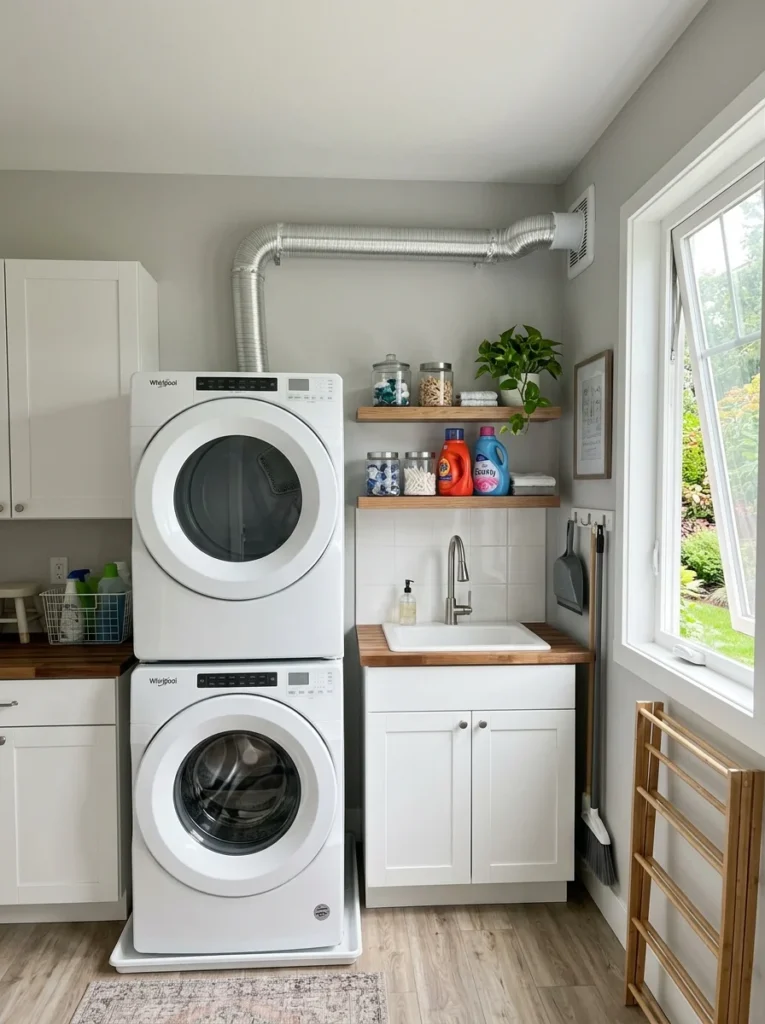
A properly vented dryer, with the vent duct cleaned regularly and free of lint buildup, isn’t just about laundry room comfort; it’s a genuine fire safety consideration, since lint buildup in dryer vents is a leading cause of house fires. Ensuring the laundry room has adequate ventilation generally, whether through a window, an exhaust fan, or simply keeping the door open during use, also helps manage the heat and humidity that washers and dryers generate, protecting both the room’s finishes and indoor air quality over time.
Personalize the space without significant cost
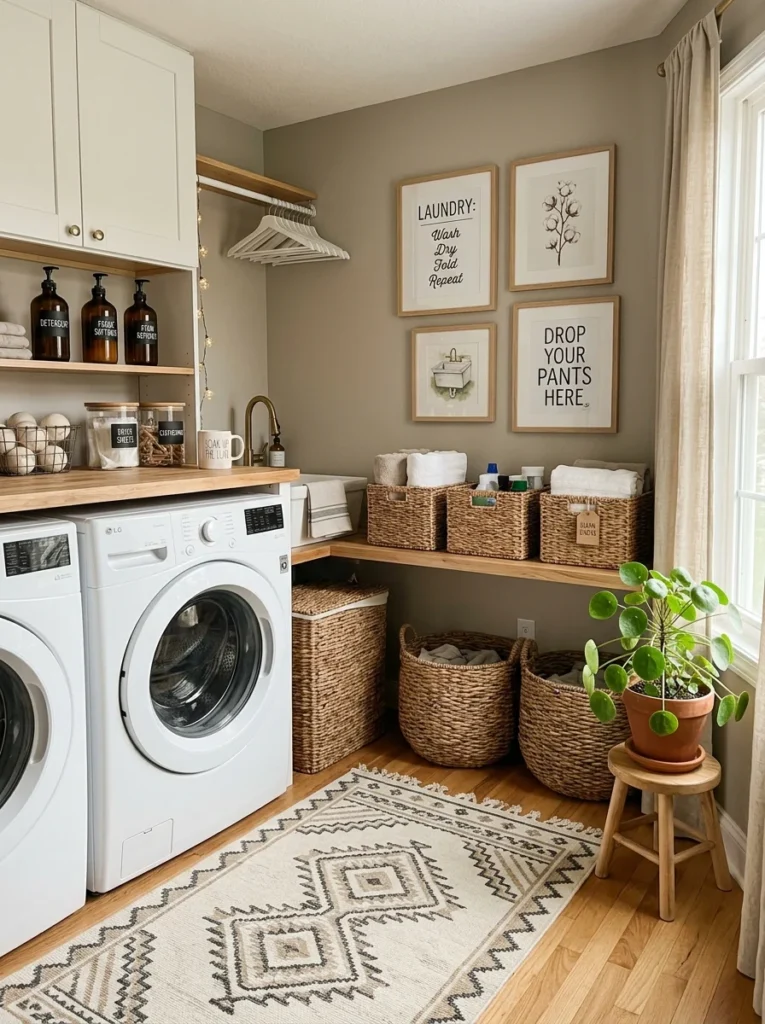
A fresh coat of paint, in a moisture-appropriate finish, transforms a laundry room’s overall feel for very little money and effort. Adding a piece of art, a patterned rug suited to a high-moisture area, or simply organizing supplies into matching, labeled containers adds a sense of intention and care to the space without requiring any structural changes at all. These small personalization touches are often what separates a purely functional laundry room from one that’s also a pleasant space to spend time in during an otherwise tedious chore.
Plan for growth if your budget allows phased improvements
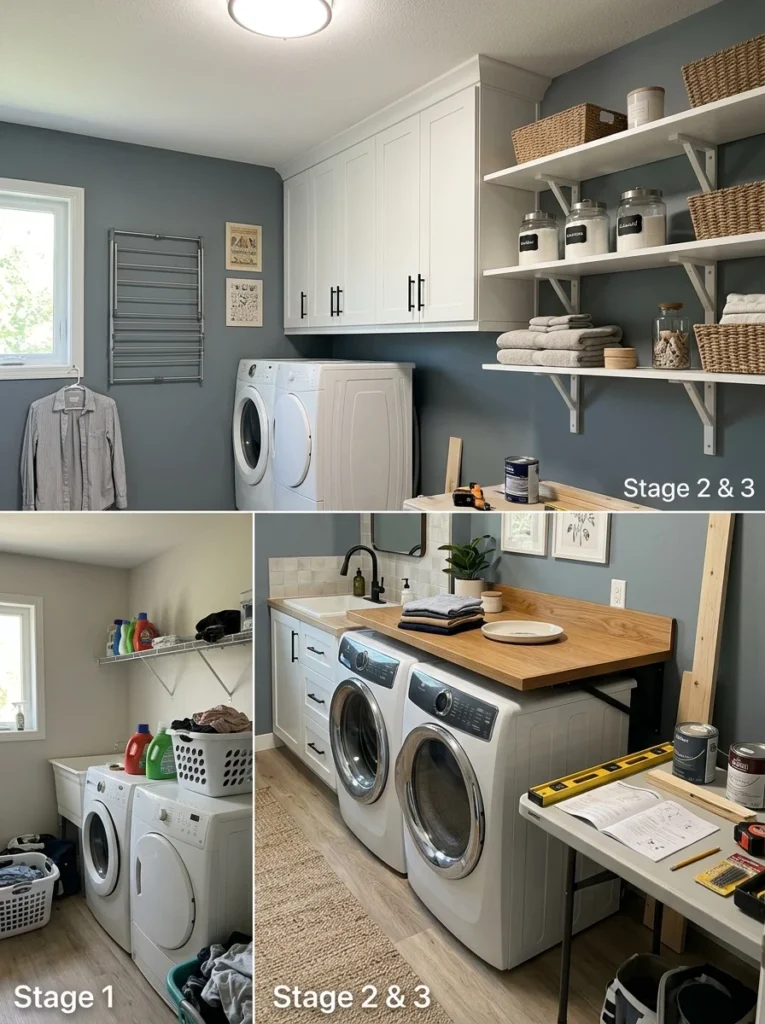
If a full laundry room overhaul isn’t affordable all at once, treating it as a phased project, decluttering and adding shelving first, then a folding surface, then eventually a proper counter and cabinets, lets you improve the space’s functionality incrementally rather than waiting years for the budget to do everything simultaneously. Each phase built on the previous one in our own laundry room, and by the time we added the counter and proper cabinets, the workflow and storage decisions from earlier phases meant the whole space came together cohesively rather than needing to be redesigned from scratch.
Consider appliance efficiency when it’s time to replace
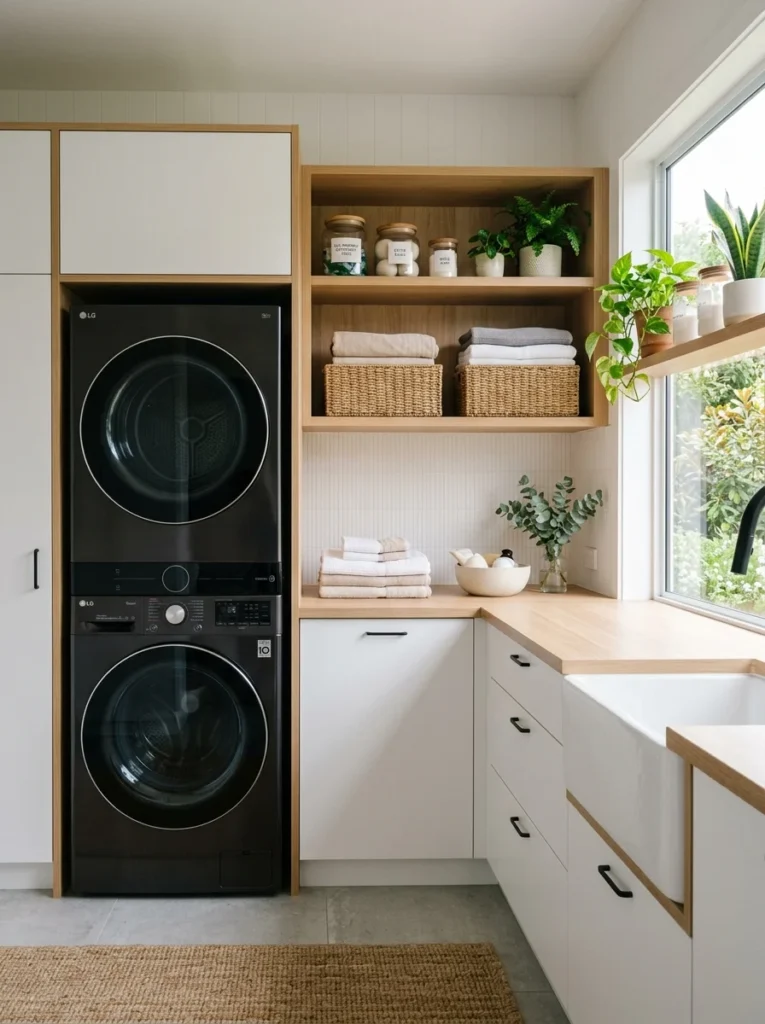
While a full appliance replacement is a bigger investment than most of the changes above, it’s worth factoring into long-term laundry room planning if your current washer and dryer are older or inefficient. Energy-efficient models use significantly less water and electricity per cycle, which can offset a portion of the purchase cost over time through lower utility bills, and many regions offer rebates specifically for efficient appliance upgrades that can reduce the effective purchase price. If replacement isn’t currently in the budget, this is simply worth keeping in mind as a longer-term phase of your laundry room’s overall improvement rather than something to rush into alongside the other changes covered here.
What’s the most important thing to prioritize on a tight laundry room budget?
Decluttering and organizing existing storage, then adding a basic folding surface, generally deliver the biggest functional improvement for the least cost, since these changes address the most common daily frustrations without requiring any construction or major purchases.
Is it worth adding a utility sink to a small laundry room?
If your existing plumbing makes installation reasonably affordable, a utility sink adds genuine functionality for pre-treating stains and hand-washing items. If plumbing would need significant new work, it’s often more cost-effective to prioritize other improvements first and revisit a sink later.
What flooring should I avoid in a laundry room?
Carpet should generally be avoided in a laundry room regardless of budget, since it holds moisture and doesn’t handle spills or leaks well. Vinyl, porcelain tile, or sealed concrete are all more practical, durable choices for this kind of high-moisture space.
Can I improve a laundry room without any construction or renovation?
Yes, decluttering, adding shelving or an over-the-door organizer, improving lighting with a brighter bulb, adding a tension rod for hanging items, and applying a fresh coat of paint can all meaningfully improve a laundry room’s functionality and appearance without any construction involved.
Should I prioritize appliance replacement or room improvements first?
In most cases, addressing storage, workflow, and a folding surface delivers a bigger immediate improvement in daily usability for a much lower cost than appliance replacement. Save appliance upgrades for when your current washer and dryer are genuinely nearing the end of their useful life, or when energy savings from a more efficient model would meaningfully offset the cost over time.
A genuinely functional laundry room comes down to understanding your actual workflow first, then addressing storage, a folding surface, lighting, and safety considerations in whatever order your budget allows, starting with the free and low-cost changes before considering bigger investments like a counter, cabinets, or a utility sink. None of this requires a large space or a large budget to meaningfully improve.
Our own laundry closet now has simple shelving, a small fold-down counter, and a tension rod for hanging clothes, none of it expensive, but together it’s turned a chore I used to actively avoid into one that at least doesn’t add extra frustration on top of the task itself. If your own laundry space still feels like an afterthought, start with decluttering and a folding surface this weekend, and let the bigger investments follow whenever your budget catches up to your plans.