
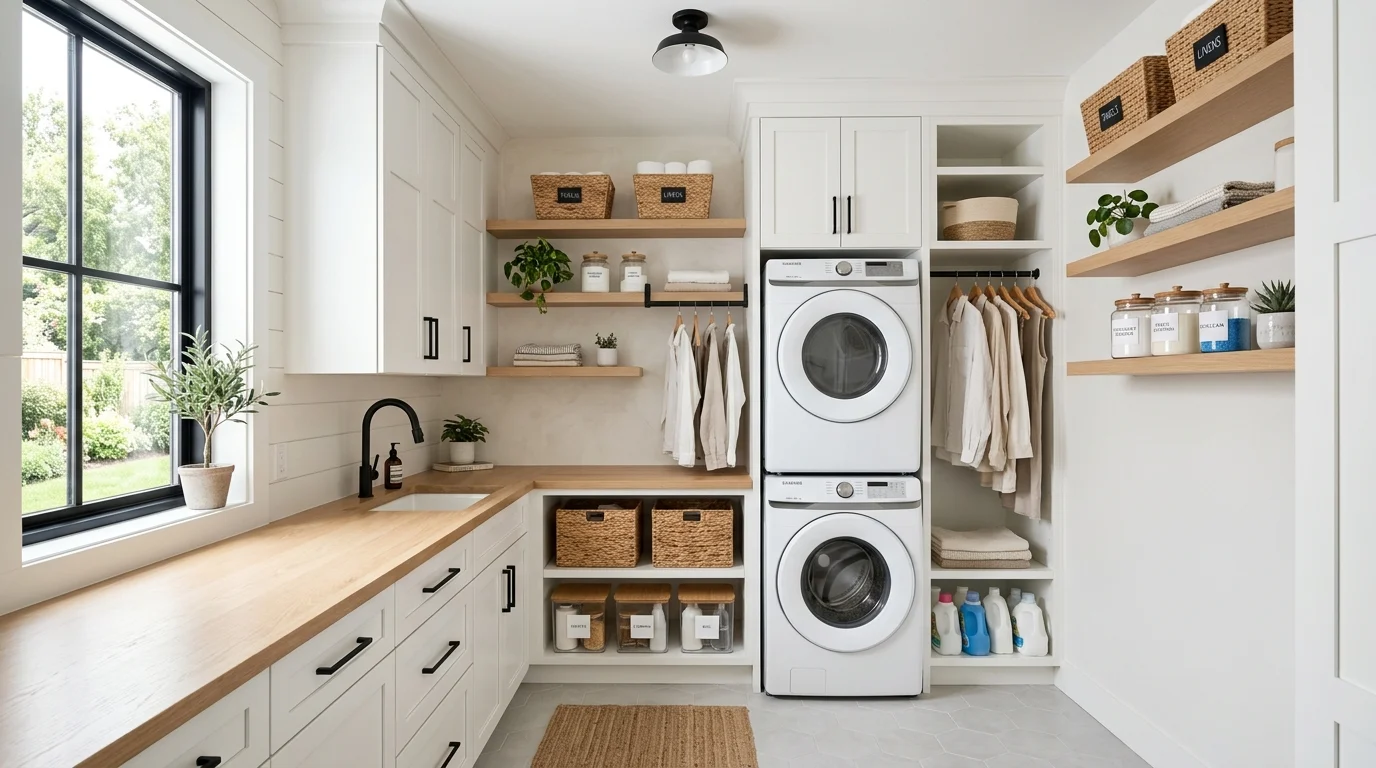
Our laundry room used to be the place where things went to be forgotten, an old paint can, a random collection of reusable bags, three half-empty bottles of the same detergent because I could never remember if we already had one when I was at the store. I’d organize it every few months, feel briefly accomplished, and then watch it slide right back into the same cluttered state within a matter of weeks. It wasn’t until I stopped just tidying and actually built a real storage system, one where every category of item had an obvious, specific home, that the clutter finally stopped coming back.
The difference between a laundry room that stays organized and one that constantly needs re-organizing almost never comes down to how much stuff you own. It comes down to whether every single item actually has a designated spot, and whether that system is easy enough to maintain that it doesn’t require constant effort. Here’s how I finally built that system, and what’s kept it working since.

Start with a genuine declutter, not just a tidy-up
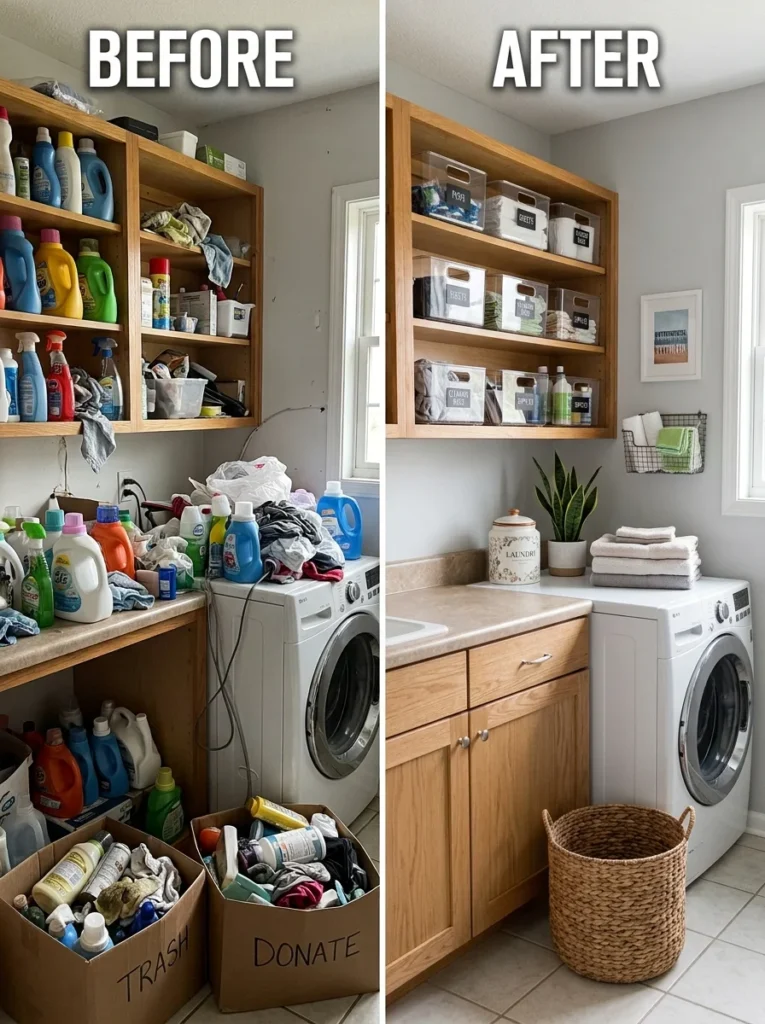
Before adding any new storage, remove everything from the laundry room and honestly assess what actually belongs there versus what’s simply ended up there because it was a convenient dumping spot. Expired or unused cleaning products, duplicate items you didn’t realize you already had, and anything unrelated to laundry entirely should be discarded, donated, or relocated to wherever it actually belongs. This step alone often solves a significant portion of the clutter problem before a single new storage solution is even introduced.
Group items by category before deciding on storage
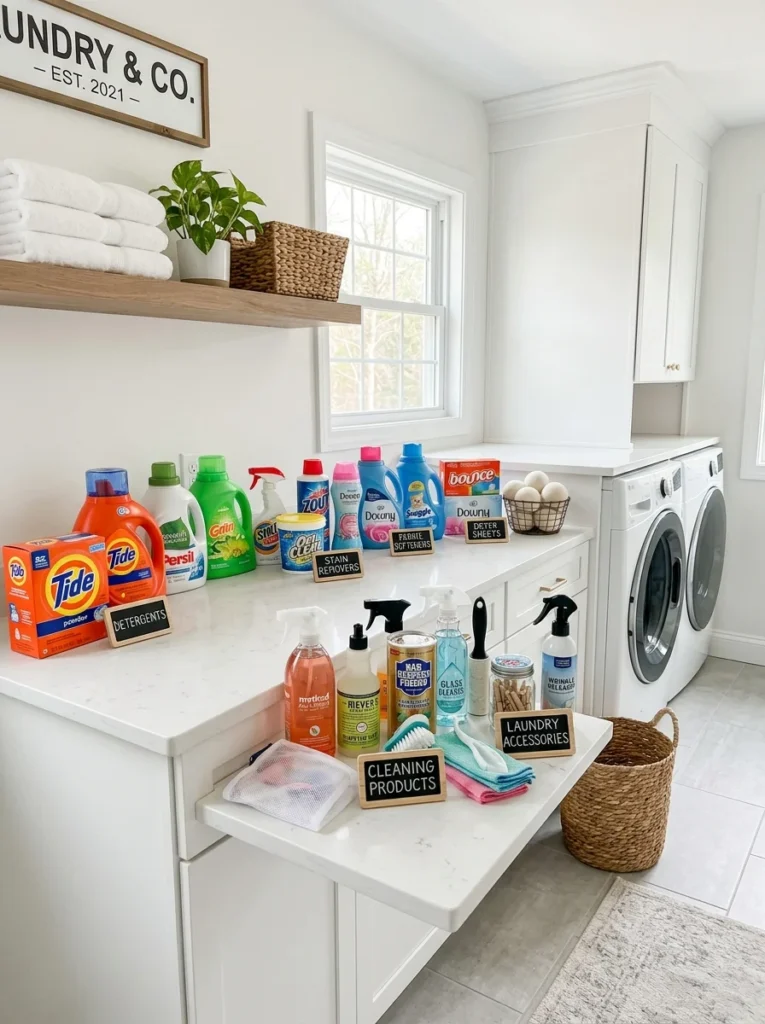
Once you’ve decluttered, sort what remains into clear categories: everyday laundry supplies, stain treatment products, cleaning supplies for the rest of the house if they’re stored here, seasonal or occasional-use items, and anything else specific to your household. Deciding on these categories before buying storage containers or shelving ensures the storage you add is actually suited to what you’re organizing, rather than buying generic bins first and trying to force your items to fit them afterward.
Use clear, labeled containers for small items
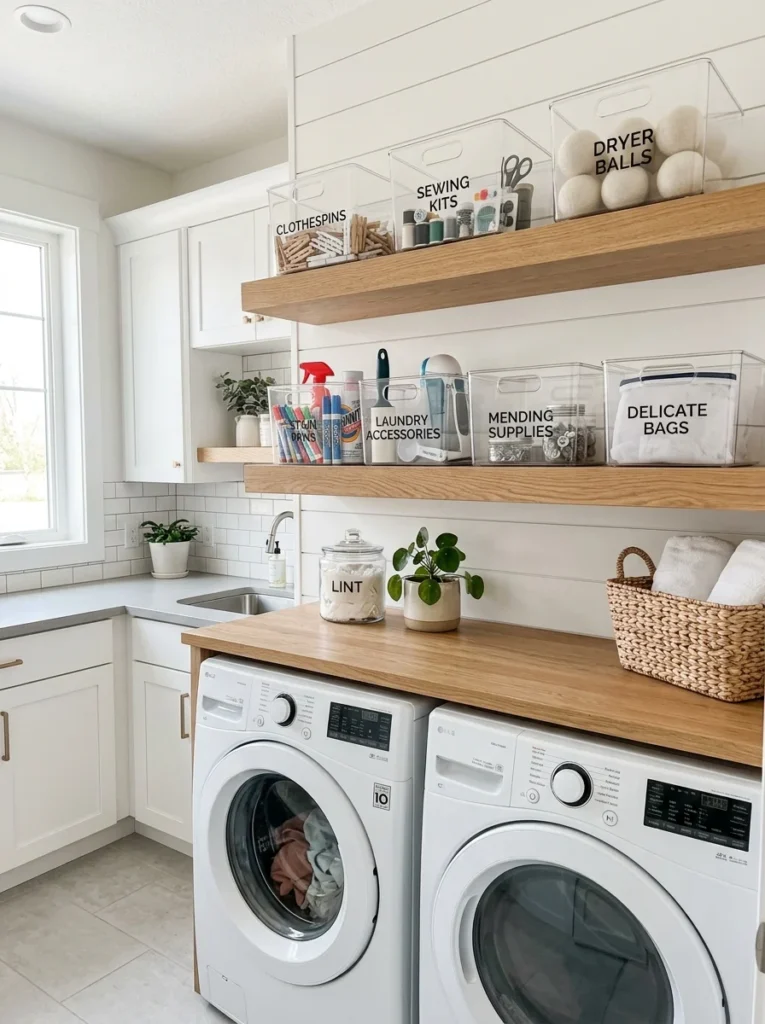
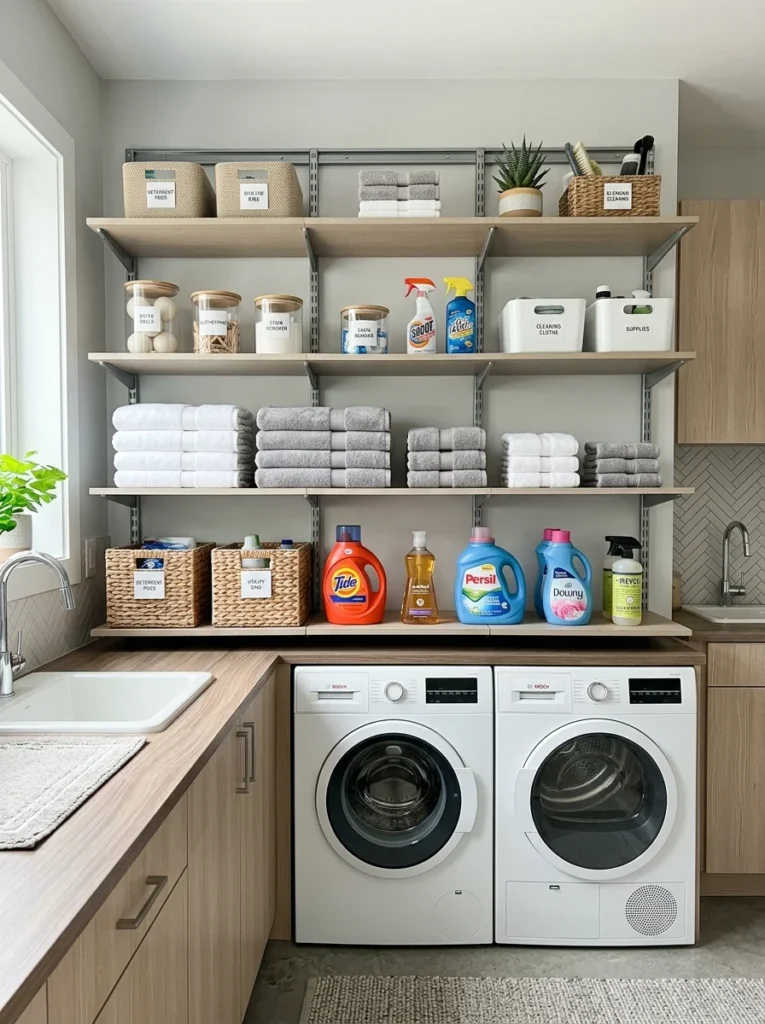
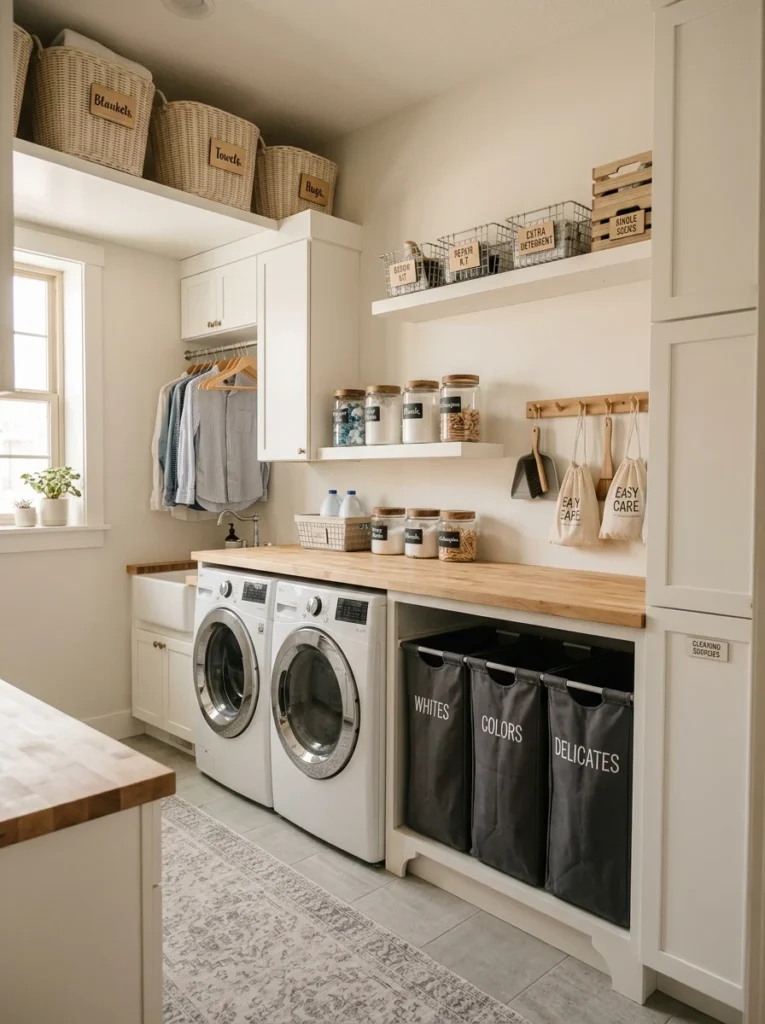
Small, loose items, stain pens, clothespins, dryer balls, sewing supplies, disappear into chaos quickly without a dedicated container. Clear bins let you see contents at a glance without pulling every container down to check, while labels ensure that everyone in the household, not just the person who set up the system, knows where things belong and, more importantly, where they need to go back. This second point matters more than people expect; a beautifully organized system still falls apart if only one household member actually understands it.
Install adjustable shelving to match your specific storage needs
Fixed shelving is often spaced generically, leaving awkward gaps of wasted vertical space between shelves that are either too tall or too short for what you’re actually storing. Adjustable shelving, where brackets can be repositioned to different heights, lets you customize the spacing to fit your actual items, taller detergent bottles on one shelf, shorter stacked bins on another, which makes considerably more efficient use of the available space than fixed, evenly spaced shelves.
Add a designated hamper and sorting system
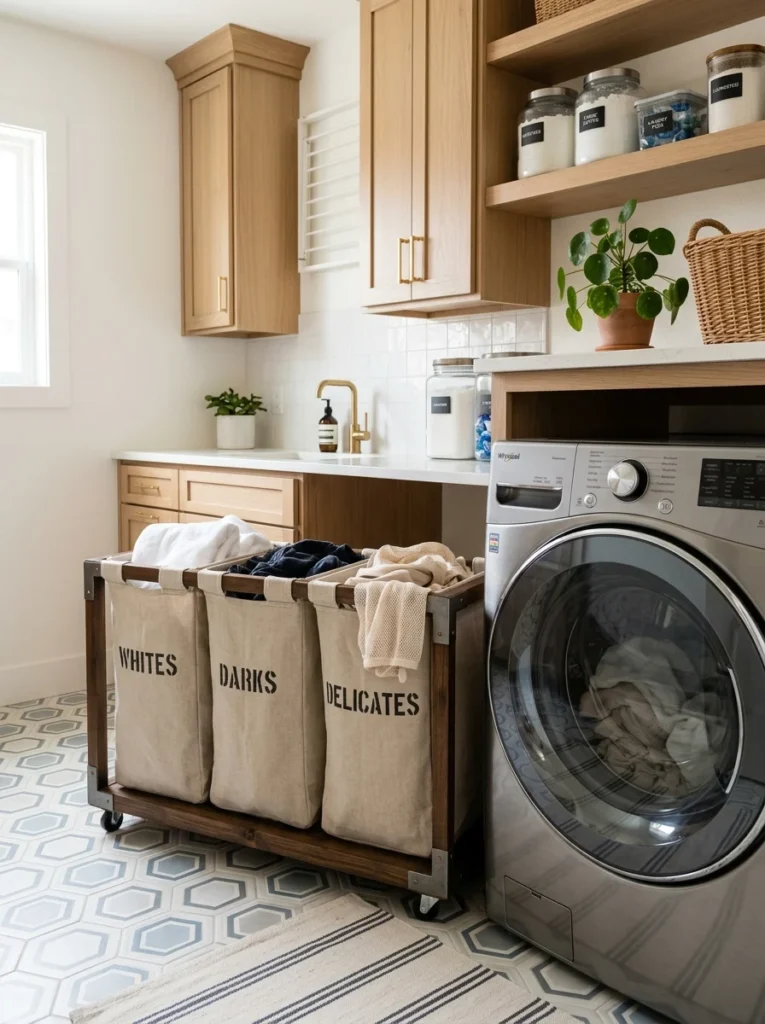
Dirty laundry without a clear sorting system tends to accumulate as one growing, undifferentiated pile, which then requires sorting all at once right before a wash, adding an extra step to every laundry session. A multi-compartment hamper or a few clearly labeled bins for whites, darks, and delicates lets sorting happen gradually as clothes are added throughout the week, rather than as one time-consuming task done all at once on laundry day.
Use door and wall space for items that don’t need a shelf
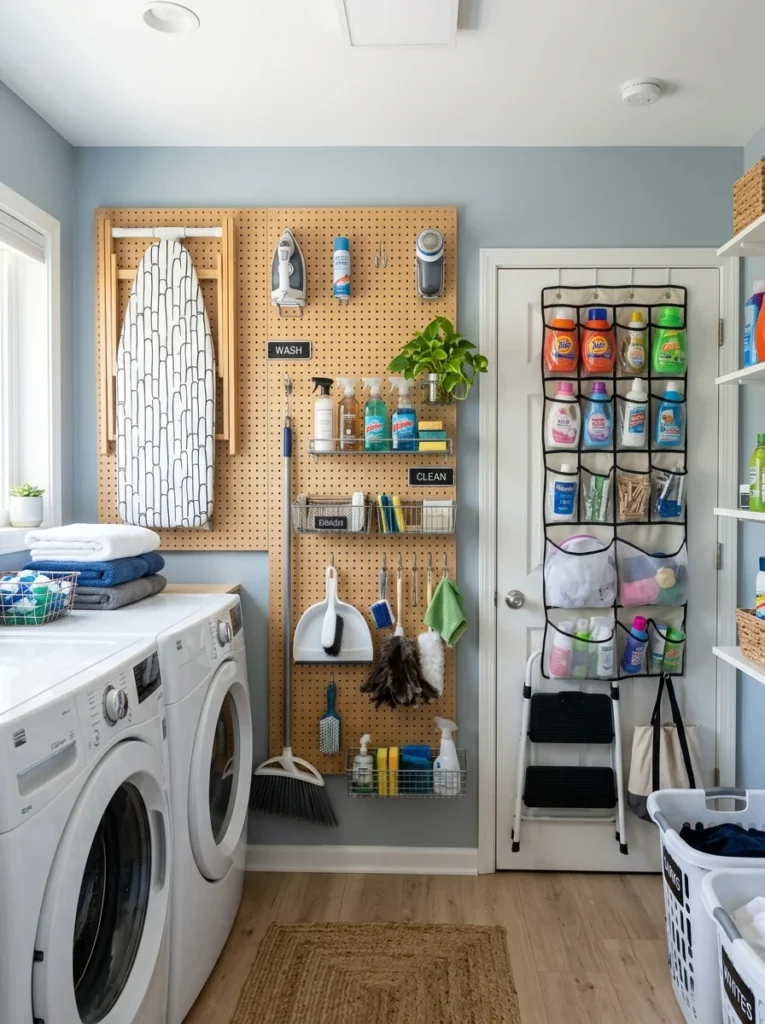
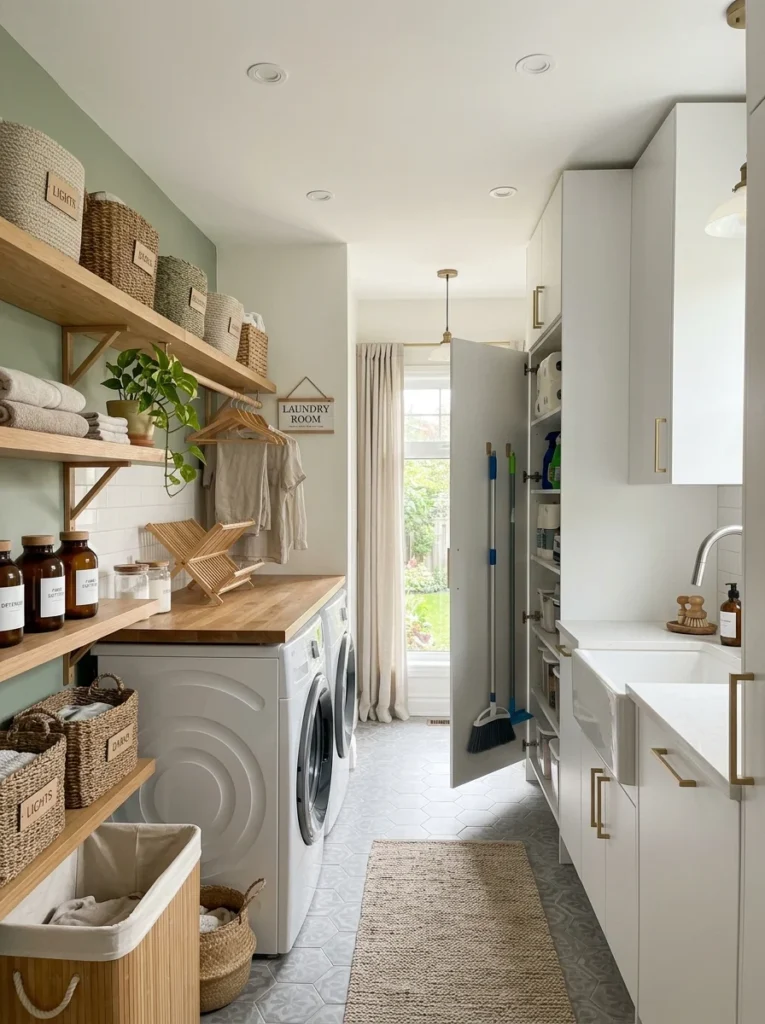
An over-the-door organizer or wall-mounted pegboard adds meaningful storage for items that don’t necessarily need a full shelf to themselves, spray bottles, a small broom or dustpan, an ironing board, all without consuming any additional floor or shelf space. This kind of vertical, wall-based storage is particularly valuable in smaller laundry rooms where floor and shelf space is already limited, but it’s useful in larger laundry rooms too as a way to free up shelf space for other items.
Dedicate a specific spot for supplies you’re running low on
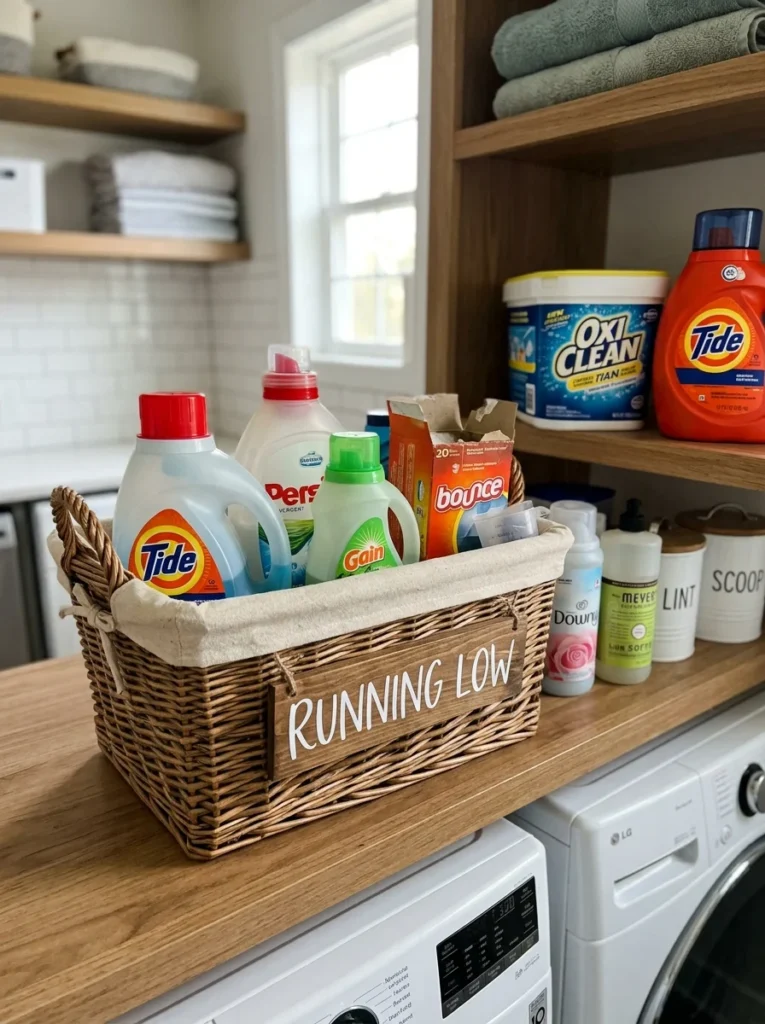
A small bin or designated corner specifically for items running low, half-empty detergent, almost-finished dryer sheets, prevents the common problem of duplicate purchases because you couldn’t remember whether you already had a backup. Checking this specific spot before a shopping trip, rather than trying to remember or guess what’s running low from memory, keeps this particular source of clutter, unnecessary duplicate products, from building up in the first place.
Create a specific system for lost socks and small items
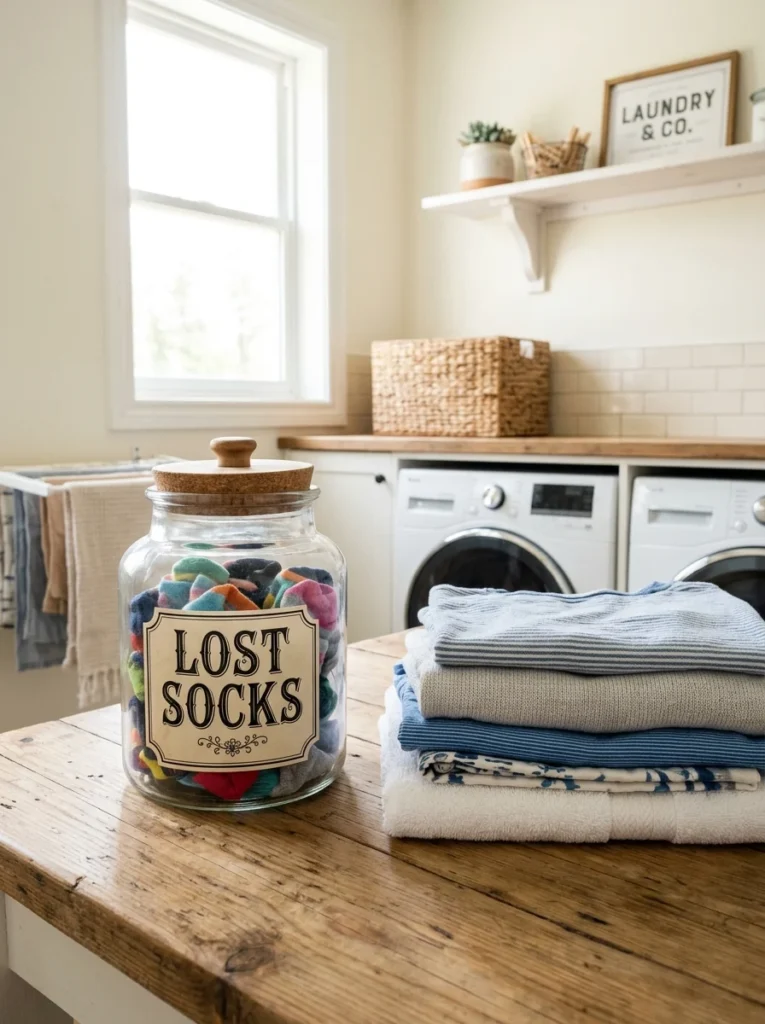
Nearly every household loses socks in the laundry process, and without a dedicated spot for them, single socks tend to accumulate loose on top of the dryer or shoved into a drawer indefinitely. A small designated basket or jar specifically for lost socks, checked and cleared out periodically, contains this particular clutter source and gives you an obvious place to check the next time a sock’s missing partner unexpectedly turns up.
Build in a system for hangers and hang-dry items
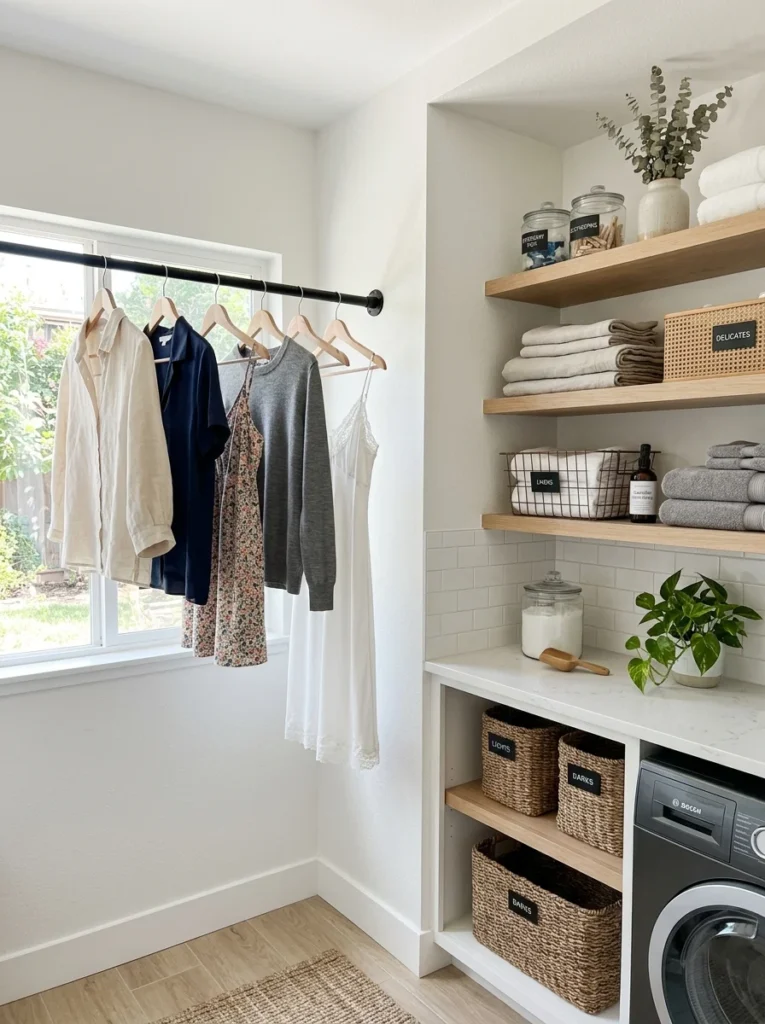
A small stock of hangers stored directly in the laundry room, rather than needing to be carried in from bedroom closets each time, streamlines the process of hanging up items straight out of the dryer or that need to air dry rather than tumble dry. A tension rod or small rack specifically for hang-drying delicates keeps these items from ending up draped over the top of the washer or dryer, which is a common and easily avoidable source of visual clutter.
Reassess the system periodically rather than assuming it’s permanent
Even a well-designed storage system needs occasional reassessment as household needs change, a new baby means different laundry supplies, kids growing up means less need for certain items and more need for others. Revisiting your categories and storage setup once or twice a year, rather than assuming the original system will remain perfectly suited to your needs indefinitely, keeps the space genuinely functional rather than slowly becoming outdated and, eventually, cluttered again as your actual needs shift away from what the system was originally built around.
Make the system easy enough that everyone actually uses it
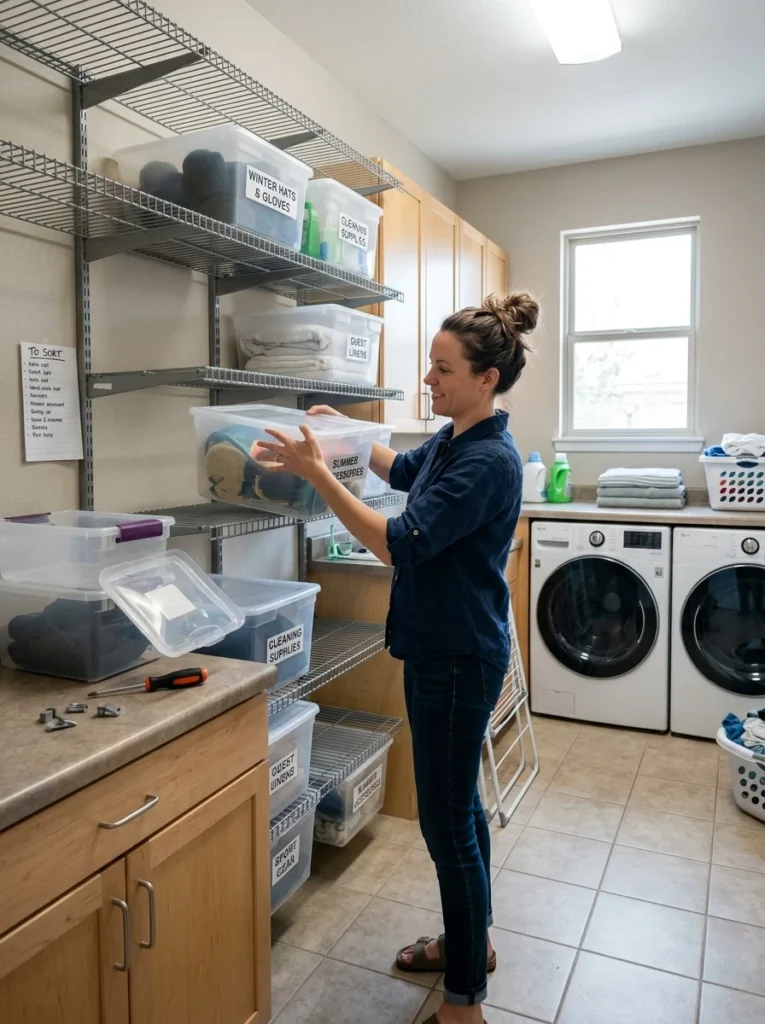
The most beautifully organized laundry room storage system will fail if it’s too complicated or inconvenient for the rest of the household to actually maintain day to day. Clear labels, obvious, logical placement, everyday items at the most accessible height, occasional-use items higher or lower, and keeping the system simple enough to explain in one sentence all increase the odds that everyone actually uses it correctly rather than reverting to whatever’s most convenient in the moment, which is usually how clutter creeps back in the first place.
Decide between open shelving and enclosed cabinets
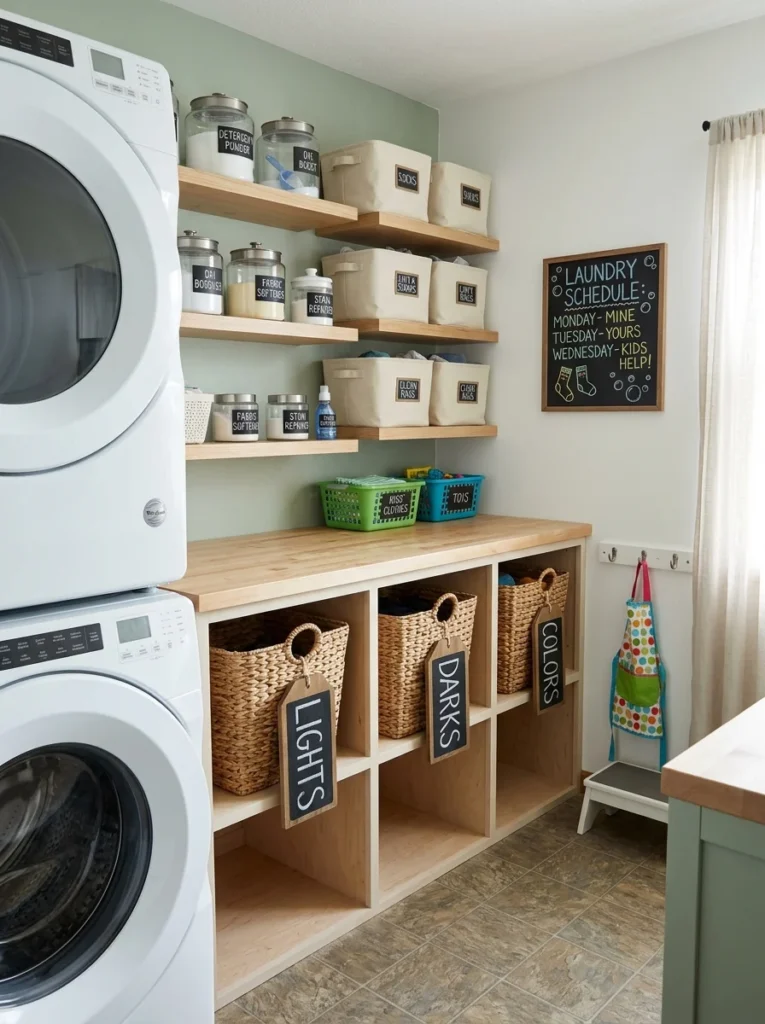
Open shelving is generally more affordable and easier to install, and it keeps frequently used items visible and quickly accessible, which works well for everyday supplies like detergent and dryer sheets that get used constantly. Enclosed cabinets cost more but keep the room looking tidier by hiding less attractive items, cleaning supplies, backup stock, seasonal items, behind closed doors, which matters more in a laundry room that’s visible from other living areas rather than tucked away in a closet. Many households find a mix works best, open shelving for daily essentials within easy reach, and enclosed cabinets for anything you’d rather not see on display.
Keep hazardous cleaning products separate and secured
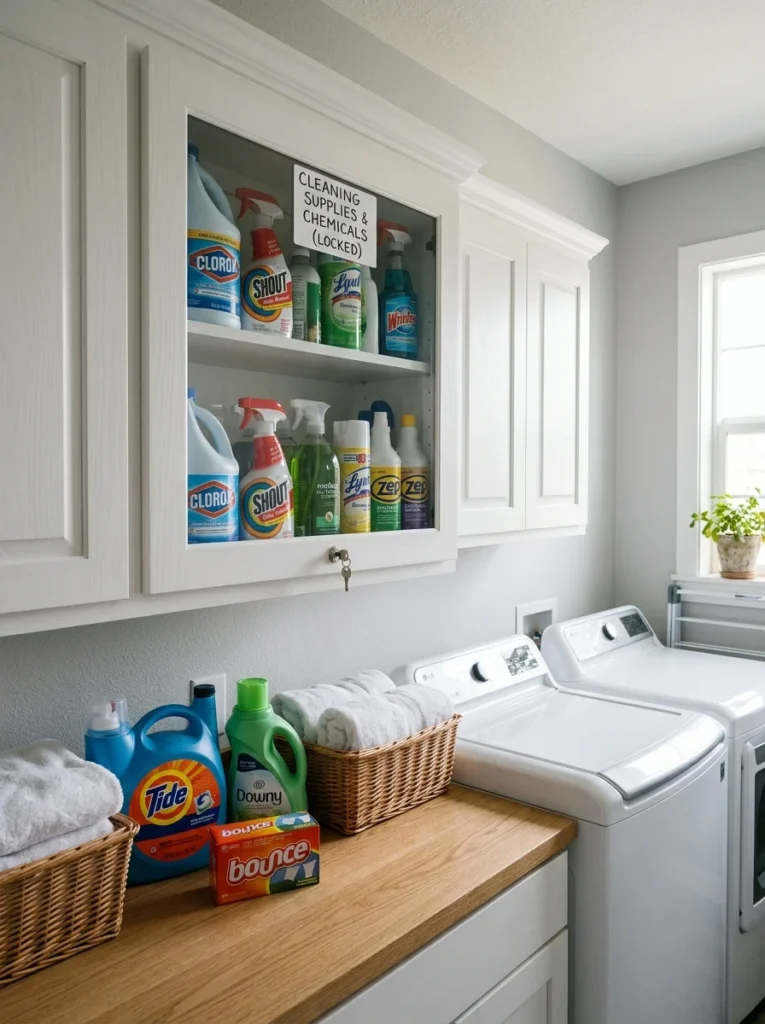
If your laundry room doubles as general cleaning supply storage, keeping chemical products like bleach, stain removers, and other cleaning agents in a separate, clearly labeled area from everyday laundry supplies reduces the chance of confusion or accidental misuse. In households with young children or pets, this area should also be secured with a childproof lock, treating it with the same caution as any other storage of potentially hazardous household chemicals, rather than assuming the laundry room is somehow a lower-risk location than a kitchen or bathroom cabinet.
Store ironing and pressing supplies together
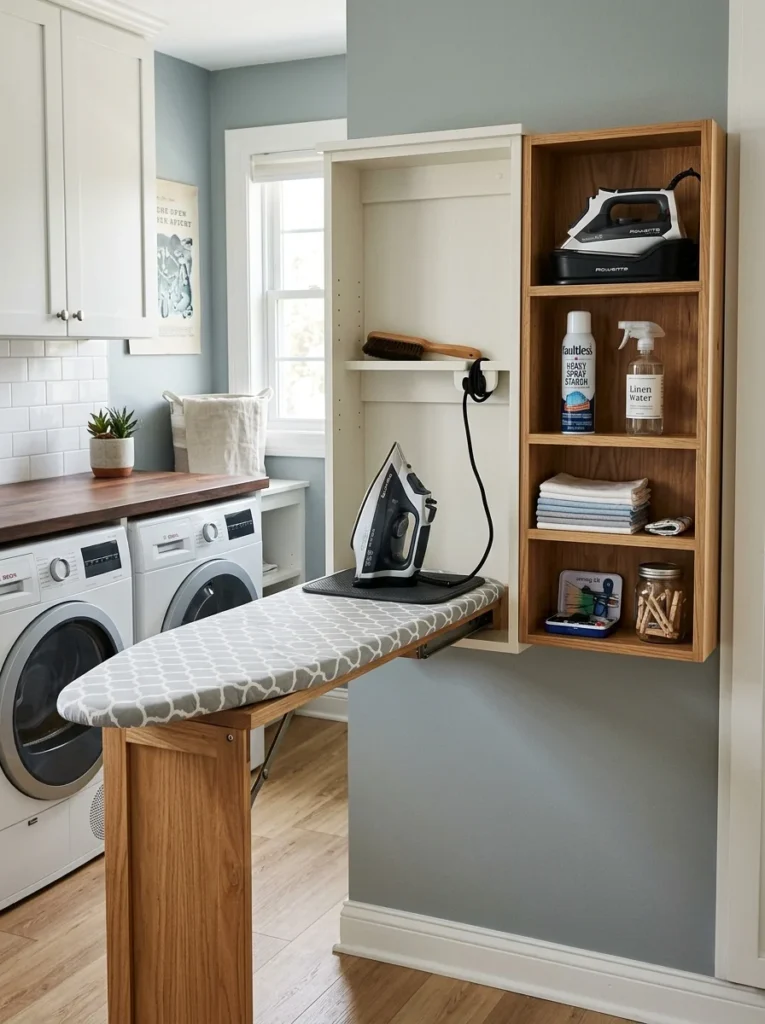
Grouping the iron, ironing board, spray starch, and any pressing-related accessories in one designated spot, rather than scattered across different shelves, means you’re not hunting through the whole room every time you need to press something. A wall-mounted bracket for a fold-down ironing board, paired with a small nearby shelf or hook for the iron itself, keeps this entire category contained to one small footprint rather than spread throughout the room.
Common laundry room storage questions
What’s the first step to organizing a cluttered laundry room?
Start with a genuine declutter, removing everything and honestly assessing what belongs there versus what’s simply accumulated as a convenient dumping spot. This step alone often resolves a significant portion of the clutter before any new storage is even introduced.
How do I stop duplicate products from cluttering my laundry room?
Dedicate a specific bin or spot for items running low, and check it before each shopping trip rather than relying on memory. This prevents the common habit of buying a backup you didn’t realize you already had.
What’s the best way to organize small laundry items like stain pens and clothespins?
Clear, labeled containers work best for small items, since they let you see contents at a glance and make it obvious where things belong, which helps everyone in the household maintain the system rather than just the person who originally set it up.
How often should I reassess my laundry room storage system?
Revisiting your storage setup once or twice a year is generally enough to keep it aligned with any changes in household needs, ensuring the system stays genuinely functional rather than slowly becoming mismatched with what you actually need to store.
Should I choose open shelving or enclosed cabinets for laundry storage?
Open shelving is more affordable and keeps everyday items easily accessible, while enclosed cabinets cost more but hide less attractive items behind closed doors, which matters more if the laundry room is visible from other living spaces. Many households find a mix of both works best depending on the specific items being stored.
Lasting laundry room organization comes down to building a genuine system, clear categories, labeled storage, and designated spots for the specific problem items like lost socks and low supplies, rather than just periodically tidying the same recurring clutter. Making that system simple enough for the whole household to maintain is what ultimately determines whether it lasts.
Our own laundry room hasn’t had a random paint can or triplicate detergent bottle in months now, not because we own less, but because everything finally has one specific place it’s supposed to be, and it’s simple enough that everyone in the house actually puts it back there. If your own laundry room keeps sliding back into clutter no matter how often you tidy it, the fix probably isn’t more tidying; it’s building a system simple enough that tidying stops being necessary in the first place.