
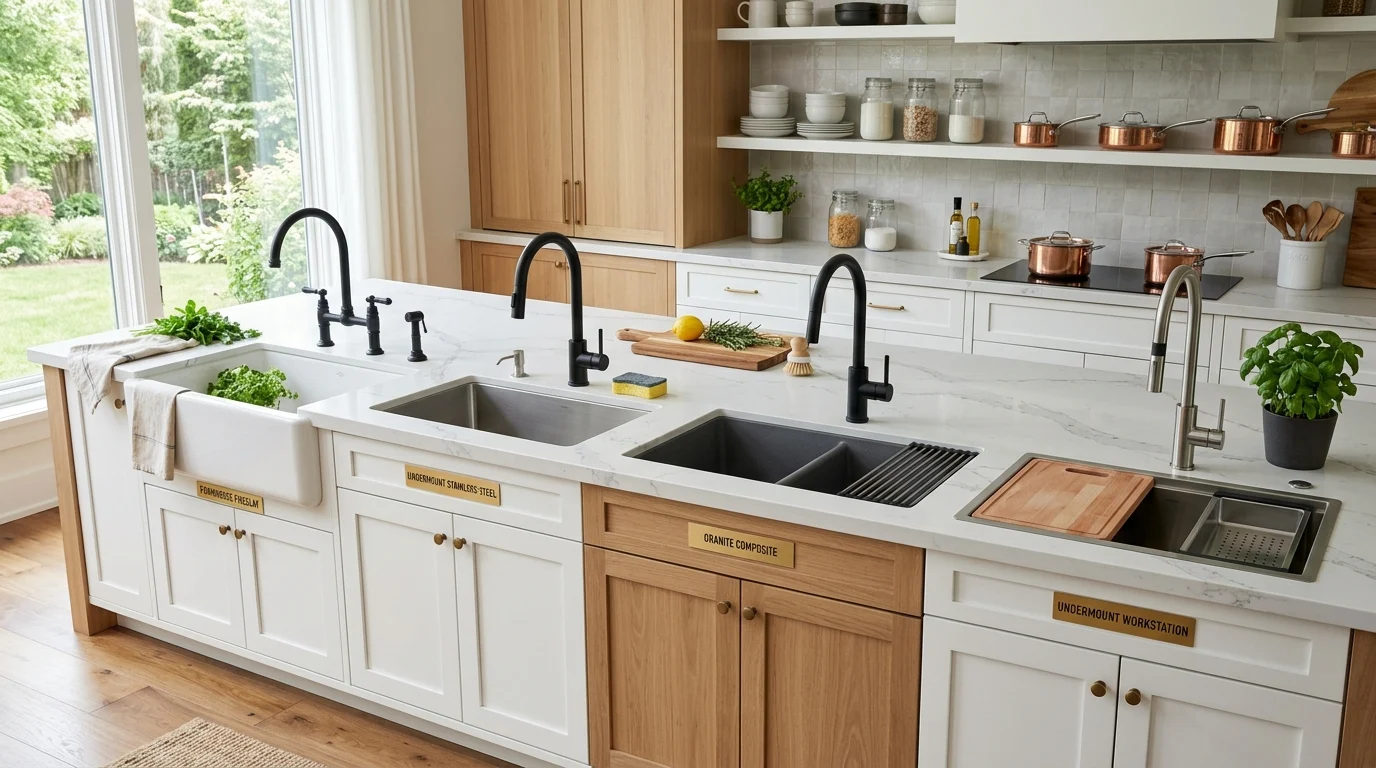
When we renovated our kitchen, I picked our sink almost last, mostly on looks, a beautiful farmhouse apron sink that photographed perfectly in the showroom. Within a few months of actually using it daily with two kids and a lot of cooking, I realized it was genuinely the wrong choice for how our household actually lived: too shallow for our stockpots, awkward to reach across, and the apron front chipped within the first year from a dropped cast iron pan. A kitchen sink gets used more than almost any other single fixture in the house, multiple times a day, every day, which makes it one of the decisions most worth getting right the first time rather than choosing based on appearance alone.
Related Reading
Below is what I wish I’d actually thought through before that first purchase, covering material, size, configuration, and mounting style, so you can make a choice that holds up to your household’s real daily use rather than just how it looks in a single photo.
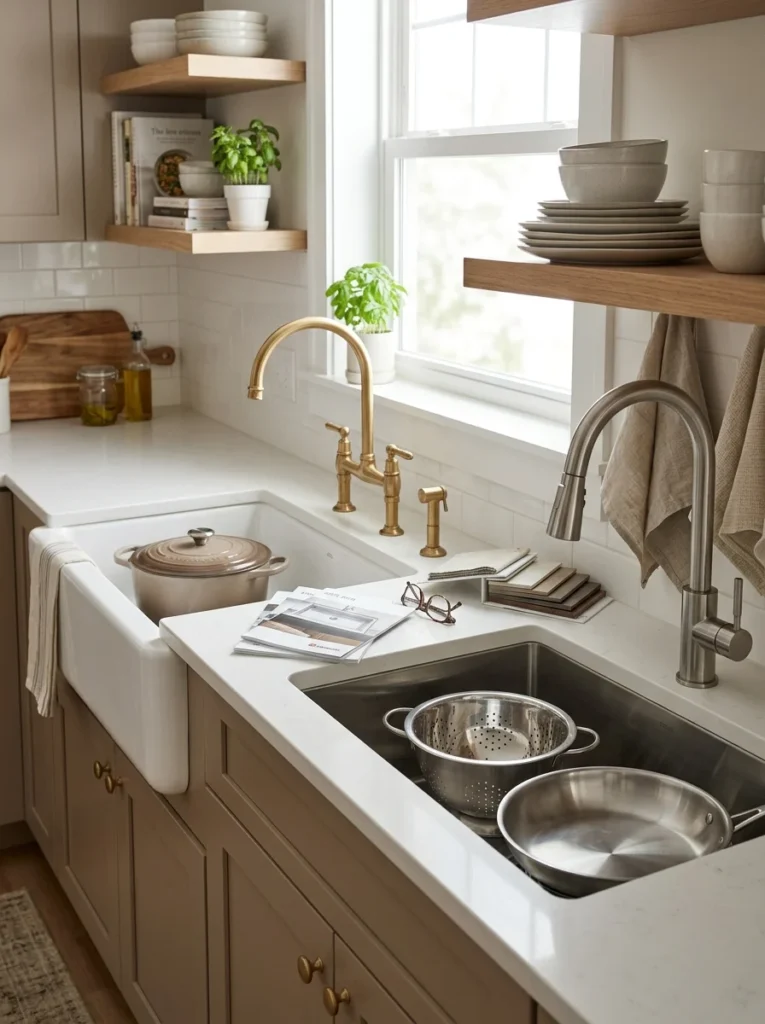
Start with material: durability first, look second
Sink material affects durability, noise, maintenance, and how forgiving the sink is with daily wear, so it’s worth understanding your options before falling for a specific look.
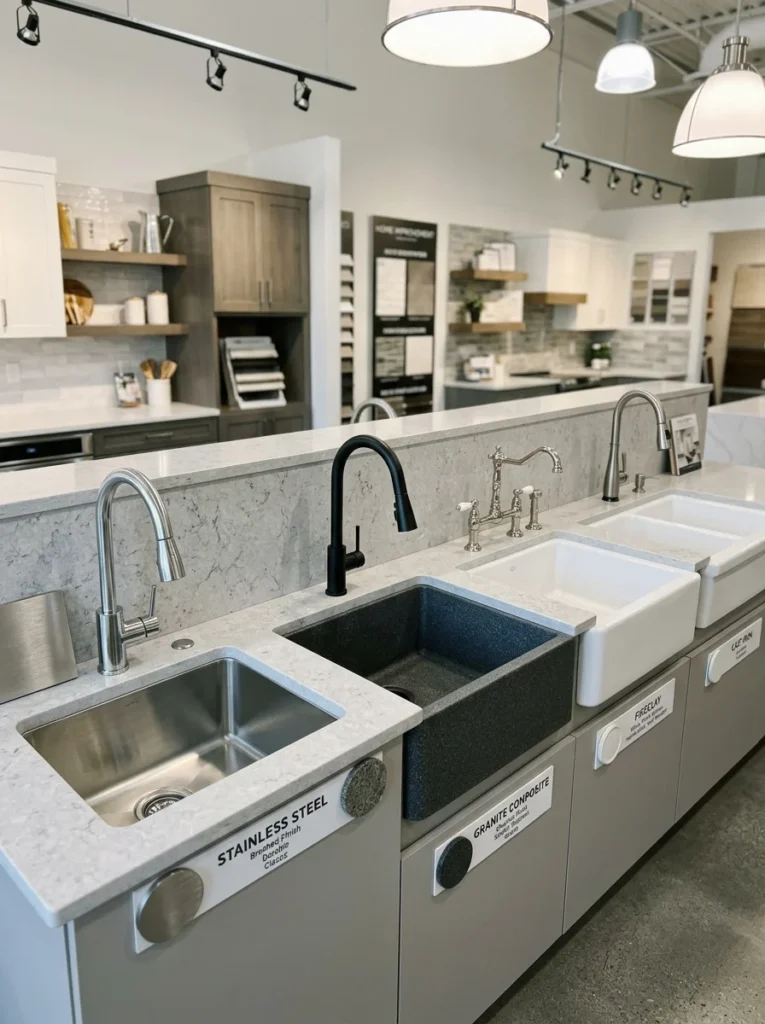
Stainless steel: the most versatile, low-maintenance choice
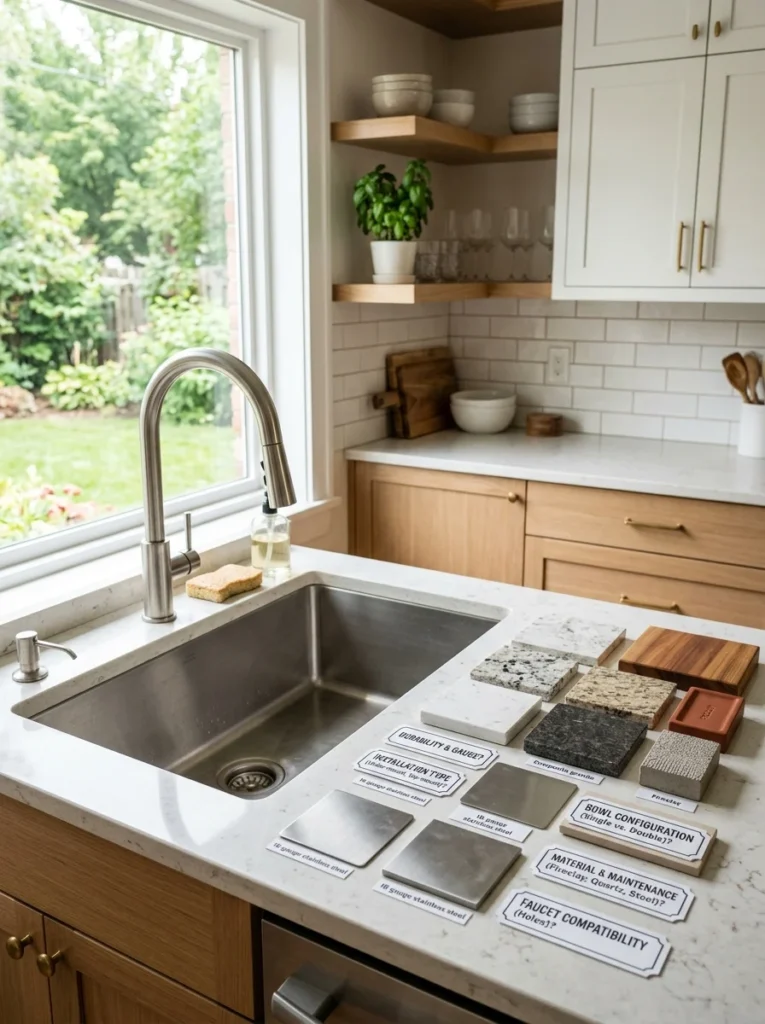
Stainless steel remains the most popular kitchen sink material for good reason: it resists staining, chipping, and cracking, handles hot pots directly from the stove without damage, and works with virtually any kitchen style from traditional to modern. A higher gauge number actually means thinner steel, so look for a lower gauge number, generally in the sixteen to eighteen range, for a sturdier, quieter sink that resists denting better than thinner, higher-gauge options. The main downside is that stainless steel can show water spots and minor scratches over time, though a matte or textured finish hides this far better than a mirror-polished one.
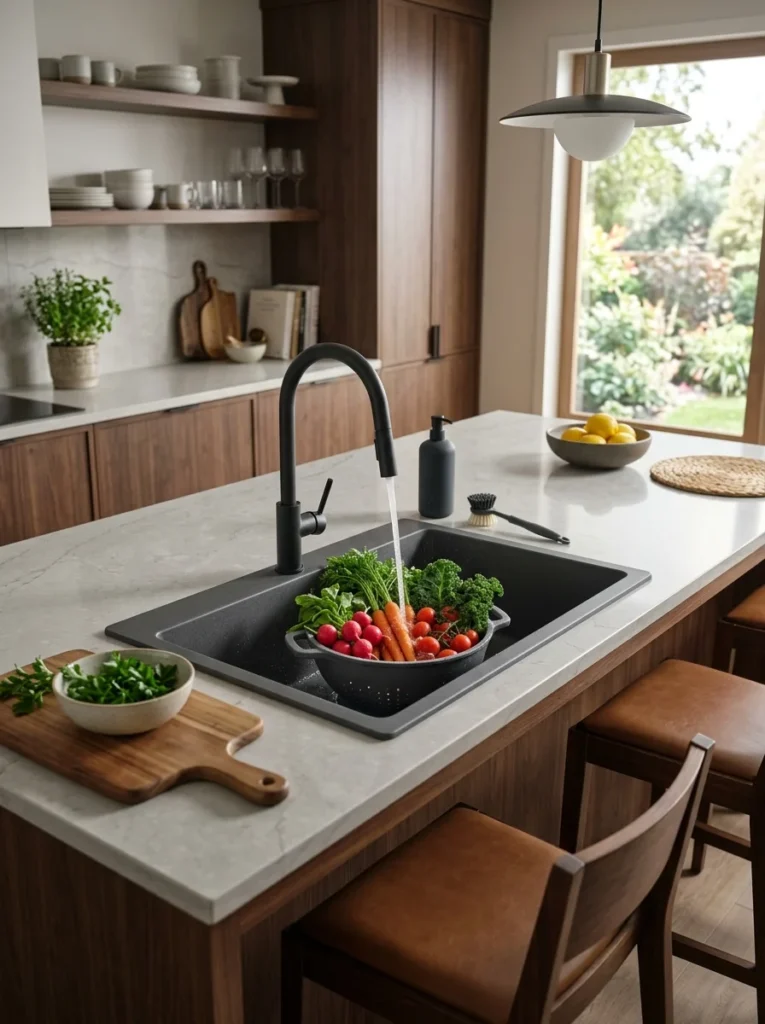
Granite composite and quartz composite: durable and quieter
Made from a mixture of crushed natural stone and resin, composite sinks are highly resistant to scratches, heat, and staining, and they’re noticeably quieter than stainless steel when water or dishes hit the basin, since the material naturally dampens sound. They come in a range of colors beyond the traditional silver of stainless steel, which makes them a popular choice for a specific design aesthetic. They are heavier and generally more expensive than stainless steel, and while highly durable, very dark composite sinks can show mineral buildup or light scratches more visibly over time than lighter colors.
Fireclay and cast iron: classic looks, more care required
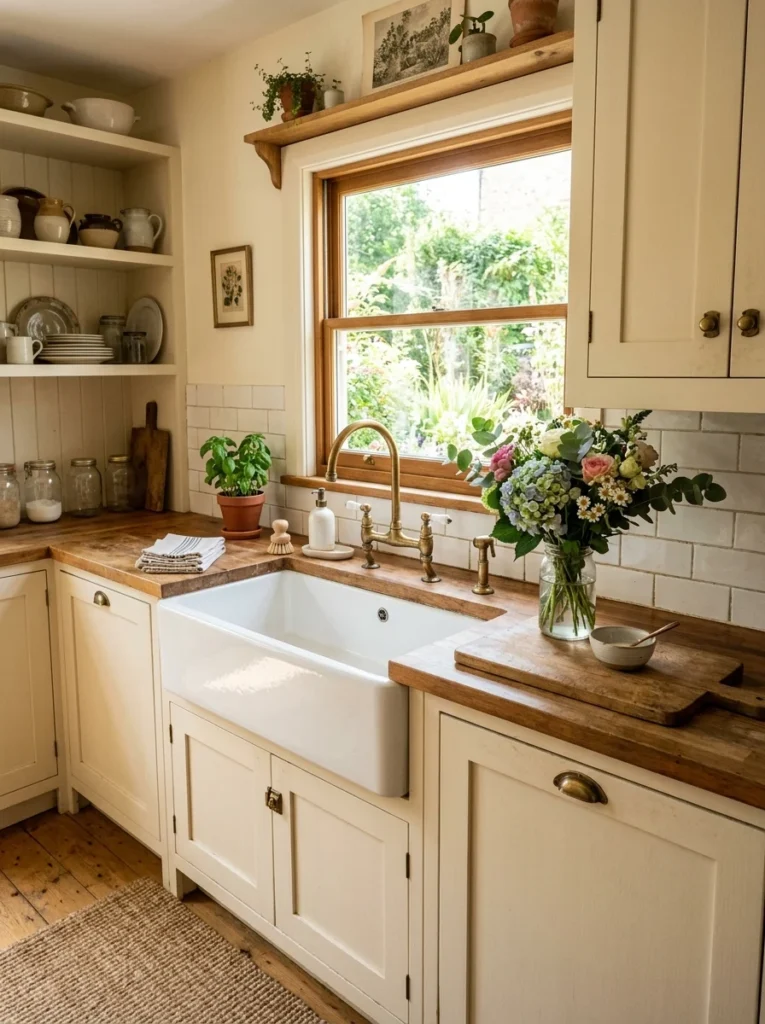
Fireclay and enameled cast iron sinks, often associated with a farmhouse or apron-front look, offer a distinctive, classic appearance and genuine durability against heat and staining. However, the enamel surface, while hard, can chip if a heavy pot or cast iron pan is dropped directly into the basin, which is exactly what happened with my own sink. These materials are also considerably heavier, which affects cabinet support requirements, and they tend to sit at a higher price point than stainless steel or composite options.
Consider your household’s cooking habits, not just the number of people
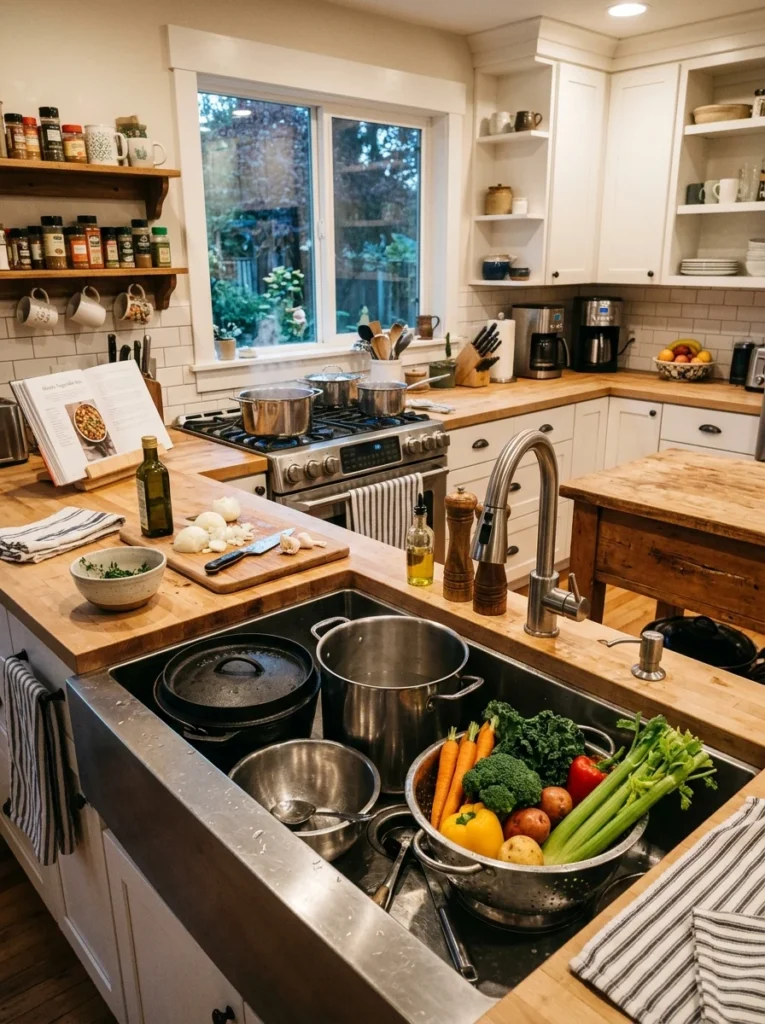
The right sink size and configuration depends far more on how your household actually cooks than on the raw number of people living there. A household that cooks large meals regularly, uses big stockpots, or hand-washes a lot of bakeware benefits from a large single-basin sink, since it accommodates oversized items that wouldn’t fit in a divided sink. A household that primarily uses a dishwasher and hand-washes smaller items day to day may find a double-basin sink more practical, since it allows soaking on one side while rinsing or prepping on the other.
Single basin vs. double basin: match it to your workflow
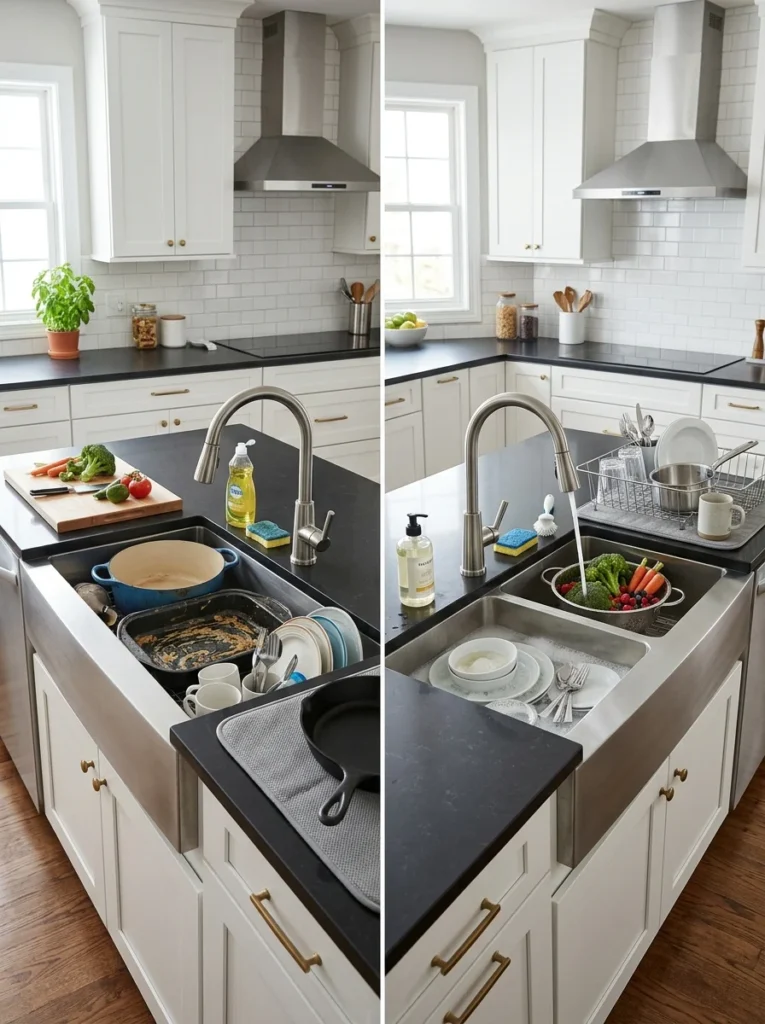
A single large basin offers maximum flexibility for oversized pots, sheet pans, and cutting boards, and it’s become increasingly popular even in households that don’t cook particularly large meals, simply for the extra usable space. A double basin, split into two separate compartments, works well for households that want to separate washing and rinsing, or that need one side clear for food prep while dishes soak on the other. There’s no universally correct choice here; it comes down to whether your daily habits favor one large flexible space or two smaller, clearly separated ones.
Choose a mounting style based on your countertop and cleaning preferences
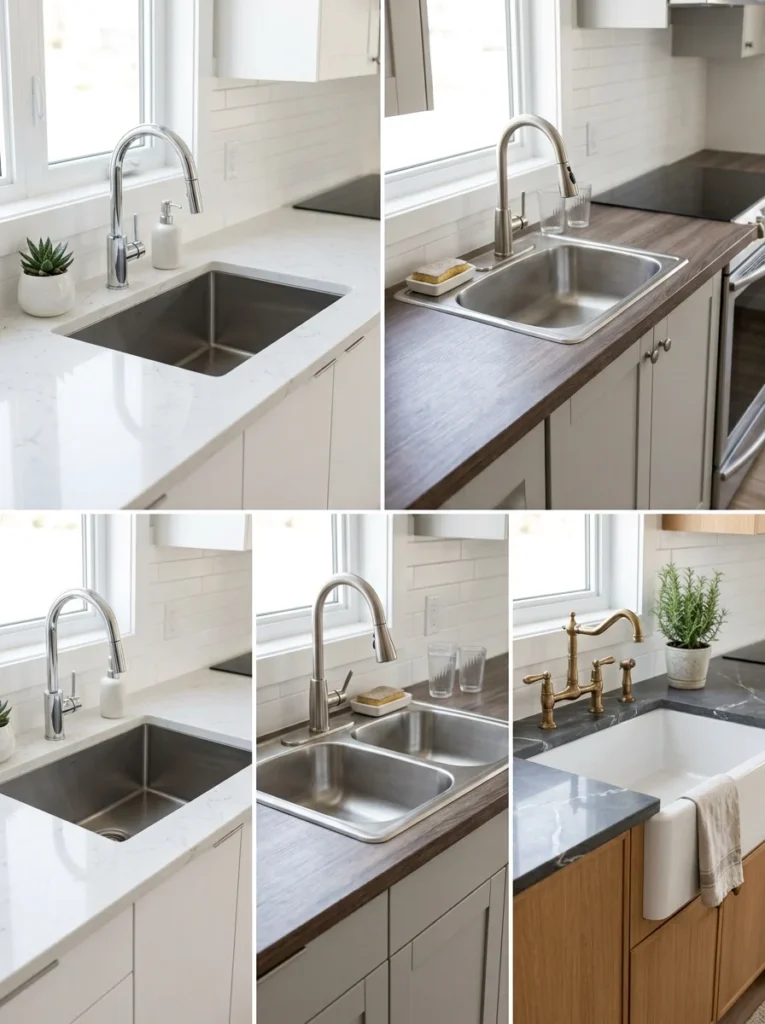
An undermount sink, installed beneath the countertop with no lip at the edge, creates a clean, seamless look and makes wiping counter debris directly into the sink easier, but it requires a solid surface countertop like quartz or granite for proper support and can be more expensive to install. A top-mount or drop-in sink, which rests on top of the counter with a visible lip, is compatible with any countertop material, including laminate, and is generally the more budget-friendly and easier option to install or replace later. An apron-front or farmhouse sink extends past the cabinet edge with an exposed front panel, offering a distinctive look and typically a deeper basin, though it requires specific cabinetry designed to accommodate its exposed front and depth.
Think about depth and how it affects daily comfort
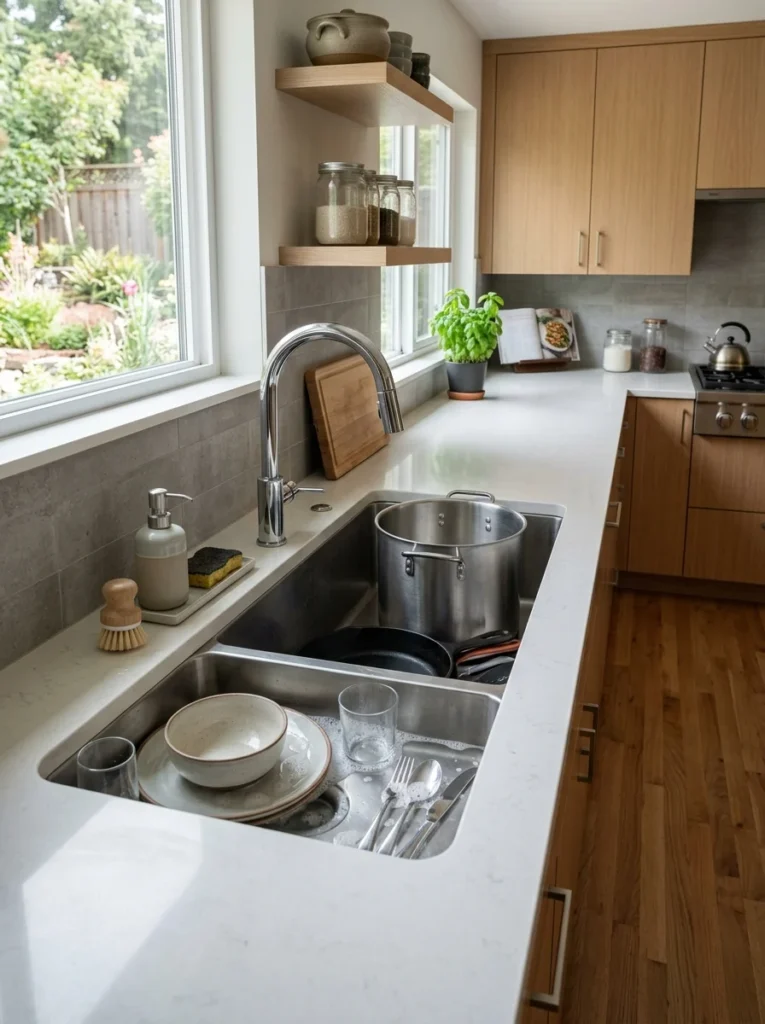
A deeper basin, generally ten inches or more, accommodates tall stockpots and large baking sheets standing on their side, but it can also mean more bending for shorter household members washing smaller items, since the working surface sits further down. A shallower basin is more comfortable for everyday tasks like rinsing produce or washing hands but may feel restrictive for anyone who regularly hand-washes large cookware. If your household includes people of noticeably different heights, it’s worth testing the depth in a showroom display before committing, since this is a detail that’s easy to overlook until you’re using the sink daily.
Factor in faucet and accessory compatibility
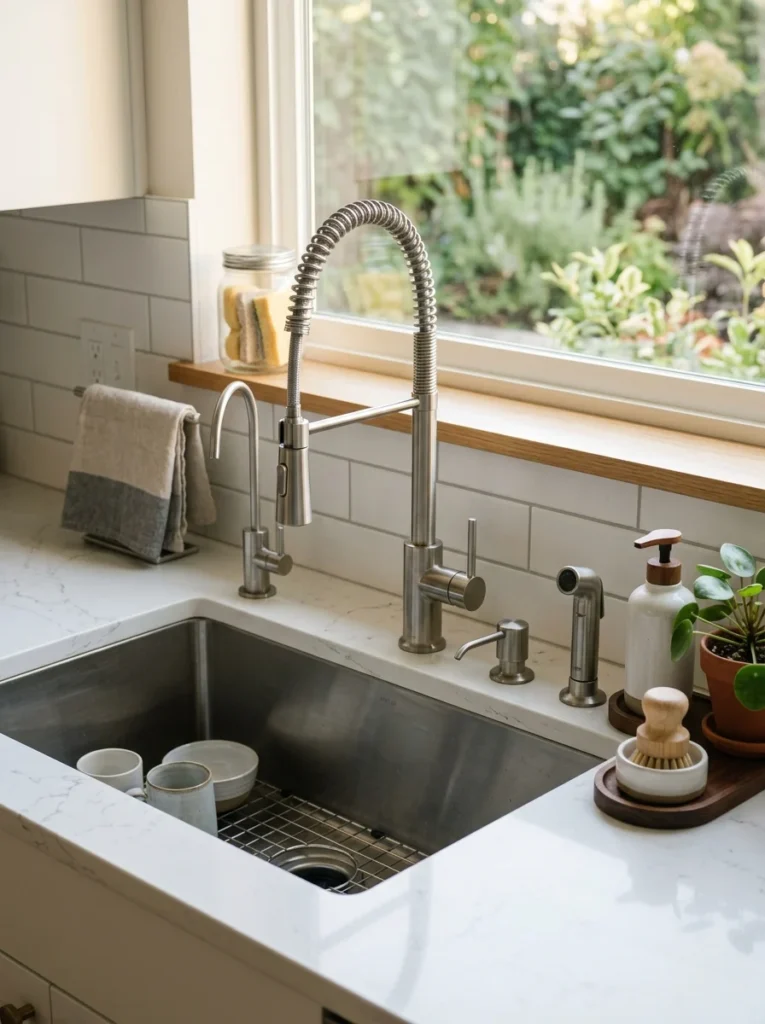
The number and placement of pre-drilled holes in a sink, or in the surrounding countertop, determines what faucet configurations are possible, a single-hole faucet, a faucet paired with a separate soap dispenser, or a setup that includes a side sprayer. It’s worth deciding on your faucet and any accessories, a soap dispenser, an instant hot water tap, before finalizing the sink and countertop hole configuration, since retrofitting additional holes into an installed countertop later is far more disruptive and expensive than planning for them from the start.
Consider accessories that extend the sink’s functionality
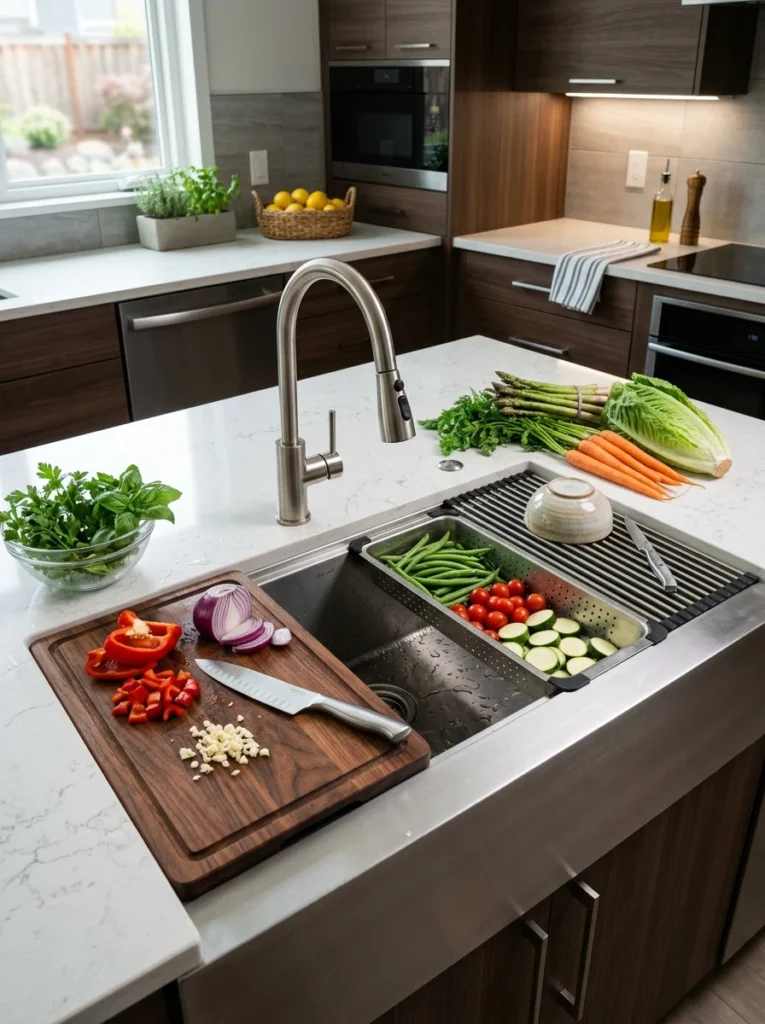
Many modern sinks are designed as part of a broader workstation system, with built-in ledges that accommodate a cutting board, a colander, or a drying rack directly over the basin. These accessories can meaningfully extend how the sink functions for food prep, effectively adding usable counter space directly above the basin itself. If this kind of workstation functionality appeals to you, it’s worth choosing a sink specifically designed with these integrated ledges from the outset, since retrofitting them onto a standard sink afterward isn’t usually possible.
Think about long-term maintenance before you buy
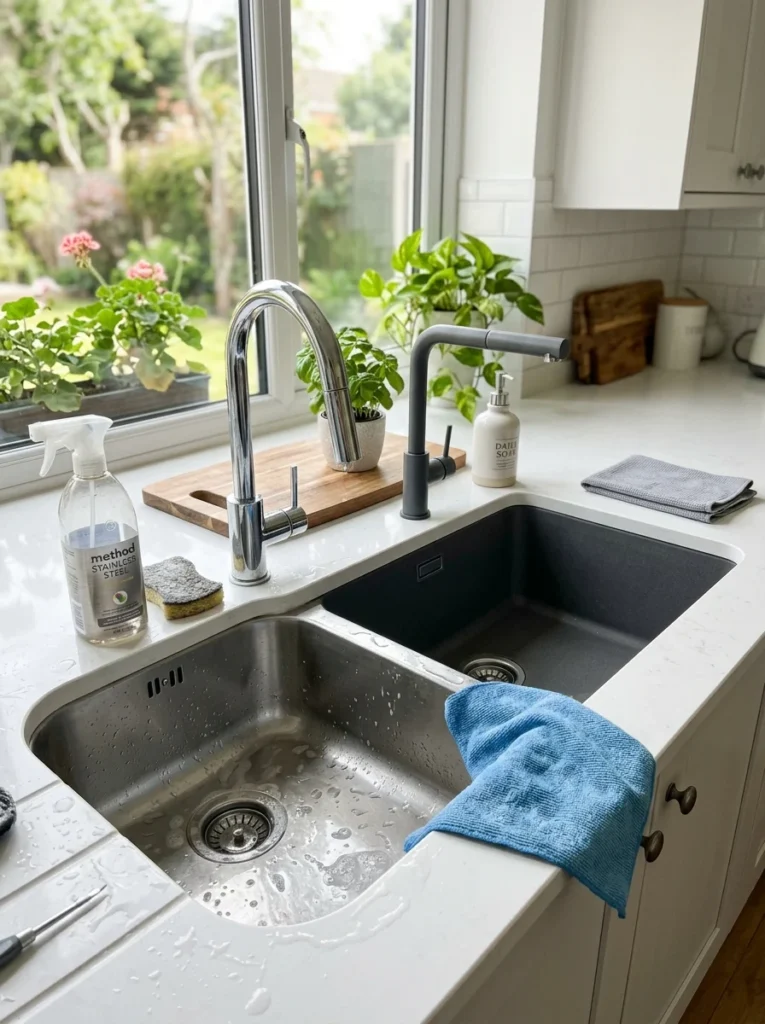
Different sink materials come with different ongoing care requirements, and it’s worth being honest about how much maintenance you’re actually willing to do regularly. Stainless steel needs occasional wiping to prevent water spots and a specific cleaner to maintain its shine, though it tolerates general neglect reasonably well without lasting damage. Composite sinks generally require minimal maintenance beyond regular cleaning, though very dark colors can show mineral buildup if your water is particularly hard. Fireclay and cast iron need slightly more care to avoid chipping the enamel, including using cutting boards or basin mats when working with heavy cookware, and avoiding abrasive cleaners that can dull the glossy finish over time.
Set a realistic budget across the whole sink and faucet package
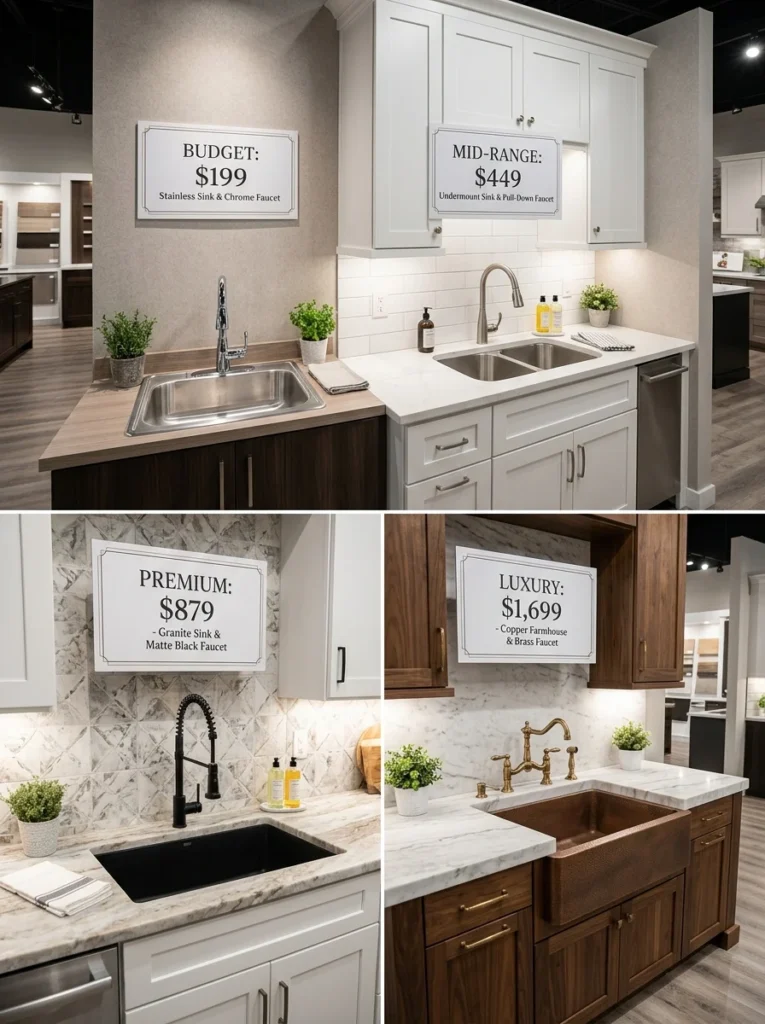
Sink prices vary enormously depending on material, size, and brand, and it’s worth budgeting for the sink, faucet, and any additional accessories together rather than in isolation, since a premium sink paired with a bargain faucet, or the reverse, can create a mismatched look and inconsistent durability across the whole setup. Stainless steel sinks generally offer the most functionality per dollar, making them a sensible default for households prioritizing budget, while composite, fireclay, and specialty workstation sinks sit at progressively higher price points that are worth it primarily if the specific material or added functionality genuinely matters for your daily use.
What’s the most durable material for a busy household’s kitchen sink?
Stainless steel and granite or quartz composite sinks are generally the most durable, practical choices for a busy household, since both resist chipping, staining, and heat damage well under frequent, heavy daily use. Fireclay and cast iron offer a classic look but are more prone to chipping if heavy cookware is dropped directly into the basin.
Should I choose a single-basin or double-basin sink?
This depends on your household’s workflow. A single large basin offers the most flexibility for oversized pots and pans, while a double basin works well if you want to separate washing and rinsing or need one side clear for food prep while items soak on the other.
Is an undermount sink worth the extra installation cost?
An undermount sink offers a cleaner look and makes wiping counter debris directly into the basin easier, which many homeowners find worth the added cost, but it requires a solid surface countertop for proper support. A top-mount sink is a perfectly practical, more budget-friendly alternative that works with any countertop material.
How deep should my kitchen sink basin be?
A depth of eight to ten inches suits most households well, while ten inches or more accommodates larger stockpots and baking sheets standing on their side, at the cost of some added bending for shorter household members during everyday tasks.
How much should I budget for a new kitchen sink and faucet?
Costs vary widely by material and brand, but it’s worth budgeting for the sink and faucet as a package rather than separately, so the two are reasonably matched in quality and durability. Stainless steel typically offers the best functionality for the price, while composite and fireclay options sit at higher price points that make sense if their specific material benefits matter for your household.
The right kitchen sink comes down to matching material, size, configuration, and mounting style to your household’s actual daily habits, how often you cook large meals, whether you primarily hand-wash or rely on a dishwasher, and who in your household will be using it regularly. A sink chosen purely for its appearance in a showroom, as mine was, can still end up being the wrong practical fit once it’s actually integrated into daily life.
My chipped farmhouse sink eventually got replaced with a deep, single-basin stainless steel sink that handles our stockpots, our kids’ inevitable spills, and years of daily use without a single complaint, and it still looks nearly as sharp as the day it was installed. If you’re choosing a sink for your own kitchen, spend a little more time thinking through your actual daily habits before you fall for a look in the showroom; it’s a decision you’ll interact with more than almost any other fixture in your home.