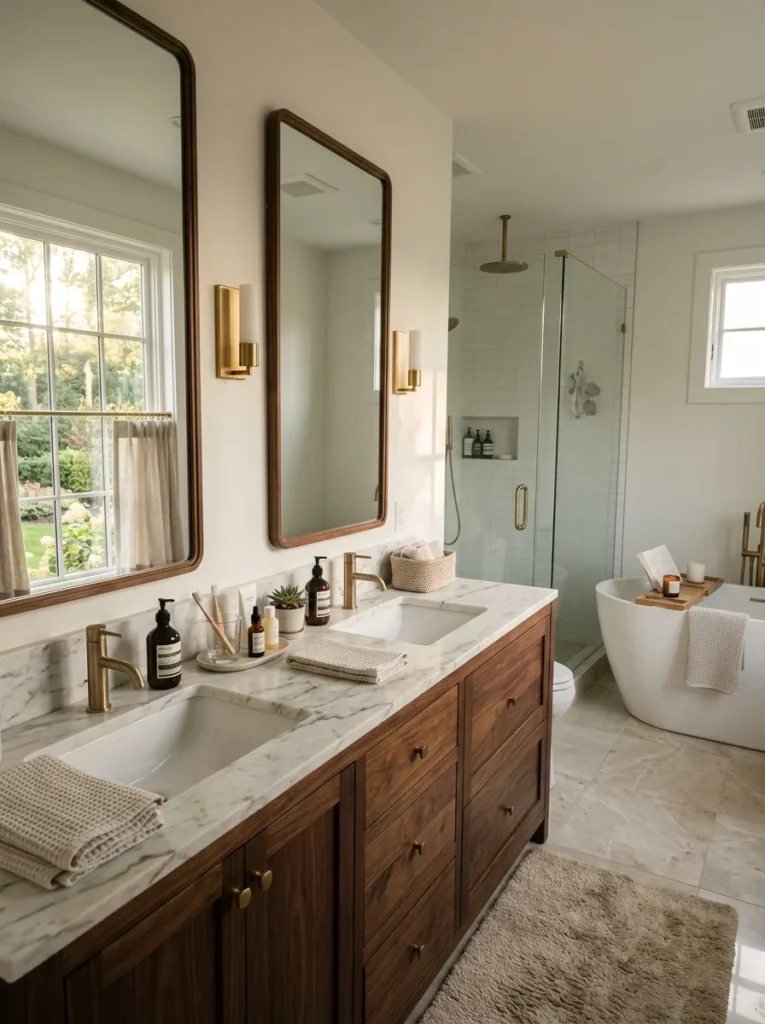
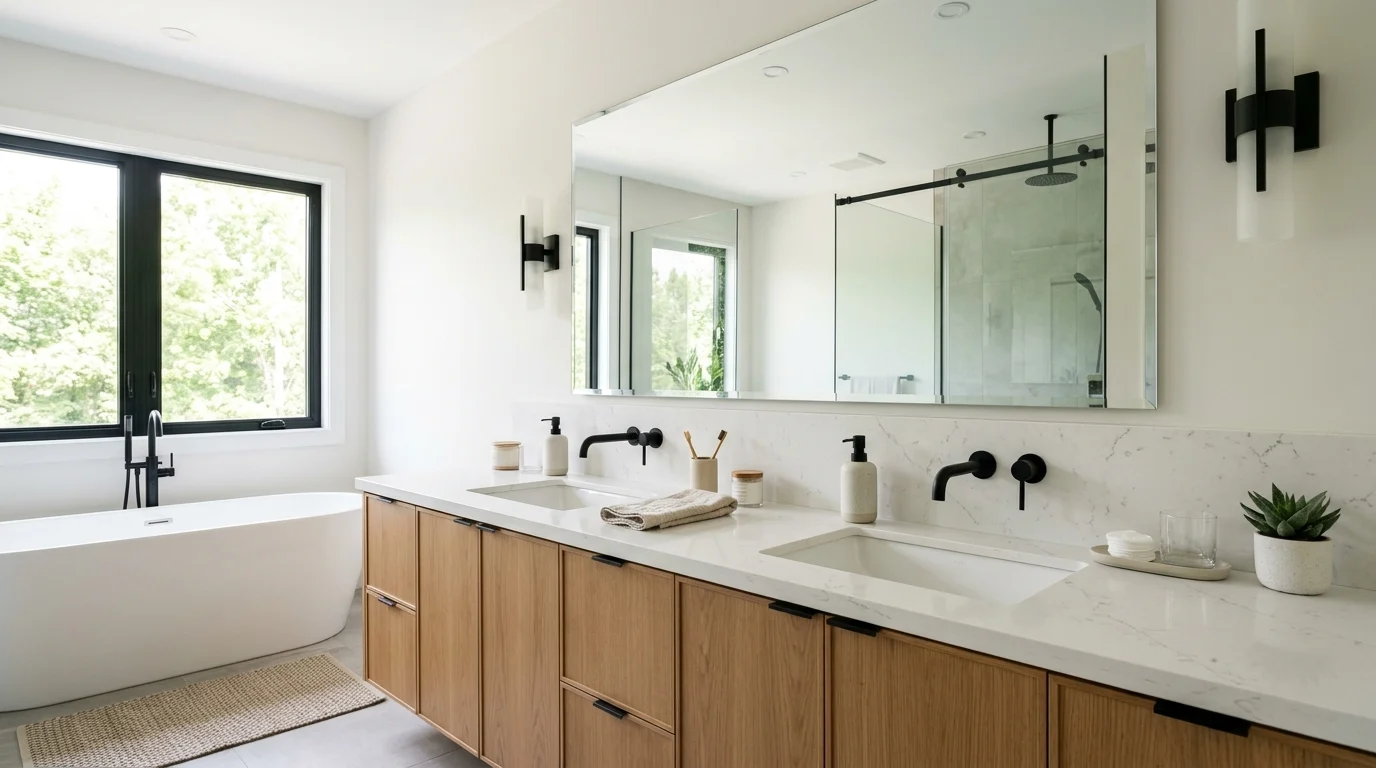
My husband and I spent the first three years of our marriage sharing a single small sink, and every morning turned into a quiet negotiation over counter space, whose toothbrush was where, and who got to use the mirror first. When we finally renovated and installed a double vanity, I remember being almost annoyed at myself for waiting so long, since something as simple as having our own separate space completely changed how our mornings felt. That said, a double vanity isn’t automatically the right choice for every household, and it’s worth thinking through honestly before committing the extra space and budget it requires.
Related Reading
Here’s an honest look at who actually benefits most from a double vanity, what it requires in terms of space and plumbing, and the design choices that make a shared setup work well once you’ve decided it’s right for your bathroom.
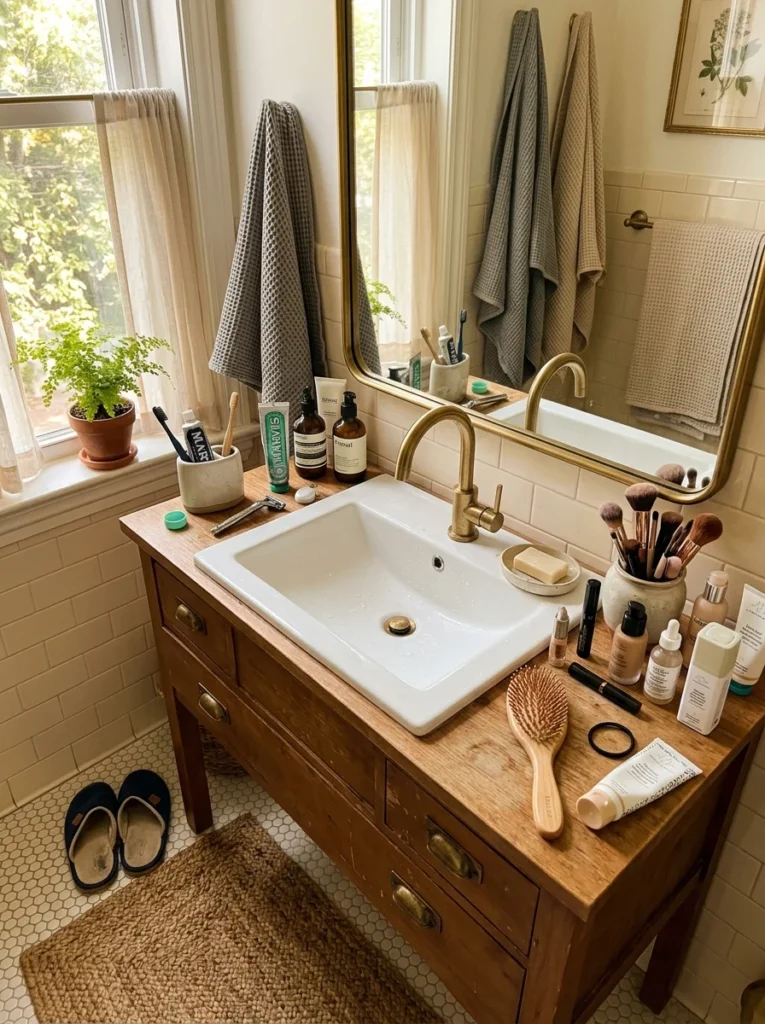
Who benefits most from a double vanity
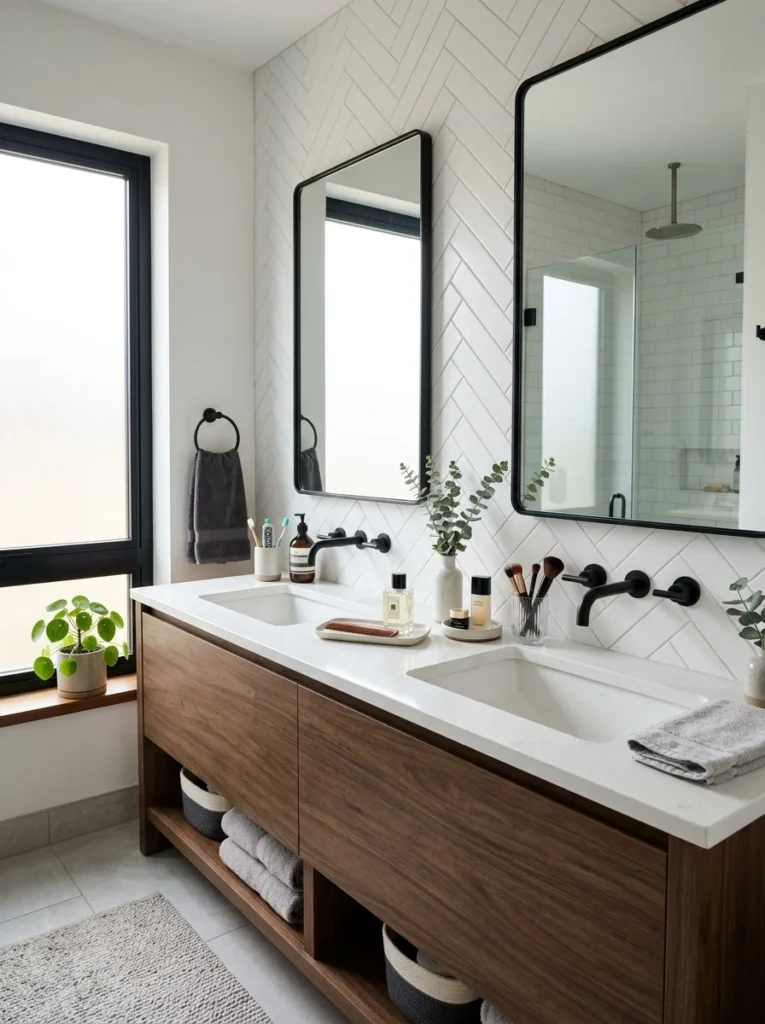
A double vanity makes the most sense for households where two people genuinely use the same bathroom on overlapping schedules every day, most commonly couples sharing a primary bathroom, but also siblings sharing a bathroom during similar morning routines. If both people are getting ready around the same time each morning, a double vanity removes the daily friction of waiting for counter or mirror access, which, while small on any single day, adds up to genuine daily convenience over years of use. Households where bathroom use is naturally staggered, different work schedules, one early riser and one late sleeper, benefit less from a double vanity, since the overlapping-use problem it solves simply doesn’t come up as often for them.
How much space a double vanity actually requires
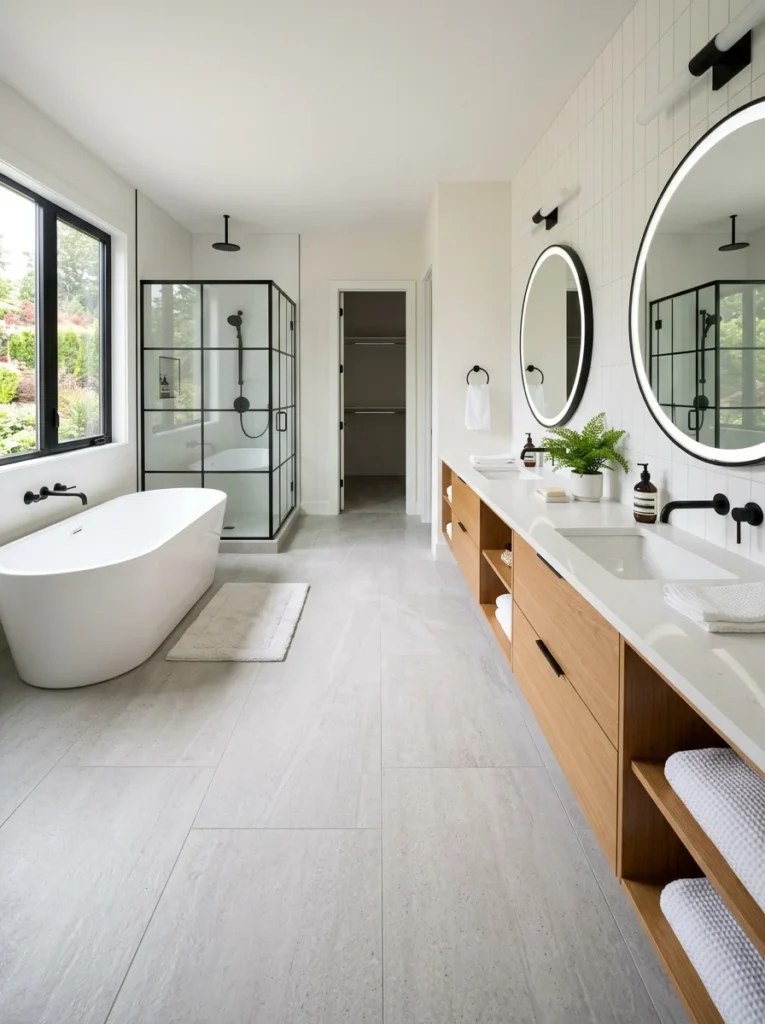
A double vanity needs meaningfully more space than a single vanity, both in width and often in the surrounding clearance needed for two people to comfortably stand and move at the counter simultaneously. As a general guideline, a double vanity setup benefits from a bathroom wide enough to comfortably fit both sinks with adequate space between them, typically requiring significantly more linear footage than a single vanity alone, plus enough surrounding floor space for two people to use the area at once without constantly bumping into each other. In a smaller primary bathroom, forcing in a double vanity can end up making the whole room feel cramped, which is worth weighing against the convenience it offers before committing to the layout.
Plumbing and cost considerations
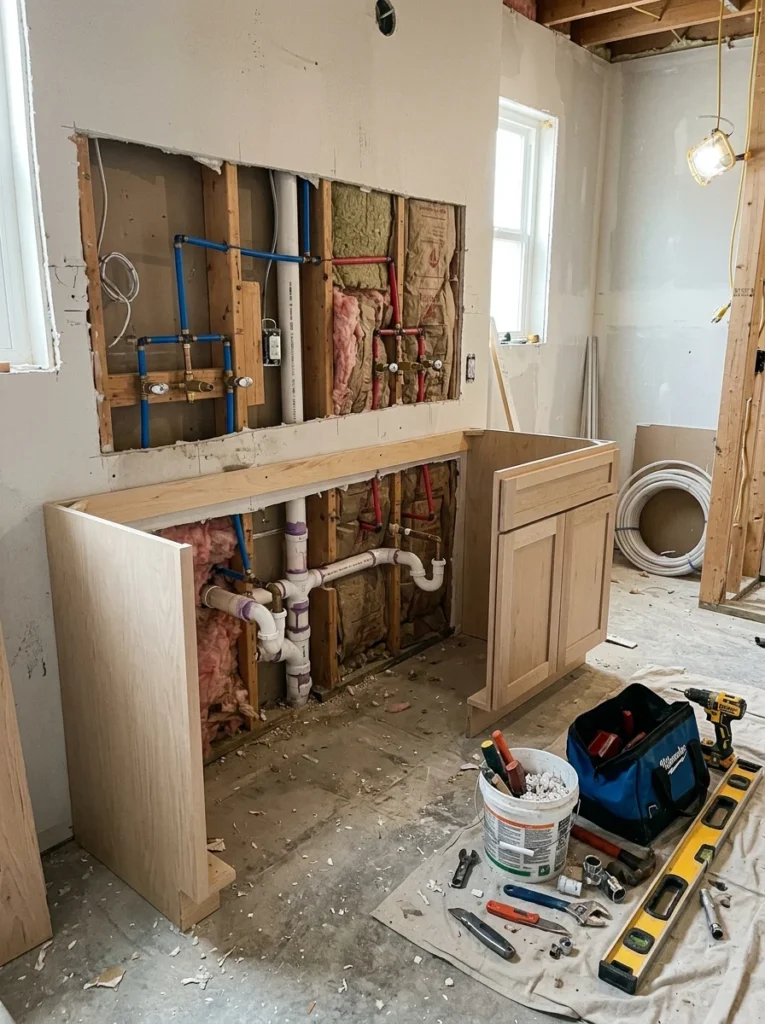
A double vanity requires two full sets of water supply and drain lines rather than one, which increases both material and labor costs compared to a single-sink vanity, particularly if the new sink locations aren’t close to existing plumbing. If you’re working within an existing bathroom footprint during a renovation, it’s worth having a plumber assess how feasible and cost-effective adding a second full plumbing run actually is, since costs can vary significantly depending on how the existing supply and drain lines are configured. For an entirely new bathroom addition, planning for double vanity plumbing from the start is considerably more cost-effective than retrofitting it later, since the walls and floor are already open during initial construction.
Alternatives if a full double vanity doesn’t fit your space or budget
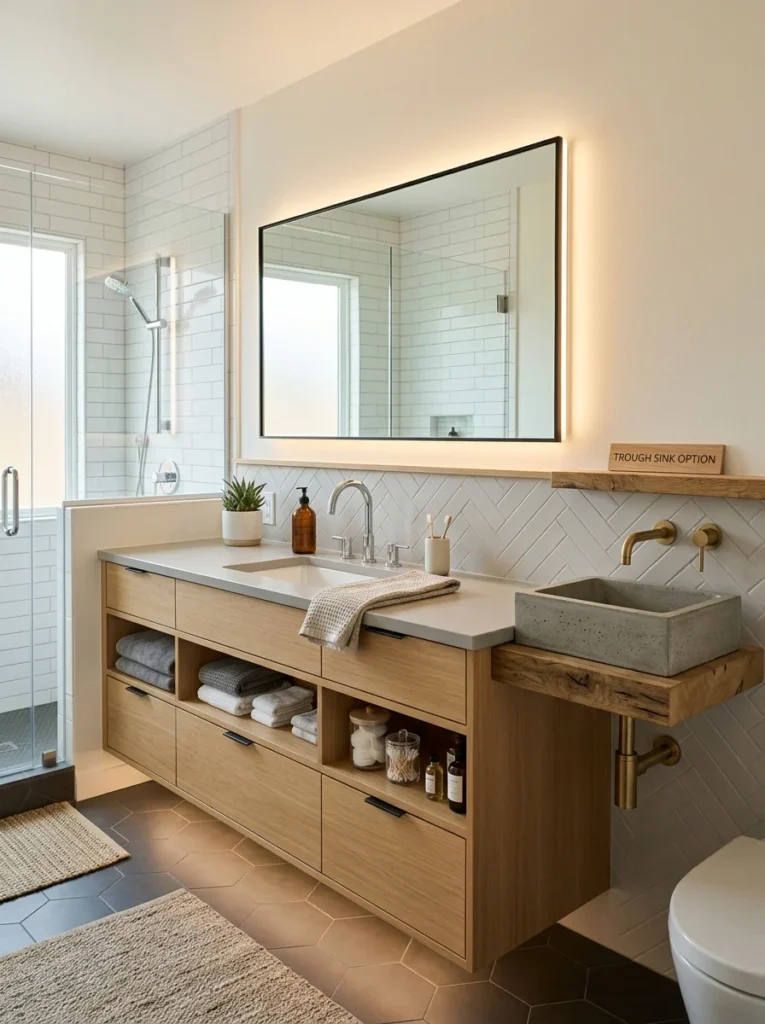
If a genuine double vanity isn’t practical, a few alternatives offer some of the same benefit without requiring the full footprint or plumbing cost. A single, extra-wide vanity with one long countertop and a single sink still gives two people more shared counter space than a standard single vanity, even without a second basin. A trough-style sink, one long, shallow basin with two separate faucets, offers a similar shared-space benefit with only one drain line to plumb, reducing cost compared to two entirely separate sinks. For a smaller bathroom, simply widening the existing single vanity as much as the space allows, and adding clearly divided storage for two people underneath, can meaningfully reduce daily friction even without going to a full double sink setup.
Design ideas for making a double vanity feel spacious, not crowded
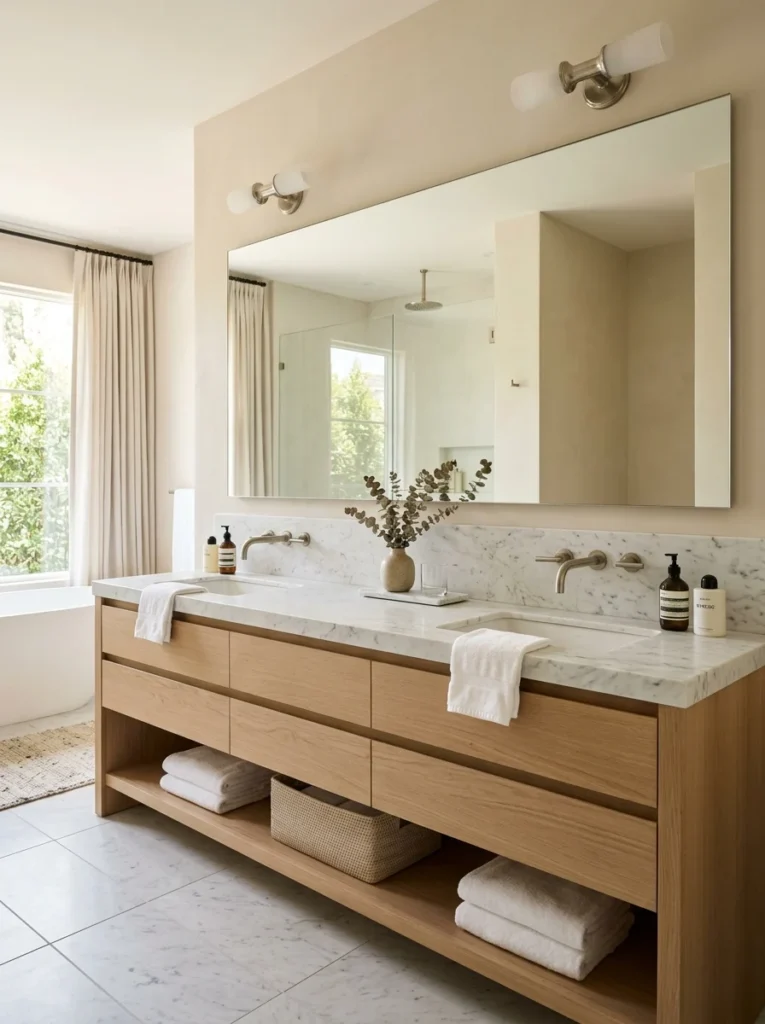
A double vanity can feel cramped rather than luxurious if the design doesn’t account for how two people will actually move around it at once. Adding a bit of visual and physical breathing room between the two sinks, even a modest gap with a small shared shelf or a decorative element in between, helps the setup feel like two distinct spaces rather than one crowded counter. A single large mirror spanning the full width above both sinks, rather than two separate smaller mirrors, tends to make the whole area feel more expansive and cohesive, while still functioning well for two people using it simultaneously.
Give each person their own storage zone
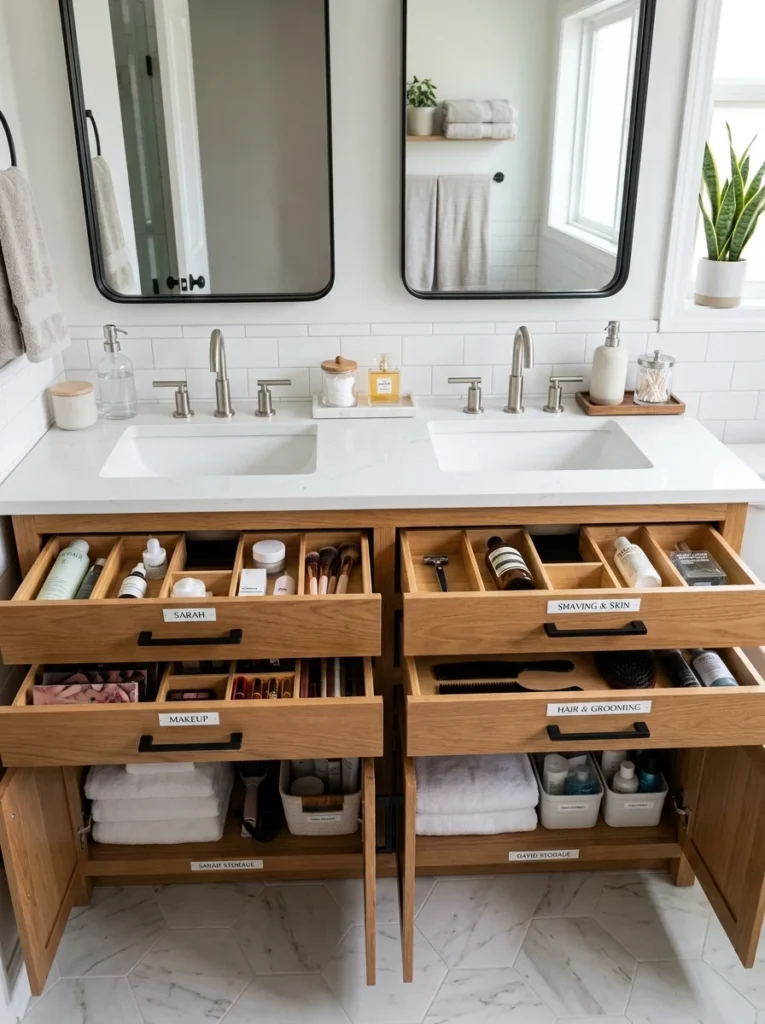
One of the most common sources of friction in a shared vanity, even a double one, is unclear or overlapping storage. Dividing the vanity’s drawers and cabinet space clearly, ideally symmetrically, so each person has a consistent, dedicated area for their own toiletries and grooming tools, prevents the daily low-level irritation of items getting mixed up or misplaced. If storage is genuinely limited, even a small labeled basket or drawer organizer assigned specifically to each person accomplishes much of the same benefit without needing a full symmetrical cabinet layout.
Consider a shared versus separated countertop approach
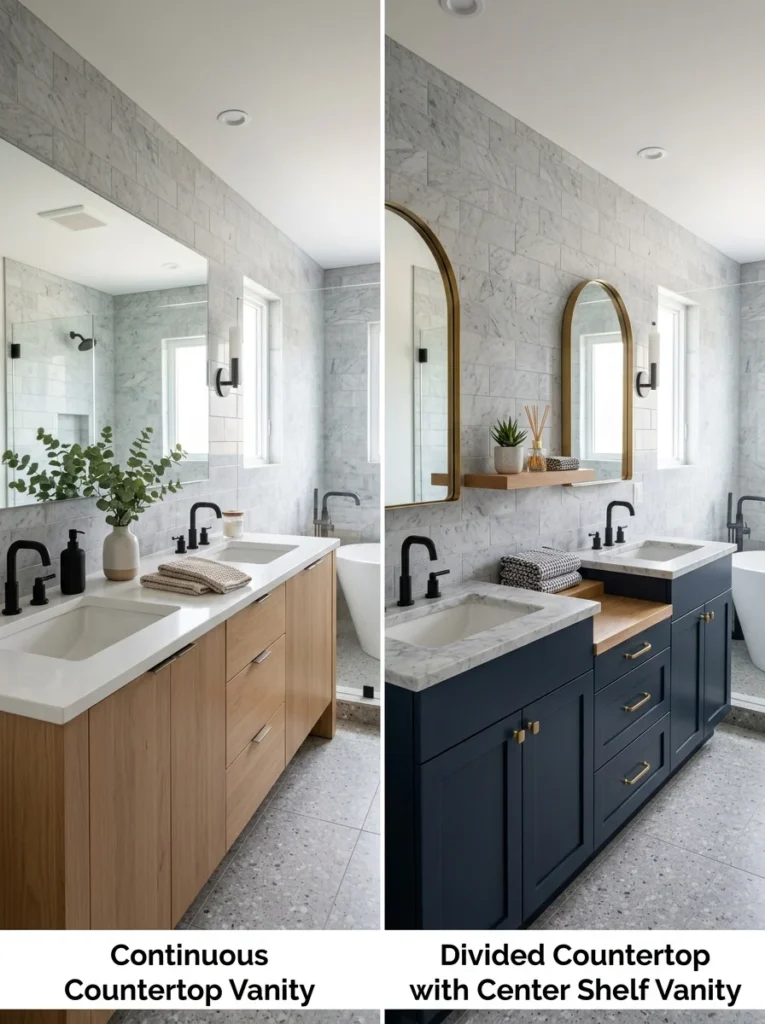
Some double vanities use one continuous countertop spanning both sinks, which looks seamless and seems more spacious, while others use two distinct countertop sections with a small gap or divider between them. A continuous countertop generally looks more polished and modern, but a divided approach can help two people feel like they each genuinely have their own defined space, which some couples specifically prefer for reducing the sense of a shared, potentially cluttered surface. Neither approach is objectively better; it largely comes down to whether your household prefers a seamless shared look or a more clearly divided one.
Think about lighting for two people at once
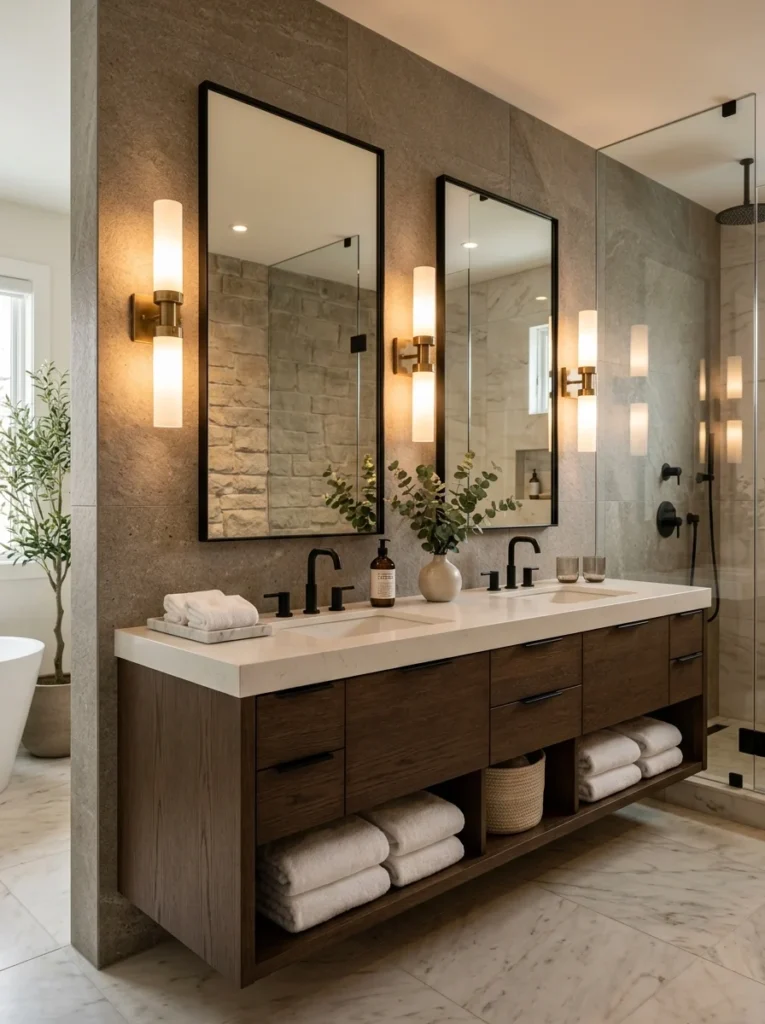
Task lighting matters just as much, if not more, in a double vanity setup, since it needs to work well for two people grooming simultaneously rather than just one. Placing a light source, whether a wall sconce or a portion of a well-lit mirror, above or beside each individual sink ensures both people get adequate, evenly distributed light rather than one person ending up in the shadow of a light positioned only for the other side.
Choosing durable materials for heavy daily use
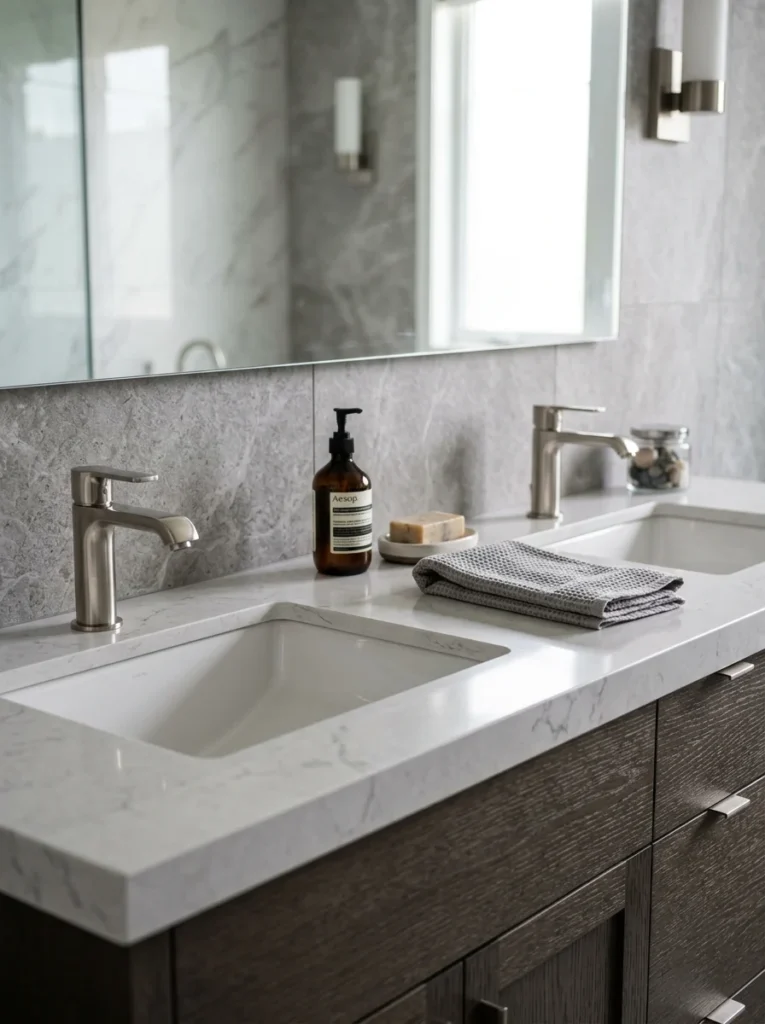
A double vanity typically sees more daily wear than a single vanity, simply because it’s used by two people rather than one, which makes material durability worth prioritizing. Quartz and solid-surface countertops resist staining and scratching better than laminate, and they’re generally easier to keep looking clean under the heavier daily use a shared vanity sees. For the cabinet itself, choosing a moisture-resistant material and a finish that holds up well to frequent contact and occasional splashing keeps the piece looking good for longer, particularly around the areas nearest each sink where water exposure is most concentrated.
How a double vanity can affect resale value
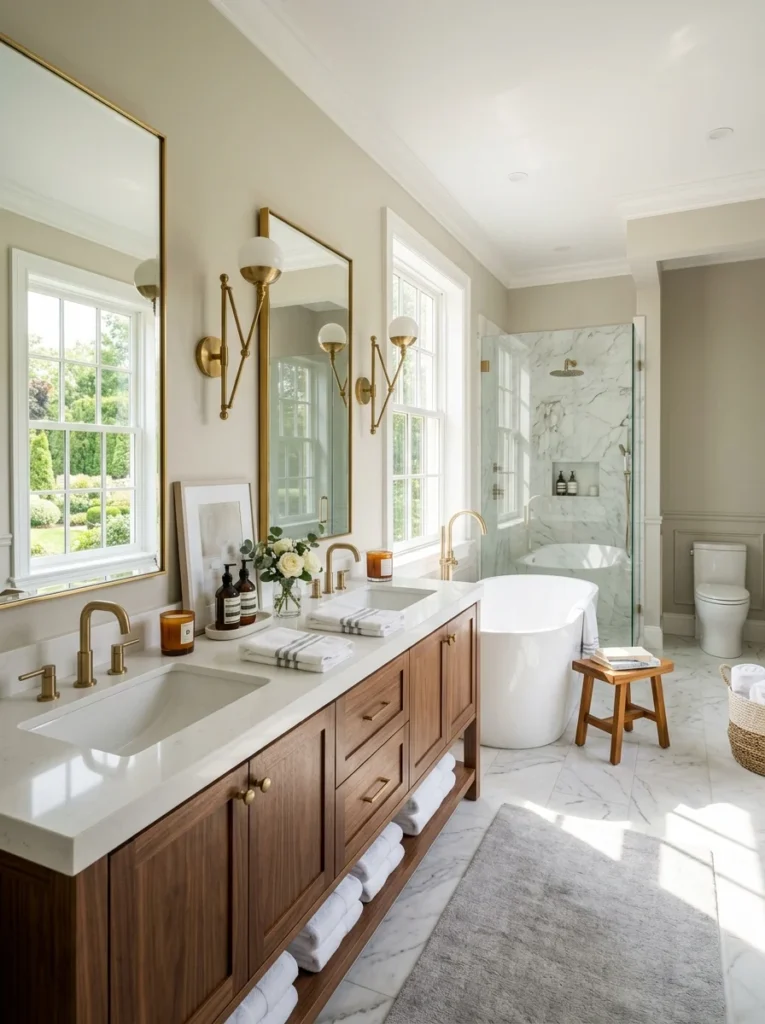
In many markets, a double vanity in the primary bathroom is viewed as a desirable feature by buyers, particularly those who are couples or families themselves and can immediately picture the daily convenience it offers. That said, a double vanity that makes an already small primary bathroom feel cramped can work against a home’s appeal just as easily as it can help, so it’s worth weighing the resale impact against whether your specific bathroom genuinely has the space to support one comfortably. If your bathroom is on the smaller side, a tastefully done extra-wide single vanity may actually appeal to a broader range of buyers than a double vanity that leaves little room to move.
Double vanities for siblings, not just couples
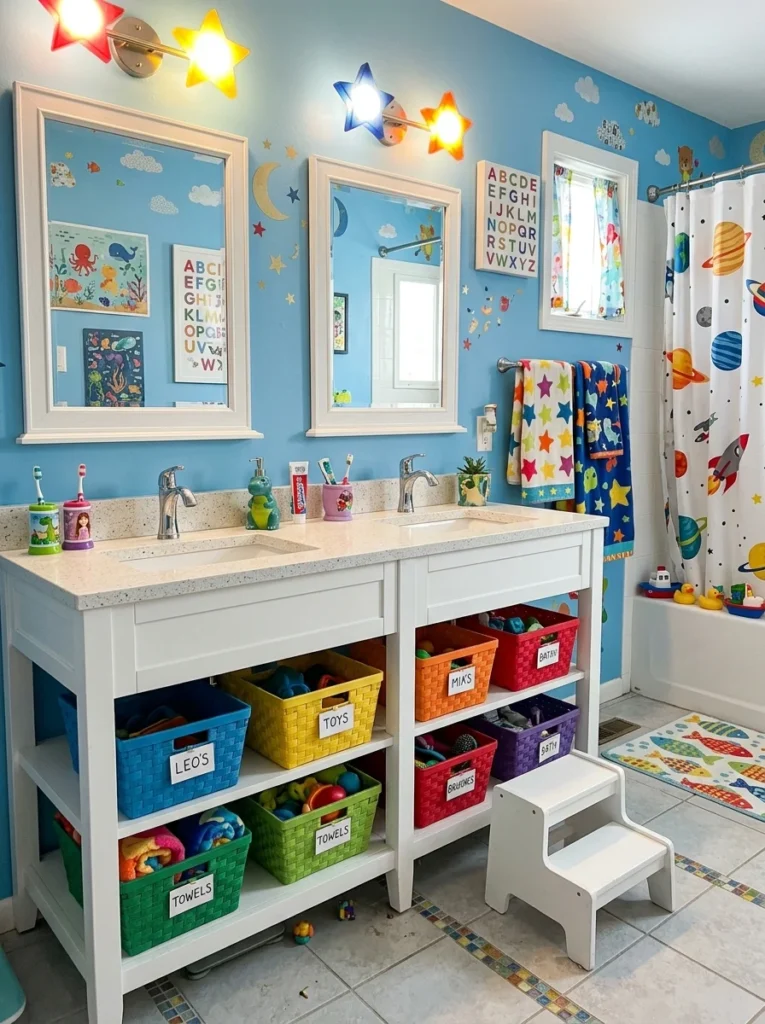
While double vanities are most commonly associated with primary bathrooms shared by couples, they can work just as well in a bathroom shared by siblings, particularly kids close in age with similar morning routines. In this context, it’s worth designing the storage and mirror height with growing children in mind, ensuring both sides remain usable as kids age from needing a step stool to reaching the counter independently. Clear, separate storage matters even more with siblings than with adult couples, since it also helps reduce the kind of daily squabbling over shared space that’s common between kids using the same bathroom every morning.
Common double vanity questions
How much wider does a bathroom need to be for a double vanity?
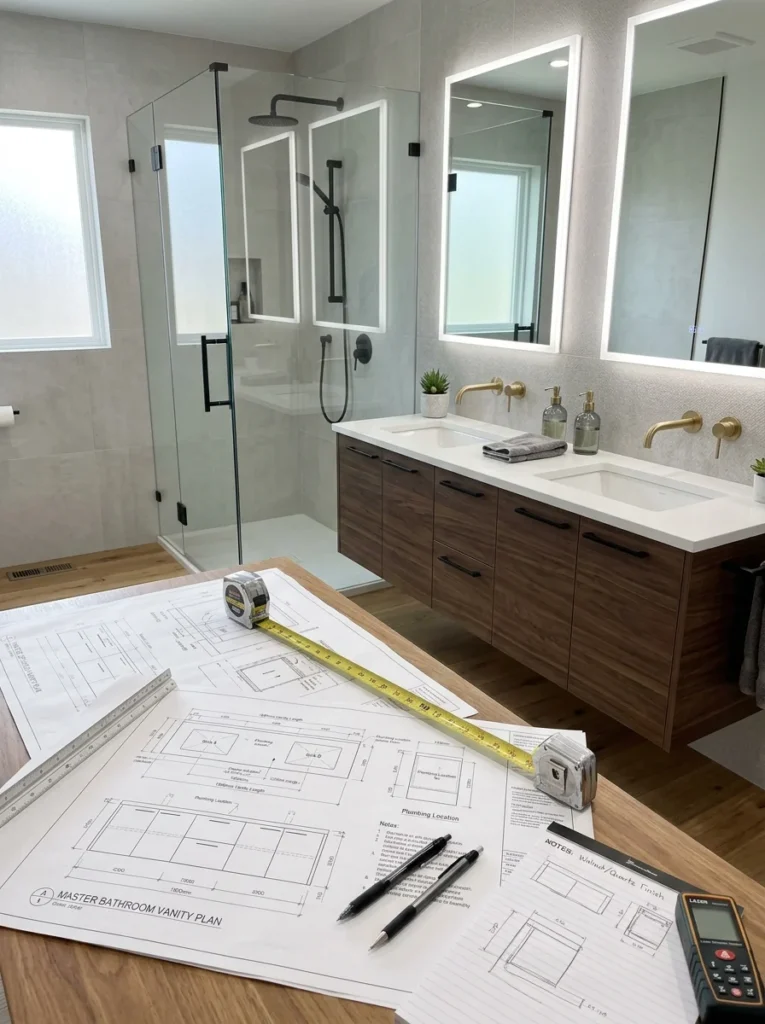
A double vanity generally requires significantly more linear footage than a single vanity, plus enough surrounding floor space for two people to use it comfortably at once. The exact requirement depends on the specific sink and cabinet sizes chosen, so it’s worth measuring your available wall space against the vanity’s actual dimensions before committing to the layout.
Is a double vanity worth the extra plumbing cost?
For households where two people genuinely use the bathroom on overlapping schedules daily, most find the added plumbing cost worthwhile for the daily convenience it provides. For households with staggered schedules or infrequent overlapping use, the added cost may not be justified compared to a well-designed single vanity.
What’s a good alternative to a full double vanity in a small bathroom?
A single extra-wide vanity with one long countertop, or a trough-style sink with two faucets and one drain line, both offer more shared counter space and reduced daily friction without requiring the full footprint and plumbing cost of two entirely separate sinks and drains.
Should each person have separate storage in a double vanity?
Yes, clearly dividing drawer and cabinet space between two people, ideally symmetrically, is one of the most effective ways to reduce daily friction in a shared vanity, since it prevents overlapping or misplaced toiletries and gives each person a consistent, predictable space.
Does a double vanity increase home resale value?
In many markets, yes, particularly in a primary bathroom, since buyers who are couples or families can easily picture the daily convenience it offers. However, a double vanity that makes a small bathroom feel cramped can work against a home’s appeal, so the benefit depends on whether the room genuinely has the space to support one.
What countertop material holds up best for a double vanity?
Quartz and solid-surface countertops generally hold up best under the heavier daily use a double vanity sees, since they resist staining and scratching better than laminate and remain easier to keep clean around two active sink areas.
A double vanity is a genuinely worthwhile investment for households where two people share overlapping bathroom time daily, but it’s not an automatic upgrade for every home, particularly where space is tight or schedules rarely overlap. If a full double vanity doesn’t fit your space or budget, a wider single vanity or a trough-style sink can still meaningfully reduce daily friction without the full cost and footprint of a traditional double setup.
Looking back, the extra space and cost of our own double vanity was one of the renovation choices I think about least, in the best possible way, since it simply removed a small daily friction point we’d been quietly living with for years without really noticing how much it was adding up. If your mornings involve any version of that same quiet negotiation over sink space, it’s very likely worth the investment.