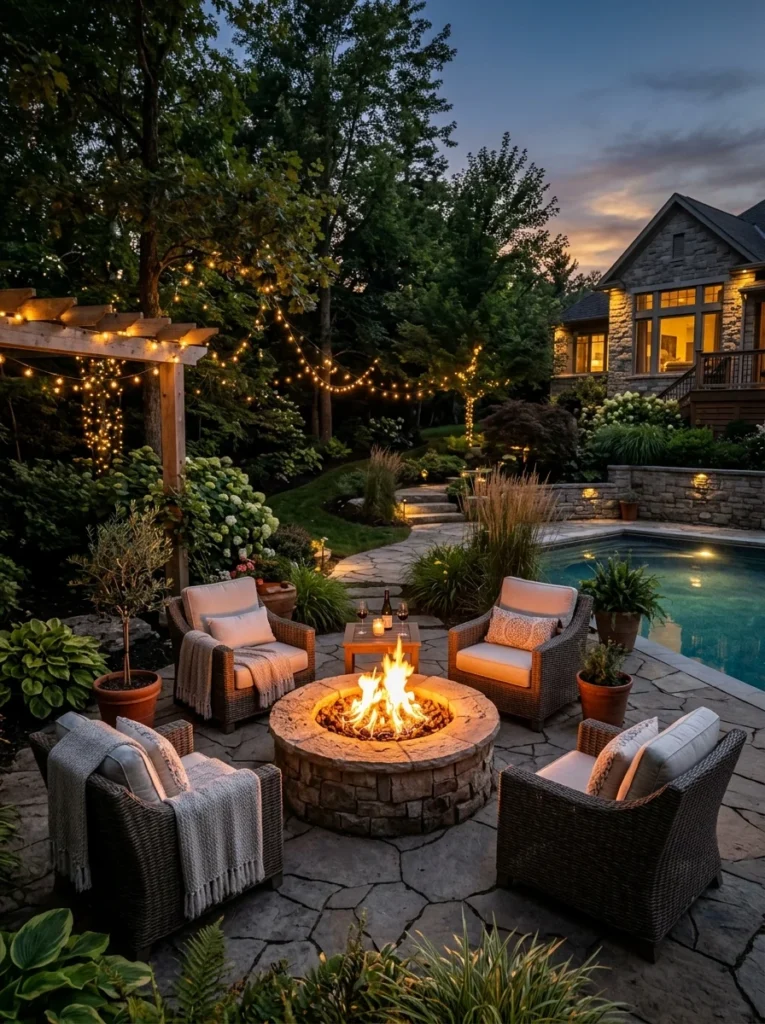
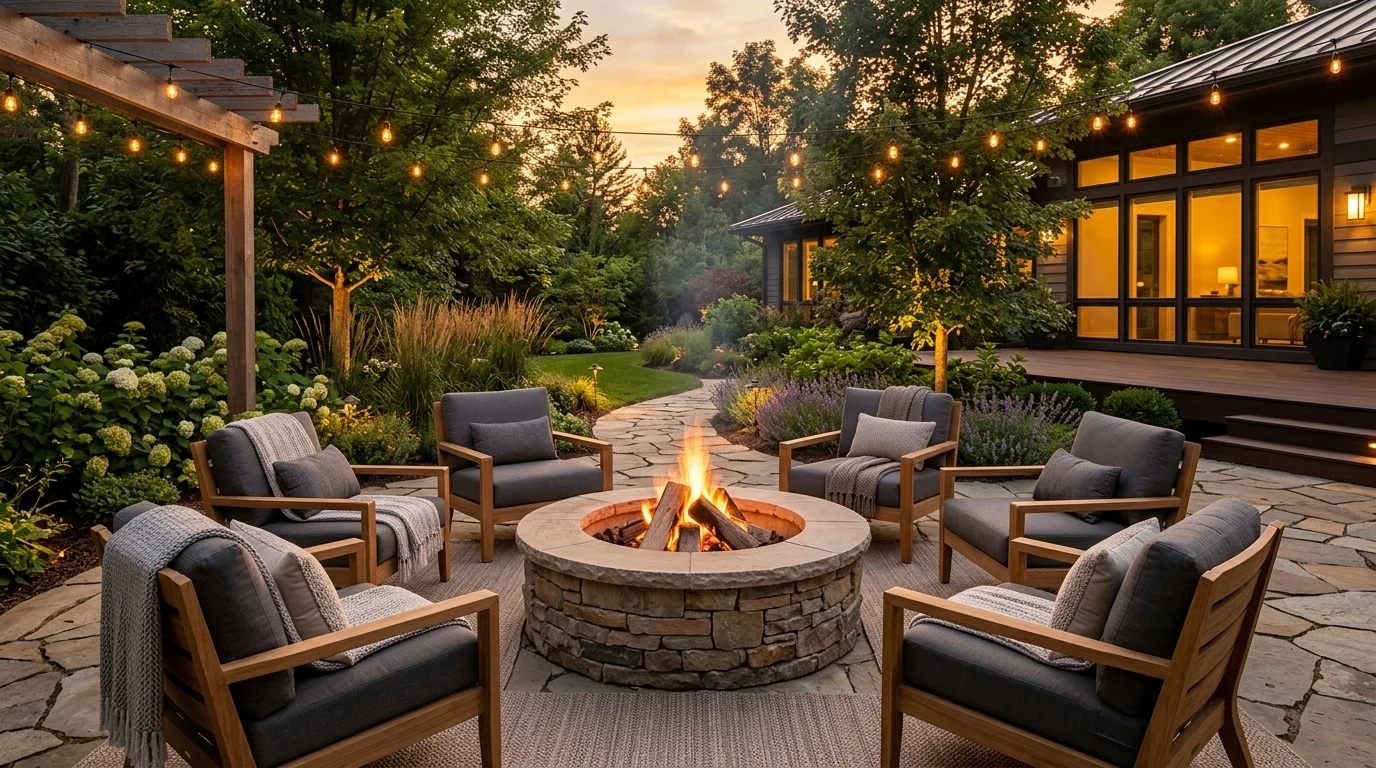
The first fire pit we ever had was a cheap portable steel bowl set directly on our wooden deck, and it wasn’t until I noticed the scorch marks forming underneath it after just a few uses that I realized how close we’d come to a genuinely serious problem. That small scare sent me down a real research process into fire pit placement and safety, and what I learned completely changed how we set up our current one, which has been in safe, regular use for years since without a single close call.
A fire pit is one of the best additions you can make to a backyard, extending usable evening hours and creating a natural gathering point for friends and family. But getting the placement and safety details right matters more than most people realize going in. Here’s what actually matters, organized by what to decide first.
Choose between wood-burning and gas first
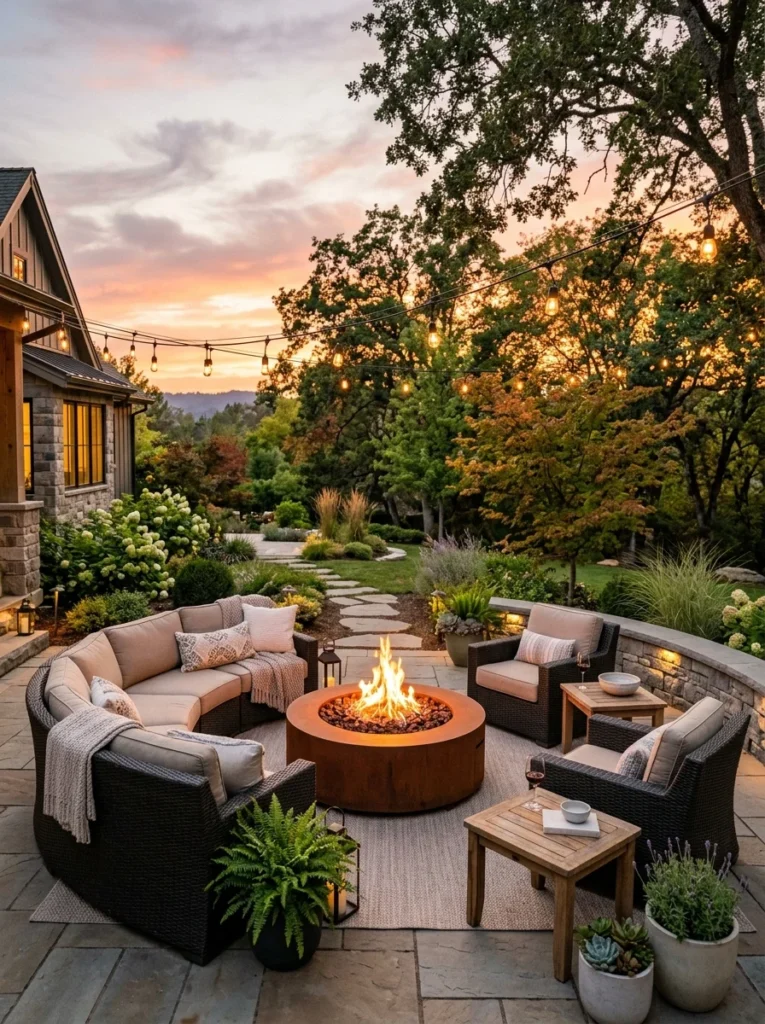
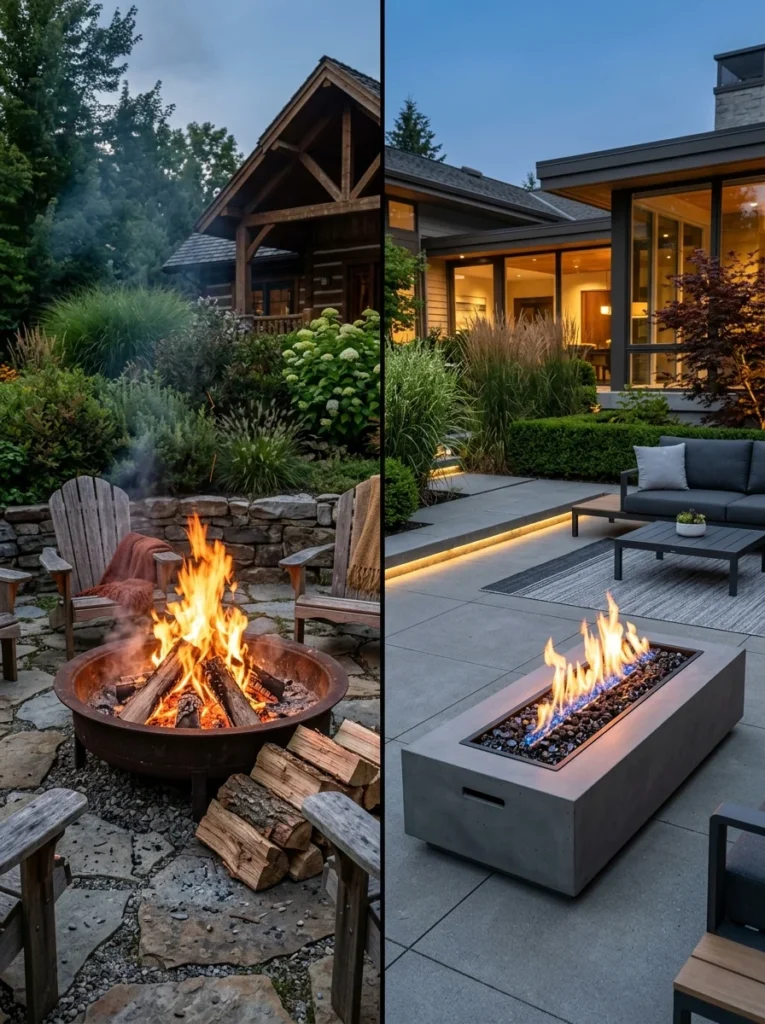
This is the foundational decision that shapes almost everything else about your fire pit. A wood-burning fire pit offers the classic crackling sound, smell, and visual of a real fire, and it’s generally cheaper to purchase upfront, but it requires more active management, tending the fire, dealing with smoke depending on wind direction, and cleaning out ash regularly. A gas fire pit, running on natural gas or propane, ignites instantly, produces no smoke or ash, and can be turned off immediately, making it considerably more convenient for regular use, though it typically costs more upfront and, for a natural gas option, requires professional line installation.
Understand minimum clearance requirements
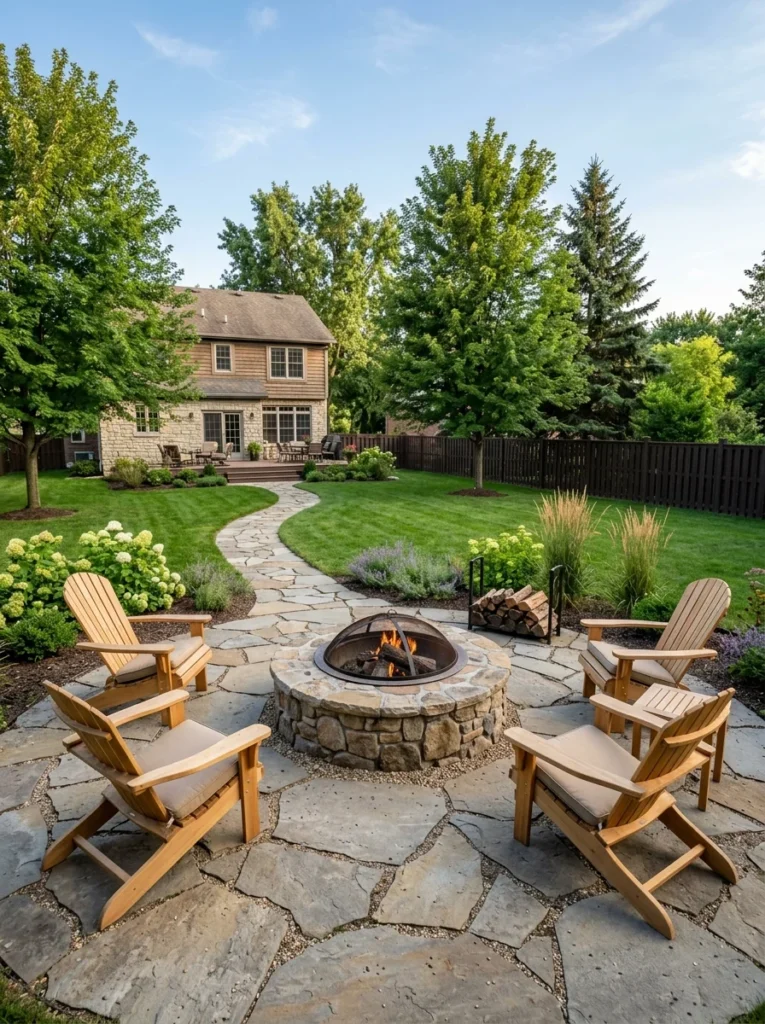
Regardless of which type you choose, a fire pit needs significant clearance from your home, any structure, overhanging trees, and fences. General safety guidance suggests a minimum of ten feet from any structure and well clear of overhanging branches, though local regulations may specify different or more precise distances depending on your area, so checking your specific local fire code before finalizing placement is an essential step rather than an optional one. This clearance isn’t just about direct flame contact; it also accounts for flying embers, which can travel further than people often expect, especially on a windy evening.
Choose a surface that can safely handle heat and embers
A fire pit should never sit directly on a wood deck, dry grass, or any other combustible surface, which is exactly the mistake that started my own research into this topic. Gravel, pavers, concrete, or natural stone all provide a non-combustible base that can handle radiant heat and stray embers without scorching or catching fire. If you want a fire pit on or near a wood deck, a dedicated fire-resistant pad specifically rated for this purpose, combined with adequate clearance from the deck’s edge, is necessary rather than optional.
Consider wind direction and prevailing patterns
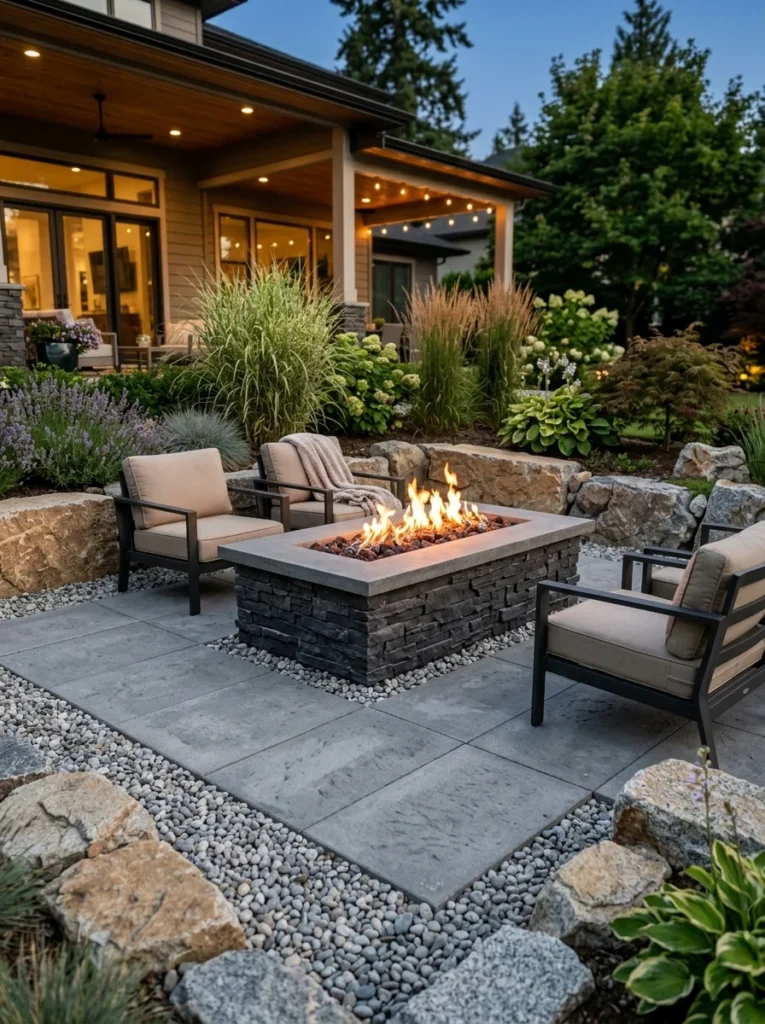
Positioning your fire pit with prevailing wind direction in mind reduces the chance of smoke blowing directly into a seating area or back toward your house, where it can be both unpleasant and, over time, a minor safety and air quality concern if windows are open. Observing your yard’s typical wind pattern over a few evenings before finalizing your fire pit’s exact placement is a simple, free step that meaningfully improves how comfortable the space is to actually use.
Design the seating area around the fire pit intentionally
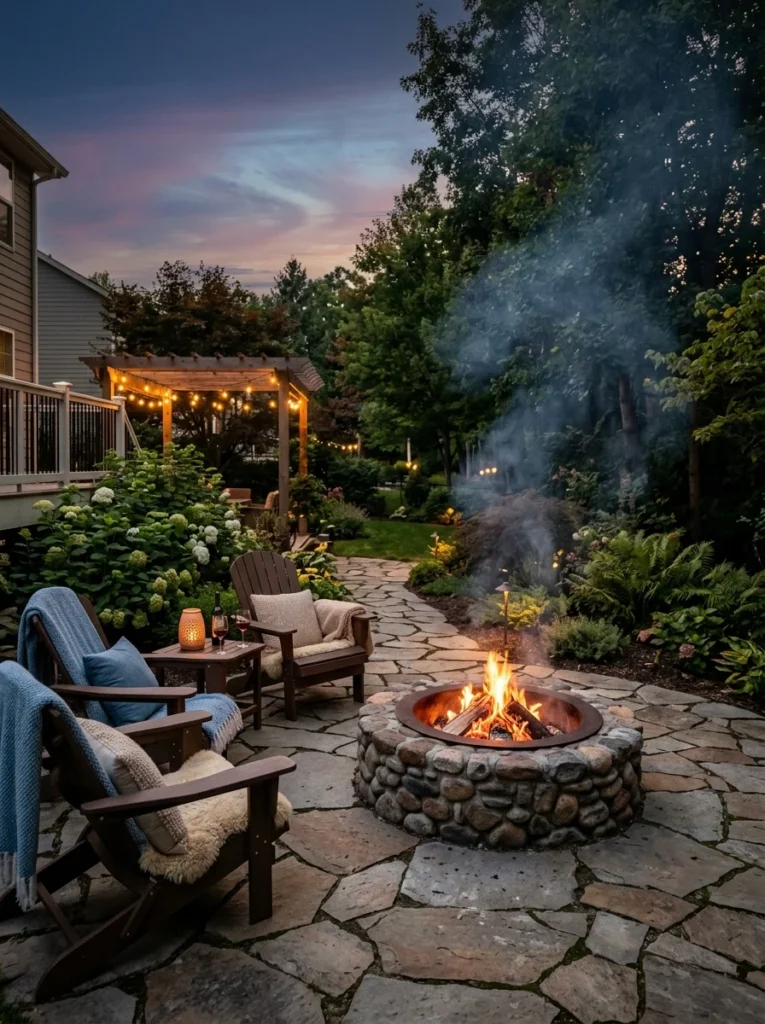
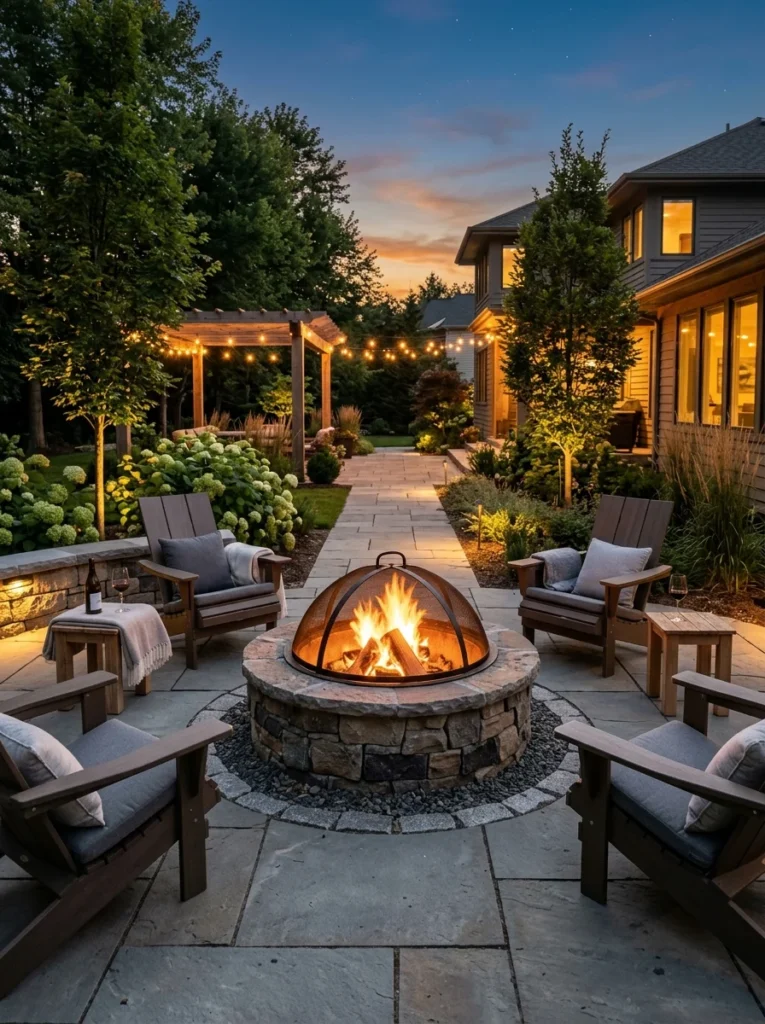
A circular or semi-circular seating arrangement around the fire pit, rather than furniture scattered without a clear relationship to the flame, creates a natural, inviting gathering space and ensures everyone has a comparable view of the fire. Leaving adequate walking space between the fire pit and the surrounding seating, generally at least a few feet, prevents the seating itself from becoming uncomfortably hot and gives people room to move without stepping too close to the flame or embers.
Choose a fire pit style that matches your space and needs
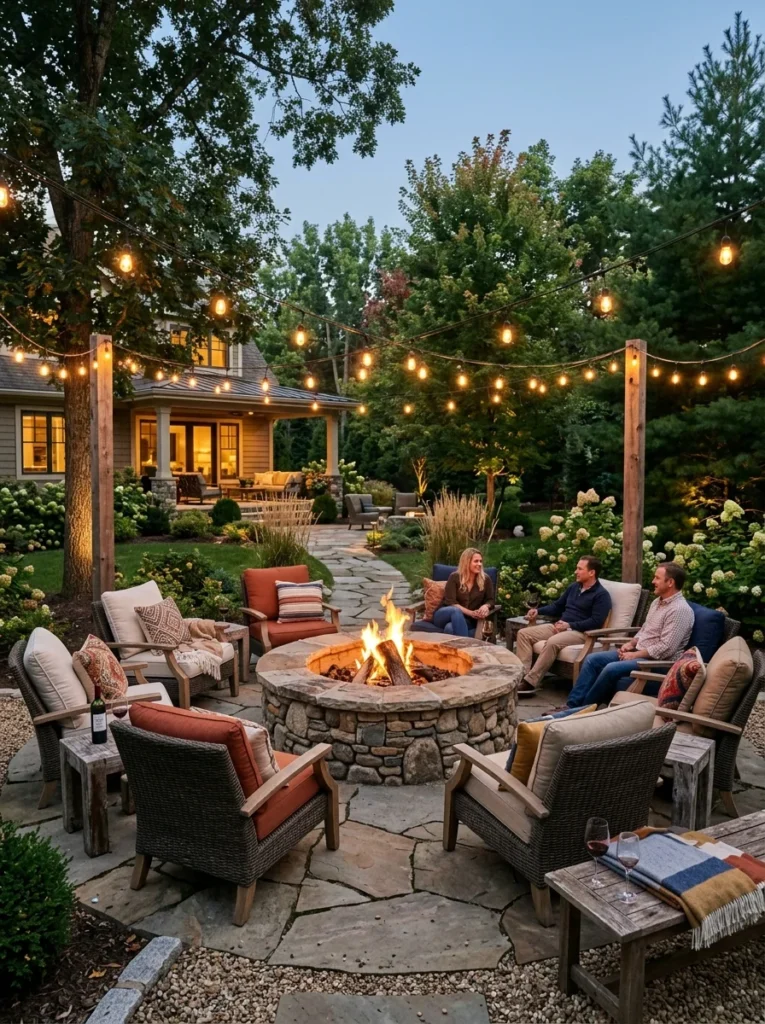
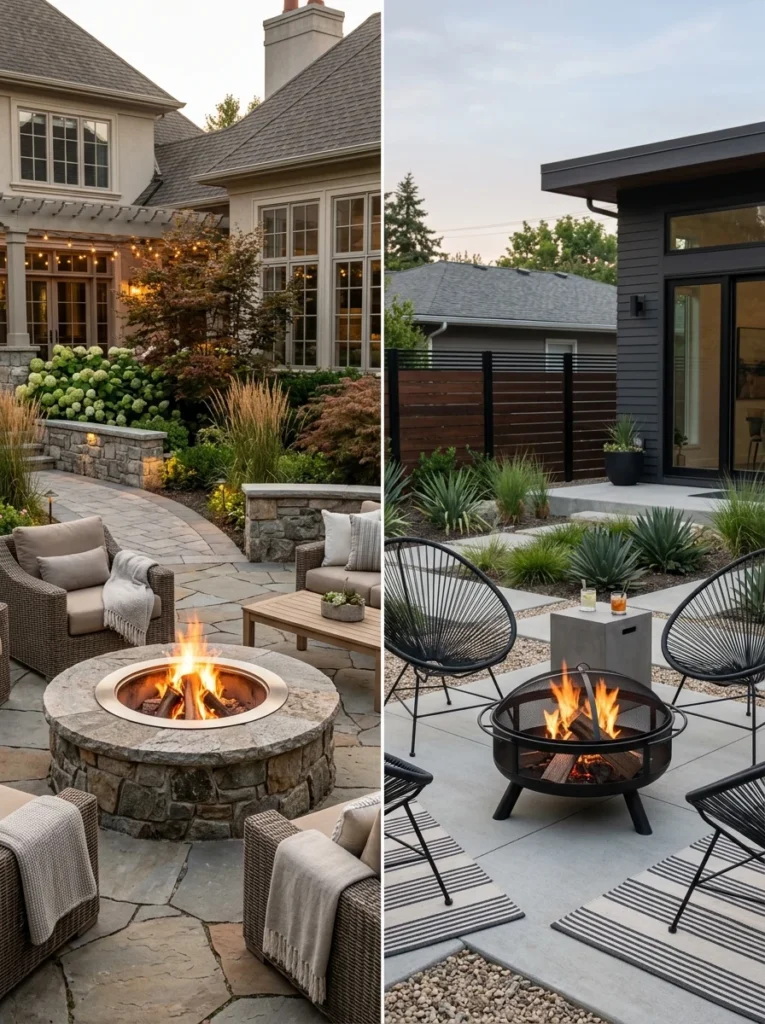
A built-in, permanent fire pit, constructed from stone, brick, or concrete block, offers a more substantial, finished look and can be designed to match your home’s exterior materials, but it requires more upfront construction and a fixed location decision. A portable, prefabricated fire pit offers flexibility, since it can be moved or removed entirely, and it’s generally a faster, less expensive way to add a fire feature without committing to permanent construction. For a rented property or a household still deciding on their yard’s overall layout, a portable option makes considerably more sense than a permanent installation.
Propane versus natural gas: which fuel makes more sense
If you’ve settled on a gas fire pit, the next decision is which fuel source fits your setup better. Propane offers flexibility, since it doesn’t require a fixed gas line and the fire pit can be relocated if your plans change, but it does mean monitoring tank levels and swapping or refilling tanks periodically, usually via a concealed compartment built into the fire pit’s base. Natural gas, connected to your home’s existing gas line, offers continuous fuel without ever needing to check a tank, but it requires professional installation and permanently ties the fire pit to its installed location, making it a better fit once you’re confident about the exact placement you want long-term.
Choosing materials that match your backyard’s overall style
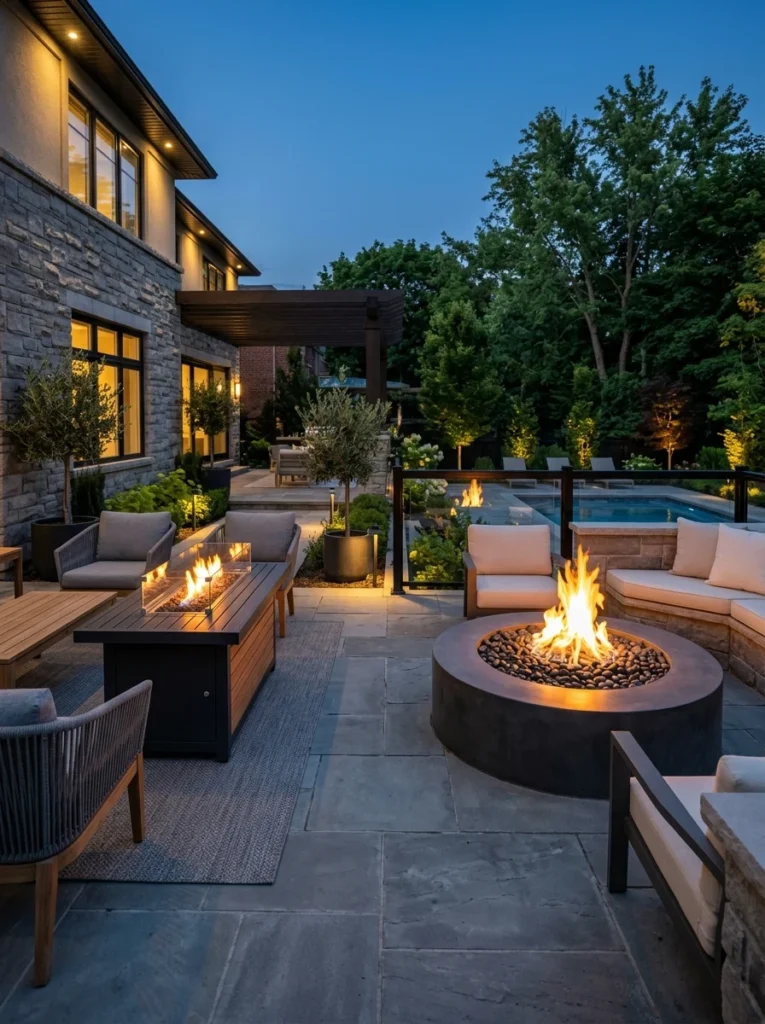
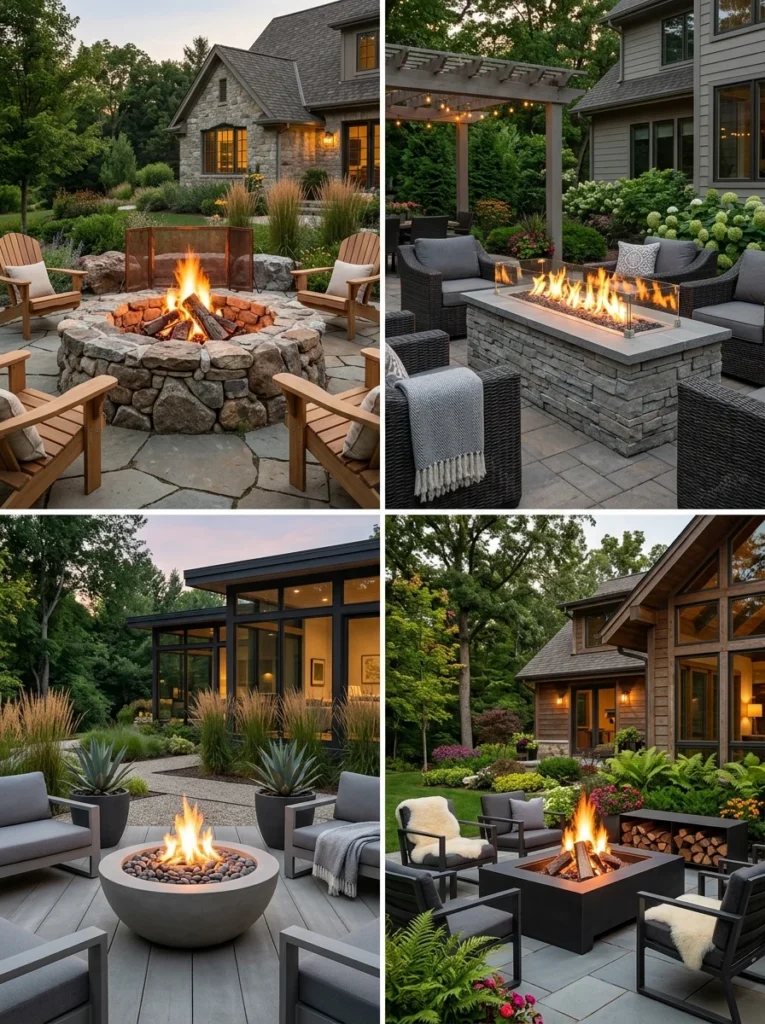
A fire pit’s material and shape should ideally complement the rest of your outdoor space rather than feeling like an unrelated addition. Natural stone or stacked stone veneer fire pits suit a more rustic or traditional backyard design, while a simple, clean-lined concrete or metal fire bowl fits better into a modern, minimalist outdoor space. Matching the fire pit’s material to existing hardscaping, the same stone used in a nearby retaining wall or the same paver style used on the patio, helps the fire pit feel like an intentional part of the overall design rather than a standalone purchase placed wherever there happened to be room.
A metal mesh spark screen fitted over a wood-burning fire pit significantly reduces the risk of embers escaping and landing on nearby dry grass, furniture cushions, or anything else flammable, particularly on a breezy evening. This is a relatively inexpensive addition and one of the simplest ways to meaningfully improve the safety of a wood-burning setup without changing anything else about the design.
Keep fire safety equipment nearby
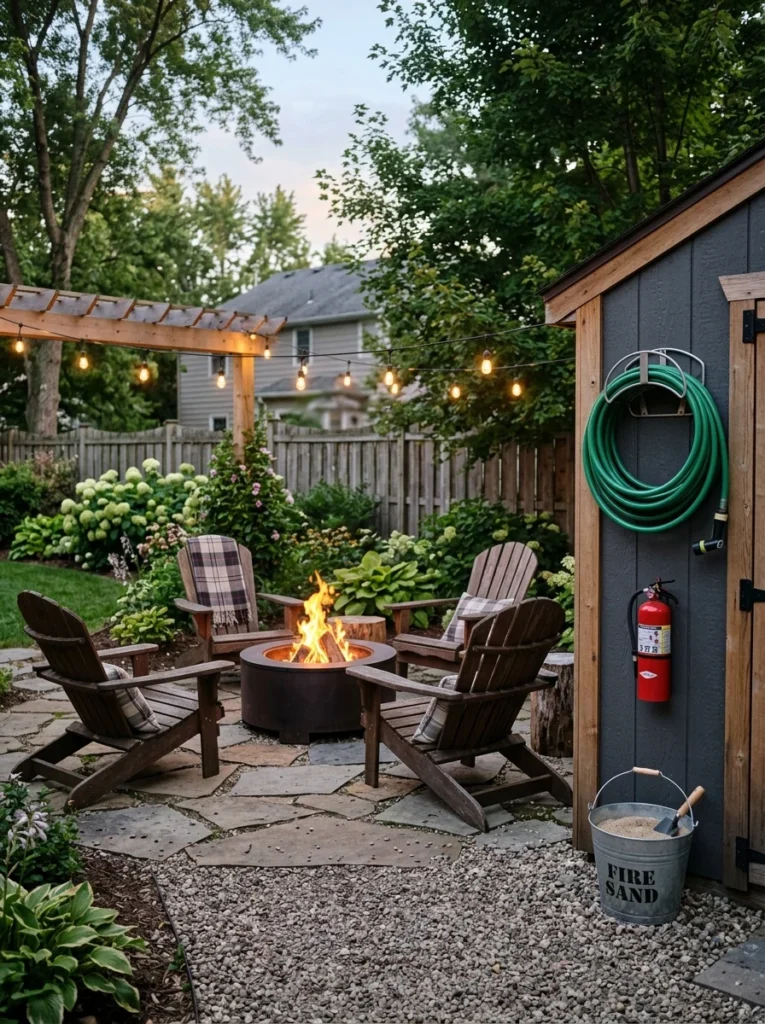
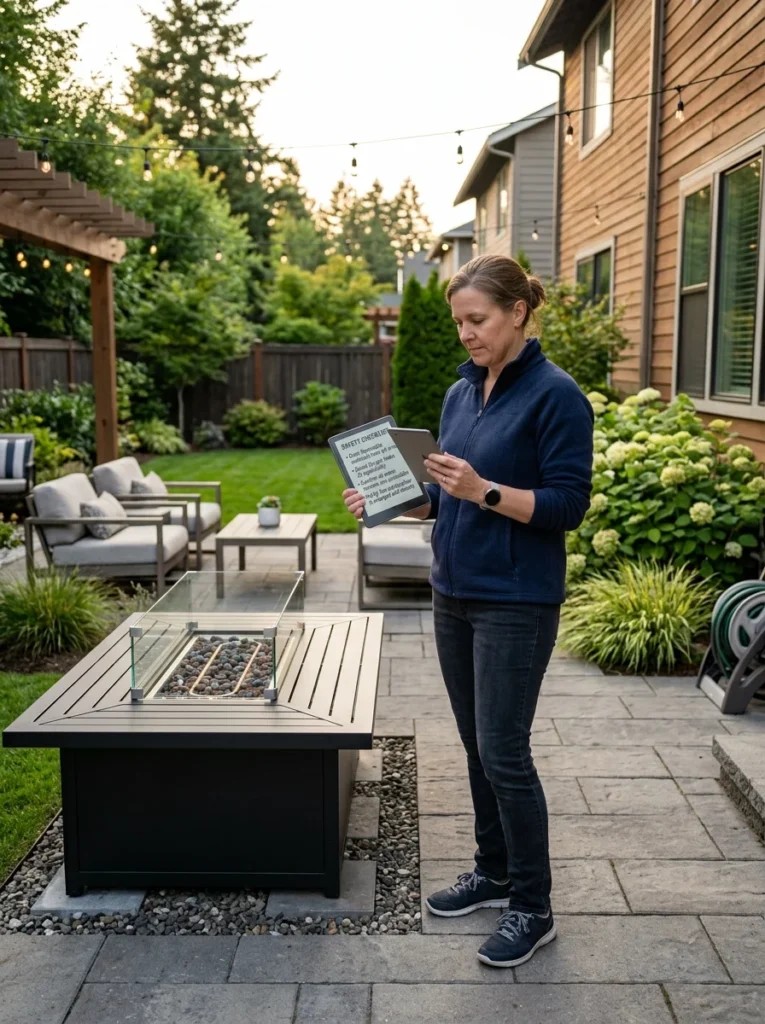
A fire extinguisher rated for the type of fire involved, or at minimum a garden hose with functioning water access, should be within easy reach of any fire pit at all times, not stored in a garage or shed several minutes away. A bucket of sand or dirt nearby also works as a simple, low-tech way to smother small flames or manage stray embers quickly if needed. Treating this equipment as a permanent fixture near the fire pit, rather than something to grab only if needed, ensures it’s actually available in the moment it might matter.
Check local regulations and burn restrictions
Many areas have specific regulations governing fire pits, including permitted types, required clearances, and seasonal burn bans during dry conditions or high fire risk periods. Checking with your local fire department or municipality before installing a fire pit, and staying aware of any temporary burn restrictions issued during particularly dry seasons, keeps you both compliant and genuinely safer, since these restrictions are typically issued in direct response to elevated fire risk in your specific area.
Extend the fire pit’s usefulness with thoughtful extras
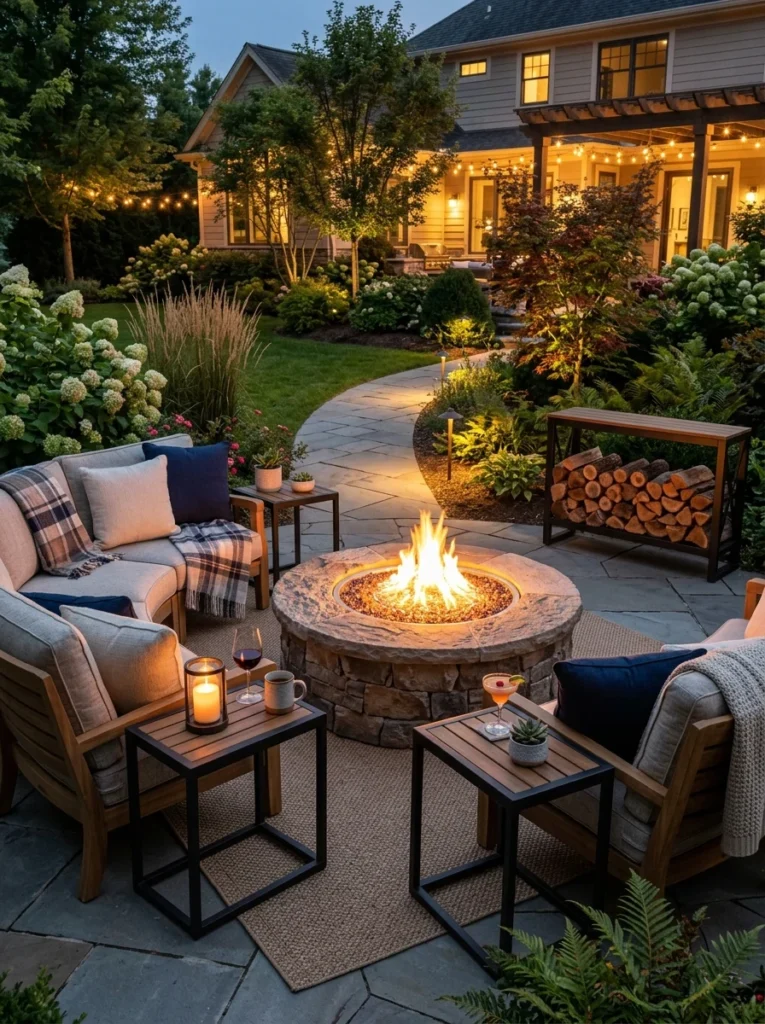
A few practical additions round out a well-designed fire pit area: a small side table or built-in ledge for drinks and food, weatherproof storage for firewood that keeps it dry and easily accessible, and lighting along the pathway leading to the fire pit area for safe nighttime navigation. These details don’t affect the fire pit’s core function but meaningfully improve how comfortable and practical the space is to use regularly, especially after dark.
Plan for households with young children or pets
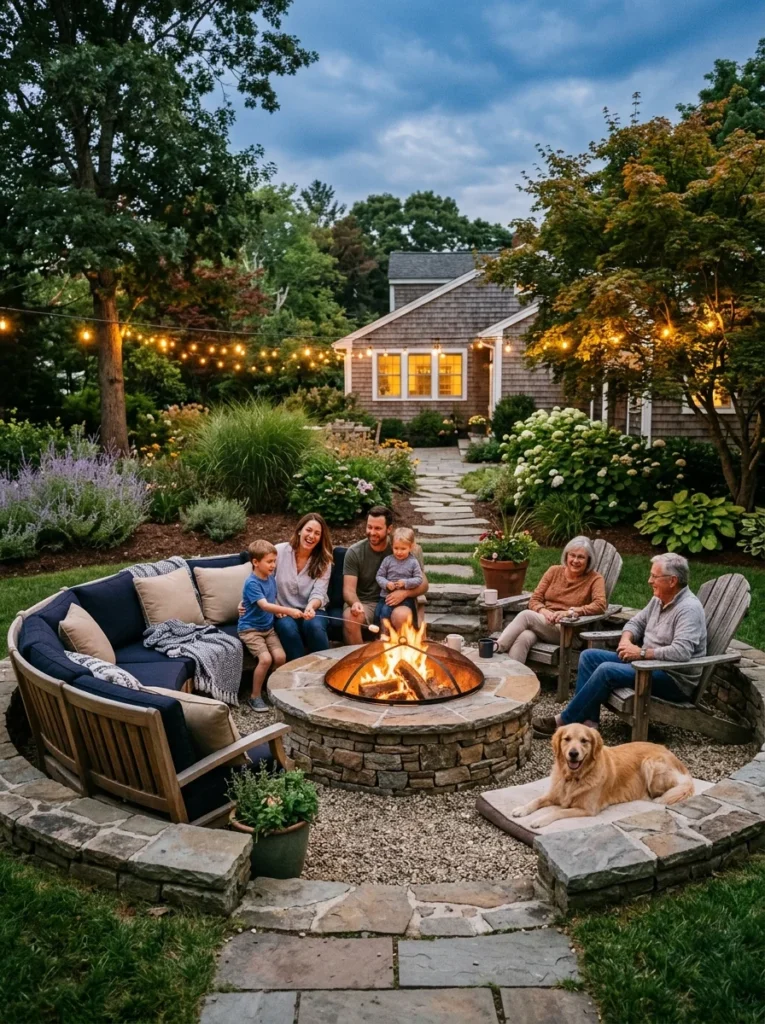
If your household includes young kids or pets, a few additional precautions are worth building into the design from the start. A low, decorative border or fence around the fire pit area creates a physical boundary that discourages a young child or excitable pet from getting too close during use, without necessarily looking obviously like a safety barrier. Establishing and consistently enforcing a clear household rule, no running near the fire pit, always supervised when it’s lit, matters just as much as any physical design choice, since even a well-designed space can’t fully prevent an accident if supervision lapses.
How far should a fire pit be from my house?
General safety guidance suggests a minimum of ten feet from any structure, though exact requirements vary by local fire code, so checking your specific municipality’s regulations is important before finalizing placement.
Can I put a fire pit on a wood deck?
Not directly on the deck surface itself, since this poses a genuine fire and scorch risk. A fire-resistant pad specifically rated for this purpose, combined with proper clearance from the deck’s edge, is necessary if you want a fire feature on or very near a wood deck.
Is a gas fire pit safer than a wood-burning one?
Gas fire pits generally involve less ember risk since they don’t produce the same flying sparks a wood fire can, and they can be extinguished instantly. Wood-burning fire pits can be made reasonably safe with a spark screen, proper clearance, and active supervision, but they do require more ongoing management.
Do I need a permit for a backyard fire pit?
This depends on your specific location and whether the fire pit is portable or a permanent, built-in structure. Permanent installations are more likely to require a permit, and it’s worth checking with your local building or fire department before starting construction.
Should I choose propane or natural gas for a gas fire pit?
Propane offers more flexibility since it doesn’t require a fixed gas line, making it easier to relocate the fire pit later, while natural gas offers continuous fuel without tank monitoring but requires professional installation and permanently fixes the fire pit’s location. The right choice depends on how confident you are in your desired placement and how much ongoing maintenance you’re willing to manage.
A fire pit can be one of the most-used features in a backyard, but only if the placement, clearance, and safety details are handled properly from the start. Choosing the right type for your needs, respecting clearance requirements, using a proper non-combustible base, and keeping basic fire safety equipment close at hand all matter more than the specific style or material you ultimately choose.
Our current fire pit sits on a proper paver base, well clear of the deck and any overhanging branches, with a hose reachable within seconds if it were ever needed. It’s been the site of countless evenings since, and every one of them has been genuinely relaxing precisely because the safety groundwork was handled properly before the first fire was ever lit. If you’re planning your own, start with placement and clearance before you fall in love with a specific style; the safety decisions are the ones that are hardest, and most important, to get right the first time.