

A couple of years ago I tried to declutter our entire house in a single Saturday, starting with an ambitious plan to sort through every closet, drawer, and shelf in one continuous sweep. By early afternoon I had five different piles spread across three rooms, none of them actually finished, and by evening I’d essentially given up and shoved everything back into place just to have a walkable house again. The next time I attempted a real decluttering project, I broke it down room by room instead, with a realistic plan for what could actually get done in a single weekend, and that structural change made all the difference between genuine progress and the overwhelmed non-starter my first attempt had been.
A full home declutter doesn’t have to take weeks if you approach it with the right structure. Here’s a genuinely realistic room-by-room plan you can complete over a single focused weekend, provided you follow the process rather than trying to tackle everything simultaneously.

Start with a simple three-category sorting system
Before touching any specific room, decide on a simple system you’ll use throughout the entire weekend: keep, donate or sell, and discard. Having physical bins, bags, or clearly marked spaces for each category before you start prevents the common problem of creating vague piles that still need to be sorted again later, which is exactly what undermined my own first, unstructured attempt.
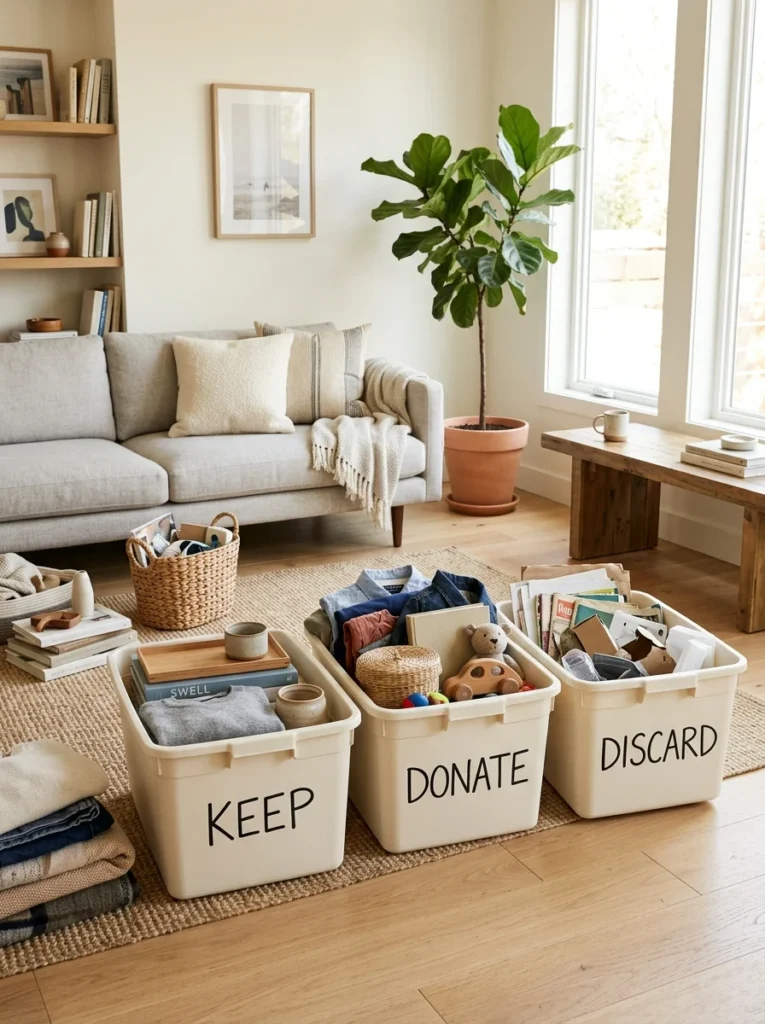
Begin with the easiest room first to build momentum
Starting with whichever room feels least overwhelming, often a bathroom or a smaller guest room, rather than the most cluttered space in the house, builds momentum and a genuine sense of progress early in the process. Completing one entire room, even a small one, gives you a tangible result to point to and helps sustain motivation as you move toward the more challenging spaces later in the weekend.
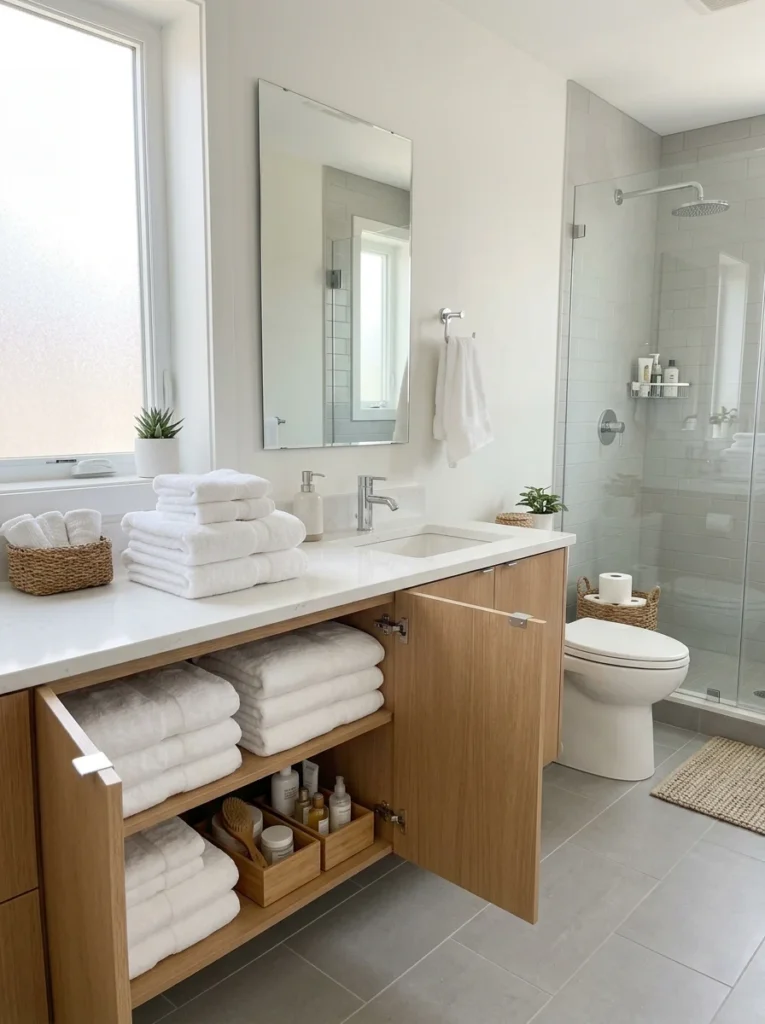
Tackle the bathroom: expired products and duplicate items
A bathroom declutter typically moves quickly since much of what accumulates there has an obvious answer, expired medications and skincare products, duplicate half-used toiletries, and old towels or accessories that have seen better days. Checking expiration dates on anything in a medicine cabinet and discarding expired items immediately, rather than second-guessing whether they might still be usable, keeps this room’s declutter genuinely quick.

Move to the closet: apply a genuine wear-based test
For clothing, a useful and honest test is considering whether you’ve actually worn a specific item in the past year, excluding genuinely seasonal or special-occasion pieces, and being willing to let go of anything that hasn’t seen actual use in that timeframe, regardless of how much you once liked it or how much it originally cost. This wear-based approach tends to cut through sentimental attachment more effectively than simply asking whether you like an item, since liking something in theory and actually wearing it are often two very different things.

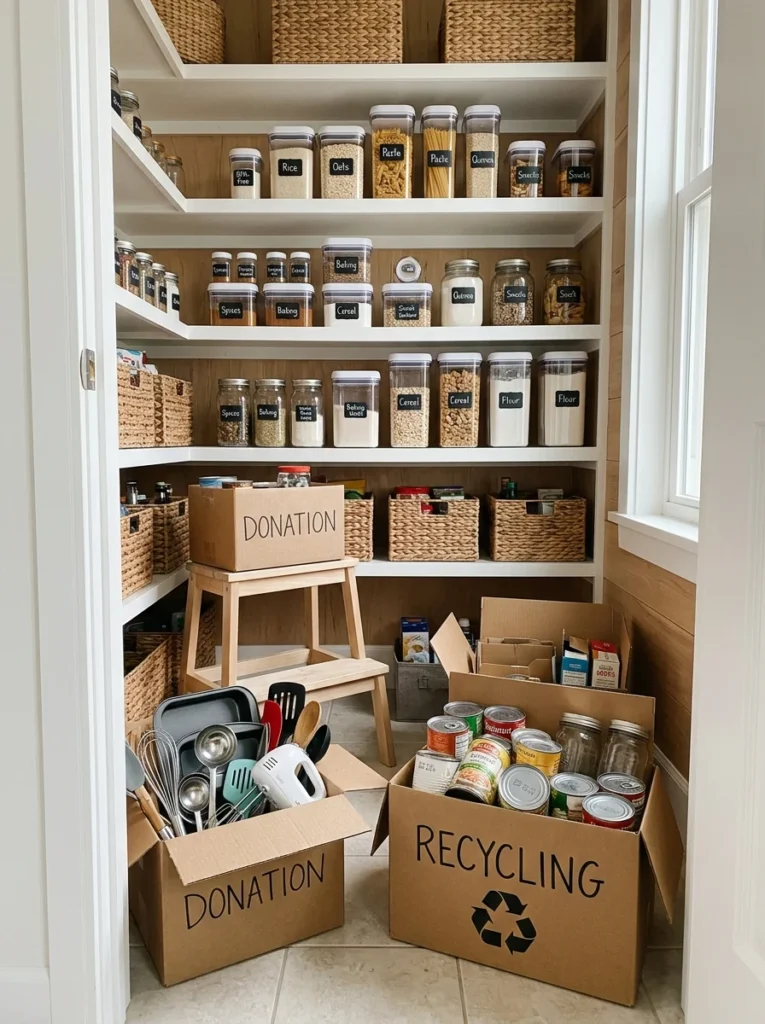
Address the kitchen: duplicate gadgets and expired pantry items
Kitchens accumulate duplicate gadgets, that second can opener, several nearly identical mixing bowls, alongside expired pantry items and spices that have long since lost their potency. Checking expiration dates methodically through the pantry, and being honest about which specialty gadgets have genuinely been used in the past year versus which seemed like a good idea at purchase but have sat untouched since, addresses two of the biggest clutter sources in this specific room.
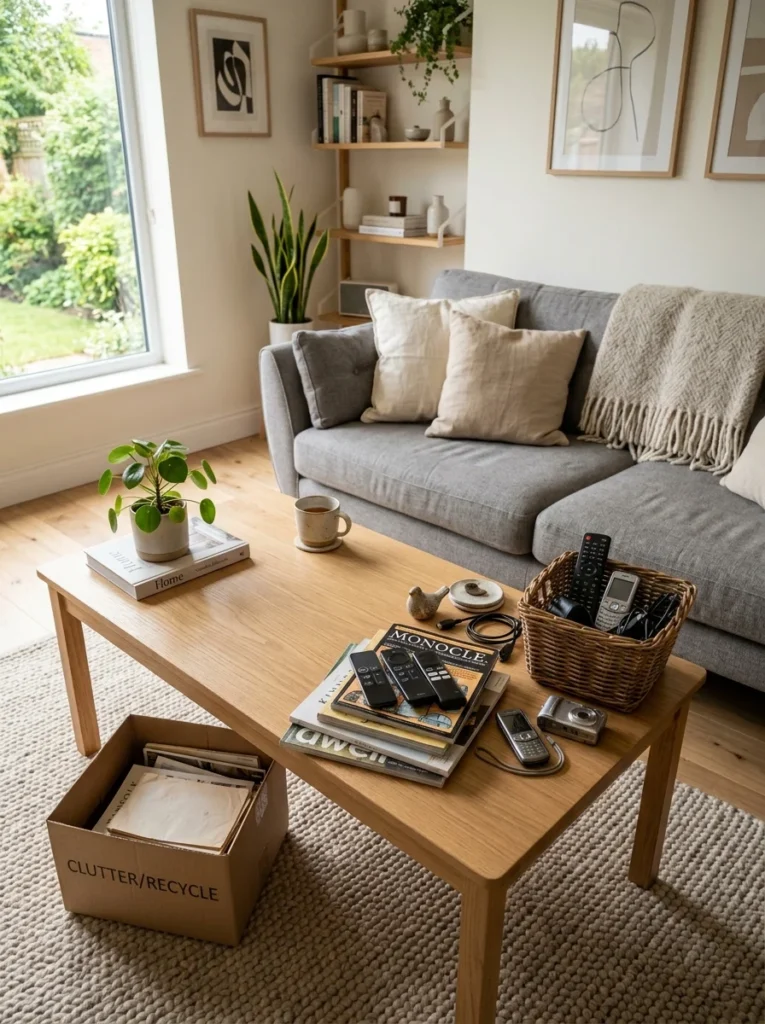
Work through the living room: media, decor, and surface clutter
Living rooms often accumulate a mix of media, outdated cables, old DVDs or games no longer used, alongside decorative items that have simply multiplied over time without any of them being removed. Evaluating decor specifically by asking whether each piece still genuinely fits your current taste and the room’s overall look, rather than keeping items purely out of habit, helps trim this category down to what actually adds value to the space.
Handle the bedroom: nightstands, under-bed storage, and dressers
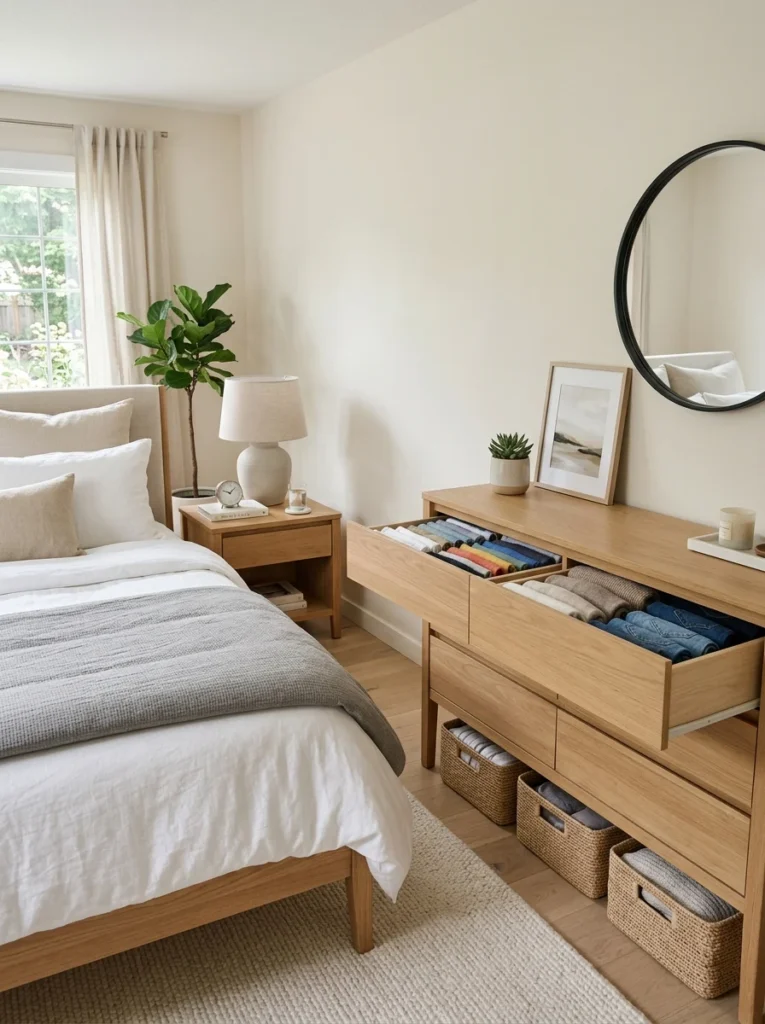
Bedrooms often hide a surprising amount of clutter in nightstands and under-bed storage specifically, since these spots are easy to use as a catch-all for items without a clear home elsewhere. Going through dresser drawers with the same wear-based test applied to the closet, and clearing nightstands down to only what’s genuinely used regularly, addresses the bedroom’s most common clutter accumulation points.
Save paperwork and sentimental items for last
Paperwork and sentimental items tend to be the most emotionally and mentally taxing categories to sort through, since they require more decision-making and can trigger genuine emotional responses that other categories don’t. Saving these for the end of the weekend, once you have momentum and experience from the other rooms behind you, tends to work better than starting with these harder categories while you’re still building your decluttering rhythm.

Set a realistic time limit per room rather than an open-ended session
Assigning a specific, realistic time block to each room, rather than working until you feel finished with no time constraint at all, keeps the overall weekend project on track and prevents any single room from consuming so much time that later rooms get rushed or skipped entirely. A timer can help maintain this pacing, especially for rooms where you know you’re prone to getting distracted by sentimental detours.
Deal with the donate, sell, and discard piles immediately after each room
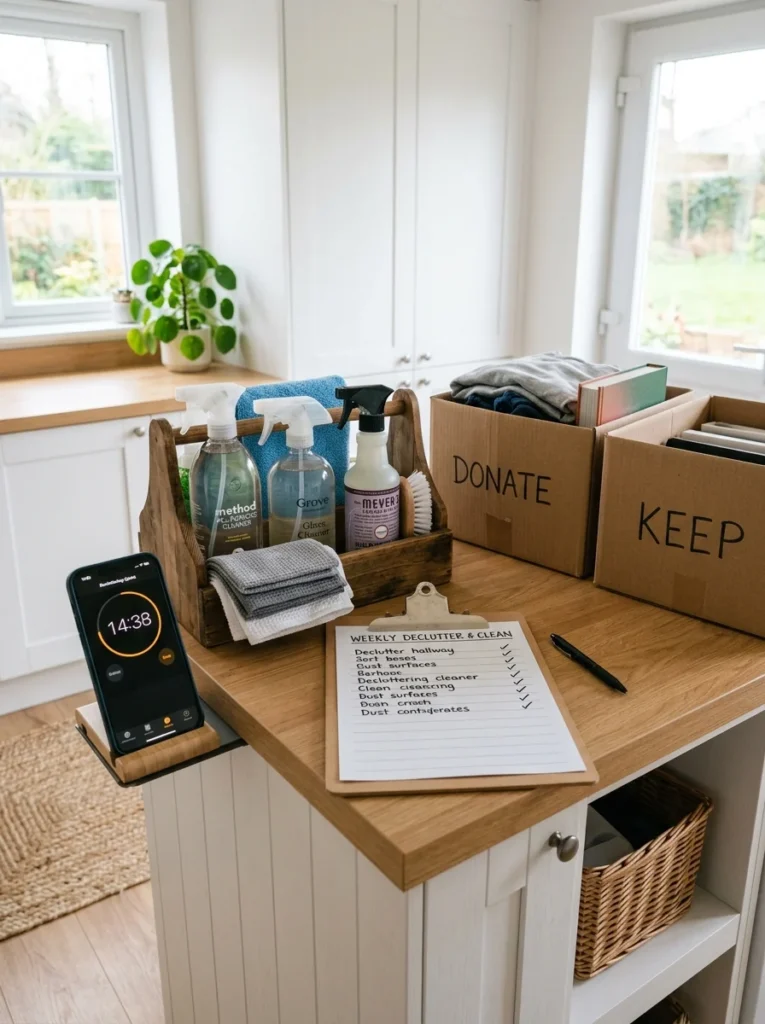
Items sorted into the donate or discard categories should leave the house as soon as reasonably possible, ideally the same weekend, rather than sitting in bags or boxes indefinitely, since a pile of donation bags sitting in a garage for months provides none of the actual decluttering benefit and can become its own source of clutter. Scheduling a donation drop-off or a specific trash day as part of your weekend plan follows through on the sorting work you’ve already done.

Resist the urge to buy organizing products before you’ve decluttered
It’s tempting to start a decluttering project by purchasing bins, baskets, and organizing systems, but buying these before you’ve actually reduced what you own often results in organizing products sized and purchased for a volume of belongings you’re about to significantly reduce. Decluttering first, then assessing what genuine organizing needs remain afterward, is a more effective and cost-efficient sequence.

Involve the whole household in age-appropriate ways
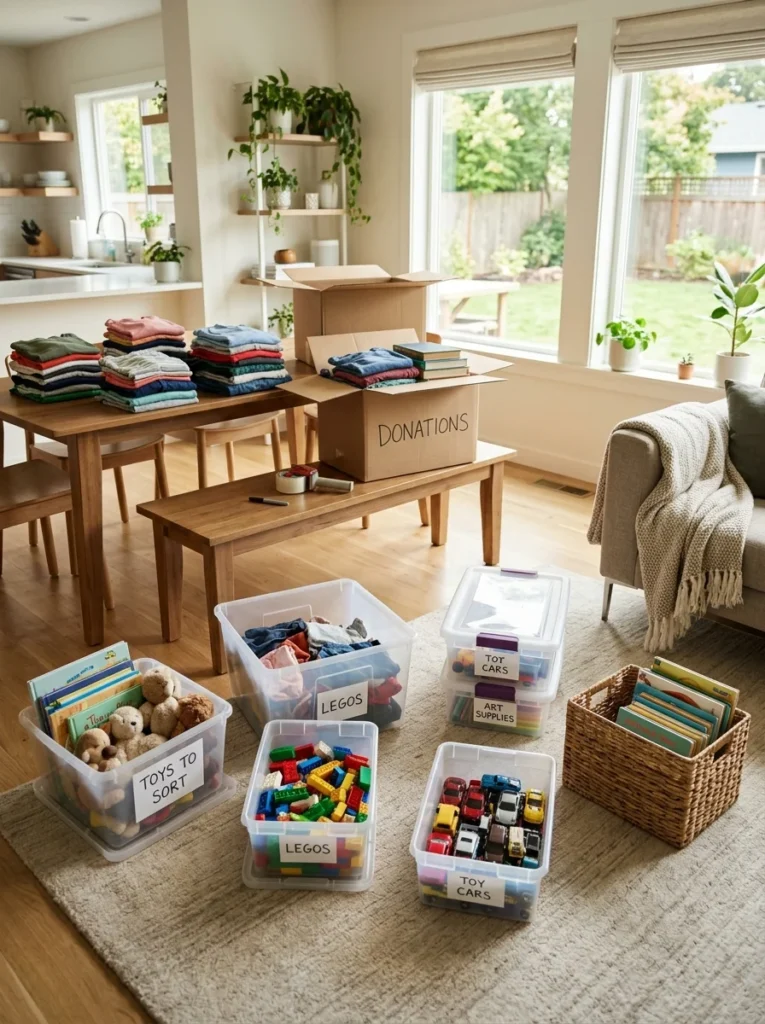
A weekend decluttering project moves faster and creates more household-wide buy-in when everyone participates in some capacity, children sorting their own toys with guidance, a partner handling their own closet and personal items, rather than one person attempting the entire house alone. Assigning specific rooms or categories to different household members, based on whose belongings actually live there, distributes both the workload and the decision-making responsibility more fairly across the whole weekend.
Take before and after photos to maintain motivation
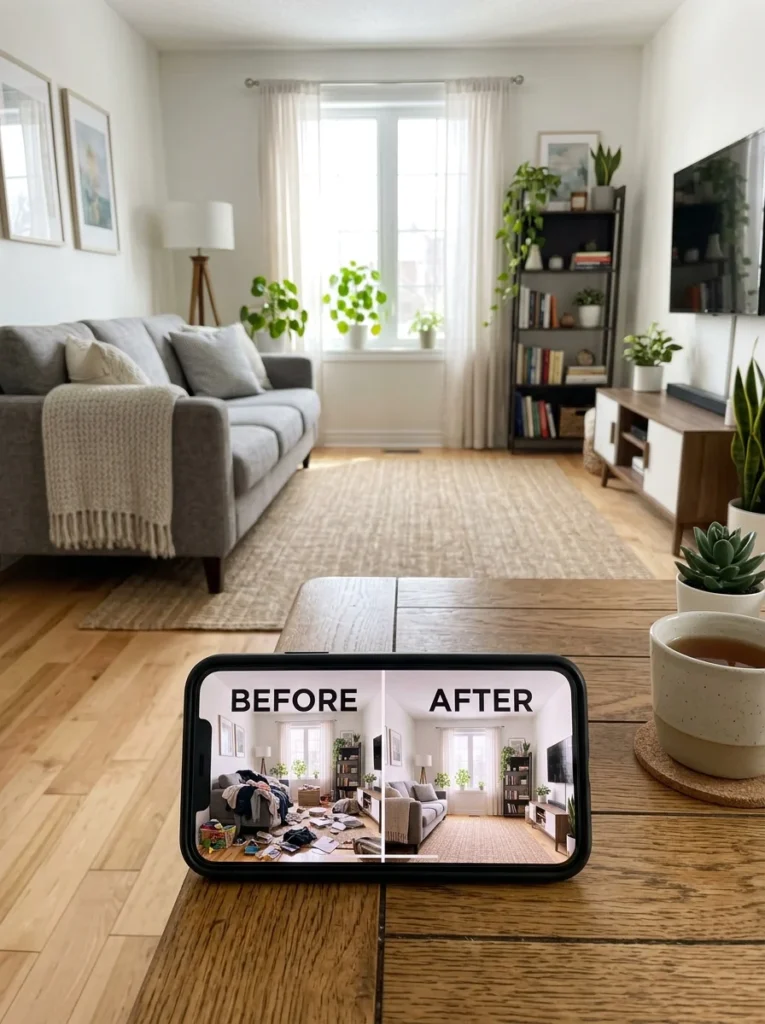
Photographing each room before starting and again once finished provides a genuinely motivating visual record of the progress made, which can help sustain energy through the more tedious middle stretch of a weekend-long project when the initial enthusiasm has faded but the finish line still feels distant. These photos are also useful later as a reference point if a room starts sliding back toward clutter, giving you a clear before-and-after comparison to aim back toward.
Build in short breaks to avoid decision fatigue
Decluttering involves a genuinely high volume of small decisions in a short period, and decision fatigue is a real phenomenon that can lead to increasingly careless choices, either keeping too much out of exhaustion or discarding things too hastily, as a session wears on. Building in short, scheduled breaks between rooms, rather than pushing through the entire weekend without pause, helps maintain the quality of decision-making throughout the project rather than just its speed.

Plan a simple maintenance routine to protect your weekend’s progress
A weekend of genuine decluttering progress can slide back into clutter within a matter of months without some ongoing maintenance habit in place afterward. A brief, regular reset, ten or fifteen minutes weekly spent returning stray items to their proper homes and catching new clutter before it accumulates, protects the investment of time made during the initial decluttering weekend and prevents needing to repeat the same large-scale project again in the near future.

Can I really declutter an entire house in one weekend?
For an average home, a focused weekend with realistic time limits per room and a simple three-category sorting system can accomplish a genuine, meaningful declutter, though a home with significant accumulated clutter over many years may benefit from spreading the process across two weekends rather than forcing it into one.
What room should I declutter first?
Starting with the easiest, least overwhelming room, often a bathroom or small guest room, builds momentum and provides an early, tangible sense of progress before moving on to more challenging spaces like closets or sentimental item storage.
Should I buy storage bins before decluttering?
Generally no, purchasing organizing products before decluttering often results in bins and systems sized for a volume of belongings you’re about to significantly reduce. Decluttering first, then assessing genuine organizing needs afterward, is a more effective sequence.
What should I do with items I’ve decided to donate?
Schedule a donation drop-off or pickup as part of your decluttering weekend itself, rather than letting bags sit indefinitely, since undelivered donation piles provide none of the actual benefit of the decluttering work already completed.
How do I keep a decluttered home from getting cluttered again?
A brief, regular maintenance habit, ten or fifteen minutes weekly spent returning stray items to their proper homes, protects the progress made during a larger decluttering weekend and prevents the same large-scale project from becoming necessary again within just a few months.
A full home declutter is genuinely achievable in a single weekend when approached with a clear structure, a simple sorting system, realistic time limits per room, and a logical order that saves the hardest emotional categories for last. The difference between a productive weekend and an overwhelmed, abandoned attempt usually comes down to this structure rather than motivation or effort alone.
My second attempt at this project, room by room with actual time limits and a clear sorting system, accomplished in one weekend what my first, unstructured attempt had failed to achieve even with considerably more scattered effort spread across that entire day. If you’re planning your own decluttering weekend, resist the urge to tackle everything at once the way I originally did; a clear room-by-room plan will get you considerably further than an ambitious but unstructured sweep through the whole house.