
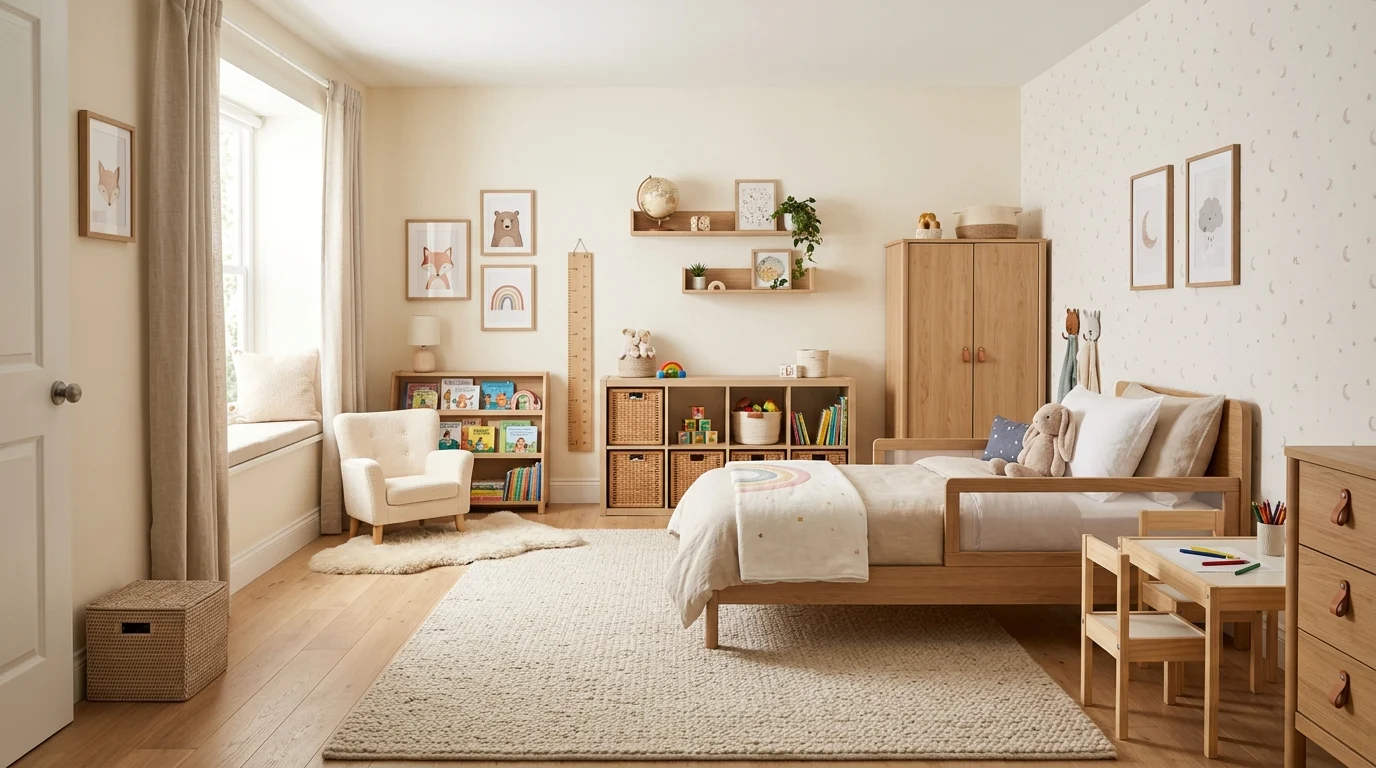
When our daughter started attempting to climb out of her crib, I initially panicked and rushed to transition her to a toddler bed within a single weekend, changing nearly everything in her room at once, new bed, rearranged furniture, different storage, all in one overwhelming push. The sudden, total change seemed to genuinely unsettle her more than the crib-climbing issue itself had, and it took a few weeks of adjustment before she settled back into a comfortable routine in her transformed room. The next time we went through a similar transition with our second child, spacing the changes out gradually rather than overhauling everything simultaneously, made an enormous difference in how smoothly it actually went.
Transitioning a nursery into a toddler room works best as a gradual process rather than a single overwhelming overhaul, both for practical furniture and layout reasons and for how a young child actually experiences and adapts to change. Here’s how to approach it thoughtfully.
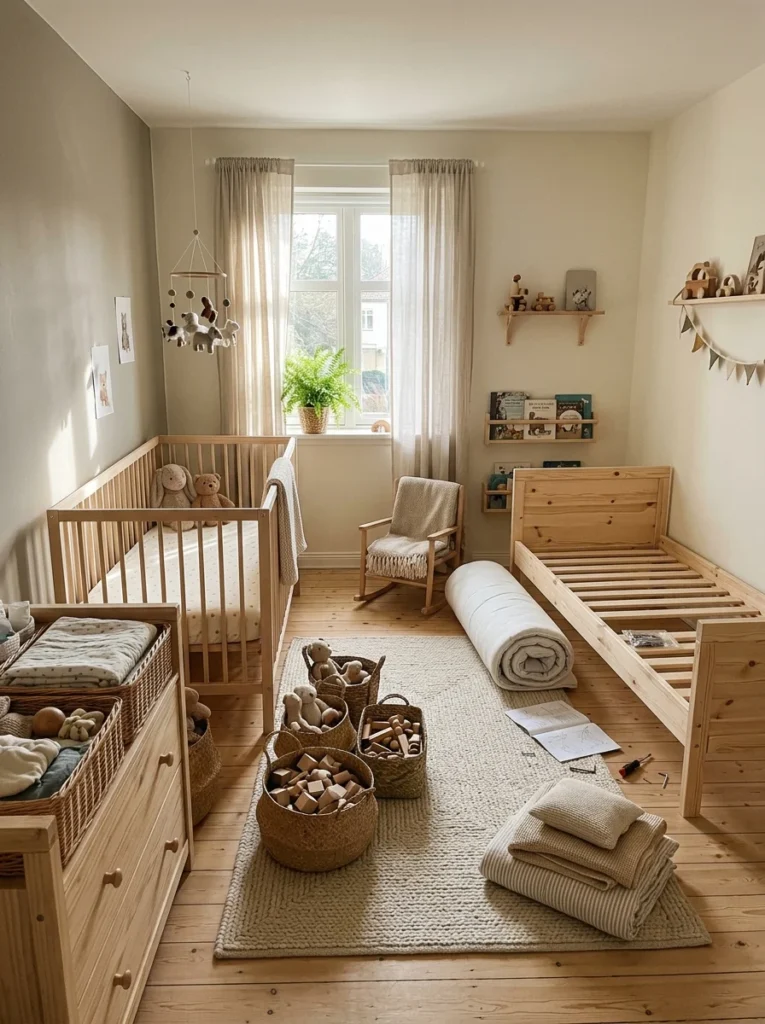
Time the crib-to-bed transition around genuine readiness, not just age
Rather than transitioning purely based on a specific age milestone, genuine signs of readiness, a child attempting to climb out of the crib, expressing clear interest in a bed, or simply outgrowing the crib’s size limits, are generally better indicators of when to make this specific change than a predetermined age alone. Transitioning too early, before a child is genuinely ready, can sometimes create more disruption than waiting for clearer signs of actual readiness.
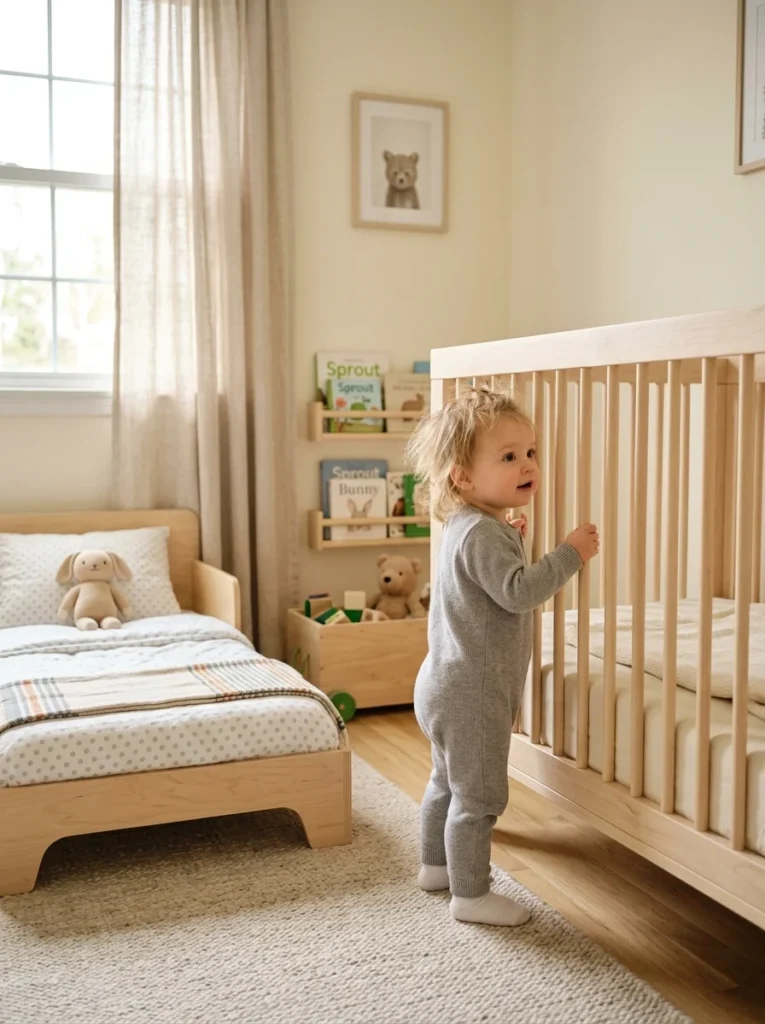
Choose a toddler bed or a converted crib to ease the physical transition
If your crib converts into a toddler bed, using that conversion keeps the same general bed location, mattress, and immediate surroundings familiar to your child, reducing the number of simultaneous changes involved in the transition. A standalone toddler bed, positioned in a similar spot within the room to where the crib previously stood, offers a similar benefit even without a directly converting crib.
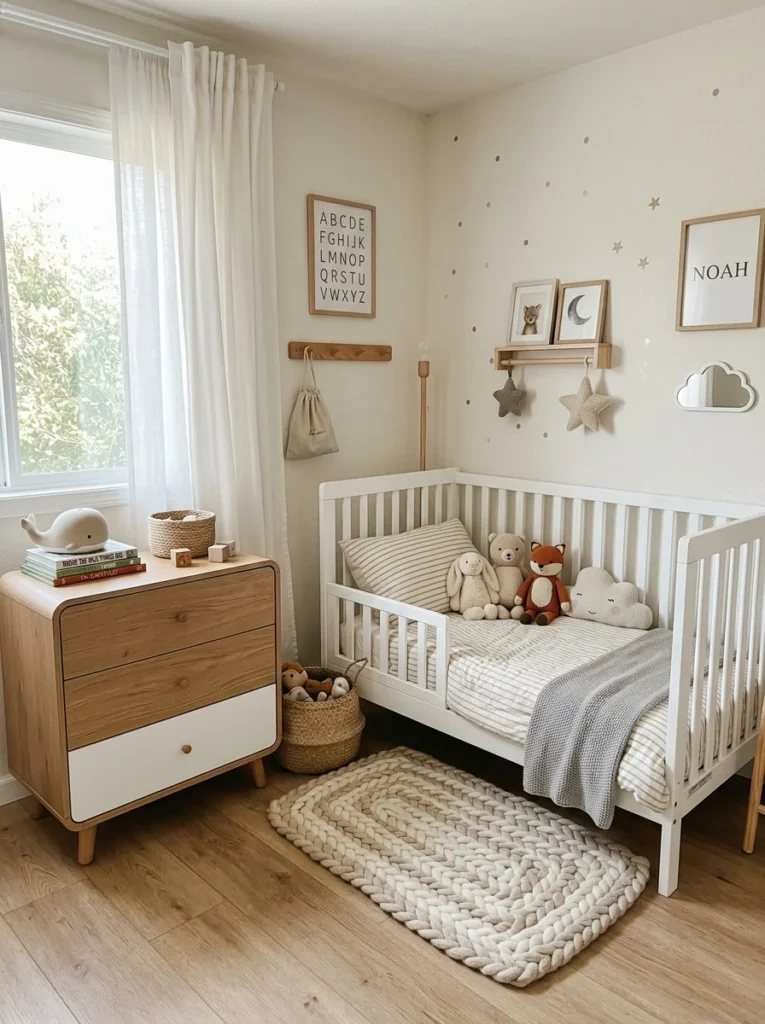
Introduce bed rails if transitioning to a full-sized or twin bed
If skipping a toddler-specific bed in favor of moving directly to a twin or full-sized bed, installing bed rails helps prevent falls during the adjustment period as your child gets used to sleeping without the crib’s contained sides. These rails can be removed later once your child has clearly adapted to the new, more open sleep space and demonstrated consistent safety within it.
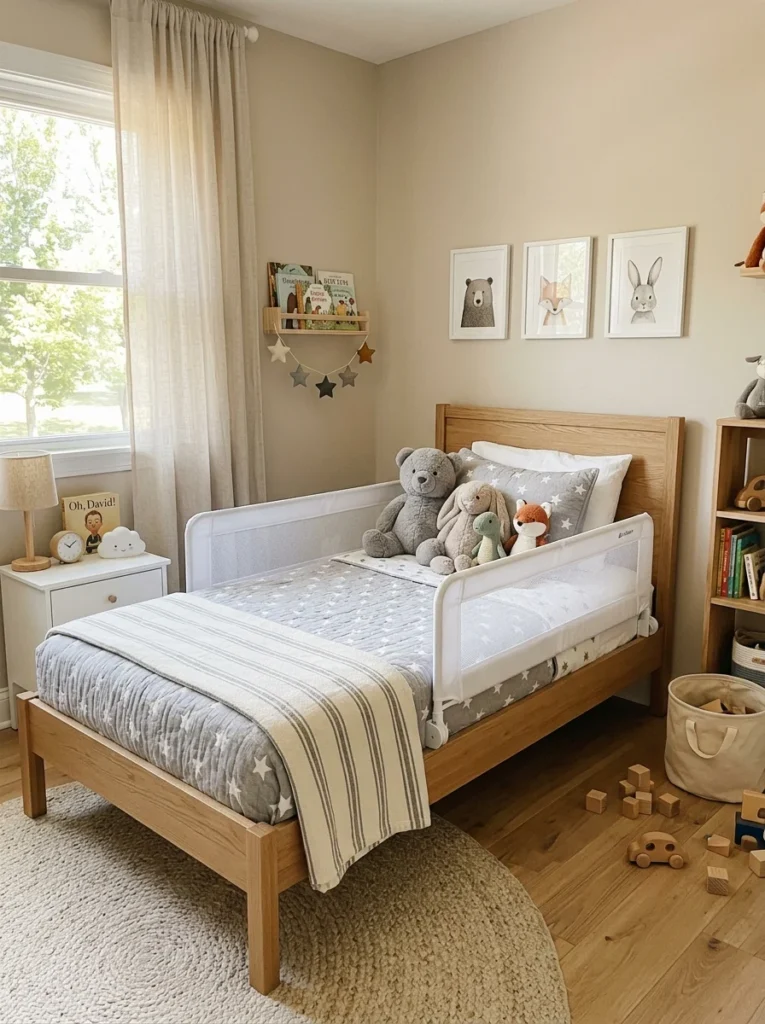
Gradually lower and then remove crib-specific safety features
Rather than removing every crib-specific safety element all at once, gradually adjusting the space, first lowering the crib mattress if not yet at its lowest setting, then eventually transitioning to the toddler bed itself once other signs of readiness are present, spreads the physical safety adjustments across a more manageable timeline rather than one single dramatic change.
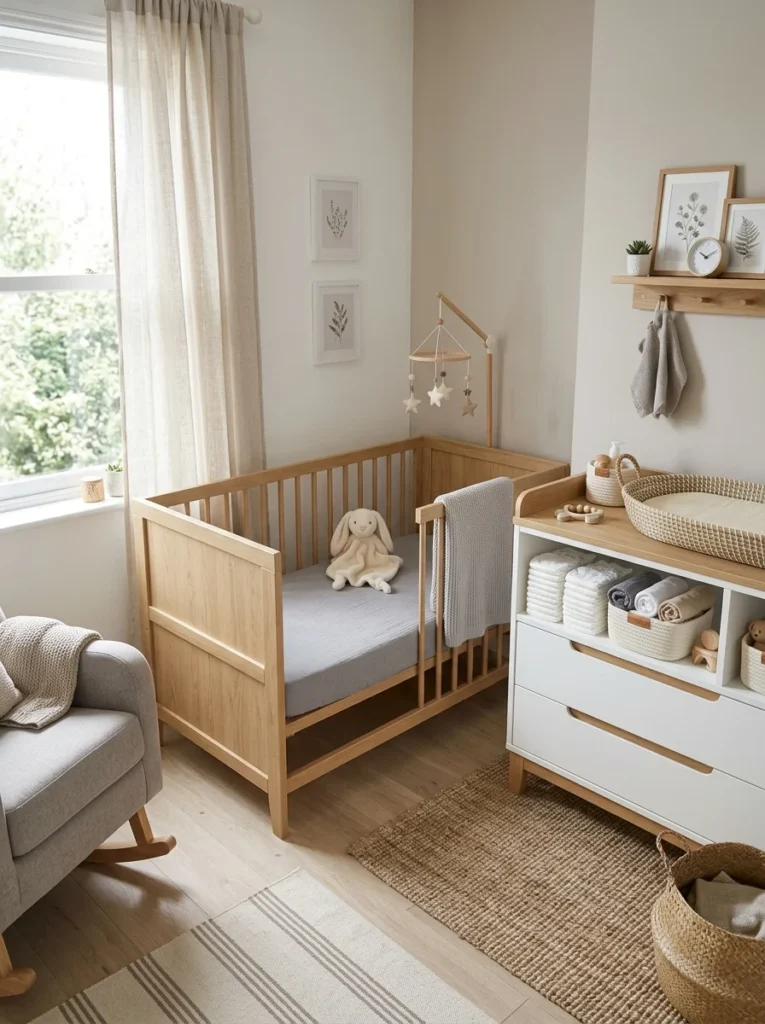
Reorganize storage to reflect a toddler’s growing independence
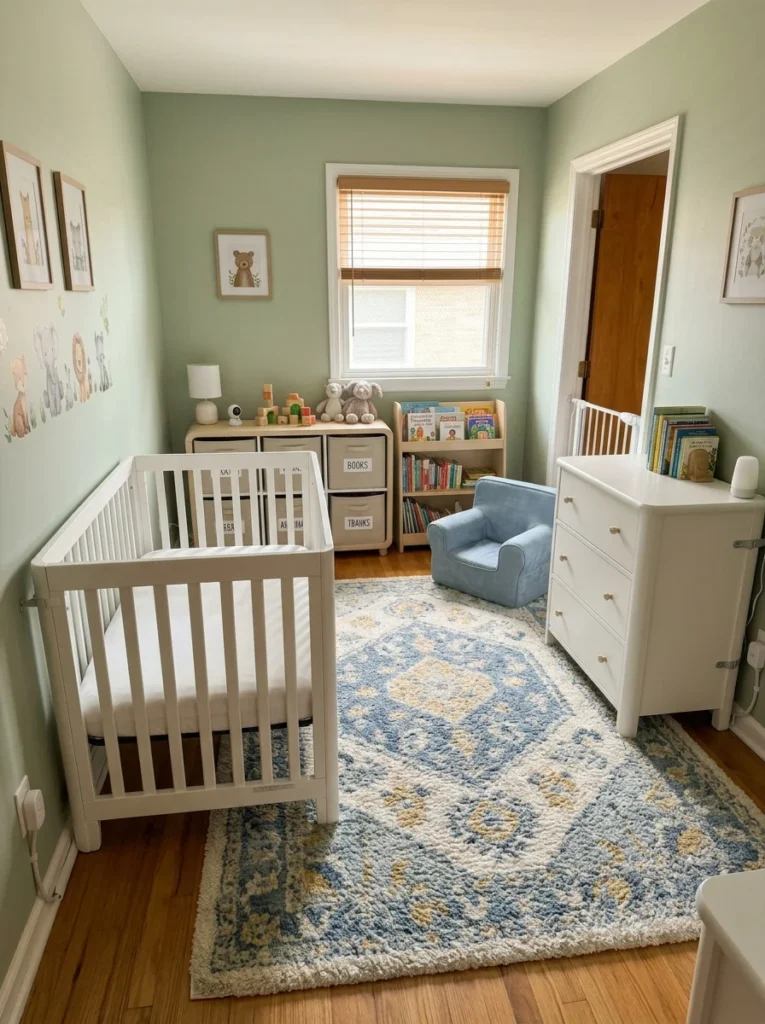
As part of the transition, lowering shelving and storage to a height your toddler can genuinely reach and use independently supports the same independence principles covered in broader discussions of toddler-appropriate room design, shifting the room’s storage philosophy from purely adult-managed newborn supplies toward a toddler’s own growing ability to access and manage some of their own belongings.
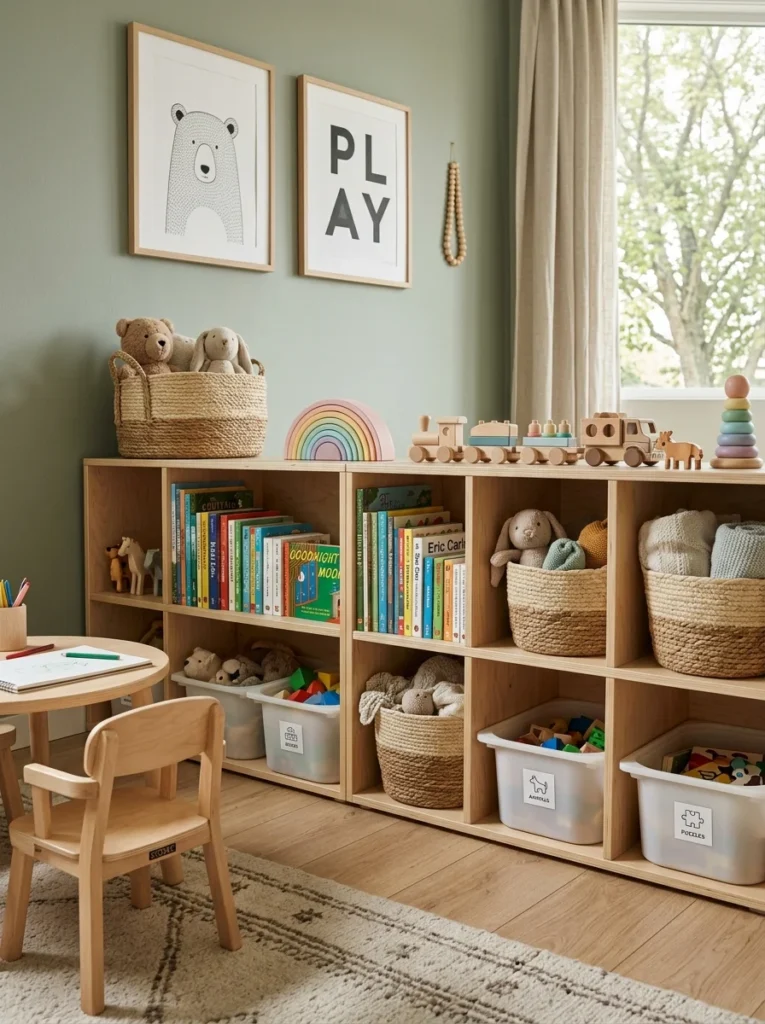
Update decor gradually rather than completely redoing the room’s theme
If the nursery’s original decor was heavily infant-specific, gradually introducing toddler-appropriate elements, a few new books at their level, some artwork reflecting their emerging interests, rather than completely stripping and redecorating the entire room at once, allows the space to evolve naturally alongside your child’s developing personality rather than presenting them with an entirely unfamiliar room overnight.
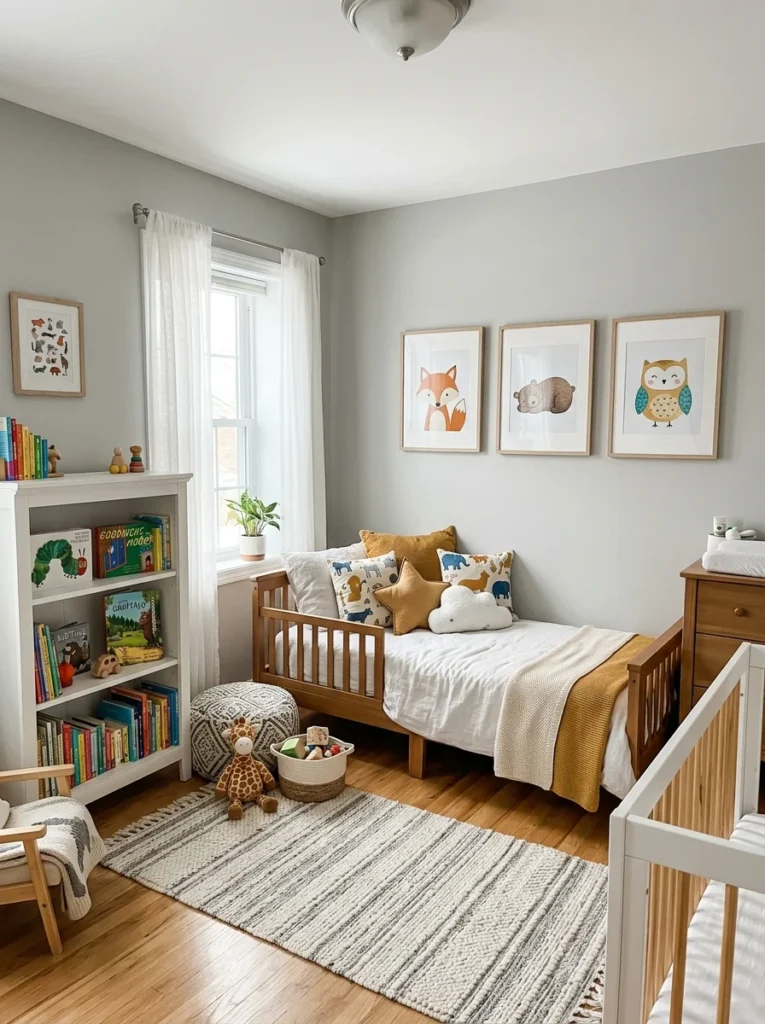
Involve your toddler in some of the transition decisions
Depending on your child’s age and ability to participate, involving them in some choices, picking new bedding, choosing where a favorite stuffed animal should live in the transformed room, can help the transition feel like something happening with them rather than simply to them, which may support an easier emotional adjustment to the changing space.
Maintain consistent routines even as the physical room changes
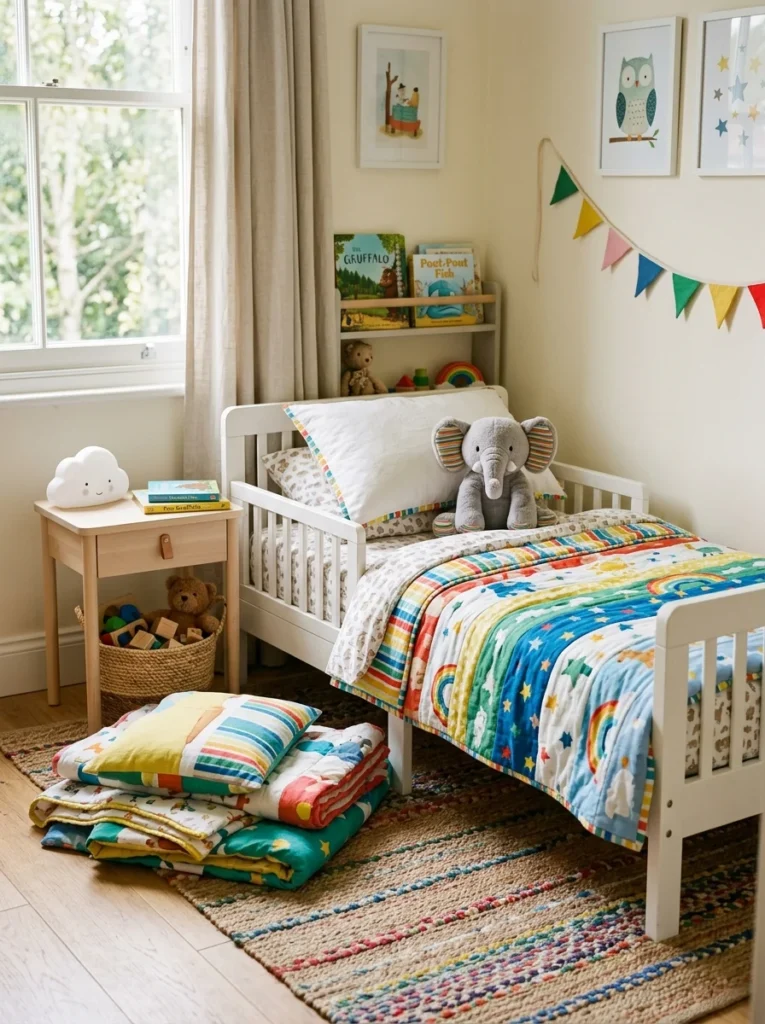
Keeping bedtime routines, the same book, the same general sequence of events before sleep, as consistent as possible during the physical transition helps provide a sense of continuity and predictability even while the room itself is changing, which can meaningfully ease the adjustment for a young child who relies heavily on routine and predictability generally.
Childproof the room again specifically for a toddler’s new mobility
A toddler transitioning out of a crib gains considerably more independent mobility within their room overnight and throughout the day than an infant contained within crib rails previously had, making a fresh childproofing pass, furniture anchoring, outlet covers, cord management, particularly important at this specific transition point rather than assuming the room’s previous safety setup remains fully adequate for a toddler’s new range of movement.
Plan for a period of adjustment and some regression
It’s genuinely common for a toddler to experience some temporary sleep disruption or regression during this kind of transition, getting out of bed repeatedly, resisting the new sleep arrangement initially, and anticipating this as a normal, temporary part of the adjustment rather than a sign that something has gone wrong helps manage expectations during what can otherwise feel like a frustrating few weeks of disrupted routines.
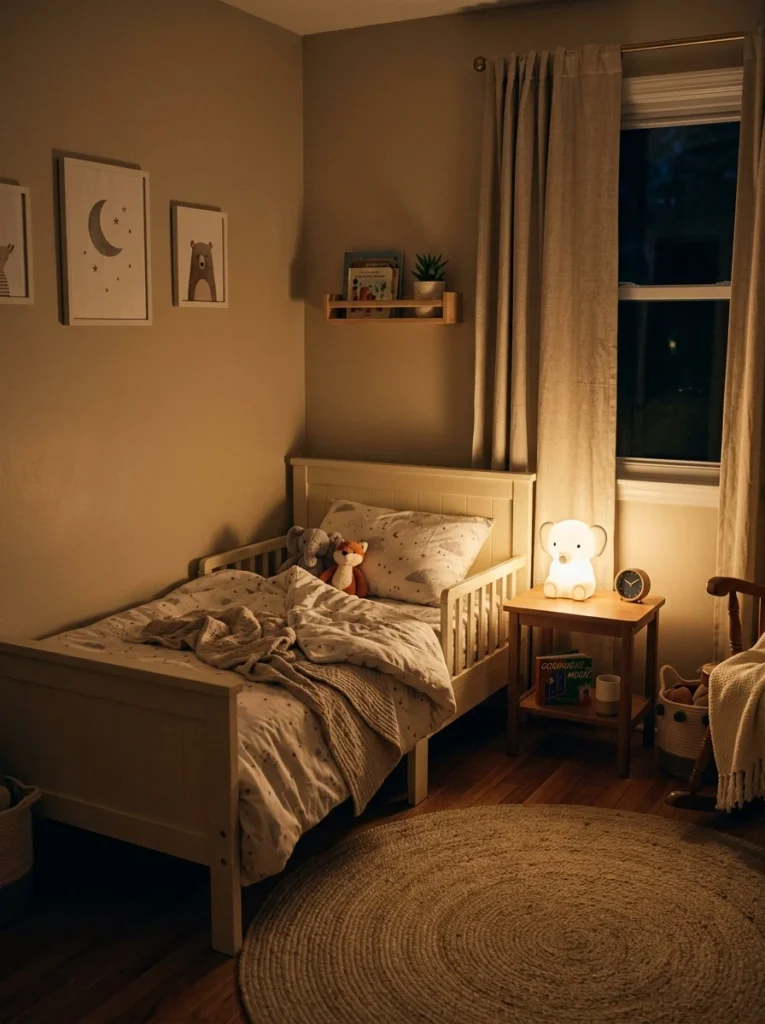
Introduce a nightlight or dim lighting option your toddler can eventually manage themselves
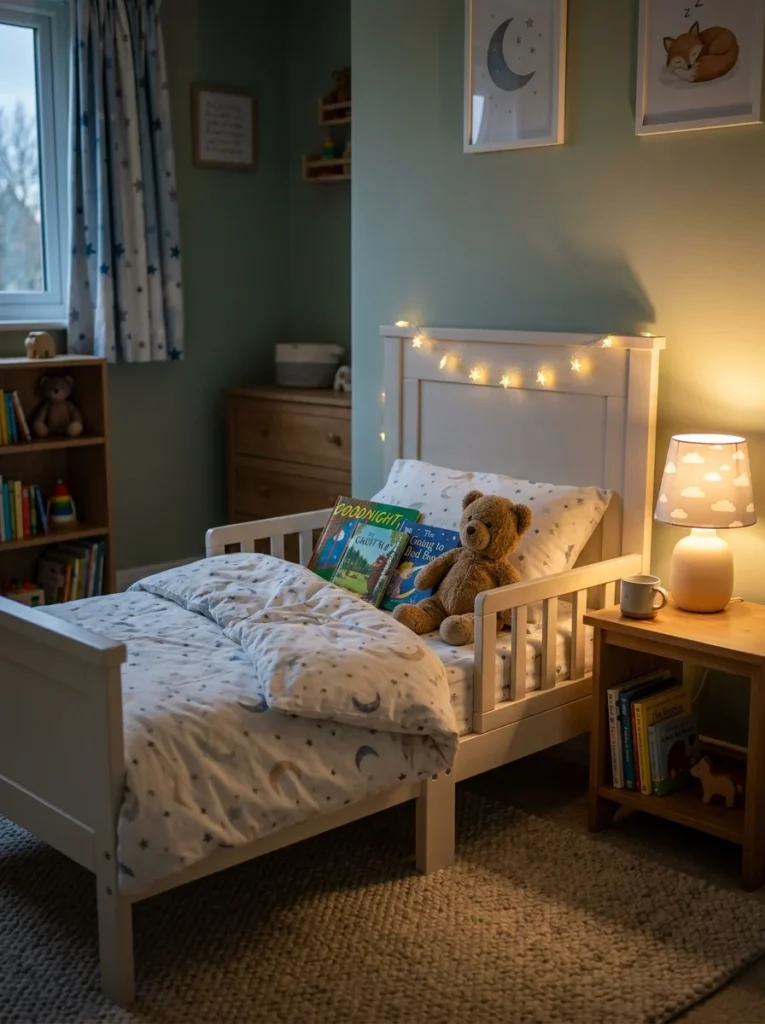
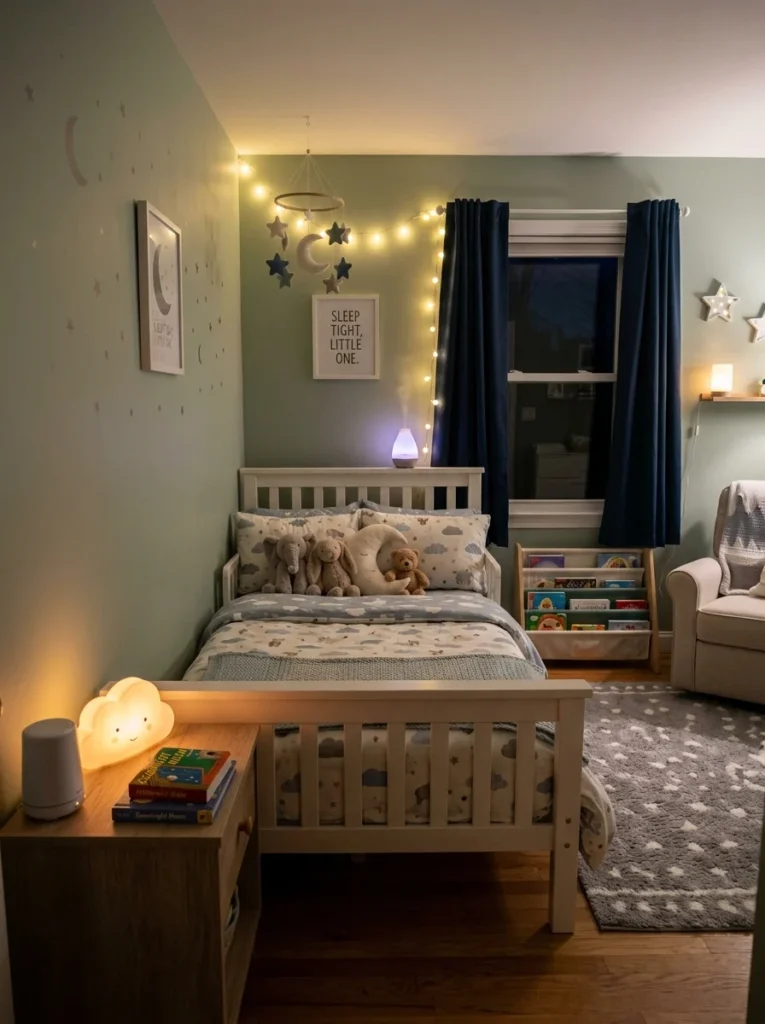
As part of supporting a toddler’s growing independence, introducing a simple nightlight or a lamp with an easily accessible switch, rather than relying solely on a light source only an adult can control, gives your child some agency over their own comfort during nighttime wakings, which can matter more once they’re no longer contained within a crib and may be getting in and out of bed independently.
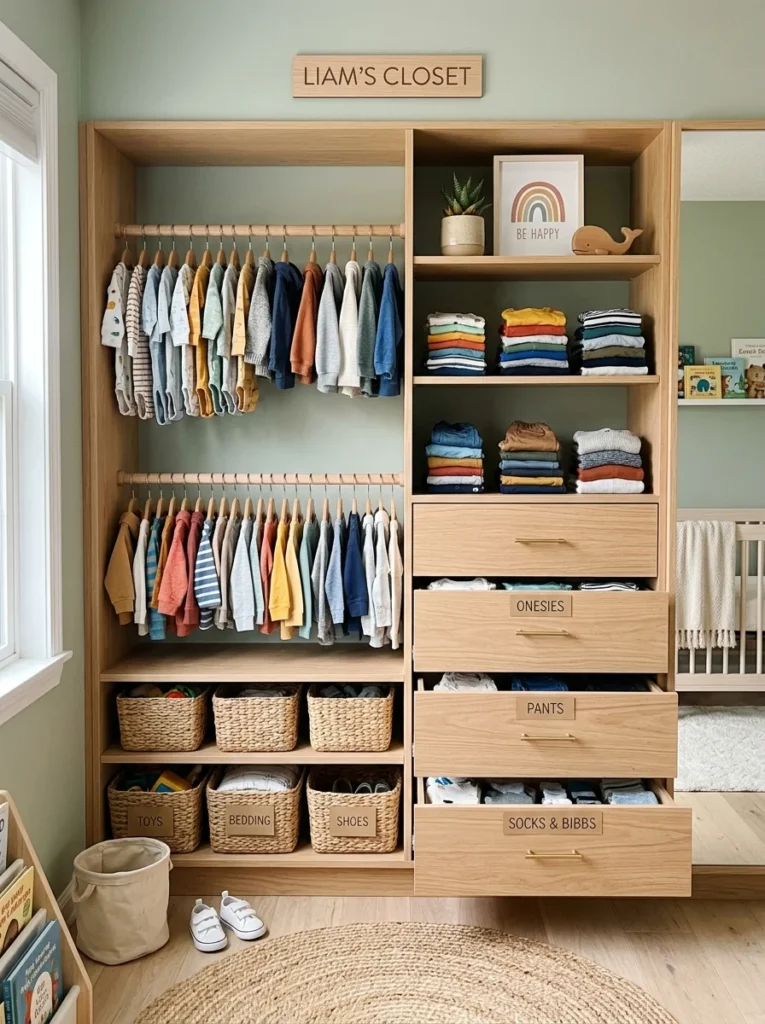
Reorganize the closet and clothing storage for a toddler’s changing wardrobe
A toddler’s wardrobe typically shifts from primarily onesies and simple infant clothing toward more varied, layered outfits, sometimes including items they’re beginning to have opinions about or even attempt to select themselves. Reorganizing closet and drawer storage to accommodate this shift, and lowering some of it to a height your toddler can begin to access with growing independence, supports both the practical wardrobe change and the broader independence-building theme running through this whole transition.
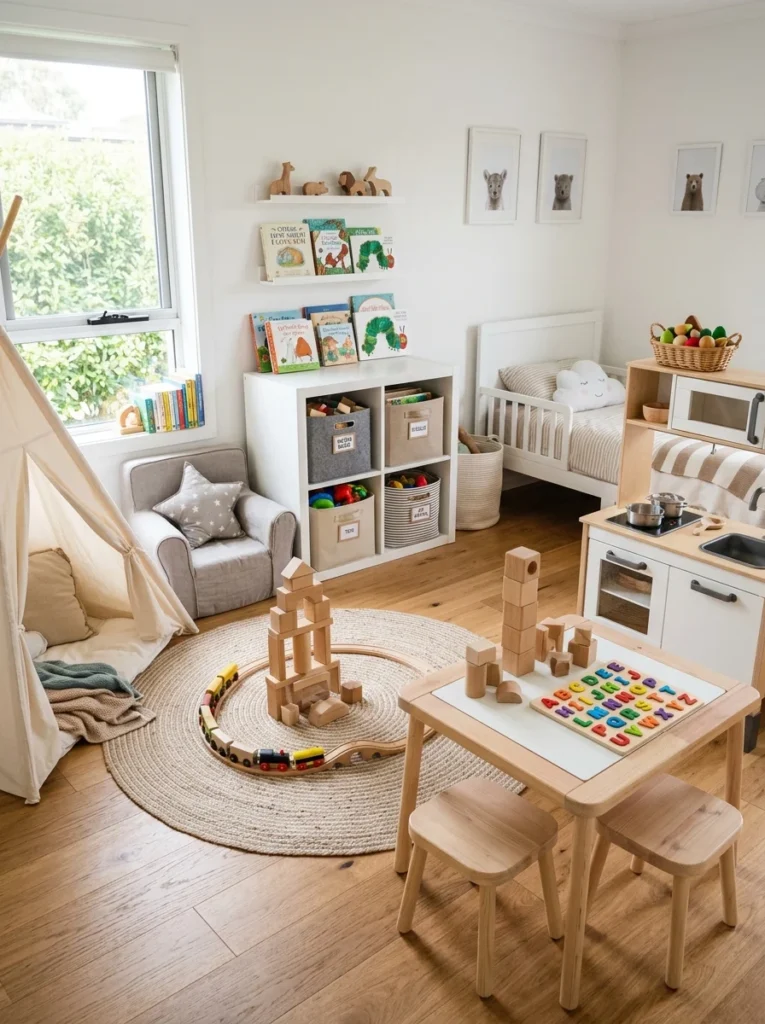
Address the transition to more toddler-appropriate toys and activities
As part of the broader room transition, gradually introducing toys and activities appropriate for your child’s growing toddler abilities, simple puzzles, pretend play items, more complex building toys, while rotating out purely infant-appropriate items that no longer match their developmental stage, keeps the room’s contents evolving alongside the child rather than remaining static from the earlier infant stage.
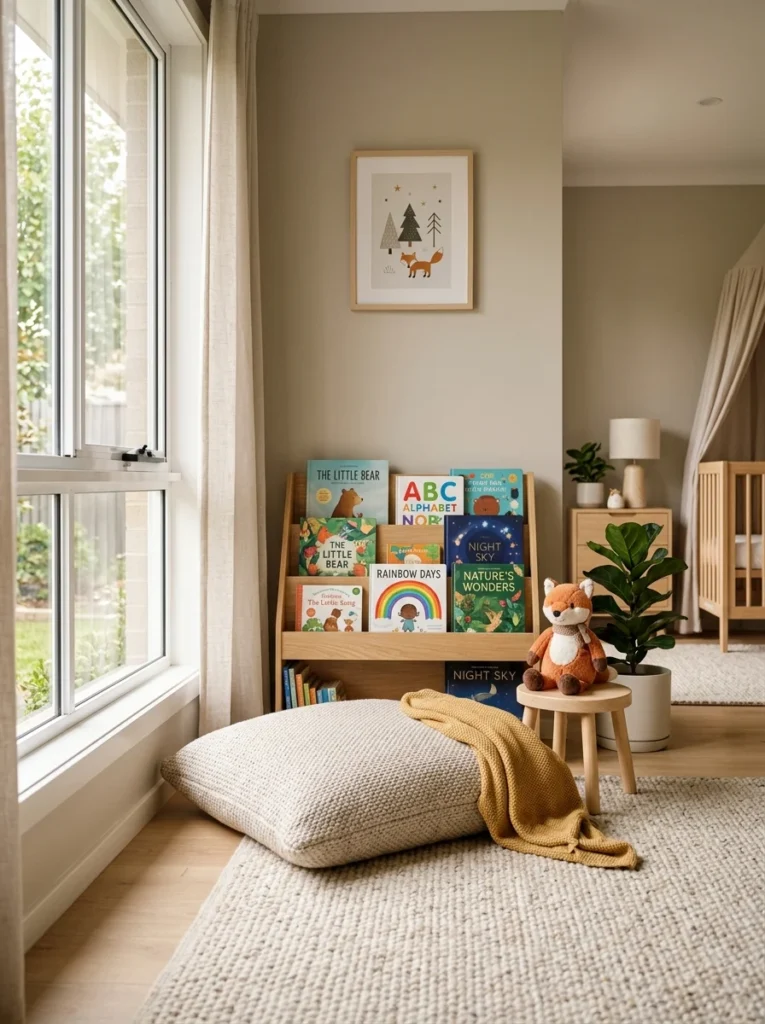
Consider whether a reading or quiet corner makes sense at this stage
If your toddler is beginning to show interest in books and independent quiet play, introducing a simple reading corner, a floor cushion, a low shelf of books displayed face-out, as part of the broader room transition supports this emerging interest and gives the transformed room a genuinely toddler-appropriate function that the original infant nursery didn’t need to accommodate.
At what age should I transition my child from a crib to a toddler bed?
There’s no strict universal age; genuine signs of readiness, attempting to climb out, clear interest in a bed, or outgrowing the crib’s size limits, are generally better indicators than a specific predetermined age alone.
Should I change everything in the nursery at once during the transition?
Generally no, a gradual approach, changing the bed first while keeping other elements familiar, then slowly updating storage and decor over subsequent weeks, tends to ease the adjustment more than one overwhelming, simultaneous overhaul of the entire room.
Do I need bed rails when transitioning to a bigger bed?
If moving directly to a twin or full-sized bed rather than a toddler-specific bed, bed rails help prevent falls during the adjustment period and can be removed later once your child has clearly adapted to sleeping safely in the more open space.
Is it normal for sleep to be disrupted during this transition?
Yes, some temporary sleep disruption or regression is a common, normal part of this kind of transition, and anticipating it as a temporary adjustment phase rather than a sign of a genuine problem helps manage expectations during the process.
Should I give my toddler control over their own nightlight?
Introducing a simple nightlight or lamp with an easily accessible switch can give a toddler some agency over their own comfort during nighttime wakings, which becomes more relevant once they’re no longer contained within a crib and may be getting in and out of bed on their own.
How should I reorganize closet storage for a toddler’s changing wardrobe?
Lowering some closet and drawer storage to a height your toddler can begin accessing independently supports both their shifting wardrobe needs and the broader theme of growing independence that typically accompanies this stage of the transition.
Is it worth adding a reading corner during this transition?
If your toddler is showing interest in books or independent quiet play, a simple reading corner with a floor cushion and a low, face-out book shelf can support this emerging interest and gives the transformed room a genuinely toddler-appropriate function.
Transitioning a nursery into a toddler room works best as a gradual process, timed around genuine signs of readiness, spread across several smaller changes rather than one overwhelming redesign, and supported by consistent routines throughout the adjustment period. This approach respects both the practical furniture considerations and a young child’s genuine need for some continuity amid change.
Our second child’s much more gradual transition, spaced out over several weeks rather than compressed into one single weekend, went noticeably more smoothly than our daughter’s abrupt overhaul had, reinforcing just how much the pacing of this specific change matters as much as the changes themselves. If you’re approaching this transition with your own toddler, resist the urge to redo everything at once; spacing the changes out, as tempting as it might be to just get it all done in one push, will likely serve both you and your child better in the long run, exactly the lesson our first, rushed attempt taught us the harder way.