
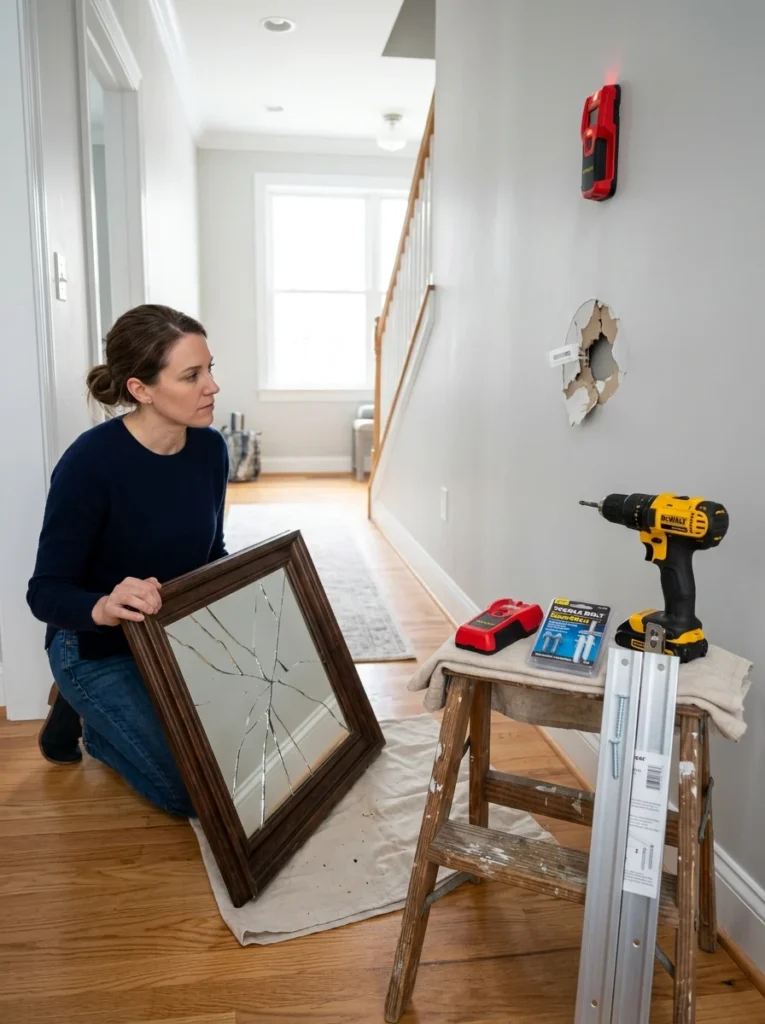
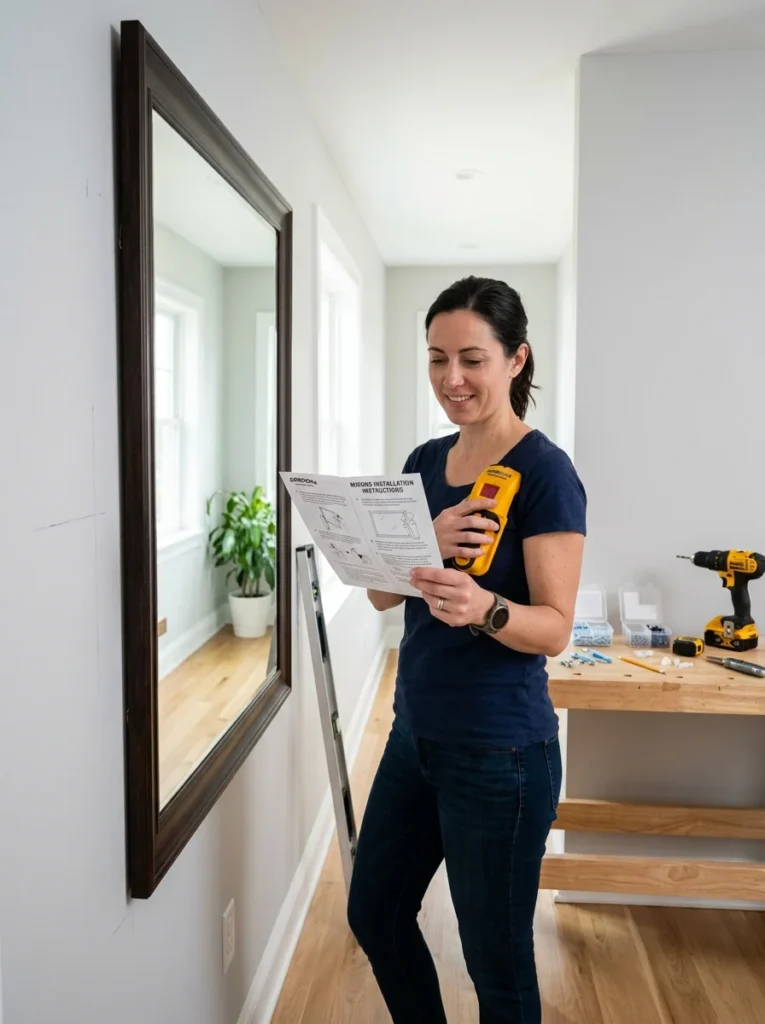
A friend of mine had a genuinely alarming experience when a large, heavy mirror she’d hung with a single standard picture hook came crashing down in the middle of the night, thankfully with no one nearby and no serious damage beyond a cracked frame and a startling noise. When she told me about it, I realized I’d hung a similarly heavy mirror in my own hallway using more or less the same inadequate hardware, purely because it was what I already had on hand rather than what the mirror actually required. That conversation sent me down a genuine research process into hanging heavy items properly, and what I learned changed how I’ve approached every mirror and piece of art since.
Hanging heavy mirrors and wall art safely isn’t complicated, but it does require matching the right hardware and technique to the actual weight involved, rather than assuming any picture hook will do the job. Here’s what actually matters.
Know the actual weight of what you’re hanging
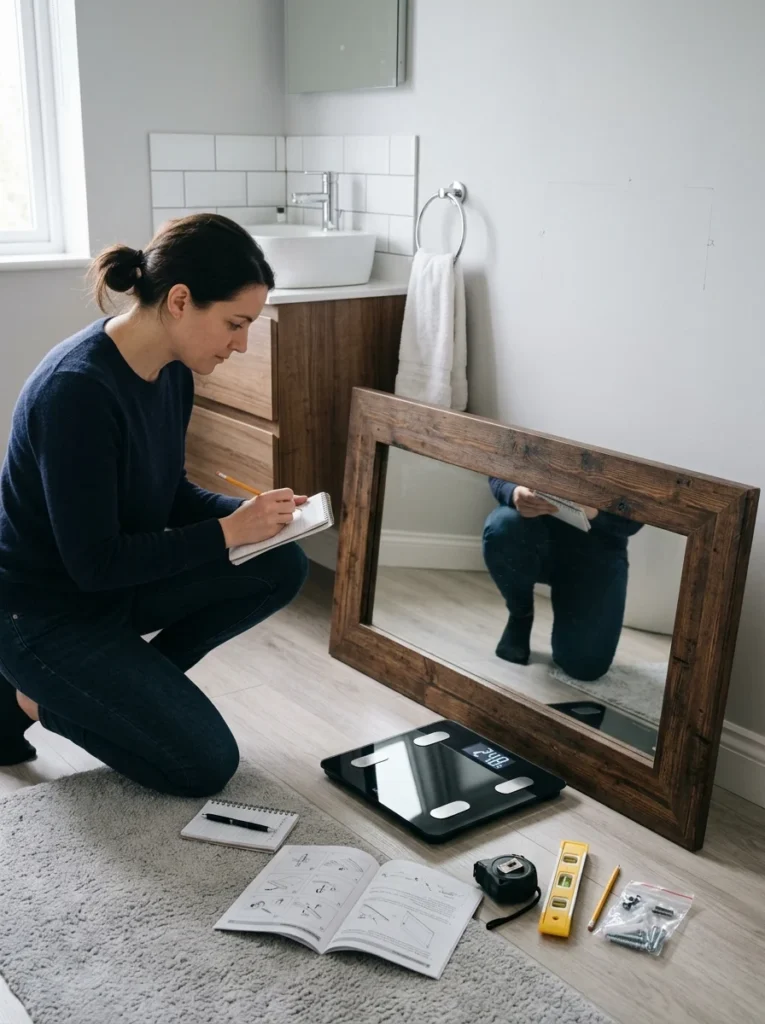
Before choosing any hardware, find out or estimate the actual weight of the mirror or art piece, since this single piece of information determines nearly every other decision in the hanging process. Many mirrors and framed pieces list their weight on the product packaging or manufacturer’s website, and if that information isn’t available, a bathroom scale can give you a reasonably accurate estimate for anything you can comfortably lift onto it. Guessing at weight, or assuming a piece is lighter than it actually is simply because it doesn’t feel unmanageable to carry a short distance, is one of the more common reasons people under-hardware a heavy piece.
Locate wall studs whenever possible for genuinely heavy pieces
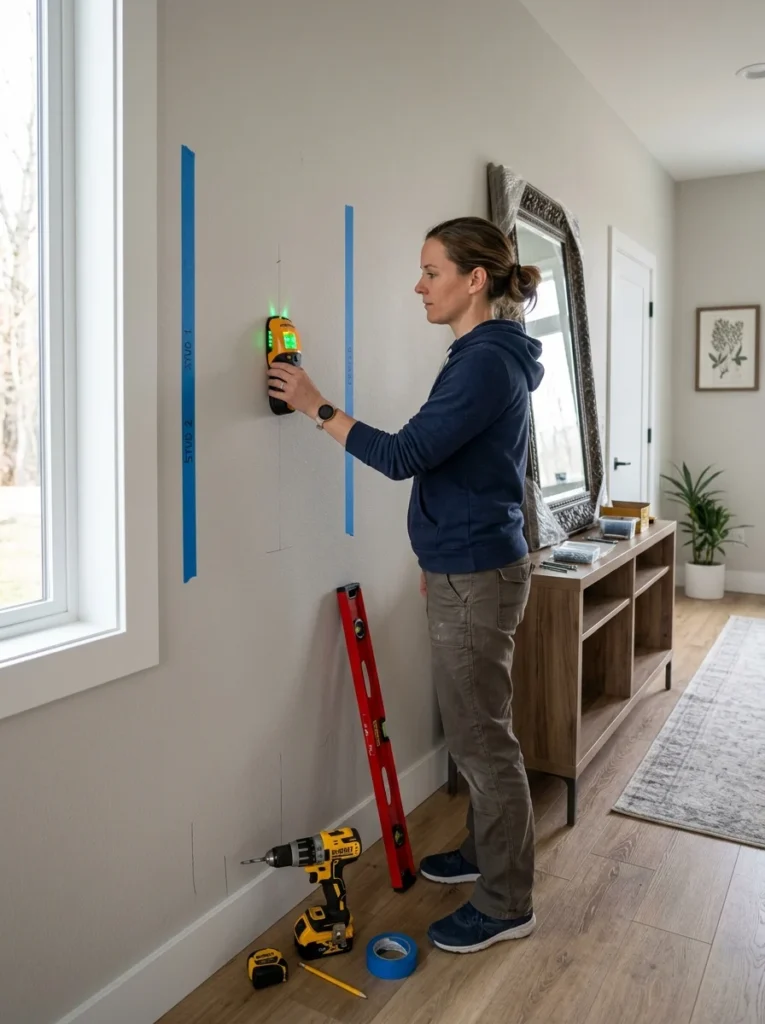
For anything substantially heavy, generally above thirty to forty pounds depending on the specific hardware being used, hanging directly into a wall stud provides significantly more secure support than any anchor relying purely on the drywall itself. A stud finder, a relatively inexpensive tool, locates the wood framing behind your drywall, and hanging into this solid structural wood rather than just the thin drywall surface dramatically increases how much weight the mounting point can safely support.
Use appropriate wall anchors when studs aren’t available in the right spot
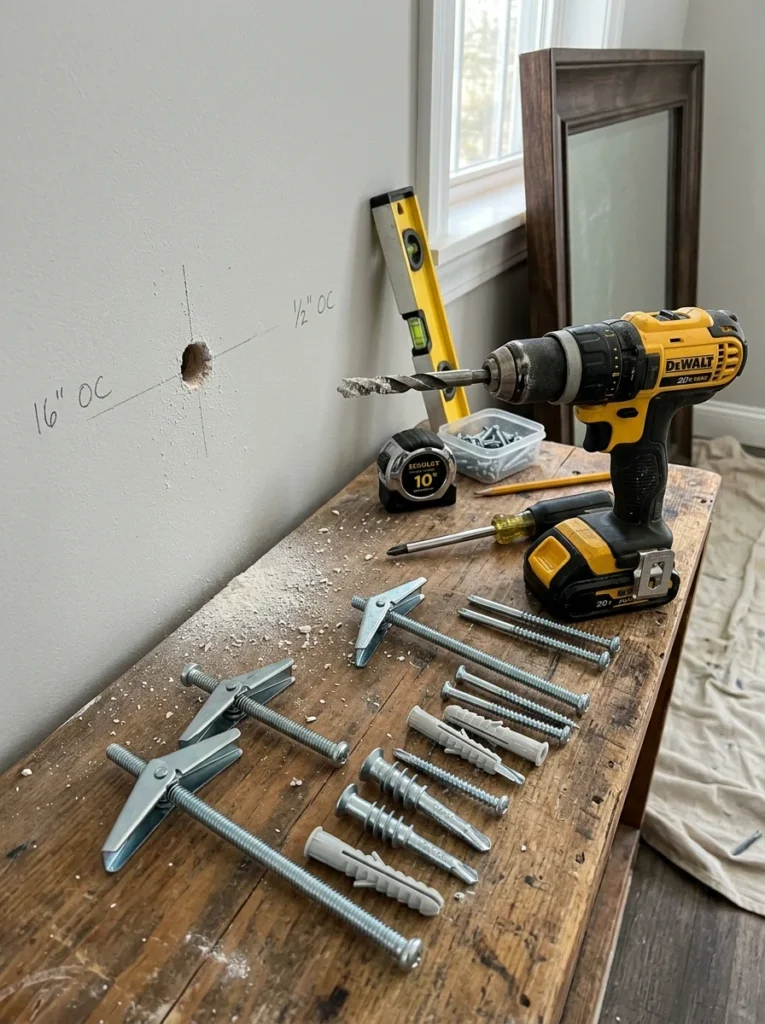
When a stud doesn’t line up with your desired hanging location, quality wall anchors rated for the specific weight of your piece provide a safer alternative than relying on drywall alone without any anchor at all. Toggle bolts and heavy-duty anchors designed specifically for substantial weight distribute the load across a wider area of the drywall than a simple nail or basic anchor would, and choosing an anchor genuinely rated for weight equal to or greater than your piece’s actual weight, rather than the lightest, cheapest option available, is essential for a secure installation.
Use a French cleat system for genuinely heavy or oversized pieces
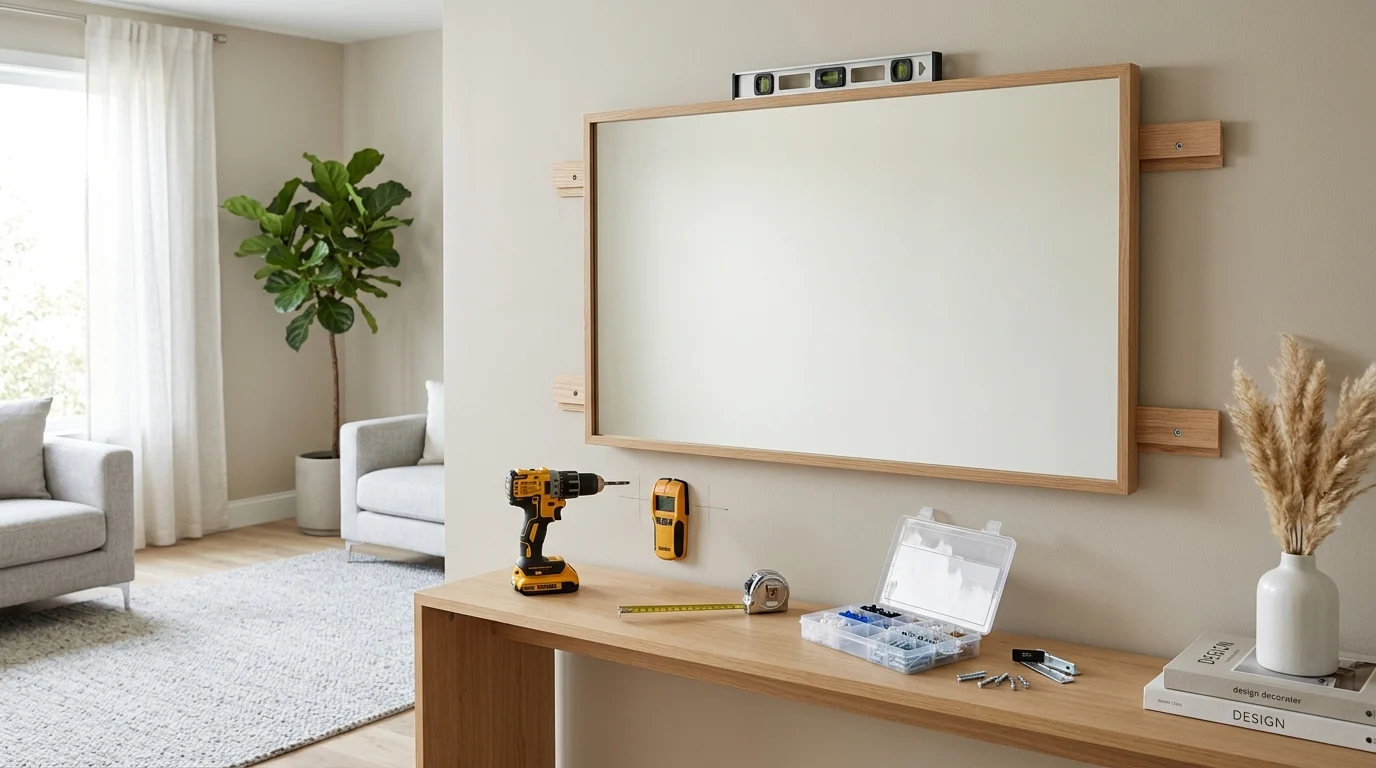
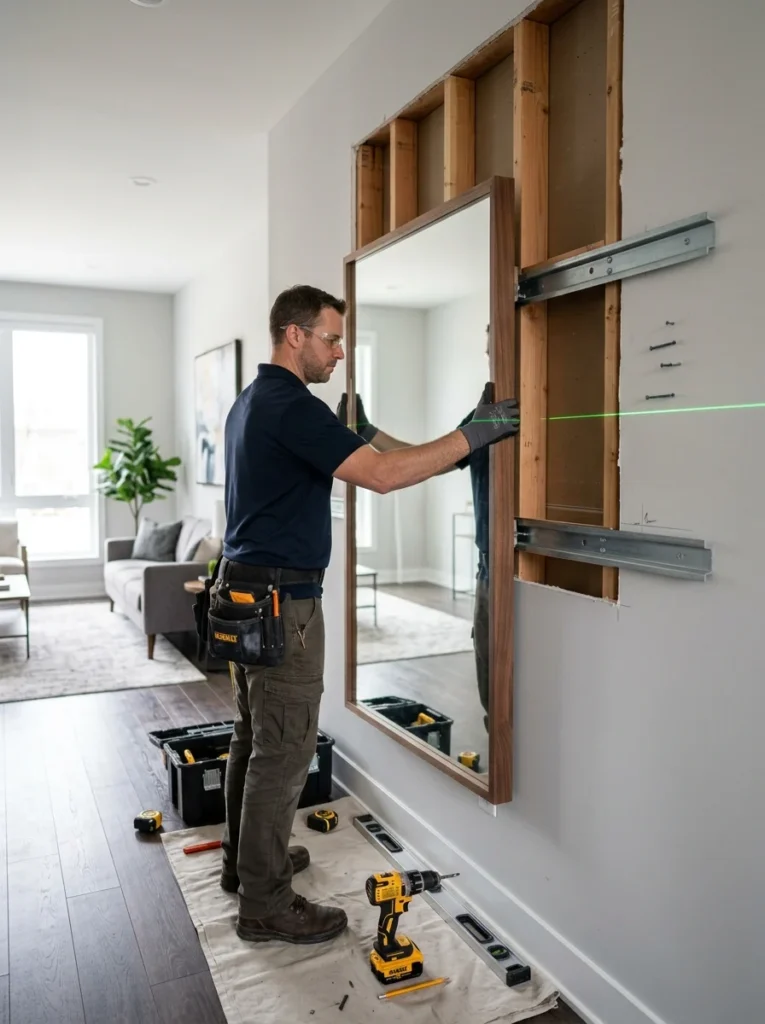
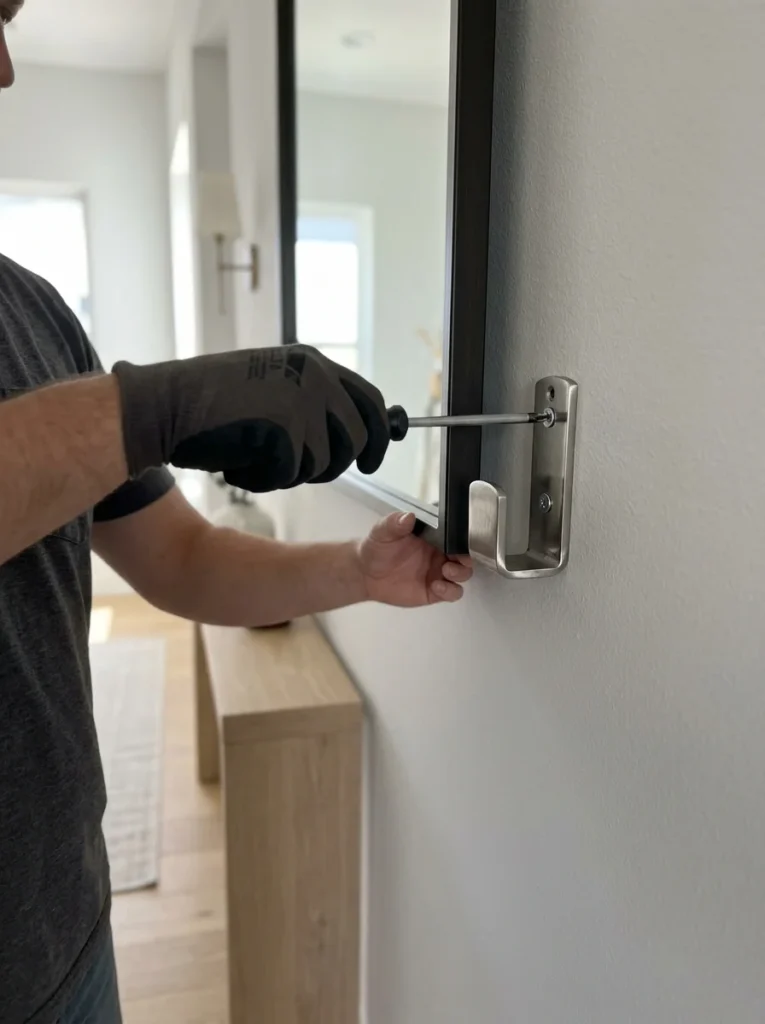
A French cleat, two interlocking angled wood or metal strips, one attached to the wall and one to the back of the mirror or frame, distributes weight along the entire width of the piece rather than concentrating it on one or two small hanging points. This system is particularly well suited to large, heavy mirrors and provides a notably secure, stable hang, and it also makes the piece easier to level and adjust slightly after installation compared to a single-point hanging method.
Distribute weight across two mounting points rather than one
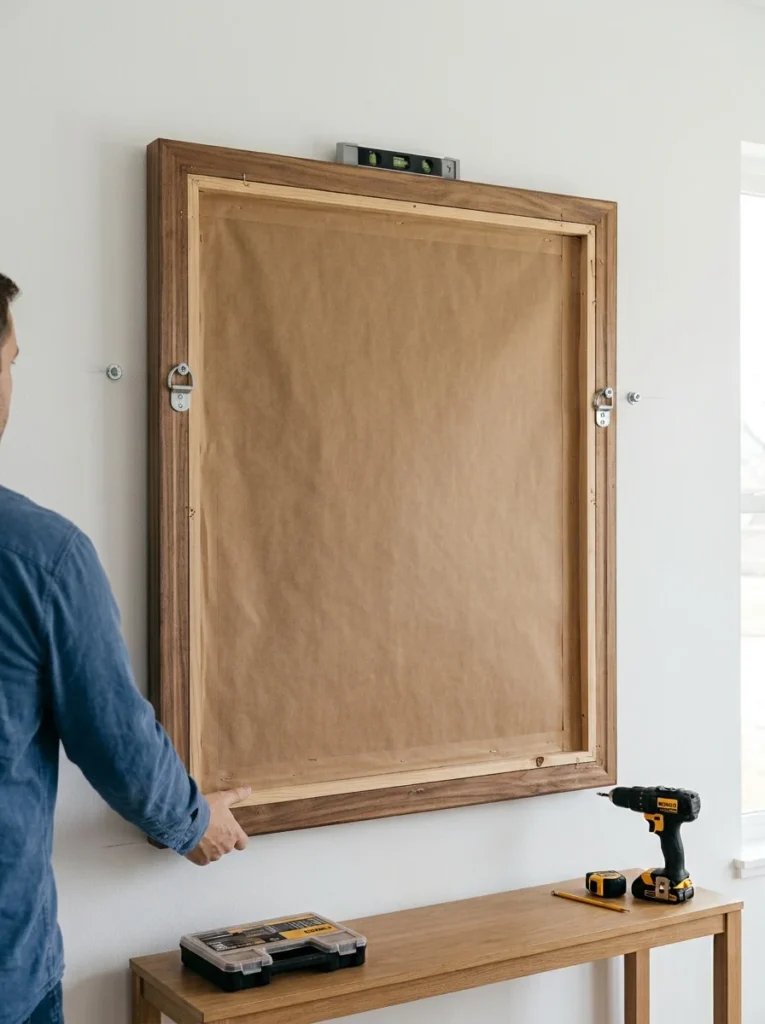
For wider or heavier pieces, using two separate mounting points, whether two studs, two properly rated anchors, or a wire and D-ring system anchored securely at two points, distributes the total weight rather than concentrating all of it onto a single hook or anchor. This approach also naturally helps keep the piece level and reduces the risk of it slowly tilting or shifting over time compared to a single central hanging point.
Choose the right picture wire and D-rings for the piece’s weight
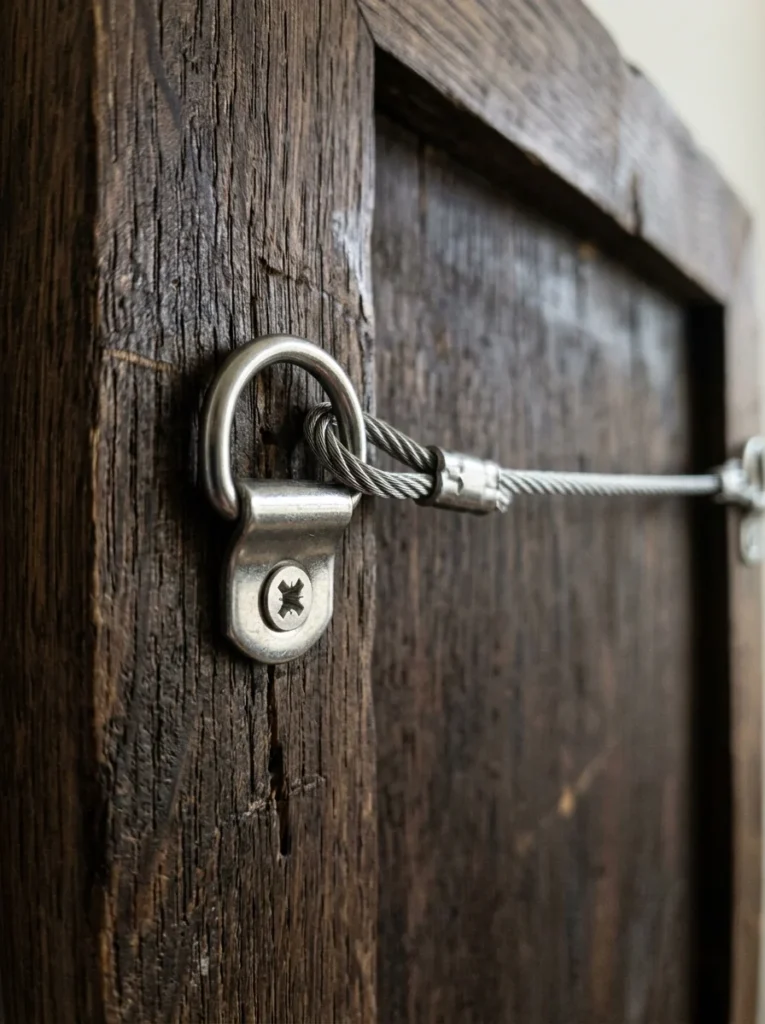
If your mirror or frame uses a wire and D-ring hanging system rather than a French cleat, ensure the wire itself is rated for a weight capacity meaningfully above the actual weight of the piece, and that the D-rings are securely screwed into solid wood on the frame’s back rather than into thin, potentially fragile material. A wire that’s technically rated close to the piece’s actual weight offers little margin for error, while one rated with genuine extra capacity provides a meaningful safety buffer.
Consider professional installation for exceptionally heavy or valuable pieces
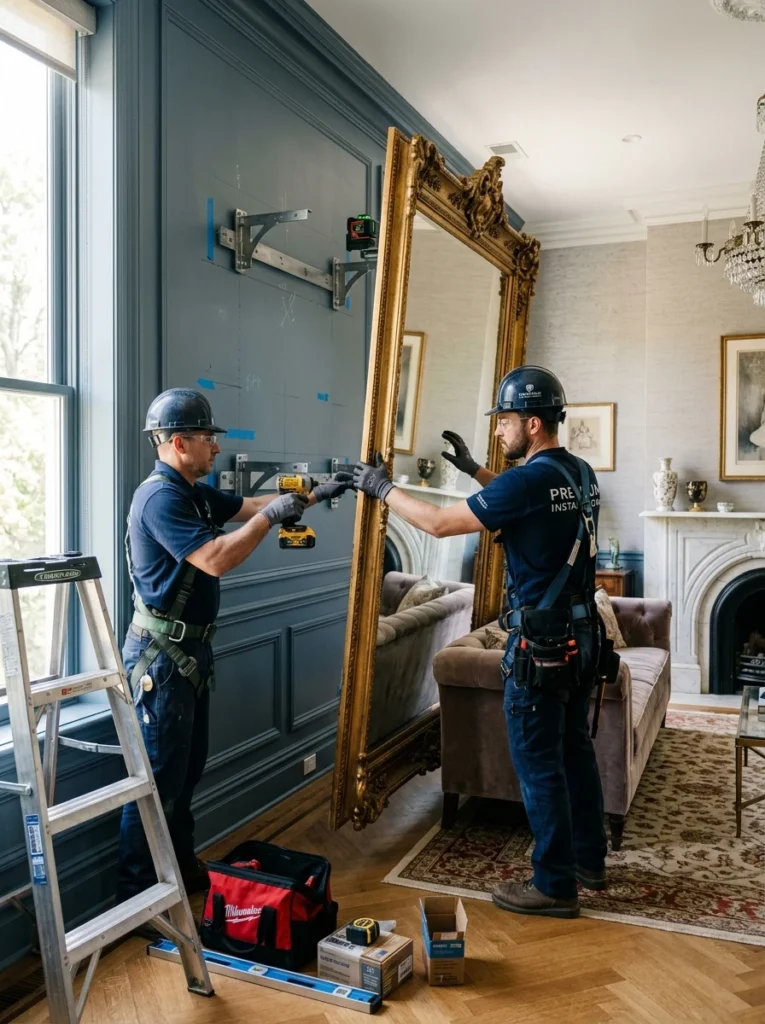
For a genuinely oversized, exceptionally heavy mirror, or any piece with significant monetary or sentimental value where the consequences of a failed installation would be serious, hiring a professional installer familiar with these specific hanging challenges is a reasonable investment rather than an unnecessary expense. This is particularly worth considering for pieces installed above a bed, a sofa where people regularly sit or lean back, or any other spot where a fall could pose a genuine injury risk to someone below.
Add safety hardware for pieces hung above seating or beds
For any heavy mirror or art piece positioned directly above a bed, sofa, or other spot where someone spends significant time seated or lying beneath it, adding a safety strap, museum putty at the bottom corners, or additional secondary anchor points provides extra insurance against the piece coming loose, beyond just the primary hanging hardware. This extra precaution matters more in this specific placement than it would for the same piece hung somewhere with no one regularly positioned directly underneath.

Check hardware periodically, not just at initial installation
Hanging hardware isn’t necessarily a permanent, set-it-and-forget-it installation, particularly in an area prone to vibration from nearby foot traffic, door slams, or a washer and dryer on an adjacent wall. Periodically checking that a heavy mirror or art piece is still securely mounted, the wire hasn’t stretched or frayed, the anchor hasn’t loosened, catches a developing problem before it becomes an actual failure, particularly for pieces that have been in place for several years since their original installation.
Get help lifting and holding heavy pieces during installation
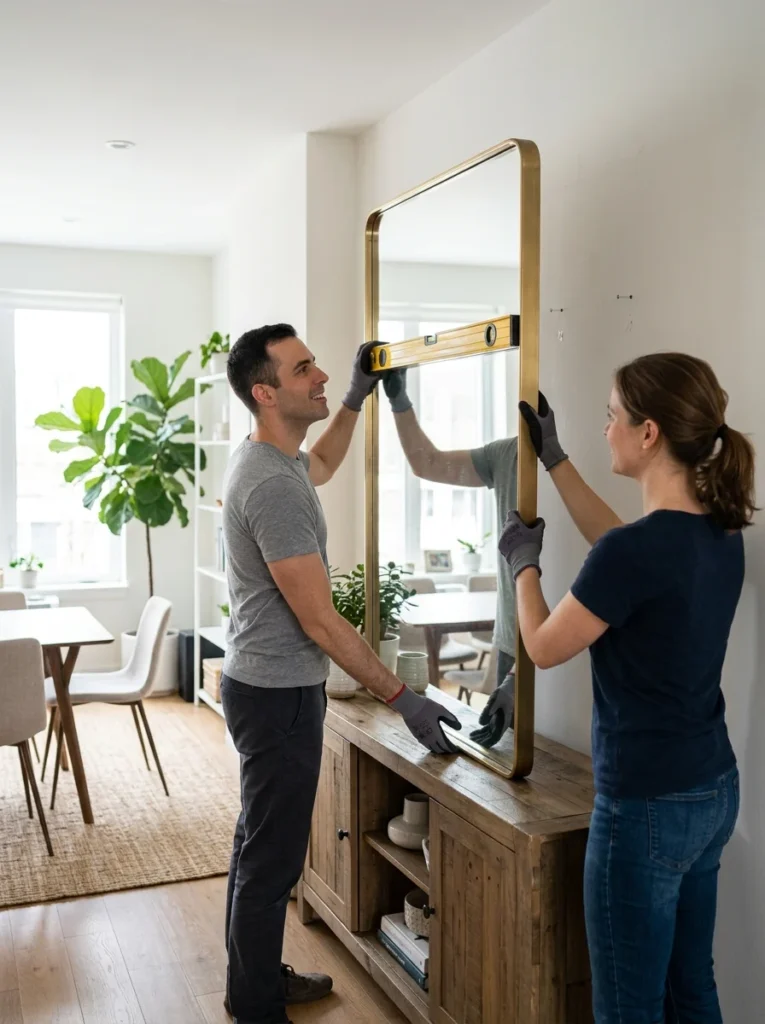
Beyond the hardware itself, the physical process of lifting and holding a genuinely heavy mirror in place while marking measurements or attaching it to wall hardware is safer and more accurate with a second person assisting, both to prevent a dropped piece during handling and to help hold it level while the other person confirms placement and secures the hardware. This is a simple, often overlooked safety consideration separate from the hardware and mounting technique itself.
Account for different wall types and their specific challenges
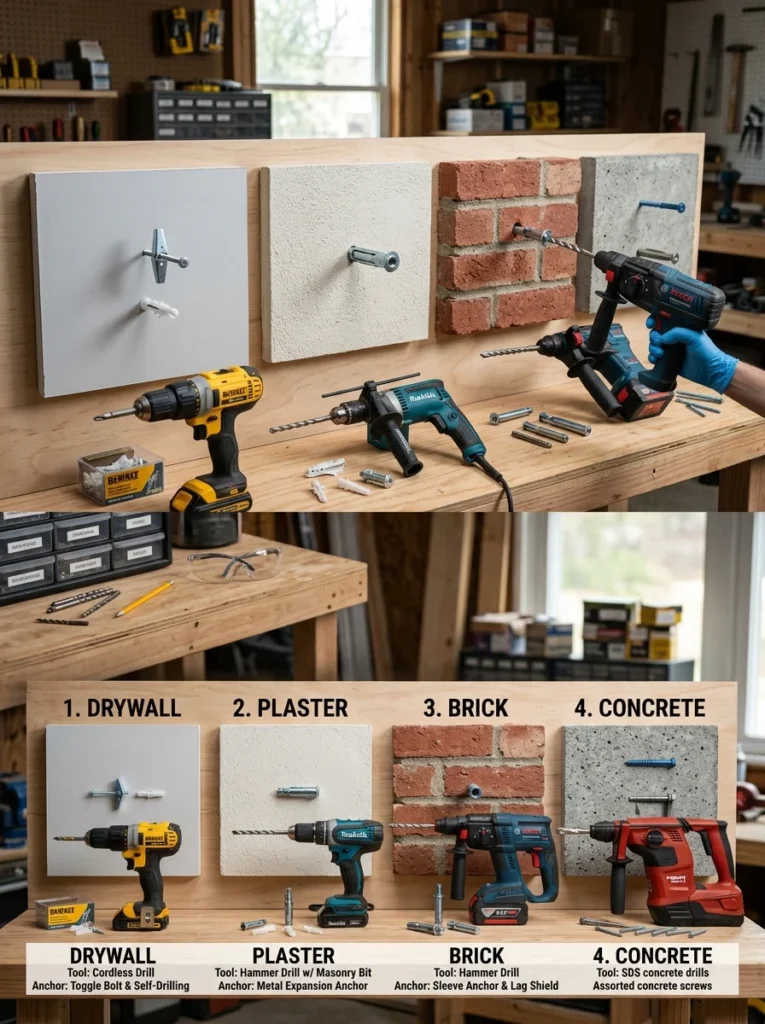
Standard drywall, common in most modern homes, has fairly predictable weight capacity when using appropriately rated anchors, but older homes with plaster and lath walls present a different challenge, since plaster can crack or crumble around a drilled hole more easily than drywall, and the lath strips behind it don’t provide the same consistent anchoring surface. If you’re hanging a heavy piece on a plaster wall, using anchors specifically designed for this material, and drilling pilot holes carefully to avoid cracking the surrounding plaster, helps avoid damaging the wall while still achieving a secure hang. Brick or concrete walls require yet another approach entirely, typically masonry anchors and a hammer drill with a masonry bit, which is worth researching specifically if your home has this kind of wall construction in the area where you’re hanging something heavy.
Gather the right tools before starting the installation
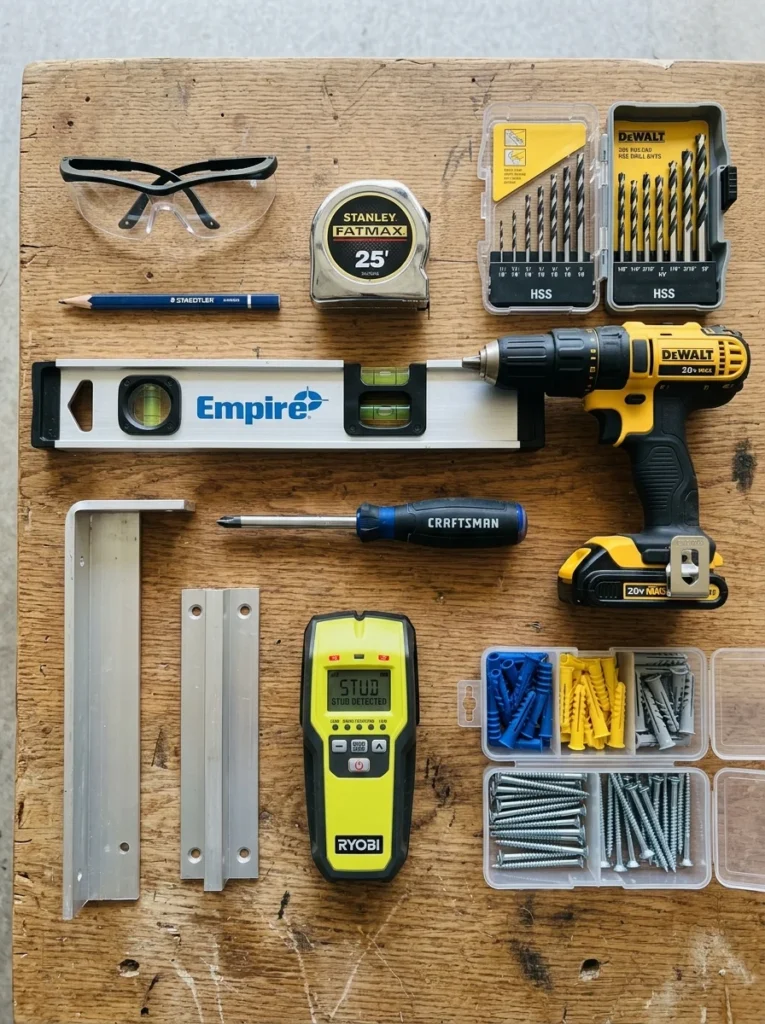
A stud finder, a good level, a drill with appropriate bits for your wall type and chosen anchors, and a tape measure are the core tools worth having on hand before starting any heavy hanging project, rather than improvising partway through with whatever happens to be in a junk drawer. Having the correct size drill bit specifically matched to your chosen anchor’s requirements matters more than people expect, since a hole that’s too large or too small for the anchor can compromise its holding strength even if every other step of the installation is done correctly.
How do I know if I need to hang into a wall stud?
Generally, anything above thirty to forty pounds benefits significantly from being anchored into a wall stud rather than relying purely on drywall anchors, since studs provide considerably more secure structural support for substantial weight.
What’s the safest way to hang a very large, heavy mirror?
A French cleat system, which distributes weight across the piece’s entire width rather than concentrating it on one or two points, is generally the safest and most stable method for large, heavy mirrors, particularly when combined with anchoring into wall studs where possible.
Should I hire a professional to hang a heavy mirror?
For exceptionally heavy, oversized, or valuable pieces, or any mirror being hung above a bed or seating area where a fall could pose injury risk, hiring a professional installer familiar with these specific challenges is a reasonable and often worthwhile investment.
Do I need to check hanging hardware after installation is complete?
Yes, periodically checking that hardware remains secure, especially in areas prone to vibration, catches a developing problem, a loosening anchor or a stretching wire, before it results in an actual failure, particularly for pieces that have been in place for several years.
Is it harder to hang heavy items on plaster walls than drywall?
Yes, plaster can crack or crumble around a drilled hole more easily than drywall, and the lath strips behind it don’t offer the same consistent anchoring surface. Using anchors specifically designed for plaster and drilling pilot holes carefully helps avoid damaging the wall while still achieving a secure installation.
What tools do I need to hang a heavy mirror safely?
A stud finder, a level, a drill with the correct bits for your wall type and chosen anchors, and a tape measure are the core tools worth having ready before starting, since improvising with mismatched tools partway through can compromise the security of the final installation.
Hanging heavy mirrors and wall art safely comes down to accurately knowing the piece’s weight, then matching hardware, wall studs, properly rated anchors, a French cleat, or distributed mounting points, to that actual weight rather than whatever hardware happens to already be on hand. This is a genuinely important safety consideration, not just a technical installation detail, particularly for pieces positioned above beds or seating areas.
My own hallway mirror now hangs securely from a proper French cleat anchored into wall studs, a considerable upgrade from the single inadequate picture hook it originally relied on, and my friend’s replacement mirror has never given her a moment’s concern since she redid the installation properly. If you’re not entirely certain your own heavy pieces are hung as securely as they should be, it’s worth checking now rather than after a genuine scare of your own prompts the same realization.