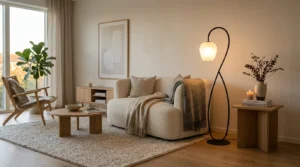
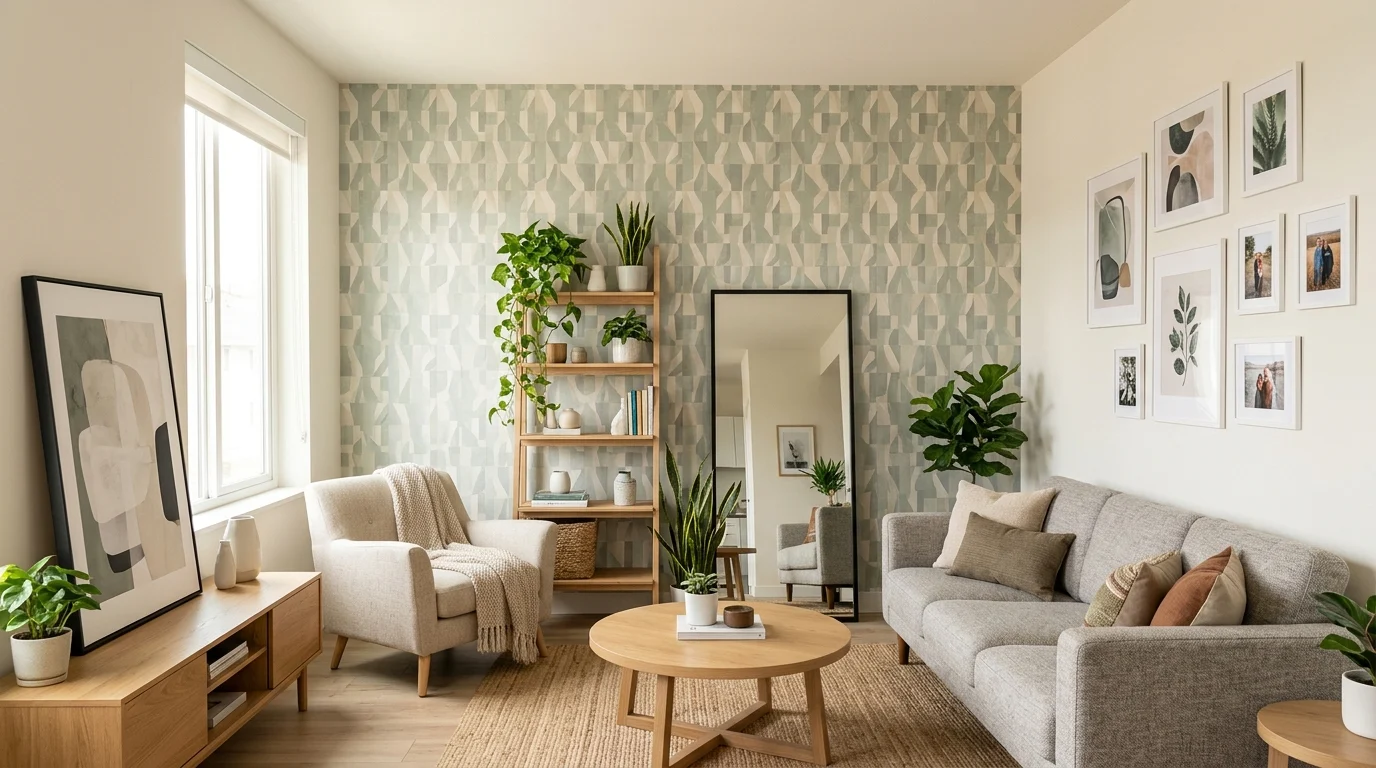
My first apartment had a strict no-holes, no-paint lease clause, and for the first several months I genuinely left the walls completely bare, assuming there wasn’t much to be done within those restrictions beyond a few free-standing pieces of furniture. It felt sterile in a way that made the apartment feel more like a waiting room than an actual home. It wasn’t until I started genuinely researching renter-friendly decorating solutions, rather than assuming the lease restrictions meant giving up on decorating altogether, that I realized how much was actually possible without a single nail hole or drop of paint on those walls.
Renting doesn’t have to mean bare, personality-free walls. There’s a genuinely wide range of damage-free decorating solutions available now, several of which look just as polished as permanent installations once they’re up. Here’s what actually works well within these common lease restrictions.
Use removable adhesive hooks and strips for lightweight art
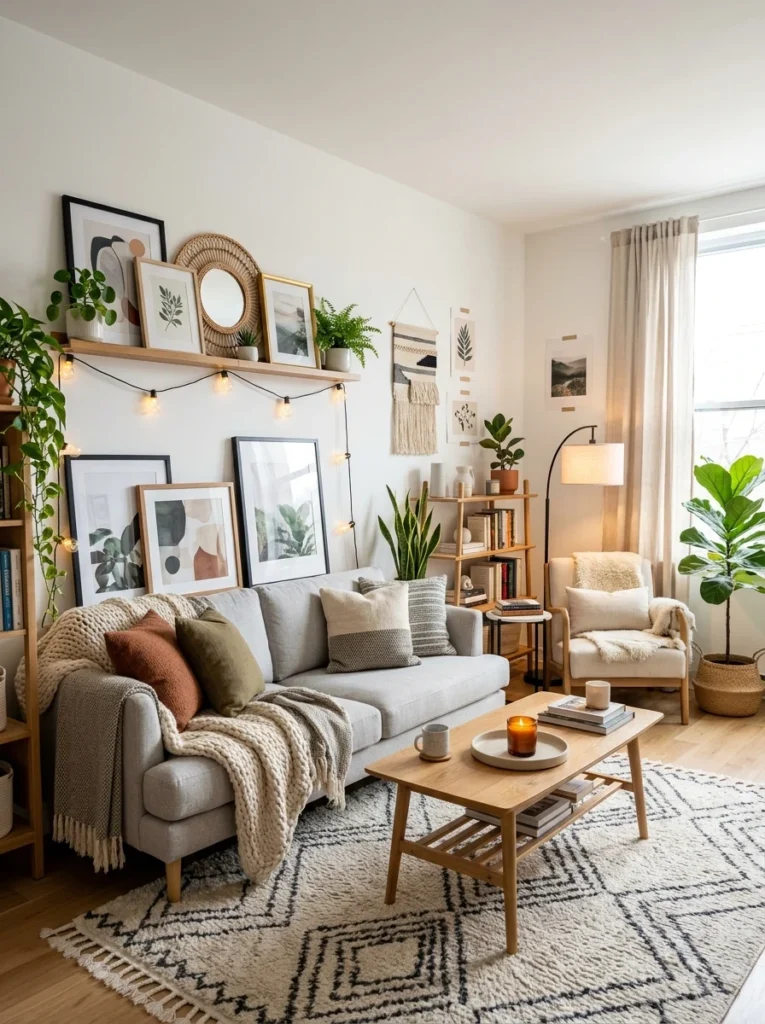
Modern adhesive picture-hanging strips and hooks, rated for a range of specific weights, hold lightweight frames and art securely while removing cleanly without damaging paint or leaving a visible mark, provided you follow the manufacturer’s weight guidelines and removal instructions carefully. These have become reliable enough for genuinely secure daily use, and they’re one of the most versatile tools available for renter-friendly wall decor, working for anything from a small framed print to a lightweight mirror within their rated capacity.
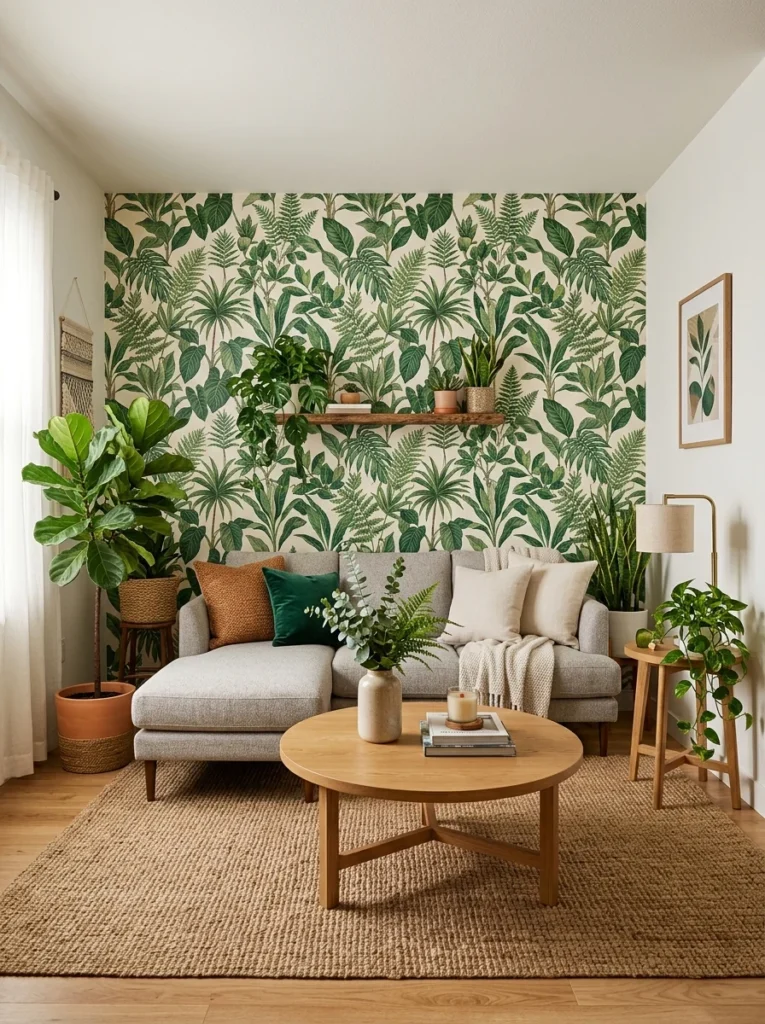
Choose peel-and-stick removable wallpaper for an accent wall
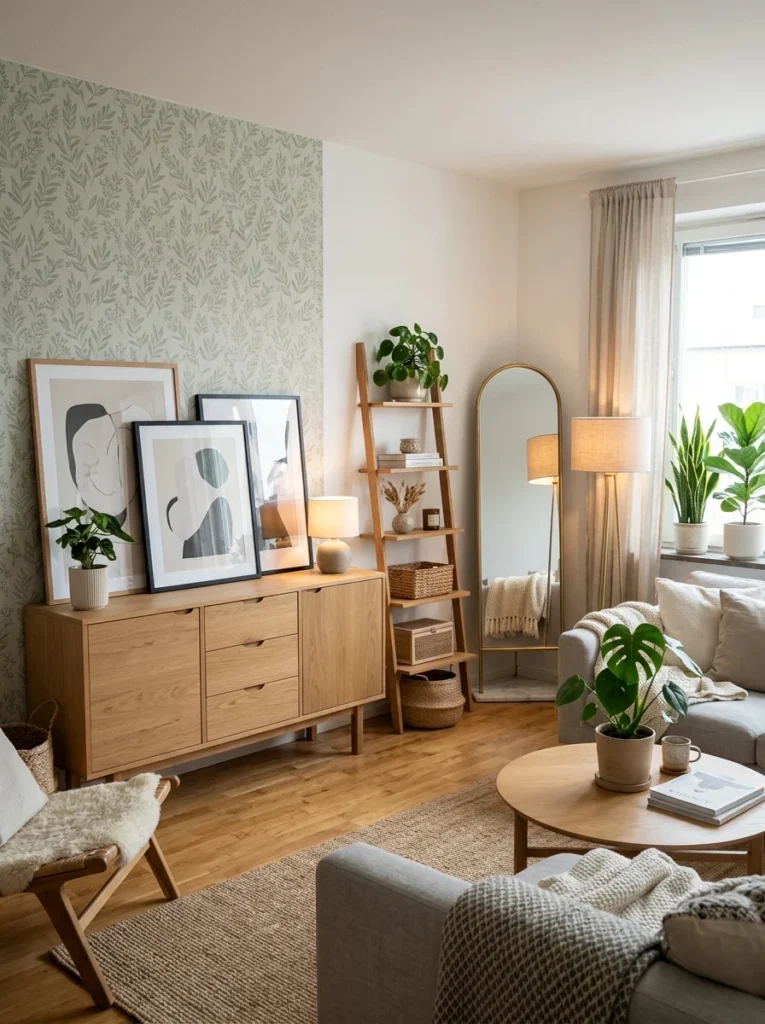
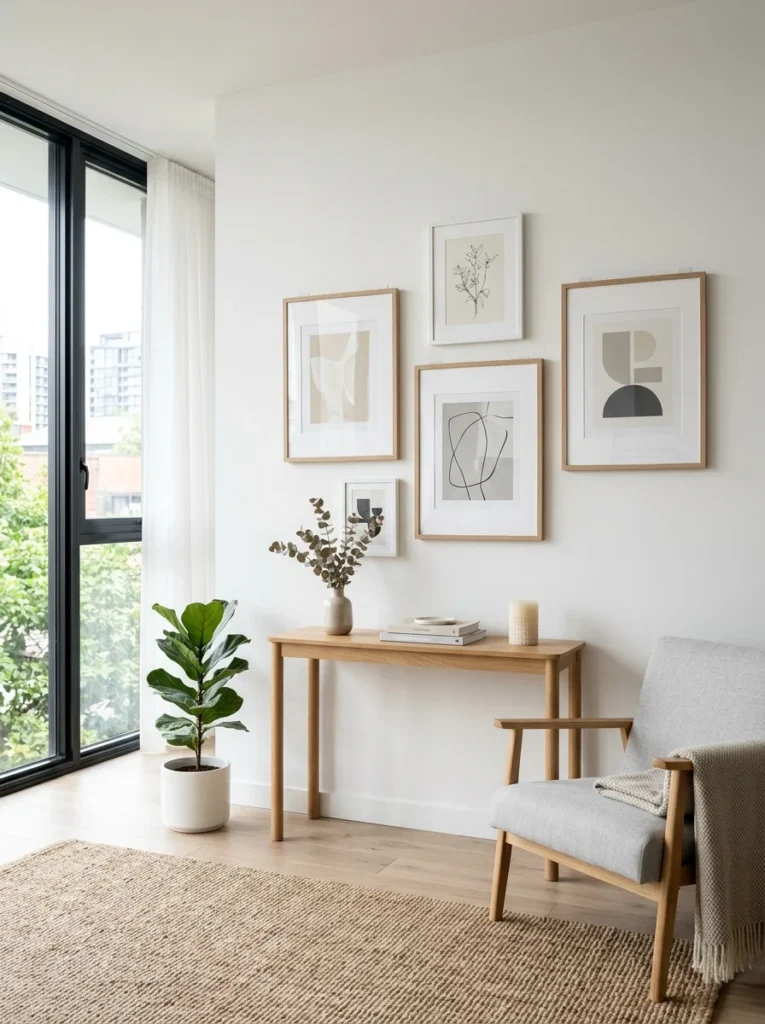
Peel-and-stick wallpaper designed specifically for renters offers a way to add pattern, color, or texture to a wall without any paint or permanent commitment, and quality products remove cleanly without damaging the paint underneath when it’s time to move out. A single accent wall using this approach can transform a room’s overall feel considerably, offering much of the visual impact of a painted or wallpapered wall in a fully reversible, lease-friendly format.
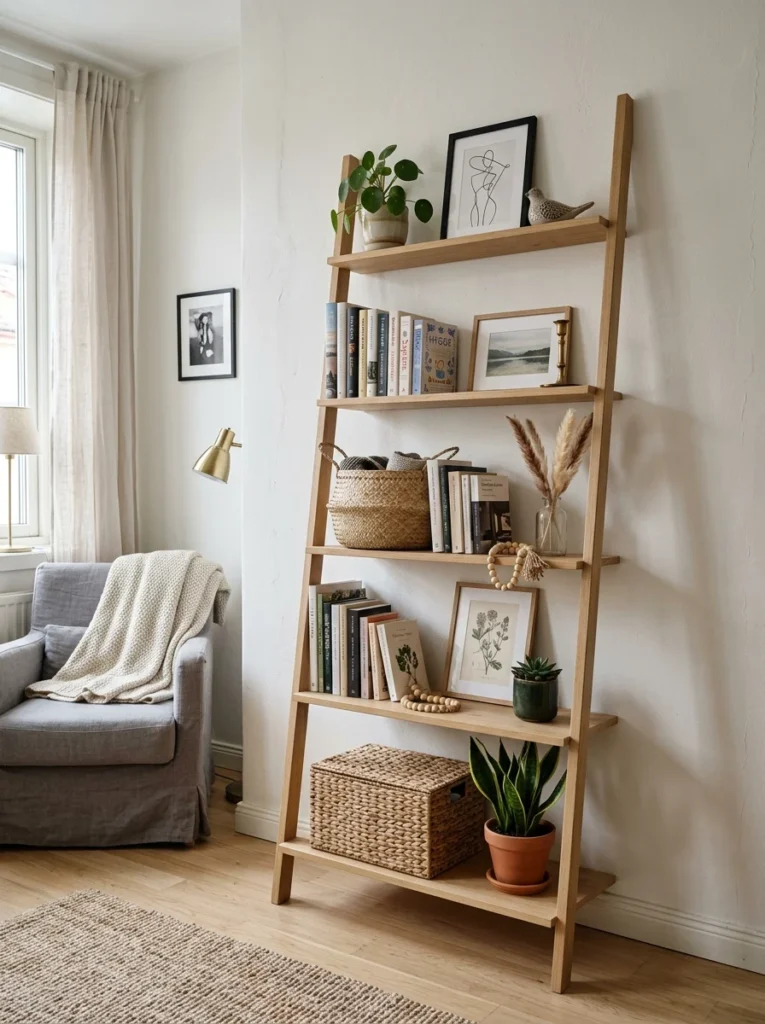
Lean on leaning ladders and freestanding shelving
A leaning ladder shelf, ladder-style bookshelf, or any freestanding shelving unit provides both storage and a place to display art, photos, and decorative objects without requiring a single wall attachment. These pieces can lean against a wall for stability without any mounting hardware at all, offering a vertical display option that doesn’t rely on the wall itself bearing any weight or requiring any holes.
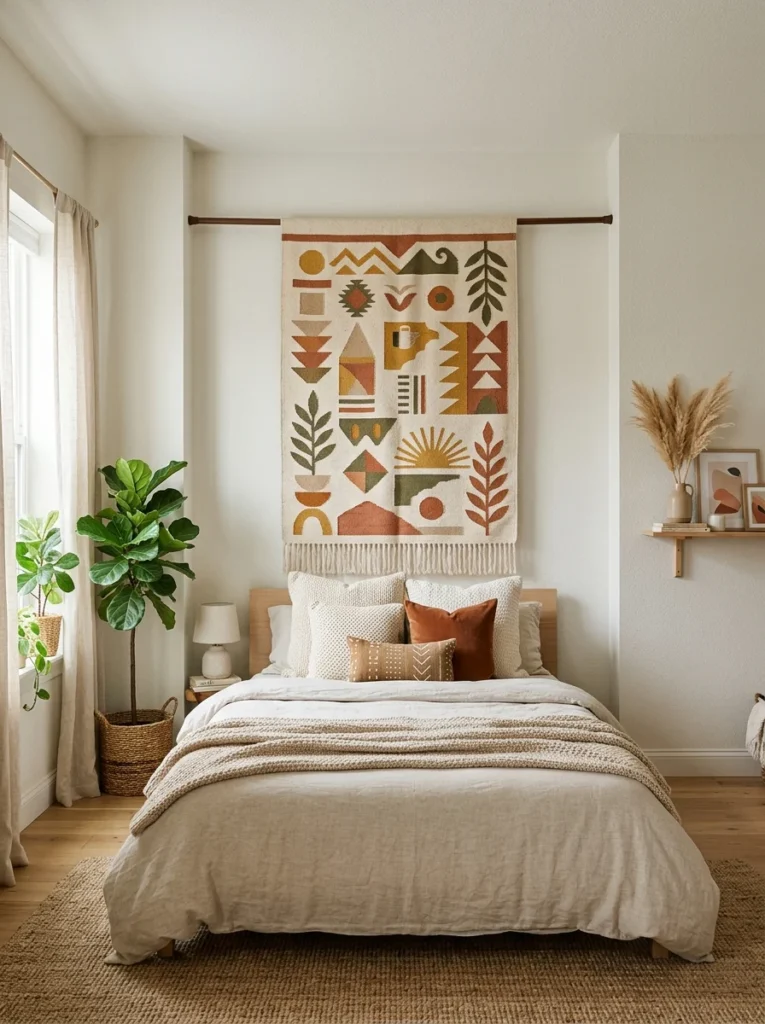
Use tension rods and curtain rods creatively beyond windows
A tension rod, which wedges between two walls or inside a doorway using spring pressure rather than screws, can be used to hang lightweight tapestries, fabric art, or even a curtain used purely as decorative wall covering rather than a window treatment. This approach works particularly well for adding texture or a large-scale decorative element to a wall without any drilling at all, relying purely on the rod’s tension against the surrounding surfaces.
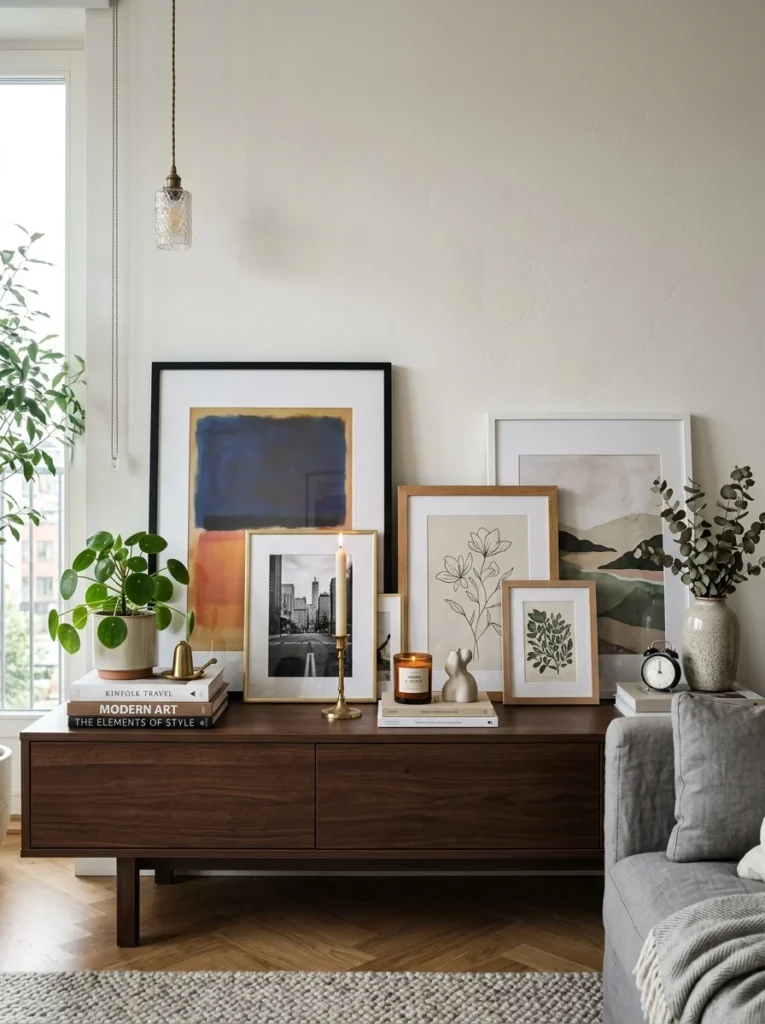
Create a leaning gallery display instead of a hung one
Rather than hanging a gallery wall arrangement with multiple nail holes, leaning a curated collection of framed art directly against the wall, on a floor-level ledge, a console table, or simply propped along the baseboard, creates a similarly layered, collected look without a single hole in the wall. This approach also offers more flexibility to rearrange and swap pieces in and out over time than a permanently hung arrangement would allow.
Use command strips designed specifically for the weight of your item
Beyond basic adhesive hooks, specific command-strip style products are rated for a wide range of weights, some capable of securely holding surprisingly heavy items when the correct number and size of strips are used according to the manufacturer’s guidelines. Being precise about matching the product’s rated capacity to your item’s actual weight, and using the full recommended number of strips rather than fewer to save cost, ensures these products perform as securely as intended.
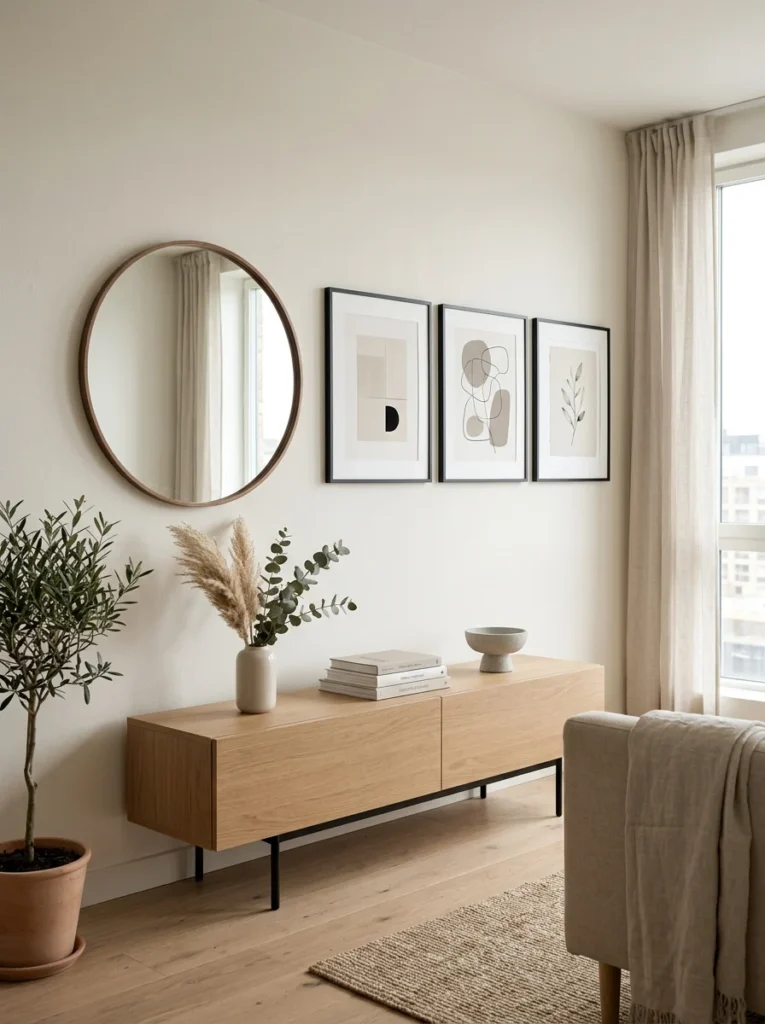
Add a decorative room divider or folding screen for a different kind of wall impact
A decorative folding screen or room divider, positioned against or near a wall, adds visual interest, texture, and sometimes a subtle sense of division within a room, all without touching the actual wall surface at all. This is a particularly useful option for adding a bold pattern or material, woven rattan, painted wood panels, fabric-covered frames, that you might otherwise want directly on the wall itself in a home where that’s not permitted.
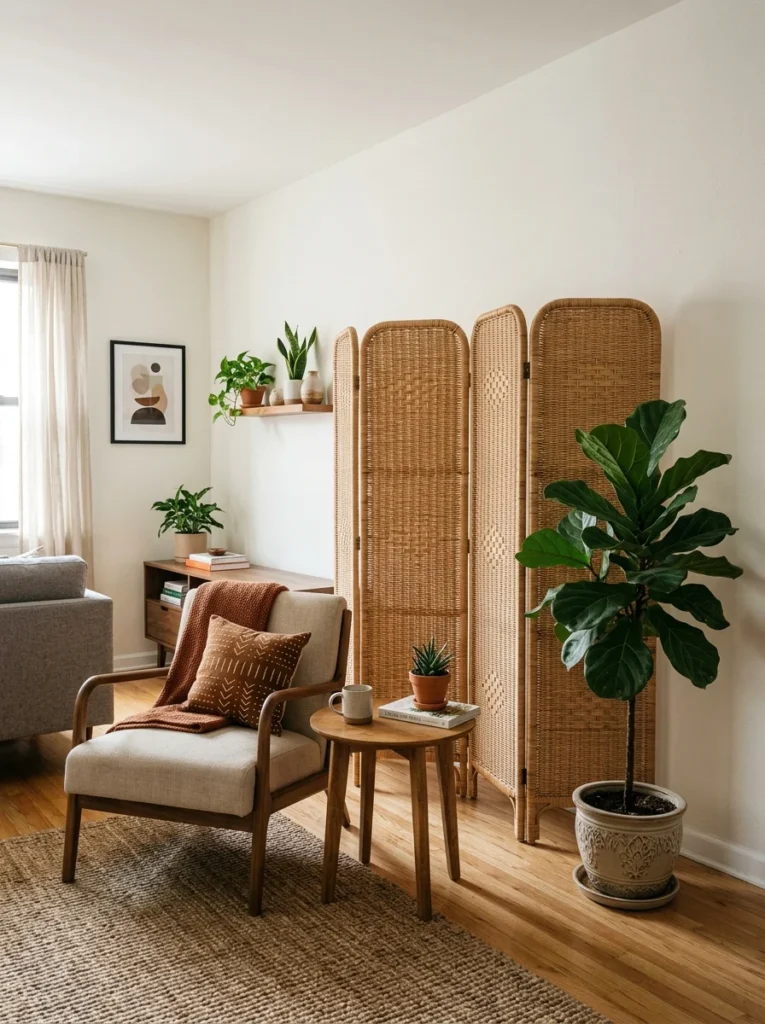
Use temporary, static-cling window film for a decorative touch
For windows specifically, static-cling decorative film adds a patterned or frosted decorative element without any adhesive or permanent alteration to the glass, and it removes cleanly when you move out. This isn’t a wall decor solution exactly, but it addresses a similar goal, adding pattern and visual interest to a space, using a surface that doesn’t carry the same restrictions a rented wall typically does.
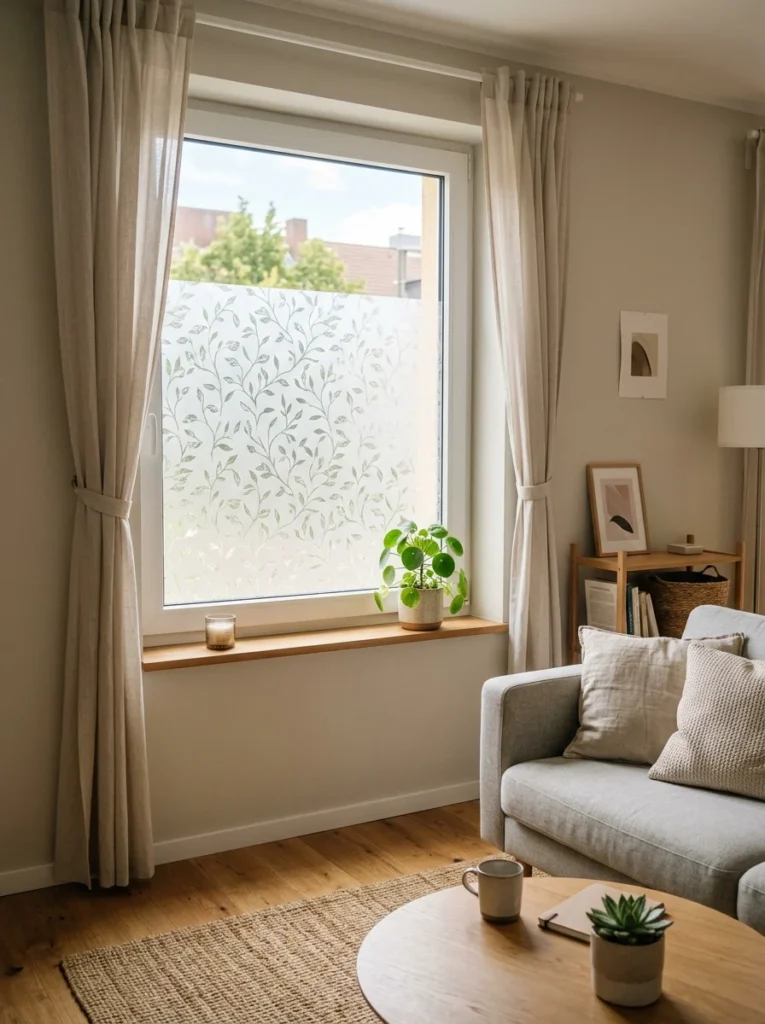
Rely on large furniture and freestanding mirrors for visual impact
A large freestanding floor mirror, leaned against a wall rather than mounted, adds significant visual impact and the light-reflecting benefits of a wall-mounted mirror without requiring any hardware or wall attachment whatsoever. Similarly, a large piece of furniture with visual presence, an interesting armoire, a bold bookshelf, can anchor a room’s design in a way that reduces the pressure on bare walls to carry the entire visual weight of the space.
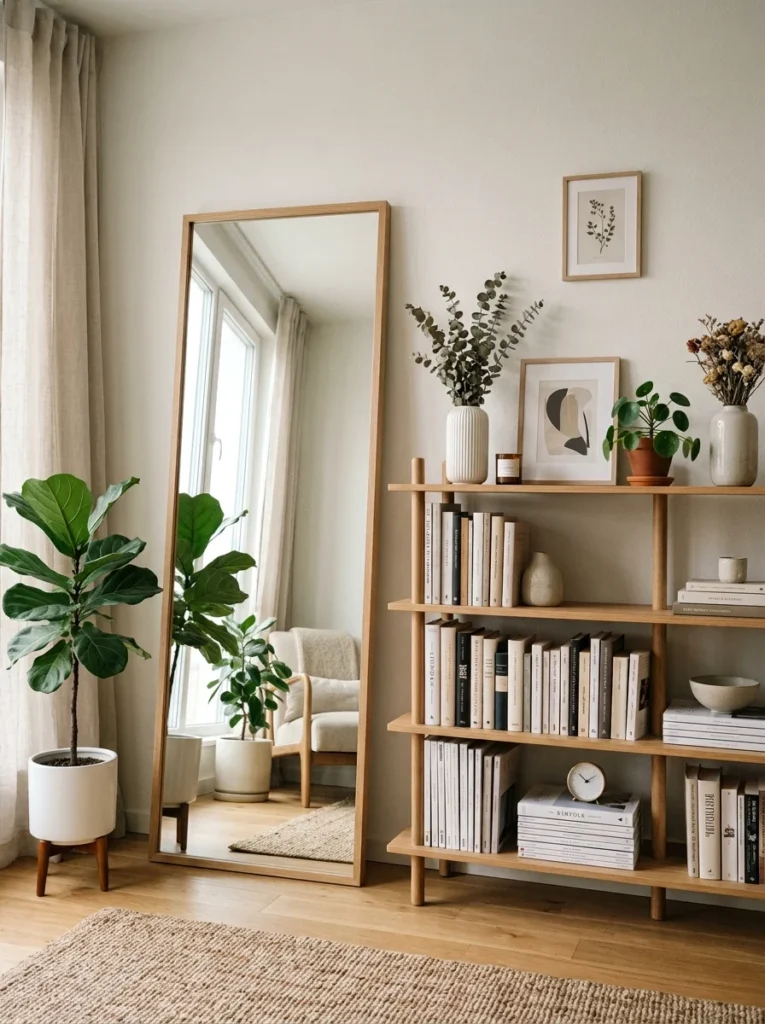
Use fabric and textiles as an alternative to traditional wall art
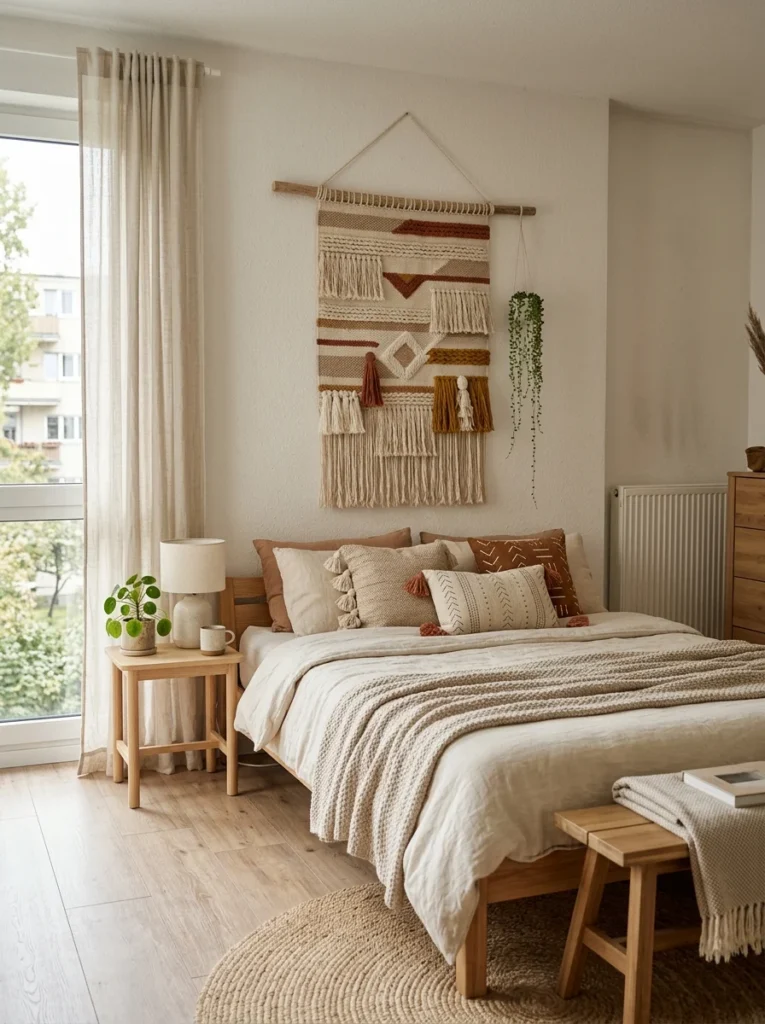
A tapestry, a large scarf, or a piece of fabric stretched over a simple frame can be hung using the adhesive strips or tension rod methods already covered, adding texture, pattern, and color to a wall in a format that’s typically lighter weight than framed art and therefore easier to hang securely within the weight limits of removable hanging products.
Use washi tape or decorative tape for a playful, damage-free accent
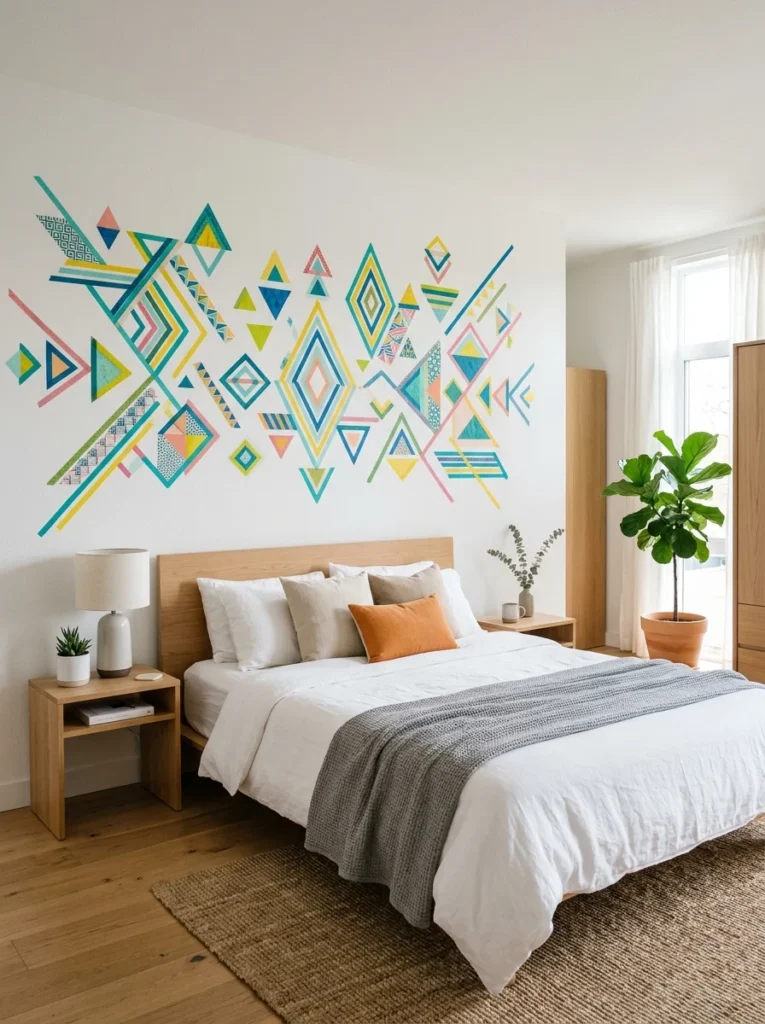
Washi tape, a low-tack decorative paper tape, can be used to create geometric patterns, a faux headboard shape, or even a playful frame outline directly on the wall, adding color and visual interest without any adhesive strong enough to damage paint upon removal. This is a particularly good option for a temporary or lower-commitment decorative touch, since it’s inexpensive, easy to reposition if you don’t like the initial placement, and simple to remove entirely without a trace when you’re ready for a change or preparing to move out.
Add renter-friendly lighting to enhance the walls without any wiring
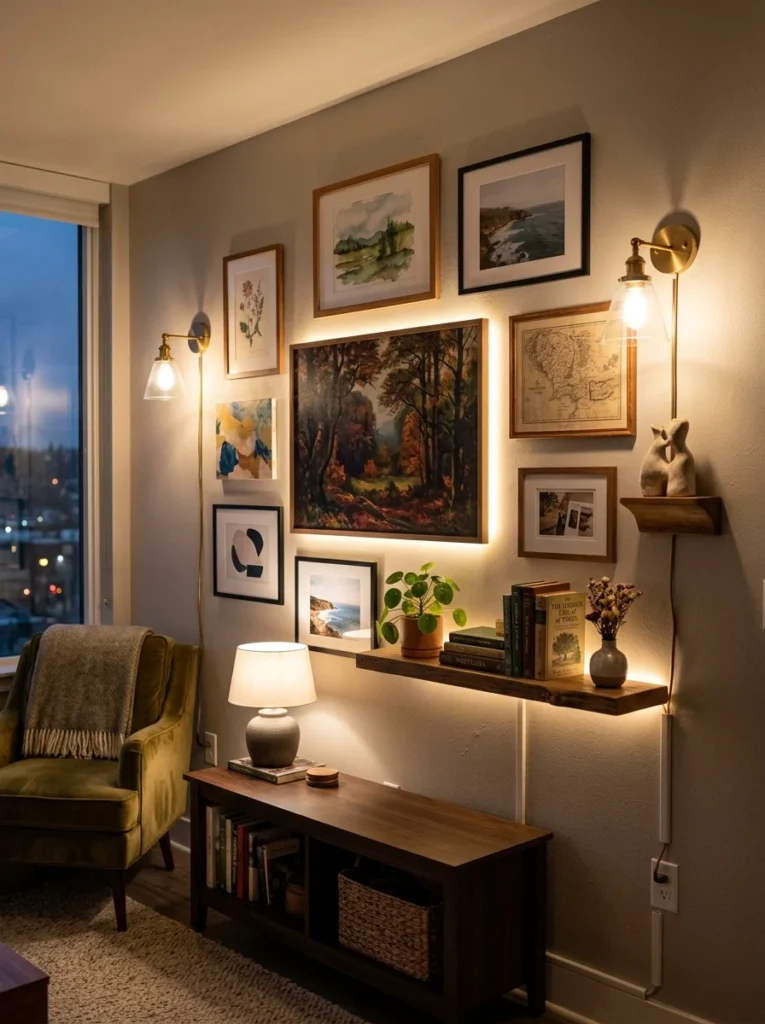
Battery-operated or plug-in wall sconces designed for renters, along with adhesive-mounted LED strip lighting, can add a warm, layered lighting effect that highlights decorative elements on the wall without requiring any electrical work or permanent fixture installation. Positioning this kind of lighting near a leaning gallery display or a peel-and-stick accent wall adds a more finished, considered feel to the space, similar to how proper lighting elevates a permanently decorated room, but entirely through cordless or adhesive-mounted solutions that leave no lasting trace.
Use a large area rug hung as a wall tapestry for texture and warmth
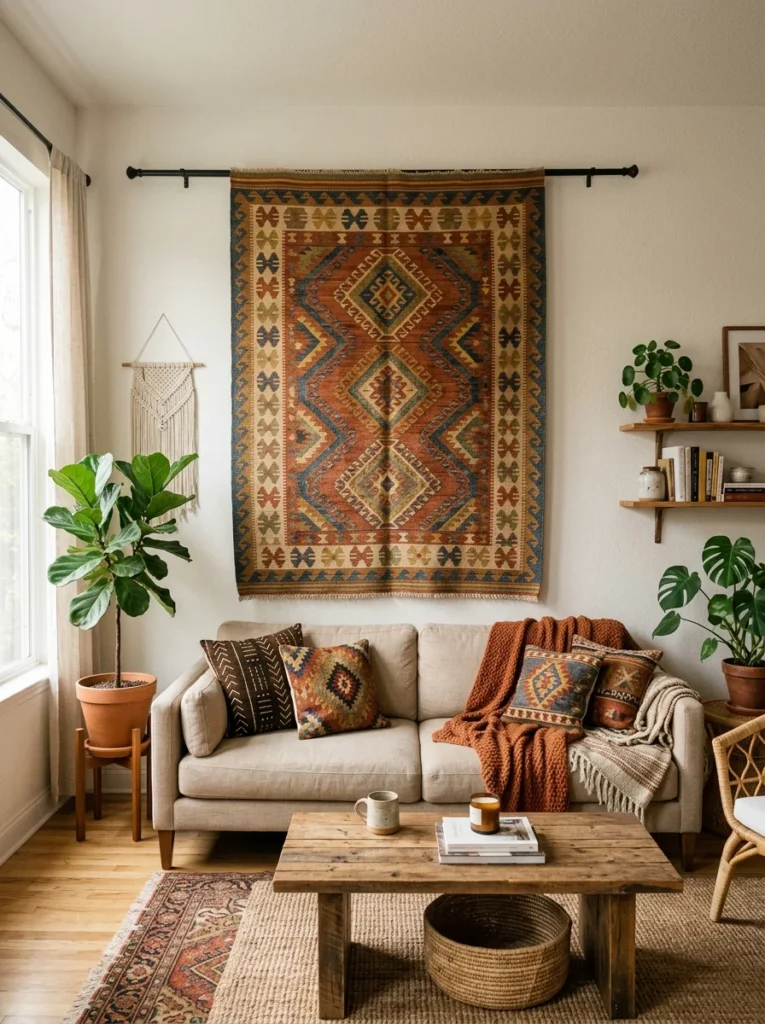
A flat-weave or kilim-style rug, hung using a tension rod or a row of adhesive strips rated for its weight, can serve as a striking, textured piece of wall art in a similar way to a traditional tapestry, often at a more accessible price point than dedicated wall tapestries designed purely for decorative use. This works particularly well in a room with high ceilings or a large blank wall that would otherwise require several smaller pieces to fill visually, since a single large rug can address that scale in one cohesive piece.
Before assuming every possible option is off the table, review your specific lease agreement closely, since some leases distinguish between small nail holes from picture hangers, generally allowed and easily patched, versus larger holes from anchors or drilling, which are more likely to be restricted. Some landlords are also open to a direct conversation about minor, easily reversible modifications if asked directly, so it’s worth clarifying your specific situation rather than assuming the most restrictive possible interpretation of a general lease clause.
Can I hang a rug on the wall as decor in a rental?
Yes, using a tension rod or adhesive strips rated for the rug’s weight, a flat-weave or kilim-style rug can serve as textured wall art similar to a tapestry, working especially well on a large blank wall that would otherwise need several smaller pieces to fill visually.
Is washi tape actually safe to use directly on painted walls?
Yes, washi tape is a low-tack decorative tape specifically designed to remove cleanly without damaging paint, making it a good option for temporary geometric accents or playful designs directly on a rental wall.
Do removable adhesive strips actually hold securely long-term?
Quality adhesive strips rated appropriately for your item’s weight generally hold securely for extended periods, provided you follow the manufacturer’s installation and weight guidelines carefully and don’t exceed the product’s rated capacity.
Will peel-and-stick wallpaper damage my walls when I move out?
Quality peel-and-stick wallpaper designed for renters generally removes cleanly without damaging the paint underneath, though it’s worth testing a small, inconspicuous area first and following the manufacturer’s specific removal instructions to minimize any risk.
Can I hang a heavy mirror without drilling in a rental?
A large, heavy mirror generally exceeds the weight capacity of most removable adhesive products, making a leaning freestanding floor mirror a more practical and equally effective alternative for adding both style and light reflection without any wall attachment.
Should I check my lease before using any of these decorating methods?
Yes, reviewing your specific lease for any distinctions between minor picture-hanger holes and larger drilled holes, and potentially discussing minor reversible changes directly with your landlord, can clarify exactly what’s genuinely permitted in your specific situation.
A personal home, without a single hole in the wall
Renting doesn’t have to mean living with bare, impersonal walls. Removable adhesive hooks and wallpaper, freestanding shelving and mirrors, leaning gallery displays, and creative use of tension rods and textiles all offer genuine, damage-free ways to make a rented space feel like home, without risking a lost security deposit.
My own first apartment eventually filled with leaning frames, a peel-and-stick accent wall, and a large freestanding mirror that did more for the space than I ever expected bare walls could allow, all removed cleanly when I eventually moved out with my full deposit intact. If your own rental still feels bare because of a no-holes policy, start with just one of these methods, a leaning gallery or a single accent wall, and see how much more like home the space starts to feel, one damage-free change at a time.