

A neighbor of ours had a genuinely frightening close call a couple of years back when a dryer fire started from built-up lint in a vent that hadn’t been cleaned in years, and it was only caught early because someone happened to be nearby when the smoke started. Nobody was hurt and the damage was limited, but it was a real wake-up call for our own household, since I honestly couldn’t remember the last time I’d checked our own dryer vent, let alone cleaned it properly. That experience sent me down a genuine research process into laundry room safety, and what I learned went well beyond just the dryer vent issue that had prompted the whole thing.
A laundry room deals with heat, water, electricity, and chemicals all in one relatively small space, which makes it one of the more overlooked safety areas in an otherwise well-maintained home. Here’s what actually matters, organized by the type of risk involved.
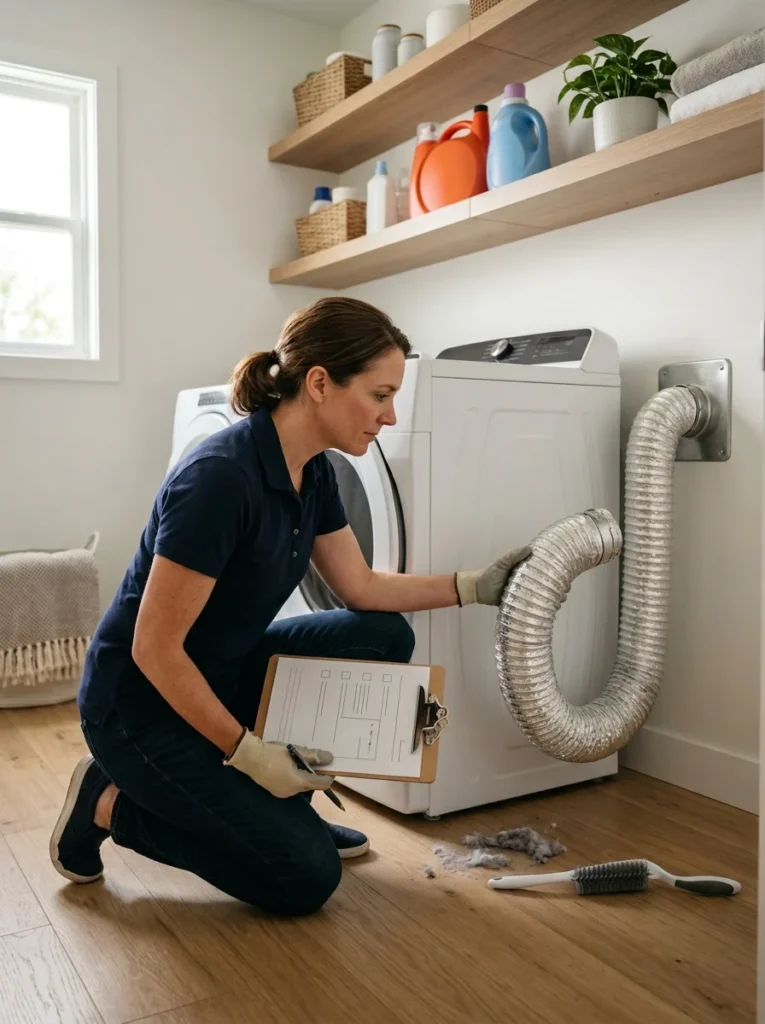
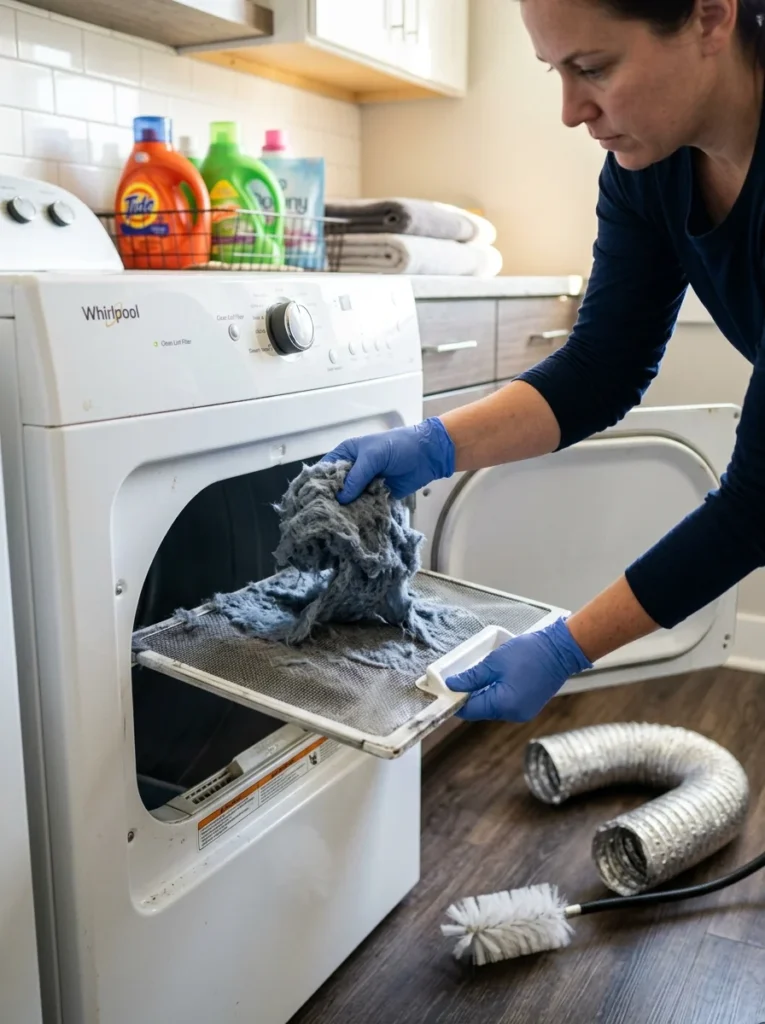
Clean the dryer vent and lint trap regularly
Lint buildup in a dryer’s exhaust system is a leading cause of house fires, and it’s also one of the most preventable, since it simply requires regular cleaning rather than any specialized skill or expensive equipment. Clean the lint trap after every single load, not just occasionally, since even a small amount of buildup restricts airflow and increases both fire risk and the time it takes to dry a load. Beyond the trap itself, the full exhaust duct running from the dryer to the outside vent should be inspected and cleaned at least once a year, more often for households doing frequent laundry, since lint accumulates along the entire length of the duct, not just in the trap you can see and access easily.
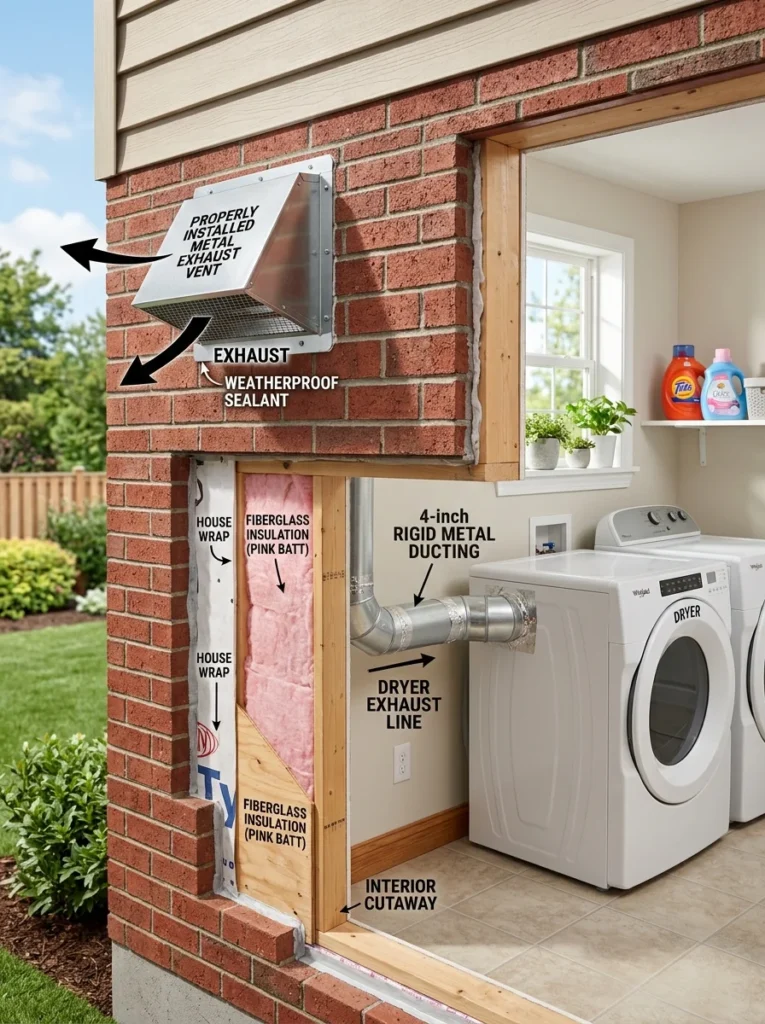
Check that the dryer vent exhausts properly to the outside
A dryer vent that’s crushed, kinked, overly long, or improperly connected restricts airflow even with regular cleaning, increasing both fire risk and inefficient drying that requires longer cycle times. Rigid or semi-rigid metal ducting is generally safer than flexible plastic or foil ducting, which is more prone to sagging, kinking, and trapping lint at each fold. If you’re not certain your dryer vent setup meets current safety recommendations, having a professional inspect the installation is a worthwhile investment, particularly in an older home where the ducting may not have been updated in years.
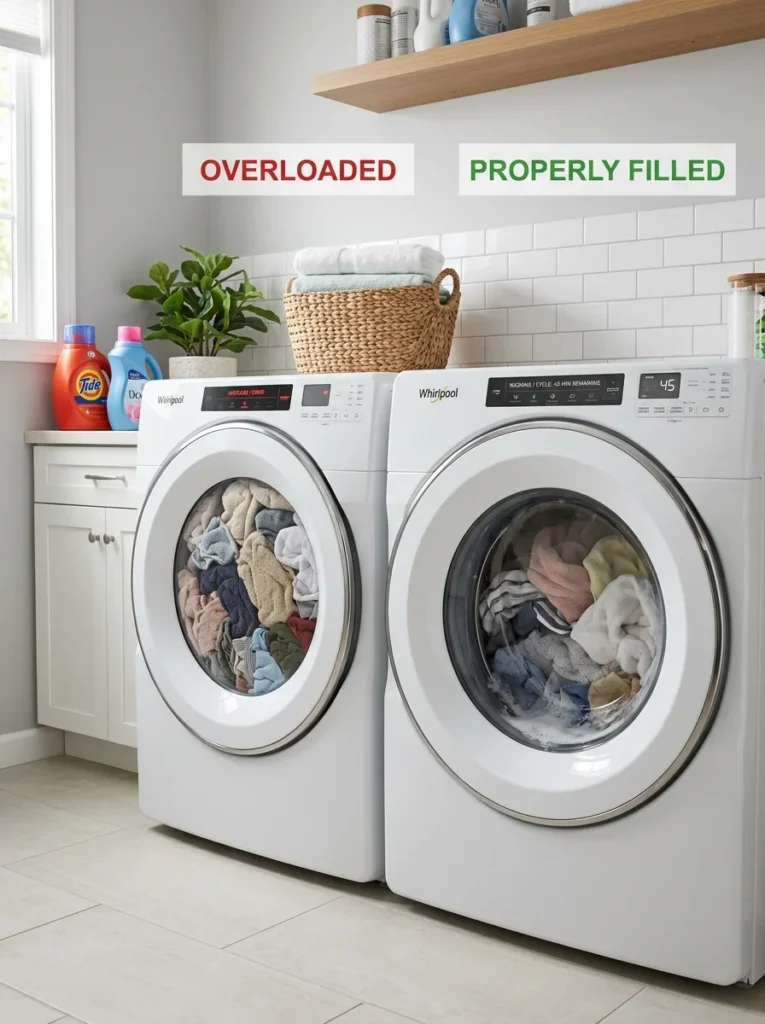
Never overload the washer or dryer
Overloading either appliance beyond its rated capacity strains the motor and mechanical components, increasing wear and, in some cases, creating genuine safety hazards from overheating or mechanical failure under excessive strain. It also reduces cleaning and drying effectiveness, since clothes need adequate room to move through the water or tumble properly through the heated air. Following the manufacturer’s specific capacity guidelines for your model, rather than estimating by eye, protects both the appliance’s lifespan and its safe operation.
Keep flammable items away from the dryer
Cleaning supplies, aerosol products, and anything else flammable should be stored well away from the dryer, given the heat it generates during normal operation. This is particularly important in smaller laundry closets where storage space is limited and the temptation to use every available surface, including directly on top of the dryer, is strongest. Designating shelving or cabinets a reasonable distance from the dryer specifically for these more hazardous items reduces this risk without requiring a genuinely spacious laundry room to achieve.

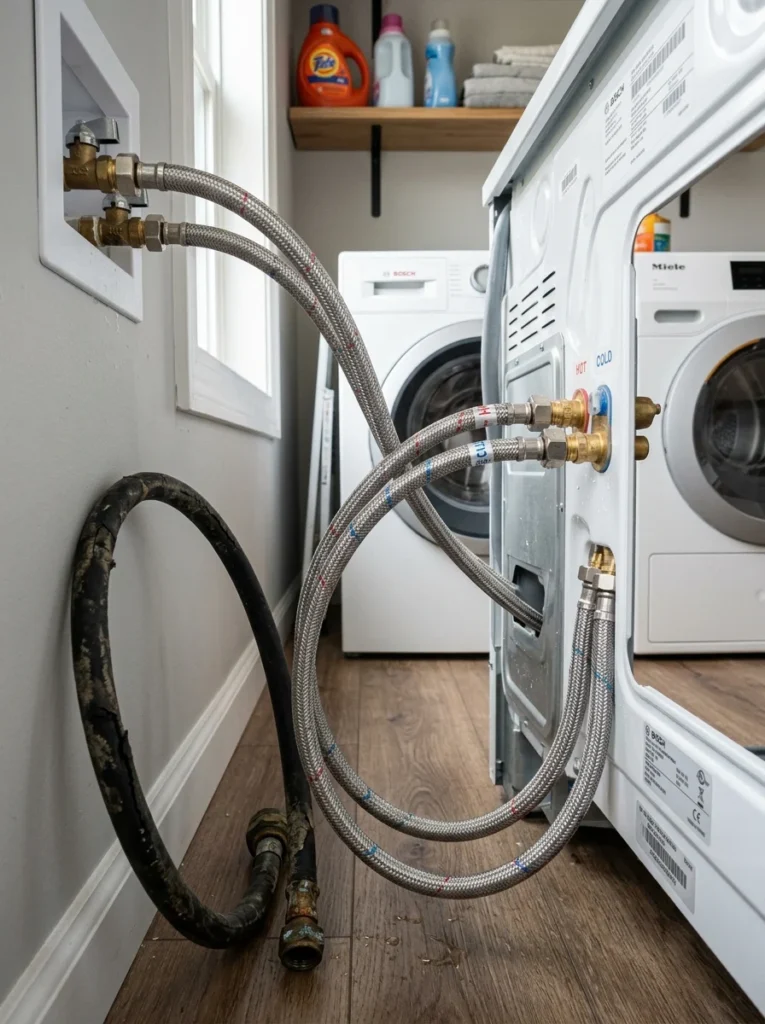
Inspect washer hoses regularly and replace them proactively
Washer supply hoses, particularly standard rubber ones, can deteriorate over time and are a common source of water damage when they fail, sometimes catastrophically and without warning if a hose bursts while the washer is running unattended. Inspecting hoses periodically for any bulging, cracking, or fraying, and proactively replacing rubber hoses with braided stainless steel ones, which are considerably more resistant to bursting, meaningfully reduces this risk. Even without visible damage, replacing washer hoses every five years or so as a preventive measure is a reasonable safety practice given how much potential water damage a failed hose can cause.
Never run the washer or dryer unattended overnight
While modern appliances are generally reliable, running a load overnight or while away from home removes the ability to respond quickly if something does go wrong, a hose bursts, a fire starts, or a malfunction occurs. Running laundry during hours when someone is home and reasonably alert to respond, rather than as a genuinely unattended overnight task, is a simple habit change that meaningfully reduces the potential severity of any appliance malfunction that does occur.

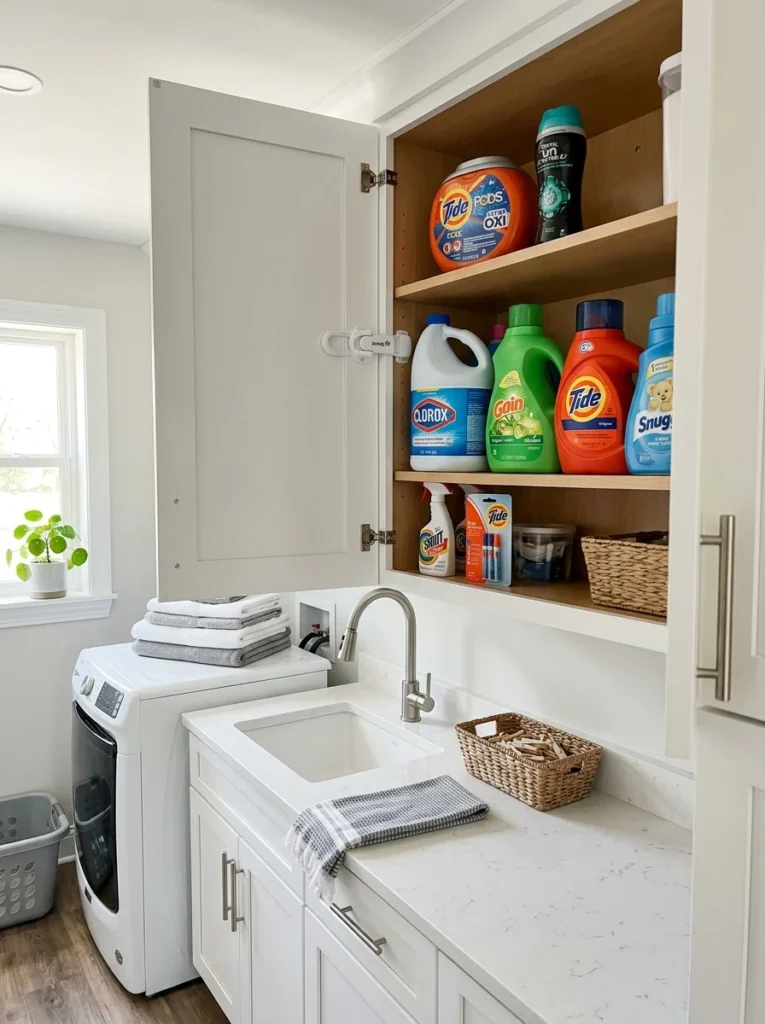
Store laundry chemicals safely and out of reach of children
Detergent pods, in particular, pose a significant poisoning risk to young children due to their bright colors and candy-like appearance, and they should always be stored in their original, child-resistant container, kept in a locked or genuinely inaccessible cabinet rather than an open shelf within a child’s reach. Bleach, fabric softener, and other laundry chemicals should be treated with similar caution, stored well above a young child’s reach or behind a childproof lock, and never transferred to unmarked or food-related containers where they could be mistaken for something else entirely.
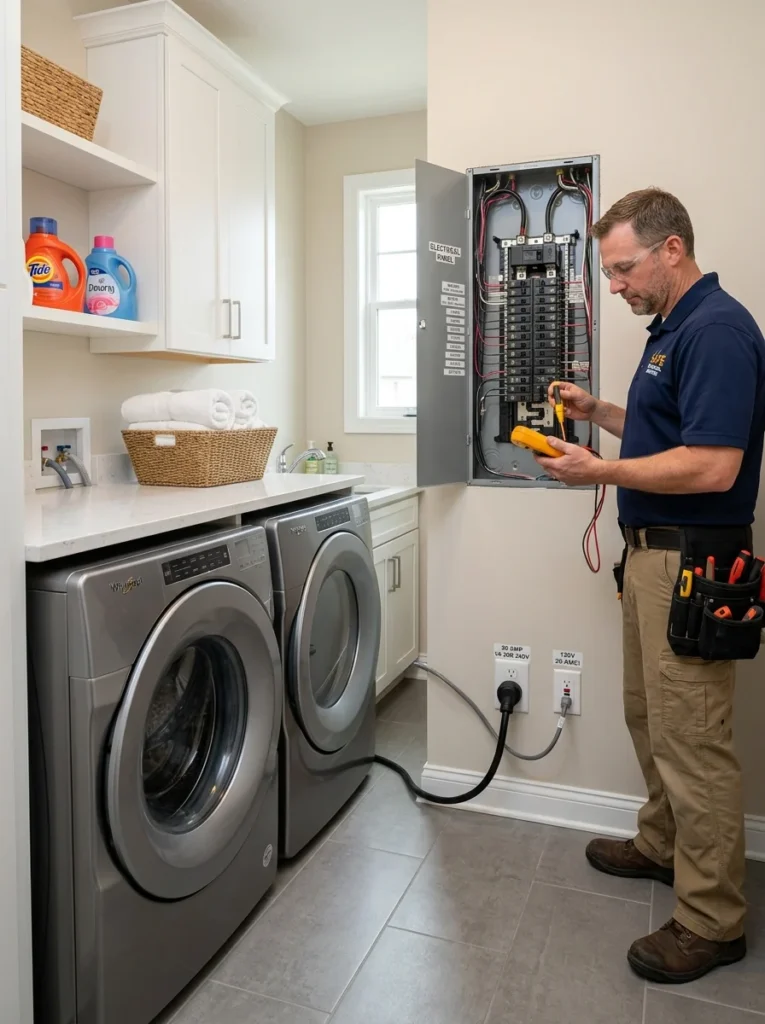
Ensure proper electrical setup for your appliances
Washers and dryers, particularly electric dryers, draw significant power and should be connected to a properly rated, dedicated circuit rather than sharing an overloaded circuit with other appliances, which can lead to tripped breakers at best and overheating or electrical fire risk at worst. If your laundry room’s electrical setup hasn’t been evaluated in years, particularly in an older home, having an electrician confirm it meets current safety standards for the appliances you’re actually running is a worthwhile, if less obvious, safety check.
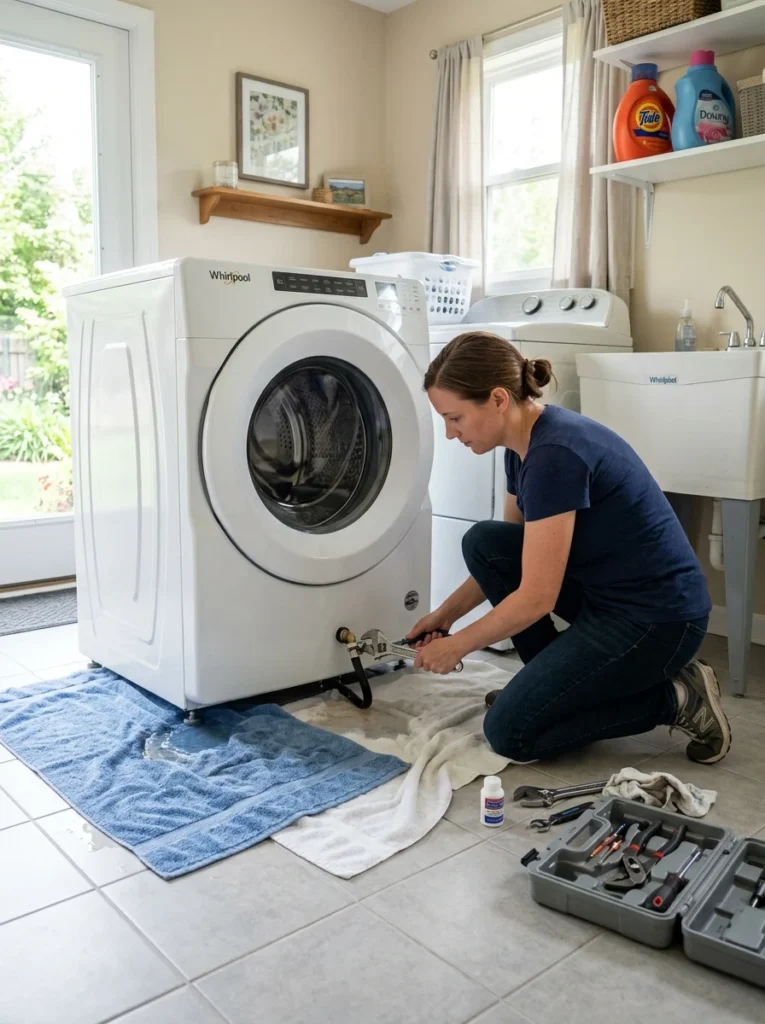
Address water leaks and moisture issues promptly
A laundry room dealing with unaddressed water leaks, whether from a supply hose, the washer drain, or general plumbing issues, risks both structural water damage over time and the mold growth that comes with sustained moisture exposure, which can create genuine indoor air quality and health concerns beyond just property damage. Addressing any leak promptly, rather than tolerating a slow drip because it seems minor, and ensuring adequate ventilation in the room generally, protects both the space and the household’s health over the long run.
Keep the floor clear and address spills immediately
A laundry room floor with water spills, dropped items, or general clutter creates a genuine slip and trip hazard, particularly given how frequently people move through this space carrying baskets or items that limit their visibility of the floor. Wiping up spills immediately, keeping the floor generally clear of loose items, and choosing slip-resistant flooring, as covered in more detail in other laundry room guides, all reduce this often-overlooked injury risk.

Take extra precautions with gas dryers specifically
A gas dryer introduces additional considerations beyond an electric model, including the risk of gas leaks and carbon monoxide exposure if the appliance isn’t properly vented or maintained. Having a gas dryer’s connection and venting inspected by a qualified professional periodically, rather than assuming it’s fine indefinitely once installed, catches potential issues before they become serious. Installing a carbon monoxide detector near the laundry room, in addition to any elsewhere in the home, adds an extra layer of protection specifically relevant to a gas appliance’s potential risks, which an electric dryer simply doesn’t carry to the same degree.
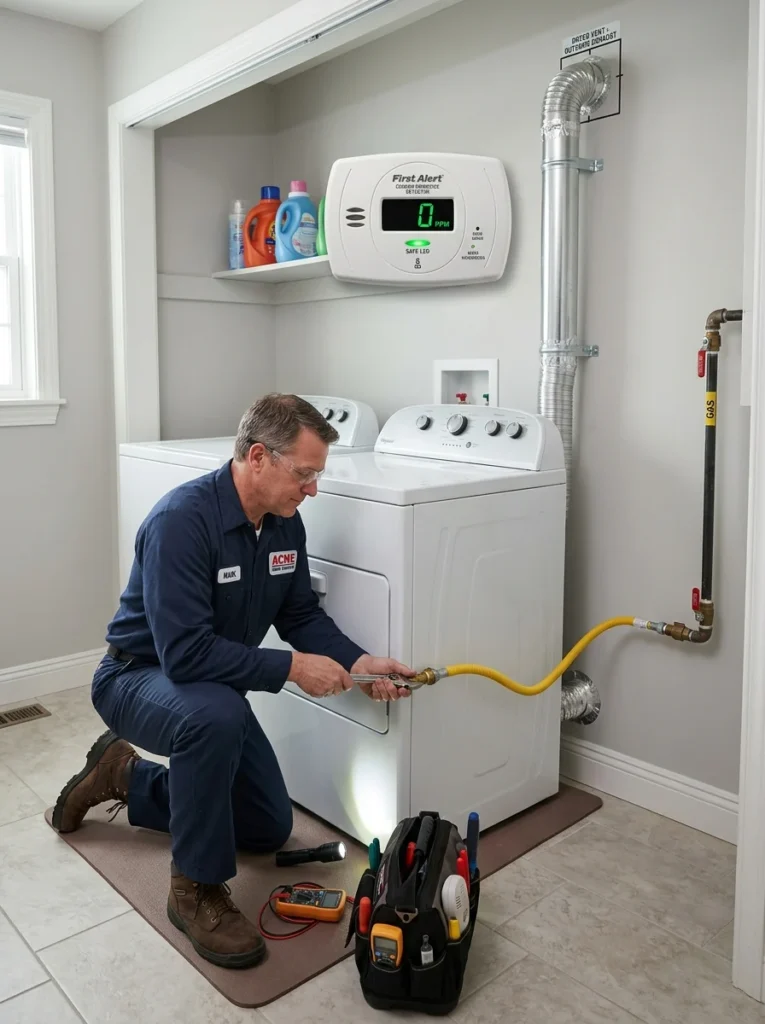
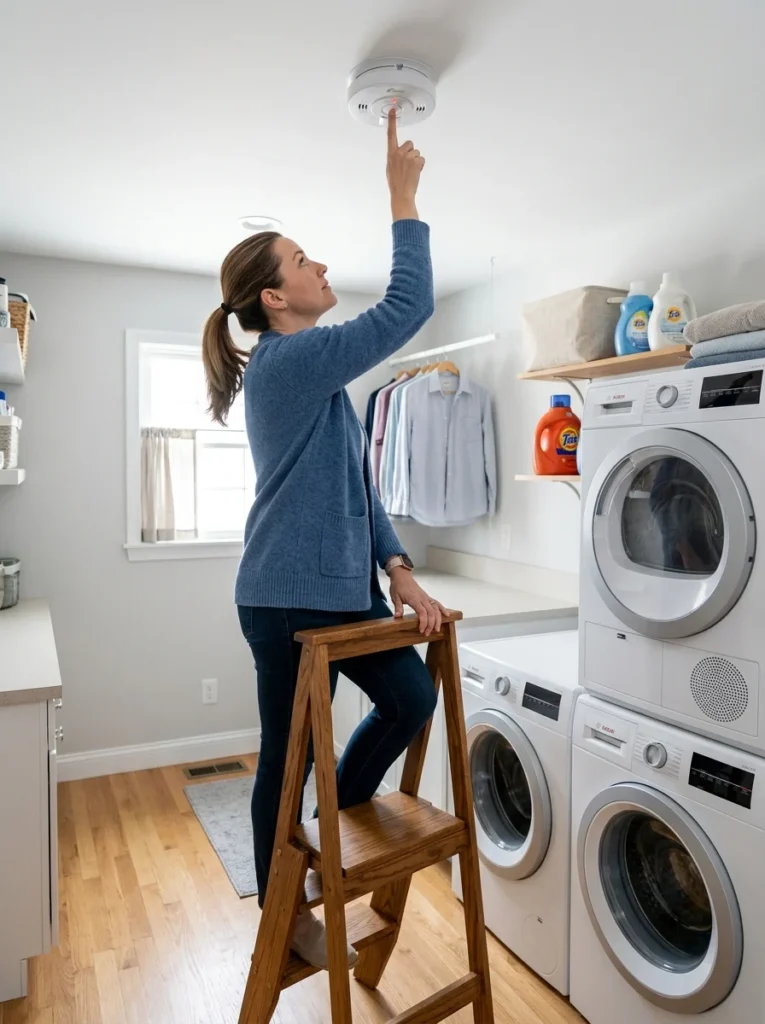
Install and maintain a smoke detector near the laundry area
Given that dryer-related fires are a genuine, documented risk, having a working smoke detector installed near the laundry room specifically, not just relying on detectors elsewhere in the house, provides earlier warning if something does go wrong in this particular space. Testing this detector regularly and replacing its batteries on a consistent schedule, the same as any other smoke detector in the home, ensures it’s actually functional if it’s ever needed, rather than a false sense of security from a detector that’s silently stopped working.
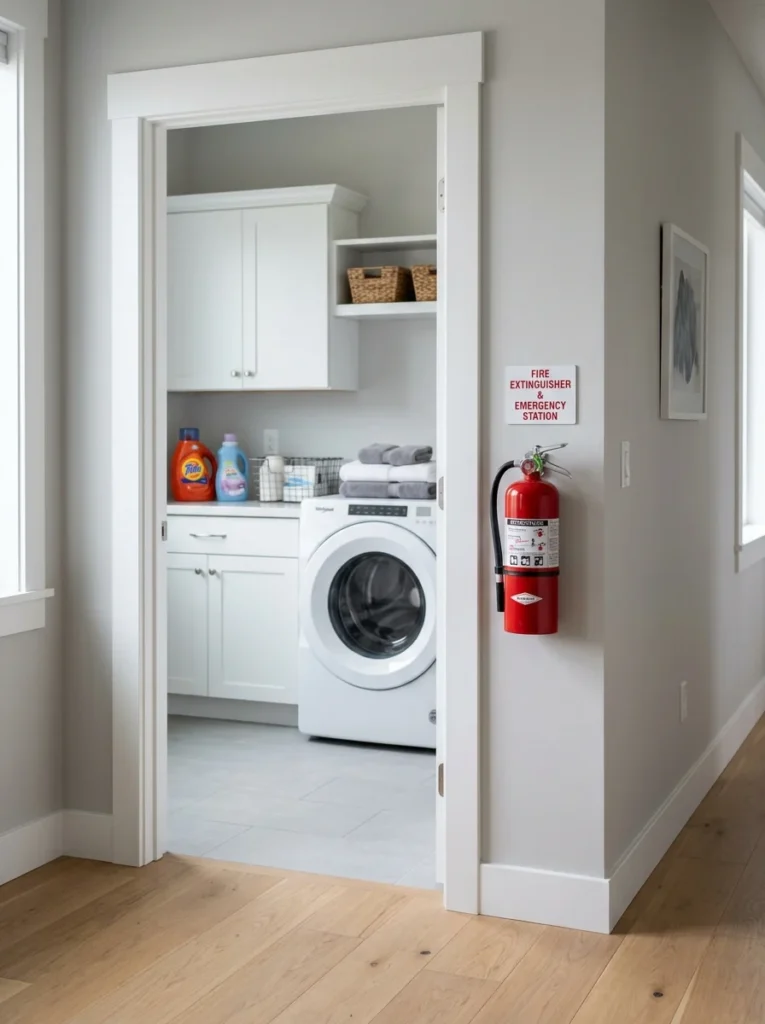
Keep a fire extinguisher accessible near the laundry room
A small fire extinguisher rated for the appropriate fire classes, kept in or near the laundry room rather than stored elsewhere in the house, allows for a quick response if a small fire does start, particularly given how frequently this specific room is cited in house fire statistics related to dryer lint. Knowing how to use it correctly, and ensuring it hasn’t expired or lost pressure over time, matters just as much as simply having one present, so periodically checking its gauge and expiration date is worth adding to the same routine as testing smoke detectors.
Common laundry room safety questions

How often should I clean my dryer vent?
The lint trap should be cleaned after every load, while the full exhaust duct running to the outside vent should be professionally inspected and cleaned at least once a year, more often for households doing frequent laundry, since lint accumulation in the duct is a leading cause of dryer fires.
Are laundry detergent pods dangerous for children?
Yes, detergent pods pose a significant poisoning risk due to their bright colors and candy-like appearance, and they should always be stored in their original child-resistant packaging in a locked or genuinely inaccessible cabinet.
How often should I replace my washer’s supply hoses?
Even without visible damage, replacing standard rubber washer hoses with braided stainless steel ones every five years or so is a reasonable preventive practice, given how much water damage a failed hose can cause if it bursts unexpectedly.
Is it safe to run the washer or dryer while I’m not home?
It’s generally safer to run laundry loads while someone is home and able to respond quickly if a hose bursts, a malfunction occurs, or, in rarer cases, a fire starts, rather than running appliances unattended overnight or while away from the house.
Do I need a smoke detector specifically in the laundry room?
Yes, given how frequently dryer-related lint fires are cited in house fire statistics, having a working smoke detector installed near the laundry room, in addition to detectors elsewhere in the home, provides earlier warning specific to this higher-risk space.
Laundry room safety mostly comes down to a handful of consistent habits, regular dryer vent cleaning, proper hose maintenance, safe chemical storage, and not overloading appliances or circuits, rather than any single expensive upgrade. These small, consistent precautions meaningfully reduce genuine risks of fire, water damage, and poisoning that this particular room deals with more than most others in a typical home.
Since our neighbor’s scare, our own dryer vent gets cleaned on a real schedule now, our washer hoses have been upgraded to braided stainless steel, and our laundry chemicals sit in a cabinet our kids genuinely can’t access rather than an open shelf we’d convinced ourselves was fine. If you can’t remember the last time you checked your own dryer vent or inspected your washer hoses, that’s the best place to start; it’s a small task that addresses one of the most common and most preventable risks this room presents.