
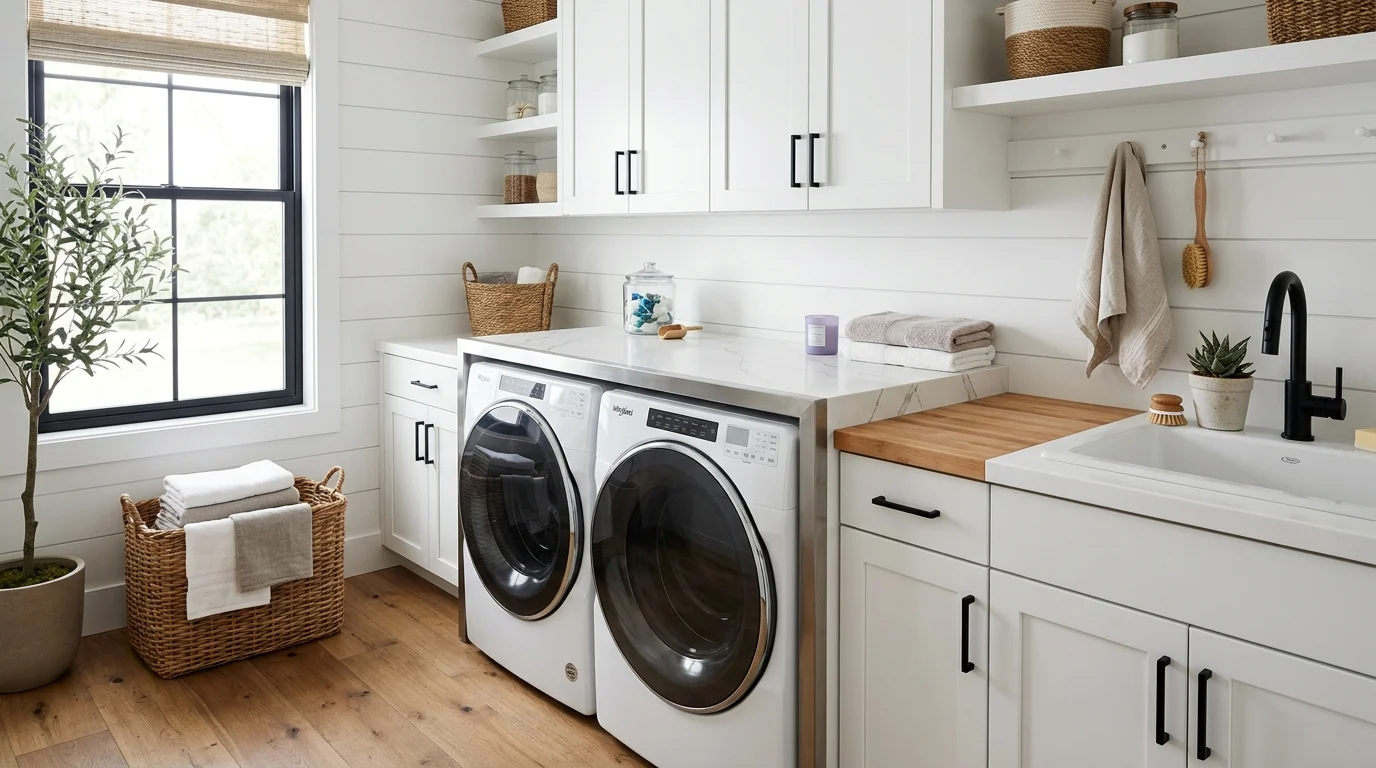
When we finally added a counter over our washer and dryer, I initially just ordered whatever laminate remnant was cheapest at the local supplier, figuring a laundry room counter didn’t need much thought beyond having a flat surface to fold on. Within a year, the edges had started peeling from repeated exposure to detergent drips and the occasional damp towel left sitting on it, and I realized a laundry room counter actually deals with a fairly specific set of conditions, moisture, occasional chemical exposure, and daily heavy use, that not every countertop material handles well. Replacing it with a material actually chosen for these conditions, rather than just price, made a real difference in how the room has held up since.
A laundry room countertop needs to balance durability against moisture and chemicals with a budget that makes sense for a utility space rather than a showcase kitchen. Here’s an honest look at the most common options, so you can choose one that actually suits how a laundry room gets used.
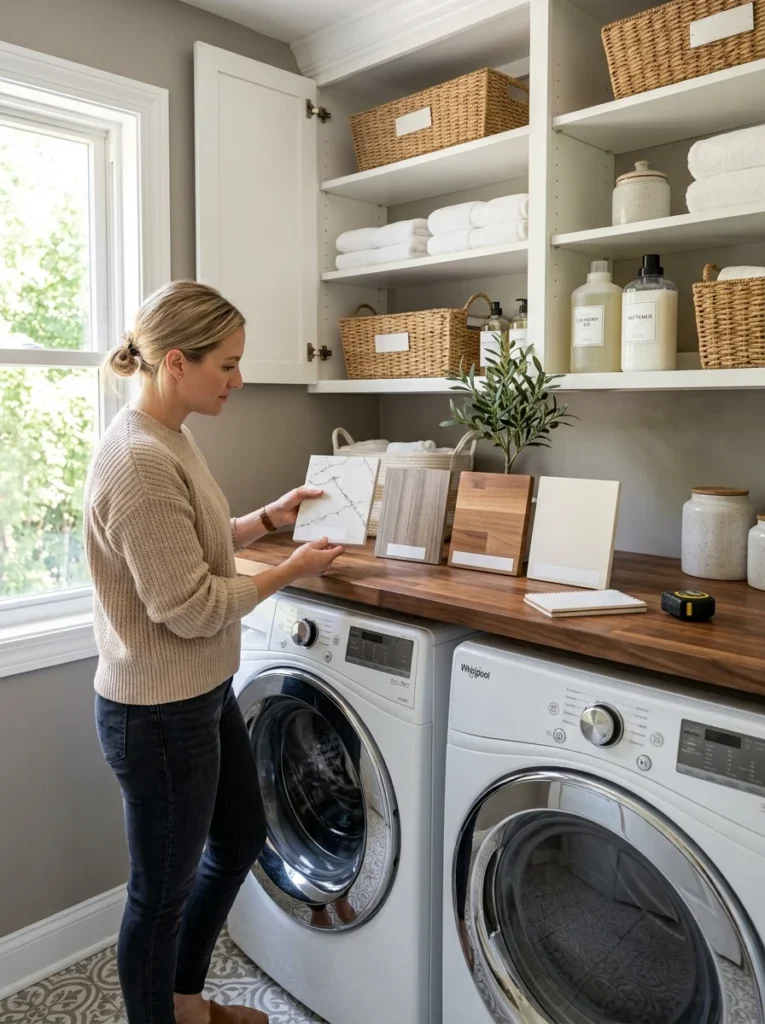
Laminate: budget-friendly but limited durability in this room
Laminate is the most affordable countertop material widely available, and it comes in an extensive range of colors and patterns, including convincing stone and wood-look finishes. However, standard laminate is vulnerable to moisture at its seams and edges, exactly the kind of exposure a laundry counter deals with regularly from detergent drips and damp items, which is exactly what went wrong with my own first attempt. If budget constraints point strongly toward laminate, choosing a product with well-sealed edges, and being diligent about wiping up spills promptly, helps mitigate this vulnerability, though it remains a genuine limitation of the material in this specific room.
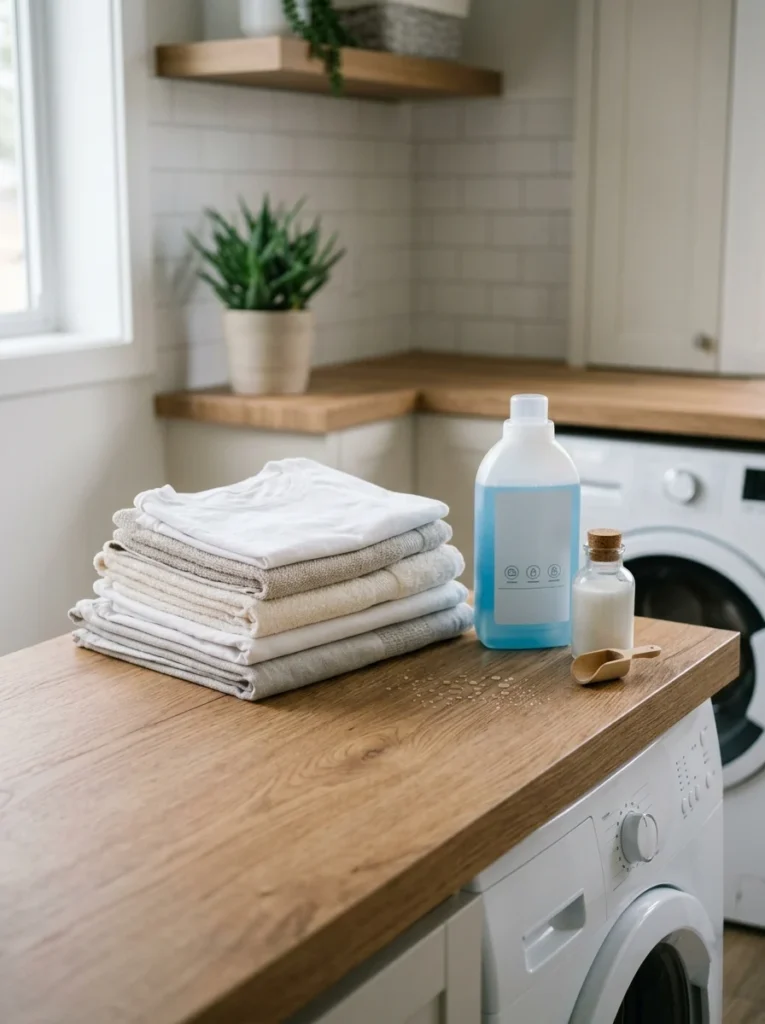
Quartz: durable and low-maintenance, at a higher price point
Engineered quartz offers outstanding durability and, being non-porous, excellent resistance to moisture, staining, and the mild chemical exposure a laundry room counter regularly faces from detergent and fabric softener drips. It requires no sealing, unlike natural stone, and holds up to daily wear with minimal maintenance beyond routine cleaning. The tradeoff is cost, since quartz sits toward the higher end of the countertop price spectrum, though for a room seeing this kind of regular chemical and moisture exposure, many homeowners find the durability justifies the investment, particularly if the laundry room counter also needs to handle occasional light impact from dropped items.
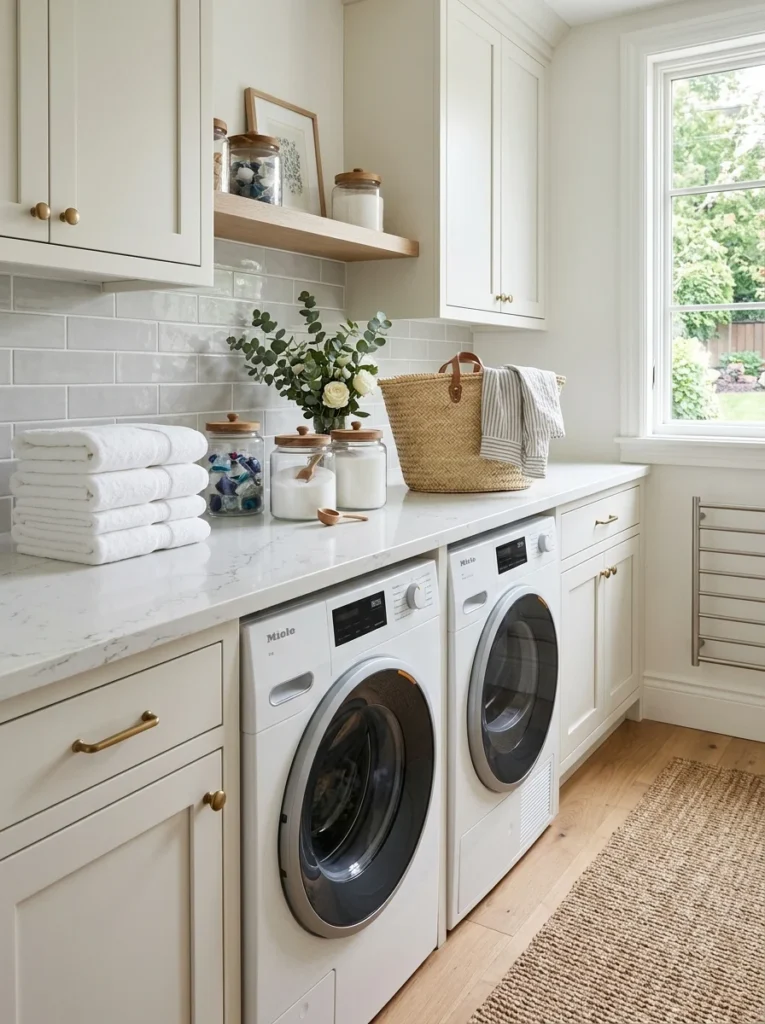
Solid surface: a durable middle ground
Solid surface material, a non-porous, seamless acrylic-based product, offers strong resistance to moisture and staining similar to quartz, generally at a somewhat lower price point, though this varies by specific brand and finish. It can be fabricated with an integrated sink if you’re also adding a utility sink to the space, creating a genuinely seamless look between the counter and sink basin that’s harder to achieve with some other materials. Solid surface is also more susceptible to scratching and heat damage than quartz, so it’s worth handling with a bit more care in a room where dropped zippers or hot items fresh from a dryer could otherwise mark the surface.
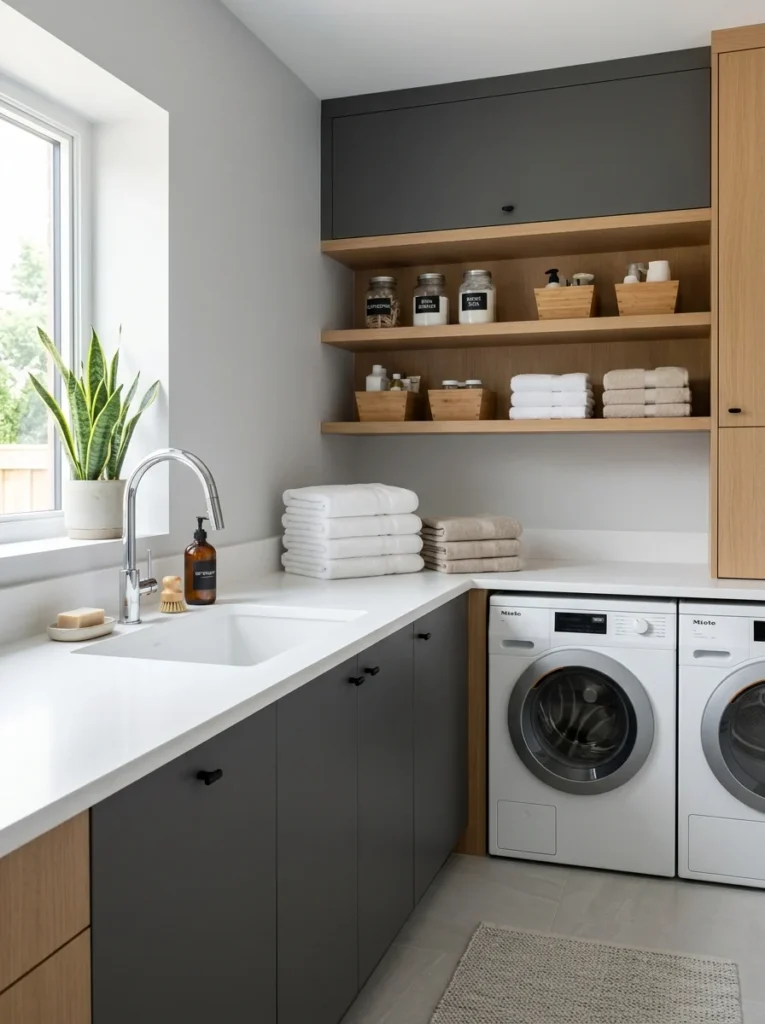
Butcher block: warm looking but higher maintenance in this room
Butcher block countertops bring a warm, natural look that pairs well with a variety of laundry room design styles, and the material is comfortable and forgiving to fold clothes on directly. However, wood requires regular sealing to resist the moisture and detergent exposure typical of a laundry room, and without diligent maintenance, it’s prone to staining, warping, or water damage over time in exactly the conditions this room presents daily. This material suits homeowners specifically drawn to its look and willing to commit to more frequent sealing and careful spill management than lower-maintenance alternatives require.
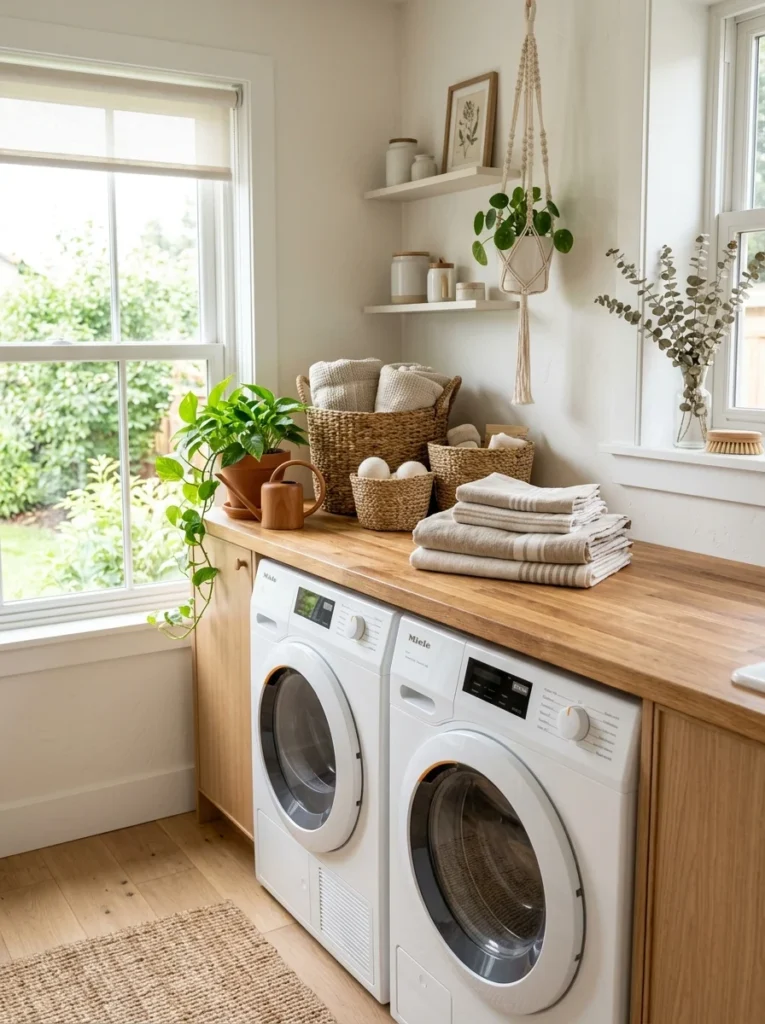
Concrete: highly durable with a distinctive, customizable look
Poured or precast concrete countertops offer excellent durability and can be tinted, stamped, or finished in a range of styles, giving a laundry room counter a distinctive, substantial look that manufactured materials don’t fully replicate. Properly sealed concrete resists moisture and chemical exposure well, though the sealant does need periodic reapplication to maintain that resistance over time. Concrete is heavier than most alternatives, which is worth confirming your cabinet or support structure can adequately handle, and it generally requires professional fabrication and installation rather than being a straightforward do-it-yourself project.
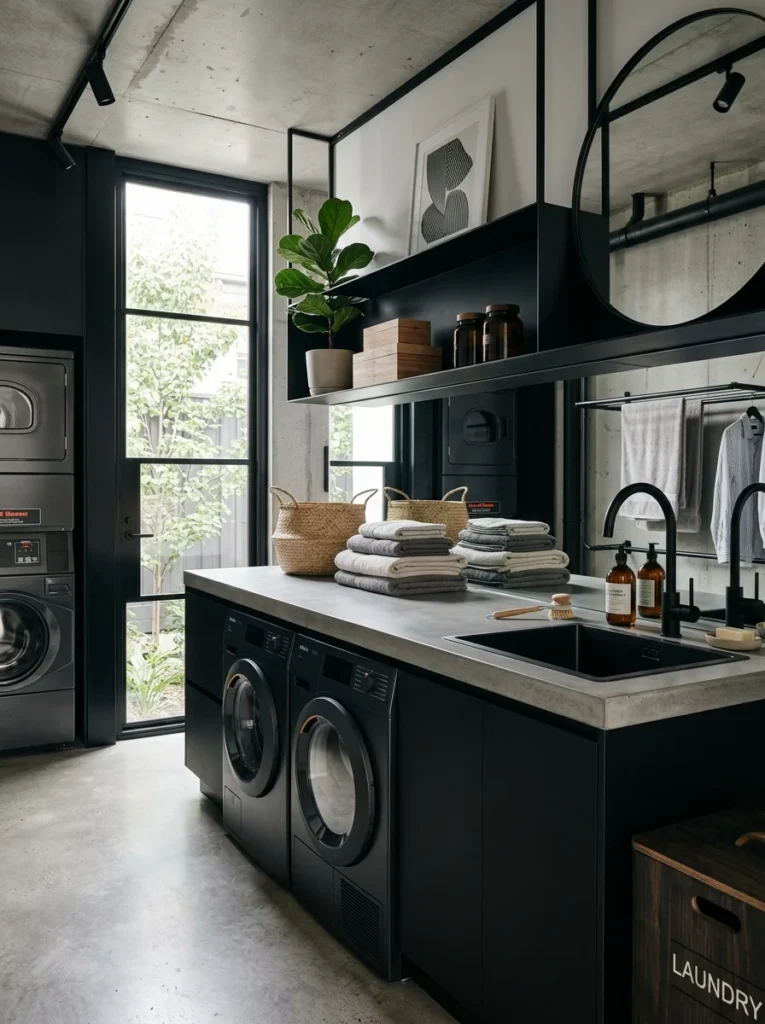
Stainless steel: highly practical, especially for a utility-focused space
Stainless steel countertops are entirely non-porous, completely resistant to moisture and chemical exposure, and easy to clean, making them a genuinely practical choice for a laundry room’s specific conditions, similar to why stainless steel is common in commercial kitchen and utility settings. It doesn’t offer the warmth or design variety of some other materials, and it can show scratches or dents over time with heavy use, but for a purely function-focused laundry room, it’s one of the most durable choices available against the exact conditions this room presents.
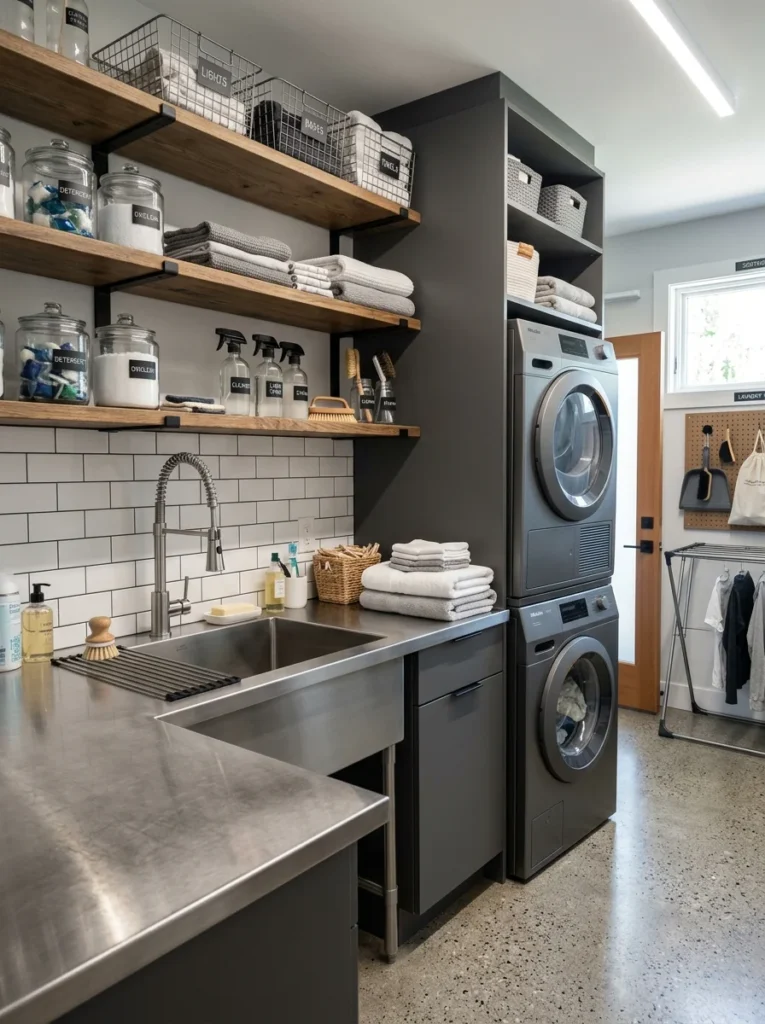
Consider a laminate alternative: melamine or thermofoil for tighter budgets
If cost is the primary constraint and quartz or solid surface aren’t feasible, melamine or thermofoil-finished surfaces offer a step up from basic laminate in terms of edge sealing and moisture resistance, at a similarly accessible price point. These aren’t as durable as quartz or solid surface long-term, but they represent a reasonable middle ground for a laundry room counter on a genuinely tight budget, provided spills are wiped up reasonably promptly rather than left to sit.
Match the material to how the counter will actually be used
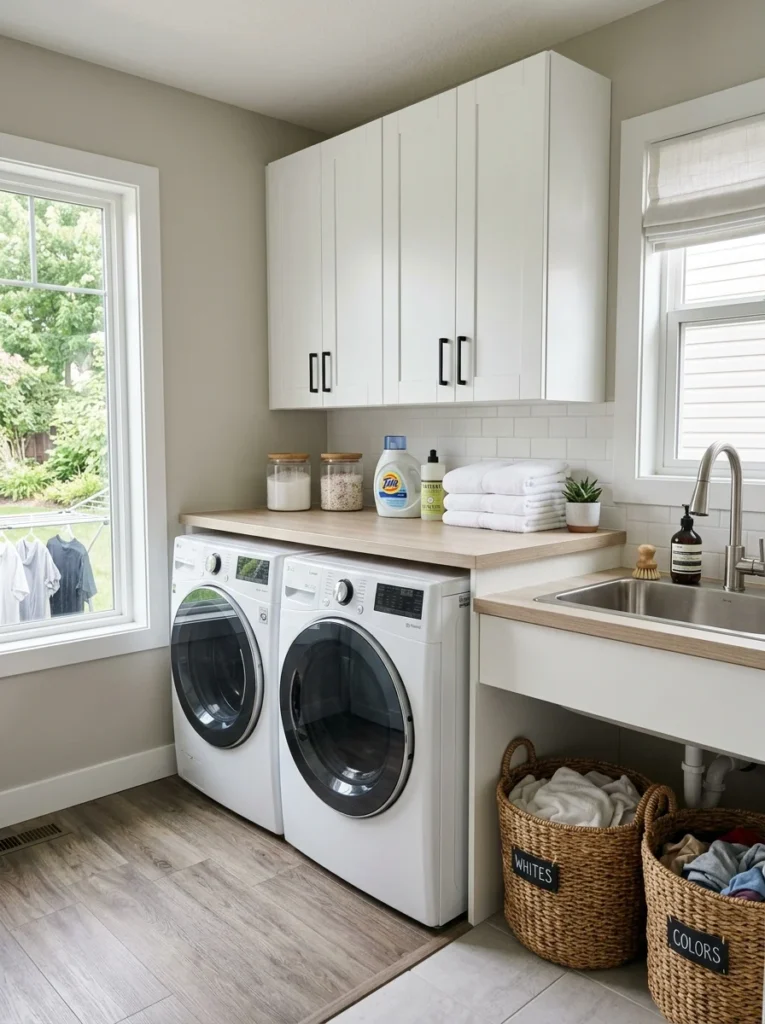
If the counter is used purely for folding clean, dry laundry with minimal direct water exposure, a wider range of materials, including laminate, can perform reasonably well. If the counter will also serve as a spot for pre-treating stains, handling wet items directly, or sits adjacent to a utility sink where splashing is likely, prioritizing a fully non-porous, highly moisture-resistant material like quartz, solid surface, or stainless steel becomes considerably more important given the more demanding conditions that specific use involves.
Factor in edge and seam quality regardless of material
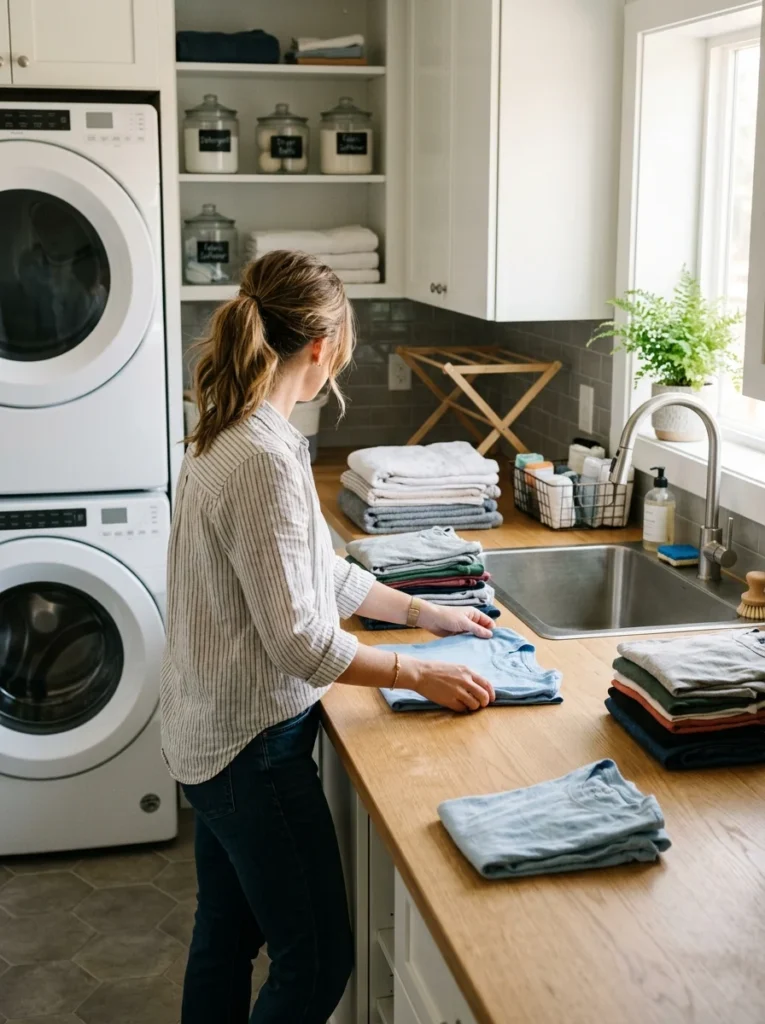
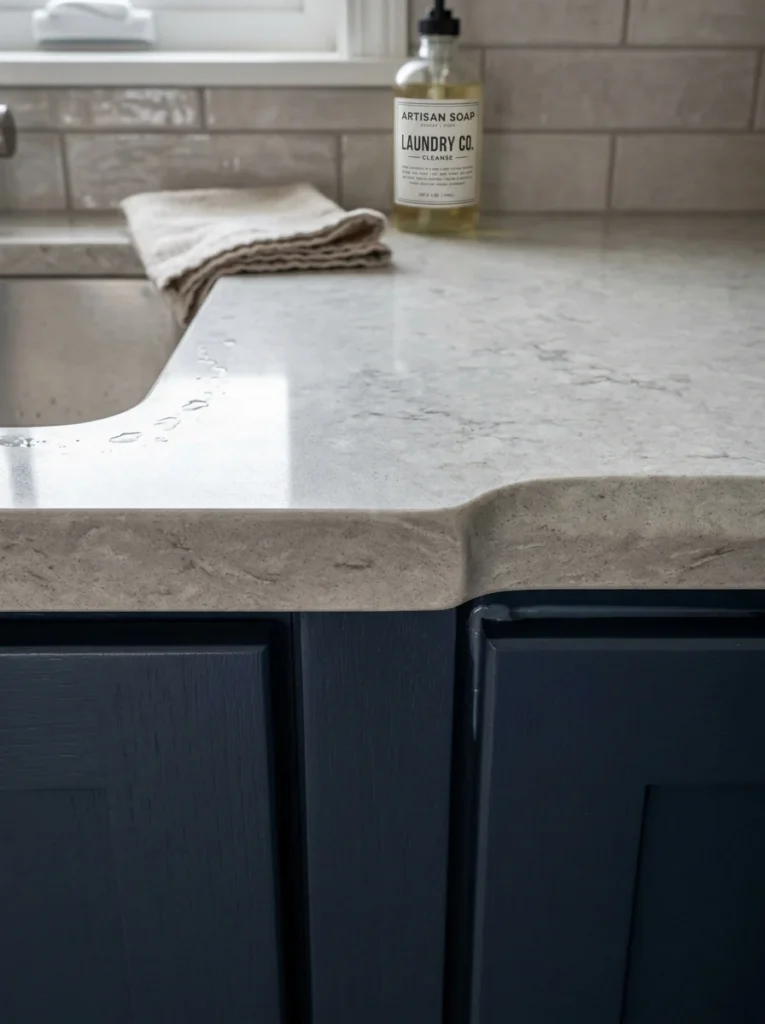
Regardless of which material you choose, poor-quality edge finishing or seams are often where moisture damage actually begins, since water and detergent can seep into any gap or poorly sealed joint even in an otherwise durable material. Confirming that edges are properly sealed or finished, and that any seams are tightly fitted and sealed during installation, protects the countertop’s performance regardless of the base material’s inherent durability.
Comparing typical costs across countertop materials
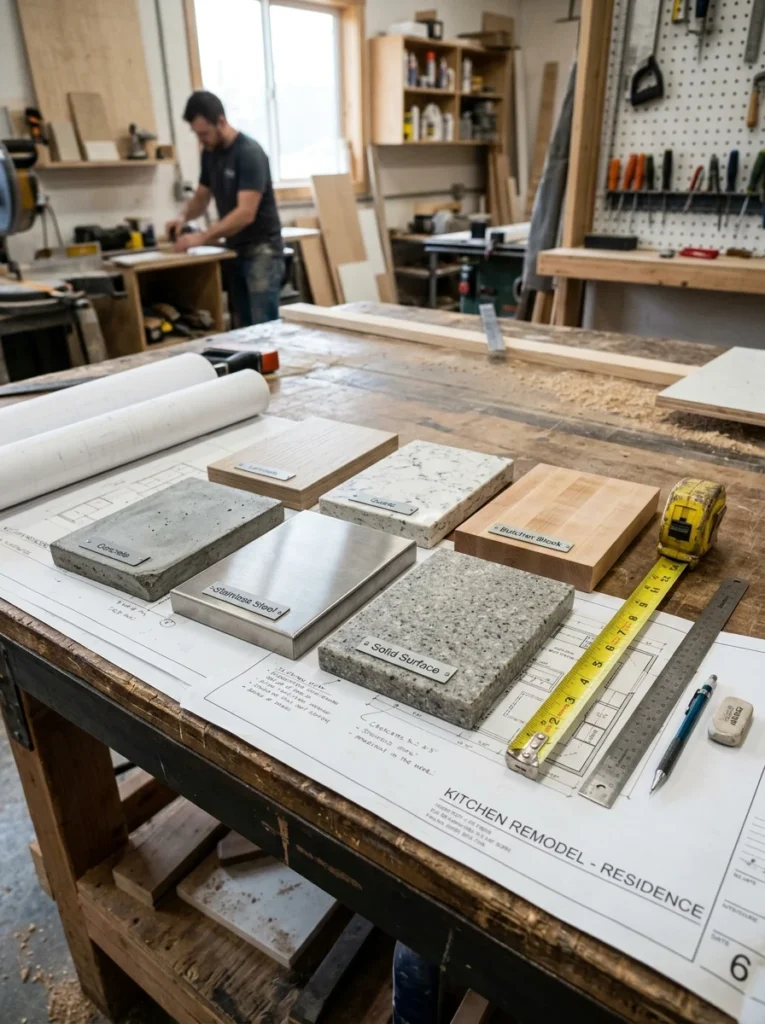
Laminate and melamine or thermofoil surfaces generally sit at the most affordable end of the spectrum, making them accessible for a tight laundry room budget despite their durability limitations in this specific room. Solid surface and butcher block typically fall into a mid-range price bracket, with quartz and concrete generally costing more due to material and fabrication expenses. Stainless steel pricing varies considerably depending on gauge and finish, but custom-fabricated stainless steel counters can rival or exceed quartz in cost, despite the material’s utilitarian, less design-forward appearance compared to some alternatives.
Deciding between a DIY installation and hiring a professional
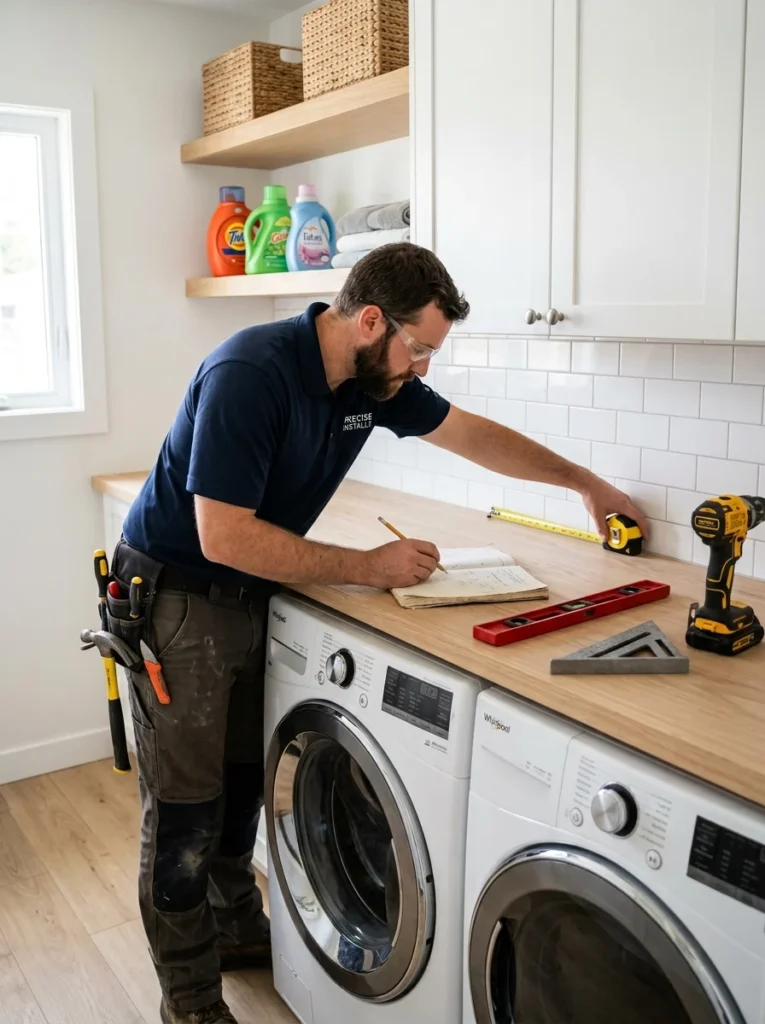
Laminate and some solid surface products, particularly pre-fabricated pieces cut to standard sizes, can be approachable for a confident do-it-yourself installation, especially in a simple laundry room layout without complex cuts or an integrated sink. Quartz, concrete, and any countertop involving a cut-in sink or complex edge profile generally require professional fabrication and installation, both for the specialized tools involved and to ensure a properly sealed, durable result. Factoring in installation cost and complexity, not just the material price itself, gives a more complete picture of the total investment required for each option.
Choosing color and finish for a functional, forgiving look
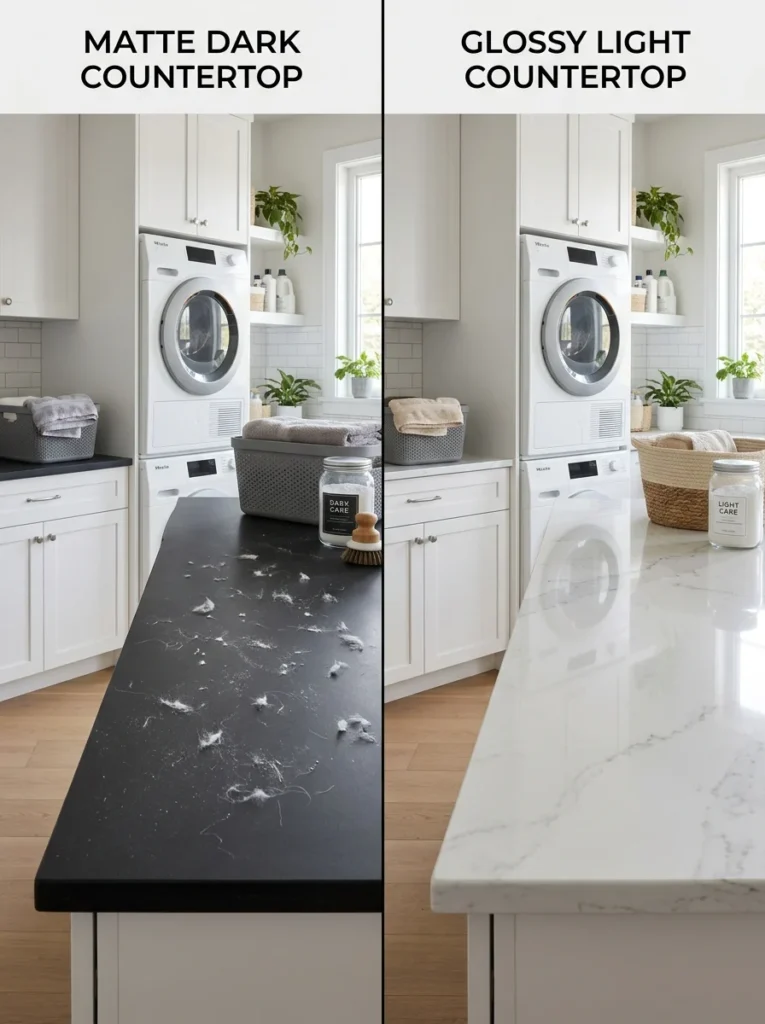
A lighter countertop color shows dust and lint more readily, which matters in a room that generates plenty of both from daily laundry use, while a darker or patterned surface tends to disguise this kind of everyday residue between cleanings. A matte or honed finish, rather than a glossy, highly polished one, also tends to show water spots and fingerprints less noticeably, which can be a practical consideration for a surface that deals with frequent hand contact and occasional water exposure throughout the day.
Common laundry room countertop questions
What’s the most durable countertop material for a laundry room?
Quartz and stainless steel are generally considered the most durable options for a laundry room’s specific conditions, since both are non-porous and highly resistant to the moisture and chemical exposure this room regularly deals with.
Is laminate a bad choice for a laundry room countertop?
Standard laminate is more vulnerable to moisture at its seams and edges than materials like quartz or solid surface, which matters given a laundry room’s regular exposure to detergent drips and damp items. It can still work on a tight budget if edges are well-sealed and spills are wiped up promptly.
Do I need a sealed countertop material for a laundry room?
Materials like butcher block and natural stone require regular sealing to resist moisture in a laundry room’s conditions, while non-porous materials like quartz, solid surface, and stainless steel don’t require this ongoing maintenance, making them generally lower-effort choices for this specific room.
Is it worth spending more on a laundry room countertop material?
If the counter will see regular exposure to water, detergent, or stain-treatment activities, investing in a more durable, non-porous material like quartz or solid surface tends to pay off over time by avoiding the premature wear and replacement that a cheaper, more vulnerable material might require.
Should I choose a light or dark countertop color for a laundry room?
A darker or patterned surface tends to disguise everyday dust and lint better than a lighter color, and a matte or honed finish shows water spots and fingerprints less noticeably than a glossy, polished one, both practical considerations for this specific room’s daily conditions.
A laundry room countertop deals with a fairly specific combination of moisture, chemical exposure, and heavy daily use that not every material handles equally well, regardless of how that material performs in a different room like a kitchen or bathroom. Quartz, solid surface, and stainless steel generally offer the strongest performance against these conditions, while laminate and butcher block can still work with more careful maintenance and realistic expectations about their limitations in this specific space.
Our replacement counter, a solid surface material chosen specifically for its moisture resistance rather than just its price, has held up without a single sign of the peeling or damage our original laminate developed within its first year. If you’re choosing a countertop for your own laundry room, think honestly about how that surface will actually be used, folding, pre-treating stains, sitting near a sink, before deciding purely based on upfront cost; the material best suited to those specific conditions will save you from redoing the job within a year, the way I ended up having to.