For years the wall behind my hob was painted plain, and for years I scrubbed it. Every fried onion, every splash of turmeric-stained oil, every enthusiastic tempering of spices left a mark, and no amount of wiping fully lifted it. When I finally tiled that wall, the change wasn’t just about looks. The first time a pot of curry spat all over it and I cleaned the whole thing with one swipe of a cloth, I actually laughed. That’s when I understood that a backsplash is a working part of the kitchen first and a decorative one second, and the best ones do both jobs at once.
A backsplash is a small area, usually the least expensive surface in the whole kitchen to change, and it has a wildly outsized effect on how the room looks and how easy it is to keep clean. It’s the one upgrade where a modest budget can genuinely transform a space. Below are seven ideas I’ve either lived with, installed, or watched work beautifully in other people’s kitchens, along with the honest practical notes on each, because a backsplash that looks stunning and stains at the first splash isn’t doing its job. Let me start with what actually makes a good one before the ideas themselves.
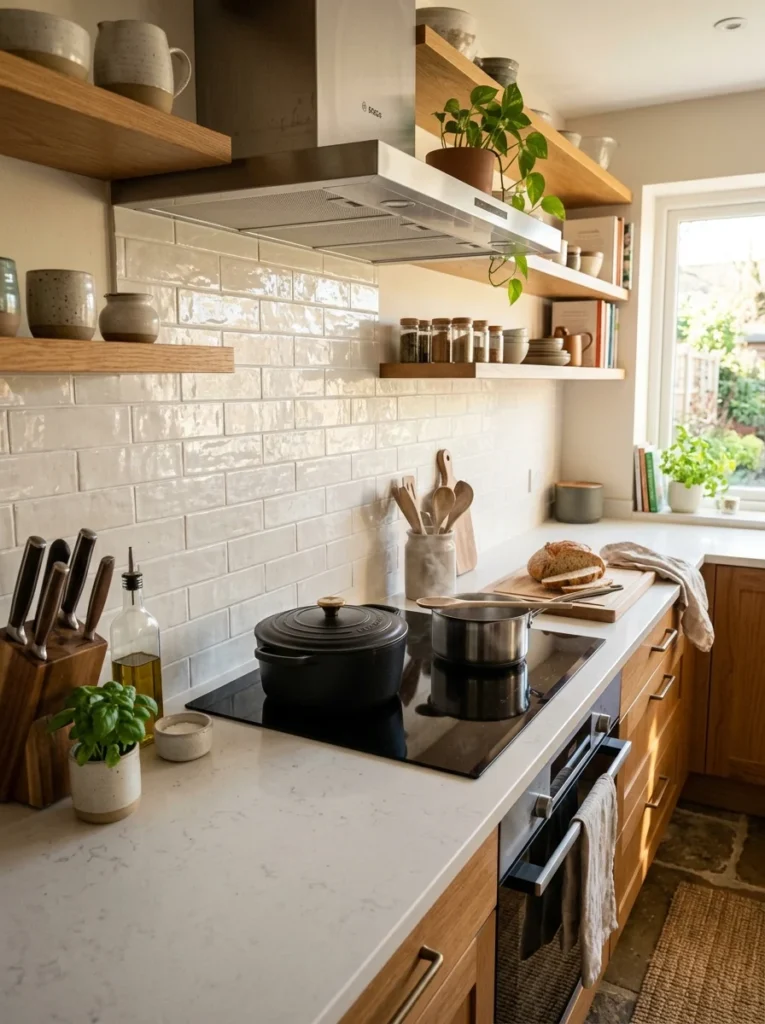
What a backsplash is really for
Before you pick a material, it helps to remember the two jobs the wall behind your counter and cooker has to do. First, protect. It takes the splashes, steam, grease and heat that would otherwise wreck a painted wall, so it needs to be wipeable and, behind the hob especially, heat-tolerant. Second, decorate. Because it sits at eye level and runs across a big visual band of the room, it’s one of the strongest style statements a kitchen can make. The mistake is treating it purely as decoration and forgetting the first job. A gorgeous porous surface that soaks up oil, or a fiddly one that traps grease in its texture, will make you regret it every time you cook. Keep both jobs in mind and every idea below gets easier to judge.
Seven backsplash ideas worth considering
1. Classic subway tile
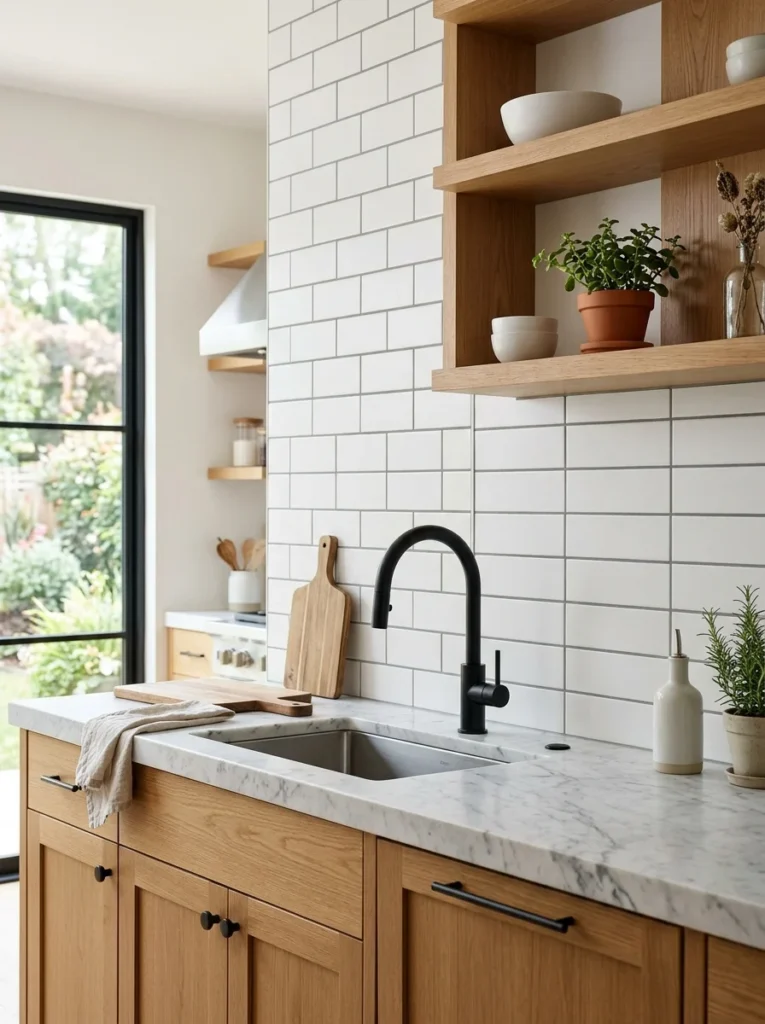
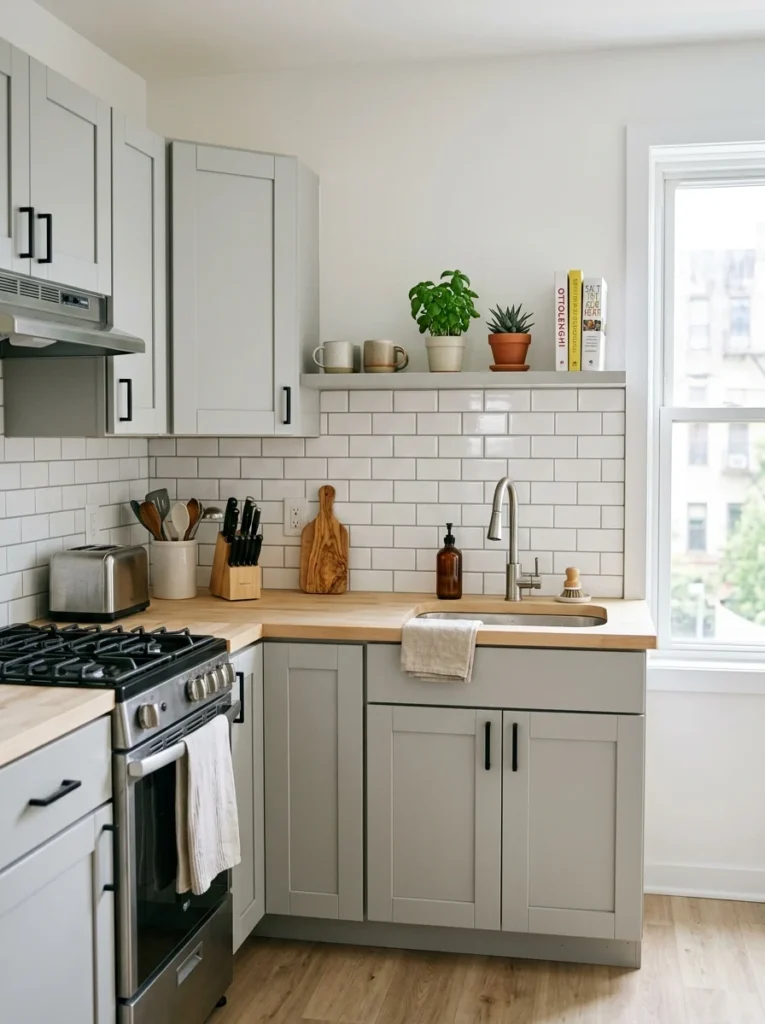
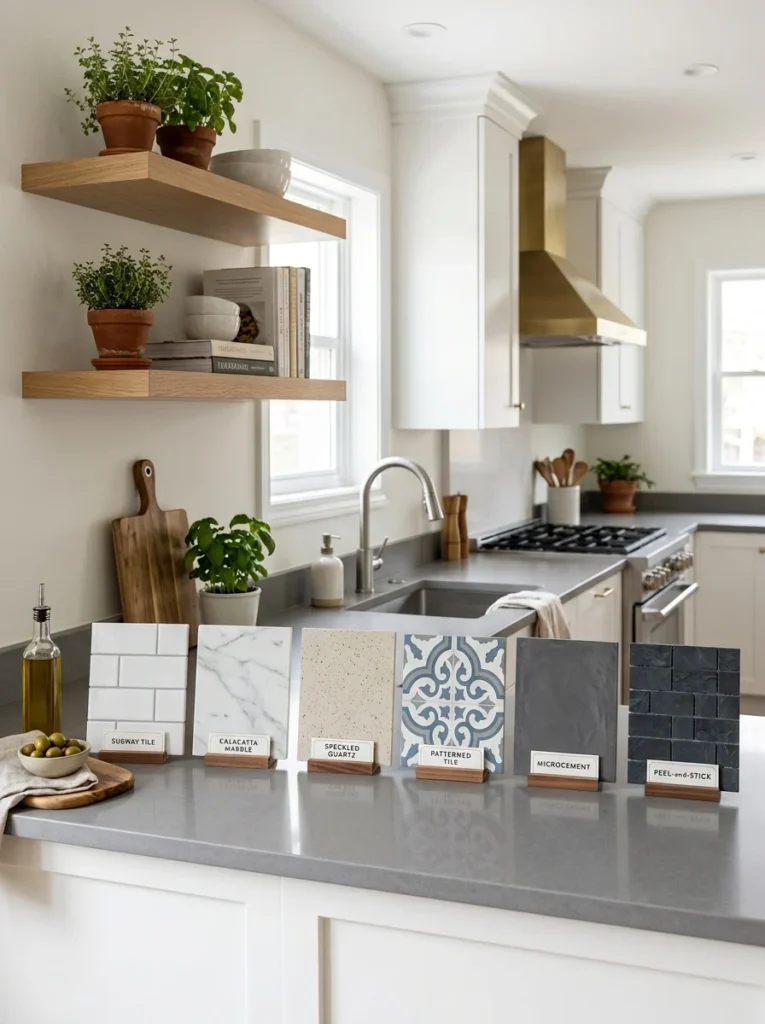
The rectangular subway tile is popular for the same reason a plain white shirt is: it goes with almost everything and never looks wrong. It’s inexpensive, widely available, easy to wipe, and forgiving to install because the simple grid is hard to get badly wrong. What most people miss is how much you can vary it. Lay it in the standard offset brick pattern for the familiar look, stack it straight for something cleaner and more modern, or run it vertically to draw the eye up in a low kitchen. Even the grout colour changes its whole character: a matching grout makes it recede into a calm surface, while a contrasting grout turns the same tiles into a graphic pattern. It’s the safe choice that doesn’t have to be boring, which is exactly why it endures.
2. Handmade glazed tile (zellige-style)
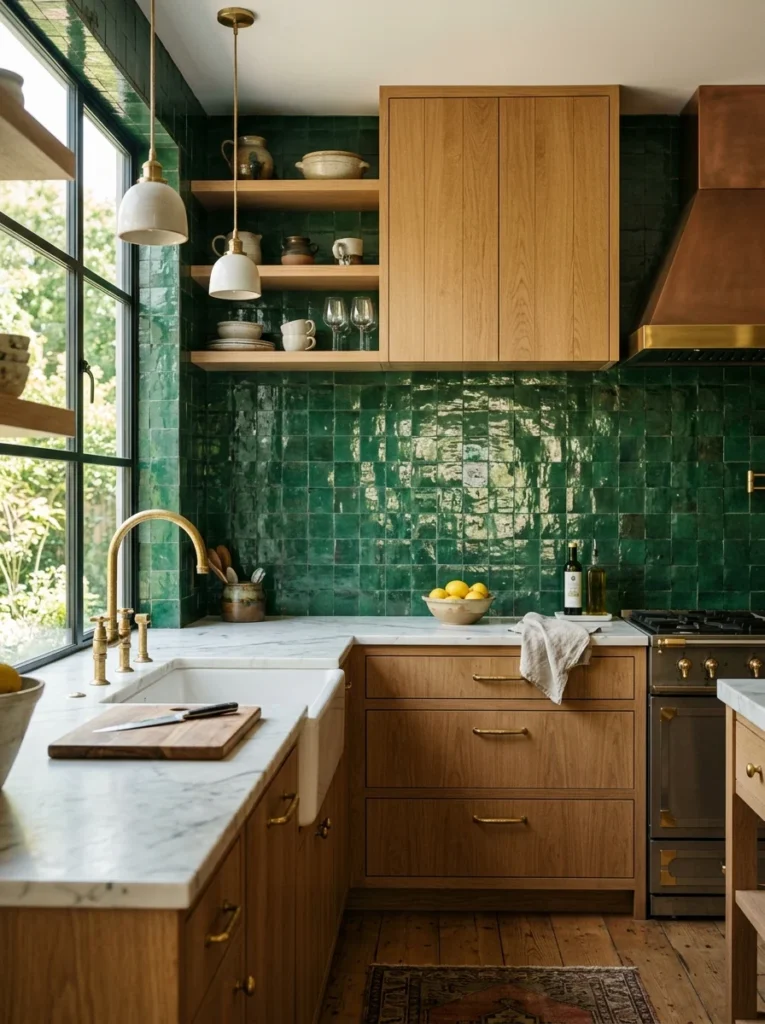
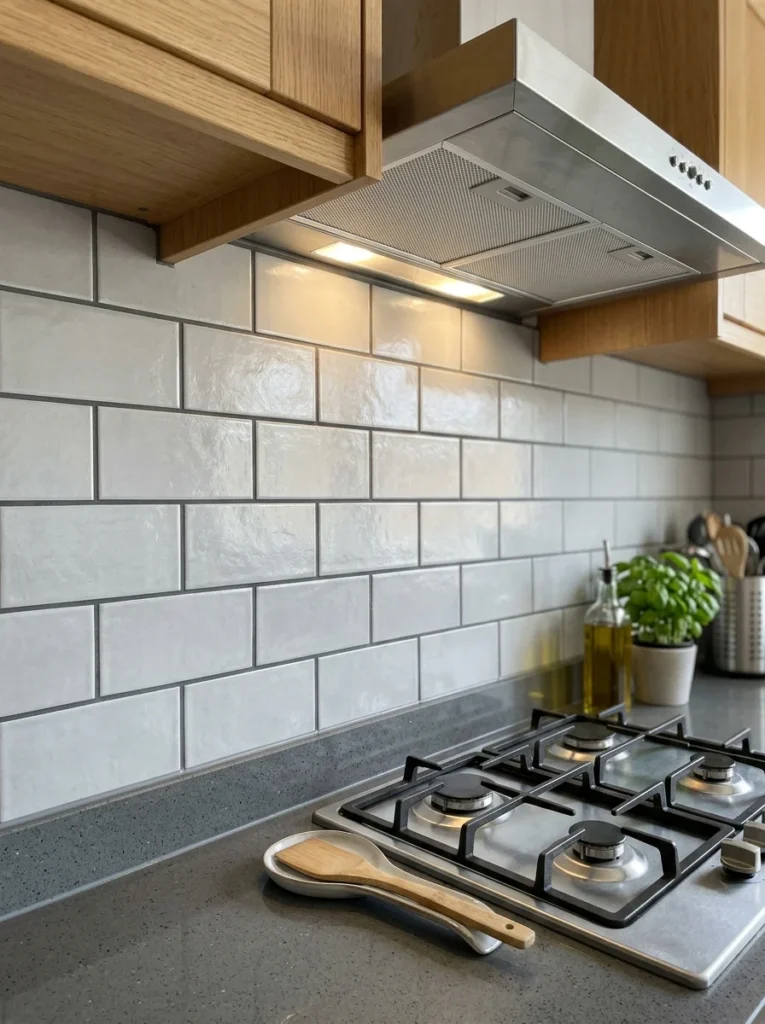
If plain subway feels too flat for you, handmade glazed tiles are the upgrade I fell for. Because each one is slightly irregular, with tiny variations in colour and a glossy, uneven surface, the finished wall catches light in a way machine-perfect tile never does. It has depth and a little soul. Mine are a soft green and the wall shifts subtly as the daylight moves across it, which I never tire of. The honest caveats: they cost more, the irregularity means installation takes a more patient hand, and the same uneven surface that looks beautiful can catch a bit more grease, so a wipeable glaze matters. But for a feature wall behind a hob or sink, few things add as much character for the money.
3. A full-height slab backsplash
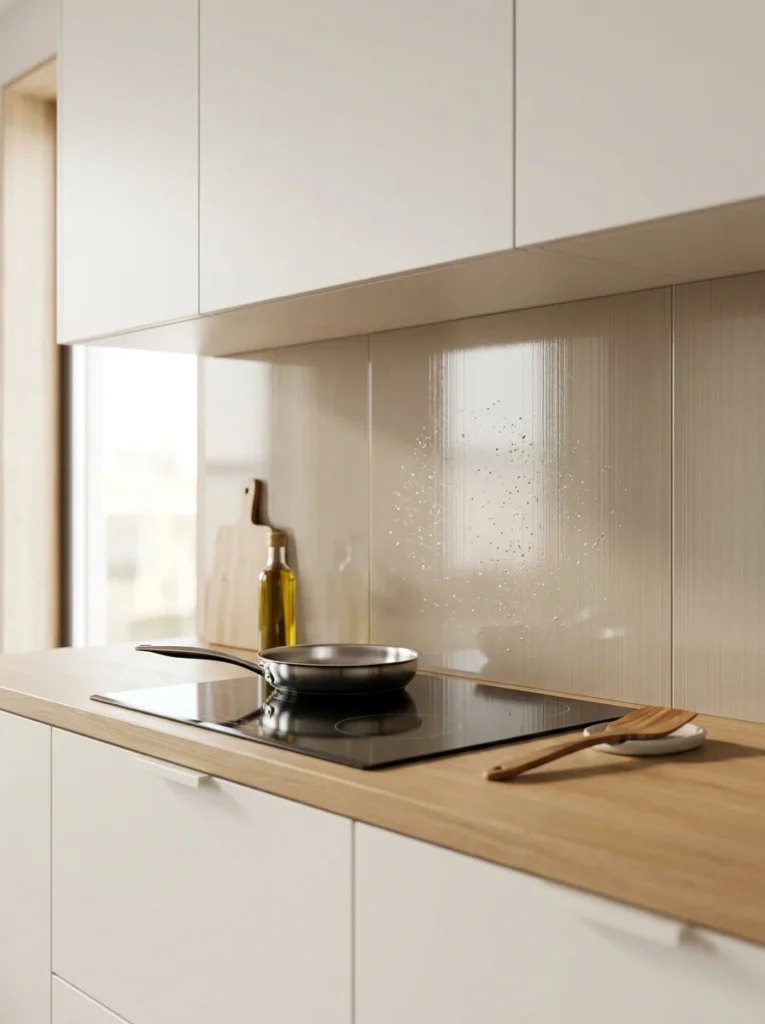
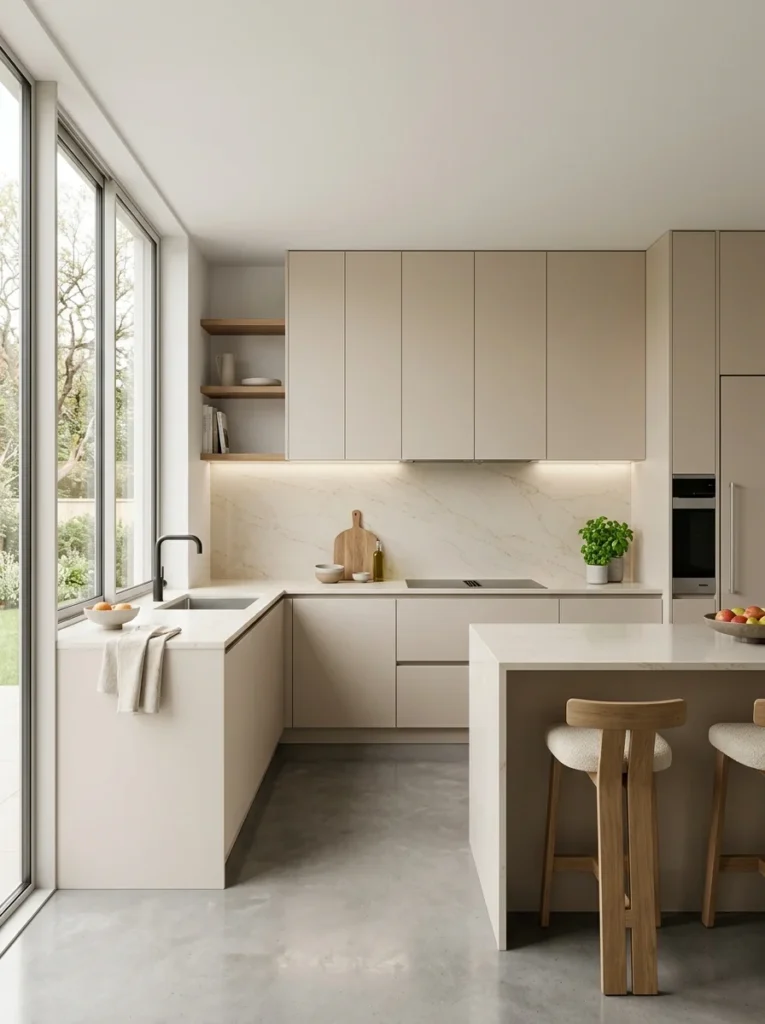
Running the same solid material as your worktop straight up the wall, with no tiles and no grout lines, gives a seamless, calm, quietly luxurious look that’s become one of my favourites to recommend. The huge practical advantage is that there’s no grout: grout is the part of a tiled backsplash that stains, discolours and needs scrubbing, and a slab simply removes that problem. One continuous wipeable surface, nothing for grease to hide in. It’s a pricier route, and best suited to a durable, non-porous material so it shrugs off splashes, but if low-maintenance is high on your list, the grout-free slab is hard to beat. I steer anyone who hates cleaning grout straight toward this.
4. Natural stone, with eyes open
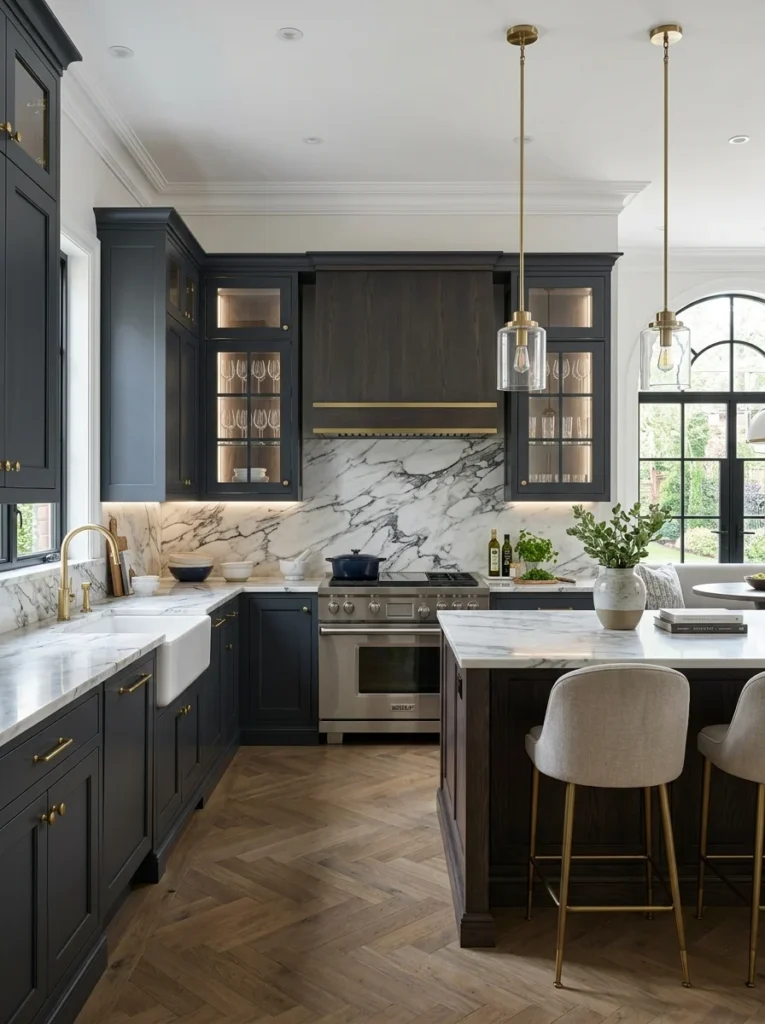
A natural stone backsplash, marble in particular, is undeniably beautiful, with veining and depth no manufactured tile can copy. I love how it looks. I’m also honest with people about the trade-off: many natural stones are porous, which means they can absorb oil and acidic splashes and stain or etch if they’re not sealed properly and re-sealed over time. In a hard-working kitchen behind a busy hob, that’s a real commitment, not a small one. If you adore the look, go in knowing it needs sealing and a bit of care, or choose a denser, less porous stone or a stone-look engineered surface that gives much of the beauty with far less babying. Beautiful is worth it only if you’ll actually keep up with the upkeep.
5. Painted or microcement for a seamless look
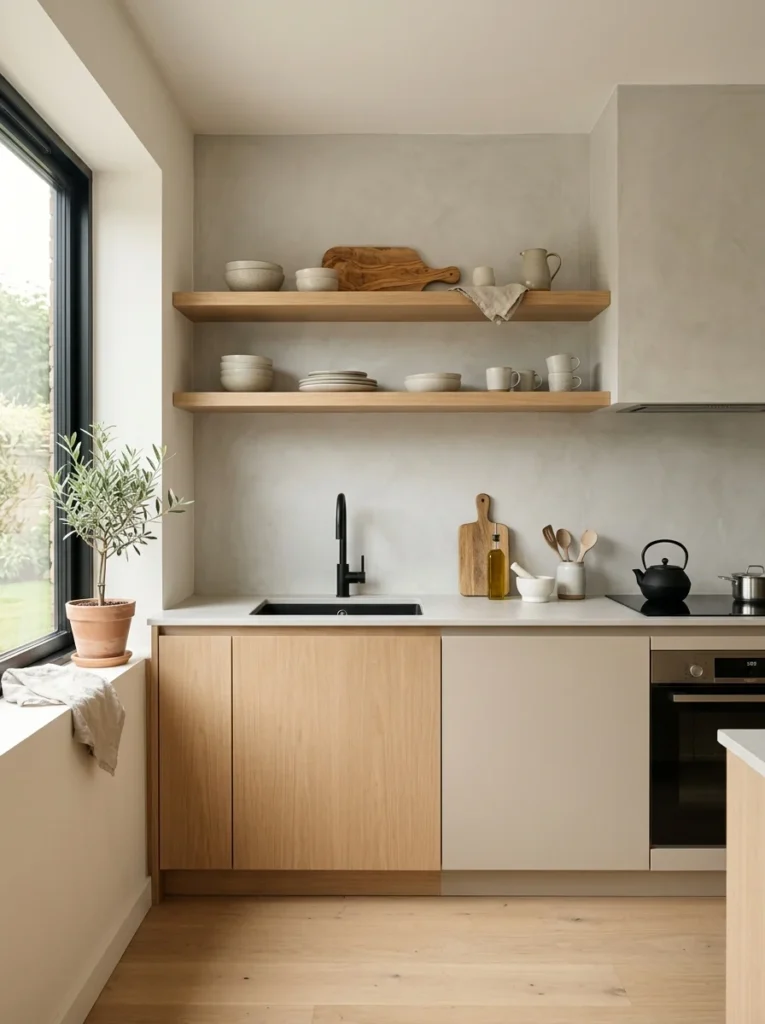
Not every backsplash has to be tile. A hard-wearing, wipeable painted finish, or a troweled microcement or similar plaster surface, gives a smooth, seamless, slightly modern look with no grout lines at all. Microcement in particular wraps around a wall in one continuous skin and can look wonderfully calm and contemporary. The key with any of these is the finish: it has to be genuinely sealed and wipeable to survive behind a cooker, so this is not the place for ordinary matte emulsion. Done with the right products it’s a lovely, often more affordable alternative to tile, especially if you like a minimal, uninterrupted surface. Done with the wrong paint, it’ll stain and peel, so the material choice matters more than the idea itself.
6. Patterned tile as a feature
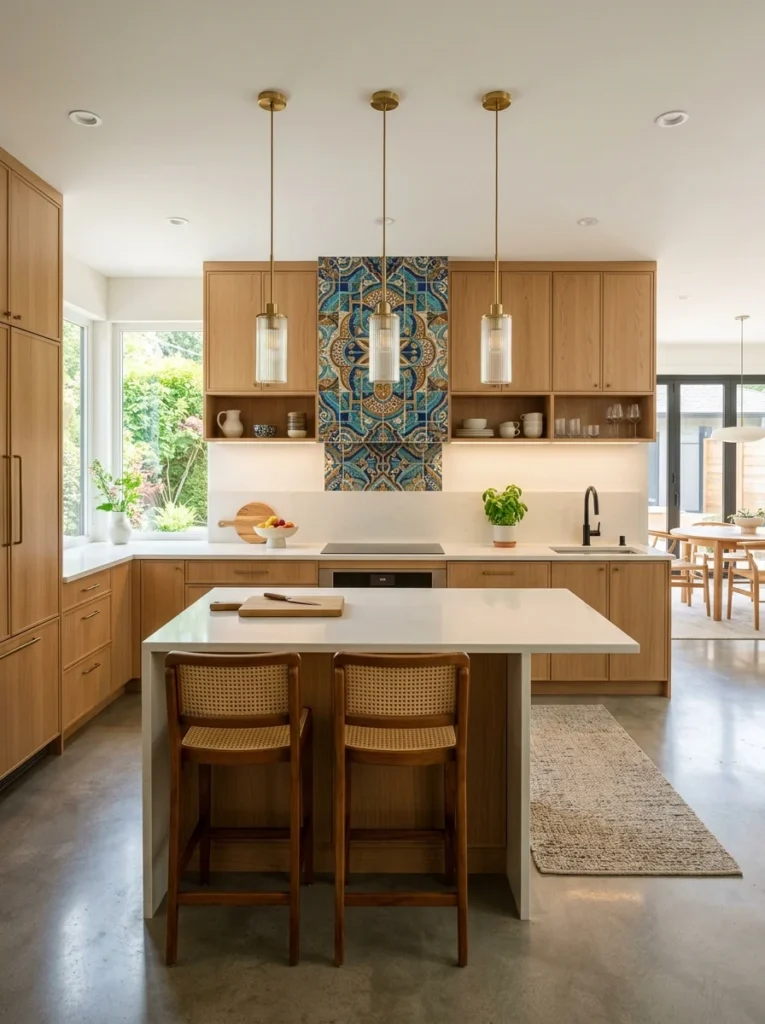
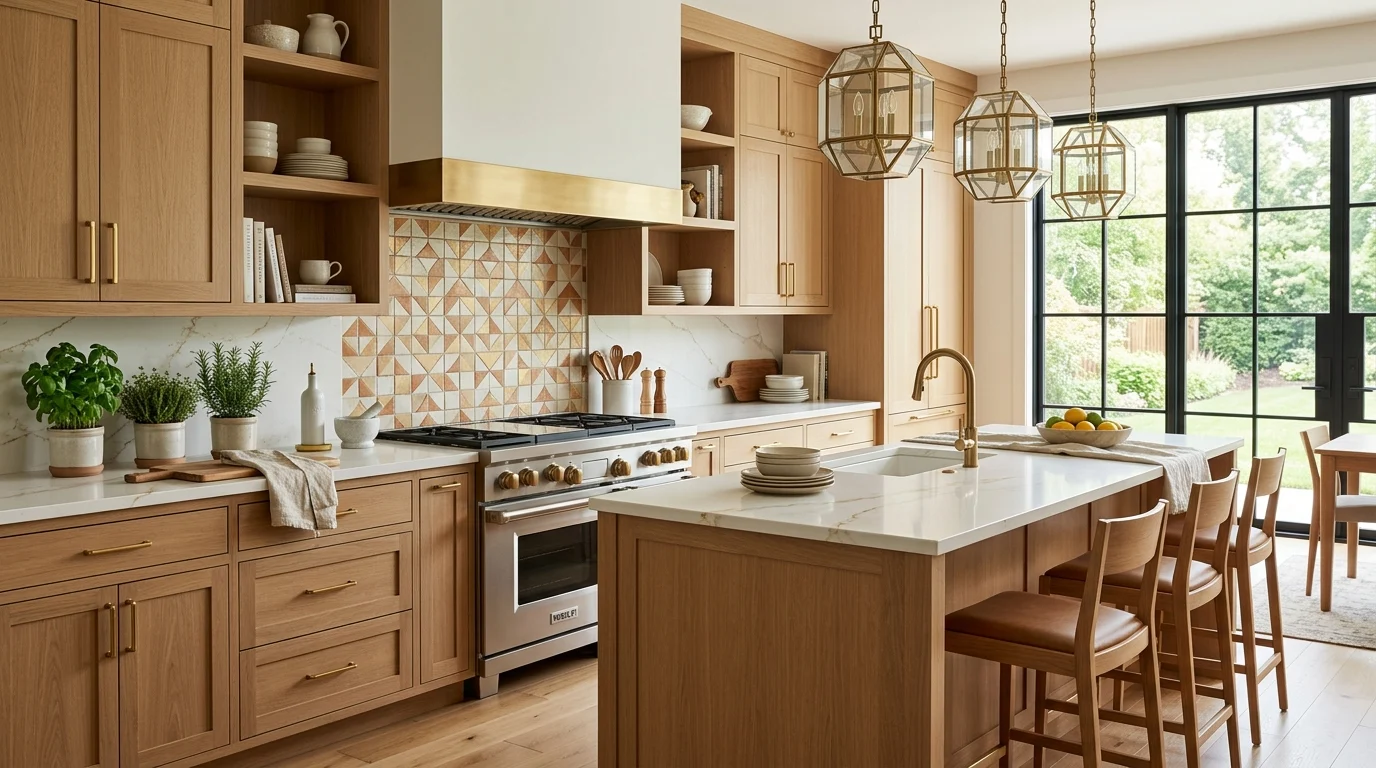
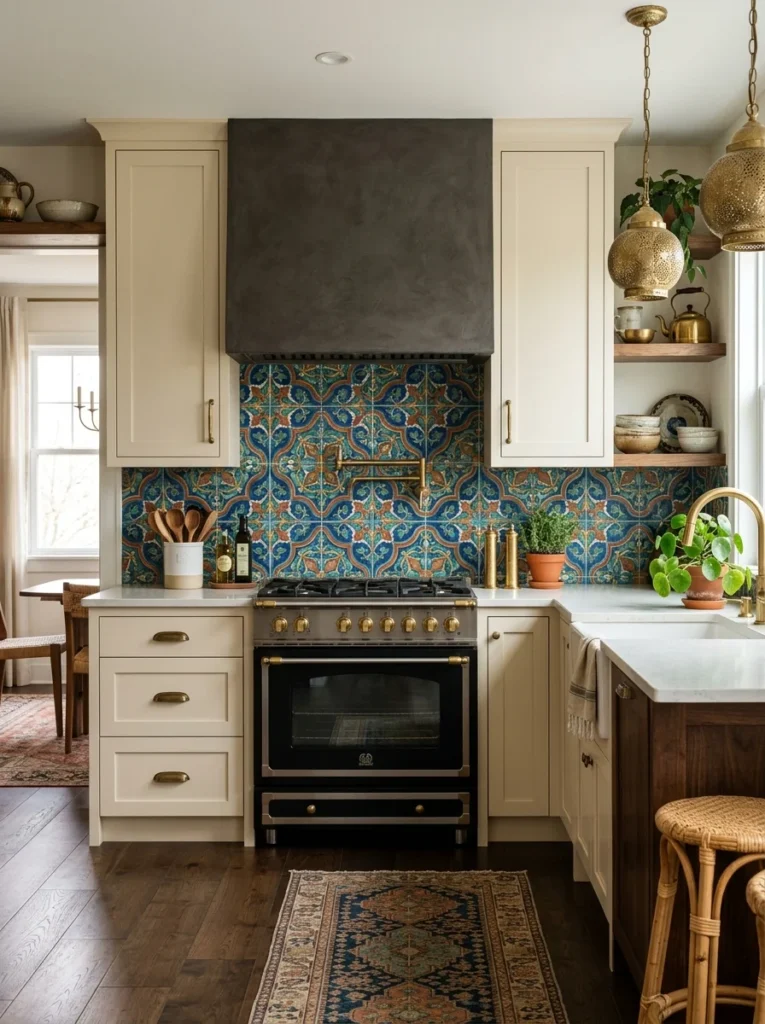
If you want the backsplash to be the star of the kitchen, a patterned tile, encaustic-style cement patterns, Moroccan geometrics, or a bold hand-painted design, turns the wall into art. This works best against a restrained kitchen: if your cabinets and worktop are calm and neutral, a patterned backsplash gives the room its personality and focal point without tipping into chaos. I usually suggest keeping the bold pattern to one defined zone, like the wall behind the hob or a single stretch, rather than wrapping the whole kitchen in it, which can quickly become overwhelming and, being so distinctive, is the kind of choice most likely to feel dated later. Contained and deliberate, though, a patterned feature wall is joyful.
7. The renter-friendly and budget route
If you rent, or you just want a cheap, fast change, don’t overlook peel-and-stick tiles and panels. The good ones genuinely convince at a glance, wipe clean, and, crucially, come off again without wrecking the wall, which makes them perfect for a rental you can’t permanently alter. I used a version of this in a flat I was renting years ago and it lifted a tired kitchen for very little, with no landlord conversation required. They’re not as durable as real tile and can struggle right behind a hot hob, so read what a given product can take near heat. But as a low-risk, low-cost, reversible way to test a look or refresh a rental, they punch well above their price. Sometimes the humble option is the smart one.
The practical details that decide whether you’ll love it
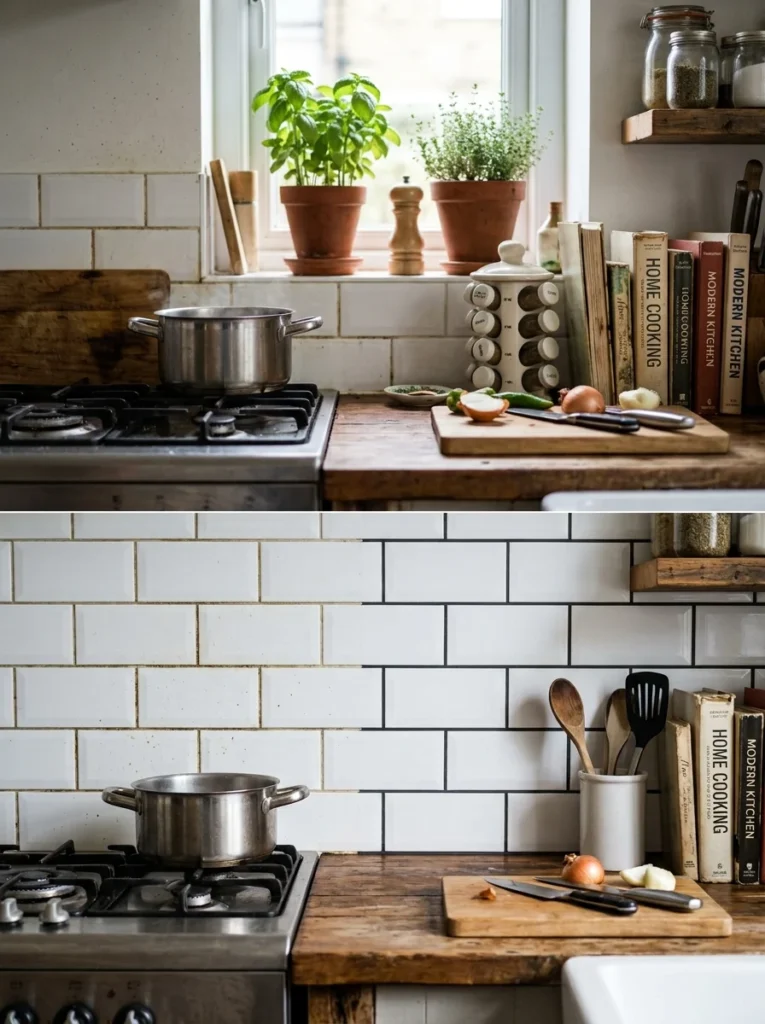
Whatever material you choose, a few decisions quietly determine how happy you’ll be with it. Grout is the big one for any tiled option. It’s the part that stains and yellows behind a cooker, so choose a grout colour that won’t show marks (a mid-tone or something close to the tile hides far more than bright white), and consider a stain-resistant grout for the hob zone. If the thought of cleaning grout at all fills you with dread, that’s your sign to look at a grout-free slab or microcement instead.
Think about coverage too. A common regret is tiling only a short strip and finding splashes land above it, so behind the hob especially, take the backsplash up higher than you think you need, ideally to the underside of the extractor or shelf. Behind a sink, height matters less. And match the surface to the zone: the wall directly behind the burners takes the most heat, grease and abuse, so if you’re mixing materials, put your toughest, most wipeable one there and save any more delicate choice for lower-traffic stretches. These aren’t glamorous decisions, but they’re the difference between a backsplash you enjoy and one you fight with.
Backsplash mistakes I’ve learned to avoid
My first tiling job, I chose bright white grout because it looked crisp in the shop. Behind a hob where I cook a lot of oily, spiced food, that white grout was grey within months, and no scrubbing fully brought it back. Now I never put pale grout near a cooker. That one cheap decision taught me more than any amount of choosing pretty tiles did, because the tile was fine, it was the grout that let me down.
The other lesson was about porous surfaces. I once talked myself into an unsealed natural finish because I loved the raw look, and the first serious oil splash left a shadow that never fully lifted. If a surface can absorb liquid, assume that behind a cooker it eventually will, and either seal it properly and keep sealing it, or choose something non-porous and save yourself the heartache. A backsplash is one of the few places in a kitchen where practicality really should win the argument, because you’re staring at, and cleaning, this exact wall every single day.
Common backsplash questions
What is the easiest backsplash to keep clean?
A grout-free surface is the easiest, because grout is the part that stains and needs scrubbing. A full-height slab of a non-porous material, or a properly sealed microcement finish, gives you one continuous wipeable surface with nothing for grease to lodge in, which is ideal behind a busy cooker.
How high should a kitchen backsplash go?
Behind the hob, take it up higher than you’d expect, ideally to the underside of the extractor, shelf or upper cabinets, because splashes travel further than you think when you’re cooking. Behind a sink or general counter, a shorter run is usually fine. When in doubt, go higher behind the heat.
What is the cheapest way to update a backsplash?
Good peel-and-stick tiles or panels are the cheapest and fastest option, and they come off cleanly, which makes them ideal for renters. For a painted or plain wall, a hard-wearing wipeable finish is also inexpensive. Just make sure any budget option is genuinely rated to cope near heat and splashes.
Is a marble backsplash a good idea?
It’s beautiful but higher-maintenance, because many natural stones are porous and can stain or etch from oil and acidic splashes if not sealed and re-sealed over time. If you love the look, commit to the upkeep, or choose a denser stone or a stone-look engineered surface that gives much of the beauty with far less babying.
A small wall with an outsized payoff
The backsplash is one of the best-value changes you can make in a kitchen, a small, affordable band of wall that shapes both how the room looks and how easily it cleans. The trick is never to forget that second part. Choose for the way you actually cook, put your toughest surface where the heat and grease are worst, mind the grout, and take it high enough behind the hob, and almost any of these ideas will serve you for years. Get the practicality right and you’re free to enjoy the beauty, because a backsplash you never have to fight with is one you’ll appreciate every single day you’re in the kitchen.
If you’re picking one now, spend as much thought on the grout and the surface behind the burners as on the tile you fall in love with. That’s the part I ignored the first time, and it’s the part that decides whether you’ll still be smiling at your backsplash a year from now or quietly scrubbing it.