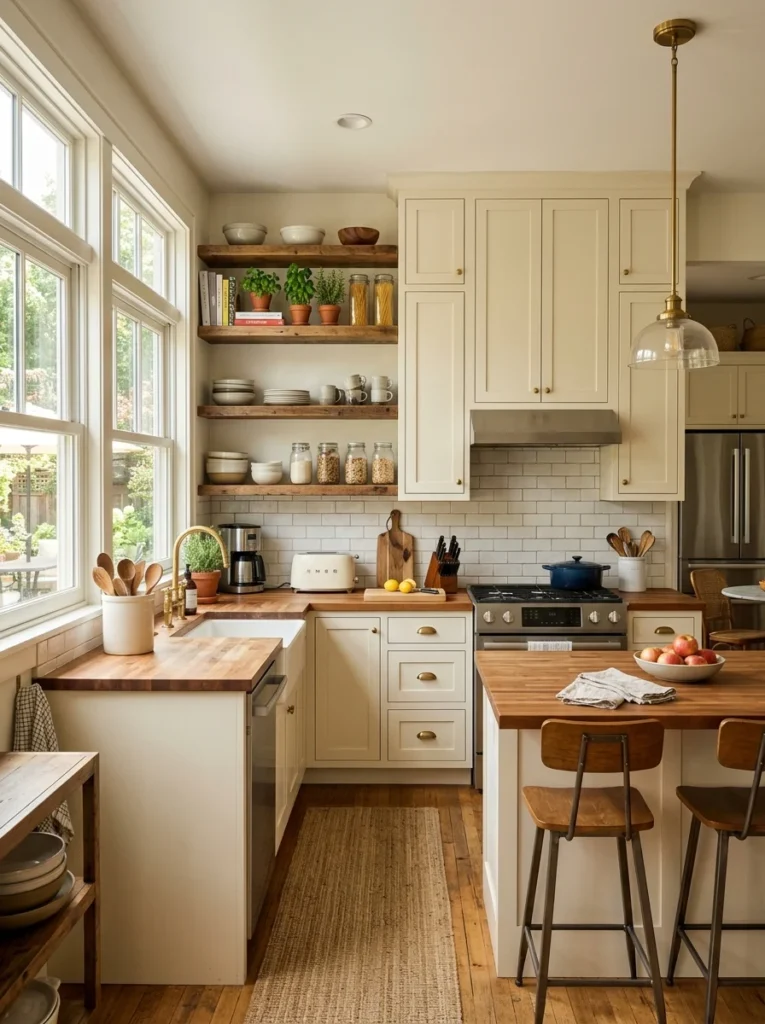
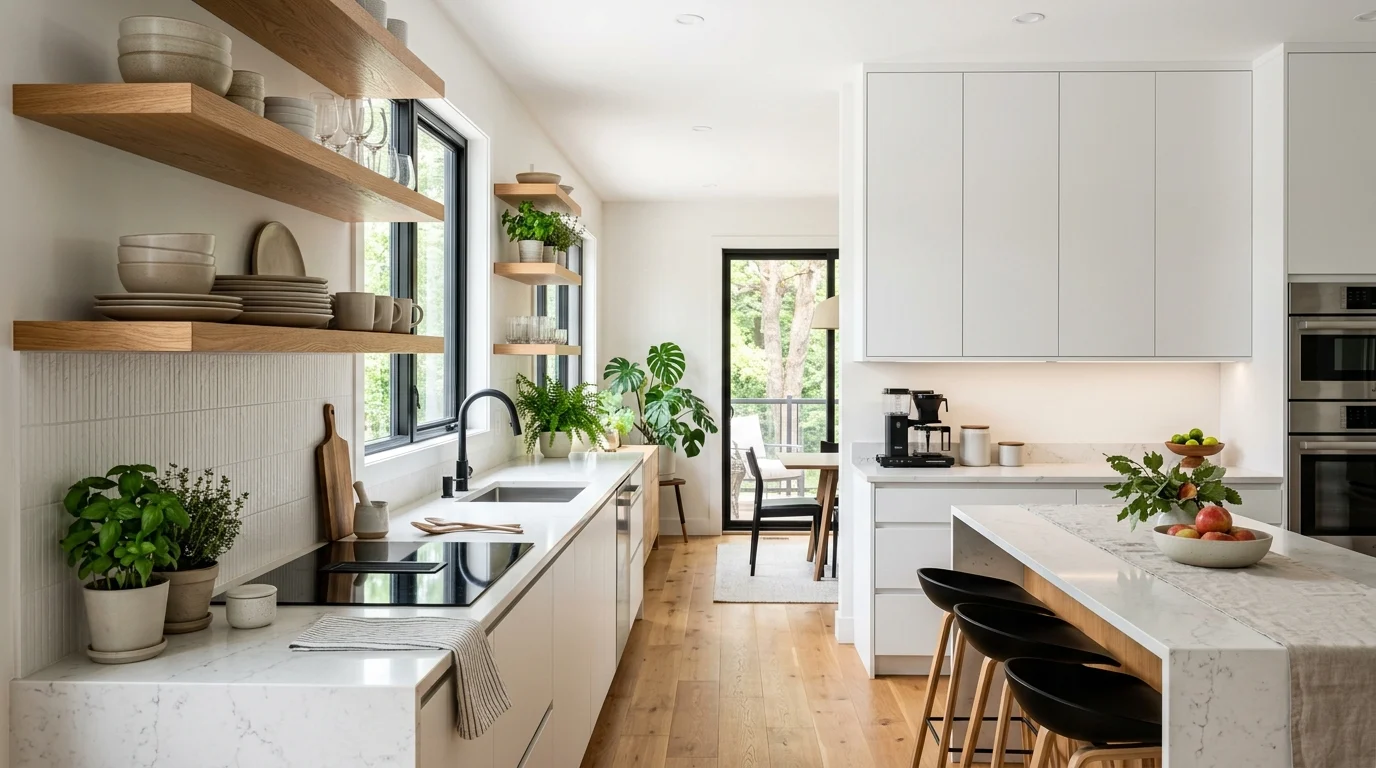
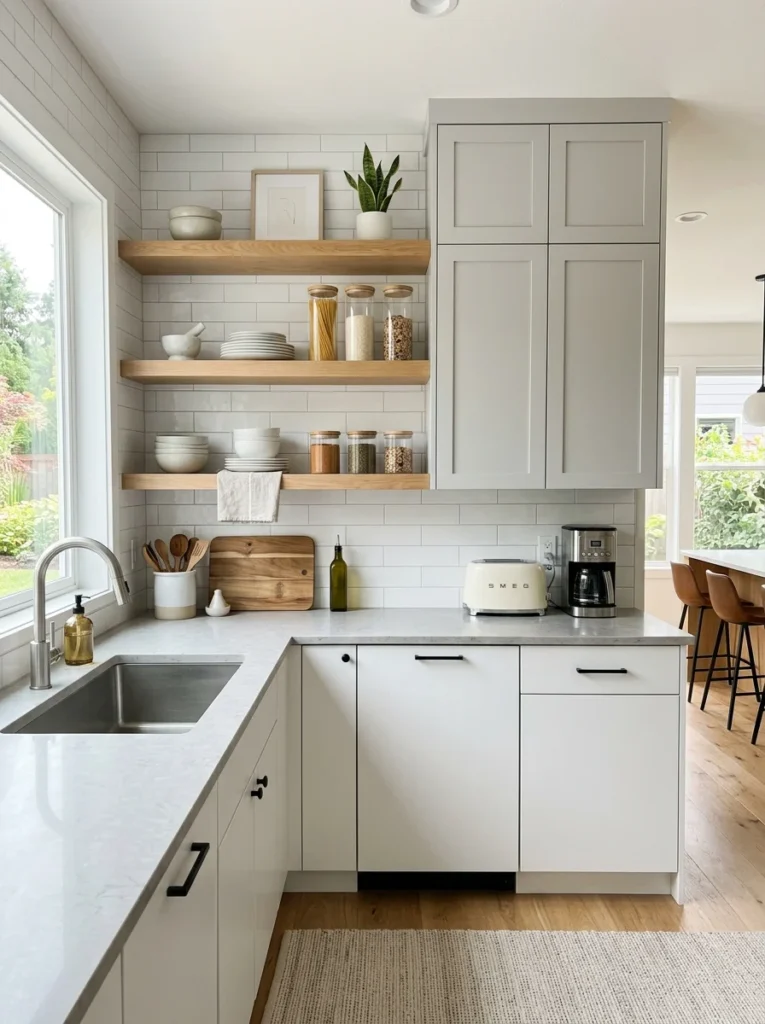
I ripped out a run of perfectly good upper cabinets once, entirely because of a photograph. It was one of those airy kitchens with a wall of open wooden shelves stacked with matching bowls and a trailing plant, and I convinced myself that was the look my cramped kitchen needed. So down came the cabinets, up went the shelves, and for about a month it was exactly as beautiful as I’d hoped. Then real life arrived. The mismatched mugs, the cereal box that didn’t belong on a styled shelf, the thin film of cooking grease that settled on everything near the stove. I learned the difference between open shelving in a photo and open shelving in a working kitchen the hard way.
Here’s the thing nobody tells you: neither option is simply better. Open shelves and upper cabinets solve different problems, and the right choice depends far more on how you actually cook and live than on which one is trending. After that experiment, and after helping plan a good few kitchens since, I’ve stopped treating this as a style question and started treating it as a practical one. Let me walk you through the honest case for each, the factors that really decide it, and how to land on the answer that fits your kitchen rather than someone else’s photo.
The honest case for open shelving
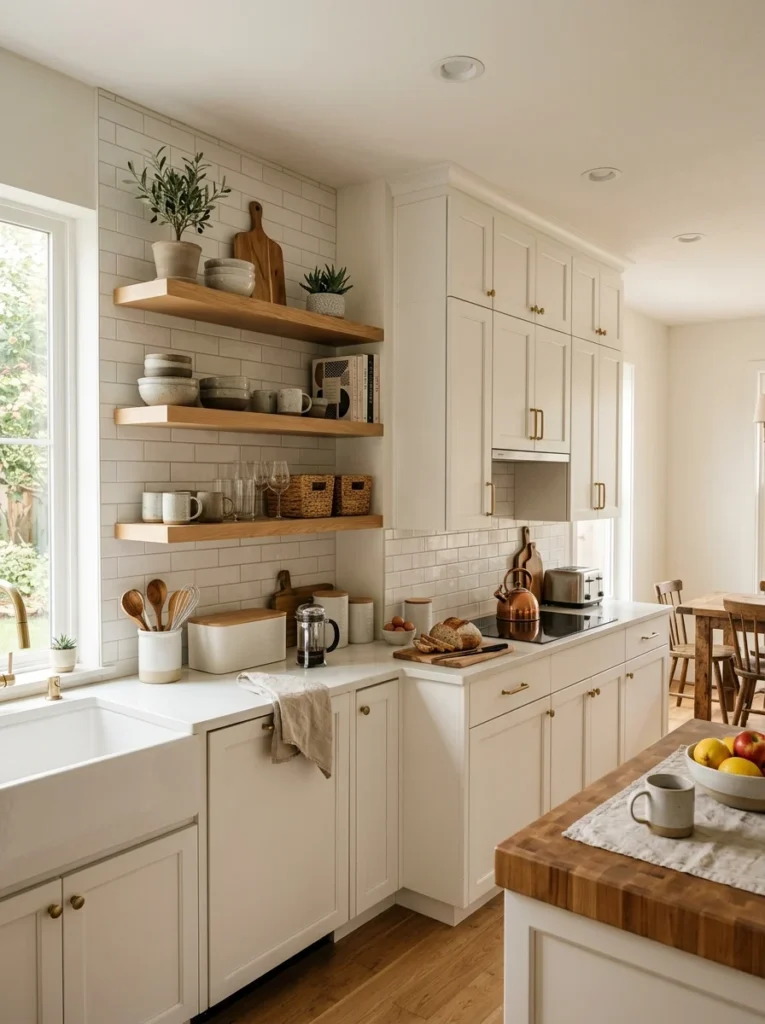
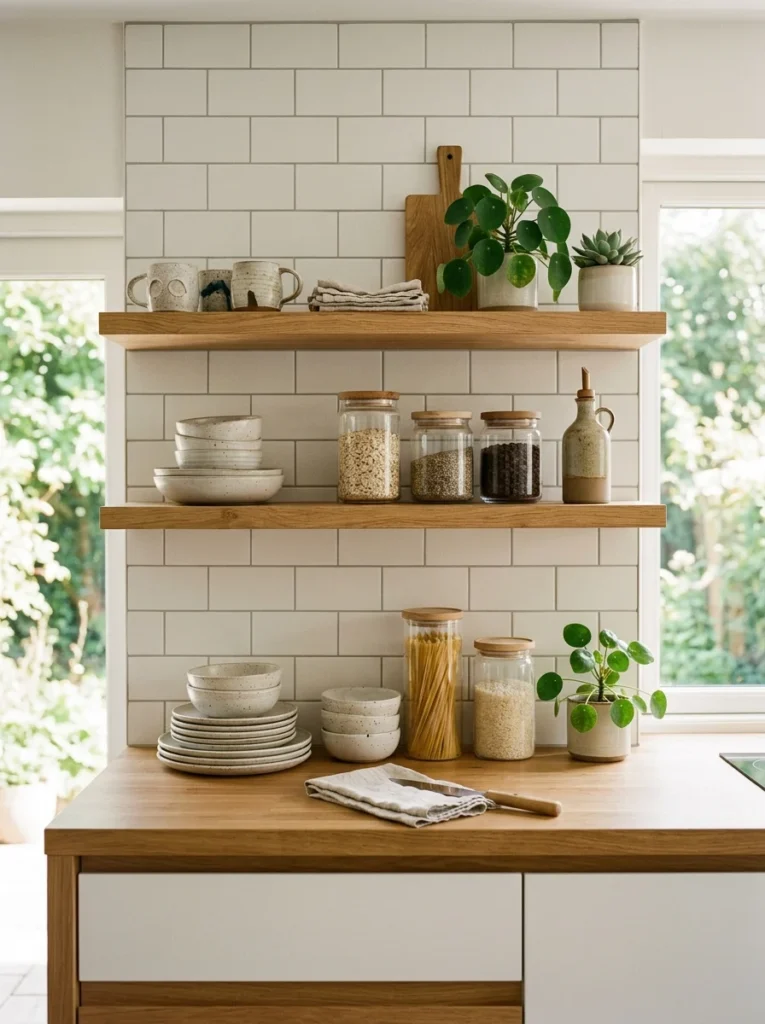
Open shelving genuinely earns its popularity for a few solid reasons, not just the look. It makes a kitchen feel bigger and more open, because the eye travels straight to the wall instead of hitting a solid bank of cabinet doors, which is a real gift in a small or narrow room. Everything is visible and within easy reach, so there’s no opening doors to find the everyday plates. It’s usually cheaper to install than cabinets, and far easier to fit yourself. And it does look warm and personal in a way a wall of closed doors never quite manages, especially when it holds things you’re happy to see every day.
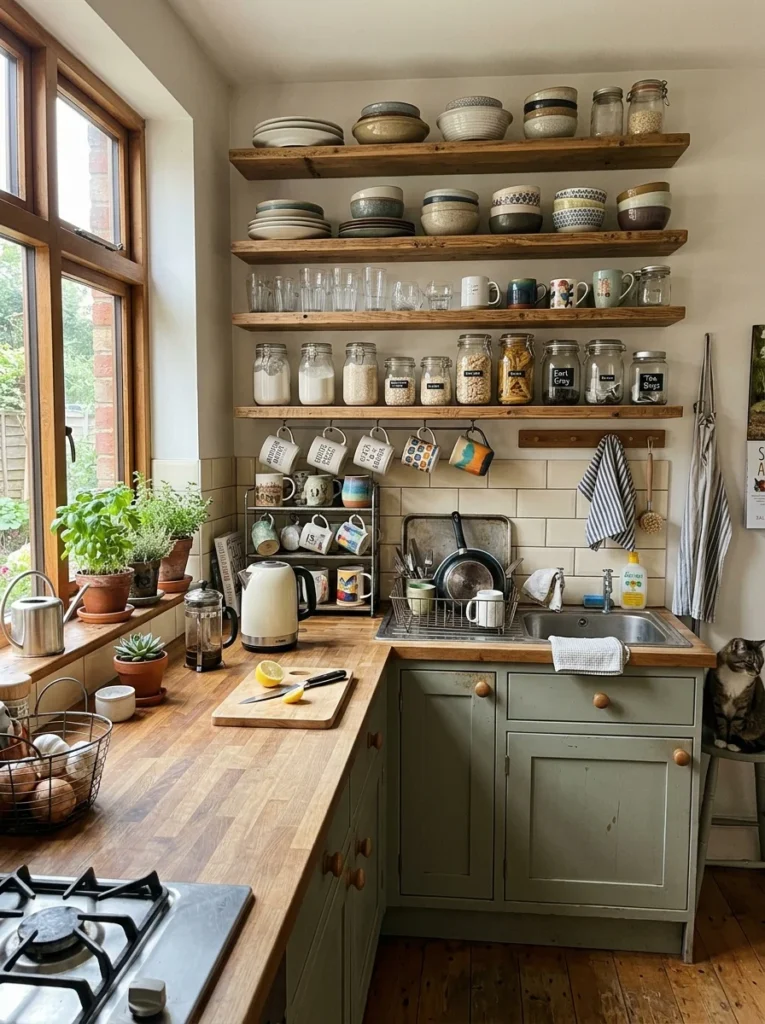
But I’ll be straight about the trade-offs, because I lived them. Open shelves show everything, which means they only look calm if what’s on them is calm, and that takes both curation and discipline. They collect dust and, near a cooker, a fine layer of grease that you have to wipe down regularly. They offer less usable storage than a cabinet of the same size, because you can’t stack things as high or as densely without it looking chaotic. And they expose your dishes to the kitchen’s steam and splatter. Open shelving rewards people who own a fairly tidy, coordinated set of everyday items and don’t mind keeping them looking presentable. It punishes people with a lot of mismatched clutter, which, let’s be honest, is most of us at some point.
The honest case for upper cabinets
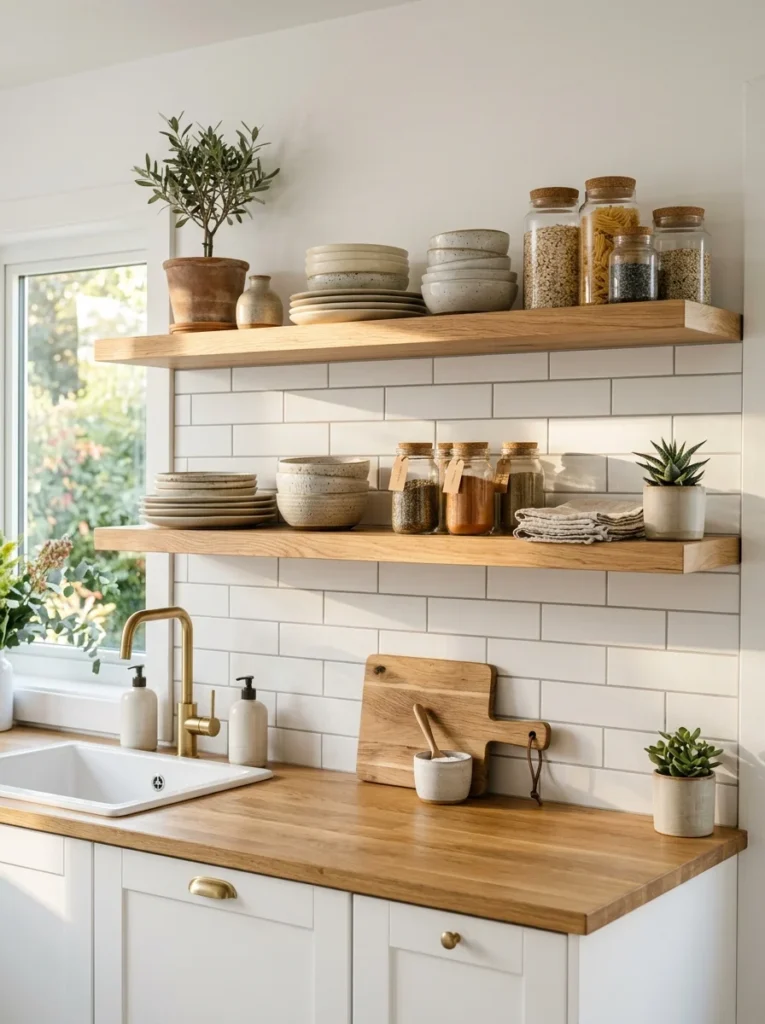
Upper cabinets are the default for good reasons that are easy to overlook precisely because they’re so ordinary. They hold more, and they hold it out of sight, so the visual clutter of daily kitchen life simply disappears behind a door. They protect everything inside from dust, grease and steam, which means less cleaning and dishes that are ready to use rather than needing a rinse first. You can cram a cabinet full and shut the door, and nobody’s the wiser. For anyone who cooks a lot, owns a mix of things that don’t match, or just doesn’t want to style a shelf, cabinets are quietly the more forgiving choice.
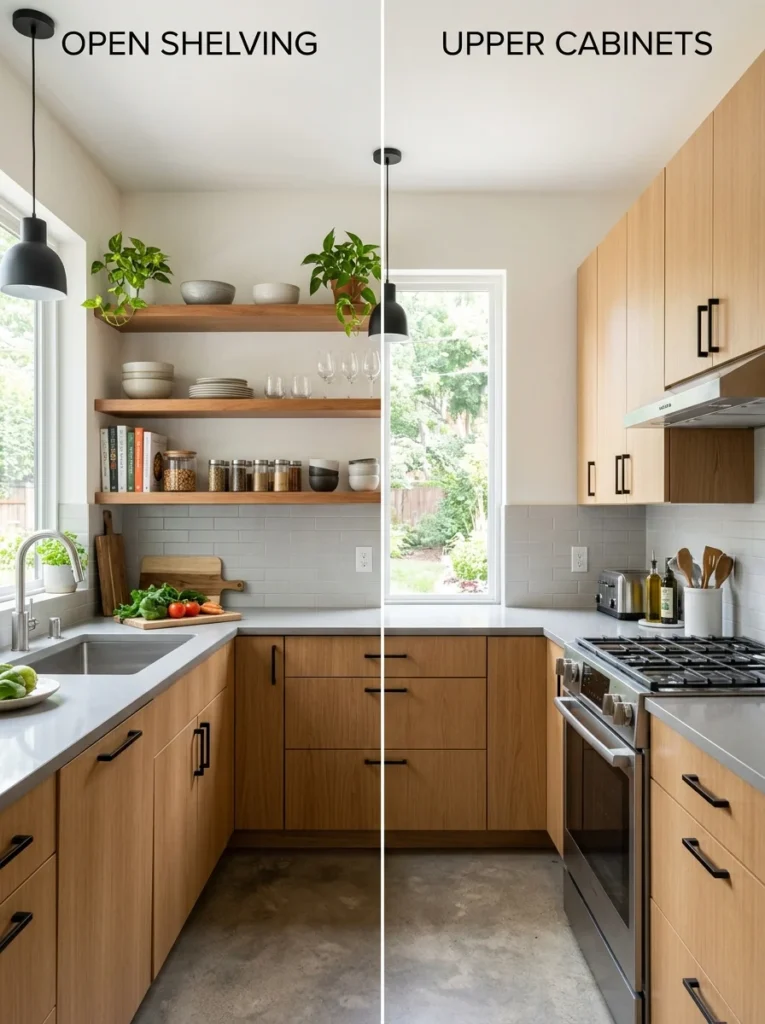
Their downsides are the mirror image of the shelves’ strengths. A full wall of upper cabinets can make a small kitchen feel boxed in and heavier, especially in a darker colour, because it presents a solid mass at eye level. They cost more and are harder to install. And they can feel a little impersonal, a run of closed doors with nothing of you on show. Cabinets trade personality and openness for capacity and calm. Whether that’s the right trade depends entirely on which of those you need more.
Head to head on the factors that actually matter
Storage capacity
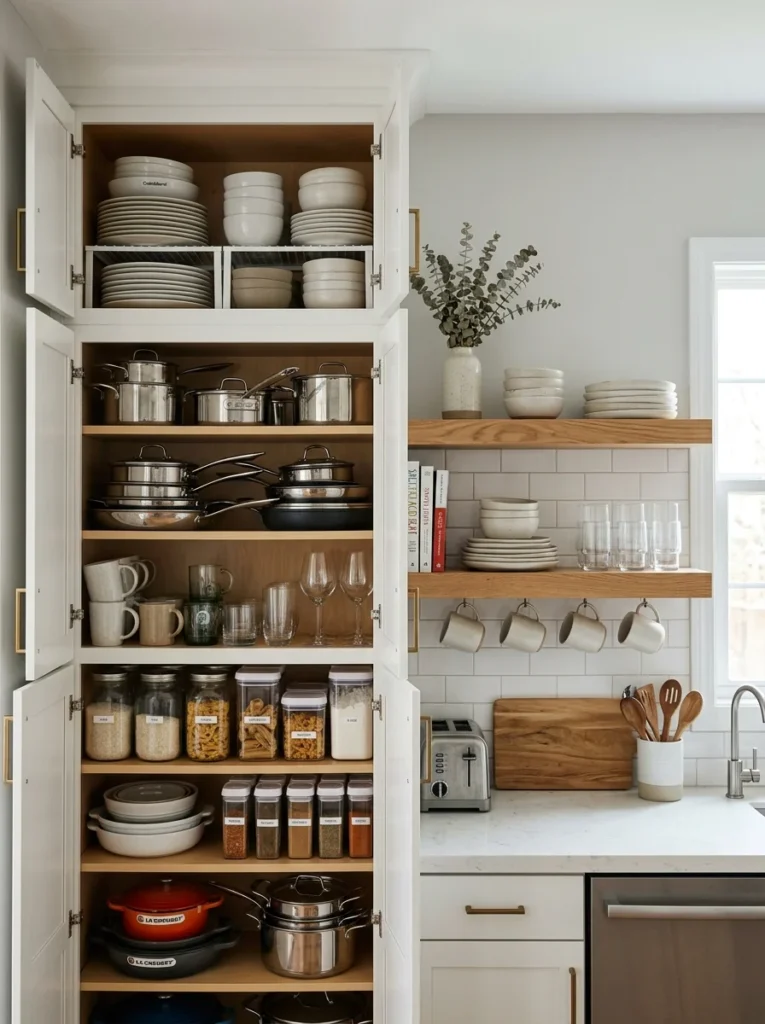
Cabinets win clearly here, and it’s not close. A closed cabinet lets you stack, layer and fill the full depth and height without any of it looking messy, because a door hides the result. Open shelves force you to leave breathing room and keep things presentable, which costs you real capacity. If your kitchen is tight on storage and you have a lot to store, that alone can settle the question. Losing a whole wall of dense storage to shelves you can only lightly fill is a decision plenty of people regret the first time they can’t find a home for the food processor.
Cleaning and upkeep
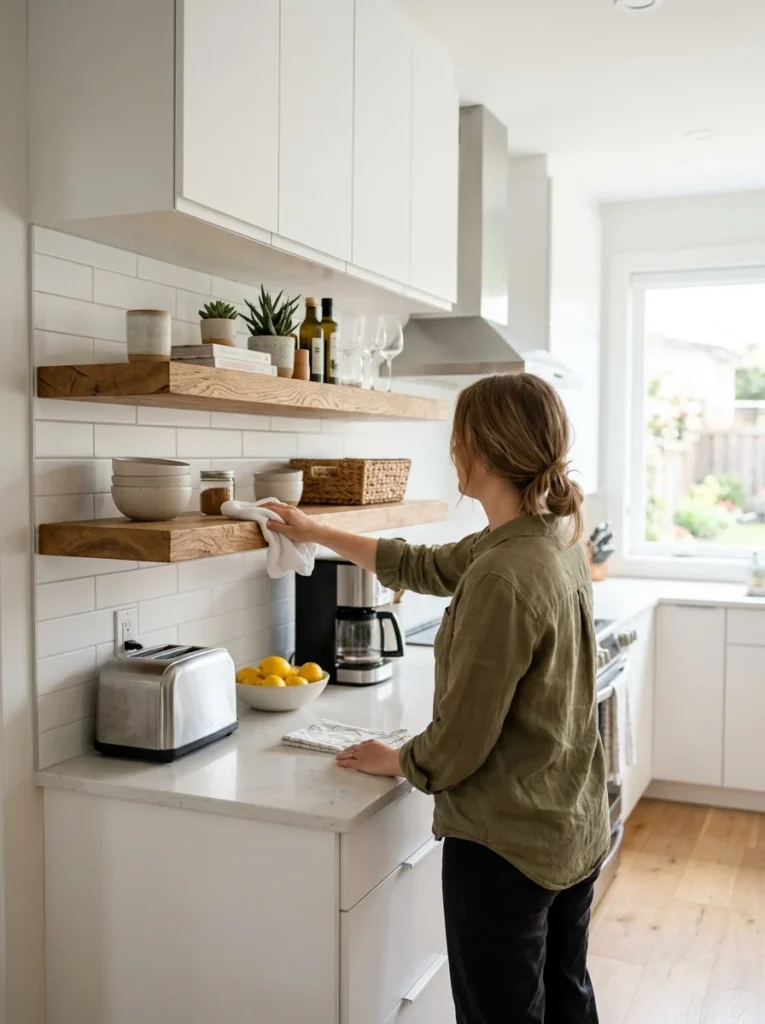
Cabinets are far lower-maintenance day to day. Open shelves near cooking need regular wiping, and anything you don’t use often gets dusty and needs rinsing before use. In my open-shelf month, I found I was cleaning shelves and re-washing rarely-used plates constantly, and it wore thin fast. If you’re someone who wants the kitchen to just work with minimal fuss, weigh this heavily. It’s the factor people underestimate most and complain about most afterwards.
Cost and installation
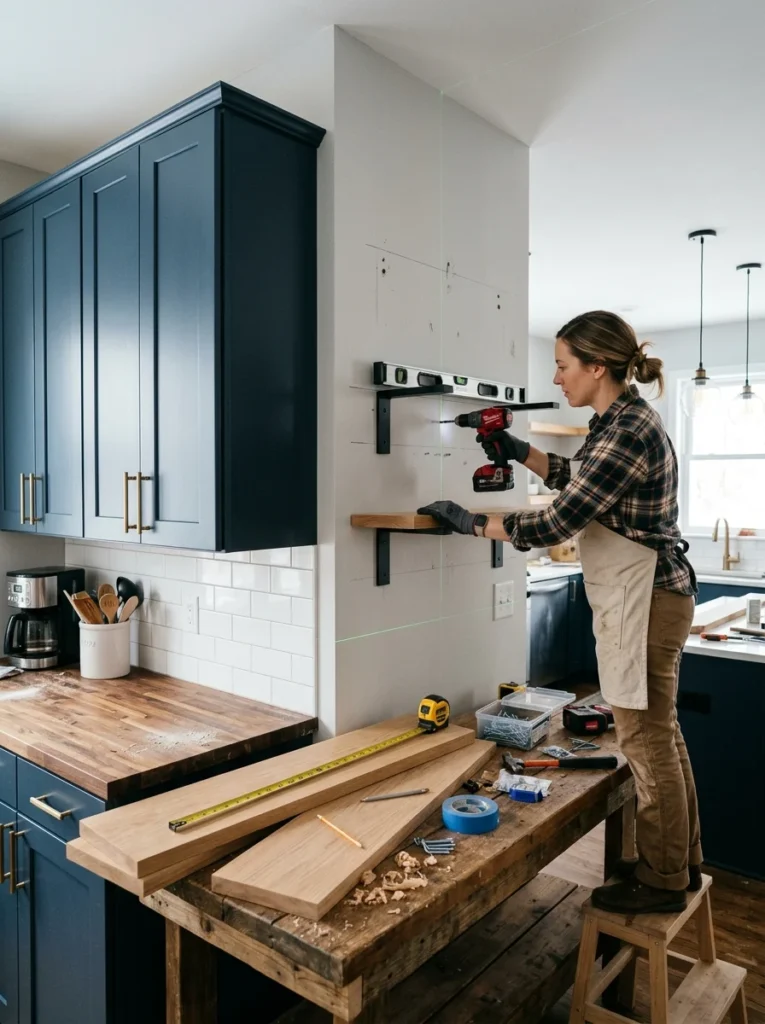
Open shelving usually wins on both price and effort. A couple of good brackets and a solid timber board cost a fraction of a fitted upper cabinet, and it’s a manageable afternoon job for a confident DIYer, whereas hanging cabinets level and secure is a bigger task. If budget or a rental you can’t heavily modify is part of your picture, shelves are the friendlier option, and you can take some kinds down and patch the wall far more easily than removing fitted cabinetry.
How it makes the room feel
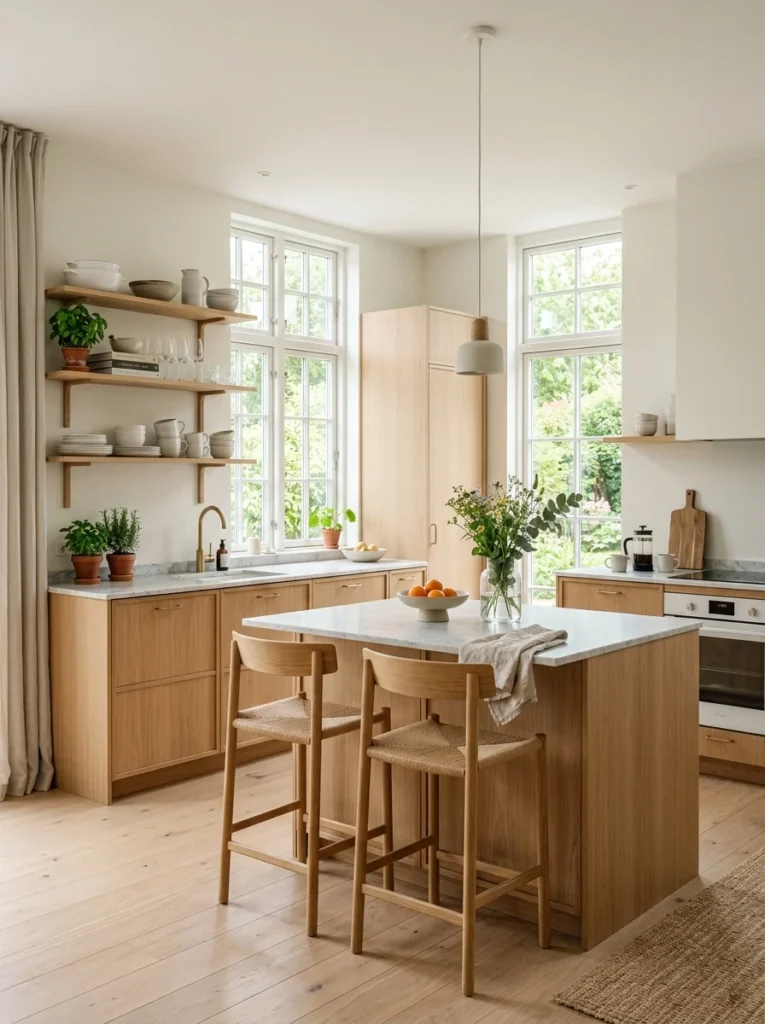
This is where shelves shine. Removing solid upper cabinets from even one wall makes a kitchen breathe, feel larger and read as lighter and more personal. If your kitchen feels cramped, dark or closed-in and storage isn’t your main worry, open shelving can transform the atmosphere more than a coat of paint would. The look is the real reason to choose it, so it’s fair to let the look carry weight, as long as you go in clear-eyed about the upkeep.
Resale and broad appeal
If you might sell before long, upper cabinets are the safer bet, because storage and low-maintenance practicality appeal to the widest range of buyers, and not everyone wants to maintain styled shelves. Open shelving is more of a personal-taste statement. It won’t put everyone off, but a wall of generous cabinets rarely puts anyone off, which matters when you’re selling to strangers rather than decorating for yourself.
The answer that suits most kitchens: do both
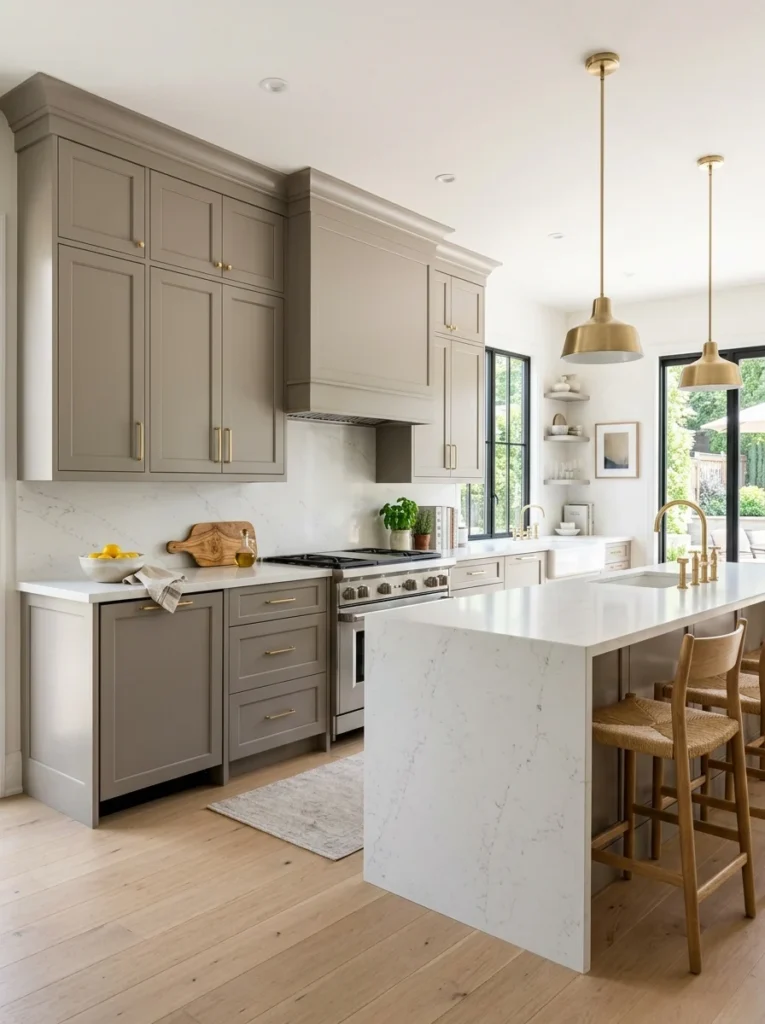
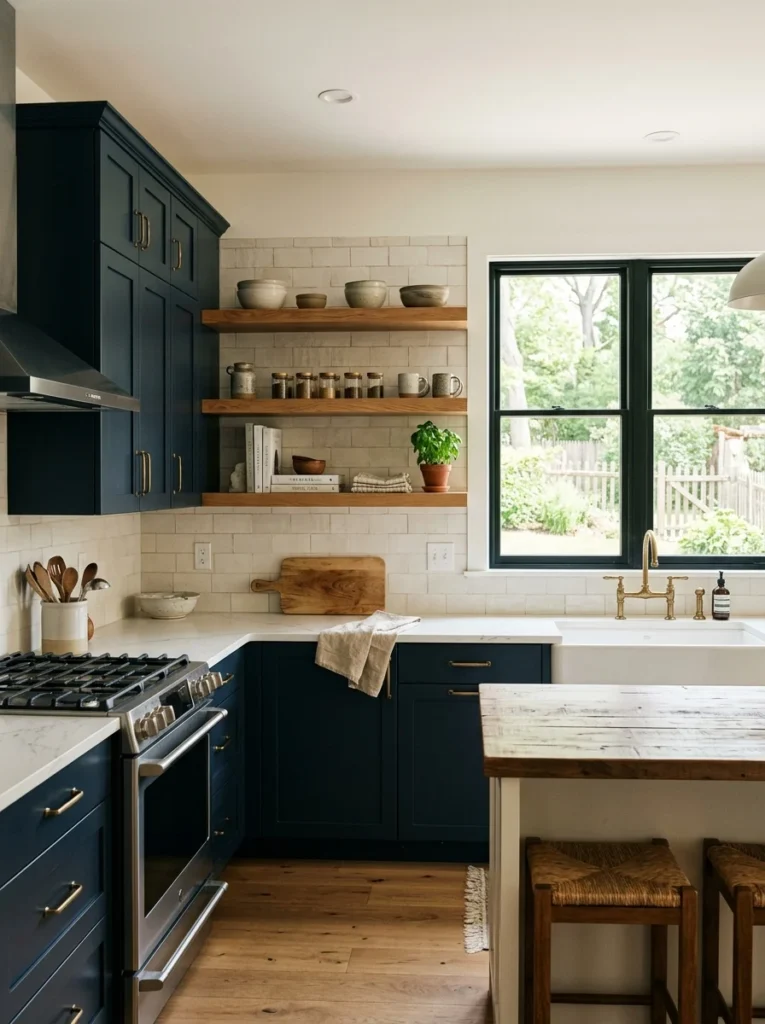
Here’s what I actually did after my all-shelf experiment failed, and what I now suggest to most people: don’t choose one for the whole kitchen. Use a hybrid. Keep cabinets where they do their best work, the wall nearest the cooker where grease is worst, and the areas where you need to hide the bulk of your clutter, and put open shelving on a drier, lower-traffic wall, ideally near a window, where it can show off a small, tidy selection of things you like to see. This is the arrangement I’ve settled into and it gives me the openness and character of shelving exactly where it flatters the room, and the capacity and calm of cabinets exactly where I need them.
If you want the airy look but daren’t lose the storage or take on the upkeep, glass-fronted cabinets are a lovely middle path. You get the sense of openness and something nice on display, but a door still keeps the dust, grease and steam out. It’s the compromise I point people to most often when they love the shelf aesthetic but know, honestly, that their real life is a bit messier than the photo. There’s no shame in designing for the kitchen you actually have rather than the one you wish you kept tidy.
How to decide for your kitchen
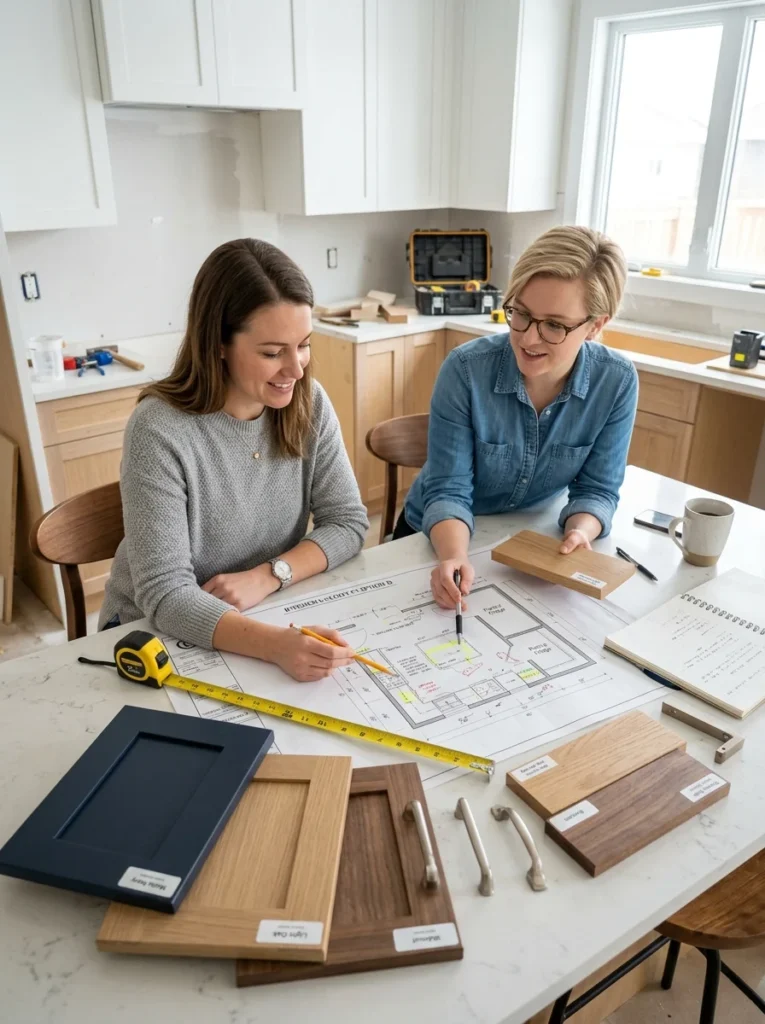
Strip away the trend and ask yourself a few honest questions. How much storage do you actually need, and can you afford to lose a wall of it? Do you own a fairly coordinated set of everyday dishes, or a happy jumble of mismatched ones? How near the cooker is the wall in question, and how much do you hate cleaning? Do you enjoy the idea of arranging a shelf, or does it sound like one more chore? And are you decorating to live in this kitchen for years, or partly with a future sale in mind?
Your answers usually point clearly one way. Lots to store, mismatched things, a wall by the cooker, no appetite for extra cleaning, a possible sale ahead: cabinets, and don’t feel you’re missing out. Plenty of storage elsewhere, a coordinated set you like looking at, a drier wall by a window, and you enjoy styling a little: open shelves will make you happy. And if you’re somewhere in the middle, which most of us are, the hybrid or glass-fronted route is almost certainly your answer. The worst decision is the one I made first, choosing purely on a photograph without asking a single one of these questions.
What my open-shelf experiment taught me
Beyond the grease, the real lesson was about honesty. I’d designed for an imaginary, tidier version of myself, one who owns matching crockery and keeps it dust-free and beautifully arranged. The actual me has odd mugs from years of gifts and a tendency to shove the spice jars back wherever they land. Open shelves demanded a level of daily curation I was never realistically going to keep up, and the gap between the fantasy and the reality is exactly where the disappointment lived.
The other mistake was doing the whole wall at once with no fallback. If I’d started with a single short shelf as a trial rather than tearing out all the cabinets, I’d have learned the same lesson at a tenth of the cost and effort, and still had my storage. So if you’re tempted by open shelving, that’s my strongest advice: test it small first. Live with one shelf for a month before you commit a whole wall. Your future self, and your storage, will thank you.
Common questions about open shelving and cabinets
Is open shelving going out of style?
Open shelving isn’t disappearing, but it works far better as one element of a kitchen than as a replacement for all your cabinets. The most durable approach is a hybrid: shelves on a drier accent wall for character, cabinets elsewhere for storage. That combination tends to age better than an all-shelf kitchen.
Do open shelves get greasy in a kitchen?
Yes, especially near the cooker, where a fine film of cooking grease settles on shelves and on the items sitting on them. This is the main reason to keep open shelving on a wall away from the stove and to reserve cabinets for the greasiest zone, where a closed door keeps everything protected.
Which is cheaper, shelves or cabinets?
Open shelving is usually cheaper to buy and to install, since a bracket and a solid board cost far less than a fitted upper cabinet and are easier to put up yourself. If budget is a constraint, or you’re in a rental, shelves are the more accessible choice.
Are open shelves a bad idea for a small kitchen?
Not necessarily. Open shelves can make a small kitchen feel more open and less boxed-in than a solid wall of cabinets. The catch is storage: small kitchens often need every bit of capacity, so a hybrid, or glass-fronted cabinets, often serves a small space better than committing entirely to open shelves.
Choose the kitchen you actually live in
There’s no universal winner between open shelving and upper cabinets, and anyone who tells you otherwise is selling a look rather than solving your problem. Cabinets give you capacity, protection and calm. Shelves give you openness, easy reach and personality. Most kitchens are happiest with a bit of both, arranged so each does what it’s best at. The trick is to decide with your real habits in mind, not a styled photograph, because you’re the one who has to live with the result long after the picture stops being the point.
If you’re on the fence, put up one shelf this month and see how it feels before you touch a single cabinet. I wish I’d done exactly that before I reached for the screwdriver, and it’s the cheapest way I know to find out which side of this debate your kitchen is really on.