
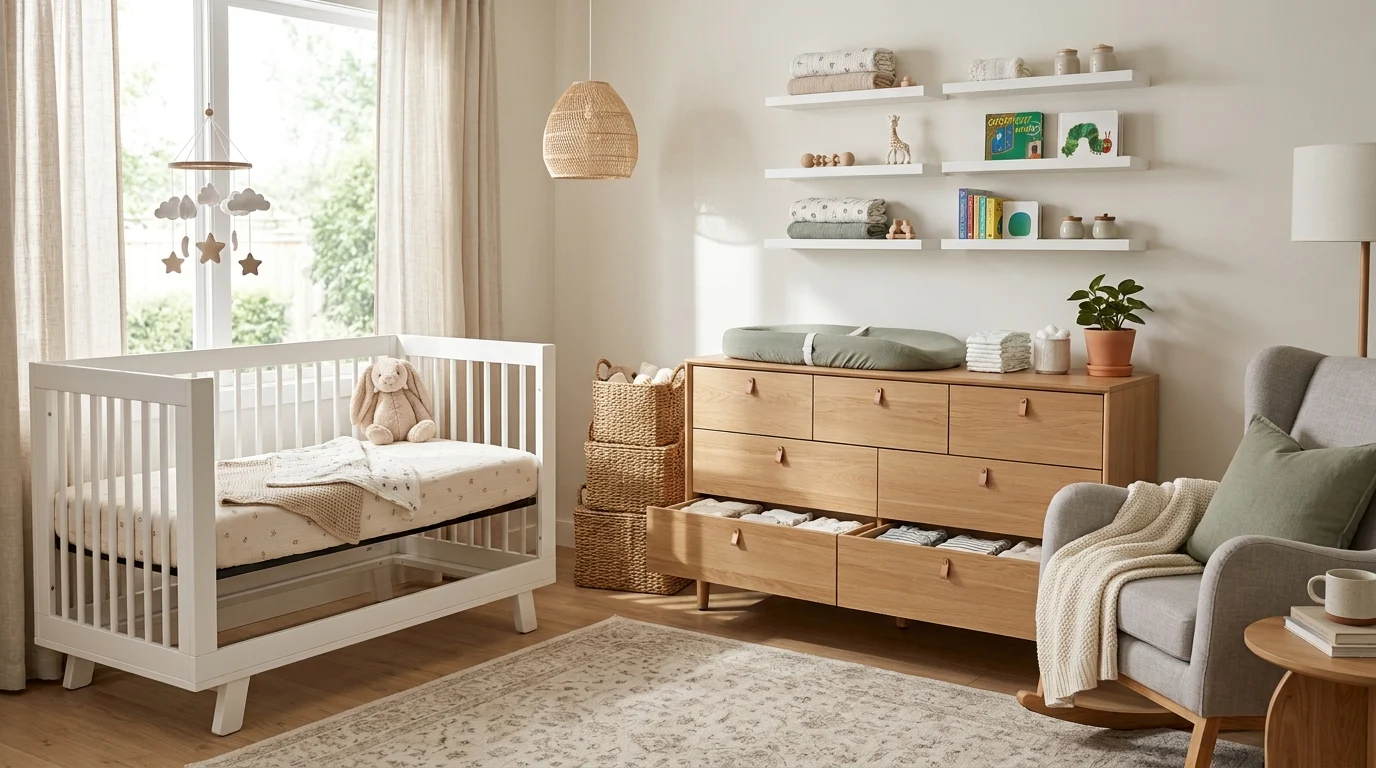
Nobody warned me just how much physical stuff a genuinely small human would require, tiny clothes in constantly rotating sizes, an overwhelming number of burp cloths, swaddles, diapering supplies, and gear I’d bought with good intentions but rarely actually used. Within the first few months, our nursery had become a room where I could never quite find the specific thing I needed in the moment, despite technically owning more storage furniture than the room really needed. It wasn’t until I rebuilt the organization system around actual categories and genuine accessibility, rather than just buying more bins and hoping the clutter would sort itself out, that the room finally started functioning the way I’d originally imagined it would.
Nursery clutter isn’t really about how much baby gear you own; it’s about whether that gear has a genuine, logical system behind where it lives. Here’s what actually worked once I stopped just adding storage and started actually organizing.
Sort and declutter by category before adding any new storage
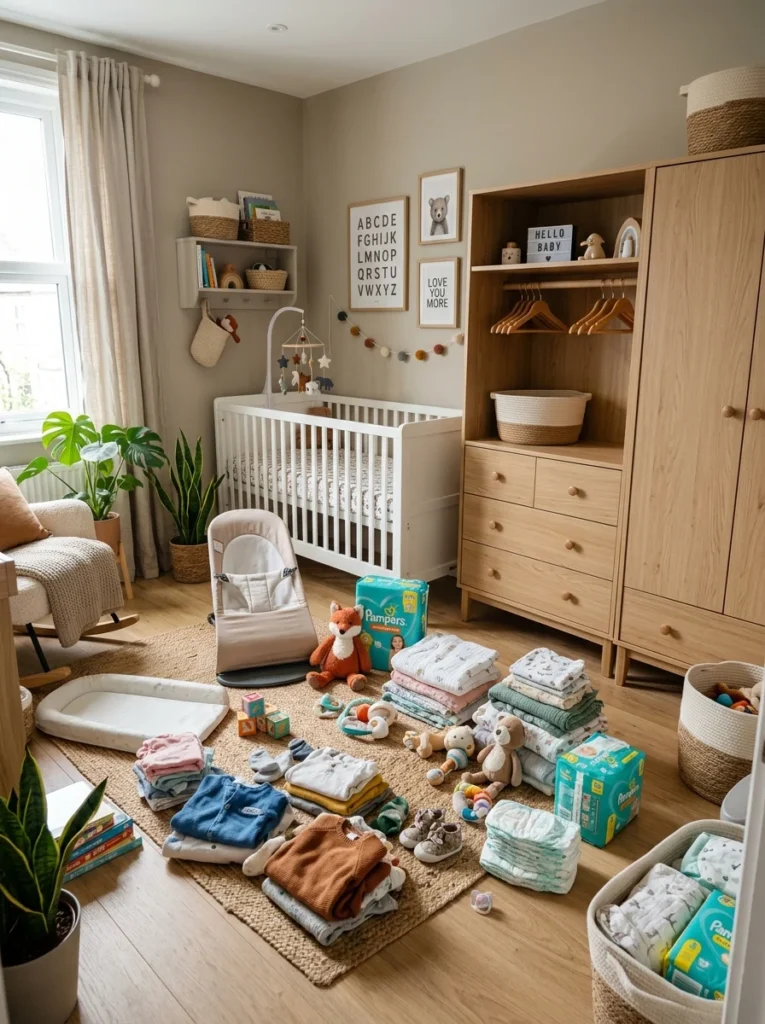
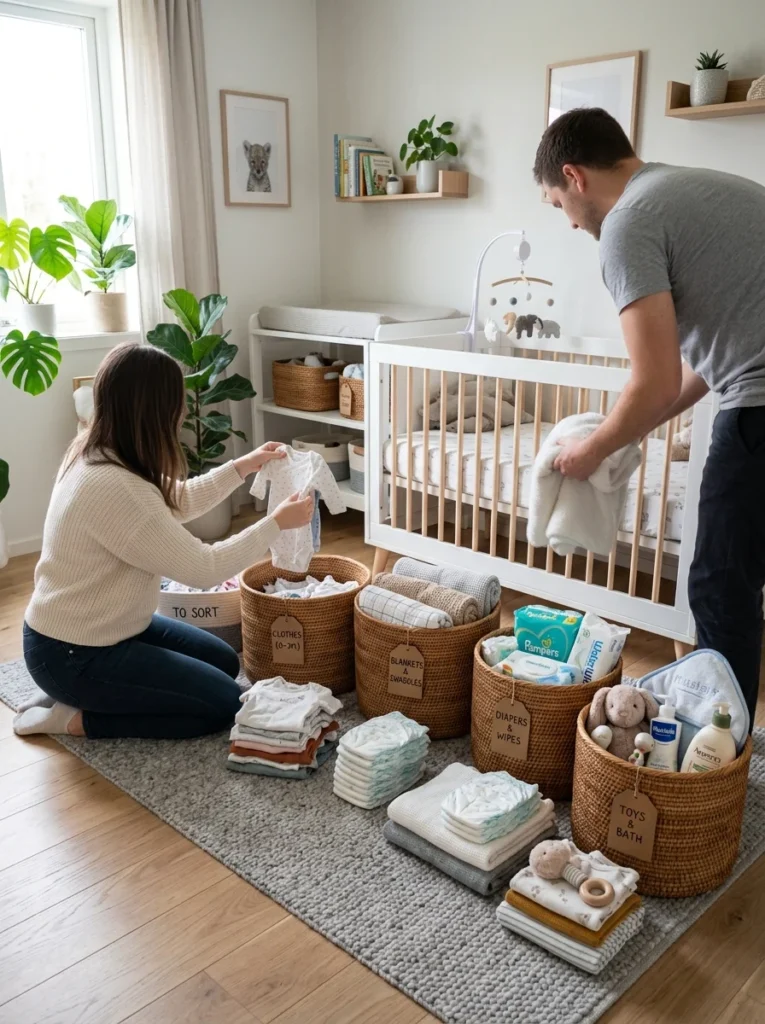
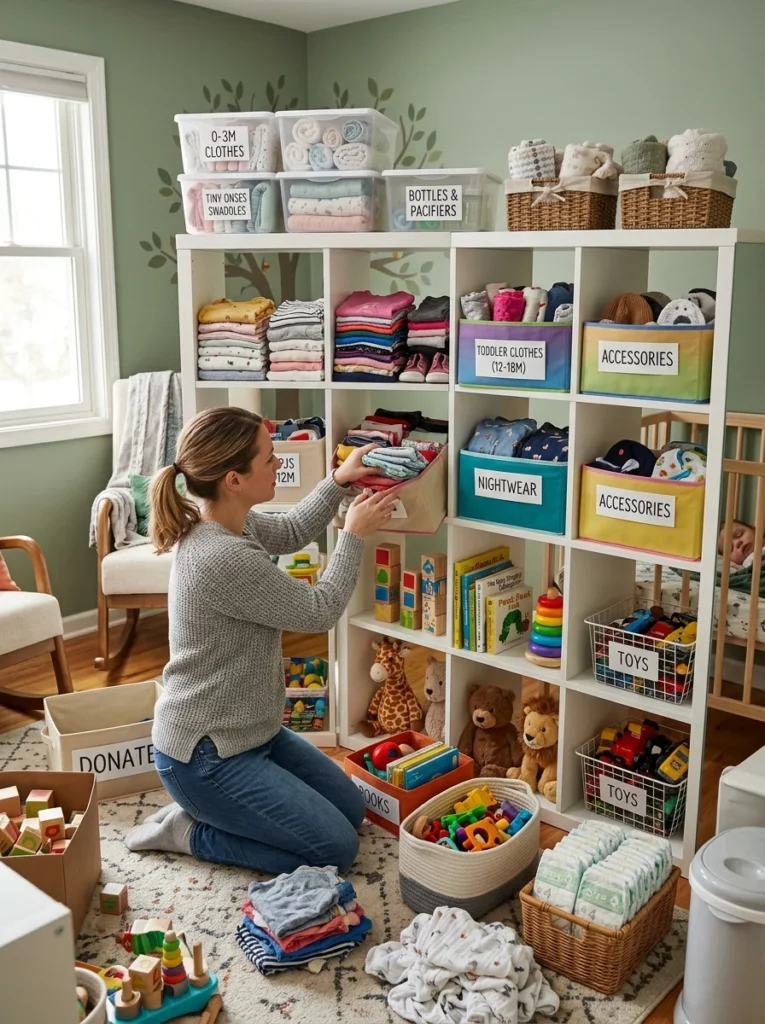
Before buying any additional bins or organizers, sort everything currently in the nursery into clear categories, clothing by size, diapering supplies, bath items, toys, and remove anything genuinely unused, outgrown, or duplicated. This step alone often reveals that a nursery doesn’t need as much additional storage as it initially seems to, once everything currently crammed into the space actually has a sensible, dedicated category to belong to.
Organize clothing by size, not just type
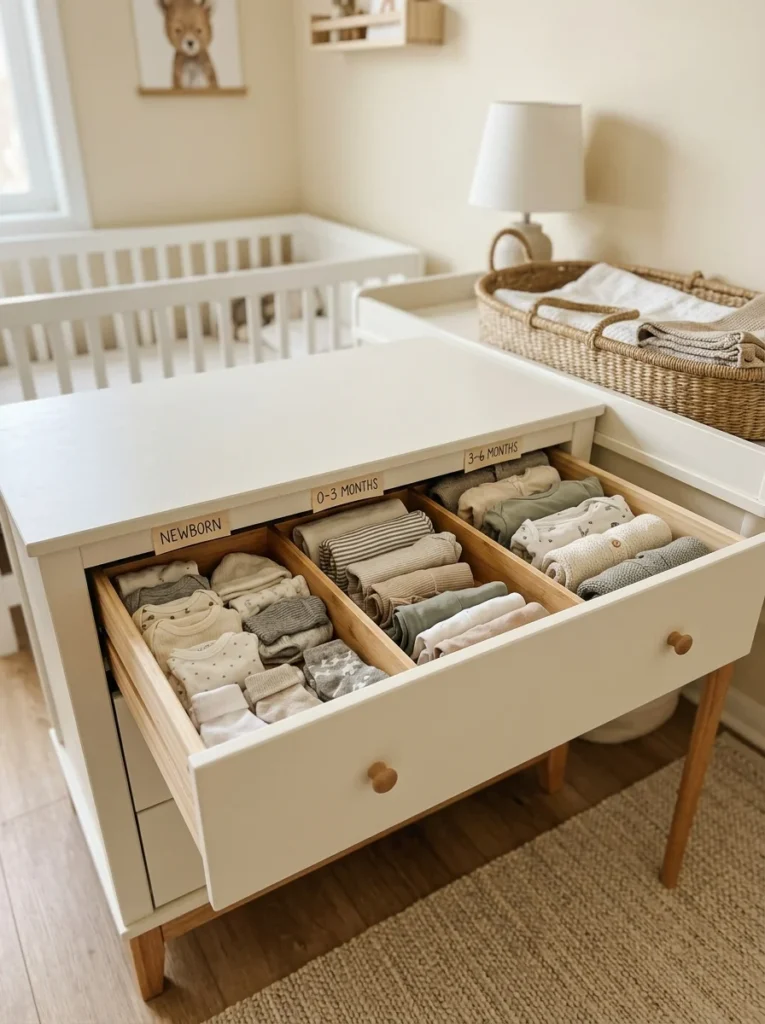
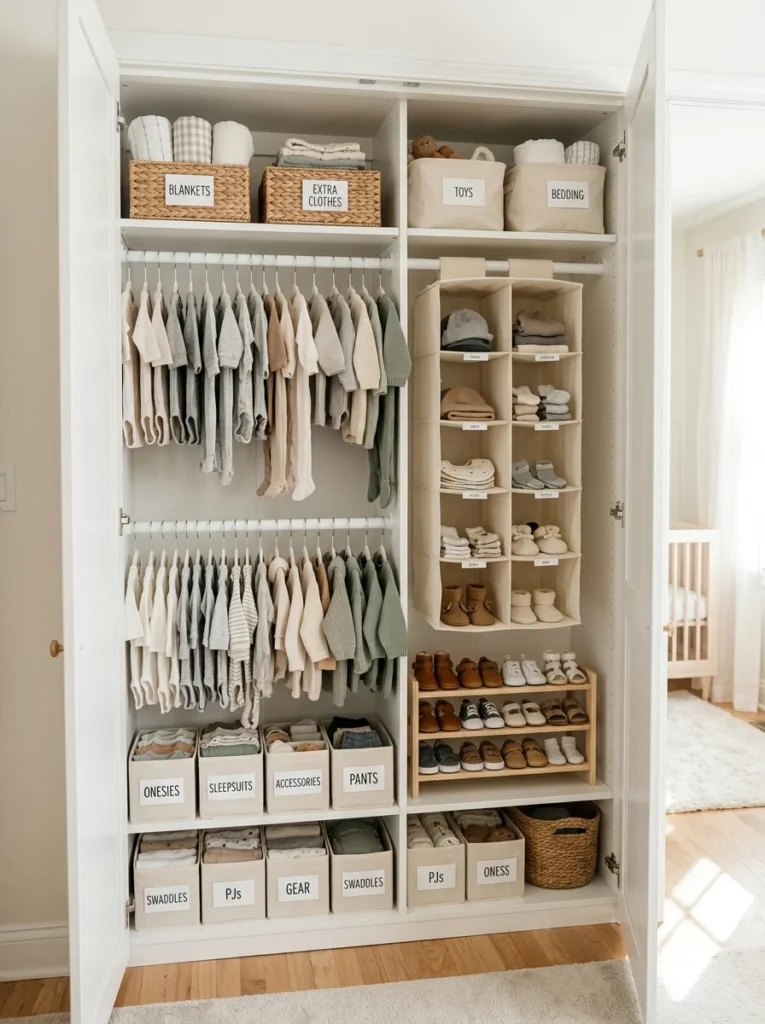
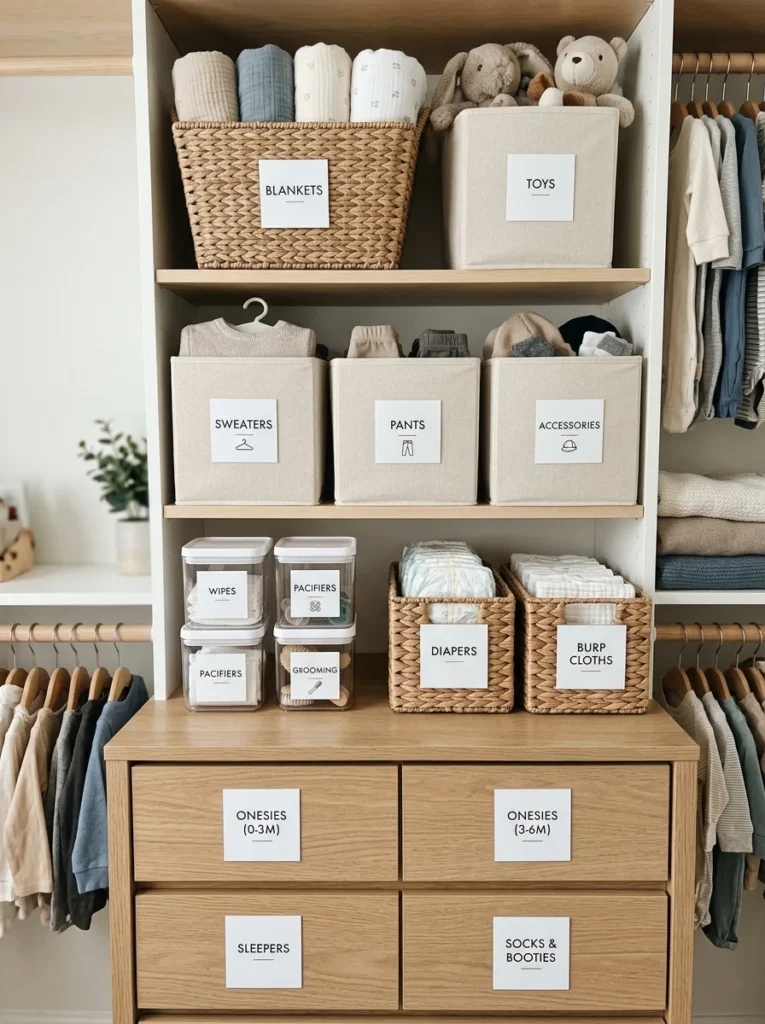
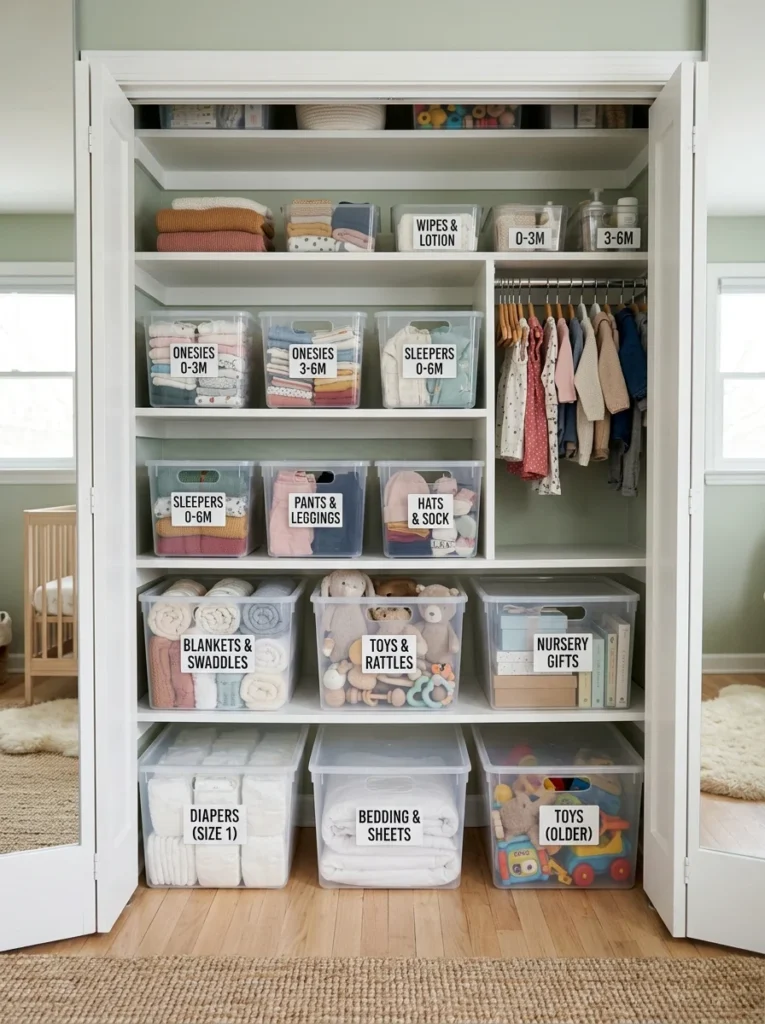
Since babies grow through sizes quickly, organizing clothing storage specifically by size, rather than simply by type, all onesies together regardless of size, makes it far easier to grab the currently appropriate size quickly rather than sorting through outgrown or not-yet-fitting items every time you’re dressing your baby. Clear bins or drawer dividers labeled by size, with the next size up stored slightly less accessibly than the current size, keeps this system functional as your baby continues growing.
Use a closet organizing system designed for small items
A closet with hanging shelves, small item organizers, or additional rods positioned at different heights makes considerably better use of a nursery closet’s often-underutilized vertical space than the default single rod and shelf configuration many closets come with. This is particularly valuable given how many nursery items are genuinely small, individual onesies, socks, tiny shoes, that get lost or disorganized easily in a closet designed around adult-sized clothing storage assumptions.
Designate specific bins for diapering supplies within reach of the changing area
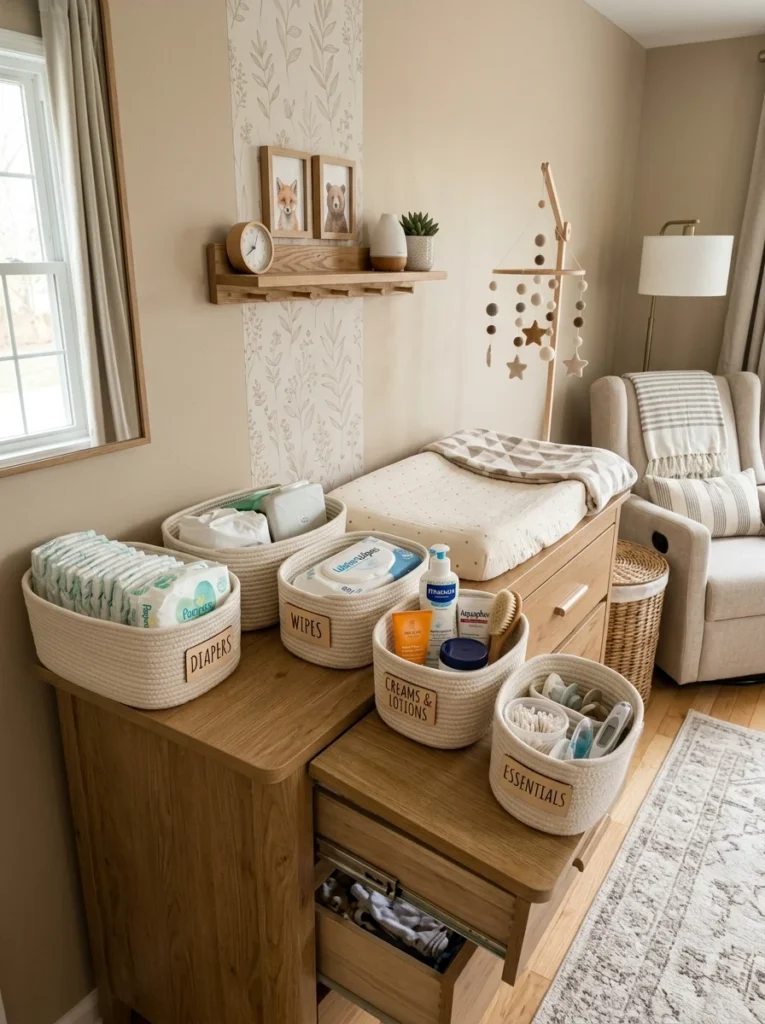
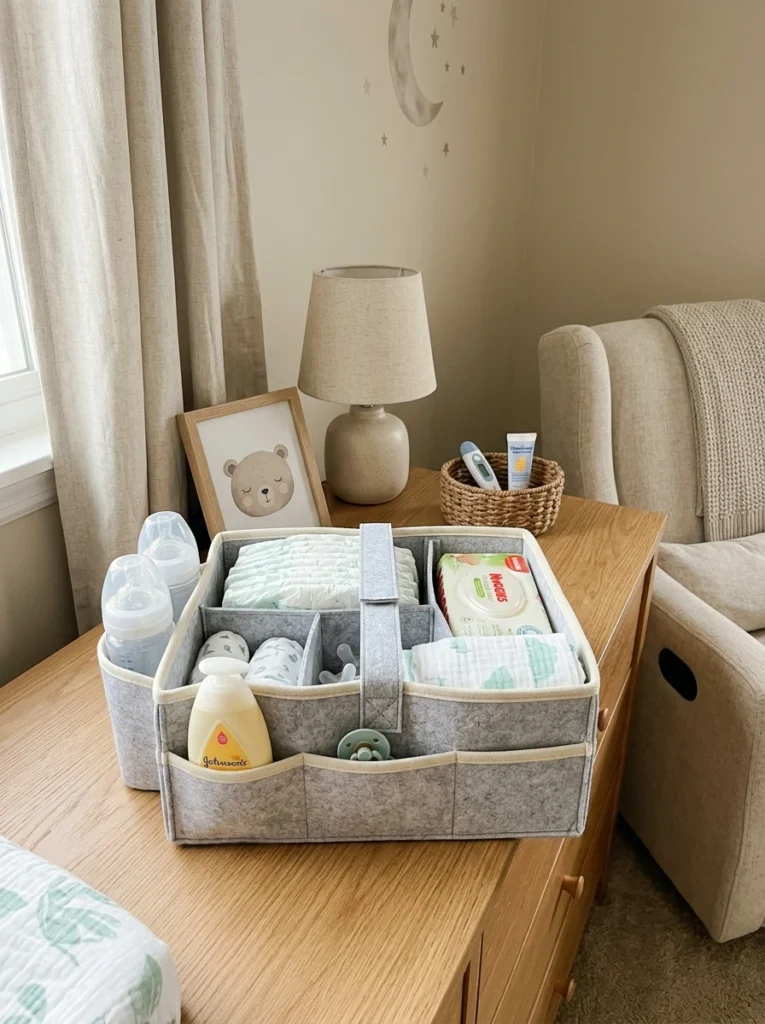
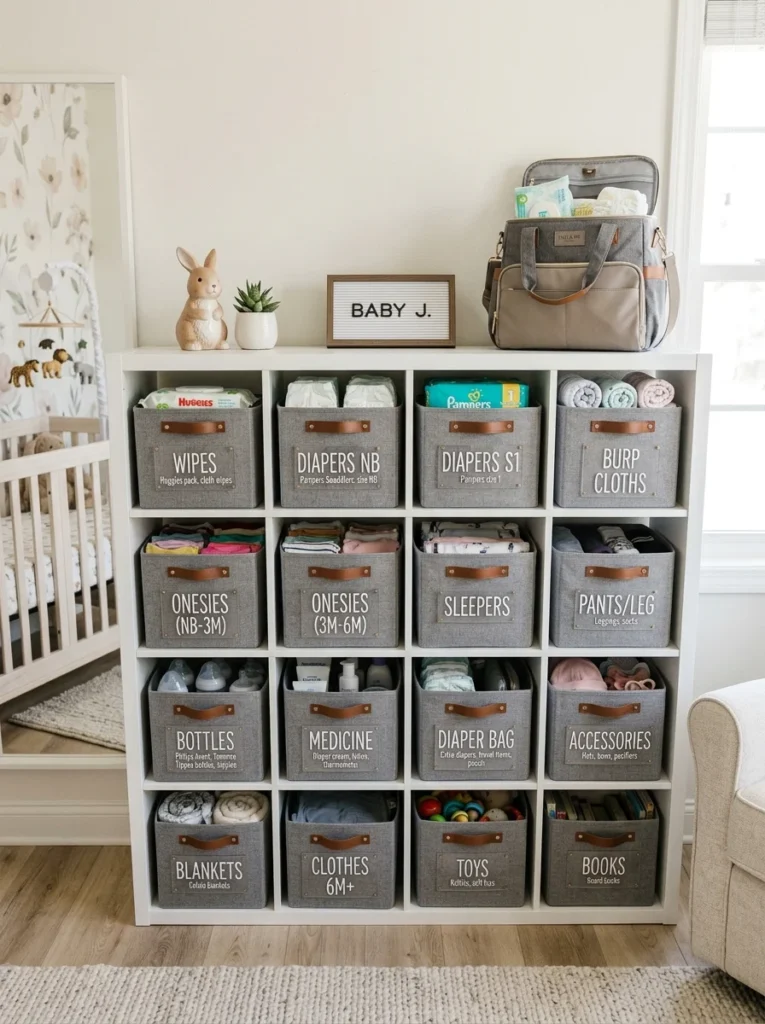
Diapers, wipes, diaper cream, and any other frequently needed changing supplies should be stored in clearly designated, easily reachable containers directly at or very near the changing area, since this is one of the most frequently repeated tasks in early parenthood and benefits enormously from not requiring a search each time. A caddy or set of small bins specifically for these items, refreshed and restocked regularly, keeps this high-frequency task running smoothly.
Use under-crib storage for bulkier, less frequently accessed items
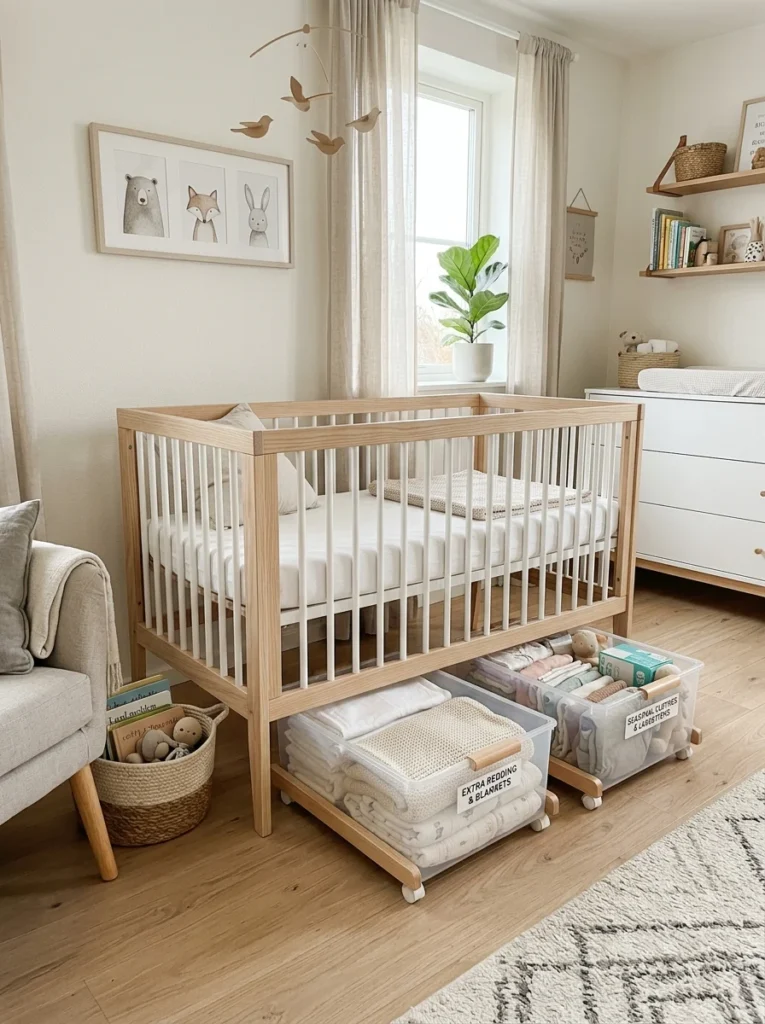
The space beneath a crib, provided nothing is stored there that could pose any safety concern given a mobile baby’s eventual reach, can hold bulkier or less frequently needed items, extra bedding, larger toys not currently in rotation, seasonal clothing, in flat, low-profile storage bins designed specifically for this kind of under-furniture use, making use of space that would otherwise go entirely unused.
Rotate toys and books rather than keeping everything accessible at once
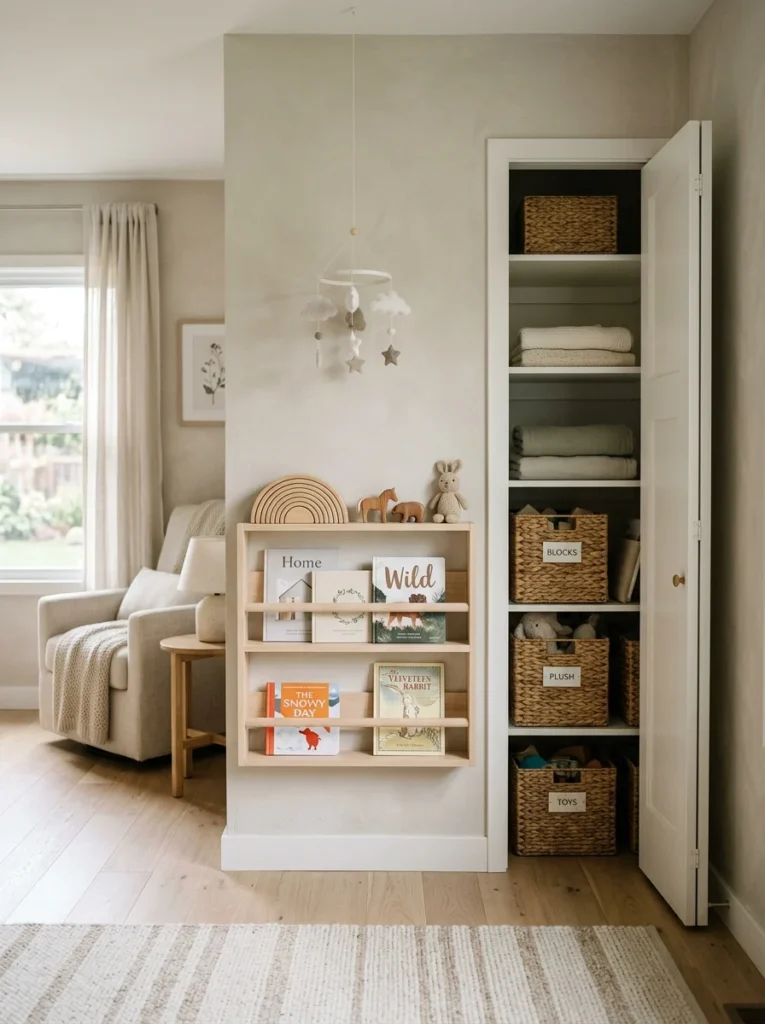
Keeping a smaller selection of toys and books accessible at any given time, with the rest stored elsewhere, whether a closet, a bin, or another room entirely, and rotated in periodically, both reduces daily clutter and tends to encourage more focused engagement with whatever is currently available, rather than an overwhelming, quickly-abandoned pile of every toy owned simultaneously.
Use wall-mounted storage to free up floor and shelf space
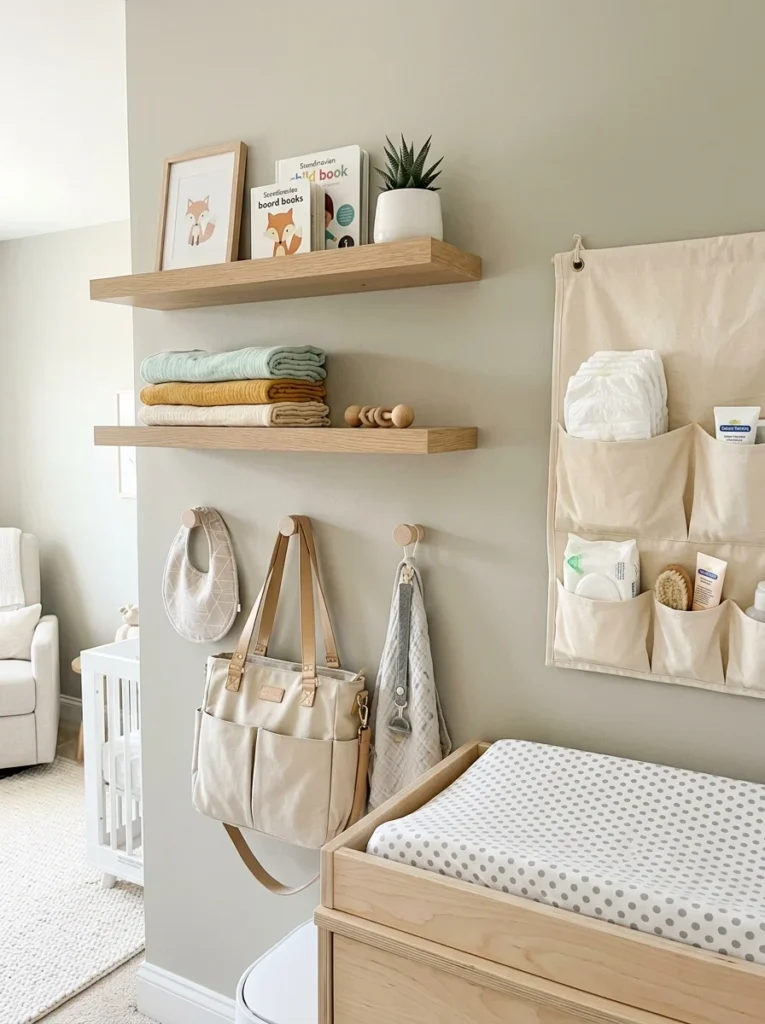
Wall-mounted shelving, hooks for bibs or small bags, and a wall-mounted organizer for diapering essentials all add meaningful storage capacity without consuming floor space, which matters particularly in a smaller nursery where every square foot of floor space serves a genuinely necessary function already.
Label everything, especially in a household where multiple people share caregiving
Clear labels on bins, drawers, and organizers ensure that anyone helping with childcare, a partner, a grandparent, a babysitter, can find and correctly put away items without needing to ask or guess, which matters more in a nursery than almost any other room in the house given how frequently items need to be retrieved, often during middle-of-the-night routines when clear, simple labeling makes a genuine difference in ease of use.
Keep a designated spot for outgrown items awaiting handoff or storage
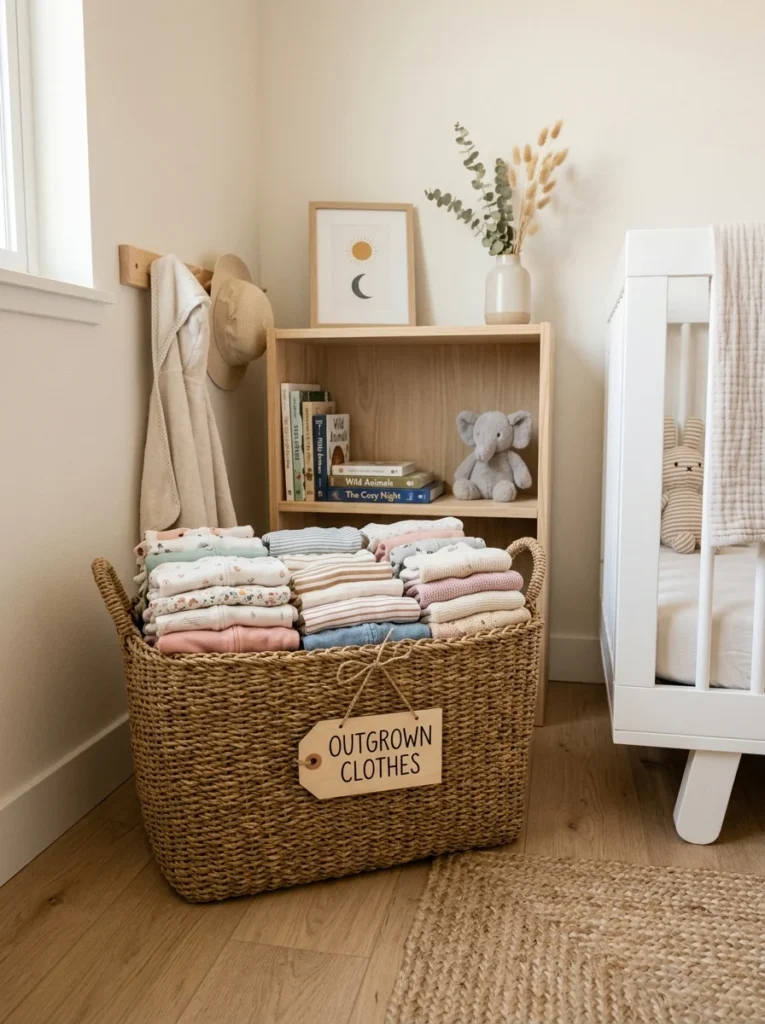
Rather than letting outgrown clothing and gear accumulate loosely as your baby grows, designating a specific bin or bag for items that have been outgrown but not yet passed along, donated, or moved to long-term storage prevents this natural byproduct of a rapidly growing baby from becoming its own ongoing source of nursery clutter.
Use a caddy or basket system for frequently moved items
Items that regularly move between rooms, a portable diaper caddy used for both the nursery and a downstairs changing spot, a basket of frequently used soothing items carried between the nursery and a parent’s bedroom, benefit from a dedicated, portable container specifically designed for this kind of regular transport, rather than being repeatedly gathered from scratch each time they’re needed elsewhere in the house.
Reassess the storage system every few months as your baby’s needs change
A newborn’s storage needs, primarily clothing, diapering supplies, and basic soothing items, shift considerably by the time a baby becomes a mobile, curious toddler with an expanding collection of toys and a changing wardrobe. Revisiting your nursery’s storage system every few months, rather than assuming the original setup remains perfectly suited indefinitely, keeps the organization genuinely functional as your child’s actual needs continue evolving.
Find a dedicated spot for bulkier baby gear outside the nursery itself
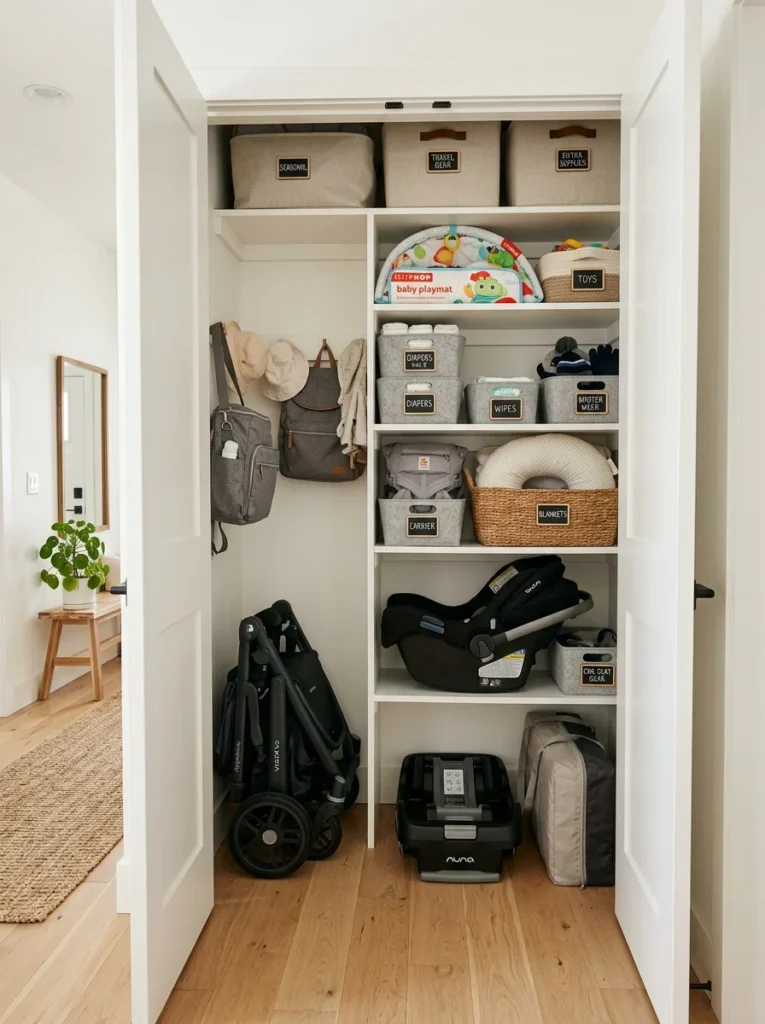
Larger items, an infant car seat not currently installed, a stroller, a baby carrier not in daily use, often don’t belong inside the nursery at all, since they can consume disproportionate floor space in a room better reserved for sleep, changing, and clothing storage. Designating a spot elsewhere in the home, an entryway closet, a corner of a garage, for this bulkier gear keeps the nursery itself focused on its core functions while still keeping larger items reasonably accessible when needed.
Set up a dedicated diaper bag restocking station
Rather than searching the nursery each time the diaper bag needs restocking before heading out, designating a specific shelf or bin that holds exactly the supplies needed to restock the bag, spare diapers, wipes, a change of clothes, makes this common, repeated task considerably faster. Keeping this restocking station separate from the everyday changing supplies used at home ensures you’re not depleting your at-home stock every time you’re preparing for an outing.
Use clear bins specifically for hand-me-downs and gifted items
Baby gear and clothing often arrives from multiple sources at once, hand-me-downs from family, gifts, secondhand finds, and without a clear intake system, these items can pile up unsorted for weeks. A designated bin specifically for newly received items awaiting sorting, checked and processed on a regular basis rather than left indefinitely, prevents this common influx from becoming its own persistent source of nursery clutter.
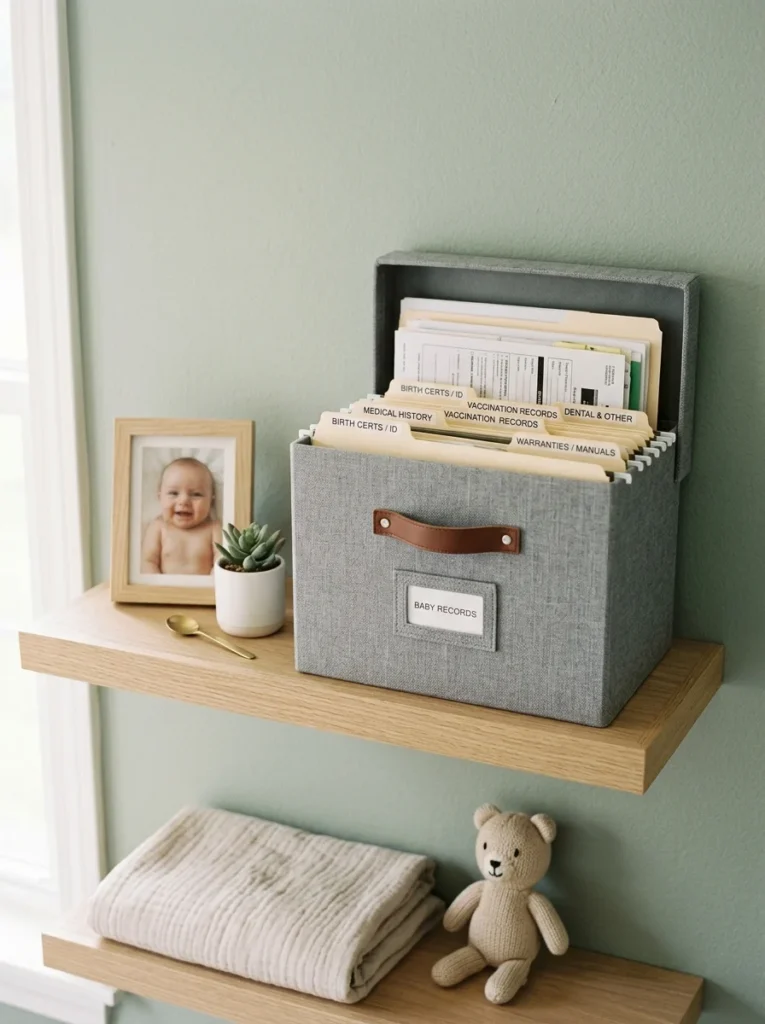
Consider a small filing or folder system for important paperwork
Beyond physical baby gear, a nursery or nearby space often accumulates important paperwork, medical records, warranty information for larger baby gear purchases, growth and development notes, that benefits from a simple, dedicated folder or small filing system rather than being scattered loosely among physical baby items. Keeping this paperwork organized separately from the physical clutter it’s easy to lump in with prevents important documents from getting lost amid diapers and clothing bins.
How should I organize baby clothes that come in constantly changing sizes?
Organizing clothing storage specifically by size, with clear bins or drawer dividers labeled accordingly, and storing the next size up slightly less accessibly than the current size, makes it far easier to find appropriately sized clothing quickly as your baby continues growing.
Is it safe to store items under the crib?
Flat, low-profile storage bins under a crib can work well for bulkier or less frequently needed items, provided nothing stored there could pose a safety concern once your baby becomes mobile enough to potentially reach underneath the crib.
Should I keep all of my baby’s toys accessible at once?
Not necessarily. Keeping a smaller, rotating selection accessible at any given time, with the rest stored elsewhere and swapped in periodically, tends to reduce clutter and encourage more focused engagement than having every toy available simultaneously.
How often should I reorganize nursery storage?
Revisiting the storage system every few months is generally reasonable, since a baby’s actual needs shift considerably as they grow from a newborn’s basic clothing and diapering requirements toward a more mobile toddler’s expanding toy collection and changing wardrobe.
Should bulky items like strollers be stored in the nursery?
Generally no, larger gear like strollers, car seats not currently in use, and infrequently used carriers often work better stored elsewhere in the home, an entryway closet or garage corner, keeping the nursery itself focused on sleep, changing, and clothing storage rather than bulky gear.
How do I keep hand-me-downs and gifts from piling up unsorted?
Designating a specific bin for newly received items awaiting sorting, and processing it on a regular schedule rather than leaving it indefinitely, prevents this common influx of gifted and secondhand items from becoming its own persistent clutter source.
Genuinely effective nursery storage comes down to sorting by real categories, organizing clothing by size rather than just type, keeping frequently used items within easy reach, and periodically reassessing the whole system as your baby’s needs change. None of this requires buying every available organizing product; it requires giving every category of item an actual, logical home.
Our own nursery, once a room where I could never quite find what I needed despite owning plenty of storage furniture, now runs on a system organized by size and category rather than sheer volume of bins, and it’s made an enormous difference in how manageable those frequent middle-of-the-night routines actually feel. If your own nursery still feels cluttered despite reasonable storage furniture, the fix is very likely not more bins, but a genuine system behind the bins you already have.