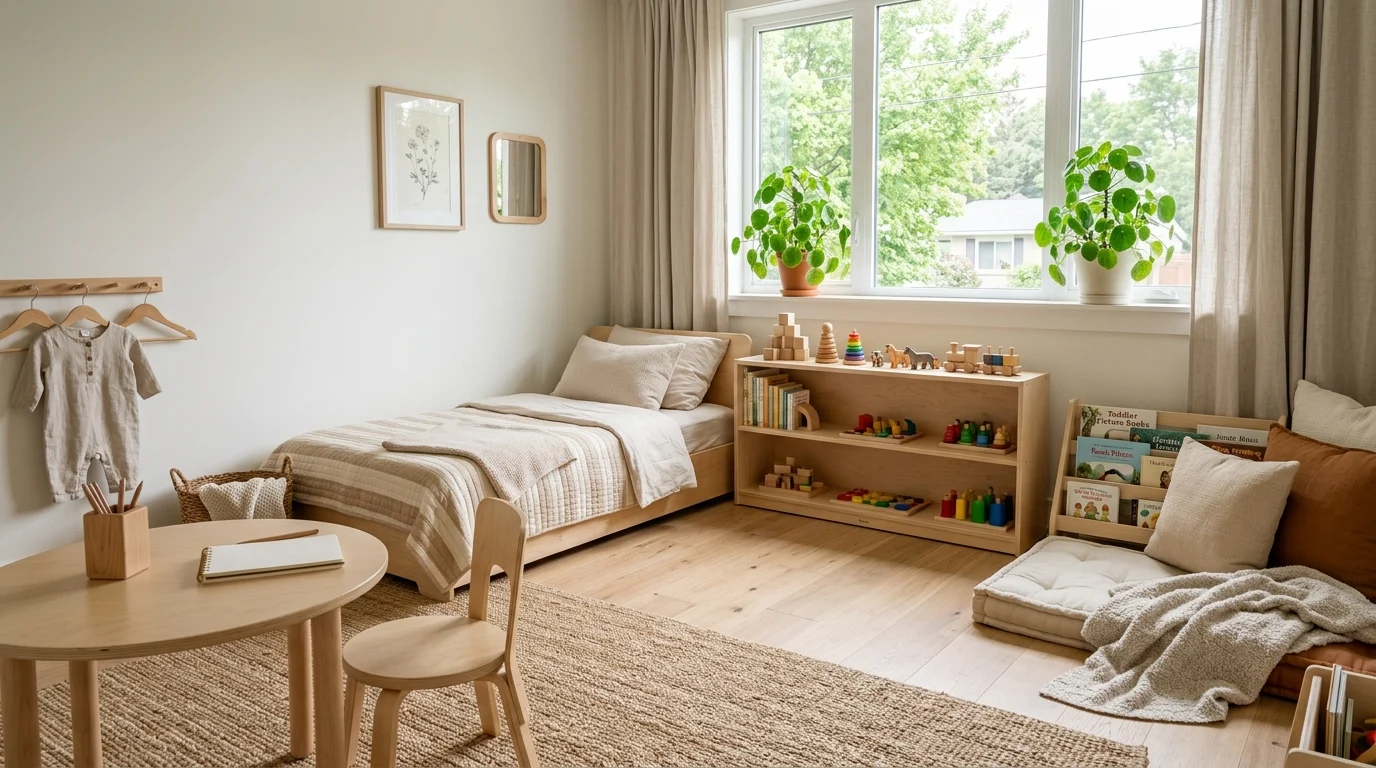
When our daughter transitioned out of her crib, I initially just bought a standard toddler bed and left everything else in the room exactly as it had been, still arranged entirely around what worked for an infant rather than a newly mobile, increasingly independent toddler. It took watching her struggle repeatedly to reach her own books or clothes, arranged at heights and in containers designed for adult convenience rather than her actual reach and ability, before I started genuinely researching a Montessori-inspired approach to her room. Rearranging the space around her actual capabilities, rather than around what was simplest for me to manage, made a genuine difference in how independently she began interacting with her own room.
A Montessori-inspired bedroom isn’t about strict adherence to a specific educational philosophy; at its core, it’s about designing a child’s space around their actual size, ability, and growing independence, rather than defaulting to a room built entirely around adult convenience. Here’s how to actually apply these principles.
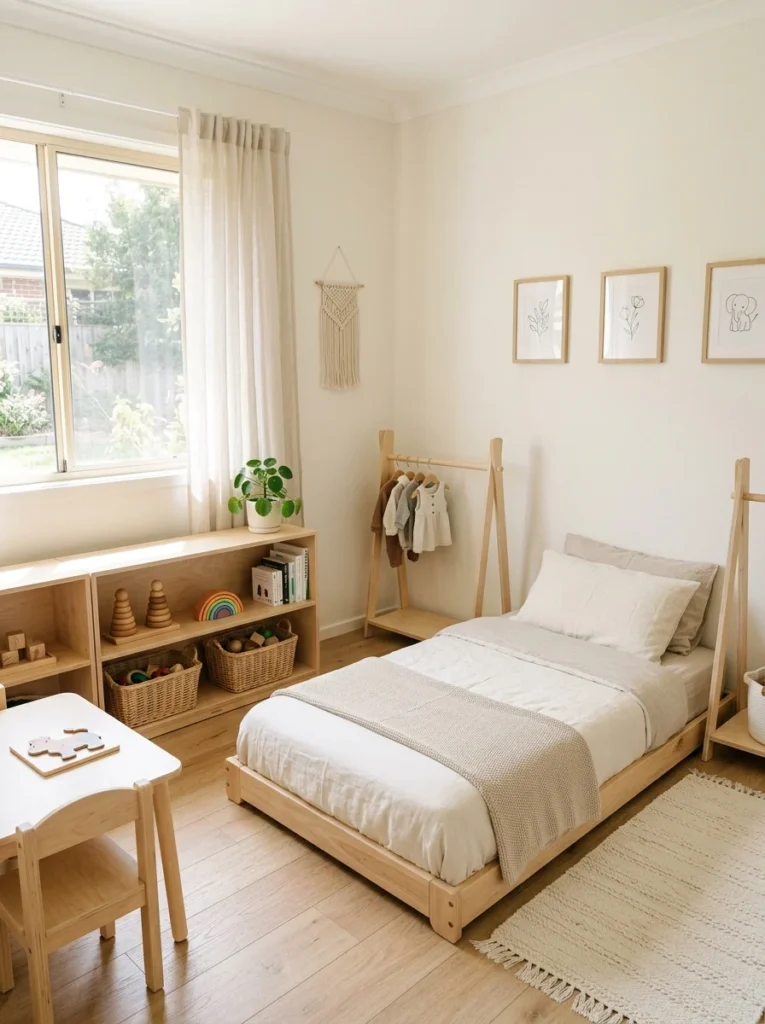
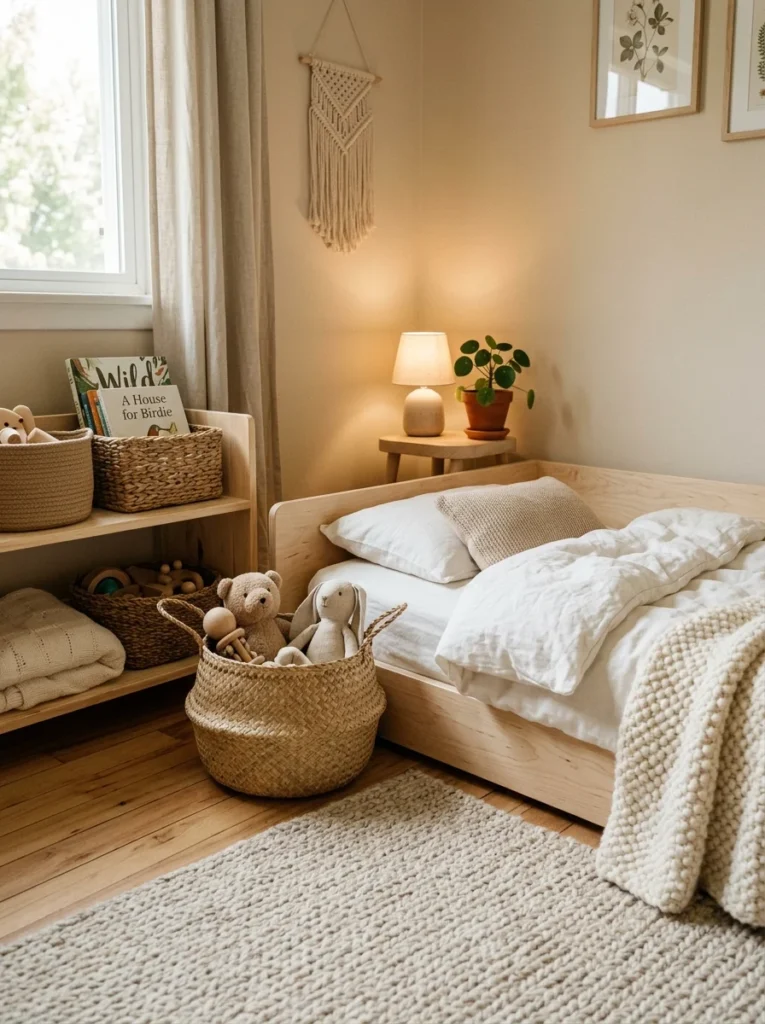
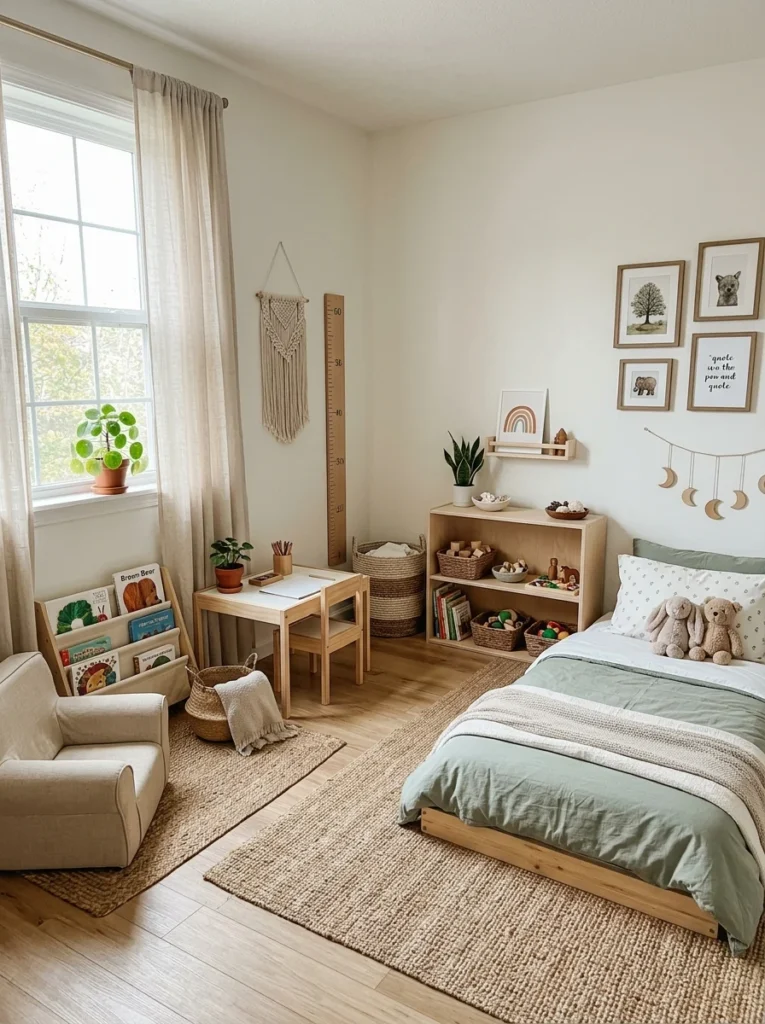
Use a floor bed or a very low bed frame
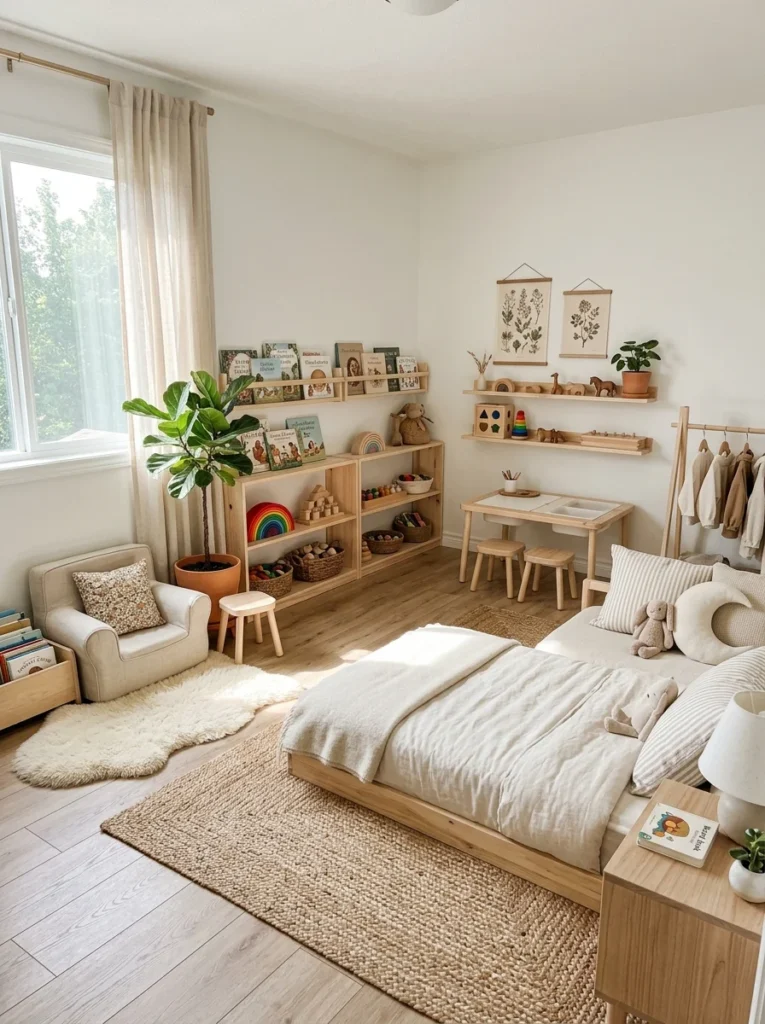
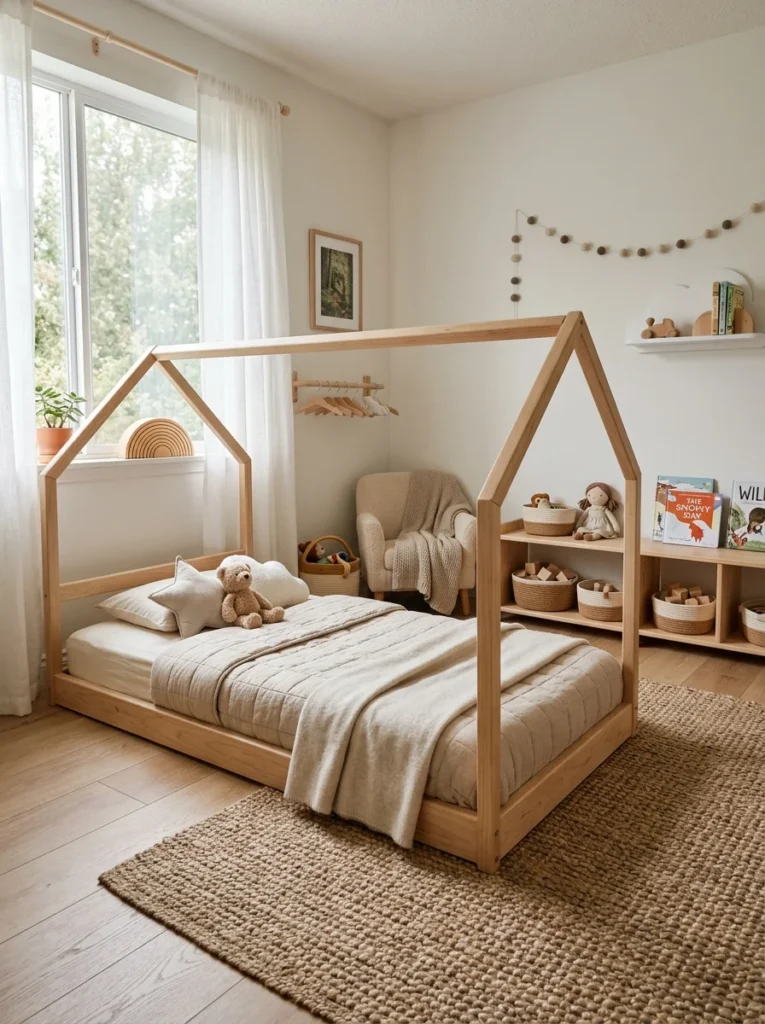
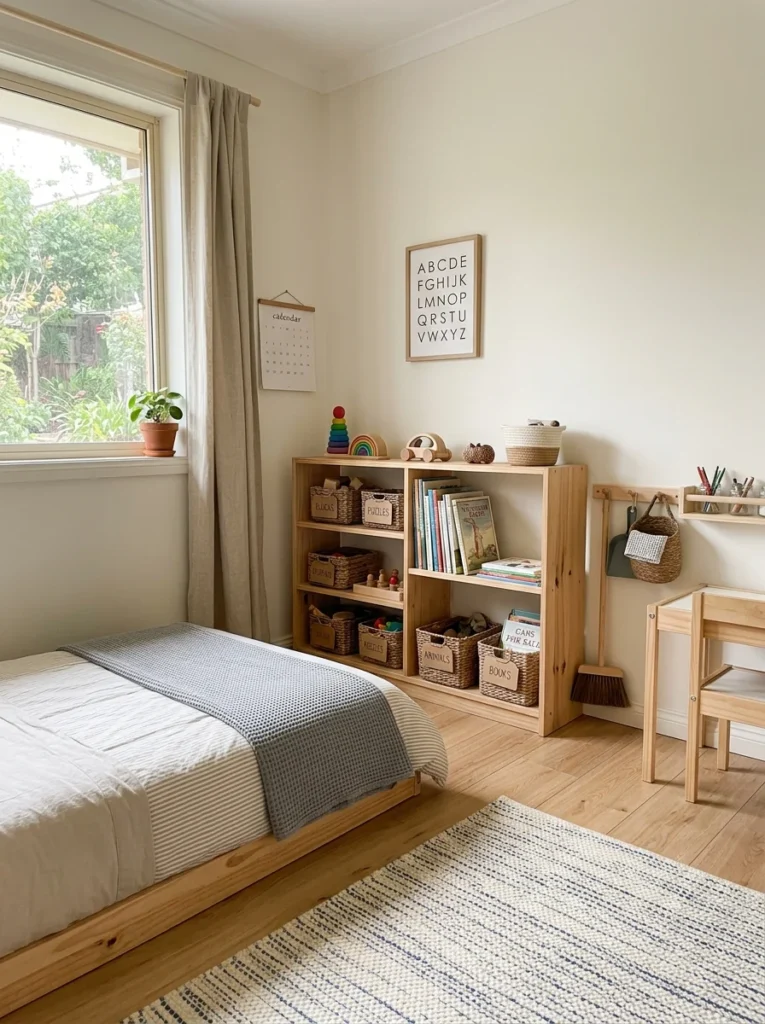
A floor bed, simply a mattress placed directly on the floor or on a very low frame, allows a toddler to get in and out of bed independently, without needing an adult’s help or the risk of climbing over crib rails or falling from a taller bed frame. This is often considered one of the foundational elements of a Montessori-inspired bedroom, since it directly supports a young child’s growing physical independence in one of their most basic daily routines, going to bed and getting up in the morning.
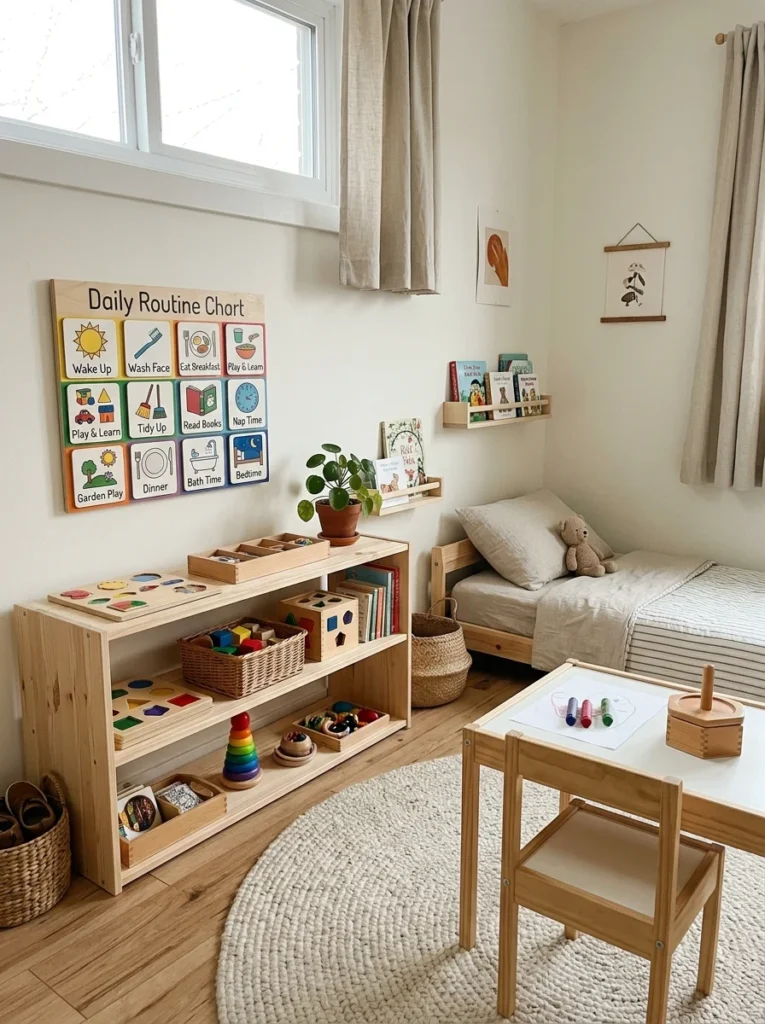
Lower shelving and storage to a child’s actual reach height
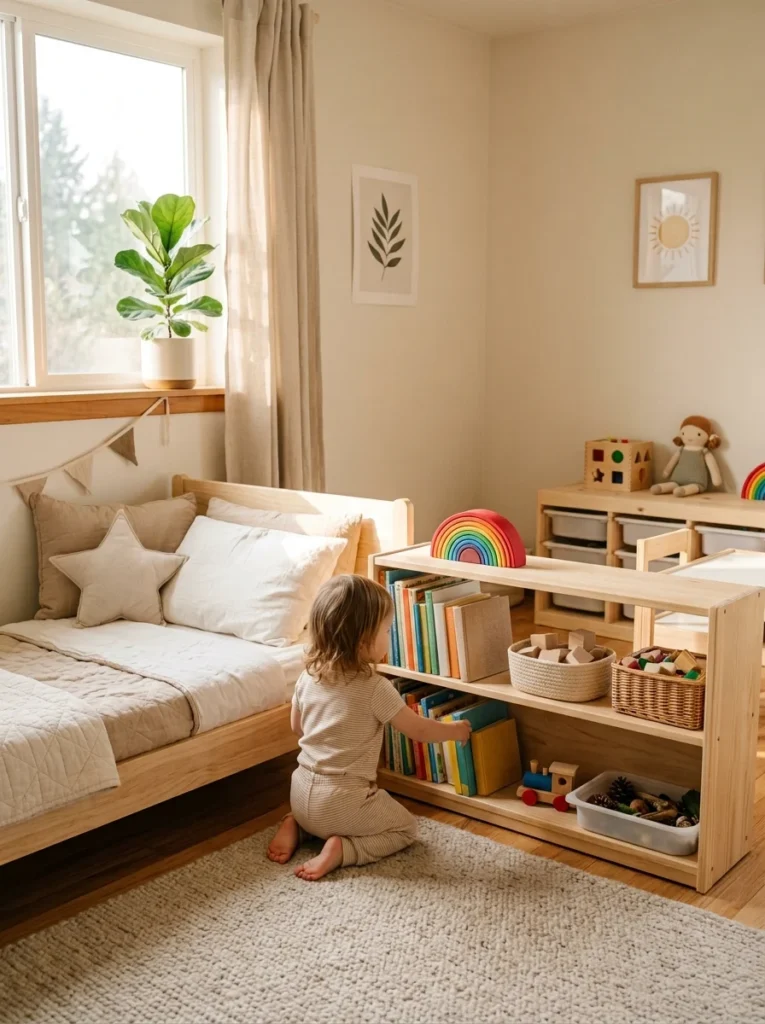
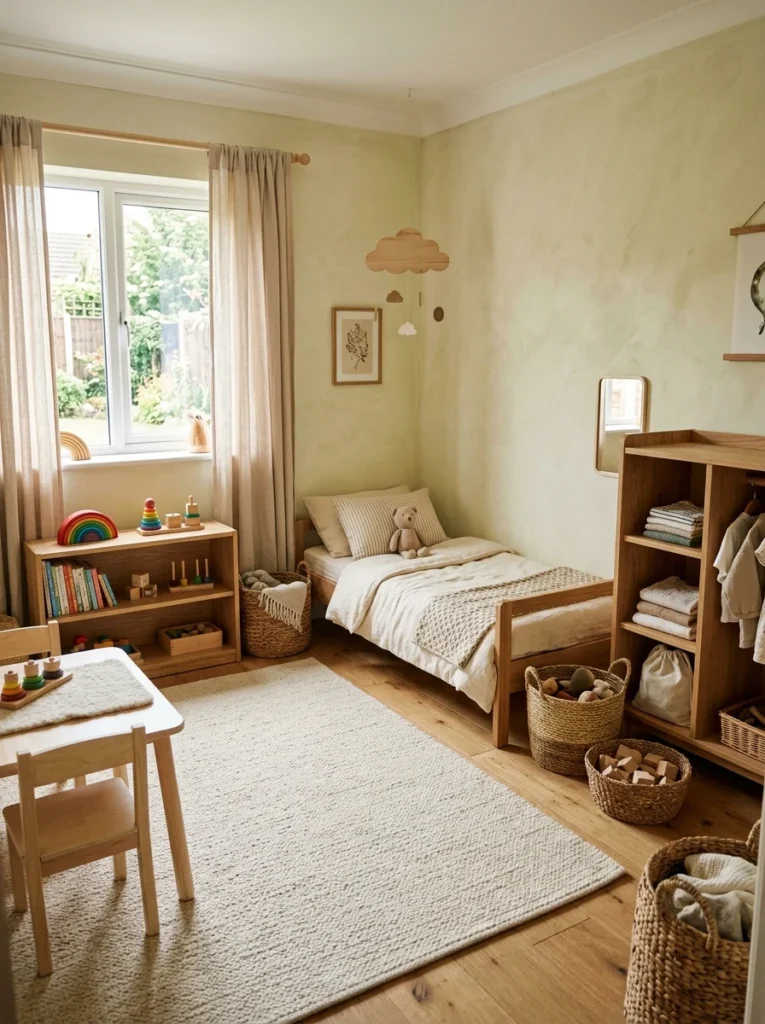
Storage for clothes, books, and toys positioned at a height a toddler can genuinely reach and use independently, rather than storage designed for adult convenience that requires a child to ask for help with nearly everything, supports the same independence principle as a floor bed. This often means low, open shelving rather than tall dressers or high closet rods, giving a young child direct, unassisted access to their own belongings.
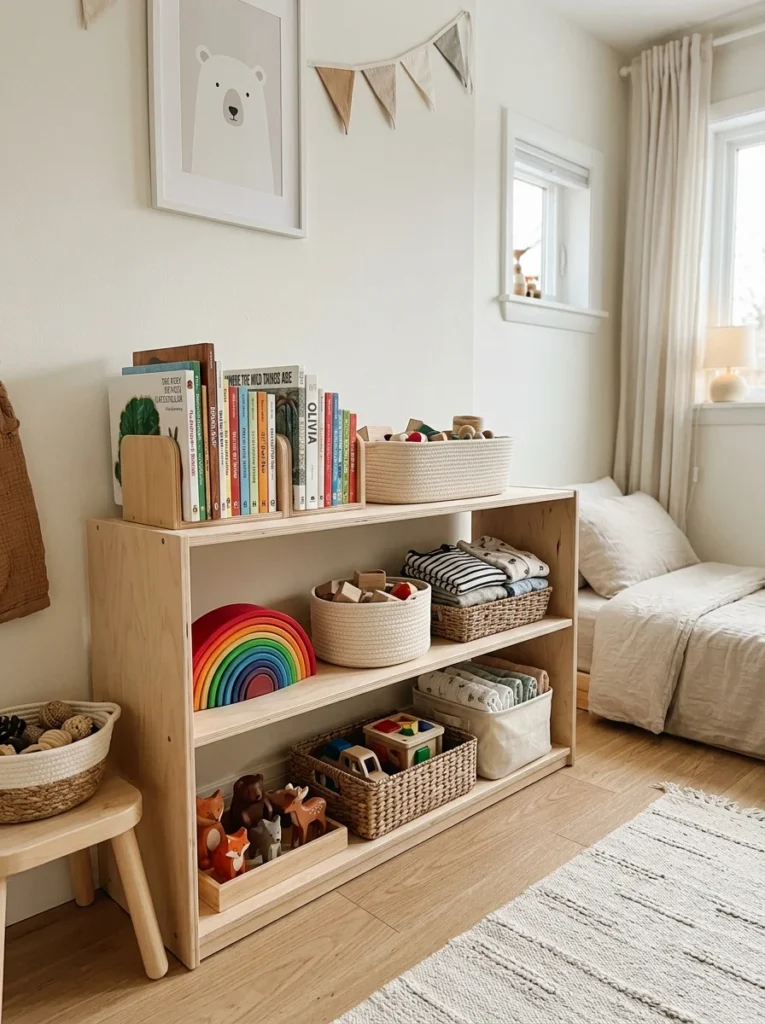
Offer a limited, rotating selection of toys rather than everything at once
Rather than keeping every toy a child owns accessible simultaneously, which can be genuinely overwhelming and can also make it harder for a young child to engage deeply with any single toy, a Montessori-inspired approach often involves keeping a smaller, curated selection accessible at any given time, with the rest stored elsewhere and rotated in periodically. This approach tends to encourage more focused, sustained play with fewer toys rather than a scattered, quickly abandoned exploration of many toys at once.
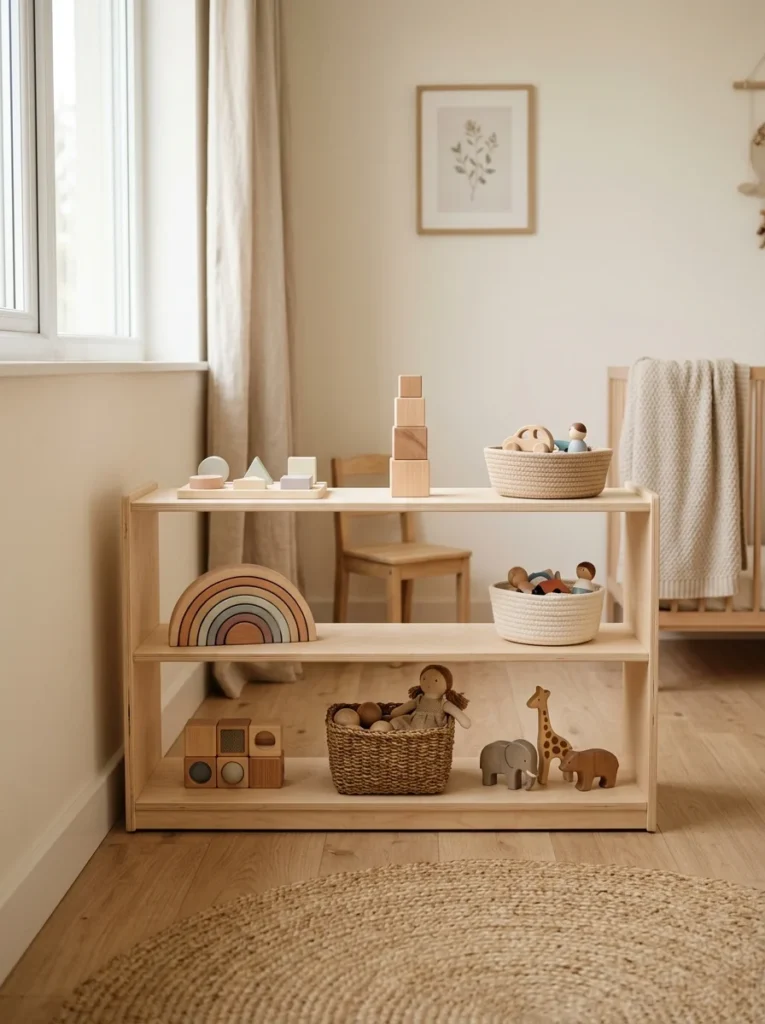
Choose simple, open-ended toys over highly specific or electronic ones
Open-ended toys, blocks, simple wooden toys, art supplies, tend to support more varied, imaginative play than toys with a single, predetermined function or heavy electronic components, aligning with a broader Montessori principle of supporting a child’s own developing creativity and problem-solving rather than directing their play toward one specific, predetermined outcome.
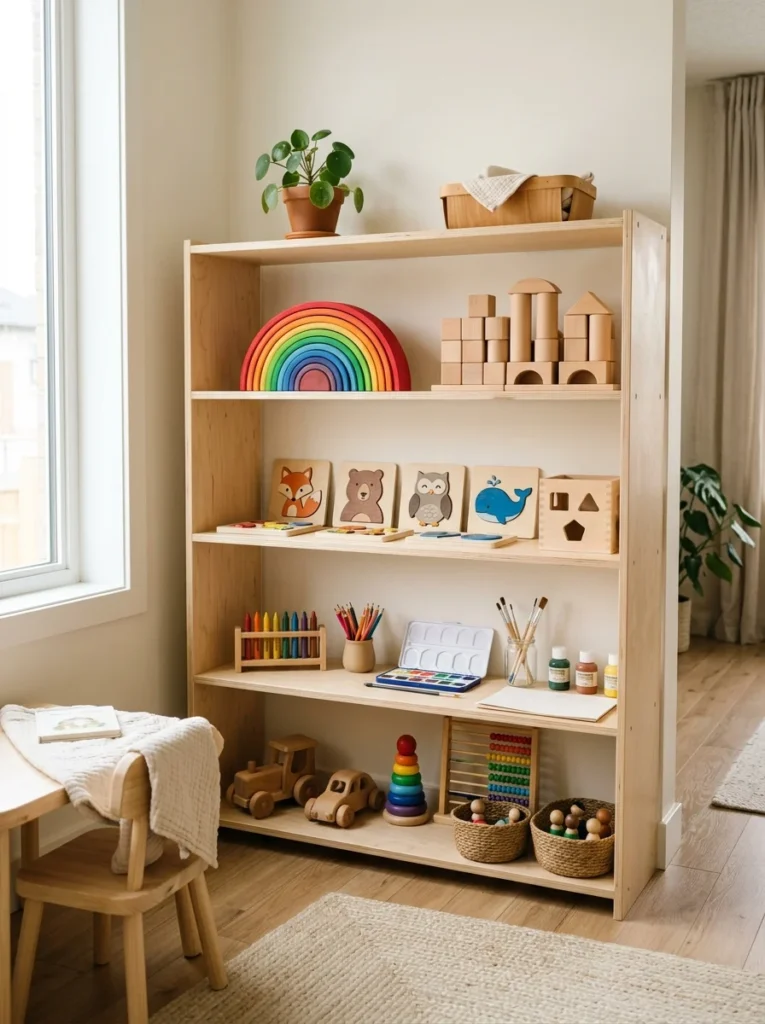
Use a low mirror to support self-awareness and dressing independence
A securely mounted, shatter-resistant mirror positioned at a toddler’s height allows them to see themselves while dressing or simply engaging in self-directed observation, supporting both practical dressing independence and general self-awareness in a way an adult-height mirror positioned well above a young child’s sightline doesn’t accomplish nearly as effectively.
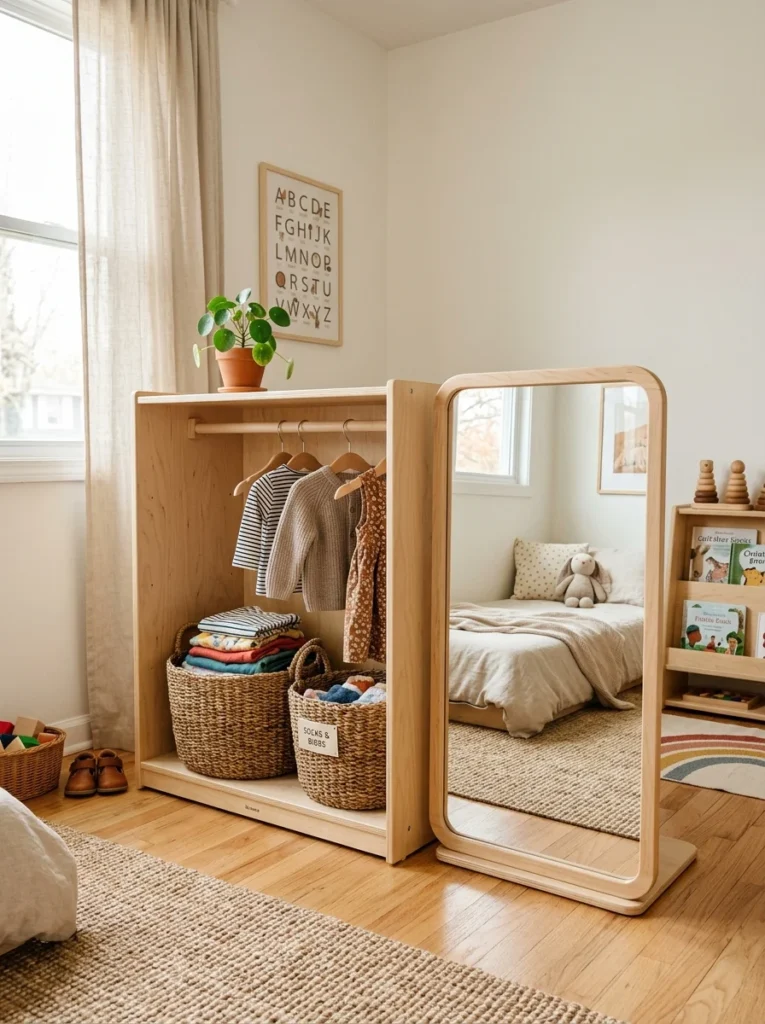
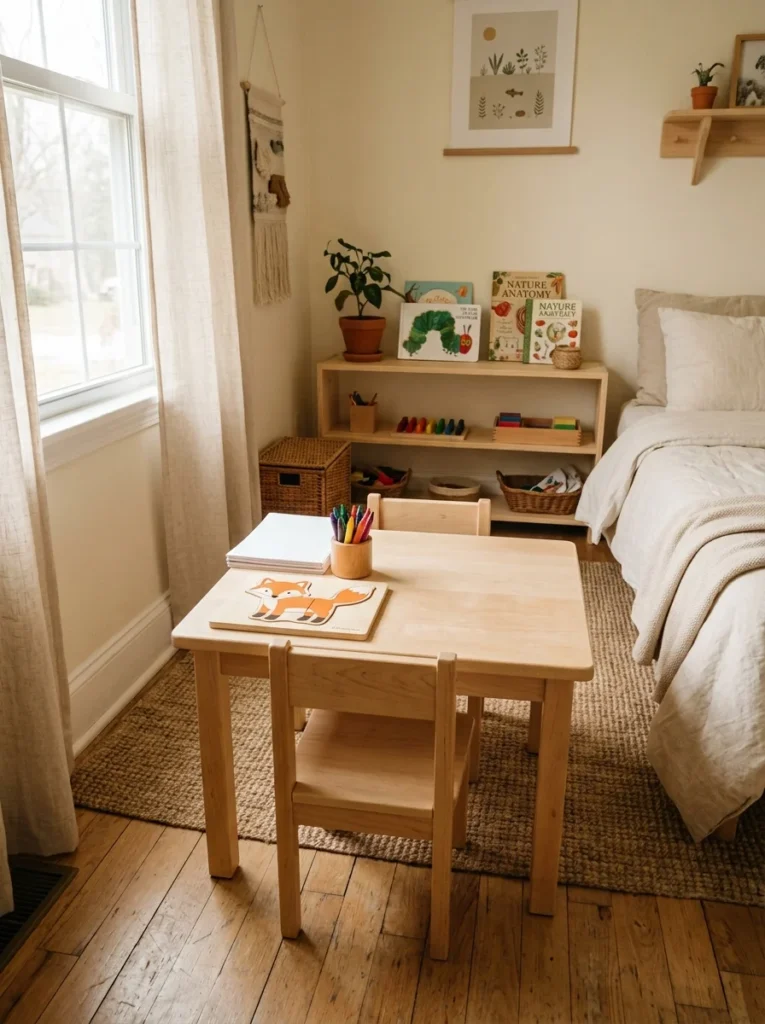
Provide a small table and chair sized appropriately for the child
A small, child-sized table and chair, rather than relying purely on the floor or furniture sized for adults, gives a toddler a genuine, independent space to sit and engage in activities, drawing, simple puzzles, snack time, that’s proportioned to their own body rather than requiring them to awkwardly manage adult-sized furniture not designed for their smaller scale.
Keep the overall room visually calm and uncluttered
A Montessori-inspired room generally favors a calmer, less visually busy aesthetic, muted colors, simple patterns, minimal clutter, over a highly stimulating, visually chaotic room, based on the idea that an overly busy visual environment can make it harder for a young child to focus and engage meaningfully with any single element in the room. This doesn’t mean the room needs to be stark or joyless, just intentionally calmer than a room crammed with every bright color and pattern available.
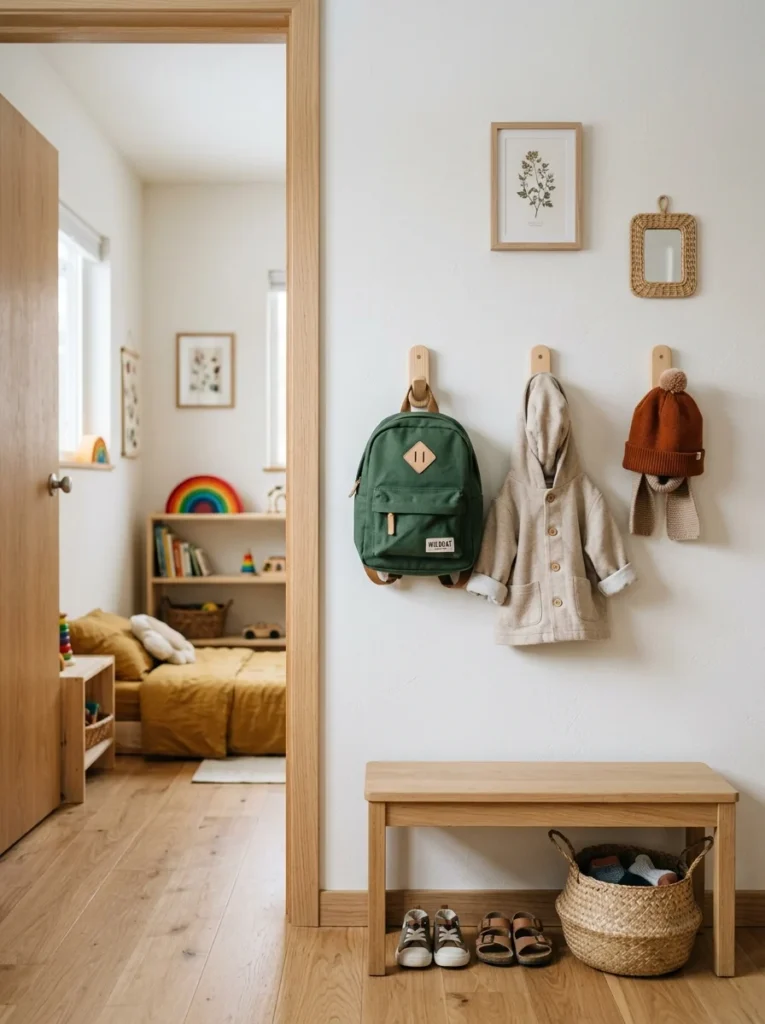
Use low hooks for clothing and outerwear instead of high closet rods
Hooks mounted at a toddler’s height for a jacket, a bag, or frequently worn clothing items support the same independence principle as low shelving, letting a young child hang up and retrieve their own items without needing an adult to reach a high closet rod on their behalf every single time.
Display art and photos at a child’s eye level, not just an adult’s
Positioning at least some art, photos, or decorative elements at a height a toddler can actually see comfortably while standing, rather than everything hung at typical adult eye level, gives a young child genuine visual engagement with their own room’s decor rather than a room where most of the decoration exists above their natural sightline entirely.
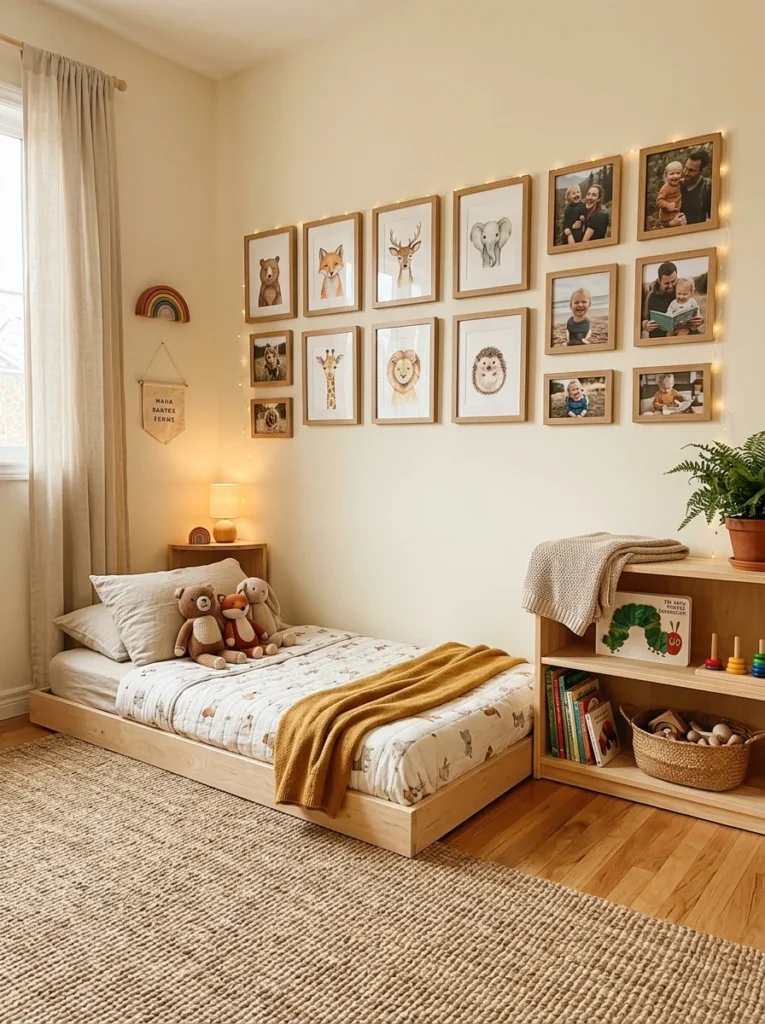
Create a defined reading or quiet corner
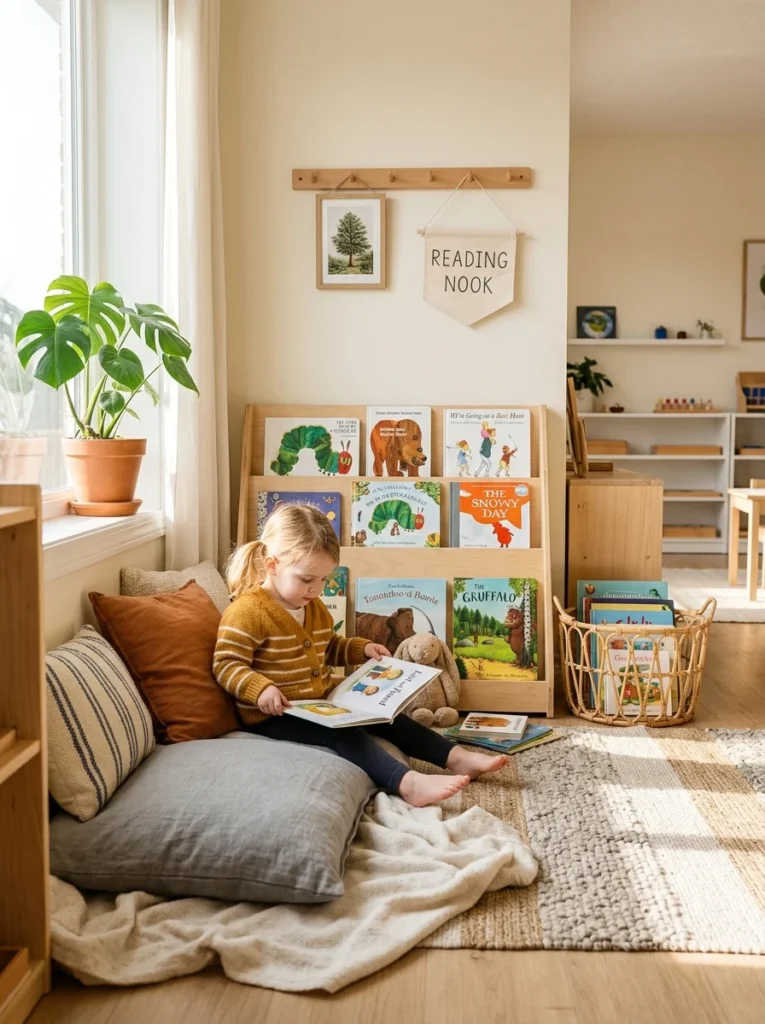
A small, cozy reading nook, a floor cushion, a low bookshelf displaying books face-out for easy selection, a soft rug, creates a defined, inviting space that encourages independent, self-directed quiet time and book exploration, another core element commonly associated with Montessori-inspired room design for young children.
Involve your child in caring for their own space as they’re able
As children grow into toddlerhood and beyond, involving them in simple care tasks for their own room, putting toys back on accessible low shelves, helping make their own floor bed, hanging up their own jacket on a low hook, supports the broader independence philosophy beyond just the room’s physical layout, extending it into actual daily habits and routines.
Favor natural materials over heavily synthetic ones where practical
Wood, cotton, wool, and other natural materials for furniture, bedding, and rugs are commonly favored in Montessori-inspired design, both for their tactile quality and the general philosophy of connecting children with natural, authentic materials rather than an environment dominated by plastic and synthetic finishes. This doesn’t require an all-or-nothing approach, but leaning toward natural materials where practical and budget allows aligns with this broader design sensibility.
Bring elements of nature into the room thoughtfully
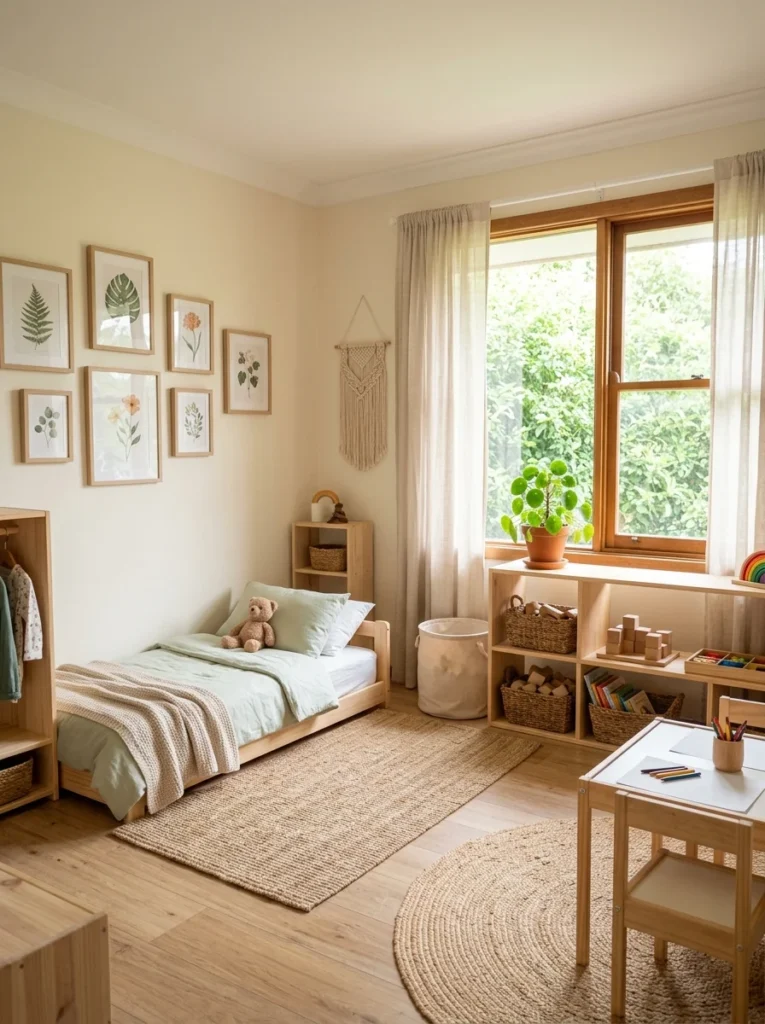
A simple, child-safe plant that a toddler can help water and observe, natural wood textures, or nature-inspired art and photography all support a Montessori-influenced connection to the natural world within the indoor bedroom environment. This doesn’t need to be elaborate; even one or two thoughtfully chosen natural elements contribute meaningfully to the room’s overall sensibility without requiring a complete nature-themed redesign.
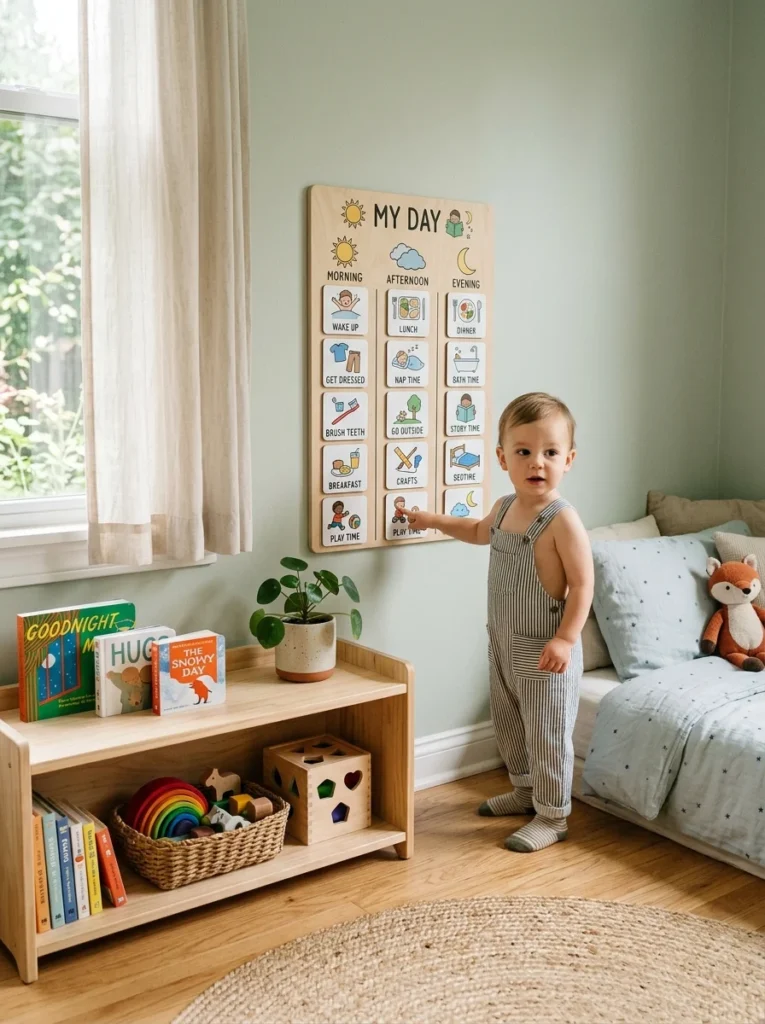
Choose a simple, consistent daily routine chart or visual schedule
A simple visual chart or set of picture cards showing a child’s basic daily routine, waking up, getting dressed, mealtimes, bedtime, displayed at their eye level, supports both the independence principle and a young child’s developing understanding of sequence and routine, common threads throughout Montessori-inspired approaches to both physical space and daily structure.
This kind of visual aid works especially well alongside the low, accessible storage already covered, since a child can reference the chart and then independently retrieve what they need for the next step in their routine without necessarily needing an adult to walk them through each stage verbally every single time.
Should I use natural materials throughout a Montessori-inspired room?
It’s not required, but wood, cotton, wool, and other natural materials are commonly favored for both their tactile quality and the broader philosophy of connecting children with authentic materials, so leaning toward natural options where practical and budget allows fits well with this design sensibility.
Are visual routine charts actually helpful for toddlers?
Many parents find a simple visual chart showing a child’s basic daily routine, displayed at their eye level, supports both growing independence and a young child’s developing understanding of sequence, working especially well alongside low, accessible storage they can use on their own.
Common Montessori bedroom questions
Is a floor bed safe for a toddler?
A floor bed can be a safe, practical choice for a toddler’s room when the surrounding area is childproofed appropriately, since it eliminates the fall risk associated with climbing in and out of a taller bed frame, while still requiring the same general room safety precautions as any other toddler bedroom.
Do I need to buy special Montessori-branded furniture?
No, the core principles, low storage, child-accessible furniture, a floor bed, can generally be achieved with standard furniture adjusted to an appropriate height, rather than requiring furniture specifically marketed or branded as Montessori-designed.
How many toys should be accessible in a Montessori-inspired room?
There’s no strict universal number, but keeping a smaller, curated selection accessible at any given time, with the rest stored elsewhere and rotated in periodically, tends to encourage more focused, sustained engagement than having every toy available simultaneously.
Can I apply Montessori principles gradually rather than redoing the whole room at once?
Yes, principles like lowering a few shelves, adding a floor cushion reading corner, or introducing low hooks can be implemented incrementally, allowing you to apply this approach gradually rather than requiring a complete room overhaul all at once.
A room built around your child’s actual abilities
A Montessori-inspired bedroom comes down to designing the space around a child’s genuine size, reach, and developing independence, rather than defaulting to a room arranged purely for adult convenience. Low beds and storage, a curated toy selection, child-height mirrors and art, and a calm, uncluttered overall aesthetic all support this core principle in practical, achievable ways.
Our daughter’s room, once rearranged around her actual height and ability rather than mine, changed noticeably in how independently she began managing her own morning routine, picking her own clothes from a low shelf, choosing a book from her reading corner without needing to ask. If your own child’s room still reflects entirely adult-scaled convenience, start with just one change, a lowered shelf or a floor bed, and watch how much more independently your child begins engaging with a space finally designed around their own actual capabilities, rather than one designed purely around what was easiest for the adults managing it.