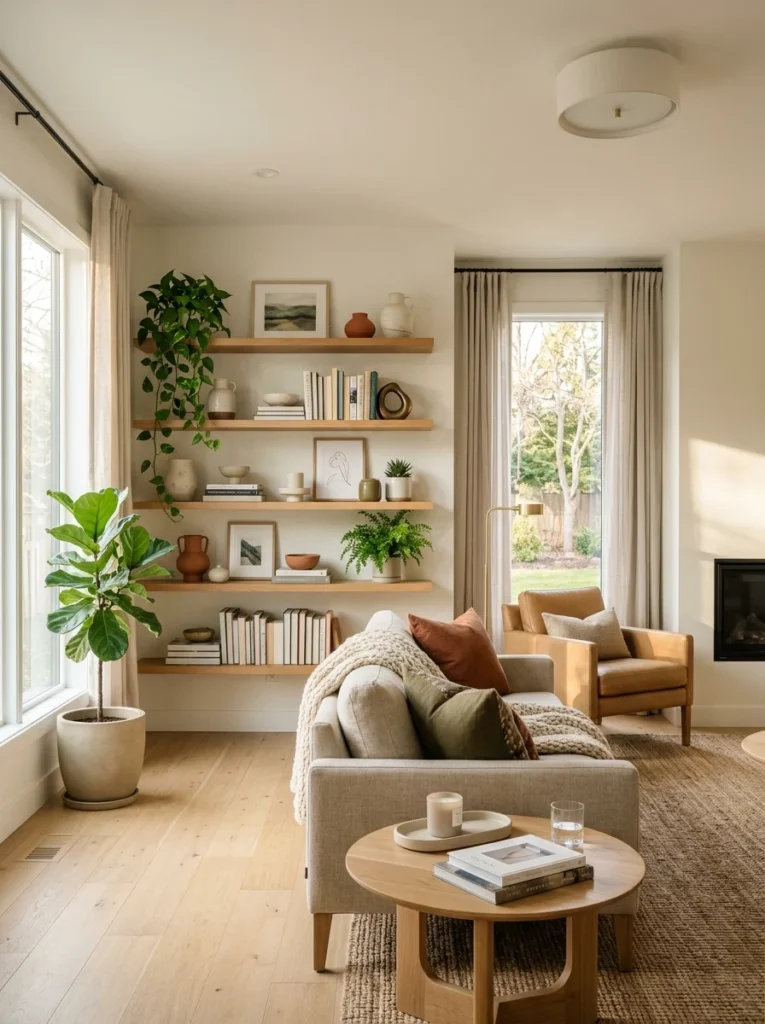
When we first installed open shelving in our living room, I filled every single shelf almost immediately, books, framed photos, souvenirs, random decorative objects I’d been storing in a closet for years, all crammed onto the shelves at once because I finally had a spot to display them. Within a week, the shelving looked less like a curated design feature and more like the same closet clutter, just now fully visible instead of hidden behind a door. It took actually removing about half of what I’d originally put up, and rethinking the approach entirely, before the shelves finally looked intentional rather than simply overstuffed.
Open shelving can be one of the most striking features in a living room, but it also has zero tolerance for clutter, since everything placed on it is fully visible at all times. Here’s how to actually style it well, without letting it slide into visual chaos.
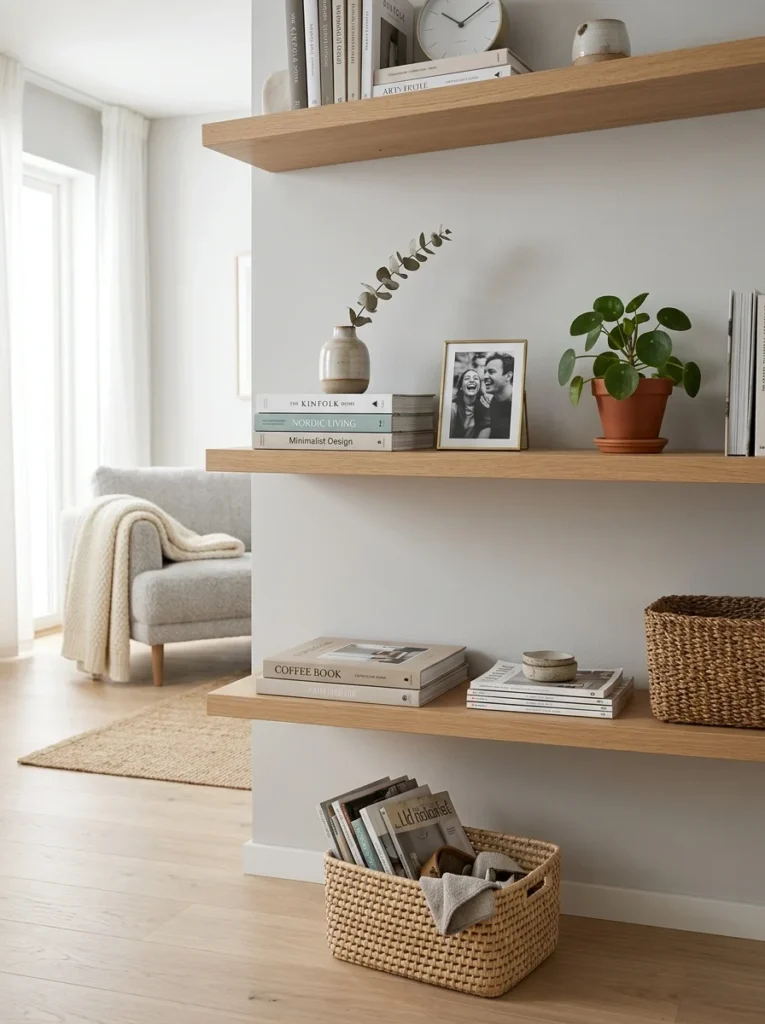
Start by editing down to genuinely meaningful items
Before arranging anything, go through everything you’re considering displaying and honestly ask whether each item is something you actually want on permanent display, versus something that simply needs a home somewhere in the house. Open shelving works best as a curated display of books, art, and a handful of meaningful objects, not as general storage for everything that doesn’t have another obvious place to live. This editing step is the single most important part of avoiding clutter, since even perfectly arranged shelves will look cluttered if they’re simply holding too many items to begin with.
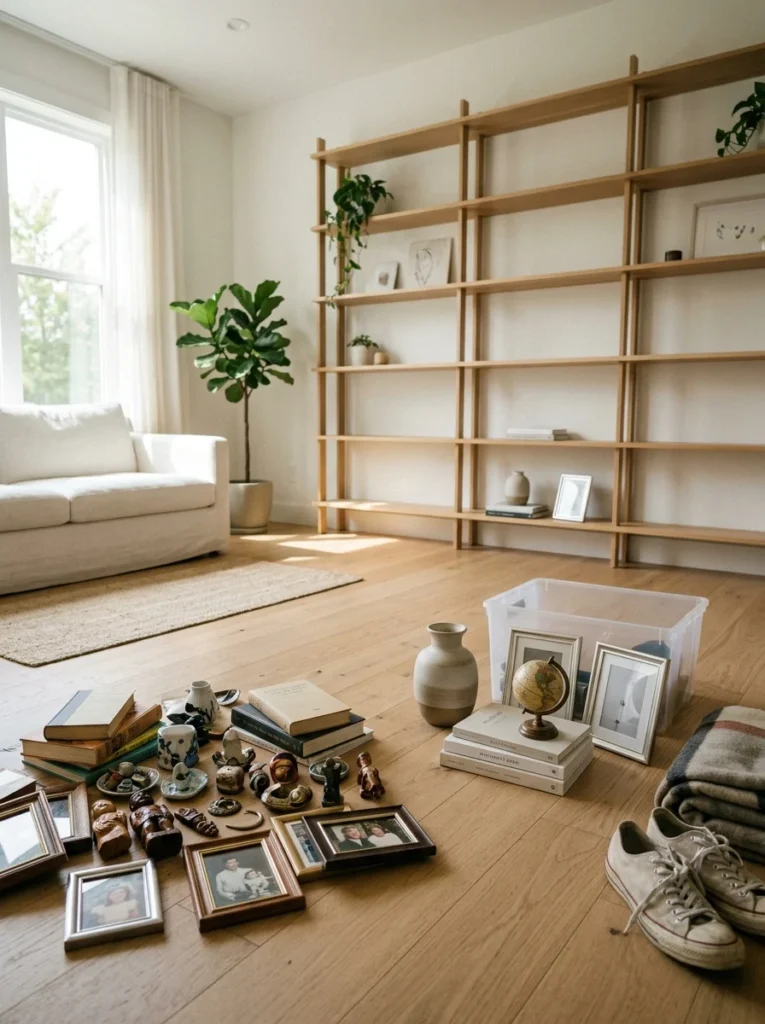
Leave genuine negative space on every shelf
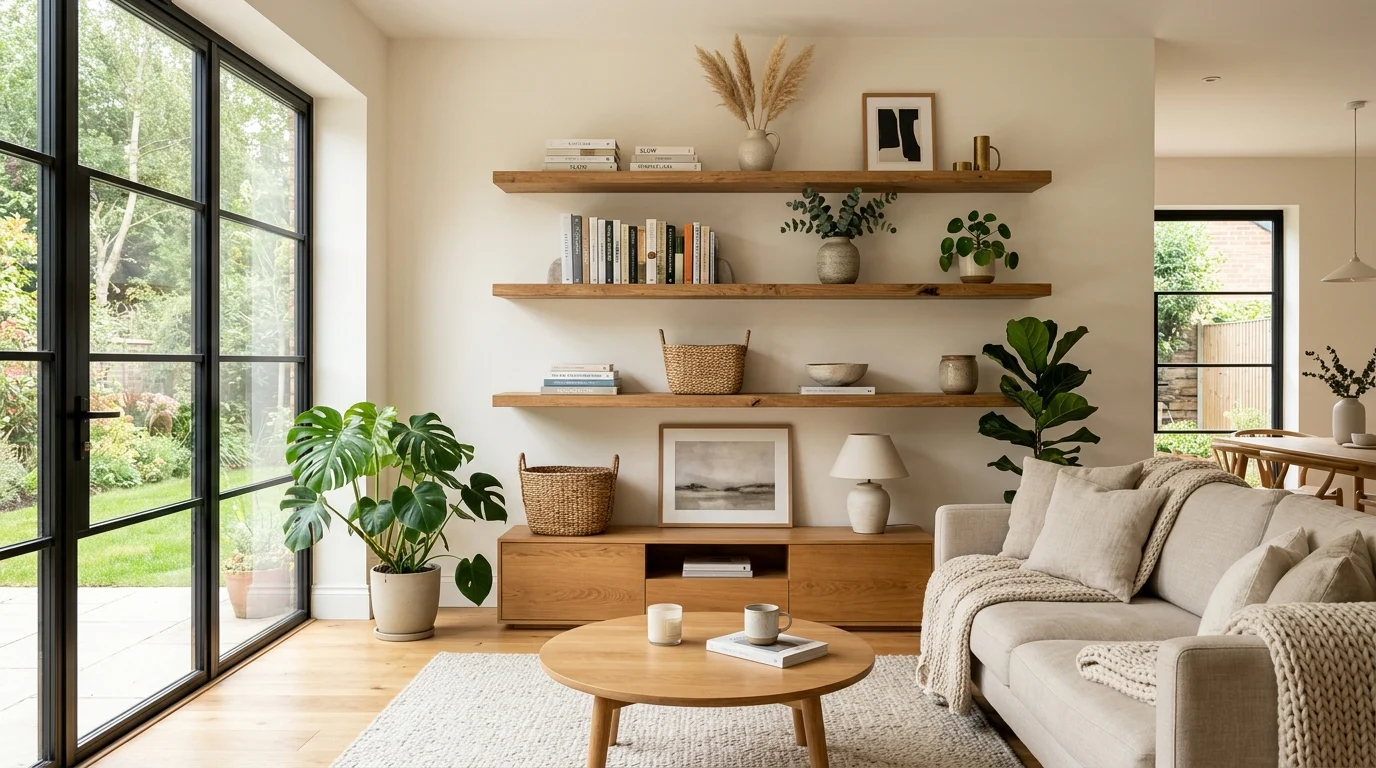
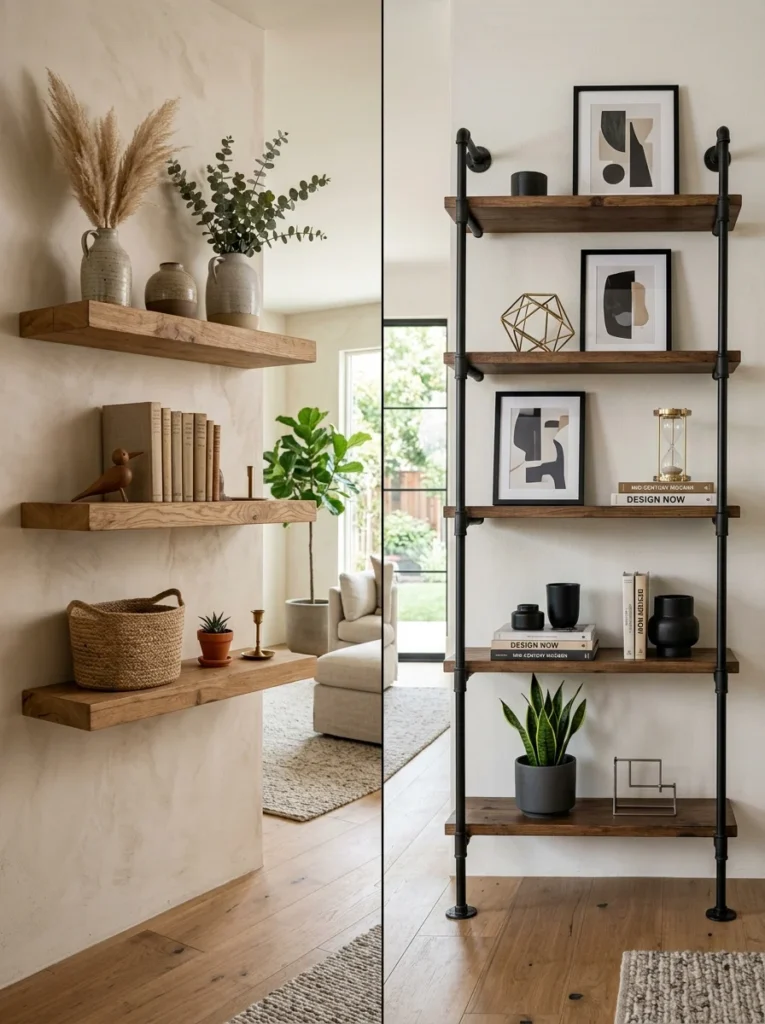
One of the most common mistakes with open shelving is filling every available inch, which leaves the eye with nowhere to rest and reads as busy regardless of how nice the individual items are. Leaving deliberate empty space on each shelf, roughly a third to half of the shelf’s total space in many well-styled examples, gives the arranged items room to breathe and creates the sense of an intentional, gallery-like display rather than a fully packed storage unit.
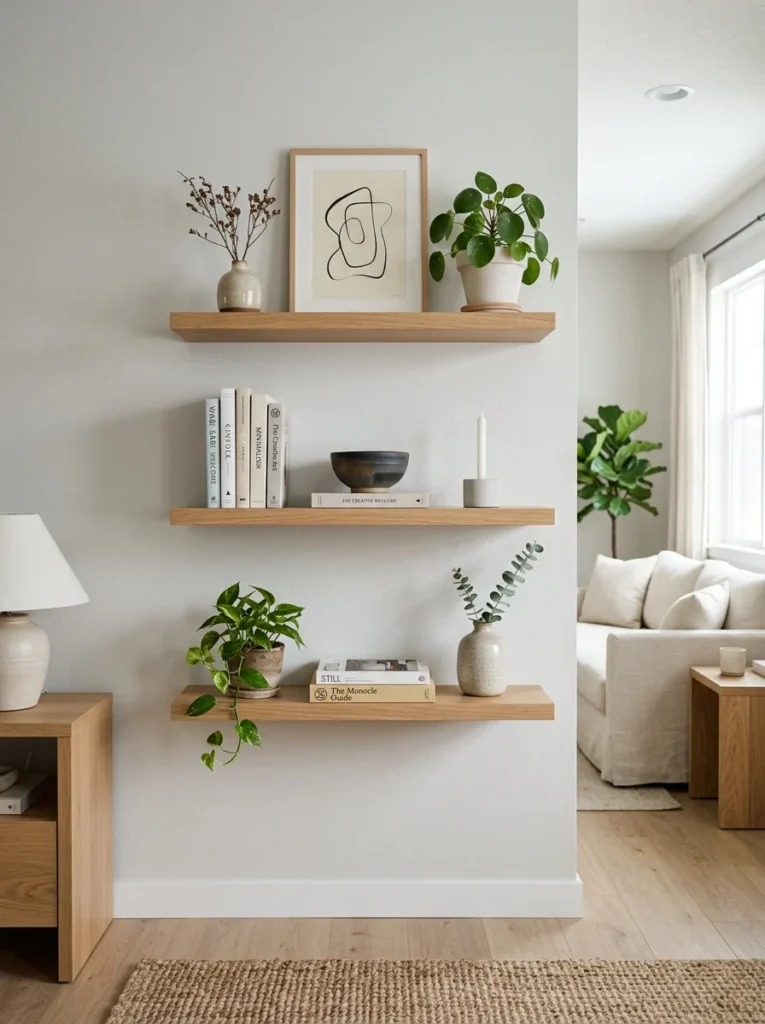
Group items in odd numbers for a more natural look
Grouping decorative objects in odd numbers, generally three or five items per grouping, tends to look more visually natural and balanced than an even number, which can read as too symmetrical or, alternatively, awkwardly paired. A small grouping of three items, varying slightly in height, works particularly well as a repeatable formula across multiple shelves, giving the whole shelving unit a cohesive rhythm without requiring every single shelf to be styled in a completely unique way.
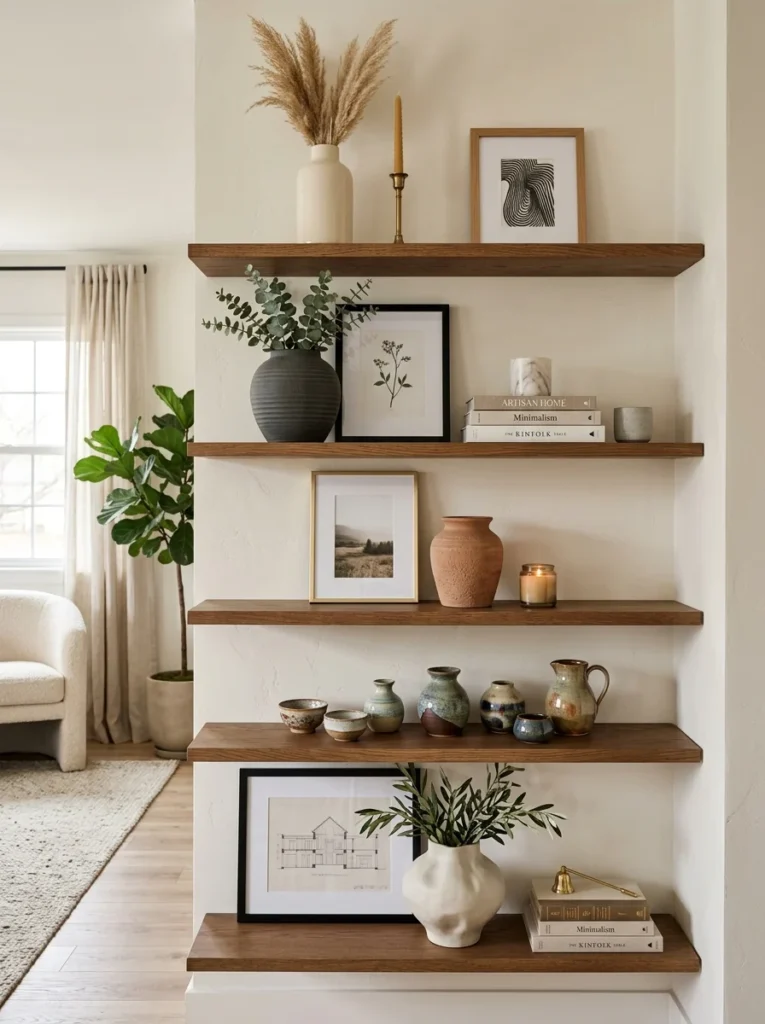
Vary height and shape within each grouping
A grouping of items that are all roughly the same height and shape tends to look flat and monotonous, even if the individual pieces are attractive. Combining a taller object, a stack of books or a tall vase, with a shorter, wider item, and perhaps one smaller accent piece, creates visual interest and a sense of intentional composition within each smaller vignette, rather than a uniform row of similarly sized objects lined up along the shelf.
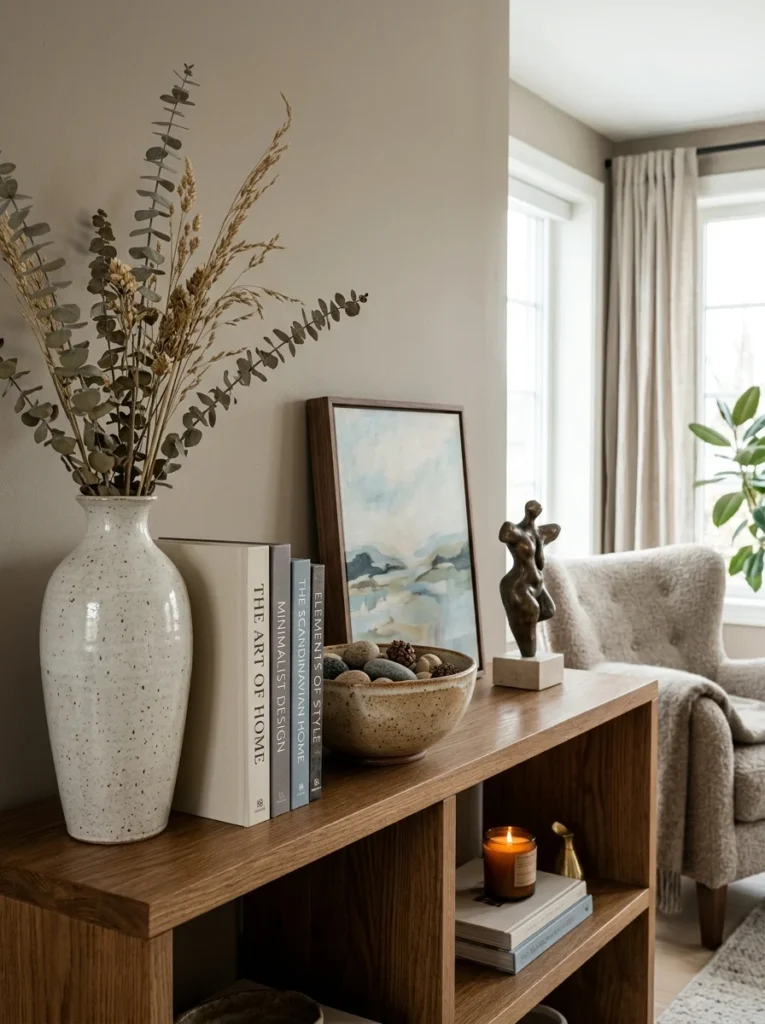
Use books as both display items and functional risers
Stacking a few books horizontally, rather than only shelving them vertically in a traditional row, adds textural and color variety while also serving as a functional riser to elevate a smaller decorative object placed on top, like a small plant or a framed photo. This dual-purpose styling trick is one of the most reliable ways to add both height variation and a sense of curated intention to open shelving, using items, books, that most people already own anyway.
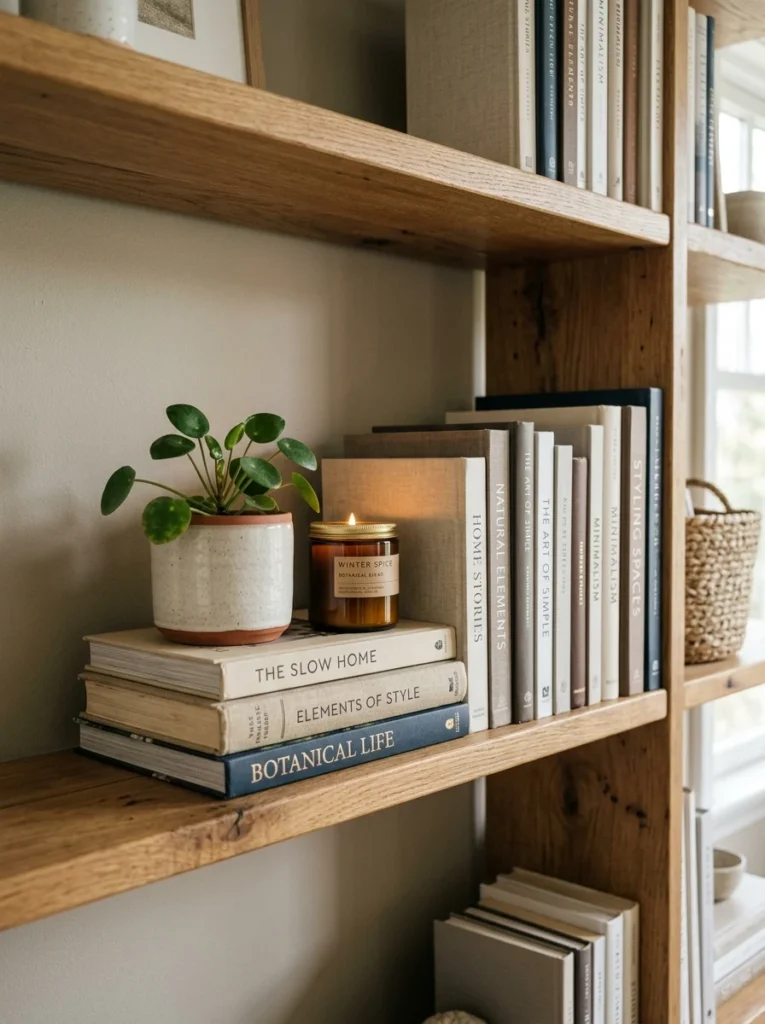
Choose a cohesive color palette across displayed items
Open shelving holding objects in many different, competing colors can look chaotic even with reasonable spacing and thoughtful groupings. Choosing a color palette, two or three coordinating tones, and either selecting items that naturally fit within it or turning book spines toward the wall to hide overly bright or mismatched colors, keeps the overall look calm and cohesive rather than visually busy from color alone.
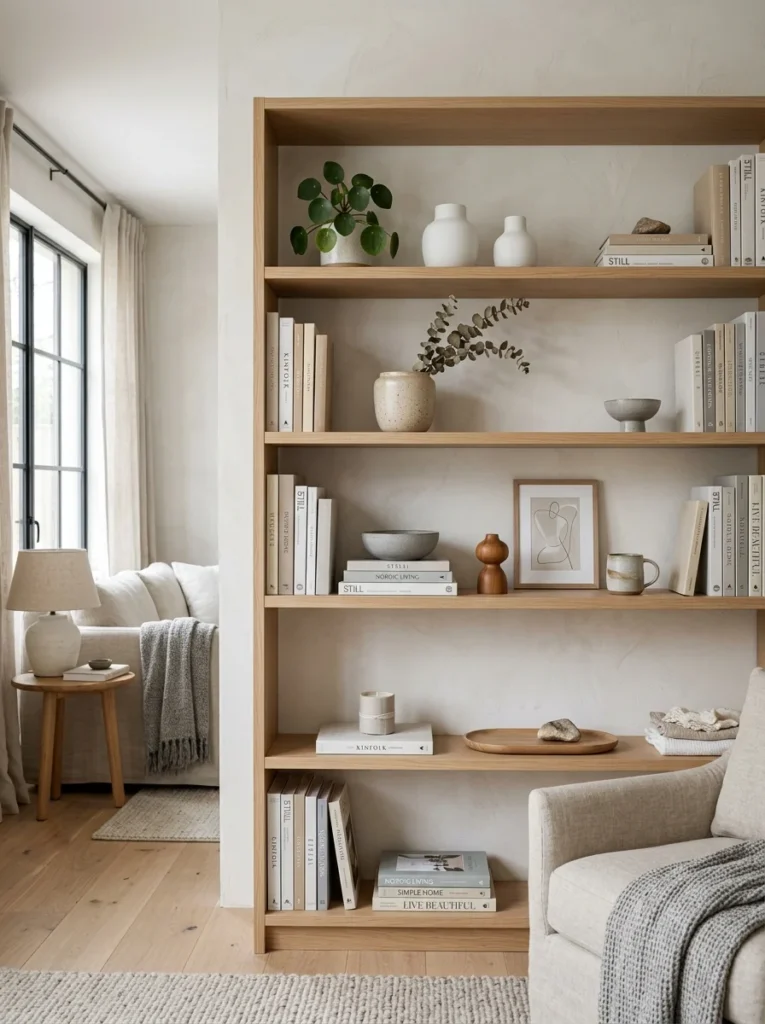
Incorporate a plant or two for organic softness
A small plant, whether a real, low-maintenance variety or a realistic artificial one, adds organic texture and a bit of color variation that purely decorative objects and books don’t fully provide on their own. Positioning one or two plants at different points across the shelving, rather than clustering them all in one spot, distributes this organic softness more evenly across the whole display.
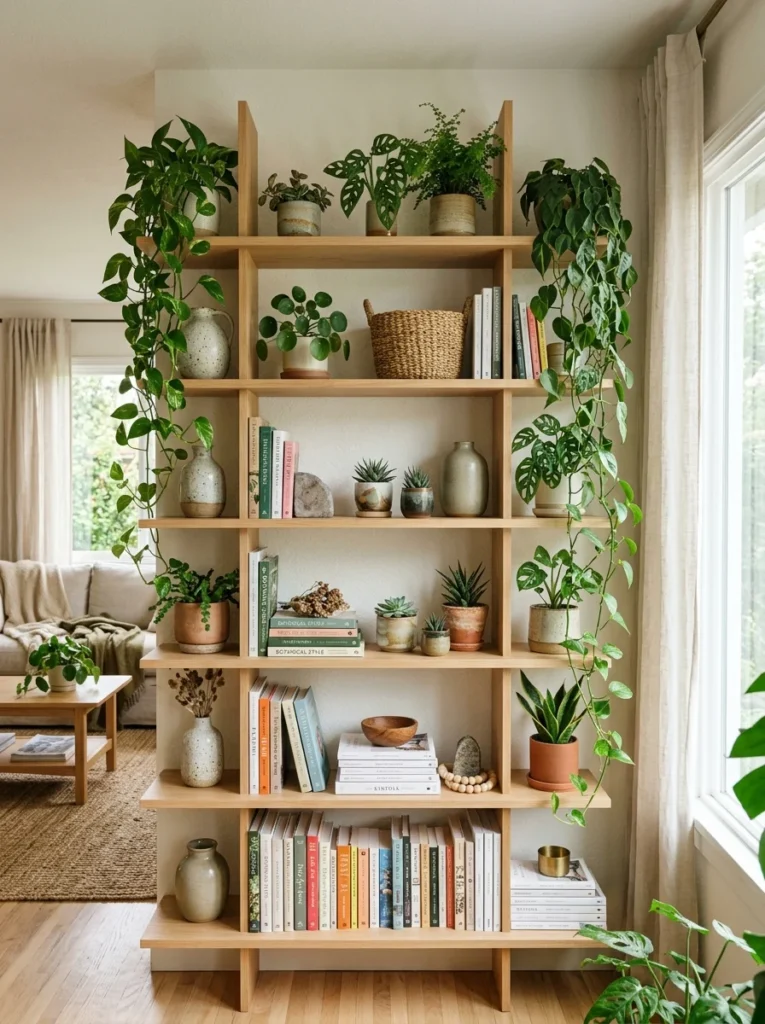
Leave the bottom or most visible shelf simpler than the others
The shelf at eye level, or the one most immediately visible upon entering the room, benefits from a slightly more restrained, simpler styling than shelves higher up or further from the main sightline, since this is the section that draws the most direct attention and scrutiny. Keeping this particular shelf a bit calmer, fewer items, more negative space, helps the overall unit feel composed even if other, less prominent shelves carry a bit more visual density.
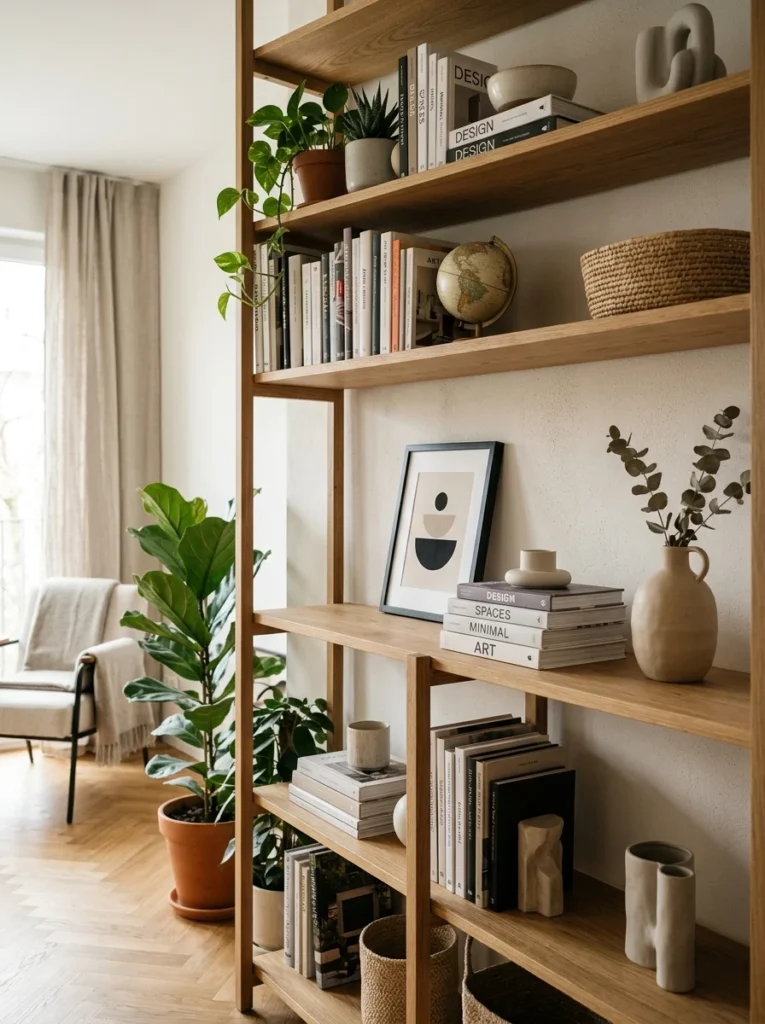
Rotate items periodically rather than treating the display as permanent
Open shelving doesn’t need to remain frozen in one arrangement indefinitely; periodically rotating in different books, swapping out a seasonal decorative item, or simply rearranging existing pieces keeps the display feeling fresh and prevents it from becoming visual wallpaper that you eventually stop noticing entirely. This also gives you a natural opportunity to reassess whether every currently displayed item still earns its place, which helps prevent slow clutter creep back onto the shelves over time.
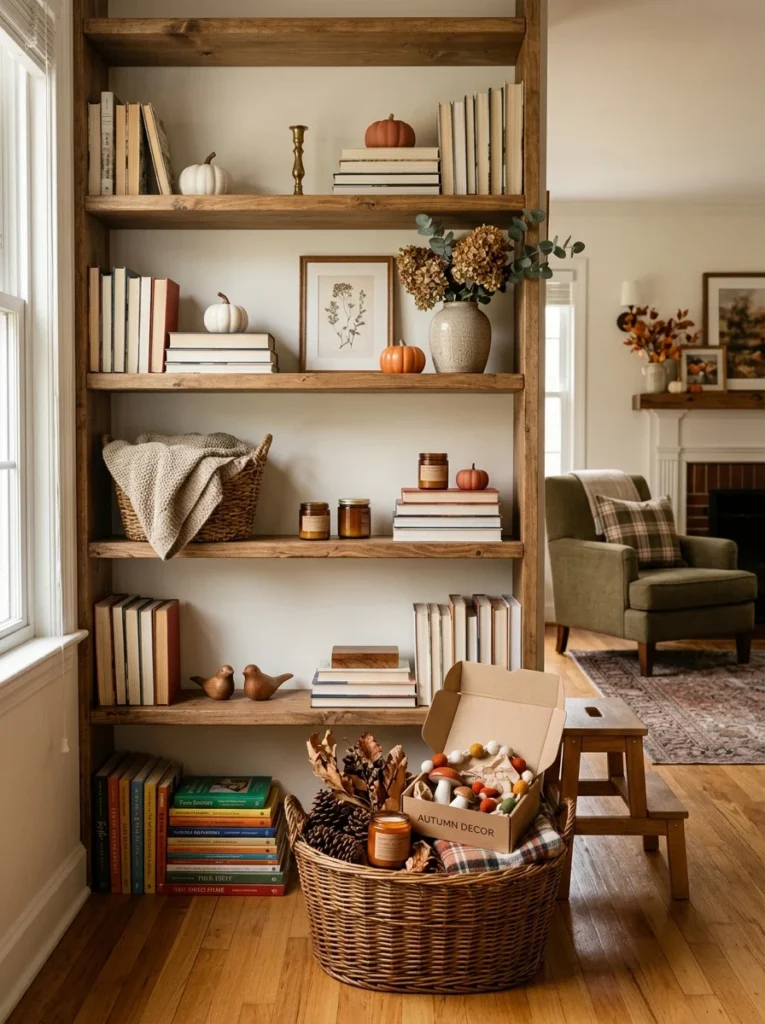
Consider the shelving’s backdrop, not just what sits on it
The wall visible behind open shelving affects how the whole display reads, and a busy, cluttered-looking wall color or wallpaper pattern behind the shelves can compete with the items displayed on them. A simpler, more neutral wall color behind open shelving generally lets the displayed objects stand out more clearly, while a bolder backdrop can work well specifically when the shelving itself is kept quite minimal and restrained to avoid two competing layers of visual complexity stacked on top of each other.
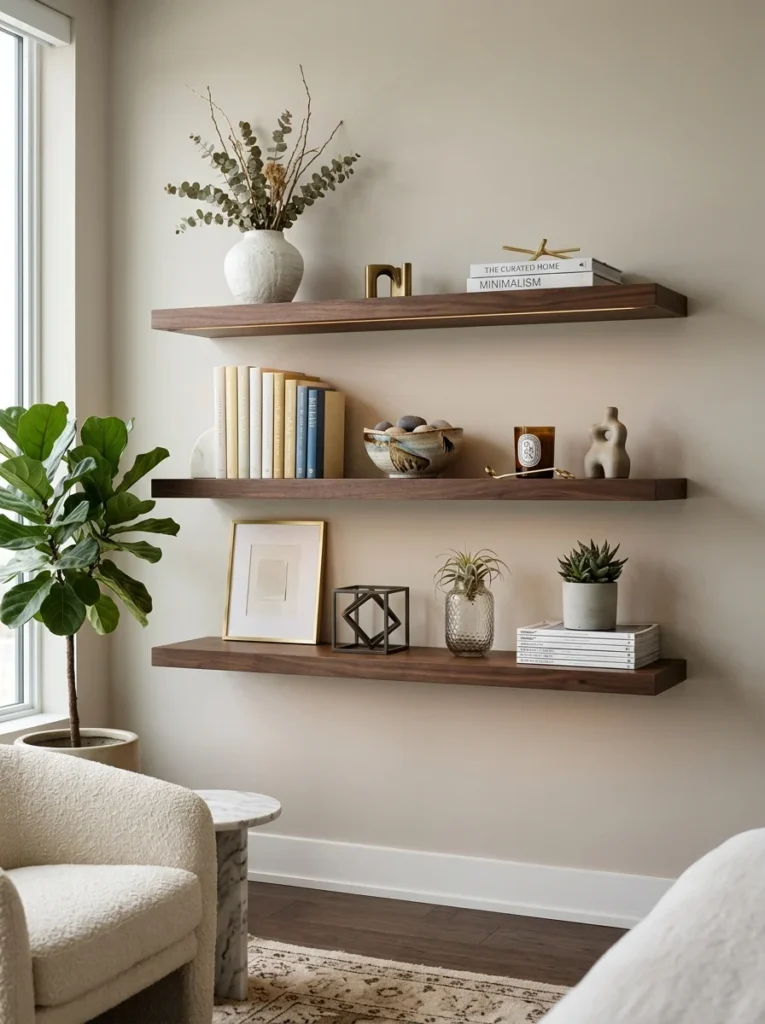
Add lighting to highlight the display, especially in the evening
Open shelving that looks great during the day can fade into the background once natural light fades in the evening, unless it has some form of dedicated lighting. A small strip of LED lighting installed along the underside of each shelf, or a picture light mounted above the unit and angled downward, keeps the display visible and adds a warm, gallery-like quality after dark that a shelving unit relying purely on the room’s general ambient lighting doesn’t achieve. This is a relatively small addition that meaningfully extends how much of the day the shelving actually gets to shine as the design feature it’s meant to be.
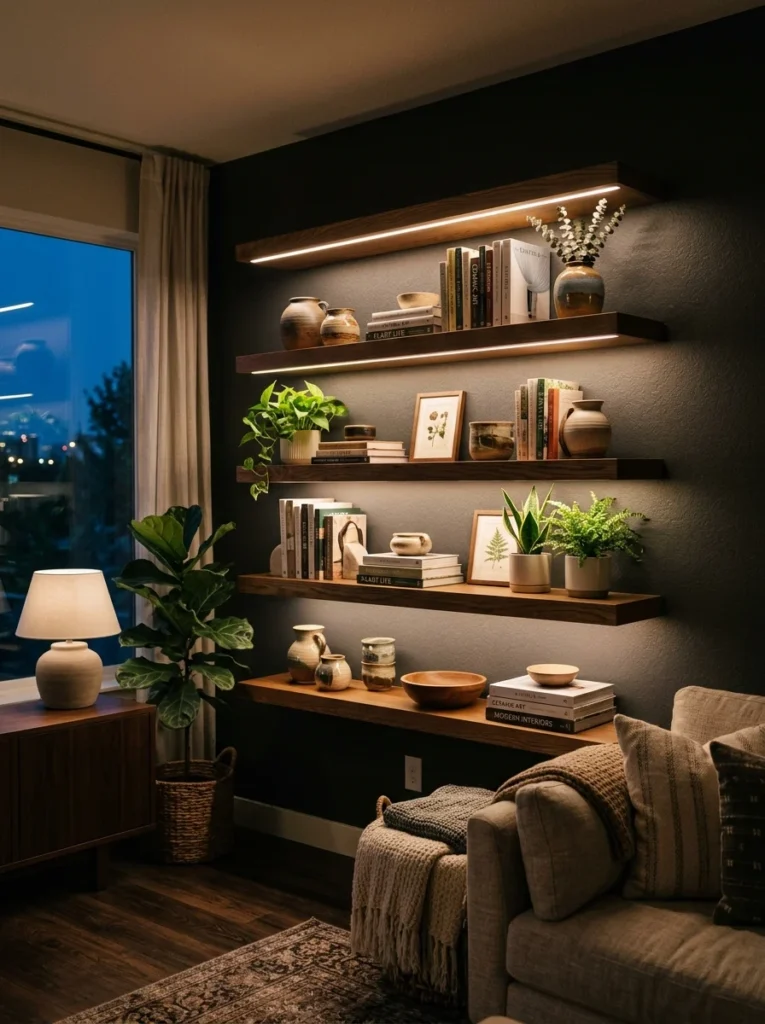
Consider the shelving material and how it affects styling choices
The material and color of the shelving itself, whether floating wood shelves, a metal and wood combination unit, or built-in painted shelving, sets a tone that your displayed items should generally work with rather than against. Warm wood shelving pairs naturally with earthy, organic decorative objects and warm-toned books, while a more industrial metal and wood unit can support a slightly more eclectic or modern mix of items. Being aware of this underlying material tone helps guide which decorative objects will feel cohesive with the shelving itself, rather than clashing with it in a way that undermines an otherwise well-edited, thoughtfully arranged display.
Style corner or awkward shelving sections differently than main runs
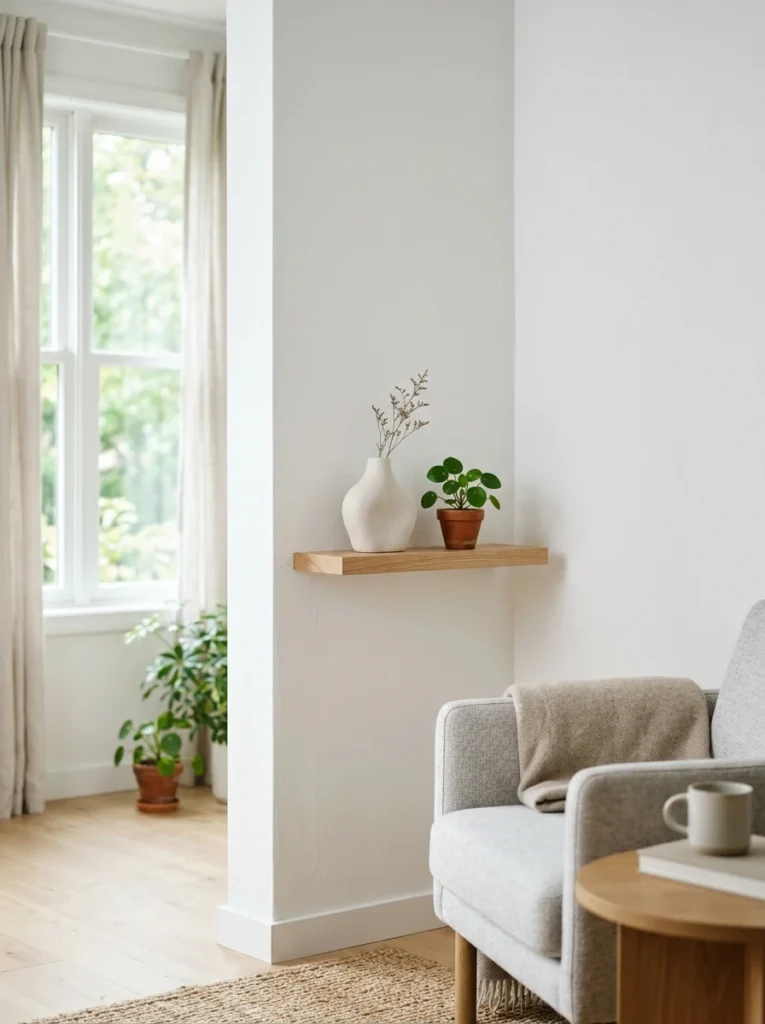
A corner shelf, or an oddly shaped end section of a larger shelving run, often needs a different styling approach than the main, more visually prominent shelves, since its visibility and typical viewing angle differ from the primary display area. A single striking object, rather than a full grouping, often works better in these smaller, more awkward sections, since attempting to fit a full three-item grouping into a tight or oddly angled space can look cramped rather than intentional.
How much of each shelf should actually be filled?
Roughly half to two-thirds of each shelf’s space being filled, with the remainder left as deliberate negative space, generally creates a well-balanced, intentional look rather than a fully packed shelf that reads as cluttered regardless of how nice the individual items are.
Why do odd-numbered groupings look better on shelves?
Odd-numbered groupings, typically three or five items, tend to look more visually natural and balanced than even numbers, which can appear either too symmetrical or awkwardly paired, making odd groupings a reliable, repeatable styling formula across multiple shelves.
Should all my open shelving items match in color?
Not exactly matching, but sticking to a cohesive palette of two or three coordinating colors, and turning overly bright or mismatched book spines toward the wall if needed, keeps a shelving display feeling calm and intentional rather than visually chaotic from too many competing colors.
How often should I rearrange open shelving?
There’s no strict rule, but periodically rotating items, whether seasonally or just every few months, keeps the display feeling fresh and gives you a natural opportunity to remove anything that’s quietly accumulated and no longer earns its place on the shelf.
Is adding lighting to open shelving worth it?
Yes, a small LED strip along the underside of each shelf or a picture light mounted above the unit keeps the display visible and visually interesting after dark, extending the amount of time the shelving actually functions as a design feature rather than fading into the background once natural light fades.
Styling open shelving without clutter comes down to editing ruthlessly before you ever start arranging, leaving genuine negative space, grouping items thoughtfully in varied heights and odd numbers, and keeping the overall color palette cohesive. Open shelving rewards restraint in a way closed cabinetry simply doesn’t, since every item placed on it stays fully visible and contributes to the room’s overall feeling, for better or worse.
Our own shelving, once an overstuffed mess within its first week, now holds roughly half of what I originally tried to cram onto it, styled in small, varied groupings with real breathing room between them, and it finally reads as the intentional design feature I’d pictured rather than visible closet clutter. If your own open shelving has slid into a similar mess, start by removing rather than adding; take everything off, and be genuinely selective about what actually earns its way back up, one thoughtfully composed grouping at a time rather than all at once.