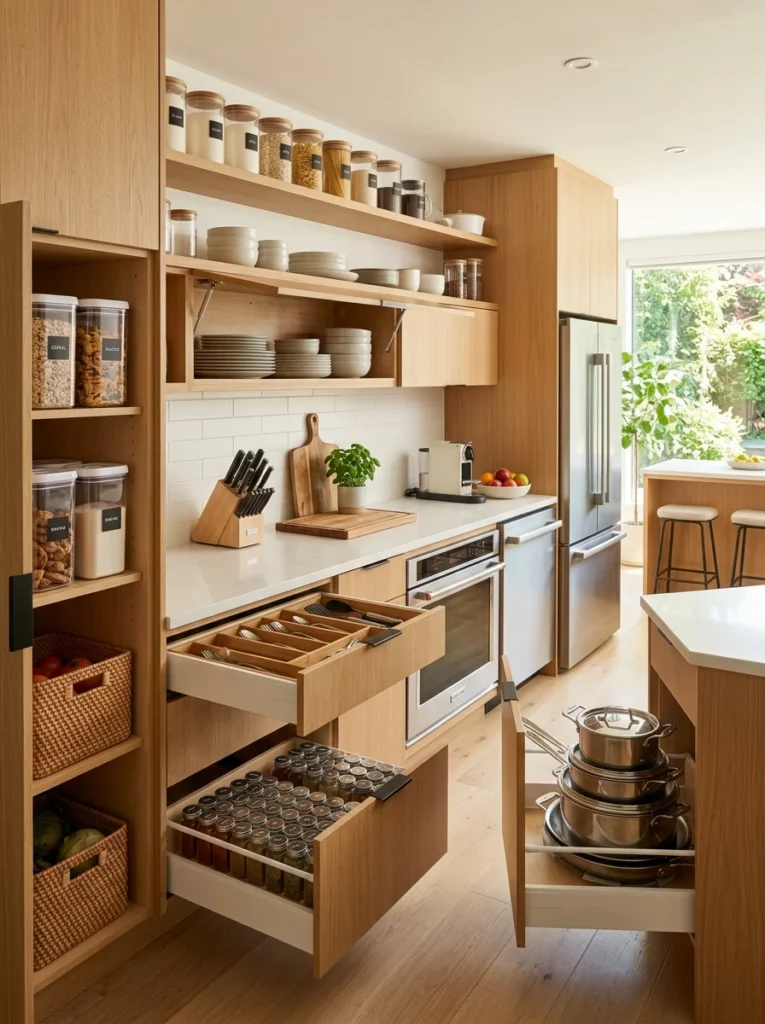
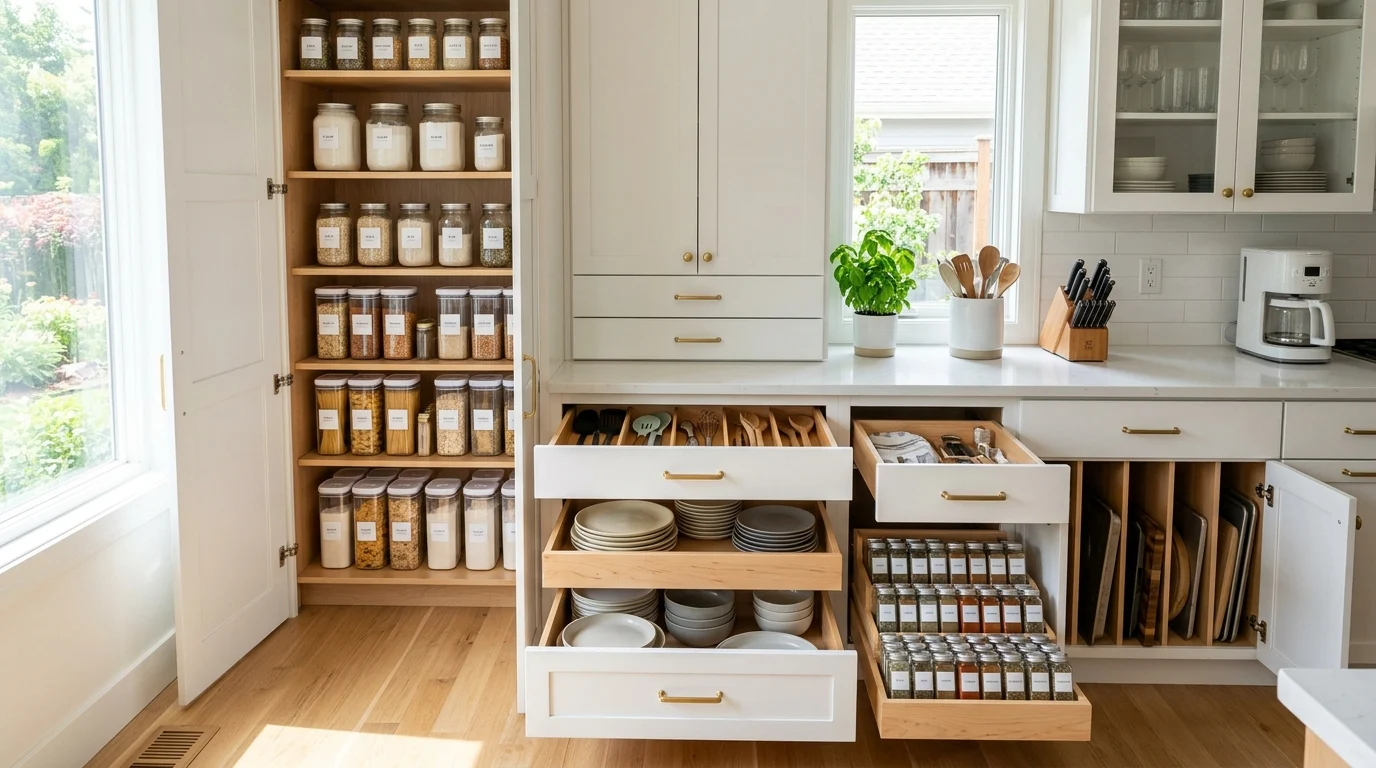
For years, opening my pantry cabinet meant a small negotiation with gravity, a box of pasta wedged behind three half-used bags of flour, a spice jar rolling out the moment I reached for anything else. I owned an entirely reasonable amount of kitchen items; I just had never actually organized them with any real system. The turning point came when I stopped treating organization as a one-time weekend project and started thinking about it as a set of zones, each one designed around how I actually cook, rather than just cramming things wherever they happened to fit that day.
That shift, from random storage to zone-based organization, is really the entire secret to an efficient kitchen. Below is the exact approach that turned my cabinets from a daily source of mild frustration into something that actually makes cooking faster and calmer, broken down by area so you can tackle whichever part of your kitchen needs it most.
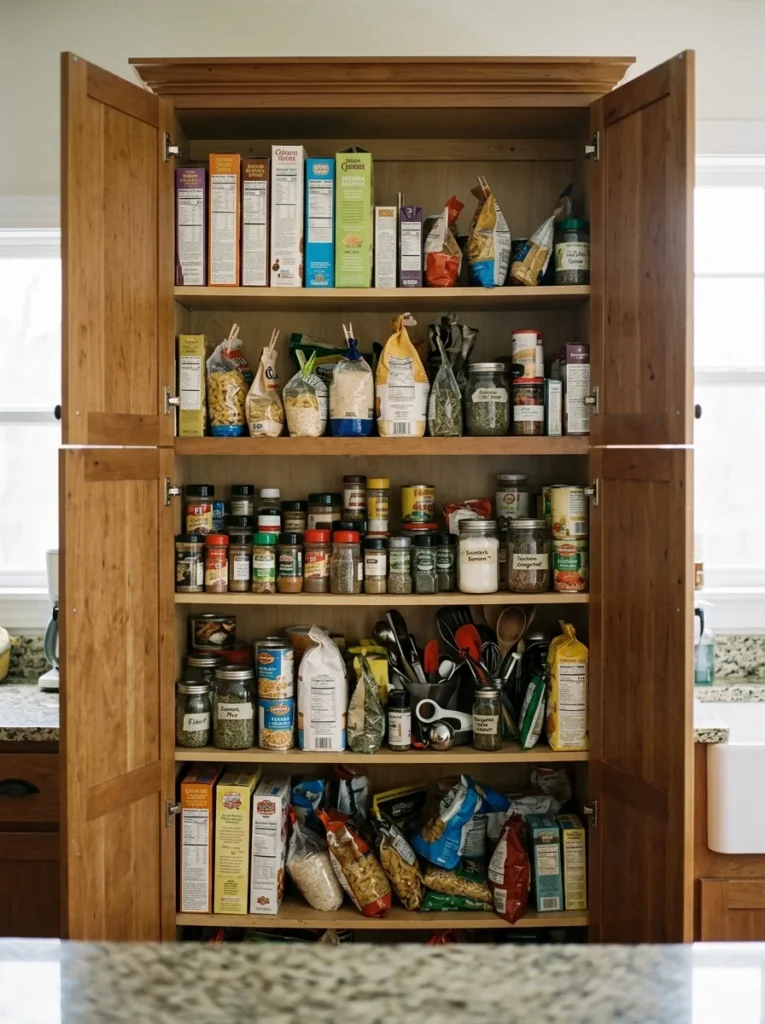
Start by decluttering before you organize anything
It’s tempting to jump straight into buying bins and drawer dividers, but organizing a cabinet full of items you don’t actually need just means a tidier version of the same clutter. Pull everything out of each cabinet, one at a time, and sort it into what you use regularly, what you use occasionally, and what you haven’t touched in the past year. Duplicate gadgets, expired spices, and that one appliance you bought during a brief cooking phase are all worth donating or discarding before you spend any time or money organizing what’s left. A smaller, more intentional set of items is dramatically easier to organize well than a large, cluttered one.
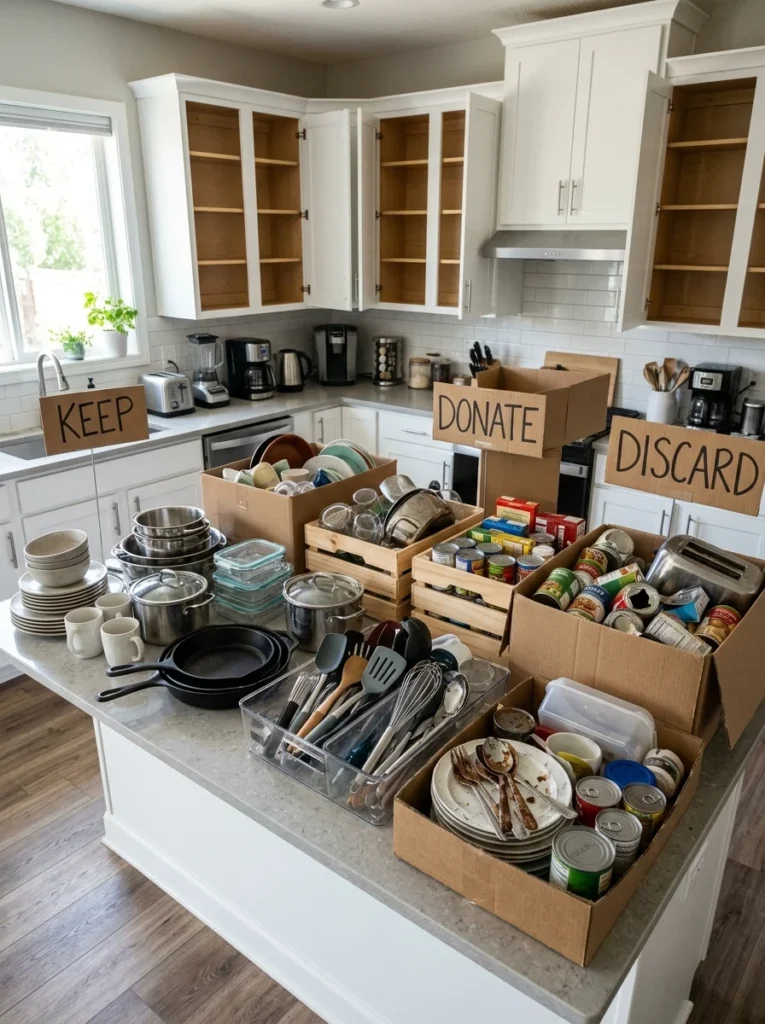
Organize by zones based on how you actually cook
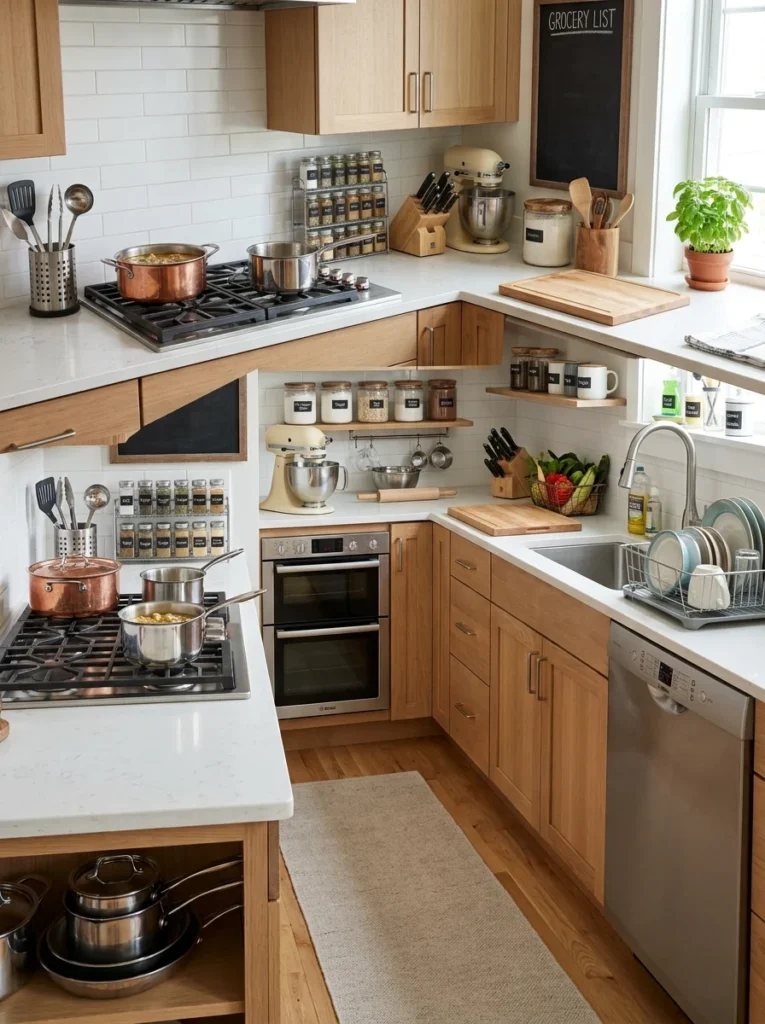
The single biggest shift in my own kitchen was grouping items by function and proximity to where they’re used, rather than by category alone. Pots and pans belong near the stove, since that’s where they’re used, not on the opposite side of the kitchen because that’s where the cabinet happened to be built. Baking supplies, measuring cups, mixing bowls, and baking sheets work best grouped together near the oven or a dedicated counter space, since baking tends to require pulling out several items at once. Everyday dishes and glasses should live in the cabinet closest to the dishwasher or sink, so unloading and reloading takes as few steps as possible. Thinking through your own specific cooking habits, where you actually stand when you use each item, does more for daily efficiency than any single organizing product.
Store items based on frequency of use
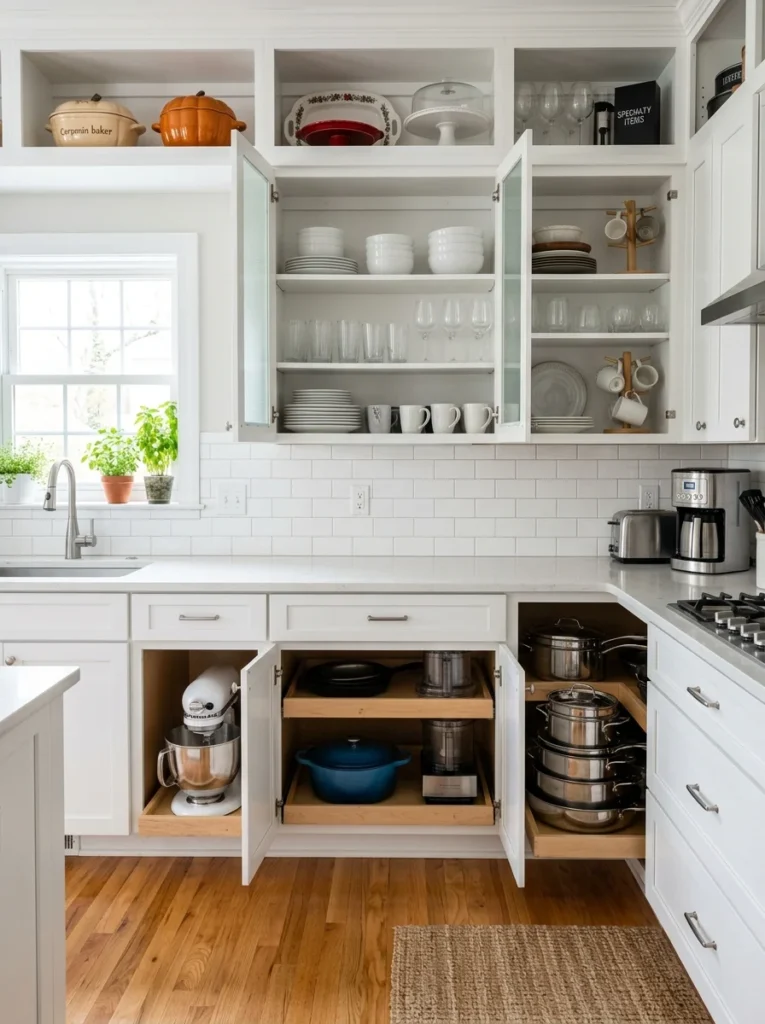
Not everything in your kitchen gets used equally often, and your storage should reflect that. Keep everyday dishes, glasses, and frequently used cooking tools at eye level or within easy arm’s reach, in the cabinets you open multiple times a day. Reserve the higher, harder-to-reach cabinets for items used only occasionally, a large stockpot, a fondue set, holiday-specific bakeware, since the inconvenience of reaching them matters less when you’re only pulling them out a few times a year. Lower cabinets and deeper drawers work well for heavier items like mixing bowls and small appliances, since it’s safer and easier to lift heavy things up from a low position than to pull them down from overhead.
Use drawer dividers to stop the utensil drawer chaos
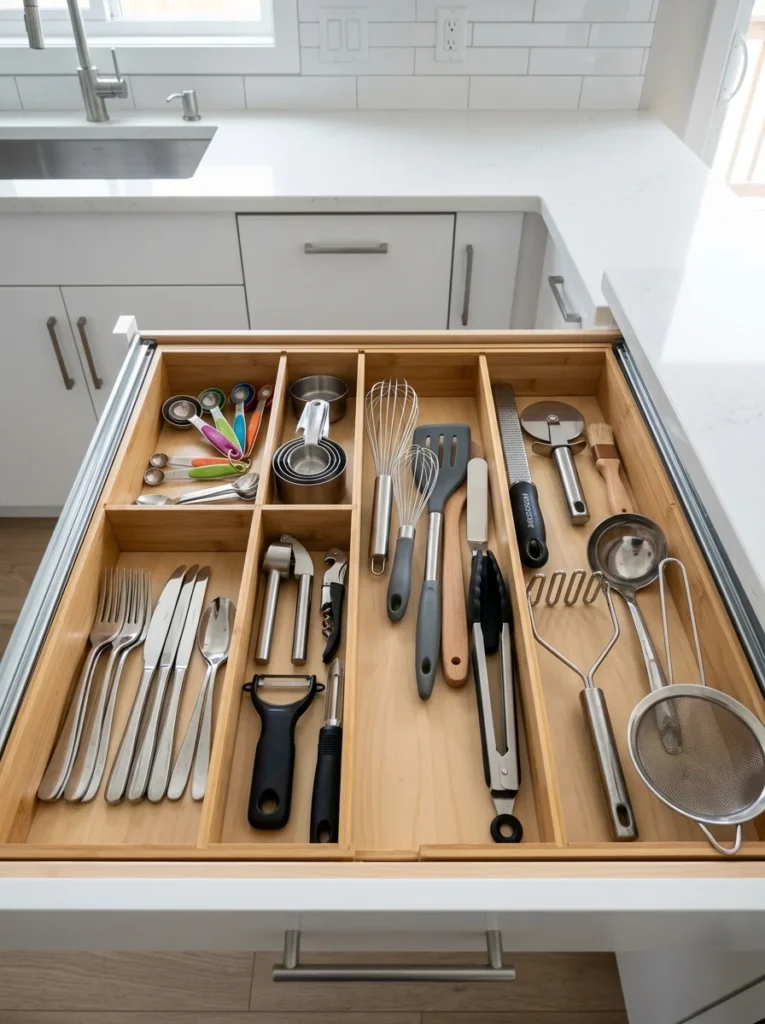
The utensil drawer is one of the most commonly disorganized spots in any kitchen, mostly because items of wildly different shapes and sizes get tossed in together with no real system. Adjustable drawer dividers, or a few smaller trays arranged inside a single deep drawer, let you group utensils by type, cooking tools together, cutlery together, gadgets together, so you can find what you need without digging through the whole drawer. For a deeper drawer, consider a two-tier insert, which effectively doubles the usable storage without needing a bigger drawer at all.
Add pull-out shelves or a lazy Susan to deep, hard-to-reach cabinets
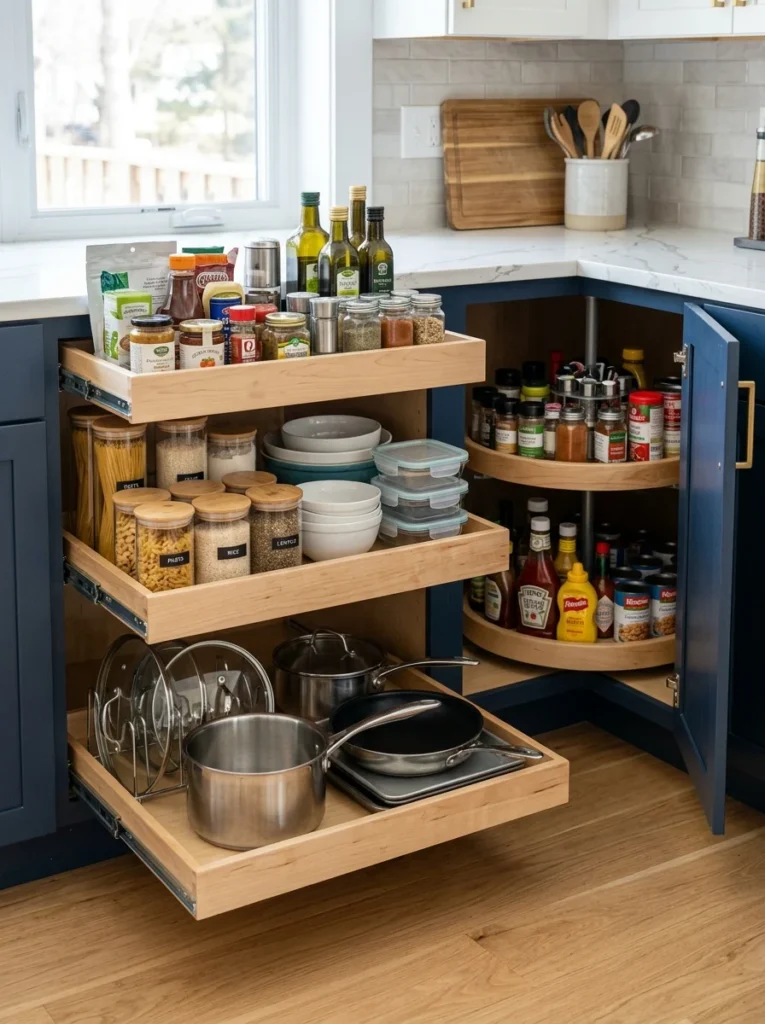
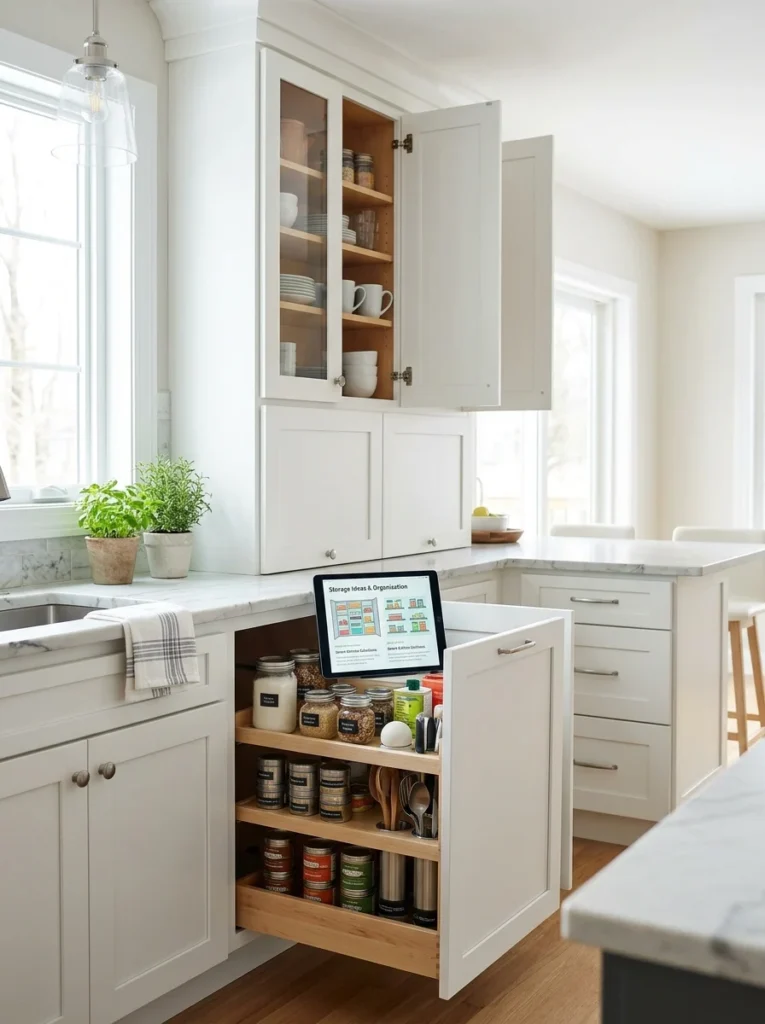
Deep base cabinets and corner cabinets are notorious for swallowing items whole, since anything stored at the back becomes nearly impossible to see or reach without removing everything in front of it first. Installing pull-out shelves in a deep base cabinet lets you slide the entire contents forward, making even the back of the cabinet fully visible and accessible. For corner cabinets specifically, a lazy Susan or a specialized corner pull-out system solves the awkward, hard-to-reach dead space that corner cabinets are known for, turning genuinely wasted storage into some of the most usable space in the kitchen.
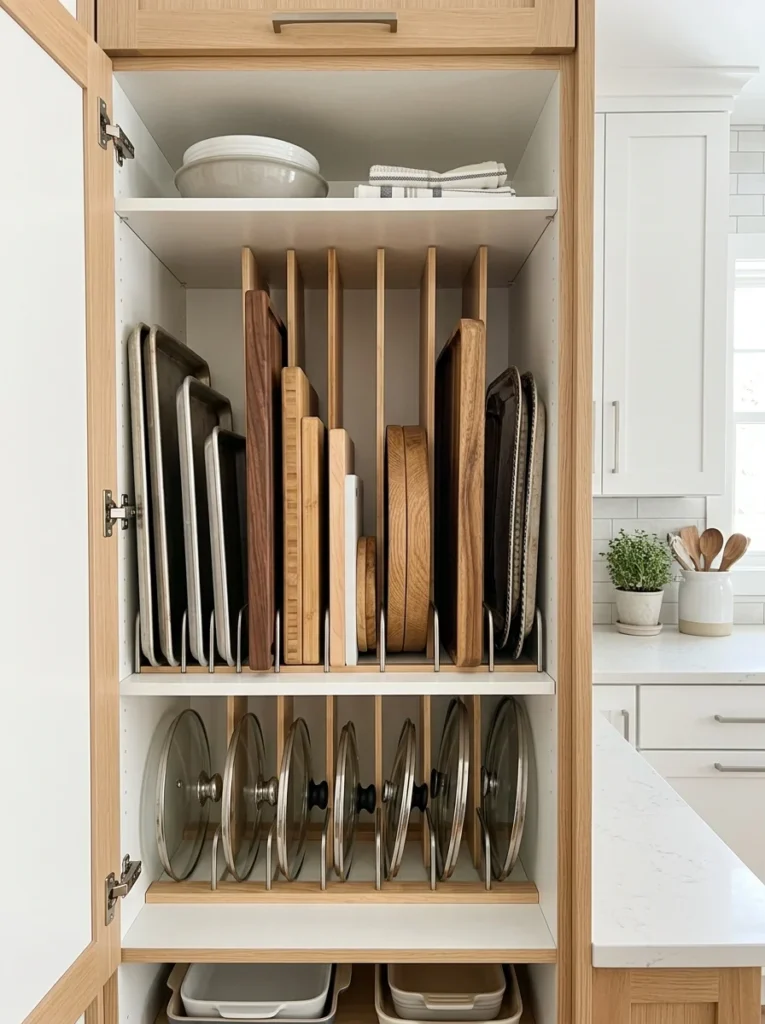
Use vertical dividers for baking sheets, cutting boards, and lids
Flat items like baking sheets, cutting boards, and pot lids are notoriously difficult to store efficiently when simply stacked, since pulling one out from the middle of a stack means moving everything above it first. A vertical divider or a slotted organizer, either built into a cabinet or added as a freestanding insert, lets each item stand upright in its own slot, so you can pull out exactly the one you need without disturbing the rest. This works particularly well in a narrow cabinet next to the stove or oven, since that’s typically where these items get used most.
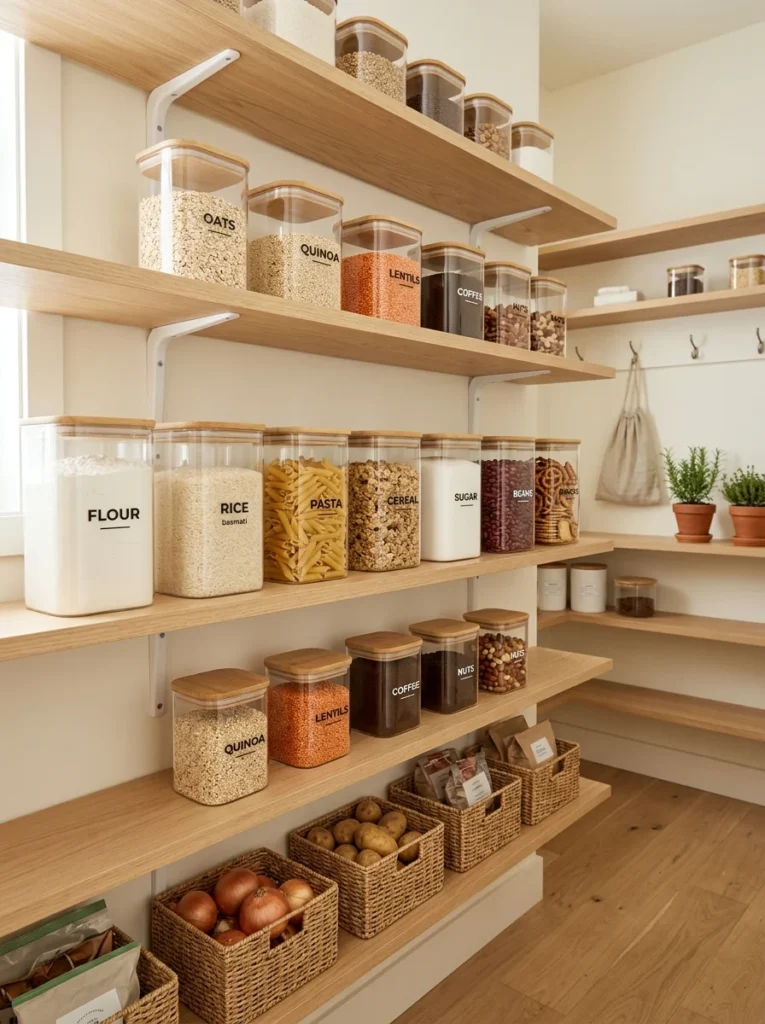
Label pantry items and use clear, uniform containers
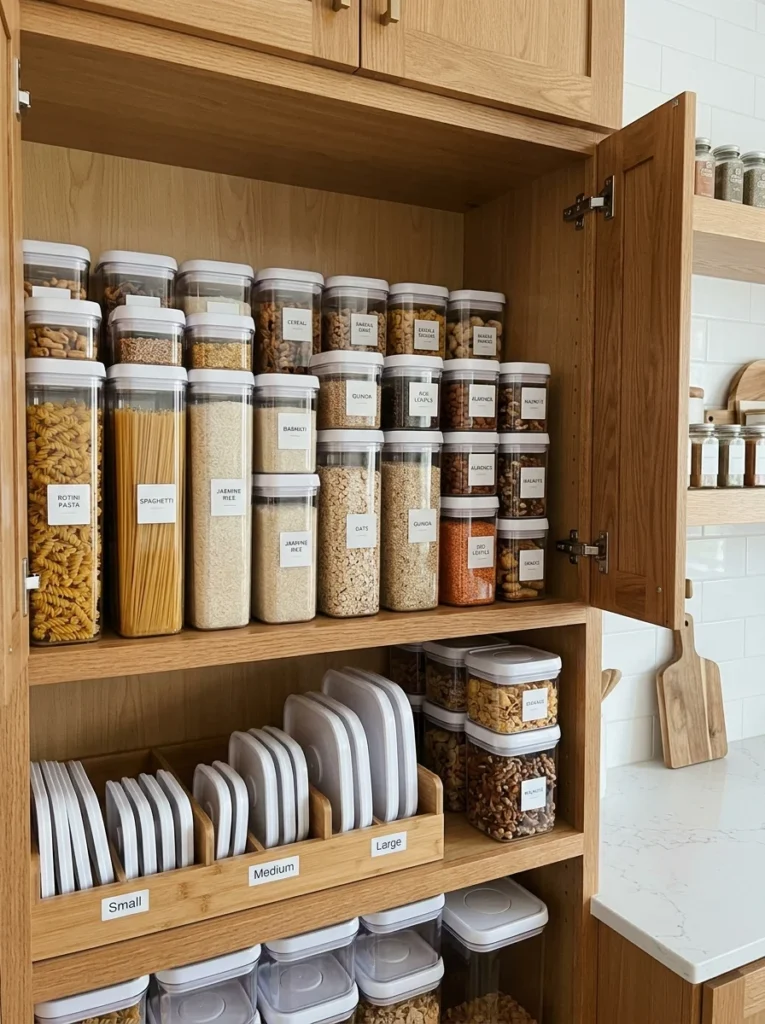
Transferring dry goods, flour, rice, pasta, cereal, into clear, uniform containers does more for pantry organization than almost any other single change, since it lets you see exactly what you have and how much is left at a glance, rather than digging through a shelf of mismatched bags and boxes. Labeling each container, including the type of item and, for anything perishable, the date it was transferred, keeps the pantry both organized and safer to use, since it’s much easier to notice when something has been sitting unused for longer than it should.
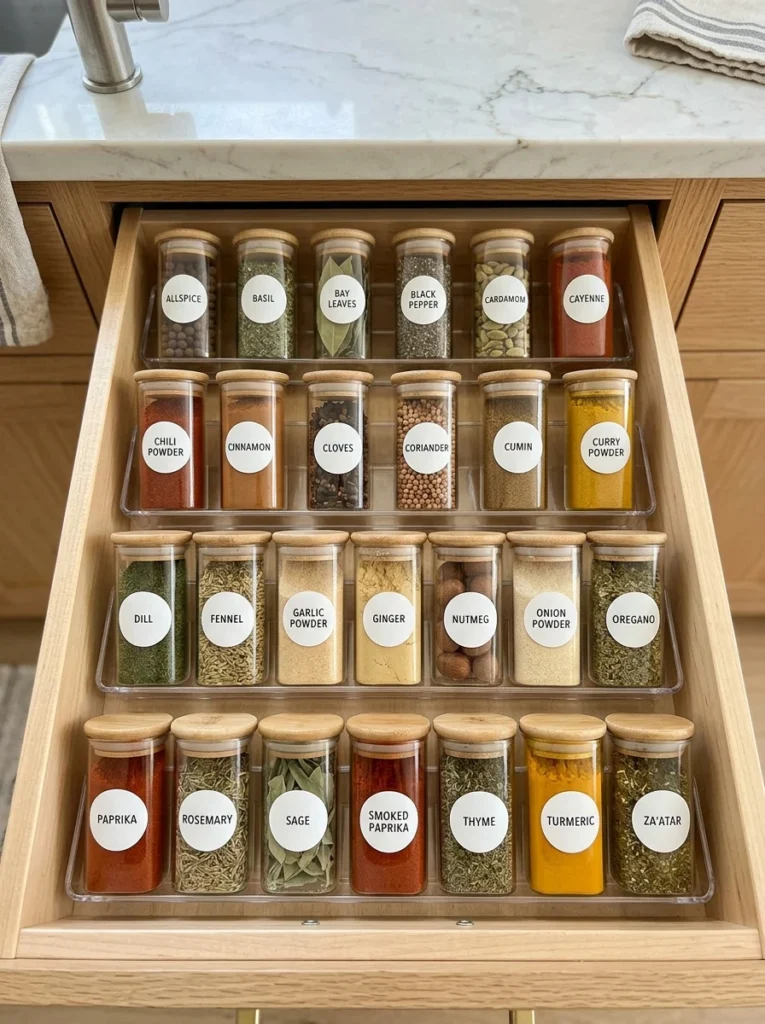
Group spices for fast identification while cooking
A spice drawer or shelf where jars are arranged alphabetically, or grouped by cuisine type if that better matches how you cook, saves real time during meal prep when you’re often working quickly and need to grab several spices in a row. A tiered spice rack, either inside a cabinet or mounted on the inside of a cabinet door, keeps every label visible at once rather than requiring you to pick up and rotate multiple jars to find the one you need.
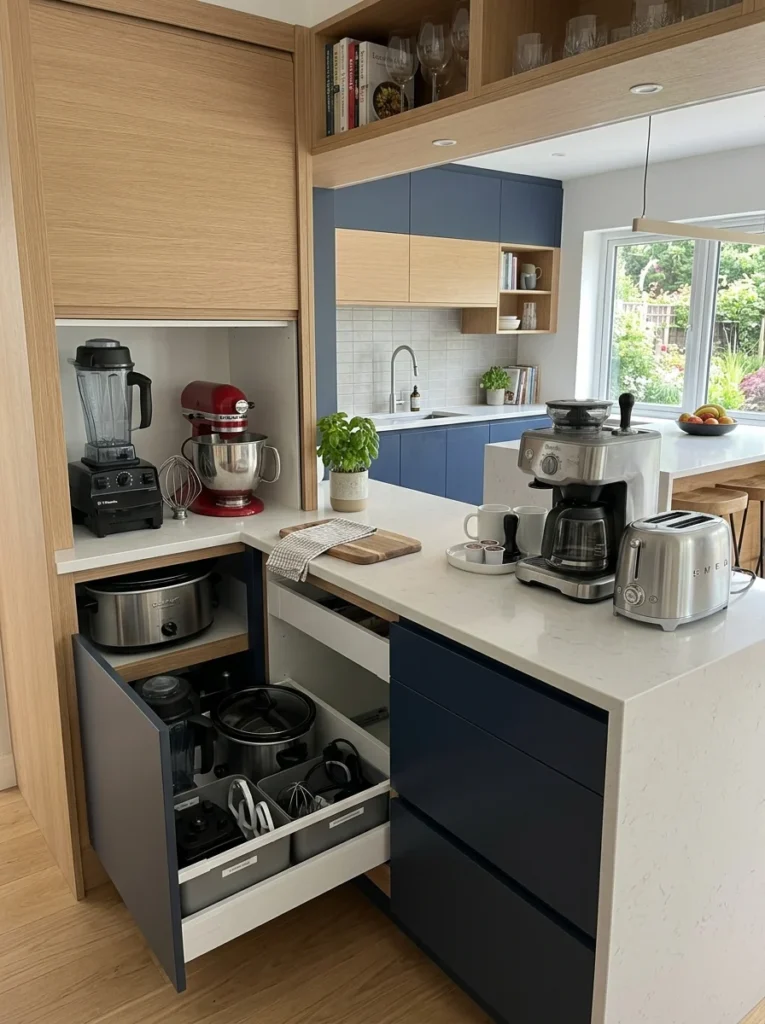
Keep small appliances accessible but out of the way
Small appliances used daily or almost daily, a coffee maker, a toaster, an electric kettle, generally earn a spot on the counter for convenience, while appliances used weekly or less, a blender, a stand mixer, a slow cooker, are usually better stored in a lower cabinet or on a pull-out shelf specifically sized for their footprint. An appliance garage, a small cabinet with a roll-up or lift-up door built into the counter, is a worthwhile addition during a renovation if counter space is limited, since it keeps mid-frequency appliances accessible without permanently occupying valuable counter real estate.
Tackle the under-sink cabinet separately
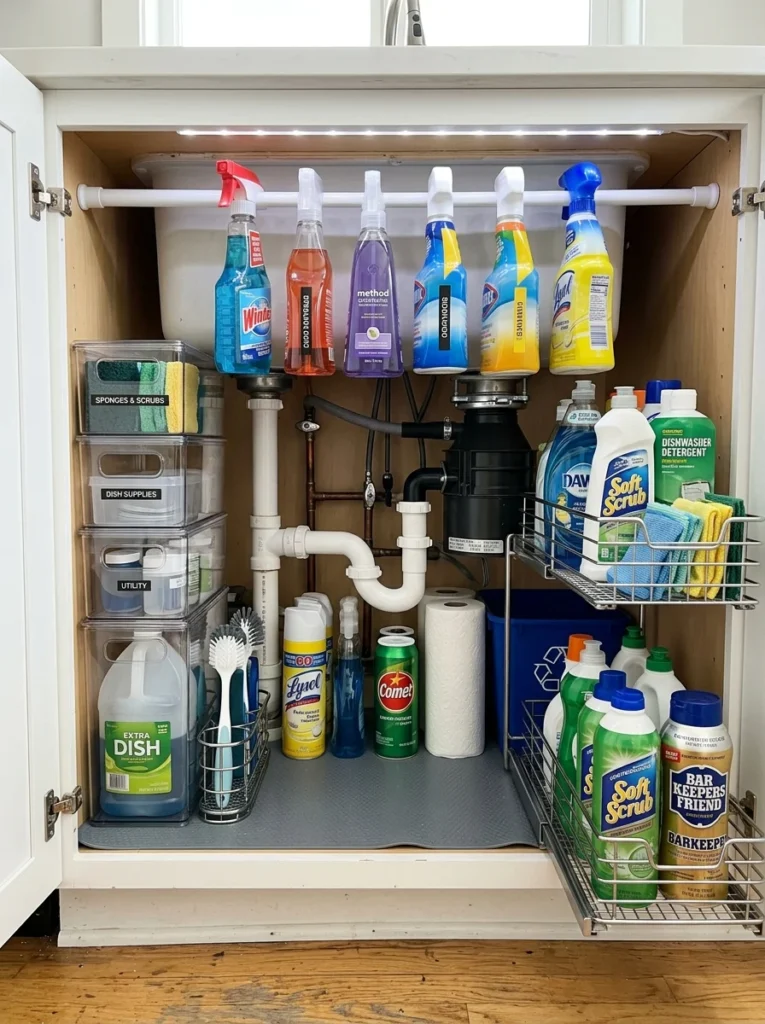
The cabinet under the kitchen sink faces the same plumbing-related space challenges as a bathroom vanity, with pipes cutting the usable area into awkward shapes. A pull-out caddy or stackable, pipe-friendly bins designed specifically for this kind of cabinet make far better use of the space than simply piling cleaning supplies loose on the cabinet floor. A small tension rod mounted partway up the cabinet gives you a spot to hang spray bottles by their trigger handles, freeing up the floor space below for bulkier items like trash bags or a dish soap refill.
Solve the food storage container problem once and for all
Few cabinets generate more daily frustration than the one holding mismatched plastic containers and lids that never seem to pair up correctly. Doing a full audit, keeping only containers with a matching lid and discarding the rest, is often the fastest fix, since most households own far more containers than they actually use regularly. Storing containers upright in a vertical organizer, rather than stacked loosely, and keeping lids separately in a slim bin or a lid organizer designed to hold them on their sides, makes it dramatically easier to find a matching set without pulling out half the cabinet first.
Even a well-organized kitchen drifts back toward clutter without some ongoing maintenance. A brief reset every few weeks, putting back anything that’s ended up in the wrong spot and reassessing whether your current system still matches how you’re actually cooking, keeps the organization genuinely functional rather than something that only looks good for the first month after you set it up. If a particular zone consistently ends up messy despite your best efforts, that’s usually a sign the system itself doesn’t match your real habits, and it’s worth adjusting the zone rather than continuing to fight against it.
Common kitchen cabinet organization questions
Where should pots and pans be stored for the most efficient kitchen?
Pots and pans should be stored as close to the stove as possible, ideally in a deep drawer or a low cabinet with pull-out shelving, since that minimizes the steps needed between storage and the point of use during cooking.
What’s the best way to organize a small kitchen with limited cabinet space?
In a small kitchen, prioritize vertical storage, stackable and nesting cookware, and multi-purpose tools over single-use gadgets. Decluttering aggressively matters even more in a small space, since every cabinet needs to work harder with less overall room available.
Is it worth installing pull-out shelves in existing cabinets?
Yes, for deep base cabinets and corner cabinets specifically, pull-out shelves or a lazy Susan can be retrofitted into most existing cabinet boxes without a full renovation, and they significantly improve access to space that otherwise tends to go unused or forgotten at the back.
How often should I reorganize my kitchen cabinets?
A quick reset every few weeks helps maintain an existing system, while a deeper declutter and reorganization once or twice a year is usually enough to account for new kitchen items, changing cooking habits, or anything that’s quietly drifted out of its designated spot.
What’s the best way to organize mismatched food storage containers?
Start by discarding any container without a matching lid, since most households accumulate far more containers than they actually use. Store the remaining containers upright in a vertical organizer and keep lids separately in a slim bin, which makes finding a matching set much faster than digging through a stacked, disorganized pile.
Efficient cabinet organization isn’t about making your kitchen look perfect for photos; it’s about reducing the small daily friction of cooking, less digging, less guessing, less negotiating with a precarious stack of mismatched containers. Starting with a genuine declutter, then organizing by zone and frequency of use, and finally adding the right tools, dividers, pull-out shelves, clear containers, for your specific space, turns even a modest kitchen into one that works with you rather than against you.
My own pantry no longer requires a small negotiation with gravity every time I reach for the pasta. Everything has a spot, every spot makes sense for how I actually cook, and resetting it takes minutes rather than hours. If you’re not sure where to start, begin with whichever cabinet frustrates you most on a daily basis; fixing that one first will show you exactly how much difference a real system makes before you tackle the rest.