
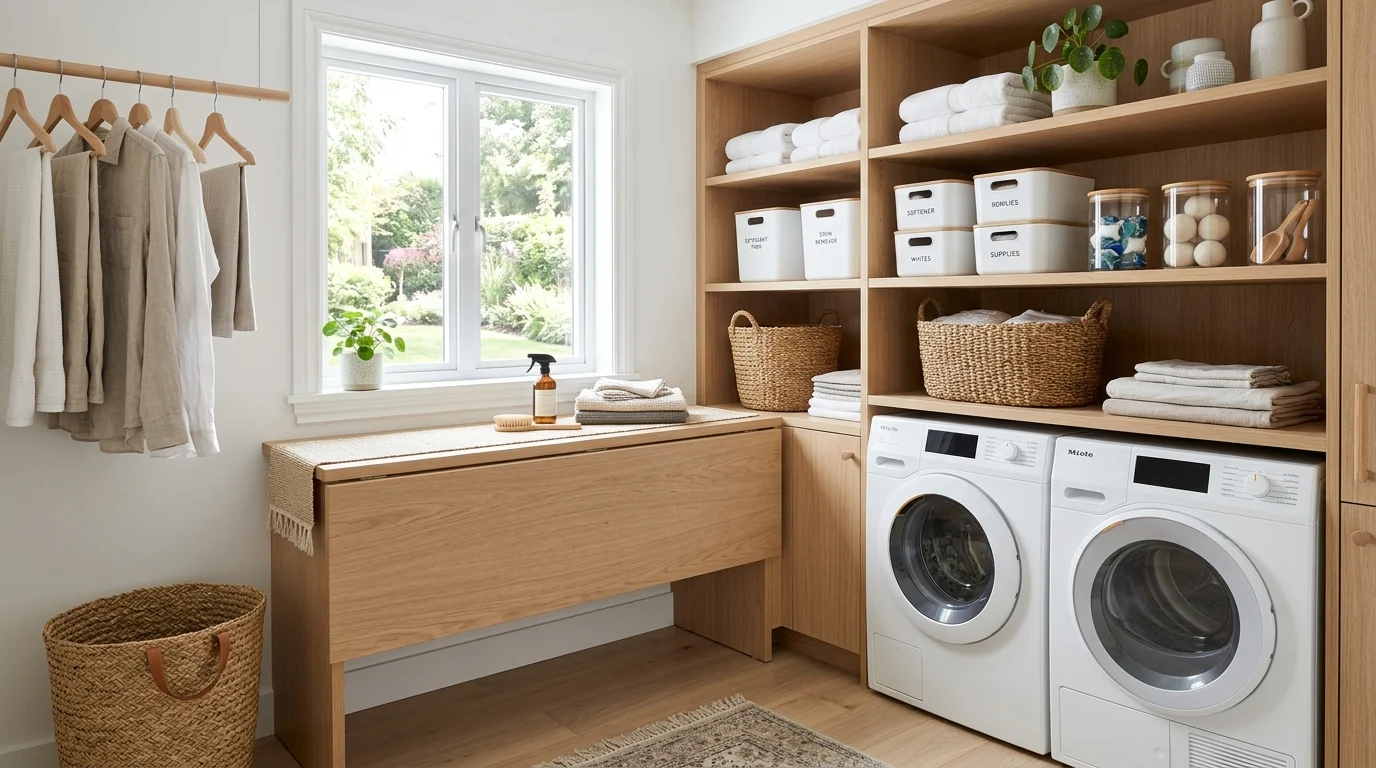
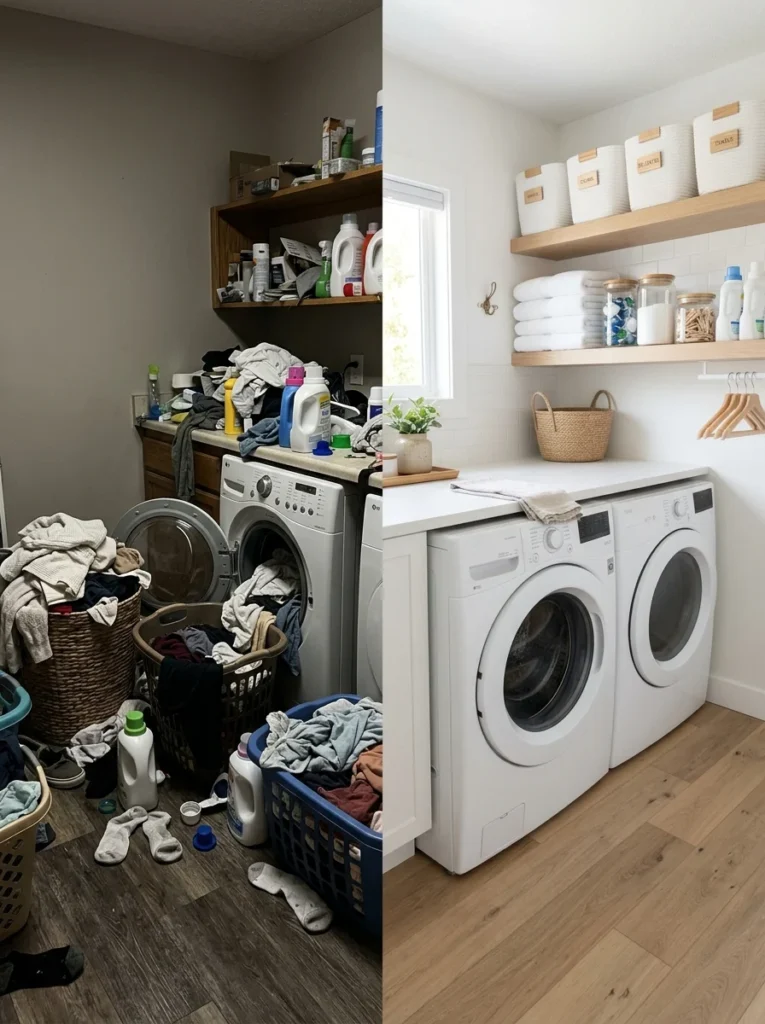
I used to genuinely dread laundry day, not because the task itself was hard, but because every single step took longer than it should have. I’d hunt for the stain remover I knew was somewhere, realize halfway through loading the washer that we were out of detergent, and end up with a pile of clean, folded laundry sitting on the dryer for days because there was no clear next step for where it actually needed to go. None of that was really about the laundry itself; it was about how disorganized the room and routine around it had become. Reworking both, the physical organization and the actual sequence of steps, cut what used to feel like an all-day chore down to something that barely registers as an inconvenience anymore.
A faster laundry routine comes down to removing the small frictions that add up across every single load, not doing the laundry itself any quicker. Here’s what actually made the difference for us, from the physical setup to the habits that keep it running smoothly.
Map your actual routine before reorganizing anything
Before rearranging a single shelf, walk through your laundry process step by step: where clothes get collected, sorted, washed, dried, folded, and finally put away. Note every point where you currently have to stop, search for something, or backtrack, since these friction points are exactly what an organized system needs to eliminate. Most slow laundry routines aren’t slow because of the washing and drying itself, which takes the same amount of time no matter how organized you are; they’re slow because of everything happening around those machine cycles.
Pre-sort at the source instead of all at once
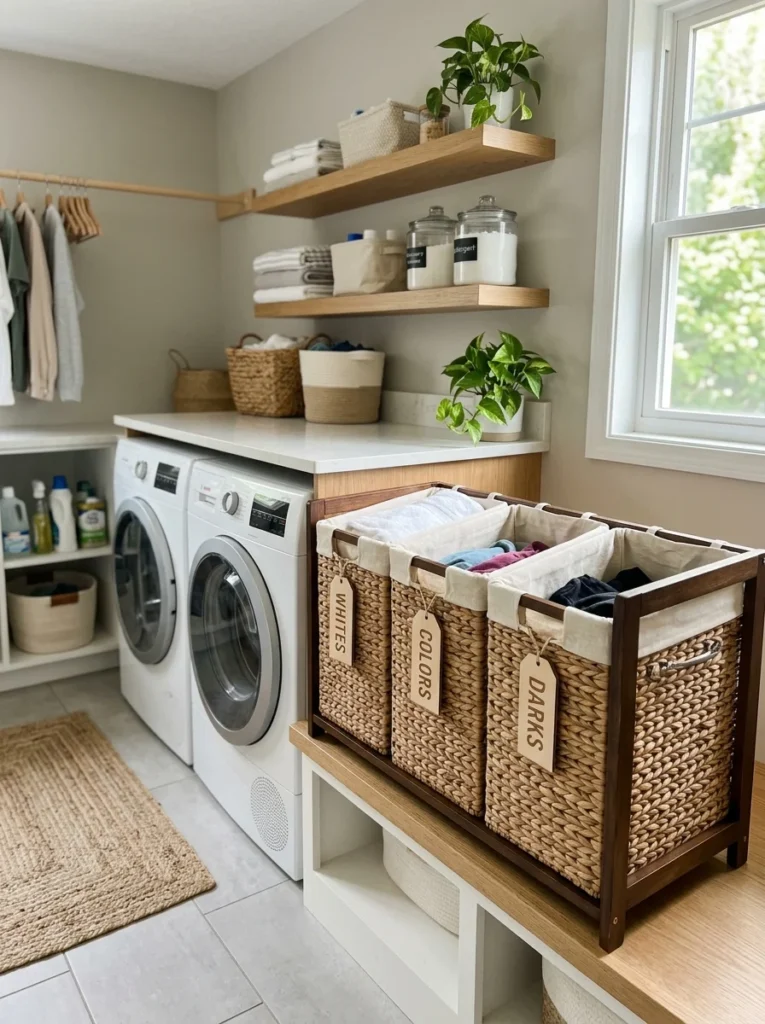
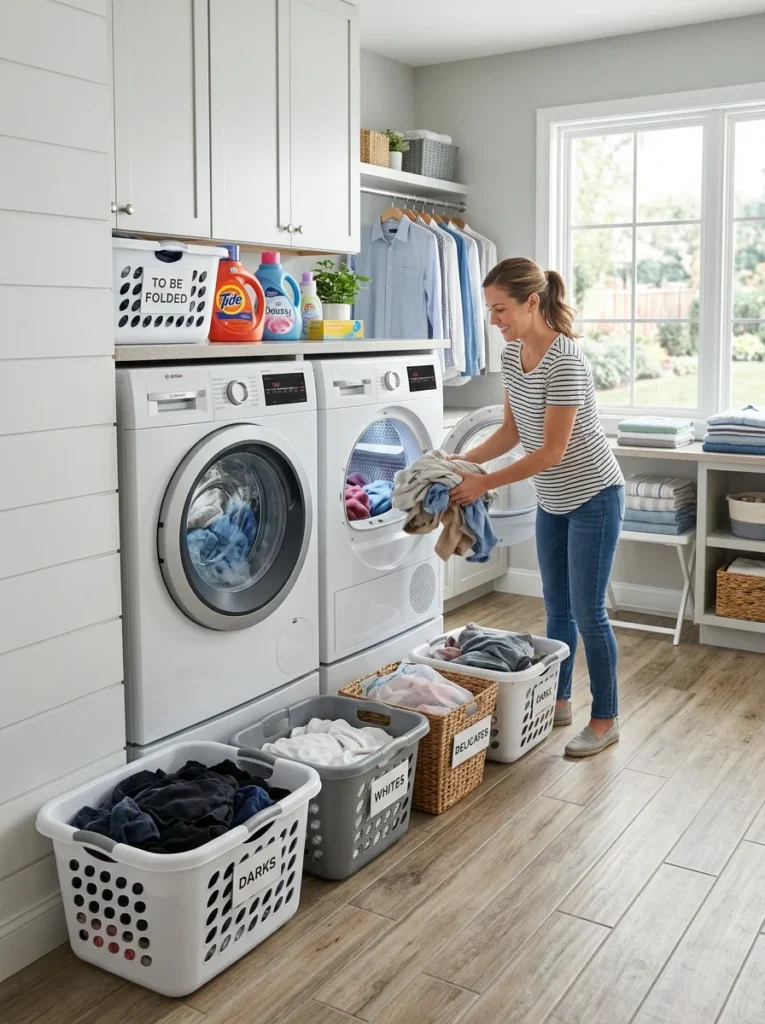
Rather than tossing all dirty laundry into one hamper and sorting it into piles on laundry day, use a multi-compartment hamper or a few clearly labeled bins positioned wherever laundry actually gets collected, in bedrooms, a bathroom, or the laundry room itself. Sorting as clothes are added throughout the week, rather than as one time-consuming task right before washing, removes an entire step from laundry day and spreads that small effort out in a way that barely registers as extra work.
Keep supplies stocked and visible, not just stored
Running out of detergent, dryer sheets, or stain remover mid-routine forces an unplanned stop, sometimes delaying an entire load until the next store trip. Keeping a small backup supply of core laundry essentials, checked and restocked during regular grocery trips rather than only when you notice you’re out, prevents this specific interruption. Storing these supplies at eye level, in clear or labeled containers, also means you can see at a glance what’s getting low before it becomes an actual mid-routine problem.

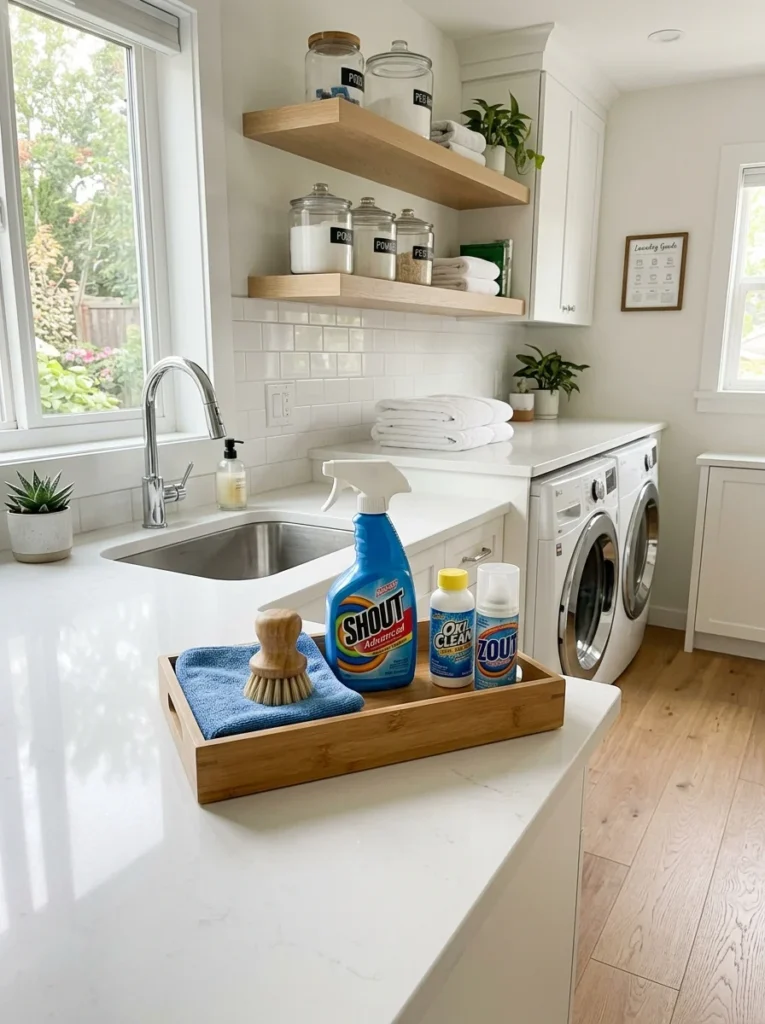
Set up a dedicated space for stain treatment
A stain that needs treatment before washing is a common source of delay if the necessary products aren’t immediately at hand, requiring a search through cabinets while the stain potentially sets further. Keeping stain remover, a small stain-treatment brush, and any other pre-treatment supplies in one specific, easily accessible spot near where clothes get sorted means this step can happen immediately rather than becoming its own separate task requiring a hunt through the house.
Streamline the folding and put-away process
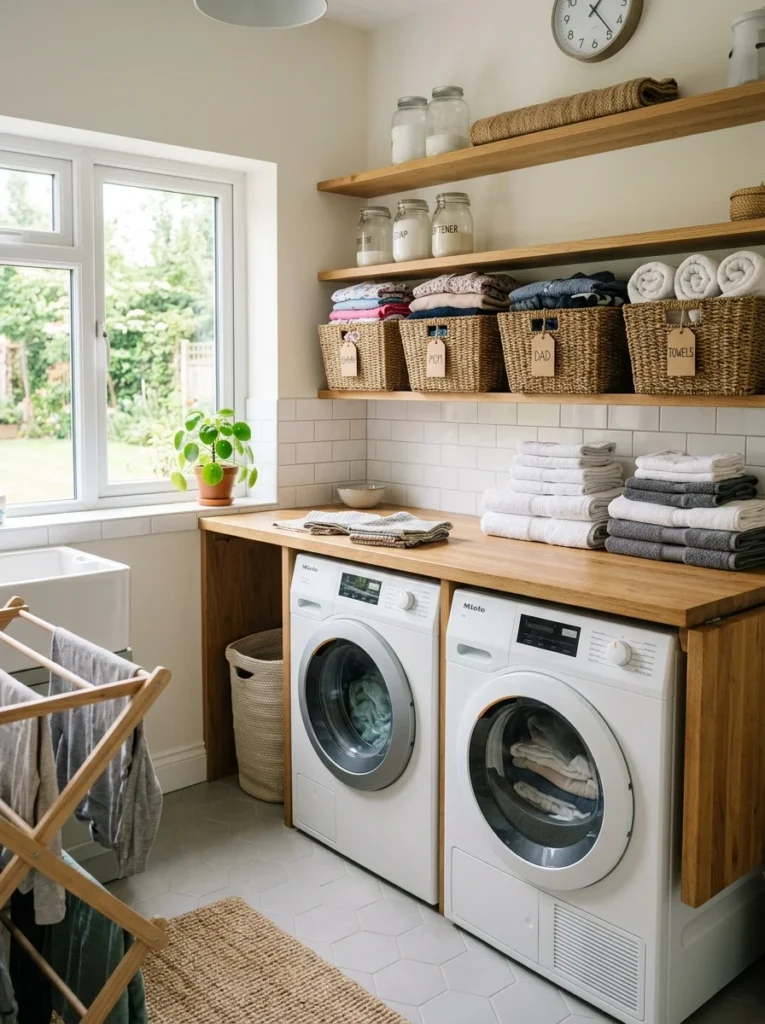
A dedicated folding surface, even a small one, prevents the common bottleneck of clean laundry sitting in the dryer or in a basket because there’s nowhere convenient to fold it immediately. Folding directly from the dryer, sorting items by household member or room as you fold rather than in a separate step afterward, and having a designated basket or shelf for each family member’s folded items streamlines the transition from clean laundry to put away, rather than clean clothes sitting in a communal pile that then requires a second full sorting pass.
Use a consistent, simple system everyone in the household understands
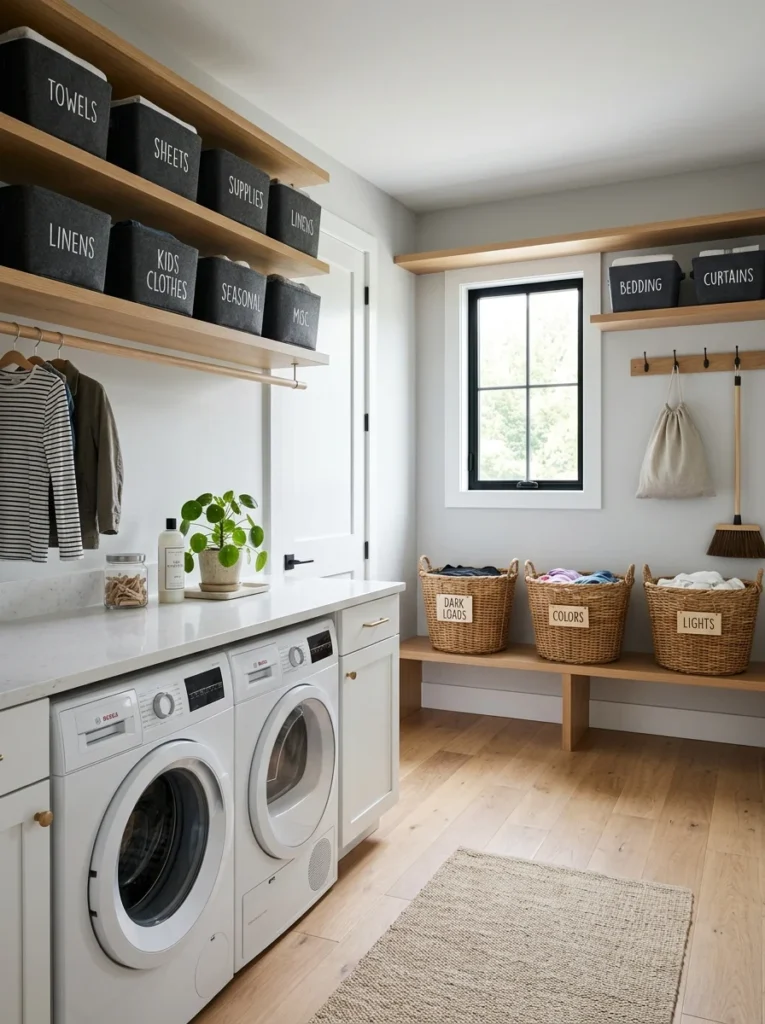
A laundry system only speeds up the routine if everyone contributing to it, not just the person who set it up, understands and follows it. Clear labels, a simple, visible sorting system, and an obvious spot for finished laundry to be picked up all increase the odds that the whole household participates correctly rather than the routine depending entirely on one person managing every single step, sorting, treating stains, and redirecting misplaced items, alone.
Batch similar tasks together rather than doing them piecemeal
Running loads back to back on a designated laundry day, rather than starting a single load whenever it becomes convenient throughout the week, reduces the total number of times you need to mentally switch into laundry mode, checking machines, moving loads, restarting the whole start-up process, and lets the physical process of washing, drying, and folding happen in a more continuous, efficient block of time.
Reduce the number of decisions required mid-routine
Standardizing your detergent, water temperature settings, and cycle choices for typical loads, rather than deciding fresh each time, removes small decision points that add up across every single load. Keeping a simple written or mentally memorized default setting for regular loads, reserving actual decision-making for genuinely unusual items like delicates or heavily soiled items, speeds up the start of each load meaningfully over time.
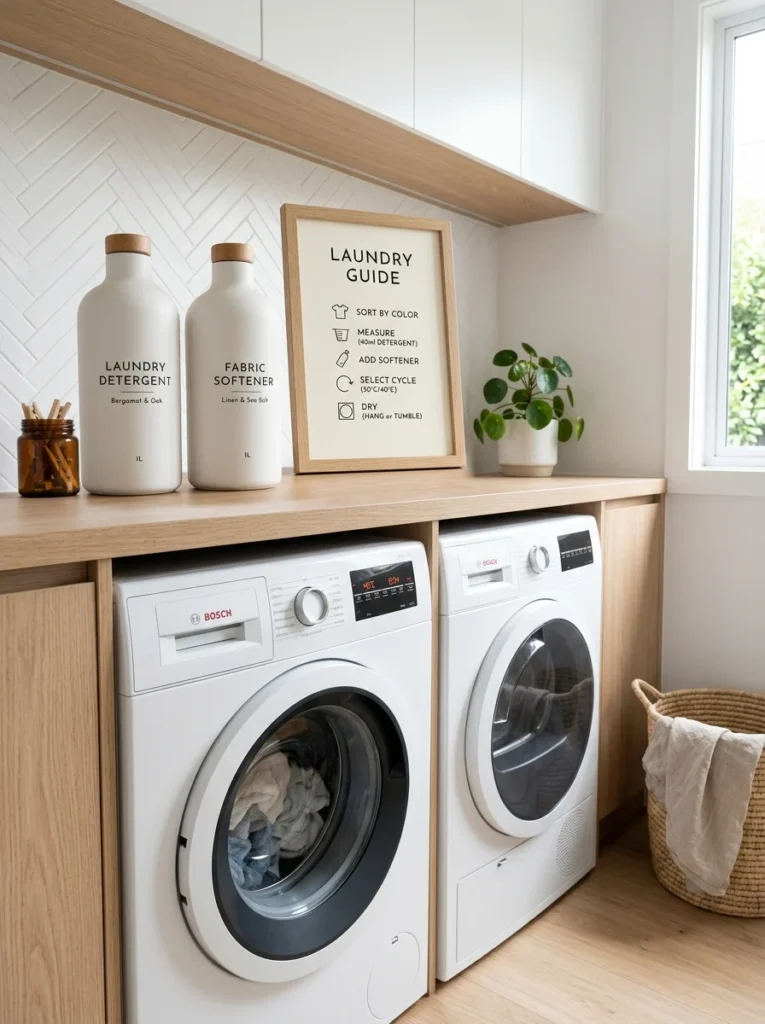
Use timers and reminders to avoid forgotten loads
A load left forgotten in the washer, developing a musty smell before it’s transferred to the dryer, or dry clothes left sitting in the dryer for days, wrinkling and needing to be rewashed or heavily ironed, both add real time and frustration to the overall routine. A simple phone timer or reminder set when starting a load prevents these specific, common delays, and it’s a genuinely free habit change that meaningfully speeds up the overall process by preventing avoidable rework.
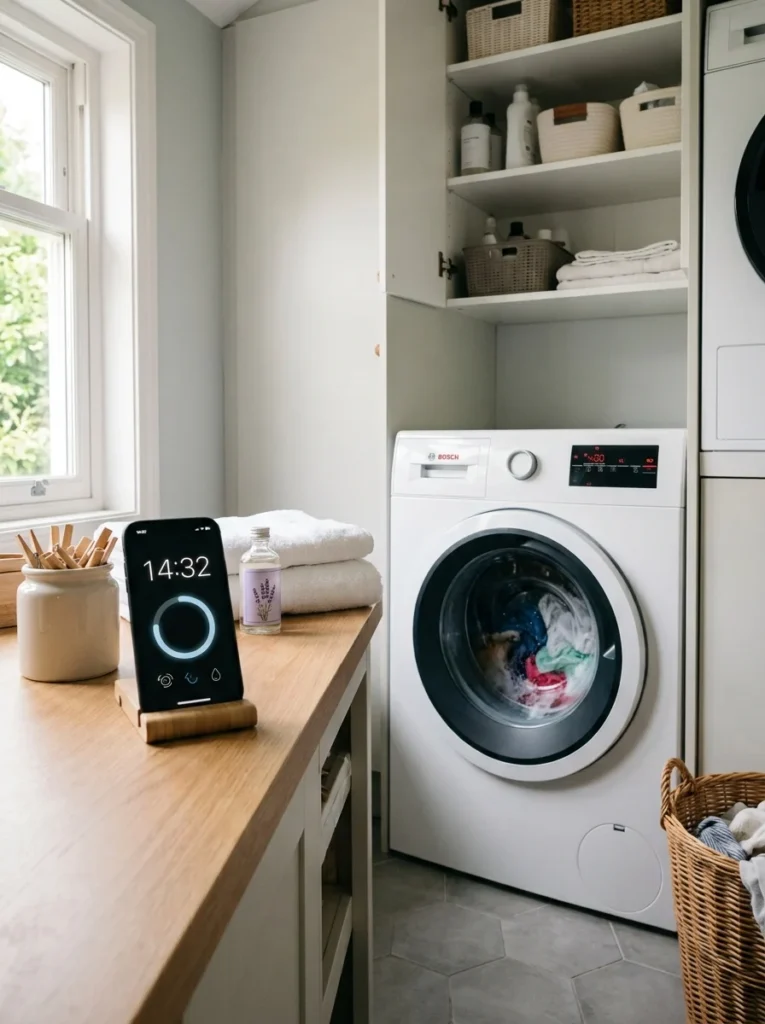
Create a designated spot for items that need special handling
Items that need to air dry, hand wash, or get dropped off at a dry cleaner tend to create bottlenecks if they don’t have their own designated spot, either getting mixed into regular loads inappropriately or forgotten in a pile somewhere. A specific basket, hook, or shelf reserved just for these special-handling items keeps them visible and moving through their own appropriate process rather than becoming a recurring source of confusion or delay in the main laundry routine.
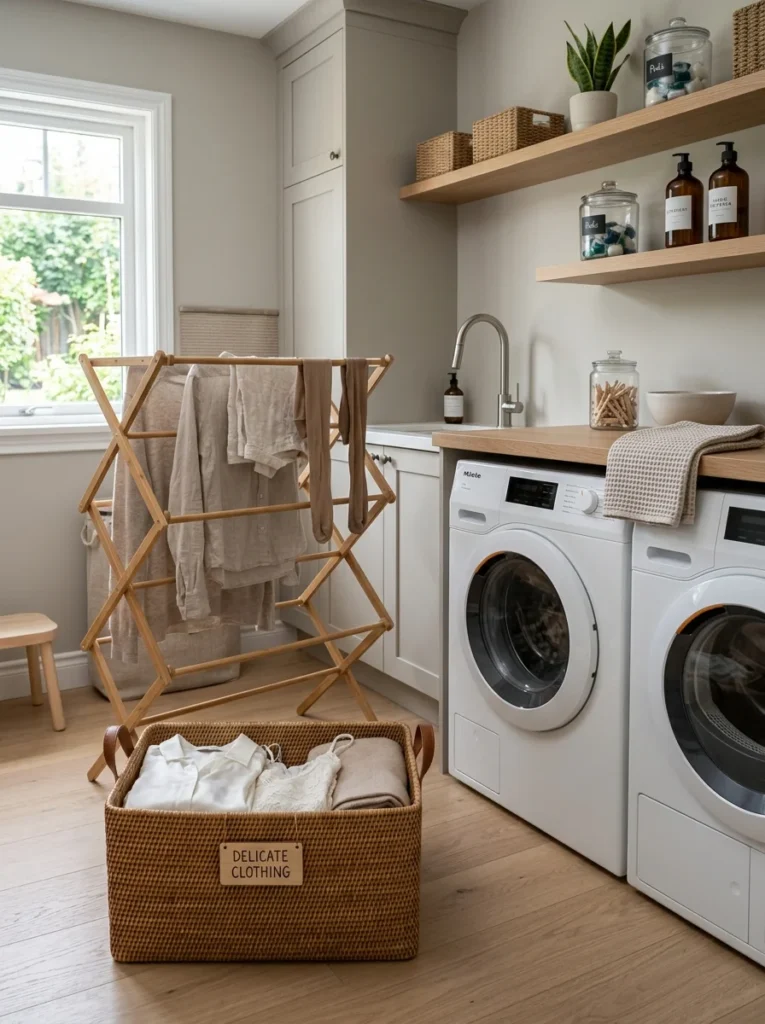
Regularly clean and maintain your machines to avoid slowdowns
A washer with a clogged filter or a dryer with a lint-blocked vent doesn’t just risk damage over time; it also actively slows down your routine through longer cycle times, incomplete drying that requires a second run through the dryer, or reduced water drainage that leaves clothes wetter than they should be. Building a quick monthly check of the lint trap, dryer vent, and washer filter into your routine prevents this specific, often-overlooked source of slowdown.
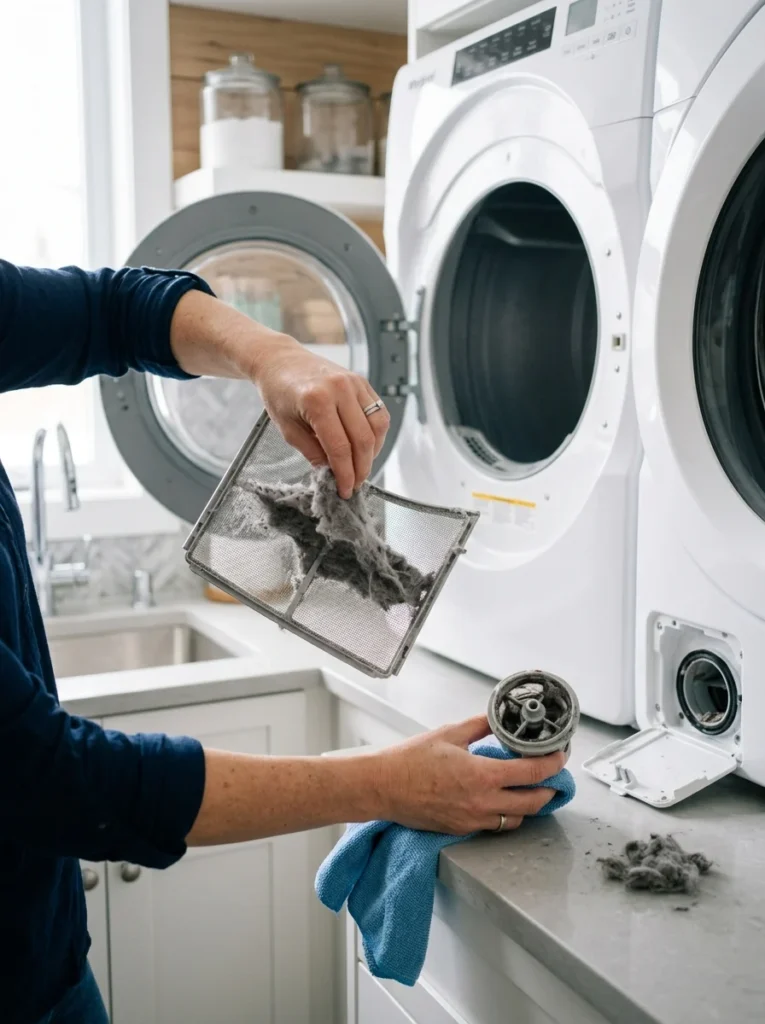
Arrange the physical layout to minimize unnecessary steps
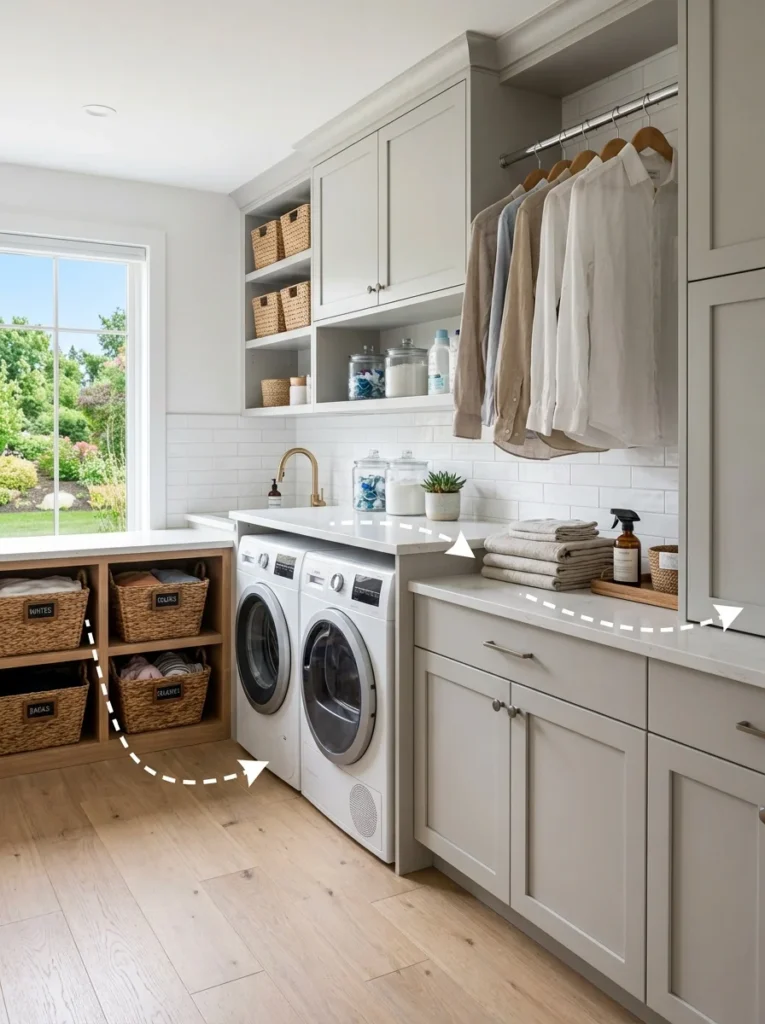
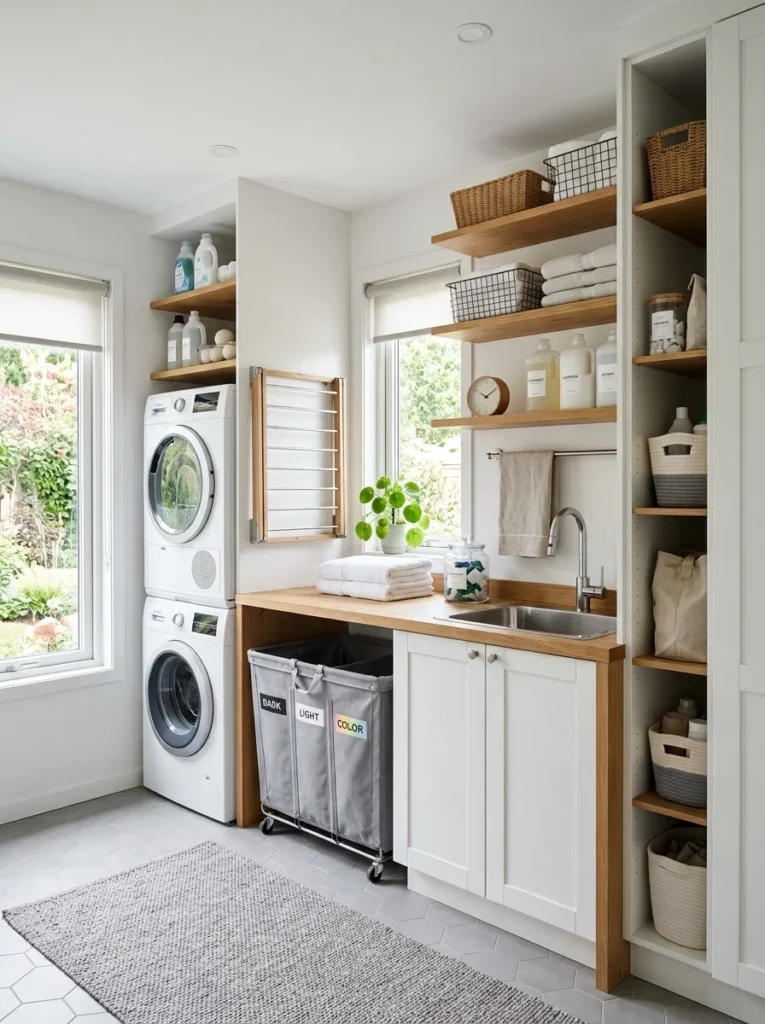
Positioning your hamper, detergent, and washer close together, ideally in a logical left-to-right or front-to-back flow that mirrors the actual sequence of sorting, loading, and starting a wash, reduces the small amount of walking and repositioning that adds up across dozens of loads over time. Similarly, placing the dryer immediately adjacent to the washer, with a folding surface positioned right next to or directly across from the dryer door, keeps the entire wash-to-fold sequence contained to a few steps rather than requiring trips back and forth across the room or, worse, to another room entirely.
Reduce the number of trips required to put laundry away
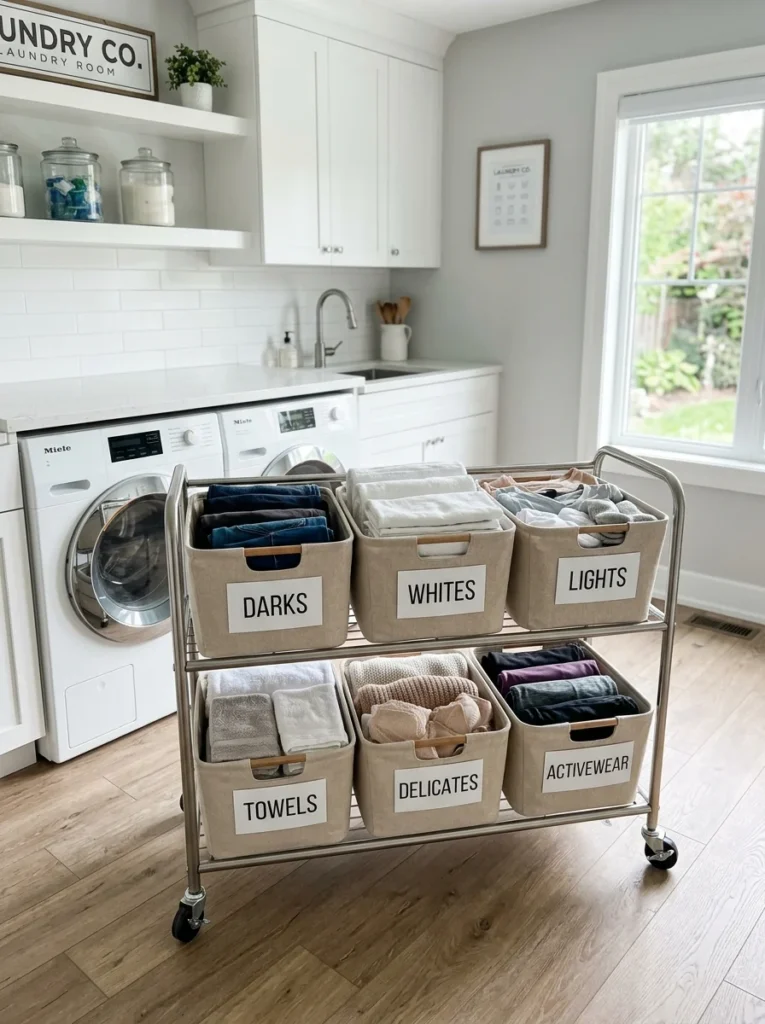
If your laundry room is located far from bedrooms or closets, consider using a rolling cart or a set of labeled baskets, one per household member or per room, to transport folded laundry in a single trip rather than making multiple trips back and forth carrying smaller stacks. This is a small logistical change, but for a laundry room located on a different floor than the bedrooms it serves, it can meaningfully cut down on one of the more physically tedious parts of the entire routine.
What’s the single biggest time-waster in a typical laundry routine?
Sorting an entire week’s accumulated laundry all at once on laundry day tends to be one of the biggest time drains, since it turns what could be a spread-out, minor daily task into one significant time block. Pre-sorting at the source, as clothes are added throughout the week, removes this bottleneck.
How can I stop clean laundry from piling up unfolded?
Having a dedicated folding surface ready to use immediately, and folding directly from the dryer while sorting by household member or room, prevents the common gap where clean laundry sits unfolded simply because there’s no convenient, immediate next step.
Does a laundry schedule actually make the routine faster?
Yes, batching laundry into designated days or blocks of time, rather than starting loads whenever convenient throughout the week, reduces the number of separate times you need to mentally engage with the task, which adds up to meaningful time savings over consistently spread-out, piecemeal laundry sessions.
How often should I clean my washer and dryer to avoid slowdowns?
A quick monthly check of the lint trap, dryer vent, and washer filter helps prevent longer cycle times and incomplete drying caused by buildup, which can otherwise force repeat cycles and meaningfully slow down your overall routine.
Does the physical layout of a laundry room actually affect speed?
Yes, positioning the hamper, detergent, washer, dryer, and folding surface in a logical sequence that mirrors your actual workflow reduces the small, repeated walking and repositioning that adds up across dozens of loads. A laundry room arranged without this flow in mind often feels slower even with the exact same appliances and supplies.
Speeding up your laundry routine has very little to do with the washer and dryer’s actual cycle time and almost everything to do with removing the small frictions surrounding those cycles, searching for supplies, sorting an overwhelming pile, forgetting a load, folding without a clear surface or system. Addressing these points, one at a time if needed, adds up to a routine that feels considerably lighter even though the machines themselves are running exactly as long as they always did.
Our own laundry routine now runs through pre-sorted hampers, a stocked supply shelf, and a folding system that gets clothes into the right basket the moment they come out of the dryer, and what used to feel like a dreaded, day-long task barely registers as an interruption anymore. If your own routine still feels like it takes longer than it should, walk through it once with fresh eyes and note every point you have to stop and search for something; that list is your actual to-do list for a faster laundry day, not a longer to-do list to add onto it, and tackling even a few of those friction points will likely surprise you with how much time and frustration they were quietly costing.