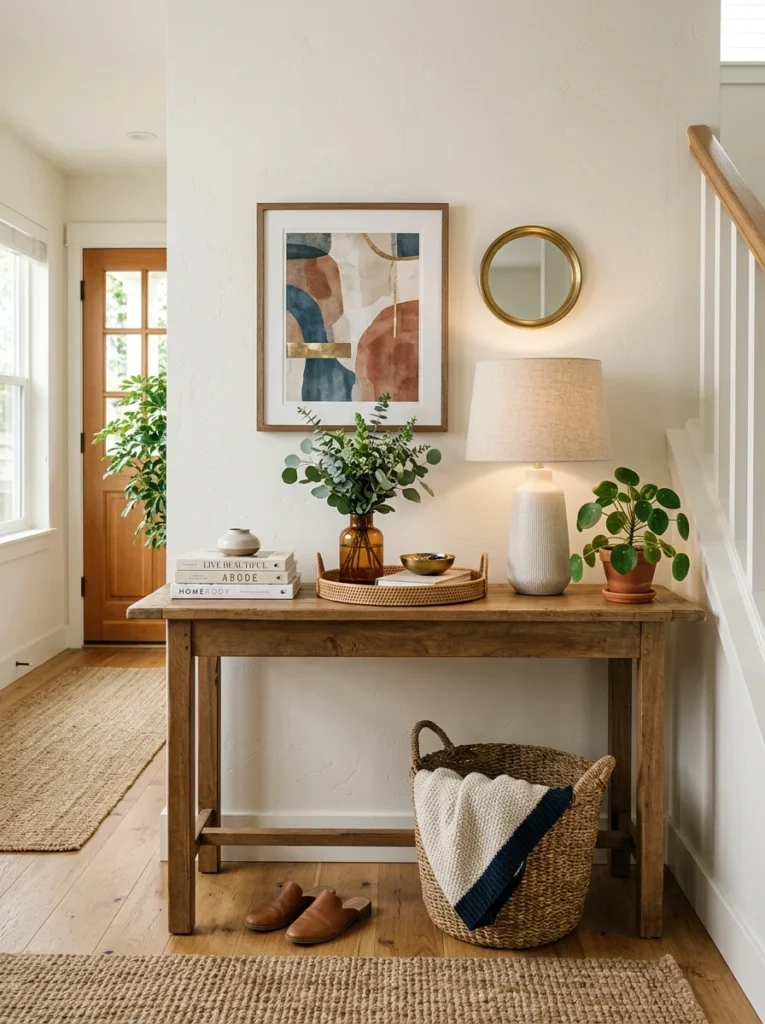
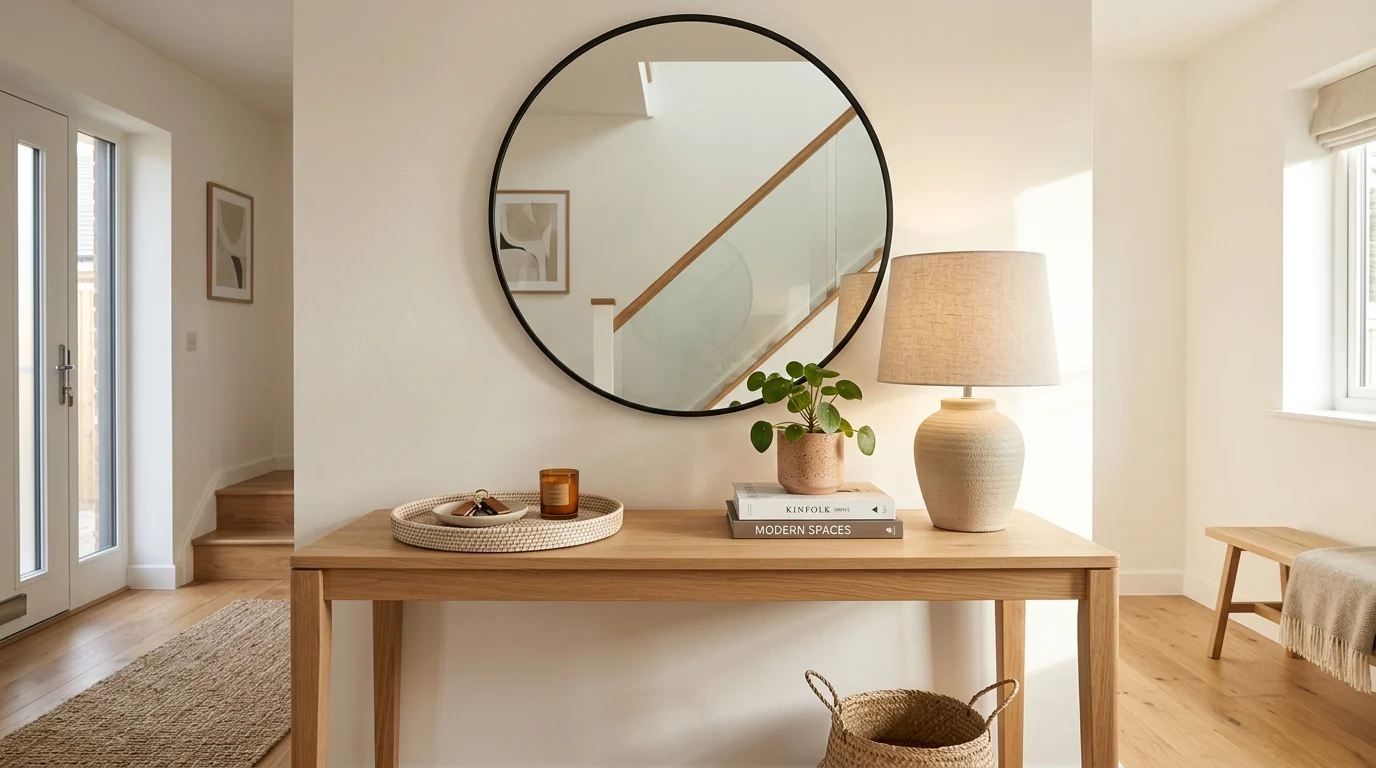
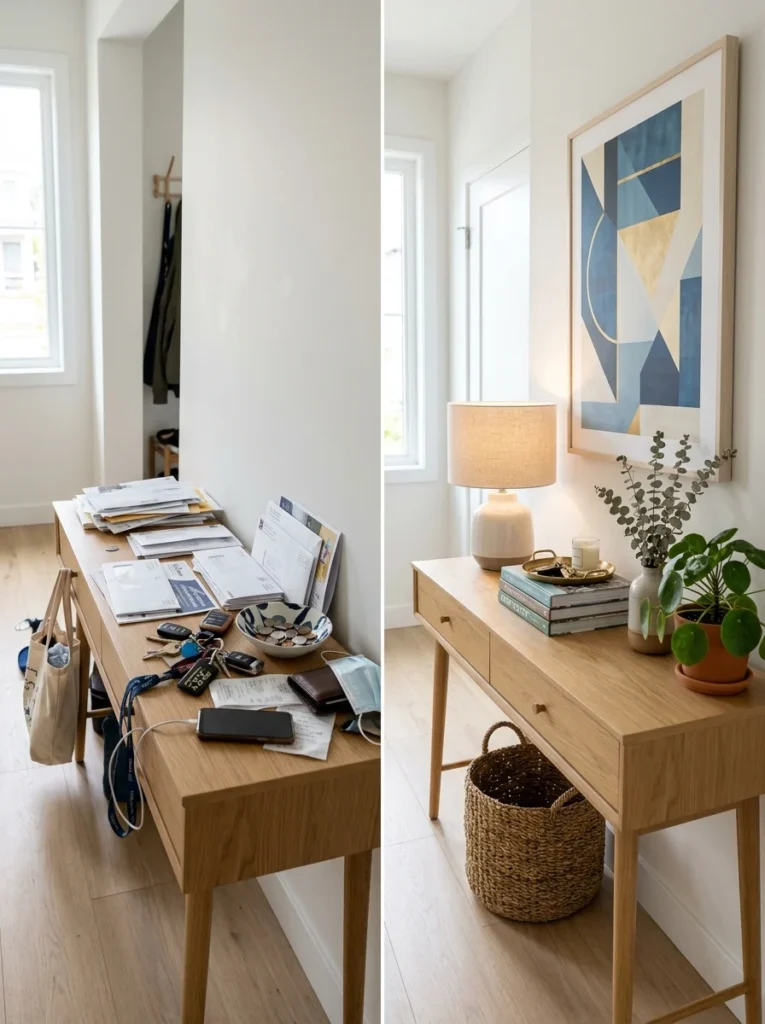
For the first year after buying our console table, it functioned purely as a landing spot for mail, keys, random loose change, and whatever else got dropped there on the way through the door, which meant it looked more like a household catch-all than an actual piece of furniture anyone had thought about. It wasn’t until I actually sat down and thought through some basic styling principles, height variation, grouping in odd numbers, leaving some visual breathing room, that the same table transformed from a cluttered dumping ground into something that genuinely elevated the whole entryway.
A console table, whether tucked behind a sofa or positioned in an entryway, is one of the easiest pieces of furniture to style well once you understand a handful of reliable principles. Here’s how to actually do it, and how the approach shifts slightly depending on which of the two settings you’re working with.
Start with the height-and-visual-weight rule
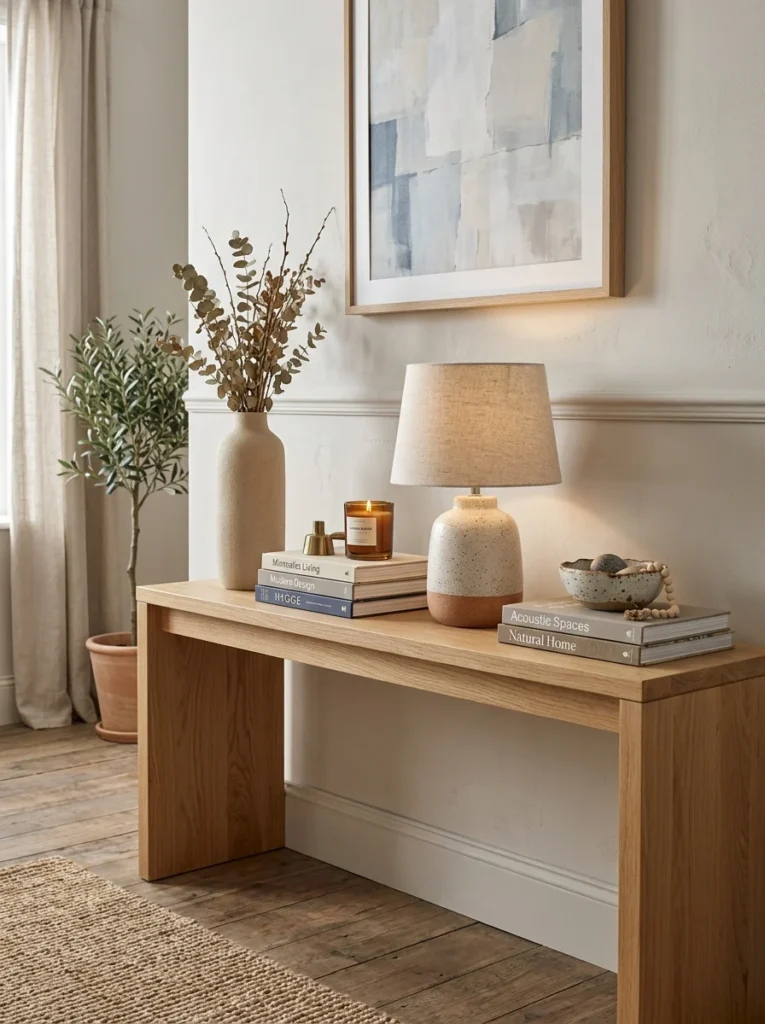
The most reliable foundational principle for styling any flat surface, a console table included, is varying the height of the objects you place on it rather than lining up several similarly sized items in a row. A taller item, a lamp, a large vase, or a piece of framed art leaning against the wall, anchors one end or the center of the table, while shorter items, a small dish, a stack of books, a small plant, fill in around it at varying heights. This creates a visual rhythm that a flat, uniform row of same-height objects simply doesn’t achieve, regardless of how nice each individual item is.
Group items in odd numbers
Objects arranged in odd-numbered groupings, three or five items rather than two or four, tend to read as more visually interesting and intentional than even-numbered groupings, which can look overly symmetrical and static by comparison. This doesn’t mean every single grouping on the table needs to follow this rule strictly, but keeping it in mind as a general guideline, particularly for your main decorative cluster, gives the styling a more natural, curated feeling.
Anchor one end with a lamp or tall decorative object
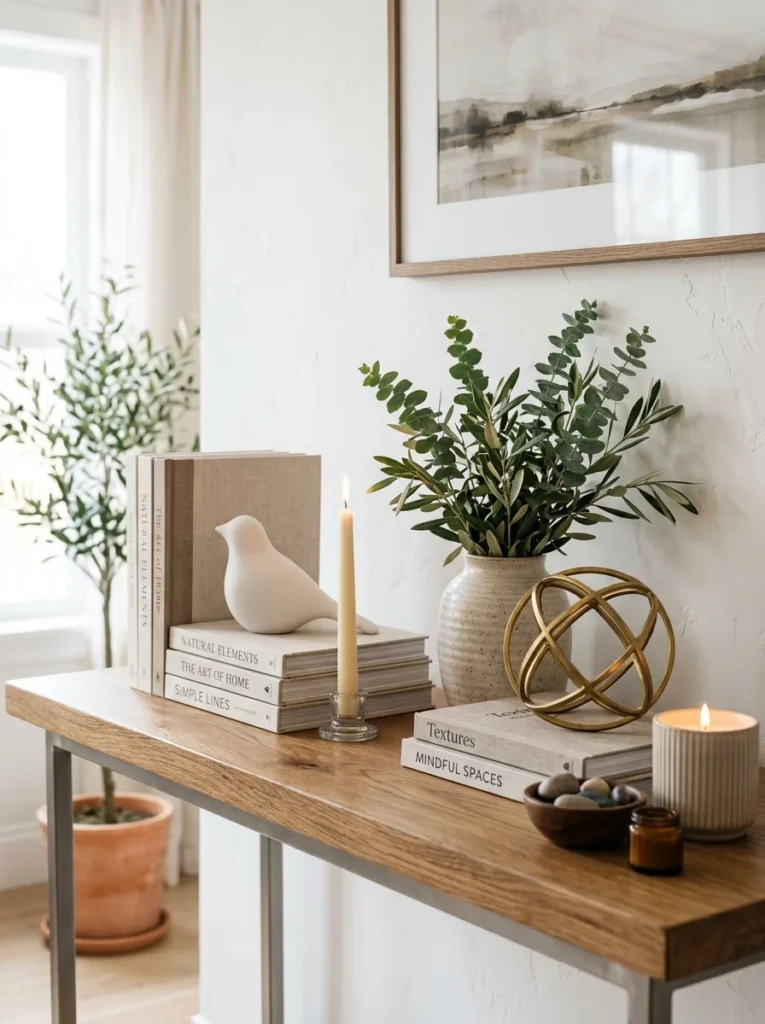
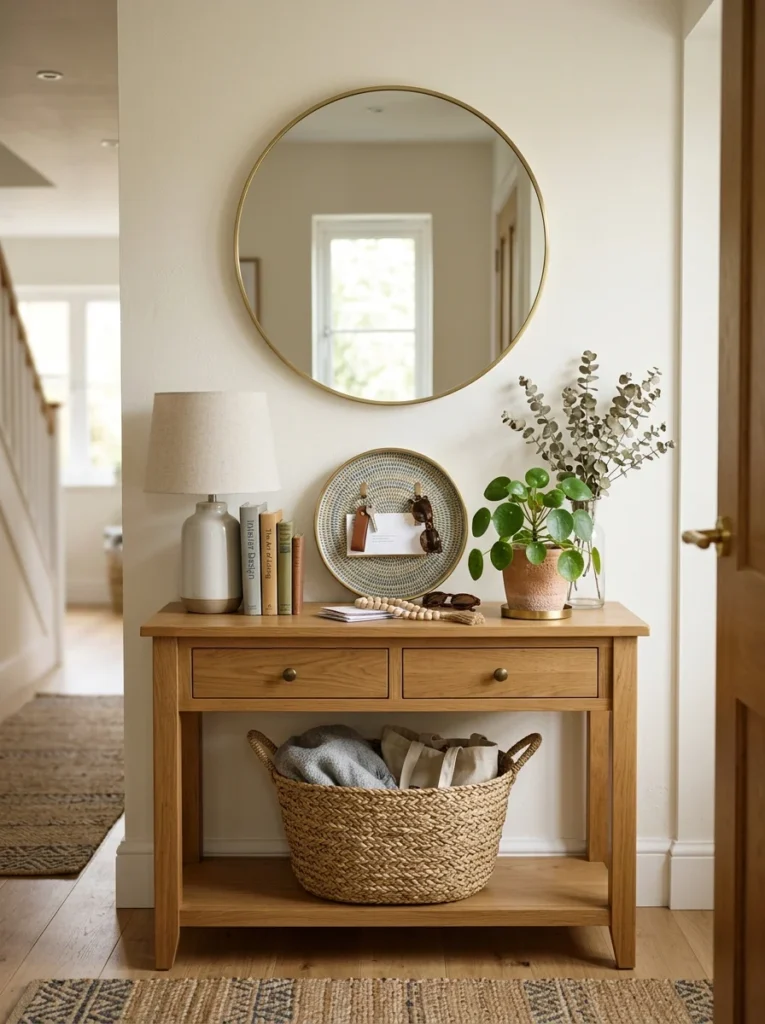
A lamp positioned at one end of the console table serves double duty, providing genuinely useful ambient or task lighting while also giving that end of the table a clear visual anchor and sense of height. If lighting isn’t needed in that particular spot, a tall vase, a piece of sculptural art, or a large plant can serve the same anchoring purpose, giving the eye a clear, deliberate starting point rather than the table reading as a flat, undifferentiated surface.
Layer in a stack of books for both height and personality
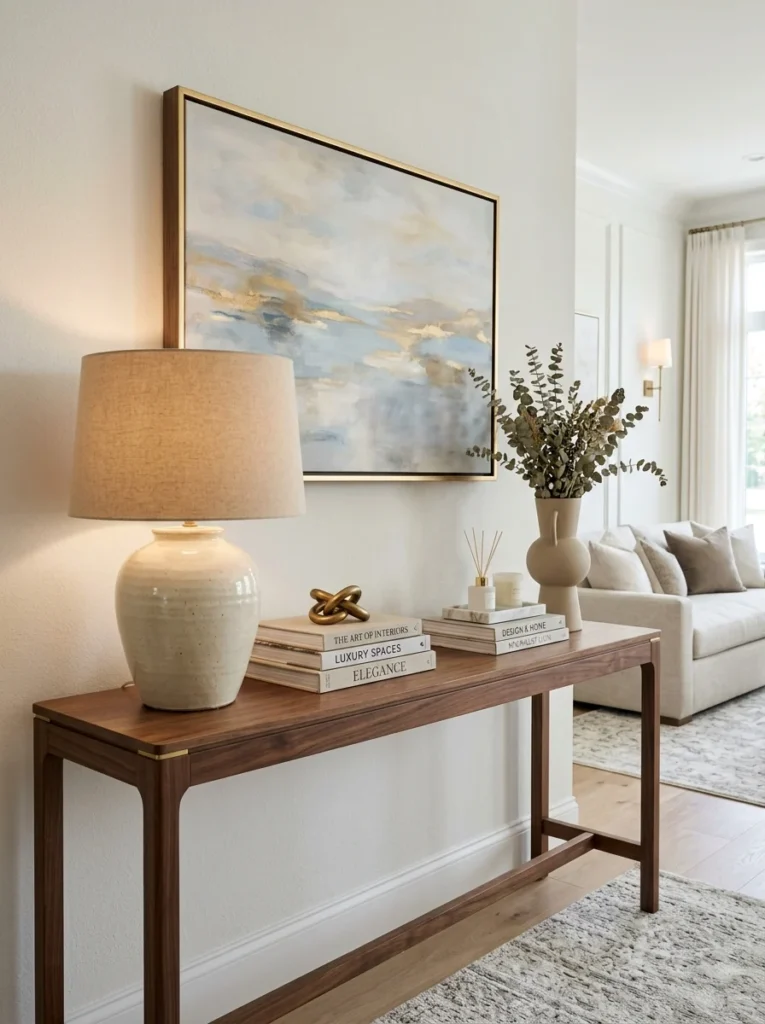
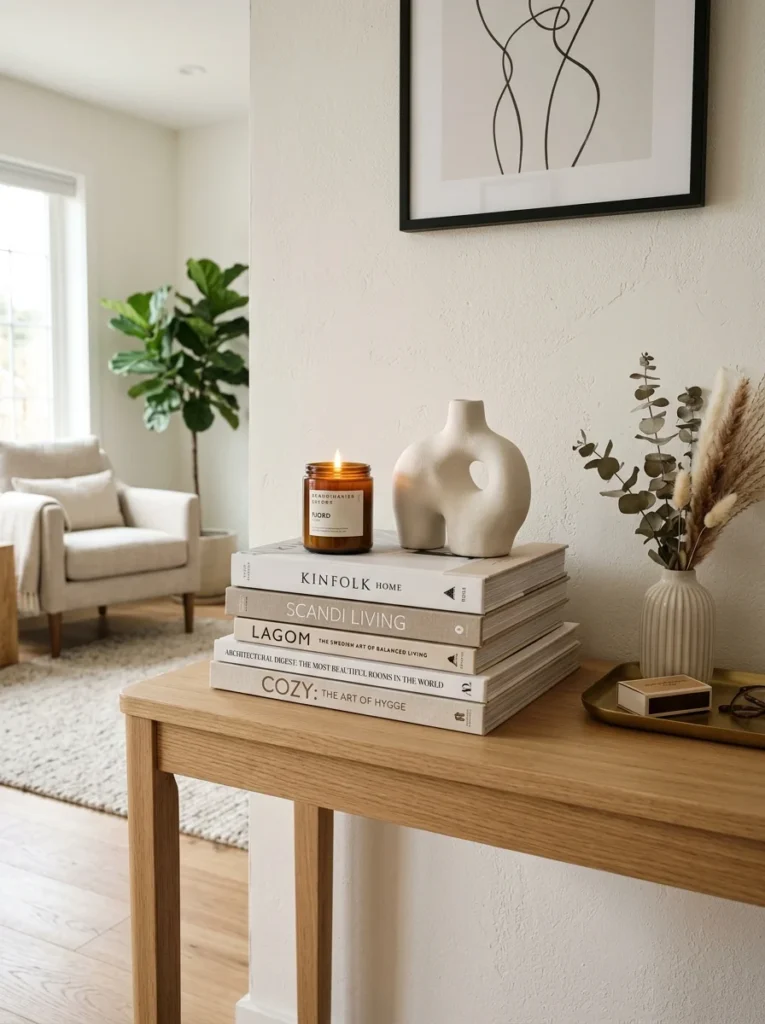
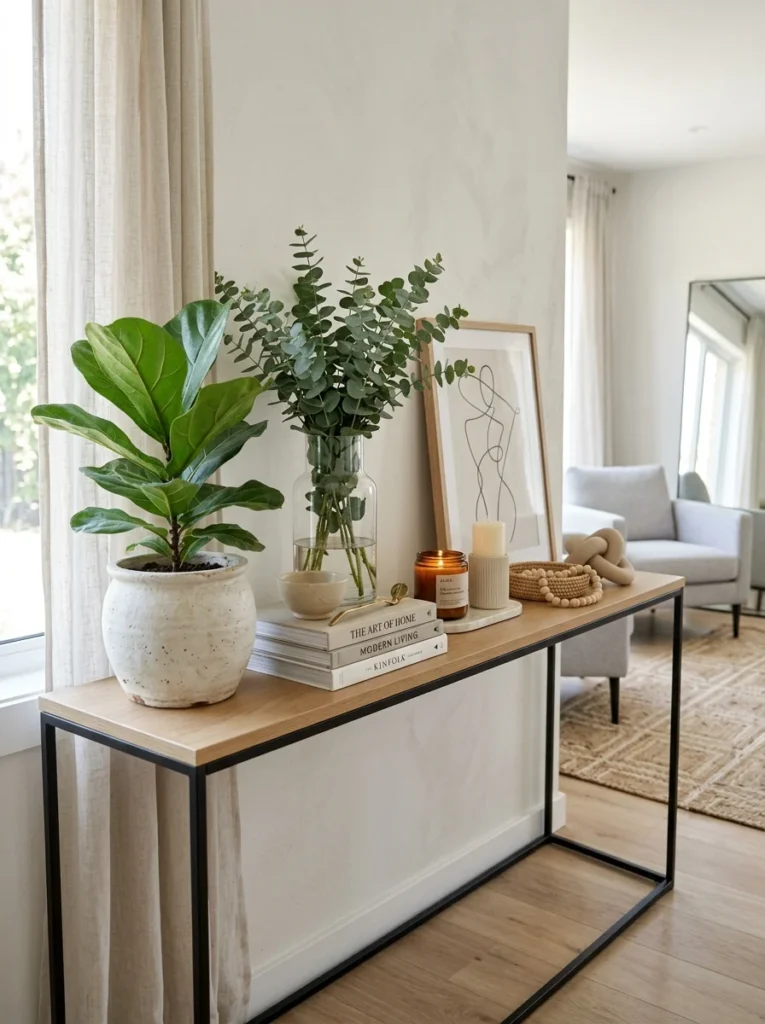
A neat stack of two or three books, chosen for their cover color or overall aesthetic as much as their content, adds both a useful mid-height layer to the arrangement and a genuine sense of personality and warmth. Placing a smaller decorative object, a small sculpture, a candle, a small dish, on top of the stack adds one more layer of height variation while making the stack itself feel like an intentional design choice rather than simply books that needed somewhere to go.
Lean art or a mirror against the wall behind the table
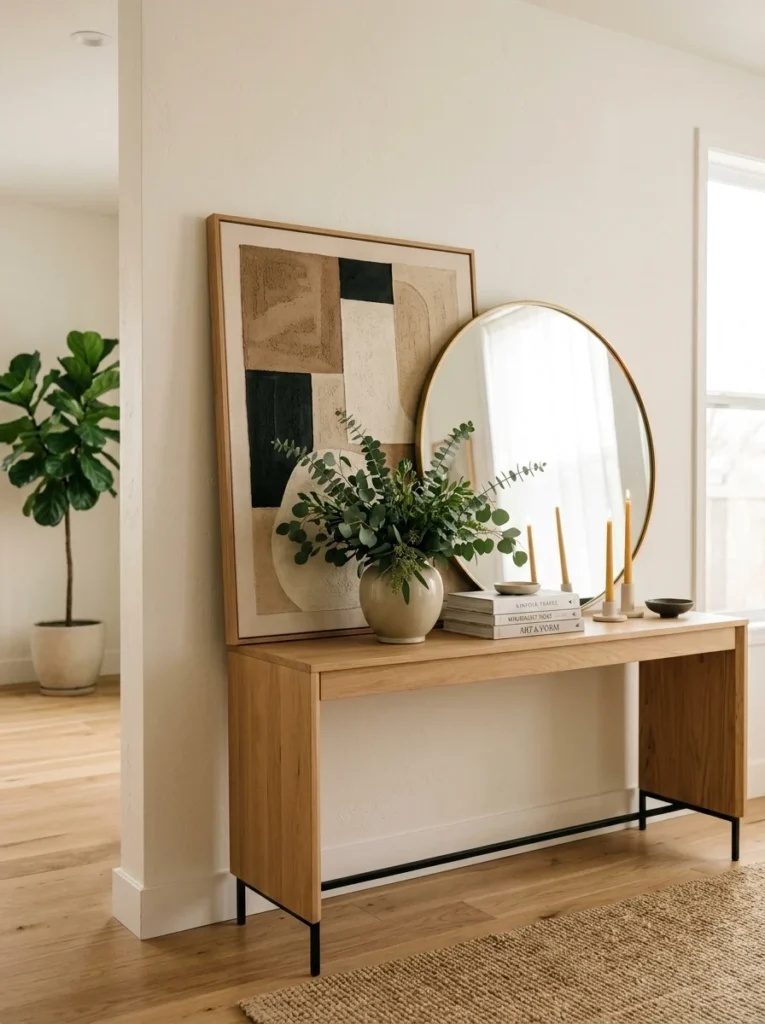
Rather than hanging a piece of art directly on the wall above the console table, leaning a large framed piece, or a mirror, against the wall behind the table creates a more relaxed, layered look and adds significant height and visual interest to the overall arrangement without requiring any wall-mounting hardware. This approach also offers more flexibility to swap out the piece or rearrange the whole look periodically, since nothing is permanently affixed to the wall itself.
Include one organic element like a plant or fresh greenery
A plant, whether a small potted specimen or a simple vase of fresh or good-quality faux greenery, adds a natural, organic texture that balances out the more structured, often geometric shapes of books, lamps, and decorative objects elsewhere on the table. This single organic touch does a considerable amount of work softening what might otherwise feel like an overly formal or rigid arrangement.
Leave intentional negative space rather than filling every inch
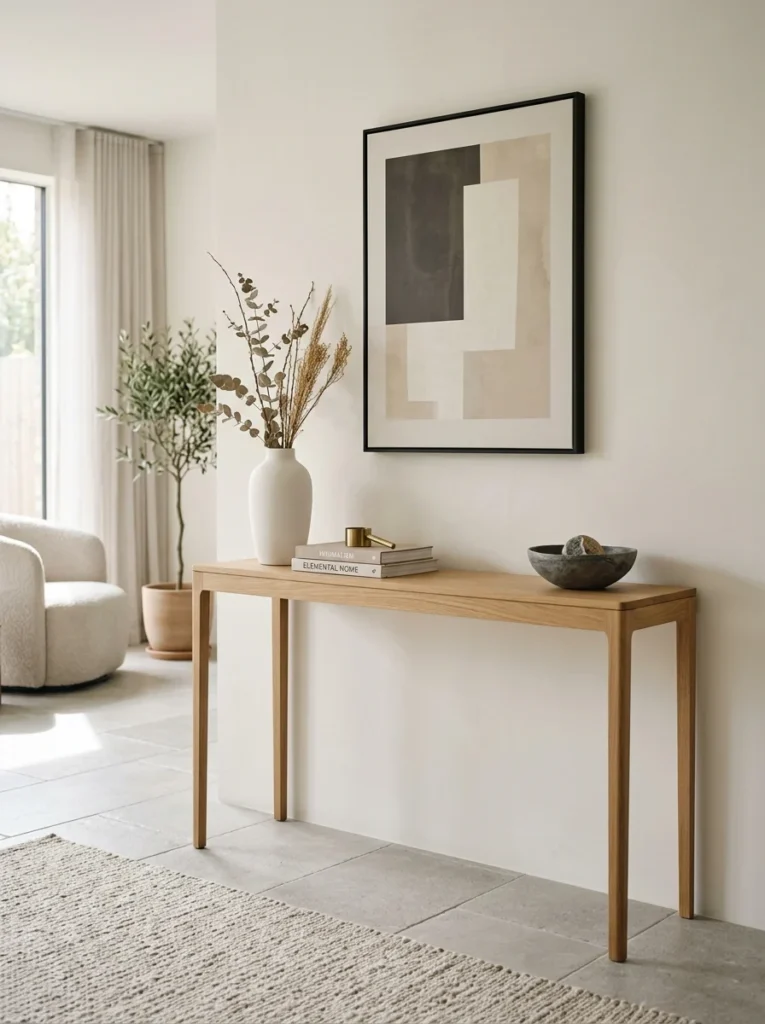
A console table styled to its absolute maximum capacity, every available inch covered with an object, tends to look cluttered and busy rather than curated, regardless of how nice each individual piece is. Leaving some open, empty space, particularly toward one end or in front of the main grouping, gives the eye somewhere to rest and actually makes the styled objects that are there feel more intentional and important by contrast.
Adjust the approach slightly for an entryway console
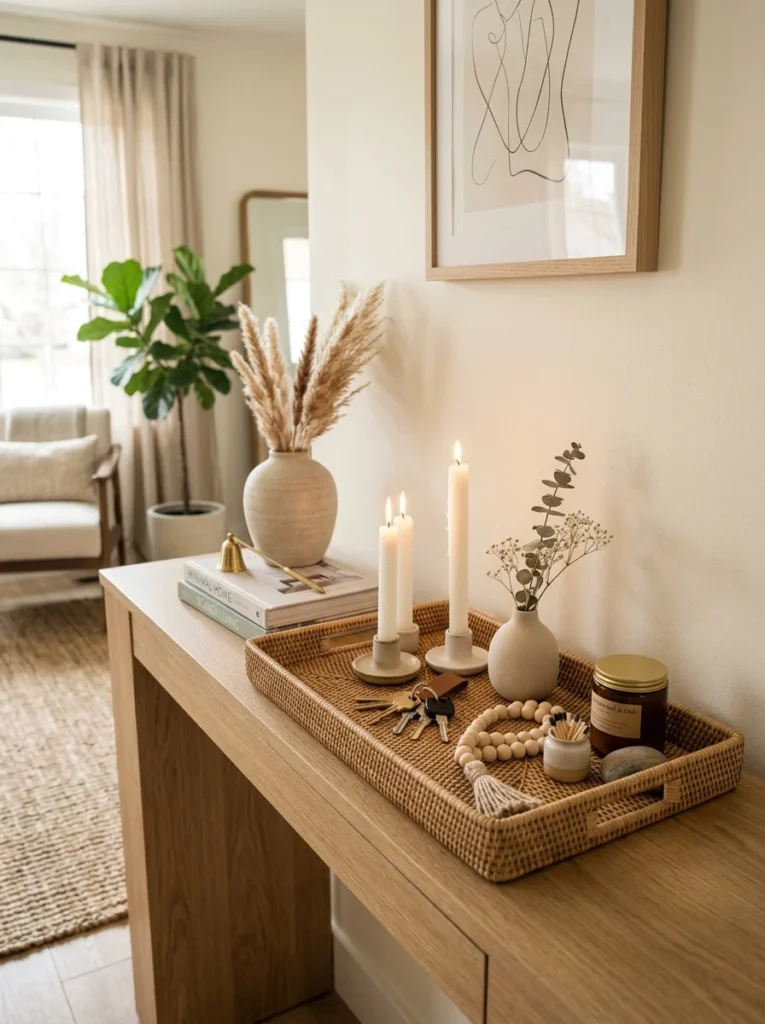
An entryway console needs to balance styling with genuine daily function, since it’s often the spot where keys, mail, and a bag get set down every time someone walks through the door. Incorporating a small catchall tray or dish specifically for these everyday items, rather than letting them scatter loosely across the table’s styled surface, keeps the practical function contained to one designated spot while the rest of the table maintains its more intentional, decorative arrangement.
Adjust the approach slightly for a console behind a sofa
A console table behind a sofa generally serves a more purely decorative and lightly functional role, perhaps holding a lamp, a drink, or a small remote caddy, compared to an entryway table’s heavier daily traffic. This setting allows for a slightly more delicate or precious styling approach, since the surface isn’t absorbing daily mail and keys the way an entryway table typically does, giving you a bit more freedom to prioritize the purely aesthetic arrangement over dedicated everyday storage.
Consider scale relative to the table’s actual size
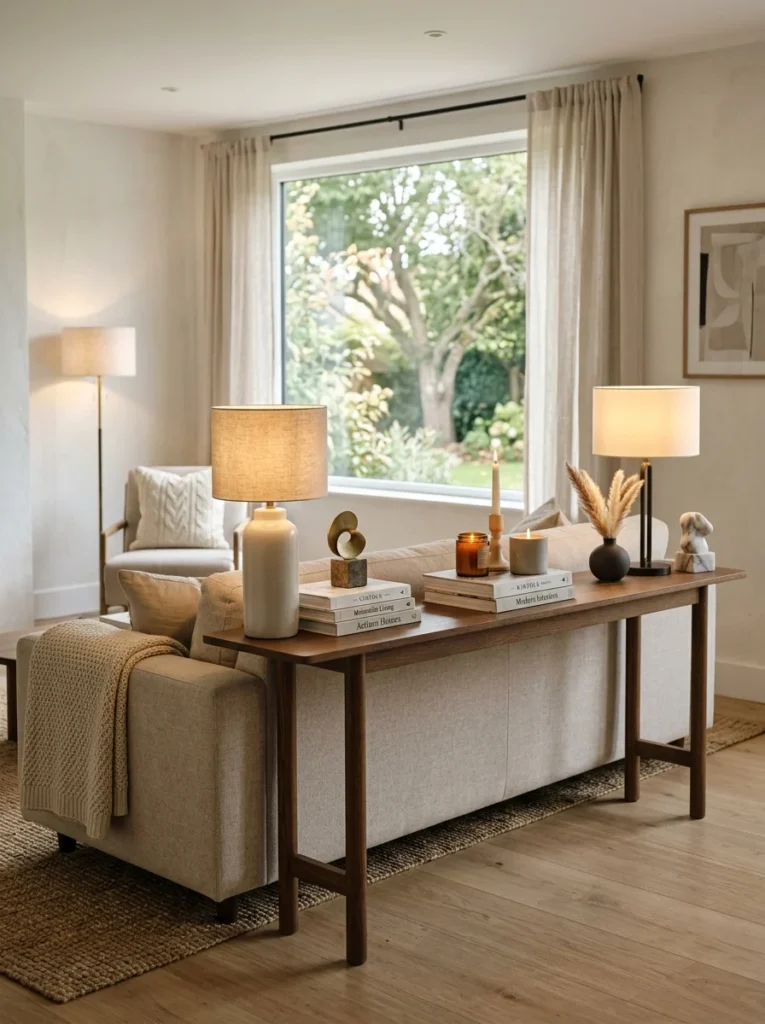
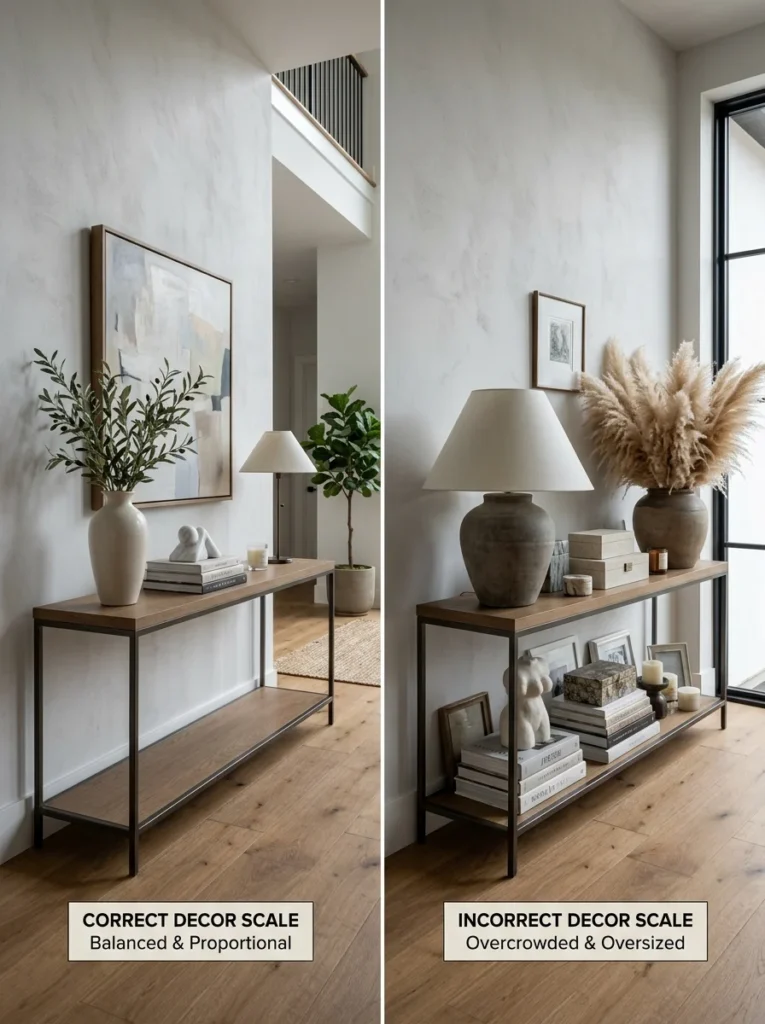
A narrow, petite console table can look overwhelmed and cluttered with large-scale decorative objects that would suit a wider table just fine, while a long, substantial console table can look sparse and underwhelming with only a couple of small items spread thinly across its length. Choosing decorative objects sized appropriately to your specific table’s actual dimensions, rather than a generic styling formula applied without adjustment, ensures the finished arrangement feels proportional rather than mismatched to the furniture piece itself.
Coordinate colors with the surrounding room
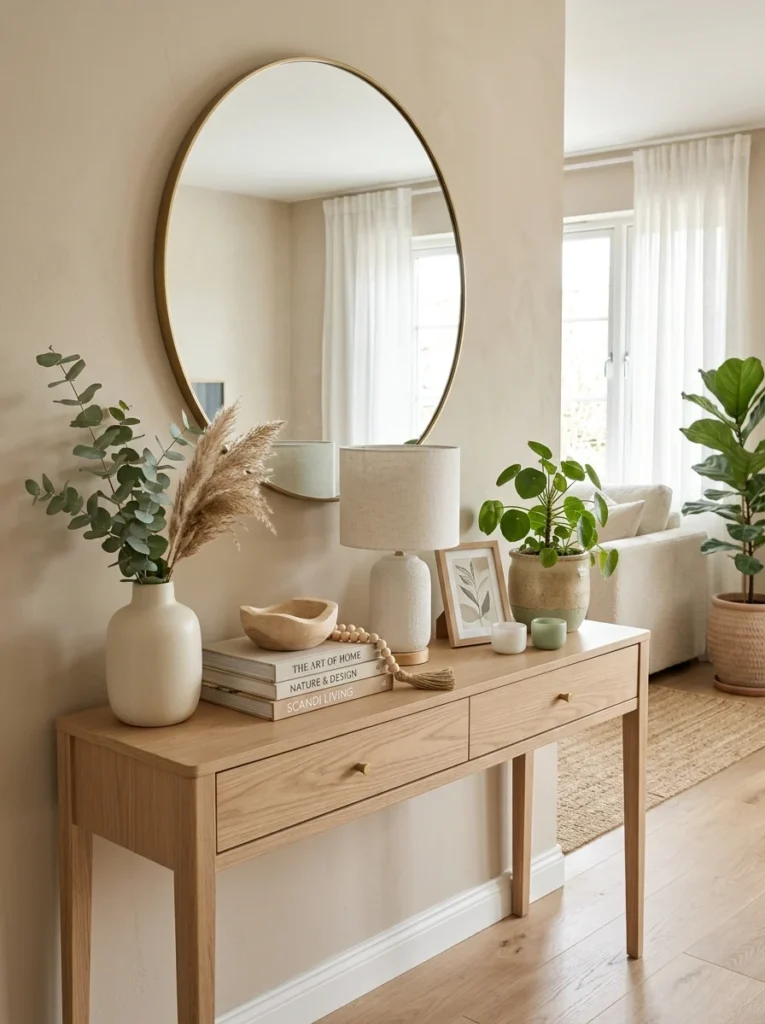
The objects placed on a console table should generally pull from, or at least complement, the room’s existing color palette rather than introducing an entirely unrelated set of colors that make the table feel disconnected from everything around it. Choosing a lamp shade, a vase, or a stack of book covers in tones that echo an accent color already present in the sofa, curtains, or rug ties the console table’s styling into the room as a whole, rather than letting it read as a separate, unrelated vignette placed somewhat randomly against the wall.
Refresh the styling seasonally with small, low-cost swaps
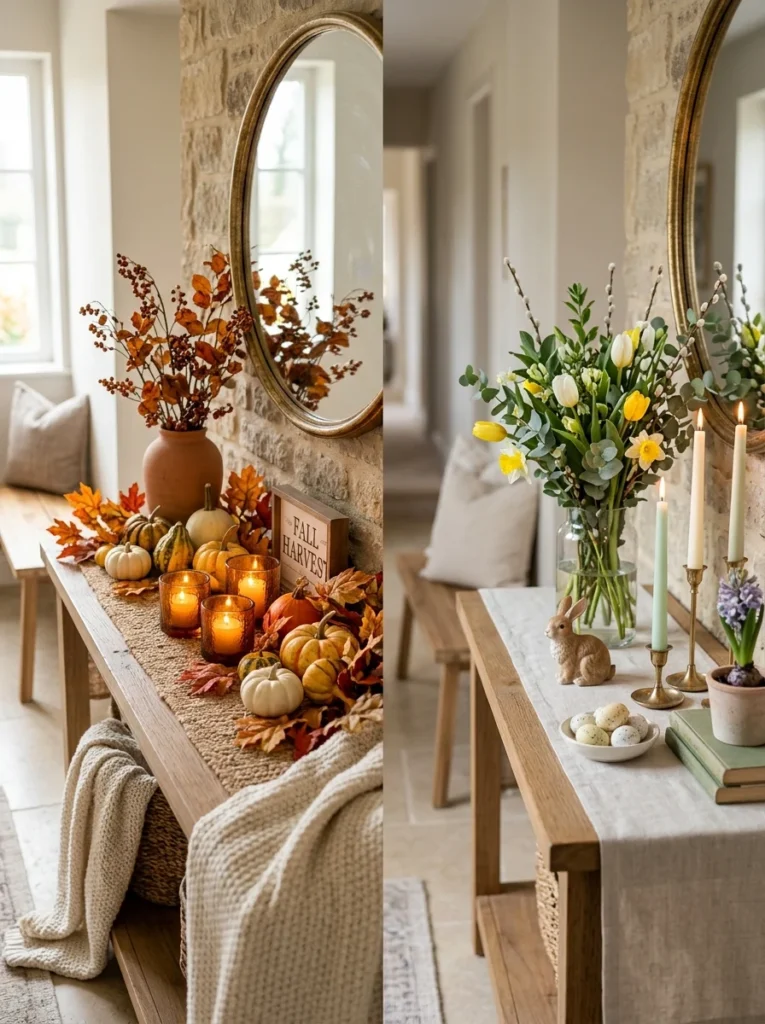
A console table is one of the easiest spots in a home to refresh seasonally without any significant expense or effort, since swapping just a few smaller items, a vase of seasonal greenery, a scented candle in a seasonal fragrance, a small decorative object reflecting the time of year, can noticeably change the table’s feel while keeping the larger, more expensive anchor pieces, the lamp, any leaning art, in place year-round. This approach keeps the space feeling current and considered without requiring a full restyling effort every few months.
Use a tray to visually contain smaller, mismatched objects
A decorative tray placed beneath a small grouping of items, several small candles, a few miniature vases, a scattering of smaller objects, visually contains them as a single cohesive unit rather than letting them read as a scattered, disconnected collection of small pieces spread loosely across the table’s surface. This trick works particularly well for smaller, more delicate items that might otherwise look a bit lost or messy without something to visually group them together.
How many items should I put on a console table?
There’s no strict universal number, but a common, reliable approach uses a main grouping of three to five items of varying height, plus perhaps one additional anchor piece like a lamp or leaning art, while still leaving some open, empty space rather than filling the entire surface.
Should I hang art above my console table or lean it against the wall?
Both work well, but leaning a large piece of art or a mirror against the wall behind the table creates a more relaxed, layered look and adds height to the arrangement without requiring wall-mounting hardware, while also offering more flexibility to rearrange or swap pieces later.
How do I style a console table that also needs to hold everyday items?
For an entryway console handling daily items like keys and mail, incorporating a small dedicated tray or dish for those items keeps the practical function contained to one spot, allowing the rest of the table to maintain a more intentional, decorative arrangement without daily clutter spreading across the whole surface.
What’s the biggest mistake people make styling a console table?
Filling every available inch of the table with objects, leaving no negative space, is one of the most common mistakes, since it tends to make the arrangement look cluttered rather than curated, regardless of how attractive each individual item is on its own.
Can I refresh my console table’s styling without buying all new decor?
Yes, swapping just a few smaller, lower-cost items seasonally, a vase of greenery, a candle, a small seasonal object, while keeping larger anchor pieces like a lamp or leaning art in place, keeps the styling feeling current without needing a full restyling effort each time.
Styling a console table well, whether behind a sofa or in a busy entryway, comes down to varying height, grouping in odd numbers, anchoring with a taller piece, and leaving some intentional negative space rather than filling every available surface. The specific approach shifts slightly based on how much daily function the table needs to support, but the underlying styling principles remain largely the same in either setting.
Our own entryway console, once a genuine catch-all for loose mail and stray change, now has a small dedicated tray for exactly those items, alongside a proper styled arrangement of a lamp, a stack of books, and a small plant that finally makes the table feel like an intentional part of the room rather than an afterthought. If your own console table has fallen into a similar catch-all pattern, start by adding one small tray for the practical clutter, then build the rest of the styling around it from there.