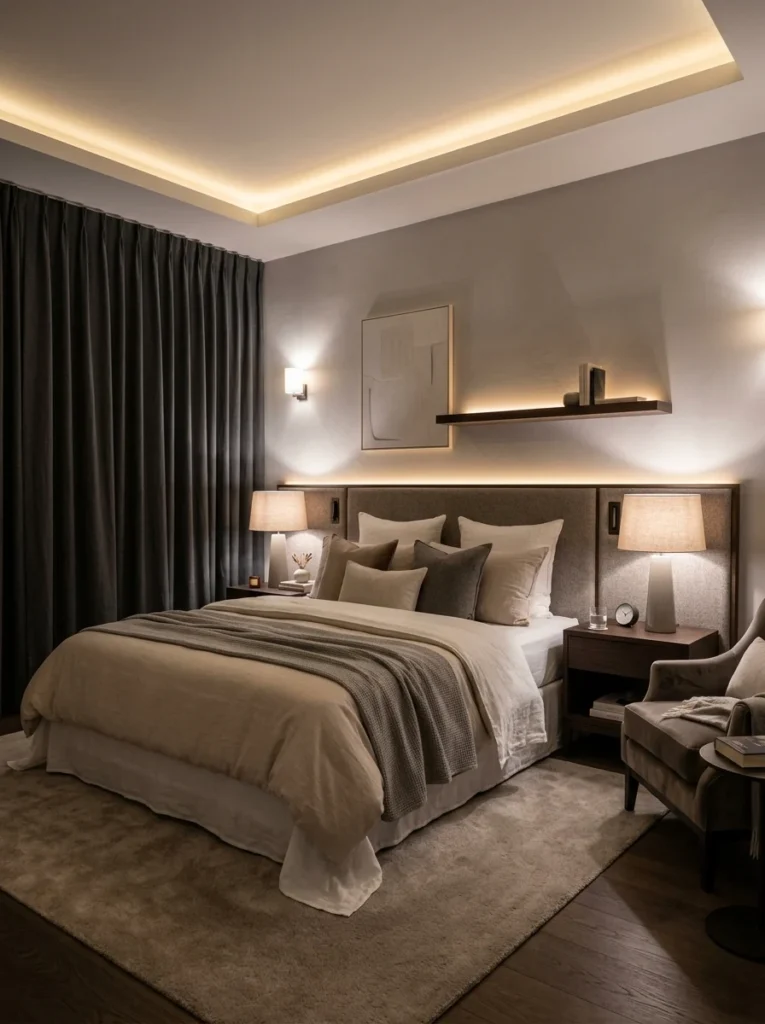
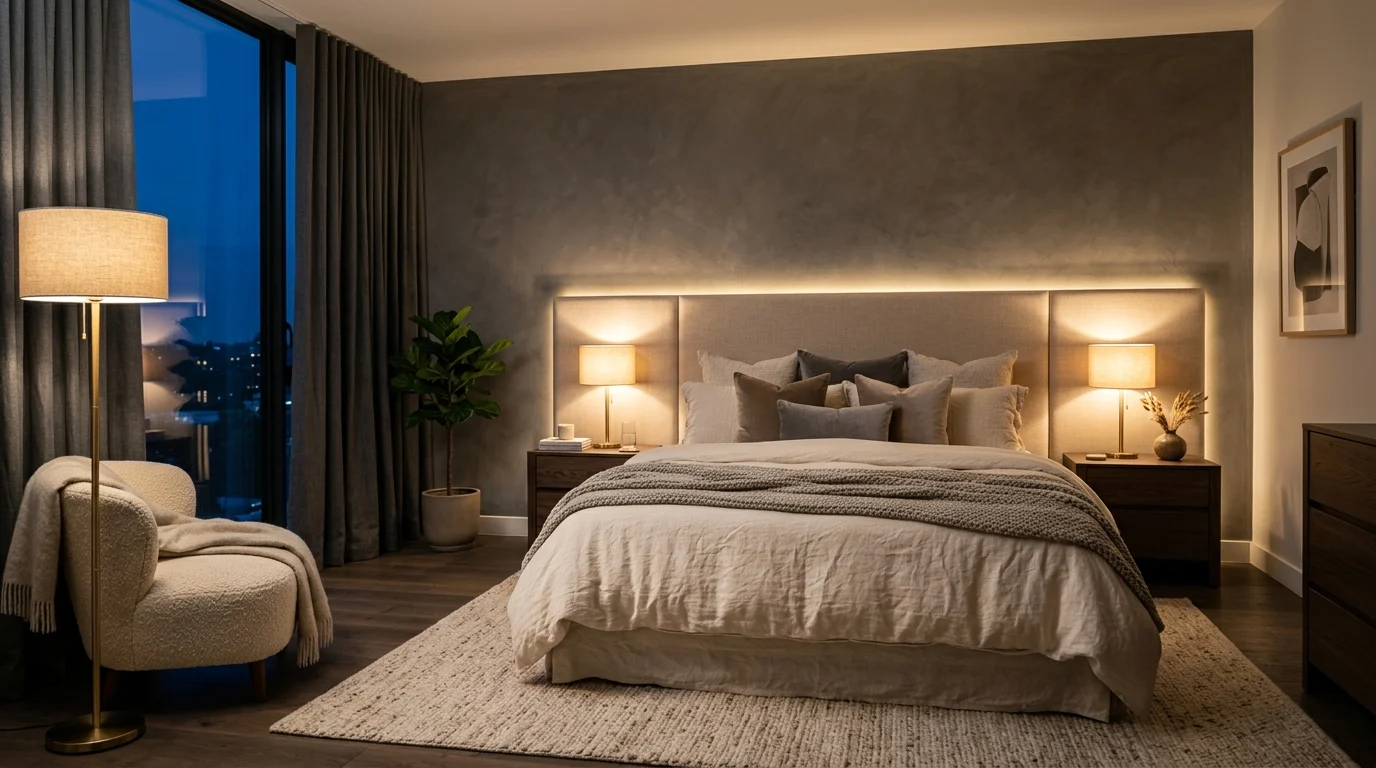
For a long time, our bedroom had exactly one light source, a bright overhead fixture with a single switch by the door, which meant every evening came down to a choice between a harshly lit room or total darkness, nothing in between. I hadn’t really thought about it as a problem until a friend mentioned how different her bedroom felt in the evening, softly lit, calm, nothing like the stark brightness mine defaulted to. Once I actually started layering in different light sources instead of relying on that single overhead fixture, the room’s evening feel changed completely, without touching the paint, furniture, or anything else about the space.
Good bedroom lighting for evening relaxation comes down to layering multiple light sources at different heights and brightness levels, rather than relying on one bright, uniform source for the whole room. Here’s how to build that layered approach, from the foundational fixtures to the smaller finishing touches that make the biggest difference at night.
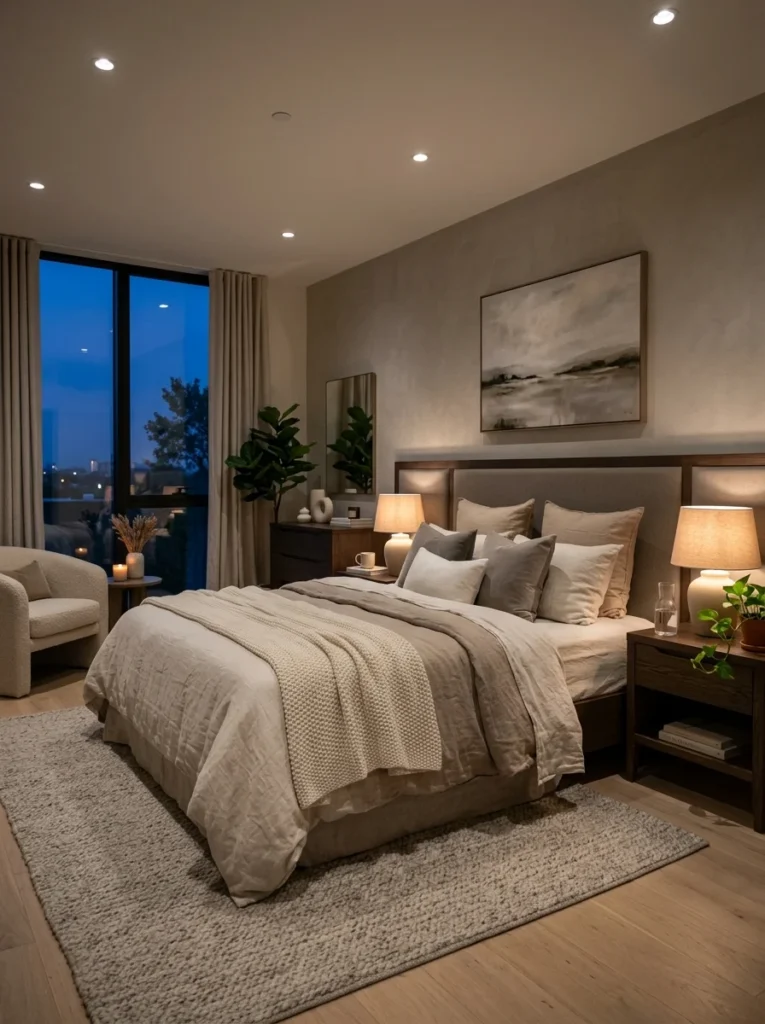
Move away from a single overhead light as the default
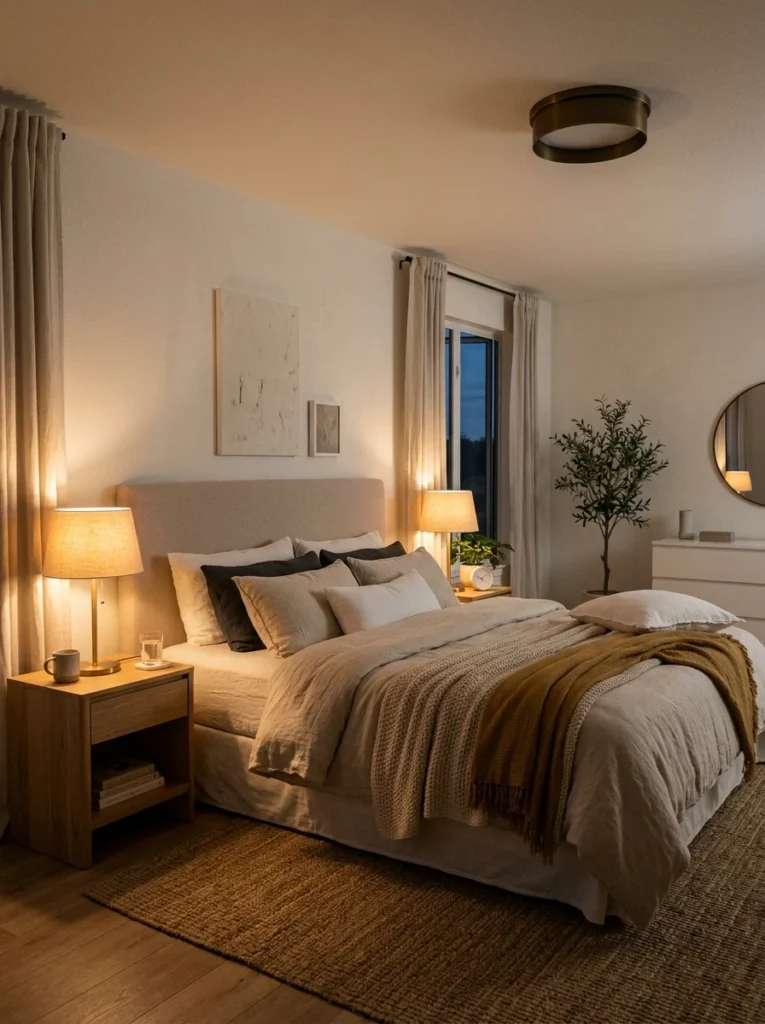
A single central ceiling fixture, especially a bright one, creates flat, even light that’s practical for cleaning or getting dressed but rarely feels relaxing in the evening, since it lacks the shadow and warmth variation that makes a space feel cozy rather than clinical. The goal isn’t necessarily to remove the overhead fixture entirely, since it’s still useful during the day or for practical tasks, but to stop relying on it as the only light source once evening settles in.
Add dedicated bedside lighting for reading and ambiance
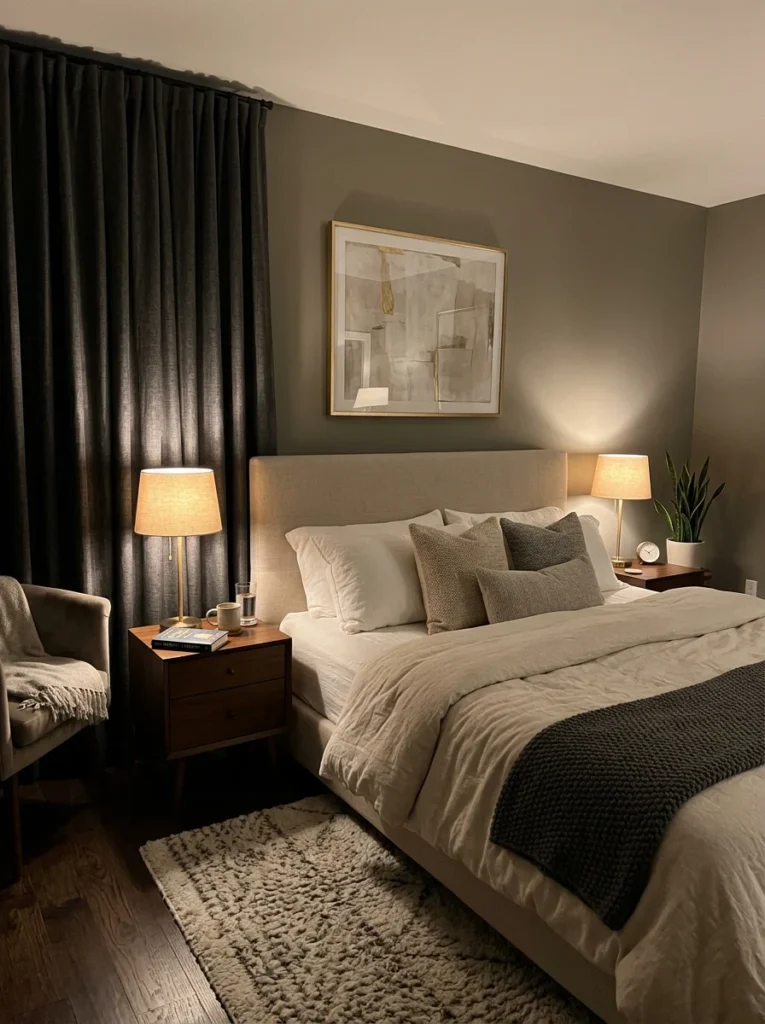
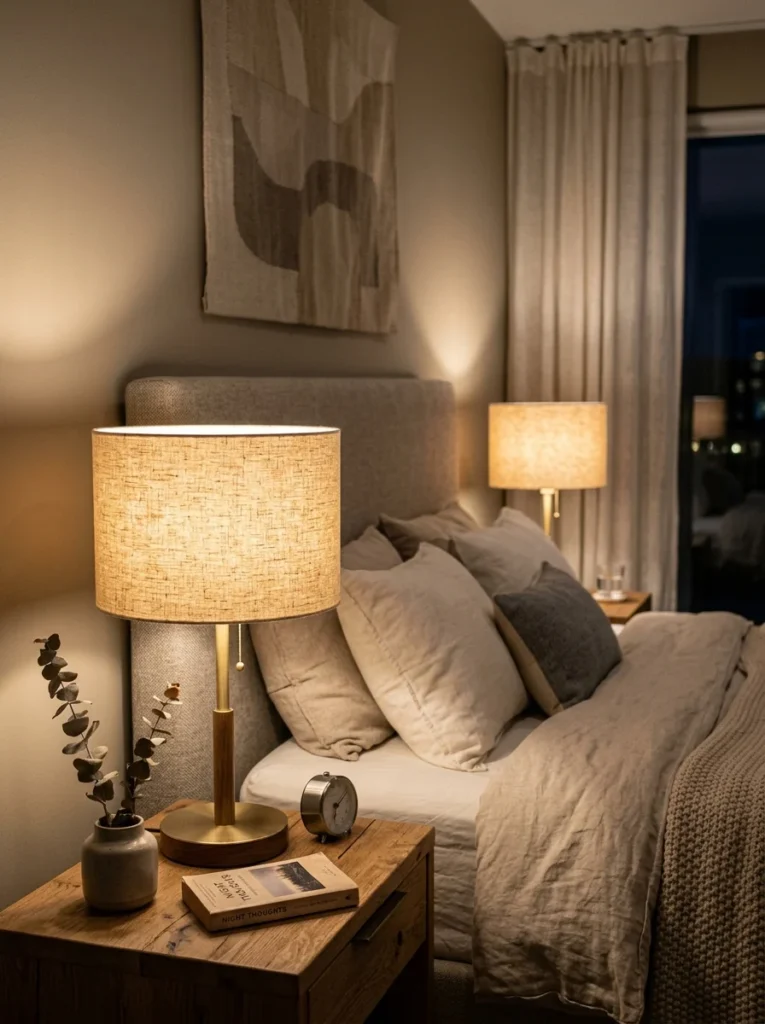
A pair of bedside lamps, one on each nightstand, does more for a bedroom’s evening atmosphere than almost any other single addition, providing warm, localized light for reading or winding down without flooding the whole room with brightness. Choosing lamps with a dimmer switch, or a compatible smart bulb that can be dimmed through an app or voice control, adds valuable flexibility, letting you adjust brightness for reading versus simply relaxing before sleep without needing to swap bulbs or fixtures.
Choose warm-toned bulbs over cool white ones
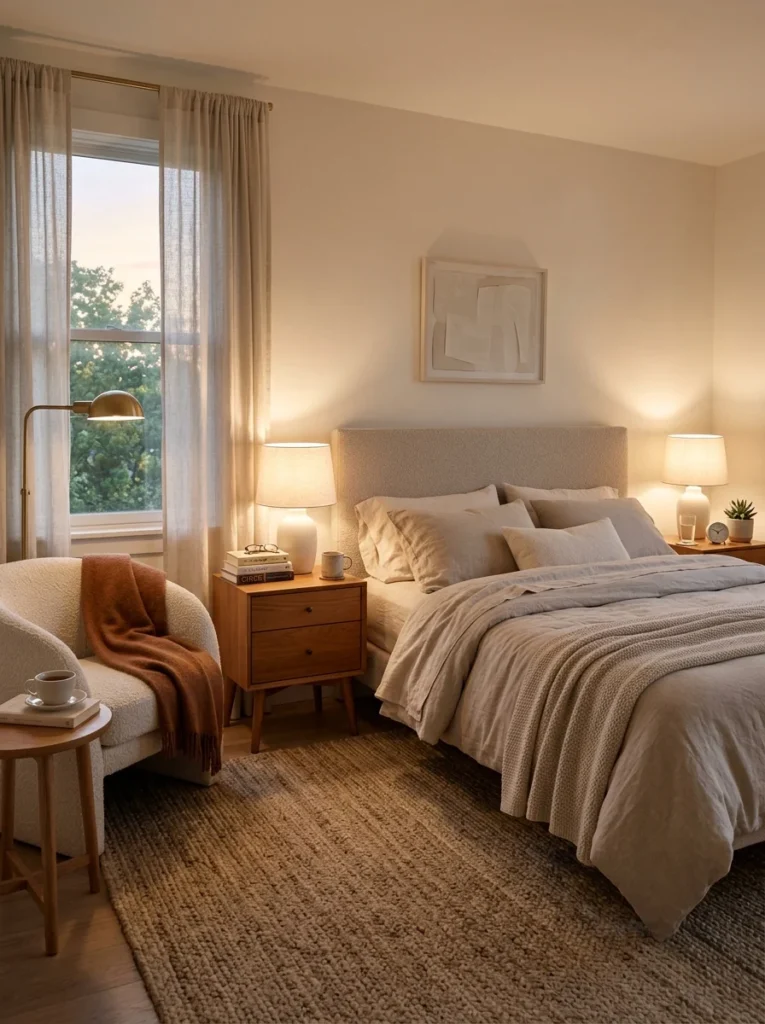
Bulb color temperature has a significant impact on how a room feels in the evening, and cool white or daylight-toned bulbs, while useful for task-oriented spaces like a kitchen or home office, tend to feel harsh and unrelaxing in a bedroom meant for winding down. Warm white bulbs, generally in the range described as soft white or warm white on most packaging, mimic the cozy, golden quality of candlelight or incandescent lighting, which reads as considerably calmer and more conducive to relaxation than a cooler, bluer light.
Layer in accent lighting for depth and warmth
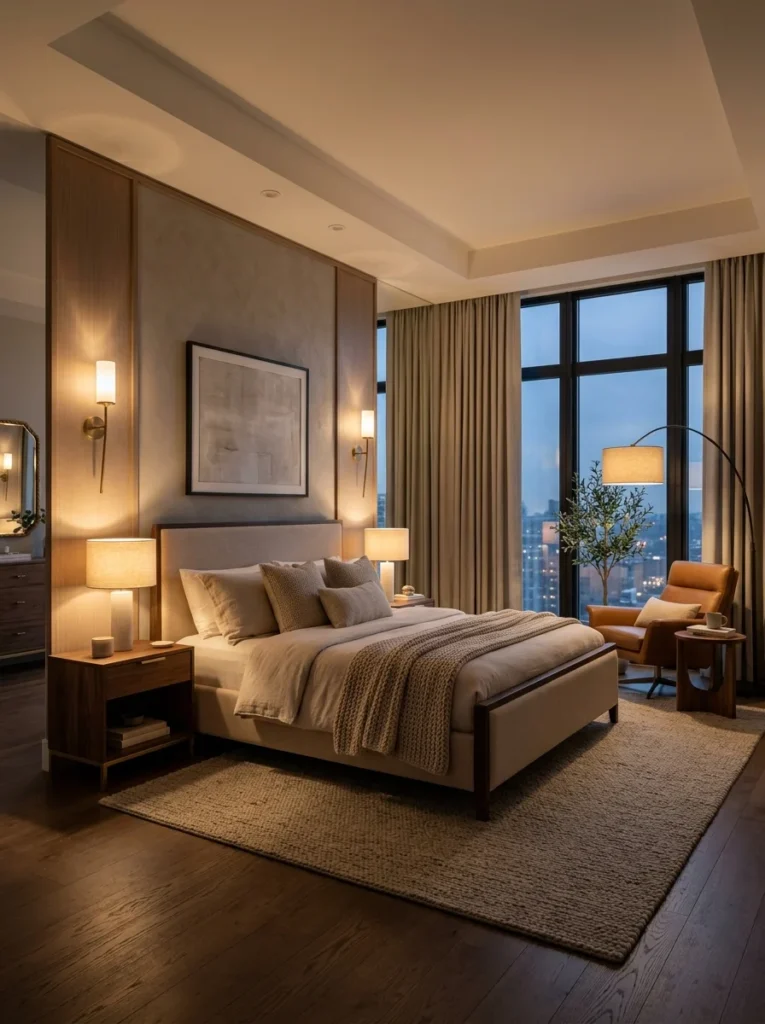
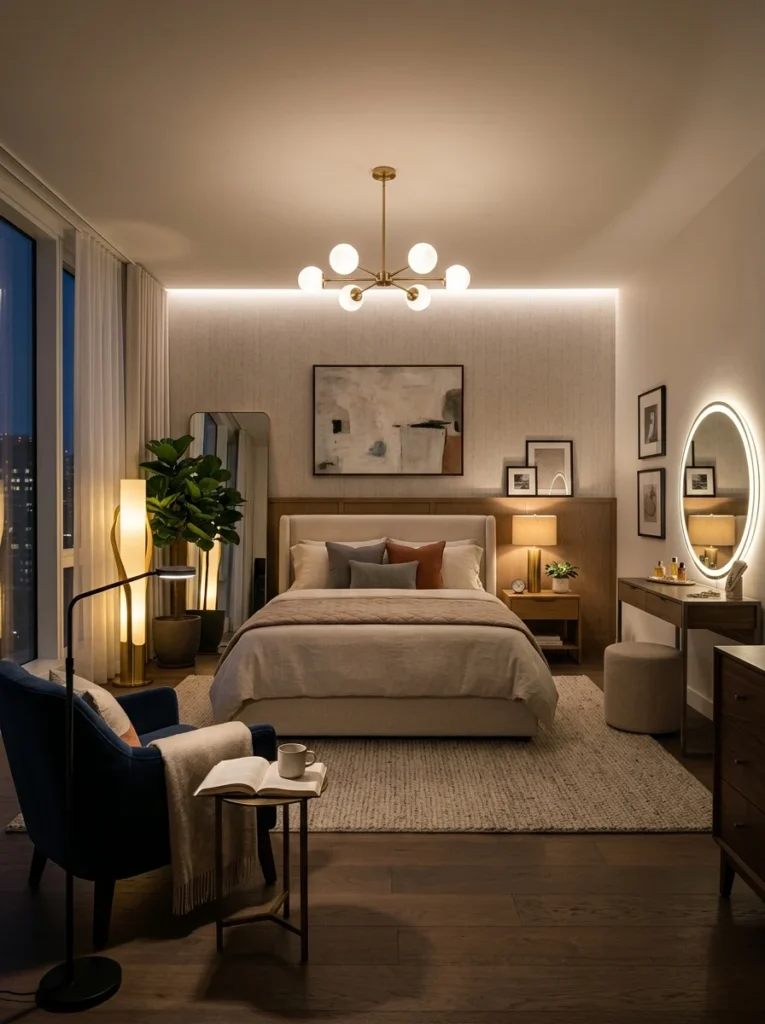
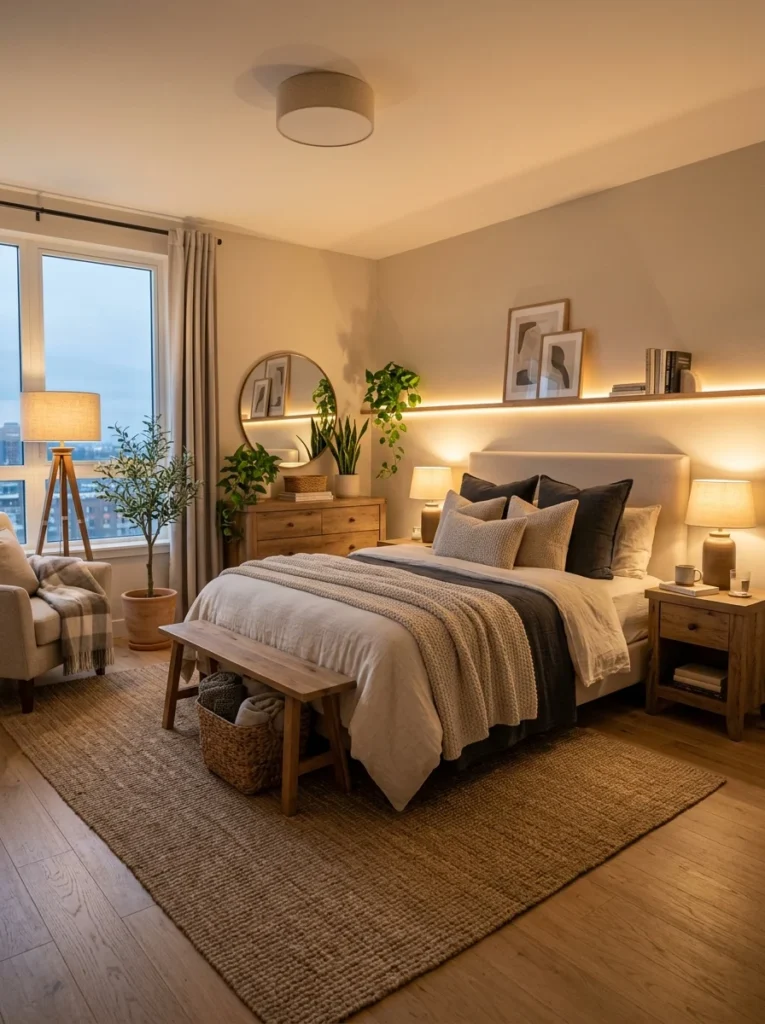
Beyond overhead and bedside lighting, a smaller accent light, a floor lamp in a reading corner, a small table lamp on a dresser, or wall-mounted sconces flanking the bed, adds another layer of warmth and visual interest that a room with only overhead and bedside lighting doesn’t fully achieve. These accent sources don’t need to be particularly bright; their purpose is adding pools of soft light around the room’s perimeter, which creates a more dimensional, layered feeling than light concentrated only at the center or directly beside the bed.
Consider string lights or LED strip lighting for a soft glow
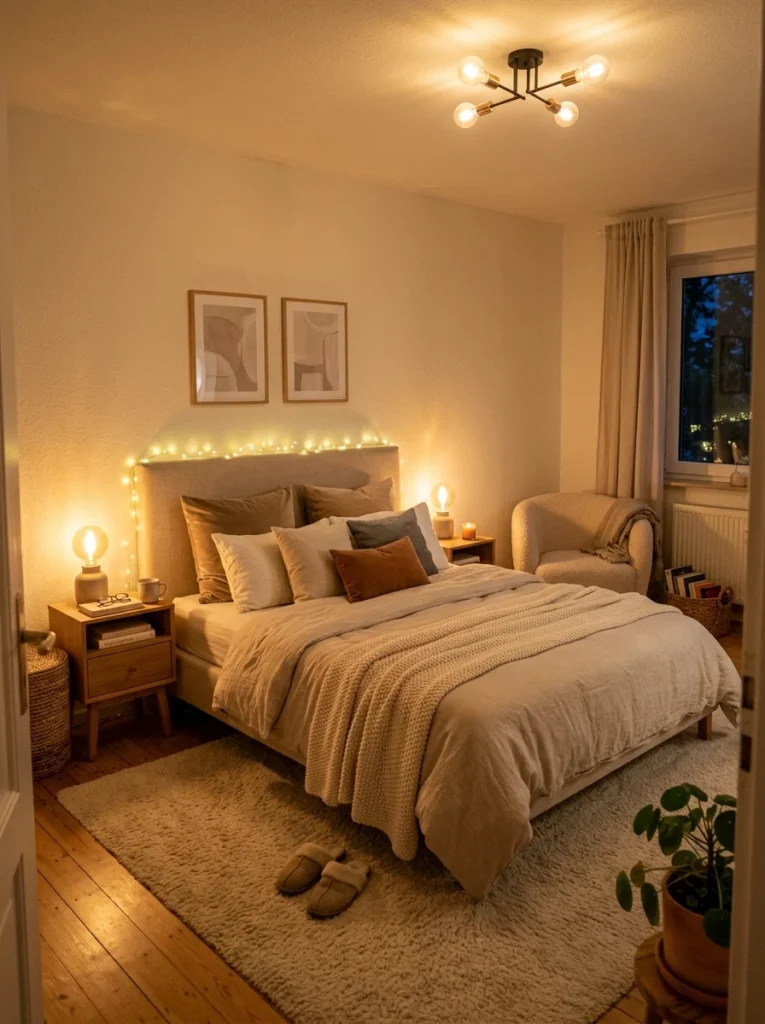
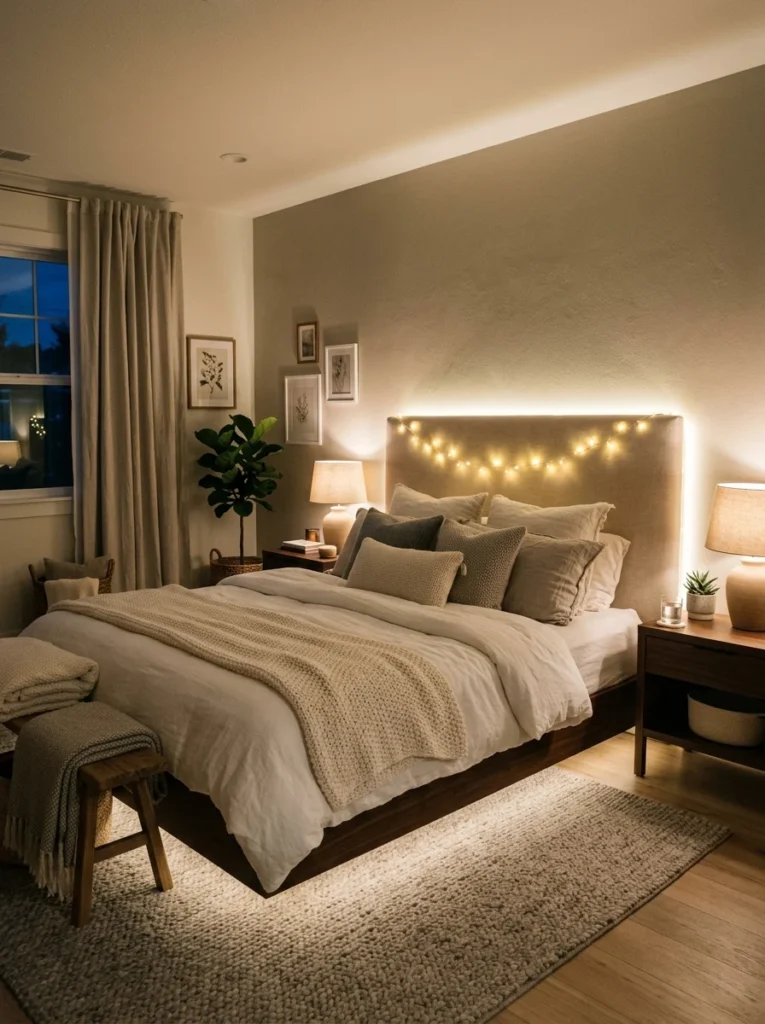
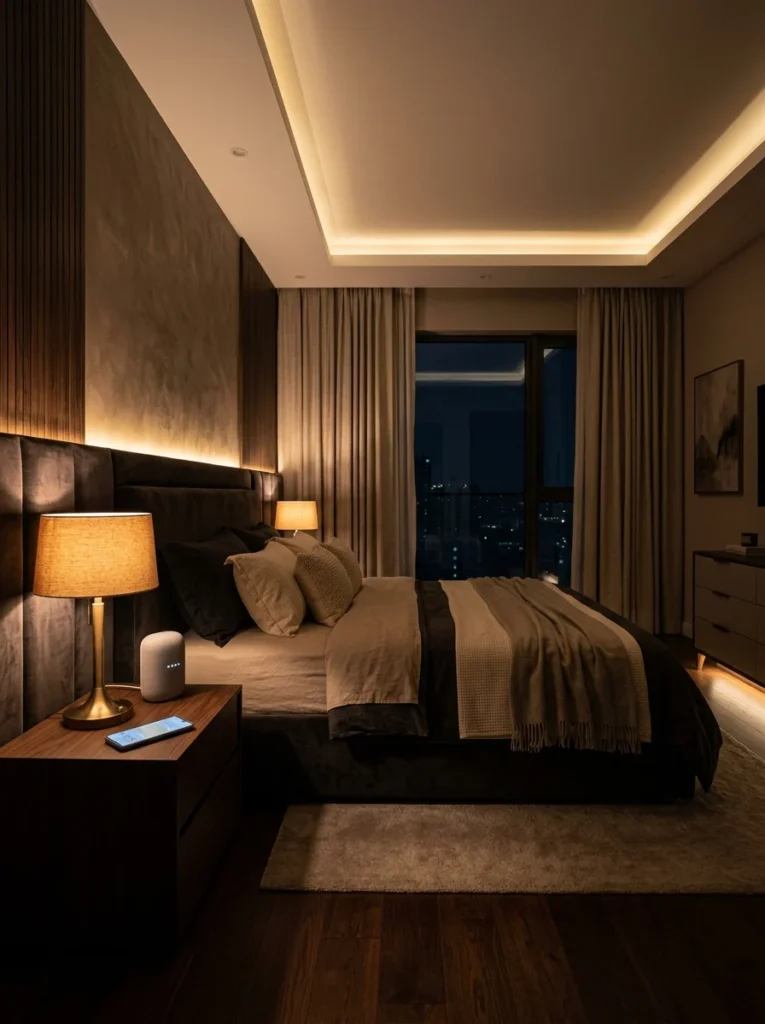
A string of warm white string lights, draped along a headboard, a wall, or a piece of furniture, adds a gentle, diffused glow that works well as a low-key evening light source without the starkness of a lamp. LED strip lighting installed behind a headboard or along the underside of a floating nightstand or shelf creates soft, indirect illumination that reads as particularly calming, since the light source itself stays hidden and only the resulting glow is visible, avoiding any harsh, direct light source in your line of sight while lying in bed.
Install dimmer switches wherever practical
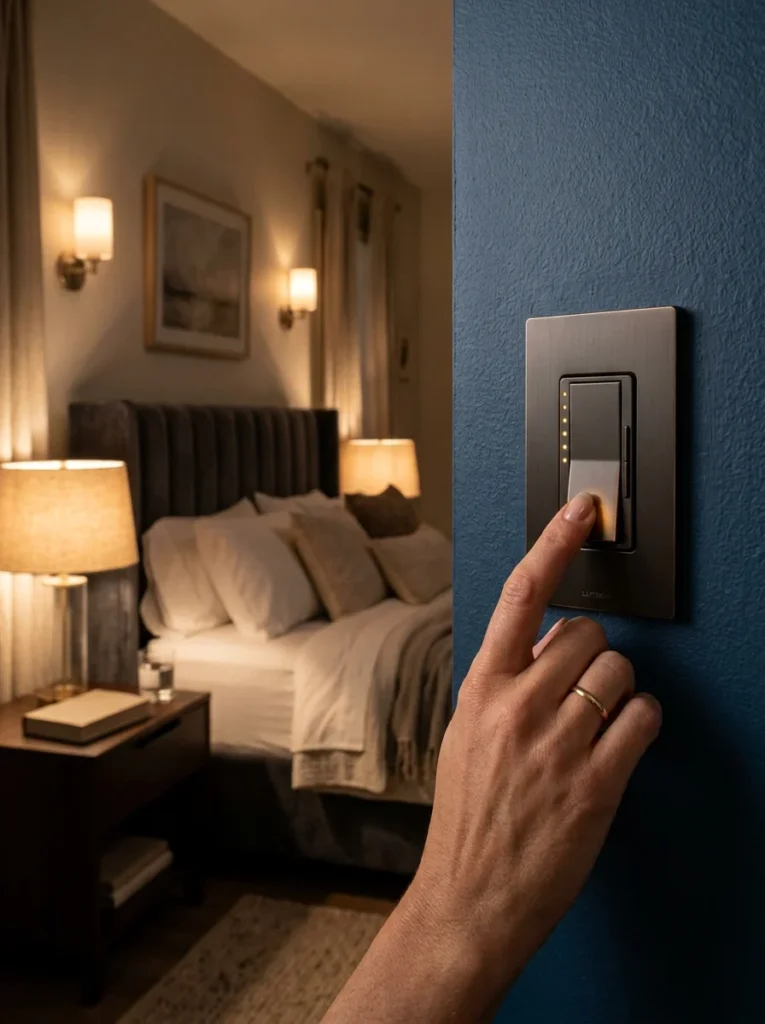
Dimmer switches, whether on the main overhead fixture, bedside lamps, or any other light source in the room, offer the single most flexible way to adjust the room’s brightness and mood throughout the evening without needing multiple separate light sources turned on and off individually. Smart bulbs with app or voice-controlled dimming offer similar flexibility without requiring an electrician to install a physical dimmer switch, making this a relatively accessible upgrade even in a rental or a room where rewiring isn’t an option.
Use candles or flameless alternatives for a final soft layer
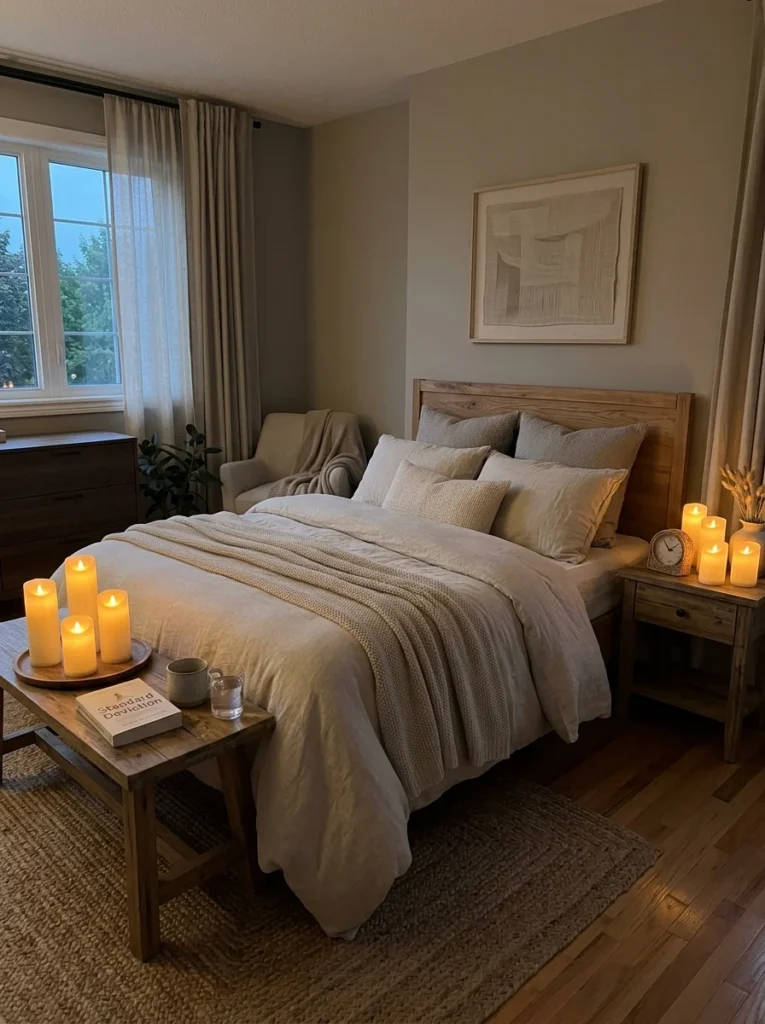
A few candles, or flameless LED candles for a safer, lower-maintenance alternative, add a genuinely soft, flickering quality of light that even a dimmed lamp can’t fully replicate, making them a nice finishing touch for a particularly relaxing evening atmosphere. This isn’t a light source meant to replace functional lighting, but rather an occasional layer added for a specific mood, a quiet evening, a bath before bed, rather than everyday practical use.
Position lighting to avoid glare while lying in bed
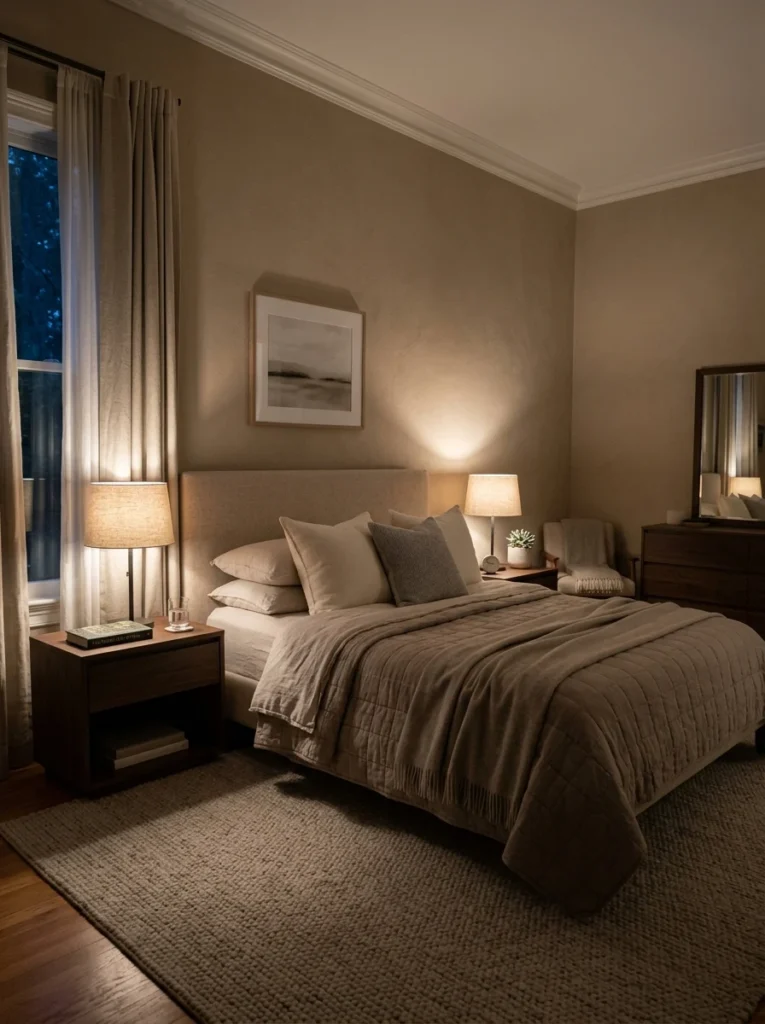
A light source positioned so it shines directly into your eyes while lying down, whether from a poorly placed lamp, an overhead fixture, or even a phone or television screen, undermines the relaxing effect of otherwise well-planned lighting. Positioning bedside lamps so the light source itself sits below eye level when lying down, and choosing shades that direct light downward or diffusely outward rather than glaring directly forward, prevents this common but easily overlooked issue.
Use blackout curtains alongside your lighting plan
Good evening lighting works best paired with the ability to fully control light from outside once you’re ready to sleep, since street lights, early sunrise, or neighboring homes can undermine even a perfectly planned interior lighting scheme. Blackout curtains or blinds let you enjoy a softly lit room in the evening and then transition to full darkness for sleep, giving you control over the room’s light levels at every stage of the evening rather than fighting against uncontrolled outside light.
Think about lighting placement relative to your evening routine
Consider where you actually spend time in the evening, reading in bed, getting ready in front of a mirror, sitting in a chair before sleep, and ensure each of those specific spots has appropriately positioned, adjustable lighting rather than relying on the room’s general ambient light to serve every purpose. A reading nook benefits from a focused, adjustable lamp, while a vanity or mirror area benefits from balanced, even lighting that doesn’t cast harsh shadows, each requiring a slightly different lighting approach even within the same overall room.
Consider smart lighting scenes for effortless transitions
Smart bulbs or plugs that support saved lighting scenes let you switch the entire room’s mood with a single tap or voice command, transitioning from a bright, functional setup for getting ready to a warm, dim setting for winding down, without manually adjusting each individual lamp. Setting up a scheduled scene that automatically dims the bedroom’s lighting at a consistent time each evening can also help reinforce a wind-down routine, gently signaling that it’s time to start settling in for the night rather than an abrupt switch from bright to dark right before sleep.
Understand how evening light affects sleep readiness
Beyond simply feeling more relaxing, warmer, dimmer light in the evening genuinely supports the body’s natural transition toward sleep, since bright, cool-toned light in the hours before bed can interfere with the natural production of melatonin, the hormone that helps regulate sleep timing. Gradually dimming the bedroom’s lighting in the hour or so before sleep, rather than staying under bright light until the exact moment you turn everything off, supports this natural transition more effectively than an abrupt shift from full brightness to darkness. This is part of why a layered, dimmable lighting approach isn’t just about aesthetic coziness; it has a genuine, practical connection to how easily the body settles into sleep afterward.
Choose lampshade materials that soften the light output
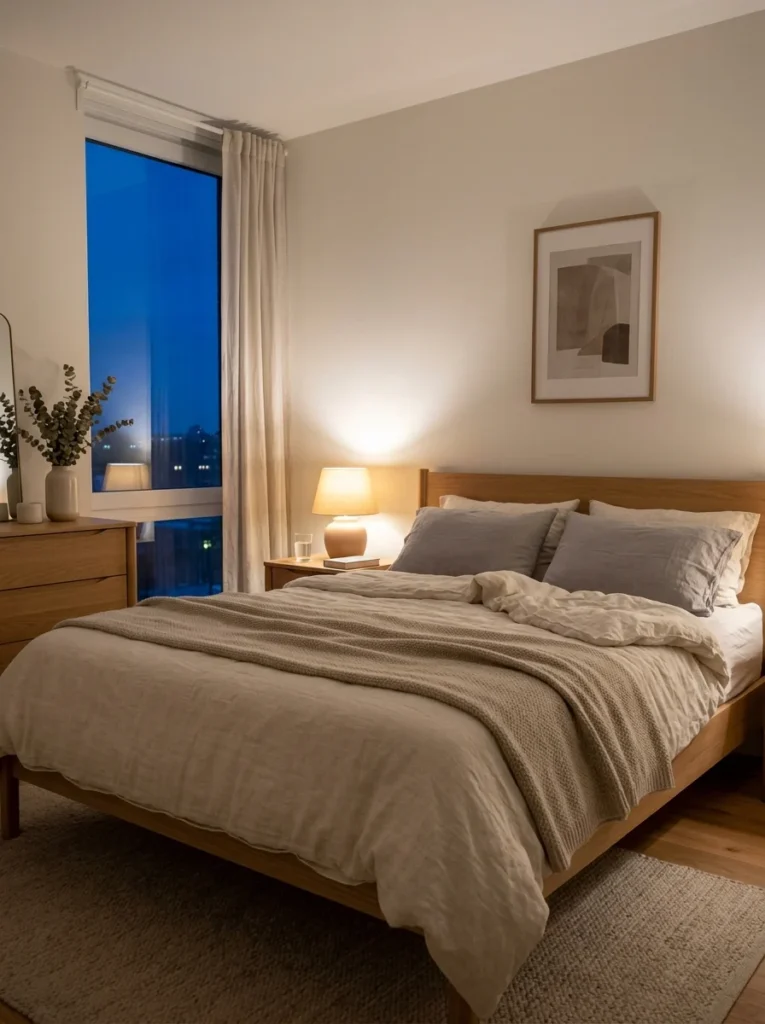
The lampshade material significantly affects how a lamp’s light reads in the room, beyond just the bulb’s color temperature. A fabric shade, particularly in a warmer, slightly opaque material like linen or a soft cotton blend, diffuses light more gently than a glass or metal shade, softening what might otherwise be a harsher, more direct beam. Lighter-colored shades let more light through for a brighter overall glow, while darker shades direct more light up and down rather than outward, which can create a more focused, moodier pool of light, worth considering based on whether the lamp is meant primarily for reading or purely for ambiance.
Common bedroom lighting questions
What’s the best type of bulb for a relaxing bedroom?
Warm white or soft white bulbs, rather than cool white or daylight-toned bulbs, create a cozier, more relaxing atmosphere in the evening, since their warmer color temperature mimics the golden quality of candlelight rather than a harsher, bluer light.
Do I need a dimmer switch for good bedroom lighting?
A dimmer switch or dimmable smart bulb significantly improves flexibility, letting you adjust brightness throughout the evening without needing multiple separate light sources, though it’s not strictly required if you’re already layering several lower-wattage sources like lamps and accent lighting.
Are LED strip lights a good addition to a bedroom?
Yes, LED strip lighting installed behind a headboard or along a shelf creates soft, indirect illumination that many people find particularly calming, since the light source itself stays hidden and only the resulting glow is visible.
How many light sources should a bedroom have?
A well-layered bedroom typically benefits from at least three to four light sources, an overhead fixture for practical tasks, a pair of bedside lamps, and one or two accent sources like a floor lamp or LED strip lighting, rather than relying on just one single fixture for every purpose.
Does lampshade material really affect how relaxing a room feels?
Yes, fabric shades like linen or cotton diffuse light more gently than glass or metal, softening the overall glow. Darker shades focus light more directly up and down, while lighter shades let more light spread outward, both worth considering based on whether a lamp is meant for reading or purely for ambiance.
A genuinely relaxing bedroom lighting scheme comes down to layering multiple light sources at different heights and brightness levels, warm-toned bedside lamps, soft accent lighting, and dimming capability, rather than relying on one bright overhead fixture for every moment of the evening. None of these additions require an electrician or a significant budget; a couple of warm-bulb lamps and a dimmer can transform how a bedroom feels after sunset.
Our own bedroom, once entirely dependent on that single harsh overhead light, now transitions naturally from bright and practical during the day to soft and calming once evening arrives, all controlled by a couple of lamps and a simple dimmer switch. If your own bedroom still defaults to one bright switch by the door, start there; adding just a pair of warm-toned bedside lamps will likely make a bigger difference to your evenings than anything else on this list.