
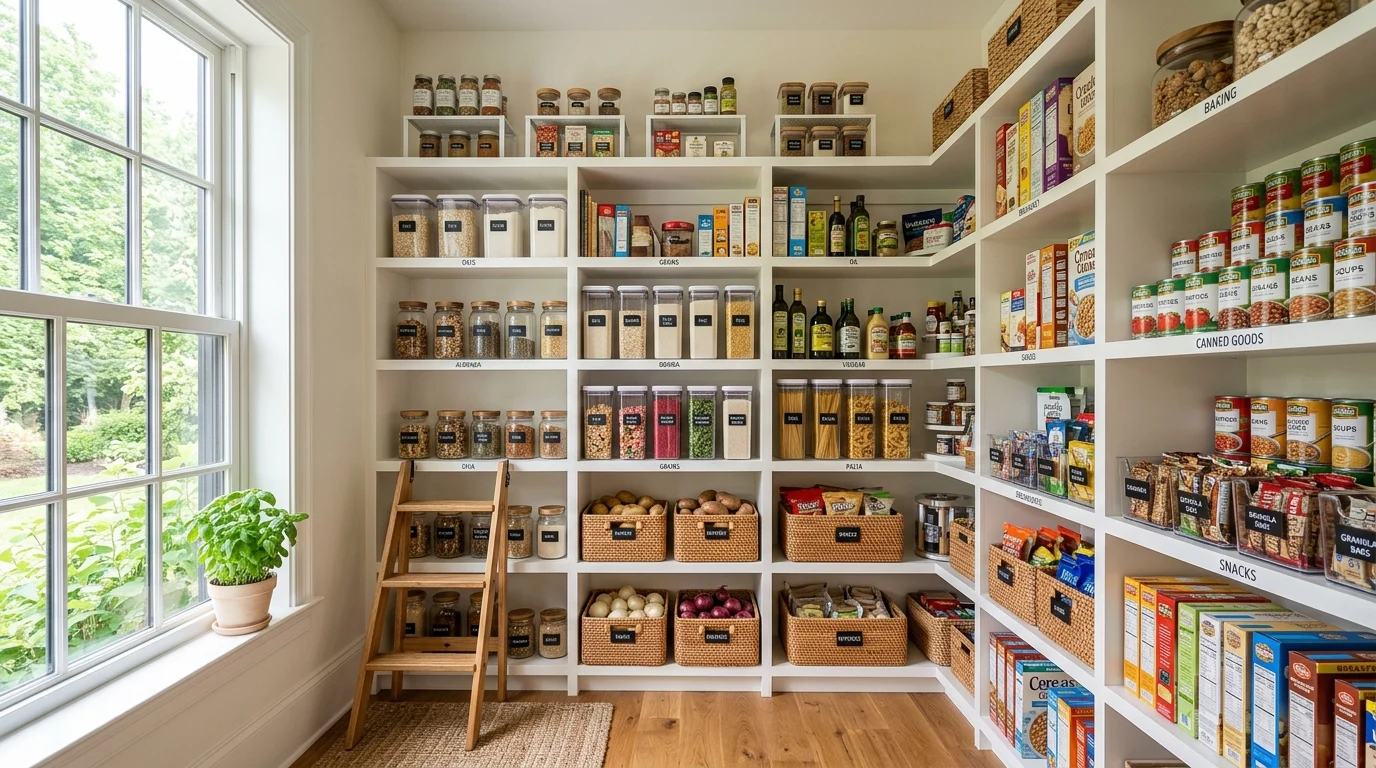
I’ve reorganized my pantry more times than I’d like to admit, and for the first few attempts, it looked beautiful for exactly one week before sliding right back into chaos. Bags of half-used snacks, cans stacked precariously three deep, and absolutely no idea what I actually had until I’d already bought a duplicate at the store. What finally made the difference wasn’t a better set of bins; it was realizing that most pantry systems fail not because they’re poorly organized on day one, but because they’re not designed around how the household actually restocks and grabs things day to day.
The ideas below aren’t just about making a pantry look good for a single photo. Each one is specifically chosen because it holds up under real, daily use, restocking, kids grabbing snacks, a busy weeknight scramble to find an ingredient, which is the actual test of whether a pantry system works.
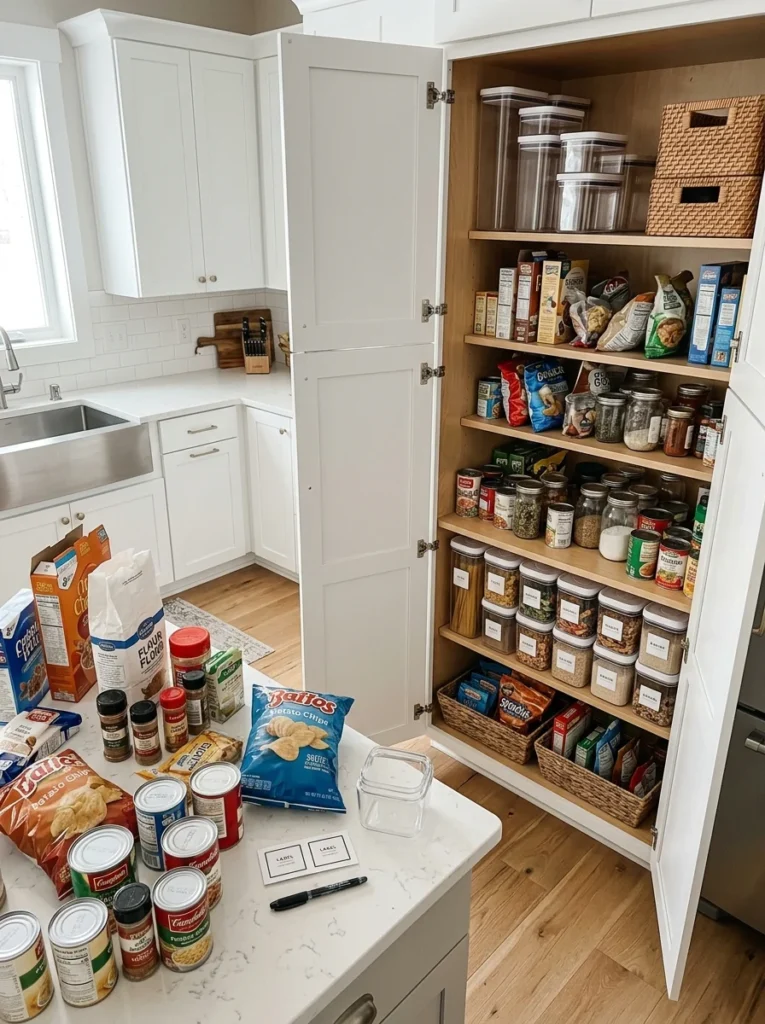
Declutter and take inventory before buying a single container
Before organizing anything, pull every item out of the pantry and sort it honestly: what you use regularly, what’s been sitting untouched for months, and what’s expired or clearly never getting used. This step alone often clears out a surprising percentage of pantry clutter, and it’s far more effective to organize a genuinely edited collection of items than to buy an elaborate set of bins for food you don’t actually need to store. Taking a mental, or literal written, inventory at this stage also helps you buy the right number and size of containers the first time, rather than guessing and ending up with mismatched bins that don’t quite fit.
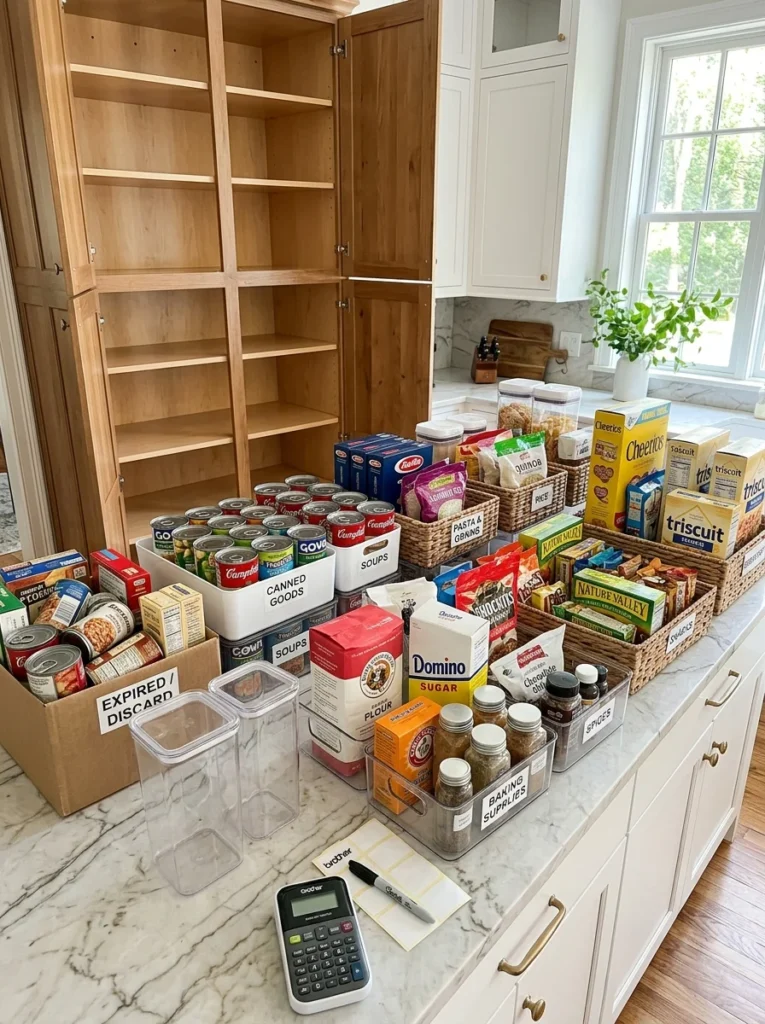
Zone the pantry by category, not by whatever fits
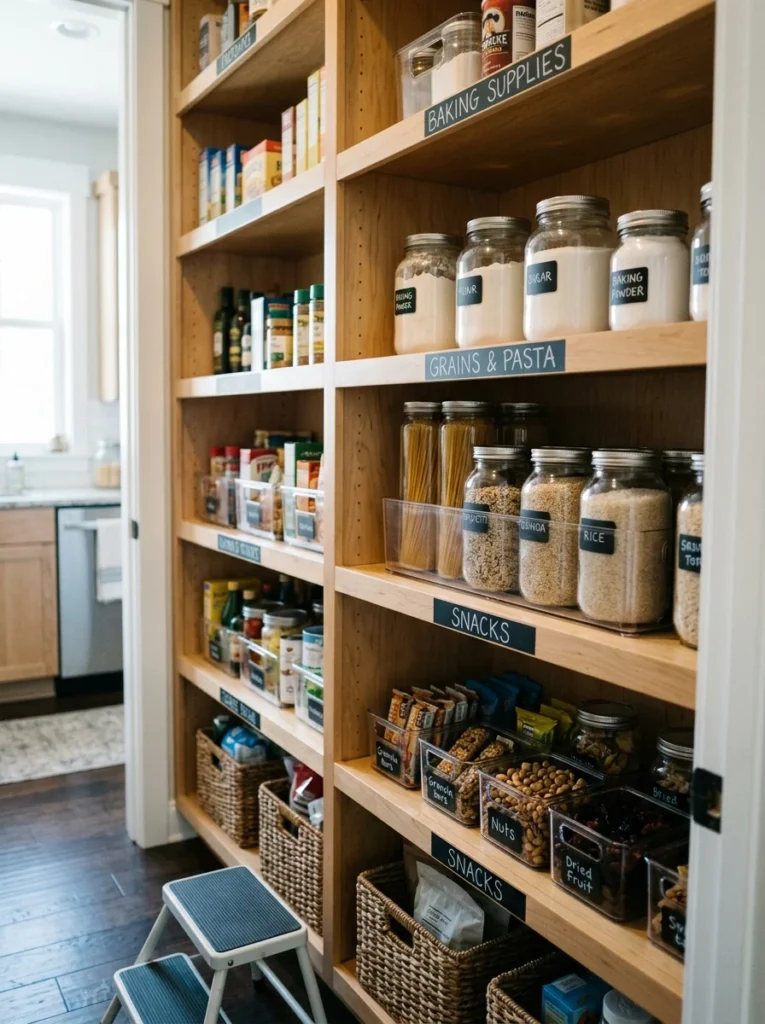
A pantry that stays tidy long-term is organized into clear zones, baking, snacks, canned goods, breakfast items, grains and pasta, rather than items placed wherever there happened to be space on a given day. Once zones are established and, ideally, labeled, everyone in the household knows exactly where something belongs when they’re putting groceries away, which is often the single biggest factor in whether a system holds up. A pantry that only makes sense to the person who organized it tends to fall apart the moment someone else restocks it differently.
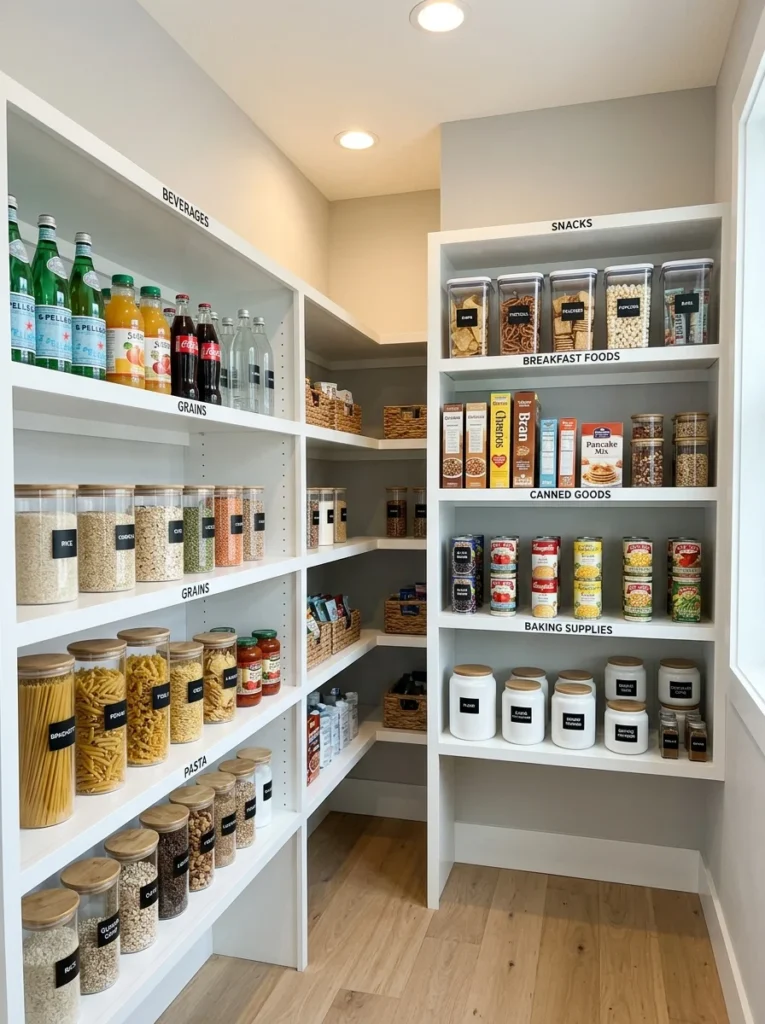
Use clear, uniform containers for dry goods
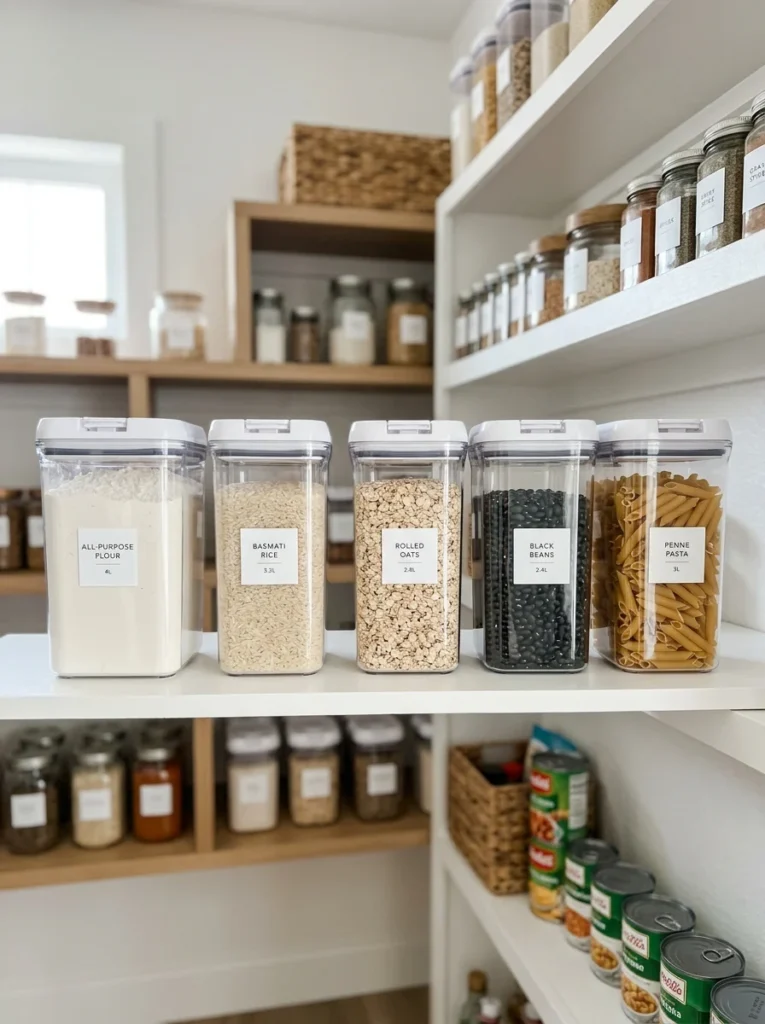
Transferring flour, sugar, rice, pasta, cereal, and other dry goods into clear, matching containers does more for both the look and the function of a pantry than almost any other single change. Beyond looking tidier, clear containers let you see exactly how much you have left at a glance, which reduces both food waste from forgotten items and the frustration of buying a duplicate you didn’t need. Choosing containers in a small number of standard sizes, rather than a random assortment, also makes the shelves stack and align more efficiently, which keeps the whole pantry looking orderly rather than cluttered even when it’s fully stocked.
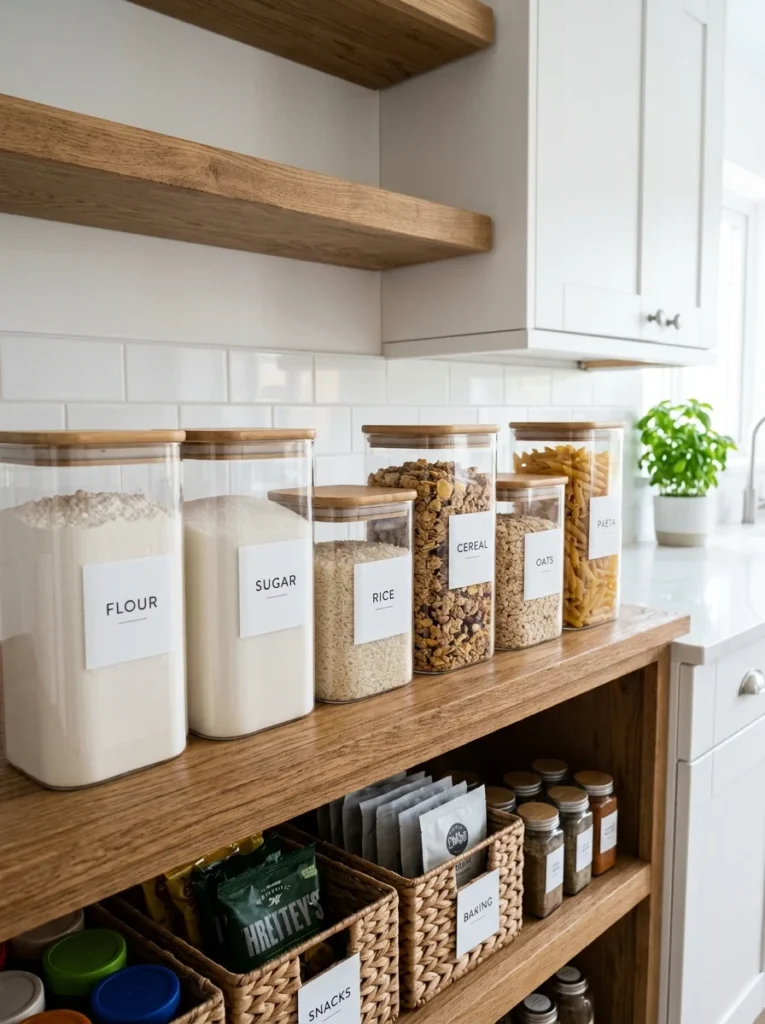
Label everything, including expiration dates
A label maker or a simple set of chalkboard labels turns an organized pantry into one that stays organized, since labeled containers are far more likely to get returned to their correct spot than unlabeled ones people have to guess about. For anything transferred out of its original packaging, include the expiration date on the label itself, since that information is otherwise lost the moment the item leaves its original box or bag, and it’s one of the most common reasons expired food quietly accumulates unnoticed.
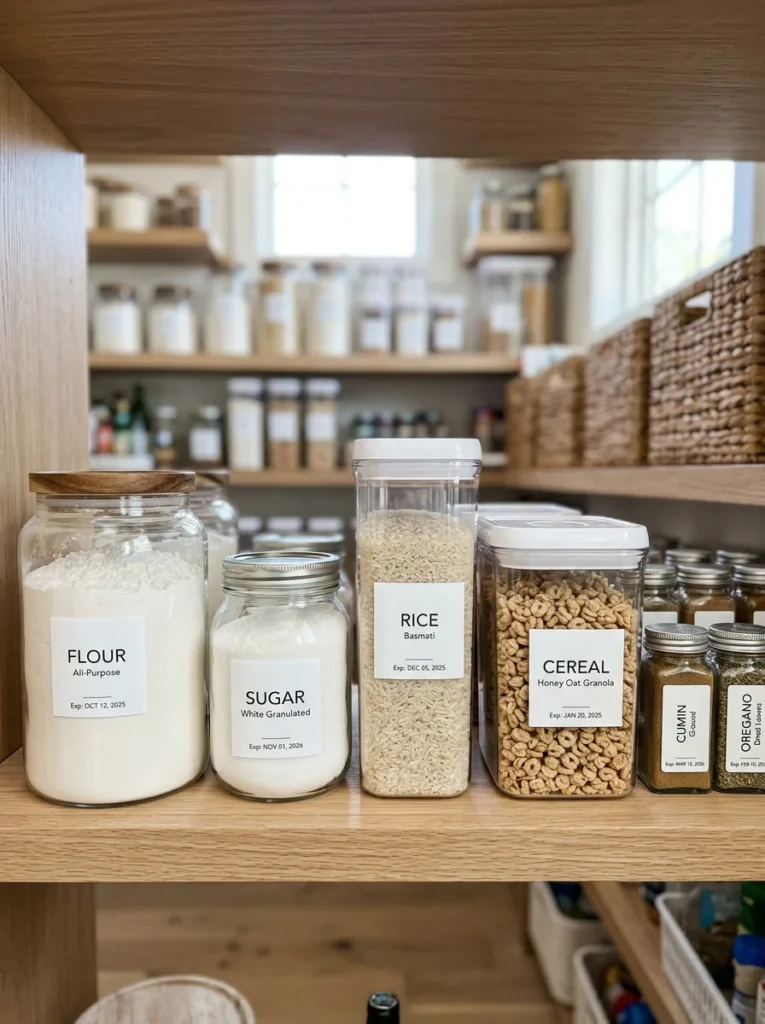
Use turntables and lazy Susans for awkward, deep shelves
Deep pantry shelves are notorious for swallowing items at the back, out of sight and effectively forgotten until they expire. A lazy Susan or turntable for oils, spices, condiments, or small jars solves this by letting you spin the entire shelf into view rather than reaching blindly or removing several items just to access one at the back. This is especially useful in a corner pantry or any shelf deeper than about a foot, where visibility is the main obstacle to staying organized.
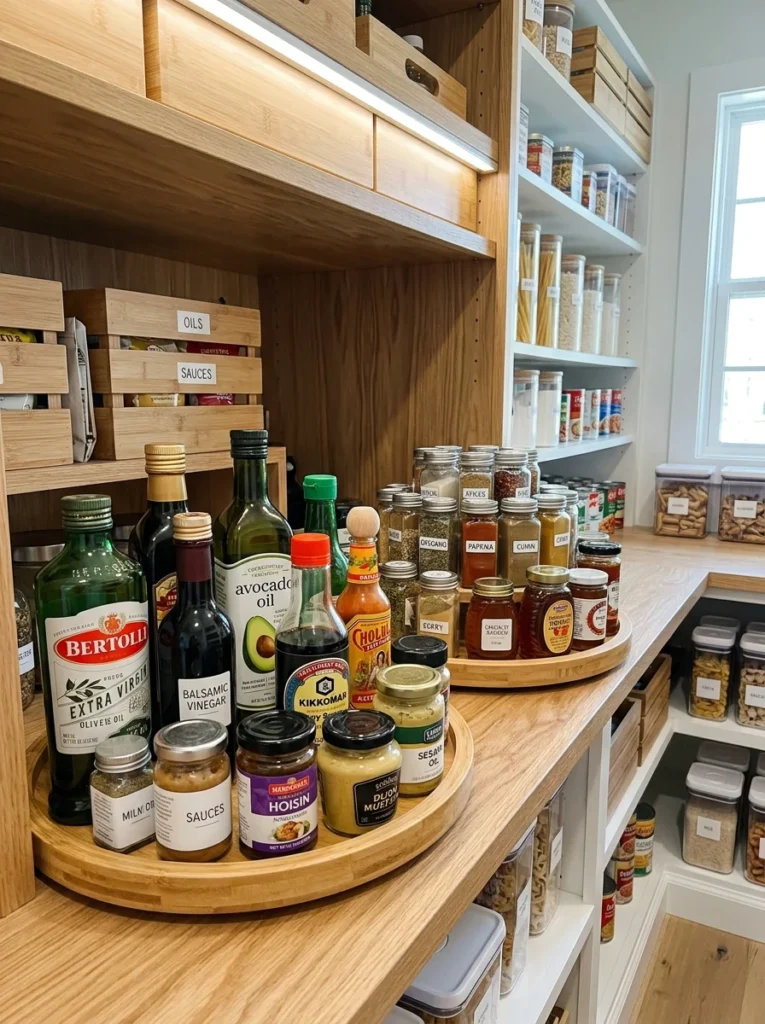
Add stackable shelf risers to use vertical space fully
A lot of pantry shelves have far more vertical clearance than a single layer of cans or boxes actually needs, wasting the space above each item. A stackable, tiered shelf riser lets you place a second layer of shorter items, spice jars, small cans, packets, above the first, without those items disappearing behind taller ones in front. This single addition can meaningfully increase usable storage without adding a single new shelf to the pantry itself.
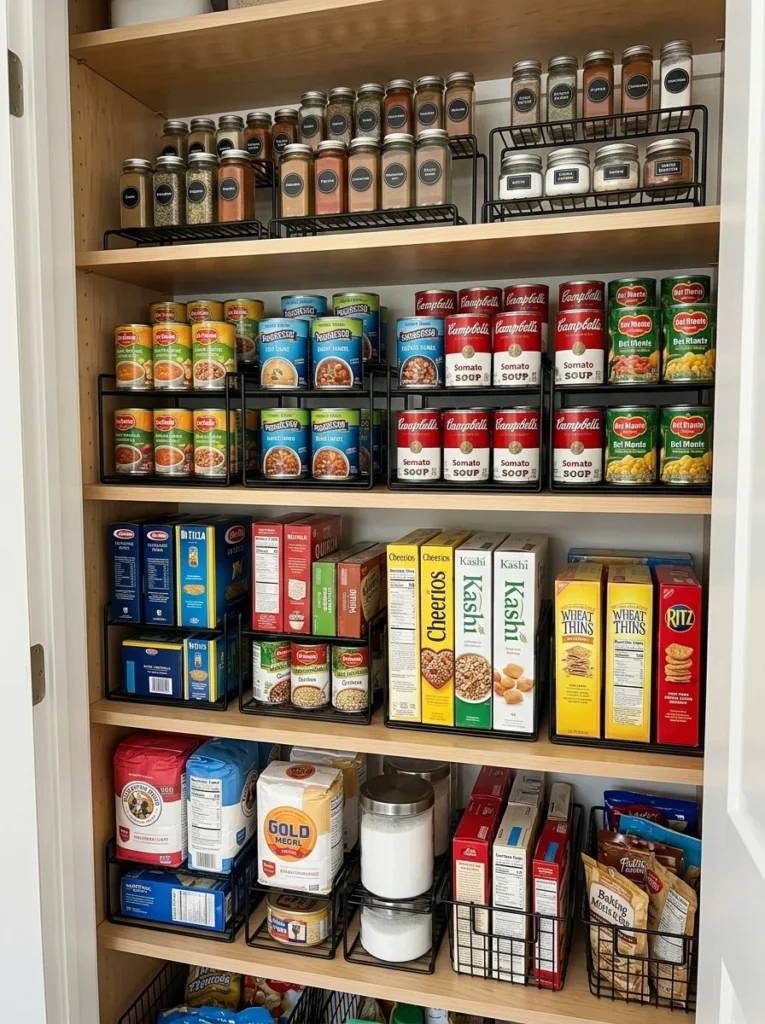
Use door-mounted storage for small, frequently grabbed items
The back of a pantry door is one of the most underused areas in most kitchens. An over-the-door rack or a mounted organizer with small bins is ideal for spice packets, snack bars, small condiment bottles, or anything else that’s easy to grab quickly but doesn’t need a full shelf to itself. This also frees up interior shelf space for bulkier items that genuinely need it, making the whole pantry function more efficiently as a system.
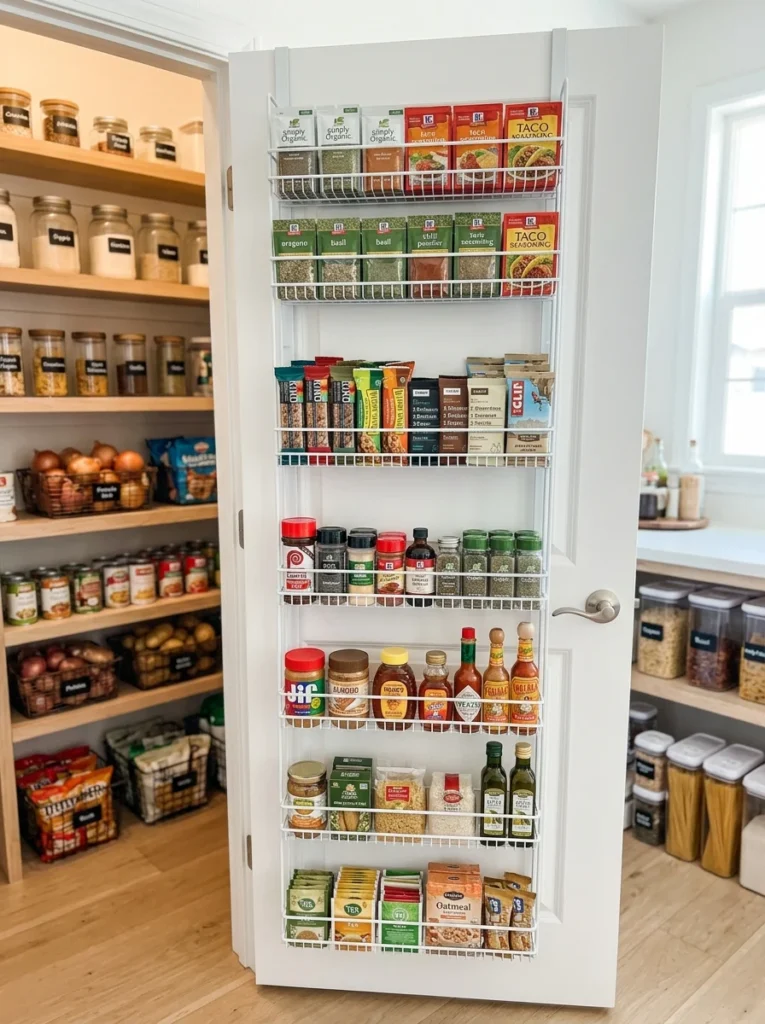
Create a designated snack zone at kid height
If kids regularly grab their own snacks, dedicating a specific, lower shelf or a labeled bin at their height reduces the daily disruption of a full shelf getting rearranged or a child needing help every single time. This also indirectly protects the rest of the pantry’s organization, since kids reaching for items on a shelf meant for adults tends to be exactly how a carefully organized pantry gets knocked out of order.
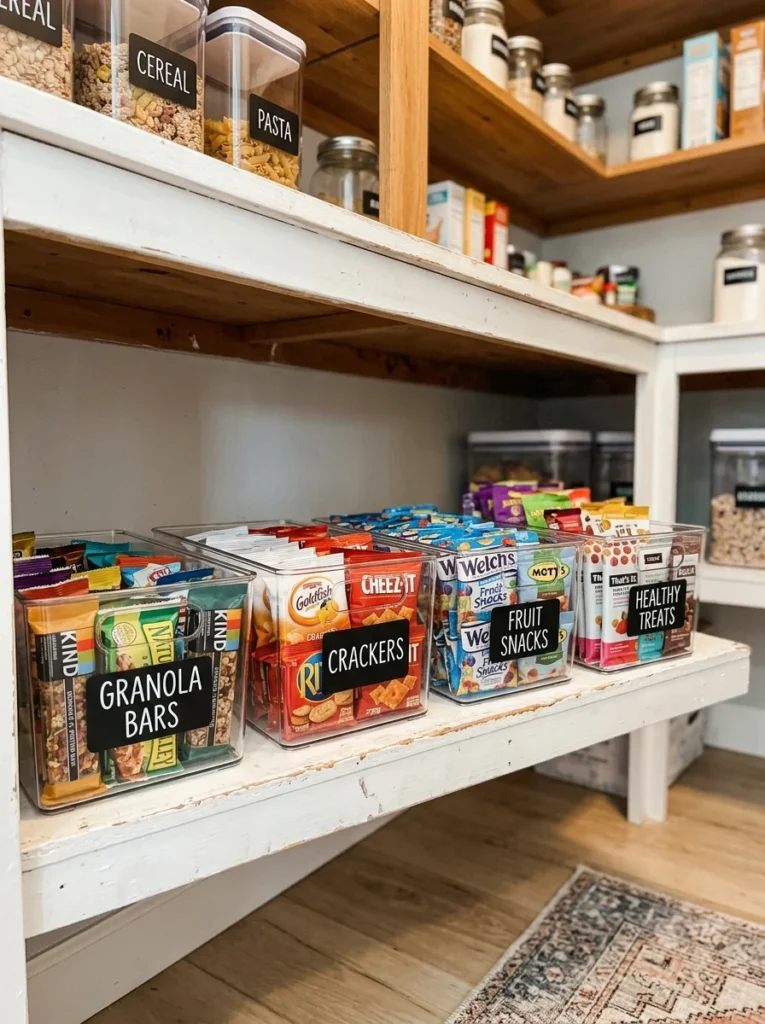
Sort canned goods so the oldest items get used first
A simple first-in, first-out system, where new cans go to the back and older ones move to the front, prevents cans from sitting forgotten for years while newer ones get used first. A shallow, slightly angled canned goods riser, which lets cans roll forward automatically as the front one is used, makes this system effectively automatic rather than requiring you to manually rearrange cans every time you restock.
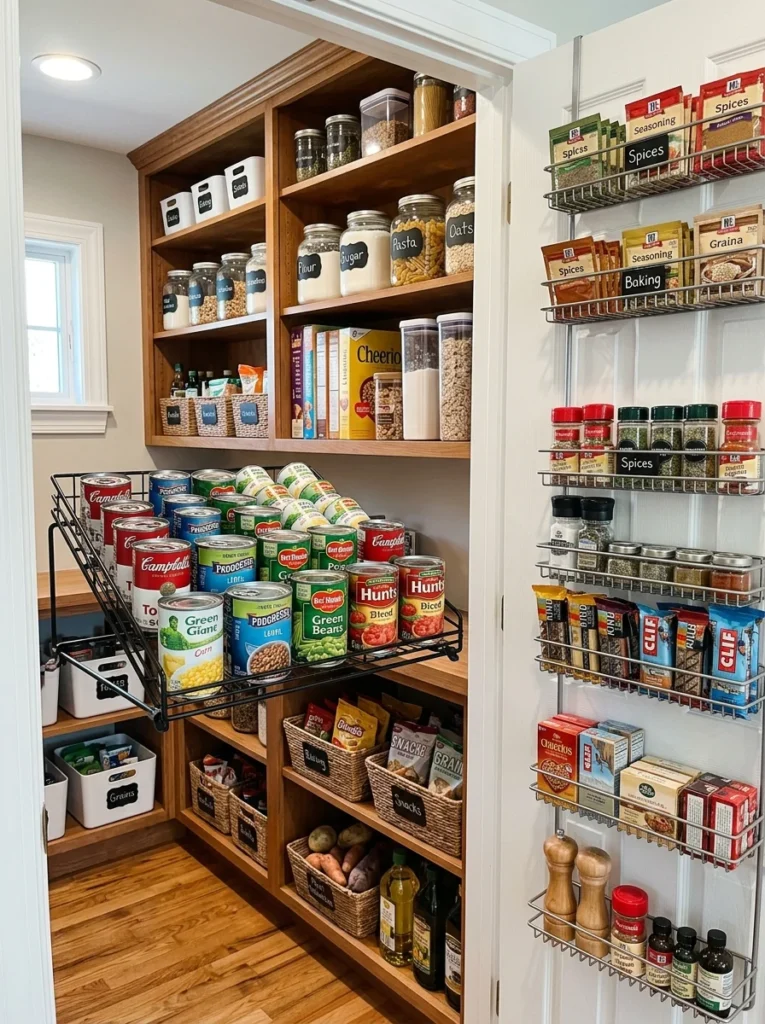
Keep a small whiteboard or running list inside the pantry door
A small whiteboard or notepad mounted inside the pantry door, where anyone can jot down an item that’s running low, solves one of the most common sources of pantry-related frustration: realizing you’re out of something only once you actually need it mid-recipe. This habit works especially well paired with clear, labeled containers, since seeing a container running low is a natural prompt to add it to the list before it’s completely empty.
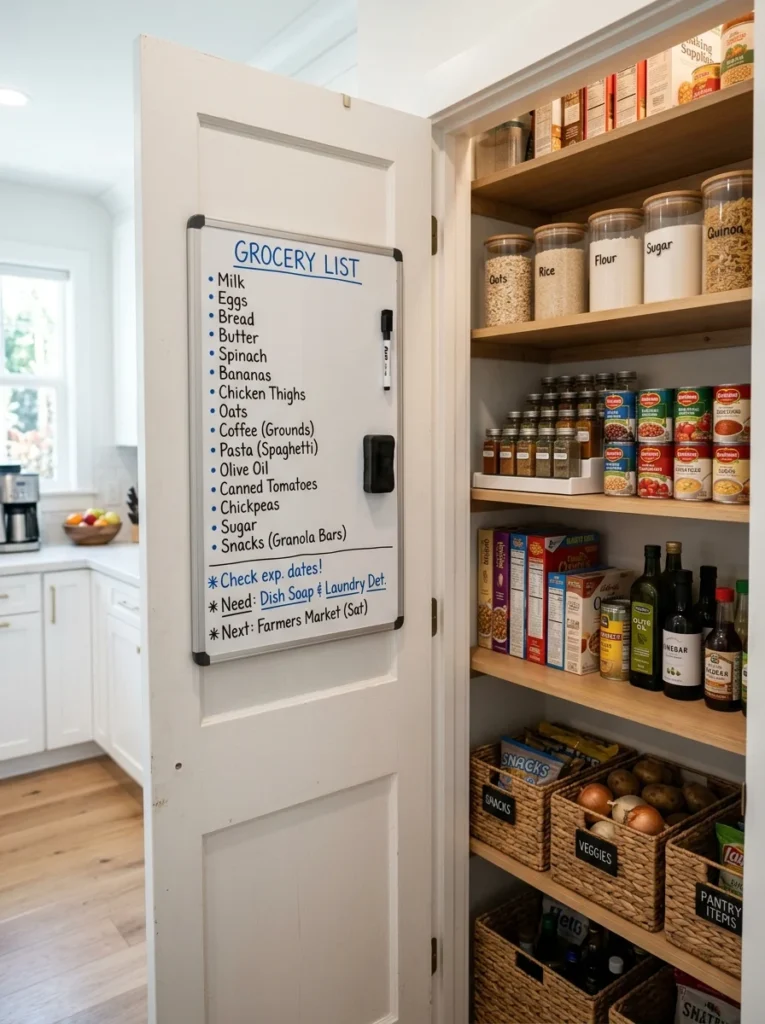
Build in a regular, brief maintenance habit
Even a perfectly organized pantry drifts back toward clutter without some ongoing upkeep. A five to ten minute reset every couple of weeks, straightening containers, checking for anything expired, and returning items to their designated zone, prevents the kind of gradual disorder that eventually requires a full weekend to fix. This small, recurring habit is really what separates a pantry that stays tidy from one that simply looked good for the first week after the initial organizing project.
Protect dry goods from pests and moisture
Beyond looking tidy, storing dry goods in airtight containers protects them from pantry pests, like weevils or moths, which can spread from a single infested bag of flour or grain to an entire shelf if left in original packaging. Airtight containers also protect against humidity, which can cause items like sugar, rice, and pasta to clump or spoil faster than they would in a properly sealed container. If you’ve had a pest issue in the past, thoroughly cleaning the shelves before restocking and checking new grocery purchases before they go into a shared container is worth the extra few minutes, since it prevents a single contaminated bag from spreading the problem to your entire pantry.
Give baking supplies their own dedicated zone
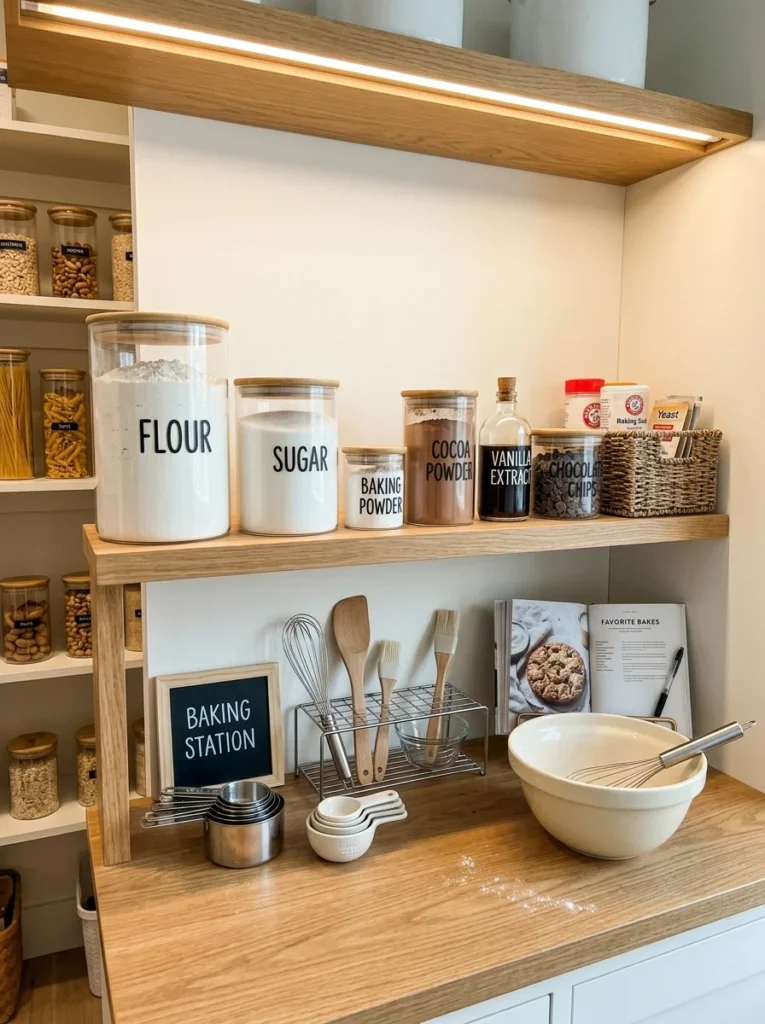
Baking tends to require pulling several specific items at once, flour, sugar, baking soda, baking powder, vanilla, chocolate chips, which makes a dedicated baking zone, ideally grouped together on one shelf or in one basket, considerably more efficient than having these items scattered across the pantry by category alone. Storing a small basket or bin specifically for baking supplies also makes it easy to pull the entire zone out at once when you’re baking, and just as easy to return everything to the same spot afterward, which helps this particular area stay organized even in a busier, more chaotic pantry.
What’s the biggest reason pantry organization systems don’t last?
The most common reason is a system that only makes sense to the person who set it up, without clear zones or labels that other household members can follow when restocking. A pantry organized with visible, labeled zones is far more likely to stay tidy since everyone can put items back in the correct place without guessing.
Are clear containers really worth the investment for a pantry?
Yes, clear, uniform containers make it easy to see exactly what you have and how much is left, which reduces both food waste and duplicate purchases. They also tend to keep shelves looking tidy even when the pantry is fully stocked, since consistent shapes and sizes stack and align more neatly than mismatched original packaging.
How often should I do a full pantry declutter?
A full declutter once or twice a year is usually enough for most households, paired with a brief maintenance reset every couple of weeks to keep the system running smoothly in between those deeper cleanouts.
What’s the best way to organize a small pantry with limited shelving?
In a small pantry, prioritize vertical space with stackable shelf risers, use door-mounted storage for small items, and be more aggressive about decluttering, since every inch of a small pantry needs to work harder with less overall room available.
How do I keep pantry pests from coming back after an infestation?
Store all dry goods in airtight containers rather than original packaging, since pests can often chew through paper or thin plastic bags but not sealed, hard-sided containers. Thoroughly clean shelves before restocking, and inspect new grocery purchases before adding them to a shared container, since a single infested bag is the most common way pests spread through an otherwise clean pantry.
A pantry that stays tidy isn’t the result of a single, elaborate organizing weekend; it’s the result of a system built around clear zones, visible labeling, and a small habit of regular upkeep that fits how your household actually shops, cooks, and restocks. Start with a genuine declutter, then organize by zone, and add the tools, containers, risers, turntables, that solve your specific pantry’s biggest pain points rather than copying someone else’s setup exactly.
My own pantry has stayed genuinely organized for over a year now, not because I found the perfect set of bins, but because the system finally matches how my family actually uses it, and the five-minute reset every couple of weeks means it never has the chance to fully unravel. If your pantry has fallen apart after every previous attempt, start there: less about buying more organizing products, more about building the one small habit that keeps the whole system running, week after week, long after the initial organizing weekend is over.