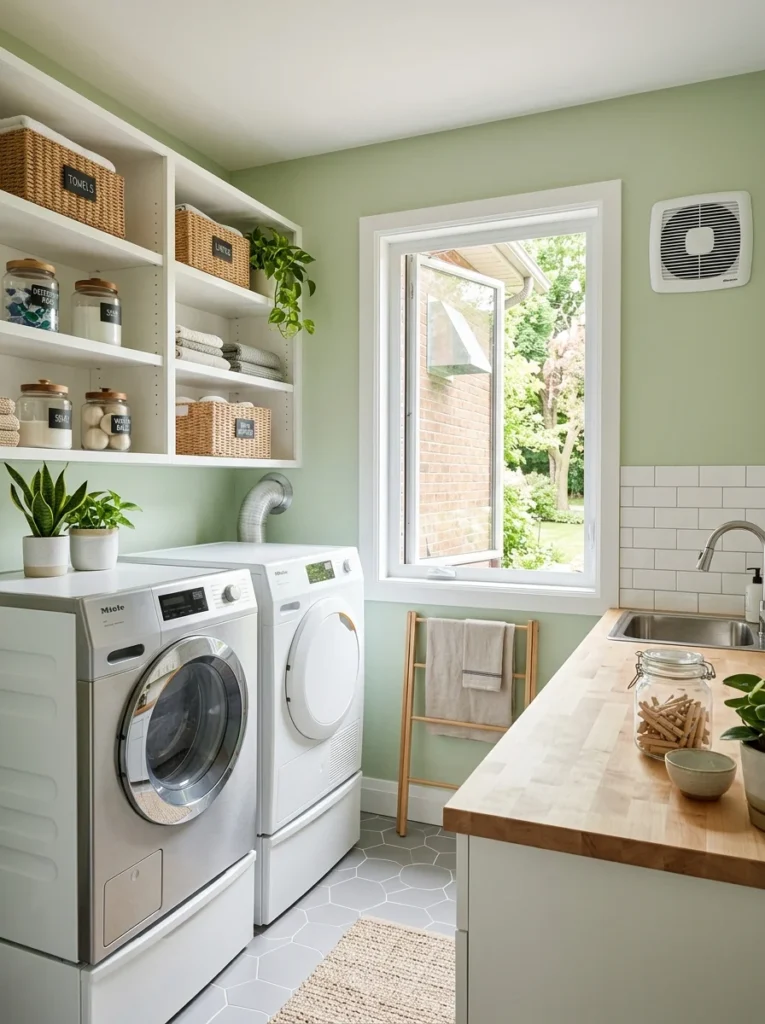
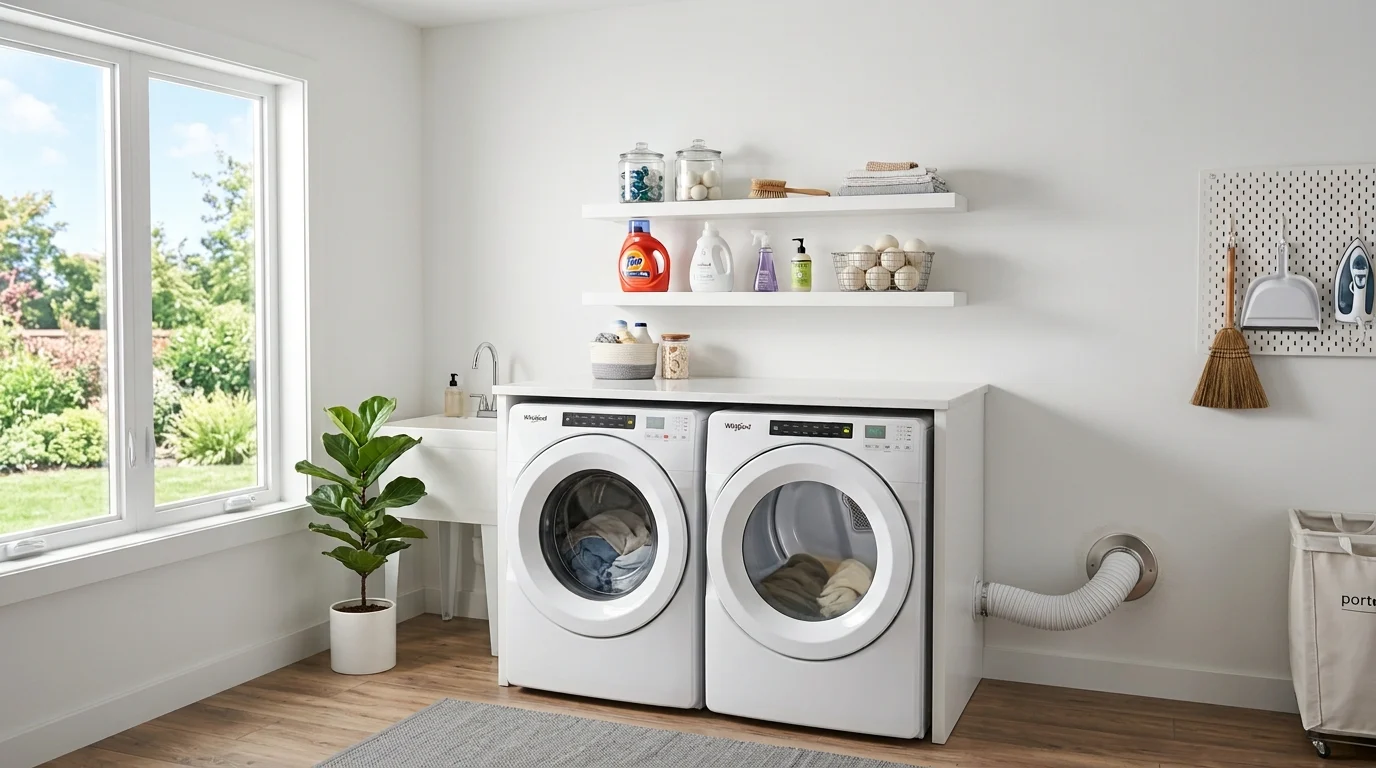
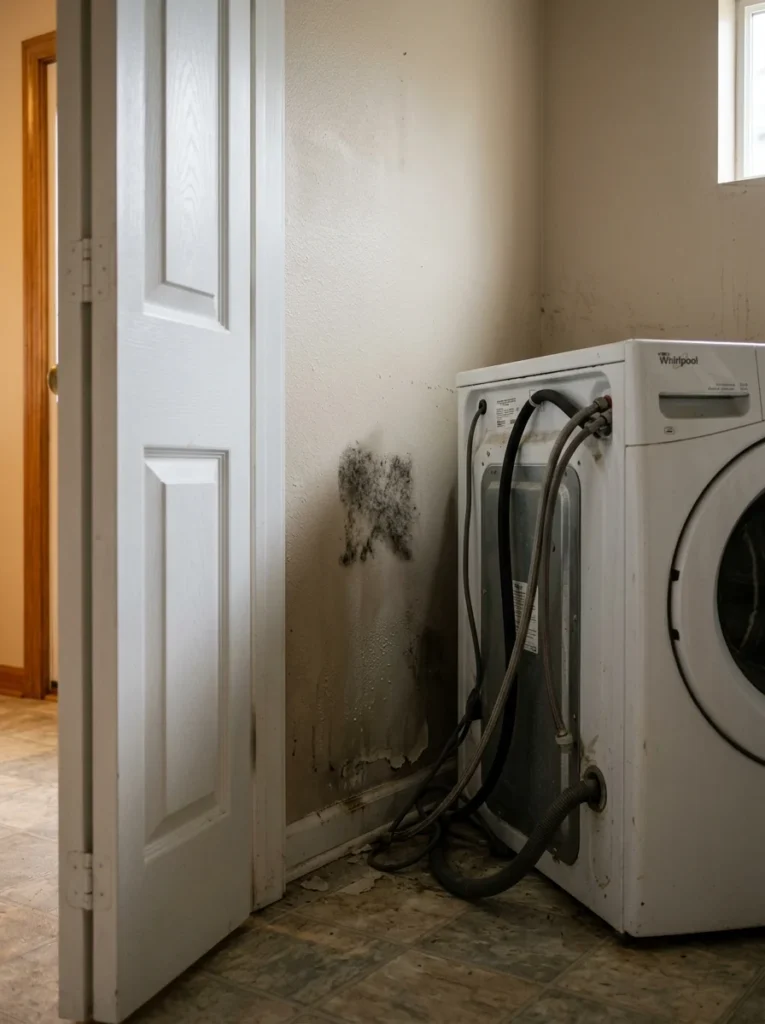
A few years into living in our house, I noticed a faint musty smell every time I opened the laundry room door, and it took embarrassingly long to trace it back to a small patch of mold quietly growing behind the washer, in a spot with almost no airflow and just enough residual moisture from the machine to create exactly the conditions mold needs to thrive. Cleaning it up was straightforward enough, but understanding why it had happened in the first place, and actually fixing the underlying ventilation problem rather than just wiping away the visible mold, is what kept it from coming back.
A laundry room deals with more moisture than almost any other room in the house, and without proper ventilation, that moisture has nowhere to go, creating ideal conditions for mold and mildew to develop, often in hidden spots you won’t notice until the smell or visible growth becomes obvious. Here’s how to actually prevent that from happening.
Understand where the moisture in a laundry room actually comes from
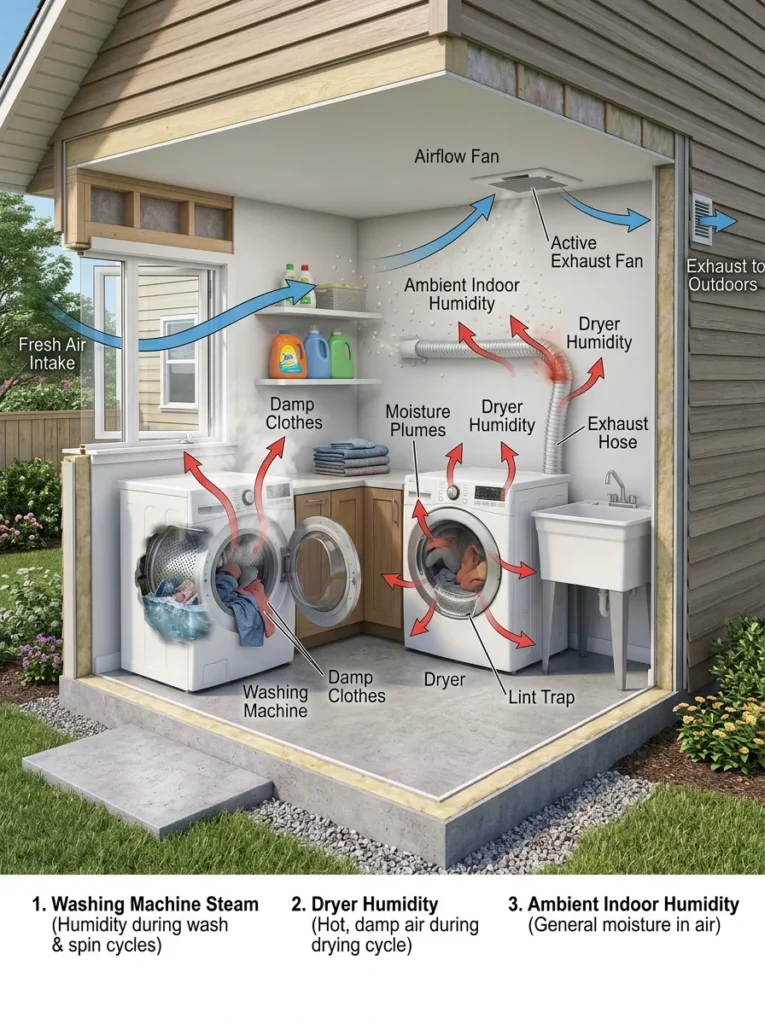
Moisture in a laundry room comes from several sources: water vapor released during the wash cycle, humid air expelled by the dryer if venting isn’t properly sealed or directed outside, and simple ambient humidity that tends to accumulate in an enclosed space without adequate airflow. Understanding these specific sources helps target ventilation improvements at the actual points where moisture enters the room, rather than treating the whole space as a single vague humidity problem.
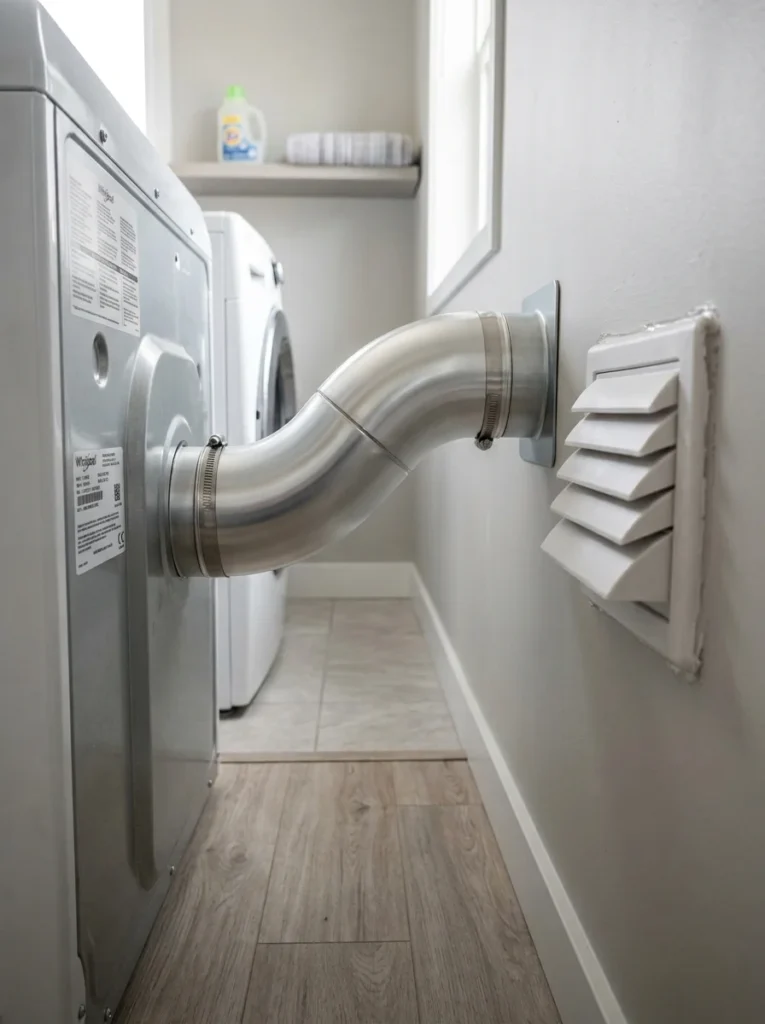
Confirm your dryer vents fully to the outside
This is the single most important ventilation check for any laundry room, since a dryer that vents indoors, whether through a disconnected duct, a broken vent hose, or an improperly installed setup, releases enormous amounts of hot, moist air directly into the room rather than expelling it outside where it belongs. Physically inspecting the dryer vent connection, confirming it runs securely and completely to an exterior vent rather than terminating in an attic, crawlspace, or simply disconnecting somewhere along its path, is an essential first step that resolves what is often the single biggest source of excess moisture in an enclosed laundry space.
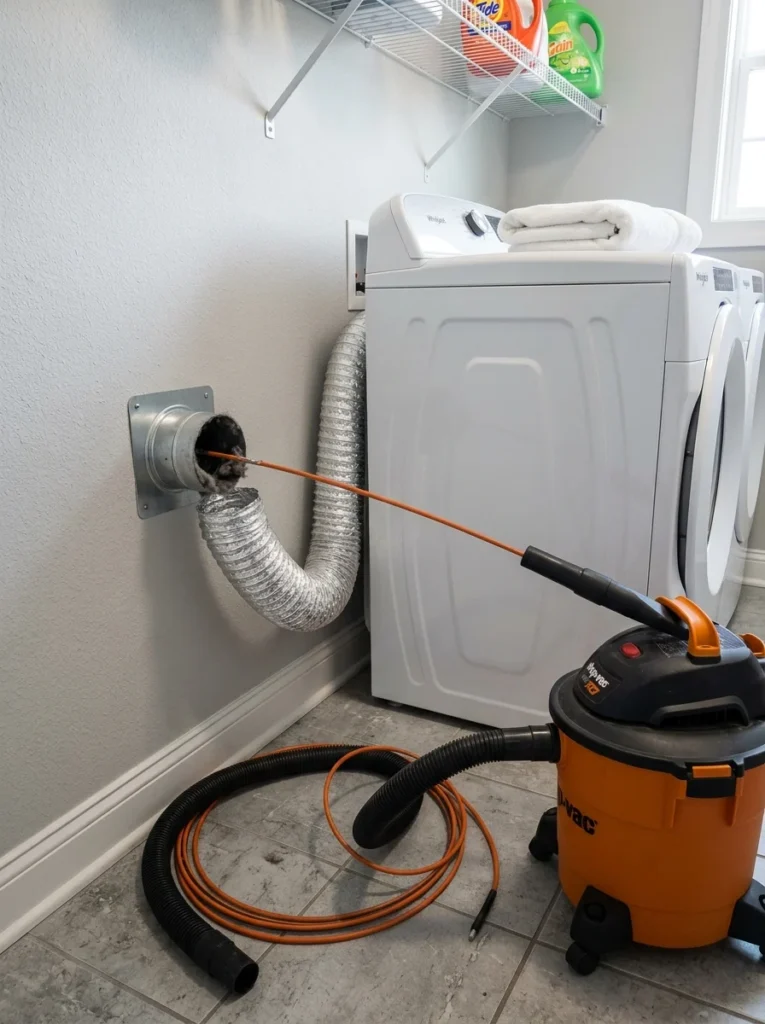
Clean the dryer vent and ductwork regularly
Even a properly connected dryer vent becomes less effective over time as lint accumulates inside the ductwork, restricting airflow and forcing more humid air to escape through small gaps rather than being fully expelled outside. Cleaning the vent duct at least once a year, more often for a longer duct run or heavy laundry use, maintains proper airflow and reduces the amount of residual moisture and lint that ends up trapped inside the room rather than vented outdoors as intended.
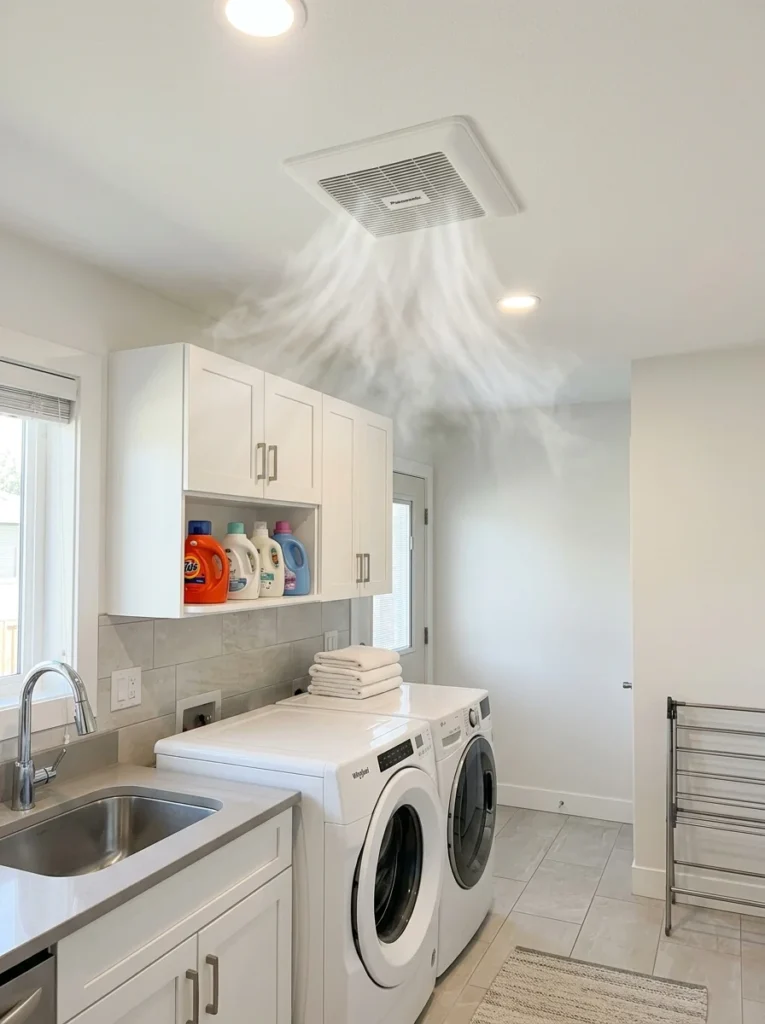
Install or upgrade a dedicated exhaust fan
A laundry room without any dedicated exhaust fan relies entirely on passive airflow, opening a door or a window, to clear humid air, which is often insufficient, particularly in a smaller, more enclosed space. A properly sized exhaust fan, vented to the outside rather than simply recirculating air within the home, actively removes humid air and meaningfully reduces the ambient moisture level that would otherwise linger and eventually contribute to mold growth on walls, ceilings, or behind appliances.
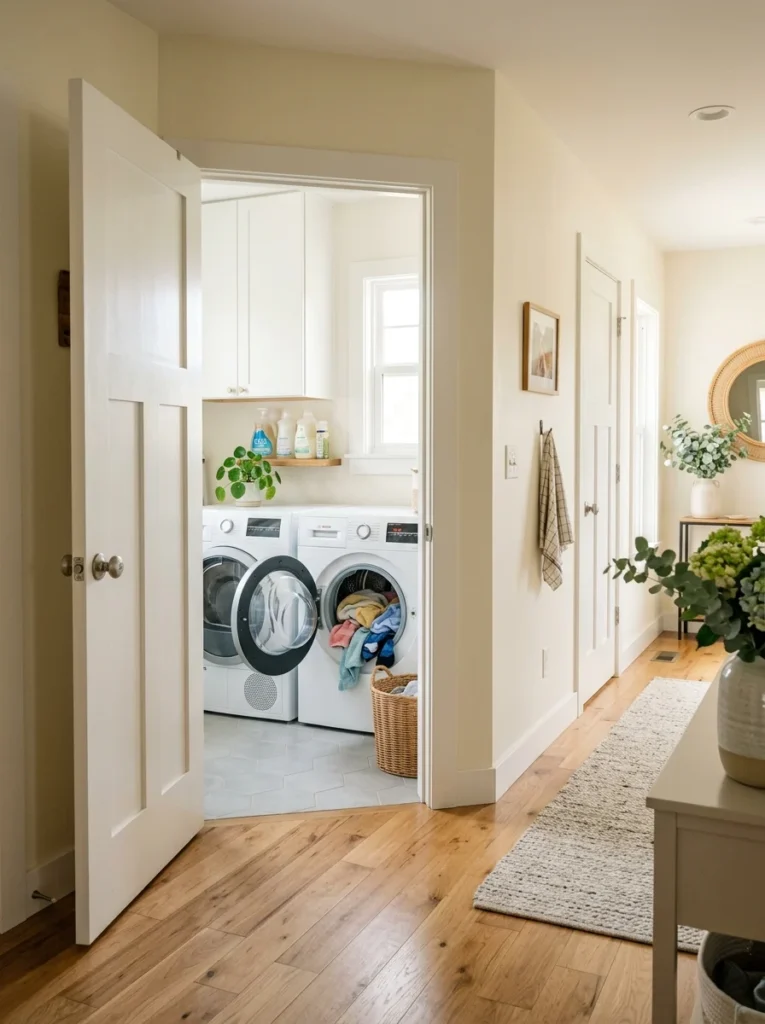
Leave the door open when possible after finishing laundry
Leaving the laundry room door open for a period after finishing a wash or dry cycle allows residual humid air to disperse into the rest of the home’s air rather than remaining trapped and concentrated in an enclosed space. This is a free, simple habit that meaningfully reduces lingering moisture, particularly in a laundry room without a dedicated exhaust fan or one with limited natural airflow otherwise.
Check for and address any existing water leaks promptly
A slow, small leak from a washing machine hose, a supply line connection, or even condensation from an air conditioning unit’s ductwork passing through the laundry room can introduce ongoing moisture that ventilation alone won’t fully resolve. Periodically checking behind and underneath the washer for any signs of moisture, staining, or a musty smell, and promptly repairing any leak source found, addresses the root moisture problem directly rather than only managing the symptoms through improved airflow.
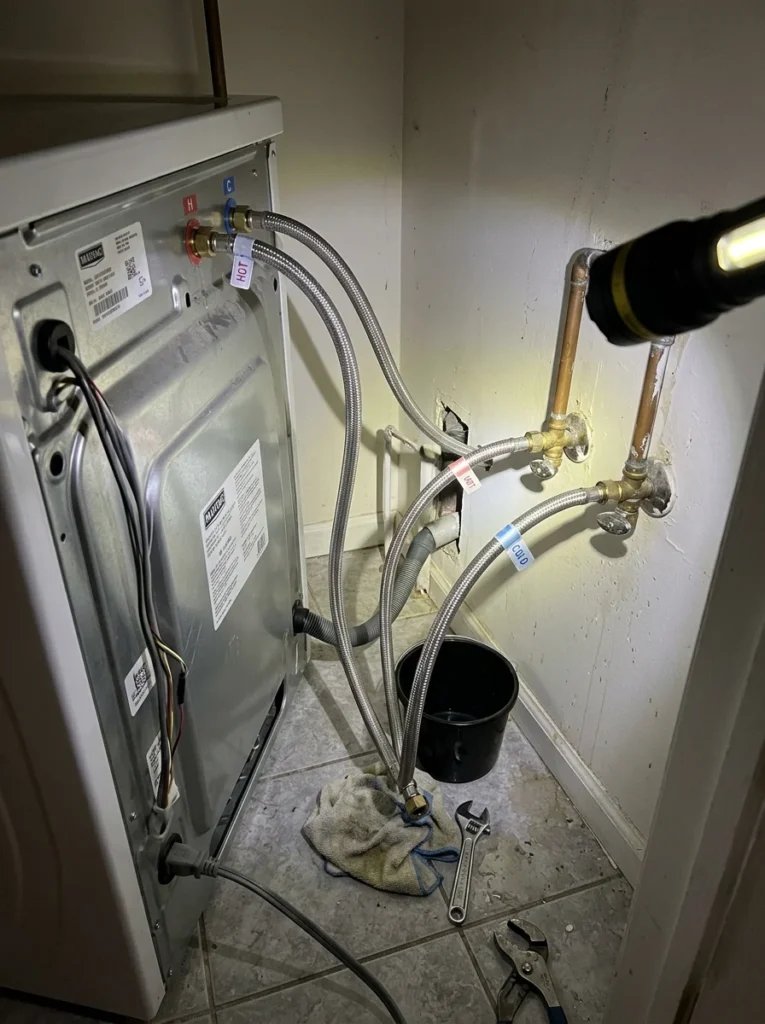
Improve airflow behind and around the appliances themselves
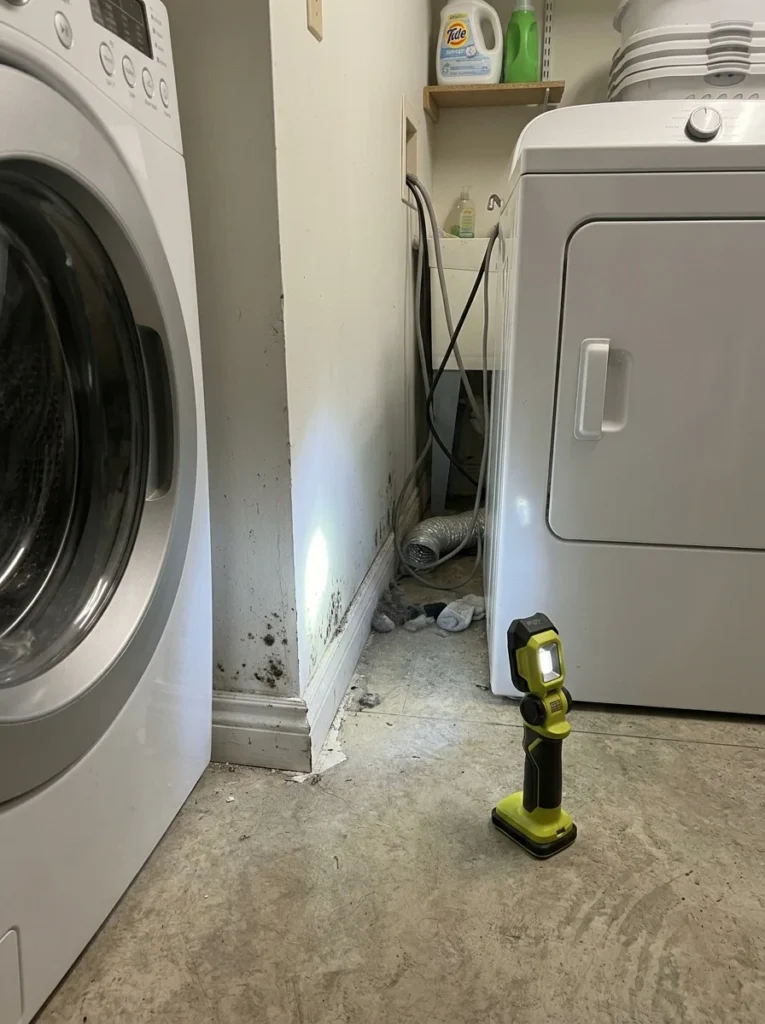
Appliances pushed tightly against a wall with little to no gap behind them create a low-airflow pocket where residual moisture, and the exact conditions that led to mold in my own laundry room, can accumulate unnoticed for a long time. Leaving a few inches of clearance behind the washer and dryer, rather than pushing them flush against the wall, allows some air circulation behind the appliances, reducing the chance of hidden moisture buildup in that specific, easily overlooked space.
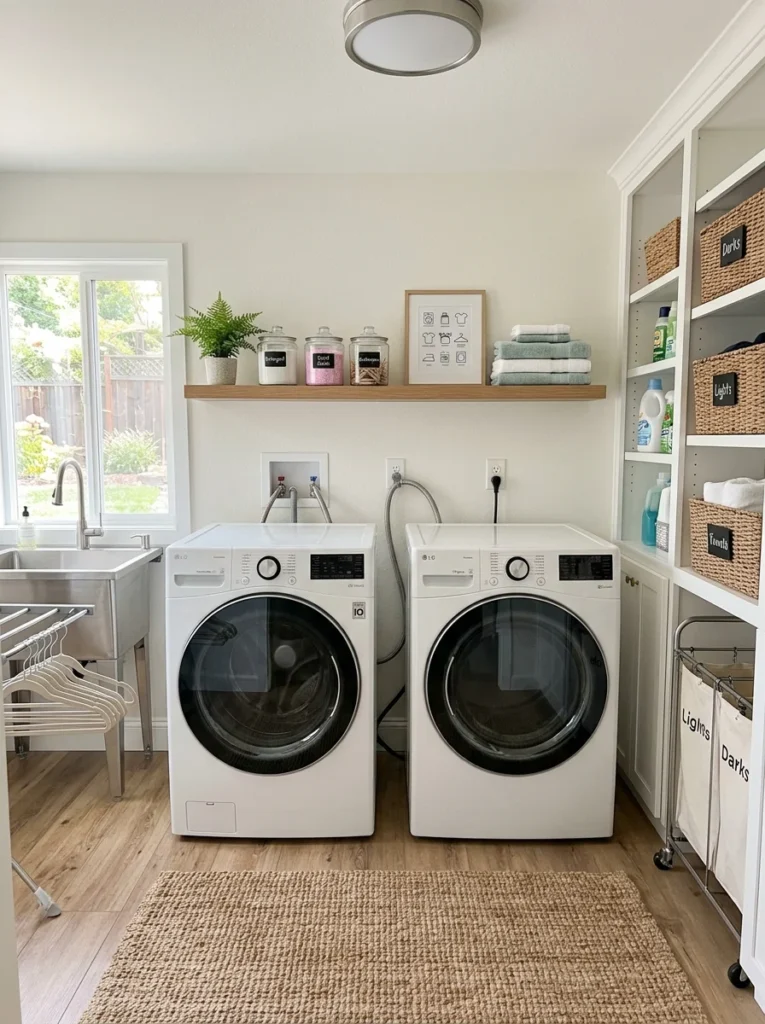
Use a dehumidifier for consistently humid laundry rooms
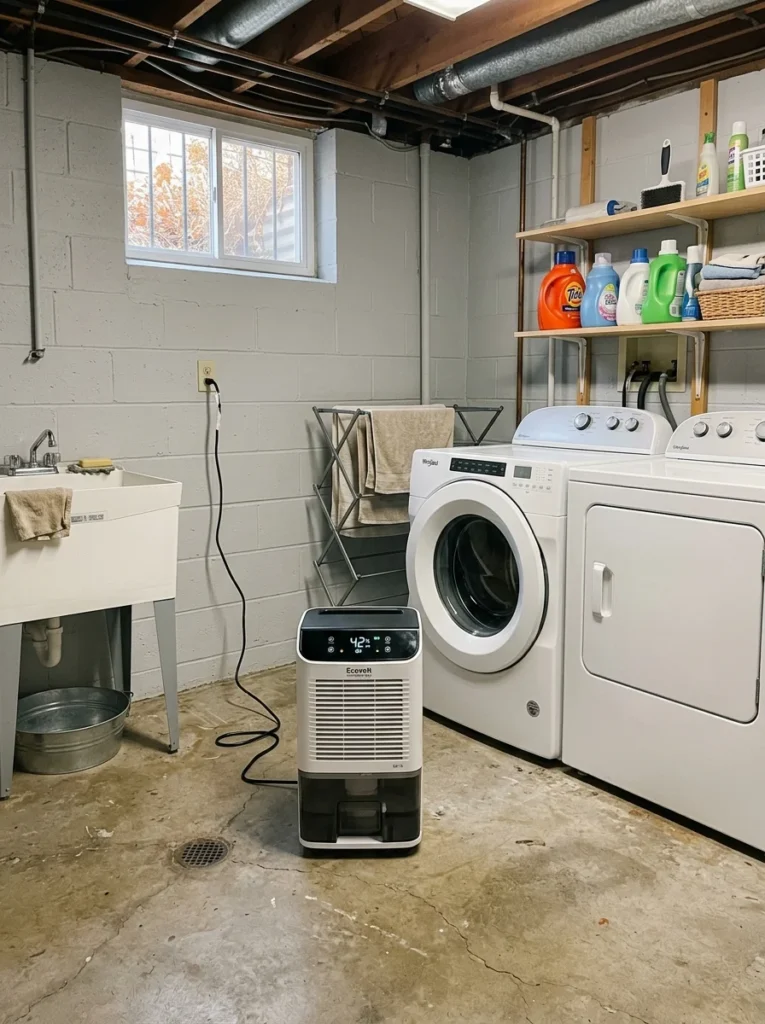
In a laundry room with persistent humidity issues that ventilation alone doesn’t fully resolve, particularly in a naturally humid climate or a windowless basement laundry space, a standalone or built-in dehumidifier actively removes excess moisture from the air rather than relying solely on ventilation to clear it out. This is a worthwhile investment for a room that consistently struggles with dampness despite reasonable ventilation improvements already in place.
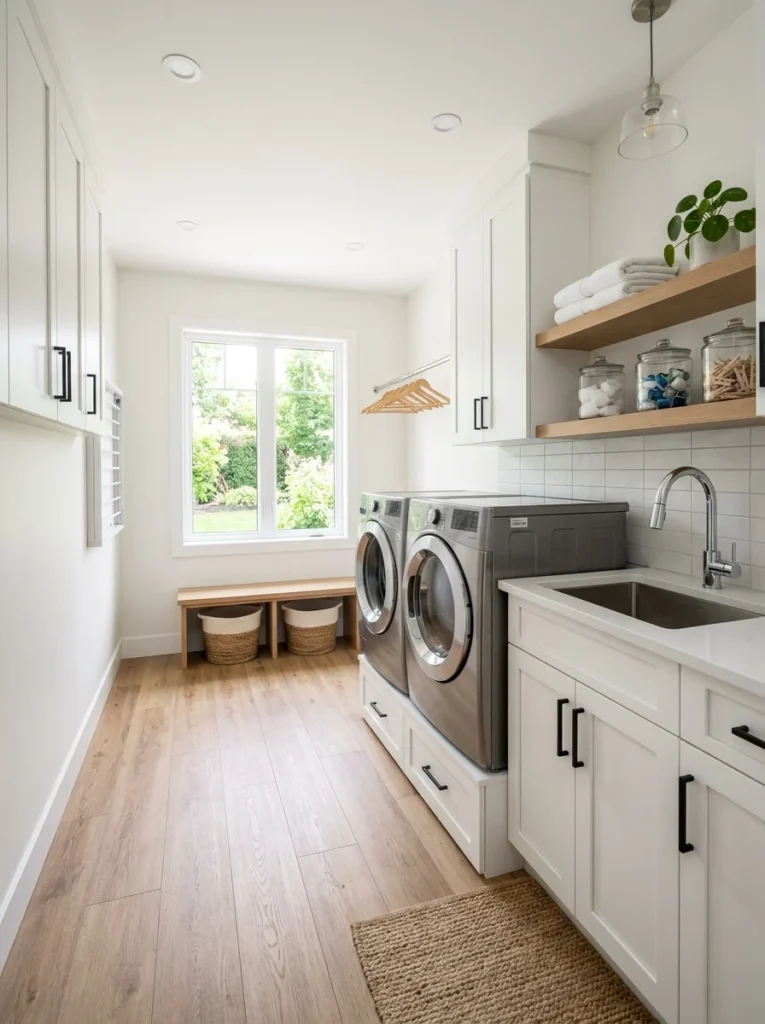
Choose mold-resistant materials for walls and flooring
If you’re renovating or building a laundry room from scratch, choosing moisture-resistant drywall, sometimes called green board or a similar mold-resistant variant, along with a non-porous, water-resistant flooring material, gives the room a baseline resistance to moisture damage that standard materials don’t offer. This doesn’t replace the need for proper ventilation, but it provides an additional layer of protection in a room that will inevitably deal with more humidity than most other spaces in the home.
Monitor humidity levels with a simple hygrometer
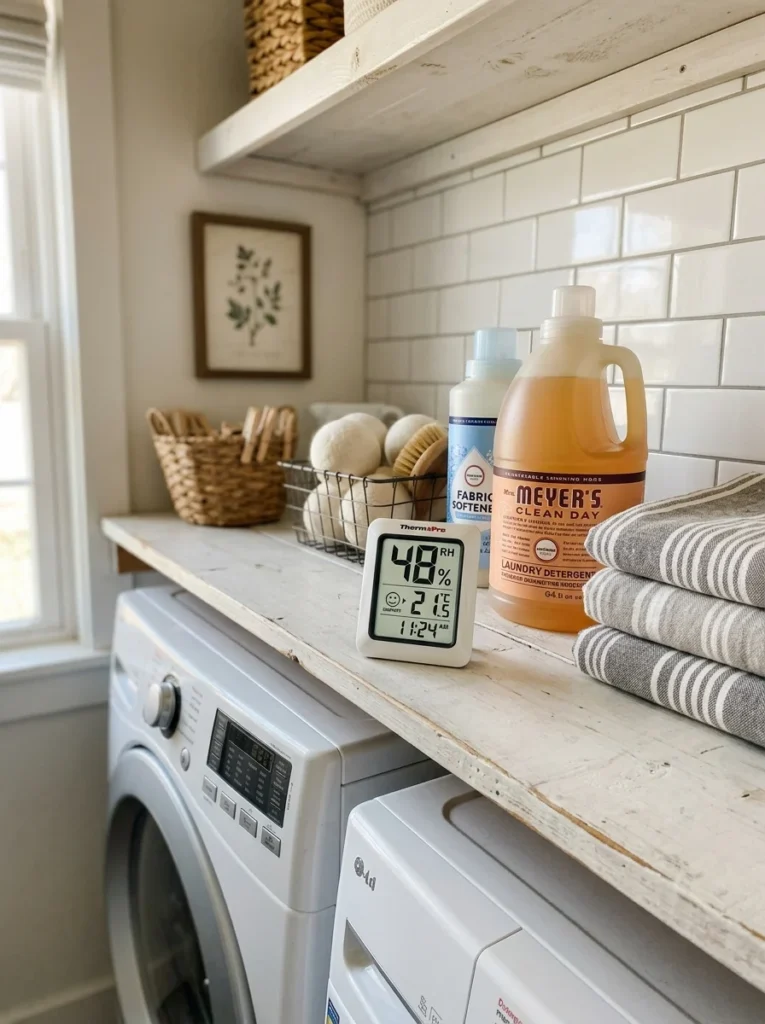
A small, inexpensive hygrometer placed in the laundry room gives you an objective, ongoing measurement of the room’s humidity level, rather than relying purely on smell or visible signs that often only appear once a moisture problem has already progressed further than it should have. Generally, keeping indoor humidity below a specific target percentage, often cited as somewhere in the thirty to fifty percent range for most homes, helps prevent the conditions mold needs to establish itself, and a hygrometer lets you catch a rising trend before it becomes a visible or smellable problem.
Inspect regularly for early signs of mold or mildew
Periodically checking behind appliances, along baseboards, and in any corners with limited airflow for early signs of mold, a musty smell, discoloration, or a slightly fuzzy texture on a surface, allows you to address a small problem before it spreads significantly. Catching mold early, while it’s still a small, localized patch, is considerably easier and less costly to remediate than addressing a widespread infestation that’s had time to establish itself throughout a larger area of the room.
Use a window for natural ventilation if your laundry room has one
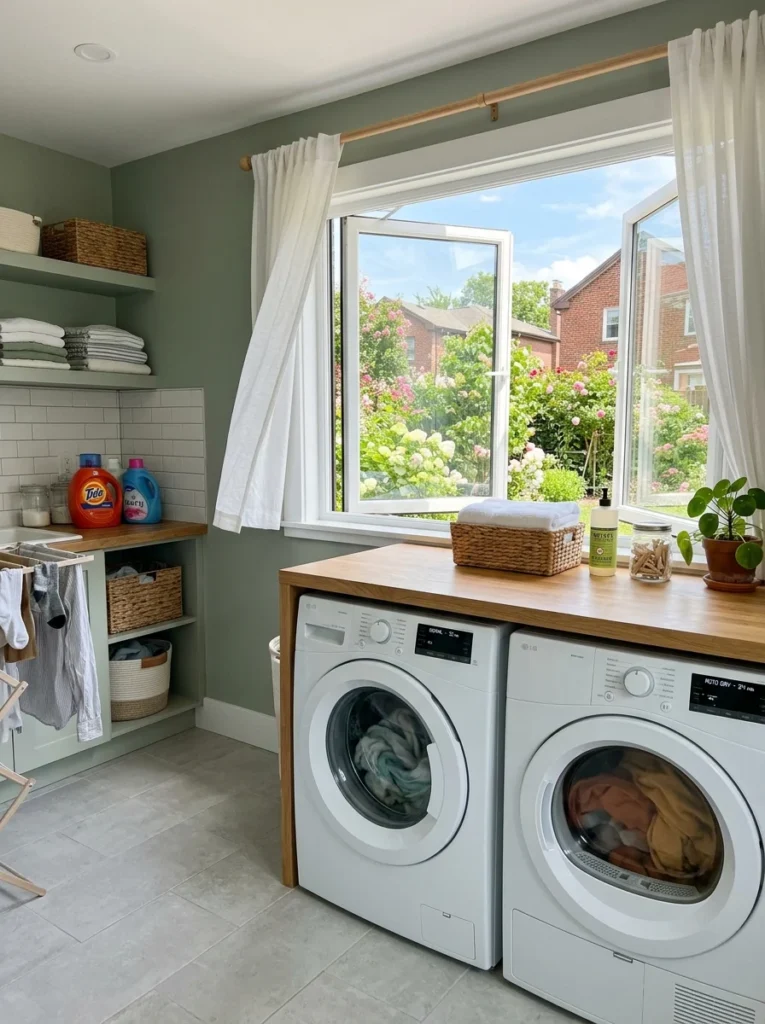
If your laundry room includes a window, opening it during and after laundry loads, weather permitting, provides free, effective natural ventilation that helps clear humid air alongside or even instead of a mechanical exhaust fan. Even cracking the window slightly during colder months, when leaving it fully open isn’t practical, still allows some air exchange that reduces how much moisture accumulates and lingers in the room compared to keeping it completely sealed throughout the laundry process.
Understand why mold in a laundry room matters beyond just appearance
Mold growth isn’t purely a cosmetic issue; certain mold types can affect indoor air quality and potentially contribute to respiratory irritation or allergic reactions for sensitive individuals in the household, which is part of why addressing the underlying moisture problem matters more than simply cleaning away visible mold when it appears. Beyond health considerations, mold can also cause genuine structural damage over time if left unaddressed, weakening drywall, damaging wood framing, or degrading flooring materials, turning what starts as a relatively minor ventilation oversight into a considerably more expensive repair if it’s allowed to persist and spread unchecked.

Pay special attention to basement laundry rooms
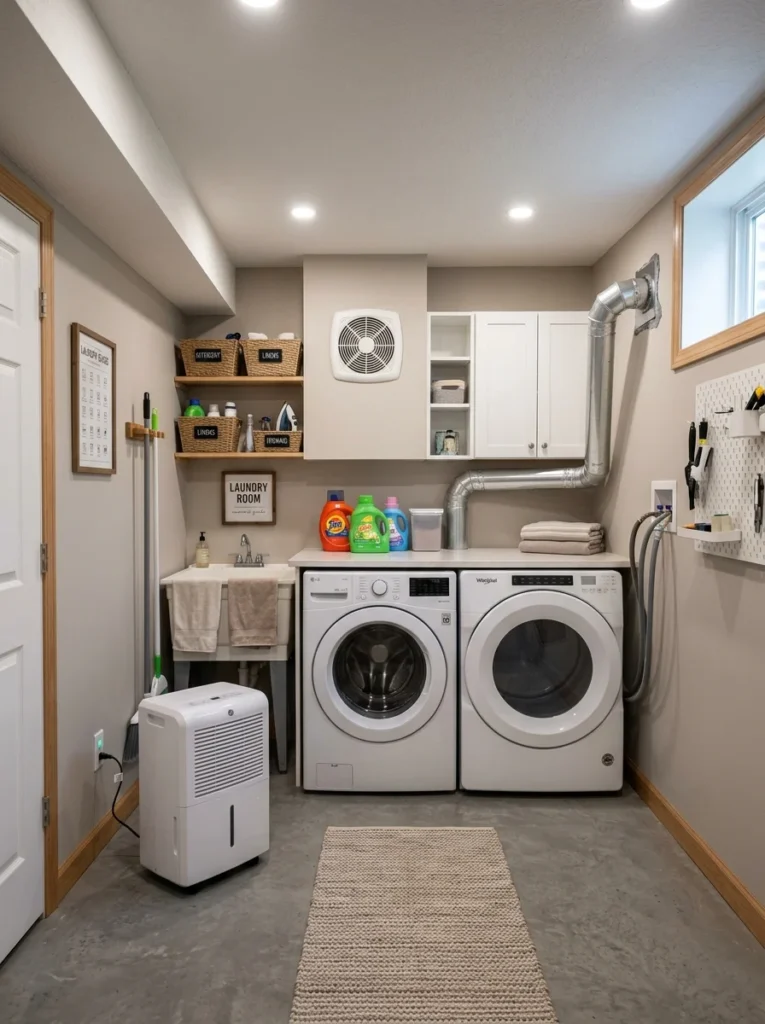
A basement laundry room faces additional ventilation challenges beyond a main-floor space, since basements are naturally more prone to ambient humidity from the surrounding ground and often have fewer or no windows to provide natural airflow. In this kind of setting, a dedicated exhaust fan and a standalone dehumidifier become considerably more important than they might be for a well-ventilated main-floor laundry space, since passive ventilation options are more limited to begin with. Checking that the dryer vent run isn’t excessively long or has too many bends, both of which reduce venting efficiency, is also particularly important in a basement setup, where the vent often needs to travel further to reach an exterior wall.
Common laundry room ventilation questions
What’s the most common cause of mold in a laundry room?
A dryer vent that isn’t properly connected to the outside, releasing hot, moist air directly into the room instead, is one of the most common and significant contributors to mold growth in a laundry room, making this the first thing worth checking.
How often should I clean my dryer vent to prevent moisture issues?
At least once a year for most households, though more frequently for a longer duct run or heavy laundry use, since accumulated lint restricts airflow and forces more humid air to escape through gaps rather than being properly vented outside.
Is a dehumidifier necessary in every laundry room?
Not necessarily, but it’s a worthwhile addition for a laundry room with persistent humidity issues that ventilation improvements alone don’t fully resolve, particularly in naturally humid climates or windowless basement laundry spaces.
What humidity level should I aim for in a laundry room?
Keeping indoor humidity somewhere in the thirty to fifty percent range is generally recommended for preventing mold growth in most homes, and a simple hygrometer can help monitor this level over time rather than relying on smell or visible signs alone.
Moisture managed, mold prevented
Preventing mold in a laundry room comes down to addressing moisture at its actual sources, confirming proper dryer venting, promptly fixing any leaks, and supporting that with active ventilation, an exhaust fan, appliance clearance, and possibly a dehumidifier in consistently humid conditions. None of these steps require extensive renovation, and most are either free habits or relatively inexpensive fixes compared to the cost and hassle of remediating an established mold problem.
That small patch of mold behind our own washer turned out to be a wake-up call rather than a disaster, and fixing the underlying ventilation and appliance clearance issues that caused it has kept our laundry room genuinely mold-free ever since. If you haven’t checked your own dryer vent connection recently, start there; confirming it runs properly and completely to the outside addresses what is very often the single biggest source of hidden moisture in an enclosed laundry space.