My first set of outdoor furniture was a cheap resin patio set that looked perfectly fine in the store and lasted exactly one humid summer before it started cracking and yellowing in the sun. I replaced it with something slightly better, and that one rusted at every joint within two years because I hadn’t accounted for how much rain our particular yard actually gets. It took a third attempt, and finally doing real research into material properties rather than just picking whatever looked nice, before I landed on furniture that’s held up beautifully for years now. The material matters more than the style, and it matters differently depending on your specific climate.
Below is an honest breakdown of the most common outdoor furniture materials, how each one performs in different climate conditions, and roughly where each one lands on the budget spectrum, so you can make a choice that actually survives your yard rather than just your living room’s Pinterest board.
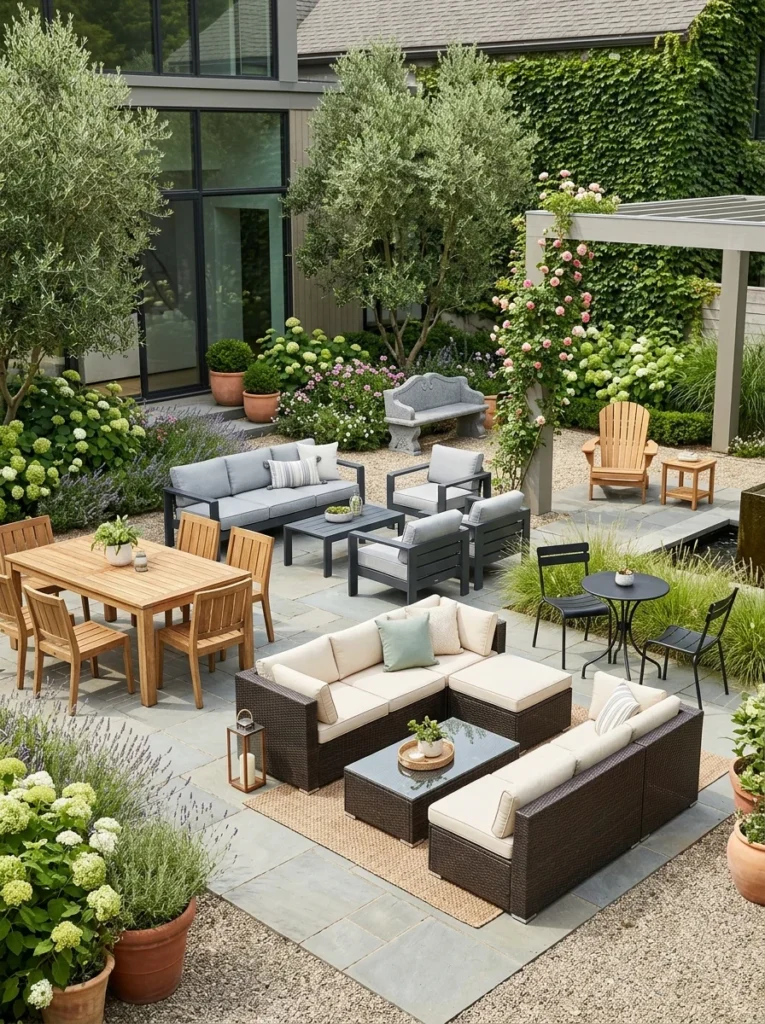
Teak: the premium, all-weather classic
Teak is prized for outdoor furniture because of its naturally high oil content, which makes it resistant to water damage, rot, and insects without needing any chemical treatment. Left unfinished, teak weathers to a silvery-grey patina over time, which many people find attractive, though it can also be periodically oiled to maintain its original honey-brown color if preferred. Teak performs well in nearly every climate, from humid coastal areas to dry, sunny regions, making it one of the most versatile material choices available. The tradeoff is cost: genuine teak sits at the higher end of the outdoor furniture budget spectrum, though its long lifespan, often decades with minimal maintenance, can make it a reasonable long-term value despite the higher upfront price.
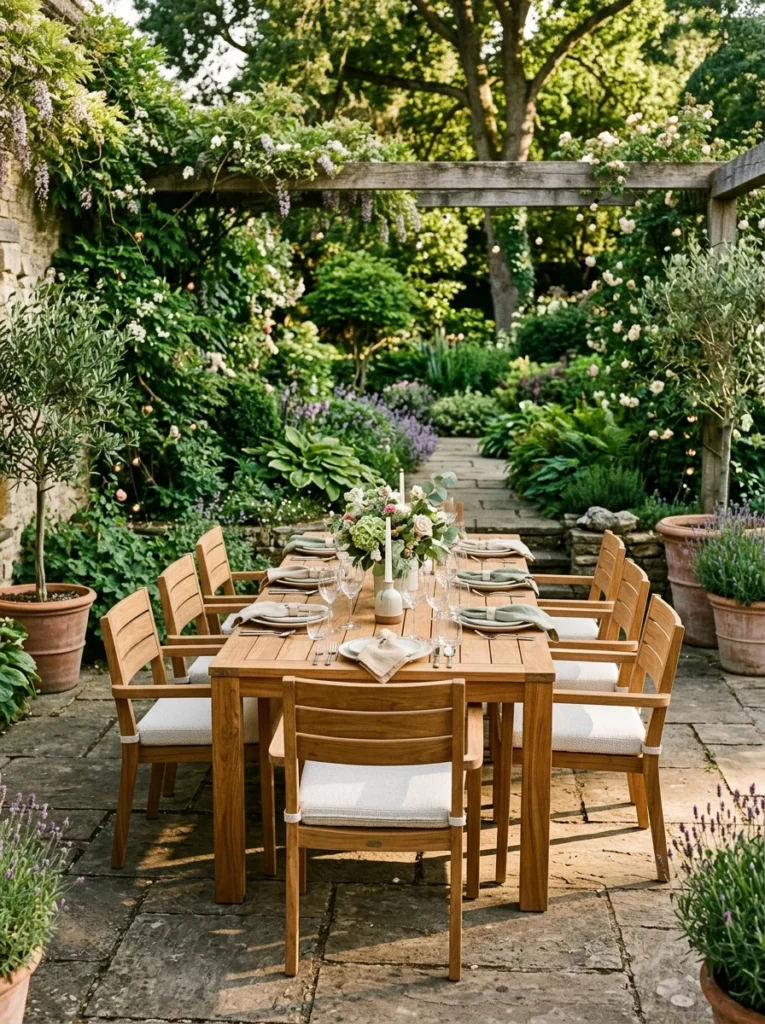
Aluminum: lightweight and rust-resistant
Aluminum furniture is naturally resistant to rust, unlike steel or iron, making it a strong choice for humid or coastal climates where salt air and moisture would quickly corrode other metals. It’s also considerably lighter than most other outdoor materials, which makes it easy to rearrange or move indoors seasonally, though that same lightness can be a downside in particularly windy areas without some form of added stability. Aluminum furniture spans a wide budget range, from inexpensive basic frames to higher-end powder-coated designs, making it accessible at multiple price points depending on finish and design complexity.
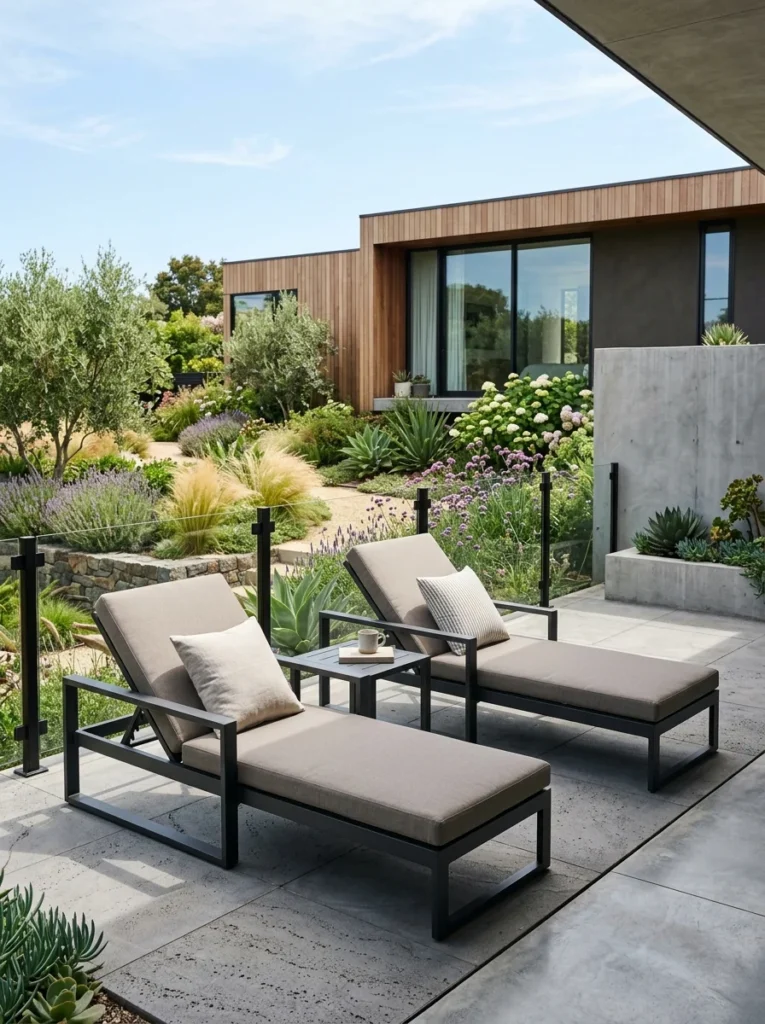
Wrought iron and steel: heavy-duty but rust-prone
Wrought iron and steel furniture offer excellent durability and a substantial, high-end look, and their weight makes them particularly stable in windy climates where lighter furniture might tip or blow around. The major downside is rust; without a quality powder-coated or otherwise well-sealed finish, these metals corrode relatively quickly in humid or rainy climates, and even well-finished pieces need occasional touch-ups if the coating chips or scratches. This material tends to suit drier climates best unless you’re prepared for more maintenance, and it generally sits in the mid-to-upper budget range depending on design and finish quality.
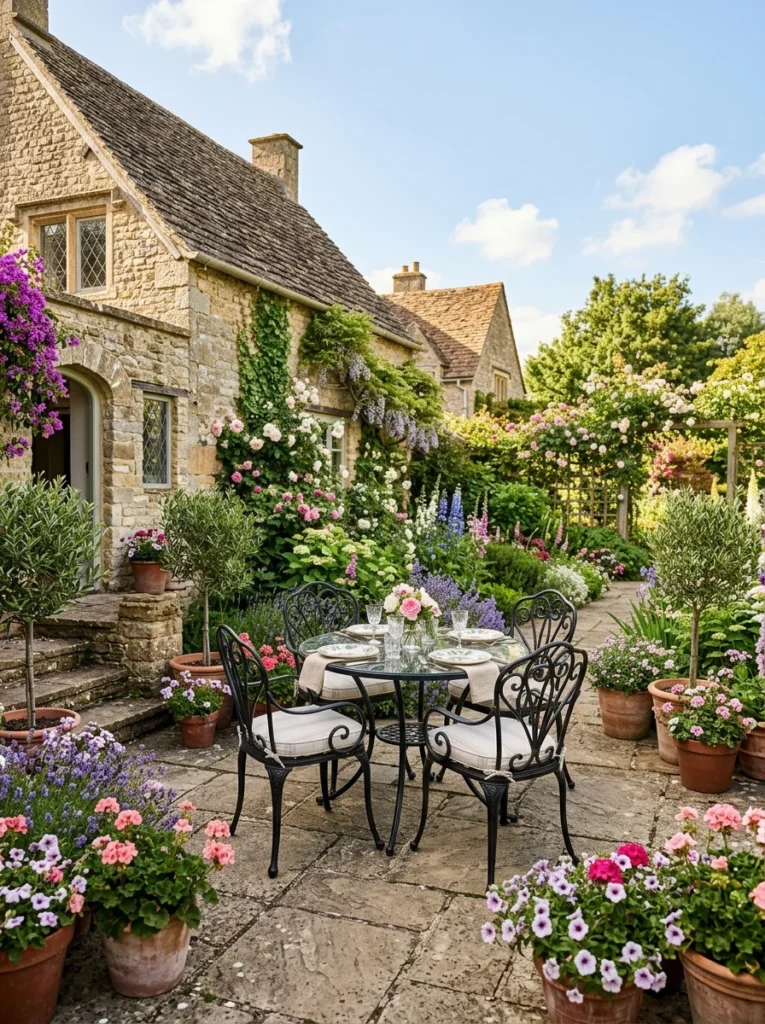
Resin and synthetic wicker: budget-friendly and low maintenance
High-density polyethylene resin, often shaped to resemble woven wicker, has become a popular, relatively affordable option that resists fading, cracking, and water damage far better than the cheaper plastic resin furniture of years past, provided you choose a genuinely UV-stabilized product rather than the lowest-cost version available. Quality synthetic wicker performs well across most climates, including intense sun exposure, though genuinely cheap versions can still become brittle or discolored over time, which is where my own first bad experience came from. This material generally sits at the more budget-friendly end of the spectrum, making it one of the most accessible options for furnishing a full outdoor space without a large investment.
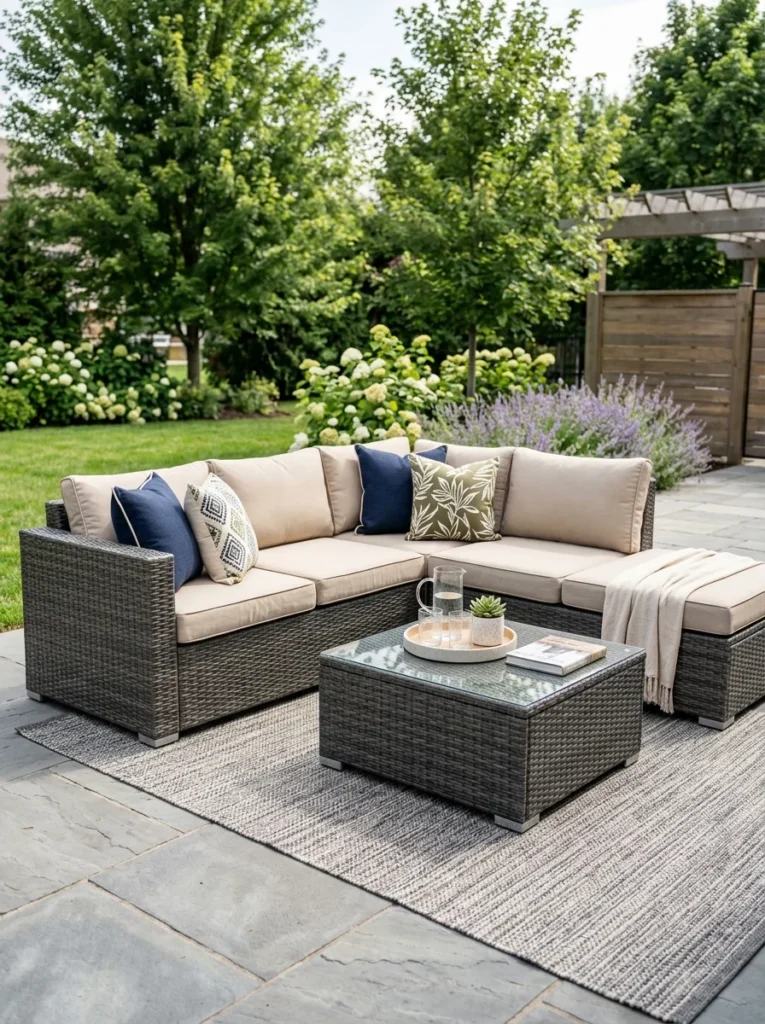
Natural wicker and rattan: better suited to covered spaces
Natural wicker and rattan bring warmth and texture that synthetic versions still don’t fully replicate, but they’re considerably less weather-resistant, since the natural fibers can absorb moisture and degrade with direct, sustained exposure to rain and sun. These materials work best in a covered patio, porch, or otherwise sheltered space rather than fully exposed to the elements, and they typically require moving indoors or into storage during harsh winter weather in colder climates. Cost varies depending on quality, but natural rattan and wicker generally sit in the mid-range budget category.
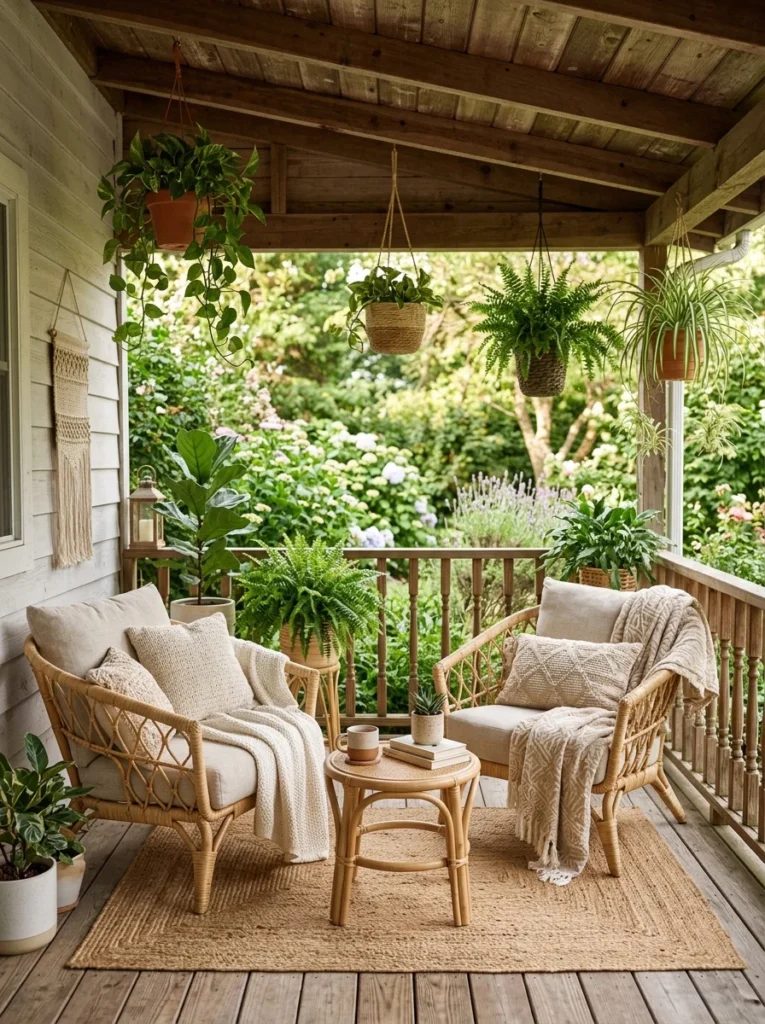
Cedar and other naturally rot-resistant woods
Cedar, along with other naturally rot- and insect-resistant woods, offers a warmer, more traditional look than metal or resin furniture while still holding up reasonably well outdoors without chemical treatment, though not quite as durably as teak. It requires periodic sealing or staining to maintain both its appearance and weather resistance over time, and it performs best in moderate climates rather than extremely humid or extremely dry, sun-intense regions where wood movement and cracking become more of a concern. Cedar furniture typically sits in the mid-range budget category, offering a reasonable middle ground between premium teak and the more affordable synthetic options.
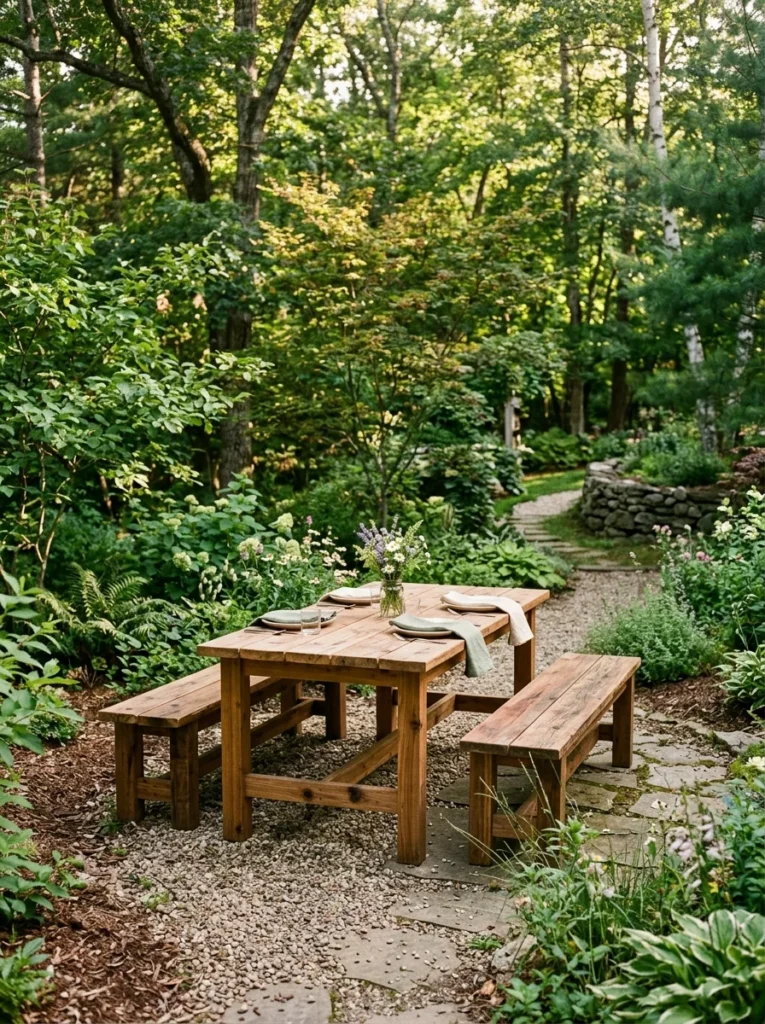
Concrete and stone: heavy-duty and nearly maintenance-free
Concrete and natural stone furniture, benches, side tables, and planters in particular, are essentially impervious to weather damage and require virtually no maintenance beyond occasional cleaning. Their significant weight makes them excellent for windy climates, since they won’t blow around or need to be secured, but that same weight makes them difficult to rearrange or move seasonally. This material tends to work as accent pieces, a side table or bench, rather than an entire furniture set, and it generally sits in the mid-to-upper budget range depending on size and finish.
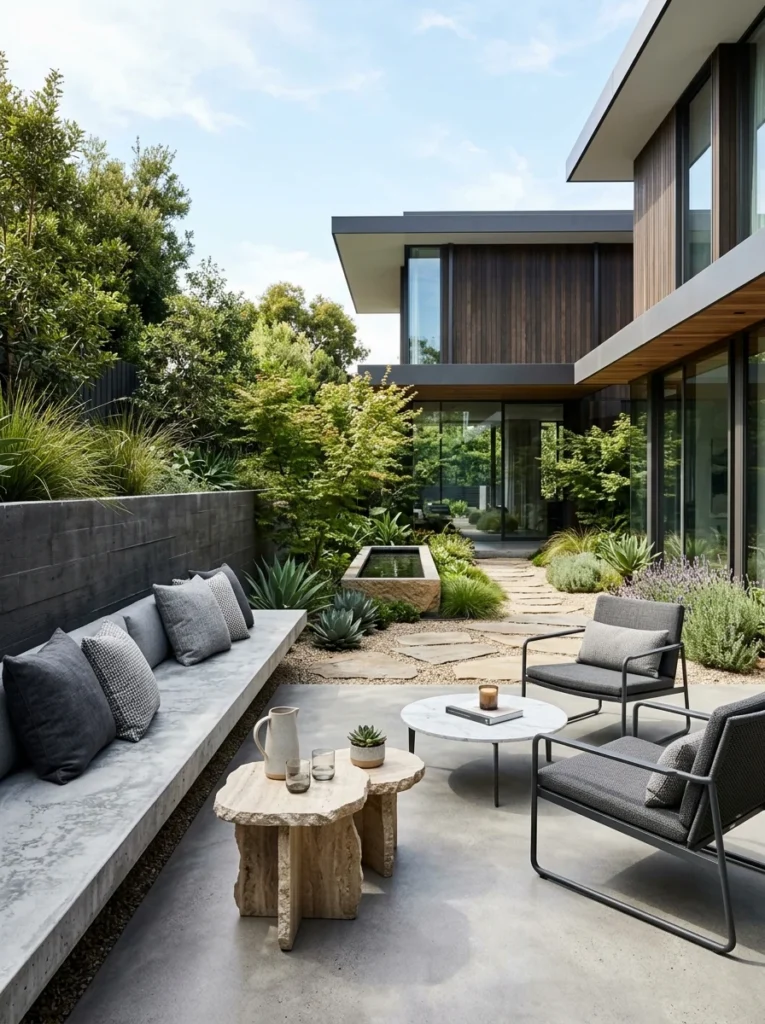
Matching material to your specific climate
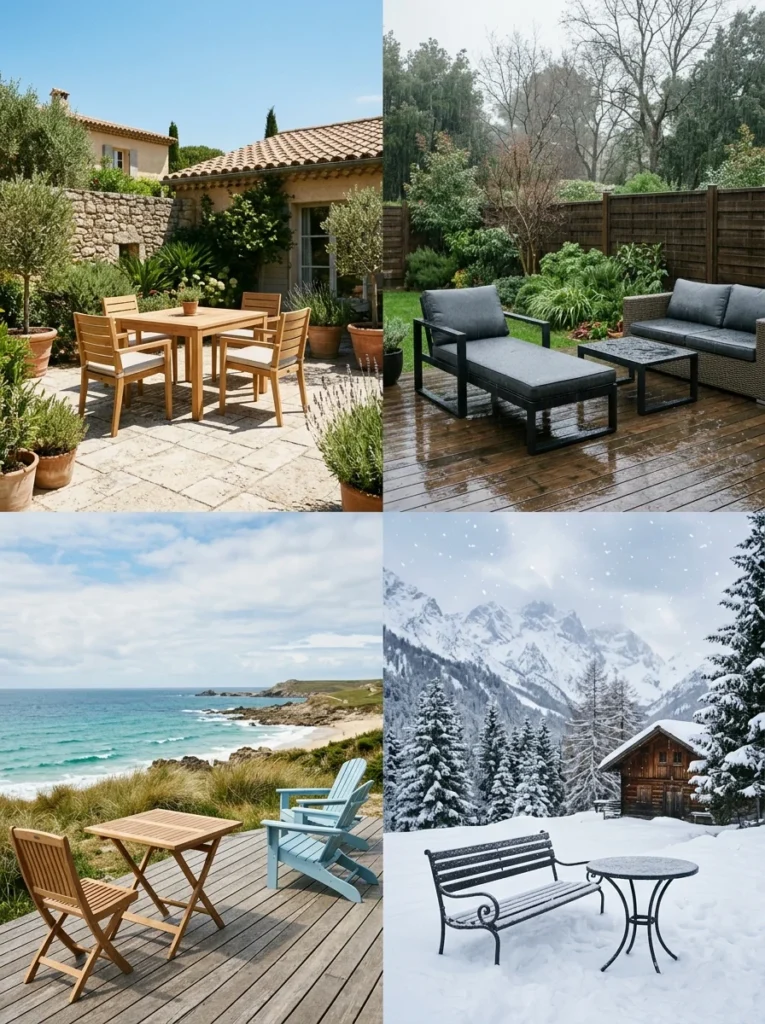
In consistently humid or coastal climates, aluminum, teak, and quality synthetic resin resist moisture and salt air best, while wrought iron, steel, and natural wicker require more diligence to avoid rust or degradation. In hot, sun-intense, dry climates, teak, quality resin, and concrete hold up well against UV exposure, while natural wicker and unsealed wood are more prone to cracking and fading. In climates with significant winter freeze-thaw cycles, furniture that can be easily stored indoors during the off-season, lighter aluminum or resin pieces, reduces wear considerably compared to leaving heavier, less portable furniture exposed to snow and ice all winter.
Matching material to your budget
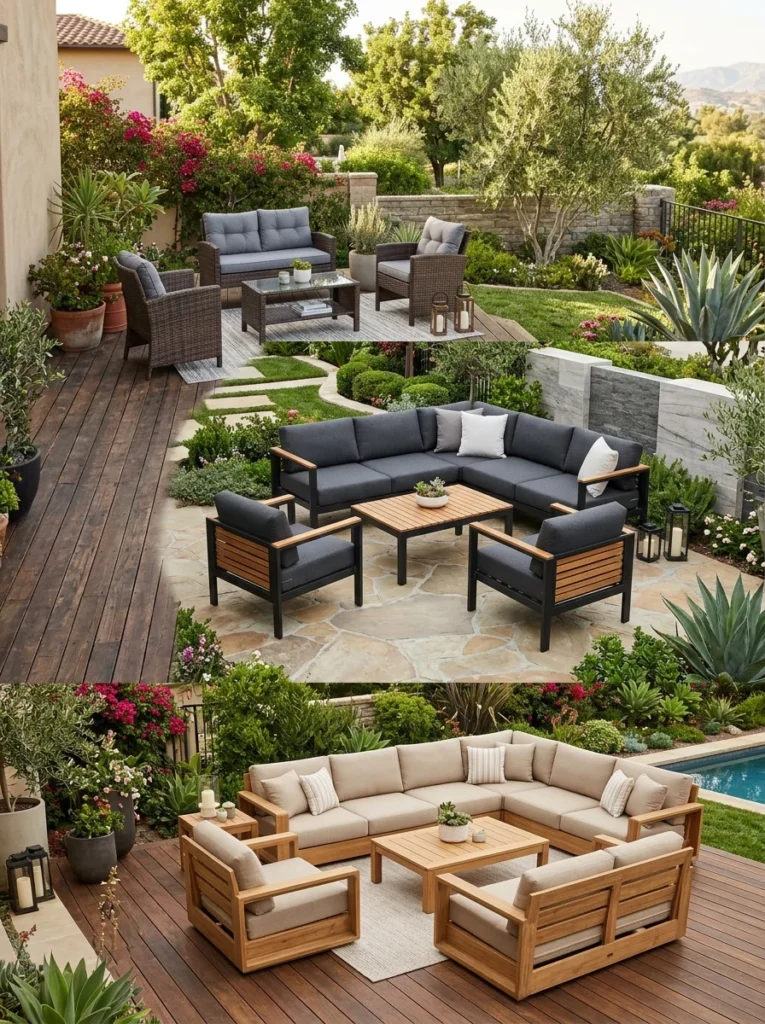
If budget is the primary constraint, quality synthetic resin and basic aluminum offer the best combination of weather resistance and affordability, provided you avoid the very cheapest versions of either, which tend to disappoint quickly. For a mid-range budget, cedar, natural wicker for covered spaces, or mid-tier wrought iron all offer a step up in look and material quality. For those willing to invest for the long term, teak remains the most versatile, durable premium option, often justifying its higher cost through decades of use with minimal replacement or repair.
Maintenance expectations by material
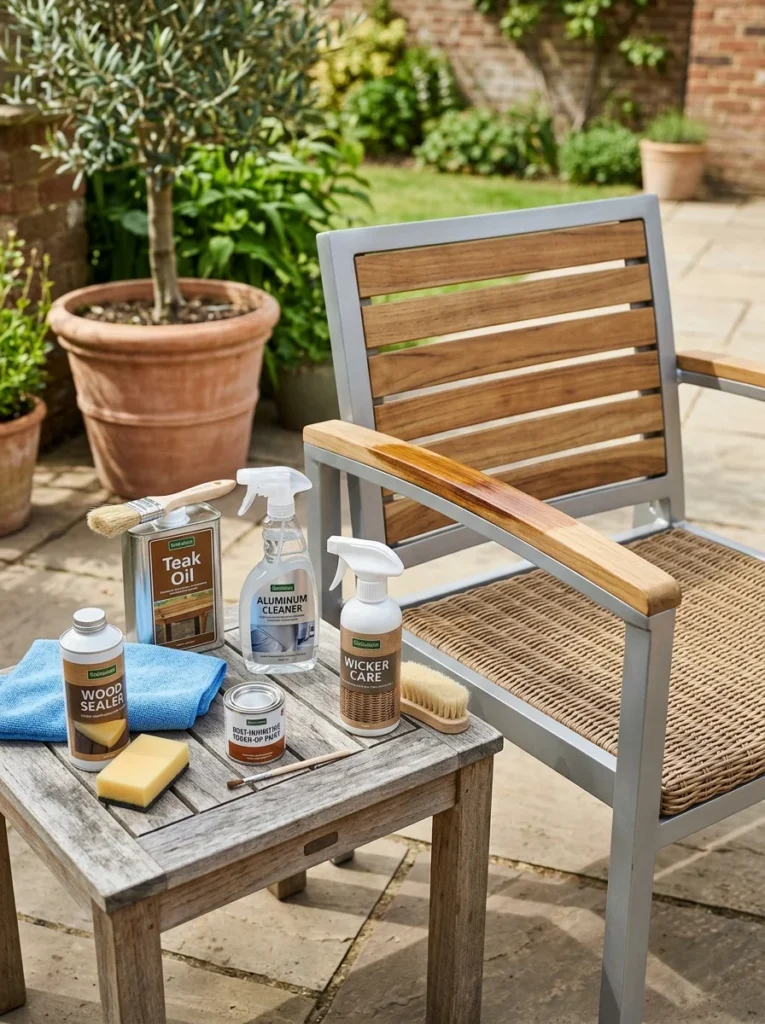
Teak requires occasional oiling if you want to maintain its original color, though it can also be left entirely untreated to weather naturally with essentially no maintenance at all. Aluminum and quality resin need little beyond regular cleaning. Wrought iron and steel need periodic inspection for rust or chipped finish, with prompt touch-ups to prevent bigger problems. Natural wood and wicker need the most active maintenance, sealing, staining, and seasonal storage in harsher climates, to reach their full potential lifespan.
Don’t overlook cushion and fabric material
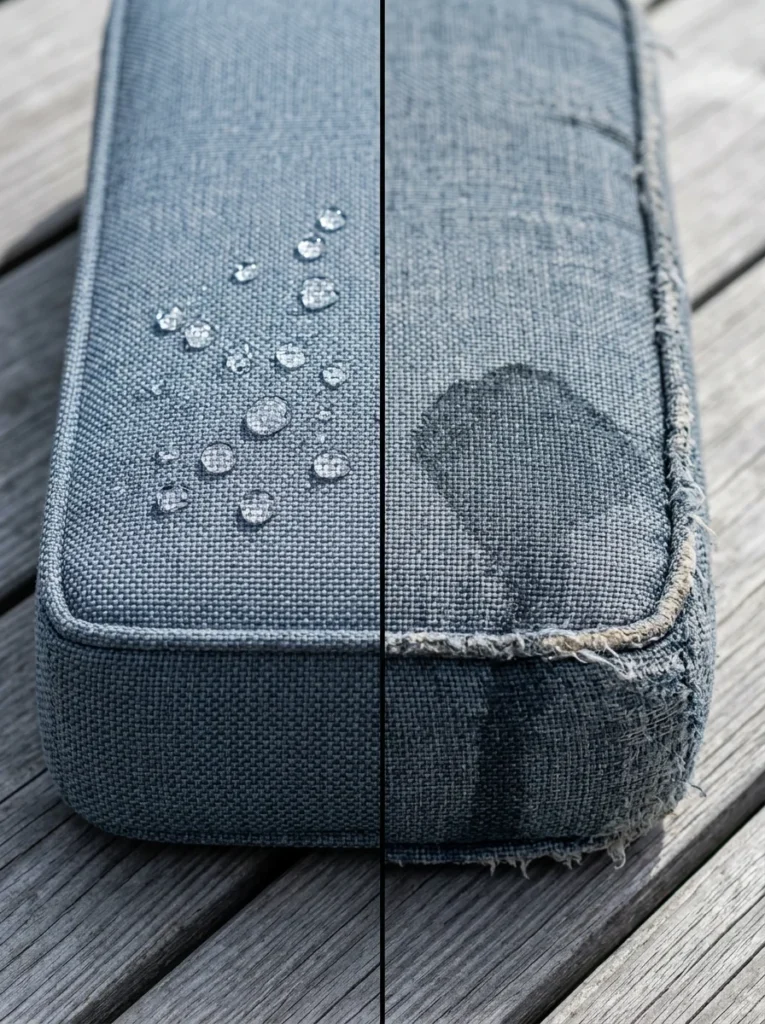
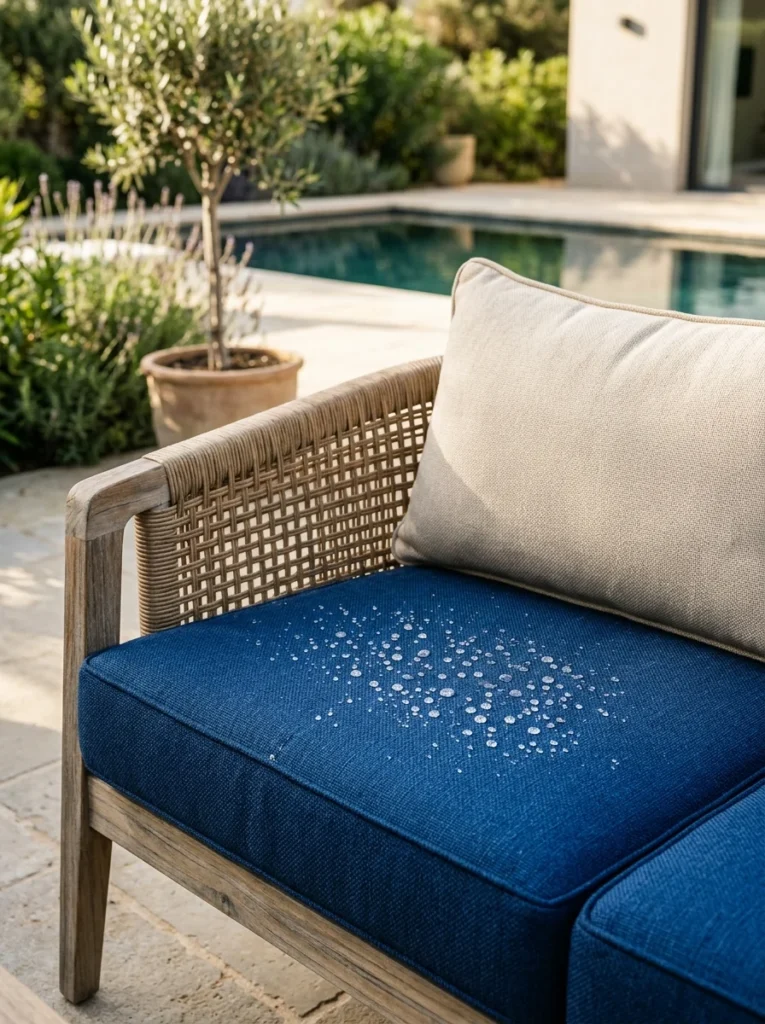
The frame material gets most of the attention, but cushions and fabric coverings face just as much weather exposure and can undermine an otherwise durable furniture set if chosen poorly. Solution-dyed acrylic fabric, where color is added during fiber production rather than applied afterward, resists fading and mildew significantly better than standard outdoor fabric, making it worth the modest price premium over basic polyester covers. Quick-dry foam, designed with channels that let water drain through rather than absorb and hold moisture, prevents the mildew smell and prolonged dampness that ruins many otherwise decent cushions after just a season or two of rain exposure. Investing a bit more in quality cushions, even paired with a more budget-friendly frame, often extends the usable life of a furniture set more than spending extra on the frame alone while neglecting the fabric.
Consider covers and off-season storage regardless of material
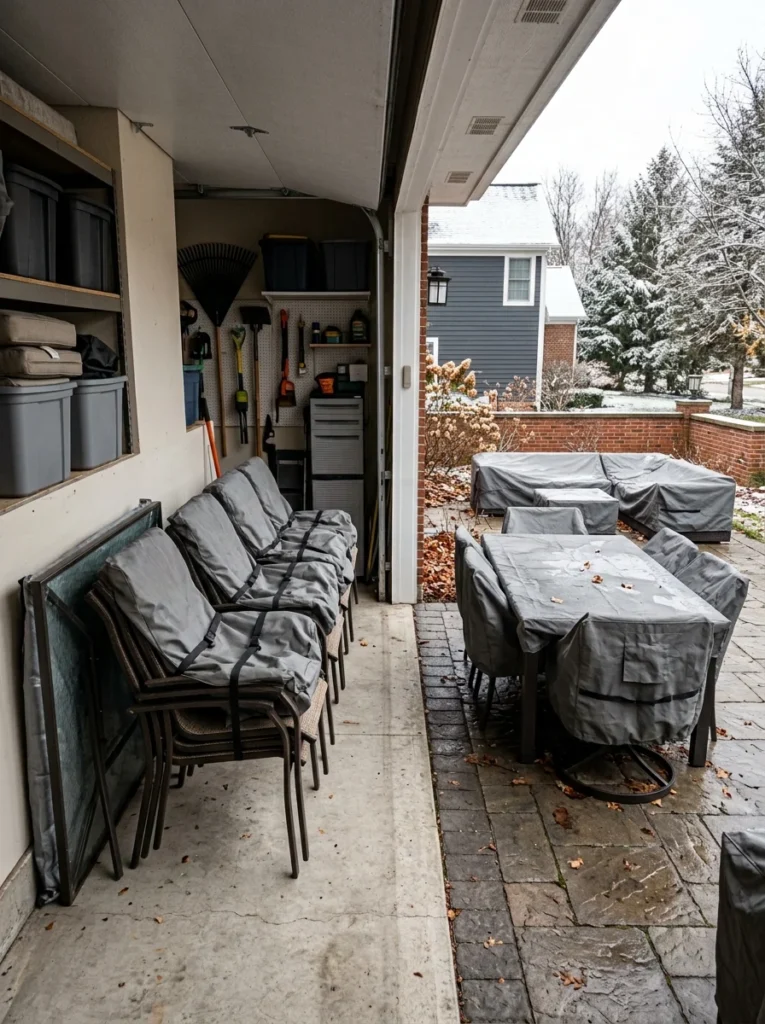
Even the most weather-resistant materials benefit from some protection during particularly harsh conditions or long stretches of non-use. Fitted, breathable outdoor furniture covers reduce debris buildup, sun bleaching, and moisture exposure during rainy stretches or winter months, extending the appearance and lifespan of virtually any material on this list. For households in regions with severe winters, moving lighter furniture into a garage or shed, or at minimum covering heavier pieces thoroughly, reduces the wear that a full season of snow and ice exposure would otherwise cause.
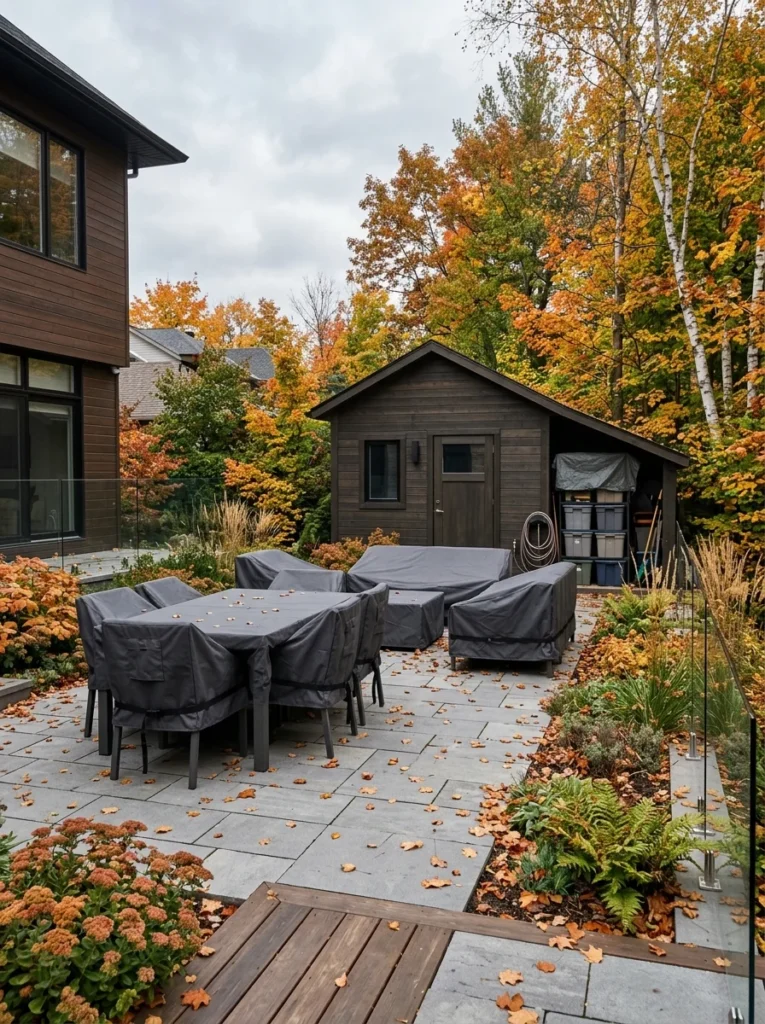
What’s the most durable outdoor furniture material overall?
Teak is generally considered the most durable, versatile option across a wide range of climates, thanks to its natural oil content and resistance to rot and insects, though it comes at a higher price point than most alternatives.
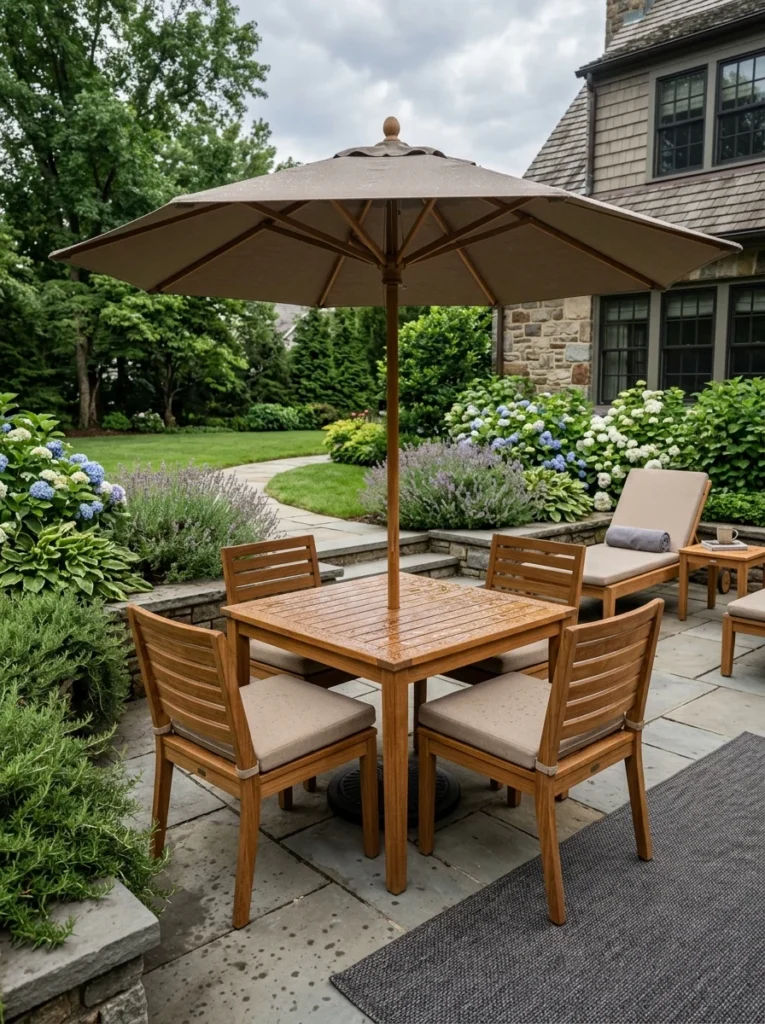
What’s the best budget-friendly option that still holds up well?
Quality, UV-stabilized synthetic resin furniture offers a strong balance of affordability and weather resistance, provided you avoid the cheapest available versions, which tend to crack or fade considerably faster than better-made alternatives.
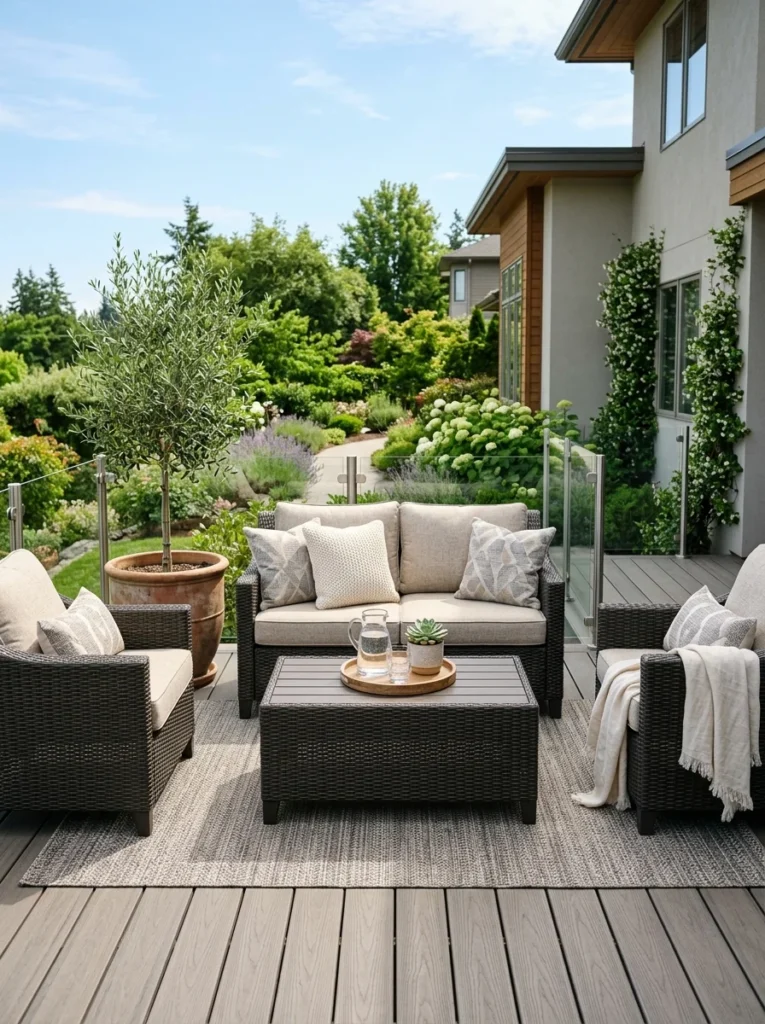
Is wrought iron furniture a good choice for a humid climate?
Wrought iron and steel are more prone to rust in humid or coastal climates unless they have a high-quality, well-maintained protective finish. In consistently humid areas, aluminum or teak are generally more reliable choices with less ongoing maintenance.
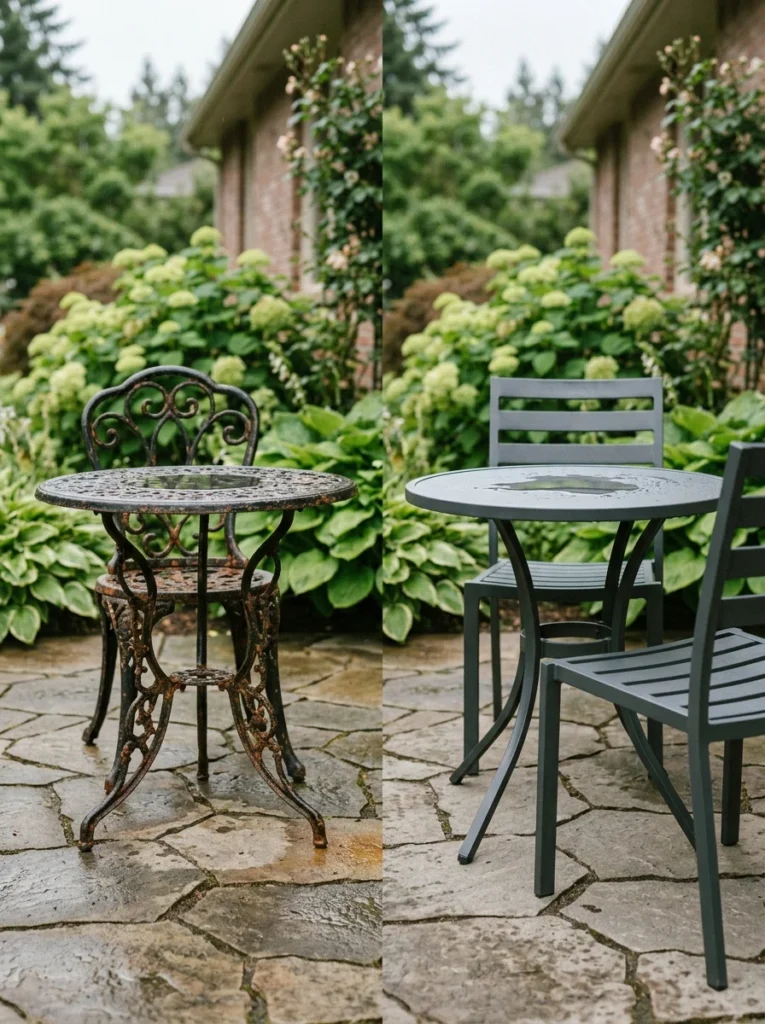
Do I need to store outdoor furniture indoors during winter?
It depends on the material and your climate’s severity. Lighter materials like aluminum and resin are easy to move indoors or into storage during harsh winters, which extends their lifespan, while heavier materials like concrete or stone can typically be left outside year-round with minimal concern.
Does cushion fabric matter as much as the furniture frame?
Yes, solution-dyed acrylic fabric and quick-dry foam resist fading, mildew, and prolonged dampness far better than basic polyester covers and standard foam. Investing in quality cushions can extend the usable life and appearance of a furniture set as much as the frame material itself.
Outdoor furniture that looks great in a showroom or online listing can still fail quickly if the material isn’t matched to your specific climate and how much maintenance you’re realistically willing to keep up with. Teak and aluminum offer the broadest climate versatility, quality resin offers the best combination of affordability and durability, and heavier materials like wrought iron, wood, and stone each have specific conditions where they perform best and specific tradeoffs worth going in with clear eyes about.
My current furniture, a mix of aluminum frames and quality resin seating chosen specifically for our humid, rainy climate, has held up through several seasons now without a single crack, rust spot, or faded cushion. If you take away only one lesson from my two failed attempts before this one, let it be this: check the material specification before you check the price tag, since the cheapest option that fails within a year always ends up costing more than the slightly pricier one that actually lasts.