
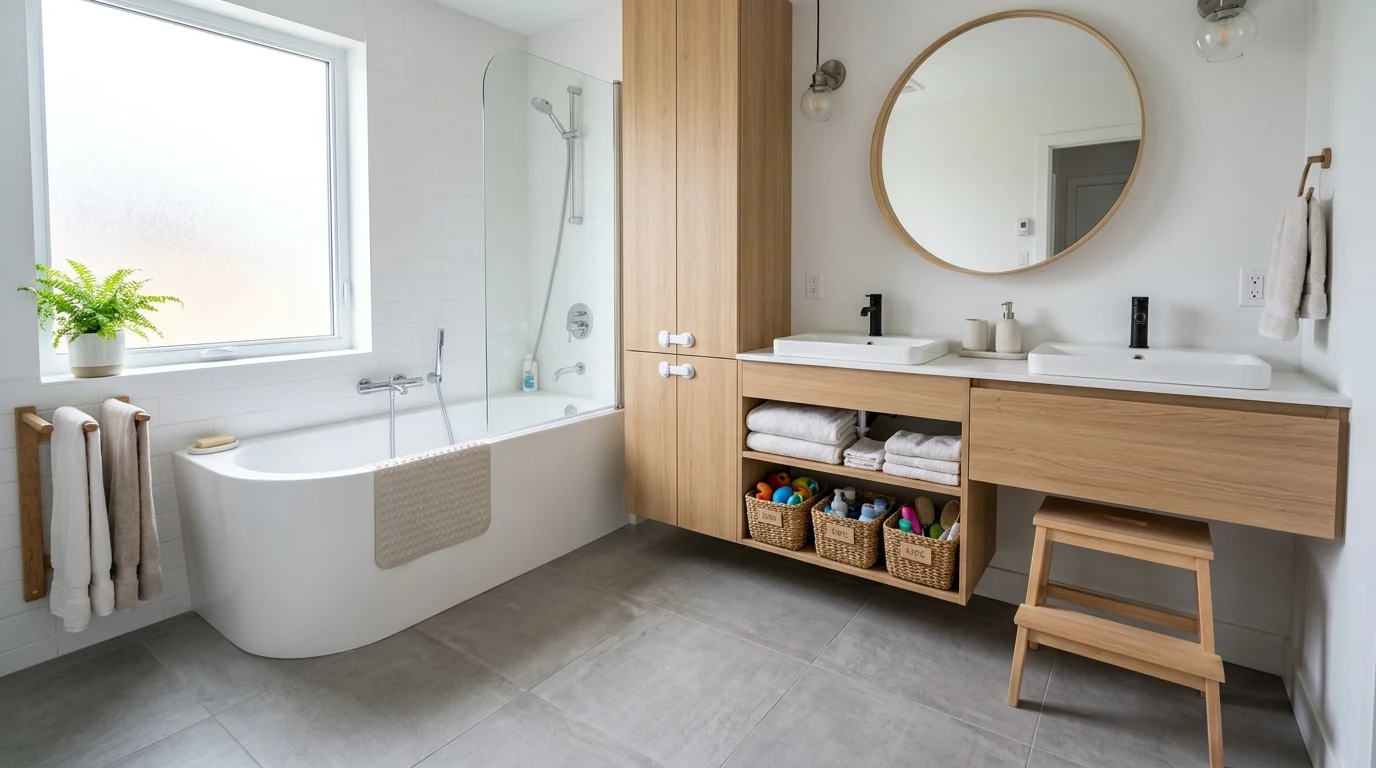
After our second child started climbing onto the counter to reach the sink, using a wobbly stack of the bathroom trash can and a stool that clearly wasn’t meant for standing on, I realized our bathroom had been designed entirely around adults, with zero thought given to how a small child was actually meant to use it safely. That small, slightly terrifying moment kicked off a full rethink of the space, and what I learned is that a genuinely kid-friendly bathroom doesn’t have to look like a daycare. With the right choices, it can be safe and practical for children while still looking like a real, grown-up bathroom the rest of the household is happy to use every day.
Below is everything that actually made a difference in our own bathroom, organized by safety first, since that matters most, followed by storage and style choices that keep the room functional for kids without sacrificing how it looks.
Start with slip resistance on the floor
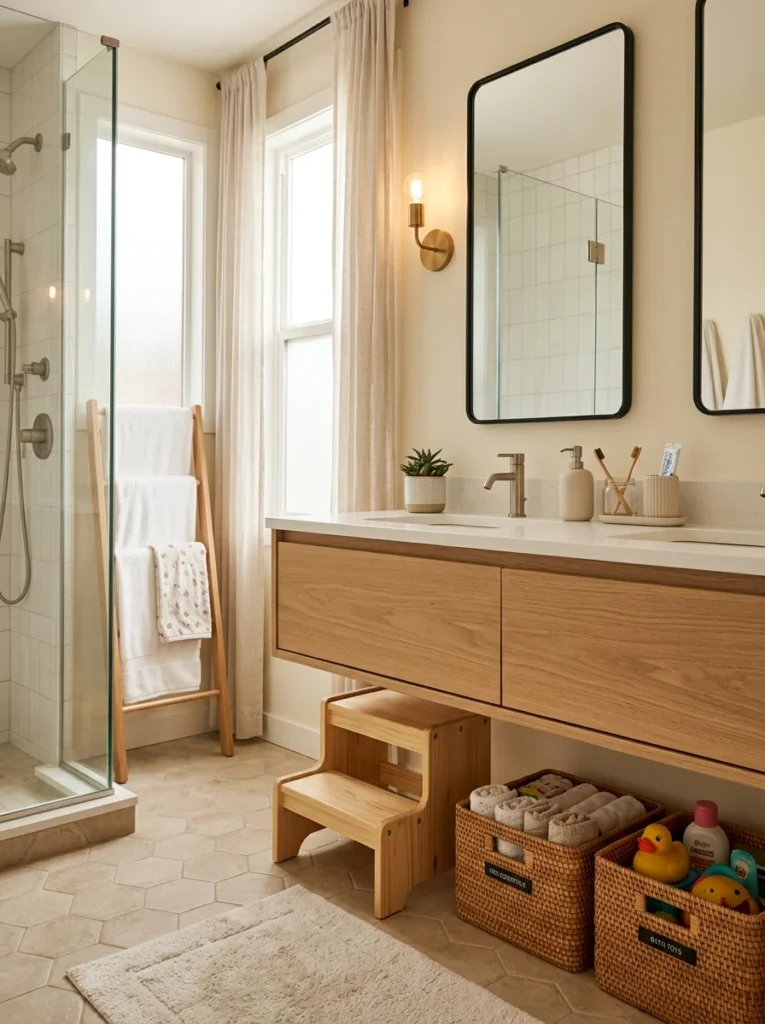
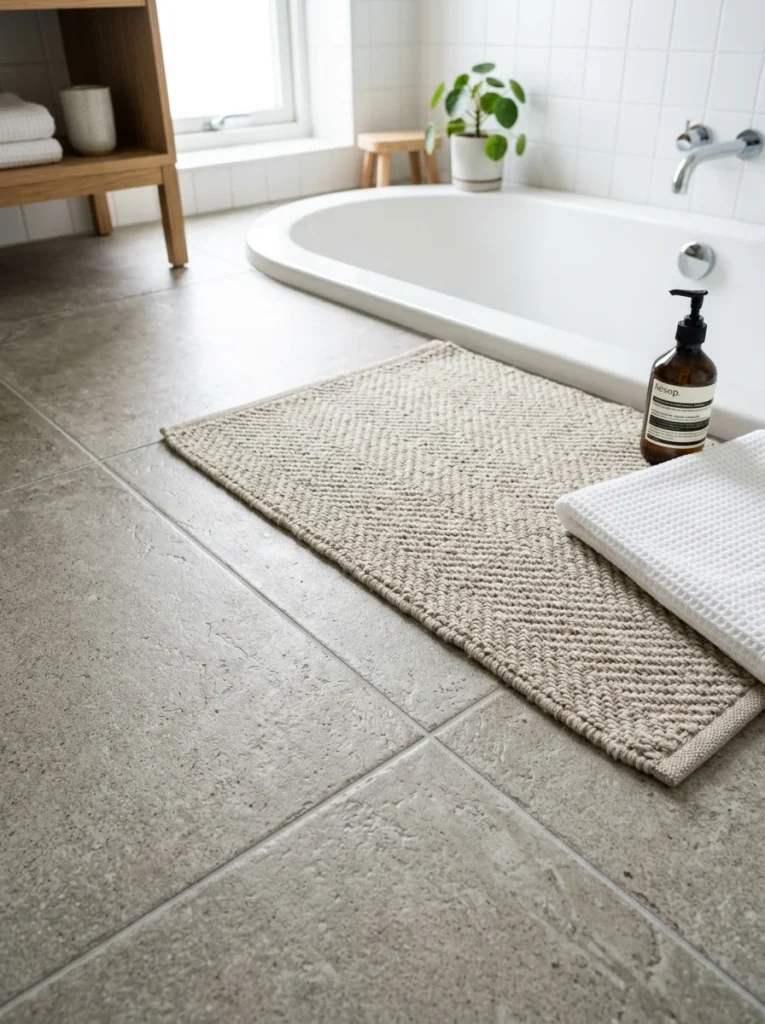
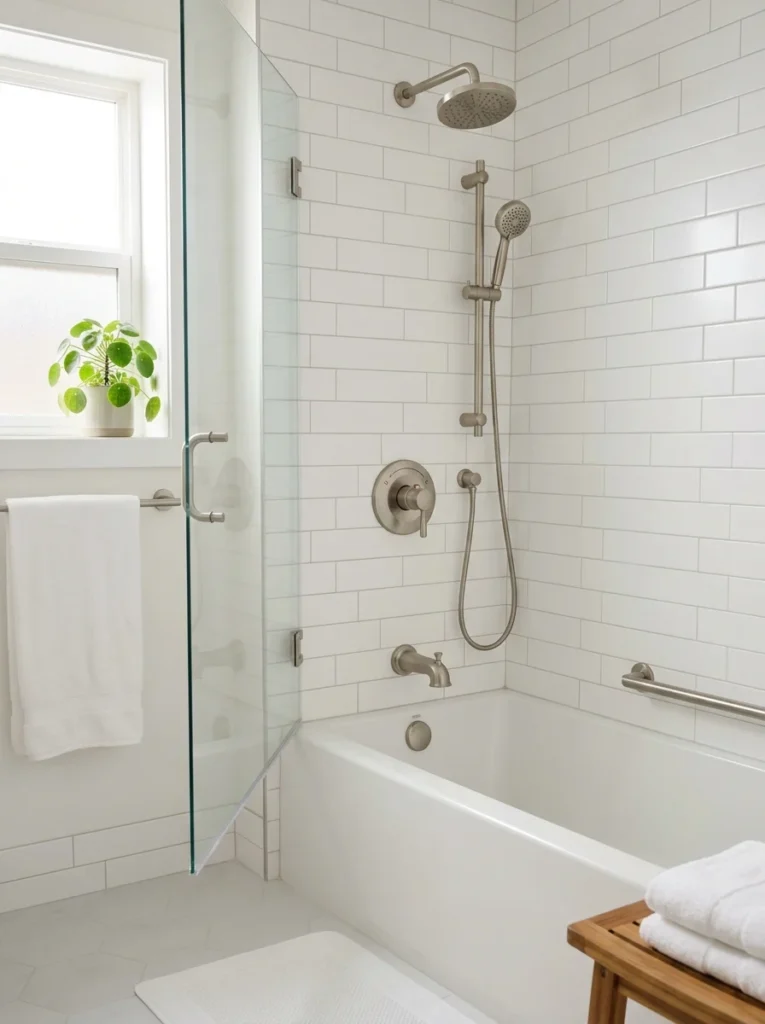
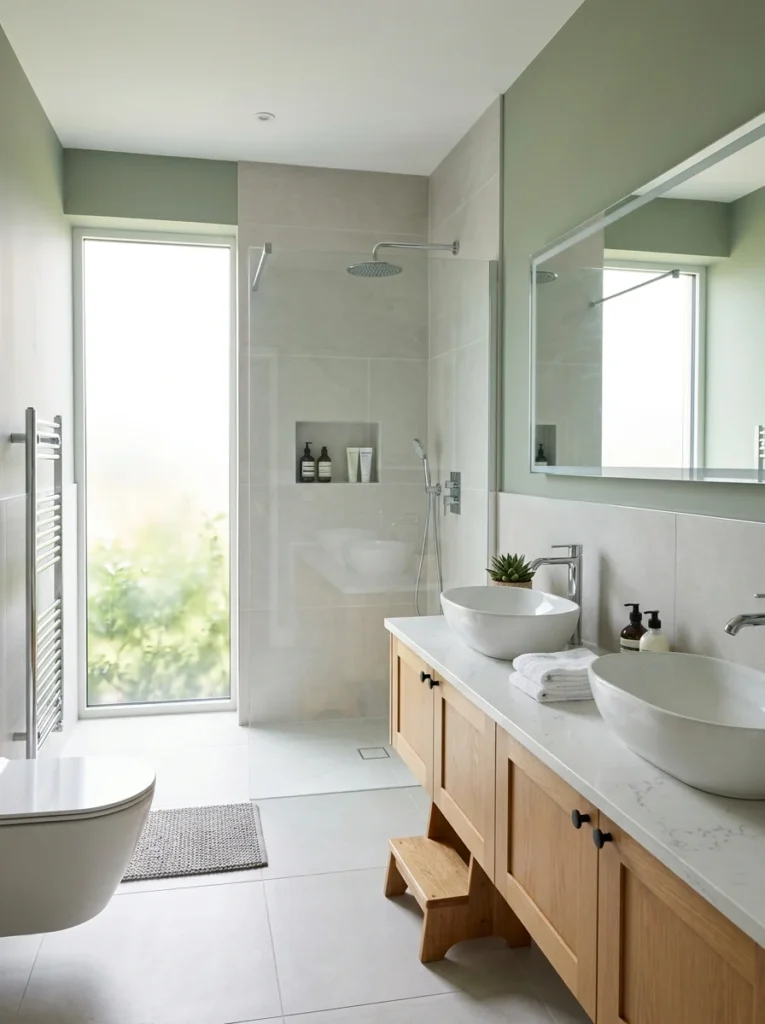
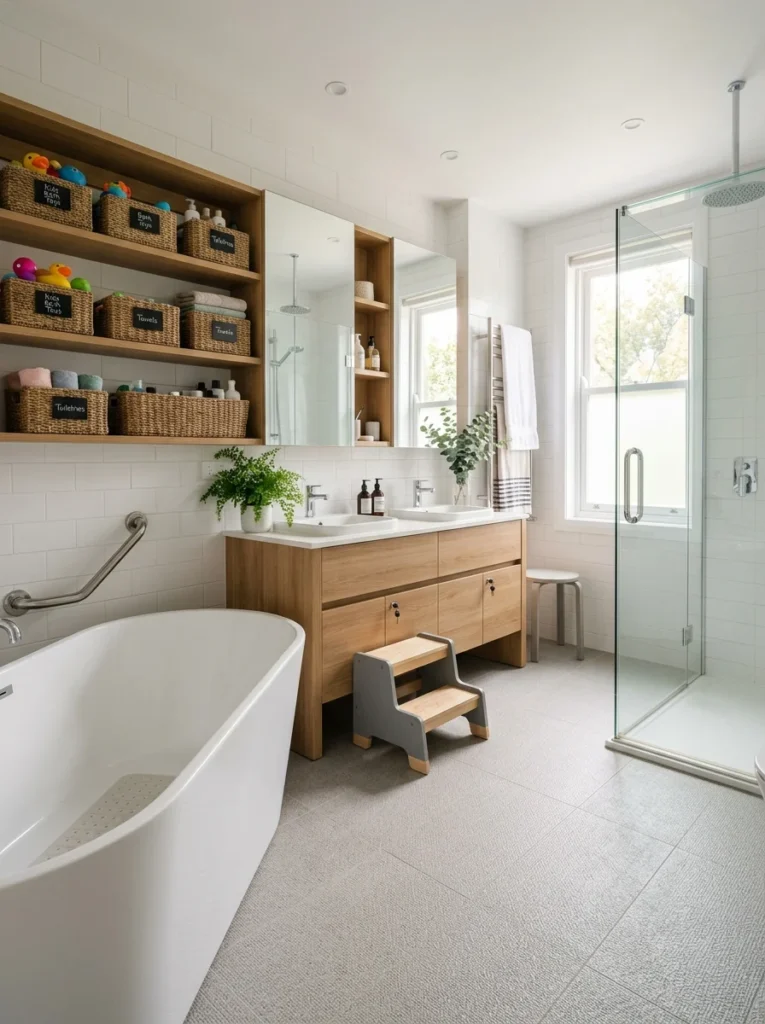
Wet floors and small kids are a genuinely risky combination, so flooring is the first thing worth addressing in a kid-friendly bathroom. A matte or textured tile, rather than a glossy, polished finish, provides significantly better traction when wet, which matters constantly in a bathroom used for baths and frequent hand-washing. If replacing the floor isn’t an option right now, a textured, securely adhered bath mat with a non-slip backing placed just outside the tub is a simple, inexpensive way to reduce slip risk in the meantime.
Add grab bars and non-slip surfaces in the tub
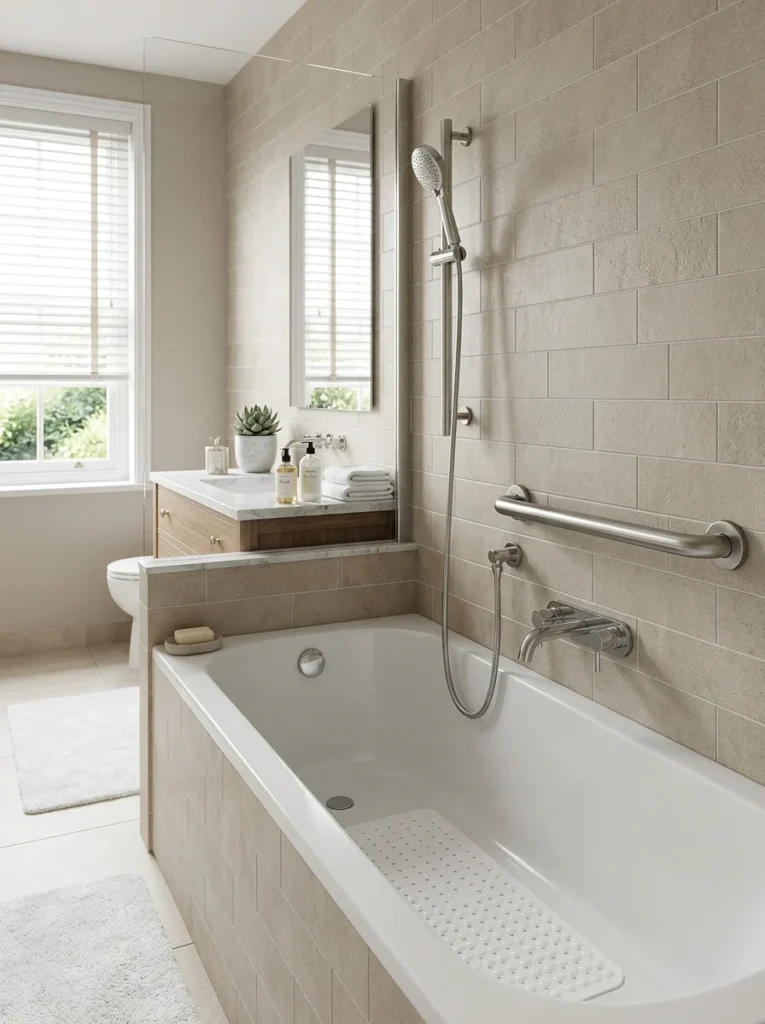
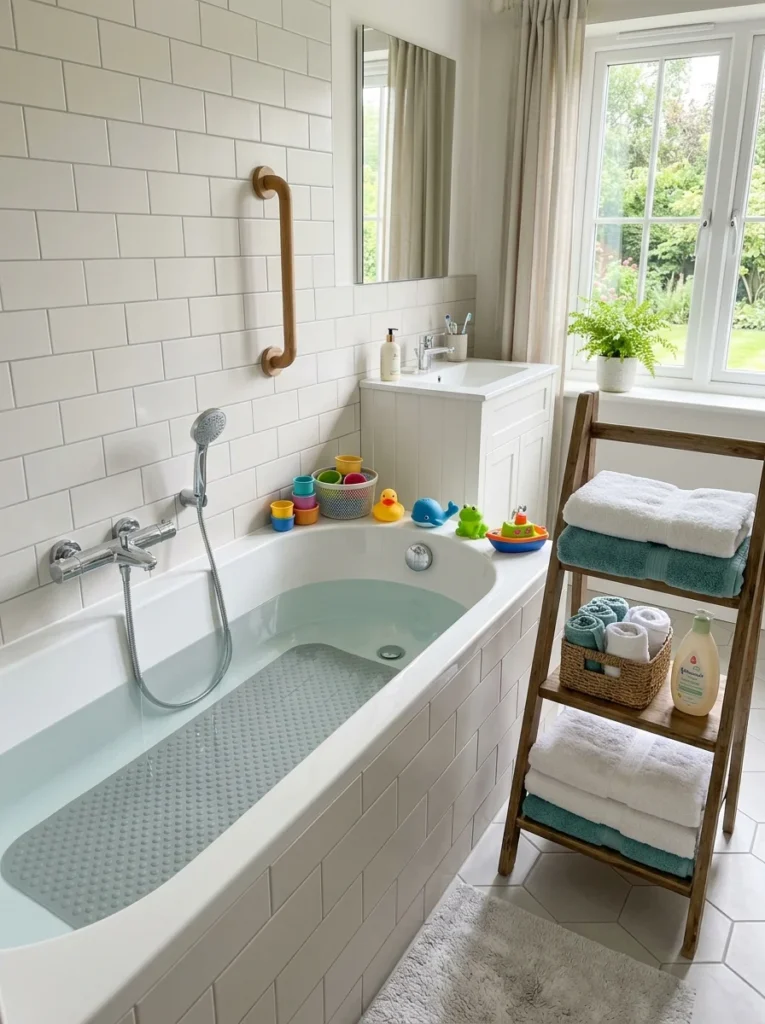
A textured non-slip mat or adhesive strips inside the tub itself reduces slipping during bath time significantly, and it’s one of the cheapest safety additions available. A securely mounted grab bar near the tub, positioned at a height useful for both adults helping a child and, eventually, the child themselves as they get older, adds an extra layer of safety without looking overly clinical if you choose a simple, well-designed bar rather than an obviously medical-looking one.
Install anti-scald devices and check your water heater setting
Scalding is one of the most serious risks in a bathroom with young children, since kids can’t always react quickly enough to water that’s too hot. Installing an anti-scald device on the tub faucet and showerhead, which automatically limits water temperature, is a relatively inexpensive safety upgrade. Just as importantly, check your water heater’s temperature setting directly, since many are set higher than necessary by default, and lowering it to a safer temperature protects the whole household, not just young children.
Secure the cabinet with childproof locks
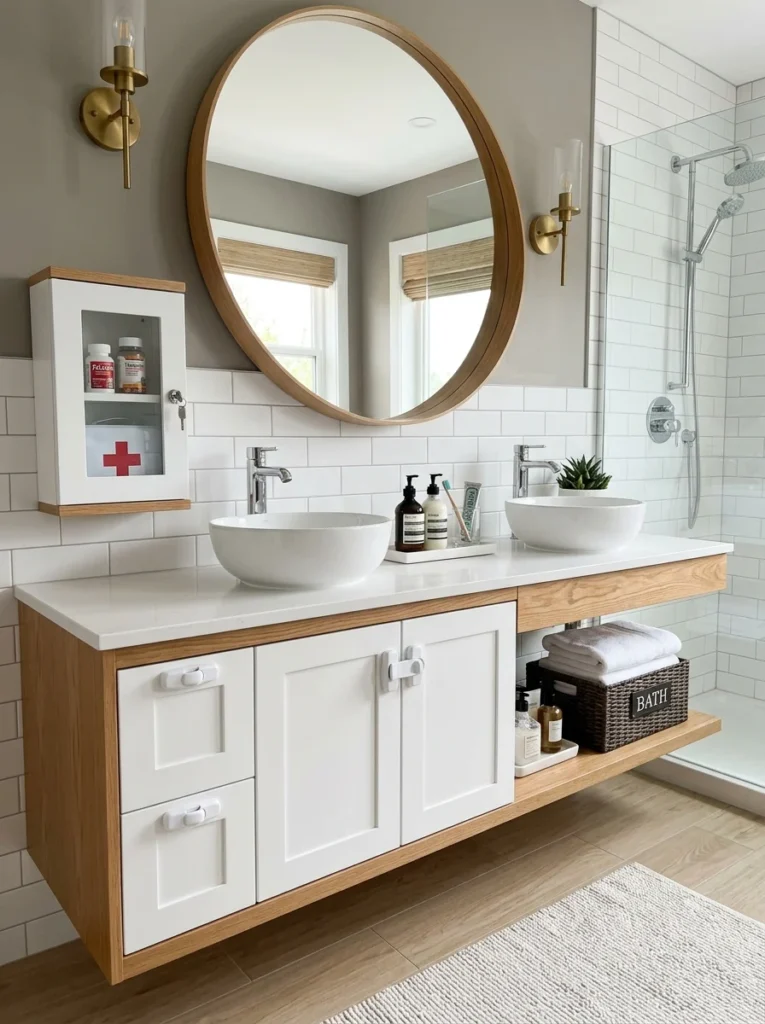
Any cabinet holding medication, cleaning supplies, or anything else unsafe for a child to access should have a secure childproof lock, ideally one that’s simple for adults to open one-handed but genuinely difficult for a curious toddler to figure out. It’s worth testing any lock you buy against your specific child’s persistence and dexterity, since some simple designs are defeated fairly quickly once a child gets determined enough.
Round out sharp corners and edges where possible
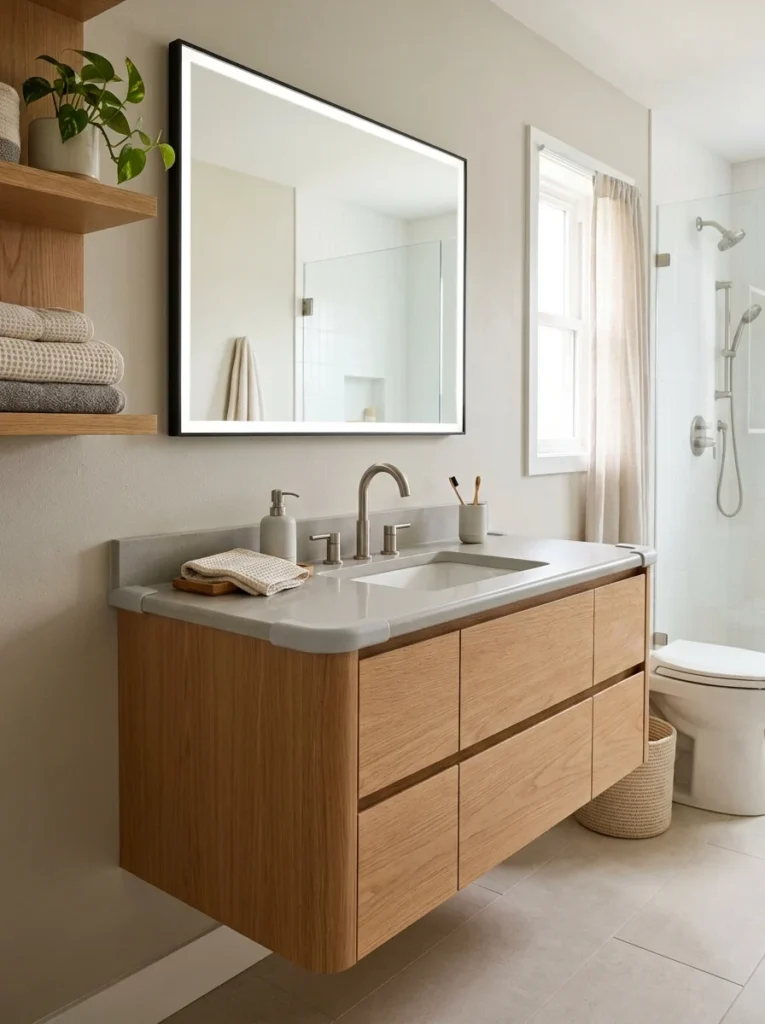
Sharp countertop corners and edges are a common source of bumps and injuries for a wobbly toddler learning to navigate a bathroom. Choosing a countertop with a slightly rounded edge during a renovation, or adding soft corner guards to existing sharp edges in the meantime, reduces the severity of the inevitable bumps that come with a curious, moving child in the space.
Lower the reach: add a step stool and accessible storage
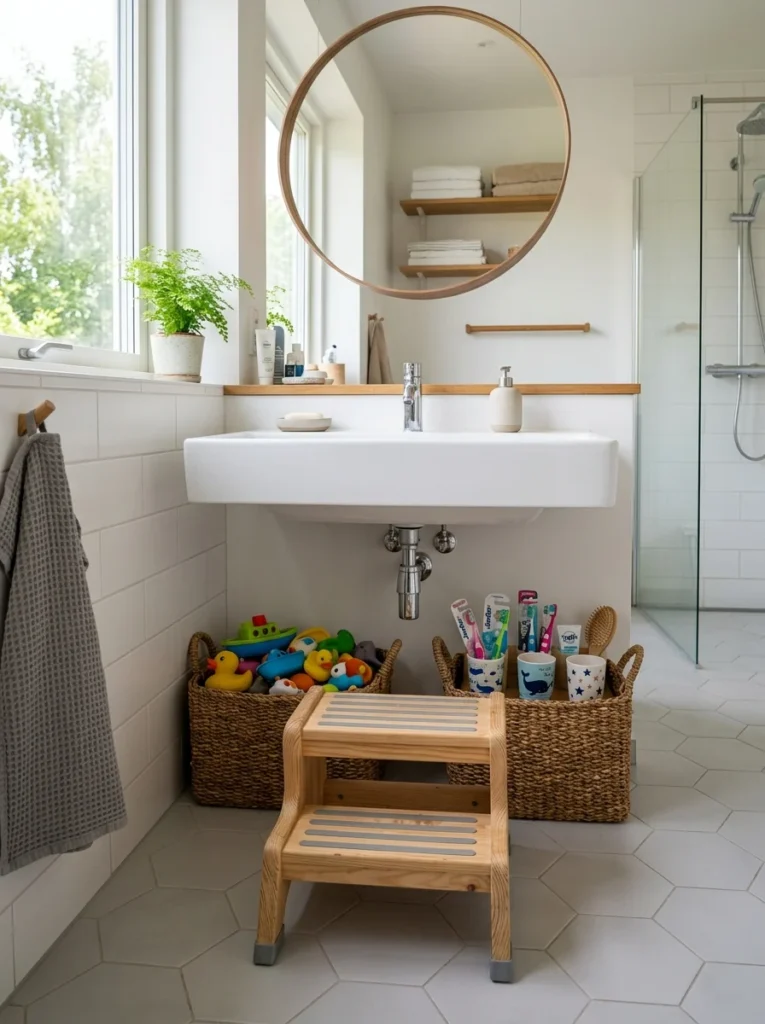
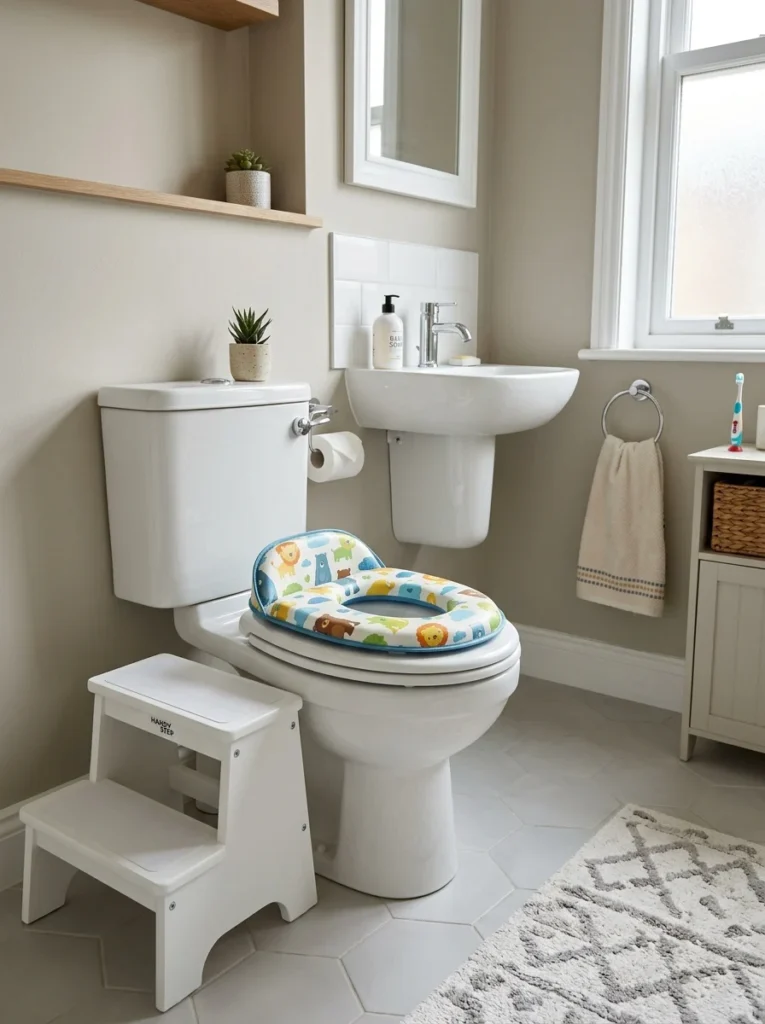
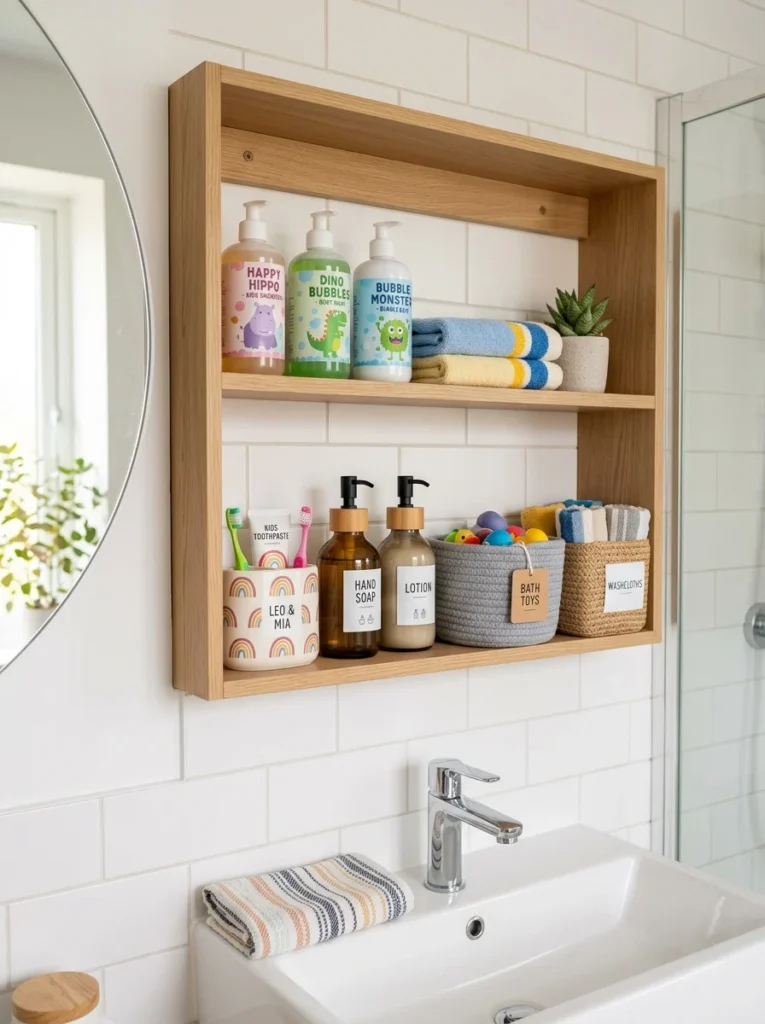
A sturdy, non-slip step stool at the sink lets a child wash their hands and brush their teeth independently, rather than needing to be lifted or, worse, climbing onto something unstable themselves. Beyond the stool, keeping a low shelf, basket, or drawer stocked with a child’s own toothbrush, cup, and bath toys, within their own reach, encourages independence and cuts down on the daily friction of them needing help for every small task.
Choose durable, easy-to-clean surfaces throughout
Kids are, understandably, harder on a bathroom than adults, splashing water, dropping toys, occasionally leaving a colorful bath crayon mark somewhere unexpected. Choosing a durable, easy-to-wipe-down countertop material, a tile with minimal, well-sealed grout lines, and a paint labeled for high-moisture, scrubbable use all make daily cleanup faster and keep the room looking good despite regular kid-related wear.
Add smart, flexible storage for bath toys and supplies
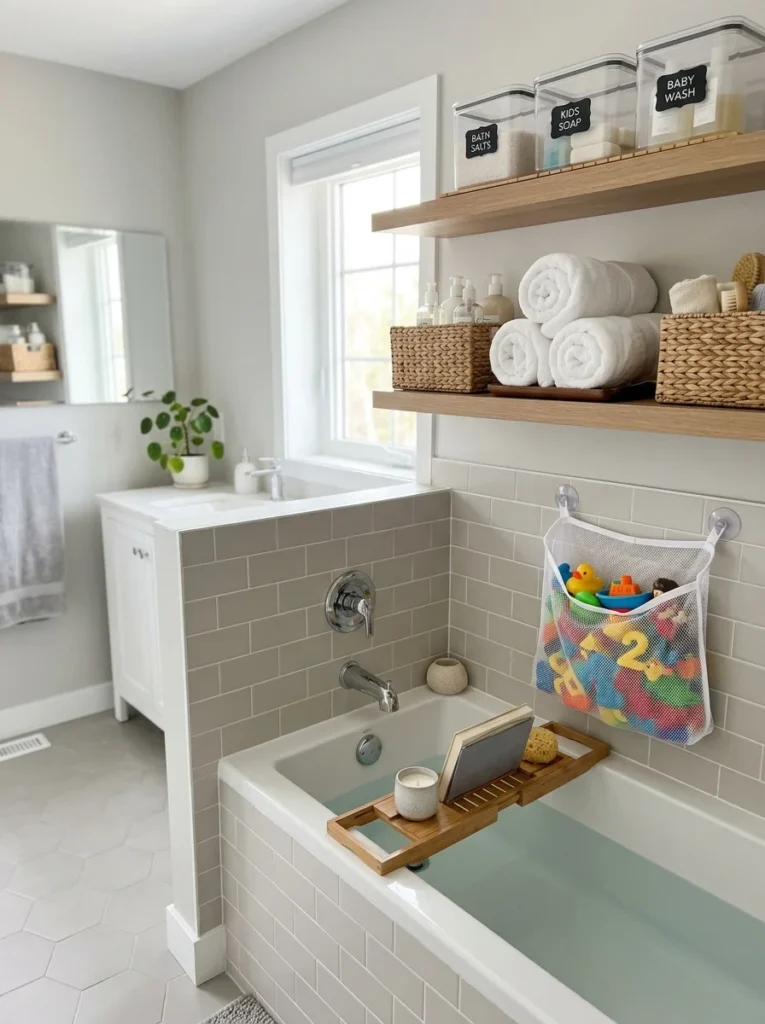
A mesh bag or a caddy that hangs over the tub edge and allows bath toys to fully drain and dry between uses prevents both mold buildup inside toys and a cluttered tub deck. A dedicated, easily reachable spot for towels and a robe, at a child’s height rather than only an adult’s, makes it far easier for a child to dry off and get dressed with less assistance as they grow more capable. Keeping cleaning supplies and medications in a separate, higher, locked cabinet, away from anything designated as the kids’ storage area, keeps the two clearly separated and reduces the chance of confusion or accidental access.
Design for growth, not just the current age
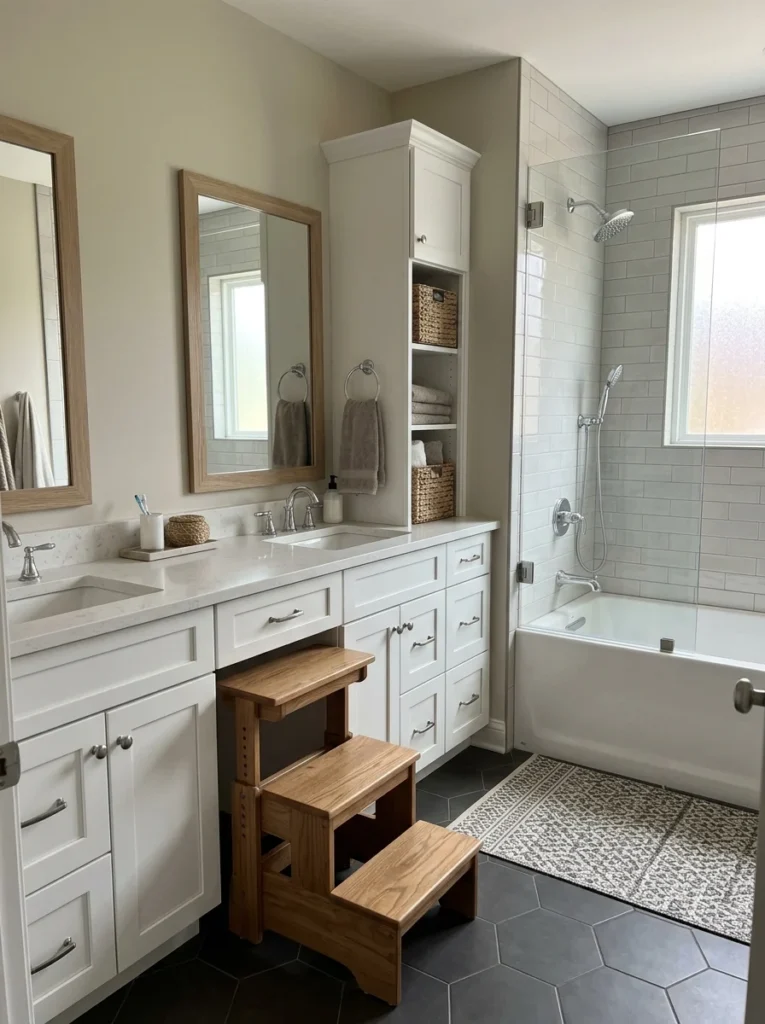
Kids change quickly, and a bathroom designed only around a toddler’s current needs may need reworking again within a couple of years. Choosing an adjustable-height step stool, storage that can be reassigned as a child grows, and a step-in tub or shower configuration that works for both bath time now and independent showering later, all extend the useful life of these choices well beyond the toddler years, saving you from redoing the same updates repeatedly.
Keep the style genuinely livable for the whole family
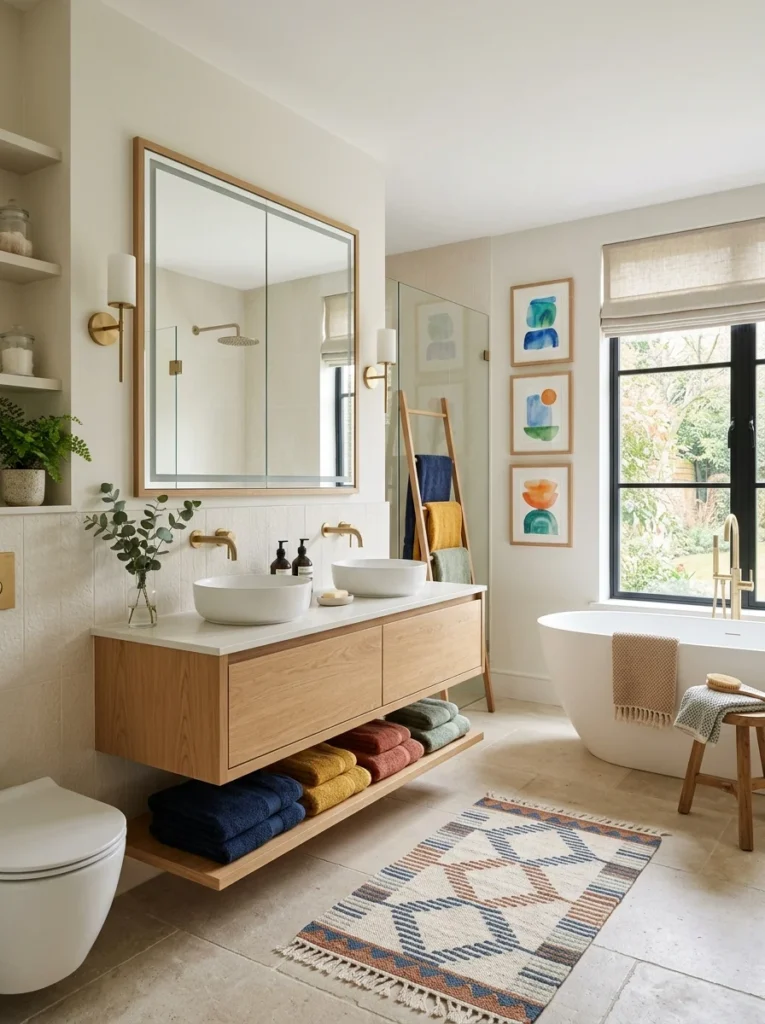
A kid-friendly bathroom doesn’t need cartoon characters or an overtly juvenile theme to work well for children; in fact, a themed room tends to need replacing again once a child outgrows that particular interest, usually faster than parents expect. Choosing a timeless, adult-friendly base palette and finishes, then adding personality through a few easily swapped elements, colorful towels, a fun bath mat, a piece of art the child picked out, keeps the room functional and appealing for children now while remaining a bathroom the rest of the household is happy to use every day, without needing a full redo as tastes change.
Never underestimate the role of supervision
No product or design choice fully replaces active supervision during bath time, especially for infants and young toddlers, since drowning risk exists even in a few inches of water and can happen silently and quickly. Keeping bath time free of distractions, phones, other tasks, until a child is old enough to bathe independently and safely is a habit that matters just as much as any physical safety feature in the room. As children grow older and become more capable in the bath or shower, supervision can gradually shift to checking in periodically rather than constant, direct presence, but that transition should happen based on genuine readiness rather than convenience.
Support toilet training with the right setup
If you’re in the middle of toilet training, a few small additions make the process considerably smoother. A padded, securely fitting toilet seat insert prevents the discomfort and instability of a child sitting on an adult-sized seat, while a step stool positioned at the toilet helps them climb up and down independently once they’re ready to use the regular toilet rather than a separate potty. Keeping a small step stool at the sink specifically for handwashing afterward reinforces the full routine, hygiene included, without needing an adult to lift them each time.
Choose bath products and storage that support independence
Storing a child’s own shampoo, body wash, and soap in a container they can recognize and reach themselves, distinct from adult products, gives them a small sense of ownership over their own routine and reduces the number of times they need to ask an adult for help mid-bath. A tear-free, clearly labeled product kept in this designated spot also reduces the chance of a mix-up with adult products that may not be appropriate for a child’s skin or eyes.
Keep humidity and mold in check
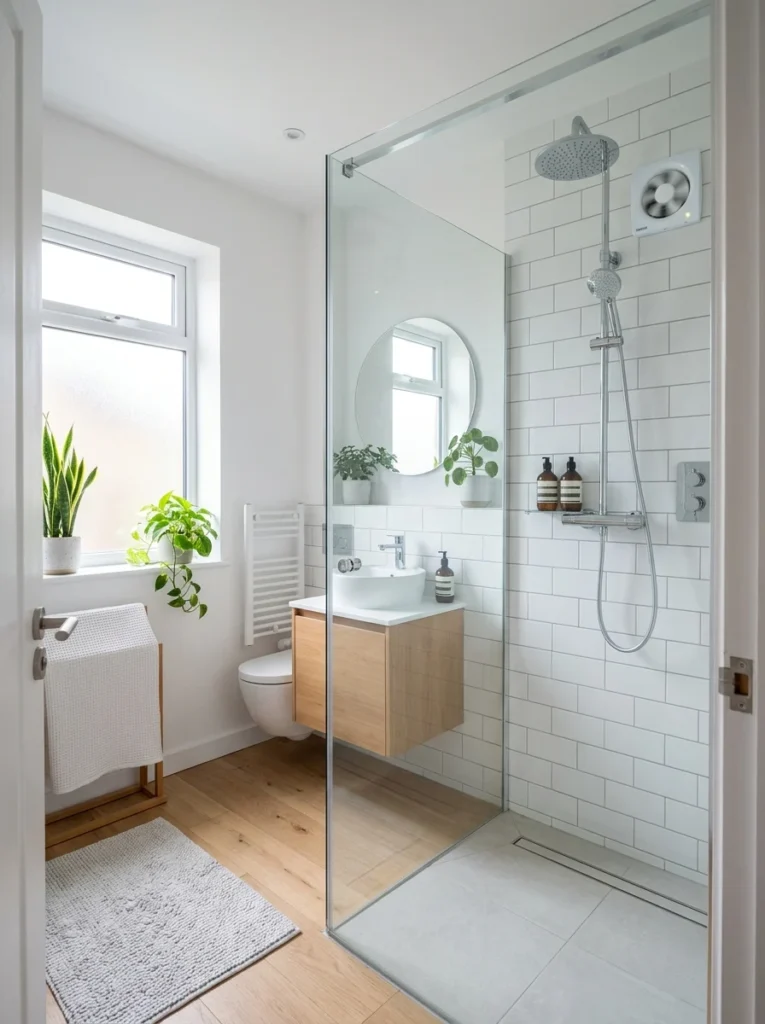
Bath time for young children often means more steam and standing water than a typical adult routine, which makes proper ventilation especially important in a family bathroom. Running the exhaust fan during and for a while after bath time, wiping down the tub and surrounding tile regularly, and promptly addressing any early signs of mold or mildew in grout lines all protect indoor air quality in a room where a child spends meaningful time with their face close to the water and surfaces. A functioning, adequately sized exhaust fan is a worthwhile check or upgrade in any bathroom that sees frequent, sustained use by young children.
Common kid-friendly bathroom questions
What’s the most important safety feature for a bathroom with young kids?
Non-slip flooring and surfaces inside the tub are generally the highest priority, since slipping on wet surfaces is one of the most common bathroom injuries for young children. An anti-scald device for water temperature is a close second, given how serious a scalding injury can be.
Do I need to fully childproof every part of the bathroom?
Focus childproofing efforts specifically on anything genuinely hazardous: medications, cleaning supplies, sharp edges, and water temperature. Non-hazardous items don’t need locks or barriers, and over-childproofing an entire room can make it harder for children to build independence with the tasks that are actually safe for them to do on their own.
How can I make a bathroom kid-friendly without it looking like a daycare?
Choose a timeless, neutral base for the permanent finishes, tile, paint, vanity, and add personality through easily changed elements like towels, a bath mat, or a piece of art. This keeps the room adaptable as a child’s interests change without requiring a full renovation every couple of years.
At what age can kids start using a step stool independently at the sink?
Many toddlers can begin using a sturdy, non-slip step stool with supervision starting around age two to three, though this varies by child. Always supervise initially and choose a stool with a wide, stable base and non-slip feet to reduce tipping risk.
How should a shared bathroom work for multiple kids of different ages?
In a bathroom shared by kids of different ages, assign each child their own labeled storage spot, towel hook, and bathroom supplies to reduce daily squabbles over whose items are whose. A step stool that can be easily moved between the sink and toilet area accommodates a younger child’s needs while an older sibling manages independently, and staggering bath or shower times, rather than trying to have both kids in the bathroom for every routine, often reduces friction more than any design change alone.
A genuinely kid-friendly bathroom comes down to addressing real safety risks first, non-slip surfaces, water temperature, secured hazardous items, then layering in storage and design choices that support a child’s growing independence without locking the room into a look that will need replacing in a few years. None of these changes require a full renovation, and most can be added incrementally as your specific needs become clear.
Our own bathroom now has a sturdy step stool tucked under the sink, a locked cabinet for anything genuinely hazardous, and a set of colorful towels that can be swapped out the moment my daughter’s favorite color inevitably changes again. It’s still very much a bathroom, not a kids’ room, but it finally works for every single person actually using it, which is really the whole point.