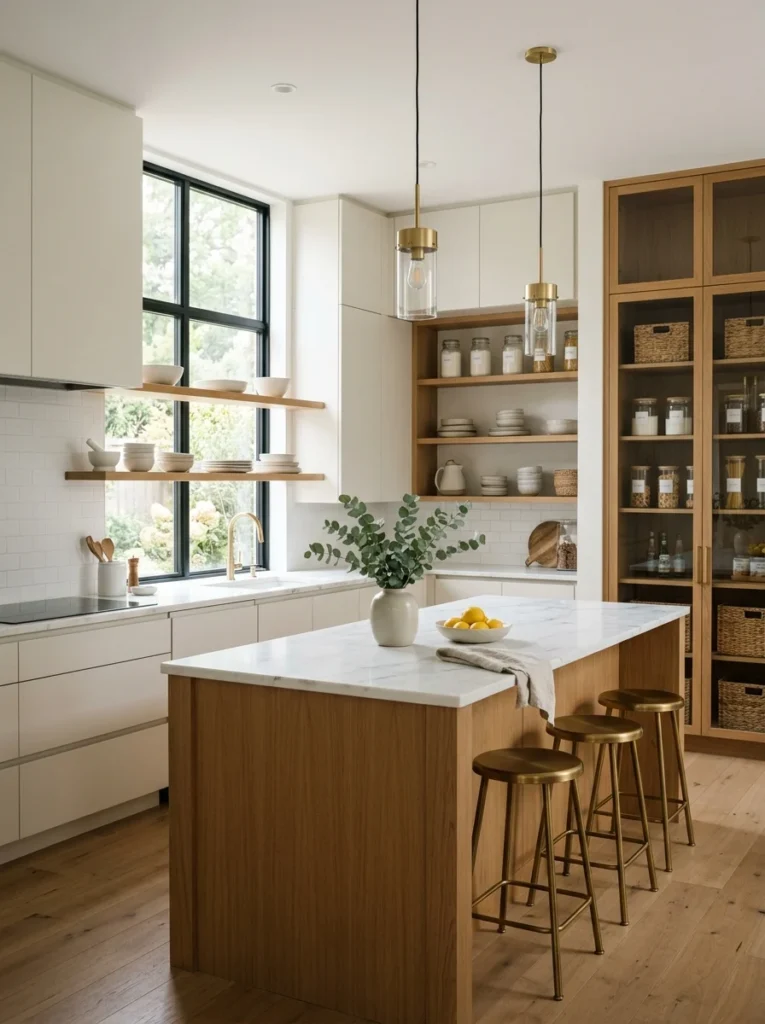
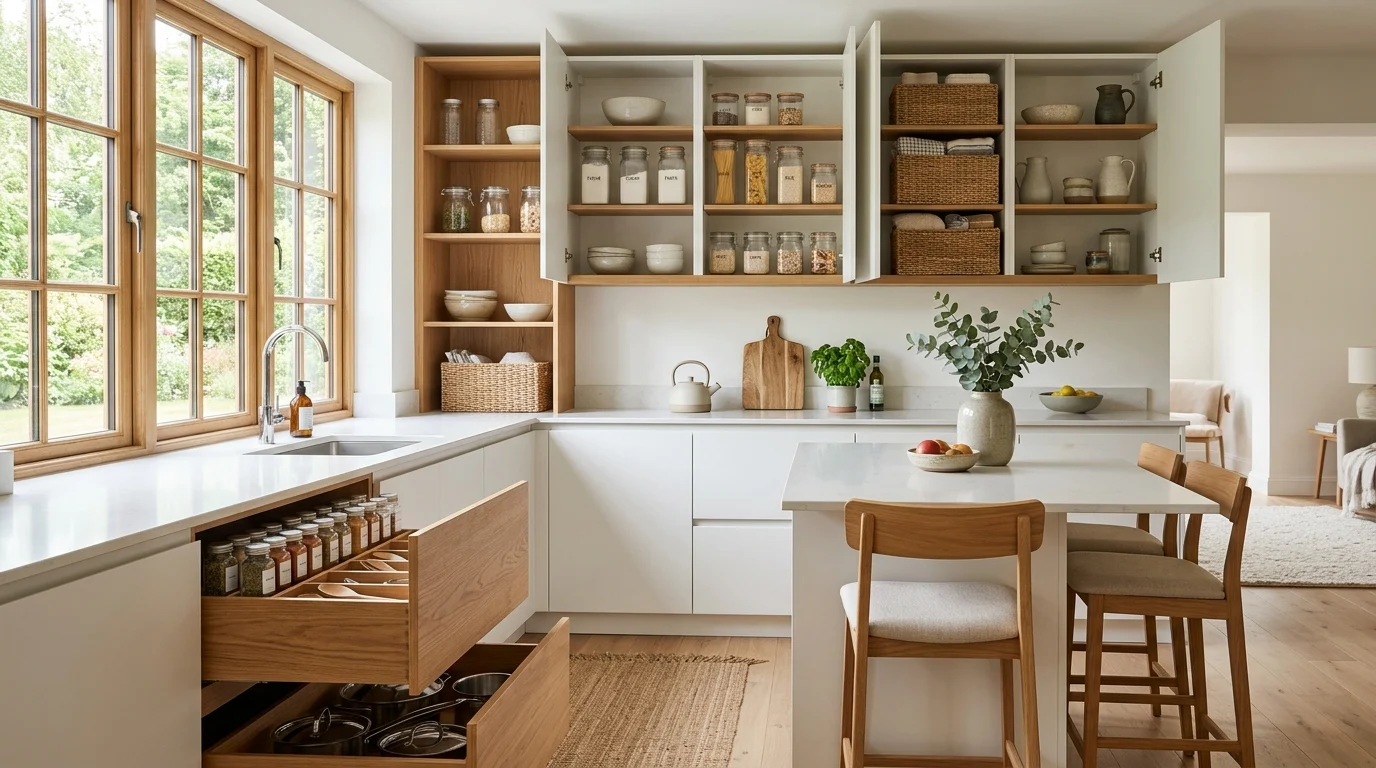
For years I believed I had a small kitchen with not enough storage. I’d cram cabinets until things fell out when I opened them, lose the good knife behind the cake tins, and reach past a wall of half-empty jars to find the one I wanted. Then I emptied every cabinet onto the floor one weekend, partly out of desperation, and made two discoveries at once. First, I owned an astonishing amount of stuff I never used. Second, once that was gone, the kitchen I’d been calling too small had space to spare. My problem had never really been storage. It had been too much stuff badly arranged.
That’s the order almost everyone gets wrong, and it’s the foundation of this whole guide: you cannot organise your way out of owning too much. So before any clever gadget or pull-out, the real first step is deciding what actually earns its place. After that, smart storage is about using every bit of space you already have properly, the corners, the vertical walls, the insides of doors, the awkward gaps, so everything has a home and nothing gets lost. Below I’ll walk through the mindset, then the best solutions area by area, and finally the habits that keep a kitchen clear once it is. Let me start with the step that makes all the others work.
Declutter before you organise, always
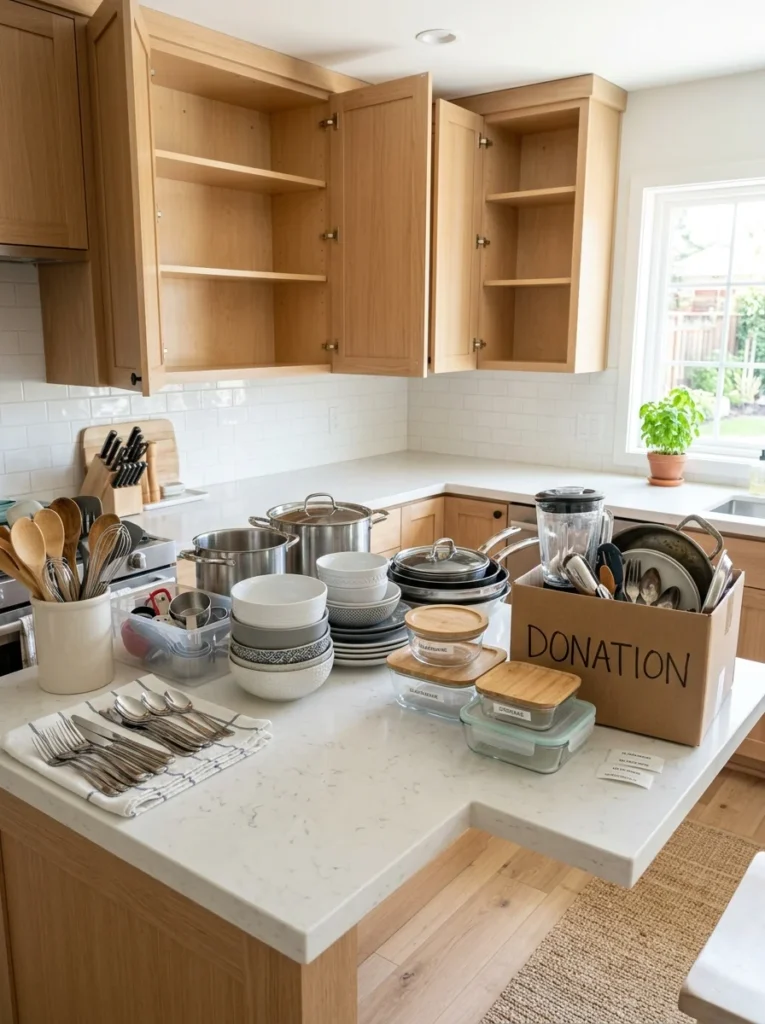
If you buy storage solutions for things you don’t need, all you’ve done is organise your clutter, and it will creep back. So empty your cabinets and be honest. The duplicate utensils, the gadget you used twice, the chipped mugs, the mystery lids with no matching container, the six carrier bags of carrier bags, let them go. A useful test for any item: have I used this in the last year, and would I buy it again today? If both answers are no, it’s taking up space something useful could have. I found duplicate frying pans, a bread maker gathering dust and a decade of takeaway tubs, and clearing them freed more space than any organiser I later added.
Only once you know what you’re actually keeping should you plan storage, because now you’re solving a real problem, storing the things you use, rather than finding homes for things you don’t. This also stops you overspending on organisers you don’t need. Declutter first, then look at what remains and where it naturally wants to live, and the right storage solutions become obvious rather than something you have to force. Everything below assumes you’ve done this step, because honestly, it does more for a clutter-free kitchen than all the clever gadgets combined.
Smart storage, area by area
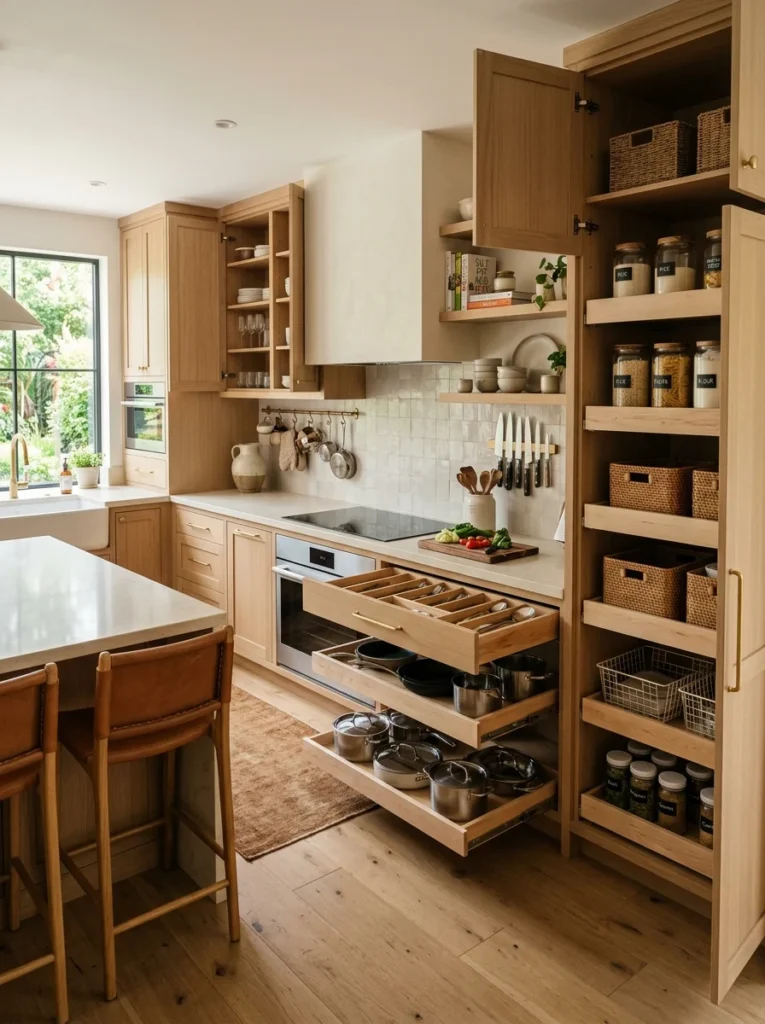
Make cabinets work harder with pull-outs and dividers
Standard deep cabinets waste their back half, because you can’t see or reach what’s behind the front row, so things get lost there for years. Pull-out shelves or baskets fix this completely by bringing the whole shelf out to you, so the back is as usable as the front. For the base cabinets you use most, they’re one of the best upgrades there is. Inside, add dividers: vertical dividers turn a cabinet into slots for baking trays, chopping boards and pan lids stood on their edges, which is far tidier and easier to grab than a leaning stack that collapses every time you take one out.
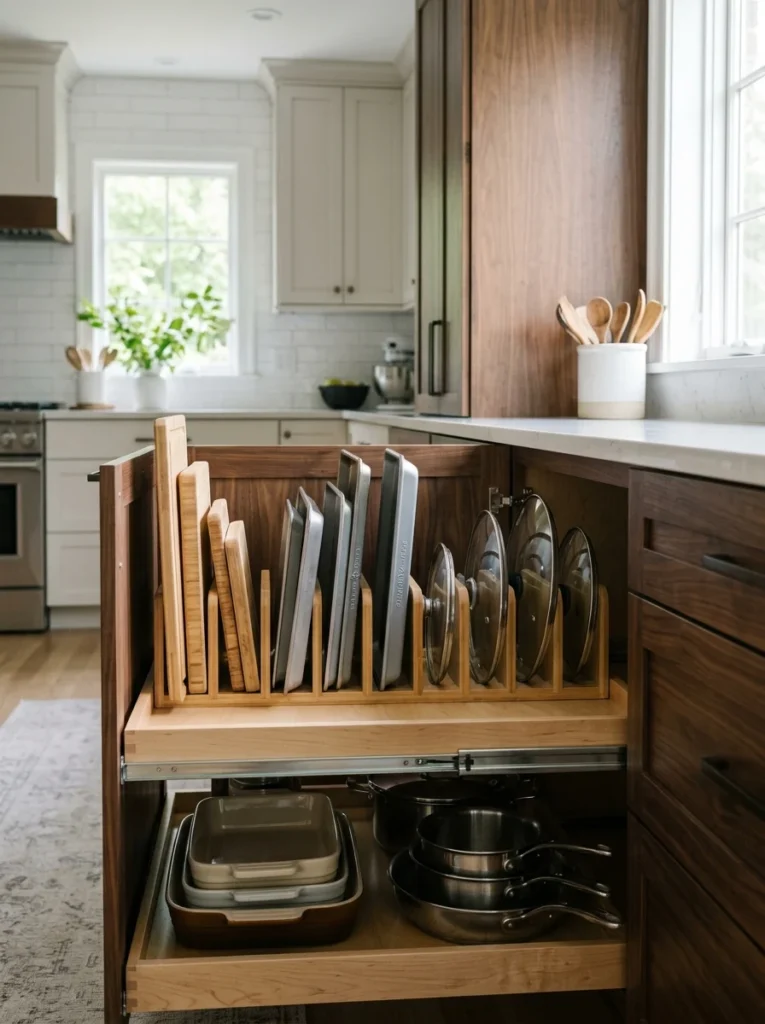
Reclaim the corners
Corner cabinets are notorious dead space where things vanish into an unreachable void. A lazy Susan turntable is the cheap fix, spin it and everything comes to the front. For a base corner, a pull-out carousel or a magic-corner unit that swings the whole shelf out to you turns the worst cabinet in the kitchen into genuinely usable storage. Before I sorted mine, I kept re-buying things I’d lost in the corner. Reclaiming that space is often the single biggest capacity gain available in a small kitchen, because it’s space you technically already had but couldn’t use.
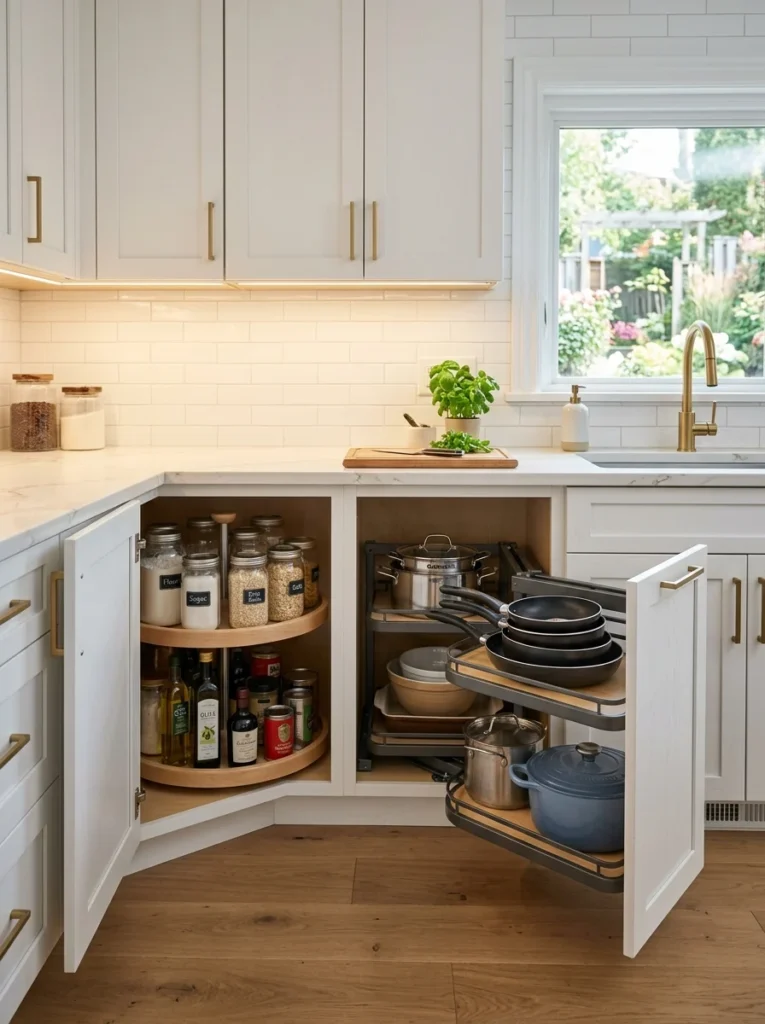
Organise deep drawers with dividers
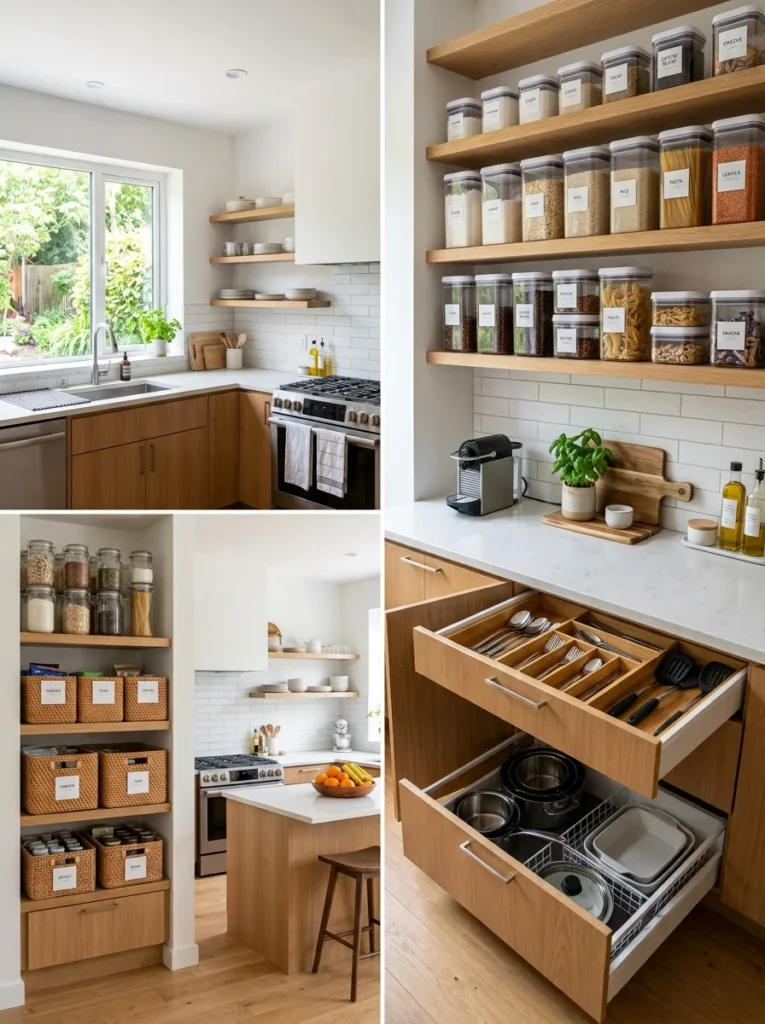
A deep drawer without dividers becomes a jumbled pit where everything slides together. Adjustable drawer dividers or peg-board-style drawer organisers, where movable pegs hold plates, bowls and containers in place, turn that chaos into tidy, visible rows. For the cutlery and utensil drawers, a simple insert stops the tangle. Drawers are actually more ergonomic than low cabinets, since you pull the contents out to you rather than crouching and reaching into the dark, so if you’re ever refitting, more drawers and fewer low cabinets is a genuinely smart move for a clutter-free, easy-to-use kitchen.
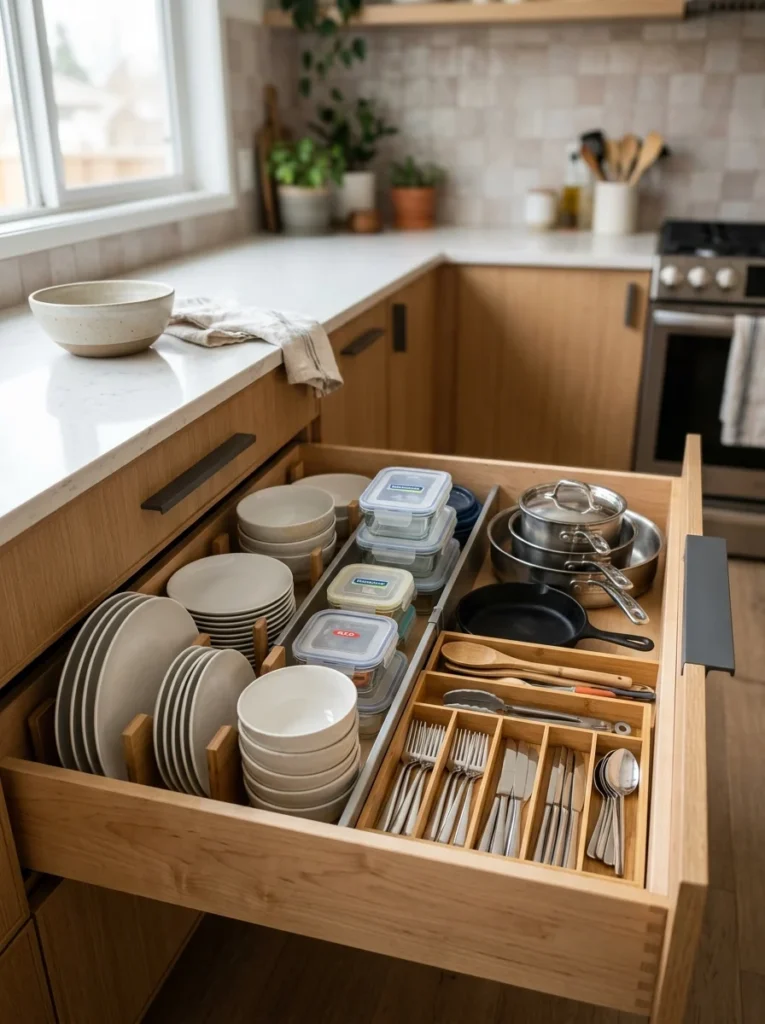
Tackle the under-sink chaos
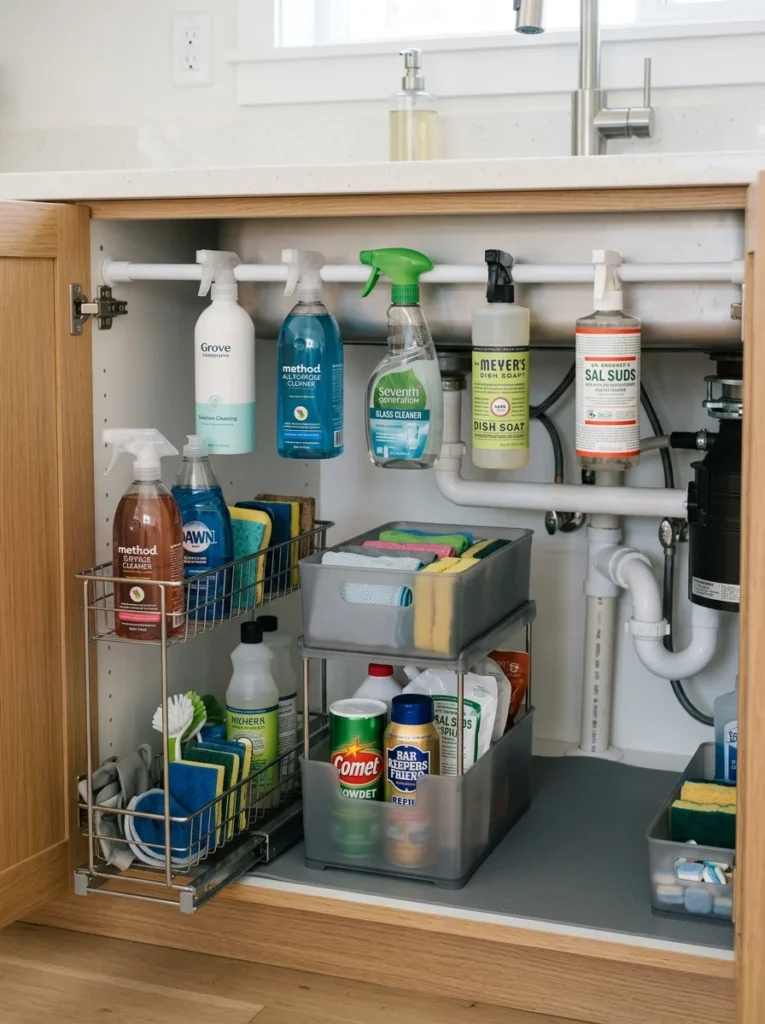
Under the sink is the hardest zone, because the pipes break up the space and everything ends up in a damp, awkward heap. A few tricks help enormously. A tension rod run across the space becomes a rail to hang spray bottles by their triggers, freeing the floor of the cabinet. Small pull-out caddies or tiered shelves that fit around the pipework use the height. Stackable bins corral cleaning supplies so they come out together. It’s never going to be a beautiful cabinet, but with a tension rod and a couple of pull-out caddies it goes from a black hole to something you can actually find things in.
Use the vertical walls
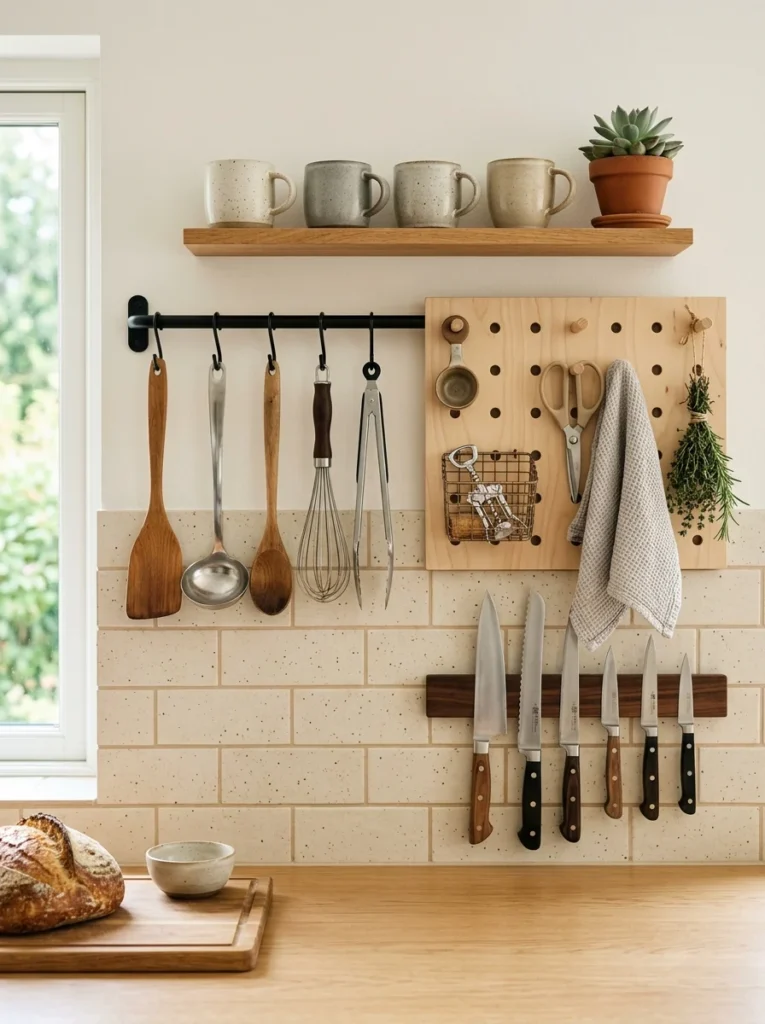
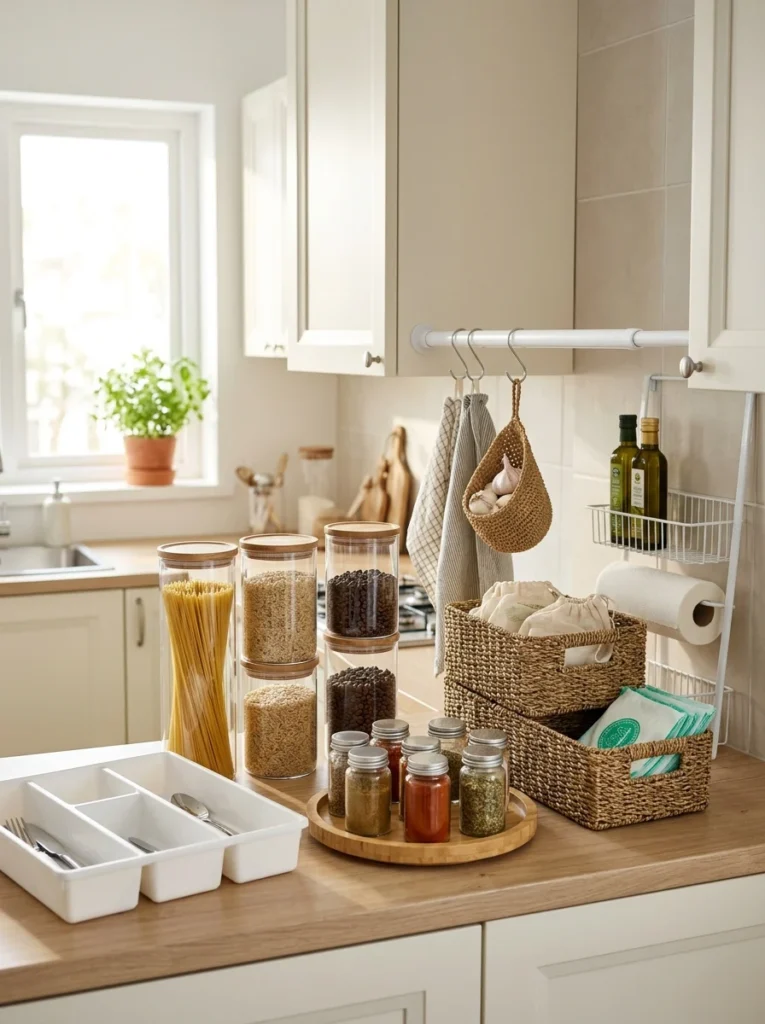
Wall space is the most wasted storage in most kitchens. A rail with S-hooks along the backsplash hangs your most-used utensils, ladle, tongs, strainer, off the counter and out of a crowded drawer. A magnetic strip holds knives safely and visibly while keeping their edges better than a jumbled drawer does. A pegboard can carry mugs, measuring cups, even light pans, and reconfigures as your needs change. Hooks under a shelf hang mugs. Every item you move onto the wall is counter or drawer space given back, and it keeps your most-used tools within a single reach while you cook.
Don’t forget the insides of doors
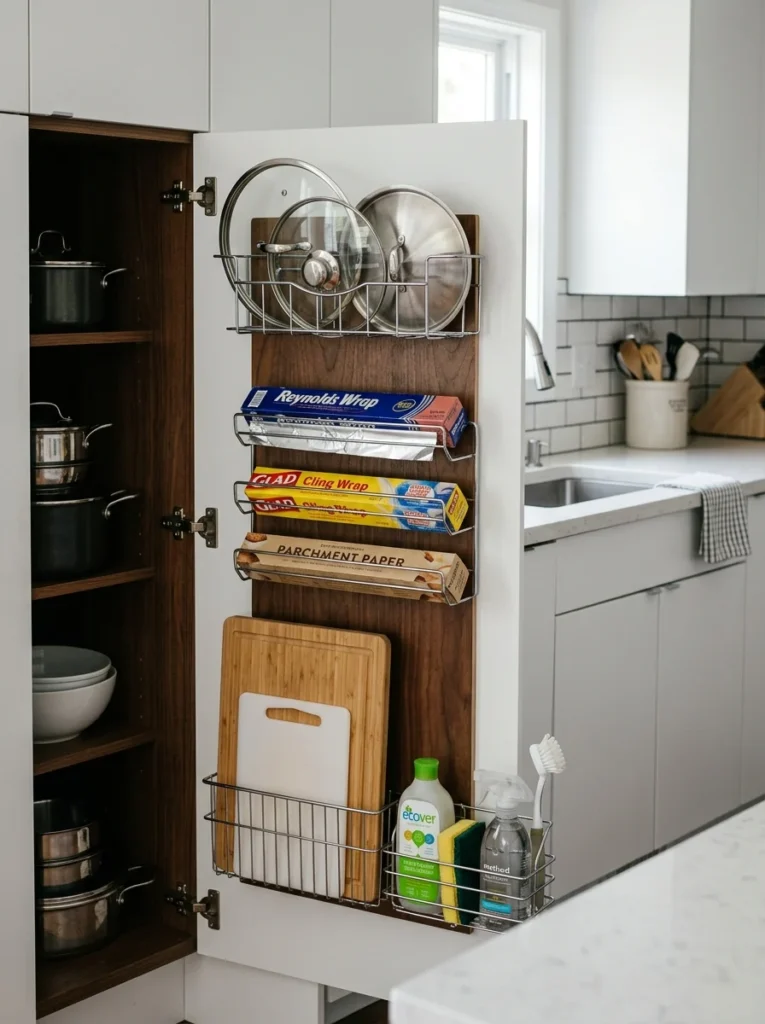
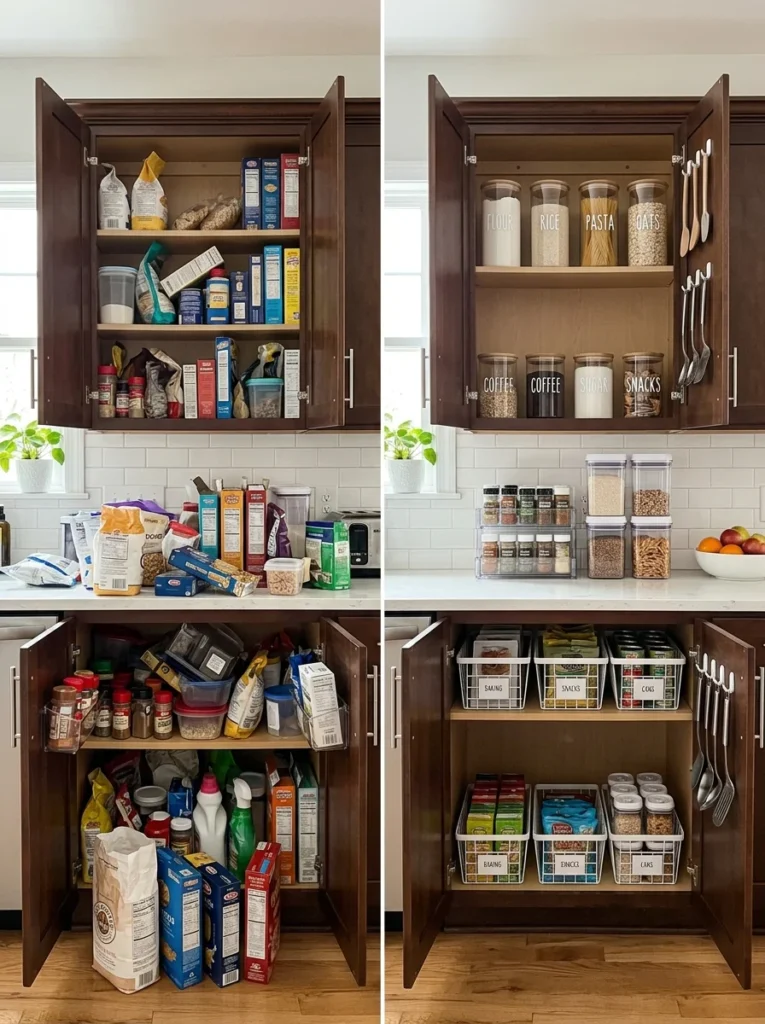
The back of a cabinet door is prime storage that most people ignore entirely. A slim rack mounted there holds pan lids, chopping boards, foil and cling film rolls, or a row of spice jars, all in a space that was doing nothing. Inside the sink cabinet door, a rack holds sponges and brushes. This is some of the cheapest capacity you can add, because the space already exists, you’re just putting a rack on a surface that was empty. In a small kitchen especially, working the door interiors can noticeably relieve the pressure on your shelves.
Sort the pantry and food storage
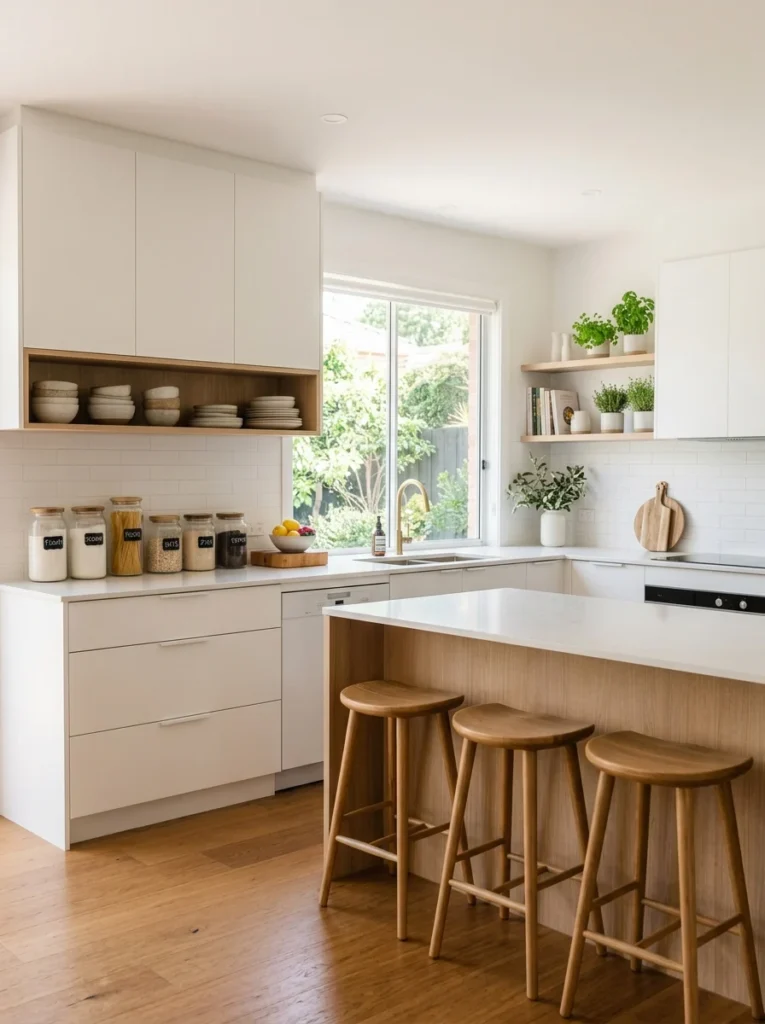
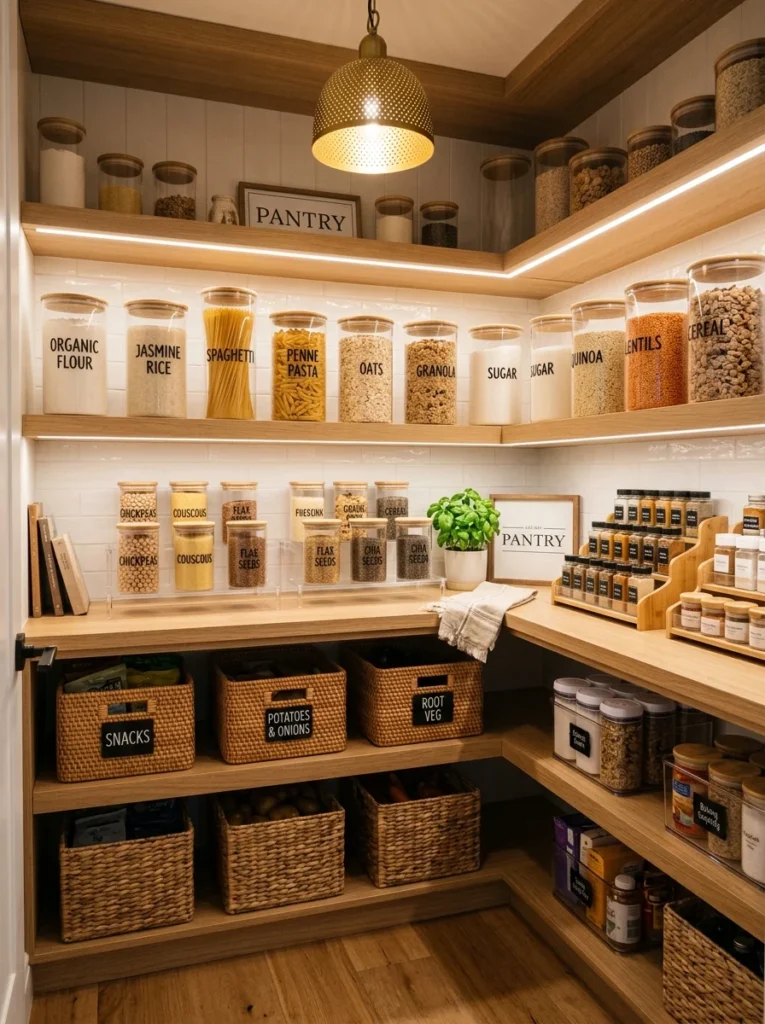
Food storage sprawls fast, so a little system pays off daily. Decanting dry goods, flour, rice, pulses, pasta, into matching clear containers does three things: you can see at a glance what you have and what’s running low, they stack far more efficiently than half-open bags and boxes, and the shelf simply looks calmer. Tiered shelf organisers or a small step-riser let you see the jars and tins at the back instead of losing them. Grouping like with like, all baking together, all breakfast together, so each has a zone, means you and everyone else can find and return things without the pantry sliding back into chaos.
Look up: above-cabinet and high space
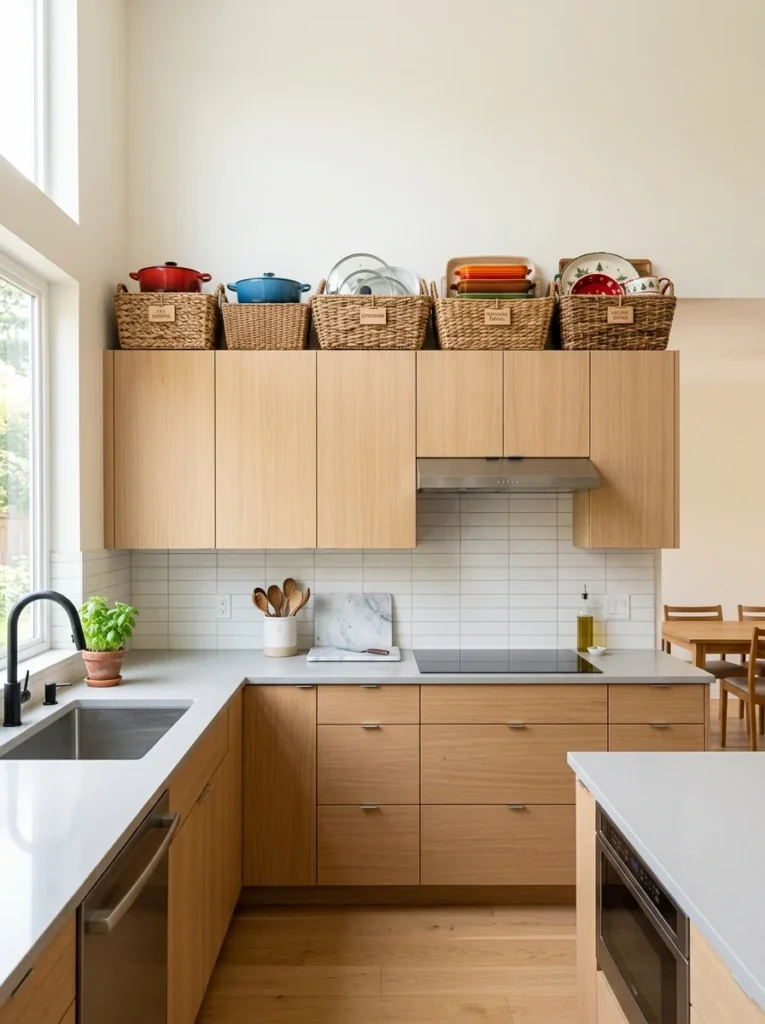
The space above wall cabinets, and the high shelves you can’t easily reach, is perfect for the things you use rarely: seasonal serving platters, the big stockpot, the spare appliances. Storing occasional items up high frees your prime, easy-reach storage for the everyday things, which is the whole logic of good organisation, put what you use daily where it’s easiest to grab, and banish the twice-a-year items to the awkward high spots. Baskets up there keep it tidy and let you lift a whole group down at once when you do need them.
The habits that keep it clear
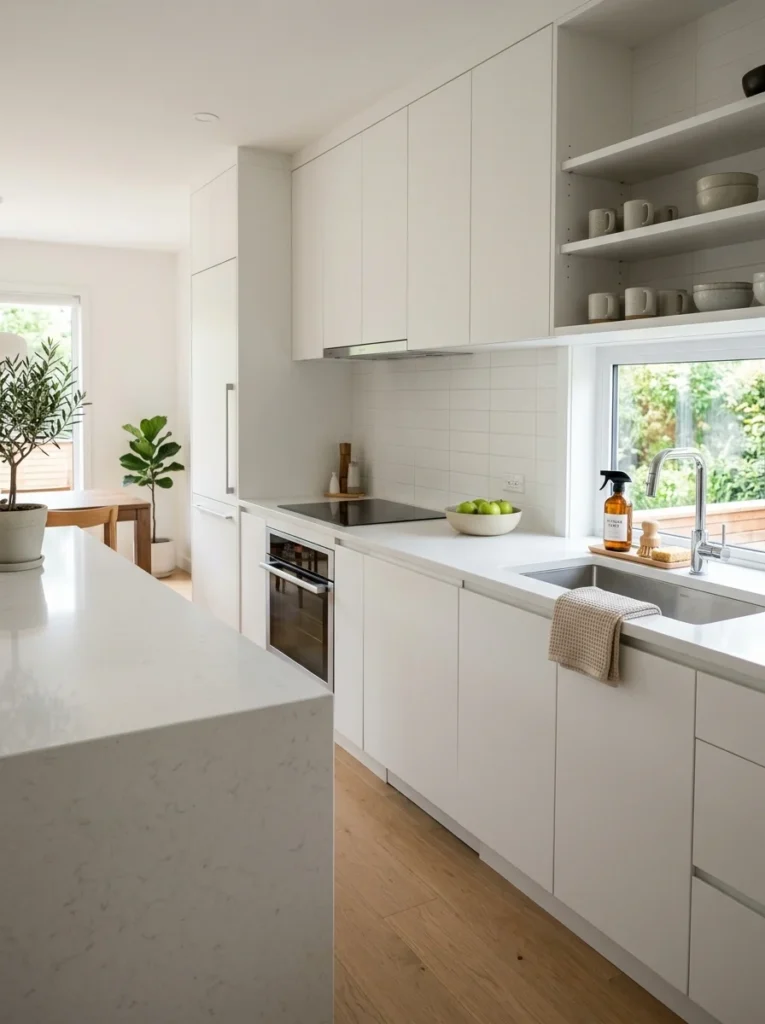
Storage solutions get a kitchen organised; habits keep it that way. The most powerful is simply giving everything a home, because clutter is largely just homeless objects piling up on the nearest flat surface. Once every item has a designated spot, tidying becomes putting things back rather than deciding where they go, and a quick daily reset, clearing and wiping the counters each evening, stops mess accumulating. A clear counter is what makes a kitchen read as clean and calm regardless of how old the units are, so protecting your counter space is worth a real effort.
The other habit is a gentle one-in, one-out rule: when a new gadget or set of mugs comes in, something similar goes out, which stops the slow creep back toward overflowing cabinets. And do a small declutter every so often rather than waiting for another floor-emptying crisis. None of this requires much discipline once the homes are set, because the system does the work. The kitchen I once thought was too small has stayed clear for years now, not because I bought endless organisers, but because everything has a place and I keep the counters clear. That’s the real secret, and it’s free.
You don’t need to spend much
Plenty of the best solutions here are cheap or free. Decluttering costs nothing and gains the most space. A tension rod, drawer dividers, a lazy Susan, S-hooks on a rail, an over-door rack, clear jars for dry goods, these are all inexpensive and often make more day-to-day difference than costly built-in systems. The pricier pull-outs and magic-corner units are worth it for the cabinets you use most and the dead corners, but you can transform a kitchen’s usability with a handful of low-cost items and a good declutter first. Start cheap and only invest in the built-in upgrades where they solve a problem the simple fixes couldn’t.
The storage mistakes I learned from
My biggest mistake was the one I’ve been hammering: for years I bought organisers to solve a problem that was really too much stuff, so I was just neatly arranging things I didn’t need while the useful items stayed lost. The organisers helped a little and then the clutter crept back, because I’d never removed the root cause. The floor-emptying weekend, when I finally sorted keep from junk, did more in two days than all those gadgets had in years. Declutter first is a lesson I had to learn the expensive, slow way.
The second mistake was storing things by where they fit rather than where I use them. My most-used pan lived in a low back corner while a rarely-touched appliance sat at easy reach, so every meal involved unnecessary crouching and shuffling. Once I moved everything so daily items were in the prime, easy-reach spots and rare items went high or deep, the kitchen suddenly felt effortless, and I hadn’t added a single piece of storage to do it. Store by frequency of use, not by whatever slot happens to be empty, and an already-organised kitchen gets noticeably easier to live in.
Common kitchen storage questions
How do I organise a small kitchen with limited storage?
Start by decluttering, since most small kitchens are less short of space than they are overfull of unused items. Then use every surface: pull-outs and dividers inside cabinets, a lazy Susan in corners, rails and magnetic strips on walls, racks on the insides of doors, and high space for rarely-used things. Store daily items within easy reach and banish occasional ones up high.
What should I do before buying storage organisers?
Declutter first. Buying organisers for things you don’t need just tidies your clutter, and it creeps back. Empty your cabinets, keep only what you’ve used in the last year and would buy again, and let the rest go. Then plan storage around what actually remains, so you’re solving a real problem rather than housing things you never use.
What is the best way to use corner cabinet space?
Corner cabinets are prime dead space. A lazy Susan turntable is the cheap fix, spin it and everything comes to the front. For base corners, a pull-out carousel or magic-corner unit swings the whole shelf out to you. Reclaiming a corner is often the single biggest capacity gain in a small kitchen, because it’s space you already have but can’t currently reach.
How do I keep my kitchen clutter-free long term?
Give every item a designated home, so tidying becomes putting things back, and do a quick daily reset to keep the counters clear. Follow a gentle one-in, one-out rule so new things don’t pile up, and declutter occasionally rather than waiting for a crisis. Once everything has a place, the system keeps the kitchen clear with very little effort.
Less stuff, better arranged
A clutter-free kitchen isn’t really about more storage; it’s about owning what you use and giving it all a proper home. Declutter first, because you can’t organise your way out of too much stuff. Then work every bit of space you already have, the corners, the walls, the door interiors, the high shelves, the awkward gaps, and store things by how often you reach for them. Finish by keeping a few simple habits, a home for everything, a clear counter, one in and one out, and the kitchen stays calm on its own. The room I spent years thinking was too small turned out to be plenty big once I stopped filling it with things I never used.
If you do one thing this weekend, empty your cabinets onto the floor and sort ruthlessly before you buy a single organiser. It’s not glamorous, but it’s the step that made everything else in my kitchen finally work, and it costs nothing but a bit of honesty about what you actually use.