The first time I tried to make my kitchen look farmhouse, I got it wrong in the most predictable way. I bought a stack of mass-produced signs with cursive words like gather and blessed, a wire basket shaped like a chicken, and enough distressed decor to fill a shelf, and the result didn’t look like a warm country kitchen. It looked like a shop that sold the idea of one. Everything was farmhouse-themed and nothing felt real. It taught me the single most important thing about this style, which is that true farmhouse warmth comes from natural materials, honest simplicity and things that are actually used, not from buying a lot of objects with the word farmhouse attached.
Done well, the farmhouse kitchen is one of the most welcoming, comforting rooms there is: warm, unfussy, practical and timeless, a space that invites you to cook and gather. Done badly, it tips into cliche fast. The difference is understanding what actually makes the style work, so you can build it from real ingredients rather than a checklist of themed props. This guide walks through the core principles and every building block, from the palette and materials to the sink, the shelving and the finishing touches, plus how to get the look on a budget and how to avoid the theme-park trap I fell into. Let me start with what farmhouse style really is underneath the decor.
What actually defines farmhouse style
Strip away the props and farmhouse style rests on a few honest principles. It’s rooted in natural materials, wood, stone, metal and linen, in their real, tactile forms. It values function and simplicity, the sense of a hard-working kitchen where things are useful first and pretty second. It’s warm and inviting rather than sleek or minimal, with a slightly imperfect, lived-in, handmade quality that feels comfortable rather than showroom-perfect. And it leans on comforting neutral colours and a cosy, unhurried atmosphere. If a choice makes the kitchen feel warmer, more natural and more genuinely useful, it’s probably right for farmhouse; if it feels slick, synthetic or purely decorative, it probably isn’t.
It also helps to know there are two broad flavours. Traditional or classic farmhouse leans warmer and more rustic, with more visible wood, vintage pieces and a cottage feel. Modern farmhouse, the more current version, keeps the warmth and natural materials but pairs them with cleaner lines, a crisper palette and black accents for a fresher, more restrained look. Neither is more correct; they’re just points on a spectrum, and knowing which you’re drawn to keeps your choices consistent. I lean modern farmhouse myself, warm and natural but not fussy, and I’ll flag along the way where the two versions diverge so you can steer toward yours.
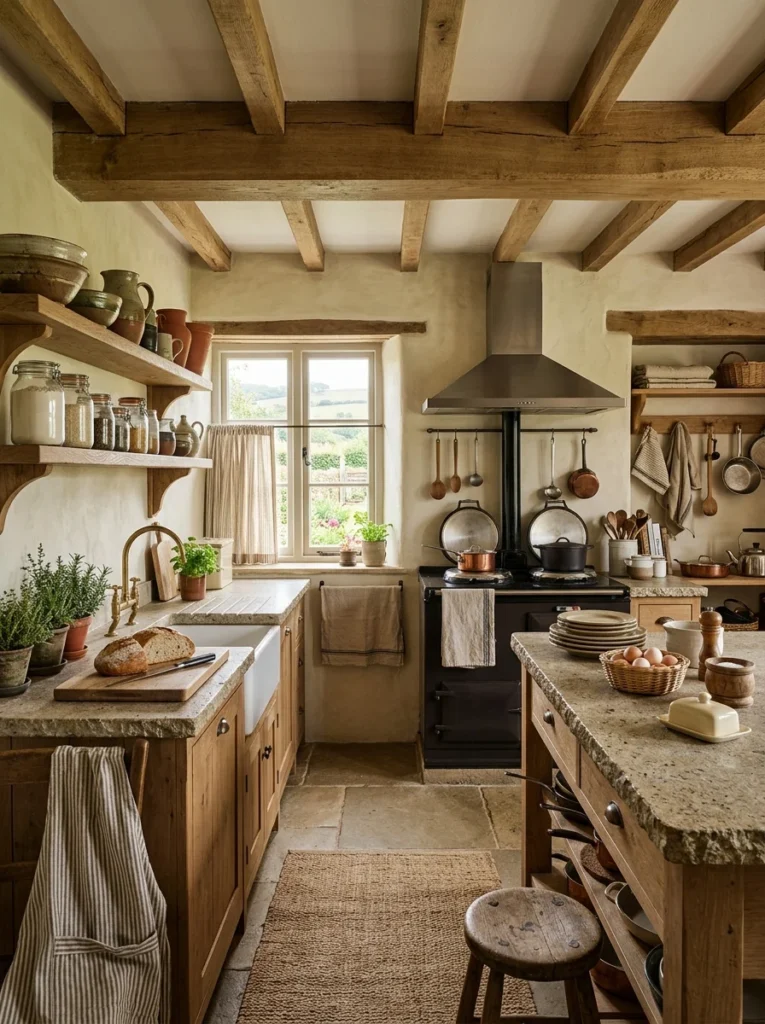
The building blocks of a farmhouse kitchen
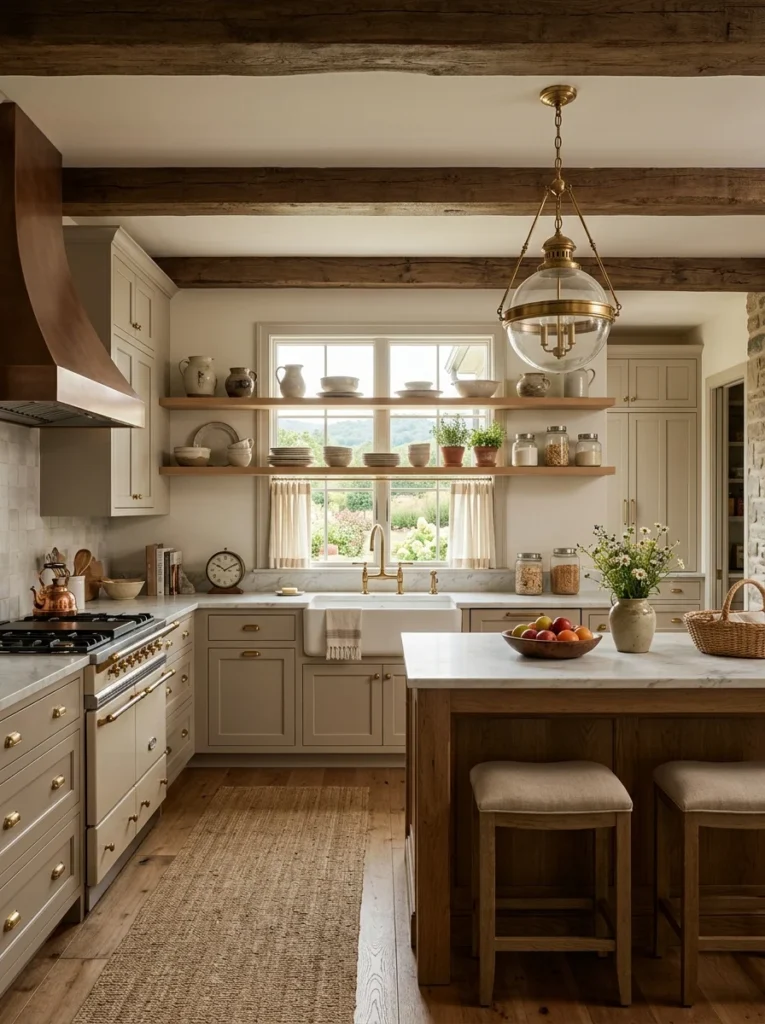
The colour palette
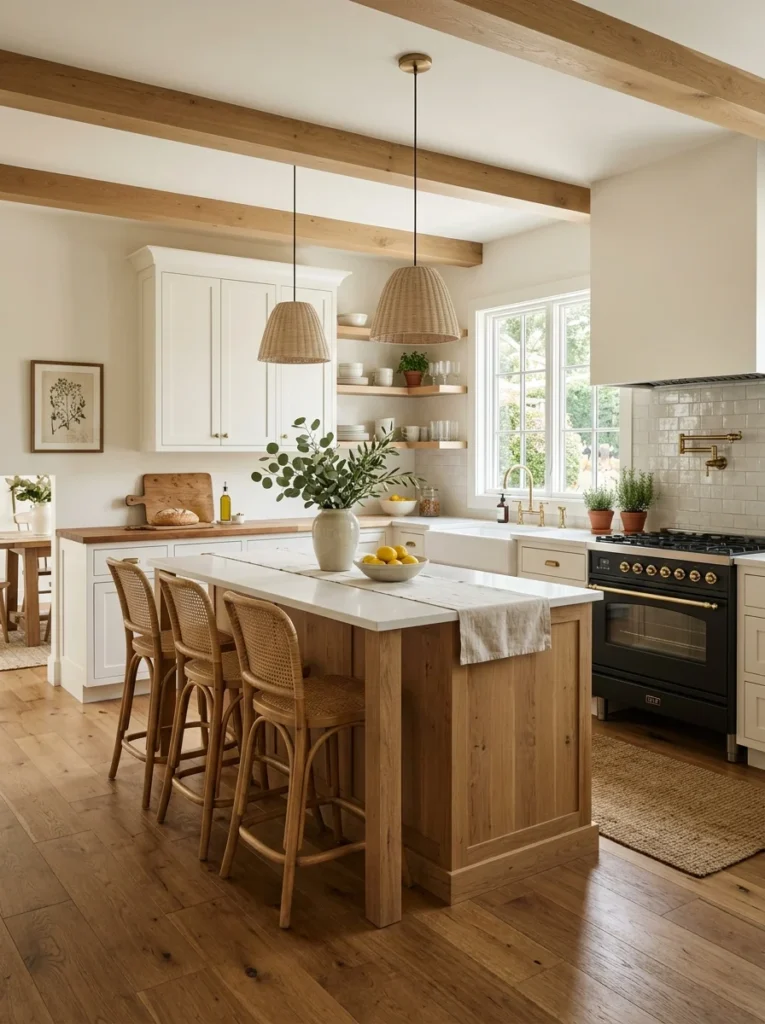
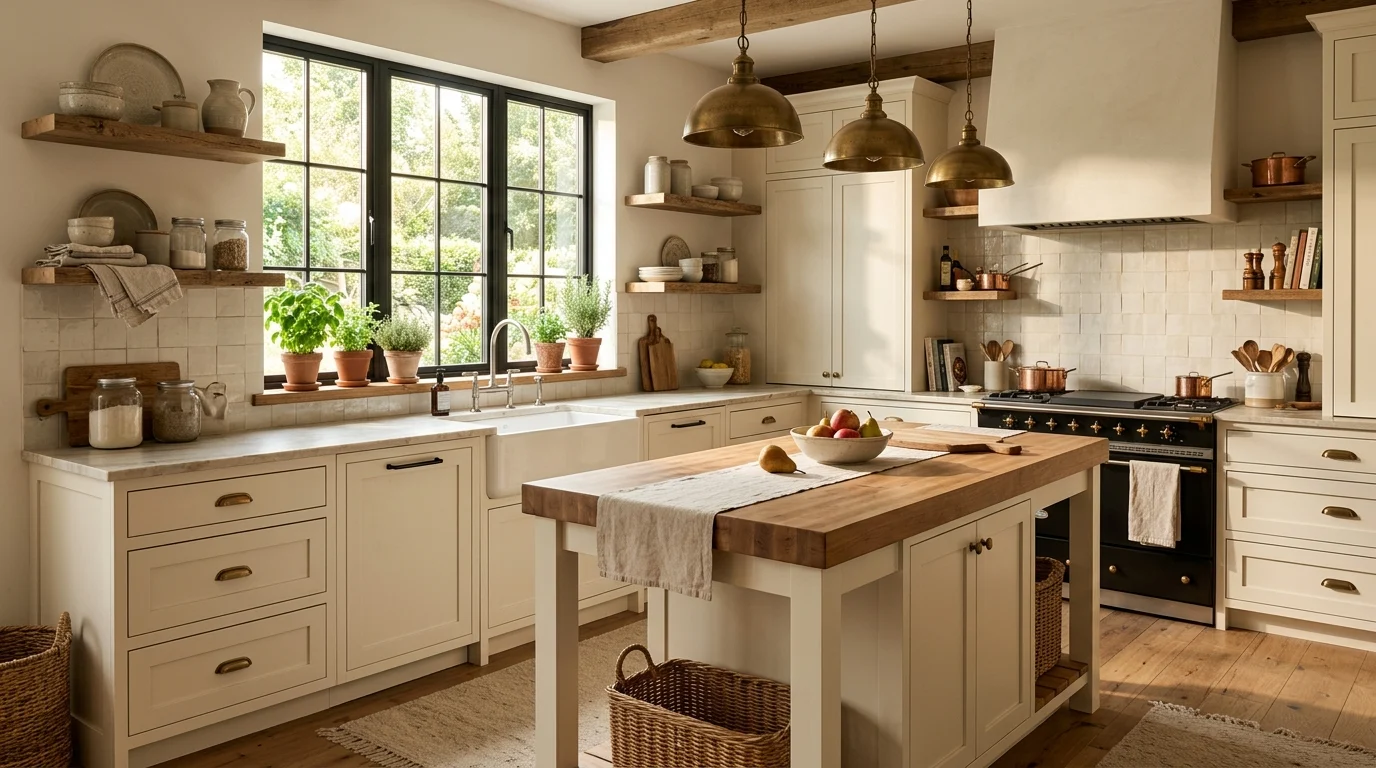
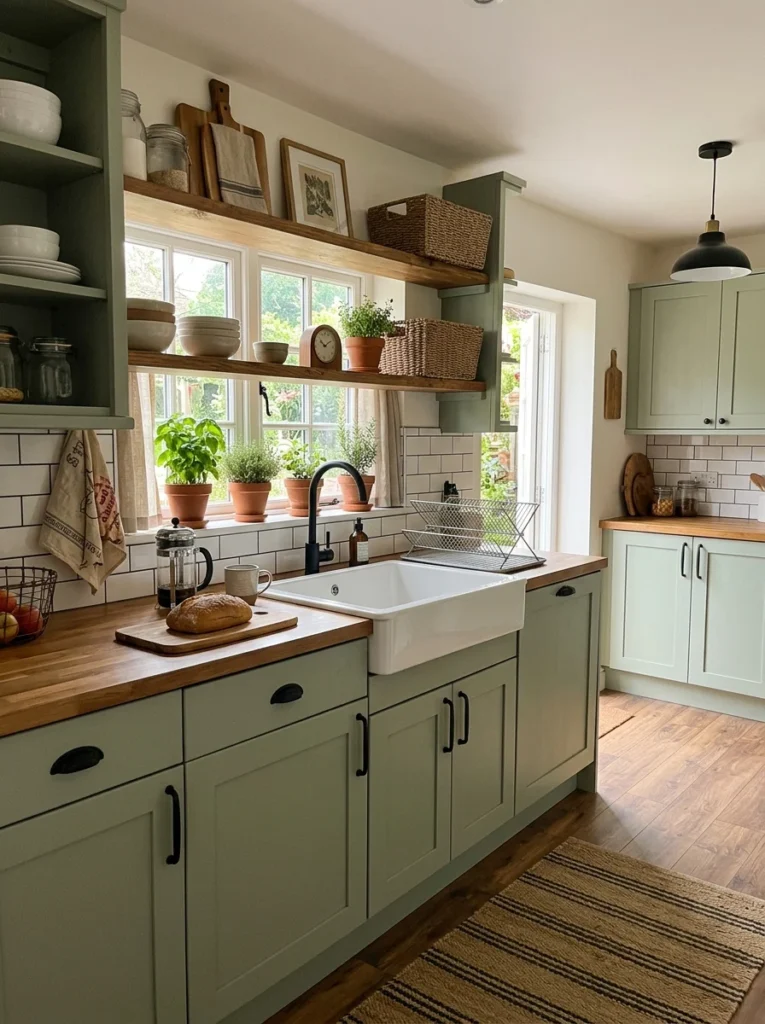
Farmhouse colour is soft, warm and grounded in nature. The backbone is warm whites and creams rather than stark cool white, layered with soft neutrals, greige, taupe, warm grey, and natural wood tones. From there, the two classic accent directions are a muted sage or soft botanical green, which feels timeless and countryish, and black, which is the signature of modern farmhouse and adds crisp definition through hardware, window frames or a band of lower cabinets. Keep the overall palette calm and warm and let one accent lead. This restraint is exactly what stops a farmhouse kitchen tipping into busy, and it ages beautifully because every one of these colours is drawn from the natural world.
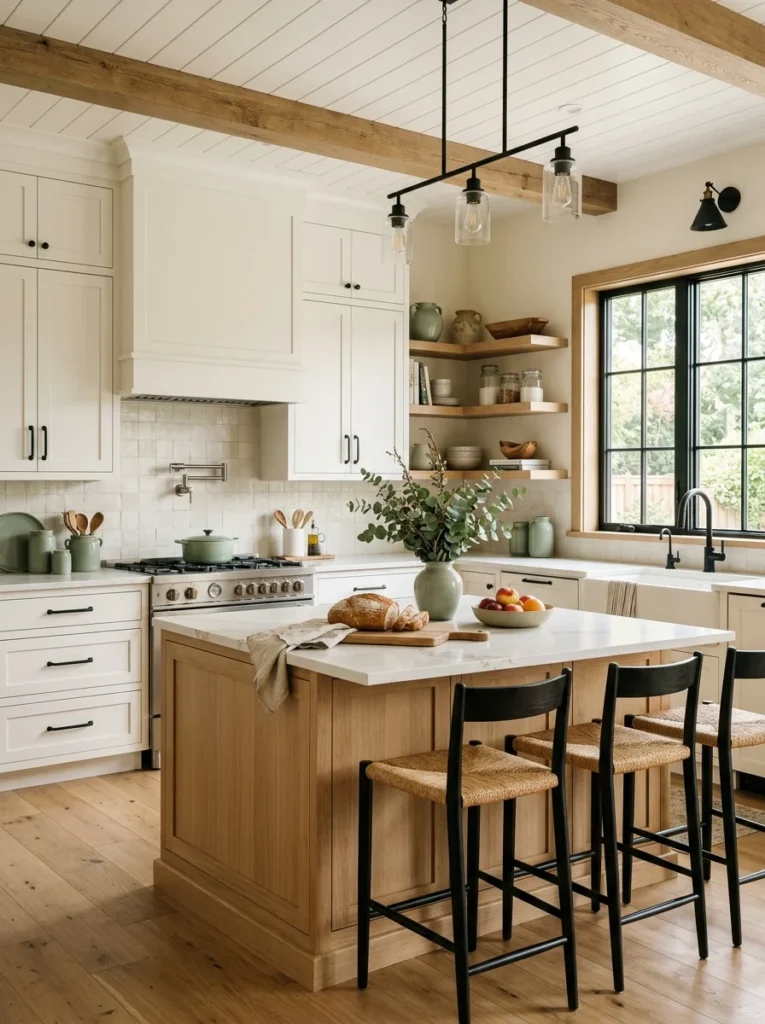
Natural materials and texture
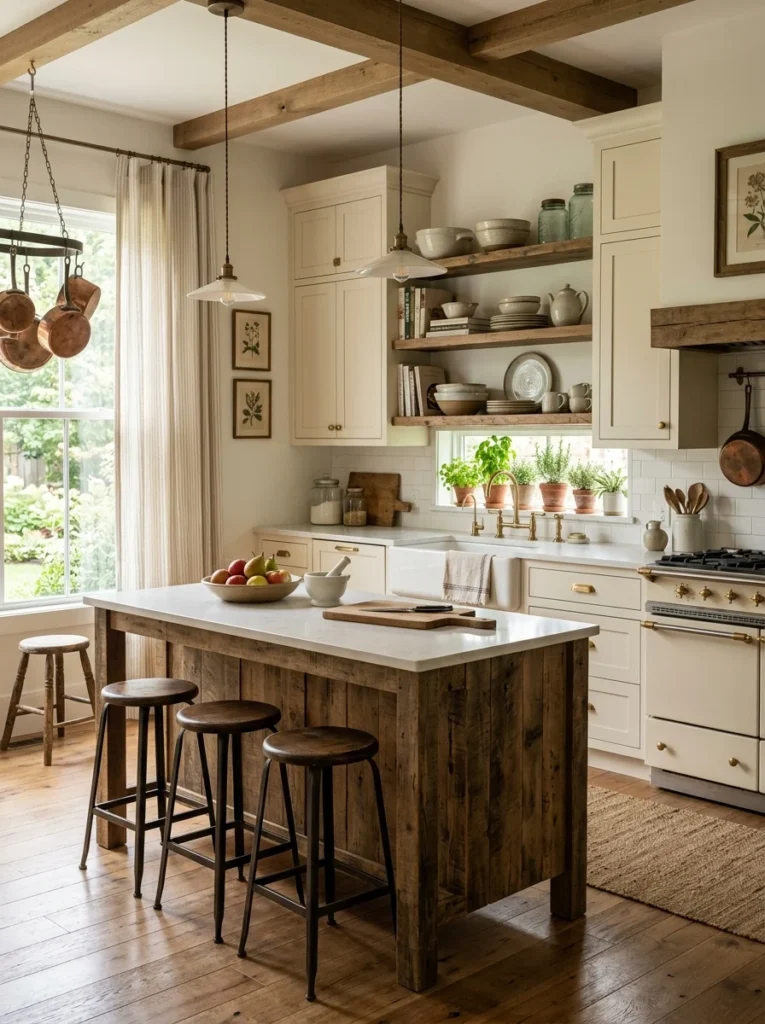
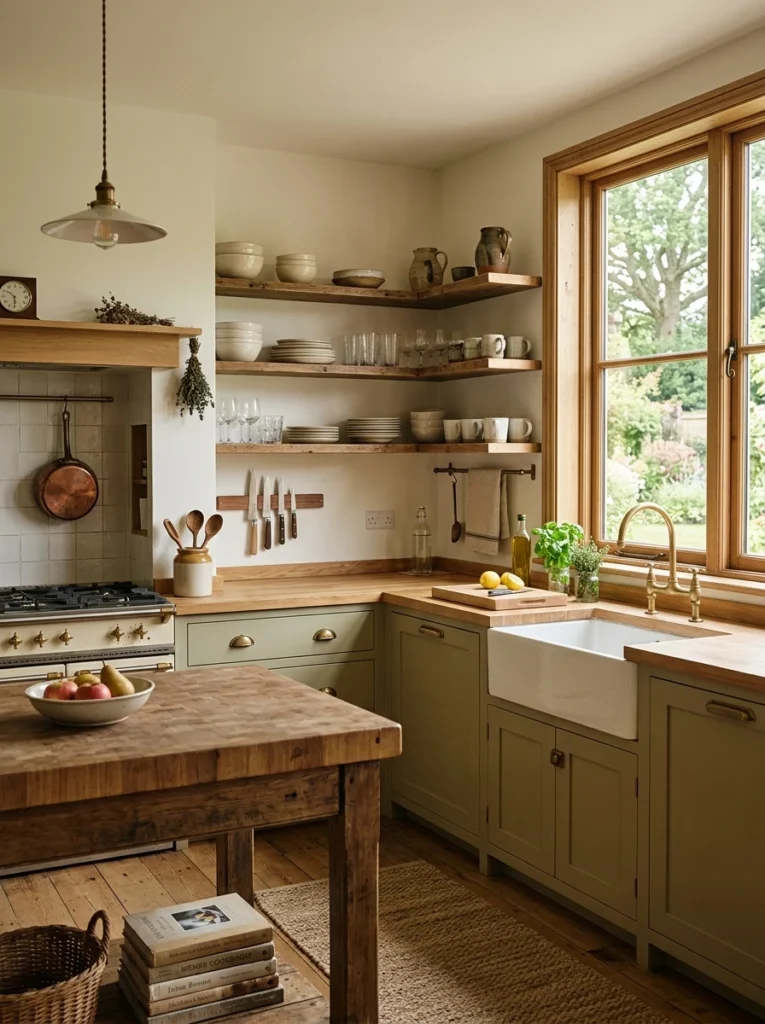
If colour is the backbone, natural texture is the heart, and it’s what my first themed attempt completely missed. Real wood is essential: on floors, open shelves, a butcher-block counter section, exposed beams if you have them, or a reclaimed timber piece. Natural stone, a farmhouse-style sink, and honest metals add to it. Shiplap, the horizontal plank panelling, is a signature farmhouse wall treatment that adds texture and character, though a little goes a long way and it’s become common enough that you needn’t feel obliged to use it. The principle is to layer genuine, tactile natural materials so the room has warmth and depth you can feel. That layered realness is the thing cheap themed decor can never fake.
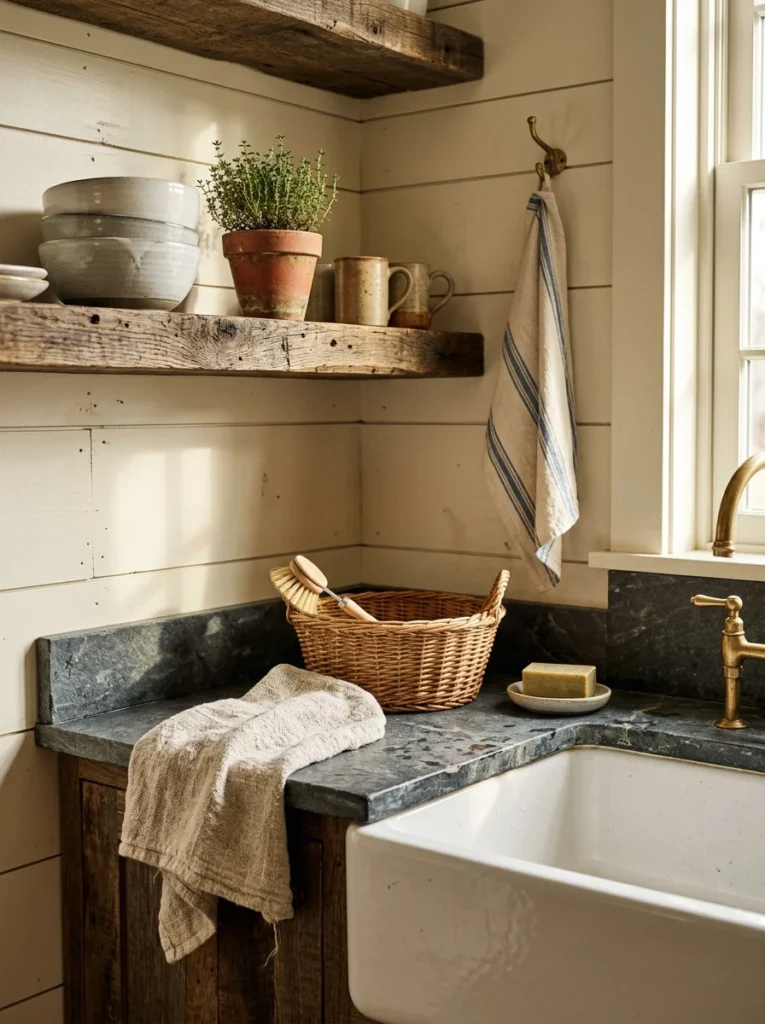
Cabinets: shaker style and two-tone
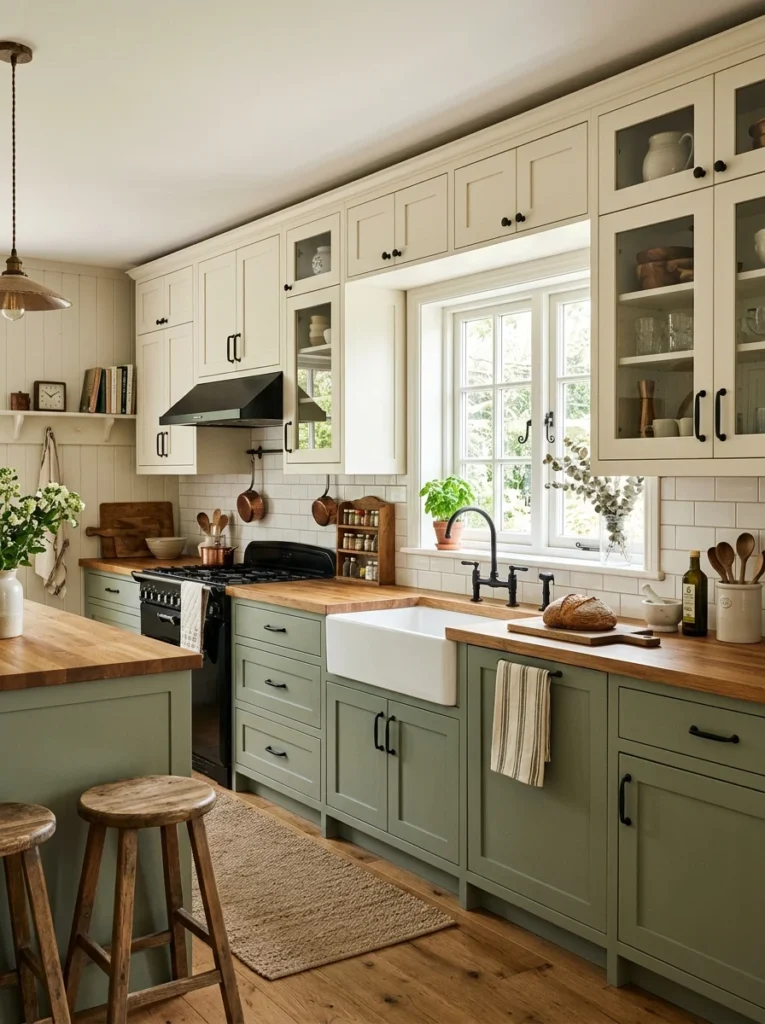
The classic farmhouse cabinet is the shaker: a simple, flat-panel door with a clean recessed centre and no fussy detailing, which suits the style’s honest simplicity perfectly and, conveniently, is timeless in its own right. Paint them a warm white or cream for the traditional look, or go two-tone, a soft sage or deep colour on the lower cabinets with cream above, for a very popular modern-farmhouse feel. Avoid glossy, ultra-modern handleless cabinets, which fight the style. Shaker fronts in a warm, painted finish are the safe, authentic backbone of the look, and because they’re such a classic, they’ll still look right long after any trend passes.
The farmhouse sink
If any single element defines the style, it’s the apron-front sink, the deep, wide basin whose front panel is exposed and sits proud of the cabinetry. It’s called a farmhouse sink for a reason, and it’s both a genuine style statement and wonderfully practical, big and deep enough for real cooking and washing. A white fireclay or ceramic apron sink is the classic choice; stainless or stone versions suit a more modern or rustic lean. It’s not a cheap item and fitting one usually means a specific cabinet to house it, so it’s a considered purchase, but it’s the piece that most instantly signals farmhouse. If you make one signature investment in the style, this is the one I’d choose.
Hardware and fixtures
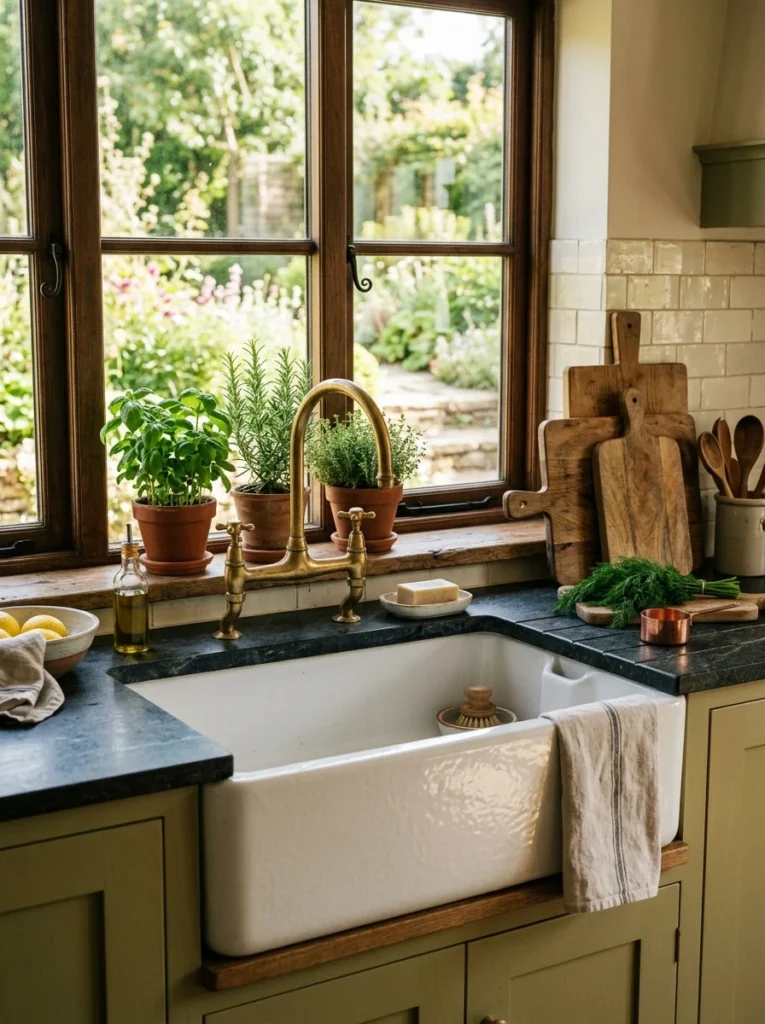
Farmhouse hardware and taps favour warm or matte finishes over shiny chrome: matte black, oil-rubbed bronze, aged brass and pewter all suit the style, with black being the modern-farmhouse favourite and bronze or brass leaning more traditional. Cup-pull handles and simple round knobs feel right on shaker cabinets. For the tap, a bridge-style or gooseberry-necked mixer in one of those warm finishes reinforces the look. As always, pick one finish and carry it across the handles, tap and light fittings so the room feels coordinated. This is a cheap, high-impact layer, swapping to the right hardware finish does a surprising amount of farmhouse work for very little money.
Open shelving and honest display
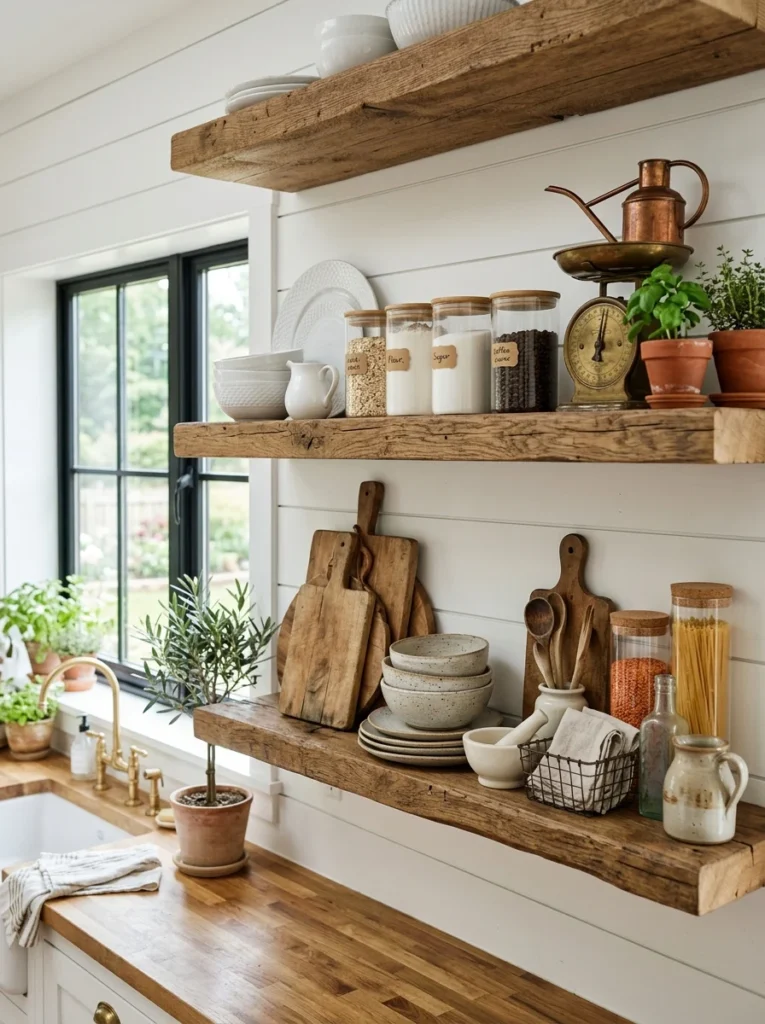
Open wooden shelves suit farmhouse beautifully, because the style celebrates useful, everyday things on show rather than hidden away. This is where you display real, used pieces: stacks of simple white or cream crockery, a row of well-worn wooden chopping boards, a stoneware crock holding utensils, glass jars of flour and pulses, a mixing bowl you actually mix in. The key word is real. My chicken-basket phase failed because the display was props; a farmhouse shelf works when it holds the honest tools of cooking, things with a little patina and purpose. Keep it fairly restrained and functional and it reads as genuine warmth rather than staged clutter.
Lighting
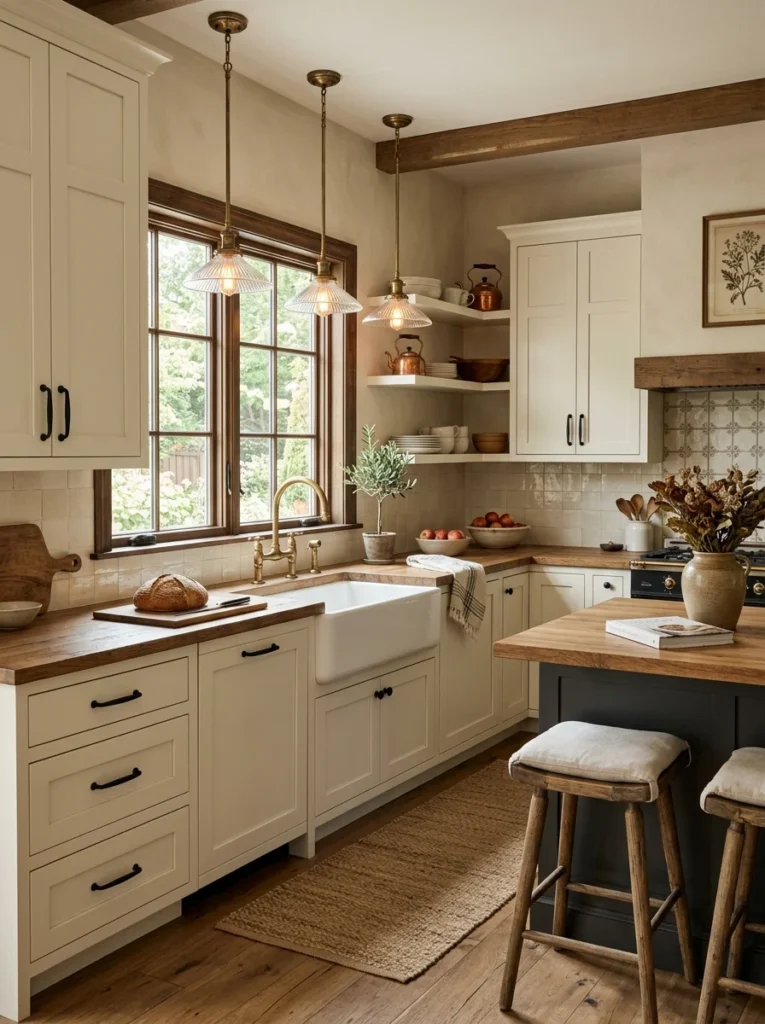
Farmhouse lighting tends toward simple, slightly vintage or industrial shapes in those same warm metal finishes. Pendant lights over an island or sink, lantern-style fixtures, and classic schoolhouse or dome shades all suit the style. Metal and glass, in black, bronze or aged brass, feel right; avoid anything too sleek, coloured or overtly ultra-modern. Warm-white bulbs matter here as much as the fixtures, because the whole style is built on cosiness, and a cool, clinical light undoes that instantly. A couple of well-chosen pendants in the right finish are both a practical layer and a strong style signal, so lighting earns its place as a building block rather than an afterthought.
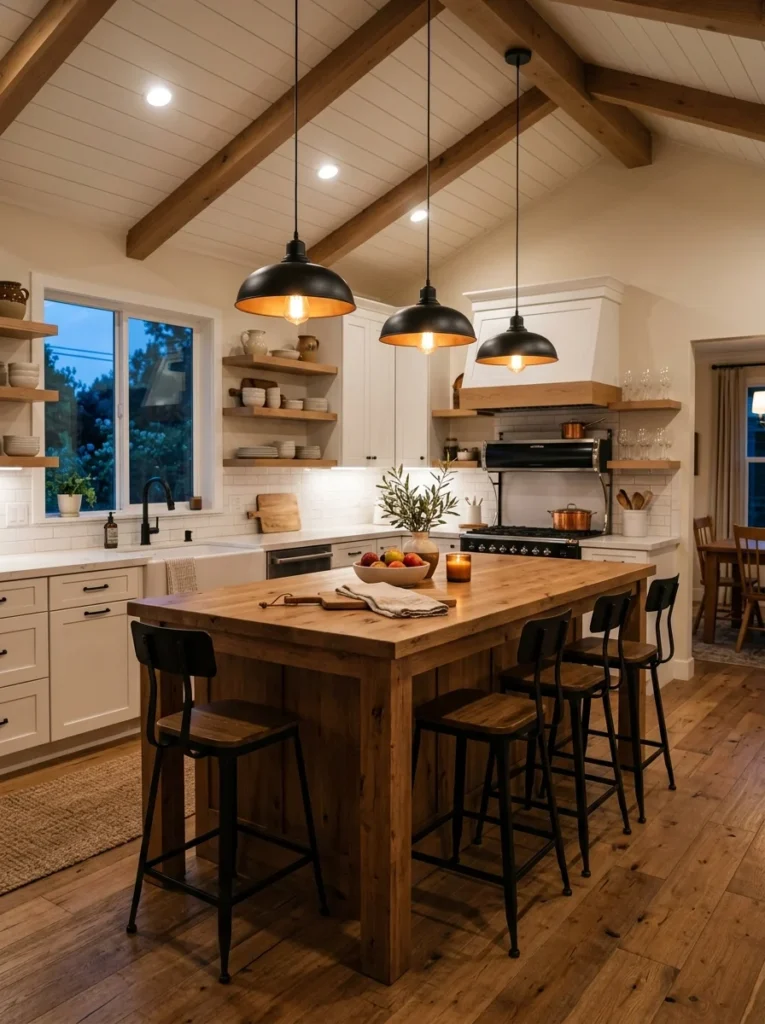
Textiles and soft touches
Soft, natural fabrics add the final layer of farmhouse comfort. Linen and cotton in the form of tea towels, a runner, seat cushions or simple curtains bring warmth and a little pattern. Classic farmhouse patterns are understated: gingham checks, ticking stripes, and simple florals, in muted, natural colours rather than bright ones. A woven basket or two, in seagrass or wicker, adds texture and useful storage. These touches are inexpensive and easy to change, which makes them the perfect place to add seasonal warmth or a bit of pattern without committing real money, and they soften all the wood and stone into something genuinely cosy.
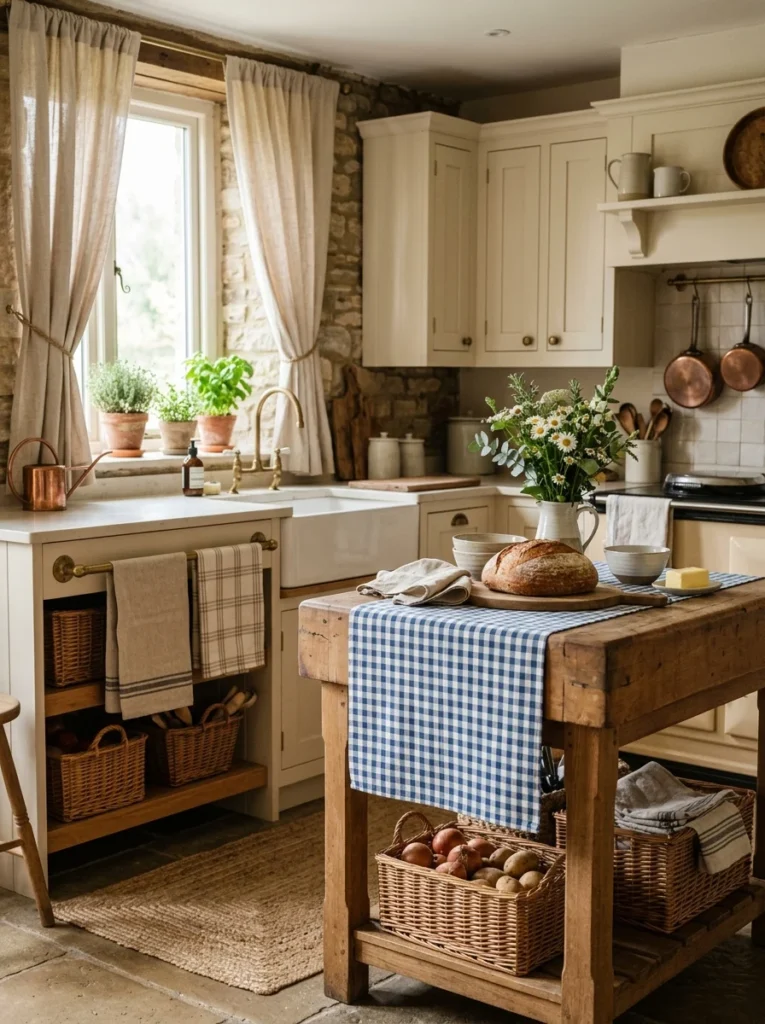
Greenery and accents
Finish with life and a few honest accents. A pot of fresh herbs on the windowsill, a jug of wildflowers, or a bowl of lemons brings the natural, homely feeling no manufactured decor can. A genuinely old piece, an inherited jug, a worn wooden stool, adds authentic character in a way a new distressed replica never quite does. Greenery and one or two meaningful real objects do more for farmhouse warmth than a dozen themed ornaments, which is the whole lesson of my early mistake in a single sentence.
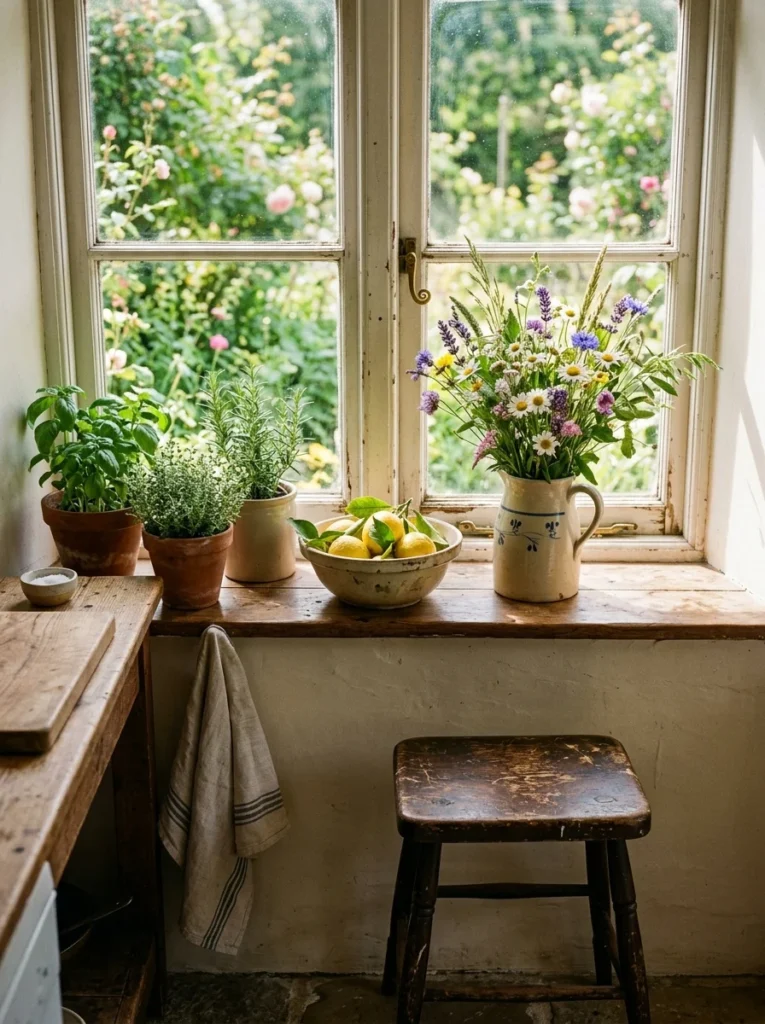
How to get the look without the cliche
Here’s the trap I fell into, so you can step around it. The fastest way to make a farmhouse kitchen feel fake is to fill it with mass-produced, farmhouse-themed decor: the word-art signs, the identical distressed props, the novelty items that exist only to say farmhouse. They signal the style without any of its substance, and because everyone buys the same ones, they read as generic rather than warm. Real farmhouse charm comes from the bones, natural materials, honest cabinets, the sink, warm light, and from real, used, sometimes old things, not from a shopping list of themed accessories.
So build the style from materials and function outward, and let genuinely useful and personal objects be the decoration. Choose fewer, better, realer pieces, a proper wooden board you actually cut on, an old jug you love, herbs you actually grow, over a shelf of matching props. Lean on restraint: a farmhouse kitchen is warm and simple, not crowded, so resist the urge to add one more decorative thing. If you find yourself buying an object purely because it looks farmhouse and for no other reason, that’s usually the object to put back. The style is a feeling built from real ingredients, not a theme applied on top.
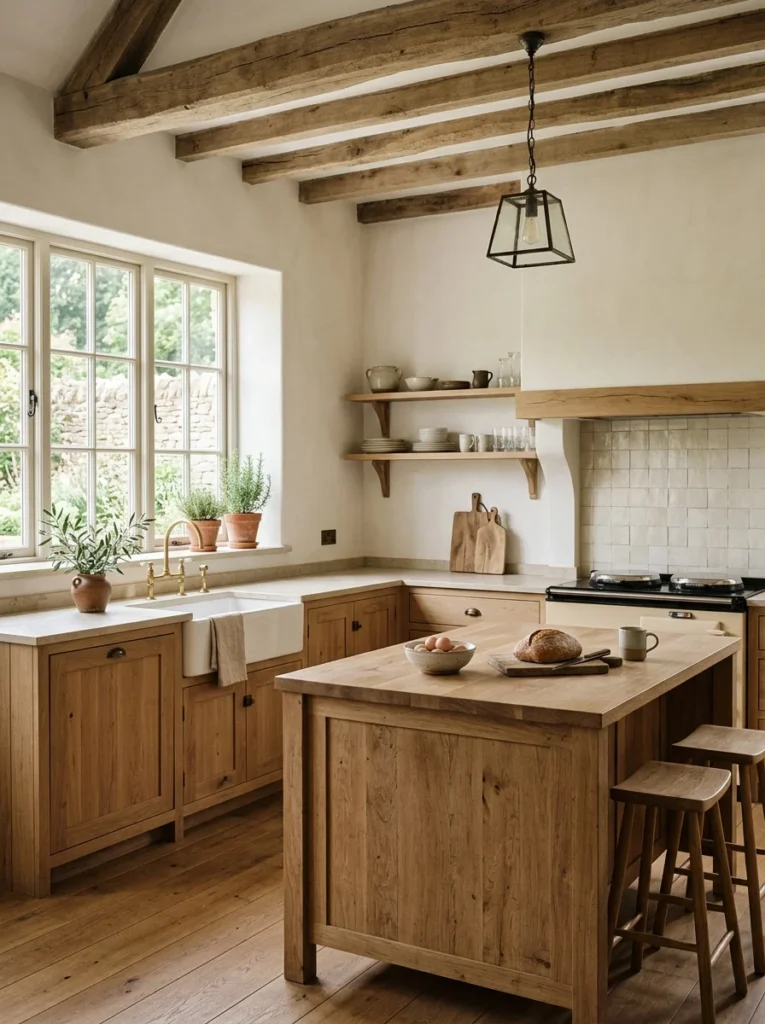
Farmhouse touches on a budget
You don’t need a full renovation to bring the style in, and some of the most effective changes are cheap. Swapping cabinet hardware to matte black or bronze is a small spend that instantly nudges a plain kitchen toward farmhouse. Painting existing shaker-ish cabinets a warm white or sage, changing bulbs to warm white, and adding a wooden shelf styled with real crockery and a stoneware crock all cost little and layer up the look. Natural-fibre baskets, linen tea towels, a gingham runner and a pot of herbs are inexpensive finishing touches that add warmth immediately.
If you have a bit more, a farmhouse sink or a couple of vintage-style pendants are the higher-impact investments, but you can build a convincing farmhouse feel by starting with paint, hardware, warm light, one open shelf and real natural textiles, and adding the bigger pieces over time. Hunting for genuine second-hand pieces is also cheaper and more authentic than buying new distressed replicas, and it’s how you get the honest, collected-over-time character that defines the best farmhouse kitchens.
What my farmhouse fail taught me
The chicken basket and the stack of word-art signs were the whole lesson. I’d tried to buy a feeling, and a feeling isn’t for sale in prop form. Everything I’d bought was themed and new and mass-produced, and together it read as a costume rather than a kitchen. When I stripped most of it back out and instead focused on the real ingredients, warm-white shaker cabinets, black hardware, a wooden shelf with the crockery I actually use, herbs on the sill, warm light, the room finally felt like the warm country kitchen I’d been chasing, and it did so with far fewer objects in it.
The other thing I learned was restraint. My instinct had been to keep adding, one more sign, one more distressed thing, until the room was cluttered. The best farmhouse kitchens I’ve seen since are notably uncrowded: a few real, useful pieces given room to breathe. So if you take one habit from my mistake, let it be this, when in doubt, add a real material or a living plant, not another decorative object, and stop before the room feels full.
Common farmhouse kitchen questions
What are the key features of a farmhouse kitchen?
The core features are natural materials like wood and stone, warm white or cream shaker cabinets, an apron-front farmhouse sink, warm metal hardware such as black or bronze, open shelving with real used crockery, simple vintage-style lighting, and natural textiles. Underneath it all is a feeling of warm, honest, lived-in simplicity.
What is the difference between traditional and modern farmhouse?
Traditional farmhouse leans warmer and more rustic, with more visible wood, vintage pieces and a cottage feel. Modern farmhouse keeps the natural warmth but adds cleaner lines, a crisper palette and black accents for a fresher, more restrained look. Both share the same natural, welcoming roots; they just sit at different points on the rustic-to-clean spectrum.
How do I get a farmhouse kitchen without it looking cheesy?
Build the style from real materials and honest, useful objects rather than mass-produced themed decor like word-art signs and novelty props. Choose fewer, better, genuinely used or vintage pieces, lean on natural textures and warm light, and keep the room uncluttered. Authentic charm comes from the bones and real things, not a shopping list of farmhouse-labelled accessories.
What colours work best in a farmhouse kitchen?
Warm whites and creams form the base, layered with soft natural neutrals like greige and taupe and plenty of natural wood tone. The two classic accents are a muted sage green, which feels timeless and countryish, and black, the signature of modern farmhouse. Keep the palette warm and calm and let one accent lead.
Build the feeling, not the theme
A farmhouse kitchen at its best is warm, simple, natural and genuinely welcoming, and you reach that not by buying farmhouse-labelled objects but by building from real ingredients: natural materials, honest shaker cabinets, the signature sink, warm hardware and light, and a restrained display of things you actually use. Decide whether you lean traditional or modern, keep the palette warm and calm with one accent, layer in real texture and a little greenery, and resist the urge to over-decorate. Do that and the room will have the timeless, comforting warmth the style promises, rather than the staged look of a shop selling the idea of it.
If you’re starting today, begin with paint, warm hardware, warm light and one shelf of real crockery before you buy a single decorative accessory. That order kept me honest after my themed misfire, and it’s the surest way I know to end up with a farmhouse kitchen that feels genuinely lived-in rather than bought as a set.