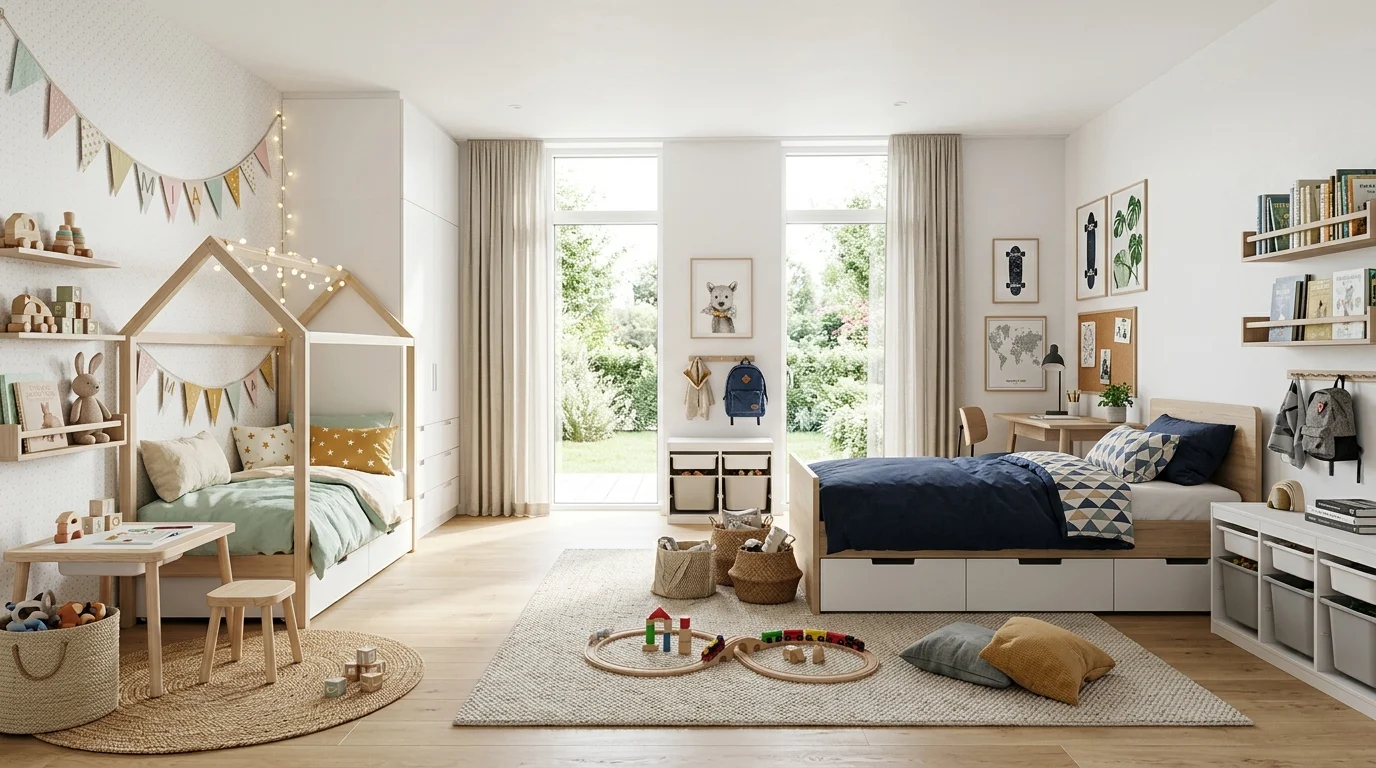
When our younger two children ended up sharing a room, four years apart in age with genuinely different bedtimes, different noise tolerances, and very different ideas about what belonged on the walls, I assumed we’d be locked in an endless negotiation over every design decision. It took several false starts, an overly babyish theme the older one resented, a too-mature layout that didn’t account for the younger one’s earlier bedtime, before we landed on an approach that actually worked for both of them simultaneously. The eventual solution wasn’t really about finding a perfect compromise on style; it was about designing around their actual different needs and routines rather than trying to make one unified aesthetic satisfy two very different children.
A shared bedroom for siblings of different ages works best when the room is designed around their genuinely different needs, not just split down the middle stylistically. Here’s what actually helped make ours function well for both kids.
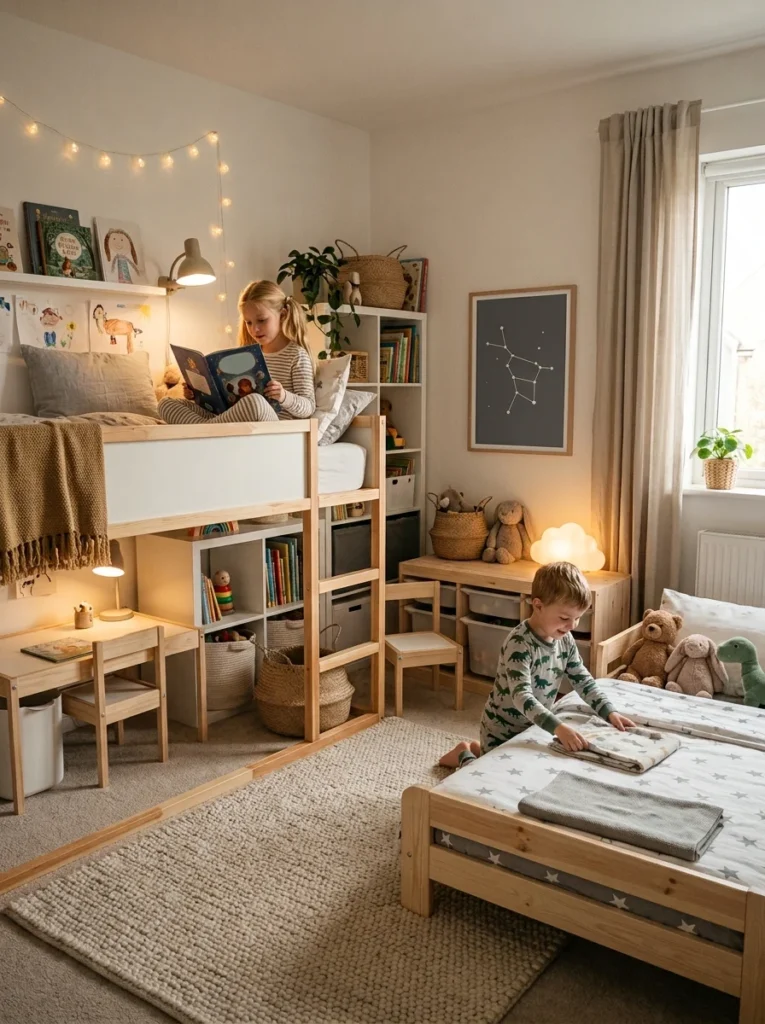
Divide the room into distinct zones for each child
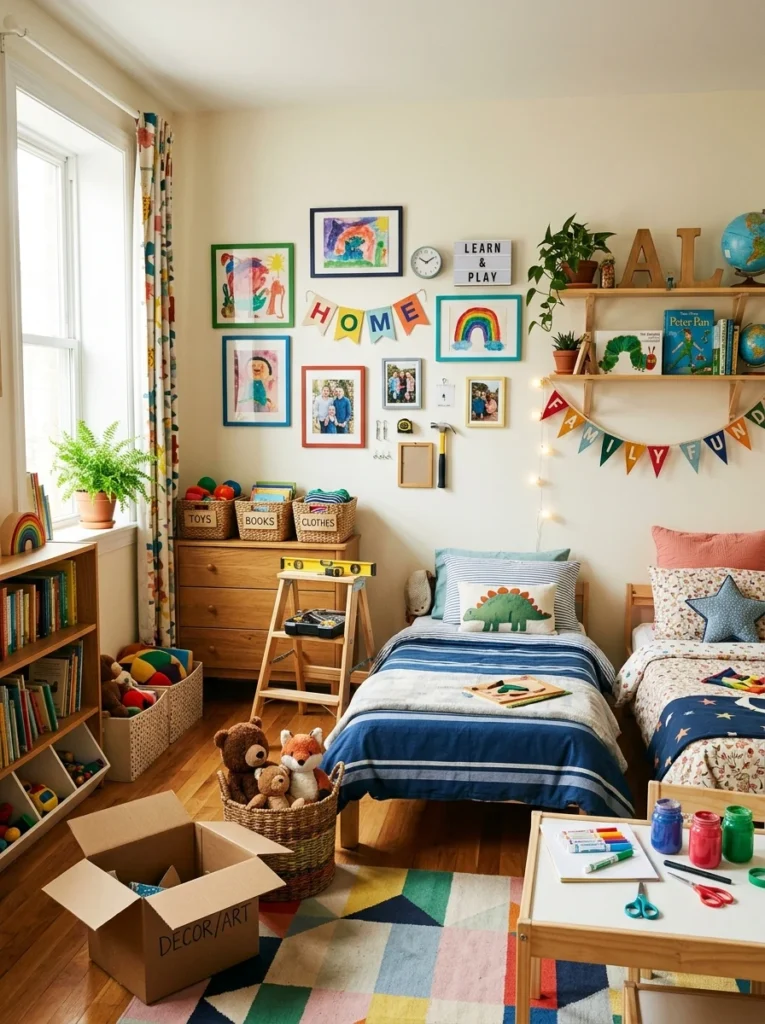
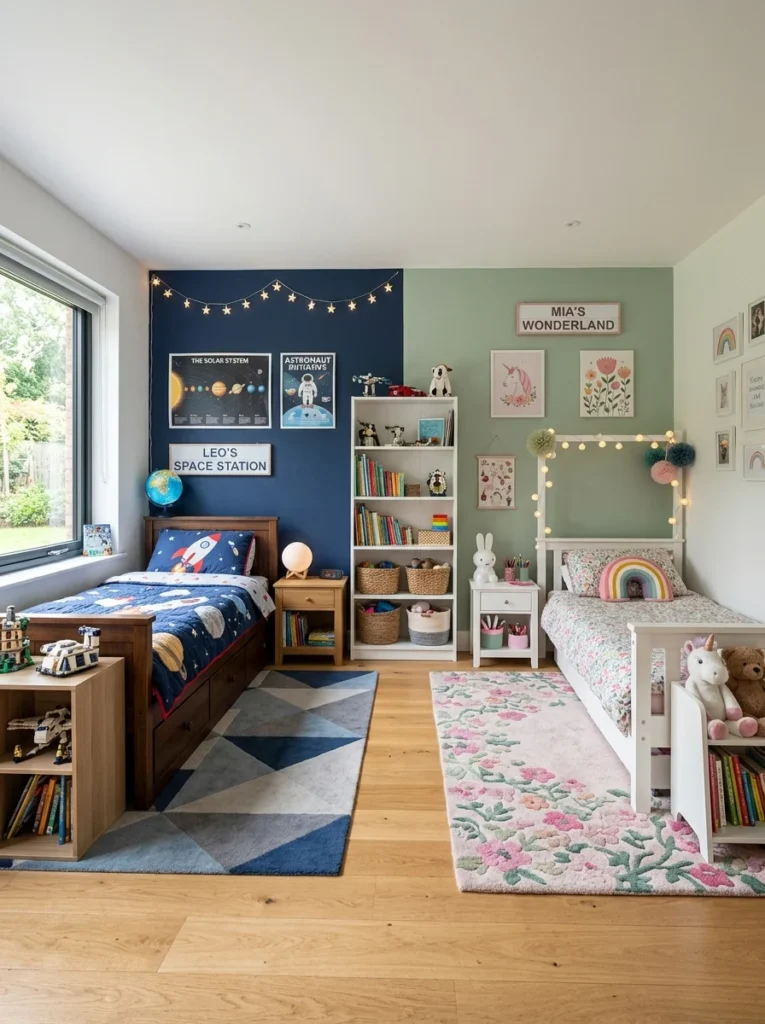
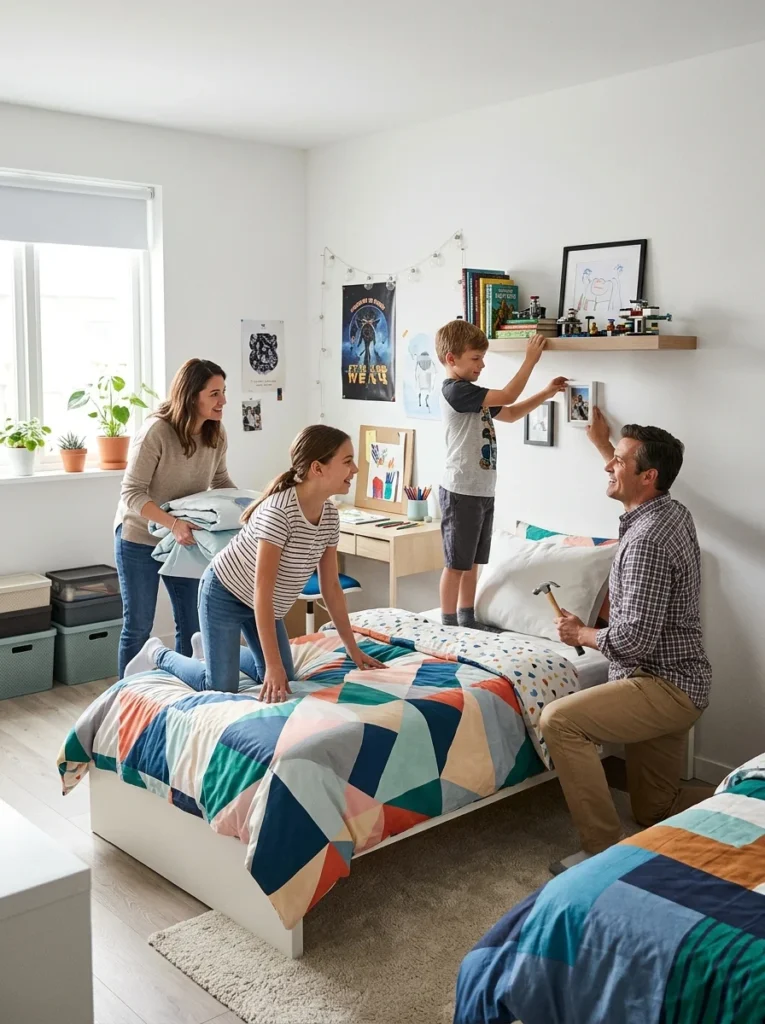
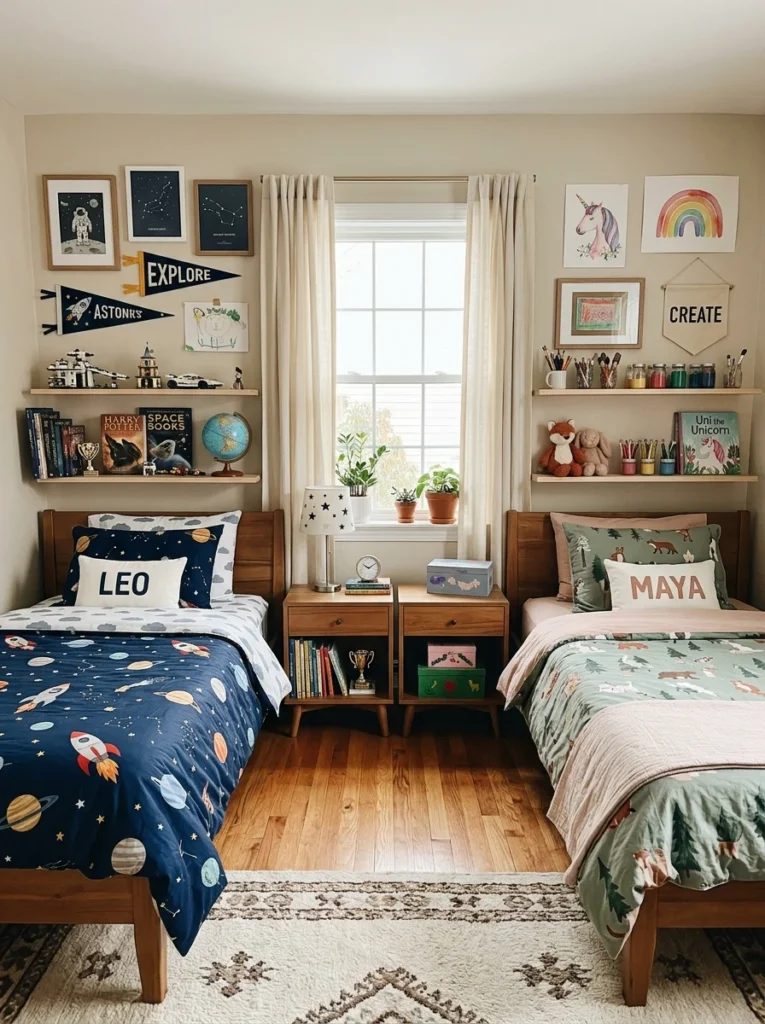
Rather than blending everything together, establishing a clear zone for each child, their own bed area, their own storage, even a loosely defined personal space, gives each sibling a sense of individual ownership within a room they’re sharing. This division doesn’t need a physical wall or divider necessarily, though that’s an option covered separately below; even a different rug, a different section of wall color, or simply consistent furniture placement can establish this sense of zoned ownership.
Consider a physical divider for genuinely different routines
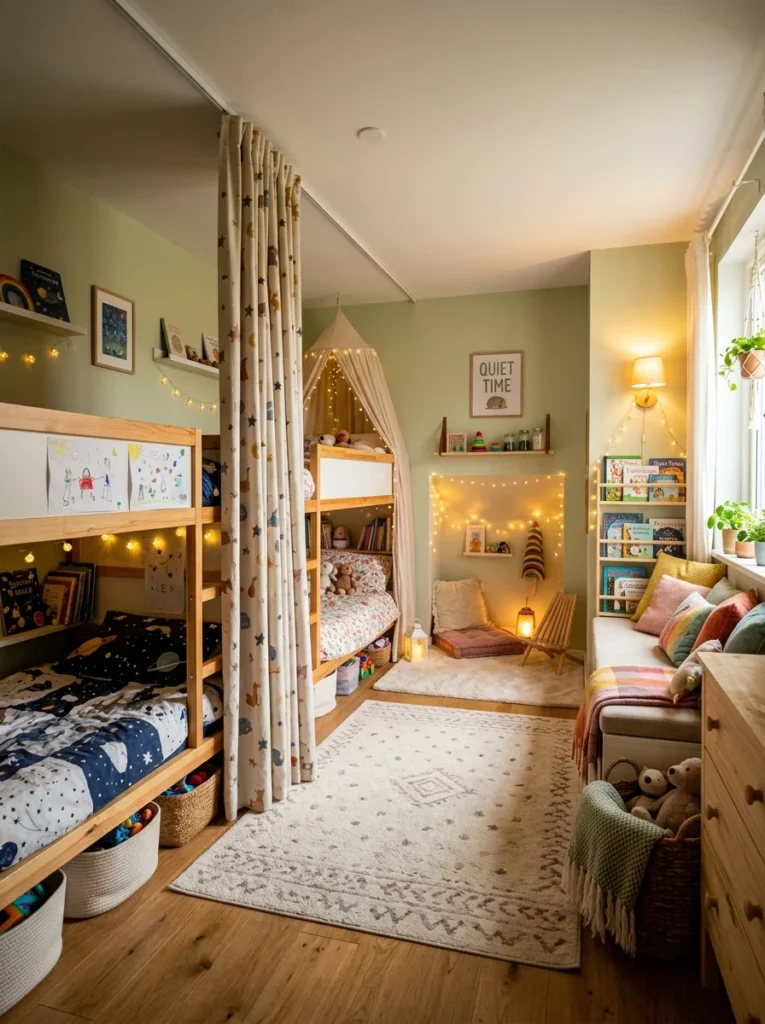
If siblings have significantly different bedtimes or sleep needs, a younger child going to bed considerably earlier than an older one, a room divider, whether a bookshelf positioned to create a partial visual barrier, a curtain, or a folding screen, can help the earlier sleeper settle down without being fully exposed to the older sibling’s continued activity on their side of the room during that gap in bedtimes.
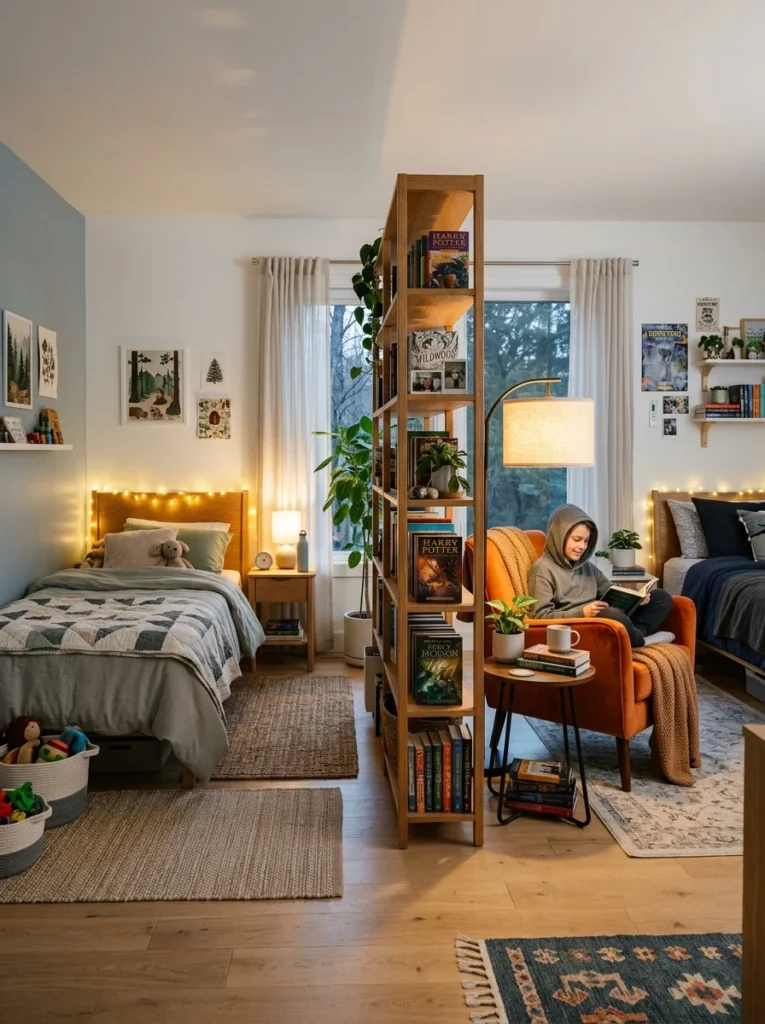
Use bunk beds or a loft bed to maximize floor space for shared activities
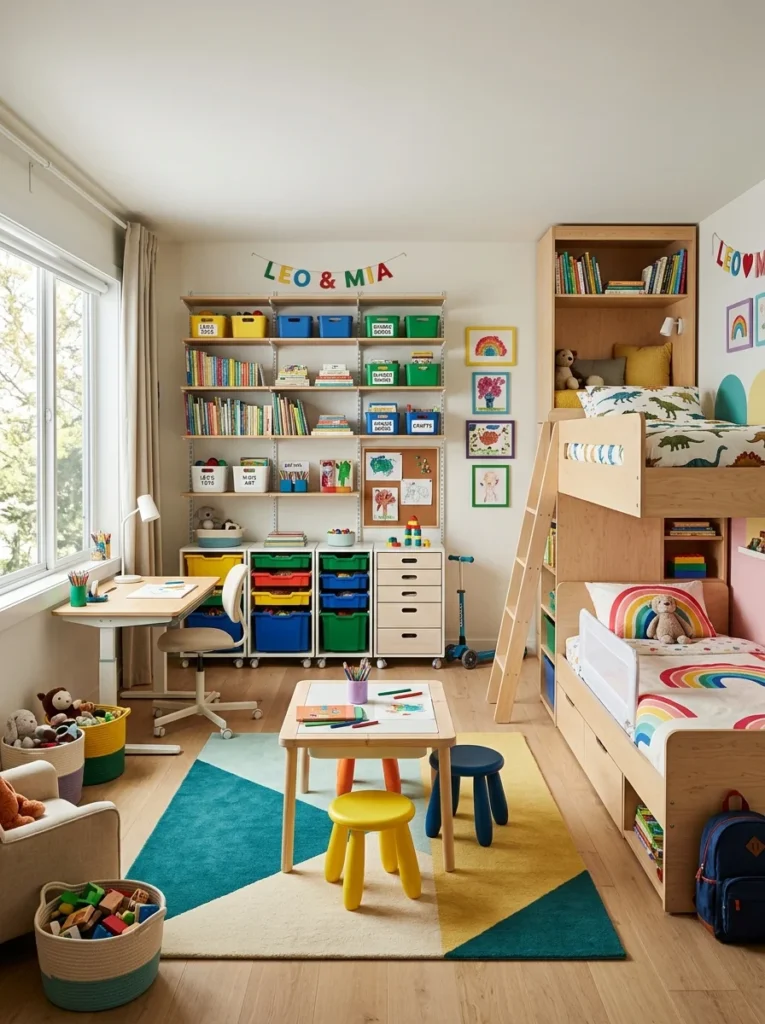
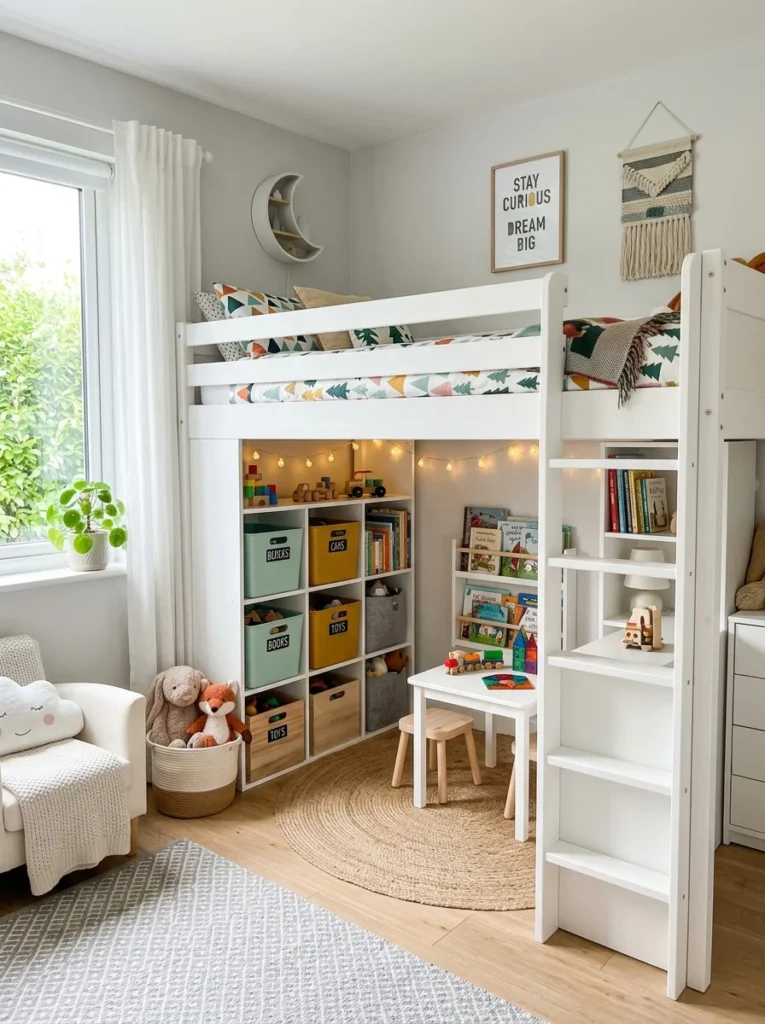
Bunk beds or a loft bed configuration frees up considerable floor space compared to two standard single beds positioned side by side, space that can then be used for shared play areas, individual desks, or additional storage that a room with two full-footprint beds simply couldn’t accommodate. This is worth considering specifically when floor space is limited relative to the number of children sharing the room.
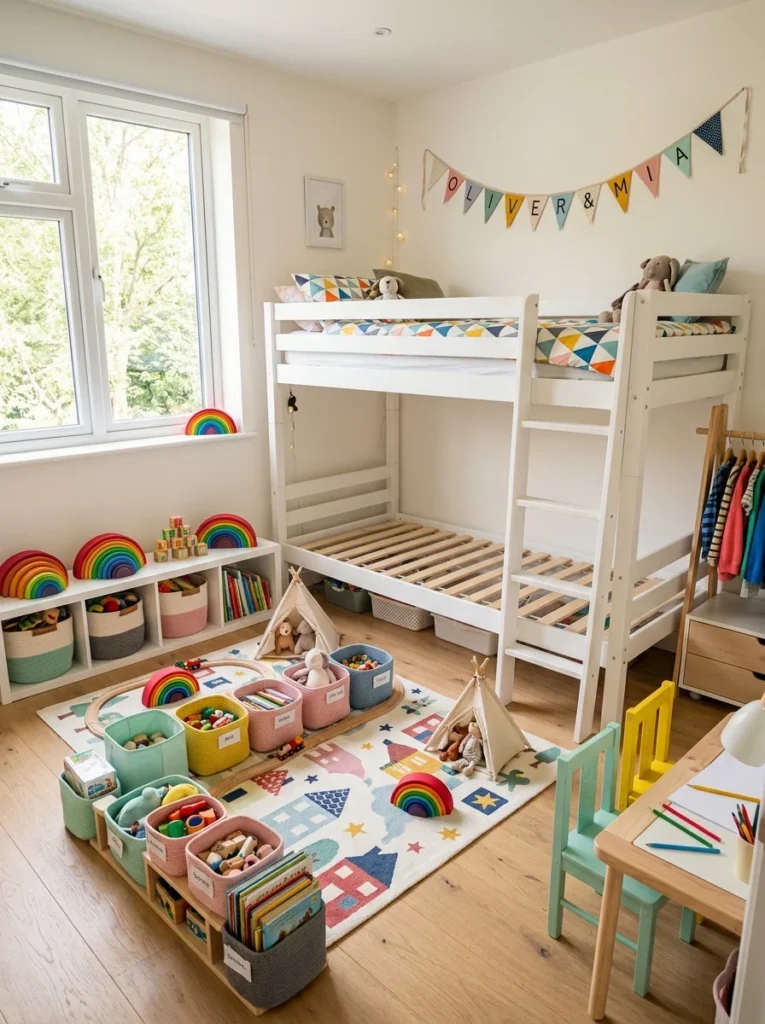
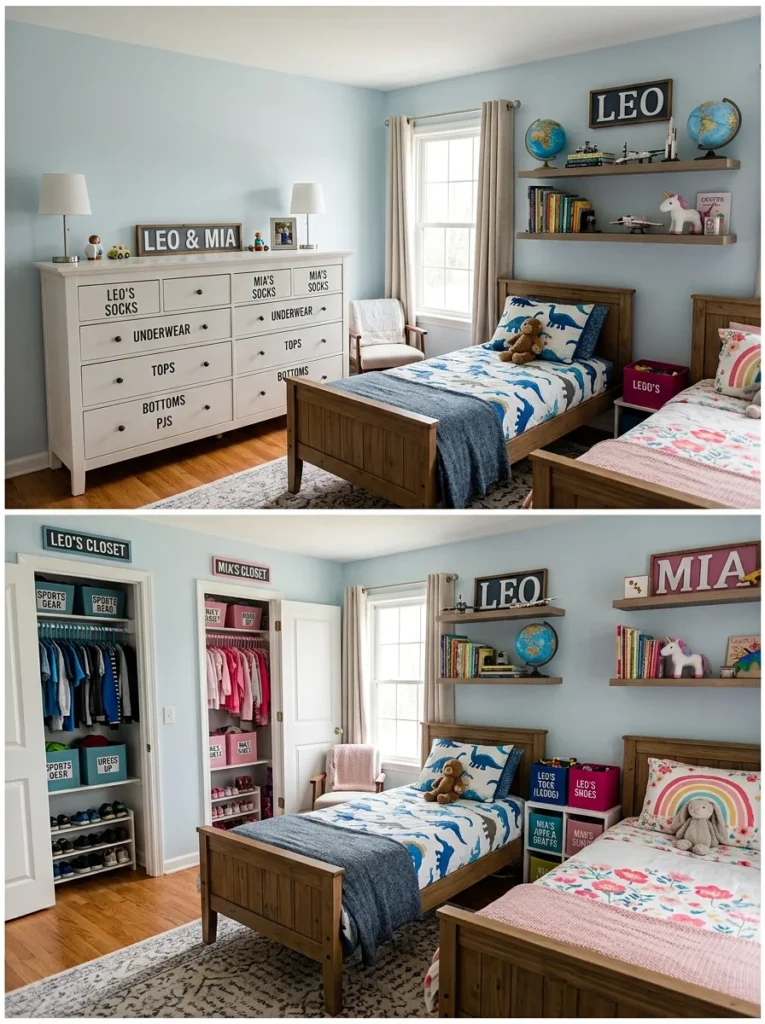
Give each child their own designated storage, even if furniture is shared
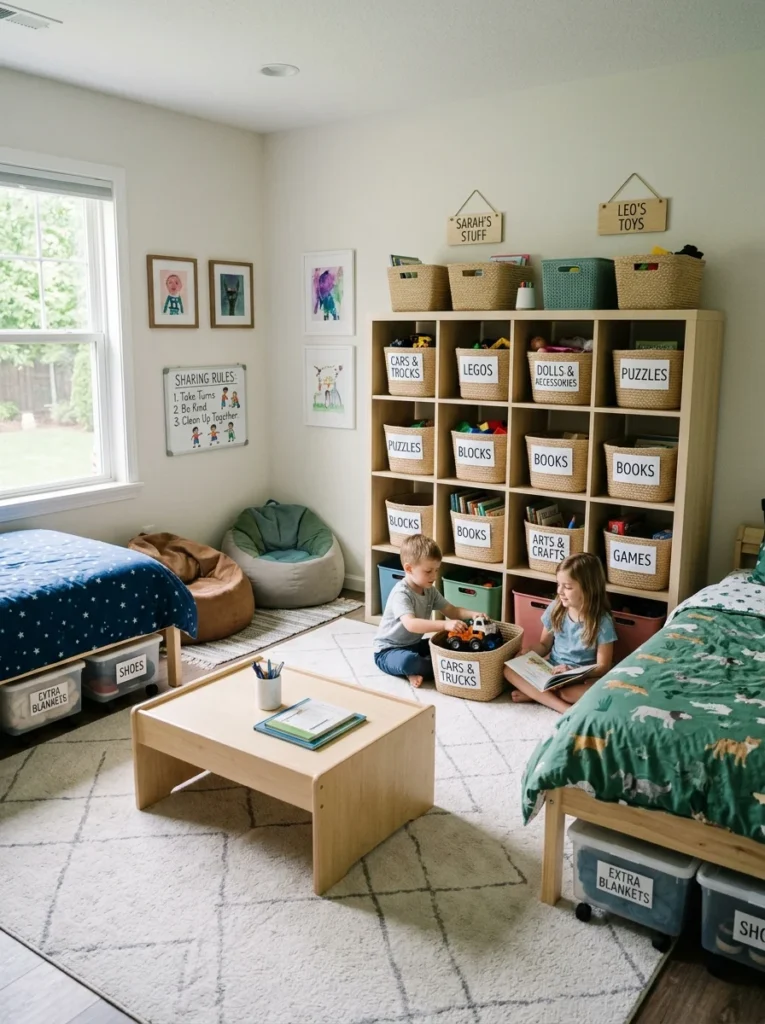
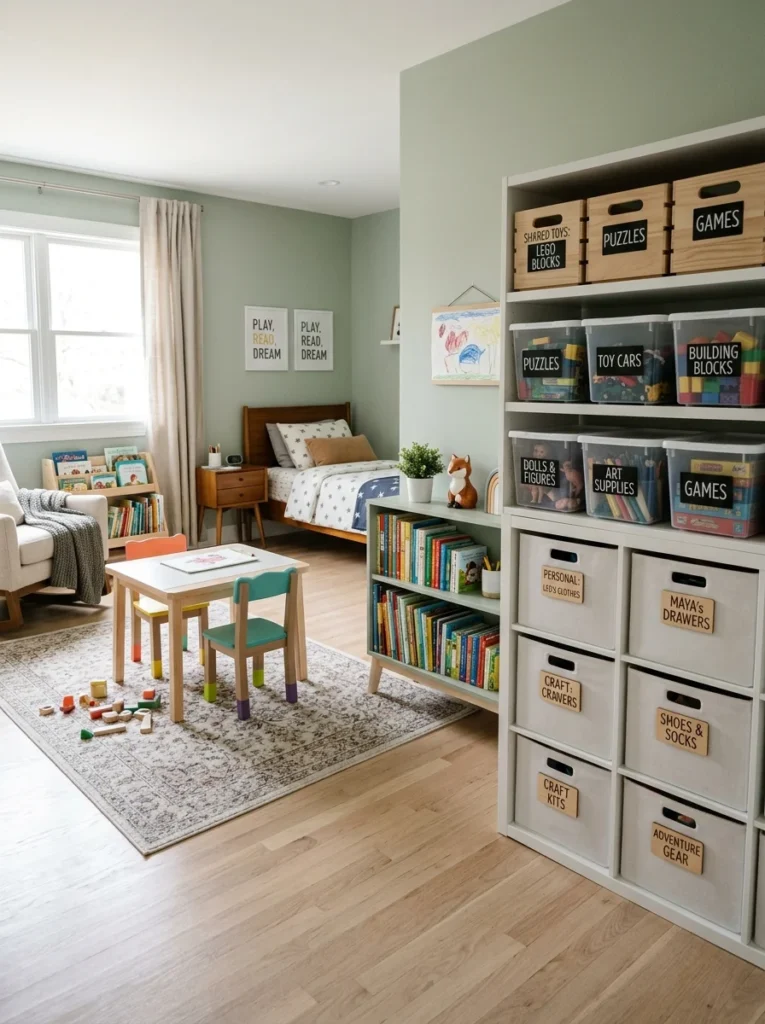
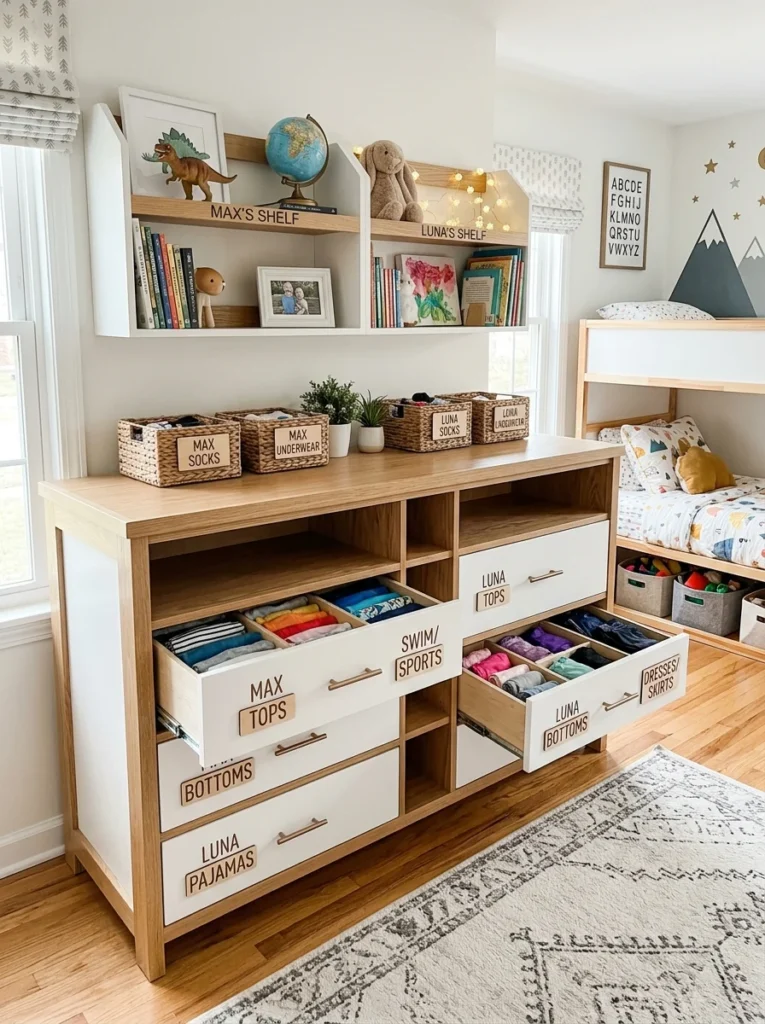
Even when sharing a dresser or closet, assigning specific drawers, shelves, or sections to each child, clearly labeled or otherwise obviously divided, reduces the friction and confusion that comes from genuinely shared, undifferentiated storage where it’s unclear whose items belong where. This individual ownership within shared furniture tends to reduce daily conflict over misplaced belongings.
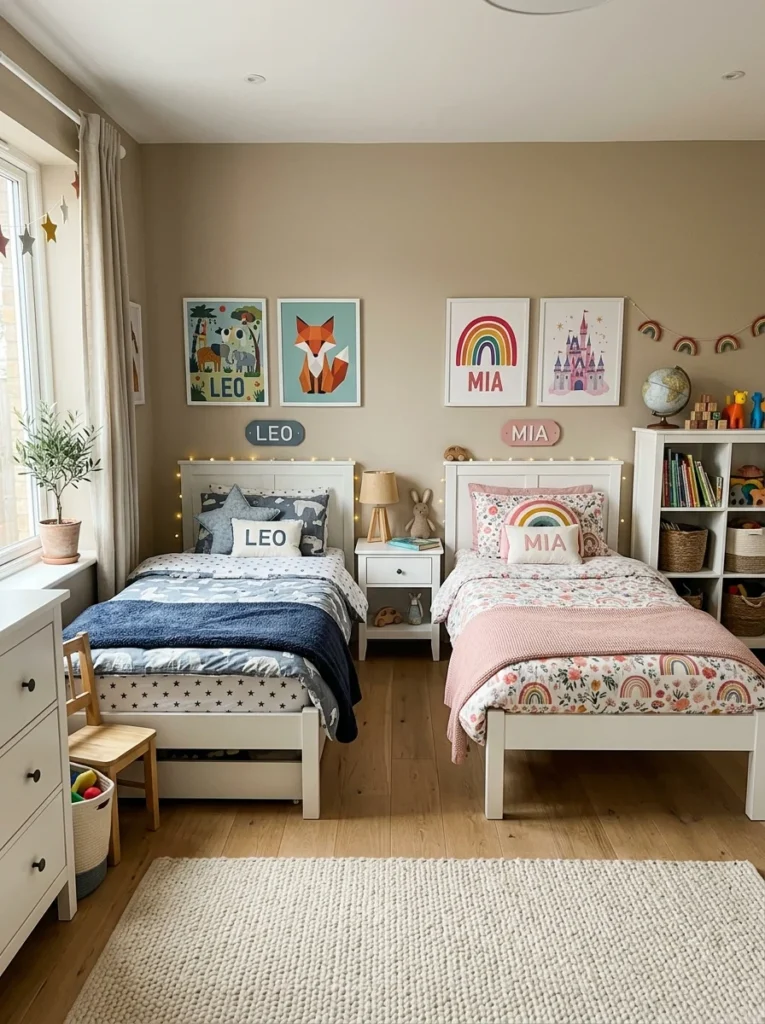
Choose a flexible color palette that can accommodate both children’s preferences
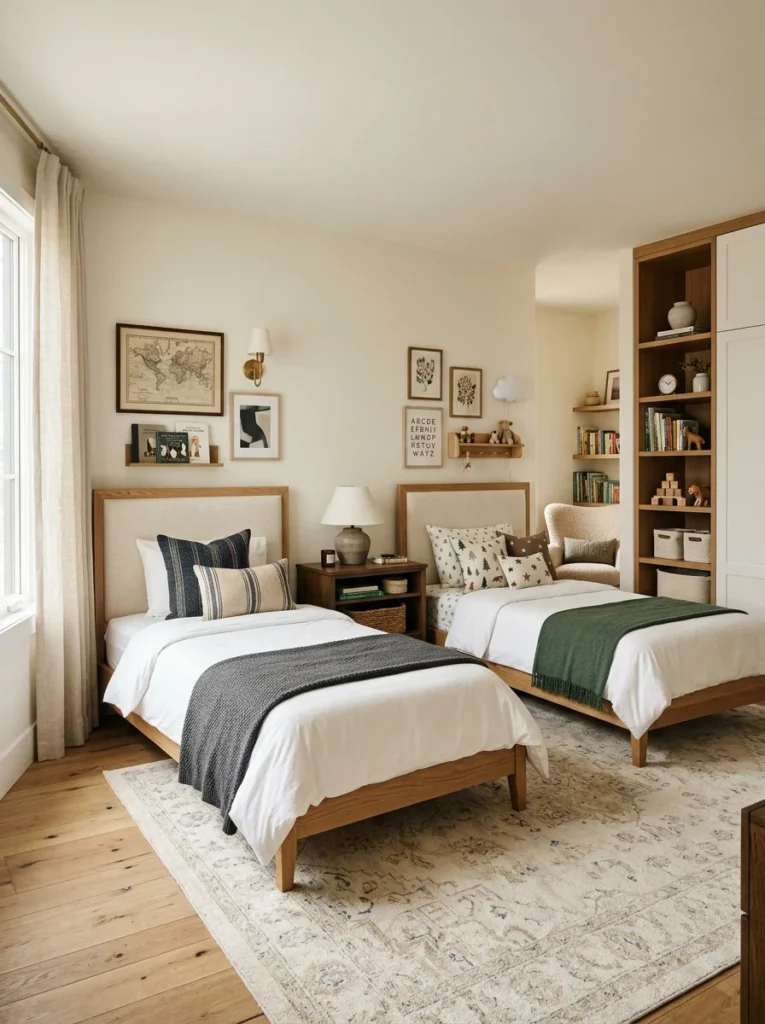
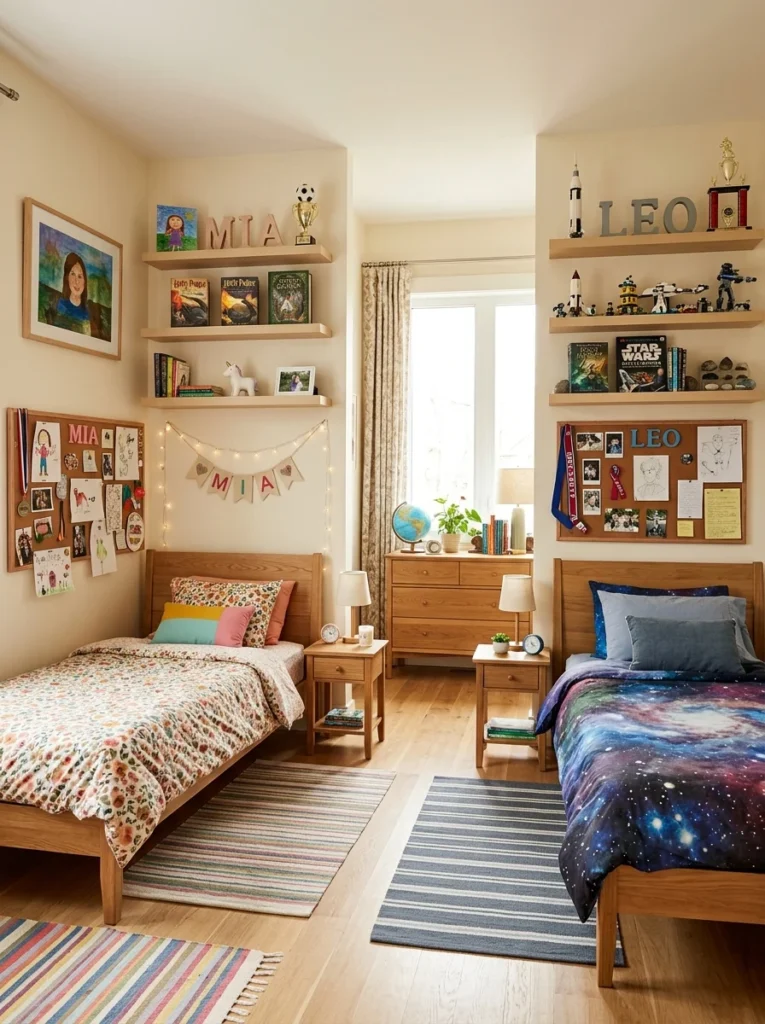
A neutral base palette, with each child’s individual preferences expressed through their own bedding, a personal shelf of favorite items, or a section of wall art specific to their own space, allows both children’s personalities to show without requiring the entire room to commit to one single, compromise aesthetic that might not genuinely satisfy either child’s actual taste.
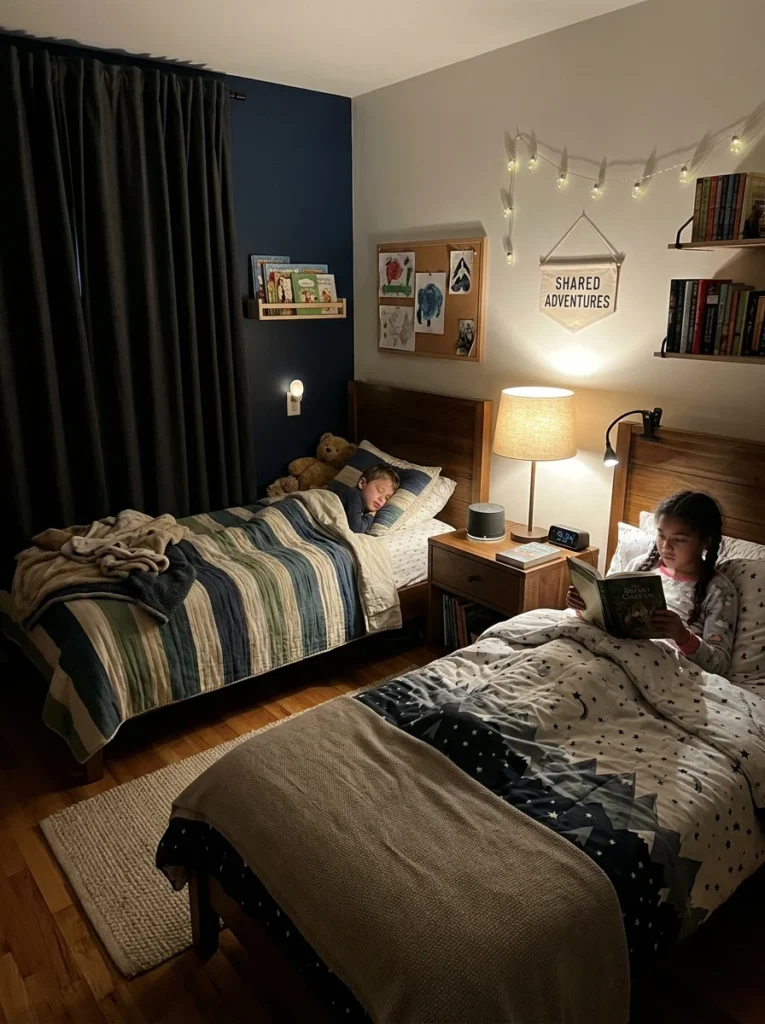
Address noise and light differences between different bedtimes
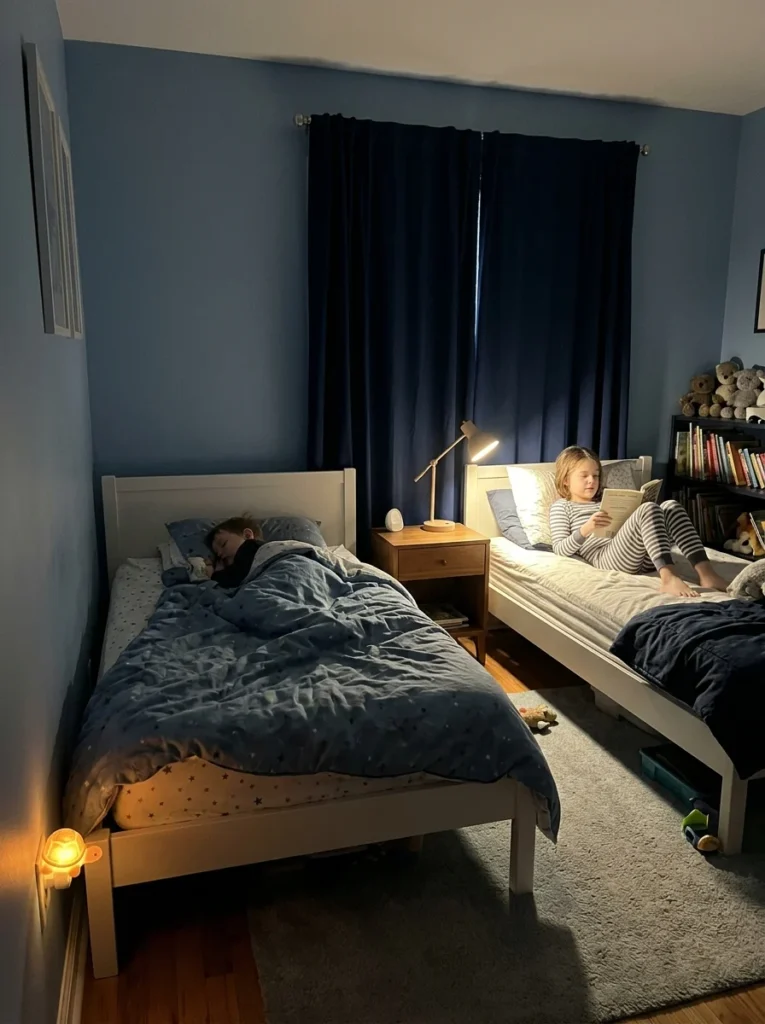
If bedtimes differ significantly, blackout curtains on the younger child’s side, a white noise machine to help mask the older sibling’s continued activity, and a small, dim light source for the older child to read or engage in a quiet activity without needing the main room light on can all help both children’s differing routines coexist within the same shared space more comfortably.
Create a shared, neutral common area for joint activities
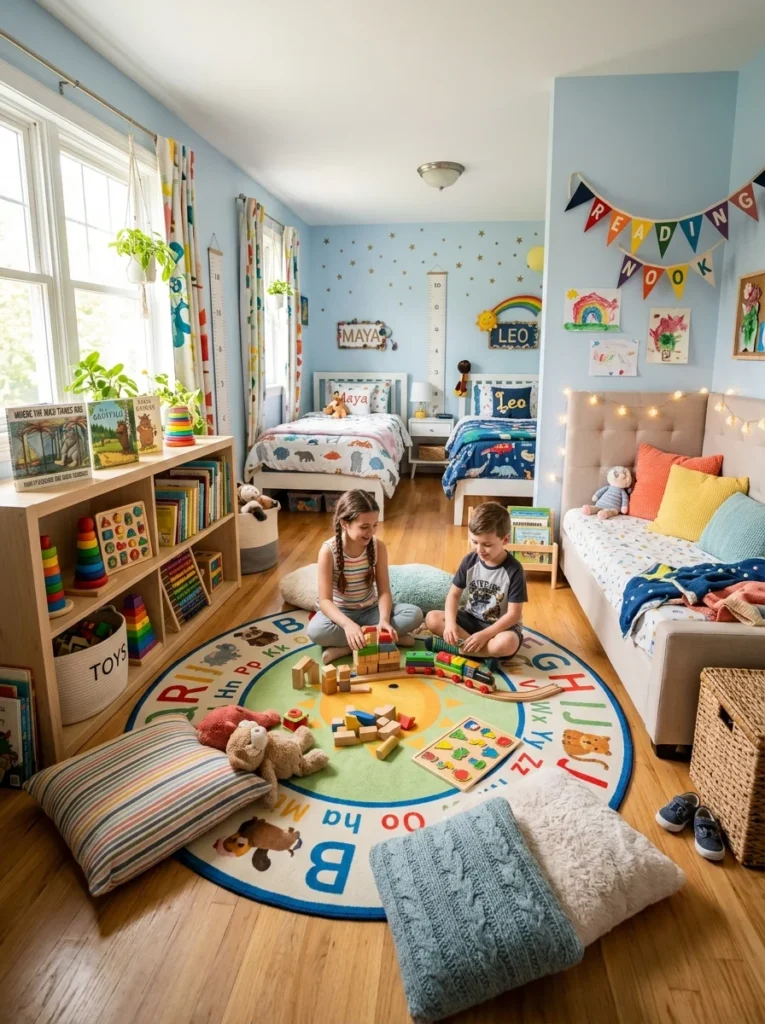
Beyond each child’s individual zone, a shared, common area within the room, a rug and floor cushions for shared play, a joint bookshelf both children can access, provides a genuinely communal space that belongs to both children rather than being claimed exclusively by either one, which can help reduce territorial disputes over the room’s shared spaces.
Plan storage and decor with an eye toward the older child’s evolving taste
Since siblings of different ages will naturally have different developmental stages and interests, planning the room’s more permanent elements, wall color, major furniture, around a flexible, evolving aesthetic that can adapt as both children grow, rather than committing heavily to a very young-child-specific theme that the older sibling will quickly outgrow, extends the room’s functional lifespan for both children.
Establish clear expectations around shared space and belongings
Beyond the physical room design, involving both children in establishing some basic shared expectations, respecting each other’s designated zones, agreed-upon rules around borrowing items, quiet time during different routines, supports the room’s physical organization with actual behavioral agreements that help the arrangement function smoothly day to day, not just in terms of furniture layout.
Revisit the room’s setup as the age gap’s practical impact changes over time
The specific challenges of sharing a room, differing bedtimes, differing noise tolerance, evolve as both children grow older and their age gap’s practical day-to-day impact shifts, sometimes narrowing as both children reach more similar developmental stages, sometimes shifting in different ways as interests diverge. Revisiting the room’s zones, storage arrangement, and shared expectations periodically, rather than assuming the original setup remains perfectly suited indefinitely, keeps the arrangement functional as both children continue growing and changing.
Give each child a personal display area for their own achievements and interests
A small designated space, a corkboard, a shelf, or a section of wall specifically reserved for each child’s own artwork, awards, or favorite collected items, gives them a genuine sense of individual identity within the shared room, separate from the parts of the room that are genuinely communal. This is a relatively low-cost addition that meaningfully addresses the desire for personal recognition and space that can otherwise become a point of friction in a fully shared environment.
Set up a system for managing shared versus personal toys and books
Clarifying which items belong to each child individually versus which are genuinely shared between them, ideally with input from both children themselves, reduces a common and recurring source of conflict in shared rooms. A shared bin for joint items, alongside each child’s own individually labeled storage for personal belongings, gives this distinction a physical structure to reinforce the agreed-upon expectations rather than relying purely on memory or verbal agreements that are easy to forget in the moment.
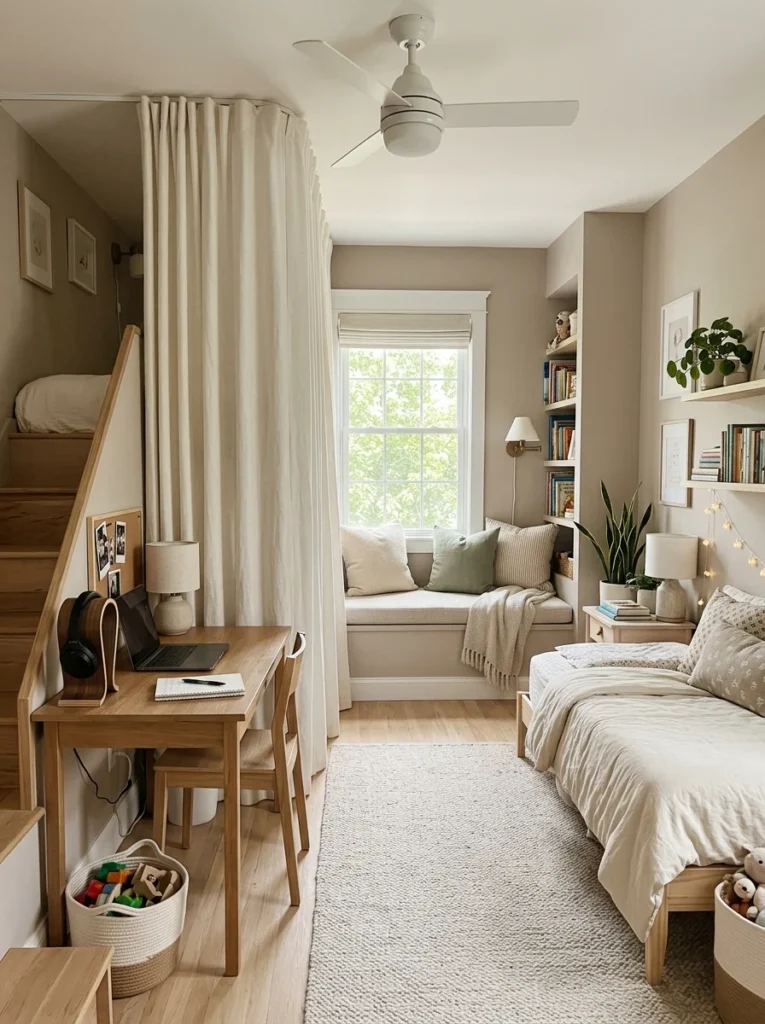
Consider each child’s need for occasional privacy or alone time
Even in a shared room, building in some capacity for occasional individual privacy, a curtain that can be drawn around one bed, noise-canceling headphones available for either child, or an agreed-upon signal for needing quiet, undisturbed time, acknowledges that siblings sharing a room still benefit from some degree of individual space, particularly as they grow older and their need for occasional solitude increases.
Involve both children in decisions about their shared space
Giving each child some genuine input into decisions about their own zone, their bedding choice, their personal display area, even if the broader room structure is set by the parents, increases their sense of ownership and investment in maintaining the agreed-upon shared expectations. This collaborative approach tends to result in less resistance to the overall room plan than one imposed entirely without either child’s input.
How do I handle very different bedtimes in a shared room?
Blackout curtains for the earlier sleeper, a white noise machine to help mask ongoing activity from an older sibling, and a small, dim light source for quiet activities without the main room light can all help significantly different bedtimes coexist more comfortably within the same shared space.
Should each child have their own storage even if furniture is shared?
Yes, assigning specific, clearly divided drawers, shelves, or sections to each child within shared furniture reduces confusion and friction over whose belongings go where, even when a full separate dresser or closet for each child isn’t practical.
Are bunk beds a good option for siblings sharing a room?
Bunk beds or a loft bed configuration can free up considerable floor space compared to two standard single beds, which is particularly useful when floor space is limited relative to the number of children sharing the room.
How can I make a shared room feel personal for both children?
A neutral base palette paired with each child’s individual preferences expressed through their own bedding, a personal shelf, or their own section of wall art allows both children’s personalities to show without requiring the whole room to commit to one compromise aesthetic.
How can siblings get some privacy in a shared room?
A curtain that can be drawn around one bed, noise-canceling headphones available for either child, or a simple agreed-upon signal for needing quiet time all provide some capacity for individual privacy, which matters more as children grow older and their need for occasional solitude increases.
Should children be involved in decisions about their shared room?
Yes, giving each child genuine input into their own zone, bedding, or personal display area, even if the overall room structure is set by parents, increases their investment in maintaining the shared expectations and tends to reduce resistance compared to a plan imposed without either child’s input.
A shared bedroom for siblings of different ages works best when it’s designed around their genuinely different routines, storage needs, and evolving tastes, rather than treated as one unified style project that both children need to equally love. Clear zones, individual storage within shared furniture, and thoughtful solutions for differing bedtimes and noise levels all contribute to a room that functions well for both children simultaneously.
Our own two kids’ shared room finally clicked once we stopped trying to find a single aesthetic they’d both love and instead built the space around their actual, different daily routines, their own zones, their own storage, a shared middle space that belongs equally to both of them. If your own kids are sharing a room and the current setup still feels like a constant negotiation, consider whether the room’s actual structure supports their genuinely different needs, rather than assuming the friction is purely about differing tastes that a nicer compromise color scheme could solve, since the deeper fix usually lives in the room’s actual layout and systems rather than its surface-level style.