
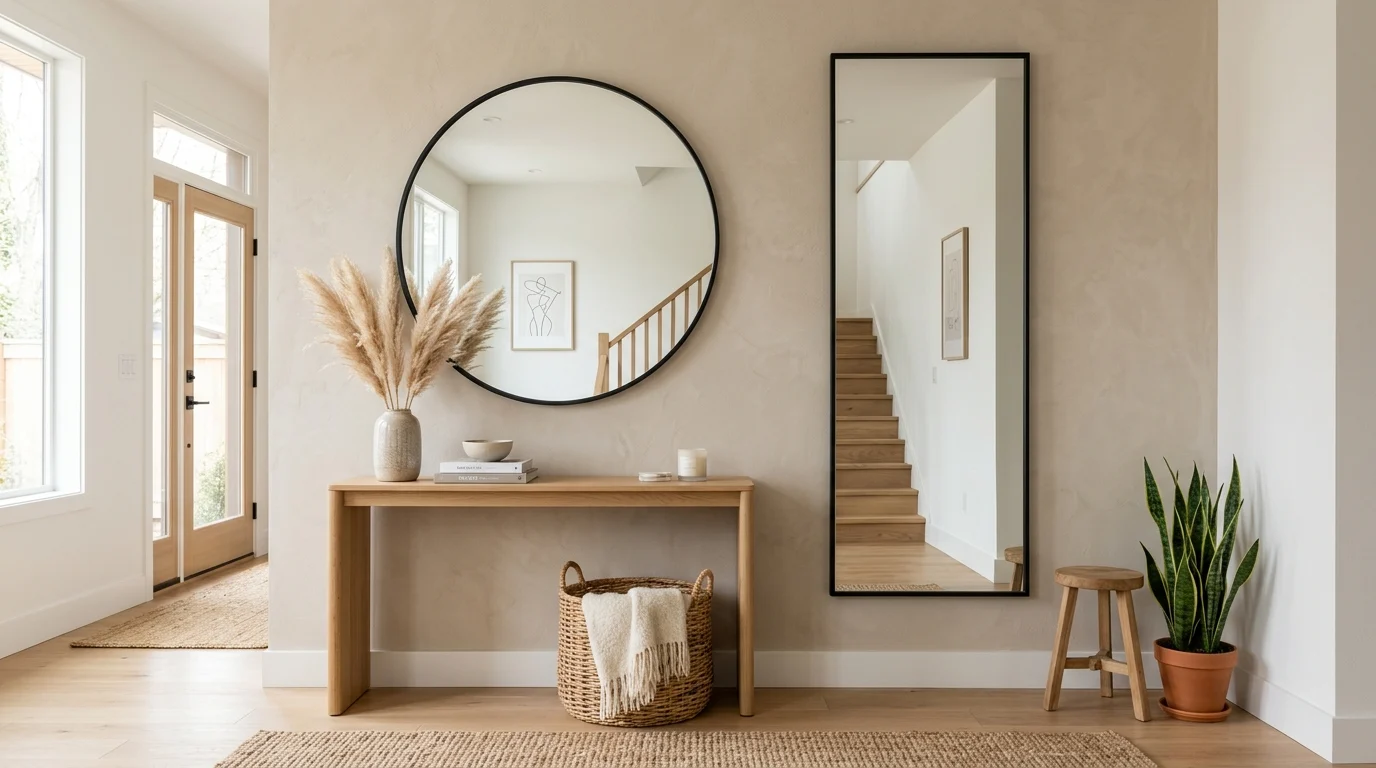
When I redid my entryway a while back, I genuinely went back and forth between a round mirror and a rectangular one for longer than felt reasonable for what should have been a simple decision. Both were beautiful in their own right, both fit the wall space available, and it wasn’t until I actually thought through how the space itself was shaped and used, rather than just which mirror I liked more in isolation, that the right choice became obvious. That process of actually thinking it through, rather than deciding on pure aesthetic preference alone, is what I now walk through every time this exact decision comes up again.
Round and rectangular mirrors are both excellent, versatile choices, but they interact with a room’s proportions, existing furniture, and function in genuinely different ways. Here’s an honest comparison to help you figure out which one actually suits your specific space.
How each shape interacts with a room’s existing lines
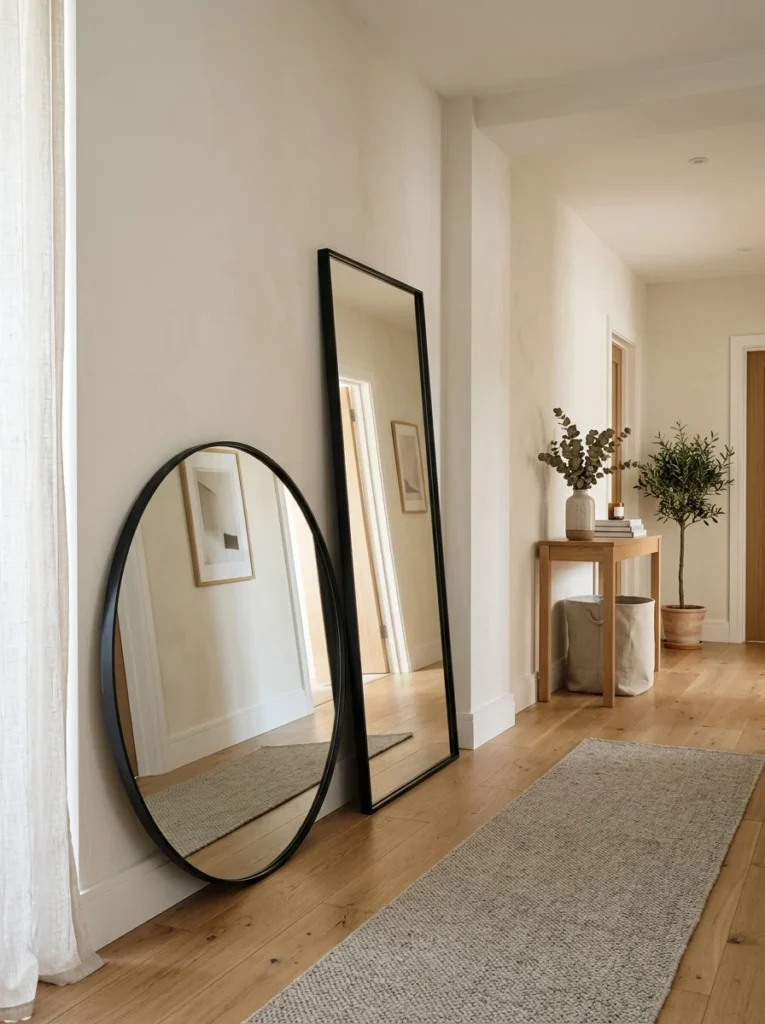
A rectangular mirror echoes the straight lines already present in most rooms, door frames, windows, furniture edges, which makes it a safe, cohesive choice that rarely clashes with existing architecture. A round mirror introduces a deliberate contrast against those same straight lines, creating visual relief in a room that might otherwise feel entirely dominated by right angles and straight edges. Neither approach is inherently better; it depends on whether your room needs more cohesion with its existing lines or more contrast against them.

Round mirrors suit smaller or tighter spaces particularly well
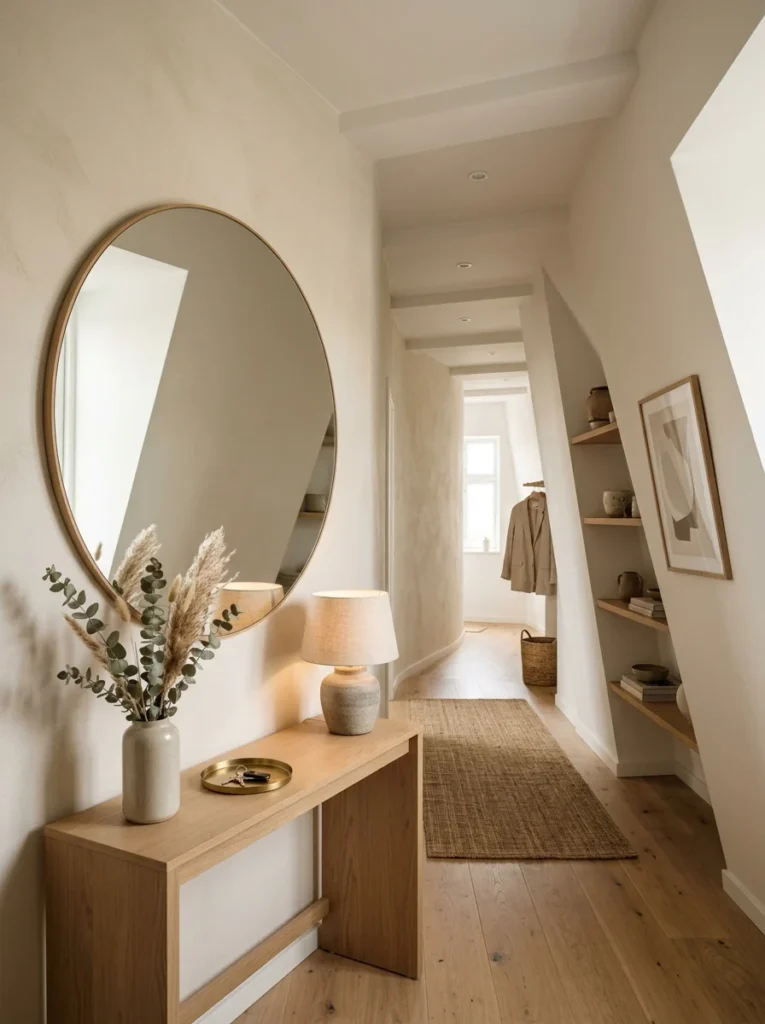
A round mirror’s lack of sharp corners means it doesn’t visually compete with a room’s existing boundaries the way a rectangular mirror’s corners can in a genuinely tight space. This makes round mirrors a particularly strong choice for small entryways, tight hallways, or compact powder rooms, where every visual element benefits from feeling as unobtrusive and space-expanding as possible rather than adding another set of hard angles to an already boxy, confined room.

Rectangular mirrors offer more functional viewing area for a given wall width
For a given width of wall space, a rectangular mirror generally offers more actual reflective surface than a round mirror of the same width, since a circle’s shape means the reflective area narrows significantly toward the top and bottom compared to a rectangle’s consistent width throughout its full height. This matters in spots where practical, functional viewing, checking a full outfit before leaving the house, for instance, is a priority alongside the decorative benefit.

Consider how each shape performs above different furniture types
A rectangular mirror above a rectangular console or dresser creates a clean, proportional, cohesive look, essentially extending the furniture’s own lines upward. A round mirror above that same rectangular furniture creates an intentional contrast that many people find more visually interesting than a straightforward rectangular match, though this pairing requires slightly more confidence in the styling choice than the safer, more predictable rectangular-on-rectangular combination.
Think about the room’s overall style direction
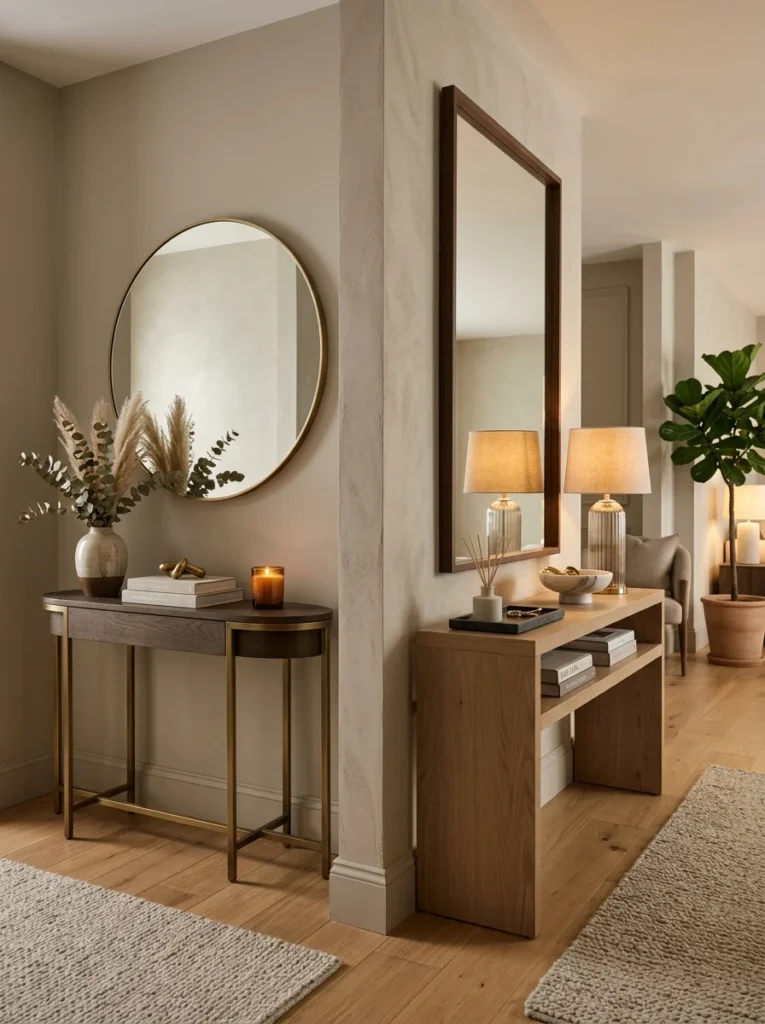
Round mirrors tend to suit softer, more organic, or bohemian-leaning design styles particularly well, complementing curved furniture, natural materials, and a generally softer overall aesthetic. Rectangular mirrors suit almost any style but feel particularly at home in more traditional, transitional, or clean modern rooms where straight lines and symmetry already define much of the room’s character. Neither shape is locked into one specific style exclusively, but this general tendency is worth considering alongside the room’s actual furniture and proportions.

Round mirrors work well as a single, low-commitment focal point
Because a round mirror already introduces some visual contrast and interest purely through its shape, a single round mirror can function effectively as a room’s primary decorative focal point without needing additional ornamentation, an elaborate frame, or an oversized scale, to earn that role. A rectangular mirror, being a more expected, familiar shape, sometimes needs a more distinctive frame or larger scale to achieve that same singular focal-point impact within a room.
Rectangular mirrors are generally easier to source in larger sizes
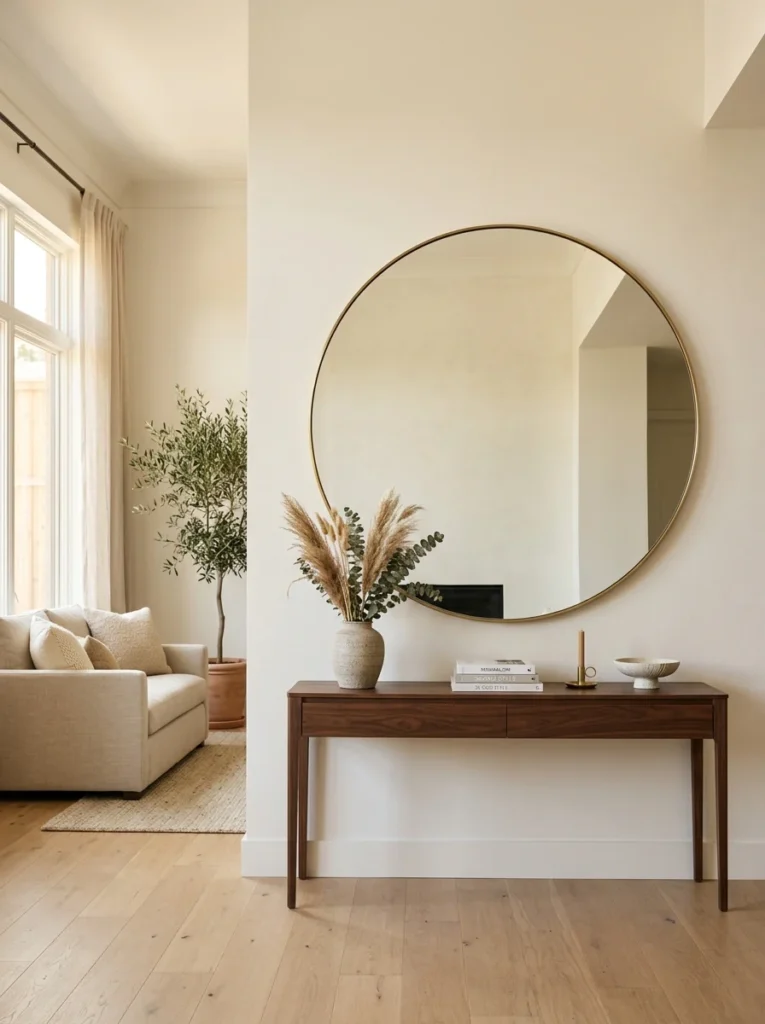
If you need a genuinely large mirror, to cover a substantial wall or to maximize natural light reflection across a wide area, rectangular mirrors are more widely available in larger dimensions and tend to be more affordable at scale than an equivalently large round mirror, which requires more specialized manufacturing to produce without warping or distortion at bigger diameters. This is worth factoring in if a large-scale mirror is part of your specific goal for the space.

Round mirrors can feel more forgiving in an irregularly shaped room
In a room with an unusual layout, an awkward alcove, an irregular wall shape, a round mirror’s lack of corners can feel more visually forgiving and adaptable than a rectangular mirror, which draws more attention to its own straight edges when placed within an already irregular, non-rectangular space. This is a more situational consideration than a universal rule, but worth keeping in mind for a room that doesn’t follow a standard rectangular floor plan itself.
Consider mixing both shapes within the same home
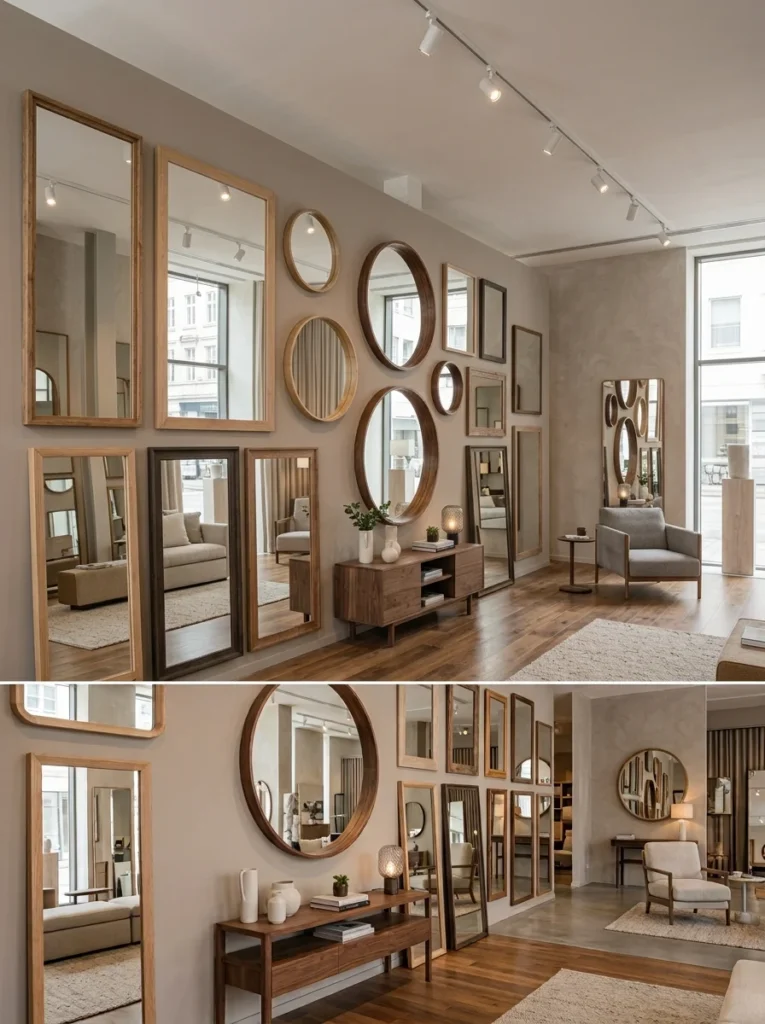
There’s no requirement to choose one shape exclusively for your entire home. Using a round mirror in a small, tight entryway while choosing a rectangular mirror for a larger living room or bedroom, for instance, lets each space benefit from the shape that genuinely suits its specific proportions and function, rather than forcing a single shape preference across every room regardless of whether it’s actually the best fit for each individual space.

Think about ease of hanging and leveling for each shape
A rectangular mirror, hung using standard wire and D-ring hardware or a French cleat, is relatively straightforward to level using a standard level tool placed along its bottom or top edge. A round mirror requires a bit more care to hang and confirm it’s genuinely level, since there’s no straight edge to reference directly, making a small level placed carefully across the mirror’s back or checked against a plumb line from the ceiling a more useful technique specifically for this shape.

Compare typical costs between the two shapes
Rectangular mirrors are generally more affordable than round mirrors of a comparable size, since rectangular glass cutting and framing is a simpler, more standardized manufacturing process than achieving a precise, distortion-free circular cut, particularly at larger diameters. This cost difference becomes more pronounced as size increases, with large round mirrors commanding a noticeably higher premium than an equivalently sized rectangular piece, which is worth factoring in in addition to the purely stylistic considerations if budget is a significant factor in your decision.
Consider how each shape affects light reflection and brightness
A rectangular mirror, offering more consistent reflective surface across its full height and width, generally reflects a bit more usable light back into a room than a round mirror of similar overall dimensions, since the round shape’s tapering edges reduce the total reflective area compared to a rectangle’s consistent width throughout. If maximizing natural light is a primary goal for the mirror, this is worth weighing against the softer, more visually forgiving qualities a round mirror offers, since the two priorities don’t always point toward the same shape choice.

Think about how each shape ages stylistically over time
Rectangular mirrors, being the more classic, expected shape, tend to remain stylistically relevant across a broad range of design trends and personal taste shifts over the years, rarely feeling dated regardless of changing style preferences. Round mirrors have experienced a notable surge in popularity in recent years specifically, which means they currently feel fresh and current, though it’s worth considering whether that popularity reflects a genuine, lasting design principle, the visual softening benefit round shapes provide, or simply a trend cycle that may feel less current at some point in the future, similar to how many design trends eventually do.

Which mirror shape is better for a small entryway?
Round mirrors often work particularly well in small entryways, since their lack of sharp corners feels less visually confining than a rectangular mirror’s edges in a genuinely tight space, though a rectangular mirror can still work well if more functional viewing area is a priority.
Does mirror shape affect how much of the room I can see in it?
Yes, for a given width, a rectangular mirror generally offers more consistent reflective surface throughout its height than a round mirror of the same width, since a circle’s shape narrows toward the top and bottom, which matters for practical, functional viewing.
Is it harder to hang a round mirror level compared to a rectangular one?
Slightly, yes, since a rectangular mirror has a straight edge to reference with a standard level, while a round mirror requires a bit more care, checking against a plumb line or carefully placing a level across its back, to confirm it’s genuinely level.
Can I use both round and rectangular mirrors in the same home?
Yes, choosing the shape that best suits each individual room’s specific proportions and function, rather than committing to one shape exclusively throughout the entire home, generally produces better results than a single blanket shape preference applied everywhere.
Are round mirrors more expensive than rectangular ones?
Generally yes, particularly at larger sizes, since achieving a precise, distortion-free circular cut is a more specialized manufacturing process than a standard rectangular cut, making round mirrors command a noticeable price premium over an equivalently sized rectangular piece.
Will round mirrors go out of style?
It’s hard to say with certainty, since round mirrors have surged in popularity recently, but rectangular mirrors, being the more classic and expected shape, tend to remain relevant across a broader range of design trends over time regardless of shorter-term style cycles.
The right choice between a round and rectangular mirror depends on your specific room’s proportions, existing furniture lines, and function more than a universal styling rule. Round mirrors soften tight or irregularly shaped spaces and work well as a low-commitment focal point, while rectangular mirrors offer more functional viewing area, cohesive lines, and easier availability in larger sizes.
My own entryway ended up with the round mirror, once I recognized how tight and slightly irregular that specific space actually was, a decision that became obvious only once I stopped comparing the two mirrors purely on looks and started actually measuring and considering the room itself. Before your next mirror purchase, take the same approach: study your specific space’s proportions and function first, and let that assessment guide the shape decision rather than deciding on appearance alone, the same shift in thinking that finally settled a choice I’d been going back and forth on for far longer than the decision really warranted.