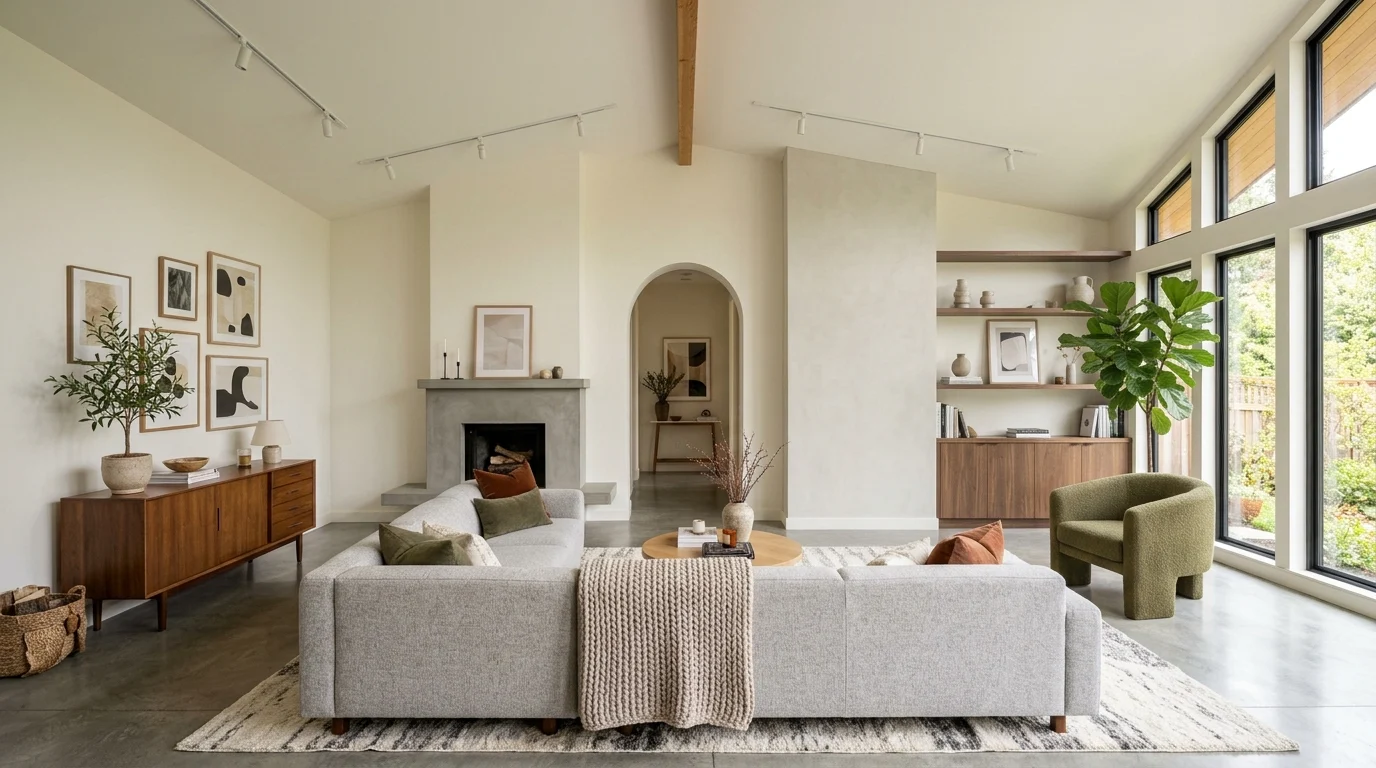
Our living room has an odd, angled wall on one side, a fireplace jutting out on another, and a doorway positioned almost dead center along the third, and when we brought home a sectional sofa I’d fallen in love with online, it took nearly a full weekend of pushing furniture around before I found an arrangement that didn’t block a doorway, awkwardly bisect the room, or leave a huge dead zone of unused floor space. That process taught me that an awkward room shape isn’t actually a reason to avoid a sectional, it just means the arrangement needs more intentional thought than simply centering the piece against the biggest available wall.
A sectional sofa can work beautifully even in a genuinely oddly shaped or challenging living room, but getting there requires understanding your room’s specific quirks first and working with them rather than against them. Here’s how to actually figure out the right placement.
Map your room’s fixed points before moving any furniture
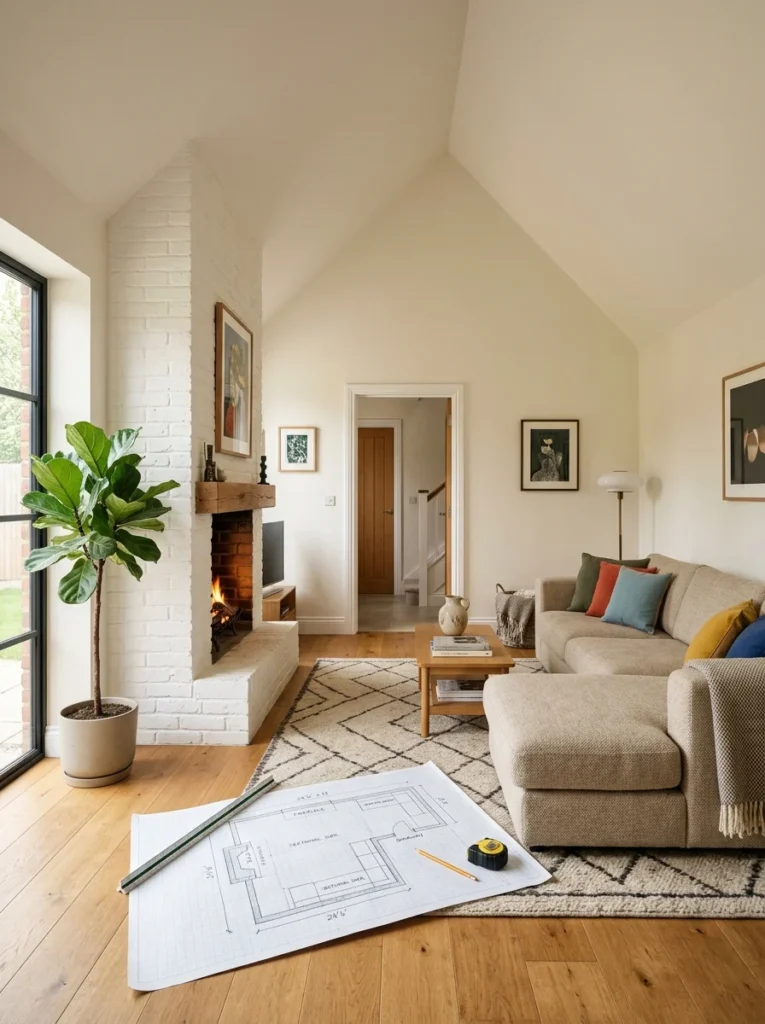
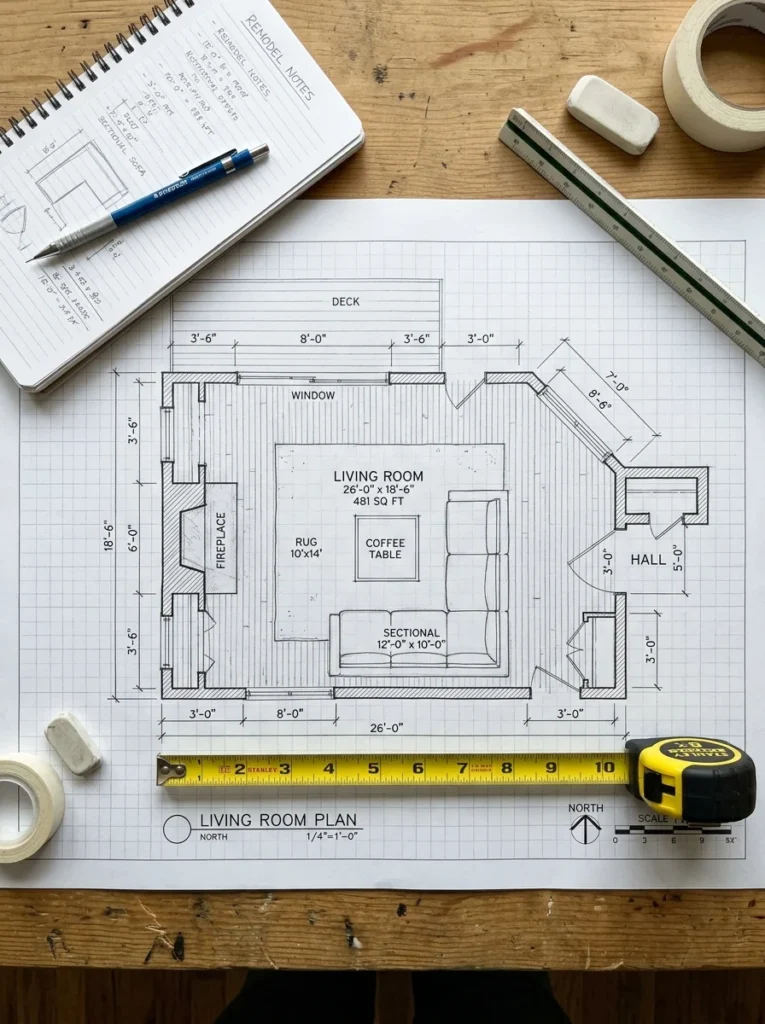
Before attempting to place a sectional, identify every fixed point in the room that can’t move: doorways and their swing paths, windows, a fireplace, built-in shelving, or any architectural quirk like an angled wall or a support column. Sketching a simple floor plan, even a rough one on paper, marking these fixed elements and their exact measurements, gives you a clearer picture to work from than repeatedly pushing a heavy sectional around by trial and error, which is exactly the frustrating process I went through before understanding this step matters more than it seems.
Identify the room’s natural focal point
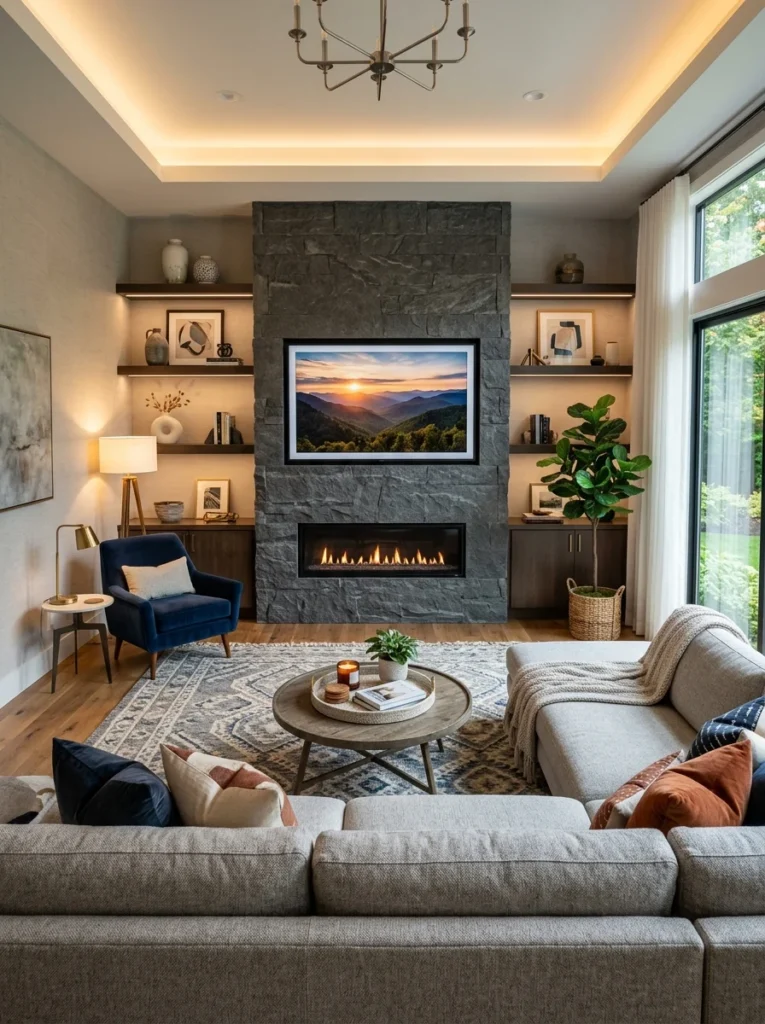
Every living room, even an awkwardly shaped one, generally has a natural focal point, a fireplace, a large window with a good view, a television, or simply the room’s largest, most prominent wall. Positioning the sectional to face or relate clearly to this focal point creates a sense of purpose and orientation that helps override an otherwise confusing room shape, since visitors and household members alike will read the room’s function correctly even if the walls themselves aren’t perfectly square or proportional.
Use the sectional to define a distinct seating zone
In an awkward or oddly proportioned room, a sectional’s L-shape or U-shape can actually work in your favor, using the furniture itself to carve out and define a clear seating zone within a room that might otherwise feel like an undefined, sprawling space. Positioning the sectional’s corner to anchor one area of the room, rather than trying to spread seating evenly across the entire floor plan, helps an irregularly shaped room read as having a purposeful, contained living area rather than furniture scattered without clear organization.
Float the sectional away from walls when the room allows
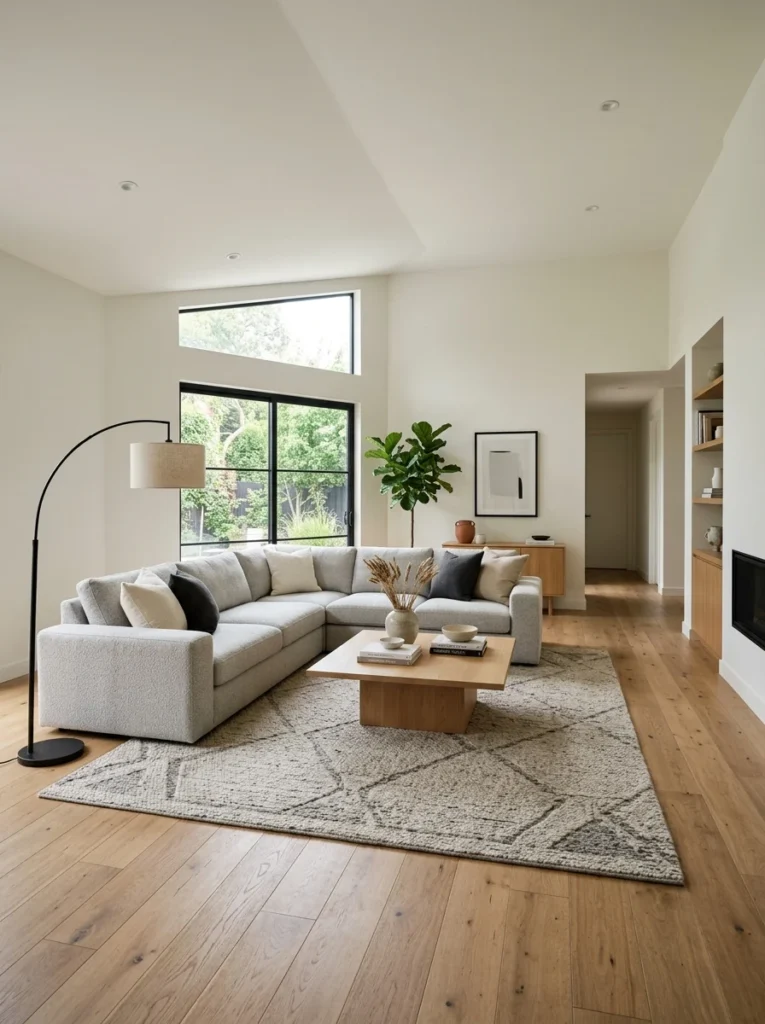
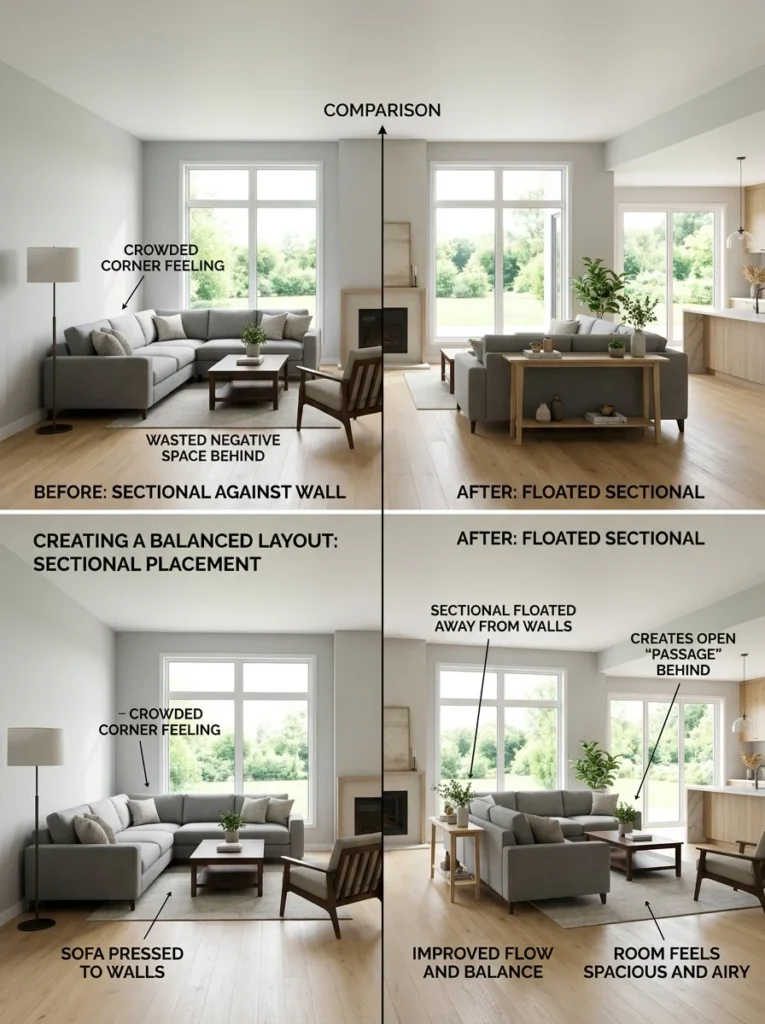
It’s a common instinct to push a sectional flush against a wall, but in many awkward room shapes, floating the sectional a few feet away from the wall, particularly the wall opposite the room’s main doorway, creates a more intentional, considered arrangement and can actually help an oddly shaped room feel more balanced than pushing furniture to the room’s literal edges. This works particularly well in a room where the walls themselves aren’t parallel or symmetrical, since floating the furniture lets the sectional’s own lines create order independent of the room’s imperfect geometry.
Address an angled or non-square wall directly
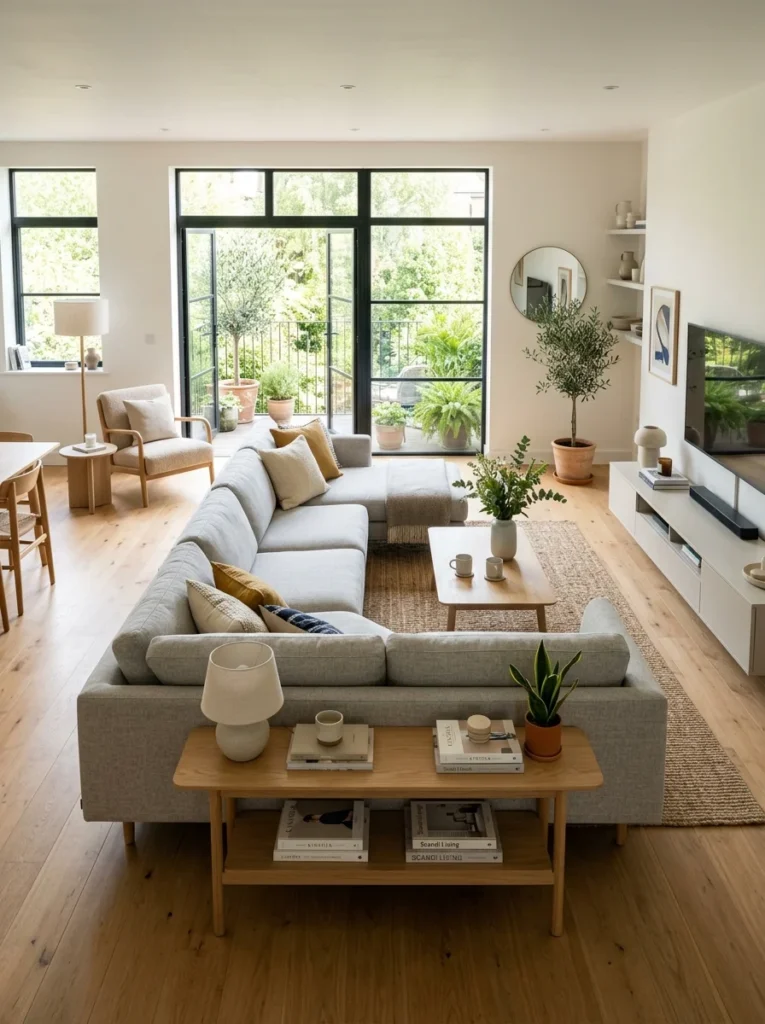
If your room has a distinctly angled wall, a common source of the kind of awkwardness that stumped me initially, consider positioning the sectional’s back or corner to run roughly parallel with that angle rather than fighting to keep the furniture perfectly aligned with the room’s other, more standard walls. This approach embraces the room’s actual geometry rather than pretending it’s a perfectly rectangular space, often resulting in a more natural, comfortable-feeling arrangement than forcing a standard layout onto a non-standard room.
Keep clear walkways around the sectional’s perimeter
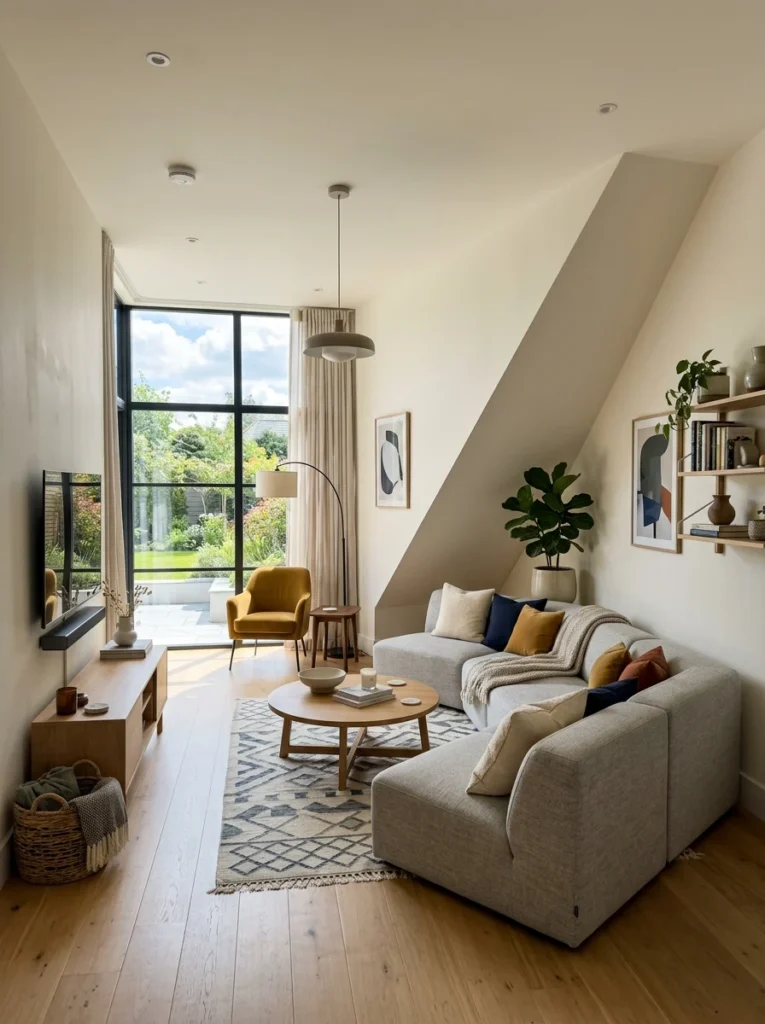
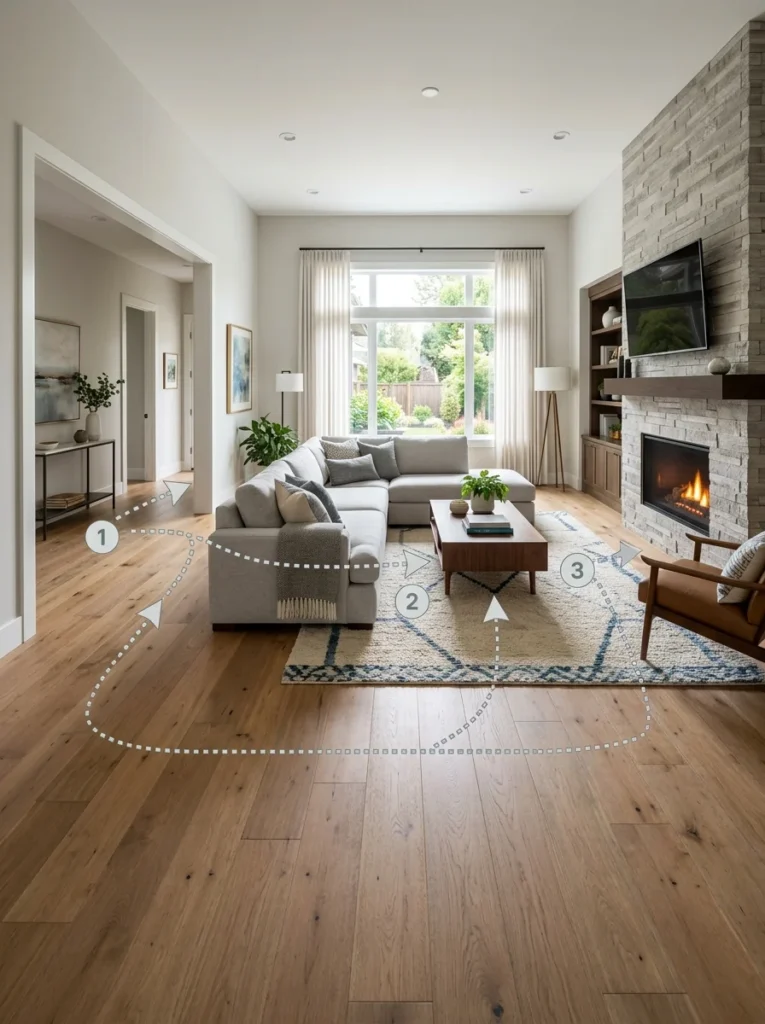
A sectional’s larger footprint makes maintaining clear walkways even more important than with smaller, individual furniture pieces, since a poorly placed sectional can easily block a natural path through the room, particularly in a space with a centrally located doorway or an awkward pinch point. Ensuring at least two to three feet of clearance on any side of the sectional that people need to walk past prevents the frustrating daily experience of having to squeeze around furniture just to move through your own living room.
Use the sectional to hide or soften an awkward architectural feature
If your room has a genuinely difficult feature, an oddly placed support column, a strange nook, an unattractive radiator, positioning the sectional’s back or a taller arm section to partially screen or soften that specific feature can turn a liability into something the furniture arrangement quietly manages rather than something that draws attention every time someone enters the room.
Consider a smaller or modular sectional for genuinely tight or oddly shaped rooms
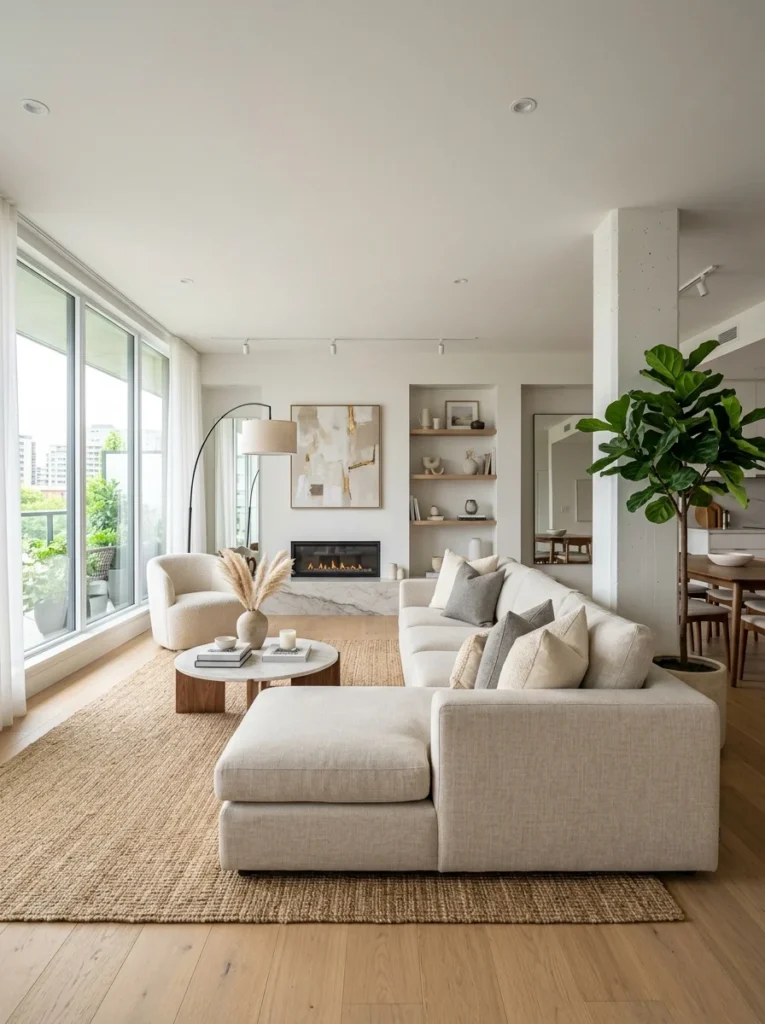
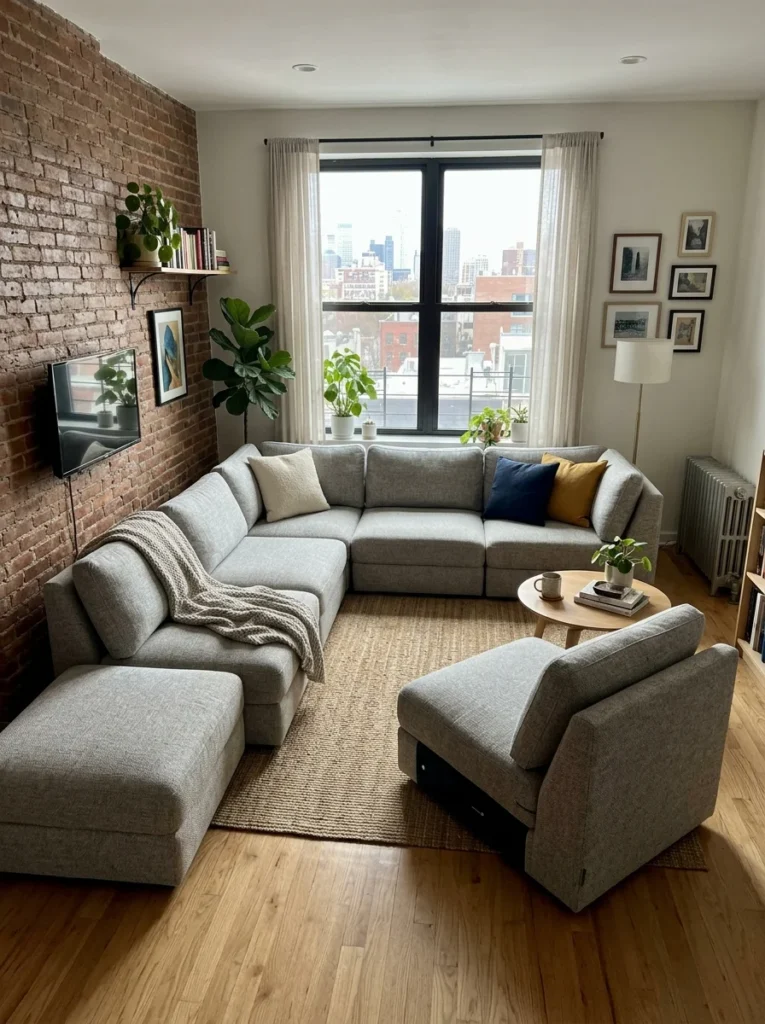
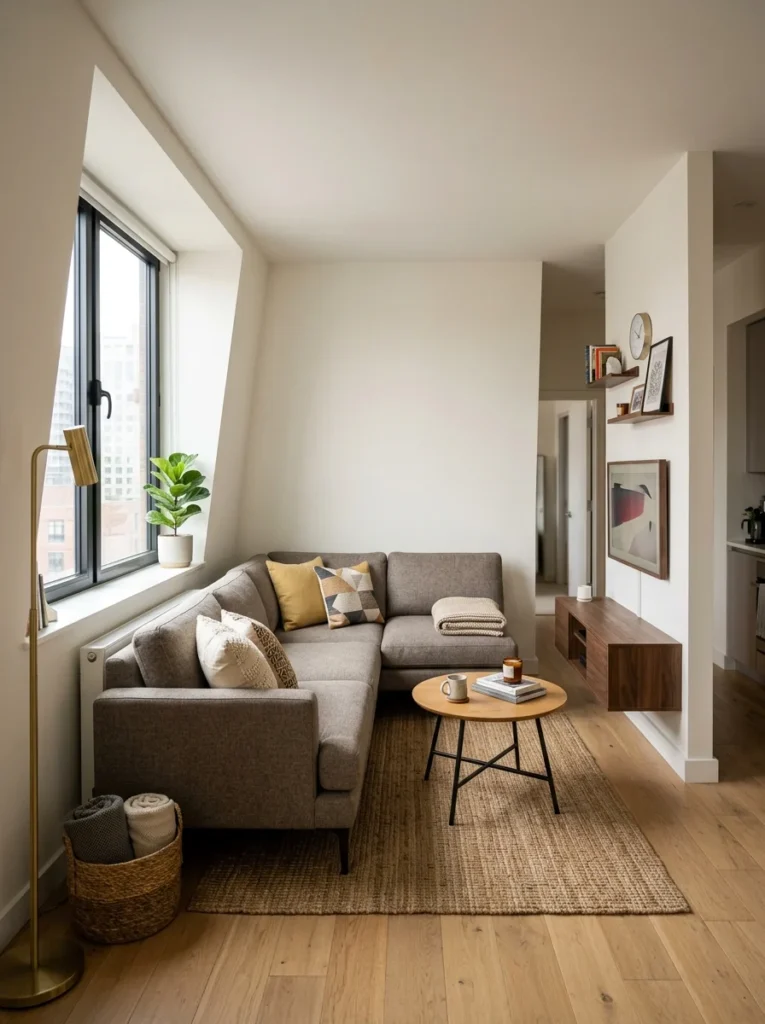
If a full-size sectional simply doesn’t fit any reasonable arrangement in a particularly small or oddly proportioned room, a smaller-scale sectional, or a modular sectional made of individual pieces that can be rearranged or reconfigured, offers more flexibility than a single, fixed large-format piece. Modular pieces in particular let you experiment with different configurations over time, adjusting to the room’s quirks through trial and error without needing to purchase an entirely new piece of furniture if the first arrangement doesn’t work as well as hoped.
Use a rug to visually anchor the sectional’s placement
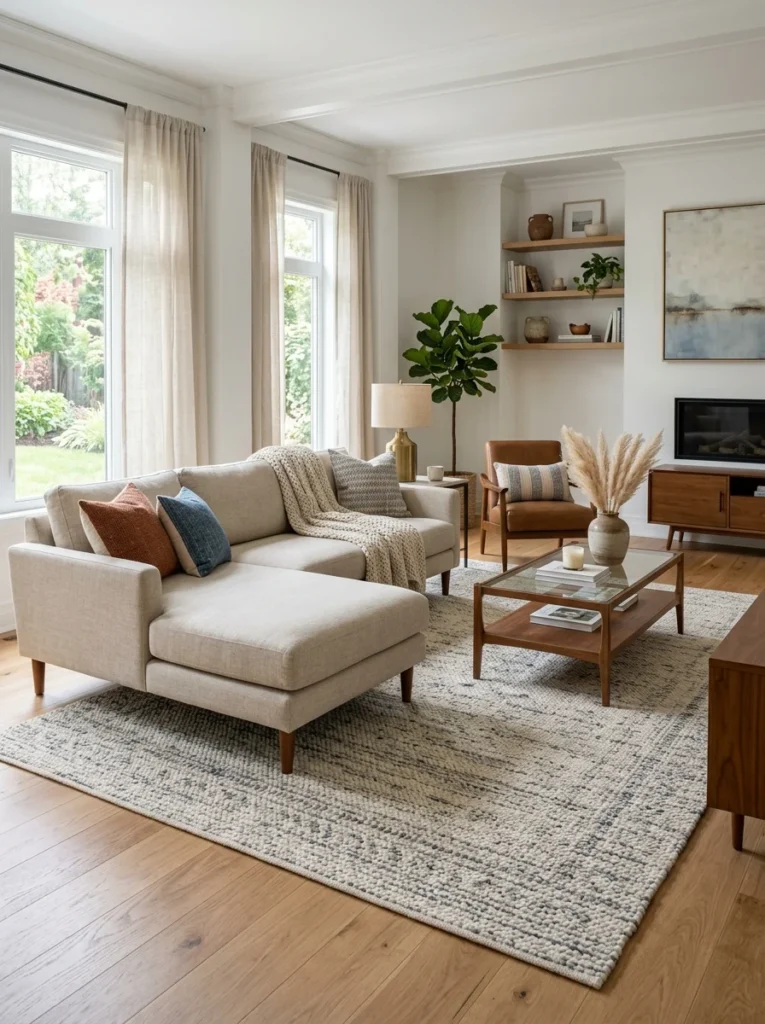
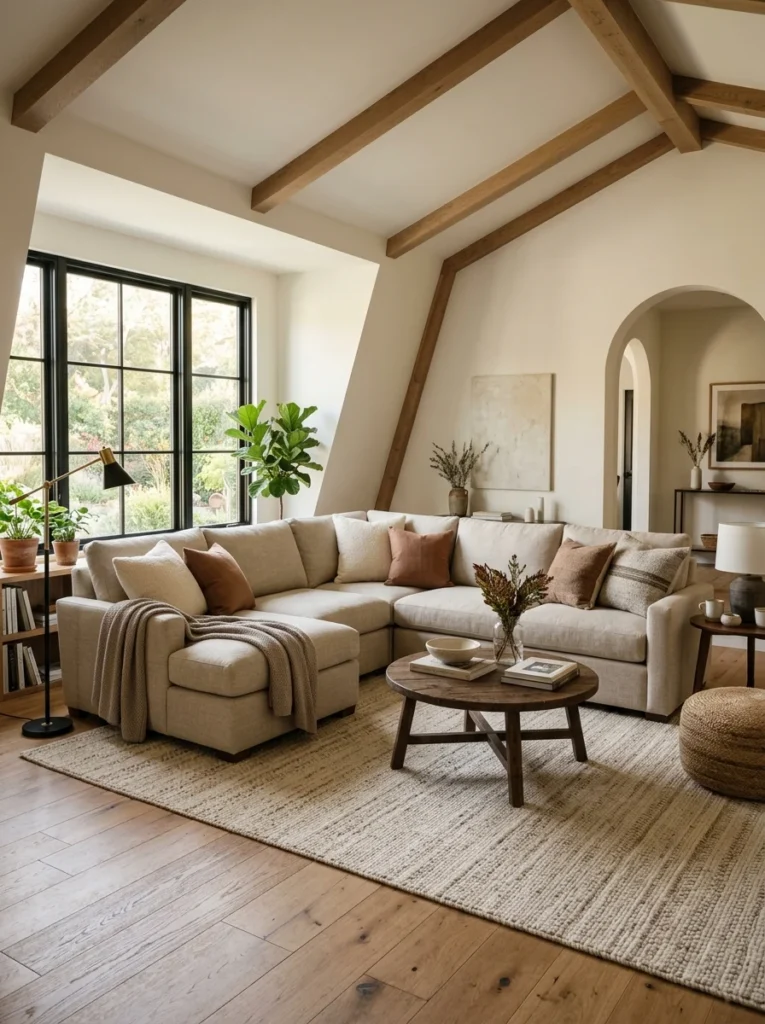
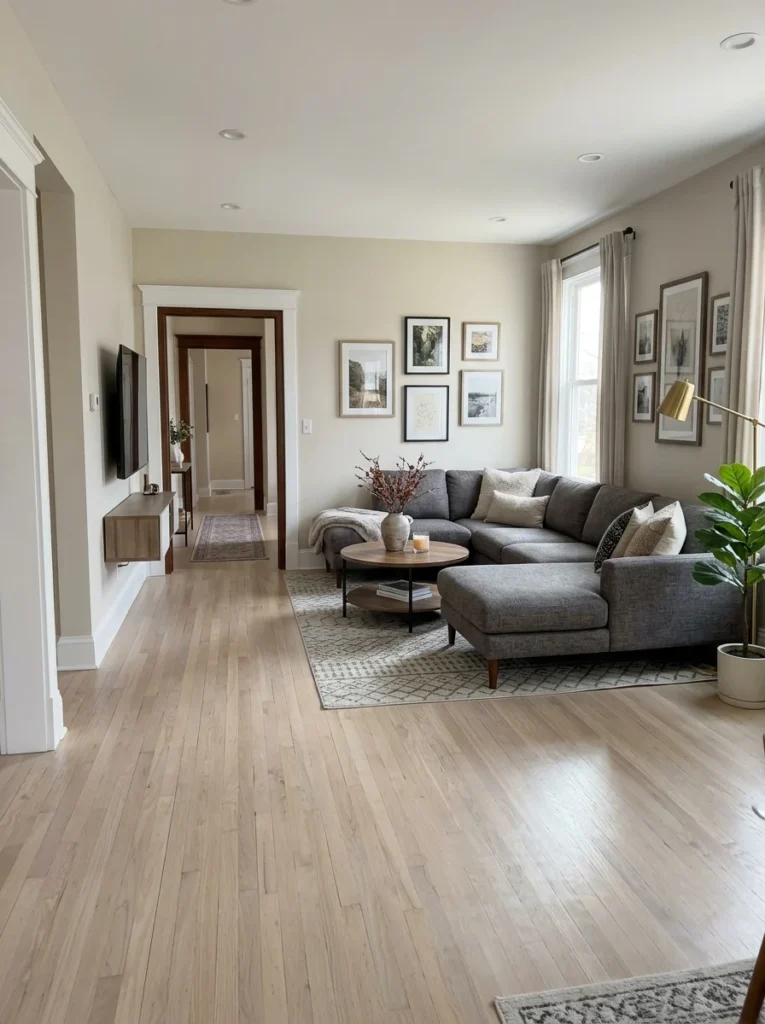
An area rug placed beneath and slightly extending beyond the sectional’s front legs helps ground the furniture visually, which is particularly valuable in an awkwardly shaped room where the walls and angles themselves don’t naturally create a sense of order. A rug sized appropriately to the sectional, rather than too small to be an afterthought, reinforces the intentional zone the sectional is meant to create, helping the whole arrangement read as considered despite the room’s inherent quirks.
Test the arrangement before committing to a final position
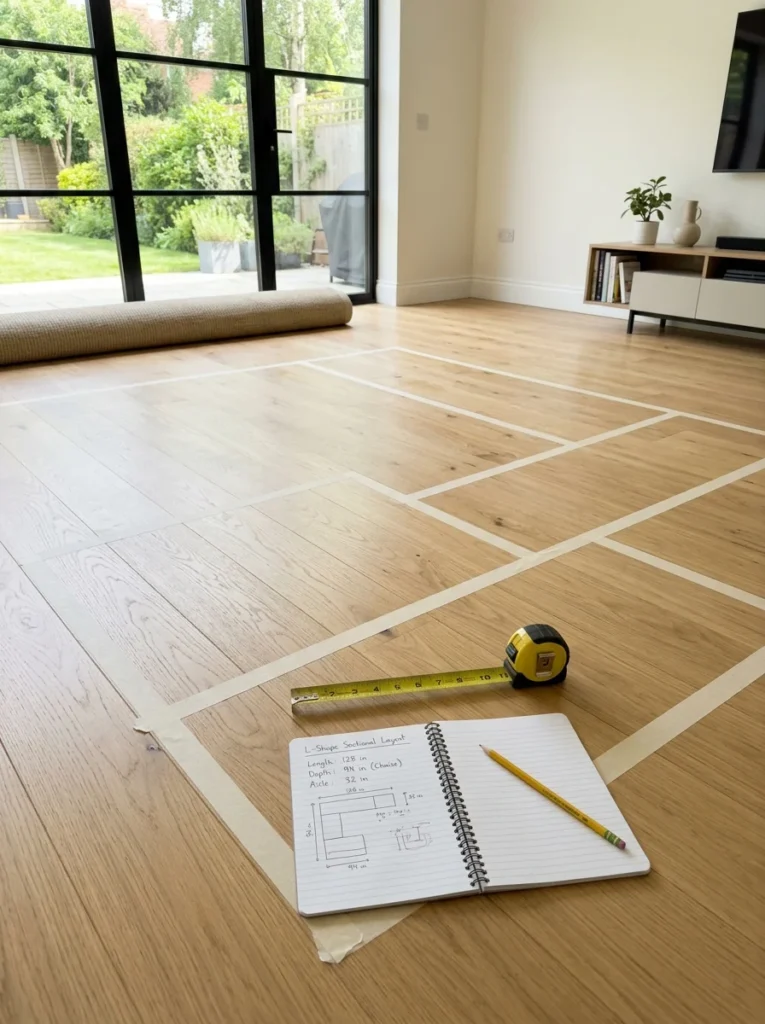
Given how heavy and cumbersome a sectional is to move repeatedly, using masking tape on the floor to map out a potential arrangement’s exact footprint before actually moving the furniture into place lets you visualize walkways, focal point alignment, and overall balance without the physical effort of shifting the piece itself multiple times. This simple, low-effort step can save considerable time and frustration compared to physically testing several different arrangements by moving the actual sectional back and forth.
Choose the chaise orientation based on the room’s traffic flow
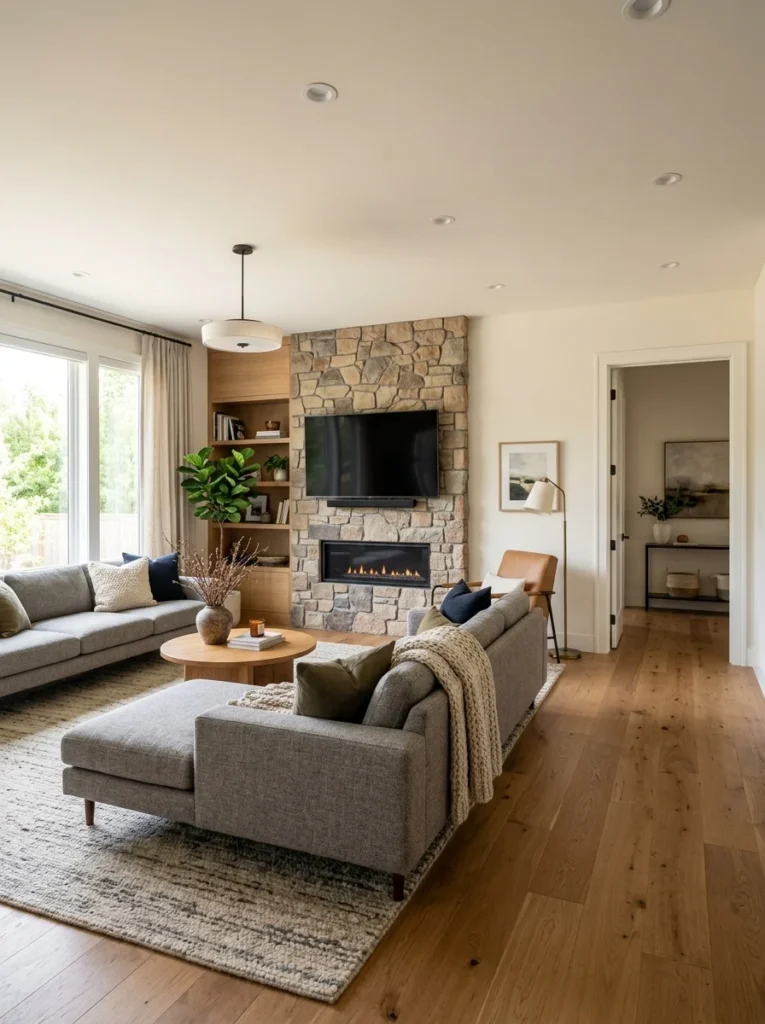
Most L-shaped sectionals include a chaise section on one end, and deciding which side that chaise faces has a meaningful impact on how the arrangement interacts with an awkward room’s traffic patterns. Positioning the chaise to face toward the room’s main focal point, while keeping its opposite, non-chaise end oriented away from a doorway or main walkway, generally creates a smoother flow than a chaise placement that inadvertently narrows or blocks the room’s most-used path. If you’re purchasing a new sectional, many retailers offer the option to choose which side the chaise sits on, so considering your specific room’s layout before finalizing that choice can prevent exactly the kind of arrangement struggle that comes from realizing only after delivery that the chaise faces the wrong direction for your particular space.
Add a smaller, secondary seating piece to balance an oddly shaped room
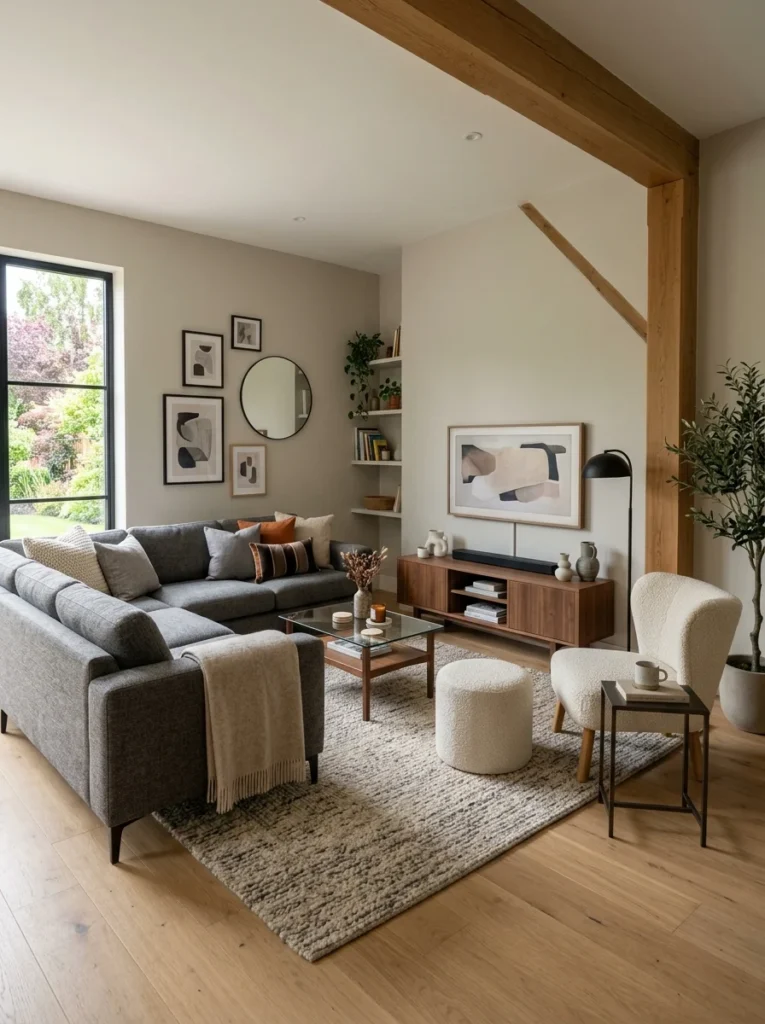
In a room where the sectional alone can’t quite fill or balance an awkward proportion, adding one smaller piece, an accent chair, a compact bench, or a small ottoman, in an underused corner or opposite the sectional can help balance the room’s overall visual weight and give the space a second, smaller conversational point. This is particularly useful in a room with an unusually long or irregular shape, where a single large sectional on its own might leave one end of the room feeling empty or disconnected from the main seating area.
Can a sectional sofa work in a small or awkwardly shaped living room?
Yes, a sectional can work well even in a challenging room shape, provided the arrangement accounts for the room’s specific fixed points, doorways, windows, architectural quirks, and uses the sectional’s own shape to define a clear seating zone rather than fighting the room’s irregular geometry.
Should a sectional sofa be pushed against the wall?
Not necessarily. In many rooms, particularly those with non-square or awkward proportions, floating the sectional a few feet from the wall creates a more intentional, balanced arrangement than pushing it flush against the room’s actual edges.
What should I do if my sectional blocks a doorway or walkway?
Reconsider the sectional’s orientation or position first, since a different corner placement or angle often resolves a blocked walkway without needing a smaller piece of furniture. If no full-size arrangement avoids the issue, a smaller-scale or modular sectional offers more flexibility to fit the specific walkway constraints of the room.
How do I choose the right rug size for a sectional sofa?
A rug should extend beneath the sectional’s front legs at minimum, ideally with enough size that at least the front portion of the sofa sits on the rug, rather than a rug so small it appears to float disconnected from the furniture it’s meant to anchor.
Which direction should the chaise on a sectional face?
Generally, orient the chaise toward the room’s main focal point while keeping its opposite end clear of doorways or main walkways, since chaise placement significantly affects how the sectional interacts with an awkward room’s traffic flow, and many retailers let you choose the chaise side before purchase.
Arranging a sectional sofa in an awkward living room comes down to mapping the room’s fixed points first, identifying a clear focal point, and using the sectional’s own shape to create a defined, purposeful seating zone rather than trying to force a standard arrangement onto a non-standard room. Floating the furniture away from walls when appropriate, respecting walkway clearance, and using a properly sized rug to anchor the whole arrangement all help an irregular room feel intentional rather than accidental.
Our own sectional, once seemingly impossible to place without blocking that centrally located doorway, eventually found its spot angled to follow the room’s odd wall, floated a few feet forward with a rug grounding the whole arrangement, and the room finally felt like it made sense rather than fighting its own layout. If you’re wrestling with your own awkward room, start by mapping the fixed points on paper before moving a single piece of furniture; that upfront planning will save you the weekend of trial and error that our own living room put us through first.