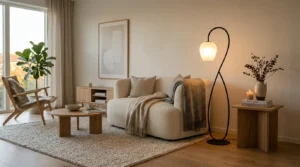
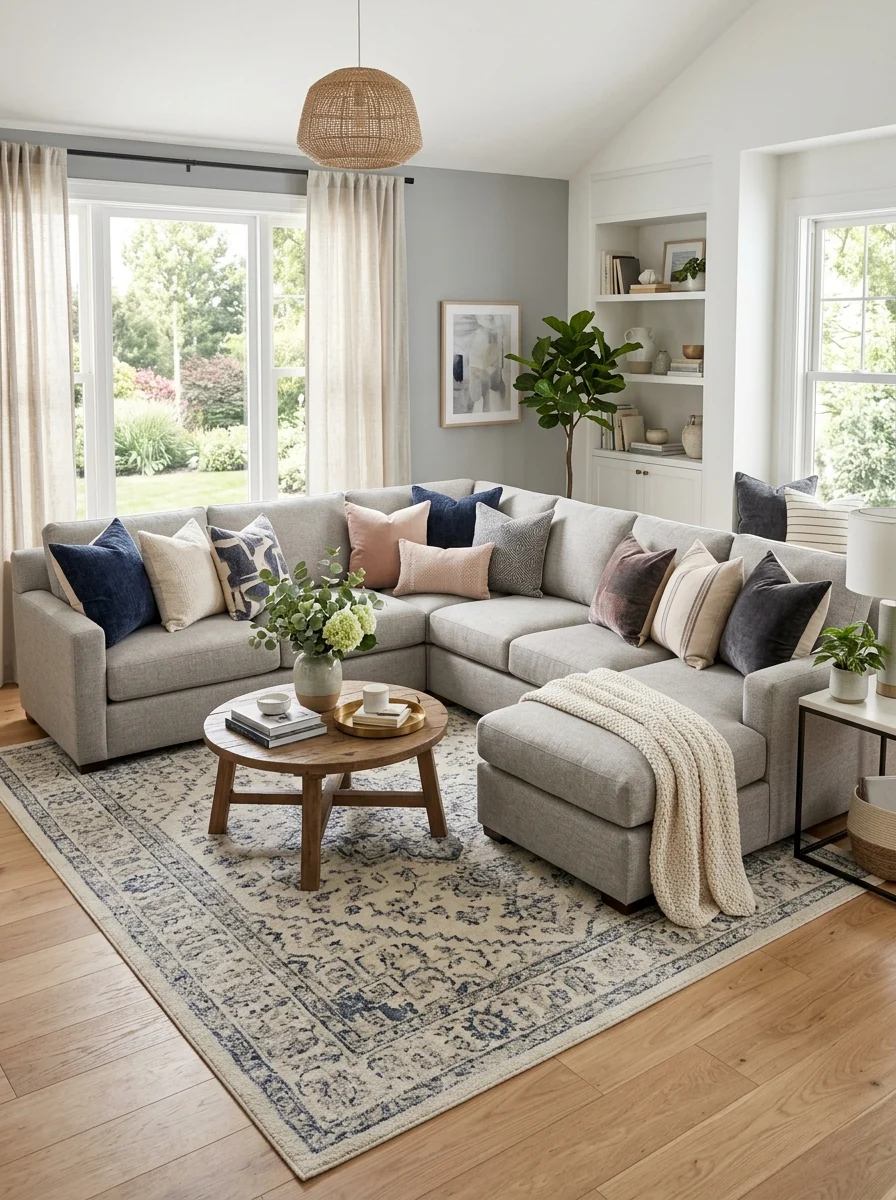
A grey couch is one of the most practical sofas you can own, and one of the easiest to get wrong. On its own, grey can read as flat, cold, or a little like an office waiting room, especially under cool white lighting or against white walls. The fix is not to hide the sofa or replace it. It is to warm up everything around it: the rug under it, the wood beside it, the light above it, and the colours layered on it. Grey is a generous neutral, so it pairs well with mustard, terracotta, cream, leather, wood, and green plants, as long as you choose warm versions of those colours rather than icy ones. This guide gives you fifteen ideas built specifically around a grey sofa, with sizes, price ranges, and common mistakes, so you can turn a sofa you already own into the coziest seat in the house. Start with the rug and the lighting, because those two changes alone usually transform the room.
Identify Your Grey: Warm, Cool, or True Grey
Before buying anything for a grey couch, work out whether your grey leans warm, cool, or neutral, because that undertone decides which colours will warm it up. Hold a pure white sheet of paper against the sofa in daylight: if the sofa looks slightly brown or beige beside it, it is warm grey; if it looks blue or violet, it is cool grey; if it looks neither, it is a true grey. Warm greys pair easily with cream, camel, and terracotta, while cool greys need stronger warm partners such as mustard, rust, and honey-toned wood to avoid looking cold. This check costs nothing and takes five minutes, but it prevents expensive mistakes such as buying cushions that clash. Avoid guessing from a phone photo, which often shifts grey toward blue. Practical tip: take a cushion or fabric swatch from the sofa to the shop when you buy throws and rugs, and compare them in natural light, not under shop spotlights.
Anchor the Sofa With a Warm-Toned Rug
A warm-toned rug is the fastest way to stop a grey couch from looking cold, because it changes the large area of floor directly in front of it. Choose a rug in terracotta, warm beige, rust, or a patterned rug with a warm cream and brown base, and size it so the front legs of the grey sofa sit fully on it. For a standard three-seater grey sofa around 210 centimetres long, a rug of 240 by 170 centimetres works well, while a corner sofa may need 300 by 200 centimetres. A good wool or wool-blend rug in these sizes costs $200 to $700, with a rug pad adding $30 to $70. Avoid a small grey rug under a grey sofa, which doubles the cold effect, and avoid a rug that stops short of the sofa legs. Practical tip: if you love a patterned rug, keep the largest pattern colour warm and let grey appear only as a minor accent, so the sofa and rug connect without matching exactly.
Add a Wood Coffee Table to Break the Cool
A wood coffee table beside a grey couch breaks up the cool, flat surface of the fabric and adds a natural material your eye reads as warm. Choose a mid-tone or honey oak, walnut, or reclaimed wood table with visible grain, rather than a glass, chrome, or high-gloss black table that repeats the cool feeling. A rectangular table around 110 by 60 centimetres and 40 to 45 centimetres high suits a three-seater sofa, leaving about 40 centimetres between the table edge and the sofa seat for comfortable legroom. Solid wood tables in this size cost $200 to $550, while a good veneer version runs $120 to $300. Avoid a table that is wider than two-thirds of the sofa length, which can overwhelm the seating area. Practical tip: style the table with one warm object, such as a wooden tray or a terracotta bowl, so the wood tone is echoed at eye level as well as at floor level.
Layer Mustard and Terracotta Cushions
Mustard and terracotta cushions are the classic warm partners for grey, because they sit opposite grey on the warmth scale without shouting. Use three to five cushions on a three-seater grey sofa: two larger cushions around 50 by 50 centimetres in mustard or terracotta, one or two smaller ones around 45 by 45 centimetres in cream or a warm pattern, and one textured cushion in knit or velvet for depth. Cushion covers cost $15 to $40 each, and good feather or fibre inserts add $10 to $25 each, so a full set runs roughly $125 to $325. Avoid covering the whole sofa in bright yellow, which can look harsh, and avoid using only one cushion, which looks like an afterthought. Practical tip: place the strongest colour at the two ends of the sofa and the softer cream cushions toward the centre, so the warm colour frames the seating rather than dominating it.
Drape a Chunky Knit Throw Over One Arm
A chunky knit throw over one arm of a grey couch adds instant softness and a clear signal that the sofa is for relaxing, not just for looking at. Choose a throw in cream, oatmeal, mustard, or rust, in a thick knit, waffle weave, or soft fleece, and fold it in thirds lengthwise before draping it over the arm nearest the main walkway. A throw around 130 by 180 centimetres covers a sofa arm and seat edge well without trailing on the floor, and a good-quality knit throw costs $35 to $95. Avoid draping throws over both arms and the back at once, which can make the sofa look buried, and avoid thin, shiny throws that slide off smooth grey fabric. Practical tip: keep the throw on the arm you use least for sitting, so it stays styled during the day and is still within reach when you settle in for the evening.
Pair Grey With Cream Walls and Warm White Trim
Cream walls and warm white trim soften a grey couch far more effectively than bright white walls, which can push grey toward a cold, blue look. Paint walls in a warm cream or light beige with a yellow undertone, and use a warm white, not a brilliant white, on skirting boards, door frames, and ceiling edges. For a typical 3.6 by 4.8 metre living room, expect about 10 litres of wall paint at $60 to $140, plus 2 to 3 litres of trim paint at $25 to $60. Test the cream beside the sofa in both daylight and lamplight, because some creams turn pink or yellow under warm bulbs. Avoid stark white walls combined with cool grey flooring, a pairing that often makes the whole room feel clinical. Practical tip: paint one test patch at sofa height, right beside the couch, rather than high on a wall, so you judge the colour exactly where it will sit next to the grey fabric.
Bring in Leather Accents for Warmth and Contrast
Leather accents warm up a grey couch because they add a rich, natural texture and a colour that grey fabric alone cannot provide. A cognac or tan leather armchair beside the sofa, a leather pouf, or even leather cushion covers in a warm brown can change the whole feeling of the seating group. A good leather pouf around 55 centimetres wide costs $80 to $200, a leather armchair $500 to $1,200, and a pair of leather cushion covers $40 to $90. Keep leather to one or two pieces so it reads as an accent, not a competing sofa set, and choose a matte or lightly distressed finish rather than shiny patent leather. Avoid black leather paired with dark grey, which can make the room feel heavy and closed in. Practical tip: condition leather every six months with a simple leather balm, which keeps the colour rich and prevents the dry, faded look that makes leather feel cold.
Use Warm Metallic Lamps Beside the Sofa
Warm metallic lamps beside a grey sofa do two jobs at once: they add a warm material at eye level, and they cast warm light directly onto the grey fabric. Choose brushed brass or soft gold table lamps on side tables at each end of the sofa, or a brass arc or floor lamp behind one corner, and fit bulbs around 2700 Kelvin for a golden glow. A pair of brass table lamps costs $120 to $300, a single floor lamp $110 to $280, and warm LED bulbs $8 to $15 each. Side tables should be 55 to 65 centimetres high, close to the sofa arm height, so the lamp light falls naturally over the seating. Avoid chrome or silver lamps, which reinforce the cool side of grey, and avoid a single overhead light as the only source. Practical tip: put both sofa lamps on one dimmer or smart plug so you can switch the whole seating area to a warm evening glow with one tap.
Style a Gallery Wall With Warm Frames
A gallery wall with warm frames gives a grey couch a backdrop that feels collected and warm, rather than a blank white wall that leaves the sofa exposed. Choose frames in natural oak, walnut, or warm brass, and mix two or three sizes — for example, two frames around 50 by 70 centimetres, three around 40 by 50 centimetres, and a couple of smaller 30 by 40 centimetre frames — arranged above or beside the sofa. Prints in warm tones, such as desert scenes, botanical art, or abstract work in terracotta and ochre, work better than black-and-white photography alone. Frames cost $15 to $50 each, and prints $20 to $60 each, so a wall of seven pieces runs roughly $245 to $770. Avoid hanging the gallery so high that it floats away from the sofa, and avoid using only black frames. Practical tip: lay the arrangement on the floor first, keep 5 to 8 centimetres between frames, and centre the whole group about 145 centimetres from the floor.
Add a Natural Basket for Throws and Magazines
A natural basket beside a grey couch adds warm texture at floor level and gives throws, magazines, and remote controls a proper home. Choose a seagrass, rattan, or woven cotton basket around 40 to 50 centimetres wide and 30 to 40 centimetres tall, large enough for two folded throws and a few magazines without overflowing. A good basket costs $25 to $70, and a smaller matching basket for remotes and chargers runs $15 to $35. Place it beside the sofa arm you use most, or under a side table if floor space is tight, so it is easy to reach without getting up. Avoid plastic storage boxes or shiny metal bins, which clash with the soft grey fabric and add a cold, utility feel. Practical tip: fold throws rather than stuffing them in, and keep only what you use weekly in the basket, so it stays tidy and the sofa area never looks like overflow storage.
Choose Curtains in Warm Linen to Soften the Sofa
Warm linen curtains soften a grey couch because they frame the whole room in a natural, slightly textured fabric that grey alone lacks. Choose curtains in oatmeal, warm beige, or soft cream linen, or a linen blend that hangs well without heavy ironing, and hang them from a rod or track mounted 10 to 15 centimetres above the window frame. For a standard 2.4-metre window, two panels each about 140 centimetres wide give a full, gathered look when closed, and linen panels cost $40 to $110 each. Avoid sheer white voiles alone, which can look cold against grey, and avoid heavy dark drapes that close the room in. Practical tip: let curtains fall to just above the floor, about 1 to 2 centimetres short, so they look tailored rather than puddled, and keep the same warm linen tone on any sofa cushions that sit near the window.
Balance Grey With a Green Plant Collection
Green plants balance a grey couch because living green is the most natural warm contrast to a flat neutral, and it stops the room from feeling like a furniture display. Group two or three plants of different heights near the sofa — for example, a tall plant around 120 centimetres in a corner, a medium plant around 60 centimetres on a side table or plant stand, and a trailing plant on a nearby shelf. Choose easy plants such as monstera, olive, pothos, or snake plant, and use terracotta or warm ceramic pots rather than grey or white plastic pots. A good plant and pot pairing costs $30 to $100 each, so a group of three runs $90 to $300. Avoid placing a single tiny plant far from the sofa, which gets lost, and avoid fake plants that collect dust and look flat. Practical tip: water on a weekly routine, wipe large leaves monthly, and keep plants at least 30 centimetres from radiators so heat does not dry the leaves and soil.
Use a Warm Wood Media Console Opposite the Sofa
A warm wood media console opposite a grey couch gives the sofa something warm to face, so the whole seating arrangement feels balanced rather than one-sided. Choose a console in oak, walnut, or mango wood, about 150 to 180 centimetres long for a standard television, and 40 to 50 centimetres high so the screen sits at a comfortable viewing height from the sofa. A solid wood console in this size costs $300 to $800, while a good veneer console runs $180 to $450. Keep the top styled simply with one plant, one stack of books, and one warm object such as a wooden bowl, so the console adds warmth without clutter. Avoid a black glass console, which mirrors the cool side of grey, and avoid a console much wider than the television. Practical tip: measure the distance from sofa to screen — about 2 to 3 metres for a 55-inch television — before buying, so the console depth and placement suit comfortable viewing.
Add Candlelight and Warm Bulbs Around the Seating Area
Candlelight and warm bulbs transform a grey couch in the evening, because grey fabric absorbs cool light but glows softly under warm, low light. Place two or three candles in glass hurricanes or ceramic holders on the coffee table and side tables, add a warm bulb in every lamp near the sofa, and keep all bulbs at the same warmth, around 2700 Kelvin. Real candles cost $5 to $20 each, flameless LED candles $15 to $40 for a set, and glass hurricanes $15 to $35 each. Never leave real candles burning unattended, and keep them at least 30 centimetres from curtains, throws, and cushions. Avoid cool white bulbs above 4000 Kelvin, which make grey look blue and harsh after dark, and avoid a single bright ceiling light. Practical tip: light candles and dim the lamps about thirty minutes before you settle in, so the room shifts gradually from daytime brightness to a cozy evening glow.
Create a Cozy Corner With the Grey Chaise or End Seat
If your grey couch has a chaise or a favourite end seat, turn that spot into a deliberate cozy corner rather than leaving it as just another seat. Add a small side table within arm’s reach, a reading lamp behind the chaise, a soft throw folded at the end, and a cushion in a warm colour that marks the spot as the reading or relaxing seat. A side table 45 to 55 centimetres high costs $80 to $200, a clip-on or small floor reading lamp $40 to $120, and a warm cushion cover $15 to $35. Keep the corner free of bags, laundry, and chargers so it stays inviting, and choose a lamp with a warm bulb that lights the book, not the whole room. Avoid piling every throw and cushion onto the chaise, which makes it hard to sit down. Practical tip: keep one book or magazine permanently in the corner, so the spot is ready to use the moment you sit down, even for ten minutes.
Frequently Asked Questions
What colours go best with a grey couch to make it look warm?
Warm colours work best: mustard, terracotta, rust, camel, cream, honey wood, and cognac leather all warm up grey without fighting it. Cool colours such as icy blue, silver, and bright white tend to make grey look colder, especially under cool lighting. Start with one strong warm colour, such as mustard cushions, and one natural material, such as a wood table, then add smaller warm touches from there.
Should I choose a warm rug or a patterned rug with a grey sofa?
Either works, as long as the dominant colour is warm. A solid warm rug in terracotta or warm beige is the safest choice and the easiest to style, while a patterned rug works if its largest colour is warm cream, brown, or rust, with grey only as a minor accent. Size matters more than pattern: the front legs of the sofa should sit on the rug, so aim for at least 240 by 170 centimetres for a three-seater sofa.
How do I warm up a grey couch without repainting the room?
Focus on the layers closest to the sofa: a warm rug, mustard or terracotta cushions, a chunky knit throw, warm wood beside the sofa, and warm bulbs at 2700 Kelvin in nearby lamps. Plants in terracotta pots and a natural basket also add warmth at low cost. Together, these changes usually transform the seating area even if the walls stay the same, and most can be done for under $300.
Conclusion
A grey couch does not have to look cold, and you do not need to replace it to make it feel warm. Start by identifying your grey undertone, then warm up the rug, the wood, the cushions, and the lighting around it. Those four layers alone change how the sofa reads in daylight and in the evening. Add plants, warm frames, and a cozy corner only after the basics are in place, so each new piece has a clear job. With a few thoughtful, affordable changes, your grey sofa can become the warmest, most-used seat in your home — practical, comfortable, and easy to live with every day.