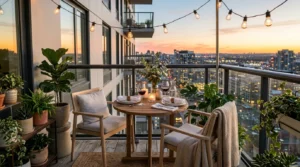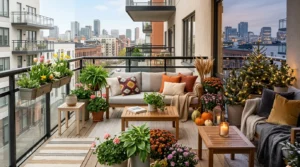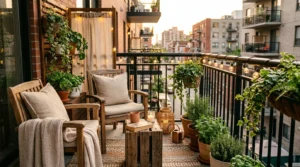
My first attempt at balcony gardening was a single tomato plant I bought on impulse from a grocery store display, no research, no plan, just enthusiasm. It was dead within three weeks. I’d put it in the shadiest corner of the balcony because it looked tidiest there, watered it whenever I remembered, which was rarely, and never once checked whether the pot had drainage holes. It didn’t. Looking back, I’d managed to break almost every rule of container gardening in one go, without knowing any of them existed.
Related Reading
The following spring I actually did some reading before buying anything, and the difference was night and day. That same balcony, no bigger than a parking space, now grows herbs I cook with weekly, a small tangle of trailing flowers, and yes, tomatoes that actually survive past July. None of this required more space or more money than my first failed attempt, just a basic understanding of how container gardening actually works. This guide covers exactly that groundwork, then moves into the plant choices and setups that make the most of a small balcony.
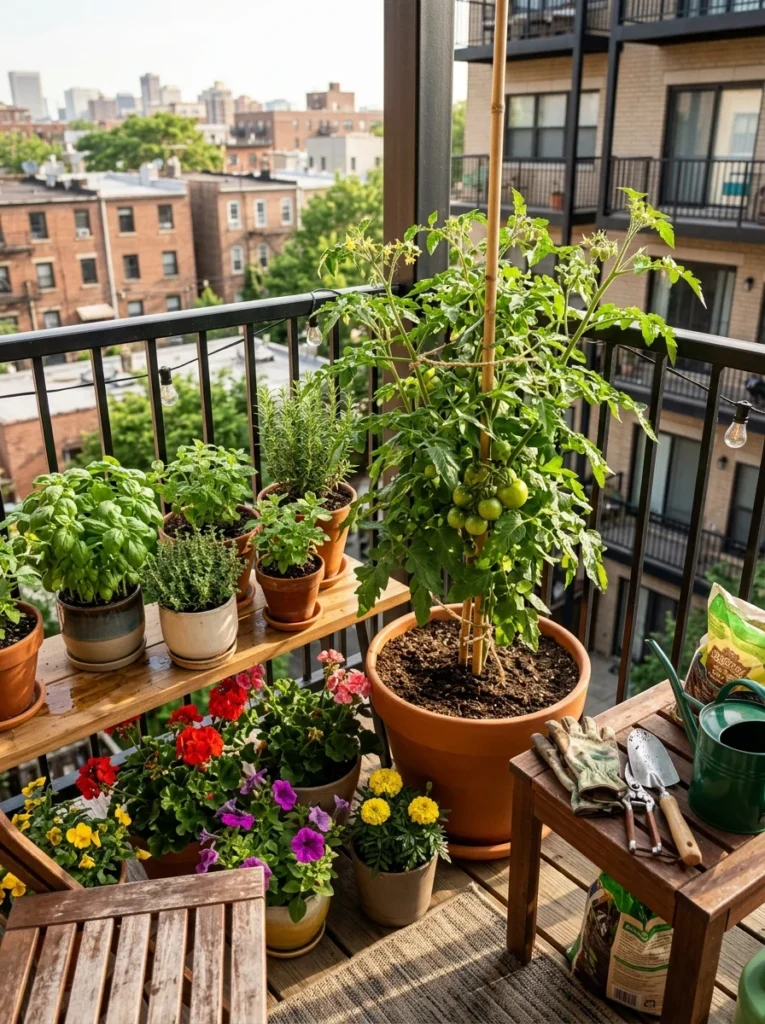
Start by understanding your balcony’s light and wind
Before buying a single plant, spend a few days simply watching your balcony. Note which hours it gets direct sun and which stay shaded, since this single factor determines more about what will actually survive than anything else you’ll decide later. A balcony that gets four or more hours of direct sun is considered full sun for most gardening purposes, while anything less falls into partial shade, and each plant sold at a garden center will be labeled for one of these categories.
Wind matters just as much and gets overlooked constantly. Balconies, especially above the ground floor, are often windier than a garden at street level, which dries out soil faster and can snap taller stems. If your balcony is exposed, favor shorter, sturdier plants and be prepared to water more often than the plant tag suggests. Getting this groundwork right before buying anything is what separates a garden that thrives from one that limps along all season.
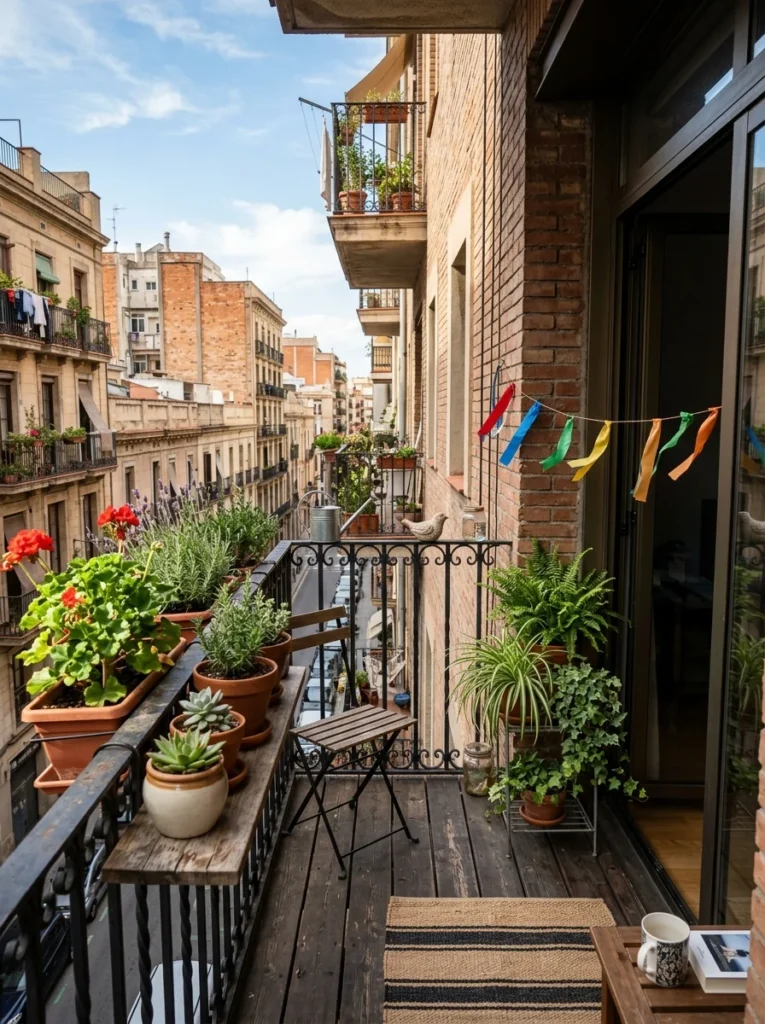
Idea 1: Choose containers with real drainage
The single mistake that killed my first plant, no drainage, is also the most common mistake new container gardeners make. Roots sitting in trapped water rot quickly, no matter how carefully you otherwise care for the plant. Any container you use needs actual holes in the bottom, and if you fall in love with a pot that doesn’t have them, drill a few yourself or use it as a decorative outer sleeve around a properly draining plastic nursery pot inside.
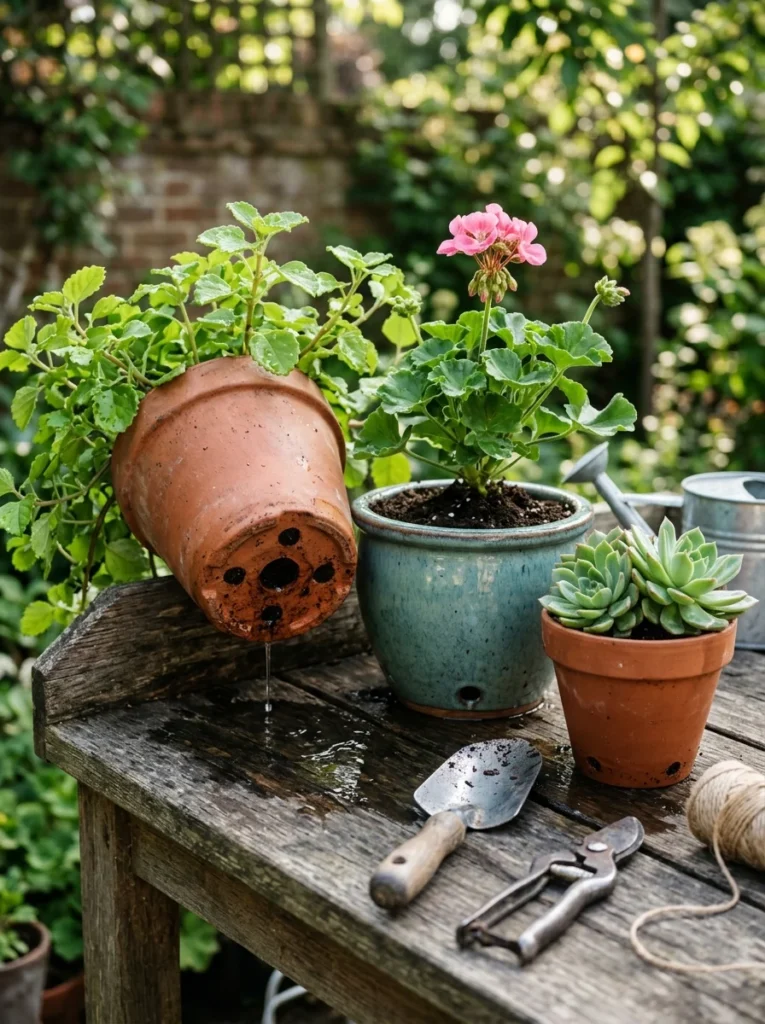
Idea 2: Go vertical to multiply your growing space
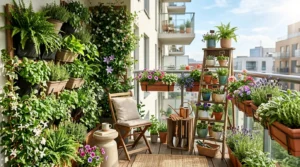
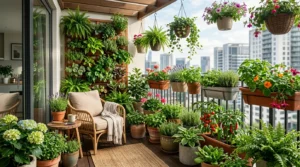
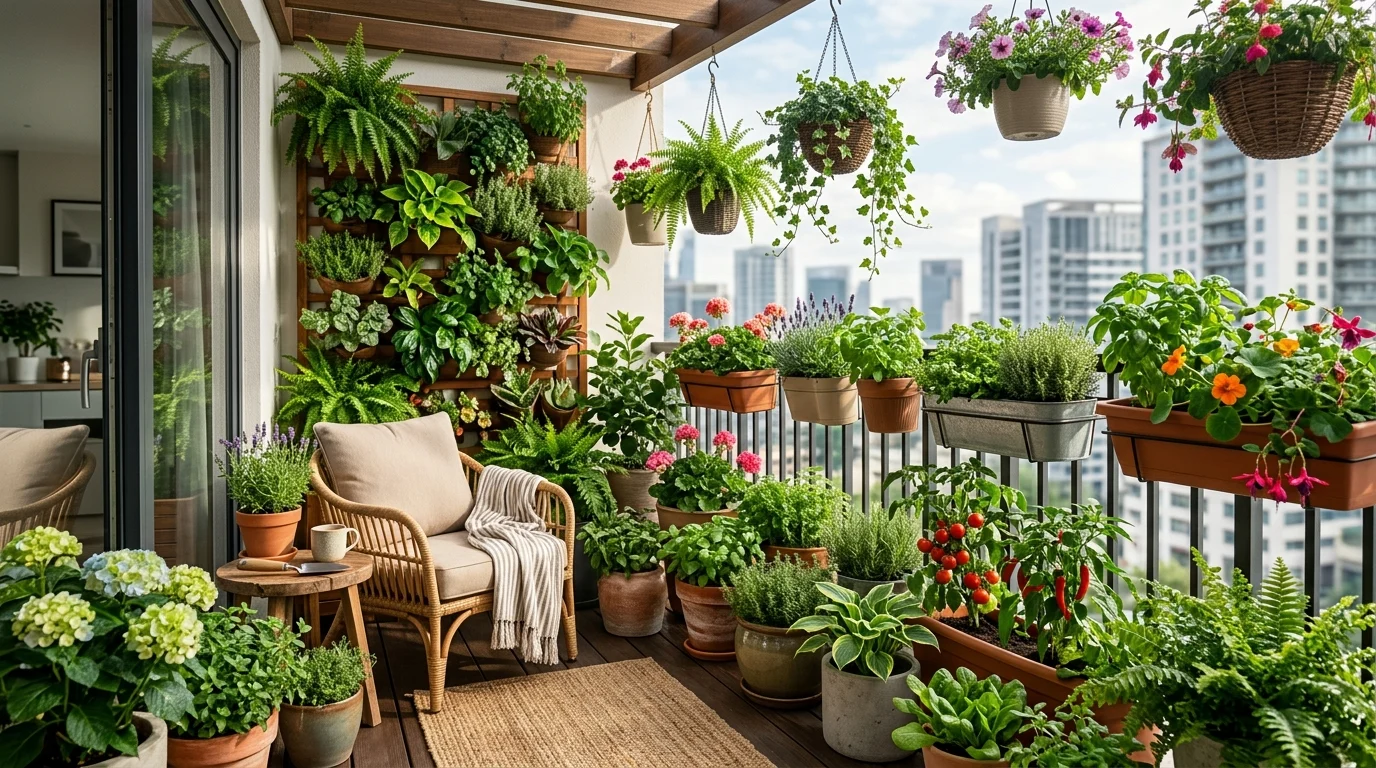
A small balcony floor can only hold so many pots, but the walls and railings are almost always empty. A wall-mounted planter rail, a tiered plant stand, or a simple hanging system lets you fit several times more plants into the same footprint than floor pots alone ever could. This is the single biggest lever for growing more in a small space, and it’s usually the first thing I recommend to anyone starting a balcony garden from scratch.
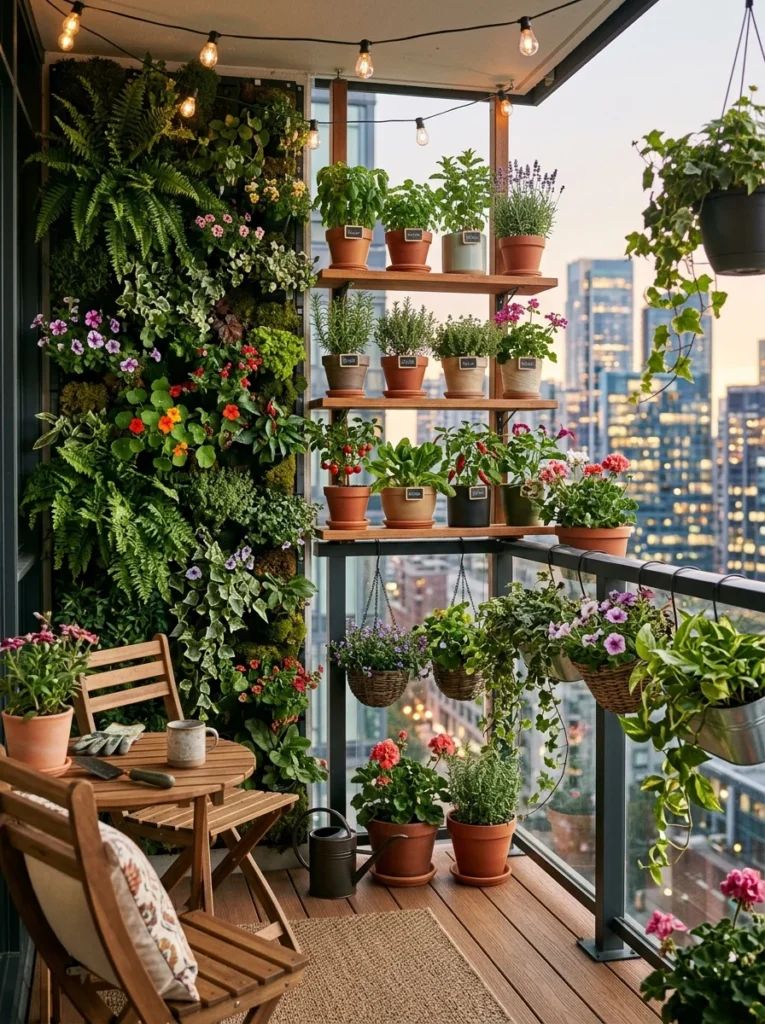
Idea 3: Use railing planters for trailing and flowering plants
Planter boxes that clip onto the railing keep the floor completely clear while putting your plants at eye level, where trailing flowers like petunias or lobelia can spill over the edge beautifully. Just check the manufacturer’s weight limit for your specific railing before loading it up, and make sure boxes are secured properly, since wind on an upper floor can be stronger than it feels from inside.
Idea 4: Start with herbs if you’re new to growing anything
Herbs are the most forgiving place to start, and they reward you almost immediately with something useful. Basil, mint, chives, and thyme all grow well in containers, tolerate a bit of neglect, and go straight from pot to plate. Mint in particular grows so vigorously it’s often better kept in its own container rather than mixed with other plants, since it will crowd out neighbors given the chance. Starting here builds confidence before you move on to anything fussier.
Idea 5: Choose compact vegetable varieties bred for containers
Standard vegetable varieties are often bred for garden rows, not pots, and will struggle or sprawl on a balcony. Look specifically for varieties labeled “patio,” “dwarf,” or “bush” on the seed packet or plant tag, cherry tomatoes bred for containers, bush beans instead of climbing varieties, and compact peppers all perform far better in a limited-depth pot than their full-sized counterparts.
Idea 6: Match pot size to the plant’s mature root system
A common beginner mistake is starting a plant in a pot far too small for what it will eventually become. Herbs generally need six to eight inches of depth, while tomatoes and peppers need closer to twelve inches and a wide container to support their root system as they mature. Checking the expected mature size on the seed packet or plant tag before choosing a pot saves you from having to repot a struggling, root-bound plant mid-season.
Idea 7: Use a self-watering container if you travel often
Container plants dry out faster than garden soil, especially in a sunny, windy balcony spot, which makes consistent watering the biggest daily commitment of balcony gardening. Self-watering containers, which have a small reservoir beneath the soil that wicks moisture up as needed, buy you several extra days between waterings and are especially useful if your schedule is unpredictable or you travel frequently. They cost more upfront than a standard pot but pay for themselves in fewer dead plants.
Idea 8: Group plants with similar water needs together
Succulents and herbs like rosemary want to dry out fully between waterings, while leafy greens and most flowering annuals want consistently moist soil. Mixing these needs in the same container, or watering a whole mixed collection on the same schedule, means something is always either too dry or too wet. Grouping plants by water needs, even if it means a few extra pots, makes watering simpler and keeps everything healthier.
Idea 9: Add a trellis for climbing plants
Climbing plants like cucumbers, sweet peas, or a flowering vine can produce a surprising amount in a small footprint if you give them something to climb rather than letting them sprawl across your limited floor space. A simple trellis mounted against the wall or clipped to the railing turns vertical air space, which is otherwise completely unused, into productive growing area.
Idea 10: Feed container plants regularly, not just once
Unlike garden soil, the nutrients in a container are limited to what’s in that pot, and frequent watering washes nutrients out faster than in ground soil. A balanced liquid fertilizer applied every couple of weeks during the growing season keeps container plants fed in a way a single application of potting mix at planting time can’t sustain on its own. This was something I skipped entirely in my first attempt, and it’s a large part of why nothing I grew that year looked particularly healthy.
Idea 11: Use lightweight potting mix, not garden soil
Regular garden soil compacts in a container, drains poorly, and is often too heavy for balcony weight considerations, especially with multiple pots. A dedicated potting mix is lighter, drains properly, and is formulated specifically for the confined environment of a pot rather than open ground. It costs a little more per bag than garden soil, but it’s one of those small differences that has an outsized effect on how well everything grows.
Idea 12: Watch your balcony’s weight limits with larger setups
Wet potting soil is heavier than it looks, and a balcony full of large pots can add up to real weight over time. Most residential balconies are built with a comfortable safety margin for normal use, but if you’re planning a large number of substantial containers, it’s worth checking your building’s guidance or a structural professional’s advice, and generally favoring several smaller pots and lightweight materials over a few very large, heavy ones.
Mistakes I made that a beginner can easily skip
Beyond the drainage disaster that started this whole guide, my second big mistake was buying whatever looked appealing at the garden center without checking its light requirements against my actual balcony. I bought a shade-loving fern for a balcony that got six hours of blazing afternoon sun, and it crisped within days. Reading the tag, sun or shade, mature size, water needs, takes thirty seconds and would have saved that plant’s life.
The other lesson was patience with watering. I either forgot for days or drowned everything trying to make up for it, when a simple routine, checking the soil with a finger before watering rather than watering on a fixed schedule, would have kept things far more consistent. A finger an inch into the soil tells you honestly whether a plant needs water that day, which is more reliable than any calendar reminder.
Common small balcony gardening questions
What are the easiest plants to grow on a small balcony for beginners?
Herbs like basil, mint, chives, and thyme are among the most forgiving choices for a first-time balcony gardener, since they tolerate some inconsistency in watering and reward you quickly with something usable. Succulents are a good low-maintenance option for sunny, dry balconies, while trailing flowers like petunias do well in railing planters for beginners who want color rather than something edible.
How much sun does a balcony garden need?
Most vegetables and flowering plants need at least six hours of direct sun daily to thrive, which is considered full sun. Herbs and leafy greens can often manage with four to six hours, described as partial sun, while a genuinely shaded balcony is better suited to shade-tolerant plants like ferns or certain leafy greens rather than fruiting vegetables.
Can I grow vegetables on a small balcony?
Yes, many vegetables grow well in containers as long as you choose varieties bred specifically for pots, look for “patio,” “dwarf,” or “bush” on the label, and match the pot size to the plant’s mature root system. Cherry tomatoes, bush beans, compact peppers, and leafy greens are all realistic choices for a small balcony with adequate sun.
How do I water balcony plants when I travel?
Self-watering containers with a built-in reservoir are the most reliable solution for regular travel, since they can keep soil moist for several extra days between waterings. Grouping plants with similar water needs together and asking a neighbor to check in are also worth combining with a self-watering setup for longer trips.
A small balcony can grow more than you’d expect
A balcony garden doesn’t need much space to be genuinely productive; it needs the right containers, an honest read of your light and wind conditions, and a bit of consistency with watering and feeding. Going vertical, choosing container-appropriate varieties, and grouping plants by their needs let a small footprint support far more greenery than it first appears able to.
The balcony that once killed a single tomato plant in three weeks now keeps me in fresh herbs most of the year, and it happened by fixing the basics rather than adding more space or money. If you’re starting from nothing, begin with one or two herbs in a properly draining pot, in a spot you’ve actually watched the sun move across. Everything else in this guide builds from getting that first step right.