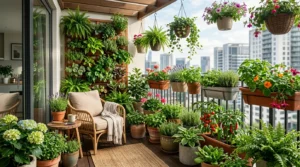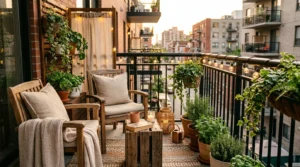

For a long time, my balcony had exactly one setting: summer, whether it was actually summer or not. The same thin cushions sat out in December looking sad and slightly damp, the same delicate plants that thrived in July shriveled the moment the first frost hit, and by October I’d usually just stopped going out there at all until the following spring. It took a genuinely miserable, freezing cup of coffee out there in late November, sitting on a cushion that had clearly given up weeks earlier, for me to realize the balcony didn’t have to go dormant for half the year.
Related Reading
The following year I built a rotation instead, a handful of swaps I made each season that kept the space feeling intentional and usable no matter what was happening with the weather. None of it required buying an entirely new balcony’s worth of furniture four times a year, just a few thoughtful changes at each transition. Here’s exactly what that rotation looks like, season by season.
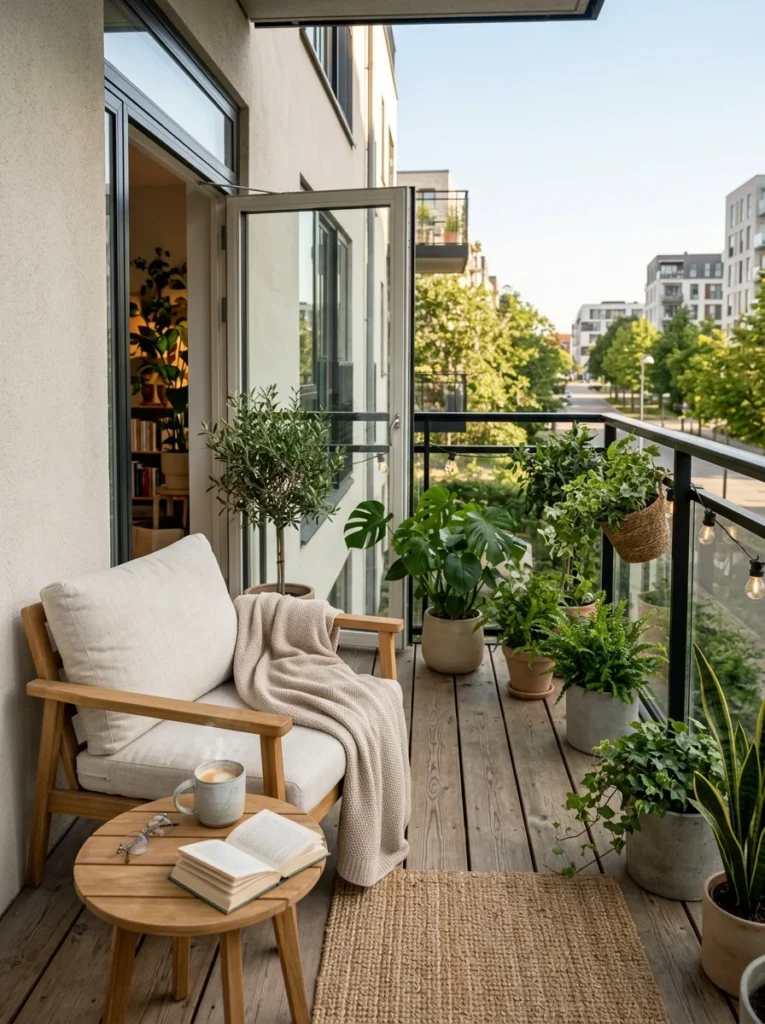
The core pieces that stay out all year
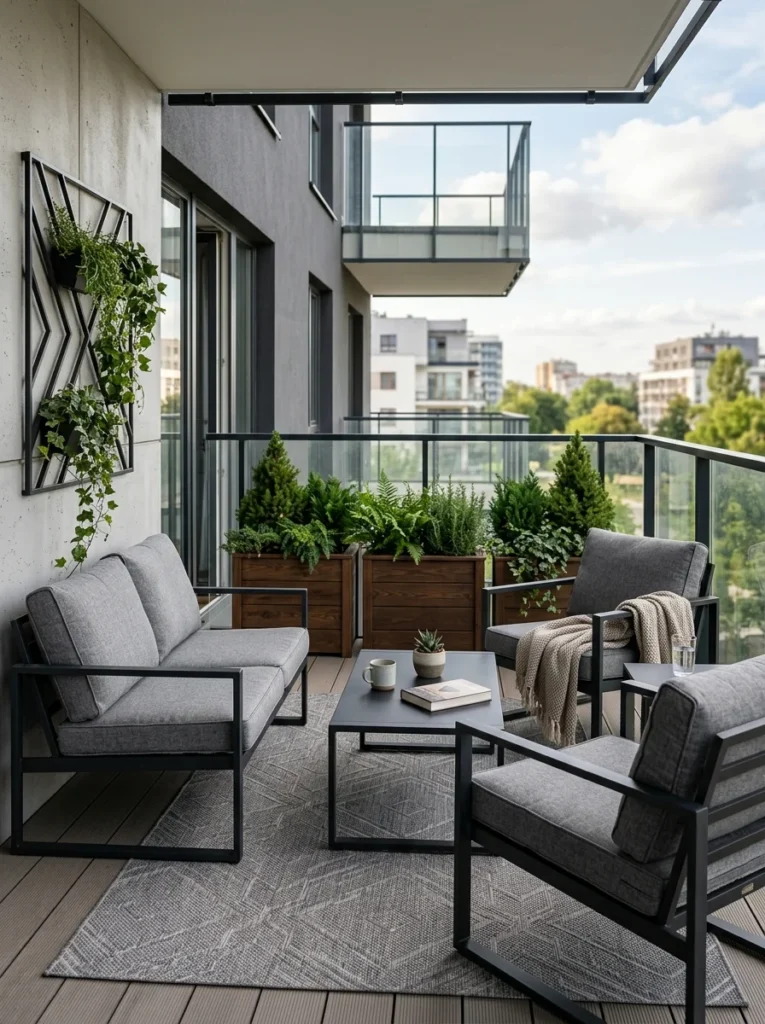
Before getting into seasonal swaps, it’s worth identifying what doesn’t need to change at all. Sturdy, weather-rated furniture in a neutral color, a durable outdoor rug, and any hardscaping like a trellis or planter boxes can generally stay in place through every season, since they’re built to handle the full range of weather your climate produces. Treating these as your permanent foundation means each seasonal transition only involves swapping the smaller, more weather-sensitive layers on top, cushions, textiles, and plants, rather than starting from scratch four times a year.
Choosing neutral colors for these permanent pieces matters more than it might seem, since a bold, seasonally specific color on your main furniture limits how well the space transitions later. A gray or black frame, for instance, works equally well underneath spring pastels, summer brights, fall rust tones, and winter deep greens, while a piece in a very summery coral might feel out of place once the seasonal cushions and plants around it shift to something colder and more muted.
Spring: waking the space back up
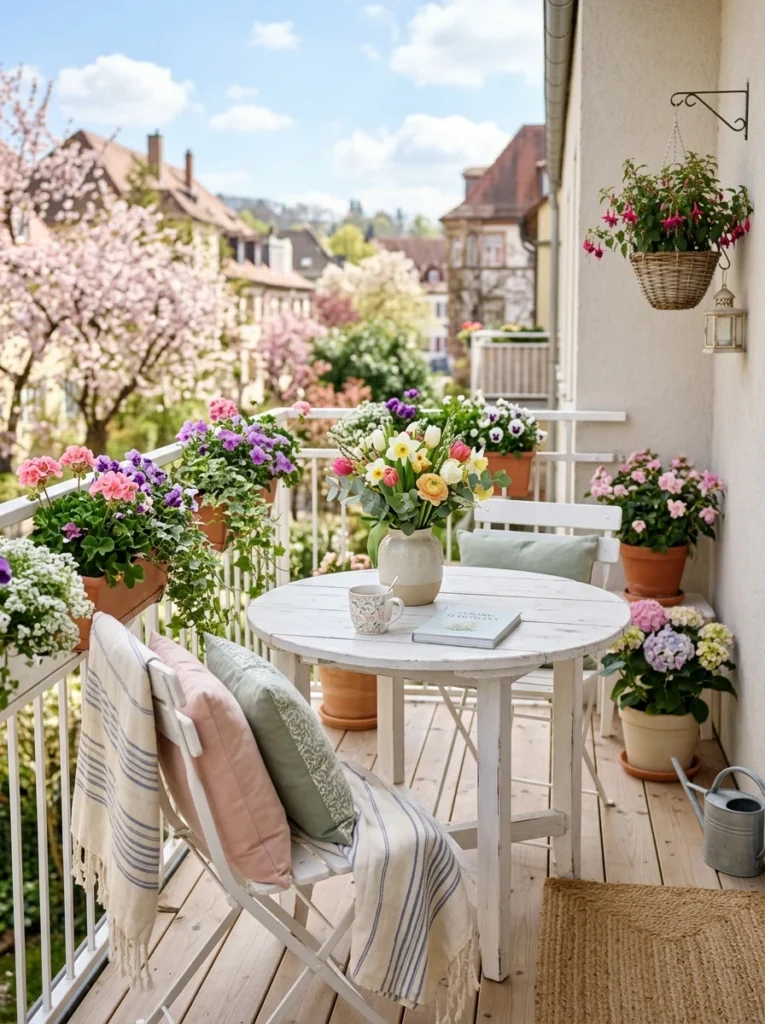
Spring styling starts with cleanup rather than decoration. After a winter of exposure, furniture usually needs a proper wash down, cushions that were stored need airing out, and any planters need old, spent soil refreshed before new plants go in. Once that groundwork is done, spring is the moment to introduce fresh, lighter-colored cushions, since the muted or darker tones that work well in winter can feel heavy once the light starts changing. This is also the best time to plant anything you want established before the heat of summer arrives, since cool-season seedlings get a head start on root development while temperatures are still mild.
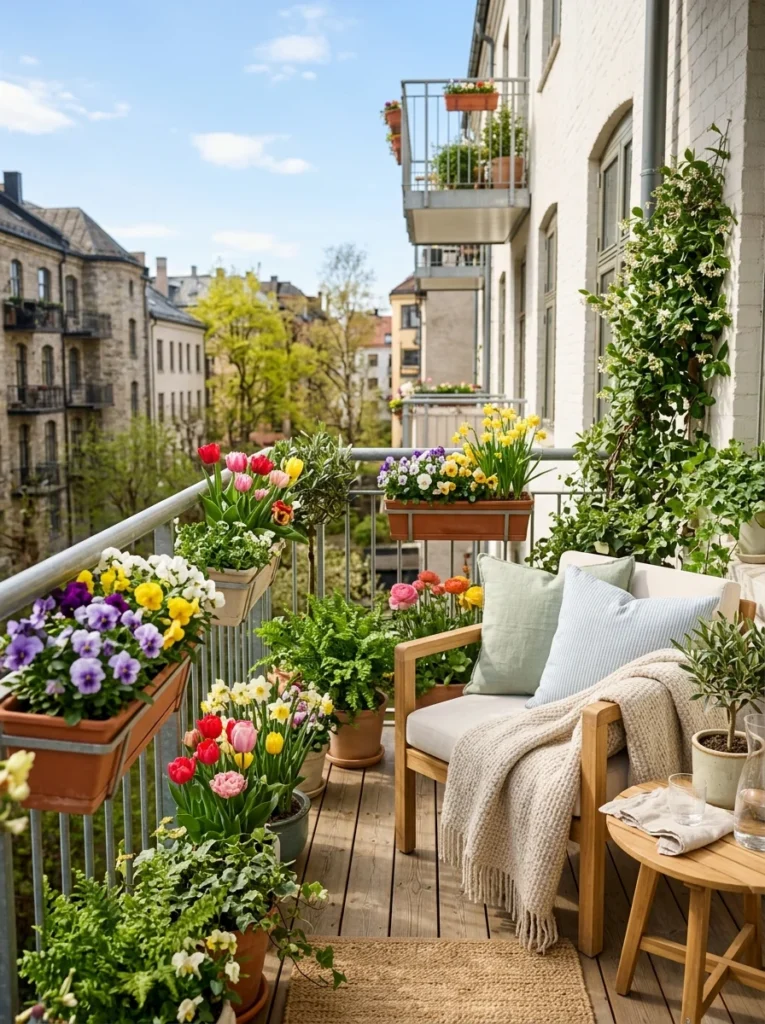
Spring styling checklist
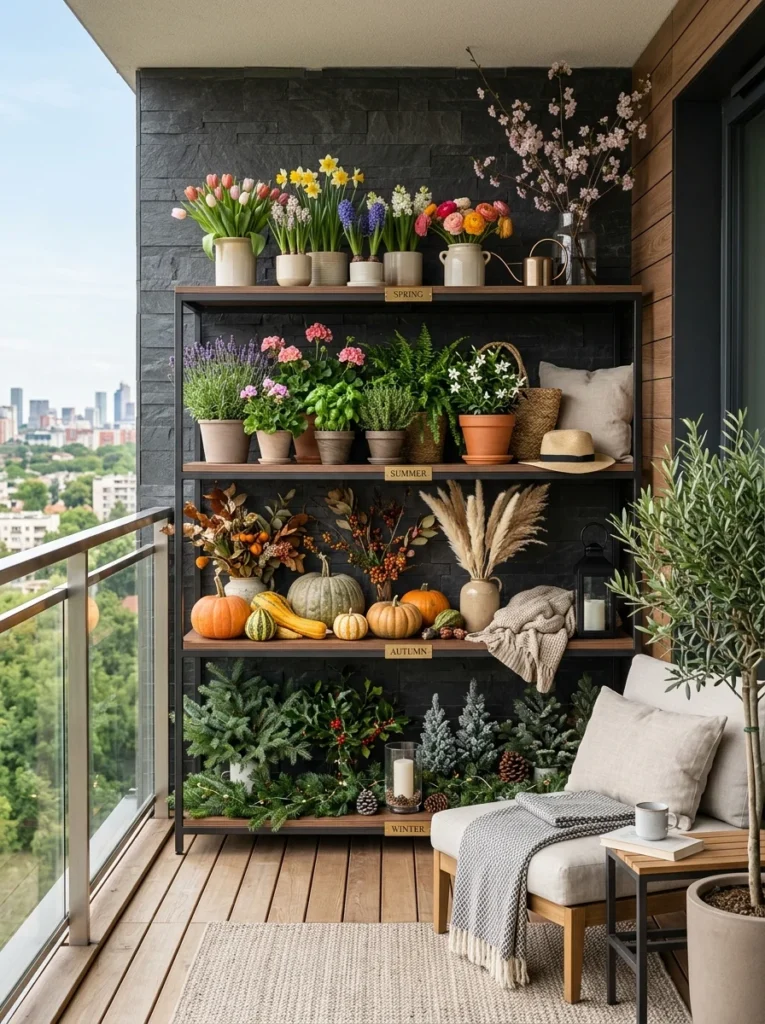
Wash down furniture and railings that collected winter grime, swap in pastel or fresh floral cushion covers, plant early bulbs or cool-season flowers like pansies, and add a lightweight throw for cooler spring evenings rather than the heavier blanket winter called for. A small vase of fresh-cut flowers on the table, replaced weekly, does more to signal the seasonal shift than almost any other single addition.
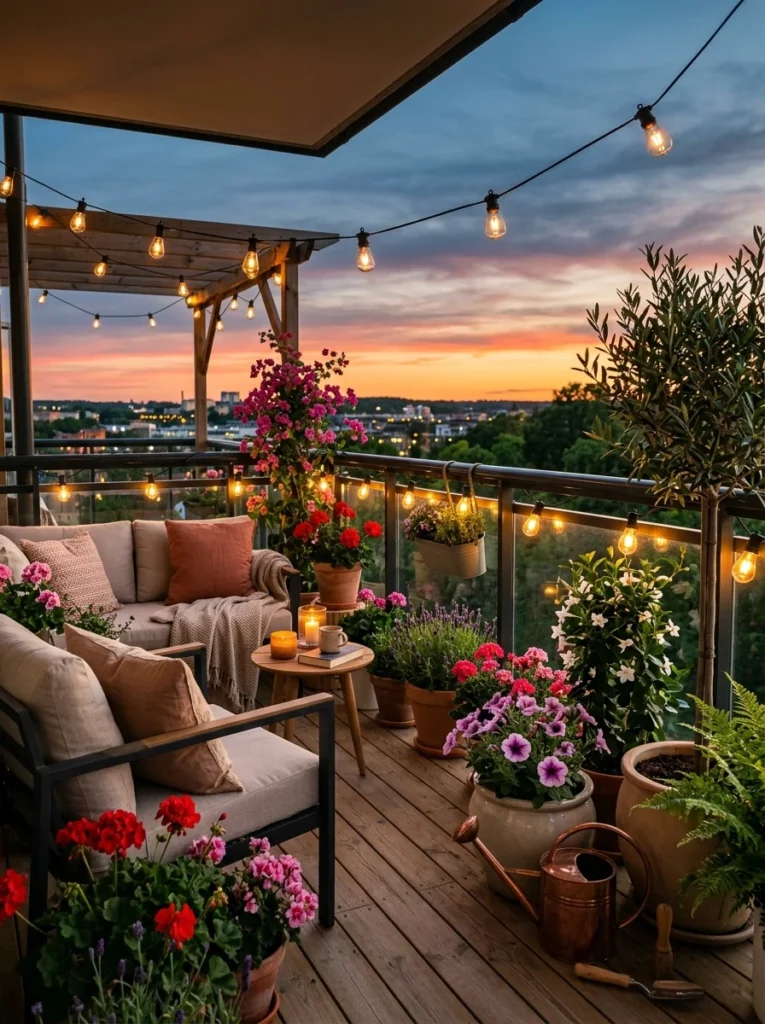
Summer: leaning into shade and airflow
Summer styling is largely about managing heat and sun rather than adding warmth, which flips the priorities of every other season. A retractable shade, umbrella, or simply repositioning furniture to make use of whatever natural shade the balcony gets during peak afternoon hours becomes important if your balcony faces significant direct sun. Breathable, lighter-weight fabric cushion covers replace anything heavier, and this is the season to bring out delicate or heat-loving plants that wouldn’t have survived spring frost.
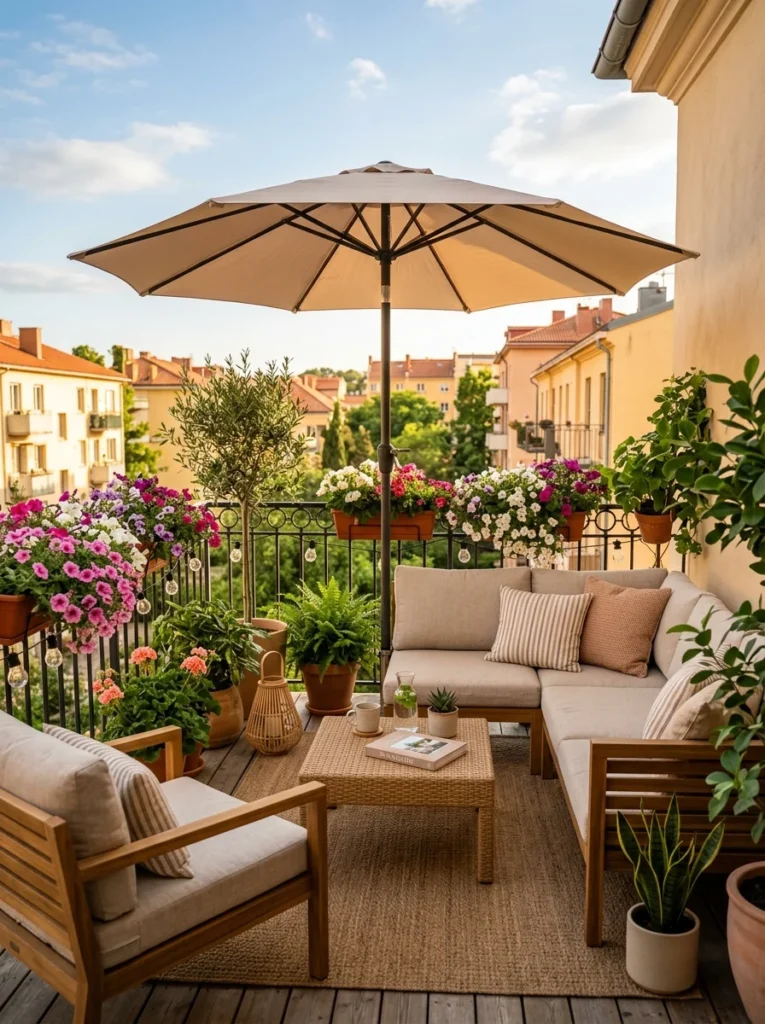
Summer styling checklist
Add or reposition shade for the hottest hours of the day, switch to lightweight linen or cotton-blend cushion covers, introduce heat-tolerant flowering plants like petunias or lantana, and keep a small watering can or hose easily accessible, since summer plants typically need daily attention rather than the more relaxed watering schedule spring allows. String lights come into their own here too, since summer evenings are when a balcony tends to get used latest into the night.
Fall: warming the palette before it gets cold
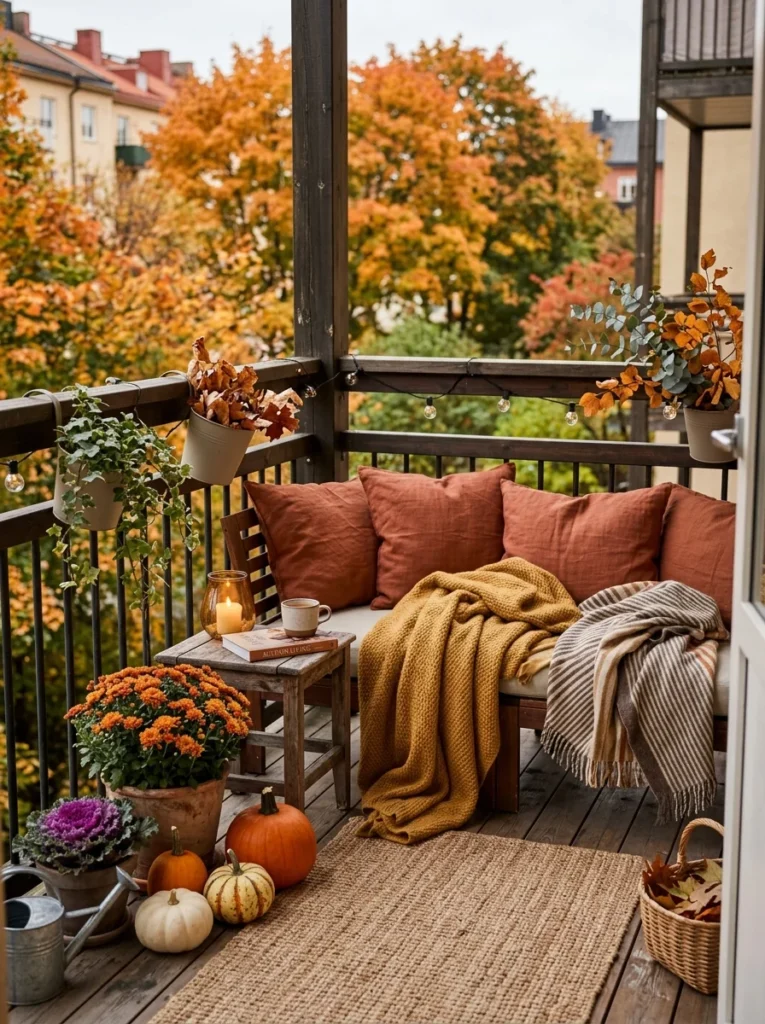
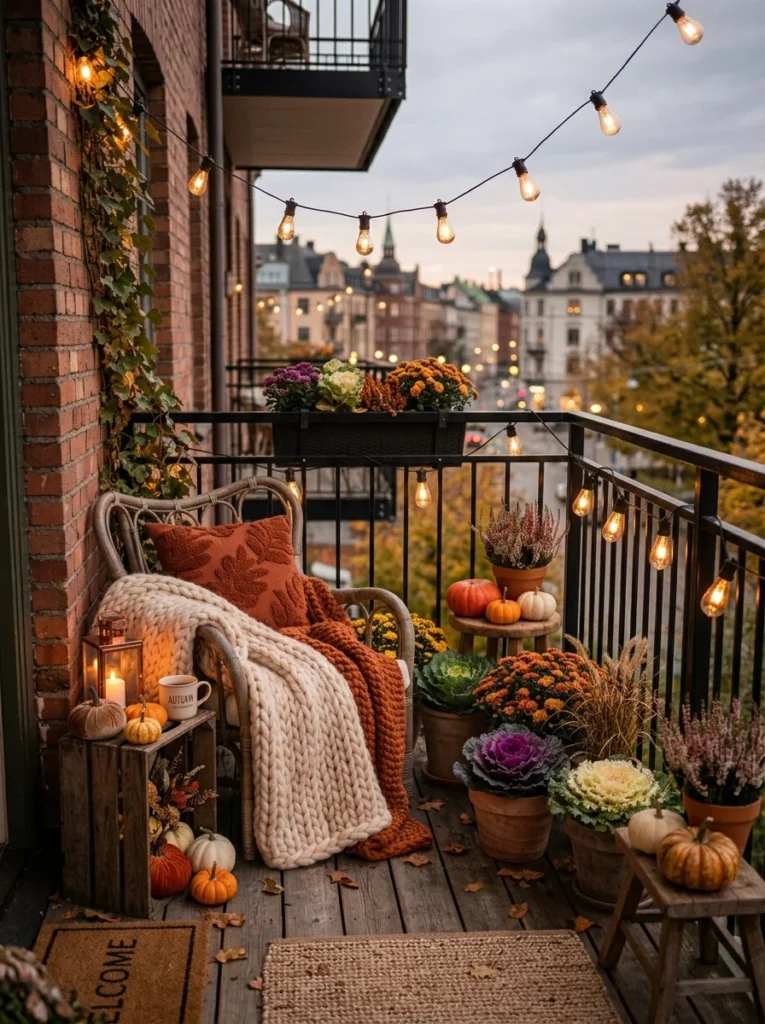
Fall is the transition most people skip entirely, jumping straight from summer cushions to winter dormancy, but a proper fall styling phase extends usable balcony time by several weeks. Swapping in warmer-toned textiles, rust, mustard, deep green, alongside a chunkier knit throw, makes the space feel intentional rather than like summer decor that’s simply overstayed its welcome. This is also the point to bring in cold-hardy plants, ornamental kale, mums, or late-season herbs, that will tolerate the first frosts far better than anything planted for summer color.
Fall styling checklist
Swap cushion covers to warmer, richer tones, add a chunky throw blanket for cooler evenings, plant frost-tolerant ornamentals like mums or ornamental cabbage, and consider a small portable heater if you want to extend evening use further into the season. A single pumpkin or gourd on the table is a small, low-cost seasonal marker that goes a long way without requiring any real investment.
Winter: making a small space feel warm rather than abandoned
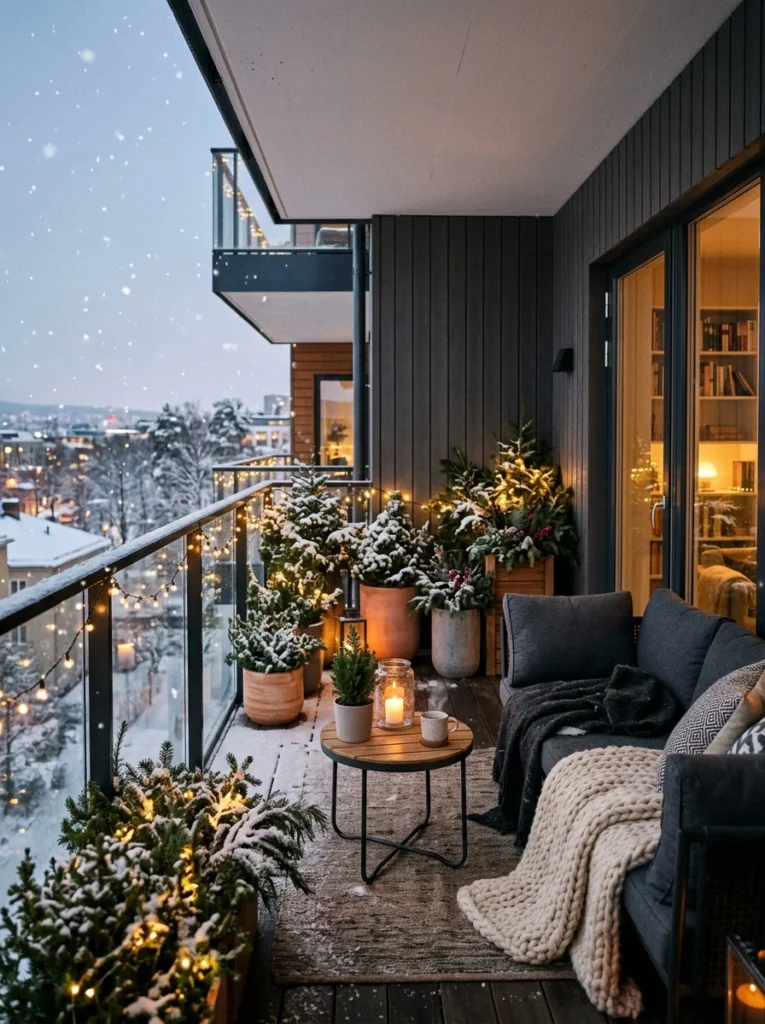
Winter is where most small balconies get fully neglected, but a few deliberate choices can keep the space from feeling like storage overflow until spring. If your climate allows any outdoor sitting at all, even briefly, weatherproof cushions in darker, richer tones paired with a proper outdoor-rated blanket make short stints outside genuinely pleasant rather than something to endure. A small, safe heat source, where permitted by your building, extends this further. For colder climates where sitting outside isn’t realistic, focus winter styling on what’s visible from indoors, evergreen arrangements in planters, string lights that show through the window, rather than furniture you won’t be using anyway.
Winter styling checklist
Store away anything not rated for freezing temperatures, switch to your darkest, richest cushion tones if you’ll still be sitting out occasionally, add evergreen boughs or a small potted conifer for color that survives frost, and keep string lights running, since they matter more in winter’s early darkness than in any other season. If your balcony genuinely goes unused in winter, focus your effort on how it looks from inside rather than maintaining a seating setup nobody will use.

Storage between seasons matters as much as the swap itself
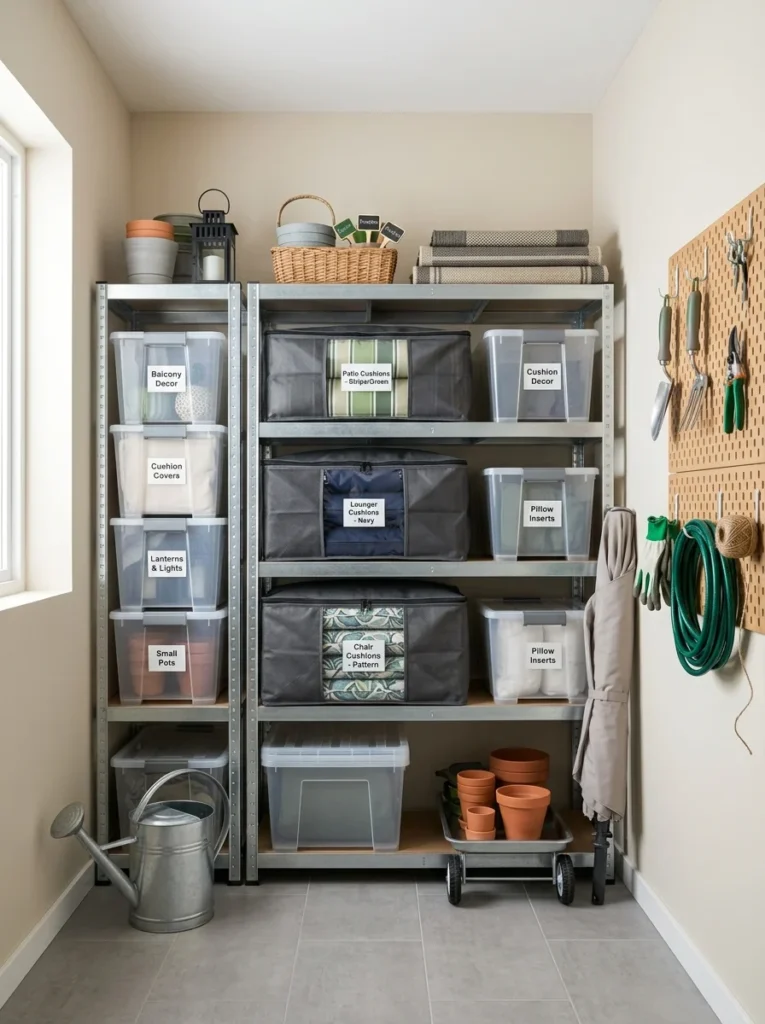
A seasonal rotation only works if what you’re not using is stored properly rather than left to degrade in a corner. Cushions need to be genuinely dry before storage, ideally in a breathable bag rather than sealed plastic, which traps moisture and encourages mildew. Delicate plants that can’t survive outside in winter need a plan, indoors on a windowsill, or accepted as an annual replanted each spring, rather than an afterthought discovered dead in November. Building this storage step into your routine each season is what actually makes the rotation sustainable year after year, rather than something you do once enthusiastically and then abandon.
A small, dedicated storage bin or a corner of a hall closet set aside specifically for off-season balcony items also removes the excuse of not having anywhere to put things, which was a real factor in why my own rotation kept lapsing in earlier years. Knowing exactly where the winter cushions live in July, and where the summer ones live in January, turns each transition into a quick swap rather than a search.
What I got wrong before building this rotation
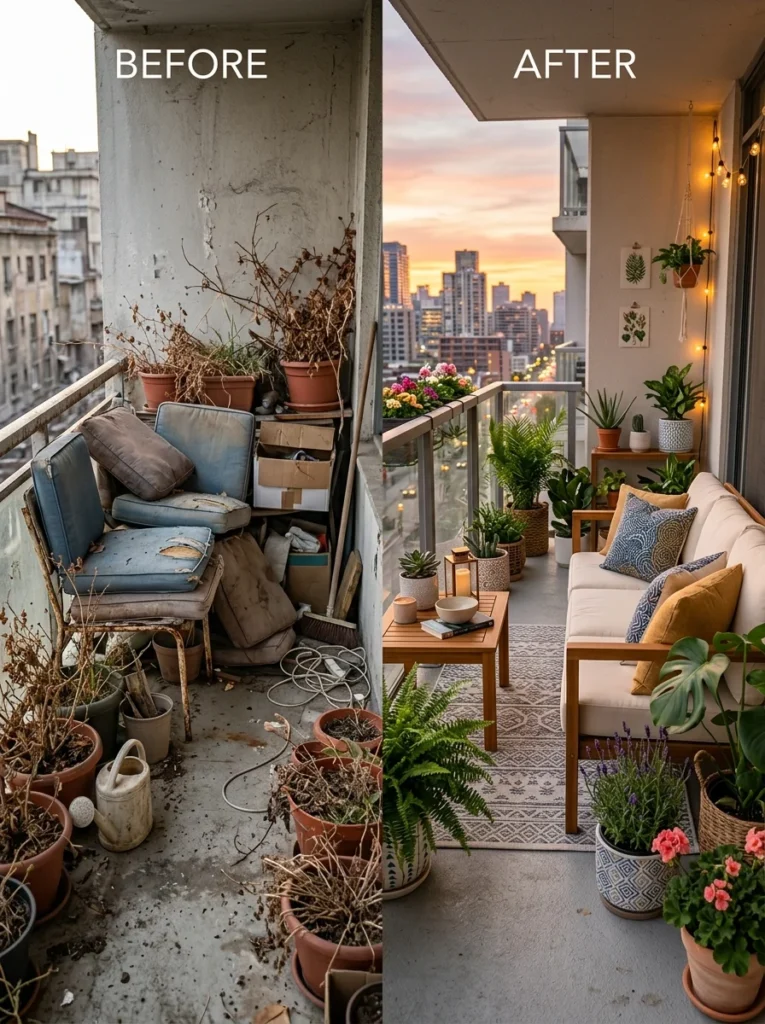
My original mistake wasn’t laziness, it was assuming a seasonal balcony refresh meant buying an entirely new set of furniture and decor each time the weather changed, which felt expensive and impractical enough that I simply never did it. Once I separated the permanent foundation, furniture, rug, structural planters, from the smaller seasonal layers, cushions, textiles, and rotating plants, the whole project became something I could realistically keep up every few months rather than a large undertaking I kept postponing.
The other lesson was timing the transitions slightly ahead of the weather rather than reacting to it. Waiting until it was already cold to think about fall styling meant I’d usually missed several perfectly pleasant early autumn evenings that a slightly earlier swap would have let me enjoy.
Common seasonal balcony styling questions
How do I keep my balcony usable in winter?
Weatherproof cushions in darker tones, a proper outdoor-rated blanket, and a small permitted heat source can make brief winter use genuinely comfortable. If sitting outside isn’t realistic in your climate, focusing on what’s visible from indoors, evergreen planters and string lights, keeps the space feeling cared for even when it’s not being actively used.
What plants survive best on a balcony through multiple seasons?
Hardy evergreens and shrubs in weather-rated containers can stay outside year-round in most climates, while flowering annuals typically need replacing each season, pansies or bulbs in spring, heat-tolerant varieties in summer, mums or ornamental kale in fall. Checking a plant’s specific cold and heat tolerance against your local climate zone before planting avoids repeated disappointment.
How often should I refresh my balcony’s seasonal decor?
Four transitions a year, aligned with the actual change in seasons rather than a fixed calendar date, tends to work well for most climates. Keeping a stable foundation of furniture and structural pieces means each transition only requires swapping smaller, less expensive items like cushions and plants, rather than a full redecoration each time.
How do I store balcony cushions between seasons?
Cushions need to be completely dry before storage, ideally in a breathable storage bag rather than sealed plastic, which traps moisture and can lead to mildew. Storing them indoors, in a closet or under a bed, protects them from the humidity and temperature swings of an unheated outdoor storage bin.
A balcony that works in every season
A small balcony doesn’t need to go dormant for half the year. With a stable foundation of durable furniture and a rotating layer of seasonal cushions, textiles, and plants, the same small space can feel intentional and inviting whether it’s the height of summer or the depths of winter.
My own balcony now gets used in some form every month of the year, even if winter use is brief and mostly about how it looks from the window rather than sitting outside for long. If your balcony currently has just one setting, start with the season you’re heading into next, refresh the cushions and swap the plants, and build the rotation gradually from there.