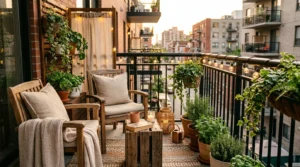
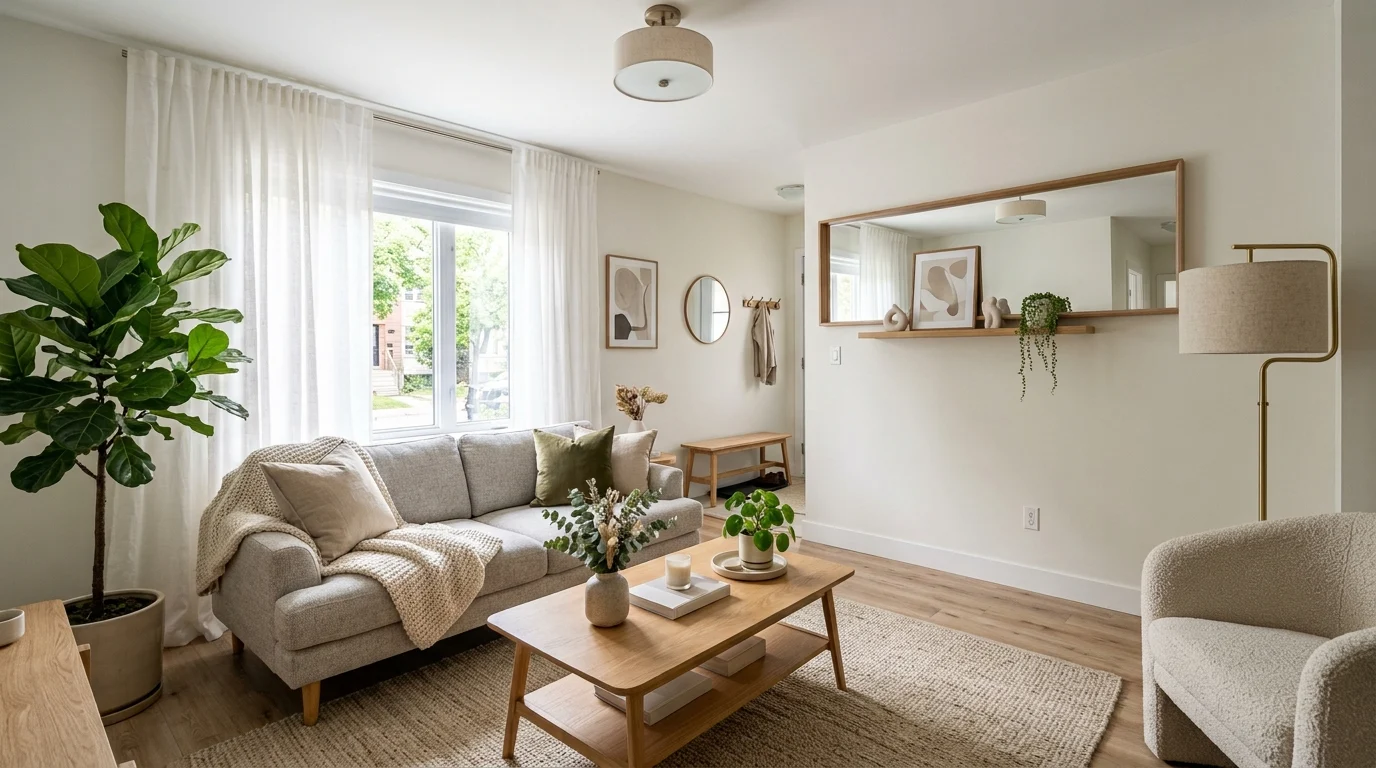
My first solo rental had a living room so small that my couch, a secondhand loveseat really, touched three walls at once, and I spent the first few months assuming there simply wasn’t much to be done about it beyond accepting the cramped feeling every time I walked in. It wasn’t until I started actually researching small-space tricks, and testing a few of them out despite being fairly limited by what a rental lease would actually allow, that the room started feeling noticeably more open, without gaining a single additional square foot in the process.
A small rental living room comes with its own specific challenge: most of the usual small-space solutions, knocking down a wall, repainting permanently, installing built-in shelving, simply aren’t available to you as a renter. But there’s still a considerable amount you can do within those constraints. Here’s what actually worked, organized from the changes that make the biggest difference to the smaller finishing touches.
Choose furniture scaled specifically to the room
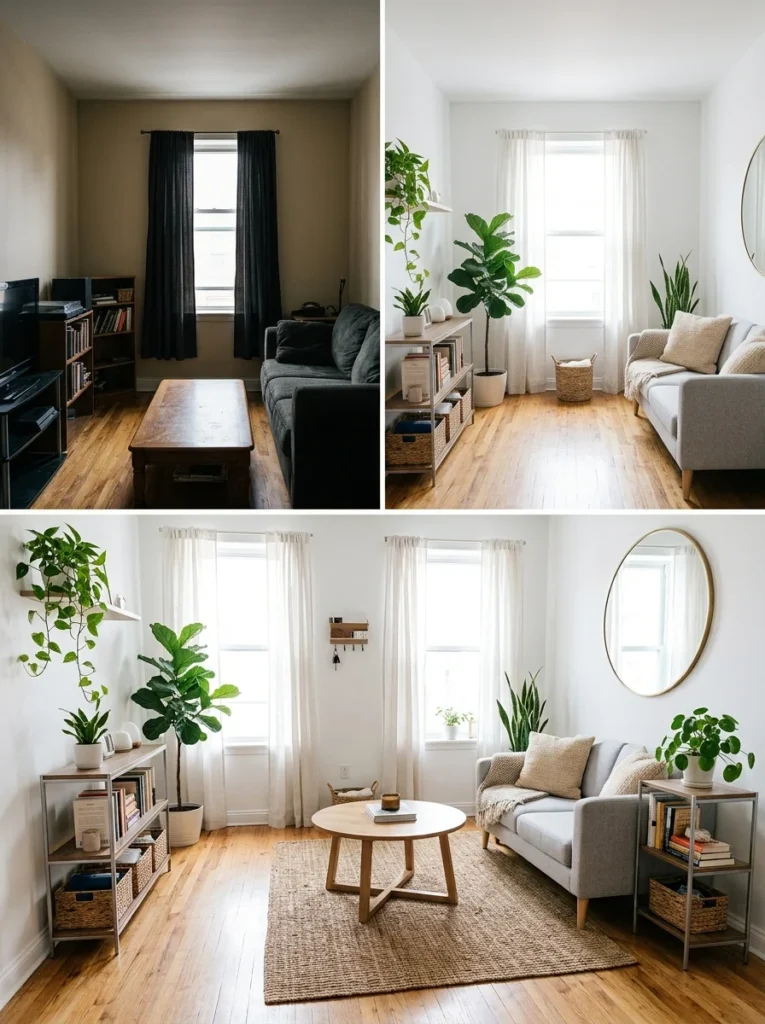
A full-size sofa or an oversized sectional, however comfortable, can overwhelm a small rental living room entirely, leaving no clear floor space to actually move through the room. Choosing furniture specifically sized for smaller spaces, an apartment-sized sofa, a loveseat instead of a full three-seater, or a compact armchair instead of a bulky recliner, makes an enormous difference in how much breathing room the rest of the space actually has. Measuring the room carefully before buying anything, rather than assuming a piece will fit based on how it looks in a showroom, prevents the common mistake of ending up with furniture that technically fits but leaves no usable floor space around it.
Use multi-functional furniture to reduce total pieces needed
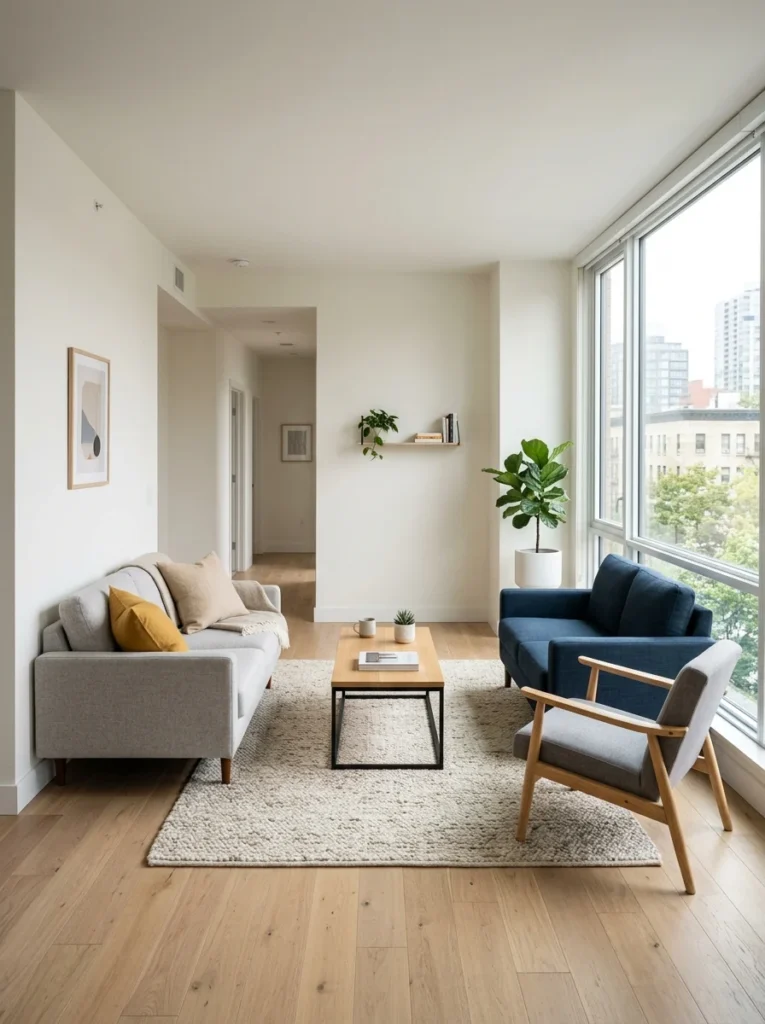
A storage ottoman that doubles as a coffee table and extra seating, a console table that also serves as a TV stand, or a bench with hidden storage all let a small living room accomplish more with fewer individual furniture pieces. Every piece of furniture you don’t need to fit into the room is floor space you get to keep clear, which matters considerably more in a small rental than it would in a larger, more forgiving living room.
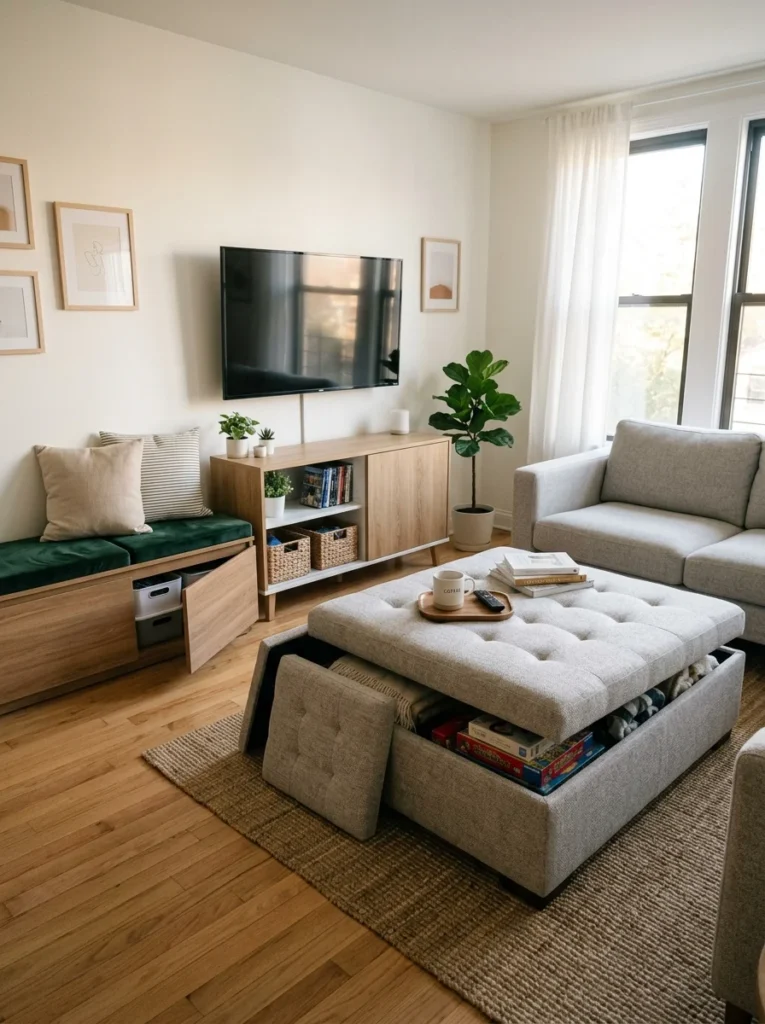
Choose a light, cohesive color palette wherever your lease allows
Even if your lease doesn’t allow painting the walls, a light, cohesive color palette across furniture, curtains, and accessories, rather than a mix of many different colors and patterns, helps a small room feel calmer and more spacious. If your lease does permit painting, or if a landlord allows a specific approved color, a soft, light neutral tends to make a small room feel more open than a darker, richer tone, which, while beautiful in a larger room, can make a small space feel more enclosed.
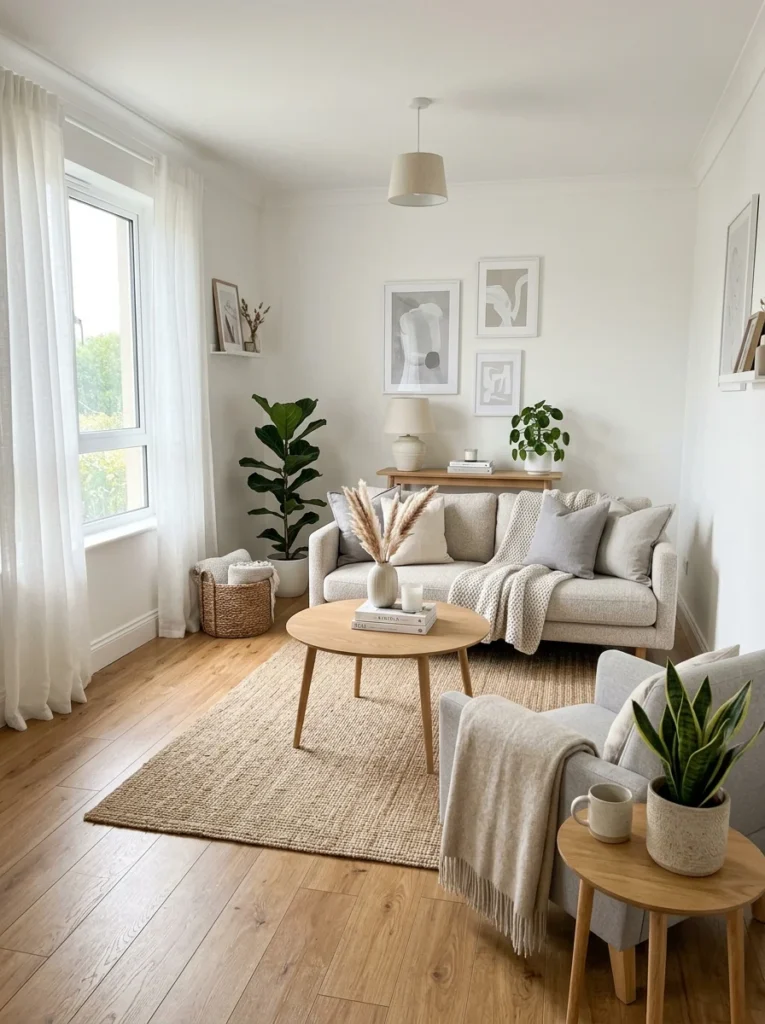
Hang curtains high and wide, even in a rental
Mounting curtain rods higher above the window frame and extending them wider than the window itself, a change that requires only a curtain rod and doesn’t damage the wall beyond a couple of small screw holes easily patched later, makes the ceiling feel taller and the window feel larger than it actually is. This is one of the most effective small-space tricks available to a renter, since it requires minimal, easily reversible wall modification while delivering a genuinely noticeable visual impact.
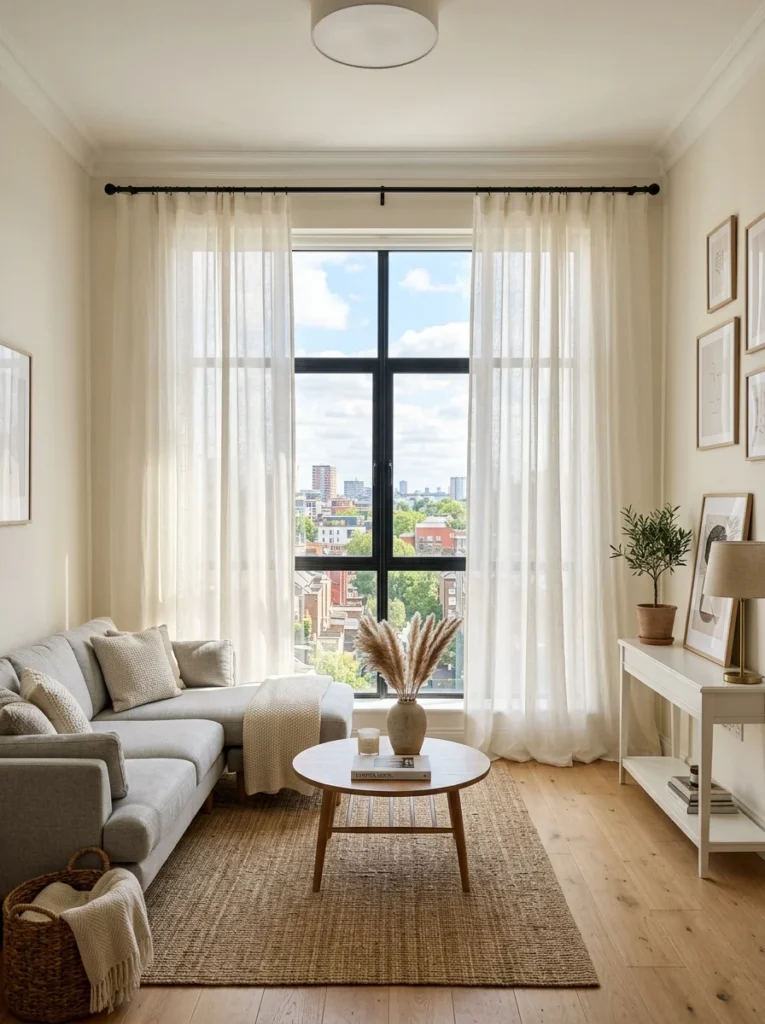
Use a large, well-placed mirror to add visual depth
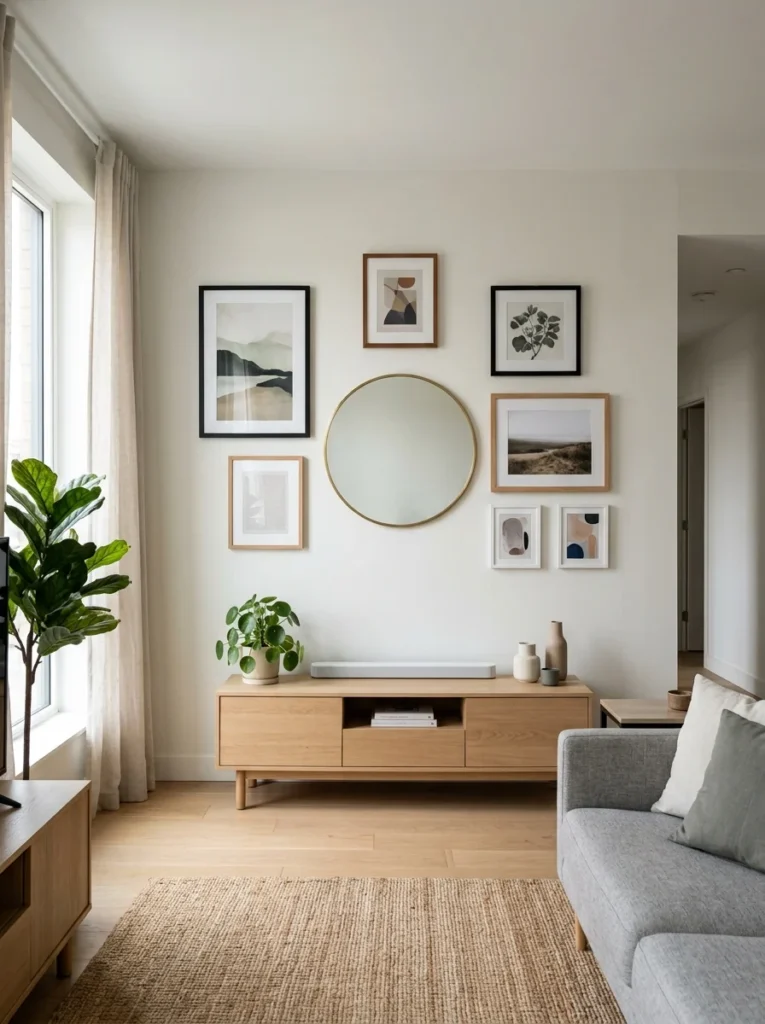
A large mirror, leaned against a wall or hung using removable, weight-rated hanging strips rather than a drilled anchor, reflects light and the room’s existing space back into itself, creating a genuine sense of added depth and openness. Positioning it to reflect a window or an attractive part of the room, rather than a blank wall or a cluttered corner, maximizes this effect, and it’s one of the few decor additions that meaningfully changes how large a room feels without requiring any permanent installation at all.
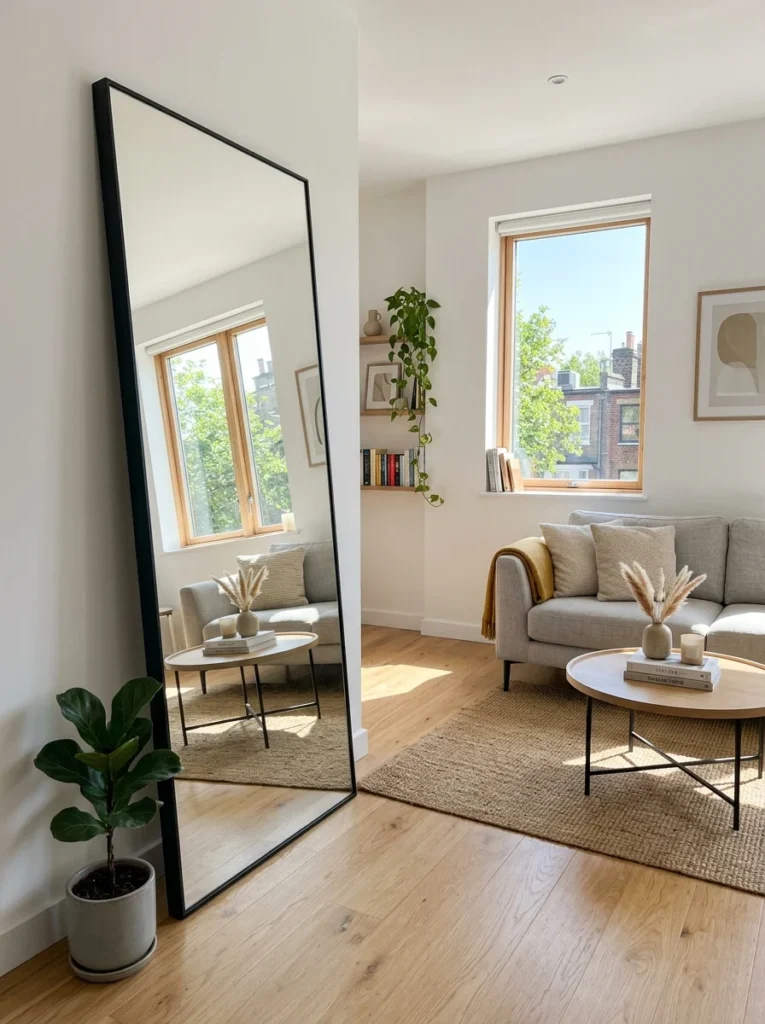
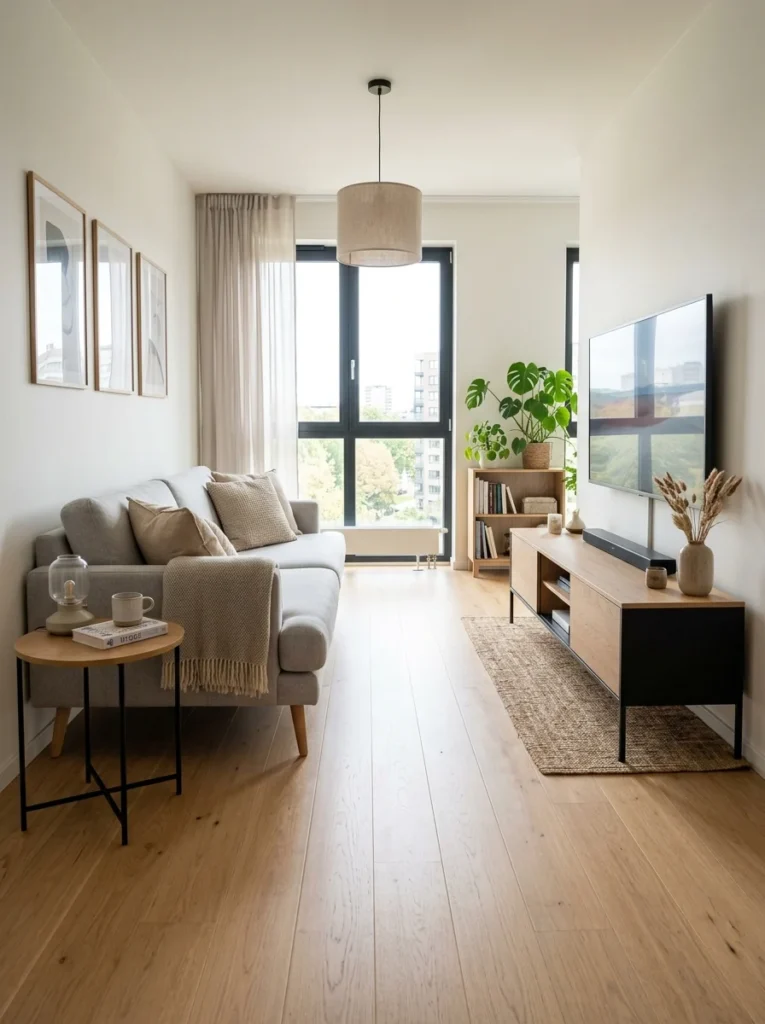
Choose furniture with visible legs rather than solid, boxy bases
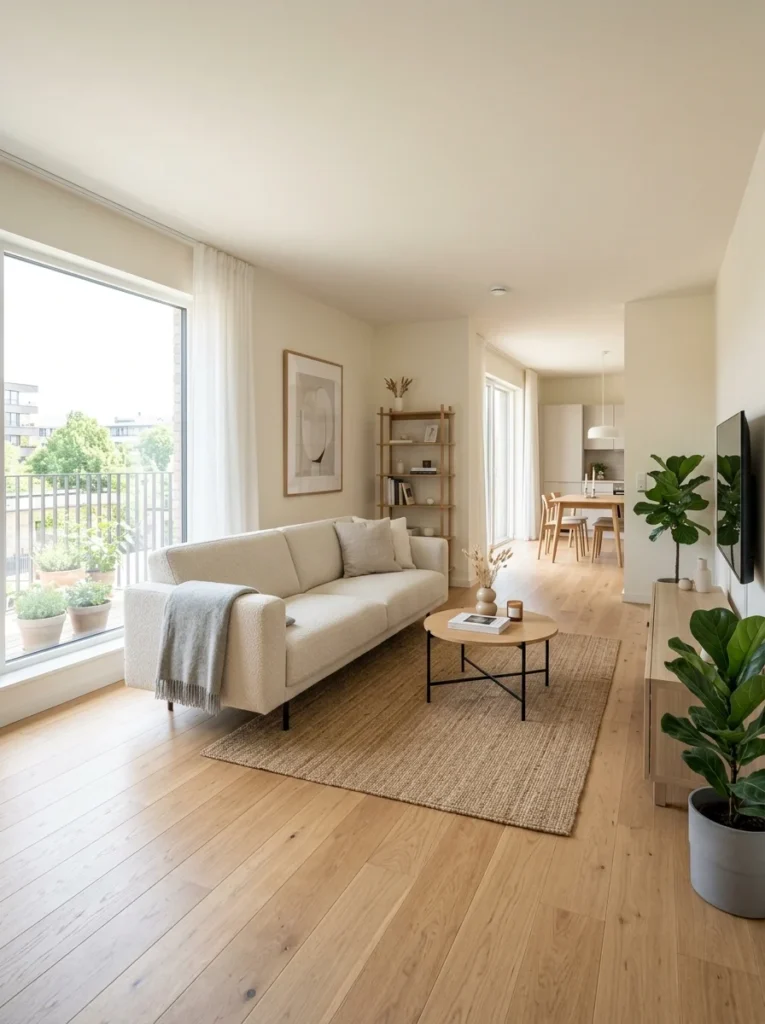
Furniture with slim, visible legs lets you see the floor continuing underneath it, which tricks the eye into reading the room as larger than a space filled with solid, floor-to-base furniture that visually blocks off that same floor area. A sofa, media console, or side table with exposed legs, rather than an enclosed base sitting flush with the floor, contributes meaningfully to an airier, more open feeling throughout the room.
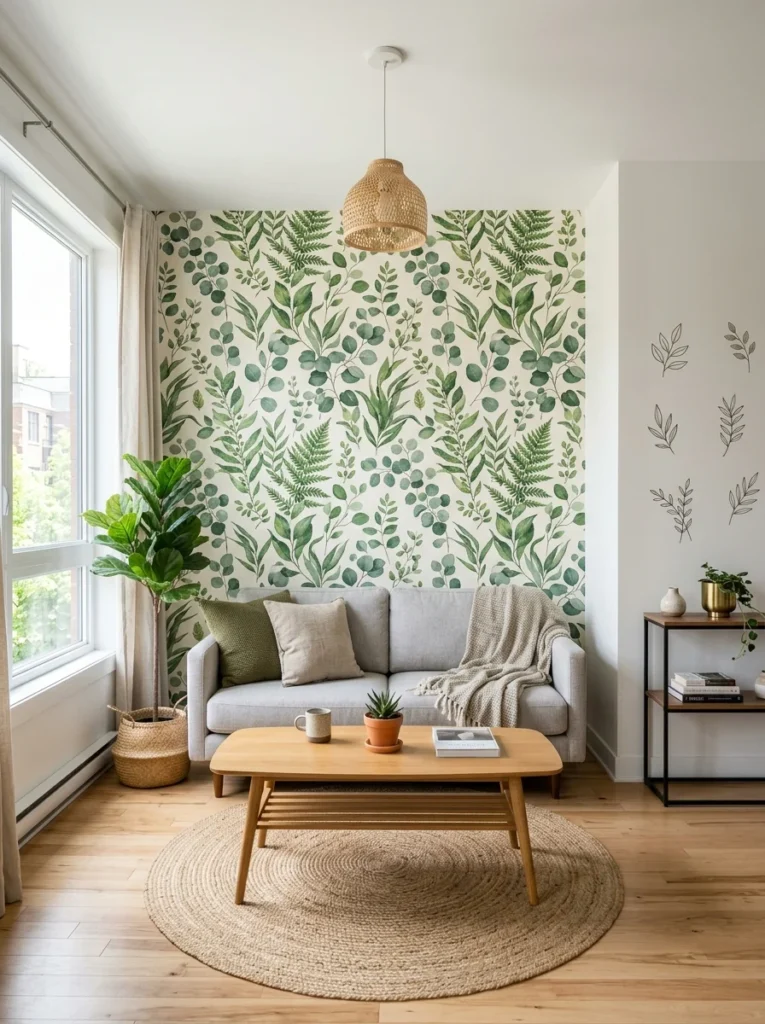
Use removable wallpaper or wall decals for a low-commitment accent
Peel-and-stick wallpaper or large-scale wall decals, both explicitly designed to remove cleanly without damaging paint or leaving residue, let you add personality and even the illusion of depth, certain patterns and murals specifically create a sense of expanded space, without violating a typical rental lease’s restrictions on permanent wall changes. This is one of the more creative options available specifically because it doesn’t require the landlord’s permission the way actual paint or wallpaper glued directly to the wall typically would.
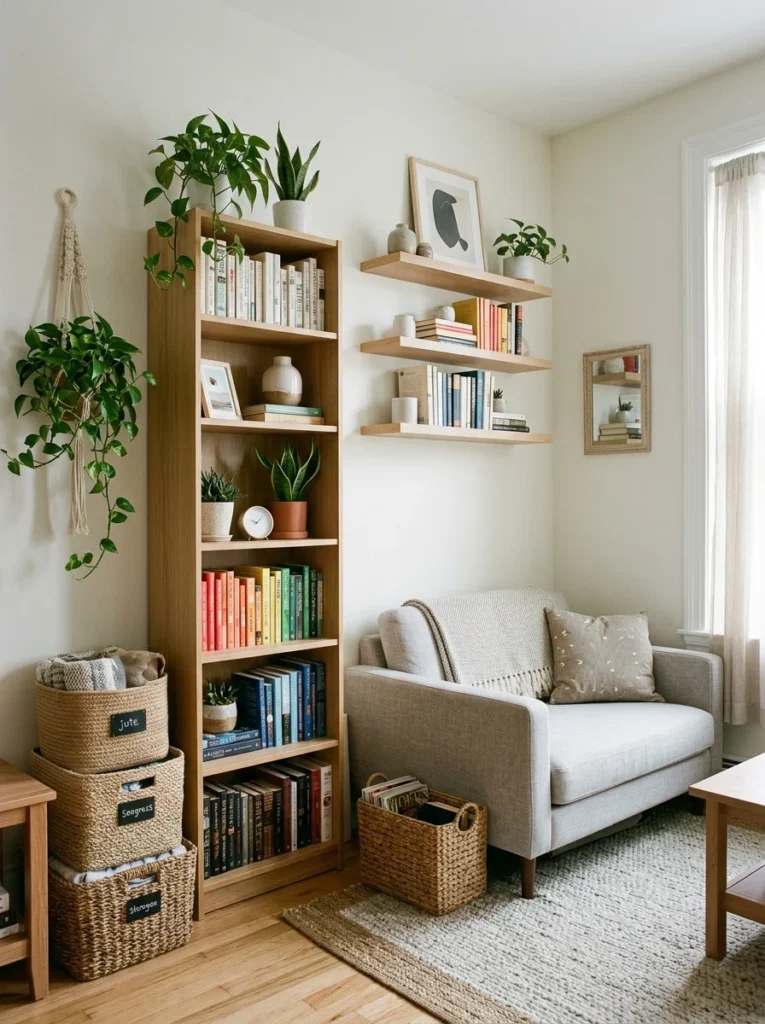
Maximize vertical storage instead of spreading out
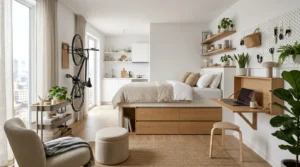
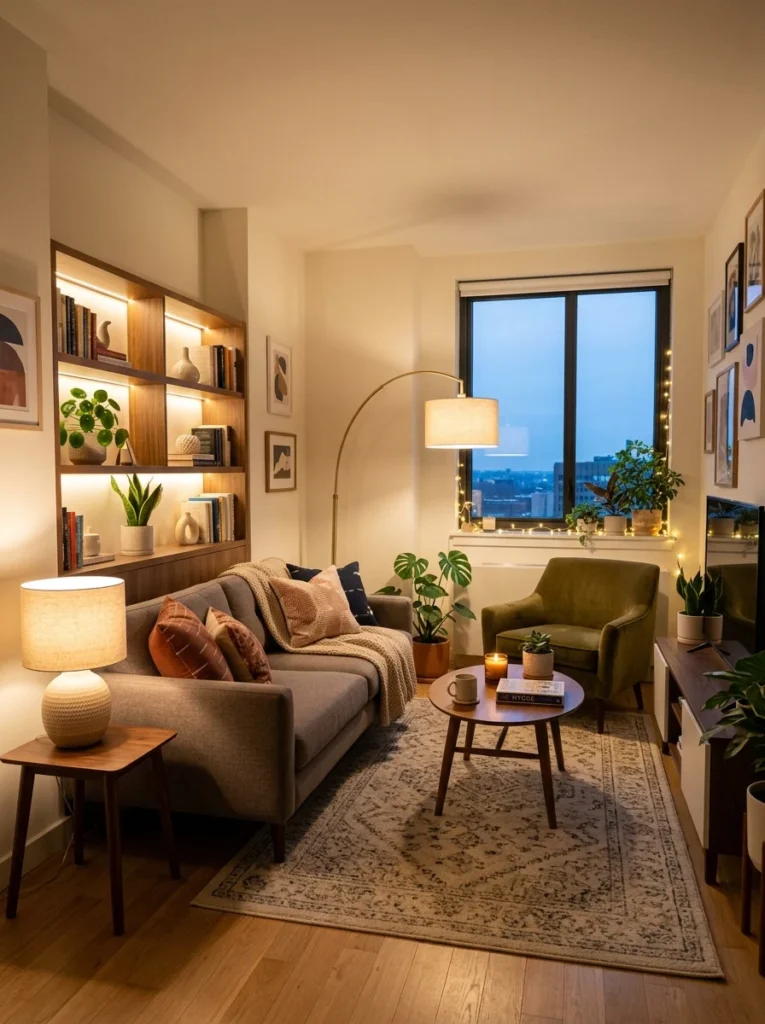
A small living room’s floor space is its scarcest resource, so storage should climb the walls rather than spread across the floor. Tall, narrow bookshelves, floating shelves installed with a removable, weight-rated mounting system, or a slim bar cart tucked into an unused corner all add storage and display space without competing with you for the room’s limited floor area.
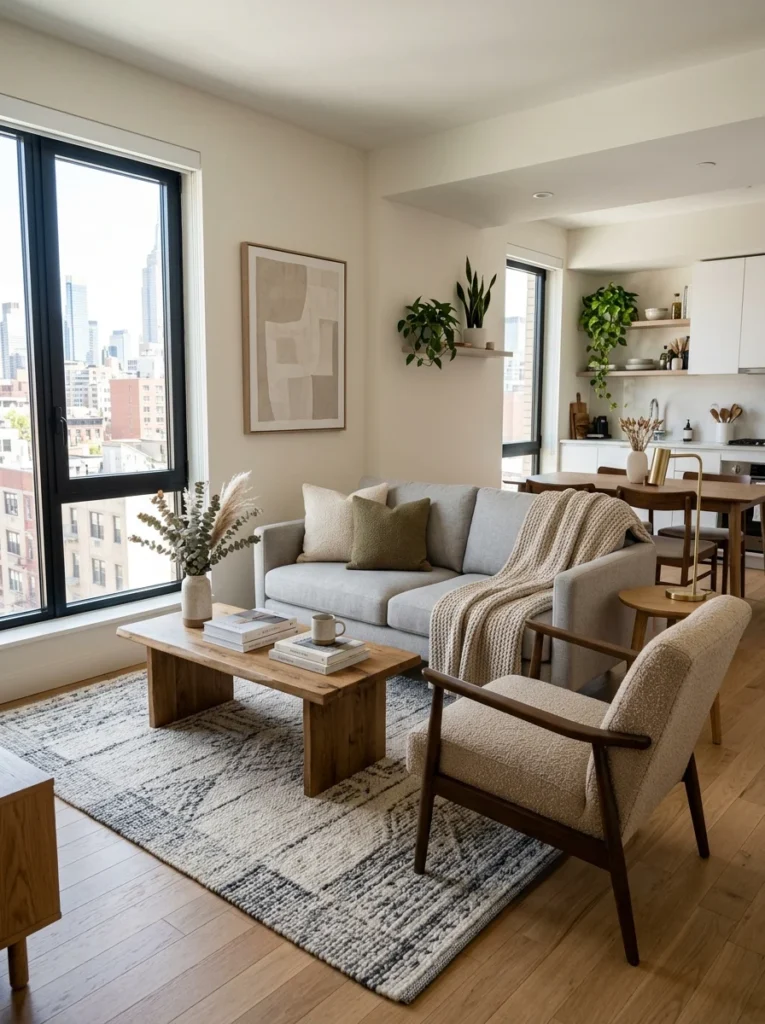
Use area rugs to define zones without permanent walls
In an open-plan or studio-style rental where the living room blends into another area, a well-placed area rug visually defines the living room as its own distinct zone without requiring any construction or permanent division. Choosing a rug sized appropriately to at least partially anchor the main seating furniture, rather than a small rug that floats disconnected in the middle of the space, makes the zone read as more intentional and put-together.
Improve lighting to make the space feel larger and more open
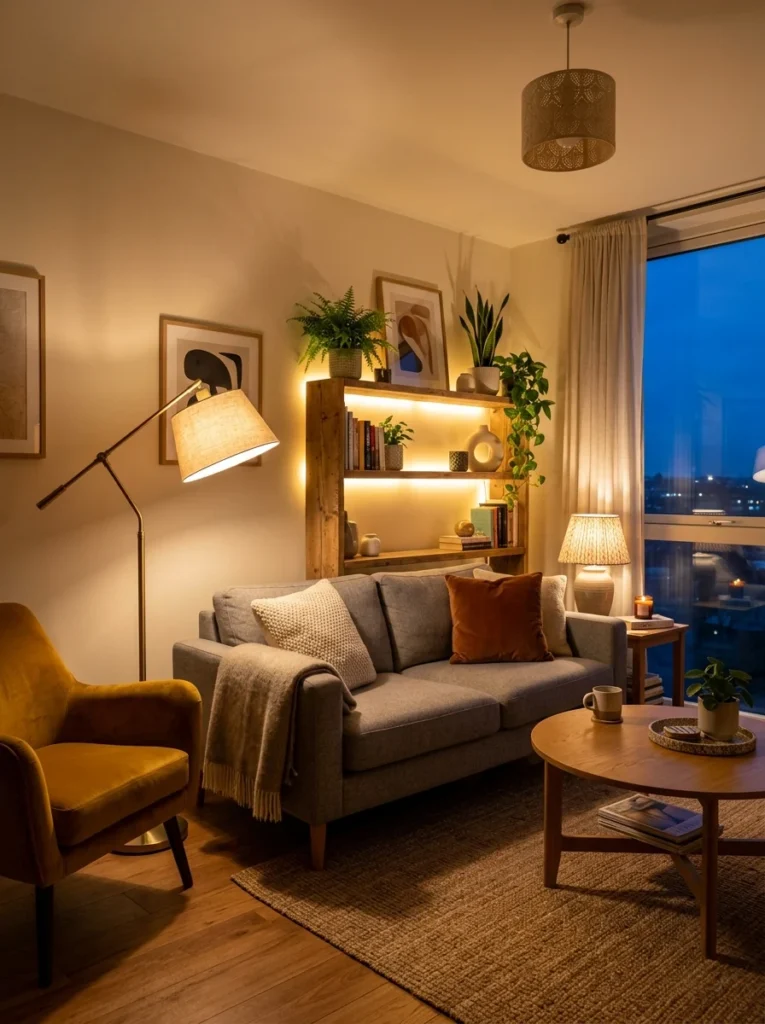
A dim, poorly lit small living room feels considerably more cramped than the same space with good, layered lighting. Since many rentals have limited built-in lighting, plug-in floor lamps and table lamps, positioned in different corners of the room rather than relying on one central source, add both brightness and a sense of the room extending further than a single dim overhead fixture would suggest. Warmer-toned bulbs generally make a small space feel cozier rather than starkly bright, while still improving overall visibility and openness compared to inadequate lighting.
Keep window treatments simple and unobstructed
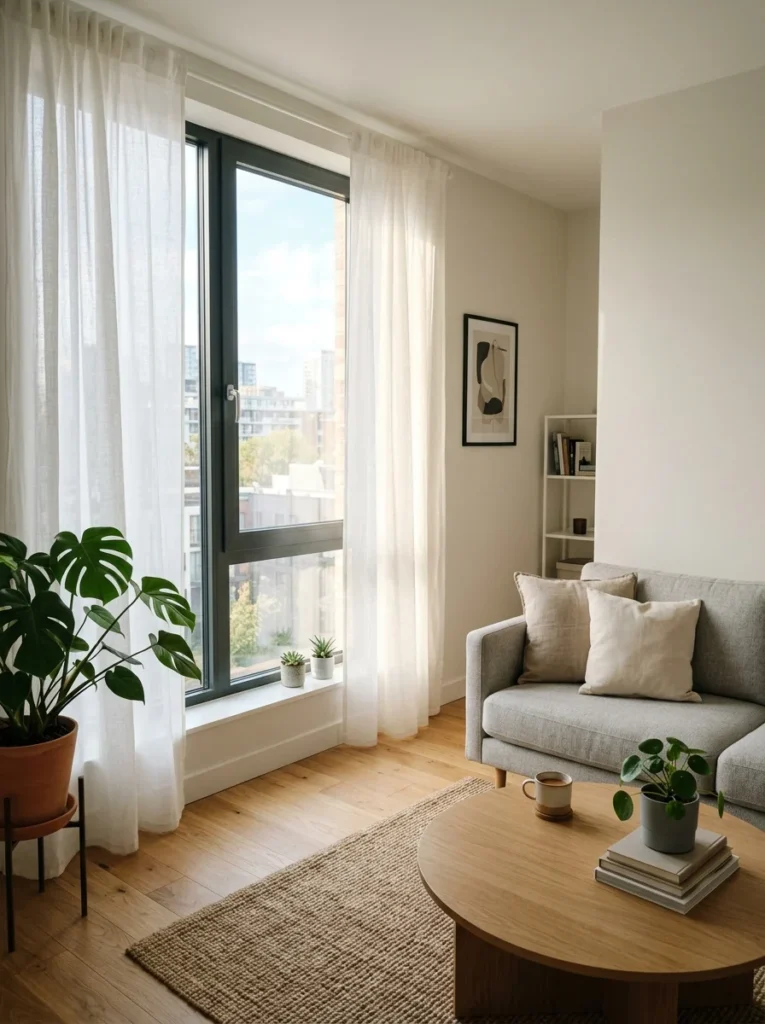
Heavy, dark, or elaborately layered curtains can block natural light and visually shrink a window’s apparent size, both of which work against a small room’s sense of openness. Simple, lighter-colored curtains, or sheer panels that still provide some privacy without blocking natural light, let a small living room feel brighter and more expansive during the day, which matters considerably in a room that likely has limited square footage to begin with.
Add plants for softness without permanent commitment
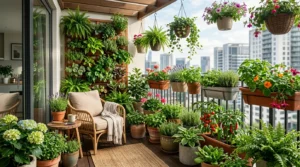
A few well-placed plants, whether real, low-maintenance varieties suited to your available light, or realistic artificial ones if natural light or your own care habits make real plants impractical, add life and softness to a small living room without any wall modification at all. A taller plant in a corner can also help draw the eye upward, subtly emphasizing the room’s vertical space in a way that contributes to the overall sense of openness alongside the other tricks already covered.
Rely on removable adhesive hardware for hanging decor
Weight-rated adhesive hooks and strips, widely available and specifically designed to hold anything from lightweight art to a moderately heavy mirror, let you hang decor, curtains, and shelving without drilling a single hole, and they remove cleanly without damaging paint when it’s time to move out. Checking the specific weight rating against what you intend to hang, and following the product’s recommended wait time before hanging anything after application, ensures these renter-friendly solutions actually hold securely rather than failing unexpectedly under a heavier item.
Use furniture placement to create the illusion of a larger path
Positioning furniture away from the room’s main walkway, rather than directly in the most obvious path through the room, makes the space feel more open to move through, which matters more to the room’s perceived size than most people initially expect. Angling a piece of furniture slightly, or floating it a few inches from the wall rather than pushing everything flush against the perimeter, can also make a small room feel more intentionally arranged rather than simply crowded with furniture stacked against every available wall.
How can I make my rental living room feel bigger without painting?
Hanging curtains high and wide, adding a large mirror using removable hanging strips, choosing furniture with visible legs, and improving lighting with plug-in lamps all meaningfully open up a small room without requiring any wall painting or permanent changes a lease might restrict.
What furniture size works best in a small rental living room?
Apartment-sized or compact furniture, a loveseat rather than a full sofa, a slim console table, and multi-functional pieces like a storage ottoman all help a small room stay functional without feeling overcrowded, compared to full-size furniture that can overwhelm a limited floor plan.
Is removable wallpaper a good option for a rental living room?
Yes, peel-and-stick wallpaper and large-scale decals are specifically designed to remove cleanly without damaging paint, making them a popular way to add personality or the illusion of depth to a small rental living room without violating typical lease restrictions on permanent wall changes.
Does lighting really make a small living room feel bigger?
Yes, good, layered lighting, using plug-in floor and table lamps positioned around the room rather than relying on a single dim overhead fixture, makes a small space feel noticeably more open and less cramped, since poor lighting tends to visually shrink a room regardless of its actual dimensions.
Can I hang shelves or a mirror in a rental without drilling?
Yes, weight-rated adhesive hooks and strips are widely available and specifically designed to hold items like shelving, mirrors, and art without drilling, and they remove cleanly without damaging paint. Checking the weight rating against what you plan to hang, and following the recommended wait time before use, helps ensure they hold securely.
Making a small rental living room feel bigger comes down to choosing appropriately scaled, multi-functional furniture, using light and reflection strategically through mirrors and window treatments, and maximizing vertical storage instead of spreading out across limited floor space. None of these changes require landlord approval for permanent modifications, and most can be undone easily when it’s time to move, protecting your security deposit while still meaningfully transforming how the room feels day to day.
That first cramped loveseat-touching-three-walls living room of mine eventually became a space I genuinely enjoyed spending time in, once I stopped trying to fight the room’s actual size and started working with smarter, rental-friendly choices instead. If your own small rental living room feels similarly hopeless, start with the curtains and a mirror; those two changes alone made the single biggest difference in my own space before I touched anything else on this list.