
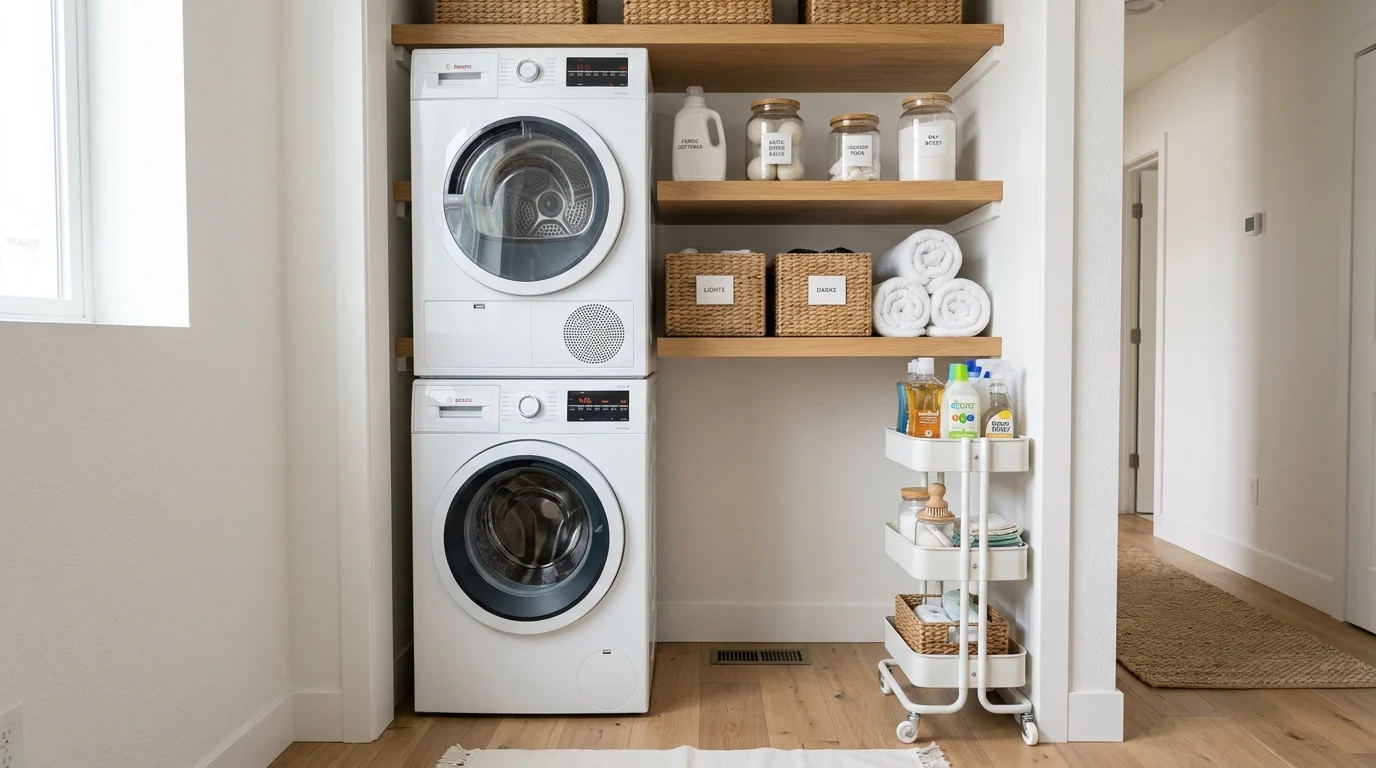
My first apartment’s laundry closet was barely wider than the stacked washer and dryer unit itself, a narrow, awkward little space with a bifold door that never quite closed all the way and absolutely nowhere to put detergent, dryer sheets, or anything else beyond what could be balanced precariously on top of the dryer. It took some real creativity, and honestly a fair amount of trial and error with things that didn’t fit or didn’t work, before that cramped closet actually became a functional little laundry space rather than a source of daily minor frustration.
A tiny laundry closet doesn’t have to be a purely inconvenient afterthought squeezed into an apartment or condo’s floor plan. With the right approach to storage, organization, and a few smart product choices, even the smallest laundry closet can function considerably better than its square footage might suggest. Here’s what actually worked.
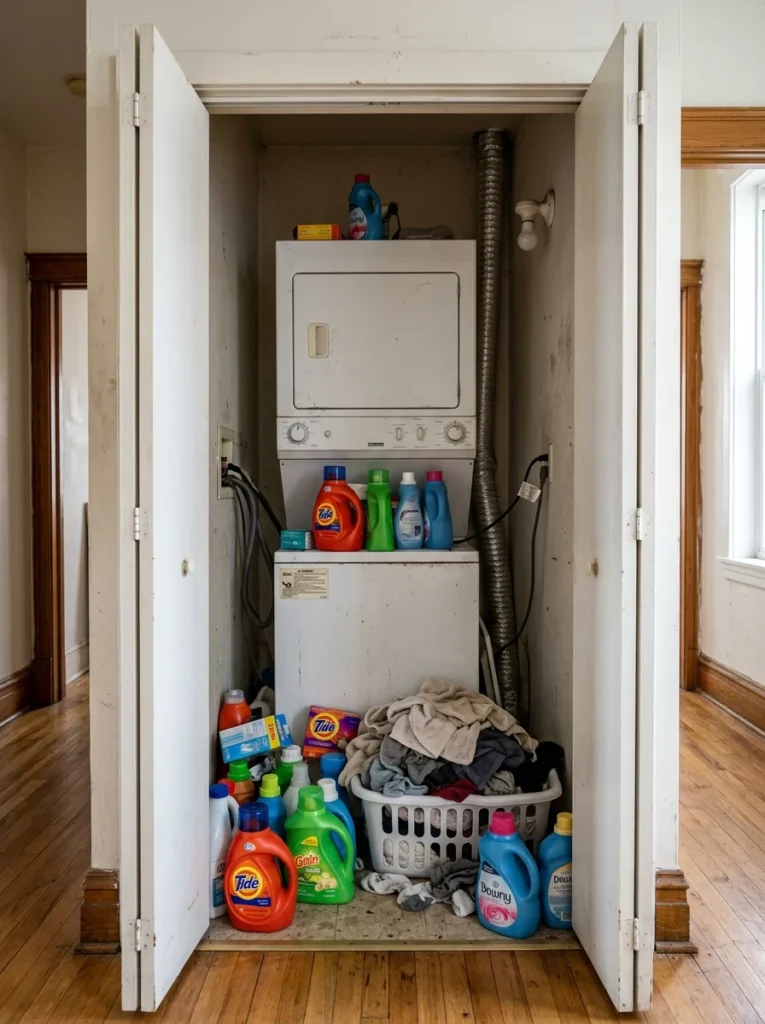
Maximize vertical space above the machines
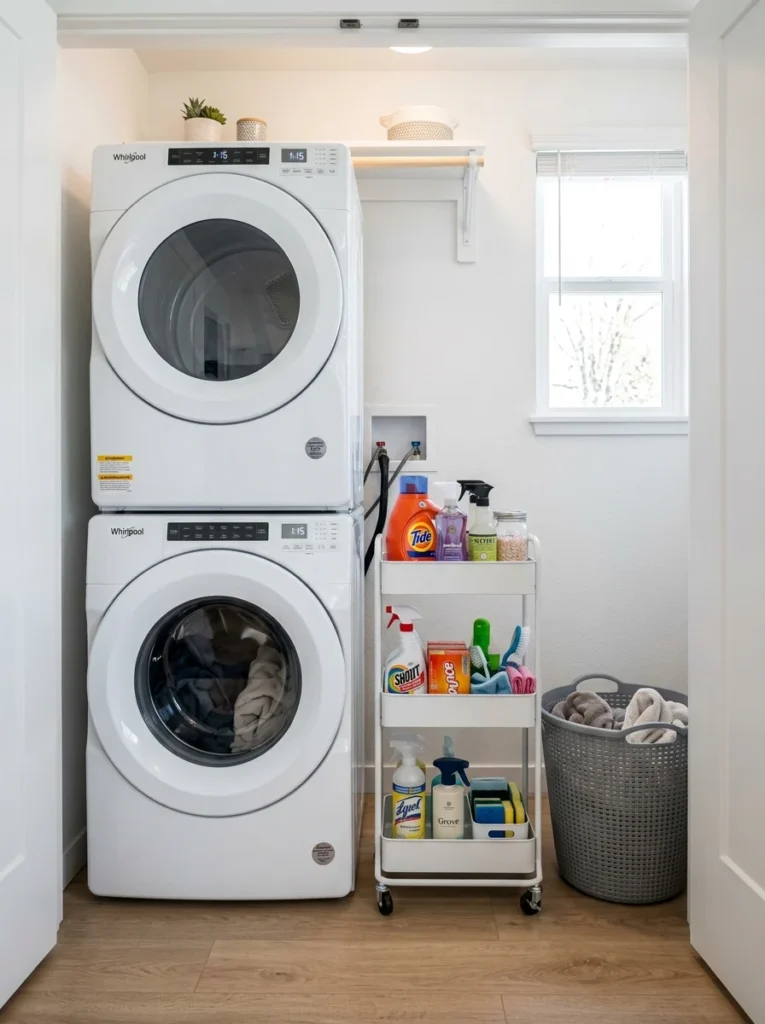
The area directly above a stacked or side-by-side washer and dryer is often the single most underused space in a small laundry closet, and it’s usually tall enough to hold meaningful storage if approached correctly. A slim shelf installed above the machines, sized to fit the closet’s specific width, provides a dedicated spot for detergent, dryer sheets, and other frequently used supplies without requiring any additional floor space the closet simply doesn’t have.
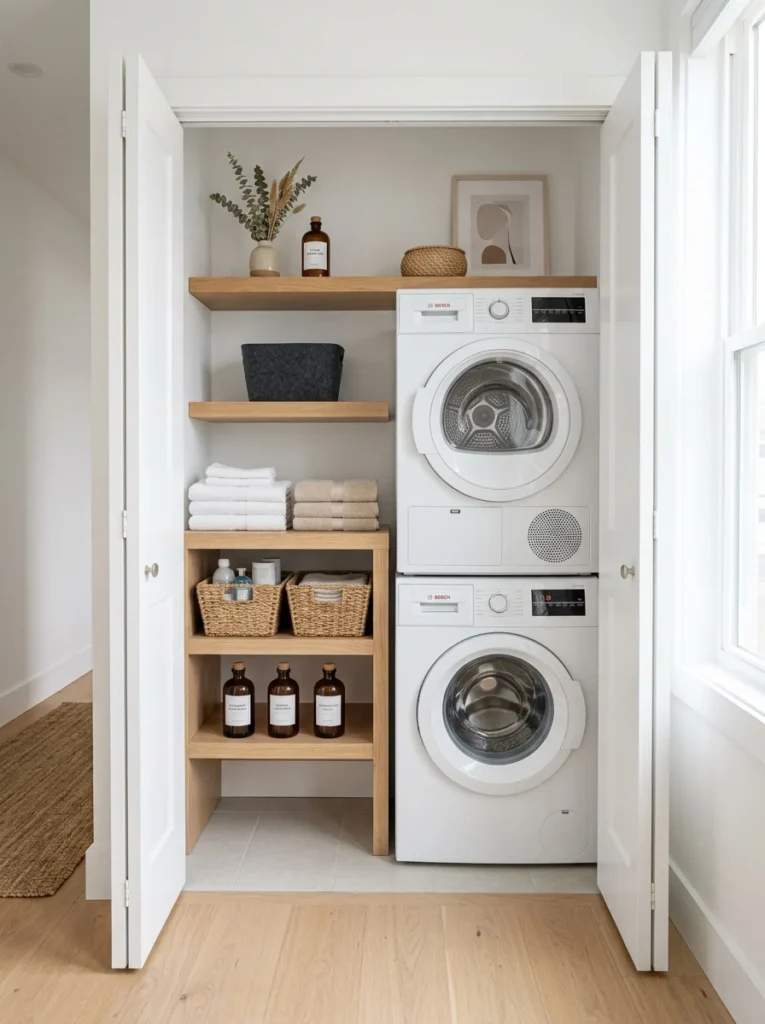
Use an over-the-door organizer for small supplies
If the laundry closet has any kind of door, even a narrow bifold or accordion-style one, an over-the-door organizer with clear pockets adds storage capacity using space that would otherwise go completely unused. This works particularly well for smaller items, stain treatment sticks, a small bottle of fabric softener, spare dryer balls, that don’t need a large dedicated shelf but still need somewhere consistent to live rather than getting shoved into whatever gap happens to be available.
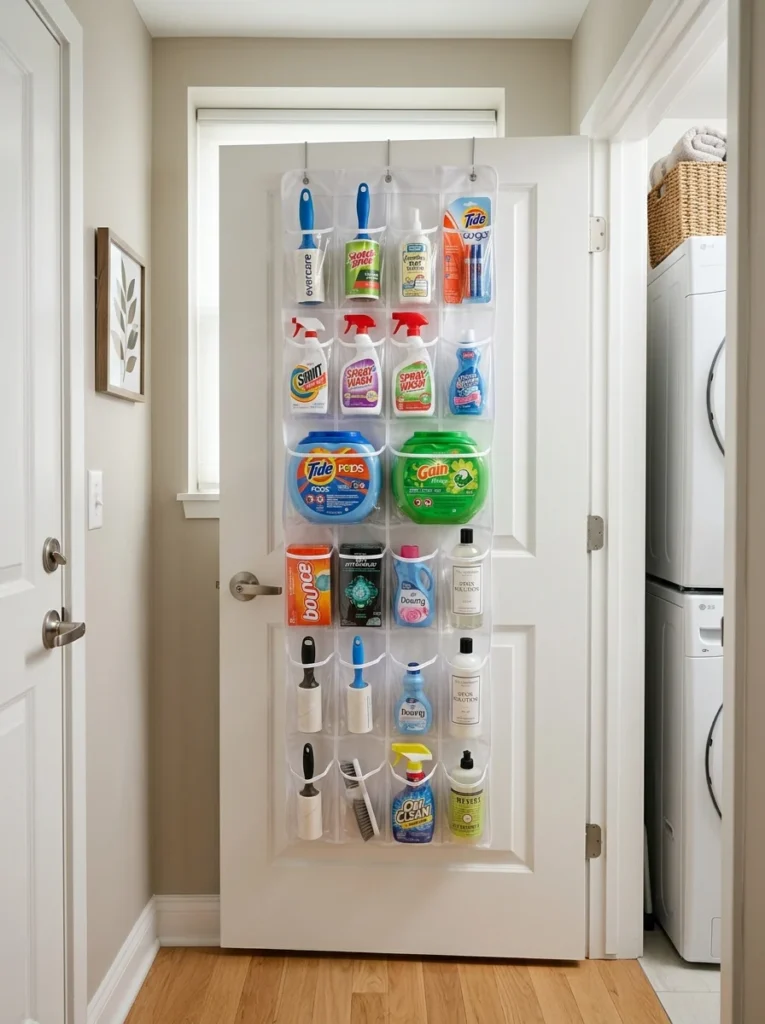
Add a slim rolling cart for flexible, movable storage
A narrow rolling cart, sized to fit into any gap beside or in front of the machines, if the closet’s layout allows even a few inches of extra space, provides flexible storage that can be pulled out for easy access and tucked back in when not needed. This is particularly useful for larger, bulkier laundry supplies, a big box of detergent, a laundry basket used for sorting, that don’t fit neatly on a narrow shelf but still need a designated spot rather than sitting loose on the floor.
Install hooks for hanging items that need to dry or wait
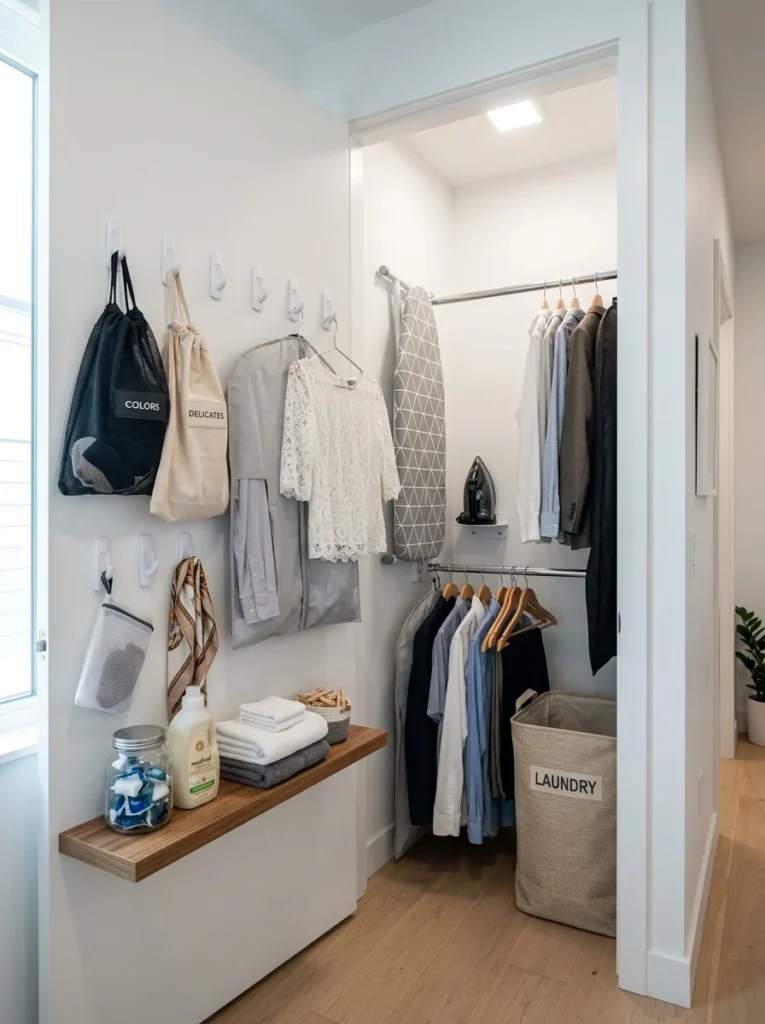
A few hooks mounted on the inside of the closet door or an adjacent wall provide a place to hang a garment bag, a delicate item drying after a hand wash, or an ironing board when not in use, all without requiring any floor or shelf space. This small addition solves the common small-laundry-closet problem of delicate or awkward items having genuinely nowhere to go besides draped over the top of the machines or left in a pile nearby.
Choose a stackable washer and dryer to minimize footprint
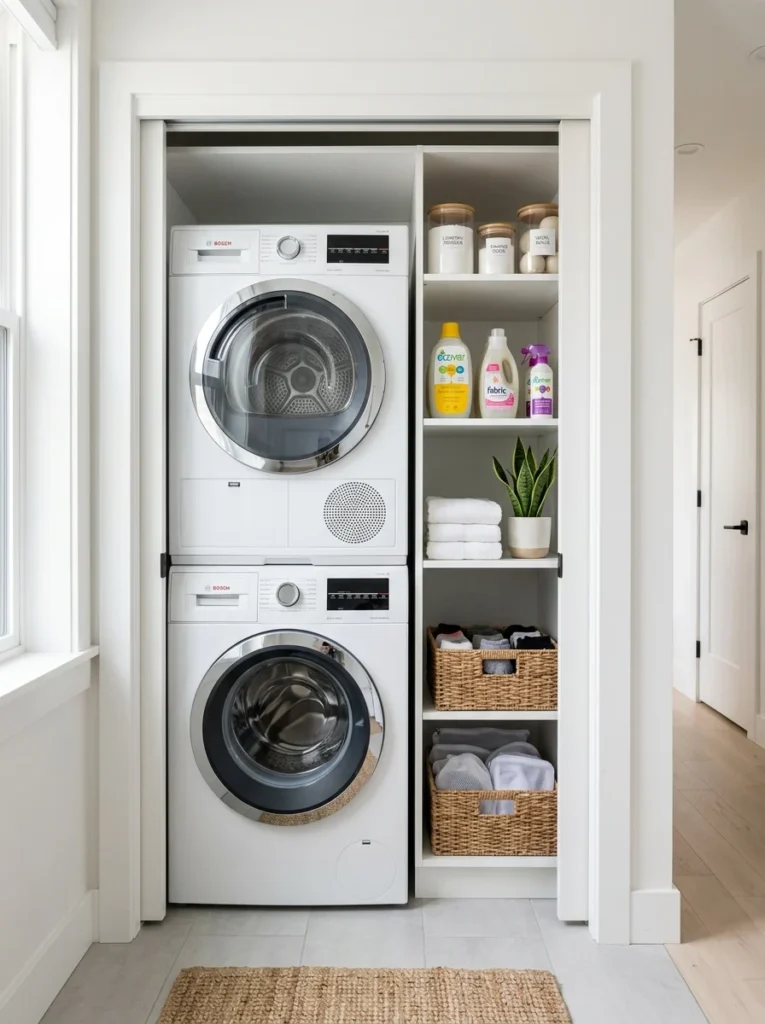
If you have any choice in the matter, whether purchasing your own machines or requesting a different setup from a landlord or building management, a stacked washer and dryer configuration uses roughly half the floor footprint of a side-by-side setup, which matters enormously in an already tight closet space. This single decision often determines whether a small laundry closet has any room at all left over for additional storage solutions like a rolling cart or slim shelving.
Use a fold-down or wall-mounted ironing board
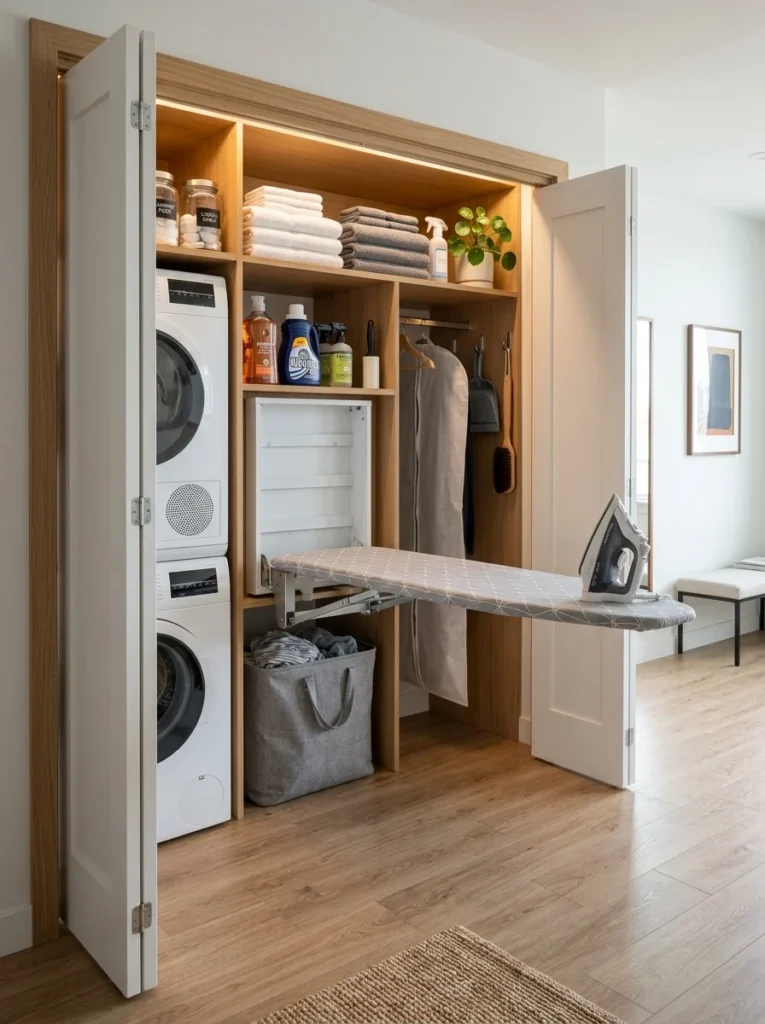
A standard full-size ironing board takes up a surprising amount of storage space when not in use, space a small laundry closet often can’t spare. A fold-down ironing board that mounts to the wall or the back of the door, folding flat against the surface when not needed, provides the same functionality without permanently occupying floor space or requiring an awkward, bulky item to be stored elsewhere in the closet.
Add a tension rod for hanging clothes to air dry
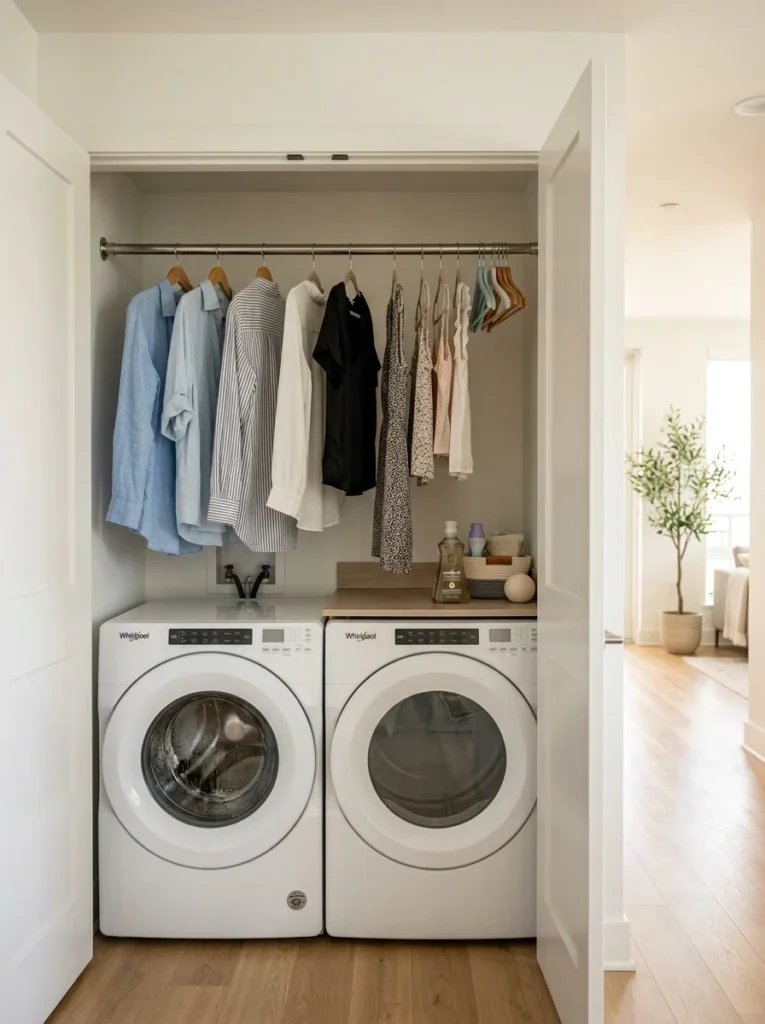
A simple tension rod installed across the width of the closet, positioned above head height or in whatever gap the layout allows, gives you a spot to hang clothes that need to air dry rather than go through the dryer, without requiring any permanent installation or additional floor space. This is a particularly useful addition for anyone regularly hand-washing or air-drying delicate items in a space that otherwise has nowhere obvious for that specific task.
Use stackable, clear bins for small item organization
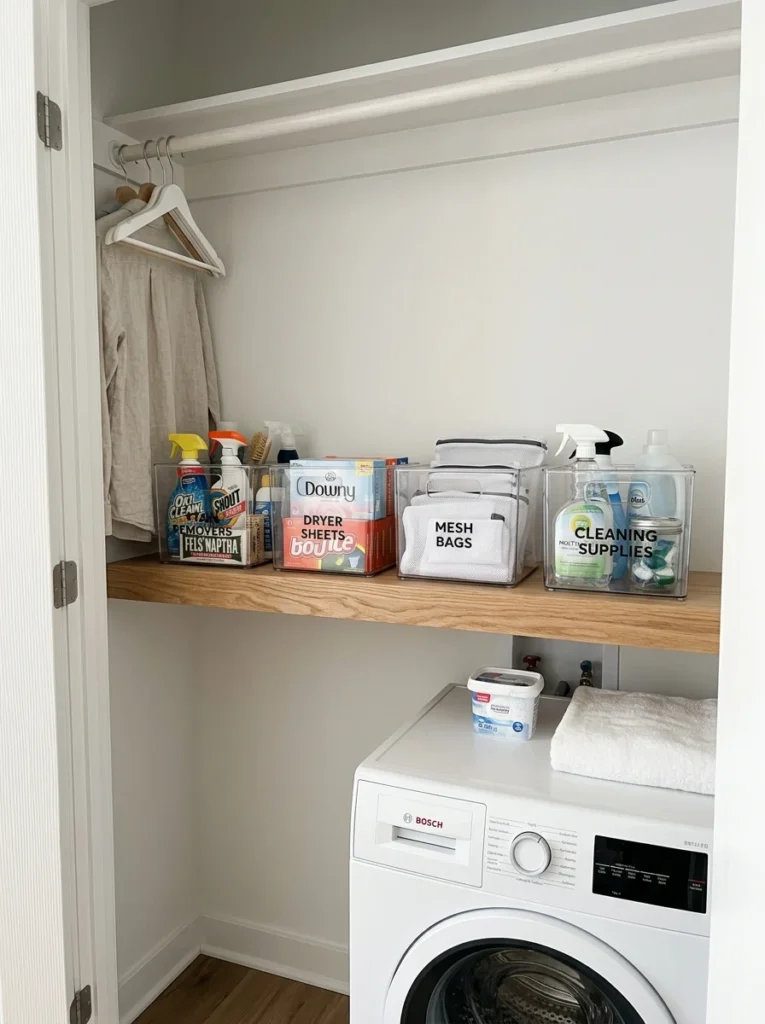
Clear, stackable bins on any available shelf let you organize smaller laundry supplies, stain removers, mesh washing bags, spare lint rollers, by category while making it easy to see what’s inside each bin without opening it, which matters considerably in a small space where you can’t necessarily see or reach every item easily. Stacking these bins vertically takes full advantage of the limited shelf space’s height rather than spreading items out in a single flat layer that a small shelf may not have room for anyway.
Consider a slim, wall-mounted drying rack
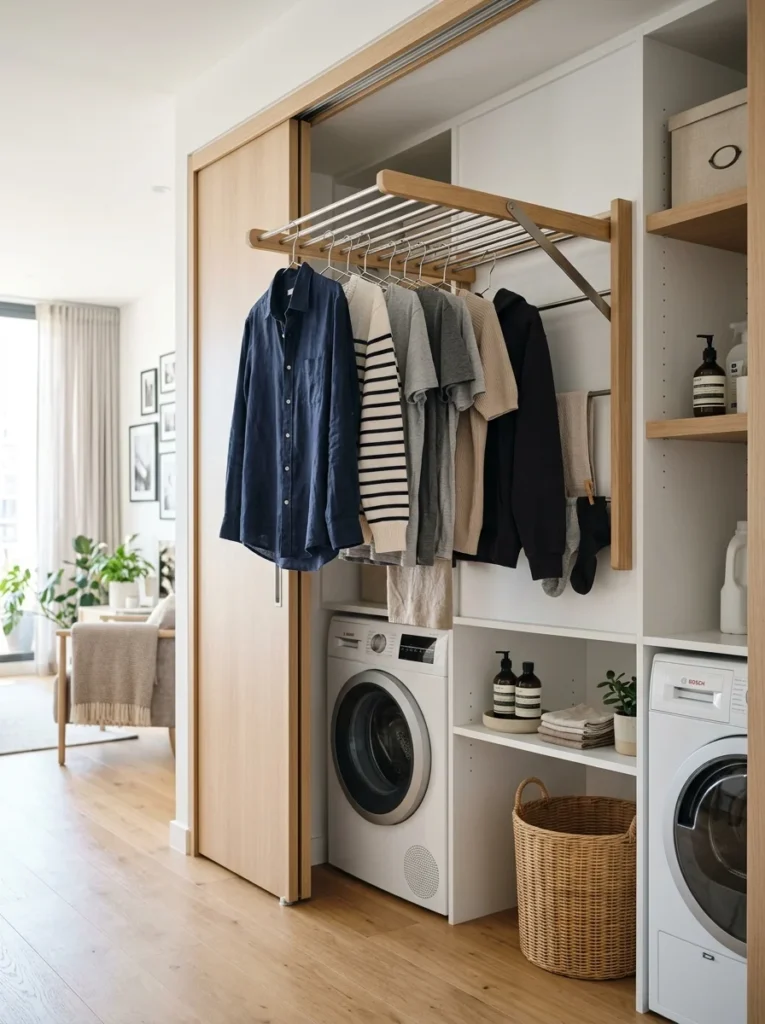
A wall-mounted, fold-down drying rack, similar in concept to a fold-down ironing board, provides a place to air-dry clothes without requiring a large, freestanding drying rack that would otherwise take up significant floor space in an already tight closet. When not in use, it folds flat against the wall, essentially disappearing until the next time it’s actually needed.
Keep only genuinely necessary items in the closet itself
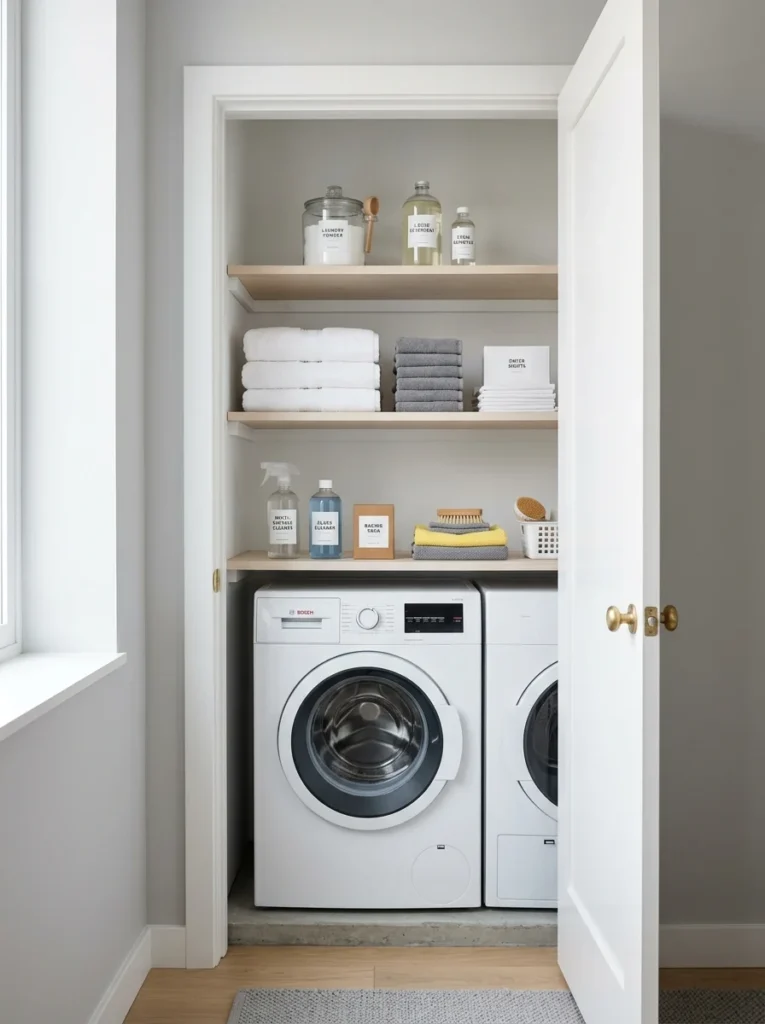
In a small laundry closet, it’s worth being disciplined about what actually needs to live in that specific space versus what could reasonably be stored elsewhere in the home. Bulk detergent refills, seasonal items, or anything not used on a regular basis can be stored in a nearby closet or cabinet instead, keeping the laundry closet itself reserved for what you genuinely reach for during a typical laundry routine, which prevents the space from becoming overcrowded with items that don’t need to be there in the first place.
Add a small light if the closet is otherwise dim
Many laundry closets, tucked into a hallway or a repurposed storage nook, come with minimal or no dedicated lighting beyond whatever spills in from the surrounding room, making it genuinely difficult to check for stains, read a care label, or find a specific item on a dim shelf. A small battery-operated puck light or an adhesive LED strip, requiring no wiring or electrician, can be mounted inside the closet in minutes and makes a significant difference in how usable the space feels, particularly for a closet with a door that blocks most of the ambient light from the rest of the room.
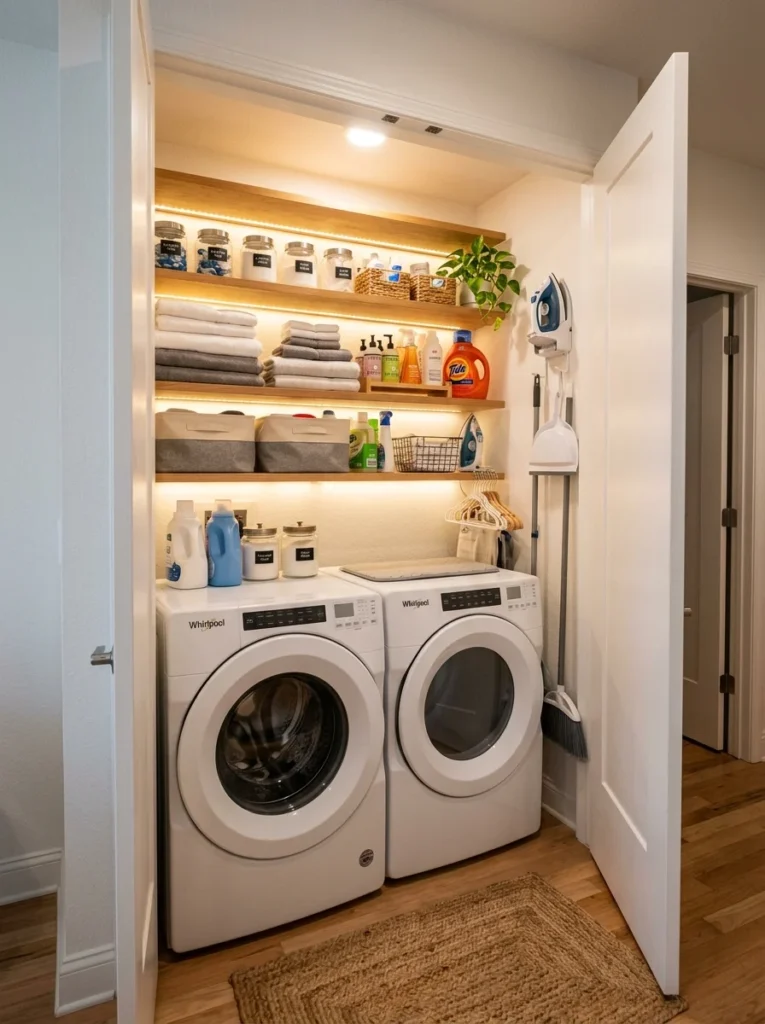
Use renter-friendly mounting options wherever possible
Since laundry closets in apartments and condos often come with restrictions on drilling into walls, choosing tension rods, adhesive hooks rated for the appropriate weight, and freestanding or door-mounted solutions rather than permanently drilled shelving keeps your storage additions fully reversible when it’s time to move out. Many building management companies and leases specifically prohibit permanent wall modifications, so confirming what’s allowed before installing anything more permanent than a removable hook or tension rod avoids a potential dispute over security deposit deductions later.
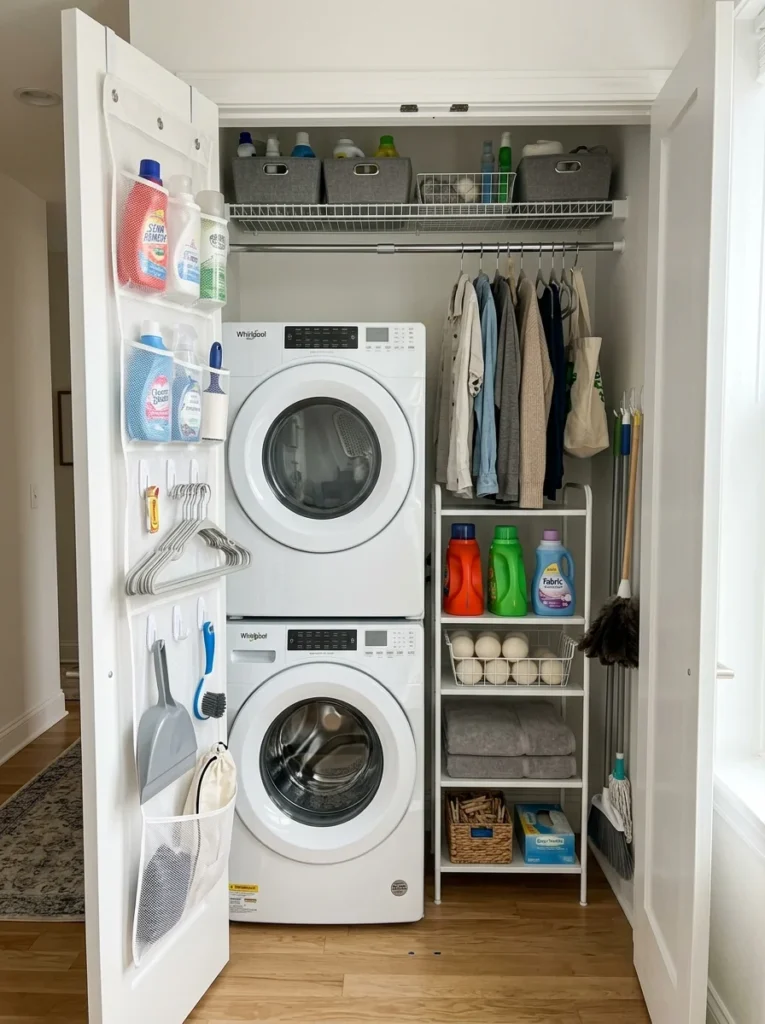
Measure carefully before buying any storage solution
A small laundry closet leaves very little room for error, and a shelf, cart, or organizer that’s even slightly too large simply won’t fit, while purely eyeballing available space often leads to a frustrating return trip to the store. Measuring the closet’s exact width, depth, and any available height above or beside the machines before purchasing any storage solution, and double-checking those measurements against the specific product’s stated dimensions rather than assuming it will fit based on a general size category, prevents this common and avoidable small-space mistake.
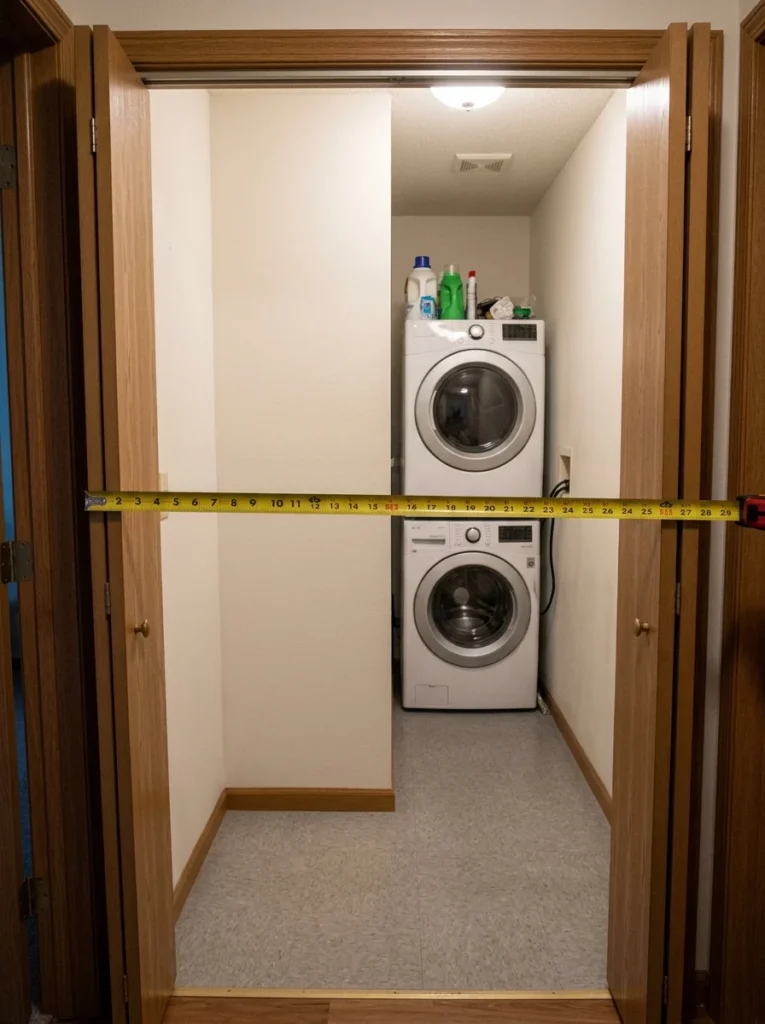
What’s the best way to add storage to a laundry closet with no extra floor space?
Vertical solutions work best when floor space is completely unavailable: a slim shelf above the machines, an over-the-door organizer, hooks on the door or adjacent wall, and a wall-mounted fold-down ironing board or drying rack all add functional storage without requiring any floor footprint.
Should I choose a stacked or side-by-side setup for a small closet?
A stacked configuration is generally the better choice for a small laundry closet, since it uses roughly half the floor footprint of a side-by-side setup, often freeing up enough additional space for a slim shelf, rolling cart, or other storage solution that a side-by-side setup wouldn’t leave room for.
How do I keep a small laundry closet from feeling cluttered?
Storing only genuinely frequently used items in the closet itself, using clear stackable bins to organize smaller supplies, and keeping bulk refills or infrequently used items elsewhere in the home all help a small laundry closet stay functional and uncluttered rather than overcrowded.
Is a fold-down ironing board worth it in a small laundry closet?
Yes, a fold-down ironing board that mounts to the wall or door provides the same functionality as a standard ironing board without permanently occupying floor space, which is particularly valuable in a small closet where a full-size, freestanding ironing board would otherwise be difficult to store.
Can I add storage to a rental laundry closet without violating my lease?
Yes, tension rods, adhesive hooks rated for appropriate weight limits, and freestanding or door-mounted organizers are generally safe, reversible options that don’t require drilling, though it’s worth confirming your specific lease terms before installing anything, since some buildings restrict even adhesive products on certain surfaces.
A tiny laundry closet in an apartment or condo can absolutely function well with the right combination of vertical storage, wall-mounted or fold-down solutions, and disciplined organization limiting the space to only what’s genuinely needed there. None of these ideas require permanent renovation or landlord approval for most rental situations, since hooks, tension rods, and slim shelving are typically straightforward, low-impact additions.
That first cramped laundry closet of mine eventually became genuinely functional once I stopped trying to force full-size solutions into a space that needed smaller, smarter ones instead, a slim shelf above the machines and an over-the-door organizer solved most of what had felt like an impossible storage problem in those first frustrating months. If your own laundry closet feels similarly hopeless, start with the space directly above the machines; it’s almost always the most underused area and usually the easiest place to add real, functional storage first, before moving on to the smaller details like hooks, lighting, and an organizer for everything else.